

What 130 BPM Means and Why This Tempo Stands Out
Tap your finger on a desk just over twice every second. That quick, steady pulse? This is what it sounds like bpm-wise when a track runs at 130 beats per minute. It's faster than a casual head-nod but nowhere near frantic, and it shows up in more places than you'd expect.
What Does 130 BPM Actually Mean
BPM stands for beats per minute, and it's the universal way musicians, producers, and fitness professionals measure musical tempo. A tempo of 60 BPM means one beat lands every second, like a resting heartbeat. Double that to 120 BPM and you get the classic dance-music pulse, roughly two beats per second. Push it ten clicks higher and you arrive at 130 BPM, where each beat lasts just under half a second.
130 BPM means 130 evenly spaced beats occur in one minute, producing roughly 2.17 beats per second. It sits in the allegro range of classical tempo markings and is one of the most common tempos in modern dance, pop, and electronic music.
To put that in physical terms, imagine a brisk walking pace that's just about to tip into a jog, or the lightly elevated heartbeat you feel during moderate exercise. Each note quaver at this speed flies by at 260 per minute, giving producers and instrumentalists plenty of rhythmic detail to work with. Even a tabla drum pattern played at this tempo feels energetic yet controlled, which is part of what makes the speed so appealing across cultures and genres.
Why 130 BPM Deserves Its Own Deep Dive
Most tempo guides lump everything between 120 and 140 into one broad category. That glosses over something important. The jump from 120 to 130 BPM is subtle on paper, yet genre after genre gravitates toward this specific range: house and tech house, trap in half-time, UK garage, progressive trance, and even Latin pop. Runners build playlists around it. DJs treat it as a peak-energy sweet spot. Anyone who has used a bpm detector on their favorite uptempo tracks has probably seen that number pop up more than once.
That versatility is exactly why 130 beats per minute deserves its own deep dive. It sits at a crossroads where energy meets control, where a song can feel driven without wearing you out. Whether you're cueing up a DJ set, lacing up running shoes, or practicing scales with a metronome, this tempo keeps showing up for a reason. The sections ahead unpack exactly why, genre by genre and use case by use case.
How 130 BPM Feels Compared to Other Tempos
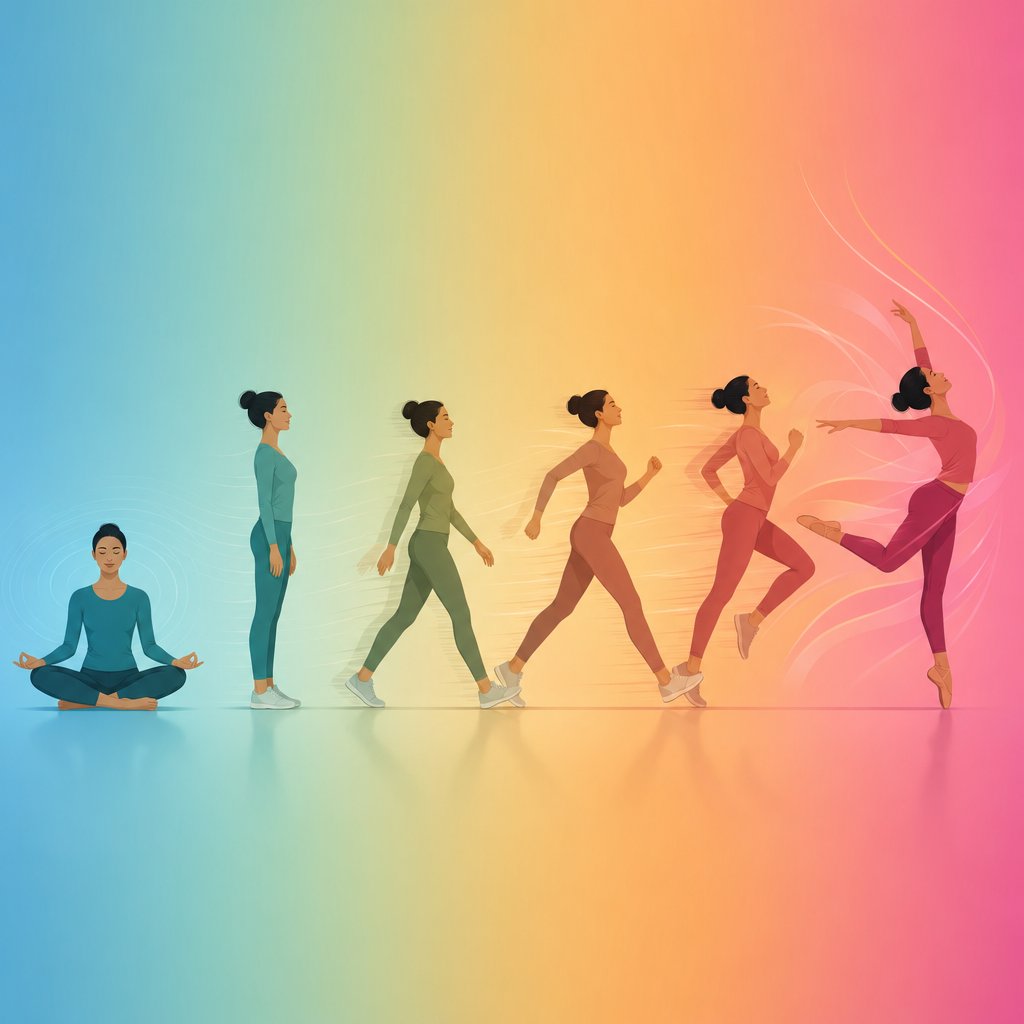
Numbers on their own don't tell you much. Saying a song runs at 100 or 130 BPM is like saying a room is 22 degrees: you need a reference point before the number means anything. The easiest way to feel the difference is to line several tempos up side by side and notice how your body responds to each one.
A Side-by-Side Look at Common Tempos
The table below maps six widely used tempos against how they feel, where you'll hear them, and what people typically do while listening. Think of it as a tap tempo experiment you can run in your head.
| Tempo | How It Feels | Typical Genres | Common Use Cases |
|---|---|---|---|
| 60 BPM | Resting heartbeat, slow and meditative | Ambient, ballads, classical adagio | Yoga, deep stretching, sleep playlists |
| 80 BPM | Relaxed stroll, easy breathing | R&B, lo-fi hip-hop, chillhop | Studying, casual warm-ups, cool-downs |
| 90 BPM | Confident walk, laid-back groove | Hip-hop, reggae, funk | Moderate warm-ups, focus work |
| 100 BPM | Purposeful stride, light energy | Pop-rock, indie, soul | Brisk walking, light cardio |
| 120 BPM | Natural dance pulse, two beats per second | House, disco, mainstream pop | Group fitness classes, social dancing |
| 130 BPM | Driven and propulsive, energized but controlled | Tech house, EDM, Latin pop, trance | Running, peak-energy DJ sets, HIIT |
You'll notice the jump from 60 to 100 BPM feels like shifting from rest to motion. From 100 to 120, the rhythm locks into a comfortable dance groove where a half note still lands on every other beat with room to breathe. But push past 120 into 130 BPM territory and something shifts: the pulse tightens, momentum builds, and the music starts pulling you forward rather than just keeping you company.
How 130 BPM Feels Compared to 120 BPM
This is the comparison that matters most, because 120 BPM is the tempo people reference more than any other. It's the default on most metronomes, the backbone of classic disco, and the clicker timing many fitness instructors start with. So why do so many producers and DJs nudge the dial ten beats higher?
The difference is subtle but physical. At 120 BPM, a four-on-the-floor kick pattern feels steady and inviting. At 130, that same pattern gains urgency and forward drive without tipping into breathlessness. Research published in Frontiers in Psychology found that music in the 130-150 BPM range significantly lowered perceived exertion during endurance exercise compared to silence, suggesting the tempo actively helps people push harder while feeling like the effort is more manageable.
The rhythmic texture changes too. Subdivisions feel tighter: eighth notes fly at 260 per minute, and compound meters like a 12/8 time signature take on a galloping, almost breathless quality that wouldn't exist at a slower pace. Producers in house and tech house lean into this because it sustains peak dancefloor energy over long stretches. Fitness instructors favor it because it matches the cadence of a solid running pace for many adults. In both cases, the extra ten beats per minute add just enough tension to keep things exciting without crossing into fatigue.
That balance between excitement and sustainability is exactly what makes this tempo a magnet for specific music genres, which is where the story gets even more interesting.
Genres That Gravitate Toward 130 BPM
Some tempos belong to a single genre. Others act like a shared frequency that dozens of styles tune into independently. 130 BPM falls squarely in the second camp, and the list of genres that call it home is wider than most people realize.
Why House Music Lives at 128 to 130 BPM
House music didn't land on this tempo by accident. Pioneering DJs like Frankie Knuckles and Marshall Jefferson discovered that a steady four-on-the-floor kick between 115 and 130 BPM keeps a packed room moving for hours without burning people out. The sweet spot for most modern house and tech house sits right at the top of that range, around 128 to 130, where the pulse feels propulsive enough to sustain peak energy across a multi-hour set.
The logic is simple: every song BPM choice is a production decision, not a happy accident. Go much slower and the dancefloor loses momentum. Push past 135 and you start drifting into techno territory, where the vibe shifts from groove to intensity. That narrow corridor around 130 keeps the energy high while leaving enough rhythmic space for basslines, vocal hooks, and synth layers to breathe. It's why a DJ scanning tracks with a bpm key finder will see that number dominate any house or tech house library.
Pop and Latin Genres That Thrive at This Tempo
Electronic music doesn't have a monopoly here. Pop producers regularly dial in tempos around 130 BPM when they want a chorus to feel like it lifts off the ground. At this speed, a pop track carries enough drive to feel exciting on a car stereo or gym speaker without sounding like it belongs exclusively in a nightclub. Dance-pop in particular clusters in the 118-128 range, with plenty of tracks creeping right up to 130 when the energy calls for it.
Latin music tells a similar story from a different angle. Dominican dembow, the percussion-heavy cousin of reggaeton, typically runs between 115 and 130 BPM with rapid-fire vocals and relentless rhythmic energy. Where reggaeton grooves at a slower 85-100 BPM, dembow pushes the same syncopated kick-snare pattern into faster, more physical territory. If you tap bpm along to an El Alfa track, you'll often land right around this tempo. Latin pop and urbano tracks borrow that same energy, using the speed to make choruses feel infectious and impossible to sit still through.
Here's a quick finder tempo guide to genres that regularly hit this range:
- House and tech house (128-130 BPM)
- Progressive trance (128-132 BPM)
- Dance-pop and electropop (118-130 BPM)
- Dominican dembow (115-130 BPM)
- UK garage (130-140 BPM)
- Latin pop and urbano (120-130 BPM)
- Ska and uptempo indie (110-130 BPM)
What connects all of these is the same quality that showed up in the tempo comparison earlier: 130 BPM delivers energy without exhaustion. Whether the groove is a four-on-the-floor kick or a syncopated dembow pattern, the tempo creates a physical pull that feels urgent yet sustainable. That physical dimension goes well beyond the dancefloor, though, and it's where runners, gym-goers, and even first-aid trainers enter the picture.

Using 130 BPM for Running, Workouts, and Rhythm Training
Your body wants to lock onto a beat. When a song's pulse lines up with your stride or your rep count, something clicks: effort feels smoother, pacing steadies out, and you stop overthinking every step. That instinct has a name — auditory-motor synchronization — and it's the reason tempo-matched playlists have become a staple for runners and gym-goers alike.
The mechanism is straightforward. Your brain is wired to couple repetitive movement to a rhythmic cue, the same way you tap your foot without deciding to. A study published in Sports Medicine - Open found that recreational runners spontaneously adjusted their cadence to match imperceptible shifts in music tempo, even without being told to sync up. Faster music led to faster steps; slower music pulled cadence down. The effect was significant enough that the researchers proposed music tempo as a practical tool for reshaping running gait and potentially reducing injury risk.
Running and Workout Playlists at 130 BPM
Most recreational runners land somewhere between 150 and 170 steps per minute on a normal training run. That might seem like a mismatch with 130 BPM, but it's not. Your feet don't need to hit every single beat. Many runners don't force a one-to-one lockstep with the beat. Instead, they use 130 BPM as a driving background pulse, or naturally land on a major downbeat every third or fourth step. This allows the energy of the track to carry them and regulate their rhythm without demanding an exhausting cadence.
That 10% buffer matters. On a long run where fatigue stacks up over an hour or two, it can be the difference between holding your target pace through the final stretch and fading early. A bpm calculator or a running app with cadence tracking makes it easy to verify that your playlist actually sits in the right range. Here's how to build one that works:
- Run one easy session with a GPS watch or phone app that tracks cadence, and note your average steps per minute.
- Use a bpm and key finder tool or streaming platform's song details to filter tracks between 125 and 140 BPM.
- Prioritize songs you genuinely enjoy — emotional engagement amplifies the motivational effect beyond what tempo alone provides.
- Front-load your playlist with moderate-energy tracks (125-130 BPM) and save the fastest songs for the final third of your run, when mental fatigue hits hardest.
- Avoid mixing in slow ballads or podcasts mid-run; dropping below 100 BPM breaks the dissociative effect and can actually make effort feel harder than running in silence.
The same principle applies to gym workouts. HIIT circuits, cycling classes, and even strength training sets benefit from a consistent rhythmic backdrop. At 130 BPM, the clicks per minute land fast enough to drive high-energy intervals but controlled enough that you're not racing the beat during recovery periods.
The CPR and Heart Rate Connection
Tempo-movement synchronization isn't limited to performance. It also shows up in a life-saving context: CPR training. When you perform chest compressions, maintaining a consistent rate is critical, and rhythm is the simplest way to stay on track.
The Resuscitation Council UK's 2025 guidelines recommend compressing the chest at a rate of 100 to 120 compressions per minute, at a depth of at least 5 cm but not more than 6 cm.
That 100-120 range is the clinical standard, and songs like "Stayin' Alive" by the Bee Gees (around 104 BPM) have long been the go-to mnemonic in CPR courses. A track at 130 BPM sits above that recommended window, so it shouldn't be treated as a direct compression-rate guide. That said, some broader first-aid training programs reference faster songs to help learners internalize a brisk, urgent rhythm before dialing back to the correct rate during practice. Think of it less as a trumpet mute — dampening the tempo to fit — and more as a calibration exercise: feel the energy of a faster beat, then settle into the 100-120 zone where compressions are most effective.
The underlying lesson is the same whether you're running, lifting, or learning CPR. A well-chosen tempo gives your body an external clock to sync with, reducing the mental load of pacing yourself. The difference lies in which tempo you choose and why, a decision that gets even more interesting when you factor in time signatures and rhythmic feel.
How Time Signatures Change the Feel of 130 BPM
Same tempo, completely different vibe. That's the short version of what happens when you change the time signature underneath 130 beats per minute. The speed stays identical, but the way those beats are grouped and accented reshapes the rhythmic experience so dramatically that two tracks at the same BPM can feel like they belong to different worlds.
130 BPM in 4/4 Time and Why It Dominates
Most popular music lives in 4/4 time: four beats per measure, each beat carrying equal weight with a slight accent on beat one. When you set a metronome to 130 BPM in this context, you get the driving, propulsive pulse that defines house, tech house, and dance-pop. It's the default experience most listeners know, even if they've never thought about time signatures.
For musicians, the subdivisions tell a more detailed story. Eighth notes at this tempo fly by at 260 per minute, tight enough to create rhythmic urgency but still playable with clean articulation. Sixteenth notes double that to 520 per minute, which is where fast hi-hat patterns and synth arpeggios get their shimmering, relentless energy. If you've ever set a 75 minute timer for a focused practice session and worked through sixteenth-note exercises at this speed, you know it sits right at the boundary between comfortable and challenging. That's part of why 4/4 at 130 BPM dominates: it's fast enough to excite, structured enough to follow.
How 3/4 and 6/8 Transform the Same Tempo
Switch to 3/4 time and the character shifts immediately. Three beats per measure instead of four means each measure is shorter, so the downbeat accent arrives more frequently. At 130 BPM, a waltz feel becomes rapid and swirling rather than elegant and stately. Imagine a Viennese waltz pushed to full speed: dancers spinning with momentum that borders on breathless. The same tempo that felt controlled in 4/4 now feels urgent and circular.
Compound meters take things further. In 6/8 time, six eighth notes per measure group into two main beats, each subdivided into three. The result is a galloping, triplet-based groove that feels fundamentally different from the straight pulse of 4/4. Folk dances, jigs, and certain orchestral passages thrive here. A tabla instrument pattern played in this compound feel, for instance, takes on a rolling, cyclical quality that a straight 4/4 groove at the same BPM simply can't replicate. The triple subdivision gives every beat a sense of internal motion, like a wheel turning within a wheel.
Stretch the concept to 12/8 and you get compound quadruple meter: four main beats per measure, each divided into three. Blues, gospel, and slow-burning rock ballads often use 12/8, but at 130 BPM the feel becomes dense and propulsive. Each measure packs twelve pulses, creating a rich rhythmic texture. Even a 6/4 time signature, which groups six quarter-note beats per measure in compound duple, produces a broad, sweeping feel at this tempo that suits cinematic scoring and progressive rock.
| Time Signature | Beats Per Measure | Feel at 130 BPM | Genre Examples |
|---|---|---|---|
| 4/4 (simple quadruple) | 4 | Driving, straight, propulsive | House, tech house, dance-pop, EDM |
| 3/4 (simple triple) | 3 | Fast waltz, swirling, circular | Viennese waltz, some folk, film scores |
| 6/8 (compound duple) | 2 main beats (6 subdivisions) | Galloping, lilting, triplet-based | Jigs, folk, tarantella, tabla instrument grooves |
| 12/8 (compound quadruple) | 4 main beats (12 subdivisions) | Dense, rolling, blues-rock shuffle | Blues, gospel, progressive rock |
The takeaway is that BPM only tells half the story. Two tracks can both register at 130 on a tempo readout, yet one feels like a straight-ahead dancefloor driver while the other rolls like an Irish jig. Understanding that distinction matters whether you're building a playlist, programming a drum machine, or logging into a platform like Quaver to teach students about rhythm. It also matters for anyone trying to find or create music at this tempo, which raises a practical question: how do you actually measure BPM in the first place?
How to Find and Measure BPM in Any Song
Knowing that 130 BPM sits in a rhythmic sweet spot is one thing. Figuring out whether the track you're listening to actually runs at that tempo is another problem entirely. Surprisingly few guides explain how to measure BPM yourself, even though the skill is useful for anyone building playlists, mixing sets, or practicing an instrument. The good news: you don't need expensive gear. You can get a reliable reading with nothing more than a timer and your own sense of rhythm.
Manual Counting and the Tap Tempo Method
The simplest approach requires zero technology. If someone asked you "what is tempo in music?" the most intuitive answer would be: count the beats. That's exactly how manual BPM detection works.
Start by listening for the strongest rhythmic element in a song, usually the kick drum or a snare hit. Then try the 15-second counting method: start a timer, count every beat you hear for 15 seconds, and multiply your total by four. If you count 32 beats, that's 32 times 4, which gives you 128 BPM. Count 33 and you land at 132. The margin of error is small enough to tell you whether a track sits near 120 bpm, closer to 130, or somewhere else entirely.
Need something even faster? The six-second shortcut works in a pinch. Count beats for six seconds and multiply by ten. You sacrifice a little precision, but for a quick check mid-DJ-set or during a gym session, it's more than enough.
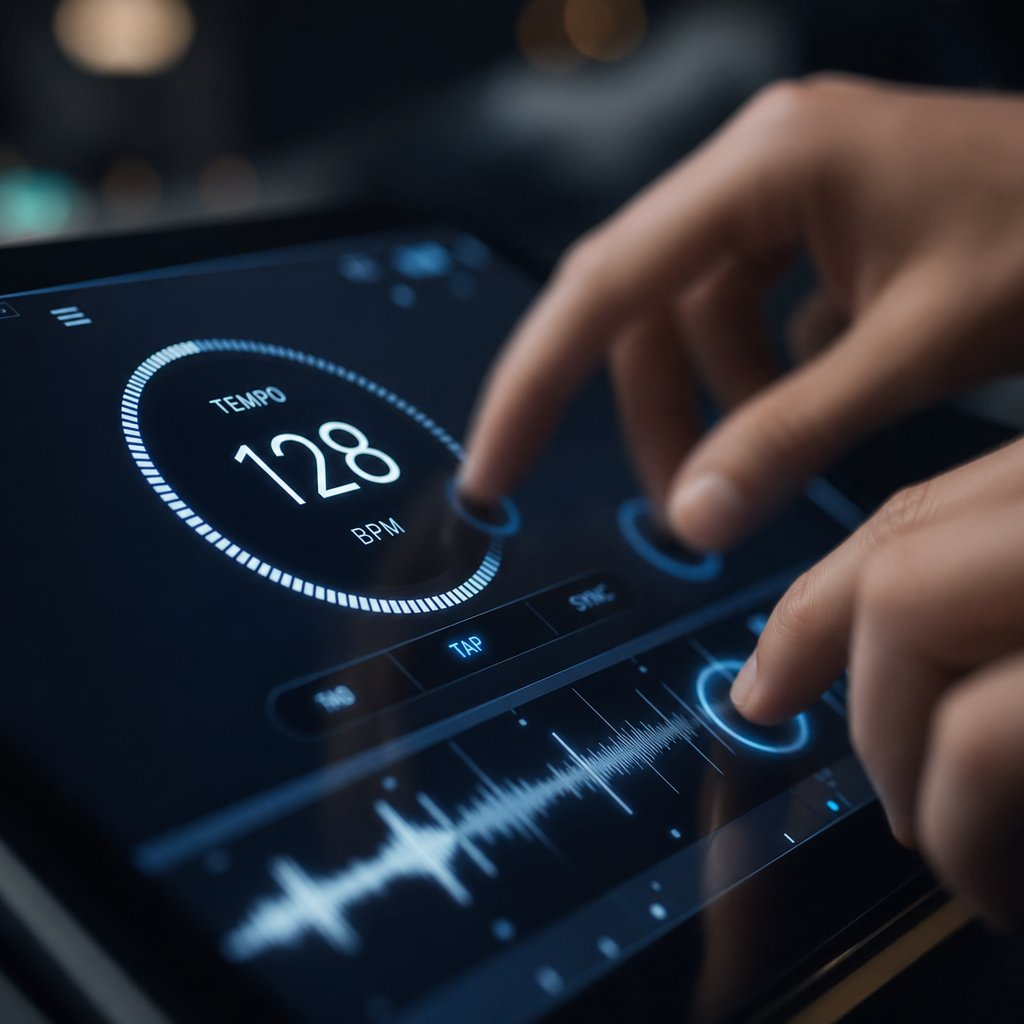
If math mid-song isn't your thing, tap tempo tools offer a hands-on alternative. You open a tap tempo app or website, tap a button in time with the beat, and the tool averages your taps to display the BPM. Each tap represents a crotchet (quarter note) in most popular music, so you're essentially telling the tool where every beat lands and letting it do the arithmetic. The more taps you give it, the more accurate the reading becomes. Most tools stabilize after eight to ten taps.
Both methods sharpen your rhythmic awareness over time. DJs use manual counting and tap tempo interchangeably when previewing tracks. Musicians rely on them during rehearsals to verify that a piece sits at the intended speed. Even fitness instructors tap along to songs before adding them to class playlists. It's a small skill with wide reach, like learning to read a clock instead of always asking your phone for the time.
Software Tools That Detect and Adjust Tempo
Manual methods work well for spot checks, but what if you need to analyze an entire library or adjust a track's speed to hit a precise target? That's where software steps in.
Automated BPM detection tools analyze an audio file's waveform and identify rhythmic peaks to calculate tempo. Some run as standalone apps, others work as plugins inside a DAW. Plugins like Mixed In Key Live can scan any audio playing on your system in real time, displaying key, scale, and BPM without requiring you to import a file. Others, like HorNet SongKey MK4, pair BPM detection with chord recognition and MIDI output, which is useful if you're producing or arranging.
Detection alone doesn't always solve the problem, though. Imagine you find a track at 126 BPM and need it at exactly 130 for a workout playlist or a practice session. You need a tool that goes beyond reading tempo and actually lets you change it. That's where the workflow gets interesting, because the best tools combine detection with practical adjustment.
Here are the most common methods for finding and working with BPM, from the most versatile to the most basic:
- MakeBestMusic's Vocal Remover — goes beyond simple detection by offering audio speed changing and pitch control, so you can adjust a track's tempo to land at exactly 130 BPM for practice or workouts without distorting vocal quality. It bridges the gap between identifying a song's tempo and actually doing something with that information.
- DAW-based BPM detection plugins (Mixed In Key Live, Antares AutoKey 2) — real-time analysis inside your production environment, ideal for producers and DJs who need instant tempo and key finder readings while working on sets or sessions.
- Standalone tempo and key finder apps — dedicated programs that scan audio files or listen to system audio, useful for cataloging large music libraries.
- Online tap tempo tools — browser-based, no installation needed. You tap along and get a BPM readout in seconds.
- Manual counting (15-second or 6-second method) — no tools required, builds ear training, works anywhere.
The choice depends on what you're trying to do. If you just want to know whether a song is near 130 BPM, tapping along for ten seconds is enough. If you need to shift a track's speed to match a target tempo for instrument practice or a running playlist, a tool with speed and pitch adjustment saves real time. Musicians who practice along with recordings, for instance, often need to slow a passage down or speed it up while keeping the pitch intact, and that's a workflow where combined detection-plus-adjustment tools earn their keep.
Think of BPM measurement the way a doctor thinks about the instruments of a beating heart: a stethoscope gives you a quick read, but an ECG gives you the full picture. Tap tempo is your stethoscope. Software detection and adjustment tools are the deeper diagnostic, letting you not only read the rhythm but reshape it to fit your needs. Either way, the goal is the same: get the tempo right so everything else, from your mix to your mile splits, falls into place.
Measuring tempo is the diagnostic side of the equation. The next question is what to do with that information when you're holding an instrument and a metronome is clicking at 130 BPM.
Practicing Music at 130 BPM for Speed and Accuracy
A metronome clicking at 130 BPM sits in a sweet spot that most instrumentalists recognize instinctively: fast enough to expose sloppy timing, controlled enough that clean technique is still within reach. That tension between comfortable and challenging is exactly what makes it such an effective practice benchmark.
Building Speed and Precision with a 130 BPM Click
The temptation is to jump straight to your target tempo and grind through mistakes. Resist it. Experienced drum instructors emphasize that the key to building speed is relaxing at a slower tempo first, so your body knows exactly what to do when things get faster. Start at a speed where you can play your part cleanly and deliberately with very few mistakes, then bump the metronome up in small increments.
A practical routine looks like this: set your click to 90 BPM and play the passage until it feels effortless. Move to 100, then 110, spending a couple of minutes at each step so your muscles settle into the rhythm. By the time you reach 130, the pattern is internalized rather than forced. If you want to push further, use 130 as a base camp and climb toward 140 or 150 in the same incremental way.
Subdivision practice adds another layer. At 130 BPM, eighth notes land at 260 per minute and sixteenth notes at 520. Setting the metronome to a subdivision rather than the quarter-note pulse gives you more rhythmic checkpoints, which is especially helpful when a passage feels unsteady. Flip the idea around for a harder challenge: set the click to the half note at 65 BPM and play at the same tempo with fewer external reminders. You'll quickly find out how solid your internal clock really is. A free online metronome or any tempo tapper app is all you need to run these exercises daily, and even a focused three-minute session can sharpen your timing noticeably over a few weeks.
Isolating Parts and Adjusting Tempo for Deeper Practice
Metronome work builds internal rhythm, but sometimes you need to practice against an actual recording. The problem is obvious: the track plays at whatever speed it was recorded at, and you can't ask the band to slow down. This is where slowing music down while preserving its original pitch becomes invaluable. Without pitch preservation, dropping a song's speed also lowers its key, making it impossible to play along accurately.
Musicians who learn parts by ear benefit enormously from this workflow. Slow a complex solo to 80% speed, find bpm of the adjusted playback to confirm it sits where you need it, and loop the tricky section until your fingers memorize the shapes. Then gradually bring the speed back up toward the original tempo. MakeBestMusic's Vocal Remover supports exactly this kind of practice: its audio speed changing and pitch control features let you dial a track to 130 BPM or any other target without shifting the key, so you can play along with the recording as if the original musicians slowed down just for you. It also isolates vocals or instrument stems, which is useful when you want to hear only the bass line or guitar part you're trying to learn.
Use a bpm checker after adjusting playback to verify you've hit the right speed, then loop and repeat. The combination of metronome drills for raw timing and tempo-adjusted recordings for musical context covers both sides of the practice equation. One builds your internal clock; the other trains your ear. Together, they turn 130 BPM from a number on a screen into a tempo your hands know by feel.

DJ and Producer Tips for Working at 130 BPM
Knowing how to practice at a given tempo is one thing. Knowing how to deploy it in front of a crowd is a different skill entirely. For DJs and producers, 130 BPM isn't just a number on a metronome — it's a strategic tool for controlling dancefloor energy, and understanding why starts with the mechanics of how tracks get mixed together.
Beatmatching and Mixing at 130 BPM
Beatmatching is the foundation of any DJ mix. When two tracks share the same tempo, their kick drums, hi-hats, and rhythmic elements align naturally, making the transition between them nearly invisible to the listener. At 130 BPM, this alignment is especially forgiving. The tempo is fast enough that small timing drifts get masked by the density of rhythmic information, yet steady enough that a DJ can ride a blend for 16 or 32 bars without the mix falling apart.
Tempo alone doesn't guarantee a smooth transition, though. DJs pair BPM information with key data to plan harmonic mixes where basslines and melodies complement rather than clash. Moving around the Camelot wheel — staying on the same key for two or three tracks, then shifting to an adjacent key — gives a set a sense of harmonic journey that the audience feels even if they can't name what changed. A track at 130 BPM in A minor followed by one in D minor creates a subtle emotional shift that keeps the dancefloor engaged without jarring anyone out of the groove.
Building Energy in a Set Around 130 BPM
A great DJ set tells a story through tempo and intensity, and 130 BPM typically marks the climax of that story. The concept is called an energy arc: open at a lower intensity, build gradually, hit a peak, then ease back down. In practice, many house and tech house DJs start a set around 100 bpm to 122 BPM with deep, spacey grooves that warm the room. Over the next 30 to 45 minutes, they nudge the tempo upward — roughly one BPM per transition — so the acceleration is imperceptible but cumulative. By the time the set reaches 130, the dancefloor is fully locked in and the energy feels like it arrived naturally rather than being forced.
Tech house lives in this range because the tempo sustains peak intensity without exhausting dancers over a two- or three-hour set. Push much past 135 and you drift into harder techno territory, where the vibe shifts from groove to relentless drive. Hold at 125 and the room might feel comfortable but never fully ignited. That narrow window around 130 is where energy peaks and the crowd stays.
Here are practical tips for DJs working with tracks at this tempo:
- Open your set 8-10 BPM below your target peak. If 130 is your ceiling, start around 120-122 and let the tempo climb across energy blocks of three to four tracks.
- Use BPM and key finder tools during prep to group tracks by both tempo and harmonic compatibility, so you're not scrambling for matches mid-set.
- Hold the tempo steady within each energy block, then step up between blocks. A gradual rise of one BPM per transition across ten tracks adds up to a ten-BPM shift the crowd never consciously notices.
- After hitting your peak at 130, sustain the energy for three to five tracks before easing back. Drop intensity by shifting texture — swap aggressive tracks for groovier ones at the same speed — rather than suddenly cutting tempo.
- Prepare 20-30% more tracks than your set requires. Some won't land the way you imagined, and having alternatives at the same BPM and compatible keys lets you adapt without losing momentum.
The throughline across all of these strategies is intentionality. Every tempo choice, every key shift, every transition length is a decision that shapes how the room feels. And that principle — that 130 BPM is a deliberate destination, not a default — is exactly what makes this tempo so consistently powerful across every context it shows up in.
Why 130 BPM Keeps Showing Up Everywhere
Intentional choices tend to converge on the same answers when the underlying problem is the same: how do you sustain energy without burning out? That question drives DJs planning a set, runners chasing a pace, producers shaping a chorus, and musicians pushing their technique. And the answer, across all of those contexts, keeps landing on the same tempo.
The Versatility of 130 Beats Per Minute
Every song bpm decision reflects a tradeoff between excitement and control. At 130 beats per minute, that tradeoff resolves almost perfectly. It's the tempo where a dancefloor locks in for hours, where a runner's cadence steadies without conscious effort, where sixteenth-note exercises push your fingers just past comfortable, and where a time signature change can transform a straight groove into a galloping compound feel. Few tempos serve that many purposes at once.
130 BPM resonates across so many contexts because it mirrors a fundamental human rhythm: the pace at which effort feels purposeful rather than punishing.
Your Next Step with 130 BPM
Pick one way to experience this tempo today. Tap along to a favorite track and see if it lands near 130. Set a metronome and play scales until the speed feels familiar in your hands. Queue up a playlist at this tempo for your next run and notice how your stride responds. Or adjust a recording's speed to hit exactly 130 and practice along with it. The number only means something once your body knows what it feels like. That's worth about two minutes of your time — roughly 120 seconds, to be precise — and a single experiment will tell you more than any article can.
