

The Year That Changed How We Listen to Music
Think about the last time you heard "Gold Digger" or "Since U Been Gone" and didn't immediately get pulled back to a specific moment in your life. That reaction isn't random. Those tracks belong to a year that didn't just produce great music -- it fundamentally altered the relationship between artists, charts, and the people pressing play.
2005 landed right at a fault line in music history. Streaming didn't exist yet. CDs were still selling by the millions. But something seismic was shifting underneath all of it: digital downloads were rewriting the rules. By July 2005, the iTunes Music Store had surpassed half a billion song downloads, and the iPod had become the defining gadget of the decade. For the first time, listeners could buy a single track for 99 cents instead of committing to a full album. That one change rippled through every corner of the industry -- from how Billboard calculated its charts to which artists could break through and how fast they could do it.
Why 2005 Still Matters to Music Fans
What makes 2005 songs stand apart isn't just the technology shift. It's the sheer range of what was popular at the same time. Mariah Carey's "We Belong Together" spent 14 weeks at No. 1 on the Billboard Hot 100. Kanye West was redefining hip-hop's creative ambitions. Fall Out Boy and My Chemical Romance were dragging emo and pop-punk into the mainstream. Gwen Stefani was blending cheerleader chants with hip-hop production. Green Day was turning punk into arena-sized political commentary. Country crossovers, crunk anthems, and indie rock breakthroughs all competed for the same ears.
2005 was the last great year of the pre-streaming music industry and the first year of the digital download revolution -- a collision that produced one of the most genre-diverse, culturally lasting collections of hits in modern pop history.
The top 2005 hits weren't just good songs from 2005 -- they were signals of where music was headed. Southern hip-hop's dominance that year laid the groundwork for trap. The emo explosion shaped a generation's emotional vocabulary. The pop anthems proved that radio-friendly hooks could thrive in a digital-first marketplace. Many of the greatest songs from 2005 haven't just survived; they've become cultural touchstones that still soundtrack playlists, movie trailers, and viral moments decades later.
What This Guide Covers
This article goes deeper than a simple countdown. You'll find a genre-by-genre breakdown of the famous songs of 2005 -- from pop and hip-hop to rock, emo, country, and R&B -- paired with Billboard chart data, album context, and cultural analysis that connects the dots between what was charting and why it mattered. We'll cover the digital download revolution that reshaped the Hot 100, spotlight breakout artists and one-hit wonders, explore international hits that American-focused lists tend to ignore, and trace how the sounds of 2005 echo through the music being made right now.
Whether you lived through it or you're discovering these tracks for the first time, the story of 2005 starts with a single, massive change in how the charts actually worked.
The Billboard Hot 100 and the Digital Download Revolution
That massive change arrived on the chart dated February 12, 2005, when Billboard formally folded paid digital download sales into the Hot 100's formula. Before that week, the chart relied on two inputs: radio airplay tracked by Nielsen Broadcast Data Systems and physical single sales tracked by Nielsen SoundScan. Digital downloads -- the fastest-growing way people were actually buying music -- simply didn't count. The Hot 100 was, in effect, ignoring millions of transactions happening on iTunes, Rhapsody, and Musicmatch every week.
How Digital Downloads Reshaped the Hot 100
The impact was immediate and visible. Under the old system, airplay carried roughly 70% of a song's chart weight, which meant radio programmers held enormous gatekeeping power. A track could sell tens of thousands of digital copies and still stall on the Hot 100 if program directors weren't spinning it. The revised formula shifted the ratio to about 67% airplay and 33% sales, with digital and physical purchases combined into a single sales metric.
Imagine you're an artist with a massive iTunes following but limited radio support. Before February 2005, you were essentially invisible on the flagship chart. After the change, songs with strong download numbers could debut higher, climb faster, and hold their positions longer. On that very first week, tracks like Green Day's "Boulevard of Broken Dreams," 50 Cent's "Candy Shop," and Eminem's "Like Toy Soldiers" all saw significant jumps thanks to their digital sales finally being counted. Meanwhile, songs without digital availability -- like Daddy Yankee's "Gasolina" -- dropped sharply because they lost ground in the new math.
The shift also revived the singles market. Physical single sales had been in freefall for years, with labels often choosing not to release them at all. In one week during 2005, over six million paid downloads were sold compared to just 94,000 physical singles. Digital downloads didn't just supplement the old system -- they replaced it as the primary way fans voted with their wallets. The Hot 100 went from being a chart dominated by radio playlists to one that genuinely reflected consumer behavior, and that rebalancing changed which 2005 famous songs reached the top.
The Songs That Topped the Charts
So what was the number one song in 2005? By year-end, the answer was decisive. Mariah Carey's "We Belong Together" spent 14 weeks at No. 1 on the Hot 100 between June and September, powered by both massive radio airplay and strong digital sales. It was Carey's first song to top Billboard's annual recap, capping a career comeback that saw her album The Emancipation of Mimi debut at No. 1 on the Billboard 200 and log 74 weeks on the chart. The rest of the year-end top five reads like a genre sampler -- pop-rock, R&B, hip-hop, and dance-pop all represented in five consecutive slots.
| Rank | Song Title | Artist | Weeks at No. 1 |
|---|---|---|---|
| 1 | We Belong Together | Mariah Carey | 14 |
| 2 | Hollaback Girl | Gwen Stefani | 4 |
| 3 | Let Me Love You | Mario | 9 |
| 4 | Since U Been Gone | Kelly Clarkson | 0 (peaked at No. 2) |
| 5 | Gold Digger | Kanye West feat. Jamie Foxx | 10 |
You'll notice something striking about this list: the top songs of 2005 didn't come from a single genre or demographic. A comeback R&B ballad, a cheerleader-chant pop anthem, a smooth R&B single from a young male vocalist, a post-breakup rock-pop powerhouse, and a hip-hop track built on a Ray Charles sample all landed in the top five. Kelly Clarkson's "Since U Been Gone" never actually reached No. 1 -- it peaked at No. 2 -- yet its 46-week chart run and cultural saturation earned it the fourth spot on the year-end tally. That kind of range among the famous songs in 2005 wasn't accidental. The new chart formula gave consumers more direct influence, and consumers, it turned out, had far more eclectic taste than radio playlists had been suggesting for years.
The digital download revolution didn't just change how Billboard counted hits. It changed which artists could become hits in the first place -- and across every genre, the floodgates were opening.

Pop Hits That Dominated Every Playlist
Pop music in 2005 wasn't playing it safe. The genre's biggest names released singles that worked equally well on radio rotations and in the brand-new iTunes top-ten lists, and the artists behind those tracks were having career-defining moments -- not just chart runs. When you look at the top songs 2005 produced on the pop side, you'll find comeback stories, solo debuts, and creative risks that paid off in ways nobody predicted.
Pop Anthems That Owned the Airwaves
Kelly Clarkson didn't just have a hit in 2005 -- she had three songs on the year-end Hot 100, more than almost any other pop artist that year. "Since U Been Gone" peaked at No. 2 and spent 46 weeks on the chart, while "Behind These Hazel Eyes" landed at No. 10 and "Breakaway" held at No. 27 on the annual recap. Gwen Stefani matched that energy from a completely different angle, turning her debut solo album into a hit factory with "Hollaback Girl" reaching No. 1 for four weeks and "Rich Girl" featuring Eve settling at No. 31 year-end. Mariah Carey, meanwhile, owned the entire summer with "We Belong Together" and stacked two more entries -- "Shake It Off" at No. 15 and "It's Like That" at No. 69 -- giving her the deepest pop presence on the chart that year.
The Black Eyed Peas took a different route to dominance. Rather than one massive smash, they spread their impact across three year-end entries: "Don't Phunk with My Heart" at No. 13, "My Humps" at No. 32, and "Don't Lie" at No. 81. Each single leaned into a different flavor -- funk-pop, novelty dance, and midtempo R&B -- proving the group could shift styles without losing their audience. And then there were the crossover moments that made certain tracks inescapable across demographics: the Pussycat Dolls' "Don't Cha" featuring Busta Rhymes hit No. 9 year-end, blending burlesque pop with hip-hop swagger in a way that pulled listeners from every format.
Here are the best hits 2005 delivered on the pop side, ranked by a combination of chart performance and lasting cultural impact:
- "Since U Been Gone" -- Kelly Clarkson. Peaked at No. 2, spent 46 weeks on the Hot 100, and finished No. 4 year-end. The song that proved American Idol winners could make credible pop-rock and one of the most universally recognized breakup anthems of the decade.
- "Hollaback Girl" -- Gwen Stefani. Four weeks at No. 1 and the No. 2 year-end song. Widely cited as the first digital download to sell one million copies, it turned a cheerleader chant into a pop-culture phenomenon.
- "We Belong Together" -- Mariah Carey. Fourteen weeks at No. 1 and the undisputed year-end champion. A sultry R&B-pop ballad that crossed every demographic line and cemented one of the greatest comebacks in music history.
- "Don't Cha" -- The Pussycat Dolls feat. Busta Rhymes. No. 9 year-end, peaking at No. 2 on the weekly chart. The debut single that launched a pop group into instant mainstream visibility and became a staple of mid-2000s club culture.
- "Don't Phunk with My Heart" -- The Black Eyed Peas. No. 13 year-end. A Bollywood-sampling, genre-blending single that showcased the group's ability to pull from global sounds while staying radio-friendly.
- "Behind These Hazel Eyes" -- Kelly Clarkson. No. 10 year-end. A power-pop anthem with arena-rock guitars that deepened Clarkson's artistic credibility beyond her Idol origins.
- "Breakaway" -- Kelly Clarkson. No. 27 year-end. The title track that gave the album its emotional thesis -- a coming-of-age ballad that resonated with listeners well beyond the pop charts.
- "Rich Girl" -- Gwen Stefani feat. Eve. No. 31 year-end. A Fiddler on the Roof-sampling pop track that paired Stefani's playful vocal style with Eve's sharp verses for one of the year's most inventive collaborations.
The Albums Behind the Singles
What separates the top songs of the 2005 pop landscape from a typical year of radio hits is the album context. These weren't throwaway singles propping up forgettable records -- they came from projects that defined or redirected entire careers.
Kelly Clarkson's Breakaway (released late 2004, but peaking commercially in 2005) sold over 12 million copies worldwide and earned two Grammy Awards. The album marked a deliberate pivot from the ballad-heavy sound of her debut toward guitar-driven pop-rock, co-written with hitmakers like Max Martin and Lukasz Gottwald (later known as Dr. Luke). Every major single from the record landed on the year-end Hot 100, a feat that reflected both the album's quality and its perfect timing in the new digital marketplace.
Gwen Stefani's Love. Angel. Music. Baby. was her first solo project after years fronting No Doubt, and it was a deliberate genre experiment. She pulled in collaborators from The Neptunes to Andre 3000, blending new wave, hip-hop, and dance-pop into something that felt both retro and futuristic. "Hollaback Girl" became the album's commercial peak, but tracks like "Cool" and "Rich Girl" showed range that kept the record in rotation throughout the year.
Mariah Carey's The Emancipation of Mimi was the comeback album that nobody saw coming. After the commercial disappointments of Glitter and Charmbracelet, Carey returned with a record that Rolling Stone later ranked among her finest work. The album debuted at No. 1 on the Billboard 200 in April 2005 and logged 74 weeks on the chart -- her longest run since Daydream a decade earlier. Three of its singles placed on the year-end Hot 100, and the record went on to become the best-selling album of 2005 in the United States.
The Black Eyed Peas' Monkey Business continued the commercial momentum of Elephunk, generating three year-end entries and pushing the group further into pop-mainstream territory. While critics debated whether tracks like "My Humps" were genius or guilty pleasure, the numbers were undeniable -- the album sold over 10 million copies globally.
These 2005 top music hits didn't exist in isolation. They were the visible peaks of albums that reshaped their artists' trajectories and, in several cases, redefined what mainstream pop could sound like. That same energy -- artists pushing boundaries and finding massive audiences in the process -- was playing out even more dramatically on the hip-hop side of the charts.
Hip-Hop and Southern Rap's Explosive Moment
Hip-hop in 2005 wasn't just charting well -- it was rewriting the genre's geography. For decades, New York and Los Angeles had dominated rap's mainstream narrative. By the mid-2000s, the South had seized control. Atlanta, Houston, Memphis, and Miami were producing the sounds that moved the Hot 100, and the 2005 songs that defined hip-hop that year carried bass-heavy, chant-driven DNA that would have been unthinkable on pop radio just a few years earlier.
Crunk and Snap Music's Mainstream Takeover
Crunk's commercial breakthrough didn't happen overnight. Lil Jon and the East Side Boyz had spent years building the subgenre from Atlanta strip clubs and house parties into a national force. Their formula -- thunderous 808 bass, shouted call-and-response hooks, and relentless energy -- had already produced crossover smashes like "Get Low" and powered Usher's "Yeah!" to 12 weeks at No. 1 in 2004. As Red Bull Music Academy documented, Lil Jon's classically trained keyboardist LROC described the underlying principle simply: "A hit song is a hit song that you play on the piano on one finger." That melodic instinct, buried under layers of bass and bravado, is what made crunk translate beyond the club.
By 2005, crunk's raw intensity was already branching into something new. Snap music -- a lighter, more minimalist cousin built on finger snaps, sparse beats, and catchy hooks -- was emerging from the same Atlanta scene. Trillville's "Some Cut" became a representative track of this crunk-to-snap pipeline, stripping away some of the genre's heaviest production elements while keeping the party-starting energy intact. D4L's "Laffy Taffy," which would explode on the charts in late 2005 and early 2006, pushed snap even further into the mainstream, proving that Southern hip-hop could evolve its sound without losing its audience.
The Ying Yang Twins kept the crunk flame burning with tracks like "Wait (The Whisper Song)," a No. 15 hit on the Hot 100 that flipped the genre's loud-and-aggressive reputation on its head with a whispery, provocative delivery. It was a clever inversion -- same energy, completely different volume -- and it showed how versatile Southern rap's toolkit had become. Lil Jon himself, despite the East Side Boyz disbanding in 2005, remained omnipresent as a producer and featured artist, his ad-libs and production fingerprints scattered across the year's biggest records.
Hip-Hop's Biggest Names and Boldest Albums
Southern rap's dominance was only one half of the story. The other half belonged to artists who were expanding what hip-hop could say and how it could sound -- and no one embodied that ambition more than Kanye West.
West's sophomore album, Late Registration, arrived in August 2005 and immediately validated every creative risk he'd taken. The record debuted at No. 1 on the Billboard 200 and passed one million copies sold in just two weeks. Where his debut The College Dropout had introduced sped-up soul samples and confessional lyricism, Late Registration went bigger -- orchestral arrangements co-produced with Jon Brion, lush string sections, and songs like "Gold Digger" that turned a Ray Charles sample into a 10-week No. 1 smash. West was proving that hip-hop could be maximalist, emotionally complex, and commercially dominant all at once.
On the opposite end of the spectrum, 50 Cent's The Massacre doubled down on the hard-edged, street-oriented sound that had made Get Rich or Die Tryin' a phenomenon. The album debuted with 1.14 million copies sold in its first week and spawned hits like "Candy Shop" (No. 1 for nine weeks) and "Just a Lil Bit." Where West was reaching for artistic credibility, 50 Cent was chasing pure commercial dominance -- and both approaches worked. Their rivalry, which would come to a head with simultaneous album releases in 2007, was already simmering in 2005, giving hip-hop a creative tension that pushed both artists to sharpen their output.
Young Jeezy's Let's Get It: Thug Motivation 101 rounded out the year's major hip-hop releases, debuting at No. 1 on the Billboard 200 and establishing the Atlanta rapper as a new force in Southern trap. T.I. continued his ascent with singles from Urban Legend and the groundwork for King, reinforcing Atlanta's grip on the genre's commercial center. And from Houston, Mike Jones and Paul Wall brought swangin'-and-bangin' culture to a national audience, with "Still Tippin'" and "Sittin' Sidewayz" becoming regional anthems that crossed over through digital downloads and mixtape buzz.
Then there was the debut that signaled where R&B and hip-hop were headed next. Chris Brown released his self-titled album in November 2005, and its lead single "Run It!" featuring Juelz Santana topped the Hot 100 for five weeks. Brown was just 16, but the album -- produced by Scott Storch, Cool & Dre, Bryan-Michael Cox, and others -- blended R&B vocals with hip-hop production in a way that felt generational. The record debuted at No. 2 on the Billboard 200, sold 154,000 copies in its first week, and eventually earned quadruple-platinum certification from the RIAA. Critics and retrospective reviews have since credited Chris Brown with helping usher in a new wave of R&B artists who treated hip-hop not as a guest feature but as a native language.
Here are the defining hip-hop, crunk, and R&B-crossover tracks that made these popular songs 2005 staples:
- "Gold Digger" -- Kanye West feat. Jamie Foxx. Ten weeks at No. 1 and No. 5 year-end. A Ray Charles-sampling anthem from Late Registration that became one of the decade's most recognizable hip-hop tracks.
- "Candy Shop" -- 50 Cent feat. Olivia. Nine weeks at No. 1. The lead single from The Massacre that blended G-Unit's hard edge with a seductive, radio-ready hook.
- "Run It!" -- Chris Brown feat. Juelz Santana. Five weeks at No. 1. The debut single that introduced a teenage R&B prodigy to the mainstream and topped charts in multiple countries.
- "Wait (The Whisper Song)" -- Ying Yang Twins. Peaked at No. 15 on the Hot 100. A crunk curveball that proved Southern rap could be provocative at a whisper, not just a shout.
- "Soul Survivor" -- Young Jeezy feat. Akon. Peaked at No. 4. The standout single from Thug Motivation 101 that helped define the early trap sound.
- "Some Cut" -- Trillville. A crunk-to-snap bridge track that captured the moment Atlanta's sound was evolving from heavy bass into minimalist grooves.
- "Laffy Taffy" -- D4L. Reached No. 1 in early 2006 after building momentum through late 2005. The snap-music anthem that proved the subgenre could top the charts.
- "Lose Control" -- Missy Elliott feat. Ciara & Fat Man Scoop. A Grammy-winning club track that fused crunk energy with Missy's avant-garde production instincts.
- "Diamonds from Sierra Leone" -- Kanye West. Peaked at No. 43 but became one of the year's most critically discussed songs for 2005, tackling conflict diamonds over a Shirley Bassey sample.
- "Hustlin'" -- Rick Ross. Released in late 2005, it launched Ross's career and became a defining anthem of Miami hip-hop's resurgence.
The albums behind these singles didn't just sell -- they reshaped the genre's power structure. Late Registration, The Massacre, and Thug Motivation 101 all debuted at No. 1, and together they represented three distinct visions of what hip-hop could be: art-rap ambition, street-level dominance, and Southern trap's commercial arrival. That diversity within a single genre mirrored the broader story of 2005 -- a year where no single sound could claim a monopoly on the culture.
Hip-hop and R&B weren't the only genres experiencing that kind of identity-expanding moment. On the rock side of the dial, a parallel revolution was pulling underground sounds into the spotlight -- and it was happening on a platform that would define an entire generation's online life.
Rock, Emo, and Indie Tracks That Shaped a Subculture
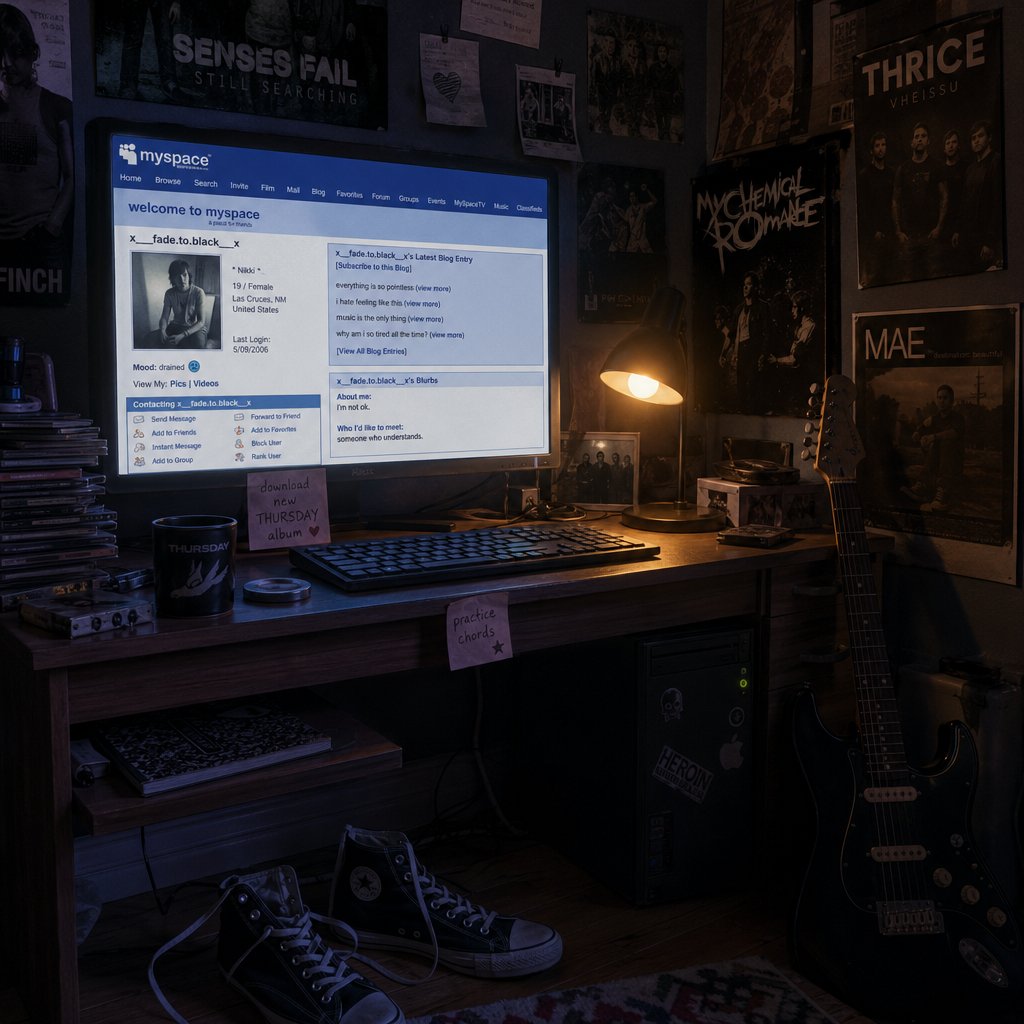
MySpace was that platform -- and it didn't just host the emo and pop-punk explosion of 2005. It was the engine behind it. While Kanye West and 50 Cent were battling for hip-hop supremacy on the Billboard charts, a parallel universe of eyeliner, skinny jeans, and confessional lyrics was pulling millions of teenagers into a subculture that would define mid-2000s youth identity. The popular 2005 songs on the rock side of the spectrum didn't just chart -- they soundtracked an entire aesthetic movement that bled into fashion, language, and the earliest days of social media culture.
Most retrospectives on 2005 treat pop, hip-hop, and rock as separate conversations. They weren't. These genres were competing for the same ears on the same iPods, and the emo and indie breakthroughs of that year were every bit as commercially significant as the pop anthems dominating radio. The difference was how fans found them -- not through program directors, but through MySpace profiles, Kerrang! TV rotations, and word-of-mouth recommendations that spread faster than any marketing campaign could manufacture.
Emo and Pop-Punk Go Mainstream
Fall Out Boy's From Under the Cork Tree was the album that cracked the door wide open. Released in May 2005 on Island Records, it debuted at No. 9 on the Billboard 200 and eventually sold over 3.5 million copies in the United States alone. The lead single, "Sugar, We're Goin Down," peaked at No. 8 on the Hot 100 -- a remarkable position for a pop-punk track in a year dominated by R&B and hip-hop. The follow-up, "Dance, Dance," climbed to No. 9. Bassist Pete Wentz wrote the lyrics, vocalist and guitarist Patrick Stump composed the music, and together they created a formula that balanced emo's emotional intensity with hooks catchy enough for mainstream radio. Fall Out Boy didn't just enter the pop-punk conversation in 2005 -- they launched themselves into mainstream success and became one-third of what fans would later call the genre's "Big Three."
My Chemical Romance occupied the darker, more theatrical corner of that trio. Their second album, Three Cheers for Sweet Revenge, had been released in June 2004, but its commercial peak arrived squarely in 2005 as singles like "Helena (So Long & Goodnight)" and "I'm Not Okay (I Promise)" saturated music television and MySpace playlists. "I'm Not Okay" became something close to an emo anthem -- a track so omnipresent on Kerrang! TV that it practically defined the channel's rotation. The album went platinum, and the band's blend of punk aggression, gothic imagery, and unfiltered emotional vulnerability gave the genre a visual and sonic identity that resonated far beyond the music itself. By the time they began recording The Black Parade later that year, My Chemical Romance had graduated from underground cult act to arena-level headliner.
Panic! at the Disco completed the trifecta with a debut that shouldn't have worked on paper. A Fever You Can't Sweat Out, released in September 2005, was written primarily by guitarist Ryan Ross and composed by Ross, vocalist Brendon Urie, and drummer Spencer Smith. The album split itself into two halves -- one electronic-leaning, one more traditionally rock -- and tackled subjects like adultery and social hypocrisy with a theatrical flair that owed as much to cabaret as it did to punk. Its breakout single, "I Write Sins Not Tragedies," wouldn't peak on the Hot 100 until 2006, but the album's late-2005 release and rapid MySpace-fueled buzz made the band an instant fixture of the scene. The fact that they were teenagers from Las Vegas with no prior industry connections only reinforced the narrative that emo's mainstream moment was being built from the ground up by fans, not labels.
Indie and Alternative Rock's Breakout Tracks
Emo and pop-punk grabbed the loudest headlines, but the broader alternative and indie rock landscape in 2005 was just as consequential. Death Cab for Cutie had spent years building a devoted following through independent releases and a well-timed cultural boost -- the band's music was prominently featured on The O.C., one of the most-watched shows among the same demographic buying emo records. Their major-label debut, Plans, arrived in August 2005 on Atlantic Records and debuted at No. 4 on the Billboard 200. Singles like "Soul Meets Body" and "Crooked Teeth" brought Ben Gibbard's introspective songwriting to a mainstream audience without sacrificing the understated, melancholic tone that had defined the band's earlier work. Death Cab proved that indie rock could scale up commercially without selling out creatively -- a template that dozens of bands would try to replicate over the next decade.
The Killers were riding the momentum of their 2004 debut, Hot Fuss, which continued to dominate through 2005 with singles like "Mr. Brightside" and "Somebody Told Me" still in heavy rotation on both sides of the Atlantic. "Mr. Brightside" in particular became one of those rare tracks that transcended its release year entirely -- a song that charted, left, and kept coming back, eventually becoming one of the most-streamed rock songs of all time. Franz Ferdinand's "Take Me Out" followed a similar trajectory, carrying its angular post-punk revival energy well into 2005 and influencing a wave of guitar bands who saw that danceable rock could coexist with critical credibility.
Here are the essential rock, emo, and indie tracks that made 2005 a landmark year for guitar-driven music, organized by subgenre:
Emo and Pop-Punk
- "Sugar, We're Goin Down" -- Fall Out Boy. Peaked at No. 8 on the Hot 100. The song that brought pop-punk to mainstream radio and helped From Under the Cork Tree sell millions.
- "Dance, Dance" -- Fall Out Boy. Peaked at No. 9. A second massive single that proved the debut wasn't a fluke and cemented the band's crossover appeal.
- "Helena (So Long & Goodnight)" -- My Chemical Romance. A fan favorite and MTV staple whose music video -- featuring a funeral procession and choreographed dancing -- became one of the year's most iconic visuals.
- "I'm Not Okay (I Promise)" -- My Chemical Romance. The unofficial emo anthem of the mid-2000s, inescapable on music television and a gateway track for an entire generation of rock fans.
- "I Write Sins Not Tragedies" -- Panic! at the Disco. Released on A Fever You Can't Sweat Out in late 2005, it became a top hits 2005 contender that exploded into a chart smash the following year.
- "Dirty Little Secret" -- The All-American Rejects. A pop-punk earworm from Move Along that bridged the gap between emo's emotional core and pure pop accessibility.
- "Ohio Is for Lovers" -- Hawthorne Heights. A screamo-tinged track that became an emo anthem in its own right, driven by raw lyrics about long-distance heartbreak.
Indie and Alternative Rock
- "Soul Meets Body" -- Death Cab for Cutie. The lead single from Plans that carried indie rock's introspective spirit onto mainstream radio without compromising its quiet emotional power.
- "Mr. Brightside" -- The Killers. Originally released in 2003, it peaked commercially in 2004-2005 and became one of the top tracks of 2005 in both the U.S. and UK -- a song that simply refused to fade.
- "Somebody Told Me" -- The Killers. A synth-rock anthem that helped define the post-punk revival's commercial peak alongside Franz Ferdinand and Interpol.
- "Take Me Out" -- Franz Ferdinand. An angular, danceable rock single that won a Grammy and proved that art-school guitar music could fill dancefloors.
- "Feel Good Inc." -- Gorillaz. A genre-defying collaboration with De La Soul that blended alternative rock, hip-hop, and electronic production into one of the year's most critically acclaimed singles.
- "Boulevard of Broken Dreams" -- Green Day. The Grammy-winning Record of the Year that extended American Idiot's cultural dominance well into 2005 and proved punk could carry political weight on the biggest stages.
What tied all of these tracks together -- beyond guitars and emotional honesty -- was the way they traveled. MySpace profiles with auto-playing songs, custom HTML layouts plastered with band logos, and Top 8 friend lists that doubled as taste statements created a discovery ecosystem that existed entirely outside traditional media. A teenager in suburban Ohio could hear Panic! at the Disco for the first time through a friend's MySpace page, buy the album on iTunes that same afternoon, and have the band's lyrics in their AIM away message by evening. That feedback loop -- social media to digital purchase to personal identity -- was brand new in 2005, and emo was the genre that exploited it most effectively.
The fashion followed the music. Studded belts, band tees from Hot Topic, Converse sneakers, and side-swept bangs weren't just style choices -- they were signals of belonging. The tight jeans, dyed hair, and punk-goth aesthetic that defined the scene gave teenagers a visual vocabulary as distinctive as the music itself. Emo in 2005 wasn't just a genre. It was an identity kit -- sound, style, and social network bundled together in a way that anticipated how music fandoms would operate in the streaming era.
These rock and indie breakthroughs shared the year with pop megahits and hip-hop anthems, but they reached their audiences through fundamentally different channels. That raises a question the charts alone can't answer: which artists from 2005 turned a single moment of visibility into lasting careers, and which ones burned bright and disappeared?
Breakout Artists and Hidden Gems of the Era
The answer depends on which side of a very thin line an artist landed on. Some of the biggest songs of 2005 came from names that would go on to dominate the next decade. Others came from artists who delivered one perfect single and then quietly stepped out of the spotlight. Both groups shaped the year's soundtrack -- but their stories diverge sharply from there.
One-Hit Wonders Who Defined a Moment
Every great year in music produces a handful of tracks that feel inescapable for a few months and then vanish along with the artists behind them. 2005 had more than its share. Daniel Powter's "Bad Day" became the go-to elimination anthem on American Idol, eventually reaching No. 1 on the Hot 100 and becoming the most-played song of 2006 in the U.S. Powter continued releasing music -- his last album, Giants, arrived in 2018 -- but he never came close to replicating that mainstream moment and now focuses primarily on songwriting and production behind the scenes.
The Click Five rode teen-pop energy to No. 11 on the Hot 100 with "Just the Girl," a preppy power-pop track that fit perfectly into the mid-2000s soundtrack of shows like Zoey 101. Lineup changes and declining interest led to the band's breakup in 2013, though former members remain active as producers and songwriters. DHT, a Belgian duo, turned Roxette's 1988 power ballad "Listen to Your Heart" into a trance anthem that peaked at No. 8 -- then released a few more singles before quietly fading from the industry entirely.
Frankie J's "Obsession (No Es Amor)" climbed to No. 3 on the Hot 100, blending English and Spanish lyrics into a Latin-pop crossover that felt like it could launch a major career. It didn't. He remains active in the industry, still recording and performing, but largely outside of mainstream charts. And then there was Crazy Frog -- a CGI amphibian riding a wave of ringtone-driven hysteria that topped the UK Singles Chart and reached No. 50 on the Hot 100 with "Axel F." The character resurfaced in 2021 with the single "Tricky" and continues racking up millions of YouTube views, proving that nostalgia and mild irritation have a surprisingly long shelf life.
What connects these artists isn't a lack of talent -- it's timing and context. The mid-2000s music industry was brutal to artists who couldn't deliver a strong second single quickly. Radio programmers moved on fast, and the new digital marketplace rewarded repeat buyers. One great track wasn't enough to build a sustainable career unless the album behind it could hold attention.
Breakouts That Became Lasting Careers
Not every 2005 debut was a dead end. Several artists used that year as a launchpad for careers that are still going strong. Rihanna released "Pon de Replay" in the summer of 2005, a dancehall-pop single that peaked at No. 2 on the Hot 100. Within two years, she'd become one of the best-selling artists of all time. Carrie Underwood won American Idol Season 4 and released "Jesus, Take the Wheel" -- a song that peaked at No. 20 on the Hot 100 and launched a country career that has since earned eight Grammy Awards and over 85 million records sold worldwide.
Chris Brown's "Run It!" spent five weeks at No. 1, and his self-titled debut album went quadruple platinum. T-Pain broke through with "I'm Sprung" and "I'm N Luv (Wit a Stripper)," introducing Auto-Tune as a creative vocal tool that would reshape R&B and pop production for the rest of the decade. Akon's "Lonely" reached No. 4 on the Hot 100 -- its music video has since joined YouTube's Billion Views Club -- and he went on to become one of the most prolific hitmakers and featured artists of the late 2000s, helping launch the careers of Lady Gaga and T-Pain along the way.
The gap between a one-hit wonder and a lasting star often came down to album depth and adaptability. Artists who could follow a breakout single with a second and third hit -- and who could evolve their sound as the industry shifted -- survived the transition from downloads to streaming. Those who couldn't were left with one perfect time capsule of a track.
| Artist | Breakout Song | Genre | Career Outcome |
|---|---|---|---|
| Rihanna | Pon de Replay | Dancehall-Pop | Lasting star |
| Carrie Underwood | Jesus, Take the Wheel | Country | Lasting star |
| Chris Brown | Run It! | R&B / Pop | Lasting star |
| T-Pain | I'm Sprung | R&B / Hip-Hop | Lasting star |
| Akon | Lonely | Pop / R&B | Lasting star |
| Daniel Powter | Bad Day | Pop | One-hit wonder |
| Frankie J | Obsession (No Es Amor) | Latin Pop | Moderate career |
| The Click Five | Just the Girl | Pop-Rock | One-hit wonder |
| DHT | Listen to Your Heart | Eurodance | One-hit wonder |
| Amerie | 1 Thing | R&B | Moderate career |
| Bobby Valentino | Slow Down | R&B | Moderate career |
| Natalie | Goin' Crazy | Pop-R&B | One-hit wonder |
| Crazy Frog | Axel F | Novelty / Dance | One-hit wonder |
| Trillville | Some Cut | Crunk | One-hit wonder |
Country and R&B Gems Worth Rediscovering
The 2005 top songs conversation tends to center on pop and hip-hop, but country and R&B produced some of the year's most enduring music. Country, in particular, was having a quiet commercial surge. Carrie Underwood's Idol win brought mainstream attention to the genre, but she wasn't the only one making waves. Keith Urban's "Days Go By" and "Better Life" kept him in heavy rotation on both country and adult contemporary radio. Dierks Bentley's "Come a Little Closer" spent three weeks at No. 1 on the Country Airplay chart, channeling a classic Conway Twitty-style sultriness that proved new country could still lean into tradition. Miranda Lambert's "Kerosene" -- a fiery revenge anthem from her debut album -- lit the fuse on what would become one of the most decorated careers in modern country music.
Toby Keith delivered one of his most relatable singles with "As Good as I Once Was," a self-deprecating bar-room saga about aging that peaked at No. 28 on the Hot 100. And Josh Turner's "Your Man" used his impossibly deep baritone to create what Billboard described as country's answer to Barry White -- a bedroom ballad that made listeners clutch their pearls. These weren't crossover pop hits chasing mainstream approval. They were distinctly country records that found large audiences by leaning into the genre's strengths rather than away from them.
On the R&B side, the year's 2005 pop songs overlapped heavily with rhythm and blues, but several tracks stood on their own as genre-defining moments. Amerie's "1 Thing" -- driven by an infectious, unrelenting go-go drum loop -- peaked at No. 8 on the Hot 100 and earned a Grammy nomination. She continued releasing music but never matched that commercial peak, eventually pivoting to a successful career as a novelist in the sci-fi and fantasy genres. Bobby Valentino's "Slow Down" earned platinum certification and reached No. 8, establishing him as a smooth R&B voice, though he never replicated that mainstream success and has since continued releasing music independently.
Mary J. Blige's "Be Without You" arrived late in the year and became a monster smash that carried well into 2006, winning two Grammys and peaking at No. 3 on the Hot 100. John Legend's "Ordinary People" -- co-written and co-produced with will.i.am -- earned three Grammy nominations, including Song of the Year, and proved that a piano-driven R&B ballad could cut through a year packed with bombastic production. Mario's "Let Me Love You" had already spent nine weeks at No. 1 and finished No. 3 on the year-end chart, delivering one of the most flawless vocal performances by a male R&B artist in the 2000s.
These country and R&B standouts rounded out a year that was far more genre-diverse than any single playlist or chart recap can capture. The biggest songs of 2005 weren't confined to American radio, either -- across the Atlantic and around the world, a completely different set of artists and sounds were dominating the charts.
Famous Songs 2005 Produced Beyond the Billboard Charts
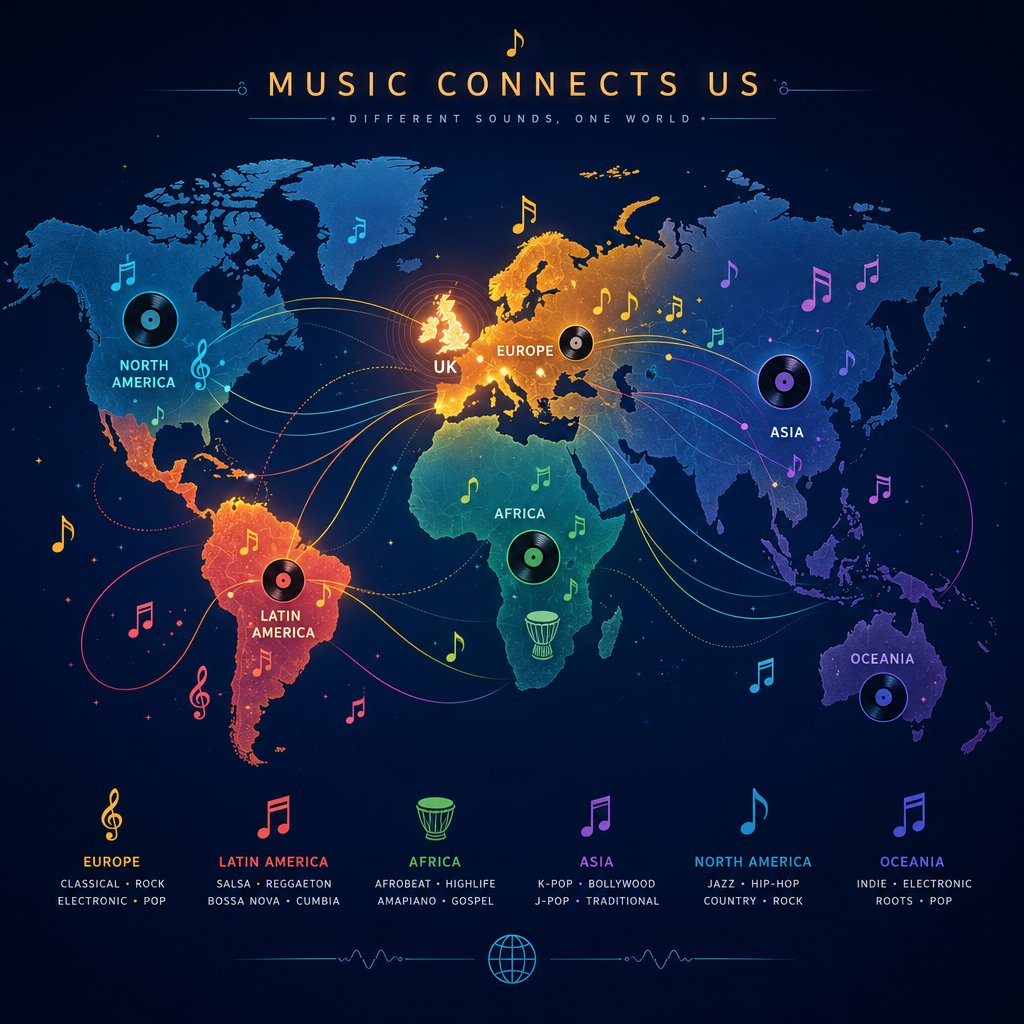
American chart recaps tell one version of the story. Step outside the U.S. and the picture shifts dramatically. Several of the most famous songs 2005 produced globally never cracked the top 10 on the Hot 100 -- and some of the biggest American hits barely registered overseas. The UK Singles Chart, European airplay rankings, and the World Chart Show year-end countdown all painted a version of 2005 where British singer-songwriters, novelty ringtone acts, and Latin reggaeton stars held as much power as Mariah Carey or Kanye West.
UK and European Chart-Toppers
The UK's official year-end singles chart for 2005 looked almost nothing like its American counterpart. The No. 1 spot went to Tony Christie featuring Peter Kay with "(Is This the Way to) Amarillo" -- a 1971 novelty track revived for a Comic Relief charity campaign that became a national phenomenon. It was the kind of hit that could only happen in the UK: a decades-old song, re-released with a comedic twist, outselling every new release in the country. You won't find it on any American chart from that year.
James Blunt's "You're Beautiful" landed at No. 4 on the UK year-end chart and topped singles charts across Europe, Australia, and eventually the U.S. Hot 100 as well. But his impact was far larger internationally than domestically. The track spent weeks at No. 1 in the UK, Germany, Italy, and several other European markets before American radio caught up. On the World Chart Show's year-end list, Blunt placed at No. 5 -- higher than his U.S. year-end position -- reflecting how deeply the song resonated across global audiences. His debut album, Back to Bedlam, became the best-selling album of 2005 in the UK and one of the top sellers worldwide.
Then there was Crazy Frog. The CGI amphibian's "Axel F" -- a ringtone-era novelty built on Harold Faltermeyer's Beverly Hills Cop theme -- hit No. 1 in the UK, Germany, France, Australia, and over a dozen other countries. It finished No. 3 on the UK year-end chart, ahead of tracks by Madonna, Coldplay, and Eminem. In the U.S., it barely scraped the lower half of the Hot 100. The gap between Crazy Frog's global dominance and its American irrelevance captures something essential about 2005: the international and American music markets were operating on different wavelengths, with different gatekeepers and different tastes.
Gorillaz offered a more critically respected version of that transatlantic divide. "Feel Good Inc." featuring De La Soul reached No. 14 on the UK year-end chart and No. 11 on the World Chart Show's annual countdown, while "Dare" featuring Shaun Ryder landed at No. 26 in the UK. Both singles performed well in the U.S. -- "Feel Good Inc." peaked at No. 14 on the Hot 100 -- but their cultural footprint was significantly larger in Europe, where Damon Albarn's virtual band was treated as a major album act rather than an alternative curiosity.
How the Global Sound Differed from the U.S.
Scan the top songs for 2005 on international charts and you'll notice genres and artists that barely registered on American radar. The World Chart Show's year-end top 100 featured U2's "City of Blinding Lights" at No. 1 globally -- a song that didn't even crack the top 50 on the U.S. year-end Hot 100. Coldplay placed two songs in the global top 25 ("Speed of Sound" at No. 6 and "Fix You" at No. 23), reflecting their status as one of the world's biggest rock acts even as American charts leaned heavily toward hip-hop and R&B. Shakira's "La Tortura" featuring Alejandro Sanz hit No. 16 on the global chart, signaling reggaeton and Latin pop's growing international reach well before the genre's U.S. streaming explosion a decade later.
The UK chart, meanwhile, was stacked with homegrown acts that had little to no American presence. Shayne Ward's "That's My Goal" -- the X Factor winner's debut single -- finished No. 2 for the year. McFly, Sugababes, Oasis, Kaiser Chiefs, Arctic Monkeys, Stereophonics, and KT Tunstall all placed in the top 100 hits from 2005 in the UK while remaining largely unknown to U.S. audiences. Arctic Monkeys' "I Bet You Look Good on the Dancefloor" debuted at No. 1 on the UK weekly chart and finished No. 17 for the year -- the opening salvo of a career that would eventually make them one of the biggest rock bands on the planet.
Daddy Yankee's "Gasolina" charted at No. 94 on the UK year-end list and appeared on charts across Latin America, Europe, and Asia. It was arguably the most globally significant reggaeton track of the decade, introducing the genre to mainstream audiences in markets where it had previously been a niche sound. On the World Chart Show, N.O.R.E.'s "Oye Mi Canto" featuring Daddy Yankee also placed, reinforcing reggaeton's growing international footprint.
Here are notable international hits that round out the global picture of 2005:
- "(Is This the Way to) Amarillo" -- Tony Christie feat. Peter Kay (UK). No. 1 on the UK year-end chart. A 1971 novelty track revived for Comic Relief that became the UK's best-selling single of the year.
- "You're Beautiful" -- James Blunt (UK). No. 4 UK year-end, No. 5 on the World Chart Show. A global smash that topped charts in over 10 countries before reaching No. 1 in the U.S.
- "Axel F" -- Crazy Frog (Sweden/Germany). No. 3 UK year-end. The ringtone-era phenomenon that hit No. 1 in dozens of countries but barely charted in America.
- "Feel Good Inc." -- Gorillaz feat. De La Soul (UK). No. 14 UK year-end, No. 11 on the World Chart Show. A genre-blending single with far greater cultural weight in Europe than in the U.S.
- "City of Blinding Lights" -- U2 (Ireland). No. 1 on the World Chart Show year-end. A global chart-topper that reflected U2's massive international touring presence behind How to Dismantle an Atomic Bomb.
- "La Tortura" -- Shakira feat. Alejandro Sanz (Colombia/Spain). No. 16 on the World Chart Show. A Spanish-language hit that charted across Europe and Latin America, previewing reggaeton's global takeover.
- "Gasolina" -- Daddy Yankee (Puerto Rico). No. 94 UK year-end, charted across Latin America, Europe, and Asia. The reggaeton anthem that introduced the genre to a worldwide audience.
- "I Bet You Look Good on the Dancefloor" -- Arctic Monkeys (UK). No. 17 UK year-end. A debut single that launched one of the 21st century's most important rock bands.
- "Push the Button" -- Sugababes (UK). No. 10 UK year-end. A synth-pop hit that dominated European charts while remaining virtually unknown in the U.S.
- "Speed of Sound" -- Coldplay (UK). No. 6 on the World Chart Show. A global rock anthem that performed significantly better internationally than on the American Hot 100.
The disconnect between American and international charts in 2005 wasn't just a quirk of geography. It reflected fundamentally different industry structures -- the UK's chart still weighted physical sales heavily, European radio favored rock and dance-pop over hip-hop, and Latin American markets were building their own parallel hit ecosystem around reggaeton and cumbia. These parallel worlds would eventually converge as streaming erased national borders, but in 2005, where you lived still determined what you heard. That fragmentation makes the year's global output richer and harder to summarize than any single chart can capture -- and it raises a bigger question about what all of these sounds, taken together, actually meant for the future of popular music.
How the Music of 2005 Shaped Everything After
All of those parallel worlds -- American pop, Southern hip-hop, UK guitar rock, global reggaeton, emo subculture -- didn't just coexist in 2005. They set trajectories. The genres that peaked or emerged that year didn't fade when the calendar turned. They mutated, cross-pollinated, and laid the foundation for sounds that would dominate the next two decades. Understanding the top songs in 2005 isn't just an exercise in nostalgia. It's a map of where modern music came from.
From Downloads to Streaming and What Changed
The digital download revolution that reshaped the Billboard Hot 100 2005 was, in hindsight, a halfway point. iTunes proved that consumers would pay for individual tracks delivered instantly to a device. That behavioral shift -- choosing songs over albums, convenience over physical ownership -- was the exact logic that streaming platforms would scale a decade later. When Spotify launched in the U.S. in 2011, it didn't have to convince listeners that music could live on a screen instead of a shelf. Apple and the iPod had already done that work.
The numbers tell the story clearly. Global digital music revenue hit $1.1 billion in 2005, up from $380 million the year before. Music fans downloaded 420 million single tracks worldwide that year -- more than double the 156 million downloaded in 2004. In the U.S. alone, single-track downloads doubled to 353 million units. As IFPI Chairman John Kennedy put it at the time, "2005 was the year that the digital music market took shape." The infrastructure, the consumer habits, and the industry's grudging acceptance of digital-first distribution all crystallized in that 12-month window.
2005 was the last year the music industry could pretend that physical media was still the primary way people connected with new songs -- and the first year that proved the digital future wasn't coming, but had already arrived.
The transition wasn't smooth. Labels were still fighting piracy lawsuits against individual file-sharers, and interoperability issues between Apple's ecosystem and competing devices were hampering growth. But the direction was irreversible. The 2005 top 100 songs were among the last major hits to be measured primarily by radio spins and paid downloads. Within a decade, streaming counts would replace both metrics as the dominant currency of the charts. Every playlist algorithm, every Spotify Wrapped summary, every viral TikTok sound traces its commercial logic back to the moment when Billboard decided that digital purchases deserved to count.
Genres That Were Born or Transformed
The genre-level ripple effects are even more striking. Southern hip-hop's 2005 dominance -- the crunk anthems, the snap minimalism, the trap foundations laid by T.I. and Young Jeezy -- didn't just have a good year. It rewired the genre's center of gravity permanently. As NPR's coverage of trap's origins documented, the wave that started with T.I.'s Trap Muzik in 2003 and peaked commercially around 2005 evolved through successive generations -- Gucci Mane and Waka Flocka Flame, then Future and Migos and Young Thug -- until trap became the default sound of mainstream hip-hop. By the mid-2010s, trap production had permeated pop so deeply that artists like Katy Perry were collaborating with Migos. Every 808-heavy beat on a modern pop record carries DNA from the Atlanta scene that hit 2005 at full force.
Emo and pop-punk followed a different but equally consequential path. The mainstream breakthrough of Fall Out Boy, My Chemical Romance, and Panic! at the Disco in 2005 didn't just sell records -- it reshaped the emotional vocabulary of pop music for the following decade. Artists like Halsey, who cited My Chemical Romance and Brand New as direct influences, carried emo's confessional intensity into 2010s pop. Taylor Swift featured Fall Out Boy's Patrick Stump and Paramore's Hayley Williams on re-recorded material, explicitly acknowledging the debt. Even the hyperpop movement -- Charli XCX, SOPHIE, and their descendants -- can be traced through crunkcore acts like 3OH!3, who emerged from the same mid-2000s scene that blended post-hardcore energy with electronic production. Skrillex, one of the most Grammy-awarded EDM artists of the 2010s, started as the vocalist of post-hardcore band From First to Last. The pipeline from 2005 emo to 2010s electronic pop is direct and well-documented.
Indie rock's 2005 breakout fed into a different kind of legacy: the blog-era discovery culture that dominated the late 2000s. Death Cab for Cutie's jump to a major label, The Killers' transatlantic dominance, and Arctic Monkeys' debut all demonstrated that guitar bands could build massive audiences outside traditional radio. That proof of concept fueled the rise of music blogs like Pitchfork, Stereogum, and Gorilla vs. Bear as tastemaking platforms. By 2007 and 2008, bands like Vampire Weekend, Fleet Foxes, and Bon Iver were breaking through blog coverage in ways that echoed how MySpace had launched emo acts just two years earlier. The discovery model shifted from social profiles to RSS feeds, but the underlying principle -- fans finding music through peer networks rather than corporate gatekeepers -- remained the same.
Even the global fragmentation visible in 2005's international charts foreshadowed what streaming would eventually unify. Daddy Yankee's "Gasolina" introduced reggaeton to worldwide audiences in 2005, but the genre had to wait over a decade for streaming to erase the distribution barriers that kept Latin music siloed in regional markets. When "Despacito" broke global records in 2017, it was completing a journey that "Gasolina" had started. The same applies to K-pop, Afrobeats, and other non-English-language genres that were building local audiences in 2005 but couldn't reach global scale until streaming made geography irrelevant.
What makes the hit 2005 catalog so significant isn't just the quality of individual songs. It's the fact that nearly every major trend in popular music over the following 20 years -- trap's takeover, emo's influence on pop songwriting, indie rock's blog-era boom, Latin music's global explosion, the shift from ownership to access -- can be traced to seeds planted or watered in that single year. The sounds were diverse, the delivery systems were in flux, and the artists were pushing boundaries in ways that wouldn't fully pay off until the industry caught up. That combination of creative ambition and technological upheaval is what makes 2005 more than a nostalgia trip -- and it's why so many of those tracks still sound like they belong in the present tense.

Relive the Sound or Make It Your Own
Knowing where the music of 2005 came from and where it went is one thing. Actually doing something with that knowledge -- beyond queuing up the same Spotify playlist for the hundredth time -- is where things get interesting. The songs from 2005 aren't museum pieces. Their production signatures, genre fusions, and emotional textures are alive in modern music, and they're more accessible to experiment with than ever before.
Playlists and Listening Guides for Every Genre
If you want to go deep on the songs released in 2005, the best approach is genre-specific rather than one massive shuffle. A playlist that jumps from Kanye West to Fall Out Boy to James Blunt to Trillville creates whiplash, not immersion. Instead, think of 2005 as five or six distinct listening experiences, each with its own mood and arc.
Start with the pop side: Kelly Clarkson's Breakaway, Gwen Stefani's Love. Angel. Music. Baby., and Mariah Carey's The Emancipation of Mimi form a trilogy of albums that captures the full range of mid-2000s pop -- from guitar-driven anthems to hip-hop-inflected dance tracks to classic R&B balladry. Play them back to back and you'll hear how wide the genre's lane actually was that year.
For hip-hop, build around the three albums that debuted at No. 1: Kanye West's Late Registration, 50 Cent's The Massacre, and Young Jeezy's Thug Motivation 101. Add the crunk and snap singles -- Ying Yang Twins, Trillville's "Some Cut," D4L -- and you've got a playlist that traces Southern rap's evolution from club music to chart-dominating force. The emo and indie lane deserves its own queue entirely: Fall Out Boy, My Chemical Romance, Panic! at the Disco, Death Cab for Cutie, and The Killers tell the story of a subculture going mainstream in real time.
And don't skip the international tracks. A playlist built around the 2005 Billboard top 100 misses half the picture. Add James Blunt, Arctic Monkeys, Gorillaz, Daddy Yankee, and Shakira to hear what the rest of the world was actually listening to. The contrast between the American and global charts is one of the most revealing things about the year -- and one of the most fun to explore.
Turn Your Favorite 2005 Sound into Something New
Listening is a great starting point, but the real creative potential of 2005's sound lies in what you can make with it. The crunk beats, emo guitar tones, synth-pop hooks, and Southern rap cadences that defined the year aren't locked in the past. Modern production tools have made it possible for anyone -- not just signed artists with studio budgets -- to channel those textures into original music. WIPO research on music in the digital age shows that cross-genre inspiration has been accelerating for decades, with artists increasingly drawing from styles outside their own lane. The tools have caught up to that instinct. You don't need to know music theory or own a DAW to turn a genre idea into a finished track.
MakeBestMusic's AI Song Generator is one of the most direct ways to act on that impulse. You describe a genre, era, mood, or song concept, and it generates an original royalty-free track in seconds. Want to hear what a mid-2000s crunk party anthem would sound like with a modern twist? Curious how an emo pop-punk ballad translates into a fresh instrumental? You can test those ideas instantly without needing production experience or expensive software.
Here are a few creative prompts inspired by the genres that made 2005 a landmark year:
- "Mid-2000s crunk party anthem" -- heavy 808 bass, chant-style hooks, and high-energy club production in the style of Lil Jon and the Ying Yang Twins.
- "Emo pop-punk ballad with driving guitars" -- confessional lyrics, power chords, and the emotional intensity of Fall Out Boy or My Chemical Romance at their peak.
- "2005-era indie rock road trip song" -- jangly guitars, introspective vocals, and the wistful atmosphere of Death Cab for Cutie or The Killers.
- "Southern rap anthem with trap undertones" -- the gritty, bass-driven energy of Young Jeezy and T.I. that laid the groundwork for modern trap.
- "Synth-pop dance track with a 2005 feel" -- the playful, genre-blending production style of Gwen Stefani or the Black Eyed Peas, mixing new wave textures with hip-hop bounce.
- "R&B slow jam inspired by mid-2000s radio" -- smooth vocals, lush production, and the romantic warmth of Mariah Carey's or Mario's biggest ballads.
- "Reggaeton-infused pop with Latin percussion" -- the rhythmic energy of Daddy Yankee's "Gasolina" era, blending dembow beats with mainstream pop hooks.
Each of those prompts maps directly to a sound that defined 2005 -- and each one can become a starting point for something entirely your own. Whether you're a content creator looking for a royalty-free backing track, a musician sketching out ideas, or just someone who wants to hear what their favorite era sounds like reimagined, the barrier between inspiration and creation has never been lower.
That's the real legacy of the year's music. The songs from 2005 didn't just fill a playlist -- they built a sonic vocabulary that producers, songwriters, and listeners are still drawing from. Crunk became trap. Emo reshaped pop songwriting. Indie rock fueled a decade of blog-era discovery. Digital downloads paved the road to streaming. Every genre that peaked or broke through in 2005 left behind a blueprint that someone, somewhere, is still building on. The best way to honor that legacy isn't just to listen. It's to take the sounds that moved you and make something new with them.
