

What Breakcore Music Actually Sounds Like
Imagine pressing play and being hit by a wall of drum patterns so fast they blur into a single, stuttering roar. Snares ricochet like pinballs. Kick drums fire in bursts that feel physically impossible. Somewhere underneath, a pitched-up vocal sample or a ghostly piano melody drifts by, almost peaceful, before the next avalanche of chopped-up breaks swallows it whole. That is the experience of hearing breakcore music for the first time.
Breakcore is a subgenre of electronic music rooted in hardcore, jungle, and drum and bass, defined by complex, fragmented breakbeats typically exceeding 160 BPM and an intentional embrace of sonic chaos.
A Genre Built on Beautiful Chaos
What separates this genre from the broader electronic landscape is its relationship with disorder. Where most dance music aims for a groove you can lock into, breakcore tears the groove apart and reassembles it into something deliberately disorienting. As The Tonearm puts it, the genre embodies a kind of yin and yang: calm, sometimes hauntingly beautiful melodic leads layered against inhumanly chaotic drums that only music-making software can produce. That tension between serenity and aggression is the whole point. It is not noise for the sake of noise. It is a collage, a cut-and-paste art form built from samples pulled from anywhere and everywhere, then stitched together at blistering speed.
How Breakcore Differs from Breakbeat and Drum and Bass
A common stumbling block for newcomers is sorting breakcore from its relatives. Breakbeat is a broad rhythmic category, not a genre in itself. It simply refers to syncopated drum patterns that "play off-beat" rather than on a straight four-on-the-floor pulse. Drum and bass uses those breakbeats too, but typically keeps them in a tighter, more danceable framework between 160 and 185 BPM. Breakcore takes the same raw material and pushes it to extremes. Tempos regularly climb past 200 BPM. Breaks get sliced into microscopic fragments, layered on top of each other, and drenched in distortion. Where drum and bass wants you on the dancefloor, breakcore is just as happy pulling you into a headphone session that feels like falling through a trapdoor into dandys world of fractured rhythm and sensory overload.
The Emotional Core Behind the Noise
Beneath the surface-level chaos, there is genuine emotional weight. Track titles in the genre lean toward the melancholic or absurd, and popular YouTube mixes frequently carry words like "dissociate" in their names. This is not accidental. The contrast between serene melodies and frantic percussion mirrors a kind of psychological duality, a feeling of being present and distant at the same time. Breakcore does not just sound chaotic. It feels like something, and that emotional resonance is exactly why it keeps pulling in new listeners decades after its emergence.
That emotional pull did not appear out of thin air. It was built on a single, six-second drum loop that changed electronic music forever.
The Amen Break and the Rhythmic DNA of Breakcore
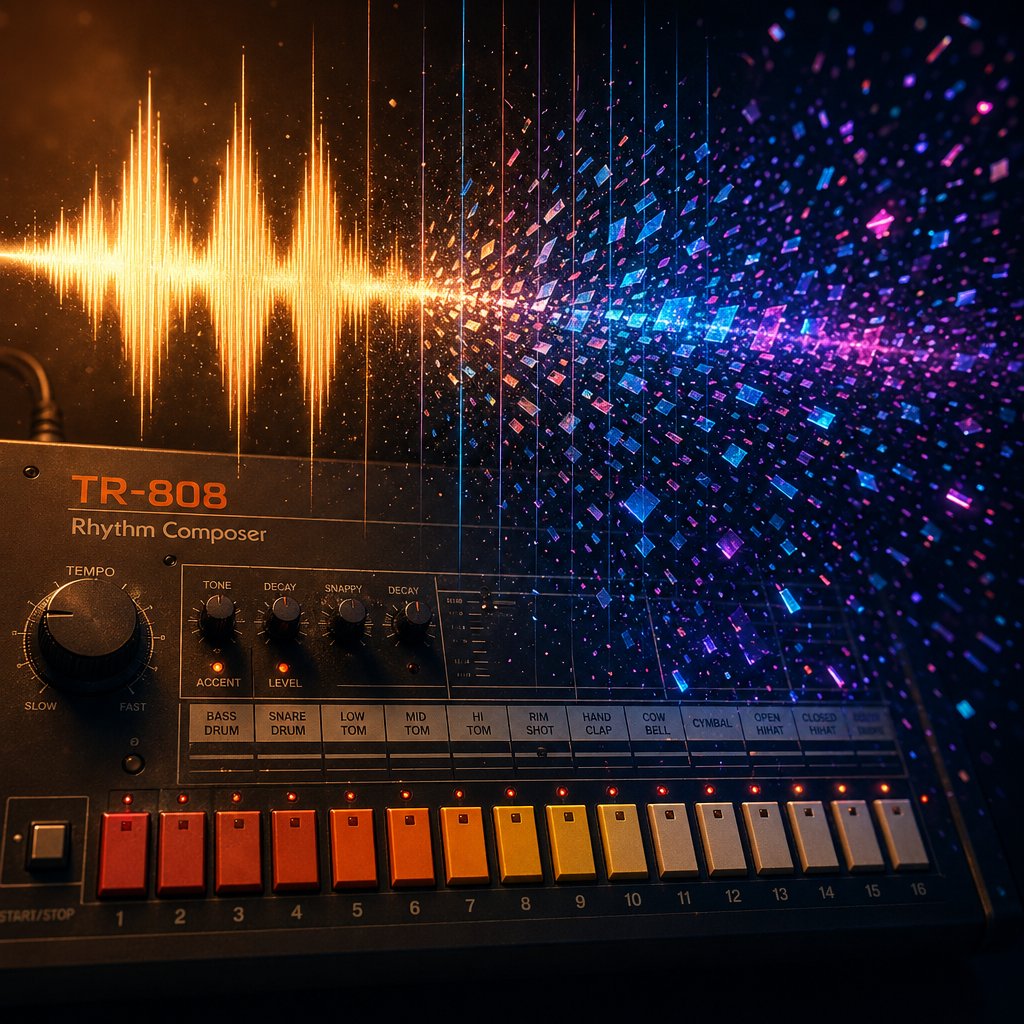
Six seconds. That is all it took. In 1969, drummer Gregory Sylvester Coleman laid down a brief solo during the B-side of The Winstons' single "Color Him Father." The track was called "Amen, Brother," and it went largely unnoticed at the time. Two decades later, that six-second loop became the most sampled piece of music in history, and the rhythmic backbone of an entire family of genres.
The Amen Break and Why It Matters
So what makes this particular loop so special? Listen closely and you'll notice a few things. The ride cymbal keeps time instead of a hi-hat, giving the pattern an open, airy feel. A delayed snare in the third bar adds a syncopated pull, and a brief gap in the beat creates a jarring, almost magnetic tension. As a live recording from the late 1960s, the Amen break also carries a natural crispness and warmth that synthesized drums simply cannot replicate. When pitched up, the snare takes on a sharp, metallic bite perfect for jungle. Pitched down, it becomes heavy and gritty, ideal for hip-hop. Hip-hop producers and UK rave artists discovered this versatility in the late 1980s, chopping the break into individual hits on hardware samplers and building entirely new rhythms from its fragments.
Breakcore producers took that process and pushed it off a cliff. Where jungle might loop the Amen break with tasteful edits, breakcore slices it into dozens of micro-fragments, timestretches them until the audio warps, pitch-shifts individual hits across octaves, and layers multiple mutated versions on top of each other. The result is often unrecognizable as the original sample. Think of it less like recycling a drum pattern and more like running geometry formulas on rhythm itself, deconstructing the math of the beat and rebuilding it into something alien.
Breakcore Tempo and Rhythmic Anatomy
Beyond the Amen break, the genre's rhythmic identity comes down to speed and density. Tempos typically sit between 160 and 300+ BPM, with some subgenres like flashcore pushing well past that. Rapid-fire snare rolls, stuttered kick patterns, and polyrhythmic layering are standard tools. Where drum and bass keeps its breakbeats relatively structured and danceable, breakcore treats percussion as a melodic instrument. The rhythm is the composition.
Here is how the three genres compare at a technical level:
| Characteristic | Jungle | Drum and Bass | Breakcore |
|---|---|---|---|
| Typical BPM Range | 150 – 170 | 160 – 185 | 160 – 300+ |
| Amen Break Usage | Chopped and looped, often recognizable | Sampled or programmed, relatively intact | Sliced, warped, and layered beyond recognition |
| Rhythmic Complexity | Syncopated, energetic, groove-oriented | Tight, driving, dancefloor-focused | Chaotic, polyrhythmic, deliberately disorienting |
| Primary Rhythmic Goal | Movement and bass weight | Danceability and momentum | Deconstruction and sonic collage |
Beyond the Amen — Other Classic Breaks in the Genre
The Amen break may be the genre's DNA, but it is not the only sample in the toolkit. The Apache break, the Think break, and the Funky Drummer loop all appear regularly in breakcore productions, often chopped and mangled with the same intensity. Some producers deliberately avoid the Amen entirely, building their own breaks from scratch or pulling from obscure vinyl sources to craft ideas that feel fresh. The point was never loyalty to one sample. It was always about what you could do to a breakbeat once you got your hands on it.
That spirit of relentless experimentation did not develop in a vacuum. It grew out of specific scenes, specific labels, and specific moments in underground music history.
From Jungle Raves to Internet Bedrooms
The early 1990s UK rave scene was a pressure cooker. Jungle had emerged from breakbeat hardcore, fueled by chopped Amen breaks, deep sub-bass, and a DIY culture rooted in pirate radio and warehouse parties. Simultaneously, European gabber was pushing tempos and aggression into punishing territory, while noise and industrial artists were proving that abrasion itself could be an art form. Breakcore crystallized at the exact point where those three impulses collided, somewhere around 1994 to 1996, in bedrooms and basements scattered across the UK, Germany, France, and Australia.
Jungle Roots and Hardcore Rave Origins
Jungle gave breakcore its raw material: the breakbeat, the sampler, and the ethos that a bedroom producer with a cheap Akai could compete with any major-label studio. Producers like Remarc were already chopping the Amen break into increasingly complex patterns by 1993, hinting at the rhythmic extremes to come. But where jungle still aimed at the dancefloor, a growing faction of producers wanted something more confrontational. In Berlin, Alec Empire founded Digital Hardcore Recordings in 1994, fusing punk aggression with breakbeats and electronic noise. In Australia, Bloody Fist Records was pressing proto-breakcore that sounded like hardcore techno thrown down a staircase. By 1996, the term "breakcore" started appearing in online forums and mailing lists, giving a name to a sound that had been brewing across multiple underground scenes at once.
The Underground Label Era
Every underground genre needs infrastructure, and breakcore found it through a handful of fiercely independent labels. Planet Mu became a critical home for the genre's most technically accomplished work, releasing early Venetian Snares albums that proved chopped breaks could carry the emotional weight of classical composition. Cock Rock Disco in Australia and Peace Off in France pushed the more abrasive, confrontational side. Ad Noiseam, operating out of Berlin, became a major hub through the mid-2000s, curating a catalog that spanned the full spectrum from brutal to beautiful. These labels distributed music through CDRs, vinyl pressings, and early netlabel downloads, building an international community connected less by geography than by shared obsession. Think of it like learning how to build a pc from scattered forum posts in the early 2000s: the knowledge was out there, but you had to dig for it, and the digging was part of the culture.
From SoundCloud Bedrooms to TikTok Virality
The shift from physical releases to internet-native distribution changed everything. Bandcamp and SoundCloud removed the gatekeepers entirely, letting anyone upload a track and find an audience without label support. A new generation of producers emerged through these platforms, artists like Goreshit, Sewerslvt, and Machine Girl, who built massive followings without ever pressing a single vinyl record. The genre entered a quieter period between roughly 2013 and 2019, but the infrastructure was quietly growing.
Then TikTok happened. Short clips of frenetic breakbeats layered over anime visuals started circulating algorithmically, introducing the genre to millions of listeners who had never heard of jungle or gabber. The revival that followed, starting around 2020, has made breakcore more globally active than at any point in its history. Labels and collectives like Death by Sheep, Norm Corps, and Landline Collective now bridge the gap between URL and IRL, hosting live events while maintaining deep roots in internet culture.
Here is a condensed timeline of the key moments that shaped the genre's arc:
- 1990-1993: UK jungle and hardcore rave scenes emerge; producers begin chopping the Amen break into increasingly complex patterns.
- 1994-1995: Alec Empire founds Digital Hardcore Recordings in Berlin. Bloody Fist Records in Australia releases proto-breakcore.
- 1996-1997: The term "breakcore" gains traction in online forums. The genre separates from jungle, gabber, and IDM as a distinct identity.
- 1999-2005: Venetian Snares rises through Planet Mu. Peace Off and Cock Rock Disco become key labels. The international community grows through internet forums.
- 2005-2012: Festivals like Breakcore Gives Me Wood attract international audiences. Igorrr, Ad Noiseam, and the netlabel scene expand the genre's reach.
- 2013-2019: A quieter period as a distinct scene, though Machine Girl and Goreshit continue pushing the sound forward online.
- 2020-present: TikTok-driven resurgence brings breakcore to mainstream platforms. New collectives emerge worldwide. The genre is more active globally than ever before.
The timeline tells one story, but the artists behind it tell a richer one. Each era produced figures who did not just participate in the genre but fundamentally reshaped what it could be.
Essential Breakcore Artists and Where to Start Listening
Every genre has its canon, but breakcore's has never been collected in one place. The artists who shaped this sound span three decades, multiple continents, and wildly different creative philosophies. Some came from classical music. Others came from punk. A few came from nowhere but a laptop and an internet connection. What connects them is a shared refusal to leave a breakbeat intact.
Pioneers Who Defined the Sound
Any serious conversation about breakcore starts with Venetian Snares. Aaron Funk, the prolific Canadian producer behind the name, built his reputation on impossibly fast, complex sound constructions with convoluted time signatures. His 2005 album Rossz Csillag Alatt Született, often called "the Hungarian album," remains the genre's single most important record. Funk sampled Bartok, Stravinsky, and Billie Holiday, then wove those fragments through thorough eviscerations of the Amen break in dizzying 7/4 time at 180 BPM. The result was an album of unparalleled intensity and beauty that popularized breakcore far beyond its underground roots. His catalog runs deep, from the joyful sample collages of The Chocolate Wheelchair Album to the grisly concept art of Doll Doll Doll, and each release proves the genre can carry real emotional weight.
Squarepusher, the project of English bassist and producer Tom Jenkinson, approached the same territory from a jazz-inflected angle. His early work on Warp Records blurred the line between live virtuosity and digital manipulation, layering frenetic breakbeats with complex bass guitar runs that sounded like they were arguing with the drums. Where Venetian Snares deconstructed classical music, Squarepusher deconstructed fusion, proving that breakcore's rhythmic language could absorb almost any influence and spit it back out transformed.
Then there is Igorrr. Gautier Serre's project fused breakcore with baroque composition, death metal, and Balkan folk music, sometimes within a single track. Albums like Hallelujah and Savage Sinusoid treated genre boundaries as suggestions to be ignored. Igorrr demonstrated that the genre's cut-and-paste logic was not limited to electronic source material. You could chop a harpsichord the same way you chopped an Amen break.
The Internet Generation of Breakcore
The mid-2010s brought a wave of producers who grew up online and built their audiences entirely through digital platforms. Machine Girl, the New York-based project of Matt Stephenson, became a bridge figure. The 2014 album WLFGRL straddled breakcore, hardcore breaks, footwork, and jungle, pulling in listeners from adjacent scenes and helping spark the genre's modern revival. Machine Girl's live shows, known for their physical intensity, also proved the sound could translate from headphones to a packed room.
Goreshit, the alias of Japanese-Canadian producer Bryan Lam, leaned into the melancholic side. His work layered delicate piano melodies and anime-influenced vocal samples over rapid-fire breaks, creating a bittersweet atmosphere that resonated deeply with online audiences. Sewerslvt pushed that emotional register even further, producing atmospheric, bass-heavy tracks that blended drum and bass structures with breakcore's chaotic energy. Though the term "breakcore" became contested around Sewerslvt's music, the project undeniably introduced thousands of new listeners to the genre's orbit.
Nero's Day at Disneyland, the project of Lauren Bousfield, occupied the genre's most abrasive edge. Albums like Attention Deficit Domination piled distorted samples, screaming synths, and shattered breakbeats into dense, overwhelming walls of sound. If Venetian Snares proved breakcore could be beautiful, Nero's Day at Disneyland proved it could be genuinely overwhelming, a block breaker that demolished any remaining expectation of accessibility.
A Listening Pathway from Accessible to Extreme
Diving into a genre this dense without a roadmap can feel like walking into a conversation mid-sentence. The following pathway moves from approachable entry points toward deeper, more challenging territory. Think of it less as a ranked list and more as a guided listening night routine, each record preparing your ears for the next.
- Rossz Csillag Alatt Született by Venetian Snares — the consensus starting point, where classical beauty meets rhythmic chaos in perfect balance.
- WLFGRL by Machine Girl — high-energy, genre-blending, and more rhythmically grounded than deep-cut breakcore.
- Detrimentalist by Venetian Snares — unapologetic 90s hardcore acid ragga junglism and one of the most accessible Snares releases.
- Hallelujah by Igorrr — baroque-meets-metal-meets-breakcore, ideal for listeners coming from heavier music.
- Semantic Compositions on Death and Its Meaning by Goreshit — melancholic, piano-driven, and emotionally direct.
- Draining Love Story by Sewerslvt — atmospheric and bass-heavy, a gateway from drum and bass into breakcore territory.
- Doll Doll Doll by Venetian Snares — a dark concept record with progressive jazz-cum-horrorcore intensity.
- Attention Deficit Domination by Nero's Day at Disneyland — the deep end, dense and abrasive, for listeners ready for full sensory overload.
For ongoing discovery beyond this list, RateYourMusic remains the best community-driven tool for finding new releases and reading listener-generated genre charts. Bandcamp is where you go to actually support the artists, most breakcore producers sell directly through the platform, often on a name-your-price basis. Between the two, you will never run out of rabbit holes to follow.
One of the deepest of those rabbit holes leads east. A parallel breakcore tradition developed in Japan, shaped by entirely different cultural forces, and its influence on the genre's global identity has been enormous.
The Japanese Breakcore Scene and Its Global Influence
Japan did not simply adopt breakcore. It rebuilt the genre in its own image, fusing frenetic Amen breaks with anime vocal samples, chiptune melodies, and the dramatic arc of video game soundtracks. The result was a sound that felt simultaneously familiar and alien to Western ears, and its aesthetic fingerprints are now all over the global scene.
How Japan Shaped Breakcore's Sound
The foundation was already in place. By the late 1990s, Japan had a thriving hardcore electronic music infrastructure centered around J-core, a homegrown take on hardcore techno that blended gabber kicks and rave energy with otaku culture. Producers like DJ SHARPNEL, Technorch, and t+pazolite were slicing influences from UK rave, Rotterdam gabber, and European hard techno together with samples from anime, pop music, and Vocaloid. DJ SHARPNEL's 1998 debut on the Sharpnelsound label set the template: relentless kicks and breaks upwards of 200 BPM, surgically sharp edits, and chipmunked chiptune melodies layered with cartoon schoolgirl voices. It was breakcore's editing ethos filtered through a completely different cultural lens.
What made the Japanese approach distinct was its rejection of dancefloor convention in a way that paralleled, but differed from, Western breakcore. As DJ Technorch explained, most Japanese hardcore fans bought CDs for home listening rather than club use. Houses in Japan are small, nobody dances at home, so producers avoided loops and built tracks with dramatic tempo changes, louder vocals, and radio-edit structures. The music was composed more like miniature symphonies than DJ tools. When you factor in the influence of rhythm games like Konami's Beatmania IIDX, where tracks need to pack maximum intensity into 120 seconds, you get a production philosophy built around density, melody, and constant structural surprise.
Anime Culture Meets Amen Breaks
The collision of kawaii aesthetics and sonic violence became the Japanese scene's defining signature. Lolicore, an internet-native offshoot that emerged in the mid-2000s, pushed this contrast to its extreme: ultra-fast breakbeats drenched in harsh distortion, paired with high-pitched vocal samples sourced from anime, denpa, and Vocaloid, all wrapped in pastel pixel-art packaging. The genre name itself references the cute visual language of anime fandom, and its tongue-in-cheek shock value became a gateway for a generation of Western fans who discovered it through torrents, 4chan threads, and YouTube recommendations.
This cross-pollination ran both ways. Western kids who grew up with Dragon Ball Z and Pokemon obsessively searched anime online and stumbled into J-core through its shared imagery. Some of those kids started making beats, uploaded them, and tagged them J-core. The Red Bull Music Academy noted that by the mid-2010s, you were just as likely to find a J-core producer in Ohio or Frankfurt as in Tokyo or Chiba. The genre's visual identity, glitched-out anime characters, lo-fi digital collage, and chaotic layering that mirrors the music's sonic fragmentation, became the default breakcore aesthetic worldwide.
Their music may be deeper and stranger than that of a 13-year-old warping pop songs to obscene speeds in Audacity, but because of the internet, they've somehow all ended up in the same club.
Key Events and Cross-Cultural Exchange
Physical gatherings cemented what the internet started. In Japan, the scene revolved around doujin fairs like Comiket and M3, where producers sold limited-edition CD-Rs and traded releases like rare collectibles. Tokyo events like Extreme Hard vs. Happy Jack, running since 2002 at venues like Akihabara's Mogra, drew crowds of 200 to 500 people spanning every demographic imaginable, from geeky schoolkids to suited salarymen fist-pumping at 3 PM on a Sunday. In the UK, Bang Face Weekender became a critical meeting point for international hardcore and breakcore communities, hosting Japanese artists alongside European producers and drawing 45% of its attendees from abroad. These events created real-world connections between scenes that had previously only overlapped online.
The Japanese scene's influence extends far beyond its own borders. Its embrace of cute-meets-chaos visual branding, its home-listening production philosophy, and its deep entanglement with anime and gaming culture collectively reshaped how the rest of the world sees and hears breakcore. Scroll through any breakcore tag on social media and the evidence is everywhere: the artwork, the sample choices, the entire vibe owes a massive debt to what Japanese producers built from the late 1990s onward.
That visual and cultural identity did not stay confined to album covers. It spilled into memes, online communities, and an entire internet subculture that treats breakcore as much more than just a sound.
Breakcore Aesthetic and Internet Culture
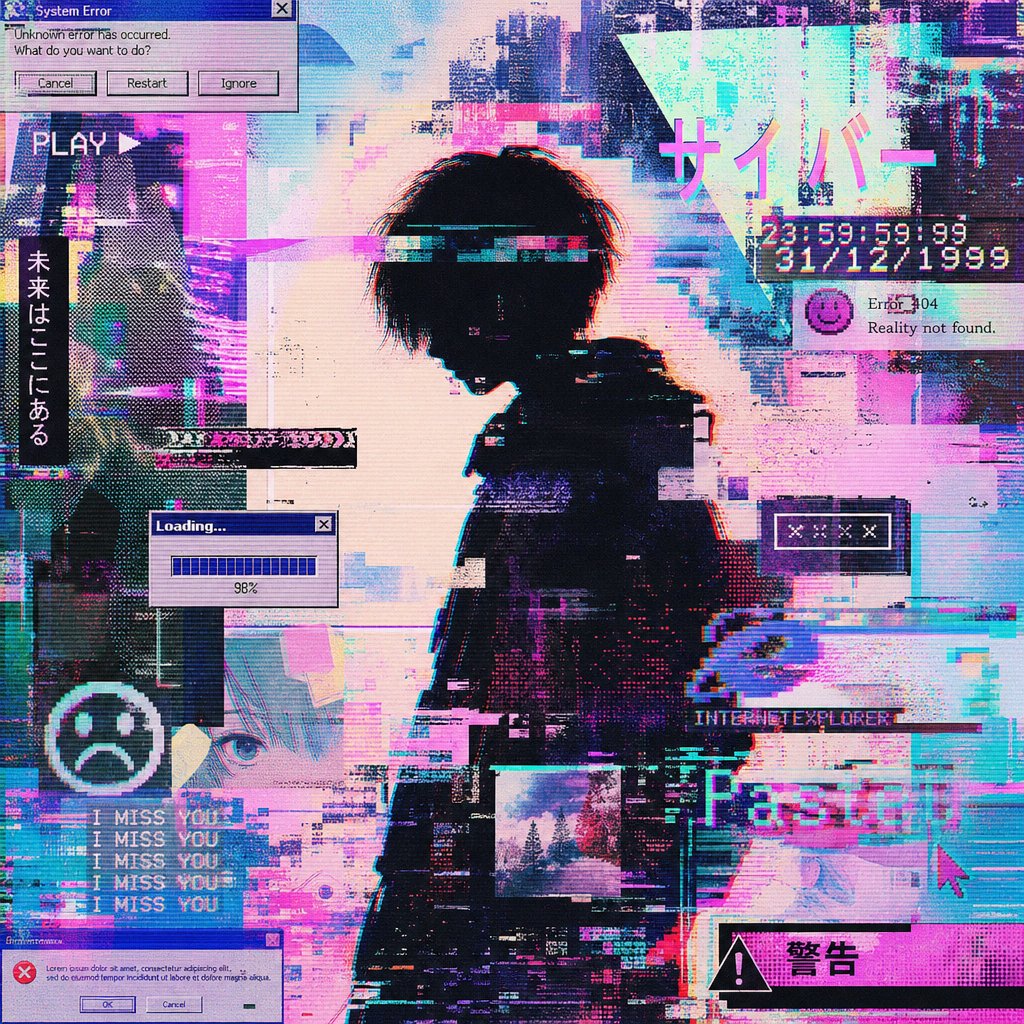
Search "breakcore" on any streaming platform and the music is almost secondary to what you see first. Glitched-out anime characters stare back at you through layers of pixel decay. Album covers look like someone fed a screenshot from Serial Experiments Lain through a broken photocopier, then collaged the output with VHS static and early-2000s web graphics. This is not accidental decoration. The visual identity of breakcore is as deliberate and layered as the music itself, and for many new listeners, it is the actual point of entry.
Anime Art and Glitch Collage
The genre's visual language borrows heavily from anime, but it rarely uses those images straight. Characters get fragmented, color-shifted, and buried under digital noise in a way that mirrors the sonic chopping happening in the tracks. Lo-fi digital collage, corrupted file aesthetics, and chaotic layering of mismatched visual elements are the standard. The artwork feels like it was assembled at 3 AM by someone who learned graphic design the same way they learned to make beats: by breaking things on purpose until the results felt right. As Georgetown's Independent observed, listeners searching for breakcore on streaming services are greeted with "heaping amounts of anime art, early 2000s nostalgia, and glitchy digital imagery." The aesthetic is inseparable from the sound.
The "breakcore girl" archetype sits at the center of this visual ecosystem. She is typically an anime-styled character rendered in soft pastels or washed-out tones, often melancholic, sometimes glitched beyond recognition. The image has become so widespread that it functions as a genre signifier on its own. You see the art style in a thumbnail and you already know what the music will sound like before pressing play.
Memes as a Gateway to the Genre
Imagine stumbling across a TikTok where someone layers a frantic Amen break over footage of a cat doing a barrel roll off a kitchen counter. You laugh, you replay it, and then the algorithm serves you five more. Before you know it, you are deep in a breakcore rabbit hole you never intended to enter. That pipeline is real, and it is how a significant portion of the genre's current audience arrived.
Breakcore memes thrive on absurdist humor and self-awareness. The community leans into the genre's intensity as comedic material, pairing impossibly fast drum patterns with mundane or surreal visuals. The irony is the hook. A viewer clicks because the meme is funny, stays because the music triggers something unexpected, and eventually starts learning how to surf the genre's deeper catalog. This meme-to-listener pipeline has been one of the most effective recruitment tools in underground music, turning a genre that once prided itself on obscurity into one of the most algorithmically visible sounds online.
Online Communities and the DIY Identity
The communities that sustain breakcore live on Discord servers, Reddit threads, and niche corners of social media where the culture stays self-governed. These spaces function like the genre's immune system: they curate, critique, and gatekeep in roughly equal measure. Newcomers asking for recommendations get pointed toward essential listening lists. Producers share works-in-progress and get blunt feedback. The ethos mirrors the music's DIY production philosophy. Nobody is waiting for permission or a label deal. You make the thing, you post the thing, you find your people.
Here are the key visual and cultural signifiers that define the genre's aesthetic identity:
- Glitched, fragmented, or corrupted anime character artwork
- Lo-fi digital collage mixing VHS static, pixel art, and early-web graphics
- The "breakcore girl" archetype as a recurring visual motif
- Absurdist and self-referential meme culture on TikTok, Discord, and Reddit
- DIY graphic design with intentionally rough, anti-polished aesthetics
- Heavy use of Japanese text, kanji, and otaku visual references
- Ironic juxtaposition of cute or serene imagery with chaotic, aggressive sound
This cultural ecosystem does not exist in isolation. The same internet spaces that nurture breakcore also host overlapping communities around hyperpop, glitchcore, and dariacore, and the boundaries between these genres are getting blurrier by the month.
Breakcore Meets Hyperpop and Modern Genre Crossovers
If you have spent any time in online music spaces, you have probably seen the question asked directly: is breakcore just hyperpop? The short answer is no. The longer answer is that the two share enough DNA to make the confusion understandable, and the overlap zone between them is where some of the most interesting music of the past few years has been made.
Breakcore vs. Hyperpop — Shared DNA and Key Differences
Both genres are internet-native, maximalist, and built on sample-heavy collage techniques. Both reject conventional song structures in favor of sensory overload. Both thrive on platforms like SoundCloud and Bandcamp, sustained by bedroom producers and tight-knit online communities. The resemblance ends at the roots. Breakcore descends from hardcore rave, jungle, and noise music. Its foundation is the chopped breakbeat, and its emotional register leans toward aggression, melancholy, or deliberate disorientation. Hyperpop, by contrast, traces its lineage through PC Music, nightcore, vaporwave, and pop itself. It bends pop structures rather than destroying them, using autotune, pitch-shifted vocals, and bubblegum melodies pushed to absurd extremes. Where breakcore tears the dancefloor apart, hyperpop rebuilds it in neon.
Artists like Machine Girl sit right in the overlap. Their work pulls from breakcore's rhythmic chaos, hardcore punk's physicality, and the maximalist production ethos shared by both scenes. That crossover appeal is part of why the genre's modern revival has been so broad. Listeners arriving through hyperpop playlists find themselves one click away from full-speed Amen break destruction.
Glitchcore, Dariacore, and the New Crossovers
The family tree branches further. Glitchcore emerged alongside digicore and hyperpop in the late 2010s, characterized by chopped vocals, heavy autotune, and rapid-fire audio effects designed to mimic digital glitches. As NME put it, "glitchcore is hyperpop on steroids." Dariacore, pioneered by artists like Jane Remover, pushed the sample-collage approach even further, stitching together fragments of pop songs, video game audio, and breakbeats into dense, frenetic compositions that owe a clear debt to breakcore's cut-and-paste logic. Digicore, meanwhile, leans more toward trap and emo rap influences but shares the same internet-first, genre-agnostic production philosophy.
Here is how these genres compare across key dimensions:
| Dimension | Breakcore | Hyperpop | Glitchcore | Drum and Bass |
|---|---|---|---|---|
| Typical BPM | 160 – 300+ | 100 – 170 (varies widely) | 120 – 180 | 160 – 185 |
| Primary Influences | Jungle, hardcore rave, noise | PC Music, nightcore, pop, vaporwave | Digicore, hyperpop, trap, emo rap | Jungle, breakbeat, UK rave |
| Production Approach | Chopped breakbeats, extreme timestretching, distortion | Pitch-shifted vocals, autotune, maximalist pop layering | Glitched vocals, rapid audio effects, datamoshing aesthetics | Programmed or sampled breaks, sub-bass, clean mixing |
| Cultural Context | Underground rave, DIY internet, anime subculture | LGBTQ+ communities, Spotify playlists, pop deconstruction | Alt TikTok, Discord collectives, internet meme culture | UK club culture, radio, festival circuit |
How Genre Boundaries Are Dissolving Online
The real story is not which genre is which. It is that the boundaries between them are becoming increasingly irrelevant. As Magnetic Magazine noted, a new generation of artists is rejecting genre constraints entirely, prioritizing emotional journey over stylistic purity. The old system of rigid BPM ranges and production rules served gatekeepers more than it served creators. In the current landscape, a producer might release a breakcore track on Monday, a hyperpop edit on Wednesday, and a glitchcore remix by Friday, all from the same laptop, all tagged for the same audience.
This cross-pollination is not diluting breakcore. It is expanding its reach. Every listener who discovers the genre through a dariacore sample collage or a glitchcore TikTok edit is a potential convert to the full-speed Amen break experience. The genre's influence is bleeding outward into harder EDM subgenres, experimental rap, and even noise pop, while simultaneously absorbing new ideas from every scene it touches.
Understanding where these genres overlap also raises a practical question: what does it actually take to make this kind of music? The answer is more accessible than you might think.
How Breakcore Is Made
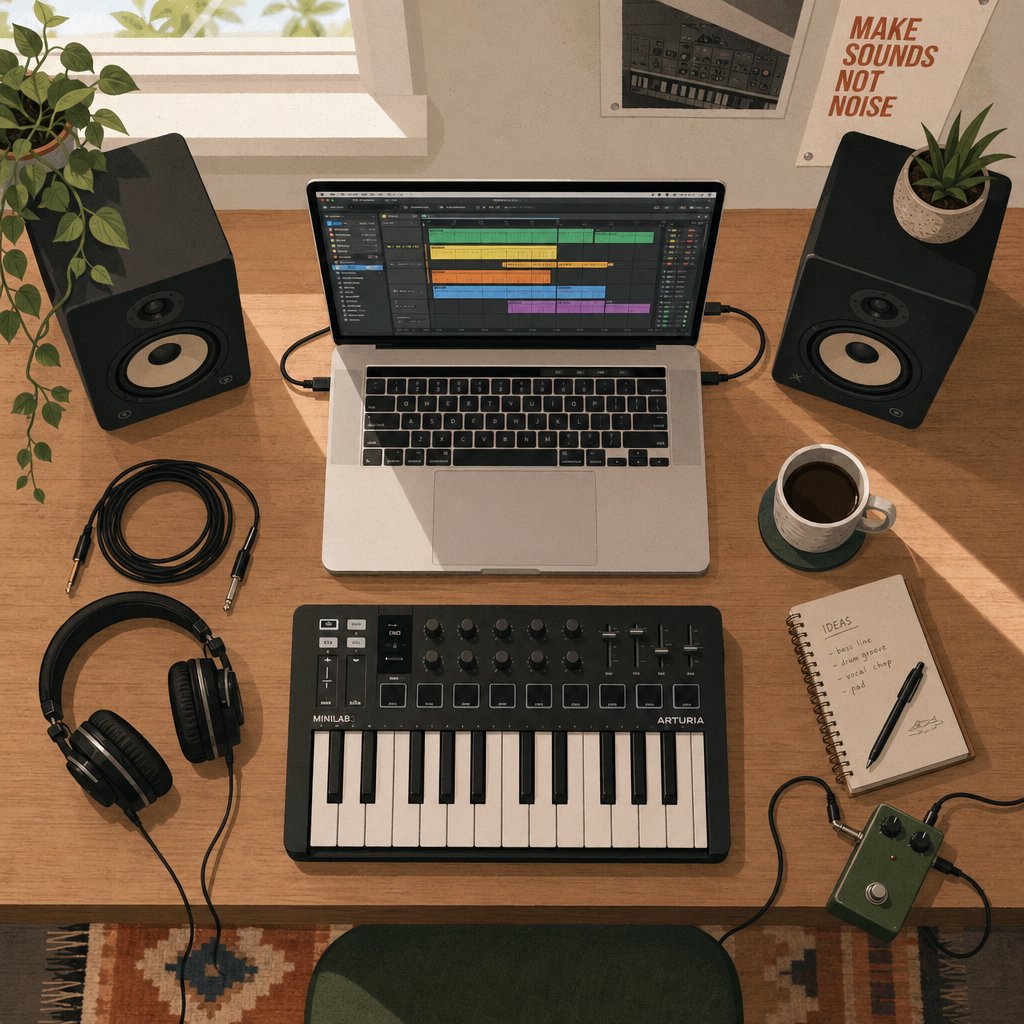
You do not need a studio. You do not need expensive hardware. You do not even need formal music training. Breakcore has always been a genre where a laptop, a handful of samples, and a willingness to break things is enough to get started. That low barrier to entry is not a side effect of the scene. It is the entire philosophy.
Core Production Techniques Explained
At its most fundamental level, making breakcore comes down to one skill: taking a breakbeat and doing violent, creative things to it. Start with a drum break. The Amen break is the classic choice, but the Funky Drummer, the Apache break, and the Think break all work. Drag it into your DAW, then start chopping. Slice the loop into individual hits, snares, kicks, ghost notes, and rearrange them into new patterns that bear little resemblance to the original. Soundtrap's breakcore production guide recommends adding swing to certain sections for unpredictability, and altering speed across different parts of the same pattern.
From there, the toolkit expands. Timestretching lets you warp individual slices, smearing a crisp snare into a metallic screech or compressing a kick into a percussive click. Pitch-shifting moves hits across octaves, turning a single break into a melodic instrument. Granular synthesis takes this further, breaking audio into tiny grains and reassembling them into textures that sound nothing like drums anymore. Layer two or three mutated break patterns on top of each other and you get the dense, polyrhythmic chaos that defines the genre.
Effects processing ties it all together. Distortion and saturation on the drums are practically mandatory. As a general rule, push the distortion until it sounds ridiculous, then dial it back until it sits right. Pitch-shifting and reverb work well on melodic elements, but keep the breaks themselves relatively dry so they cut through the mix. The contrast between wet, atmospheric melodies and bone-dry, distorted percussion is a signature of the sound.
The DIY Ethos and Bedroom Producer Culture
Sounds complex? It is, conceptually. But the actual process is closer to learning how to drive a manual car than earning an engineering degree. You stall a few times, grind the gears, and eventually the coordination clicks. Breakcore producers have historically learned by doing, not by studying. The genre grew up in bedrooms, not conservatories, and that scrappy, self-taught energy is part of what gives the music its character.
The community reinforces this. Forums, Discord servers, and Reddit threads are full of producers sharing techniques, posting works-in-progress, and offering blunt but constructive feedback. Nobody expects polish from a first track. The expectation is experimentation. Try combining genres that have no business being together. Sample something absurd, a cartoon theme, a field recording, a clip from smiling friends, and make it work over chopped Amen breaks. The genre rewards curiosity over technical perfection.
Essential Tools and Sample Sources
You do not need to spend money to start producing. The breakcore community has always gravitated toward free and affordable tools, and the options available now are better than ever. Here is what a basic production setup looks like:
- A DAW (Digital Audio Workstation): REAPER is the community favorite for its flexibility and low cost. Audacity works for basic sample editing. LMMS and Ardour are fully free alternatives. FL Studio and Ableton Live are popular paid options with strong sampler workflows.
- A breakbeat sample library: Start with the Amen, Funky Drummer, Apache, and Think breaks. Then go crate digging. Bedroom Producers Blog maintains one of the best curated collections of free sample packs online, including drum kits, sound effects, and instrument libraries. Freesound.org is another massive royalty-free resource.
- Effects plugins: A good distortion or saturation plugin is essential. Free options like Camel Crusher, OTT (multiband compressor), and TAL-Reverb cover the basics. Most DAWs also ship with built-in EQ, compression, and pitch-shifting tools that are more than sufficient for getting started.
- A sampler plugin: For slicing and rearranging breaks with precision. Many DAWs include built-in samplers. Free standalone options like TX16Wx or Grace work well for dedicated chopping workflows.
The real secret is that the tool matters far less than the intent. Breakcore tracks have been made in every DAW imaginable, on hardware from every decade, and on setups ranging from professional studios to a single laptop balanced on a stack of books. The genre does not care what you use. It cares what you do with it.
With the techniques understood and the tools within reach, the only remaining question is where to actually find the music that inspires you to start, and where to share what you make once you do.
Where to Discover and Start Creating Breakcore
Knowing the history, the artists, and the production techniques is one thing. Actually finding the music that pulls you in, and then making something of your own, is where the genre stops being an article and starts being an experience. The good news is that breakcore's entire ecosystem lives online, and every entry point is free.
Best Platforms for Discovering Breakcore
Each platform serves a different function in the discovery process. Some are better for stumbling into something unexpected. Others are better for methodical deep dives. Here are the ones worth your time:
- Bandcamp — the single best place to find and directly support breakcore artists. Its tagging ecosystem lets you browse by subgenre, mood, and format. Most releases are name-your-price, so you can build a massive library without spending a cent. Start with the "breakcore" tag and follow the rabbit holes from there.
- SoundCloud — where bedroom producers upload first and ask questions later. The algorithmic recommendations are surprisingly good at surfacing adjacent artists once you start listening. Follow a few producers and your feed fills itself.
- RateYourMusic — the community-driven database where listeners rate, review, and organize releases into genre charts and curated lists. If you want to know what the community considers essential, this is the reference library.
- YouTube — curated mix channels like "Breakcore Barista" and "Goreshit Archive" compile hours of material into themed playlists. These channels function like guided tours through the genre's catalog, and the comment sections often surface deeper recommendations.
Between these four platforms, you could spend months exploring and never hear the same track twice. The genre's output is enormous, and it grows daily.
Creative Tools to Start Experimenting
Discovery eventually sparks a different impulse: what would my version of this sound like? You do not need to master a DAW on day one to find out. The creative toolkit for getting started is broader than it has ever been, and some of the most useful entry points require nothing more than a text prompt and a few minutes.
- MakeBestMusic's AI Song Generator — describe a genre, mood, or scene and generate an original royalty-free track in seconds. For newcomers curious about how breakcore elements translate into new compositions, this is a low-friction way to experiment with genre blending before committing to full DAW-based production. Try feeding it a prompt that combines breakcore's chaotic energy with something unexpected and hear what comes back.
- REAPER or LMMS — free or low-cost DAWs covered in the previous section. Once you are ready to chop breaks by hand, these are where the real work happens.
- Freesound.org and Bedroom Producers Blog — royalty-free sample libraries where you can grab Amen breaks, drum kits, and sound effects to start building with immediately.
- Audacity — still the fastest way to do quick sample edits, pitch shifts, and timestretching without loading a full production environment.
Think of the process like learning how to paint a room. You do not start by mastering color theory. You grab a brush, pick a wall, and figure out the technique as you go. AI generation tools let you hear results before you understand the mechanics, which makes them a useful first step rather than a replacement for deeper learning.
Breakcore Is Alive — Go Find Your Entry Point
The genre that started in mid-90s bedrooms with cheap samplers and pirated software is now more globally active than at any point in its three-decade history. New producers upload tracks daily. Online communities debate, curate, and collaborate around the clock. The aesthetic has seeped into everything from TikTok edits to indie game soundtracks to the kind of glitched-out artwork that makes album covers look like corrupted coloring books from a parallel dimension.
There is no single correct way in. Some people arrive through a Venetian Snares album. Others get pulled in by a meme. A few will generate their first breakcore-adjacent track with an AI tool and realize they want to learn how the Amen break actually works. Every path is valid. The genre has survived for thirty years precisely because it never demanded credentials at the door. It only ever asked one thing: are you willing to break something and see what happens?
