

What Is Outlaw Country Music and Why Does It Still Resonate
Outlaw country music is a movement rooted in artistic rebellion, born in the 1970s when artists like Willie Nelson and Waylon Jennings rejected Nashville's tightly controlled recording system to make music on their own terms. More than a genre, it's a philosophy of creative independence — raw production, personal lyrics, and a refusal to let label executives dictate how a song should sound.
Defining Outlaw Country Music
So what separates outlaw country from the rest of country western history? Imagine walking into a studio where someone else picks your musicians, your producer, and even your songs. That was standard practice on Nashville's Music Row in the 1960s. The so-called Nashville Sound relied on lush string sections, polished vocal choruses, and cookie-cutter arrangements designed to cross over to pop radio. It produced hits, sure, but it left a lot of artists feeling creatively suffocated.
Outlaw country is the rejection of Nashville's polished, label-controlled recording system in favor of artist-driven music — raw production, hand-picked bands, and lyrics drawn from hard living and personal freedom. It's not just a sound. It's a stance.
The term itself traces back to 1973, when publicist Hazel Smith — the self-described "mother hen" at Tompall Glaser's studio, Hillbilly Central — pulled out a dictionary and landed on the word "outlaw" to describe the gritty new sound coming from Jennings, Nelson, and Kris Kristofferson. It stuck because it described a way of being, not just a way of playing. When Jennings released Lonesome, On'ry and Mean — the Lonesome On'ry and Mean Waylon Jennings album that became definitive to the movement — he wasn't just cutting an outlaw song. He was drawing a line in the sand.
Why This Movement Still Matters
Here's the thing: outlaw country wasn't a passing trend. It was a power struggle between artists and an industry machine that had been calling the shots for over a decade. The rebels didn't just change how country music sounded — they changed who got to decide what it sounded like. As Jennings himself put it, "To us, Outlaw meant standing up for your rights, your own way of doing things."
That tension between creative freedom and commercial control didn't disappear when the 1970s ended. It echoes through every generation of artists who choose authenticity over formula. And the story of how it all started — the contracts, the confrontations, the breaking point — reads less like music history and more like a slow-burning revolt against an empire that thought it couldn't be challenged.
Why the Outlaws Rebelled Against Nashville's Machine
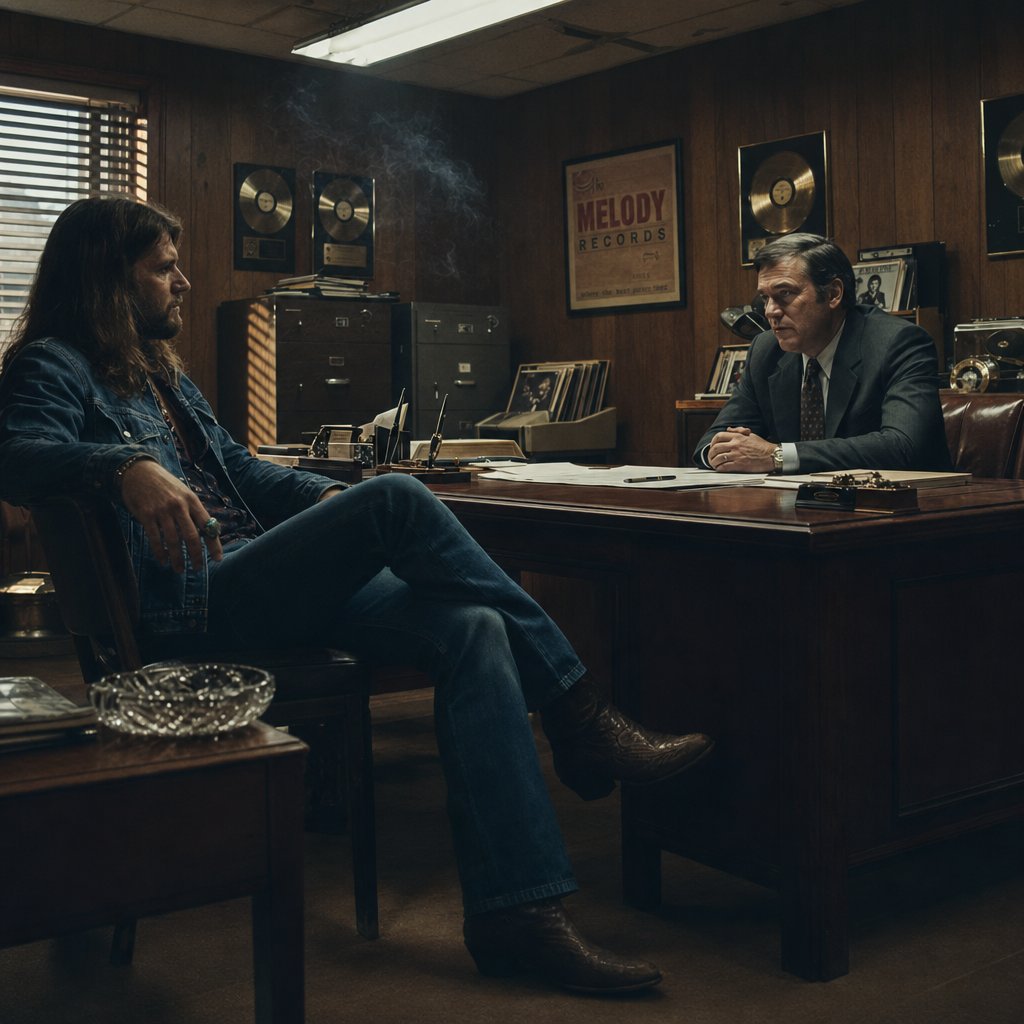
Every rebellion has a cause. And if you're wondering who started country music's most famous revolt, you won't find the answer in a single moment or a single artist. You'll find it in a system — one so tightly controlled that the people making the music had almost no say in how it sounded.
How Nashville Controlled Its Artists
By the early 1960s, Nashville's Music Row operated like a factory floor. Major labels — RCA, Decca, Columbia — didn't just sign artists. They owned the process. Producers like Owen Bradley and Chet Atkins ran sessions with near-total authority, choosing which songs got recorded, which arrangements got used, and which musicians played on the tracks. Artists rarely had input on album artwork, sequencing, or even which of their own compositions made the cut.
The musicians themselves were interchangeable — at least in the label's eyes. A small, elite group known as the "A-Team" played on the vast majority of Nashville sessions. Guitarists like Harold Bradley and Grady Martin, bassist Bob Moore, pianist Floyd Cramer, and drummer Buddy Harman cycled through session after session across multiple labels. The result was a consistent, polished product — lush string sections, smooth background vocals from groups like the Jordanaires, and arrangements designed to cross over to pop radio.
This was the Nashville Sound, and it was a deliberate commercial strategy. When someone asked Chet Atkins to define it, he reached into his pocket, jingled his change, and said, "That is the Nashville Sound." It sold records. It made money. But for artists who craved something rawer and more personal, it felt like a creative straitjacket. The question of who created country music's direction was being answered entirely by executives and producers — not the singers and songwriters doing the actual creating.
The Breaking Point for Country's Rebels
The friction had been building for years, but the breaking point came when artists started fighting back in contract negotiations — not just over royalties, but over the right to control their own recordings. Waylon Jennings became the movement's most visible battleground.
In 1972, Jennings and his new manager Neil Reshen sat down with RCA Records to renegotiate his deal. The label offered a $5,000 bonus to re-sign under the same terms he'd accepted back in 1965 — a 5% royalty rate with zero creative control. Jennings rejected it. What he wanted went far beyond money. He demanded the right to choose his own songs — including material from unknown writers like Billy Joe Shaver. He insisted on recording with his touring band, the Waylors, instead of the label's usual session players. And he wanted to produce his own records.
This wasn't just an aesthetic preference. It was a contractual and financial war. The entire outlaw outfit — from Jennings to Willie Nelson to Tompall Glaser — understood that creative control and business control were the same thing. If the label picked your producer, your musicians, and your songs, they owned the sound. And if they owned the sound, they owned you.
Jennings' tenacity paid off. His renegotiated contract granted him unprecedented autonomy, and the first thing he did with it was record Honky Tonk Heroes in 1973 — an album built almost entirely on Billy Joe Shaver's songs, cut with his own band, on his own terms. It was proof of concept for the entire outlaw country country music movement: give artists real control, and the music gets more honest, more alive, and more dangerous.
The outlaw outfit wasn't rebelling for rebellion's sake. They were reclaiming something the industry had quietly taken from them — the right to sound like themselves. And once that door cracked open, there was no closing it. The question shifted from whether Nashville would allow creative freedom to what that freedom actually sounded like when you put it on wax.
Nashville Sound vs Outlaw Country Side by Side
Knowing what the outlaws fought against is one thing. Seeing the two systems placed next to each other makes the divide impossible to miss. The Nashville Sound and outlaw country weren't just different styles — they were different philosophies about who gets to shape a record from the first note to the final mix.
Production Philosophy and Studio Approach
Under the Nashville Sound model, recordings followed a well-oiled formula. Producers like Chet Atkins and Owen Bradley assembled the Nashville A-Team — elite session players including Floyd Cramer on piano, Buddy Harman on drums, and Bob Moore on bass — who could knock out polished tracks in two to three hours. Lush string sections, background vocal groups like the Jordanaires and the Anita Kerr Singers, and carefully layered overdubs gave every record a smooth, radio-ready sheen. The system was remarkably efficient. It also meant that a Patsy Cline session and a Jim Reeves session could share the same musicians, the same studio, and often the same sonic fingerprint.
Outlaw country flipped that approach on its head. 1970s country singers like Waylon Jennings and Willie Nelson brought their road bands into the studio — the musicians who played with them night after night and understood their feel instinctively. Takes were raw. Overdubs were minimal. If a vocal had a rough edge or a guitar part wasn't perfectly clean, that was the point. The imperfections carried personality, and personality was the whole game.
Creative Freedom and Business Control
The differences ran deeper than microphone placement. In the Nashville system, labels controlled song selection, album sequencing, cover art, and publishing rights. Artists showed up, sang what they were told to sing, and went home. In the outlaw camp, artists fought for — and won — the right to choose their own material, sequence their own albums, and keep ownership of their publishing. So what is an outlaw in this context? Someone who refused to hand over creative decisions to a boardroom.
None of this is to say the Nashville Sound produced bad music. It didn't. Records like Patsy Cline's "Crazy" and Tammy Wynette's "Stand by Your Man" are timeless precisely because the A-Team's musicianship was extraordinary. But for artists whose identity depended on sounding like themselves — not like a polished product designed for pop crossover — the system was a cage with a velvet lining.
Here's how the two approaches stack up across the key dimensions that defined the history of country western music's most pivotal split:
| Dimension | Nashville Sound | Outlaw Country |
|---|---|---|
| Production Style | Polished, layered overdubs, lush orchestral arrangements, label-appointed producers | Stripped-back, raw takes, minimal overdubs, artist-produced or artist-chosen producers |
| Instrumentation | A-Team session musicians, string sections, background vocal choruses, smooth pedal steel | Artist's own road band, Telecaster guitars, honky-tonk piano, harder-hitting drums |
| Artist Autonomy | Labels chose songs, producers, musicians, album art, and sequencing | Artists controlled song selection, production, band choice, and album packaging |
| Lyrical Themes | Polished love songs, aspirational narratives, broad emotional appeal | Hard living, personal freedom, the open road, distrust of authority, raw heartbreak |
| Target Audience | Country and pop crossover listeners, mainstream radio | Country purists, rock fans, counterculture audiences |
| Commercial Strategy | Maximize radio play and pop chart crossover through consistent, safe production | Build loyal fan bases through authenticity, live shows, and word of mouth |
The table makes one thing clear: the split wasn't just about how outlaw country songs sounded. It was about who held the power. And once you see the contrast laid out like that, you start to understand why the artists who lived inside this system didn't just want to tweak it — they wanted to tear it down and build something that actually belonged to them.
The Artists Who Built the Outlaw Country Movement
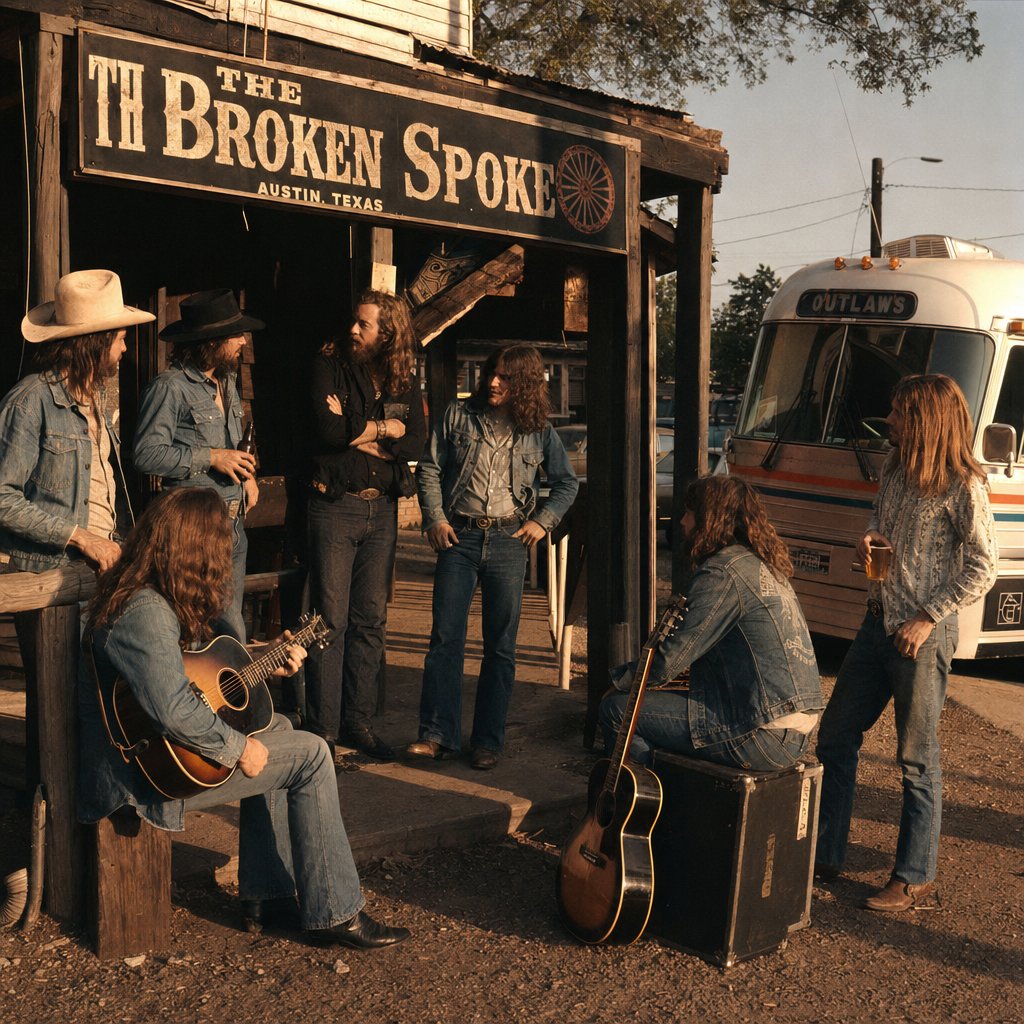
Tearing down a system is one thing. Building something in its place takes specific people with specific convictions. The outlaw country artists who reshaped the genre weren't a coordinated army — they were a loose collection of stubborn individuals who each brought something irreplaceable to the table.
Waylon Jennings and the Fight for Creative Control
Jennings had been grinding since the late 1950s, when he played bass for Buddy Holly and narrowly avoided the plane crash that killed him. That brush with fate left a hunger that never went away. After years of recording under RCA's thumb — with Chet Atkins producing and Nashville session players backing him — Jennings finally renegotiated his contract and seized full creative control. The first album he made with that freedom was Honky Tonk Heroes in 1973. Nearly every song on it came from Billy Joe Shaver's pen, the production was handled by Tompall Glaser instead of Atkins, and the backing band was his own Waylors — not the A-Team. It sounded like a different artist because, for the first time, it actually was him.
Willie Nelson and the Austin Alternative
Willie's rebellion took a different form. Instead of fighting Nashville from the inside, he left. After his house in Ridgetop, Tennessee burned down in 1970, Nelson relocated to Austin, Texas, and stumbled into something nobody planned. On August 12, 1972, he stepped onto the stage at the Armadillo World Headquarters — a counterculture beer barn where longhairs and cowboys didn't normally mix — and played for nearly three hours. Nobody left. That single night cracked open an entirely separate music ecosystem. Within a year, Nelson drew 40,000 people to his first Fourth of July Picnic in Dripping Springs. Austin became the alternative capital of country music, proving you didn't need Music Row to build an audience. You just needed the right songs and a room full of people who were tired of being told what to like.
The Wider Circle of Outlaws
Jennings and Nelson were the movement's twin engines, but the circle ran wider and deeper. Each figure brought a distinct edge that kept the movement from becoming a two-man show:
- Billy Joe Shaver — The movement's poet laureate. His raw, autobiographical songwriting powered Honky Tonk Heroes and gave the outlaws their literary backbone. Shaver lived every word he wrote, from cotton fields to bar fights, and his influence on alternative country artists stretches well into the present day.
- David Allan Coe — The provocateur. A self-mythologizing long haired country boy who claimed to have written songs in prison, Coe leaned into outlaw imagery harder than anyone. His 1976 album Longhaired Redneck was both a persona statement and a middle finger to anyone who thought country artists needed to look a certain way.
- Johnny Cash — The godfather. Cash had been bucking Nashville conventions since the 1950s, and his prison concerts, dark subject matter, and refusal to soften his image gave the younger outlaws a blueprint. He didn't need the label — the label needed him.
- Kris Kristofferson — The literary songwriter. A Rhodes Scholar who traded an academic career for Nashville, Kristofferson brought a poetic sophistication to country songwriting that elevated the genre's ambitions. Songs like "Sunday Mornin' Comin' Down" proved that country lyrics could be as layered as anything in rock or folk.
These weren't interchangeable names on a roster. Each one filled a role the others couldn't. Shaver supplied the words, Coe supplied the attitude, Cash supplied the credibility, and Kristofferson supplied the intellectual weight. Together with Jennings and Nelson, they formed a movement that didn't just influence 80s country bands and beyond — it permanently redefined what a country artist was allowed to be. The mythology, though, has always centered on the men. And that's only half the story.
The Women of Outlaw Country Who Shaped the Movement
The outlaw brand was built on a rugged, masculine image — beards, bandanas, whiskey, and run-ins with the law. People still ask questions like "why did Johnny Cash go to jail" partly because that mythology is so deeply woven into how we talk about the genre's country music origins. But women were there from the start, shaping the sound and proving that creative defiance wasn't a boys-only affair. The industry just didn't always give them the same spotlight.
Jessi Colter and the Wanted Album
No conversation about outlaw country's commercial breakthrough is complete without Jessi Colter. In 1976, RCA released Wanted! The Outlaws — a compilation featuring Waylon Jennings, Willie Nelson, and Tompall Glaser. Colter was the fourth name on that record, and her presence wasn't a token gesture. Her hit "I'm Not Lisa," originally from her 1975 album I'm Jessi Colter, had already crossed over to the pop Top 40, proving that the outlaw sensibility could connect with audiences far beyond country radio. Wanted! The Outlaws became the first country album ever certified platinum, and Colter's contributions — including her duet work with Jennings — were central to its success.
What often gets lost is that Colter wasn't simply "Waylon's wife." She was a songwriter and pianist who had been recording since the mid-1960s, first under the name Miriam Eddy. Her creative partnership with Jennings was genuine collaboration between two artists, not a sideshow. She earned a Grammy Hall of Fame Award in 2007 for her part on that landmark compilation.
More Women Who Carried the Outlaw Spirit
Colter opened a door, but she wasn't alone in walking through it. Several women carried the outlaw ethos in their own distinct ways, even when the "outlaw" label was rarely applied to them by the press or the industry:
- Sammi Smith — Her pillow-talk vocal delivery on Kris Kristofferson's "Help Me Make It Through the Night" made it a crossover smash, but Smith's deeper catalog revealed a raw, road-tested artist. Her tourmate Waylon Jennings called her a "girl hero" — not a "girl singer," as female country artists were commonly known. Tracks like "Kentucky" showed she could match any outlaw's grit, blending country rock songs with a raucous energy that predicted where the genre was heading.
- Tanya Tucker — Already nine albums deep and still only 20 years old when she recorded "Texas (When I Die)," Tucker embodied rebellion as a lifestyle. She refused to swap "cowboy" for "cowgirl" in her lyrics, explored rock and pop influences on albums like TNT, and carried a devil-may-care attitude that made her a natural fit for the outlaw circle.
- Emmylou Harris — Where others kicked down doors, Harris built bridges. Her 1975 debut Pieces of the Sky blended outlaw grit with folk grace and a voice that could break your heart mid-sentence. She connected the movement to broader audiences without diluting its spirit, and her collaborations with everyone from Gram Parsons to Rodney Crowell made her a linchpin between outlaw country, folk, and Americana.
The honest truth is that the movement's mythology was gendered from the beginning. "Outlaw" conjured images of gunslingers and renegades — coded male by default. As journalist Natalie Weiner noted, many women in the genre embrace the spirit of the word without the genre tag attached: being an outsider, pushing against norms, challenging the status quo. The women who shaped this movement didn't need the branding. They just needed the music to speak for itself — and it did, loudly enough that its echoes still define how the genre sounds today.
The Sound That Defined Outlaw Country Rebellion
Those echoes didn't come from nowhere. The artists shaped the movement's identity, but the sound is what made people feel it in their chest. And pinning down exactly what 1970s country rebellion sounded like is trickier than you'd expect — because the whole point, as Country Music Hall of Fame curator Peter Cooper put it, "was to not have a sound. The point was to go in and get your own sound." Still, certain sonic choices kept showing up across the movement, and together they formed something unmistakable.
Instrumentation and Production Choices
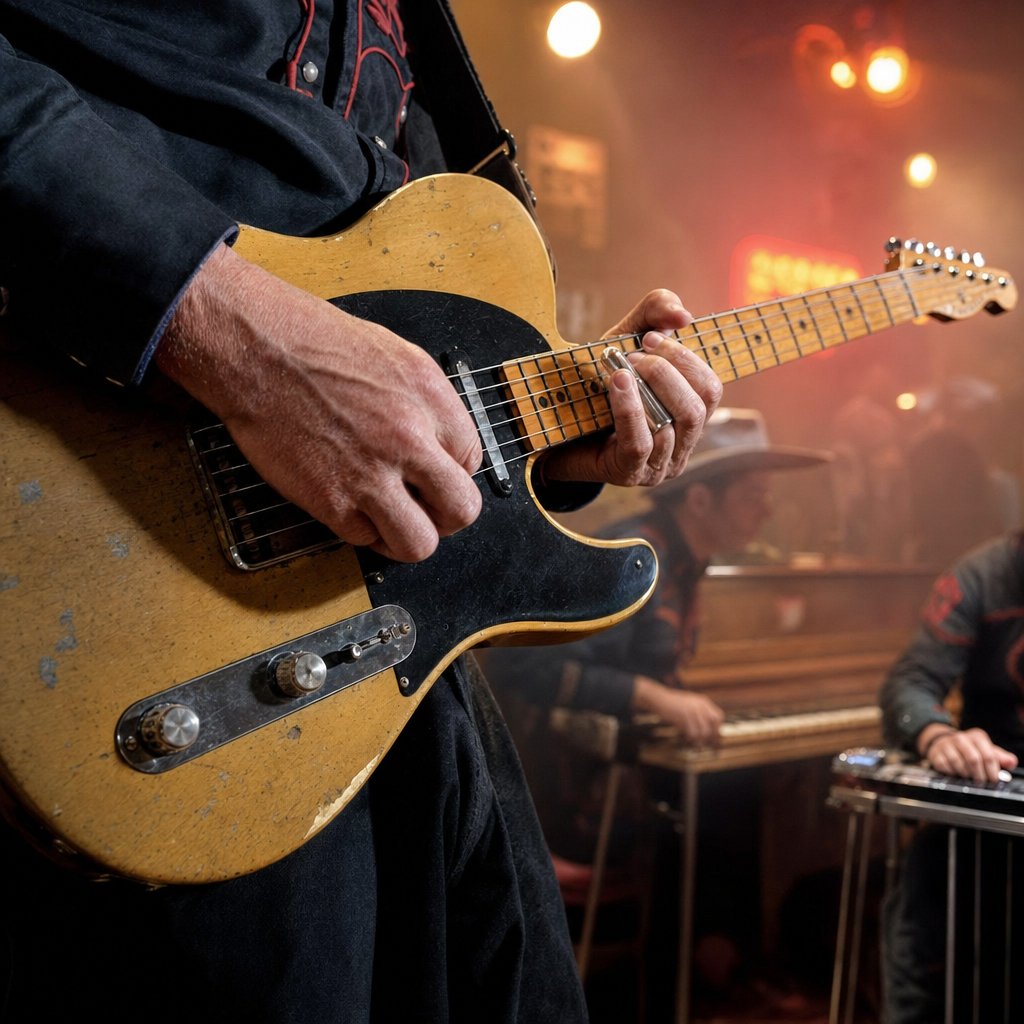
Start with the guitar. Waylon Jennings made the Fender Telecaster the movement's signature instrument — that biting, twangy electric tone cut through a mix the way a Nashville string section never could. Honky-tonk piano filled the midrange with barroom grit instead of orchestral polish. Pedal steel guitar, a staple of the Nashville Sound's lush arrangements, was still present but used with restraint — dry, expressive, and stripped of the reverb-drenched wash that had become standard on Music Row. Bass lines sat higher in the mix, driving songs forward with a physicality that Nashville's restrained pocket playing rarely allowed. And the drums hit harder. Where A-Team sessions favored brushes and soft dynamics to keep things smooth, outlaw recordings let the backbeat punch through.
The production philosophy was simple: capture the room, not a fantasy. Minimal overdubs. Raw takes. If a vocal cracked or a guitar note buzzed, it stayed. Those imperfections carried personality — and personality was the currency that separated an outlaw record from a product. When Jennings sang "Are You Sure Hank Done It This Way" in 1975, questioning rhinestone suits and shiny cars, the stripped-back arrangement behind him proved the point before the lyrics even landed. The Waylon Jennings "Hank Done It This Way" ethos wasn't just a lyrical stance. It was baked into every production decision.
Lyrical Themes and Storytelling Style
Nashville in the 1960s favored love songs with tidy resolutions and aspirational narratives — songs designed to make listeners feel comfortable. The outlaws went the other direction. Their lyrics dealt in personal freedom, substance use, the open road, romantic heartbreak delivered without a shred of sentimentality, and a deep distrust of anyone in a position of authority. These weren't hypothetical stories. They were autobiographical dispatches.
Outlaw songwriting blurred the line between the artist and the character. The singer wasn't performing a role — the song was the life, and the life was the song.
Kris Kristofferson captured this perfectly in "The Pilgrim, Chapter 33," a track he introduced by naming his inspirations — Johnny Cash, Dennis Hopper, Jerry Jeff Walker — before singing, "He's a walking contradiction, partly truth and partly fiction, taking every wrong direction on his lonely way back home." That single verse could describe half the movement. David Allan Coe leaned into the same territory with provocative, larger-than-life storytelling that still sparks debate among fans — many of whom search "is David Allan Coe still alive" just to check whether the man behind Longhaired Redneck is still out there somewhere, living the songs.
This rawness is also what pulled rock audiences into the fold. The origins of country music's crossover appeal in the 1970s trace directly back to outlaw production choices. When you strip away the strings and the vocal choruses and let a Telecaster and a road band carry the weight, you end up with something that sounds closer to country rock than to anything Nashville was putting on pop radio. Rock fans who wouldn't have touched a country record heard Jennings or Nelson and recognized something familiar — raw energy, real stories, and a band that sounded like they'd been playing together in a van for six months straight. The sound didn't just define a movement. It redrew the borders of who country music was allowed to speak to.
A Timeline of Key Outlaw Country Milestones
A sound that powerful didn't appear overnight. The movement unfolded across nearly two decades — from quiet acts of defiance in mid-1960s recording studios to a full-blown commercial peak that Nashville couldn't ignore, and eventually couldn't resist packaging for itself. Tracking the key moments in sequence reveals how a handful of personal decisions snowballed into a genre-defining shift.
The Seeds and the Breakthrough
The earliest sparks came from artists who simply wanted to record their way. Bobby Bare negotiated creative control at RCA in the early 1970s, setting a precedent. Jennings and Nelson followed, each carving out space through different strategies — one fighting the label from the inside, the other building an entirely new scene 900 miles south. The timeline below traces the arc from those first cracks in the Nashville country establishment to the moment the movement became impossible to deny.
- 1964–1968: Early Defiance — Johnny Cash releases Bitter Tears, defying Columbia executives, and records his landmark live albums at Folsom and San Quentin prisons. Bobby Bare pushes for creative autonomy at RCA. These aren't yet called "outlaw" moves, but they set the template.
- 1970–1971: Nelson Leaves Nashville — After his Ridgetop, Tennessee home burns down, Willie Nelson relocates to Austin, Texas. He begins playing venues like the Armadillo World Headquarters, where hippies and rednecks share the dance floor. A parallel music economy starts forming outside Music Row.
- 1972: Jennings Renegotiates with RCA — Waylon Jennings and manager Neil Reshen reject RCA's standard renewal offer and secure unprecedented production control. The same year, Jennings releases Ladies Love Outlaws, the album that gives the movement its name.
- 1972: The Dripping Springs Reunion — Nelson organizes a three-day country music festival outside Austin that draws tens of thousands. It's messy, financially disastrous, and culturally electric — a proof of concept for the progressive country scene growing in Texas.
- 1973: Honky Tonk Heroes and Hillbilly Central — Jennings records Honky Tonk Heroes, built almost entirely on Billy Joe Shaver's songs. The sound of a Shaver lyric paired with Jennings' voice and his own band becomes the movement's creative benchmark. Meanwhile, Tompall Glaser's studio, Hillbilly Central, serves as the Nashville hub for everyone even tangentially connected to the scene.
- 1975: Red Headed Stranger — Nelson releases his sparse, Western concept album on Columbia. The label fights against it — the production is so bare they think it sounds like a demo. It becomes a massive crossover hit and proves the outlaw approach can sell.
- 1976: Wanted! The Outlaws Goes Platinum — RCA's Jerry Bradley compiles tracks from Jennings, Nelson, Jessi Colter, and Glaser into a compilation album with a wanted-poster cover. Wanted! The Outlaws becomes the first country album certified platinum, reaching No. 1 on the country chart and No. 10 on the pop chart.
Peak Influence and Evolution
The platinum certification was a turning point — but not entirely in the way the outlaws intended. Nashville country executives saw the sales numbers and did what the industry always does: they absorbed the rebellion. The "outlaw" label, once earned through years of contractual battles and creative risk, became a marketing angle. RCA's Jerry Bradley had essentially repackaged the movement's redneck outfit — its rough edges, its wanted-poster aesthetic — into a product the mainstream could sell. As Britannica notes, the movement risked falling into its own formula as more artists adopted the outlaw image without the substance behind it.
The toll was personal, too. Jennings battled cocaine addiction for years, a struggle that culminated in a 1977 drug bust and inspired his brutally honest 1978 single "Don't You Think This Outlaw Bit's Done Got Out of Hand?" Nelson drifted toward pop standards with Stardust in 1978. The Armadillo World Headquarters closed in 1980. David Allan Coe's Longhaired Redneck persona — once a genuine act of defiance — became increasingly difficult to separate from self-parody. The scene's original energy was burning out.
But the ethos didn't die. It evolved. Through the 1980s, Nashville made room for artists who carried the outlaw spirit in new forms — Steve Earle's Guitar Town in 1986, Dwight Yoakam's Bakersfield-influenced honky-tonk, Lyle Lovett's eccentric storytelling, and k.d. lang's genre-defying presence. In 1985, the original figureheads regrouped as the Highwaymen — Cash, Nelson, Jennings, and Kristofferson — proving the movement's icons still had cultural gravity even as the sound around them shifted. By the 1990s, alt-country acts like Uncle Tupelo and Wilco picked up the thread, flipping the bird in Nashville's general direction while building something new from the wreckage.
The pattern is clear: every time the mainstream absorbs the rebellion, a new generation reclaims it. The outlaw movement didn't end — it just kept finding new people stubborn enough to carry it forward. And the artists doing that work today owe more to this timeline than most of them would probably admit.
How Outlaw Country Shaped Modern Americana and Beyond
Those stubborn carriers didn't just show up out of nowhere. The thread connecting Jennings' contract battles to today's independent country music genres runs through three decades of artists who inherited the outlaw DNA and spliced it into something new. If you've ever wondered what are country music's most lasting legacies, the answer lives in the movement happening right now — in dive bars, festival fields, and home studios across the country.
Outlaw DNA in Americana and Alt-Country
The 1990s alt-country explosion — Uncle Tupelo, Whiskeytown, the Jayhawks — drew a straight line from the outlaw insistence on authenticity to a new generation's rejection of Nashville's hat-act era. That energy fed directly into the Americana scene that followed, a loose coalition of artists who valued substance over formula and didn't much care whether radio played along.
Running parallel was the red dirt music movement out of Texas and Oklahoma — a blend of country, folk, rock, and blues rooted in the same independent spirit Willie Nelson planted in Austin. Artists like Cross Canadian Ragweed and the Josh Abbott Band built loyal followings through relentless touring and word of mouth, bypassing Nashville entirely. Sound familiar? It should. The playbook was written in the 1970s.
Today's torchbearers carry the tradition forward while adding their own fingerprints. Each one inherited something specific from the outlaw era and pushed it further:
- Sturgill Simpson — Took the outlaw refusal to repeat a formula and ran with it, jumping from raw honky-tonk to psychedelic country to bluegrass across consecutive albums. His Grammy-winning A Sailor's Guide to Earth proved you could ignore Nashville's expectations and still land on the biggest stage.
- Tyler Childers — Channels Billy Joe Shaver's autobiographical grit through Appalachian storytelling. His debut Purgatory was produced by Simpson, making the generational handoff literal.
- Margo Price — Fought through years of Nashville rejection before self-funding her debut at Sun Studio. Her story mirrors Jennings' contractual battles, updated for an era where a country band can build an audience without a major label's permission.
- Chris Stapleton — A Nashville songwriter who stepped into the spotlight on his own terms with Traveller, proving that raw vocals and a Telecaster still cut deeper than any production trick.
- Cody Jinks — Built a massive independent following through touring and direct-to-fan sales, embodying the outlaw ethos of creative and business control without ever signing a major deal.
Keeping the Outlaw Spirit Alive Through New Music
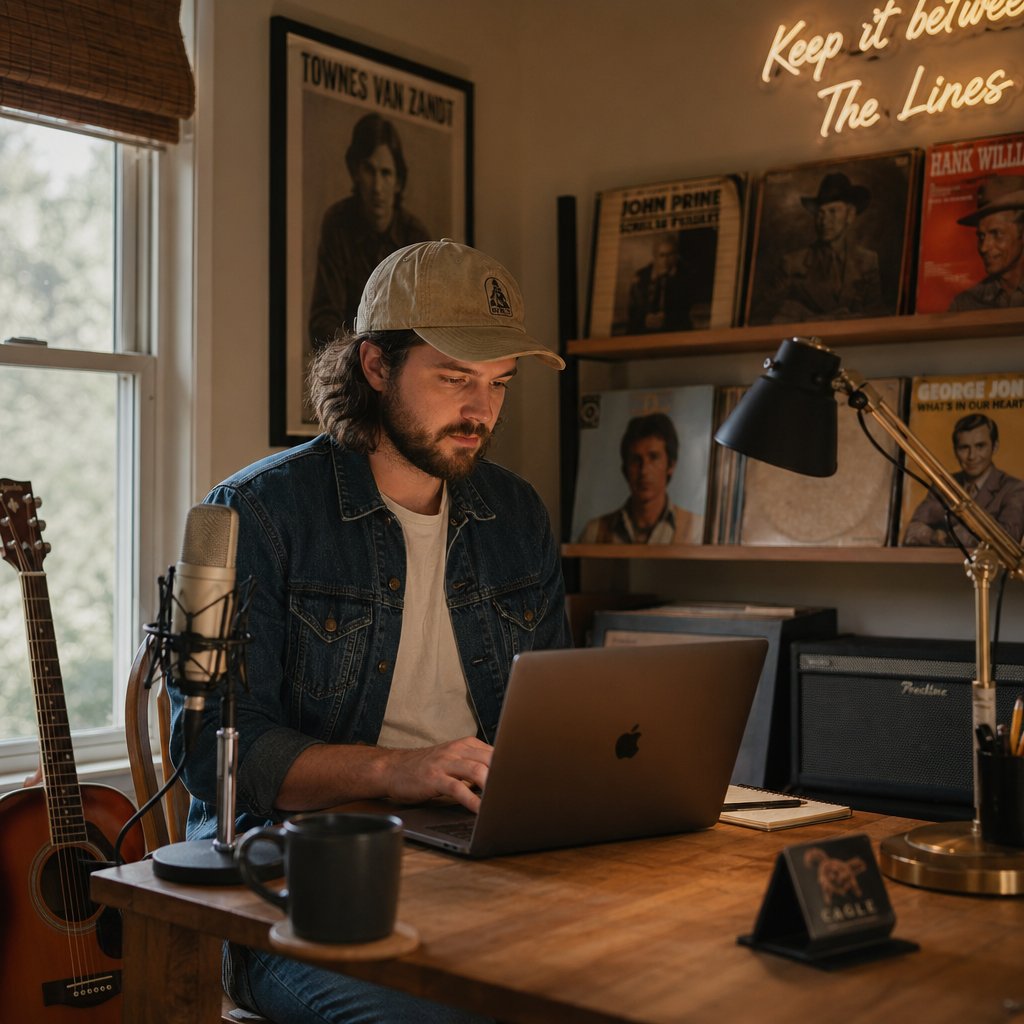
Here's what Jennings and Nelson couldn't have predicted: the gatekeepers they spent their careers fighting have largely been disarmed. Independent distribution platforms, affordable home recording setups, and AI-powered music tools have made creative independence more accessible than it's ever been. Over 50% of music consumed on major platforms now comes from unsigned artists, and indie musicians accounted for 35% of global recorded music revenues in 2024.
That shift means the spirit behind classic outlaw songs — the DIY defiance, the refusal to let someone else shape your sound — isn't just a philosophy anymore. It's a practical reality. Tools like MakeBestMusic's AI Song Generator let anyone turn a genre prompt or mood into an original track in seconds, putting creative experimentation into the hands of people who might never set foot in a Nashville studio. The same impulse that drove Jennings to demand his own producer now lives in a bedroom musician generating an outlaw-inspired demo from a laptop. The technology changed. The attitude didn't.
The question isn't whether the outlaw spirit survived. It's whether the music being made in its name can hold up next to the records that started it all. And the best way to answer that is to listen — starting with the songs that defined the rebellion in the first place.
Essential Outlaw Country Songs and Making Your Own
Listening is the best education. The records below span the movement's full arc — from the first shots fired against Nashville's machine through the modern artists keeping rebel country alive. Whether you're a newcomer or a lifelong fan, this list mixes anthems you already know with deeper cuts that reward repeated plays.
Essential Outlaw Country Listening
- Waylon Jennings — "Are You Sure Hank Done It This Way" (1975) — The most direct challenge any outlaw country singer ever aimed at Nashville. No metaphors, no softening. Just a Telecaster, a boom-chicka-boom beat, and a question the industry couldn't answer.
- Willie Nelson — "Whiskey River" (1973) — Nelson's eternal concert opener and a raw plea for numbness that captures the movement's emotional honesty in under three minutes.
- Merle Haggard — "Mama Tried" (1968) — A rueful autobiographical confession that became one of the most sung-along-to tracks in the genre's history. Haggard wrote it about his real time in San Quentin.
- Jessi Colter — "I'm Not Lisa" (1975) — Proof that the outlaw sensibility crossed gender lines. Colter's haunting vocal and self-penned lyric carried this to the pop Top 5.
- Billy Joe Shaver — "I Been to Georgia on a Fast Train" (1973) — Shaver's backwoods autobiography set to harmonica and electric guitar. The freewheeling spirit of the entire movement lives in this track.
- Townes Van Zandt — "Pancho and Lefty" (1972) — A tale of betrayal between two literal outlaws that became a No. 1 hit for Nelson and Haggard a decade later. Van Zandt's original remains the definitive version.
- Johnny Cash — "Cocaine Blues" (Live at Folsom Prison, 1968) — Cash's deadpan delivery of the opening line still lands like a gut punch. A cautionary tale wrapped in outlaw credibility that no one else could touch.
- David Allan Coe — "You Never Even Called Me by My Name" (1975) — Part satire, part love letter to the genre's tropes, and arguably the most definitively "outlaw" song ever recorded. Written by Steve Goodman and John Prine.
- Kris Kristofferson — "Sunday Mornin' Comin' Down" (1970) — Literary songwriting at its finest. Kristofferson's commitment to emotional honesty elevated what country lyrics could accomplish.
- Steve Earle — "Copperhead Road" (1988) — A late-era entry that blends country, rock, and bluegrass into a rural Tennessee story of moonshine and Vietnam. Earle's genre-defying approach proved the outlaw impulse didn't expire with the 1970s.
- The Highwaymen — "Highwayman" (1985) — Cash, Jennings, Nelson, and Kristofferson together on one track. A soaring meditation on reincarnation and resilience that doubles as the movement's victory lap.
- Sturgill Simpson — "Turtles All the Way Down" (2014) — The modern torchbearer's psychedelic country manifesto. Simpson inherited the outlaw refusal to repeat a formula and pushed it into entirely new territory.
You'll notice the list spans from 1968 to 2014 — because the outlaw nation of artists who carry this tradition isn't frozen in amber. The red dirt genre coming out of Texas and Oklahoma, the Americana scene, and even the best outlaw country rap of 2025 all trace their creative DNA back to these foundational recordings. Outlaw country singers across every era share one thing: they made the music they wanted to hear, not the music someone told them to make.
Create Your Own Outlaw Country Sound
That same impulse doesn't have to stay in your headphones. The whole point of the outlaw philosophy was that you didn't need anyone's permission to create. Jennings fought a label for years to earn that right. Today, the barriers are almost gone.
If the songs above sparked something — a melody, a mood, a lyric fragment — the fastest way to hear it come to life is through an AI-powered tool like MakeBestMusic's AI Song Generator. Feed it a prompt like "outlaw country," "honky-tonk rebellion," or "1970s country grit" and you'll get an original, royalty-free track in seconds. It's not a replacement for learning guitar or writing your own verses. It's a sketchpad — a way to experiment with the genre's DNA without needing a studio, a band, or a label's blessing. That's about as outlaw as it gets.
From there, dig deeper. Build playlists around the artists mentioned throughout this article. Explore the connections between classic recordings and the modern acts carrying the torch. And if something you hear makes you want to pick up a Telecaster or open a blank page, trust that instinct. The outlaws didn't wait for permission, and neither should you.
