


Where Adagio Comes From and How to Say It
Imagine a 17th-century Italian musician scribbling two small words at the top of a score: ad agio. Not a technical formula. Not a metronome number. Just a simple, everyday phrase that translates to "at ease." That casual instruction eventually became one of the most important tempo markings in Western music, and understanding the full adagio meaning starts right here, with those two Italian words.
From Italian Phrase to Universal Music Term
The adagio definition traces back to a combination of the Italian preposition ad ("at" or "to," inherited from Latin) and the noun agio ("ease" or "convenience"), itself borrowed from Old French aise. In everyday Italian, the phrase simply meant doing something at a comfortable, unhurried pace.
At ease, at leisure — that is the original spirit behind adagio, a word that asks performers not just to slow down, but to settle in.
During the Baroque period, as Italian composers pioneered new forms like the sonata, concerto, and opera, their language naturally became the standard for musical notation. Terms like allegro, piano, and crescendo all entered the global vocabulary this way. Adagio followed the same path, appearing in English texts as early as 1680 as a direction for slow play in a musical passage. By the late 17th century, it had crossed from conversational Italian into the formal language printed on scores across Europe.
What makes this word unusual is its reach. To define adagio music is only part of the story. The term also lives in ballet studios, in English dictionaries as a standalone adjective and adverb, and even in general conversation when someone describes a leisurely, unhurried pace. Most people, though, only know one slice of that picture.
How to Pronounce Adagio Correctly
Pronunciation trips people up more than you might expect. The standard English pronunciation is uh-DAH-jee-oh (IPA: /əˈdɑːdʒiəʊ/), with the stress landing firmly on the second syllable. Here is a quick breakdown:
- uh — a soft, unstressed vowel to start
- DAH — the stressed syllable, rhyming with "spa"
- jee — a soft "j" sound, like the "g" in "gentle"
- oh — a rounded vowel to finish
Common misspellings like "adiago" and "adajio" often stem from mishearing that middle syllable. The gi in Italian produces a soft "j" sound, not a hard "g," which is where the confusion creeps in. If you remember that the word rhymes loosely with "pistachio," you will rarely get it wrong.
With the origin and pronunciation covered, the real depth of this term starts to unfold. Adagio works as a noun, an adjective, and an adverb, each with its own role in scores, program notes, and everyday musical conversation.
The Full Definition of Adagio Across Grammar and Music
Most dictionary entries give you a one-line definition and move on. That works for casual lookups, but if you are a music student reading a score, a crossword solver hunting for a "slowly music crossword clue," or a producer trying to define adagio in a practical way, you need more context. This word pulls triple duty in the English language, functioning as a noun, an adjective, and an adverb, and each role shows up differently in real musical settings.
Adagio as a Noun, Adjective, and Adverb
The flexibility of this single term is part of what makes it so useful. You will hear it in rehearsal rooms, read it in concert programs, and see it printed at the top of sheet music, sometimes all in the same evening. Here is how each part of speech works:
| Part of Speech | Definition | Example Sentence |
|---|---|---|
| Noun | A slow composition, movement, or section of a larger work | "The adagio in the second movement was the emotional highlight of the symphony." |
| Adjective | Describing music that is performed or intended to be performed slowly | "The ensemble enters in a long adagio passage before the tempo picks up." |
| Adverb | An instruction to play slowly and expressively | "The slow movement is marked adagio, telling the pianist to ease into each phrase." |
Notice the subtle shift in each case. As a noun, an adagio is a thing — a piece of music or a distinct section you can point to on a program. As an adjective, it describes the character of a passage: "an adagio mood," "two adagio movements." As an adverb, it is a direct instruction: play this slowly. The Cambridge Dictionary lists all three uses, and the plural form is simply "adagios," which you will sometimes see when a program lists multiple slow movements or standalone pieces.
How Adagio Appears in Sheet Music and Program Notes
When you open a score and see "Adagio" printed at the top of a movement, it is doing two jobs at once. First, it sets the adagio tempo, telling you to play slowly, typically in the range of 66 to 76 beats per minute. Second, and this is the part many players overlook, it communicates character. The word carries its original Italian sense of ease and calm, so the instruction is not just "slow down" but "settle into the music and let it breathe."
You will also encounter compound markings that refine the instruction further. "Adagio sostenuto," for instance, asks the performer to sustain each note with extra weight and connection. "Adagio cantabile" calls for a singing, lyrical quality on top of the slow pace. These modifiers appear frequently in Classical and Romantic-era scores, and recognizing them helps you interpret the composer's intent more accurately than a metronome number alone ever could.
In program notes and concert reviews, the word often shifts to its noun form. A critic might write, "the towering adagio was the most persuasive movement," or a program might list "Adagio for Strings" as a standalone work. Sometimes people searching for the term online spell it as "andiago," a common mix-up that likely blends "adagio" with "andante." They are related in the sense that both describe slower music, but they sit at different points on the tempo spectrum and carry different emotional weight.
That spectrum, from the slowest markings to the fastest, is exactly where the technical side of adagio gets interesting. Understanding where it falls among terms like grave, largo, and andante turns a vocabulary word into a practical tool for reading, performing, and writing music.
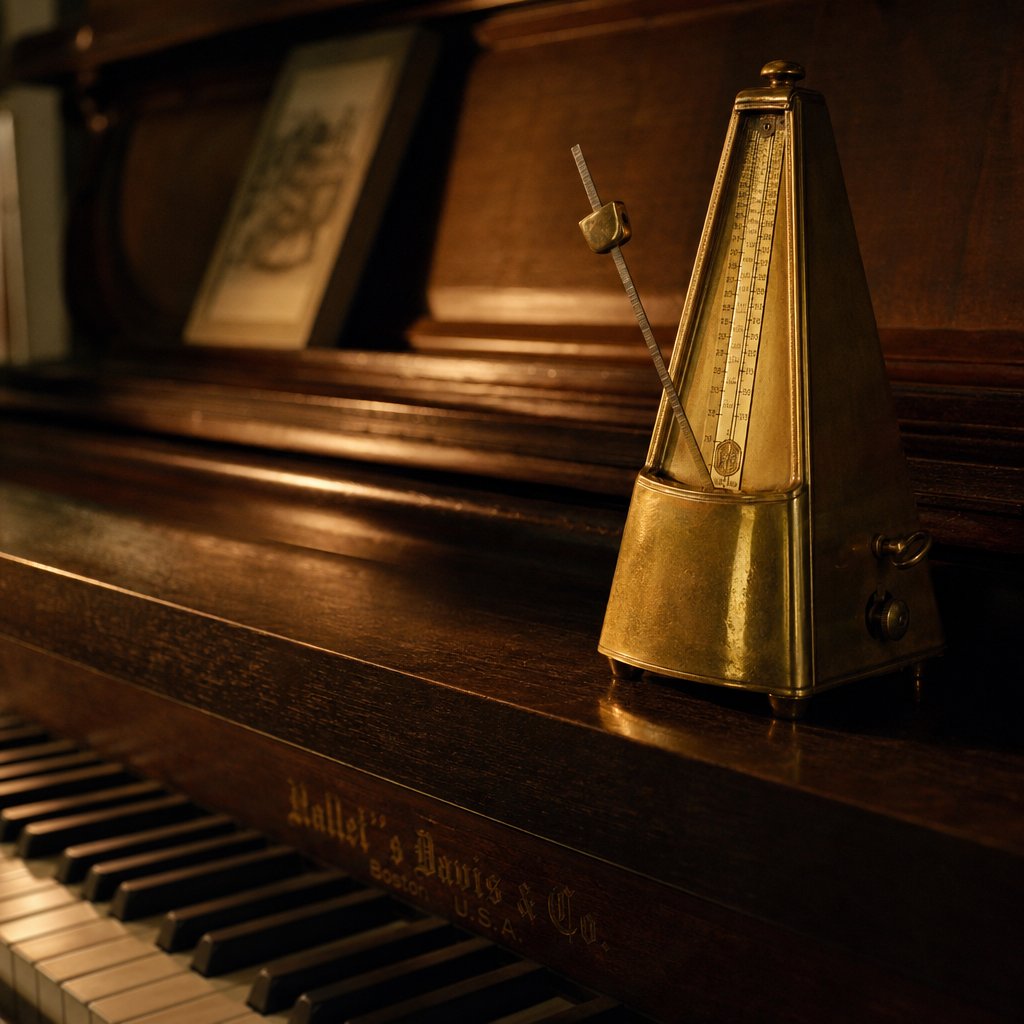
Adagio Tempo and BPM Explained
So what does adagio actually look like on a metronome? If you are a music student preparing for an exam, a producer setting a DAW tempo, or simply curious about the definition of adagio in technical terms, the answer lives in a specific BPM range and its place within a larger system of Italian tempo markings.
What BPM Range Defines Adagio
The standard adagio BPM range falls between 66 and 76 beats per minute. That places it firmly in slow territory, but not at the extreme end. Several markings sit below it, and a handful hover just above. To see where adagio fits in the full picture, here is a simplified tempo spectrum covering the most common Italian markings from slowest to fastest:
| Tempo Marking | BPM Range | Literal Meaning |
|---|---|---|
| Grave | 20-40 BPM | Heavy, solemn |
| Largo | 40-60 BPM | Broad, wide |
| Lento | 45-60 BPM | Slow |
| Larghetto | 60-66 BPM | A little broad |
| Adagio | 66-76 BPM | At ease, slowly |
| Andante | 76-108 BPM | Walking pace |
| Moderato | 108-120 BPM | Moderate speed |
| Allegro | 120-156 BPM | Fast, lively |
| Vivace | 156-176 BPM | Lively, vivacious |
| Presto | 168-200 BPM | Very fast |
You will notice that some of these ranges overlap. Lento and largo share the 45-60 BPM zone. Vivace and presto both touch 168-176 BPM. That is not a mistake. It reflects something fundamental about how the music adagio definition, and every other Italian tempo term, actually works in practice: these words describe character as much as speed.
Why Adagio Tempo Is a Range, Not a Fixed Number
Here is a detail that surprises many students. Before Johann Nepomuk Maelzel patented his mechanical metronome in 1816, performers had no device to measure exact beats per minute. For roughly two centuries before that, Italian tempo words were the only guide a musician had. A marking like adagio did not point to a number on a dial. It described a feeling: play at ease, with expressive weight, without rushing.
That history matters because it explains why you will find slightly different BPM figures depending on the source. One reference lists adagio at 66-76 BPM. Another might stretch it to 60-80. Neither is wrong. The ranges are conventions, not laws, and a conductor interpreting a Beethoven adagio may choose a tempo that differs noticeably from another conductor performing the same piece. Era, acoustics, ensemble size, and artistic vision all play a role.
Even after the metronome arrived, Italian markings did not disappear. Composers began pairing both systems, writing something like "Adagio (quarter note = 72)" to give performers a character cue and a precise speed. Beethoven was among the first major composers to add metronome numbers to his scores, though his markings are famously debated because many seem faster than what most performers choose today. The Italian word still carries interpretive weight that a raw number cannot.
This is also where related markings come into play. You might encounter adagio sostenuto, which asks the performer to sustain each note with extra connection and gravity, or adagietto, a diminutive form that sits slightly faster than adagio, typically around 72-76 BPM. Composers like Mahler used adagietto to signal something gentler and more intimate than a full adagio, while adagio sostenuto, famously marking the opening of Beethoven's "Moonlight" Sonata, calls for a deeper, more weighted slowness. Modifiers like molto ("very") and ma non troppo ("but not too much") can further shade the instruction, giving performers a nuanced emotional roadmap rather than a single fixed tempo.
The takeaway? When you see adagio on a score, you are not just reading a speed limit. You are reading an invitation to play with calm expressiveness somewhere in the neighborhood of 66-76 BPM, shaped by context, tradition, and your own musical judgment.
That flexibility raises a natural question. If adagio, largo, lento, and grave all describe slow music, how do you tell them apart? The differences are subtler than most people expect, and they go well beyond the numbers.
How Adagio Differs From Other Slow Tempo Markings
Five Italian words all mean some version of "slow," yet a composer choosing between them is making a deliberate emotional decision. If you have ever searched for a slow musically crossword puzzle clue and found multiple possible answers, you have already bumped into this problem. Grave, largo, lento, adagio, and andante each occupy their own lane, and the differences come down to feeling as much as speed.
Adagio vs Largo, Lento, Grave, and Andante
The easiest way to see the distinctions at a glance is to line them up side by side. This table covers the five most common slow tempo markings you will encounter in Western classical music:
| Term | Literal Italian Meaning | Typical BPM Range | Character / Mood | Example Usage |
|---|---|---|---|---|
| Adagio | At ease | 66-76 BPM | Calm, expressive, lyrical | Beethoven's "Moonlight" Sonata, 1st movement (Adagio sostenuto) |
| Grave | Heavy, solemn | 20-40 BPM | Dark, weighty, funereal | Slow introductions to Baroque sonatas |
| Largo | Broad, wide | 40-60 BPM | Grand, stately, expansive | Handel's "Largo" from Xerxes |
| Lento | Slow | 45-60 BPM | Simply slow, neutral in mood | Slow movements in Romantic-era symphonies |
| Andante | Walking pace | 76-108 BPM | Gentle forward motion, unhurried but moving | Mozart's piano sonata slow movements |
Notice that adagio is not the slowest marking on this list. Grave and largo both sit well below it. And andante, despite often being grouped with "slow" tempos, actually describes a walking pace that keeps a sense of forward momentum. Placing these terms next to each other makes it much easier to define adagio in music with real precision: it is slow, but not ponderous, and it carries an inherent warmth that heavier markings lack.
Choosing the Right Slow Tempo Marking
BPM ranges help, but they only tell half the story. When a composer writes grave, they want solemnity and weight, the kind of heaviness you feel in a funeral march. Largo asks for breadth and grandeur, as if the music is stretching out across a wide landscape. Lento is the most neutral of the group. It simply means slow, without layering on a specific emotional color.
The music term adagio, by contrast, carries that original sense of "at ease." It tells the performer to be expressive and lyrical, to let phrases breathe without dragging. There is a gentleness baked into the word that you will not find in grave or largo. And andante sits in a category of its own. Many people assume it means slow, but its literal meaning, "walking," implies steady, natural movement. It is closer to a relaxed moderate tempo than a truly slow one.
These distinctions matter in practice. A conductor who interprets an adagio passage with the weight of a largo will produce something heavier than the composer intended. A pianist who plays an andante movement at an adagio pace risks losing the sense of gentle motion the marking calls for. The adagio music definition only clicks fully when you hear it in contrast with its neighbors.
Tempo markings describe feeling as much as speed. Two pieces at the same BPM can sound completely different if one is marked adagio and the other largo.
This is exactly why Italian tempo words survived the invention of the metronome. A number tells you how fast. The word tells you how it should feel. And that emotional dimension extends well beyond the orchestra pit. In ballet studios around the world, adagio carries its own distinct meaning, one rooted in the same idea of ease and control but expressed through the body rather than an instrument.
Adagio in Ballet and Dance
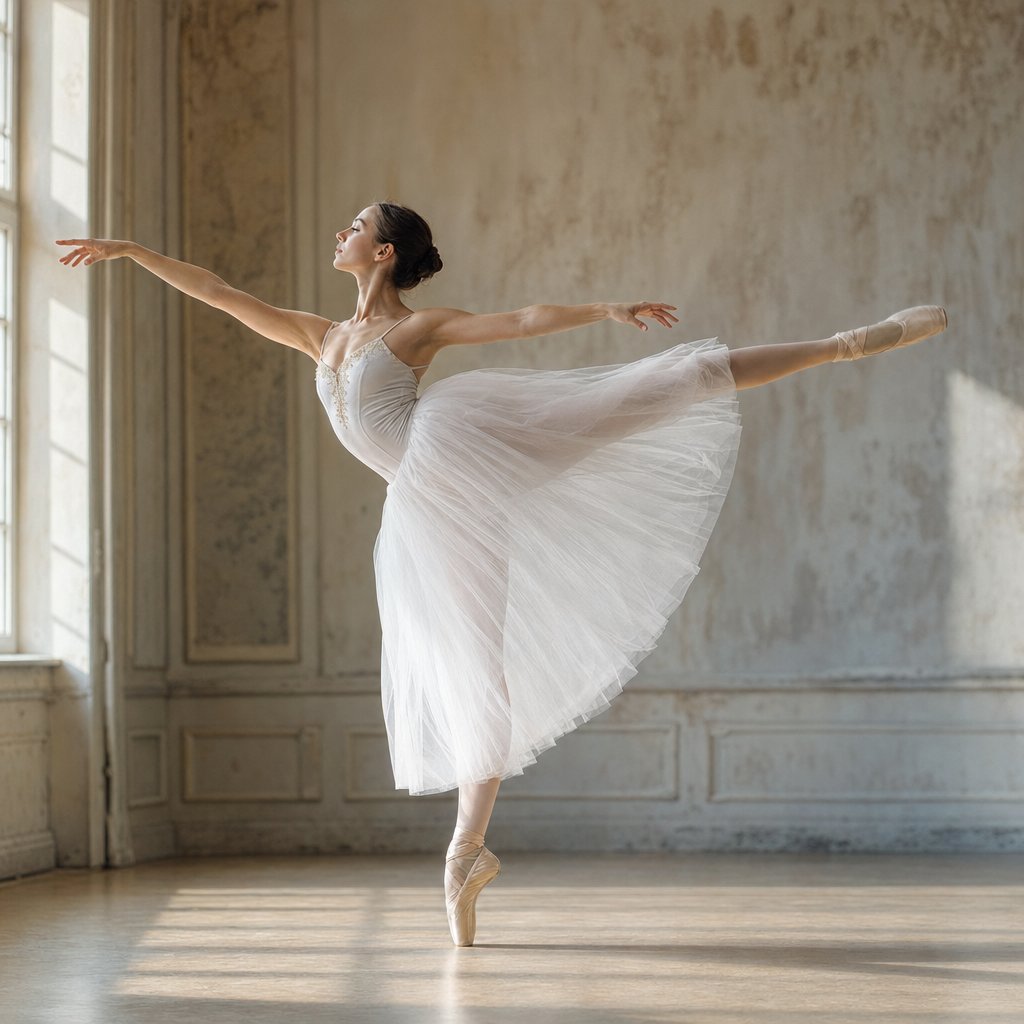
In the orchestra pit, adagio tells a musician how to play. In the dance studio, it tells a dancer how to move. The adagio meaning in music and ballet share the same Italian root, that idea of doing something "at ease," but the ballet world has shaped the term into something distinctly its own.
What Adagio Means in Ballet Class
Walk into any ballet class and you will hear the teacher call for "adagio" during both barre and center work. This is not background information. It is a specific section of class dedicated to slow, controlled, and sustained movements that build strength, stability, and line.
At the barre, an adagio combination typically involves slow développés, arabesques, attitudes, and promenades. The tempo is deliberately unhurried so dancers can focus on extending each position fully, maintaining turnout, and controlling transitions from one shape to the next. Every aspect of an adagio exercise requires tremendous balance and control, whether you are holding a pose for several counts or simply shifting weight between positions.
In center work, the challenge intensifies. Without the barre for support, dancers rely entirely on core engagement, alignment, and focused breathing to sustain long balances and fluid transitions. This is where adagio builds the deep muscular endurance and body awareness that faster combinations cannot develop on their own. Think of it as the place where technique gets honest: at a slow adagio music tempo, there is nowhere to hide a wobbly relevé or a rushed extension.
Adagio in Pas de Deux and Performance
The term extends beyond class exercises into the performance world. In a grand pas de deux, the adagio is the section where one dancer performs slower movements and sustained extensions supported by a partner. Imagine the Sugar Plum Fairy in The Nutcracker, moving through sweeping arabesques en pointe while the Nutcracker Prince provides steady support. That lyrical partnering section, paired to a slower tempo, is the adagio.
Whether it appears in a classroom combination or on a concert stage, ballet adagio shares a consistent set of qualities:
- Slow tempo — movement unfolds at an unhurried, deliberate pace
- Sustained movement — positions are held and extended rather than passed through quickly
- Balance — dancers maintain equilibrium through constant micro-adjustments in alignment
- Controlled transitions — each shift from one shape to the next is smooth and intentional
- Expressive line — the body creates long, lyrical shapes that communicate emotion and artistry
The connection back to adagio in music is more than coincidental. Both contexts ask for the same thing: ease under pressure, expressiveness within restraint, and beauty that comes from control rather than speed. A violinist sustaining a phrase at 70 BPM and a dancer holding an arabesque for eight counts are drawing on the same principle, just through different instruments.
That principle also explains why so many of the most emotionally powerful moments in classical music are marked adagio. Composers have long understood that slowing down does not mean scaling back. It means leaning in.
Famous Adagio Movements and Compositions
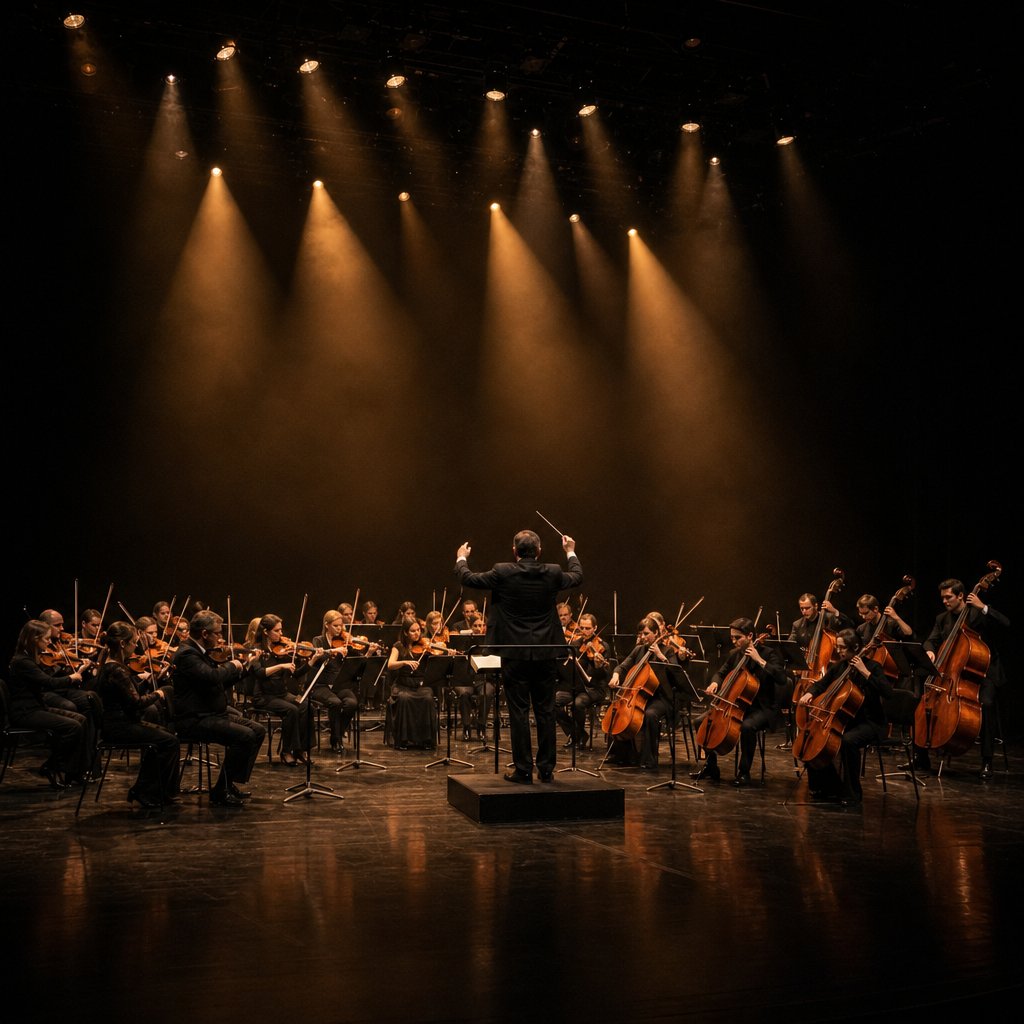
Slowing down to lean in — that is exactly what the greatest composers in Western music have done for centuries. Some of the most emotionally charged moments in the entire classical repertoire carry the word "Adagio" at the top of the page. These movements are not filler between faster sections. They are the emotional core of the works they belong to, and understanding what is adagio in this structural sense reveals why the term carries so much weight among musicians and listeners alike.
How Adagio Movements Function in Larger Works
Picture a typical Classical-era symphony or sonata. The first movement is usually fast and dramatic, marked allegro. The finale is bright and energetic. Sandwiched between them, often as the second movement, sits the adagio — a musically slow passage that gives the listener a reflective pause and the composer room to develop lyrical, singing themes that faster tempos would rush past.
This is not accidental architecture. As Britannica's overview of sonata form explains, the standard four-movement sonata structure places "a slow, lyrical movement (andante or adagio)" as the second movement, creating contrast with the serious allegro that opens the work and the lively finale that closes it. The slower second movement is often structured as a sectional form (ABA, AABA, or ABCA) or a set of variations, giving the composer freedom to explore melodic ideas at a pace where every note and harmonic shift registers fully.
Think of adagio movements as the emotional anchor of a larger work. A symphony without its slow movement would feel relentless, like a conversation with no pauses. Composers use these sections to build intimacy, develop themes that demand careful listening, and create the kind of emotional depth that audiences remember long after the final chord fades. Many concert-goers who cannot name the allegro from a particular symphony can hum the adagio from memory.
Iconic Adagio Compositions Worth Hearing
If you are wondering what is adagio in practice, these works are the best possible answer. Each one demonstrates how a slow tempo, paired with expressive writing, can produce music of extraordinary power. Here are some of the most recognized adagios in the classical canon:
- Barber — Adagio for Strings (1938)
Originally the slow movement of Samuel Barber's String Quartet, this piece was adapted for full string orchestra and premiered by Arturo Toscanini with the NBC Symphony Orchestra. Its long, arching melodic lines and gradual build to a devastating climax have made it one of the most performed orchestral works in American music. It has been played at presidential memorial services, royal funerals, and in film scores including Platoon (1986) and The Elephant Man (1980). - Beethoven — "Moonlight" Sonata, 1st movement: Adagio sostenuto (1801)
The opening movement of Piano Sonata No. 14 in C-sharp minor is one of the most famous adagios ever written. Its triplet arpeggios over a steady bass create a hypnotic, almost nocturnal atmosphere. The marking "adagio sostenuto" asks the pianist to sustain each note with extra weight, producing the dark, meditative quality that earned the piece its nickname. - Mozart — Piano Concerto No. 23, 2nd movement: Adagio (1786)
Set in F-sharp minor, an unusual key for Mozart, this adagio movement is strikingly intimate and melancholic. The piano carries a spare, singing melody over quiet orchestral accompaniment, creating one of the most emotionally direct passages in all of Mozart's output. - Khachaturian — Adagio of Spartacus and Phrygia (1956)
This sweeping orchestral adagio from the ballet Spartacus became widely known through its use as the theme for the BBC television series The Onedin Line. Its soaring string melody and lush orchestration make it one of the most recognizable adagios outside the standard concert repertoire. - Albinoni (attr.) — Adagio in G Minor
Often listed as "Albinoni's Adagio," this piece was actually composed by musicologist Remo Giazotto in 1958, based on a fragment attributed to Tomaso Albinoni. Regardless of its disputed origins, the work's mournful organ-and-strings texture has made it a staple of classical compilations and film soundtracks. - John Murphy — Adagio in D Minor (2007)
Composed for the film Sunshine, directed by Danny Boyle, this piece blends orchestral writing with electronic textures. It has gained a significant following online and is frequently searched alongside classical adagios, showing how the concept of a slow, emotionally intense composition continues to resonate in contemporary scoring.
These works span nearly three centuries, yet they share a common thread. Each one uses a slow tempo not as a limitation but as a canvas — space for melodies to unfold, harmonies to breathe, and emotions to land with full impact. The plural "adagios" in a concert program is never just a list of slow pieces. It is a collection of moments where composers chose to say the most by moving the least.
That creative choice raises a practical question for anyone who writes or performs music today. If adagio passages demand so much from the listener, they demand even more from the musician. Playing slowly, it turns out, is one of the hardest things a performer can do well.
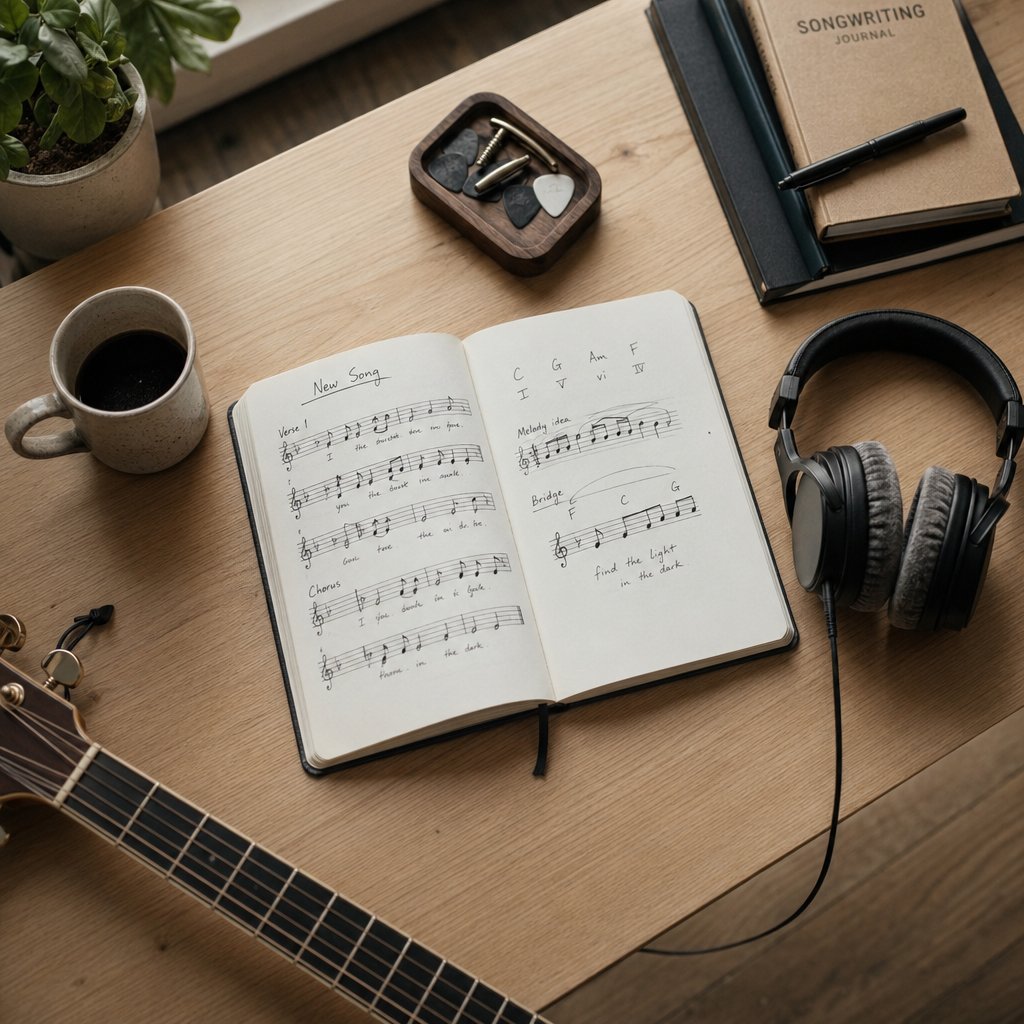
Why Adagio Matters for Musicians and Songwriters
Knowing the adagio meaning is useful for passing a theory exam or solving a musically slow crossword clue. But the real value of this term goes deeper than vocabulary. Adagio represents a creative principle — the idea that slowing down opens space for expression, detail, and emotional honesty. For performers, that principle is a daily challenge. For songwriters and producers, it is a tool that can reshape how a piece of music feels from the first beat.
Why Slow Tempos Demand More From Musicians
There is a common misconception that slow music is easier to play than fast music. In reality, the opposite is often true. At an adagio tempo, every note is exposed. There is no flurry of sixteenth notes to mask a shaky entrance, no rhythmic momentum to carry a phrase past a weak transition. Each pitch, each dynamic shift, each tiny fluctuation in timing sits in the open where the listener can hear it clearly.
This is why slow practice is one of the most effective training methods across every instrument and voice type. Research on motor skill acquisition shows that deliberate, slow repetition strengthens accurate neural pathways in the brain, building the kind of muscle memory that holds up under pressure. When you rush through a passage, you are more likely to reinforce mistakes that become difficult to unlearn later. Slowing down gives your brain and body time to absorb the correct movements fully, which is exactly what adagio demands of a performer in concert.
Think about a cellist sustaining a long melodic line at 70 BPM. Every bow change has to be seamless. Every vibrato choice has to serve the phrase. The performer needs breath-like pacing, emotional commitment, and the technical control to keep intonation steady across notes that hang in the air for several beats. Faster tempos can actually be more forgiving because the ear has less time to scrutinize each individual sound. Adagio strips that safety net away.
This is also why conductors often spend disproportionate rehearsal time on slow movements. The precision required at adagio tempo — coordinating dozens of musicians so that entrances align, dynamics blend, and phrasing feels unified — is a far greater technical challenge than keeping an allegro together. Speed creates its own energy. Slowness requires the musicians to generate all the energy themselves.
Applying the Adagio Concept to Songwriting and Production
The same principle applies outside the concert hall. If you write songs or produce tracks, understanding what adagio really means can change the way you think about tempo as a creative decision, not just a number you punch into a DAW.
Songwriter Andrea Stolpe describes tempo as one of the first and most consequential choices in the writing process. It shapes harmonic rhythm, lyric pacing, melodic contour, and the overall believability of a song. Yet many writers default to the same comfortable tempos out of habit, never exploring what their ideas might become at a significantly slower or faster pace. Stolpe recommends deliberately writing outside your usual tempo range, letting a slower groove pull new storylines and emotional textures out of familiar material.
Adagio pacing, somewhere around 66-76 BPM, gives melodies room to breathe in ways that moderate and fast tempos simply cannot. At this speed, a vocal line can stretch across longer note values, creating the kind of lyrical, singing quality that listeners associate with emotional depth. Chord changes land with more weight because the ear has time to absorb each harmony before the next one arrives. Sparse arrangements become powerful rather than empty, because the space between notes carries meaning.
This is where the adagietto meaning becomes relevant for modern creators too. If adagio feels too slow for a particular idea, adagietto — slightly faster, typically around 72-76 BPM — offers a middle ground that retains the expressive, unhurried quality without dragging. Mahler used adagietto for some of his most intimate orchestral writing, and the same logic applies to a singer-songwriter sketching a ballad or a producer building an ambient track. Knowing the adagietto meaning alongside adagio gives you a finer set of controls for dialing in exactly the right pace and mood.
The practical challenge, of course, is that experimenting with slow tempos can feel unfamiliar if you have never worked in that range. One way to bridge the gap between theory and practice is to generate melodic ideas at adagio speed and see what emerges. MakeBestMusic's Melody Maker is a useful tool for this. You can set a slow tempo, explore different melodic shapes, and hear how phrases behave when they have room to unfold. It turns a concept like adagio into something you can interact with directly, which is often the fastest way to internalize what a tempo marking actually feels like from the inside.
Whether you are a performer refining control over a slow passage or a songwriter discovering what your chorus sounds like at 70 BPM instead of 120, the underlying lesson is the same. Adagio is not just a speed. It is a mindset — one that values clarity, expression, and emotional presence over momentum. Musicians who internalize that mindset tend to play with more intention at every tempo, not just the slow ones.
That broader perspective is exactly what makes adagio more than a single entry in a music dictionary. It connects to how we listen, how we create, and how centuries of musical tradition continue to shape the way songs are written and performed today.
What Does Adagio Mean?
A single Italian phrase, "at ease," traveled from everyday conversation into the formal language of Western music, then into ballet studios, film scores, and English dictionaries. That journey is what makes the adagio meaning so much richer than any one-line definition can capture. It is not just a tempo marking. It is a concept that shapes how musicians perform, how dancers move, and how composers think about pacing and emotion.
Adagio Across Music, Dance, and Language
Here is what the term covers when you look at the full picture:
- Tempo marking in music — an instruction to play slowly and expressively, typically in the range of 66-76 BPM, carrying the emotional character of calm, lyricism, and reflective depth
- Ballet term — a section of class or performance built around sustained, controlled movement that emphasizes balance, extension, and expressive line at a slow, deliberate pace
- General English usage — an adjective, adverb, or noun meaning slowly, at a leisurely pace, or a slow musical composition, used in program notes, reviews, and everyday conversation about music
What does adagio mean at its core? The same thing it meant when Italian composers first wrote it on their scores: take your time, settle in, and let the music breathe. Whether you spell it correctly on the first try or have been searching for "adigo" and landing here, the concept is the same. Ease and expressiveness, not just slowness.
Turn Theory Into Practice
Knowing a definition is one thing. Hearing it, feeling it, and using it is something else entirely. If this article has shifted how you think about adagio music, the next step is to put that understanding to work.
Start by listening actively. The next time you hear a symphony, a film score, or even a slow pop ballad, pay attention to what the tempo is doing to the emotional weight of the music. Notice how adagio in music means more than a number on a metronome — it means space for melodies to land, harmonies to resonate, and phrases to connect with the listener on a deeper level.
Then experiment. If you write or produce music, try setting your next idea at 70 BPM and see what happens to the melody, the lyric pacing, and the overall mood. Tools like MakeBestMusic's Melody Maker make this easy to explore — set an adagio tempo, generate melodic ideas, and hear firsthand how slowing down can open up creative possibilities you would never find at faster speeds.
Terms like adagio are more than vocabulary. They are a direct line to centuries of musical tradition, a shared language that connects a Baroque violinist in 1700 to a bedroom producer working today. When you understand what that word really carries — its history, its emotional weight, its role across disciplines — you are not just reading a score more accurately. You are listening to music the way its creators intended it to be heard.
