

What Crescendo Actually Means
The Word Most People Use Wrong
You've probably heard someone say "the crowd noise reached a crescendo" or "the scandal hit a crescendo last week." Sounds right, doesn't it? Here's the thing: both of those sentences are wrong. The crescendo definition has nothing to do with a peak, a climax, or a dramatic high point. It describes the process of getting there.
This mix-up is so common that even major publications get it wrong regularly. As music critic Timothy Mangan of Pacific Symphony has pointed out, the expression "rise to a crescendo" essentially means "rise to a rise" — which is complete nonsense when you think about it. Yet it shows up in journalism, political commentary, and everyday conversation all the time. The word has become one of the most frequently misunderstood musical terms in the English language, and the confusion runs deep enough that some dictionaries have started listing "climax" as a secondary meaning — much to the frustration of musicians everywhere.
A Quick Definition Before We Go Deeper
A crescendo is a gradual increase in the volume or intensity of sound in music, derived from the Italian word meaning "to grow."
That's the definition for crescendo in its truest sense. It's a journey, not a destination. Think of it as the slow climb up a hill rather than the summit itself. And if you're curious about its counterpart, the decrescendo meaning is simply the reverse — a gradual decrease in volume, the slow fade rather than the buildup.
In the sections ahead, you'll get the full picture: where the word comes from, how it appears in written music notation, what musicians physically do when they perform one, why so many people misuse it, and how it functions as a figurative device outside of music. Whether you're a music student, a writer reaching for the right word, or just someone who wants to use this term correctly, there's plenty to unpack.
It all starts with the word's roots — and the reason nearly every musical term you've ever seen is Italian.
The Full Etymology and Grammar of Crescendo
From Latin Roots to the Concert Hall
Every word has a backstory, and the meaning crescendo carries today traces a clear path through centuries of language and music. It begins with the Latin verb crescere, meaning "to come into existence, to increase in size or numbers." That same Latin root gave Spanish the word crecimiento (crecimiento in English translates roughly to "growth" or "increase"), and it gave Italian the verb crescere — to grow. From that Italian verb came the gerund crescendo, literally meaning "growing" or "increasing."
So how did an Italian gerund end up in every orchestra pit and music classroom on the planet? The answer lies in 17th- and 18th-century Italy, where the foundations of Western musical notation were being laid down. Composers like Vivaldi, Corelli, and Scarlatti didn't just write music — they codified how it should be performed. They wrote their instructions in Italian because, well, it was their native language. As their compositions spread across Europe, those Italian terms traveled with them. Performers in Vienna, London, and Paris learned to read forte, piano, allegro, and crescendo directly from the score. The terms stuck, and Italian became the universal language of musical direction. According to Merriam-Webster, the first known use of "crescendo" in English dates to 1775 — arriving fully formed from Italian, no translation needed.
Spelling, Pronunciation, and Grammatical Forms
If you've ever hesitated before saying this word out loud, you're not alone. The standard pronunciation is kruh-SHEN-doh (phonetically: krə-ˈshen-dō). The emphasis falls on the second syllable, and the "sc" makes a "sh" sound — not a hard "sk."
What makes the crescendo def a little unusual is how flexible the word is grammatically. It works as a noun, a verb, and even an adverb or adjective in musical direction. Here's how each form looks in practice:
| Part of Speech | Form | Example Sentence |
|---|---|---|
| Noun | crescendo | The orchestra played a long crescendo leading into the final movement. |
| Verb (past tense) | crescendoed | The strings crescendoed beautifully over eight bars. |
| Verb (present participle) | crescendoing | The brass section was crescendoing as the timpani joined in. |
| Adverb/Adjective | crescendo | The passage is marked crescendo, indicating a gradual increase in volume. |
The verb forms "crescendoed" and "crescendoing" might look a little awkward on the page, but they're fully accepted in standard English. You'll encounter them in music reviews, program notes, and performance critiques regularly.
Crescendos or Crescendi — Which Plural Is Correct
Here's a question that sparks mild debate among word nerds: is the plural "crescendos" or "crescendi"? The Italianate form crescendi follows the original language's pluralization rules, and you'll occasionally see it in academic or classical music contexts. But in contemporary English, crescendos is the standard and preferred plural. Merriam-Webster lists "crescendos" first, with "crescendi" as an accepted variant. Unless you're writing for a musicology journal or deliberately going for a formal tone, "crescendos" is the safer and more natural choice.
The crescendo symbol itself — that familiar opening hairpin you see in sheet music — tells a whole different part of the story. And it's a part that almost no one outside of music education ever explains clearly.
How Crescendo Looks in Music Notation
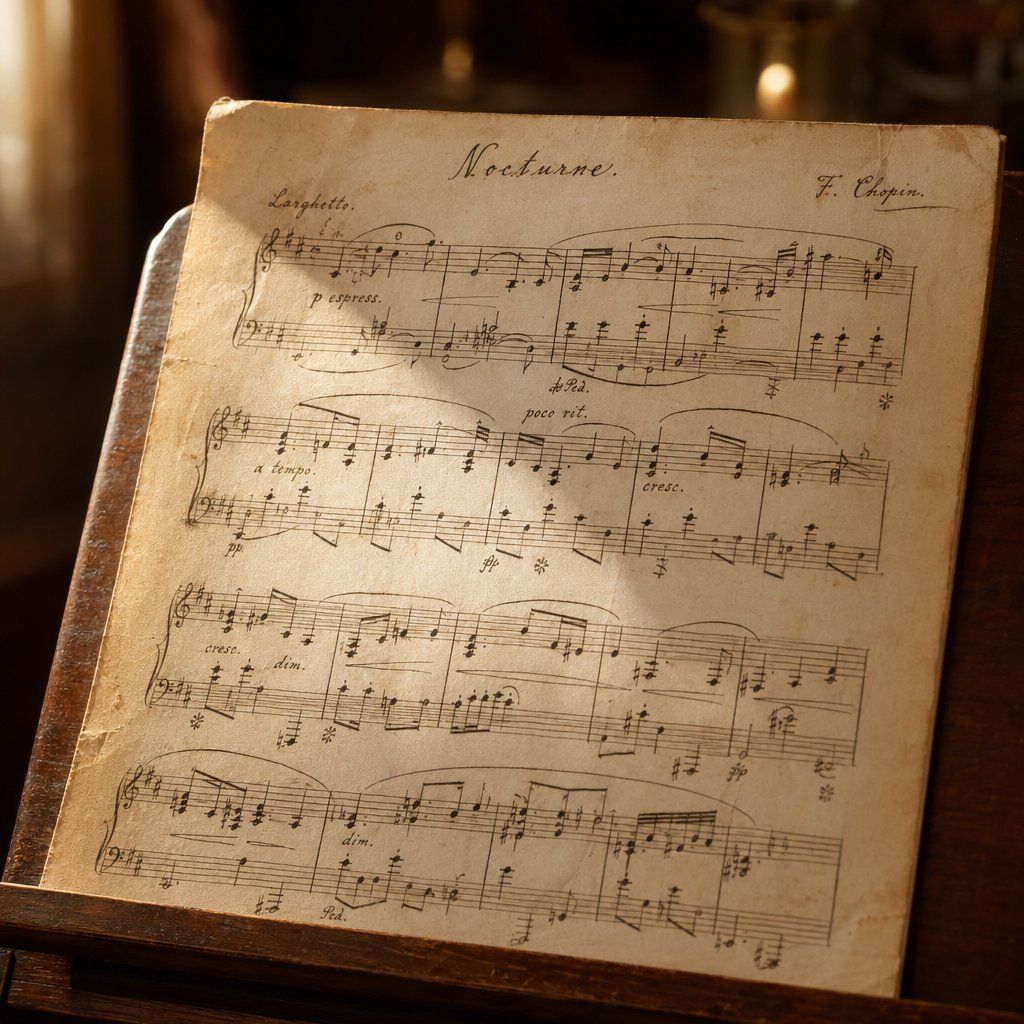
If you've ever glanced at a page of sheet music and wondered what all those little symbols beneath the notes mean, you're about to have one of them decoded completely. To define crescendo in written music, you need to know two things: the hairpin and the abbreviation. Both tell the performer the same thing — get louder — but they do it in slightly different ways.
The Hairpin Symbol Explained
The most recognizable crescendo notation is the hairpin — two lines that start from a single point on the left and open outward to the right, like a sideways "V" or an opening angle bracket. Imagine it this way:
< ———————————
The narrow end represents the quieter starting point. The wide end represents where the volume has increased to. It's a beautifully intuitive piece of visual design — the symbol literally grows, just like the sound it represents.
Here's the detail most people miss: the length of the hairpin on the page matters. A short hairpin spanning one or two beats means a quick swell. A long hairpin stretching across several measures tells the performer to build volume slowly and gradually. The physical space the symbol occupies directly maps to how much musical time the crescendo should take. Its mirror image — lines that converge from wide to narrow — is the crescendo antonym: the decrescendo (or diminuendo), indicating a gradual decrease in volume.
The other notation method is simpler. A composer writes the abbreviation cresc. below the staff at the point where the volume increase should begin. This approach is a bit looser — it tells you that a crescendo is happening but doesn't visually show you exactly where it ends. In many scores, you'll see cresc. paired with a target dynamic marking further ahead, like f or ff, so the performer knows where the buildup is heading.
How Cresc. and Dynamic Markings Work Together
So what is crescendo in music if not just "play louder"? It's a controlled journey between two specific volume levels. Those levels are defined by dynamic markings — the letters written beneath the staff that tell a musician exactly how soft or loud to play. A hairpin sitting between pp and f, for example, means "start very soft and gradually build to loud." Without those bookend markings, the crescendo is more open to interpretation, but the direction is always the same: quieter to louder.
Here's the full scale of standard dynamic markings, from softest to loudest:
| Abbreviation | Italian Term | Meaning |
|---|---|---|
| ppp | pianississimo | very, very soft |
| pp | pianissimo | very soft |
| p | piano | soft |
| mp | mezzo piano | moderately soft |
| mf | mezzo forte | moderately loud |
| f | forte | loud |
| ff | fortissimo | very loud |
| fff | fortississimo | very, very loud |
A crescendo can move through any portion of this range. A passage might crescendo from p to mf — a subtle, restrained swell — or from pp all the way to fff for a dramatic, room-filling buildup. The crescendo synonym you'll sometimes hear in casual conversation is "swell" or "buildup," but neither of those captures the precision that notation provides. Written music tells you exactly where the volume starts, where it ends, and how long the transition takes.
Understanding the notation is one thing. What actually happens in a performer's hands, breath, and body when they see that hairpin on the page is something else entirely.
How a Crescendo Works in Musical Performance
What Musicians Actually Do During a Crescendo
A hairpin on the page is just ink. What does crescendo mean in practice — in the muscles, the breath, the physical act of making sound? Every instrument family answers that question differently, and the technique involved is more demanding than most listeners realize.
When a performer sees a crescendo marking, the goal isn't to suddenly flip a volume switch. As MasterClass notes, composers sometimes even write poco a poco ("little by little") alongside the marking to emphasize that the increase must be gradual and controlled. If a composer wanted a sudden blast of volume, they'd use a completely different marking — like sforzando. A crescendo demands patience.
Here's what that patience looks like across different instrument families:
- Vocalists — Gradually deepen breath support from the diaphragm and increase vocal projection without straining. The challenge is adding power while keeping pitch and tone quality steady.
- String players (violin, cello, etc.) — Increase bow pressure against the strings and accelerate bow speed. A heavier, faster bow stroke produces more volume, but too much too soon kills the effect.
- Woodwinds (flute, clarinet, oboe) — Push more air through the instrument at a controlled rate. Embouchure adjustments keep the tone from cracking as air pressure rises.
- Brass (trumpet, trombone, French horn) — Increase airflow and engage more core support. Brass instruments respond dramatically to air changes, so the buildup requires careful pacing.
- Percussion (timpani, snare drum) — Gradually strike with more force or switch to harder mallets. Percussionists often have the most visible physical change — you can literally watch their arms move with greater intensity.
In every case, the skill isn't just getting louder. It's getting louder evenly over the exact duration the composer intended. That's what separates a good crescendo from a sloppy one. And while the crescendo builds volume upward, understanding decrescendo meaning in music — the controlled, gradual decrease — requires the same discipline in reverse. Both directions demand precision.
Famous Crescendos You Have Probably Heard
So what is a crescendo when it's done brilliantly? You've almost certainly heard one, even if you didn't know the term at the time.
The most famous example in all of crescendo music is Ravel's Bolero. The entire piece — roughly 15 minutes of it — is essentially one long crescendo. Two melodies repeat over and over while the instrumentation gradually expands and the volume steadily climbs. It starts with a single snare drum and a lone flute. By the end, the full orchestra is thundering. One listener on the Pacific Symphony blog described it perfectly: "It's like an explosion of sound in ultra slow motion."
Beethoven's symphonies are packed with powerful crescendos too. The opening of his Fifth Symphony — those iconic four notes — launches into passages where the orchestra swells from near-silence to full force. These moments build tension and anticipation so effectively that listeners physically lean forward in their seats.
That emotional pull is the whole point. A well-executed crescendo creates a sense of momentum, of something gathering force. It makes you feel like the music is heading somewhere important. And that's the key distinction worth repeating: the crescendo is the journey of getting louder. It's the climb, not the peak. The dramatic arrival at the top is something else entirely.
This distinction — between the process and the destination — is exactly where most people go wrong when they use the word outside of music. And that misuse is far more widespread than you might expect.
Crescendo vs Decrescendo and Other Dynamic Opposites
Every climb has a descent. In music, the definition of crescendo only tells half the story of how composers shape volume over time. The other half belongs to its mirror image: the decrescendo.
Decrescendo and Diminuendo Defined
A decrescendo is a gradual decrease in volume — the sound slowly fading rather than building. You'll also hear it called diminuendo, and the two terms are used interchangeably in practice. Both come from Italian: decrescendo from decrescere (to decrease), and diminuendo from diminuire (to diminish). In Spanish, the related word creciendo (creciendo meaning "growing") shares the same Latin ancestor but points in the opposite emotional direction from its "de-" counterpart.
In notation, the decrescendo appears as a closing hairpin — two lines that start wide on the left and converge to a point on the right, the exact reverse of the crescendo symbol. Alternatively, a composer writes decresc. or dim. below the staff. Just like its counterpart, the length of the hairpin tells the performer how gradually the volume should taper. A short hairpin over a beat or two means a quick fade; a long one stretched across several measures means a slow, deliberate withdrawal of sound.
Crescendo vs Decrescendo Side by Side
When you crescendo define it alongside its opposite, the relationship becomes intuitive. They're two halves of the same expressive tool. Here's how they compare across key attributes:
| Attribute | Crescendo | Decrescendo / Diminuendo |
|---|---|---|
| Definition | Gradual increase in volume | Gradual decrease in volume |
| Hairpin Symbol | Opens left to right: < | Closes left to right: > |
| Abbreviation | cresc. | decresc. or dim. |
| Dynamic Direction | Softer to louder | Louder to softer |
| Emotional Effect | Builds tension, anticipation, momentum | Creates release, calm, fading, resolution |
| Italian Root Meaning | Crescere — to grow | Decrescere — to decrease / Diminuire — to diminish |
Composers rarely use one without eventually reaching for the other. A phrase might crescendo from p to ff, hold at that intensity for a moment, then decrescendo back down to pp. These paired swells and fades create the dynamic waves that give music its emotional contour — the sense of breathing, of tension and release, that makes a performance feel alive rather than flat. As MusePrep puts it, a well-executed crescendo from pianissimo to fortissimo "can make the hair on your arms stand up," while a diminuendo from forte to pianissimo "can create a profound sense of peace or melancholy."
One quick note on spelling: if you've searched for "crushendo" or "crashendo," you're not alone — these pop up frequently in search engines. Neither is a real musical term. They're informal misspellings, likely influenced by the word "crush" or "crash." The correct terms are always crescendo and decrescendo. Similarly, the stringendo music definition is sometimes confused with crescendo, but stringendo refers to a gradual increase in tempo (speed), not volume. Different tool, different job.
The interplay between crescendo and decrescendo is something performers master over years of practice. But the real confusion around crescendo doesn't happen in the rehearsal room — it happens in everyday English, where the word has taken on a meaning that would make any musician wince.
The Most Common Crescendo Mistake
Why Crescendo Does Not Mean Climax
Picture a news anchor saying, "Public outrage reached a crescendo today." Or a sportswriter typing, "The crowd noise hit a crescendo as the final whistle blew." These sentences sound perfectly natural. They also misuse the word entirely.
What is crescendo, really? It's the buildup — the gradual increase in volume or intensity. It is not the loudest moment. It is not the peak. Saying something "reached a crescendo" is like saying a runner "reached a sprint" instead of "reached the finish line." The sprint is the act of running fast; the finish line is where you end up. A crescendo is the act of getting louder; the climax is where you end up.
A crescendo is the climb, not the summit.
This confusion has deep roots. The earliest known example of "crescendo" used to mean a peak comes from F. Scott Fitzgerald's The Great Gatsby in 1925: "The caterwauling horns had reached a crescendo and I turned away and cut across the lawn toward home." That single line from one of America's greatest novels helped launch a century of misuse. Merriam-Webster's Dictionary of English Usage traces the climax sense to an Americanism that took hold in the early 20th century and has been crescendoing ever since.
Usage authorities remain split. Bryan Garner, in Garner's Modern English Usage, calls the phrase "reaches a crescendo" flat-out "woolly-minded." The New York Times stylebook is equally firm: "A crescendo is not a peak of intensity but a gradual increase in force, intensity or loudness. It is the trip to the peak." On the other side, Fowler's Dictionary of Modern English Usage acknowledges that "this newer use causes distress and anxiety among more sensitive editors, not to mention many musicians, but it seems likely to prevail."
And prevail it has — at least partially. Most standard dictionaries now list "climax" or "peak" as a secondary meaning of the word. The American Heritage Dictionary's Usage Panel, when surveyed in 2006, was nearly evenly divided: 55 percent accepted a sentence using "reached a crescendo" to mean a high point. That's a slim majority, and it tells you something important — even among language professionals, nearly half still reject the usage.
For careful writers and anyone who values the crescendo music definition in its original sense, the distinction matters. Using the word correctly signals precision. It tells your reader — or your conductor — that you understand what you're talking about.
Correct vs Incorrect Usage Examples
The easiest way to spot the mistake is to test whether the sentence treats "crescendo" as a destination or a process. If it's a destination, it's wrong. If it's a process, you're good. Here are some side-by-side examples:
| Sentence | Correct or Incorrect | Why |
|---|---|---|
| "The argument reached a crescendo when she slammed the door." | Incorrect | Treats crescendo as the peak moment (the door slam). The door slam is the climax; the escalating argument is the crescendo. |
| "The argument built in a steady crescendo before she finally slammed the door." | Correct | Treats crescendo as the gradual buildup leading to the climax. |
| "The music crescendo hit its highest point during the finale." | Incorrect | A crescendo doesn't "hit" a point — it is the process of increasing toward that point. |
| "A long crescendo carried the orchestra from a whisper to a roar in the finale." | Correct | Describes the crescendo as a journey between two dynamic levels. |
| "Protests came to a crescendo outside the capitol." | Incorrect | Uses crescendo as a synonym for climax. The protests were crescendoing; the peak was something else. |
| "A crescendo of protests grew louder throughout the week." | Correct | Uses crescendo to describe the gradual intensification — the process, not the endpoint. |
Notice the pattern? Every incorrect example treats the word as a noun meaning "the loudest moment." Every correct example treats it as the act of getting louder. That's the test. If you can swap in "climax" and the sentence still makes sense, you're probably using "crescendo" wrong.
Does this mean the "climax" usage is destined to become fully accepted? Possibly. Language evolves, and widespread adoption has a way of rewriting the rules. But as Merriam-Webster's usage guide points out, the newer sense "shows no sign of driving the earlier senses from use." Both meanings coexist — and knowing the difference gives you the power to choose deliberately rather than stumble into the mistake by default.
That choice becomes especially interesting once the word leaves the concert hall entirely and starts showing up in newspaper headlines, political speeches, and sports broadcasts — contexts where its metaphorical power is hard to resist.

How Crescendo Is Used Figuratively Outside of Music
A word doesn't escape the concert hall and land in political speeches, courtroom dramas, and front-page headlines by accident. It earns that migration by doing something no other word quite can. The definition crescendo carries — that sense of gradual, building intensity — maps perfectly onto dozens of real-world situations where pressure mounts, voices multiply, and momentum gathers force before something breaks.
Crescendo in Journalism, Politics, and Everyday Speech
You don't need to read a note of sheet music to feel what "crescendo" communicates. When a journalist writes that "a crescendo of criticism forced the CEO to resign," every reader instinctively understands the shape of that story: scattered complaints became organized pushback, which became an unavoidable roar. The word does in five syllables what an entire paragraph of explanation would struggle to achieve.
That's why it shows up everywhere. Political outrage crescendoed. Crowd noise crescendoed. Tension in a courtroom crescendoed. The word has become a go-to metaphor for any situation where intensity increases gradually and unmistakably. Here are some examples of how it works across different contexts:
- Journalism: "The crescendo of public outrage over the data breach left the company with no choice but to issue a full recall."
- Politics: "A crescendo of calls for reform swept through the legislature in the weeks following the report's release."
- Sports: "The crowd noise built in a steady crescendo as the home team drove toward the end zone in the final two minutes."
- Literature: "Each chapter tightened the narrative like a crescendo, layering suspicion upon suspicion until the reveal felt inevitable."
- Everyday speech: "The neighbor's party crescendoed from background chatter to full-blown karaoke by midnight."
Notice something? Every one of those sentences treats the word correctly — as a process of building, not as the peak itself. The CEO's resignation isn't the crescendo; the mounting criticism is. The touchdown isn't the crescendo; the swelling crowd noise is. When writers use the word this way, they're honoring the same meaning a musician reads in a crescendo sign on the page: start here, grow steadily, arrive somewhere louder.
Synonyms and How They Compare
So why reach for "crescendo" at all when English already has words like "buildup" or "escalation"? Because none of them carry quite the same weight. The word imports connotations of rhythm, momentum, and dramatic arc that its synonyms only approximate. A "buildup" is mechanical. An "escalation" can be sudden. A crescendo is always gradual, always directional, and always implies that something larger is coming. That built-in sense of anticipation is what makes it irreplaceable in the right context.
Still, knowing the alternatives helps you pick the most precise word for the job. Here's how the most common options compare:
| Word | Core Meaning | Key Nuance |
|---|---|---|
| Crescendo | Gradual increase in intensity | Implies a smooth, continuous arc — borrowed from music, carries connotations of rhythm and dramatic shape |
| Buildup | Accumulation over time | More neutral and mechanical; lacks the emotional or dramatic undertone |
| Escalation | Increase in severity or scope | Often implies conflict or danger; can be sudden rather than gradual |
| Intensification | Process of becoming more intense | Clinical and precise; works well in academic or technical writing but feels flat in narrative |
| Swell | Gradual increase, often in sound or emotion | Closest synonym to crescendo; also borrowed from music but less specific about direction |
If you're writing a policy brief, "escalation" or "intensification" might serve you better. If you're writing a novel or a feature story and want the reader to feel the momentum, "crescendo" is the sharper tool. It's one of those rare borrowed words that English never really found a native replacement for — probably because the concept it describes is so tightly bound to the musical tradition that invented it.
And that's worth pausing on. The reason "crescendo" works so well as a metaphor is the same reason a crescendo sign on a music score works so well as a performance instruction: it describes a shape. Not a single moment, but a trajectory. Readers and listeners alike respond to that shape instinctively, whether they're sitting in a concert hall or scanning a headline. The word carries its own dramatic architecture.
Of course, crescendo didn't arrive in English alone. It traveled alongside an entire vocabulary of Italian musical terms — terms that, taken together, form a connected system for describing how music moves, breathes, and feels. Understanding that system makes every individual term, crescendo included, easier to remember and far more useful.
Related Italian Musical Terms Every Learner Should Know
The crescendo definition in music doesn't exist in isolation. It belongs to a family of Italian terms that work together like a shared vocabulary for performers worldwide. When you learn these words as a connected system rather than isolated definitions, each one clicks into place faster — and the relationship between crescendo decrescendo and the broader landscape of dynamics, tempo, and expression becomes intuitive.
Essential Italian Dynamic and Expression Markings
Here are the terms you're most likely to encounter alongside crescendo in a score, a music lesson, or a conversation about performance:
| Italian Term | Pronunciation | Definition | Category |
|---|---|---|---|
| Decrescendo / Diminuendo | deh-kreh-SHEN-doh / dih-min-yoo-EN-doh | Gradually getting softer | Dynamic |
| Pianissimo (pp) | pee-ah-NISS-ih-moh | Very soft | Dynamic |
| Fortissimo (ff) | for-TISS-ih-moh | Very loud | Dynamic |
| Sforzando (sfz) | sfor-TSAHN-doh | A sudden, forced accent on a single note or chord | Dynamic / Expression |
| Accelerando (accel.) | ah-chel-eh-RAHN-doh | Gradually getting faster | Tempo |
| Rallentando (rall.) | rah-len-TAHN-doh | Gradually getting slower | Tempo |
| Stringendo | strin-JEN-doh | Gradually getting faster, often with increasing urgency | Tempo |
Notice the pattern? Terms ending in "-ando" or "-endo" describe gradual changes — crescendo (growing louder), rallentando (growing slower), accelerando (growing faster). They're all gerund forms in Italian, meaning they describe something in the process of happening. That's a handy shortcut: if you see that ending on a musical term, you're looking at a transition, not a fixed state.
Sforzando is the outlier here. Where a crescendo definition music students learn describes a smooth buildup, sforzando is a sudden jolt — a sharp accent on a single note. Think of it as the difference between slowly turning up a dimmer switch and flipping a spotlight on. Composers use both, often in the same passage, to keep listeners off balance.
Why Musical Terms Are Almost Always Italian
You might wonder why a German orchestra, a Japanese string quartet, and a Brazilian jazz ensemble all read the same Italian words on the page. The answer goes back to the Baroque period, roughly 1600 to 1750, when the rules of Western music notation were being formalized. Italian composers and theorists — building on work that stretched back to Guido of Arezzo around 1000 AD — wrote performance instructions in their native language. As their music spread across Europe, those terms traveled with it. Performers in Vienna, Paris, and London adopted the Italian vocabulary wholesale because it was already embedded in the scores they were playing.
The result is a kind of universal shorthand. A violinist in Seoul and a trumpeter in Buenos Aires both know exactly what rallentando means without translation. Italian became to music what Latin became to medicine or science — a shared professional language that crosses borders. Some composers, like Beethoven and Debussy, occasionally wrote directions in German or French, but Italian remains the default to this day.
Knowing these terms transforms how you listen, too. When you can name what's happening — a crescendo building into a sforzando accent, an accelerando pushing the tempo forward before a rallentando pulls it back — the music stops being a wash of sound and starts revealing its architecture. You hear the choices the composer made, and the performance becomes a conversation you can follow.
That shift from passive listening to active understanding is where theory stops being abstract and starts becoming genuinely useful — especially if you're ready to move from analyzing music to making some of your own.

Putting Crescendo Into Practice in Your Own Music
Knowing the crescendo meaning in music is one thing. Hearing it — really hearing it — changes how you experience every song, symphony, and film score from that point forward. And playing one yourself, even a simple one, makes the concept stick in a way no definition ever could.
Listen for Crescendos in Music You Already Love
You don't need a conservatory education to start. Queue up Ravel's Bolero and follow that 15-minute crescendo from the opening snare drum to the full orchestral eruption. Then try something closer to home — a rock anthem, a film soundtrack, a gospel choir building toward the final chorus. Once you know what to listen for, you'll notice crescendos in music everywhere: the verse that swells into the chorus, the bridge that gathers intensity before the final drop.
Try this: pick any song you love and listen specifically for moments where the volume or energy increases gradually. Name the starting point and the arrival point. That's the crescendo in music definition, playing out in real time right in your headphones.
Turn Theory Into Practice With Melody Tools
Listening is a great first step. Creating is the next one. Here are some practical ways to experiment with crescendo and dynamic contrast on your own:
- Generate melodies and explore structure — MakeBestMusic's Melody Maker lets you create melodies quickly, giving you a musical canvas where you can experiment with adding dynamic shape, including crescendos, to phrases you've built from scratch.
- Sing or hum a simple crescendo — Pick a single note, start as quietly as you can, and gradually increase your volume over ten seconds. Feel how your breath support changes. That physical sensation is the crescendo.
- Play one on any instrument — Even a single key on a piano or an open string on a guitar works. Repeat a note, getting slightly louder each time. Focus on making the increase smooth and even.
- Add dynamic contrast to a melody you already know — Take a familiar tune and deliberately play the first phrase softly, then crescendo into the second. Notice how that simple change adds emotional weight.
- Record yourself — Use your phone to capture a before-and-after: the melody played flat, then played with a crescendo. The difference is often dramatic, even for beginners.
The gap between understanding a concept and using it is where most learners stall. Crescendo in music isn't just a marking on a page or a vocabulary word for a theory exam — it's one of the most powerful tools a musician has for making sound feel alive. Start small, experiment often, and let the buildup take you somewhere new.
