

What Jrock Actually Means and Why It Matters
Imagine a genre that fuses blistering guitar work with theatrical costumes, fills Tokyo arenas and New York stages alike, and soundtracks some of the most beloved anime series on the planet. That genre has a name, and chances are you've already heard it.
Jrock (also written J-rock or j rock) is the umbrella term for Japanese rock music — a sprawling cultural ecosystem that spans from 1960s garage bands to globally touring acts, encompassing dozens of subgenres, a distinctive visual identity, and one of the most devoted international fanbases in modern music.
It is not a single sound. It is punk, progressive, math rock, shoegaze, and theatrical glam all sharing the same roof. And that range is exactly what makes it so compelling.
Defining Jrock in Plain Terms
The term emerged as a shorthand to distinguish Japanese rock from its Western counterpart, much like J-pop separates Japanese pop from the broader pop landscape. Fan communities outside Japan adopted the abbreviation in the early internet era, and it stuck. Today, when someone searches "j rock," they are tapping into a label that covers everything from the orchestral metal of X Japan to the emo-punk energy of ONE OK ROCK — bands that start with j-culture roots but resonate far beyond them. The abbreviation works because it signals something specific: rock music shaped by Japanese artistic sensibilities, production styles, and a visual philosophy you simply will not find anywhere else.
Why Jrock Matters Beyond Japan
The genre's reach extends well past album sales. Jrock bands supply iconic opening themes for anime series watched by millions worldwide — a discovery pipeline Spotify has highlighted as a major driver of global streaming growth for Japanese artists. Its fashion influence bleeds into Harajuku street style, gothic lolita subculture, and Western alternative aesthetics. Meanwhile, jrock world tour bands like Miyavi and L'Arc-en-Ciel have headlined venues from Madison Square Garden to European festival stages, proving the music translates across languages and borders.
Whether you are a curious newcomer who just Shazamed an anime intro or a longtime fan ready to dig deeper, consider this your Jrock 101. The story starts, as most rock stories do, with a handful of musicians plugging in and turning up the volume.
How Japanese Rock Evolved Over Six Decades
That handful of musicians plugging in? They were listening to the Beatles. When the Fab Four performed in Tokyo in 1966, they ignited a generation of young Japanese players who wanted to build something of their own on top of Western rock and roll.
Early Foundations and the Group Sounds Era
The first wave of japanese rock arrived through the "Group Sounds" movement of the 1960s. Bands like The Spiders, The Mops, and The Golden Cups merged British Invasion energy with kayokyoku — an early form of Japanese pop — creating a sound that roughly paralleled acts like the Rolling Stones or the Kinks. By the early 1970s, the template was expanding fast. Flower Travellin' Band pushed into proto-metal territory inspired by Black Sabbath, while Happy End became the first Japanese rock band to record in English. Progressive rock also took root, with musicians experimenting with synthesizers — most notably Haruomi Hosono, who later co-founded the electronic supergroup Yellow Magic Orchestra. These early rock bands in japan were still following Western blueprints, but the seeds of something distinctly Japanese were already in the soil.
The Underground Explosion and the Rise of Indies
The 1980s changed everything. Punk and new wave bands created an independent infrastructure of small labels, livehouses, and self-published magazines that let artists bypass the major label system entirely. Hardcore acts like The Stalin and post-punk groups like AUTO-MOD carved out underground scenes, while a metal boom produced pioneers like LOUDNESS and 44MAGNUM. Then came the band boom of the late 1980s — a period when j rock bands formed in record numbers, fueled by economic prosperity and TV exposure. Within that competitive environment, groups like X Japan and BUCK-TICK adopted extreme costumes and makeup to stand out, laying the groundwork for visual kei. The 1990s became the golden age. L'Arc-en-Ciel became the first Japanese rock band to play Madison Square Garden. B'z sold over 86 million albums domestically. Visual kei exploded into the mainstream. For the first time, international fans started paying attention.
Jrock in the Digital Age
The 2000s flipped the access problem on its head. Where earlier fans outside Japan had to hunt down expensive CD imports — sometimes stuffing money orders into envelopes and waiting weeks for a single album — YouTube, Spotify, and streaming platforms suddenly made entire catalogs available worldwide. Anime soundtracks became the gateway drug, pulling millions of Western viewers toward bands like Asian Kung-Fu Generation and L'Arc-en-Ciel through series like Fullmetal Alchemist. A new generation of acts capitalized on this global reach: ONE OK ROCK signed with US label Fueled By Ramen, Babymetal filled Western arenas, and visual kei guitarist Miyavi completed a 250-show international tour across 30 countries. The jrock 2000s era marked the moment the genre stopped being a niche import and became a globally accessible movement.
| Era | Defining Characteristics | Representative Sound |
|---|---|---|
| 1960s | Group Sounds movement; British Invasion and kayokyoku fusion | Beat-driven pop-rock with Western song structures |
| 1970s | Proto-metal, folk-rock, progressive experimentation | Heavier riffs, synthesizer exploration, English-language recording |
| 1980s | Indie infrastructure boom; punk, metal, and the birth of visual kei aesthetics | Hardcore punk, thrash metal, beat rock, theatrical glam |
| 1990s | Golden age; massive domestic commercial success and visual kei explosion | Alternative rock, visual kei, pop-rock crossover |
| 2000s–present | Digital globalization; streaming access and international touring | Emo-punk, metalcore, idol-metal hybrids, genre-blending experimentation |
Six decades of evolution, and the genre still refuses to sit still. That restless energy is easier to appreciate once you understand just how many subgenres live under the jrock umbrella — and how wildly they differ from one another.
A Genre Map of Jrock Subgenres
Those wildly different sounds are not random. Each one belongs to a distinct subgenre with its own history, aesthetic code, and community of devoted fans. Think of the jrock umbrella less like a single genre and more like a neighborhood — every block has its own personality, but they all share the same zip code. Here is your map.
Visual Kei, Punk, and Alternative
Visual kei is the subgenre most people picture when they hear the word jrock, and for good reason. Literally meaning "visual style," it treats a band's appearance — androgynous makeup, elaborate costumes, dramatic hairstyles — as inseparable from the music itself. Two visual kei acts can sound nothing alike. Girugamesh plays aggressive, dark metal with growling vocals, while SuG delivers bright, bouncy "heavy positive rock" drenched in candy-colored outfits. That range is the point. Visual kei is a creative philosophy first and a sound second, which is why it has spawned its own internal taxonomy: kote kei (traditional, gothic-leaning), oshare kei (lighter, pop-inflected), Nagoya kei (British punk and death metal influences), angura kei (dark, theatrical, rooted in traditional Japanese imagery), and ero guro kei (exploring the erotic, grotesque, and bizarre). Bands like X Japan, BUCK-TICK, and Malice Mizer defined the first generations, while Dir en grey and the GazettE carried the torch into the 2000s with heavier, more internationally accessible sounds.
Japanese punk, meanwhile, runs on a different fuel entirely. Where Western punk often channels political anger, Japanese punk bands like The Blue Hearts and The Stalin channeled a raw, almost absurdist rebellion against social conformity. The energy is less manifesto and more cathartic explosion. On the alternative and indie side, acts like Blankey Jet City and Sunny Day Service built a critically acclaimed scene through the 1990s that leaned into jangle pop, Britpop-adjacent textures, and introspective songwriting — proving that japanese bands could be just as compelling at a whisper as at a scream.
Math Rock, Shoegaze, and Post-Hardcore
If you enjoy music that makes your brain work as hard as your ears, this is your corner. Japanese math rock bands like toe and Tricot are known for interlocking guitar lines, odd time signatures, and a precision that feels almost architectural. Toe's instrumental compositions blend jazz-inflected fingerpicking with post-rock dynamics, while Tricot fuses math rock complexity with pop hooks and post-hardcore edges — a combination that has earned them a dedicated global following.
Shoegaze found fertile ground in Japan as well. Kinoko Teikoku helped define the country's late 2000s shoegaze revival, layering walls of distorted guitar over dreamy, ethereal vocals. The result sits somewhere between My Bloody Valentine and something uniquely Japanese — more melancholic, more restrained in its chaos.
Post-hardcore, though, may be the subgenre with the deepest roots in Japan's indie ecosystem. Bloodthirsty butchers fused Fugazi-style intensity with noise rock and shoegaze as early as the mid-1990s, and Number Girl's debut became a landmark for the entire Japanese indie-rock landscape. By the 2010s, Ling Tosite Sigure had pushed post-hardcore back to the top of the charts, bridging math rock technicality with dramatic vocal interplay and anime-adjacent appeal. Envy, on the heavier end, essentially invented a subgenre of post-rock-influenced screamo that bands worldwide still chase.
Progressive and Experimental Edges
Then there are the artists who refuse to be mapped at all. Japanese progressive rock stretches from the symphonic ambitions of bands like X Japan's longer compositions to the abstract, jazz-inflected experiments of Zazen Boys — the project led by Number Girl's Shutoku Mukai after that band dissolved. Noise music carved out its own legendary niche, with Merzbow becoming one of the most prolific and critically acclaimed experimental artists on the planet. Boredoms evolved from chaotic Osaka punk into a minimalist, psychedelic force that earned international cult status. These acts sit at the far edge of what most listeners would call "rock," but their influence bleeds back into the mainstream — you can hear noise textures in Dir en grey's later work and prog structures in Ling Tosite Sigure's compositions.
| Subgenre | Defining Characteristics | Mood / Energy | Representative Bands |
|---|---|---|---|
| Visual Kei | Theatrical costumes, androgynous styling; musically ranges from glam to metal | Dramatic, intense, emotionally charged | X Japan, the GazettE, Malice Mizer |
| Oshare Kei | Bright fashion, pop-leaning melodies; lighter branch of visual kei | Playful, upbeat, colorful | An Cafe, SuG, Kra |
| Nagoya Kei | British punk and goth-metal influences; dark, heavy sound from Nagoya scene | Dark, aggressive, brooding | Dir en grey, lynch., DEATHGAZE |
| Japanese Punk | Raw energy, absurdist rebellion, stripped-down instrumentation | Chaotic, cathartic, defiant | The Blue Hearts, The Stalin, Hi-STANDARD |
| Alternative / Indie Rock | Introspective songwriting, jangle and Britpop textures, melodic focus | Reflective, warm, bittersweet | Blankey Jet City, Sunny Day Service, ASIAN KUNG-FU GENERATION |
| Math Rock | Complex time signatures, interlocking guitar patterns, technical precision | Cerebral, dynamic, rhythmically inventive | toe, Tricot, LITE |
| Shoegaze / Dream Pop | Walls of distorted guitar, ethereal vocals, layered textures | Dreamy, melancholic, immersive | Kinoko Teikoku, My Dead Girlfriend, Luminous Orange |
| Post-Hardcore | Aggressive indie-rock with screamo, noise, and post-rock elements | Intense, emotional, unpredictable | Envy, Ling Tosite Sigure, Number Girl |
| Noise / Experimental | Extreme distortion, improvisation, avant-garde sound design | Abrasive, confrontational, boundary-pushing | Merzbow, Boredoms, Boris |
| Progressive Rock | Extended compositions, genre fusion, jazz and classical influences | Ambitious, layered, exploratory | Zazen Boys, downy, MONO |
You will notice that many of these japanese rock bands appear in conversations about multiple subgenres. Dir en grey started as visual kei and evolved into something closer to experimental metal. Ling Tosite Sigure gets filed under post-hardcore, math rock, and alternative depending on who you ask. That fluidity is not a flaw in the taxonomy — it is the defining feature of the scene. The best jrock artists treat genre boundaries the way they treat stage costumes: something to try on, transform, and discard whenever the creative moment demands it.
Knowing the map is one thing. Knowing where to actually press play is another — and that is where a good set of band recommendations makes all the difference.
Essential Jrock Bands and Artists Every Fan Should Know
A genre map only gets you so far without a playlist to match. Whether you are looking for your first rock band japanese fans consider essential or hunting for something deeper, the recommendations below are organized by vibe and subgenre — not ranked, because comparing X Japan to toe is like comparing a thunderstorm to a Swiss watch. Both are impressive. They just do very different things.
Gateway Bands for New Listeners
These are the jrock bands with the widest international reach — strong streaming catalogs, English-language content or crossover appeal, and the kind of sound that clicks even if you have never explored Japanese rock before. If you are searching for a music band japan is proud to export, start here.
- ONE OK ROCK — arena-scale emo-rock with English-language albums and US label backing; the most accessible entry point for Western listeners
- Babymetal — a genre-defying fusion of idol pop vocals and thrash metal that fills arenas worldwide
- L'Arc-en-Ciel — polished alternative rock with decades of hits; the first Japanese rock act to headline Madison Square Garden
- ASIAN KUNG-FU GENERATION — melodic indie rock beloved for iconic anime opening themes across Naruto, Bleach, and Fullmetal Alchemist
- X Japan — the band that launched visual kei; symphonic metal and power ballads with a dramatic, operatic edge
- Miyavi — solo guitarist and singer blending slap-style electric guitar with hip-hop and electronic textures; extensive world touring history
Deep Cuts and Underground Favorites
Ready to go further? These picks span classic and contemporary acts across subgenres, proving the scene is very much alive and evolving. Some of these bands beginning with j-culture roots have built devoted followings without ever chasing mainstream crossover — and that independence is part of their appeal.
Visual Kei Essentials
- Dir en grey — started in visual kei, evolved into boundary-pushing experimental metal with visceral live performances
- the GazettE — dark, heavy visual kei with a massive international fanbase and consistently ambitious production
- BUCK-TICK — one of the genre's founding acts; gothic, atmospheric rock that has stayed creative for over three decades
Punk and Hardcore Picks
- Hi-STANDARD — melodic punk legends who helped build Japan's independent music infrastructure in the 1990s
- Otoboke Beaver — an all-female punk band from Kyoto delivering chaotic, high-speed energy; praised by Dave Grohl after their 2024 Glastonbury set
- The Blue Hearts — the definitive Japanese punk band; raw, anthemic, and deeply influential on every generation that followed
Math Rock and Experimental Standouts
- toe — instrumental math rock with jazz-inflected fingerpicking and post-rock dynamics; quietly one of Japan's most respected bands
- Tricot — math rock complexity fused with pop hooks and post-hardcore grit; a strong live act with growing global recognition
- Boris — genre-shapeshifting heaviness spanning doom, drone, shoegaze, and noise across dozens of albums
Alternative, Indie, and Post-Hardcore
- Ling Tosite Sigure — razor-sharp post-hardcore with math rock precision and anime soundtrack credentials
- Envy — emotionally devastating post-rock-influenced screamo that helped define an entire international subgenre
- Hump Back — a three-piece female rock band from Osaka with infectious, heartfelt energy and a growing domestic following
- MONO — cinematic post-rock built on sweeping crescendos and orchestral arrangements; a staple of international festival circuits
This is a starting grid, not a finish line. Every band listed here connects to a wider web of collaborators, side projects, and scene peers worth exploring. And the deeper you go, the more you will notice something that sets Japanese rock apart from almost any other national scene: the music never exists in isolation from its visual identity.
Visual Kei and the Aesthetic Identity of Jrock
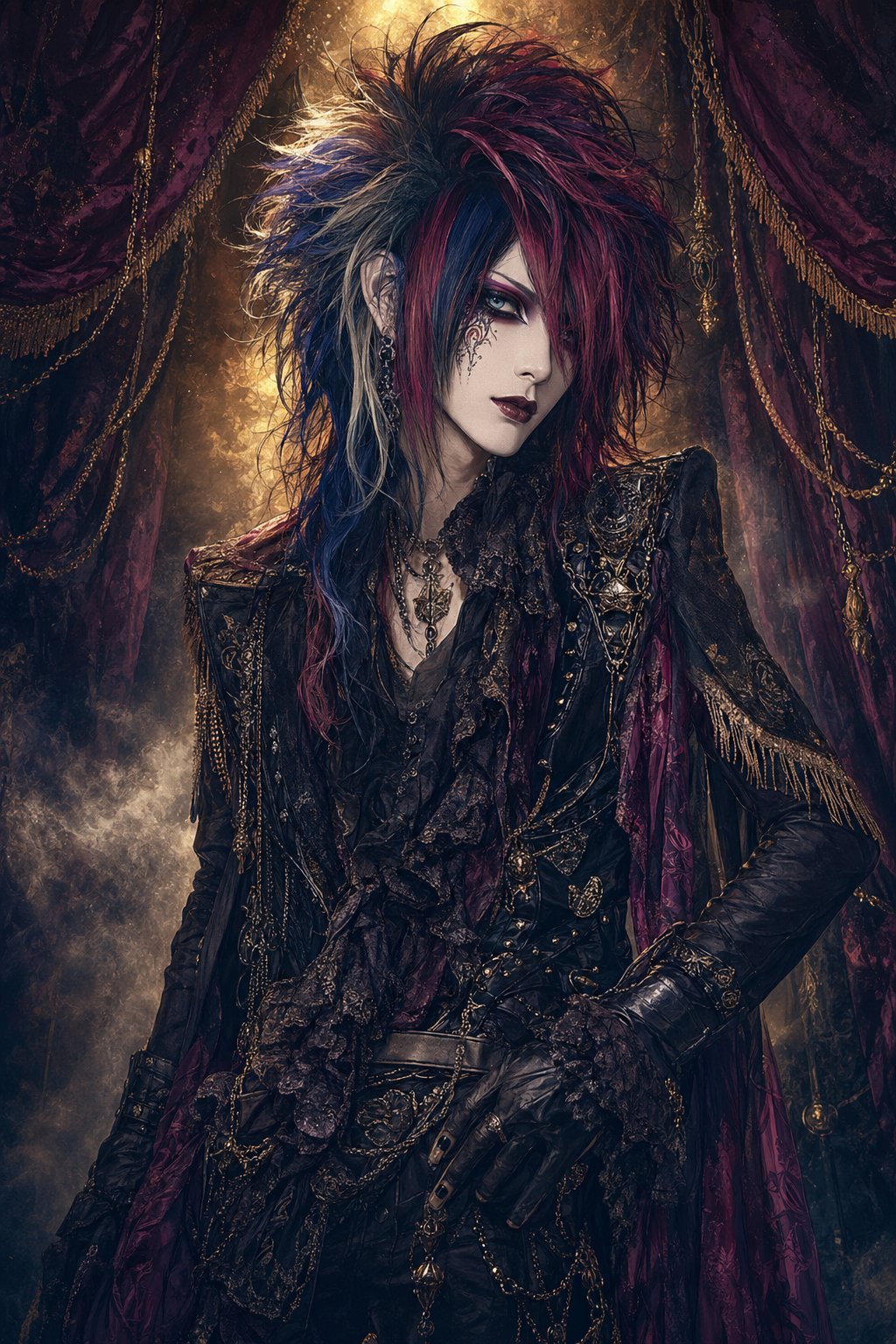
In most Western rock traditions, image is secondary — or at least it is supposed to be. Authenticity gets measured by how little a band appears to care about what they look like. A japanese band operating in the jrock world flips that assumption entirely. Here, what you see on stage is not decoration layered on top of the music. It is the music, expressed through fabric, makeup, and movement.
The Philosophy Behind Visual Kei
Visual kei — literally "visual style" — is often reduced to a fashion trend in Western coverage. That misses the point. It is a creative philosophy built on the idea that a band's visual presentation and its sound are inseparable halves of a single artistic statement. When X Japan's Yoshiki drew on Kabuki theatrics alongside glam rock and heavy metal, he was not just dressing up. He was constructing a persona — each band member embodying a distinct character, complete with individual costumes, hairstyles, and stage identities. Malice Mizer took this further with Rococo-era European aesthetics fused into gothic rock. Dir en grey channeled horror and grotesque imagery into increasingly extreme metal. The costumes communicate something the lyrics alone cannot: emotional register, narrative arc, artistic ambition.
What makes this philosophy distinctive is its range. Visual kei is not one look. Subgenres within the movement include kote kei, the most old-school style with a goth and punk feel; tanbi kei, influenced by Victorian and Rococo fashion; and ero guro kei, which leans into grotesque and provocative motifs. Androgynous styling runs through nearly all of them — blurring gender presentation not as a political statement but as an expansion of creative possibility. The key detail is that although individual elements may look chaotic — teased hair, ripped materials, heavy accessories — the overall effect is always deliberate and polished.
Fashion, Harajuku, and Youth Subculture Connections
Visual kei did not develop in a vacuum. It grew alongside and cross-pollinated with the broader ecosystem of Japanese youth subcultures, particularly those concentrated in Tokyo's Harajuku district. Gothic lolita fashion, which emerged in the 1990s as a hybrid of Western and Japanese aesthetics, shares visual kei's love of dark lace, dramatic silhouettes, and a refusal to dress for mainstream approval. Fans of both scenes shopped the same Takeshita Street boutiques, attended the same live shows, and built overlapping communities online. The result was a feedback loop: visual kei bands inspired fan fashion, and fan fashion pushed bands to evolve their looks further.
This extends beyond clothing. Album art, music videos, and band photography in jrock function as visual storytelling — each release cycle often introduces a new aesthetic concept that shapes everything from stage design to merchandise. Imagine a japanese boy band releasing an album where every promotional image, costume, and set piece follows a unified gothic fairy-tale theme. That level of visual cohesion is standard practice in visual kei, not an exception. It is closer to how a film director builds a world than how most Western rock bands approach branding.
In Western rock, looking like you do not care is the ultimate sign of authenticity. In jrock, pouring creative energy into your visual identity is the authenticity — it signals that the art matters enough to extend beyond the speakers and into every detail the audience can see.
That visual intensity does not just live on stage and in album booklets. It travels — through anime opening sequences, convention cosplay, and the social media clips that carry jrock across borders to audiences who may not speak a word of Japanese but instantly recognize the aesthetic. How those discovery pathways actually work is a story of its own.
Jrock in Anime, Games, and Global Pop Culture
Most Western fans did not find their first japanese rock group by browsing a record store. They found it by watching an anime opening and thinking, "Wait — what is this song?" That moment of accidental discovery has done more to grow the genre's global audience than any marketing campaign ever could.
Anime Opening and Ending Themes
Anime theme songs — known as anison — are the single biggest gateway to jrock for listeners outside Japan. Every season, dozens of new anime series launch with opening and ending tracks performed by rock acts, and those 90-second clips reach millions of viewers who may never have searched for Japanese music on their own. The effect compounds over time. A viewer watches Dan Da Dan and hears AiNA THE END's raspy, genre-blending vocals on the opening theme. Another catches BAND-MAID's blistering guitar work on Rock wa Milady no Tashinami de Shite. Someone else discovers metalcore through Paledusk's adrenaline-fueled contribution to Gachiakuta. Each pairing introduces a different corner of the scene — from BLUE ENCOUNT's empowering shonen anthems to Yorushika's ethereal, melancholic guitar work. The range of jrock songs featured in anime alone mirrors the full subgenre map covered earlier.
What makes this pipeline so effective is repetition. You hear an opening theme dozens of times across a season. It burrows into your memory. By the time you look up the band, you are already a fan — you just did not know it yet.
Gaming Soundtracks and Cultural Crossover
Video games run a parallel discovery channel. Japanese composers have shaped some of the most iconic soundtracks in gaming history, and rock-influenced scores sit at the heart of that legacy. Nobuo Uematsu's work on Final Fantasy VII — including the symphonic-metal intensity of "One Winged Angel" — introduced millions of players to a sound that blurred the line between orchestral composition and rock performance. Composers like Yoko Shimomura and Yoko Kanno built careers scoring games and anime alike, creating a bridge between the two mediums that fans cross constantly. The influence runs deep enough that dedicated video game music concerts, such as Distant Worlds and Video Games Live, regularly sell out orchestral venues worldwide.
Beyond soundtracks, the broader convention ecosystem keeps the community alive. Anime conventions host japanese punk rock and visual kei acts for Western audiences who might never travel to a Tokyo livehouse. Fan-created content fills the gaps between official releases. And social media algorithms do the rest — a 15-second clip of a live performance can rack up millions of views overnight.
Here are the main channels through which fans outside Japan typically discover the genre:
- Anime opening and ending themes — the most common first encounter for Western listeners
- Video game soundtracks — rock-influenced scores from franchises like Final Fantasy, Kingdom Hearts, and Castlevania
- YouTube algorithm recommendations — autoplay and suggested videos surface live performances and music videos
- Convention performances — anime cons and dedicated J-music events featuring touring acts
- Fan-created AMVs (anime music videos) — pairing jrock songs with anime footage, often reaching massive view counts
- Social media clips — short-form video on TikTok, Instagram, and X spreading live moments and song snippets
- Fan translation communities — lyric translations, album reviews, and forums that make Japanese-language content accessible
Each of these channels feeds the others. A fan discovers a band through an anime theme, watches their live clips on YouTube, joins a translation community, and eventually attends a convention set. That layered ecosystem is what transforms a casual listener into someone who books a flight to see a japanese rock group perform on home turf — which raises the question of what that live experience actually feels like from the inside.
Inside the Live Jrock Experience and Fan Culture
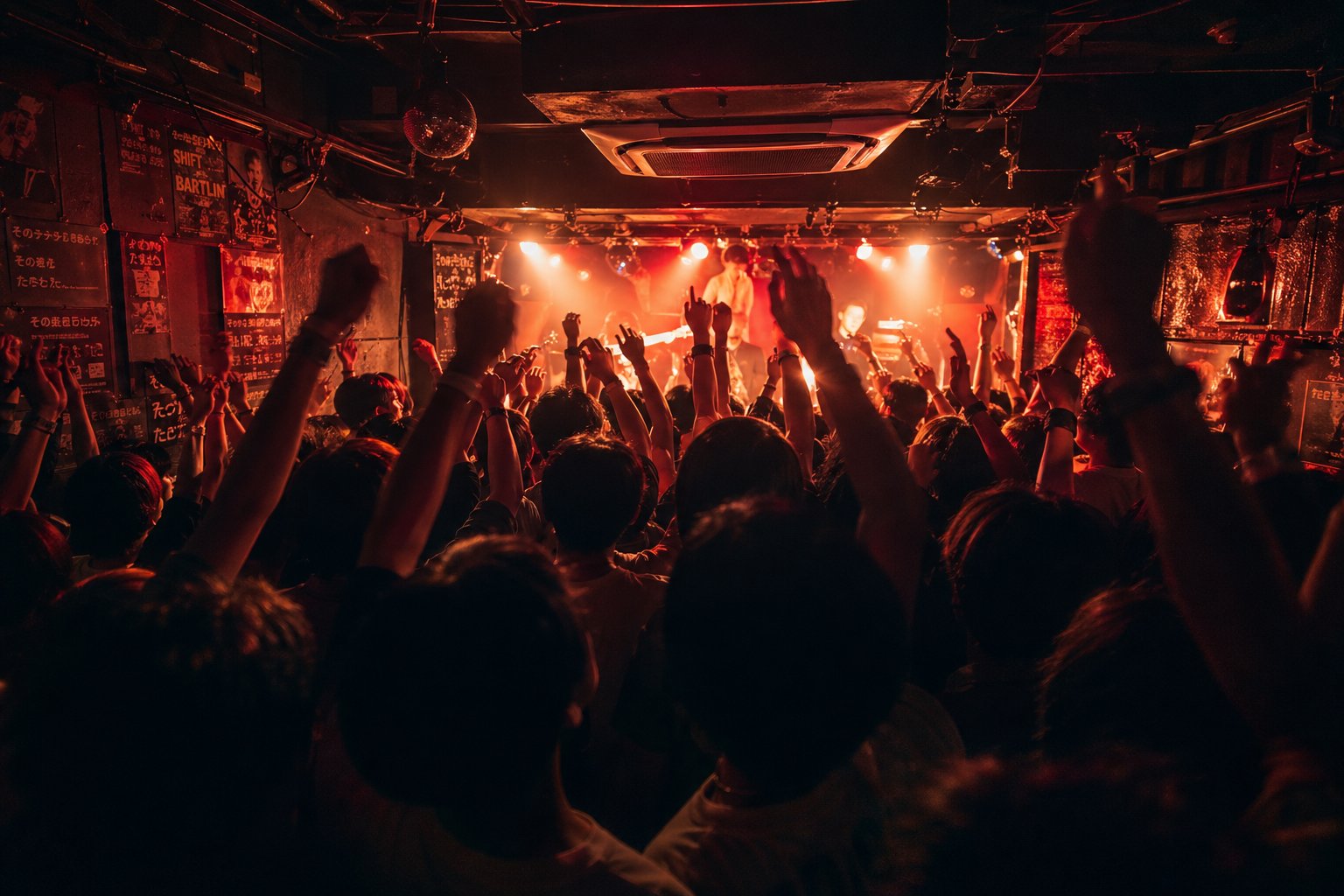
The answer is: intense, intimate, and nothing like a Western rock show. Attending a live performance in Japan is not just about hearing the music — it is about participating in it. And the venue where that participation happens shapes everything.
Live Houses and the Intimate Venue Circuit
Most rock in japan does not start in arenas. It starts in live houses — small, dedicated rock venues scattered across Tokyo, Osaka, Nagoya, and virtually every mid-sized Japanese city. Picture a room that holds somewhere between 50 and 300 people, a low stage, minimal production, and a sound system tuned for volume over polish. Venues like Ikebukuro CHOP in Tokyo are compact enough that you have a clear view of the stage no matter where you stand — close enough to see a guitarist's fingers on the fretboard, close enough to make eye contact with the vocalist.
That proximity changes the dynamic completely. There is no VIP section, no barricade pushing you 30 feet from the performers. The energy in a live house is reciprocal: the band feeds off the crowd's movement, and the crowd responds to every shift in intensity. It is the venue system where nearly every significant act — from Dir en grey to the GazettE to punk rock japanese legends like Hi-STANDARD — built their earliest followings. Even bands that eventually graduate to arena tours often return to live houses for special engagements, because the raw connection those rooms create is impossible to replicate at scale.
The live house circuit also functions as a proving ground. Bands book multi-act bills where three or four groups share a single evening, each playing a short set. Fans who came for one act discover another. It is organic, grassroots audience-building — and it explains why the Japanese indie scene produces such a steady stream of new talent. A five-night residency at a single small venue, like Madmans Esprit's "CHOP -5 days-" series at Ikebukuro CHOP, is not unusual. Each night features different co-headliners, drawing overlapping but distinct crowds and creating a sense of community that extends well beyond any single performance.
Fan Rituals and Audience Participation
Walk into a Western rock show and you will find a crowd that mostly watches, maybe sings along to the chorus, and throws up the occasional devil horns. Walk into a Japanese live house and you will find an audience that has rehearsed. That is not an exaggeration.
Jrock fan culture includes a set of participatory rituals that turn the audience into an extension of the performance. "Furi" — short for furitsuke — refers to coordinated hand movements and gestures tied to specific songs. Fans learn these choreographed motions from live DVDs, fan-shared videos, or simply by watching regulars at previous shows. Some songs call for synchronized headbanging, where an entire room drops into rhythmic unison on cue. Others feature call-and-response chanting, with the vocalist leading a phrase and the crowd firing it back. During Madmans Esprit's Tokyo residency, fans headbanged ferociously across all five nights, sang along to encore tracks like "Suicidol," and positioned themselves on the kamite (house right) or shimote (house left) side depending on which band member they wanted to be closest to.
The merch table is another ritual space. After a set, band members often appear at the merchandise area to sell CDs, demo recordings, and goods directly to fans. This face-to-face interaction — unthinkable at most Western concerts — reinforces the intimacy of the live house experience. Stamp rallies reward repeat attendance: attend three or more shows in a series and you might earn exclusive stickers, digital content, or limited-edition items. It is a system that rewards loyalty and turns casual attendees into committed regulars.
When j rocks acts scale up to arena tours and major festivals, they carry this participatory DNA with them. A band like ONE OK ROCK can fill a 50,000-seat stadium and still generate the call-and-response energy of a 200-capacity room, because the audience already knows the rituals. The culture travels with the fans, not just the band.
In most live music traditions, the audience watches a performance. In jrock, the audience is part of the performance — every coordinated headbang, every chanted response, every deliberate position in the crowd is a form of active participation that transforms a concert into a shared ritual between stage and floor.
That communal intensity is what hooks people. It is also what makes the genre so difficult to fully appreciate from a distance — streaming a track or watching a YouTube clip captures the sound, but not the feeling of an entire room moving as one. For fans outside Japan, closing that gap between digital discovery and lived experience has become its own journey.
How Fans Outside Japan Discover and Engage With Jrock
That journey looks different today than it did even five years ago. Where earlier generations of international fans relied on expensive CD imports and grainy fan-uploaded videos, the infrastructure for discovering and staying connected with a japanese rock band from anywhere in the world has matured dramatically.
Streaming, News, and Community Hubs
Spotify, Apple Music, and YouTube Music now carry extensive catalogs from both major-label and independent Japanese artists. Licensing gaps still exist — some visual kei back catalogs remain frustratingly unavailable outside Japan — but the situation has improved enough that a curious listener can go from hearing a single track to exploring an entire discography in minutes. YouTube remains the deepest well, hosting official music videos, full live concert recordings, and the fan-uploaded content that first carried japanese punk rock music to Western ears in the mid-2000s.
Dedicated news outlets fill the context that streaming platforms cannot. JRock News covers tour announcements, album reviews, and artist interviews with the kind of scene-specific depth that general music publications rarely provide. Forums on Reddit, Discord servers organized by subgenre, and fan-run accounts on X and Instagram keep the conversation moving between releases. Lyric translation communities deserve special mention — they turn Japanese-language songs into something international fans can emotionally connect with on a textual level, not just a sonic one.
World tours have accelerated the connection further. Acts like ONE OK ROCK, Babymetal, and BAND-MAID now treat North America and Europe as regular stops, not occasional novelties. Japanese bands have been touring the US since the late 1980s — Shonen Knife played Lollapalooza in 1994, Melt-Banana opened for Tool in 2007 — but the frequency and scale of international touring has grown substantially. Festivals like Japan Nite and convention appearances continue to introduce newer acts to Western audiences, building the pipeline that turns online listeners into live show regulars.
From Listener to Creator
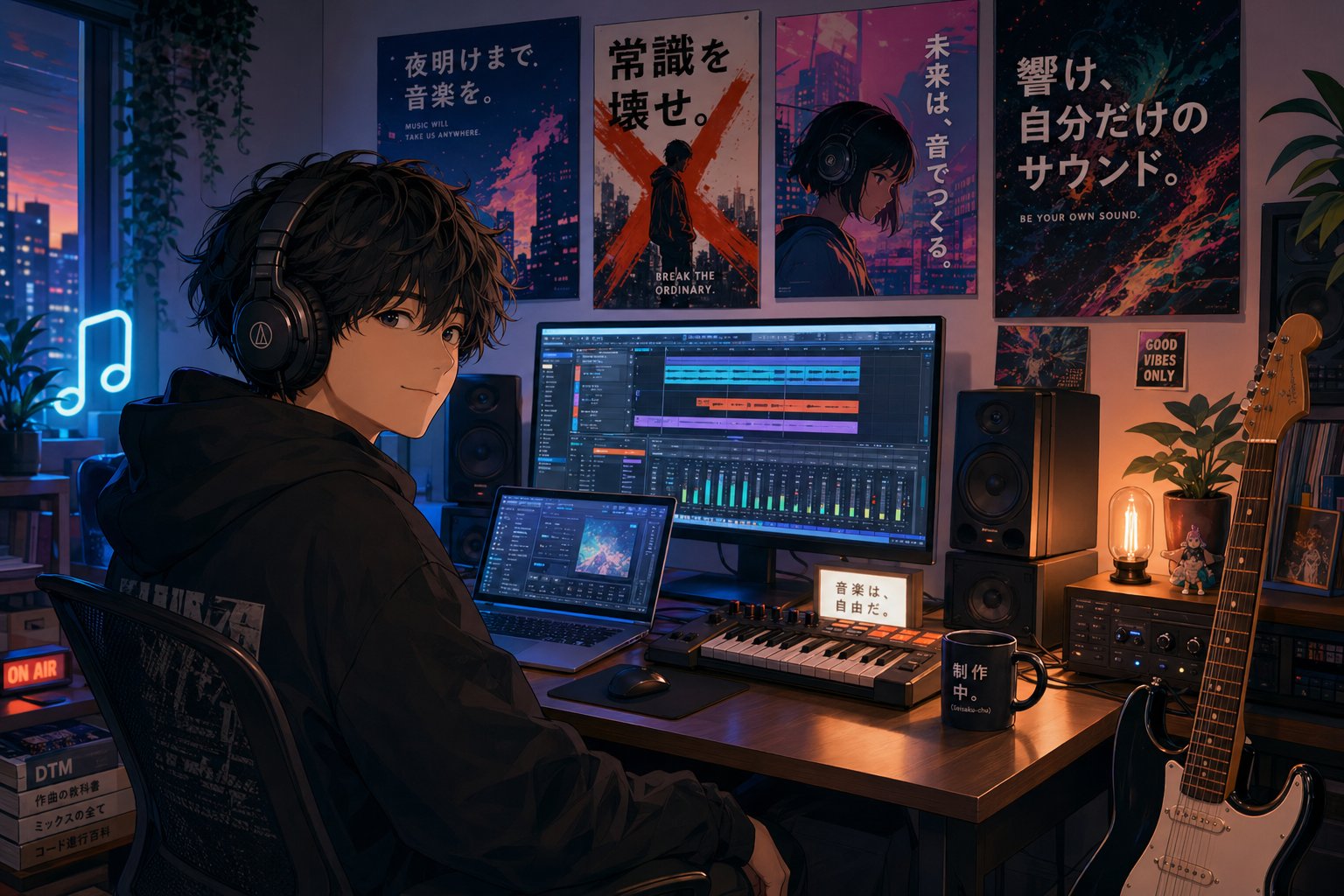
Something interesting has happened as access expanded: fans stopped being just consumers. The global reach of the genre has inspired a wave of musicians and producers who want to capture the energy of a japanese rock band in their own compositions — the driving rhythms, the dramatic dynamics, the blend of melody and aggression that makes the sound so distinctive. Some pick up guitars and form bands directly influenced by acts like Tricot or Ling Tosite Sigure. Others take a different route entirely.
Modern AI music tools have lowered the barrier for experimentation. You do not need a full band, a studio, or years of instrumental training to explore what a jrock-inspired track might sound like. MakeBestMusic's AI Song Generator, for example, lets you input a genre like jrock, specify a mood or era — say, 2000s post-hardcore intensity or 90s visual kei drama — and generate an original royalty-free track in seconds. It is one practical option among several for fans who want to move from passive listening to active creation, testing ideas before committing to a full production workflow.
Here are the key resources for engaging with the scene from outside Japan:
- Streaming platforms — Spotify, Apple Music, and YouTube Music for catalog access; YouTube for live footage and deep cuts
- News and reviews — JRock News and niche blogs for tour dates, album coverage, and artist features
- Community forums — Reddit (r/jrock, r/visualkei), Discord servers, and fan-run social media accounts
- Lyric translation sites — fan communities that translate and annotate Japanese lyrics for international listeners
- Convention and live events — anime cons, Japan Nite tours, and dedicated J-music festivals featuring touring acts
- AI creation tools — platforms like MakeBestMusic's AI Song Generator for experimenting with jrock-inspired compositions
The gap between a fan in Tokyo and a fan in Toronto has never been narrower. What remains wide open, though, is the genre's creative future — and the signals suggest it is heading somewhere no one fully expects.
Where Jrock Goes From Here
Jrock Is Still Evolving
Every genre risks becoming a museum piece. This one refuses. New acts keep rewriting the rules — HANABIE. fuses metalcore with nu-metal and J-pop into what they call "Harajuku Core," while Paledusk blends crushing breakdowns with electronic experimentation out of Fukuoka. Coldrain delivers post-hardcore with English lyrics that erase the language barrier entirely. Japanese math rock bands like Tricot continue to prove that technical complexity and pop accessibility are not mutually exclusive. On the heavier end, KNOSIS signed to international label Sharptone Records and launched global tours, carrying the metalcore torch to audiences who had never heard a japan music band hit that hard.
The subgenres keep cross-pollinating, too. Visual kei acts like JILUKA are touring alongside Swedish rock bands. Babymetal collaborates with Electric Callboy and Spiritbox. Every japanese rocker coming up today inherits six decades of creative DNA — and the best ones treat that inheritance as a launchpad, not a ceiling.
Your Next Step Into Jrock
If you are just getting started, scroll back to the gateway bands and press play on whatever catches your ear. If you already know the classics, use the subgenre map to find your next obsession — there are entire corners of the scene most fans never explore. And if the genre's energy has you itching to create something of your own, try generating a jrock-inspired track with MakeBestMusic's AI Song Generator to hear how those j rock songs translate into original compositions.
Whatever your entry point, the door is open. The best part about a genre this deep is that you never really finish discovering it.
Jrock is not just a genre — it is a living collision of musical intensity, visual artistry, and communal fan culture that has spent six decades proving a simple truth: rock music sounds different when an entire culture pours its creative identity into every riff, every costume, and every coordinated headbang in the crowd.
