

What Low Voice Really Means
When someone says "low voice," do they mean quiet or deep? That single question trips up ESL learners, fiction writers, and even native English speakers more often than you'd expect. The phrase carries two distinct meanings, and the only way to tell them apart is the context surrounding it.
The Two Meanings of Low Voice
A low voice can describe someone speaking softly — barely above a whisper, meant for only the nearest listener. It can also describe a voice that sits in a deep register, like the rumbling bass of a low voiced country singer or the rich contralto of a jazz vocalist. These two senses — volume and pitch — overlap in English because the word "low" does double duty.
| Low Voice as Quiet Volume | Low Voice as Deep Pitch |
|---|---|
| "She spoke in a low voice so no one would overhear." | "His low voice resonated through the concert hall." |
| Contexts: libraries, secrets, bedside conversations | Contexts: singing, public speaking, voice acting |
| Related terms: whisper, murmur, hushed tone, sotto voce | Related terms: bass, baritone, contralto, deep register |
How Context Determines the Meaning
Imagine reading these sentences back to back:
- "Keep your voice low — the baby is sleeping." (volume)
- "Country singers with low voices have dominated Nashville for decades." (pitch)
- "In a low, steady voice, the detective laid out the evidence." (volume, possibly both)
- "Female vocalists with low voices, like Cher and Tracy Chapman, stand out in a pop landscape that often favors higher registers." (pitch)
Notice how the surrounding words — "the baby is sleeping," "dominated Nashville," "stand out in pop" — do all the heavy lifting. Dictionaries like Collins COBUILD list example sentences for both senses but rarely spell out the distinction directly. You'll find entries that jump from "he began talking rapidly in a low voice" to descriptions of pitch without flagging the shift.
Context is everything when interpreting "low voice." Without it, the phrase is genuinely ambiguous — and that ambiguity is by design in English, not a flaw.
This dual nature also shows up across languages. In Spanish, "voz baja" carries the same pitch-or-volume question. Even actors navigate it constantly — think of how Minnie Driver's low pitched voice accent work shifts between quiet intensity and deep tonal color depending on the role. Whether you're searching for the perfect country song with low voice energy or simply trying to describe a character in a novel, understanding which "low" you mean is the essential first step.
Why Low Voice Can Mean Deep or Quiet
That ambiguity between volume and pitch isn't just a dictionary curiosity — it shapes how people actually use the phrase every day. Certain word pairings almost always push the meaning in one direction, and recognizing those patterns is one of the fastest ways to read (or write) the phrase correctly.
Volume Interpretation and Common Collocations
When "low voice" means quiet, it nearly always appears inside a handful of fixed expressions. If you're an ESL learner or a writer hunting for the right phrasing, these collocations are worth bookmarking:
- "speak in a low voice" — the most common form; implies controlled, deliberate quietness.
- "drop to a low voice" — suggests a sudden shift, often for secrecy or emphasis.
- "keep your voice low" — a direct instruction, usually to avoid being overheard.
- "in a low, steady voice" — adds emotional composure; popular in fiction for tense dialogue scenes.
- "say something in a low voice" — a neutral narrative tag that lets the reader infer mood from surrounding action.
Notice the pattern: the preposition "in" and verbs like "speak," "drop," or "keep" almost always signal volume. You'll rarely see someone describe singers with low voices using these same constructions — the context shifts the meaning entirely.
Pitch Interpretation Across Music and Speech
Step into a music classroom, a voice lesson, or a conversation about your favorite vocalist, and "low voice" flips to pitch almost automatically. Here it refers to the bass, baritone, and contralto ranges — the registers that sit at the bottom of the vocal spectrum. A low voice crossword clue, for instance, will almost certainly point you toward "bass" or "baritone" rather than "whisper."
This pitch-first reading dominates whenever the phrase appears alongside musical terms: "a low voice suited for jazz standards," "her low voice cut through the arrangement," "he sang in a low voice that rattled the speakers." The surrounding vocabulary — singing, performing, resonating — locks the meaning in place.
Interestingly, the same ambiguity exists across languages. Spanish speakers face the identical puzzle with "voz baja," and French "voix basse" can lean either way depending on context. Some languages sidestep the problem entirely by using separate words for pitch and volume — but English, Spanish, and French all force listeners to rely on situational clues.
Grammatically, the phrase is surprisingly flexible. It works as a simple adjective-noun pair ("a low voice"), an adverbial phrase ("in a low voice"), and inside longer descriptive clauses ("the low voice that had once filled concert halls"). That versatility is part of why it shows up so often in both everyday speech and professional writing — and why getting the intended meaning right matters so much when the conversation turns from quiet rooms to concert stages.
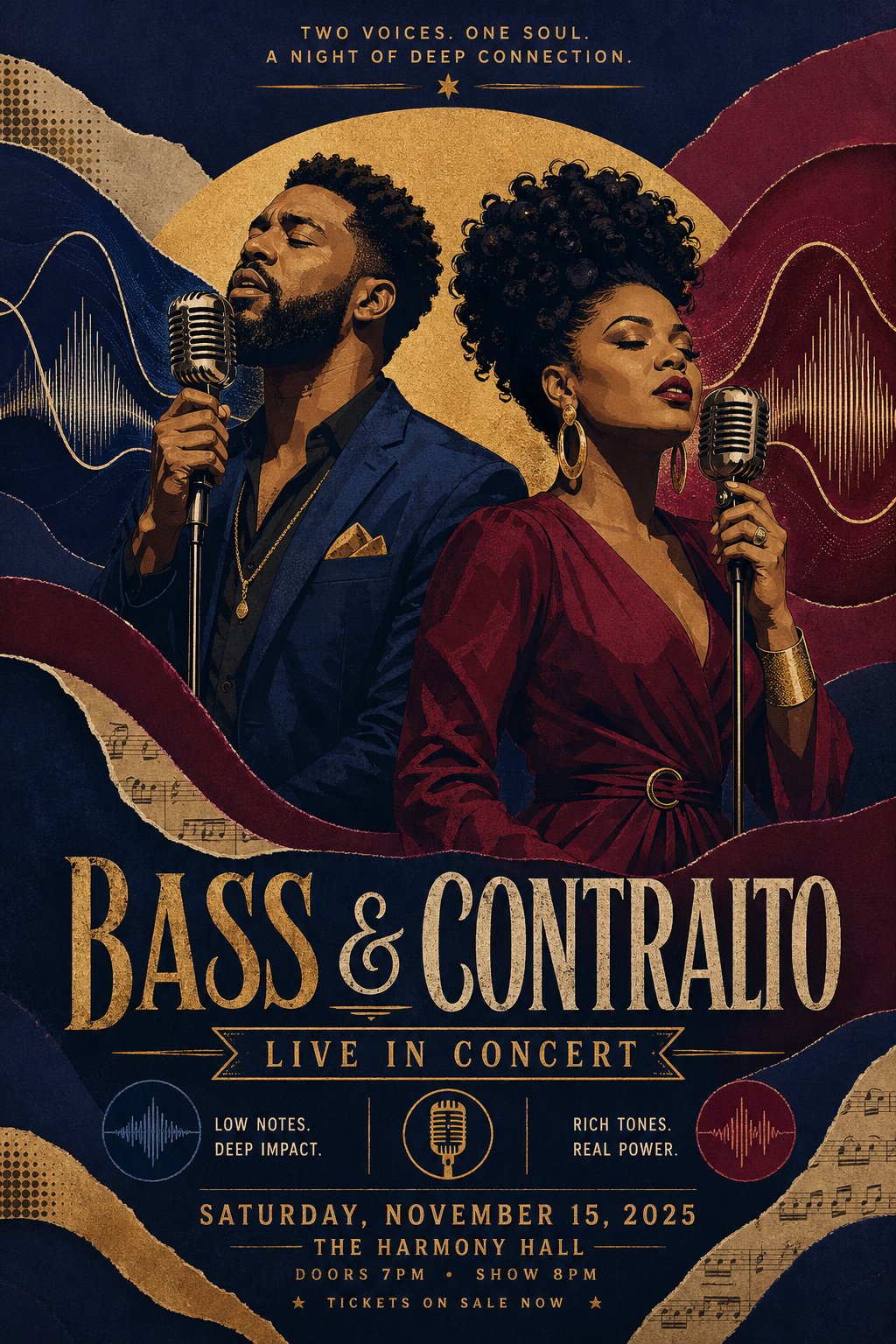
Famous Male and Female Singers With Low Voices
Once the meaning locks onto pitch, the conversation inevitably drifts toward the artists who made deep registers iconic. Some voices are so low they become inseparable from the music itself — you hear two notes and you already know who's singing.
Male Singers Renowned for Low Voices
Bass and baritone delivery has shaped entire genres. These male vocalists turned their deep registers into signatures that millions of listeners recognize instantly:
- Johnny Cash — His deep baritone defined country music's outlaw era. Tracks like "I Walk the Line" and "Folsom Prison Blues" sit squarely in a low register that became the gold standard for every country singer with a low voice who followed.
- Barry White — A bass-baritone icon whose rich, velvety tone turned R&B love songs into something almost physical. His voice carried warmth and authority in equal measure.
- Leonard Cohen — His baritone grew even deeper with age, settling into a near-bass rumble on later albums. Cohen proved that a low voice paired with poetic lyrics could be devastatingly intimate.
- Isaac Hayes — The voice behind the Shaft soundtrack, Hayes brought a commanding bass presence to soul and funk that influenced decades of production.
- Josh Turner — One of modern country's deepest voices, Turner's bass range on songs like "Your Man" keeps the tradition of low voiced country singers alive and well.
Female Vocalists With Strikingly Low Voices
Pop music tends to reward higher registers, which is exactly why singers with low voices female audiences and critics alike celebrate feel so distinctive. True contraltos are rare in mainstream music, and the artists who own that range command attention precisely because they sound like no one else on the radio.
- Cher — Widely regarded as the greatest contralto in modern pop, Cher proved that a female voice doesn't need to be high-pitched to be commanding. Her deep tone became one of the most identifiable sounds in music history.
- Tracy Chapman — Her naturally deep, powerful delivery on "Fast Car" set the standard for contraltos in folk, soul, and blues. Low notes aren't a stretch for Chapman — they're her comfort zone.
- Toni Braxton — Often described as husky and sultry, Braxton's mastery of lower registers helped her sell over 70 million records. She has said she looks to male singers as vocal style models, which speaks to just how deep her natural range sits.
- Nina Simone — With a range that favored the lower end, Simone became the archetype for powerful, low female vocals. Her delivery on "Feeling Good" remains a masterclass in control and clarity.
- Annie Lennox — The Eurythmics frontwoman didn't just visit lower registers — she built entire melodies around them, earning recognition as one of pop history's most celebrated contraltos.
Why Low Voices Captivate Listeners
There's a reason these artists connect so deeply with audiences, and it goes beyond personal taste. Research in anthropology and psychology shows that low-pitched voices are broadly perceived as warm, authoritative, and emotionally resonant. Listeners tend to associate deeper vocal tones with confidence, physical presence, and trustworthiness — qualities that translate directly into musical charisma.
Acoustically, lower frequencies carry a sense of fullness and proximity. A deep voice feels close, almost physical, in a way that higher pitches don't always replicate. That's partly why a bass vocal line can anchor an entire arrangement and why a contralto cutting through a pop mix sounds so arresting. Vocal timbre and register aren't just technical details — they're core to an artist's identity and the emotional bond they build with listeners.
Of course, not every genre celebrates deep voices equally. Country music, in particular, has a long tradition of placing low-register vocals front and center — a tradition worth exploring on its own.
Country Singers Known for Their Low Voices
Country music has always been a storytelling genre, and few things sell a story like a voice that rumbles with lived-in gravity. From outlaw ballads to gospel-tinged confessions, the deepest voices in Nashville have shaped the genre's identity for over half a century.
Legendary Country Artists With Deep Voices
Every singer with a low voice who steps into country music is walking a path carved by these artists. Their bass and baritone registers didn't just complement the songs — they were the songs.
- Johnny Cash — The definitive deep voice in country. His baritone-to-bass range grew even darker on later recordings, turning every lyric into something that felt carved from stone.
- Merle Haggard — A gritty baritone rooted in real hardship. Haggard's voice carried the dust and defiance of Bakersfield country, making tracks like "Mama Tried" feel autobiographical even to strangers.
- Josh Turner — One of the few true bass singers in mainstream country. Turner grew up singing bass parts in church choirs and gospel quartets, and that foundation shows on every record.
- Chris Stapleton — His deep, raspy delivery blends country, blues, and Southern rock into something raw and modern. "Tennessee Whiskey" alone proved that emotional depth and vocal depth can be the same thing.
- Randy Travis — His smooth, rich baritone helped revive traditional country in the 1980s, earning him a place in the Country Music Hall of Fame.
- Colter Wall — A younger artist with an impossibly deep, weathered voice that sounds decades older than he is. Wall's bass register has drawn comparisons to Cash since his debut single.
What ties these artists together isn't just range — it's how naturally a deep voice pairs with country's narrative DNA. A low register adds weight to heartbreak, authority to rebellion, and warmth to faith. The genre rewards that gravitas in a way few others do.
Country Songs That Showcase a Low Voice
If you're curious how to lower your voice into these registers — or simply want to hear what a deep vocal delivery sounds like at its best — these tracks are ideal starting points. They're also popular picks for open mics, karaoke nights, and home recording sessions where singers want material that sits comfortably in a lower range, whether you're after songs for a low female voice adapted down a key or bass-friendly originals.
- "Ring of Fire" — Johnny Cash
- "Your Man" — Josh Turner
- "Tennessee Whiskey" — Chris Stapleton
- "Mama Tried" — Merle Haggard
- "Forever and Ever, Amen" — Randy Travis
- "Sixteen Tons" — Tennessee Ernie Ford
- "The Devil Wears a Suit and Tie" — Colter Wall
- "Folsom Prison Blues" — Johnny Cash (the live Folsom Prison recording is especially worth hearing)
Each of these tracks keeps the melody anchored in the lower register, letting the voice do the emotional heavy lifting without straining upward. That's what makes them such reliable reference points — they weren't written despite a deep voice but because of one. And for singers still searching for the right material to match their own range, the hunt doesn't have to stop at country.

Songs and Karaoke Picks for Low Voices
Finding good songs for lower female voices — or bass-friendly tracks for men — can feel like scrolling through an endless catalog built for sopranos and tenors. The reality is that plenty of great material exists in the lower register. You just need to know where to look.
Karaoke Songs for Low Female Voices
If your voice sits in the contralto or low mezzo-soprano range, these tracks let you sing comfortably without straining upward. They span pop, jazz, soul, country, and rock, so you're not boxed into a single genre:
- "At Last" — Etta James (jazz/R&B a gorgeous showcase for a rich lower voice)
- "Fast Car" — Tracy Chapman (folk/soul; sits naturally in a deep, powerful register)
- "What's Love Got to Do With It" — Tina Turner (pop/rock; a slightly rough, soulful delivery works best)
- "You Know I'm No Good" — Amy Winehouse (soul/jazz; a contralto favorite with deep emotional range)
- "Royals" — Lorde (pop; lower and more monotone than most pop hits, which makes it surprisingly forgiving)
- "We've Only Just Begun" — Karen Carpenter (ballad; proves a lower voice can be tender and intimate)
- "I Got You Babe" — Sonny and Cher (pop; a fun, low-register duet that doesn't demand perfection)
- "You're Dead and Out of This World" — Norma Tanega (folk; upbeat and catchy with a naturally deeper vocal line)
Karaoke Songs for Low Male Voices
Bass and baritone singers often get stuck choosing between the same two Johnny Cash songs. The options are wider than you think — from classic rock to crooner standards to modern indie:
- "Hurt" — Johnny Cash (alternative country; raw, emotional, and anchored in the lower voice throughout)
- "Mmm Mmm Mmm Mmm" — Crash Test Dummies (alternative rock; one of the ultimate tests for baritone range)
- "Fly Me to the Moon" — Frank Sinatra (jazz standard; lets a bass voice lean into warmth and tone)
- "Love Me Tender" — Elvis Presley (ballad; simple melody, deep register, crowd-pleaser)
- "Born to Be Wild" — Steppenwolf (classic rock; powerful and gruff, ideal for a deep rock vocal)
- "Red Right Hand" — Nick Cave (dark rock; low and menacing, more about tone than technical range)
- "Sweet Caroline" — Neil Diamond (pop/rock; easy, singable, and the audience will join in)
- "Riders on the Storm" — The Doors (rock; brooding and atmospheric, perfect for a lower voice that favors mood over volume)
How to Choose Songs That Fit Your Low Voice
A great karaoke pick isn't just about genre preference — it's about fit. Here are a few practical ways to test whether a song actually works for your range before you commit to it on stage:
- Check the original artist's vocal range. If the singer is a known contralto, bass, or baritone, the melody is more likely to sit where you need it. A vocal range chart can help you compare.
- Listen for the lowest note in the melody. Can you hit it comfortably, or does it feel like you're pushing? If you're straining at either end, the song isn't the right match.
- Try it a cappella first. Sing through the melody without any backing track. You'll immediately feel whether the song lives in your natural register or forces you out of it.
- Consider a key change. Many karaoke platforms let you shift the key up or down. Even a half-step adjustment can turn an awkward song into a comfortable one — especially useful when adapting tracks not originally written for a lower voice.
- Keep it under four minutes. Shorter songs hold the audience's attention and give you less room to fatigue. A low choir voice or solo register can lose power on longer tracks if you haven't warmed up properly.
A song that matches your natural register will always sound more confident and controlled than one you strain to reach. Sing where your voice lives, not where you wish it did.
The right song makes a lower voice sound effortless rather than limited. And once you've found a few tracks that fit, the next question usually follows naturally: can you actually train your voice to go deeper? That's less about song selection and more about how your vocal cords, breathing, and daily habits work together.
How to Lower Your Voice Naturally
The short answer: yes, you can train your voice to sit more comfortably in a deeper register. The longer answer involves understanding that your vocal range is largely inherited — you can't turn a tenor into a bass overnight. What you can do is unlock the lower notes already within your range by reducing tension, improving breath support, and building daily habits that keep your vocal cords relaxed and healthy.
Vocal Exercises for a Lower Register
Forcing your voice downward is the fastest route to strain and hoarseness. The goal isn't to push — it's to relax into depth. Think of it this way: just like the loosest string on a guitar produces the lowest note, vocal cords that are thick and relaxed vibrate at lower frequencies. Tension pulls pitch up; relaxation lets it drop.
These exercises take about ten minutes and can be done daily. Start gently and never push past discomfort:
- Diaphragmatic breathing warm-up. Place one hand on your chest and the other on your belly. Breathe in slowly through your nose, letting your belly expand while your chest stays relatively still. Exhale on a long, relaxed sigh. Repeat five times. This trains you to support sound from your diaphragm rather than your throat, which is essential for accessing lower notes without strain.
- The siren glide. Starting from a comfortable mid-range pitch, hum upward to your highest note, then glide all the way down to the lowest note you can reach. Keep your jaw relaxed and your throat open. Do this five to six times, pushing gently to about 150% of your comfortable range — only about 70% of that practice will carry over into your everyday voice.
- Lip trills on descending scales. Blow air through your lips to create a vibrating, motorboat-like sound, then hum a simple descending scale (sol-fa-mi-re-do) through the trills. This places your voice forward in your mouth and loosens the vocal folds that produce lower register sounds. Try different vowel sounds and keys as you warm up.
- Humming at progressively lower pitches. Start at a comfortable note and hum downward in half-steps, holding each pitch for three to four seconds. When you reach the bottom of your range, stay there and let the note resonate in your chest. Aim for at least fifteen minutes of humming throughout the day — during chores, commuting, or any low-stakes moment.
- Relaxed jaw drops. Open your mouth wide, let your jaw hang loose, and speak or sing a simple phrase like "hello" on your lowest comfortable pitch. A dropped jaw and relaxed tongue reduce the tension that keeps pitch elevated. If you notice tightness, gently massage the hinge of your jaw before trying again.
For anyone developing a lower female singing voice, these same exercises apply — contraltos and low mezzo-sopranos benefit from the identical relaxation-first approach. The key difference is starting point, not method.
Lifestyle and Habits That Affect Vocal Pitch
Exercises matter, but what you do between practice sessions matters just as much. Your vocal cords are living tissue, and they respond to how you treat your body overall.
- Hydration. Drink roughly 2 to 3 liters of water daily. Dehydrated vocal cords become sticky and stiff, making it harder to access your lower range. Consistent sipping throughout the day works better than gulping a bottle right before you sing.
- Sleep. Adults need 7 to 9 hours for proper vocal cord recovery. During sleep, your vocal cords rest and repair from the mechanical stress of daily use — which is partly why your voice often sounds deeper first thing in the morning.
- Posture. Stand or sit with your shoulders slightly back and your head facing forward. A stooped posture creates tension in the throat and limits airflow, both of which work against a deeper sound.
- Vocal rest. Schedule 2 to 3 hours of complete silence each day if you use your voice heavily. Professional singers, teachers, and anyone chasing a lower female singing voice through training should treat rest as seriously as practice.
- Hormonal changes and aging. Pitch naturally shifts over a lifetime. Male voices tend to deepen through puberty and can thin slightly with age, while female voices often drop after menopause. These changes are normal and gradual — not something to fight against.
A quick note on shortcuts: some people search for ways to deepen their voice instantly, including inhaling helium's heavier cousin (sulfur hexafluoride) or other gases. These methods are genuinely dangerous — they can displace oxygen in your lungs and cause suffocation. No cosmetic vocal change is worth that risk.
Sustained vocal change requires patience, consistency, and professional guidance. If you're serious about deepening your range, consult a voice coach or speech therapist who can tailor exercises to your anatomy and goals.
Building a deeper, more resonant voice is a process measured in weeks and months, not hours. And once you start hearing that richer tone in your own speaking or singing, you'll likely want new vocabulary to describe it — which is exactly where writers, storytellers, and lyricists pick up the thread.
Describing a Low Voice in Writing and Storytelling
Whether you're drafting a novel, writing a screenplay, or even describing singers with low voices male audiences idolize, the challenge is the same: how do you put a sound into words? Saying a character "spoke in a low voice" gets the job done, but it doesn't make a reader hear anything. The right adjective pairing or synonym can turn a flat description into something that vibrates off the page.
Common Adjective Pairings for Low Voices
A single adjective next to "low voice" changes the entire emotional temperature of a scene. Imagine a thriller villain versus a love interest — both might speak in a low voice, but the words around it tell the reader exactly how to feel. This table maps out the most useful pairings, the mood each one creates, and a sentence fragment you can adapt:
| Adjective Pairing | Mood It Conveys | Example Sentence Fragment |
|---|---|---|
| low and gravelly | Rugged, weathered, tough | "...his low, gravelly voice scraped through the silence like boots on gravel." |
| low and soothing | Calming, intimate, safe | "...she answered in a low, soothing voice that made the room feel smaller." |
| low and menacing | Threatening, controlled danger | "...a low, menacing voice that promised consequences." |
| low and honeyed | Seductive, warm, persuasive | "...his low, honeyed voice curled around every word like smoke." |
| low and rough | Raw, emotional, unpolished | "...she spoke in a low, rough voice, as though the words cost her something." |
| low and velvety | Smooth, rich, luxurious | "...a low, velvety voice that belonged on late-night radio." |
| low and hollow | Empty, haunted, distant | "...his low, hollow voice echoed like a sound from the bottom of a well." |
| low and steady | Composed, authoritative, unshakable | "...in a low, steady voice that left no room for argument." |
Notice how each pairing does double duty — it describes the sound and tells the reader how to feel about the character producing it. Fiction writers building playlists of karaoke songs for low voices male or female characters might perform can use these same pairings to describe how a song sounds in narrative, not just how it's sung. As writer and lexicon author Kathy Steinemann puts it, your job is to make readers hear what you want them to hear — and react the way you want them to react.
Synonyms and Alternatives to Low Voice
Repeating "low voice" across multiple paragraphs flattens your prose fast. The English language offers a rich set of alternatives, but each one carries a different connotation. Picking the wrong synonym is like choosing songs for women with low voices and handing them a soprano aria — technically in the same category, completely wrong in practice. Here's a breakdown of the most useful options:
- Whisper — The quietest end of the spectrum. Implies secrecy, urgency, or intimacy. Use when the character doesn't want to be overheard.
- Murmur — Slightly louder than a whisper, with a softer, more continuous quality. Merriam-Webster groups it with muttering and humming, but in fiction it reads as gentle and private — perfect for bedside conversations or confessions.
- Undertone — Suggests a voice deliberately kept below the main conversation. Carries a conspiratorial or cautious feel: "He added, in an undertone, that the deal wasn't what it seemed."
- Hushed tone — Similar to a whisper but with more warmth and reverence. Works well in sacred, solemn, or awe-filled scenes.
- Rumble — A deep, resonant sound felt as much as heard. Best for physically large characters or voices with serious bass weight. Think of how you'd describe karaoke songs for female with low voice power — that chest-vibrating quality is a rumble.
- Growl — Adds aggression or warning. The voice is low and hostile. Use sparingly or it tips into melodrama.
- Purr — Low, smooth, and self-satisfied. Often carries a seductive or smug undertone. Works for characters who are in control and know it.
For contrast, keep a few antonyms in your back pocket: shrill (high and unpleasant), piercing (high and sharp enough to cut through noise), and booming (loud and resonant, which overlaps with deep pitch but emphasizes volume over tone). Placing a low-voiced character in a scene alongside someone shrill or piercing instantly highlights the depth without you needing to state it directly.
The best voice descriptions blend sound with sensation and emotion. A "low, gravelly rumble" doesn't just tell the reader about pitch — it puts texture, mood, and physical presence into a handful of words. That kind of precision on the page mirrors what happens when a singer finds the perfect song for their range: everything clicks, and the audience stops thinking about technique and simply feels it. For anyone ready to hear that effect in action — or experiment with how different vocal registers reshape a melody — modern tools are making that easier than ever.

Exploring Low Voice Styles With AI Singing Tools
Knowing how a deep voice sounds on paper is one thing. Hearing how it reshapes a melody in real time is something else entirely. That gap between imagination and sound is exactly where AI vocal tools have stepped in — and for low voice singers in particular, the timing couldn't be better.
Why AI Vocal Tools Matter for Low Voice Exploration
Singers, producers, and hobbyists can now test how songs sound in different vocal registers without booking studio time or hiring session vocalists. That's a meaningful shift. Industry surveys show that over 60% of recording artists have already used AI in music creation, and vocal tools are among the fastest-growing categories in that space.
For anyone with a deeper range, the benefit is especially practical. Male singers with low voices have always had a narrower pool of reference tracks and vocal demos to work from. The same goes for a low female voice — contraltos and low mezzo-sopranos rarely find pre-made demos that match their register. AI tools close that gap by letting you generate vocal previews in the range you actually sing in, rather than transposing everything in your head and hoping it works.
Experimenting With Low Voice Styles Using AI
One tool worth trying is MakeBestMusic's AI Singing Generator, which lets you experiment with AI vocals across different singing styles and voice types. You can feed it a melody and hear it performed in a bass or baritone register, test how a country singer with low voice delivery would handle a particular arrangement, or simply explore what your songwriting sounds like when paired with a deeper vocal model.
Here are a few specific ways creators are putting tools like this to use:
- Previewing songs in a lower key — Hear how a track actually sounds transposed down before committing to a live performance or recording session.
- Comparing vocal styles — Test the same lyrics delivered in a smooth baritone versus a gritty bass to find the right emotional tone for a project.
- Generating demo tracks with low-register AI vocals — Songwriters who don't sing can produce realistic vocal demos that reflect the intended range, making it easier to pitch songs to artists or collaborators.
- Discovering which singing style suits a low voice — From jazz to country to indie folk, hearing your melody in different stylistic contexts helps you identify where your voice — or your song — fits best.
This kind of experimentation used to require a studio, a willing vocalist, and a budget. AI flattens all three barriers. A country singer with a low voice can audition new material at home. A bedroom producer can prototype an entire arrangement around a deep vocal line without recording a single take. A curious listener who's always wondered what their favorite pop song would sound like sung by a bass can actually hear it.
Whether you're a performer searching for your next setlist addition, a songwriter shaping a demo, or someone who simply loves the richness of a deep register, tools like MakeBestMusic's AI Singing Generator make it easier than ever to explore the full potential of a low voice — no studio appointment required.
