

What Makes Pop Music Russian a Genre of Its Own
Imagine a pop scene with over 84 million monthly streaming listeners, chart-topping stars who hold audiences for decades, and a melodic tradition rooted in centuries of poetry and folk song. That scene exists, and most Western listeners have barely scratched its surface. Pop music Russian style is not a niche curiosity. It is a fully formed, commercially massive genre that blends Slavic melodic DNA with modern production in ways that sound like nothing else on the global stage.
This is a cultural journey that stretches from Soviet-era variety stages to TikTok virality, from state-controlled record labels to a domestic streaming market that hit 46 billion rubles in 2025 and is still growing at double-digit rates. Russian pop music has its own rules, its own legends, and its own logic. Understanding it means rethinking what pop can be.
Defining Russian Pop Beyond the Stereotypes
When Western ears hear "russian pop," the mental image tends to stop at t.A.T.u. or a vague sense of Eurodance. The reality is far richer. Colloquially called "popsa," Russian pop is a genre shaped by political upheaval, technological shifts, and a constant creative tension between Eastern identity and Western influence. It grew out of Soviet estrada, absorbed rock and new wave energy during perestroika, survived the chaotic 1990s, and matured into a commercial powerhouse with its own labels, award shows, and festival circuits. The music of Russia carries emotional weight that reflects deep literary and poetic traditions, not just catchy hooks.
Why Russian Pop Deserves a Global Audience
Russia has one of the largest music-consuming populations in Europe. Nearly 80% of urban residents use streaming services, and domestic artists released a record number of new releases in 2025, with output from Russian musicians growing 54% year over year. Popular russian music thrives in a self-sustaining ecosystem that most outsiders never see. Its emotional depth, minor-key drama, and vocal intensity offer something genuinely different from the Western pop mainstream.
Russian pop is not a derivative of Western pop. It is a parallel evolution with its own stars, cultural logic, and creative rules, shaped by a history no other pop tradition shares.
What follows is a deep dive into that history, from the Soviet singers who built the foundation to the bedroom producers and AI tools reshaping russian music today. Whether you are a curious listener or a creator looking for fresh inspiration, this genre has something waiting for you.
From Soviet Estrada to Perestroika Pop
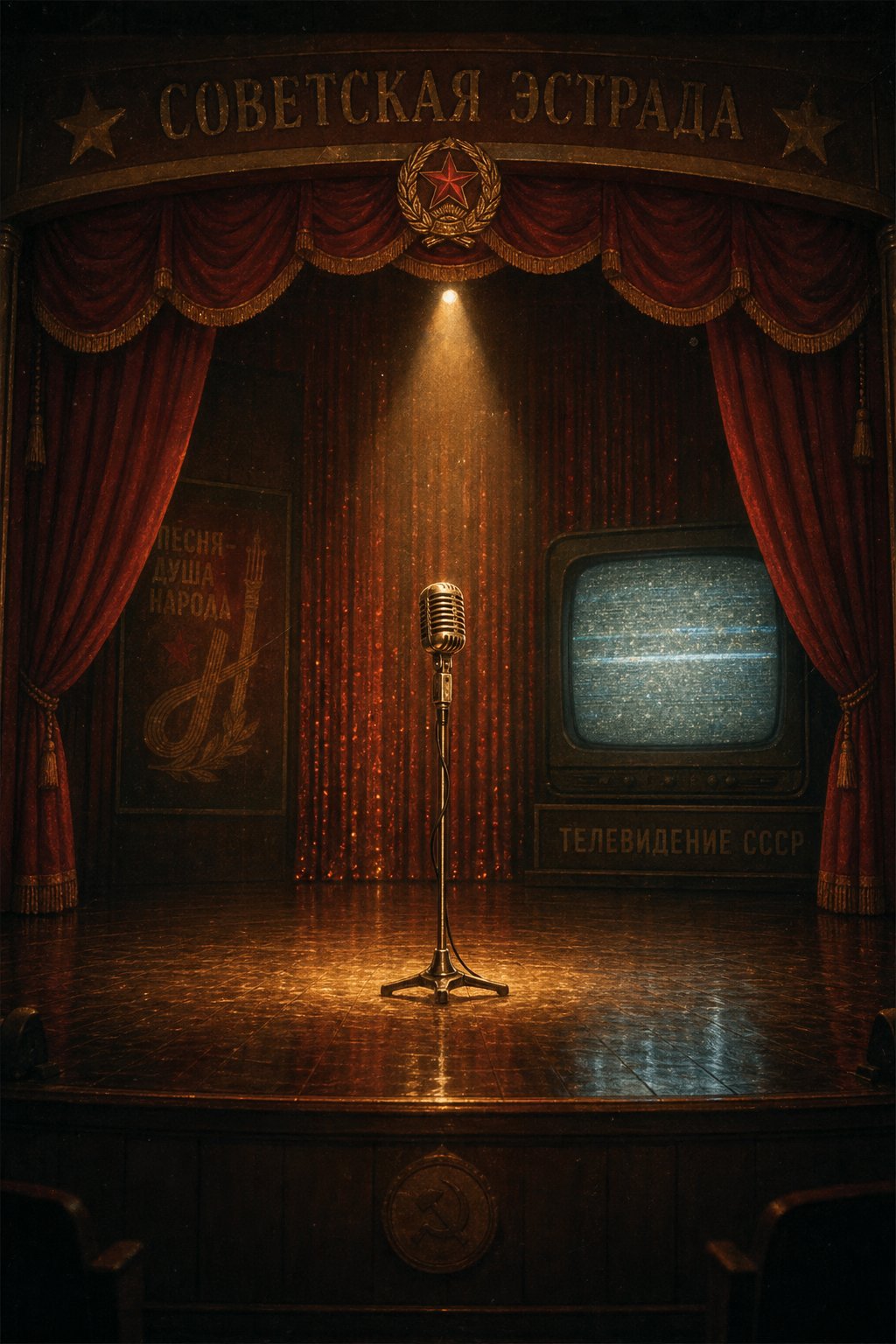
Every genre has an origin story, and for Russian pop, it begins on state-approved variety stages where censorship and creativity struck an unlikely deal. The roots of music in Russia's modern pop landscape reach back to the Soviet estrada tradition, a world of melodic spectacle, emotional vocals, and political compromise that produced some of the most beloved performers in Russian-speaking history.
The Estrada Era and Alla Pugacheva's Reign
Estrada was the Soviet Union's answer to popular entertainment. Think of it as a blend of chanson, theatrical variety performance, and melodic pop, all sanctioned by the state and broadcast to hundreds of millions of citizens through just two television channels. Artists performed russian songs in russian that were vetted for ideological acceptability, yet the best songwriters found ways to smuggle genuine emotion into every lyric. Soviet censorship, paradoxically, became a hothouse for metaphor-laden writing. When you cannot say what you mean directly, you learn to say it beautifully.
No figure embodies this era more than Alla Pugacheva. Born in Moscow in 1949, she launched her career in 1965 but spent a full decade traveling the Soviet Union, searching for a vocal style that could move audiences while showcasing her remarkable range. She found it. Her 1975 grand prize win at the Golden Orpheus Song Festival in Bulgaria with "Arlekino" made her a household name overnight. What followed was a level of cultural dominance that has no clean Western equivalent. By 1997, Pugacheva had reportedly sold as many as 250 million records. She was proclaimed National Artist of the U.S.S.R. by Mikhail Gorbachev himself in 1991. Her style, a unique combination of Slavic musical sensibility and Western aesthetics, essentially defined what Russian pop could be for an entire generation.
Perestroika and the First Cracks of Musical Freedom
The mid-1980s changed everything. When Gorbachev introduced glasnost and perestroika, the cultural controls that had shaped Soviet music for decades began to loosen, and fast. Just a year before his appointment, underground rock bands had been blacklisted by the Communist Party, banned from performing live, and in some cases jailed. Suddenly, those same musicians were appearing on late-night TV shows broadcast to 250 million viewers.
Bands like Kino, Nautilus Pompilius, and Aquarium moved from basement rehearsal spaces to stadium stages almost overnight. The 1987 Soviet film "Assa" featured underground rock on its soundtrack and became a cultural landmark. That same year, a collaborative music video called "Zamykaya Krug" ("Closing the Circle") brought pop, rock, and heavy metal stars together in a format inspired by "USA for Africa." These 1980s soviet music video experiments were among the first moments Russian audiences saw their musicians as visual pop culture figures, not just voices on a radio.
The tension was electric. Estrada pop stars like Pugacheva coexisted with raw, unpolished rock acts whose songs carried the spirit of change. Viktor Tsoi's "We Want Changes" became the unofficial anthem of a generation. This collision between state-approved pop and underground energy created a creative friction that would define the types of russian music emerging in the decade ahead. Classical russian music traditions, rock rebellion, and pop spectacle were all competing for the same audience, and the audience wanted all of it.
Key Terminology for Navigating Russian Pop History
Before diving deeper, you will want a vocabulary foundation. Russian pop history comes with its own terminology, and knowing these terms makes the genre far more navigable. Here are the essentials that help you speak about Russian pop musically and culturally with real precision:
- Estrada — Soviet-era variety pop. A broad category covering melodic, theatrical popular music performed on state-sanctioned stages and television broadcasts. Think polished vocals, orchestral arrangements, and emotional delivery.
- Popsa — Colloquial (and sometimes pejorative) term for commercial Russian pop. It implies catchy, mass-market music that prioritizes accessibility over artistic depth. Used affectionately by some, dismissively by others.
- Avtorskaya pesnya — The singer-songwriter tradition. Rooted in poetic, acoustic performance, this style emphasizes lyrical craft and personal expression over production polish. It is the Russian equivalent of the Western folk-singer movement.
- Shanson — Russian chanson. Not to be confused with French chanson, this genre blends urban folk, romance, and sometimes criminal underworld themes. It occupies a massive niche in Russian listening habits and overlaps with pop more than outsiders expect.
These categories are not rigid walls. They bleed into each other constantly, and the most interesting Russian pop often lives at the intersections. That creative blurring only accelerated when the Soviet Union collapsed and a new, unregulated music industry exploded into existence.
The Wild 1990s and the Commercial Boom of the 2000s
The Soviet Union dissolved in 1991, and with it went every guardrail the music industry had ever known. State-run labels, centralized distribution, ideological vetting of lyrics — all of it vanished almost overnight. What rushed in to fill the vacuum was a chaotic, exhilarating mix of unregulated creativity and raw capitalism that would reshape russian pop culture for good.
The 1990s Pop Explosion and the Rise of New Stars
The 1990s were brutal economically. Hyperinflation gutted consumer spending, the 1998 financial crisis saw Russia's GDP fall over 5%, and piracy rates exceeded 70% as bootleg cassettes flooded street markets. Yet this same chaos unleashed a wave of creative energy that no amount of Soviet planning could have produced. Independent labels like SNC Records, founded by producer Stas Namin in 1990, became pioneers in legal private recording, and a new generation of russian singers stepped into the spotlight with no rulebook to follow.
Philipp Kirkorov emerged as one of the decade's defining figures. His debut album dropped in 1990, and his theatrical blend of pop, folk, and spectacle made him a russian pop star of almost operatic proportions. Kirkorov's dominance on television and at live events — including his recurring role on Russia's iconic New Year's Eve broadcasts — cemented his status as a commercial powerhouse that has endured for over three decades. Meanwhile, a producer-driven pop factory model took hold. Girl groups like Strelki and Blestyashchiye, boy bands, and hip-hop acts like Detsl were manufactured for a hungry teenage audience that had grown up eating Snickers bars in bleak schoolyards and was now glued to a brand-new channel: MTV Russia, which launched in 1998 and began 24-hour broadcasting by 2002.
The decade's crowning achievement in international crossover belonged to t.A.T.u. The duo's provocative image and infectious pop hooks did what no Russian act had managed before — they broke through to Western audiences on a massive scale. Their 2002 debut album 200 km/h in the Wrong Lane sold over 5.5 million copies worldwide, and the single "All the Things She Said" topped the UK Singles Chart for four weeks. For a brief, electric moment, popular russian songs were competing directly with Britney and Christina on global airwaves.
The 2000s Commercial Peak and Glamour Era
Economic stabilization in the early 2000s brought something the 1990s never had: money and infrastructure. Russia music entered a glossy, high-production era fueled by rising consumer spending, major label investment, and the growing dominance of television talent shows. Fabrika Zvyozd ("Star Factory"), Russia's answer to Pop Idol, became a star-making machine that launched careers and gave audiences a direct stake in which russian songs would dominate the airwaves next.
This era produced some of the genre's biggest names. Dima Bilan became the first Russian artist to win the Eurovision Song Contest, taking the top prize in Belgrade in 2008 with "Believe" — a track co-written with Jim Beanz and produced by Timbaland, scoring 272 points and earning a congratulatory phone call from President Dmitry Medvedev. Serebro brought a sleeker, more Western-facing pop-dance sound that charted across Europe. Alsou, a Tatar russian singer who placed second at Eurovision in 2000, blended R&B influences with accessible melodies that signaled the genre's growing sophistication.
Behind the scenes, the commercial infrastructure was maturing fast. Labels built touring circuits, award shows like the MTV Russian Music Awards formalized industry recognition, and festivals grew into major cultural events. The chart system professionalized too — Tophit launched in 2003 to monitor radio airplay across over 300 stations, giving the industry data-driven metrics for the first time. By the mid-2000s, Russian pop had an ecosystem that could develop, promote, and sustain artists at scale.
How the Industry Ecosystem Differs From the West
If you are used to how Western pop operates, the Russian model will feel familiar in some ways and completely foreign in others. The biggest difference? Television. In the West, playlist placement on Spotify or a viral TikTok moment can make a career. In Russia, state television remained the primary launchpad for pop stars well into the 2010s. New Year's Eve concert broadcasts — massive, multi-hour variety spectacles watched by tens of millions — functioned as the single most important promotional event of the year. A slot on that broadcast could do more for a russian pop star's career than any album release.
Here is a side-by-side look at the structural differences that set these two pop ecosystems apart:
| Category | Russian Pop Industry | Western Pop Industry |
|---|---|---|
| Primary Promotion Channel | State television broadcasts and New Year's Eve concerts | Streaming playlists, social media, and radio |
| Artist Development | TV talent shows (Fabrika Zvyozd) and label-backed grooming | Social media virality, independent releases, and label A&R |
| Revenue Model | Domestic streaming (Yandex Music, VK Music) and live events | Global streaming (Spotify, Apple Music), touring, and sync licensing |
| Chart System | Tophit radio airplay monitoring (300+ stations) | Billboard (sales, streaming, airplay composite) |
| Festival Culture | Large-scale urban festivals (VK Fest: 205,000 attendees) with limited rural reach | Widespread festival circuit (Coachella, Glastonbury) with global touring |
| Career Longevity | Decades-long careers with loyal, multigenerational fanbases | Faster artist churn with shorter mainstream windows |
These structural differences created a pop world that operates on its own terms. Russian labels did not simply copy the Western major-label playbook — they built something shaped by the country's unique media landscape, geography spanning 11 time zones, and an audience that values emotional loyalty to its stars over novelty. That loyalty, combined with a domestic streaming market where local content accounts for roughly 70% of all streamed tracks, means the genre does not need Western validation to thrive. It already has a massive, self-sustaining audience.
What it does need, though, is to be heard on its own sonic terms. The numbers and the infrastructure tell one story. The actual sound of Russian pop — its melodies, its vocal traditions, its production signatures — tells another entirely.
What Russian Pop Actually Sounds Like
Strip away the industry charts and the star-making machinery, and you are left with the thing that actually hooks a listener: the sound itself. Rus pop carries a sonic fingerprint that is immediately recognizable once you know what to listen for, and it starts with melody.
Melodic DNA and Vocal Traditions
The single biggest difference you will notice? Minor keys dominate. Where Western pop gravitates toward major-key brightness and upbeat resolution, Russian pop leans heavily into minor-key melodies that carry a sense of longing, drama, and emotional weight. This is not an accident. It traces directly back to centuries of folk song tradition. Scholars studying early Russian folk music have noted a concept called "peremennost" — a mixing of tonal centers where major and minor modes coexist and shift within a single piece. That tonal ambiguity, that refusal to settle into one emotional lane, is baked into the genre's DNA.
Russian singing reflects this intensity. Vocal delivery in the genre tends toward dramatic emotionality — big belting, controlled vibrato, and a commitment to making every phrase land with feeling. This tradition was inherited from estrada performers who trained in classical vocal technique and carried it into pop contexts. Think of it as the opposite of the breathy, understated delivery that defines much of contemporary Western pop. When a Russian pop vocalist hits a chorus, you feel it in your chest. Russian tongue singing, with its rich consonant clusters and open vowel sounds, gives the language itself a percussive, melodic quality that shapes how producers write vocal lines.
Production Techniques and Instrumentation
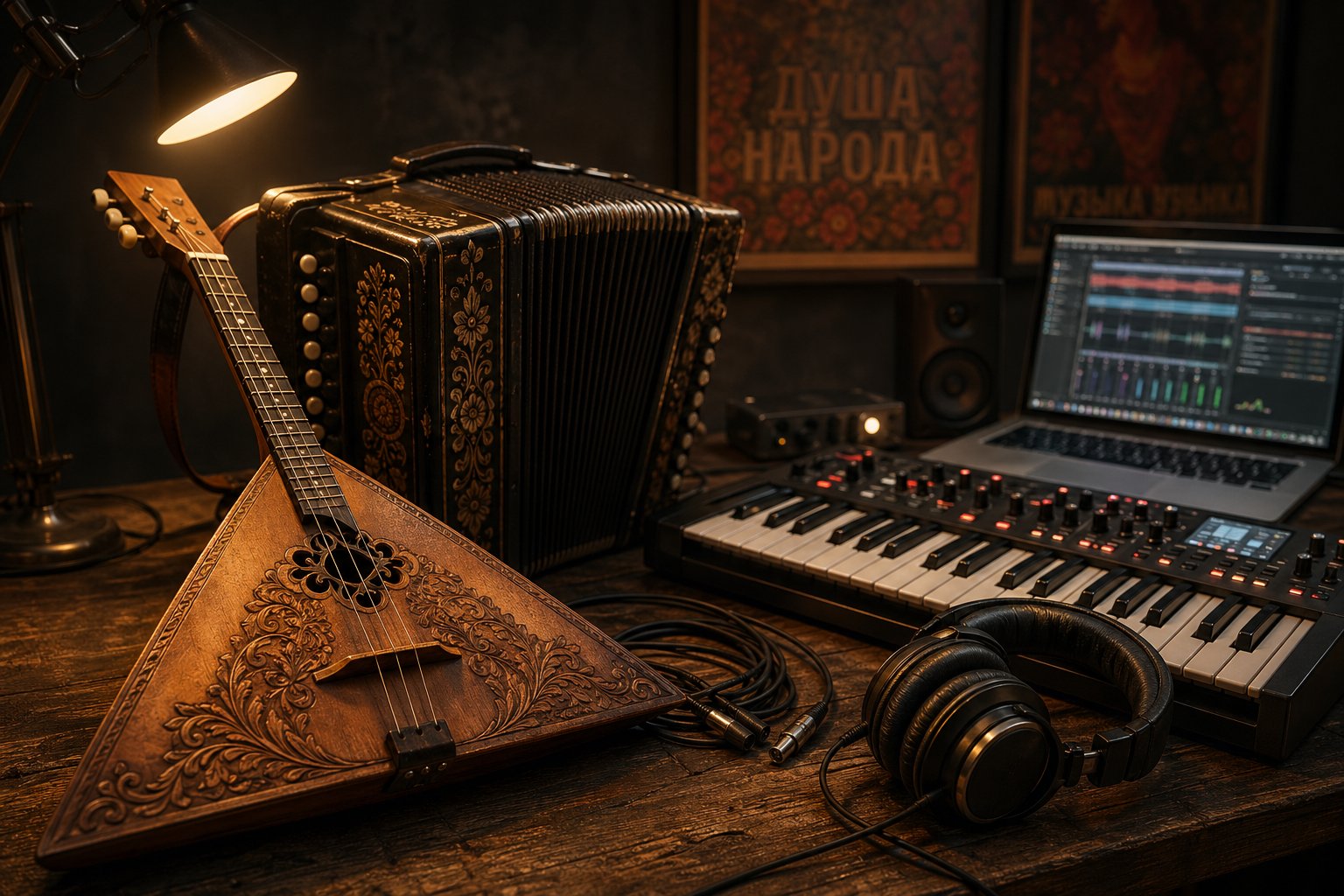
On the production side, the genre pulls from a surprisingly wide palette. Older tracks and folk-pop crossovers often weave in accordion and bayan textures that give the music a warmth and earthiness you will not find in a typical Western pop mix. Synthesizer-heavy arrangements echo the Eurodance and Italo-disco influences that flooded Russia in the 1990s, and those electronic textures never fully left — they just evolved. Among younger artists, trap beats, lo-fi production, and ambient layering have become common, reflecting global trends filtered through a distinctly Russian sensibility.
Then there are the traditional musical instruments from Russia that occasionally surface in pop arrangements for cultural texture. The balalaika, with its bright triangular body and metallic twang, is the most recognizable. The domra, a rounder-bodied string instrument, adds a softer melodic layer. And the gusli, one of the oldest Russian string instruments, brings an almost harp-like resonance when it appears. These are not gimmicks. When a producer drops a balalaika phrase into a modern track, it is a deliberate nod to a musical lineage that stretches back centuries — the same lineage that gave the world the russian waltz tradition and folk melodies like the beloved song of Volga boatmen.
Lyrical Themes Across the Decades
Musica russian has always been a genre where words matter. During the Soviet era, lyrics leaned toward state-approved sentimentality — love songs wrapped in metaphor, patriotic themes delivered with poetic care. Censorship forced songwriters to become masters of subtext, and that skill left a permanent mark on the tradition. The 1990s blew the doors open. Escapism, party anthems, and raw social commentary flooded the scene as artists processed the chaos of post-Soviet life. Tracks like "Strana Limoniya" by Dyuna captured the era's get-rich-or-die-trying morality with dark humor and slang that resonated instantly.
The 2000s brought glamour and romance to the foreground — polished love ballads and dance-pop anthems that matched the era's economic optimism. More recently, a new wave of introspective, socially aware songwriting has emerged. Artists are tackling identity, mental health, and generational disconnect with a directness that earlier decades could not afford.
Russian pop lyrics often carry a poetic weight that reflects the country's deep literary tradition — a lineage running from Pushkin through Soviet-era bards to the bedroom songwriters of today, where every verse is expected to mean something.
This combination of minor-key melody, vocal power, eclectic production, and lyrical depth creates a listening experience that rewards attention. The question is: where do you start? The genre spans decades and hundreds of artists, so a guided path through its essential voices and landmark tracks makes all the difference.
Essential Artists and Songs Every Listener Should Know
A genre this deep needs a map. Rather than dumping a flat list of names, think of what follows as a structured listening path — foundational voices first, then the modern acts rewriting the rules, and finally a curated playlist that connects the dots across decades.
Foundational Artists Every Listener Should Know
Three russian music artists built the stage that everyone else performs on. Alla Pugacheva, already introduced as the genre's defining force, is the non-negotiable starting point. Her catalog spans over five decades, and tracks like "Million Roses" and "Arlekino" remain cultural touchstones that even younger generations know by heart. She did not just sing pop — she shaped what emotional delivery in Russian pop could sound like.
Valery Leontiev brought a different energy entirely. Where Pugacheva channeled dramatic vulnerability, Leontiev leaned into flamboyant theatricality and physical performance. His stage shows in the 1980s were spectacles of costume, choreography, and vocal power that pushed estrada toward something closer to Western arena pop. He proved that russian singers could be visual performers, not just voices behind a microphone.
Sofia Rotaru, born in Ukraine and performing in both Ukrainian and Russian, became one of the most beloved vocalists across the entire Soviet Union. Her warm, folk-inflected soprano and ability to move between traditional melodies and contemporary pop gave her a cross-generational appeal that few artists anywhere have matched. Together, these three form the bedrock — skip them, and you are missing the foundation of every sound that came after.
Modern Icons Reshaping the Genre
The contemporary scene looks nothing like the estrada era, and that is exactly the point. Zivert represents the sleek, modern end of the spectrum — polished electropop with international production values that earned her a consistent spot in Russia's top 3 radio artists in 2024. Her sound could sit comfortably on a Western playlist, yet her melodic instincts remain distinctly Russian.
Monetochka carved out a completely different lane. Her indie-pop, laced with sharp social commentary and lo-fi charm, resonated with a younger audience hungry for authenticity over gloss. Imagine if Billie Eilish grew up in post-Soviet Russia and wrote lyrics steeped in irony about consumerism and generational anxiety — that is the territory Monetochka occupies.
On the rap-pop crossover front, Eldzhey and Morgenshtern blurred genre lines in ways that older gatekeepers never anticipated. Morgenshtern, in particular, became one of the most streamed russian pop artists in the country before his controversial departure from the mainstream. Polnalyubvi brought dream-pop textures and ethereal vocals into a scene that had long favored big, belted choruses, proving there was space for subtlety too. And artists like Anna Asti, who emerged as the leading female artist on Russian YouTube with roughly 300 million streams in 2024, represent a new generation that builds massive audiences through digital platforms rather than television.
What unites these modern acts is a willingness to break from the templates their predecessors established. They genre-blend freely, release music on their own terms, and connect with fans through social media rather than waiting for a New Year's Eve broadcast slot.
Songs That Define Russian Pop Across Eras
Knowing the artists is one thing. Knowing which tracks to actually press play on is another. This ordered list is designed as a starter playlist — a listening journey through the most famous russian songs that shaped the genre at each turning point. If you are searching for the best russian songs to begin with, start here and let each track pull you deeper:
- "Million Roses" — Alla Pugacheva (1982) — Perhaps the single most iconic Russian pop song ever recorded. Based on a Latvian original by Raimonds Pauls, it became a global phenomenon translated into dozens of languages.
- "Katyusha" — Traditional / Lidiya Ruslanova (1938) — A wartime folk-pop classic whose melody is recognized worldwide. The katyusha song lyrics about a girl longing for her soldier became an enduring symbol of resilience and love.
- "Gruppa Krovi" (Blood Type) — Kino (1988) — Viktor Tsoi's post-punk anthem captured the restless spirit of perestroika and remains one of the top russian songs in any genre poll.
- "Krylya" (Wings) — Nautilus Pompilius (1989) — A brooding, synth-driven track that defined the late-Soviet rock-pop crossover moment.
- "All the Things She Said" — t.A.T.u. (2002) — The track that broke Russian pop into Western consciousness, topping the UK chart for four weeks and selling millions globally.
- "Believe" — Dima Bilan (2008) — Russia's first Eurovision winner, produced by Timbaland, marking the genre's commercial peak on the international stage.
- "Beverly Hills" — Zivert (2019) — A sleek electropop hit that signaled the arrival of a new generation of polished, globally minded Russian pop.
- "Kazhdiy Raz" (Every Time) — Monetochka (2018) — Indie-pop with biting social commentary that became an anthem for Russia's Gen Z.
- "Rozovoe Vino" (Rose Wine) — Eldzhey & Feduk (2017) — The rap-pop crossover smash that dominated streaming platforms and redefined what a Russian hit could sound like.
- "Poezda" (Trains) — Komnata Kultury (2024) — Named Track of the Year on Yandex Music, this track captures the introspective, genre-fluid direction of Russia's newest wave.
This is not a definitive ranking — it is a doorway. Each of these tracks represents a shift in what Russian pop could be, and together they trace the genre's evolution from Soviet stages to streaming algorithms. Among the most famous russian songs on this list, you will hear the minor-key drama, vocal intensity, and lyrical weight discussed in earlier sections come alive in real recordings.
Artists and songs, though, only tell half the story. To truly grasp what makes this genre distinct, you need to hear it against the thing Western listeners already know — and understand exactly where the two traditions diverge.
Russian Pop Versus Western Pop and What Sets It Apart
Listening to a russian pop song back-to-back with a Western chart hit is like switching between two emotional languages. The instruments overlap, the production tools are often identical, and both aim squarely at mass audiences. Yet something fundamental feels different. That difference is not a matter of quality — it is a matter of musical logic, cultural infrastructure, and what each tradition asks of its listeners.
Structural and Harmonic Differences
The most immediate contrast is harmonic. Western pop overwhelmingly favors major keys — bright, resolved, optimistic. Russian pop songs lean into minor keys with a frequency that would feel relentless to a Western A&R executive. But within that minor-key framework, something more nuanced is happening. Russian music theory has a concept called peremennost (mutability) — a fluctuation between two diatonically related tonal centers, often a third apart, where neither fully dominates. This tonal ambiguity, rooted in centuries of folk and liturgical music, gives many pop russian songs a harmonic restlessness that Western pop rarely attempts. A chorus might feel like it resolves, then subtly shift the ground beneath you.
Song structure diverges too. Western pop has refined the verse-chorus-verse-bridge formula into near-mathematical precision, optimized for streaming-era attention spans. Russian pop is less rigid. Extended instrumental breaks, dramatic key changes mid-song, and slow-building arrangements that delay the emotional payoff are all common. Production tends to layer more densely as well — where Western trends have moved toward minimalism and negative space, many russian pop songs stack synths, strings, and vocal harmonies into rich, full arrangements that reward repeated listening.
Cultural Context and Star-Making Machinery
The differences run deeper than sound. How artists are discovered, developed, and sustained follows a completely different playbook. In the West, a viral TikTok clip or a Spotify editorial playlist can launch a career overnight — and end it just as fast. Popular culture in russia still places enormous weight on television. New Year's Eve concert broadcasts, watched by tens of millions, remain the single most powerful promotional platform for any russian song to reach a mass audience. A three-minute slot on that broadcast carries more career impact than months of playlist placement.
This creates a different relationship between artist and audience. Russian music famous for its emotional intensity also produces famously loyal fanbases. Stars like Pugacheva, Kirkorov, and Rotaru have maintained relevance for decades — not through constant reinvention, but through consistent emotional connection with audiences who grew up with their voices. Western pop cycles churn faster. An artist can dominate for two or three album cycles and then fade from mainstream visibility entirely. In Russia, longevity is the norm, not the exception.
What Western Listeners Can Learn From Russian Pop
This is not about declaring one tradition better than the other. It is about recognizing what each offers. Classic russian songs bring a melodic complexity and emotional range that can genuinely expand a listener's palette. The willingness to sit in minor-key tension, to let a vocal performance be raw and dramatic rather than cool and controlled, to build a song toward a climax rather than front-loading the hook — these are creative choices that Western pop has largely moved away from. Hearing them done well is a reminder of how wide the genre's possibilities actually are.
| Category | Russian Pop | Western Pop |
|---|---|---|
| Dominant Key Signatures | Minor keys, with frequent tonal mutability between related centers | Major keys, with clear tonal resolution |
| Vocal Style | Dramatic belting, vibrato, emotional intensity | Breathy, understated, conversational delivery |
| Song Structure | Flexible — extended breaks, dramatic builds, key changes | Tight verse-chorus-verse-bridge formula |
| Career Longevity | Decades-long careers with multigenerational loyalty | Shorter mainstream windows, faster artist turnover |
| Primary Discovery Channel | Television broadcasts and domestic streaming (Yandex Music, VK) | Streaming playlists, TikTok virality, radio |
| Lyrical Themes | Poetic, metaphor-rich, emotionally heavy | Direct, conversational, hook-driven |
| Production Density | Layered arrangements with orchestral and synth textures | Minimalist, space-focused, beat-driven |
These contrasts are not barriers — they are invitations. And the invitation has never been easier to accept. Streaming platforms and social media have quietly dismantled the geographic walls that kept Russian pop isolated from global ears, creating discovery pathways that did not exist even five years ago.

How Streaming and TikTok Reshaped Russian Pop Discovery
Those geographic walls did not just crack — they collapsed. The post-2020 landscape for Russian pop looks almost nothing like the television-dominated ecosystem that built the genre's commercial peak. Streaming algorithms, short-form video, and affordable production tools have rewritten the rules of who gets heard, how fast they rise, and how far their music travels.
The Streaming Revolution on Yandex Music and Beyond
Russia's streaming ecosystem operates on a dual track. Domestically, Yandex Music commands roughly 51% of the market, with VK Music holding about 26.5% and Sber's Sound service at 10%. Together, these platforms serve an average monthly audience of over 84 million users, with 32 million paying subscribers. The market itself hit 46 billion rubles in 2025 — a 23% jump from the previous year — and analysts project continued double-digit growth into 2026.
What makes this relevant for the genre's evolution is not just the money. It is the discovery mechanics. AI-driven recommendation systems on Yandex Music now function as the primary way listeners find new russian music stars. The platform reported that new releasing artists grew by 70% across all categories, and a fresh release boosts an artist's audience by an average of 36%. For newcomers with fewer than 5,000 listeners, that bump can reach 80%. The old model — wait for a television slot, hope a label notices — has been replaced by algorithmic meritocracy where a bedroom track can land on a personalized playlist alongside established names.
Internationally, the picture is more fragmented. Spotify russian songs still reach global listeners, though Spotify's share of the Russian domestic market dropped to just 3.5% after operational disruptions in 2022. Apple Music holds about 4.5%. These platforms serve as bridges, carrying top songs russia produces to curious ears abroad, even as the domestic audience consolidates around homegrown services.
TikTok and the New Viral Pipeline
If streaming democratized discovery inside Russia, TikTok blew the doors off internationally. The platform's algorithm does not care what language a song is in. It cares about engagement — and catchy Russian pop delivers that in spades.
The most striking recent example is "Sigma Boy," a track performed by 11-year-old Betsy and 12-year-old Maria Yankovskaya. Released in late 2024, the song accumulated 66 million YouTube views in three months, reached No. 7 on Billboard's Hot Dance/Pop Songs chart, and became a TikTok phenomenon through dance challenges and meme culture. Millions of non-Russian speakers were singing along to a russian song popular enough to spark debate in the European Parliament — proof that when a track hits the right viral nerve, language barriers simply stop mattering.
Popular russian songs on TikTok follow a pattern: an infectious melodic hook, a visual concept that invites imitation, and an emotional tone that translates without translation. This pipeline has introduced the genre to audiences who would never have searched for a russian pop station or browsed a Cyrillic playlist. The discovery is passive, algorithmic, and global — and it is accelerating.
Bedroom Producers and the DIY Wave
The same forces reshaping discovery are also reshaping creation. Affordable digital audio workstations, sample libraries, and distribution platforms like DistroKid have lowered the barrier to entry so dramatically that a teenager with a laptop can compete for playlist placement alongside label-backed acts. Research from Edinburgh Napier University found that independent artists generated over $1.2 billion globally in 2020 alone, and the DIY music market grew 7.6% between 2021 and 2024. Russia is riding that same wave — the 54% year-over-year increase in new releases from Russian artists on Yandex Music reflects a flood of independent creators entering the scene.
AI-powered tools are pushing this even further. Recommendation engines already shape what listeners hear; now generative tools are shaping what creators make. Platforms like MakeBestMusic's AI Song Generator let anyone experiment with Russian pop characteristics — input a mood, a genre direction, or a stylistic idea, and generate an original royalty-free track in seconds. You do not need formal training or a studio budget. This kind of tool reflects the broader democratization trend: the same technology that helps Yandex Music recommend your next favorite track can now help you create one inspired by the genre's minor-key drama and emotional intensity.
The result is a creative ecosystem that is more open, more fluid, and more globally connected than anything the genre has seen before. Yet for all this accessibility, one challenge remains: most of the world's listeners still do not speak Russian. The question is whether that actually matters — and how to get the most out of the music even when you cannot understand a single word.
Appreciating Russian Pop Without Speaking Russian
Here is the honest truth: you do not need to understand a single word of Russian to feel what this music is doing. Language is one layer of a song. Melody, vocal delivery, production texture, and rhythmic energy are all communicating something on their own — and Russian pop communicates with unusual force.
Listening Beyond the Language Barrier
When you press play on songs in russian and the lyrics are opaque, shift your attention. Listen to the melodic contour — the way a vocal line rises, falls, and lingers on certain notes. Notice the emotional delivery: is the singer belting through a climax or pulling back into a whisper? Pay attention to production choices — the swell of strings, the punch of a synth bass, the moment an arrangement strips down to just a voice and a piano. Russian pop communicates feeling through sound with a directness that often hits harder precisely because you are not processing literal meaning.
This is not a theory. Some of the most globally beloved Russian melodies became famous because their emotional power transcends language entirely. The song Dark Eyes, a romance dating back to the 19th century, has been performed in dozens of languages and covered by artists from Django Reinhardt to Andrea Bocelli — not because listeners understood the original Russian text, but because the melody itself carries longing in every note. "Moscow Nights" became an international standard for the same reason. And katyusha songs, born from wartime folk tradition, have been sung by choirs on every continent. The feeling arrives before the translation does.
That said, deepening your engagement is easy. Sites like Very Much Russian provide lyrics with stress marks and English translations for dozens of classic and contemporary tracks. Transliteration guides help you sing along phonetically. Even searching for russian anthem lyrics in english or russian lullaby lyrics will pull up well-documented translations that reveal the poetic craft behind familiar melodies.
Building Your First Russian Pop Playlist
The best approach is to start with what already resonates with your taste and branch out from there. Rather than diving in randomly, use your existing preferences as a compass:
- If you like upbeat dance pop — start with Zivert's "Beverly Hills" and Serebro's "Mama Lover," then let streaming algorithms pull you toward VK Music's dance-pop playlists.
- If you prefer emotional ballads — begin with Pugacheva's "Million Roses" and Polnalyubvi's dreamy catalog, then explore era-specific ballad collections on Yandex Music.
- If you want contemporary edge — try Monetochka's "Kazhdiy Raz," Eldzhey and Feduk's "Rozovoe Vino," and work forward through algorithmic recommendations into Russia's rap-pop crossover scene.
- If folk-influenced sounds appeal to you — start with Pelageya's modern folk-pop arrangements and classic recordings of "Kalinka," then explore the shanson-pop overlap.
Streaming platforms are your best friend here. Yandex Music and VK Music offer curated genre playlists that surface both legacy tracks and new releases. Spotify's algorithmic radio, seeded with any track from the playlist in the previous chapter, will generate a personalized rabbit hole within minutes.
Key Songs With English-Accessible Context
Some tracks come with built-in accessibility. The russian song katyusha lyrics have been translated, annotated, and analyzed in hundreds of online resources — making it one of the easiest entry points for understanding how Russian pop lyrics blend personal emotion with collective memory. The dark night russian song ("Tyomnaya Noch"), a wartime ballad from the 1943 film Two Soldiers, is another track where English translations and cultural context are widely available, letting you appreciate both the melody and the meaning behind it.
t.A.T.u.'s "All the Things She Said" already exists in a full English-language version, giving listeners a direct bridge between the Russian original and comprehensible lyrics. Dima Bilan's Eurovision-winning "Believe" was performed in English from the start. And for deeper exploration, bilingual lyric videos on YouTube now cover everything from Soviet-era classics to last month's viral hits.
Appreciating music across languages is one of the most rewarding ways to expand your cultural horizons — and Russian pop, with its emotional intensity and melodic richness, rewards that leap more generously than most genres.
The tools, the translations, and the playlists are all there. The only thing left is to move from listening to creating — and that step is closer than you might think.

Creating Your Own Russian-Inspired Pop Sound
Listening is where appreciation starts. Creating is where it gets personal. Everything covered in this journey — the minor-key tension, the vocal drama, the layered production, the poetic weight of every lyric — is not just music history. It is a creative toolkit waiting to be used.
Why Russian Pop Inspires New Music Creation
Few genres pack this much raw material into one tradition. The emotional intensity inherited from estrada, the melodic richness shaped by centuries of folk song, the bold production choices that stack synths and strings without apology — these are qualities that stand out precisely because mainstream Western pop has moved in the opposite direction. For anyone making music, whether you are a singer from russia or a producer in Brooklyn, understanding a genre this deeply is the first step toward drawing on it creatively. You do not need to replicate it. You just need to let it inform your instincts.
Think about what makes a popular russian song stick: that harmonic restlessness, the refusal to resolve neatly, the vocal delivery that prioritizes feeling over polish. These are choices you can fold into any style. A minor-key chord progression borrowed from the russian popular songs tradition can transform an otherwise predictable track into something that lingers.
Turning Inspiration Into Original Tracks
The gap between "I love this sound" and "I made something inspired by it" used to require years of training, expensive studio time, and a working knowledge of music theory. That gap has shrunk dramatically. Modern AI music tools let you experiment with genre characteristics the same afternoon you discover them.
MakeBestMusic's AI Song Generator is a practical starting point. Input a mood — melancholic, dramatic, euphoric — pair it with a Russian pop style direction, and generate an original royalty-free track in seconds. You do not need to be a producer, read sheet music, or speak Russian. The tool translates genre knowledge into sound, bridging cultural appreciation and creative expression in a way that would have been unimaginable a decade ago. It is the same democratization trend powering the bedroom producer wave across musica russia and beyond, just made accessible to anyone curious enough to try.
The Future Sound of Russian Pop
Where is the genre heading? The signals are clear. Genre-blending is accelerating — the post-genre era that music trend analysts describe globally is already well underway among russian pop artists, where trap, dream-pop, folk, and electronic textures collide freely within a single album. Global curiosity is growing, fueled by TikTok virality and streaming algorithms that surface top russian music to listeners who never searched for it. And independent production, powered by AI tools and affordable software, means the next great singer from russia might never sign a label deal at all.
The genre's future will be shaped by the same forces that reshaped its past: creative tension, cultural pride, and a willingness to absorb outside influences without losing what makes the sound distinctly its own.
Ready to go deeper? Here are three things you can do right now:
- Queue up the curated playlist from this article and listen through it start to finish — let each era's sound sink in before jumping to the next.
- Experiment with creating a Russian-inspired track using MakeBestMusic's AI Song Generator — pick a mood, choose a style, and see what comes out.
- Follow key artists like Zivert, Monetochka, and Polnalyubvi on your streaming platform of choice, and let the algorithm do the rest.
Russian pop has spent decades building something extraordinary in plain sight. The melodies are there. The emotion is there. The only question left is what you do with it.
