

What Does Tonal Actually Mean
You have probably seen the word "tonal" pop up in a music class, an art tutorial, or even a linguistics lecture and wondered whether everyone is talking about the same thing. So what is a tonal quality, and why does this single adjective show up in so many different conversations? The answer is simpler than you might expect.
The Simplest Way to Define Tonal
At its core, the tonal definition is refreshingly straightforward. Merriam-Webster classifies "tonal" as an adjective dating back to 1776, built from the noun "tone" plus the suffix "-al." Strip away the jargon and you get this:
Tonal means of, relating to, or based on tone, whether that tone is a musical pitch, a spoken inflection, a visual shade, or the overall mood of a piece of communication.
That is the one-sentence version. If someone asks you "what is a tonal element," you can point to anything defined by its relationship to tone. A tonal color in a painting refers to how light or dark a hue appears. A tonal language uses pitch to change word meaning. A tonal chord progression revolves around a home key. The adjective stays the same; only the context shifts.
One Word Across Many Worlds
What makes "tonal" fascinating is its range. The word travels comfortably across at least four major domains, and each one gives it a slightly different flavor:
- Music theory - describes music organized around a central pitch, from simple folk melodies to complex forms like polytonality, where multiple keys sound at once.
- Linguistics - identifies languages (such as Mandarin or Yoruba) where pitch contour changes a word's meaning entirely.
- Visual arts - refers to the lightness or darkness of colors and shades, the foundation of depth and contrast in painting and photography.
- Everyday speech and media - captures shifts in mood, attitude, or emotional register, like when a film review describes a movie's "tonal inconsistency."
Each of these worlds deserves a closer look, and that is exactly where this article is headed. But every branch of meaning grows from the same root, and understanding that root starts with knowing where the word itself came from.
The Etymology and Word Family Behind Tonal
Every word carries a backstory, and "tonal" has one that stretches back thousands of years. Tracing its roots reveals something surprising: the same physical image that ancient Greeks used to describe a vibrating string still shapes how we talk about tonal music, tonal color, and tonal shifts in conversation today.
From Greek Tonos to Modern English
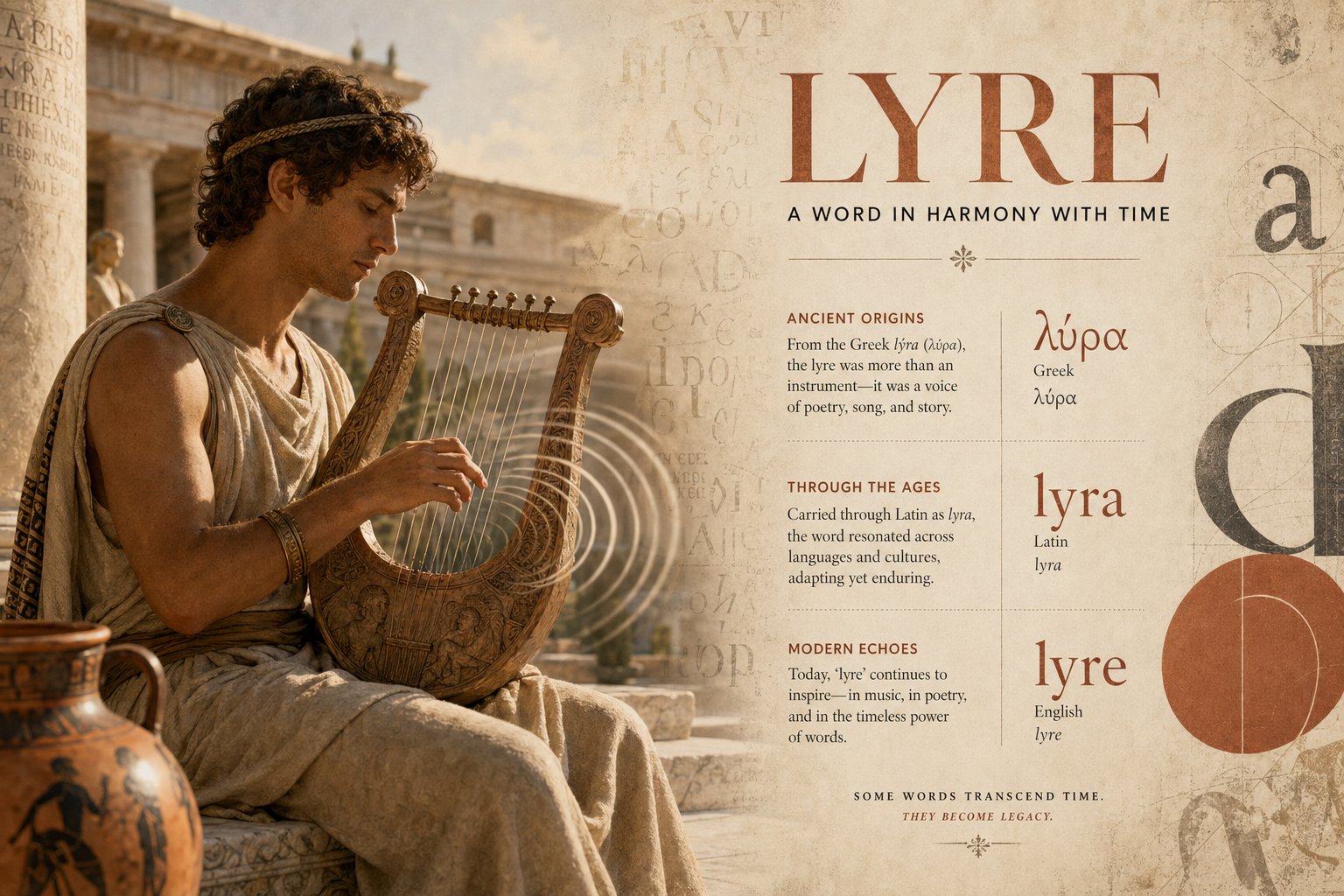
Imagine a musician in ancient Greece tightening a lyre string. The harder the string is pulled, the higher the pitch it produces. The Greeks had a word for that tension: tonos, meaning "a stretching, tightening, or taut string." Over time, tonos expanded beyond the physical act of stretching to describe the sound a taut string made, its vocal pitch, and eventually the broader concept of accent and key in music.
Latin borrowed the idea as tonus, meaning "a sound" or "tone." By the medieval period, scholars writing in Latin coined tonalis to describe anything relating to tones or modes in church music. English finally adopted the adjective as "tonal" around 1776, built from the noun "tone" plus the suffix "-al." The word initially applied to music in a general sense, covering anything "of or pertaining to tones." By 1884, it had narrowed into a more specific meaning: music written in keys, as opposed to atonal composition.
Here is the chain at a glance:
Greek tonos (tension, pitch) → Latin tonus (a sound, tone) → Medieval Latin tonalis → English tonal (1776)
What makes this origin story worth knowing? It connects the dots. The original Greek sense of physical tension in a string is the same principle that governs pitch in every tonal example you hear today, from a guitar riff to a Mandarin syllable. The word never really left its roots; it just found new places to grow.
The Tonal Word Family at a Glance
One reason "tonal" appears everywhere is that it belongs to a productive word family. Each form serves a different grammatical role, and knowing the full set helps you use the right word in the right context. When someone asks "what is the tonic," for instance, they are reaching for a related noun, not the adjective itself. The table below maps out the core family:
| Word Form | Part of Speech | Brief Definition |
|---|---|---|
| tone | noun / verb | A sound with a specific pitch, quality, or character; to give tone to |
| tonal | adjective | Of, relating to, or based on tone or tonality |
| tonally | adverb | In a way that relates to tone (e.g., "tonally rich") |
| tonality | noun | The system of organizing music around a tonal center; overall tonal character |
| tonic | noun / adjective | The central note of a key; relating to musical tone or tension |
| atonal | adjective | Lacking a tonal center; not organized around a key |
| atonality | noun | The absence of a tonal center in music |
You will notice that "tonal" has no single perfect synonym. Words like "melodic," "harmonic," or "pitched" overlap in certain contexts, but none of them capture the full range. In tonal music, the adjective points to key-based structure. In visual arts, it points to value and shade. In linguistics, it points to pitch as meaning. The word shifts its weight depending on the domain, which is exactly why a simple synonym swap rarely works.
That flexibility is also what makes the tonal word family so useful. Whether you are describing how a piece of music resolves to its home note or how a photograph moves from shadow to highlight, you are drawing on the same linguistic lineage, one that started with a Greek musician pulling a string tight and listening to what happened next.
What Is Tonal Music and the Power of the Tonal Center
That Greek string pulled tight thousands of years ago did not just give us a word. It gave us a way of organizing sound that still drives virtually every song on your playlist. When musicians talk about the tonal meaning of a piece, they are almost always pointing to one central idea: the music has a home note, and everything revolves around it.
What Makes Music Tonal
So what is tonal music, really? Think of a board game. There is a "home" square where every player starts and where every player wants to end up. No matter how far you travel across the board, home is always the reference point. Tonal music works the same way. It is organized around a single central note called the tonic, and that note acts as a gravitational anchor. Melodies drift away from it, harmonies create tension against it, and sooner or later, everything pulls back toward it with a satisfying sense of arrival.
This is not some niche technique reserved for concert halls. The vast majority of music people encounter daily is tonal. Western classical music from Bach through Beethoven to film scores, pop hits on streaming charts, folk songs passed down through generations, jazz standards played in clubs around the world - all of these traditions rely on the relationship between music and tone centered around a home pitch. As the School of Composition puts it, tonal music "works by establishing a tonic, moving away from it and then returning to it." That cycle of departure and return is what gives a song its sense of direction, its feeling of going somewhere and arriving.
Unlike tonal English, where pitch shifts convey emotion or emphasis without changing word meaning, the tones of music in a tonal system carry structural weight. Each pitch has a role relative to the tonic, and those roles create the push and pull that makes a melody feel alive rather than random.
Understanding the Tonic and Tonal Center
You might hear musicians say a song is "in the key of C major" or "in A minor." What they are really identifying is the tonal center - the specific pitch around which the entire piece revolves. The key tells you two things: which note is home (C or A, in those examples) and which set of notes the composer is drawing from (the major or minor scale built on that home note).
Chord progressions are where you actually feel the tonal center at work. Chords built on different notes of the scale each carry a different level of tension or stability relative to the tonic. Some feel restful, some feel like they are leaning forward, and one in particular - the dominant chord, built on the fifth note of the scale - creates a strong pull back toward home. Imagine a simple progression in C major that walks through four chords:
- I (C major) - You start on the tonic chord. This feels stable, grounded, like standing on solid ground.
- IV (F major) - The chord moves to the fourth degree. There is a gentle lift, a sense of motion away from home.
- V (G major) - The dominant chord arrives. Tension builds. This chord wants to resolve, almost like a question waiting for an answer.
- I (C major) - You land back on the tonic. Relief. Resolution. The musical sentence feels complete.
That I-IV-V-I pattern is one of the most common progressions in Western music, and it demonstrates tonal gravity in its simplest form. The dominant chord creates an expectation, and the return to the tonic satisfies it. You do not need to read sheet music to feel this happening - your ear already recognizes the pattern from thousands of songs you have heard throughout your life.
What makes the tonal center so powerful is that it works even when the music gets complex. A jazz standard might wander through several temporary key areas, and a classical symphony might modulate dramatically, but the listener still senses a home base pulling the music back. That gravitational quality is exactly what separates tonal music from other systems of organization - and understanding it opens the door to hearing familiar songs in an entirely new way.
Music, of course, is not the only place where pitch carries meaning. In some of the world's most widely spoken languages, the pitch of a single syllable can change a word entirely.
Tonal Languages and How Pitch Changes Word Meaning
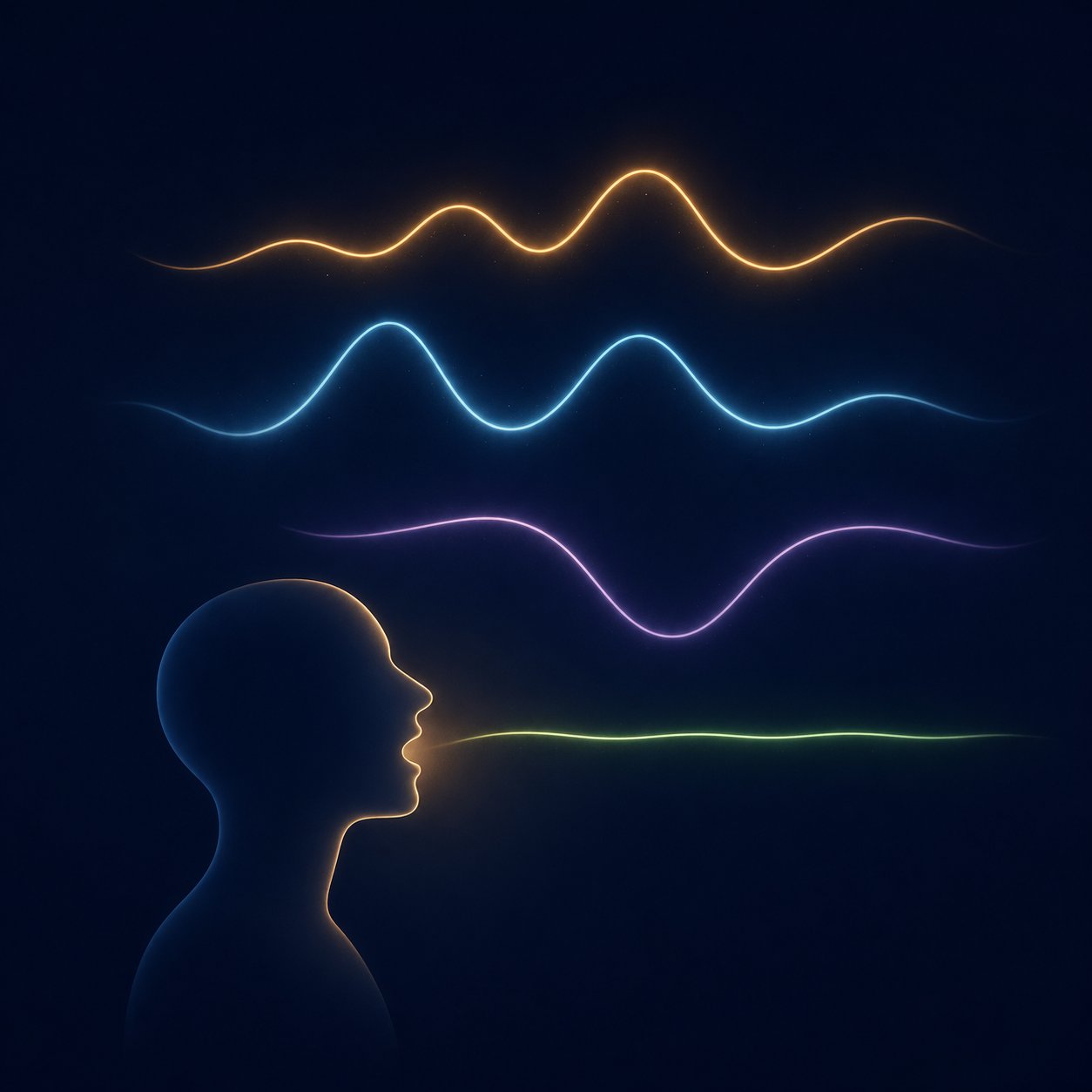
In music, pitch creates tension and resolution. In language, pitch can do something even more dramatic: it can turn one word into a completely different one. This is the linguistic side of the tonal definition, and for roughly half the world's languages, it is not optional. It is the difference between saying "mother" and saying "horse."
How Tonal Languages Use Pitch as Meaning
So what does tonal mean when linguists use the word? A tonal language is one where the pitch contour of a syllable - whether it rises, falls, dips, or stays level - changes the actual dictionary meaning of that syllable. Pitch is not just decoration or emotional flavoring. It is baked into the word itself, as fundamental as a consonant or vowel.
The classic example comes from Mandarin Chinese, which has four main tones plus a neutral tone. Take the syllable ma. Depending on which pitch pattern you use, you get four entirely unrelated words:
| Tone Number | Pitch Pattern | Pinyin | English Meaning |
|---|---|---|---|
| 1st tone | High and level | ma (high level) | Mother |
| 2nd tone | Rising | ma (rising) | Hemp |
| 3rd tone | Falling then rising | ma (dipping) | Horse |
| 4th tone | Sharp falling | ma (falling) | Scold |
Imagine calling your mother and accidentally saying "horse" instead. That is the kind of mix-up that happens when tonal distinctions are missed. The wrong tone does not just sound odd - it points to a completely different word. One reason Mandarin relies so heavily on tones is that the language has a relatively small number of possible syllables, roughly 400, compared to about 12,000 in English. Tones multiply those syllables, helping speakers distinguish between what would otherwise be an overwhelming number of homophones.
Mandarin is far from alone. Tonal languages span continents and language families:
- Vietnamese uses six tones, making it one of the most tonally rich languages in Southeast Asia.
- Thai distinguishes five tones - high, mid, low, rising, and falling - each capable of turning a single syllable into a different word.
- Cantonese is often analyzed as having six tones, though some analyses count up to nine when entering tones are included.
- Yoruba and other West African languages use register tones (high, mid, low) rather than the contour tones common in Asian languages. In Yoruba, the word ojo can mean "rain" or serve as a personal name depending on its tonal pattern.
Linguists sometimes group these systems into two broad categories. Contour-tone languages like Mandarin and Thai use pitch movements - rises, falls, dips - within a single syllable. Register-tone languages like Yoruba and Ibibio rely more on relative pitch levels (high versus low) held steady across a syllable. Both systems accomplish the same thing: pitch carries meaning, not just feeling.
Is English a Tonal Language
This is one of the most common questions people ask when they first encounter the concept, and the short answer is no. English is what linguists call an intonation language. Pitch still matters, but it works at the sentence level rather than the word level.
Here is a quick tonal sentence example to make the distinction concrete. Say the word "really" with a flat, falling pitch: Really. It sounds like a statement, maybe even dismissive. Say it with a rising pitch: Really? It becomes a question. But - and this is the key point - the dictionary meaning of "really" has not changed. You have not turned it into a different word the way a Mandarin speaker turns "mother" into "horse." You have only shifted the emotional or grammatical context around it.
English uses pitch to signal questions versus statements, to emphasize certain words, and to convey sarcasm, surprise, or boredom. Stress patterns also play a role: the noun record (stress on the first syllable) and the verb record (stress on the second) are different, but that distinction comes from stress and vowel quality, not from pitch contour alone. In a true tonal language, pitch is the primary tool that separates one lexical item from another, regardless of context or emotion.
Understanding this distinction helps clarify whats tonal about a language versus what is merely expressive. Every language uses pitch in some way. The question is whether pitch changes what a word means or only how it feels. Tonal languages fall squarely on the meaning side of that line.
Pitch, of course, is not the only dimension where "tonal" carries weight. In the visual arts, the word drops its connection to sound entirely and picks up something you can see: the play of light and dark across a surface.
Tonal in Visual Arts and Photography
In music, a tonal center is a pitch that pulls everything toward it. In the visual arts, "tonal" drops its connection to sound entirely and picks up something you can see: the relationship between light and dark across a surface. If you have ever squinted at a painting to figure out why it feels so three-dimensional, you were already thinking tonally - you just might not have had the vocabulary for it.
Tonal Values and Tonal Range in Art
Tonal value refers to how light or dark a color or shade is, completely independent of its hue. A bright red and a bright yellow can share the same tonal value even though they look nothing alike in color. Strip away the hue - imagine converting a painting to grayscale - and what remains is pure tonal information. As the ARTdiscount blog puts it, many professional artists consider tonal value to be the most important element when composing their work, because without it, artwork can appear "flat, formless, and lifeless."
Artists use the term tonal range to describe the full spectrum from the lightest light to the darkest dark in a composition. A piece with a wide tonal range moves from near-white highlights to deep black shadows, giving the viewer a strong sense of volume and space. A narrow tonal range keeps values close together, producing a softer, more atmospheric effect - think of Monet's Water Lilies, where the colors are vivid but the values stay remarkably similar across the canvas.
Tonal contrast - the difference between those light and dark areas - is what creates depth, drama, and mood. Place a bright highlight directly against a deep shadow and you get the kind of striking effect seen in Caravaggio's paintings, a technique known as chiaroscuro. Reduce the contrast and the mood shifts toward calm and subtlety. This is why many painters begin with a grisaille underpainting, mapping out the entire composition in shades of gray before introducing any color at all. Getting the tonal structure right first ensures the finished piece reads as tonally convincing, regardless of palette.
Tonal Color in Photography and Design
Photographers rely on the same principle. When a photographer describes the "tonal quality" of an image, they are talking about how light gradates across the frame - where the highlights fall, how the shadows behave, and how smoothly the midtones transition between them.
Two terms come up constantly in this context. A high-key photograph is one where the majority of tonal values sit in the bright end of the spectrum, producing an airy, delicate feel with minimal shadow. A low-key photograph is the opposite: most values cluster in the dark range, creating mood, mystery, and weight. As Fstoppers explains, the term "key" itself refers to where the average tonal value of an image falls within the overall tonal range. Neither approach is simply overexposure or underexposure - both require deliberate control of light and value to maintain detail within their chosen range.
In graphic design and digital art, tonal adjustments are among the first editing steps in any workflow. Brightness, contrast, and curves tools all manipulate tonal values to shape how an image feels before a single color correction is applied. Whether you are retouching a portrait or designing a poster, understanding tone in music may help you hear a song differently, but understanding tone in visual work helps you see differently.
Here is a quick vocabulary list you can use the next time you are discussing or creating visual work:
- Tonal value - the lightness or darkness of a color, independent of hue
- Tonal range - the full spectrum from lightest to darkest in a composition
- Tonal contrast - the degree of difference between light and dark areas
- Tonal color - color described in terms of its value rather than its hue
- Tonal key - the overall lightness or darkness of an image (high key = bright, low key = dark)
These terms cross freely between painting, photography, and digital design. Once you start noticing tonal relationships in images, you will find it hard to stop - and that same awareness carries over into how you perceive mood and emotion in everyday communication.

What Is Tonal Quality in Everyday Speech and Communication
Pitch organizes music. Value organizes paintings. But outside studios and concert halls, "tonal" lives a quieter, more casual life - one you have probably participated in without realizing it. Every time you describe a conversation as "off" or a movie as "all over the place," you are reaching for the same concept that musicians and painters formalize. You are talking about tone.
Tonal Shifts in Conversation and Writing
In everyday use, "tonal" describes shifts in mood, attitude, or emotional register. A podcast host makes a tonal change when she pivots from a lighthearted quiz segment to a serious interview about grief. A film critic flags a movie's "tonal whiplash" when it lurches from slapstick comedy to grim violence without earning the transition. As Gizmodo notes, tone sets up an audience's expectations for what sort of things are likely to happen next - and when those expectations are violated clumsily, the result feels jarring rather than surprising.
The adverb "tonally" shows up just as often. You might read that "the speech was tonally inconsistent" or that "the album is tonally cohesive from start to finish." In both cases, the tonality meaning is intuitive: something either holds a steady emotional register or it does not. You do not need a degree in music theory or linguistics to feel the difference. Skilled creators - writers, directors, comedians - manage tonal shifts deliberately, moving from funny to sad or light to dark in ways that feel earned. As one editor once told a writer, a story that ends on the wrong emotional note is like a catchy tune that resolves on the wrong chord. The analogy works because tonal consistency in storytelling and tonal resolution in music draw on the same human instinct for pattern and expectation.
Recognizing Tonal Quality in Voices and Audio
"Tonal" also describes the physical quality of sounds you hear every day. The tonal warmth of a vinyl record. The tonal clarity of a well-placed podcast microphone. The tonal richness of a singer whose voice seems to fill a room without effort. Audio engineers and casual listeners alike use these phrases to articulate something specific: whether a sound is bright, warm, thin, or full.
In hi-fi audio, for example, a "bright" sound emphasizes higher frequencies - crisp, detailed, airy - while a "warm" sound foregrounds the midrange and bass, producing a smoother, more relaxed character. Neither is better; they are different tonal signatures that suit different listeners and genres. When someone says a pair of headphones sounds "warm," they are making a tonal judgment, even if they have never thought about what is tonal in a formal sense. The vocabulary crosses over from professional audio engineering into everyday product reviews, YouTube comparisons, and casual conversations about why one speaker sounds "richer" than another.
This matters because tonal awareness is not reserved for specialists. It is something you already practice - when you choose a podcast partly because the host's voice feels inviting, or when a film score shifts your mood before you consciously register the music changing.
Understanding "tonal" in everyday contexts gives you the vocabulary to articulate why certain voices, songs, or sounds feel appealing or jarring - turning a vague gut reaction into something you can name, discuss, and even seek out.
Of course, once you can name what feels tonally "right," you naturally start wondering about its opposite. What happens when tone is deliberately removed - when a composer strips away the gravitational center that makes music feel resolved? That question leads straight into the relationship between tonal and atonal, and why the distinction matters more than most people realize.
Tonal vs. Atonal and Related Concepts Explained
Strip away the home note, remove the gravitational pull of a key, and what do you get? Music that floats, unsettles, and refuses to land. That is atonality in a nutshell - and understanding it is one of the fastest ways to define tonal music by seeing what it is not.
Tonal vs. Atonal in Music
Atonal music deliberately avoids establishing a tonal center. There is no musical tonic acting as home base, no key signature anchoring the harmony, and no chord progression pulling the listener toward resolution. Where tonal music gives you a destination, atonal music removes the map.
This was not always an option. For centuries, Western music operated within the tonal system, where every melody and chord related back to a central pitch. By the late 1800s, though, composers like Richard Wagner had pushed chromaticism so far that successive chords began relating more to each other than to any common tonic. Arnold Schoenberg took the next logical step in the early twentieth century, writing works that abandoned key-based structure entirely. His song cycle Pierrot Lunaire (1912) and Alban Berg's opera Wozzeck (1925) became landmark examples of atonal composition.
The listening experience is strikingly different. Tonal music tends to feel directional - you sense movement, tension, and release. Atonal music can feel suspended, unpredictable, even disorienting. Neither approach is better. They serve different artistic goals. Tonal structure excels at narrative and emotional arc. Atonality excels at raw intensity and the kind of rhetorical immediacy that does not need resolution to make its point.
Tonality, Modality, and Polytonality Explained
People searching for a tonality definition often bump into related terms that blur together. Tonality, modality, and polytonality all describe ways of organizing pitch, but they work differently. Here is a side-by-side breakdown:
| Term | Simple Definition | Example Context |
|---|---|---|
| Tonality | A system of organizing music around a central pitch (the musical tonic) and its associated key | A pop song in G major that resolves to a G chord at the end |
| Modality | An older system using scales called modes, where notes within the mode are treated more equally | Gregorian chant built on the Dorian mode; Miles Davis's So What |
| Atonality | The deliberate absence of a tonal center; no single note functions as home | Schoenberg's Pierrot Lunaire; much of early Expressionist music |
| Polytonality | The use of two or more keys sounding simultaneously | Stravinsky layering different key centers in Petrushka |
The distinction between tonality and modality trips people up most often. In tonal music, sounds are organized hierarchically - some notes and chords carry more structural weight than others, and the tonic chord sits at the top. Modal music is less hierarchical. A modal piece sticks to the notes of a chosen scale, but those notes are treated more equally, without the strong gravitational pull toward a single home pitch. Think of it this way: tonality is a solar system with a sun at the center, while modality is more like a constellation - a pattern of stars with no single dominant point.
Modal music is not just a relic of medieval chant, either. Jazz musicians like John Coltrane and Miles Davis revived modal approaches in the late 1950s, and psychedelic rock bands explored them throughout the 1960s. The blues, interestingly, sits right at the crossroads - using tonal chord structures but layering modal scales like the pentatonic and blues scale on top.
These categories are not rigid walls. Plenty of music blends tonal, modal, and even polytonal elements within a single piece. The value of knowing the terms is not to sort every song into a neat box - it is to sharpen your ear so you can hear how a piece of music organizes its pitches and why it feels the way it does. That kind of active listening is also the first step toward putting tonal knowledge to creative use.

Turning Tonal Knowledge Into Creative Practice
Sharpening your ear is one thing. Using what you hear to make something new is where the real fun starts. Everything covered so far - tonal centers, music tones, tonal contrast in art, pitch patterns in language - boils down to the same skill: recognizing how individual elements relate to a central reference point. The question now is how to take that awareness off the page and into practice.
Hearing Tonal Relationships in Music You Already Know
You do not need new music to start training your ear. The songs already on your phone are a goldmine. The trick is switching from passive listening to active listening - paying attention not just to what you hear, but to how the music tone of each phrase relates to the home pitch.
Try this the next time a favorite song ends: hum the very last note. In the vast majority of cases, that final note will be the tonic - the gravitational center the entire piece has been orbiting. As Musical U describes it, the tonic is the natural "resting place" of the music, and a melody that ends on it produces a sensation of completeness. If the ending feels unresolved or suspended, the song may have deliberately avoided landing on the tonic for dramatic effect - and noticing that choice is itself a sign your tonal ear is developing.
Once you can spot the tonic at the end of a song, work backward. Listen for the moments where the melody drifts furthest from home. Feel the tension build when a dominant chord hangs in the air, waiting to resolve. Notice how a chorus snaps back to the tonic chord with a sense of arrival that the verse deliberately withheld. What is tone in music if not this constant dance between departure and return? The more you tune into it, the more you realize every song you love has been doing this all along - you just were not naming it.
This kind of active listening builds intuition faster than any textbook. Musicians who can identify tonal patterns by ear find it easier to play by ear, improvise over chord changes, and transcribe melodies without sheet music. Even if you never pick up an instrument, recognizing tonal structure changes how you experience music. You start hearing the architecture behind the emotion.
Exploring Tonal Ideas With Melody Tools
Listening is the foundation, but creating is where understanding deepens. When you actually build a melody around a tonal center - choosing which notes to emphasize, deciding when to create tension and when to resolve it - the concepts from this article stop being abstract and start feeling physical. You hear the theory working in real time.
The good news is you do not need years of formal training to start experimenting. If you are curious about what is tonic music in practice - how a melody behaves when it orbits a home note, how shifting to a different scale changes the mood entirely - interactive tools let you explore those ideas hands-on. MakeBestMusic's Melody Maker is built for exactly this kind of exploration. It lets you generate melodies, experiment with tonal structure, and hear how different scales and keys reshape a musical idea. You can take the theory covered in this article and turn it into real songwriting sketches without needing to read notation or master an instrument first.
What makes this approach effective is the feedback loop. You make a choice - say, shifting a melody from a major key to a minor one - and you immediately hear the tonal consequence. That direct connection between decision and sound is how musicians internalize the concept of tonality, whether they learned it in a conservatory or figured it out by ear in a bedroom studio. As one melody writing guide puts it, trying new scales does not require abandoning your core idea - you can adapt a phrase into a different mode and hear how it changes the mood, often discovering something you would not have considered otherwise.
Ready to put it all into practice? Here are a few concrete next steps:
- Listen for the tonal center in three of your favorite songs this week - hum the last note and see if it feels like "home."
- Experiment with melody generation using a tool like Melody Maker to hear how music tones shift when you change keys or scales.
- Try moving a melody you like into a different scale - major to minor, or even into a mode like Dorian - and notice how the tonal color transforms the emotional feel.
"Tonal" started this article as a single adjective. By now, you have seen it stretch across music, language, visual art, and everyday conversation - one word living comfortably in many worlds. Wherever you take it next, the core idea stays the same: tone is a relationship, and understanding that relationship gives you a sharper ear, a keener eye, and a richer creative vocabulary to work with.
