

The AI Music Artist Everyone Is Talking About
When you scroll through your playlist and a voice stops you mid-step, you naturally want to know: who is the singer behind that track? Increasingly, the answer isn't a person at all. It's an AI music artist, and the most talked-about name right now is Xania Monet, the first AI-powered artist to debut on a Billboard radio airplay chart.
But what does that actually mean? And why are millions of listeners suddenly asking who is the AI singer climbing alongside human performers on mainstream charts?
What Is an AI Music Artist
An AI music artist is a musical persona whose vocals, composition, or both are generated by artificial intelligence tools rather than performed by a human voice. A human creator typically provides lyrics, style direction, and creative vision, while AI platforms render these inputs into finished recordings.
Think of it as a collaboration between human imagination and machine output. The creator decides what the song should say and feel. The AI handles the sonic execution. The result lands on streaming platforms and, in some cases, radio stations and Billboard charts right next to tracks made entirely by human hands.
AI artists exist on a spectrum. Some are fully synthetic, with no human performance involved. Others blend AI-generated vocals with human-written lyrics or production. What they share is a reliance on artificial intelligence at some core stage of the music-making process, which separates them from traditional musicians who might simply use digital tools for mixing or mastering.
Why Everyone Is Asking This Question Now
The cultural moment is hard to ignore. In just a few months, at least six AI or AI-assisted artists debuted on various Billboard rankings, spanning gospel, rock, country, and R&B. That figure could be higher because it's becoming increasingly difficult to tell what is powered by AI and to what extent.
So how many AI artists now appear on major charts? The number grows almost weekly. Streaming platforms like Spotify and Deezer are grappling with how to categorize and label this content. Deezer alone reports flagging up to 50,000 fully AI-generated songs delivered to its platform every single day. Fans are questioning authenticity, debating whether the music they love deserves different treatment simply because a machine shaped the sound.
Xania Monet sits at the center of this conversation. She's the famous AI singer who signed a multimillion-dollar record deal, amassed over 44 million U.S. streams, and forced the industry to reckon with a simple question: if a song moves you, does it matter whether the voice is real?
This guide goes beyond a single name. You'll find detailed profiles of multiple AI artists across genres, the human creators who build these personas, how charts and platforms handle AI content, and what this shift means for music's future. Whether you're curious about a specific ai pop star or the broader movement reshaping the industry, the answers are here.
Xania Monet and the Rise of AI on Billboard Charts
Her name is pronounced "zuh-Nī-ah," rhyming with Shania, and she sings R&B with a soulful warmth that radio personalities have compared to Beyonce and Fantasia. Yet Xania Monet has never stepped into a recording booth, never warmed up her vocal cords, and never performed live on a stage. She is an AI-generated persona whose voice is entirely synthetic, and she just rewrote the rules of what it takes to land on a Billboard chart.
Xania Monet Billboard Debut and Chart Performance
On November 1, 2024, Xania Monet's track How Was I Supposed to Know? appeared at No. 30 on Billboard's Adult R&B Airplay chart, making her the first known AI-powered artist to earn enough radio airplay to debut on a Billboard radio chart. That milestone alone would have turned heads, but the song's trajectory started even earlier. In September, the track gained enough streams and digital purchases to land on the R&B Digital Song Sales chart, the Hot R&B Songs chart, and the Overall Digital Song Sales chart.
The speed of her rise is striking. Xania Monet first appeared online in mid-July. Within four months, she translated viral momentum on TikTok into legitimate radio airplay, a feat many independent human artists spend years chasing. By the time the Billboard radio debut happened, the AI singer Xania Monet had already released 44 songs on Spotify, accumulated around 1.2 million monthly listeners on the platform, and gathered approximately 769,000 followers combined across Instagram, YouTube, and TikTok.
That commercial momentum triggered a bidding war, ultimately landing her creator a multimillion-dollar exclusive recording deal with Hallwood Media, a label led by former Interscope executive Neil Jacobson. The deal signals that major industry players see AI artists not as a novelty but as a viable commercial model.
Is Xania Monet a Real Person
This is the question that floods comment sections and Reddit threads every time her music surfaces on a new playlist. The direct answer: no, Xania Monet is not a real person. She is an AI-generated avatar with a fully synthetic voice. There is no human singer performing under a stage name or hiding behind a persona. Her vocals are produced by Suno, an AI music-generating platform, based on prompts and lyrics provided by her human creator.
That said, the artistry behind the songs is deeply human. The lyrics come from poems written by Telisha Nikki Jones, a 31-year-old Mississippi native who draws on personal experiences, including the loss of her father when she was eight years old. Jones writes the words, selects style prompts like "female voice, soulful vocals, slow tempo, R&B style, light guitar, heavy drums," and generates hundreds of versions until the output matches her creative vision.
So while Xania Monet is not a real person in the traditional sense, her music carries real emotion. The xania monet how was i supposed to know lyrics were born from genuine grief and personal storytelling, which partly explains why the track resonated with listeners before they ever learned the voice was AI-generated.
Fans searching for how was i supposed to know lyrics xania monet will find words rooted in lived experience, not randomly generated text. Jones has described the process clearly: "There's real emotions and soul put into those lyrics. Whether it was stuff I went through, a close family member, or a close friend, I wrote about it."
Beyond her breakout single, Xania Monet's growing catalog and Xania Monet albums span multiple releases across streaming platforms. Here are her most notable songs and achievements to date:
- How Was I Supposed to Know? — debuted on five Billboard charts including Adult R&B Airplay, R&B Digital Song Sales, Hot R&B Songs, Overall Digital Song Sales, and Emerging Artists
- This Ain't No Tryout — another fan-favorite track that showcases the confident, assertive side of the persona, with fans frequently searching xania monet this aint no tryout for lyrics and streaming links
- 44 songs released on Spotify within four months of her debut
- Approximately 1.2 million monthly listeners on Spotify
- 769,000 combined followers across Instagram, YouTube, and TikTok
- Multimillion-dollar recording deal with Hallwood Media secured after a competitive bidding war
- First known AI artist to crack a Billboard radio airplay chart
The Xania Monet songs catalog continues to expand at a pace no solo human artist could realistically match, which is part of what makes this story both exciting and unsettling for the industry. Behind every track is a real creative mind making deliberate choices about what stories to tell and how they should sound. The AI is the instrument, but the songwriter is very much human.
That human element raises a natural follow-up question: who exactly is Telisha Nikki Jones, and how did a Mississippi poet with no singing background end up making Billboard history?
The Human Creators Behind AI Music Personas
Every AI-generated voice has a human brain feeding it ideas. Strip away the synthetic vocals and algorithmic production, and you'll find real people with real stories shaping what listeners hear. The most visible example right now is the woman who created Xania Monet, but she's far from alone.
Telisha Nikki Jones and the Creation of Xania Monet
Telisha Nikki Jones is a 31-year-old Mississippi native who owned a printing company before she ever touched an AI music tool. She's not a trained vocalist. She's a poet. Jones has been writing poems since she was 24, drawing on deeply personal experiences including the loss of her father when she was just eight years old. Those poems became the raw material for Xania Monet's entire catalog.
Her creative process is surprisingly hands-on. Jones scrolls through her collection of poems, selects one she wants to turn into a song, and imports the lyrics into the AI music-generation platform Suno. From there, she layers in style prompts: slow tempo R&B, female soulful vocals, light guitar, heavy drums. The app generates two versions per attempt, and Jones will create hundreds of variations before landing on one that matches her vision. "I'm just taking what I love doing and mixing it with tech," she told CBS Mornings.
People searching for Talisha Jones Mississippi or Talisha Jones poet are finding the same person: a self-taught creator who built an entire Billboard-charting artist from scratch in under four months. Some references online spell her name as Talisha Jones Zenia Monet, but the creator herself goes by Telisha "Nikki" Jones, and her AI persona is Xania Monet.
What makes Telisha Jones Xania Monet's story remarkable isn't just the chart success. It's the fact that someone with no traditional path into the music industry, no vocal training, no studio connections, turned personal poetry into a multimillion-dollar recording deal. "Xania is an extension of me, so I look at her as a real person," Jones explained. The lyrics are entirely hers. The emotion is hers. The AI handles the one thing she cannot do herself: sing.
Other Human Creators Building AI Music Personas
Jones isn't an isolated case. She's the most prominent example of a growing creative movement where individuals use AI platforms to build entire artist personas from the ground up.
Consider Tim Boucher, who operated under the alias Andrew Frelon as the self-proclaimed spokesperson for The Velvet Sundown, a psych-rock AI "band" that surpassed 500,000 monthly Spotify listeners and released two full-length albums in a single month. Boucher is a content moderator and traditional artist by background who spent years trying to break through with conventional creative work. AI gave him the vehicle to finally capture an audience, even if the method sparked controversy when Rolling Stone discovered the project's true nature.
What connects these creators is a shared profile: they're storytellers, writers, or creative directors who lacked the vocal or instrumental talent, industry access, or resources to produce music the traditional way. AI didn't replace their creativity. It unlocked a distribution channel for ideas that would have otherwise stayed in notebooks and voice memos.
The question who created Xania Monet has a clear answer. But the deeper question is whether the industry will recognize these human creators as legitimate artists or dismiss them as operators of a machine. That distinction shapes everything from how AI music gets categorized to how it competes on charts alongside traditionally produced tracks.
Types of AI Music Artists From Fully Synthetic to AI-Assisted
Categorization matters because not all AI music artists operate the same way. Some are entirely machine-generated. Others are human performers who lean on AI for a specific part of their workflow. Lumping them all under one label creates confusion for fans, critics, and the platforms trying to set policies around this content.
Imagine a spectrum. On one end sits a fully synthetic creation like Xania Monet, where no human voice is involved. On the other end sits a Grammy-winning artist using AI to clean up a demo recording. Both touch AI, but the creative DNA is radically different. Understanding where a given ai music artist falls on this spectrum helps you evaluate what you're actually listening to.
Fully Synthetic AI Artists
These are AI generated artists in the purest sense. Both the voice and the composition come from AI platforms, driven by text prompts, style inputs, and lyrical content provided by a human creator. No one sings. No one plays an instrument. The human role is that of a creative director: choosing themes, writing lyrics, selecting tonal qualities, and curating from dozens or hundreds of generated outputs until the result matches their vision.
Xania Monet fits squarely here. So does any new ai artist emerging from platforms like Suno or Udio, where a single person can produce a polished R&B ballad or a hard-hitting rap track without ever touching a microphone. This category also includes personas spanning other genres, from an ai female singer delivering pop hooks to an ai future rapper dropping bars over trap beats, all without a human performance layer.
Virtual Personas with AI-Assisted Production
This middle category blends human talent with AI capabilities. A human might write and perform vocals while AI handles production, arrangement, or vocal effects. Alternatively, a human producer might compose the instrumental while AI generates the singing voice. The key distinction is that human performance remains present in at least one major element of the final track.
Some ai musicians in this space use AI vocal synthesis layered over human-produced beats. Others rely on AI to generate melodic ideas that a human performer then interprets and records. The creative fingerprint is shared between person and machine, making attribution more straightforward than in the fully synthetic model.
AI-Enhanced Human Artists
Traditional musicians incorporating AI tools into their existing workflow fall here. Think of The Beatles' Now and Then, where AI-powered audio restoration software isolated John Lennon's vocals from a degraded demo tape. The song won a Grammy. The artistry was entirely human. AI simply solved a technical problem that no engineer could fix manually.
A study by Ditto Music found that nearly 60 percent of surveyed artists already use AI in their music projects, whether for mastering, mixing, generating chord progressions, or analyzing trends. These artists wouldn't call themselves AI musicians, and most listeners would never know AI played a role. The music sounds human because it largely is.
The following table breaks down how these three categories compare across key dimensions:
| Category | Voice Source | Composition Method | Notable Examples |
|---|---|---|---|
| Fully Synthetic AI Artists | AI-generated vocal (no human singer) | AI-composed from text prompts and style inputs | Xania Monet, Cain Walker, Enlly Blue |
| Virtual Personas with AI-Assisted Production | Mix of AI vocal synthesis and/or human vocals | Human songwriting with AI production support, or vice versa | Various independent AI-human hybrid projects |
| AI-Enhanced Human Artists | Human vocal performance | Human-composed with AI tools for mixing, mastering, or arrangement | The Beatles (Now and Then), artists using LANDR, BandLab, AIVA |
This taxonomy helps you place any artist you encounter into proper context. When someone asks about a specific ai rnb artist or an artificial intelligence band, the first useful question is: where do they sit on this spectrum? A fully synthetic project like Xania Monet raises fundamentally different questions about authorship and authenticity than a human songwriter who uses AI to master their final mix.
The spectrum also reveals why the conversation around AI music resists simple answers. Each category carries different implications for copyright, chart eligibility, fan expectations, and industry economics. Knowing which type you're dealing with is the first step toward forming an informed opinion about any of these artists.
Notable AI Music Artists You Should Know
Xania Monet grabbed headlines for cracking a Billboard radio chart, but she's one name in a rapidly growing roster. Across genres from psych-rock to country to R&B, AI-generated artists are quietly racking up millions of streams, building fan communities, and forcing platforms to rethink how they surface music. If you only know one AI artist, you're already behind.
Here's who else is shaping this space and what makes each project distinct.
AI Artists Charting on Spotify and Streaming Platforms
The question "is Enlly Blue AI?" has become one of the more common searches surrounding this new wave of artists. Enlly Blue operates in the R&B and soul space, offering smooth, vocally polished tracks that sound indistinguishable from a human singer on first listen. The Enlly Blue AI project represents the fully synthetic model: no human vocalist, no live instrumentation, just AI-rendered songs built from creative prompts. Listeners who discover her through algorithmic playlists often have no idea they're hearing a machine-generated voice until they dig deeper.
Then there's BearlyHuman, whose name signals the concept right upfront. The BearlyHuman AI music project leans into electronic and experimental territory, blending genres in ways that feel deliberately boundary-pushing. Where many AI artists aim for the safest, most familiar sonic space, BearlyHuman takes a looser approach, mixing ambient textures with pop-adjacent hooks. The result is a catalog that appeals to listeners who want something slightly off-center but still listenable on a casual playlist rotation.
Breaking Rust offers a sharp contrast in strategy. This AI-generated act topped the U.S. Billboard Country Digital Song Sales chart and accumulated roughly 2.5 million monthly Spotify listeners. A data-driven analysis of its catalog found that every single Breaking Rust track maps with high similarity to Morgan Wallen's sonic profile, scoring approximately 0.71 cosine similarity with 100 percent consistency across all songs. It's country music engineered for maximum playlist compatibility: mid-tempo, vocally clean, emotionally straightforward, and relentlessly consistent from track to track.
Aventhis takes the modern country and Americana lane with a grittier persona. With over a million monthly Spotify listeners, this AI project leans into an "outlaw country" archetype, anchoring its vocal timbre to artists like Chris Stapleton. The lyrics deliver wounded defiance and self-reliance, hitting familiar emotional notes without ever committing to specific storytelling. It's commercially effective positioning that resonates with casual listeners even if deeper analysis reveals limited emotional range.
AI Bands and Collaborative Projects
Solo personas aren't the only model. Full AI "bands" have emerged, complete with fictional member bios, promo photos, and genre-spanning catalogs.
The most scrutinized example is The Velvet Sundown. Is Velvet Sundown an AI band? Yes. The project went viral on Spotify with a warm, 1970s-inspired psych-rock sound that acoustic analysis places squarely between The Beatles and Fleetwood Mac. Created by Tim Boucher under the alias Andrew Frelon, the ai band Velvet Sundown surpassed 500,000 monthly Spotify listeners and released two full albums in a single month, a pace no human band could sustain. When Rolling Stone exposed the project's AI origins, it sparked a wave of debate about disclosure and artistic legitimacy. The band's sonic fingerprint is remarkably consistent internally, with track-to-track similarity scores in the 0.6 to 0.8 range, meaning once you've heard a few songs, you've essentially mapped the entire catalog.
Cain Walker occupies a different corner of the AI music landscape, building a persona around patriotic country-rock themes. Fans searching for Cain Walker don't tread on me lyrics are finding tracks that tap into Americana pride and blue-collar identity. The project demonstrates how AI artists can target hyper-specific audience niches, crafting an entire brand around a cultural identity rather than trying to appeal to the broadest possible demographic. Whether that narrow focus sustains long-term growth or limits ceiling potential remains an open question.
What connects all these projects is a shared playbook: target a proven genre, replicate its most successful sonic characteristics with high fidelity, release at a pace that floods algorithmic recommendation systems, and let streaming math do the rest. The economics are compelling. AI music-generation tools cost under $50 per month for commercial rights, there are zero studio or touring expenses, and a single track hitting 10 million streams can gross $30,000 to $50,000 on Spotify alone.
For anyone trying to keep track of the top AI artists making waves right now, here's a ranked list based on chart performance and streaming presence:
- Breaking Rust — 2.5 million monthly Spotify listeners, topped Billboard Country Digital Song Sales chart
- Xania Monet — 1.2 million monthly Spotify listeners, first AI artist on a Billboard radio airplay chart, multimillion-dollar record deal
- Aventhis — over 1 million monthly Spotify listeners, modern country and Americana
- The Velvet Sundown — surpassed 500,000 monthly Spotify listeners, viral psych-rock AI band
- Enlly Blue — growing R&B and soul presence, frequently mistaken for a human artist
- Cain Walker — patriotic country-rock niche with dedicated fanbase
- BearlyHuman — electronic and experimental AI music pushing genre boundaries
This list shifts almost monthly as new projects emerge and existing ones gain algorithmic traction. What's clear is that fully synthetic AI artists are no longer isolated experiments. They're a category of their own, operating at commercial scale across multiple genres simultaneously.
The sheer volume of AI-generated music flooding platforms raises a practical question that listeners, artists, and industry executives all share: how do charts and streaming services actually track, count, and categorize this content? The answer turns out to be far less straightforward than you'd expect.
How AI Music Artists Chart on Billboard and Spotify
An ai song tops charts the same way any other track does: through streams, sales, and radio airplay. Billboard doesn't maintain a separate lane for AI-generated content. Its measurement infrastructure treats every qualifying release identically, which is precisely how Xania Monet's How Was I Supposed to Know? landed on the Adult R&B Airplay chart without anyone at Billboard flagging it before the public did.
That fact alone reveals how unprepared the industry's tracking systems were for this moment. When a top ai song reaches a chart position earned through legitimate listener engagement, the existing rules technically work. The complications start when you ask whether those rules should distinguish between human and AI-generated music at all.
How Billboard Tracks and Identifies AI Music
Billboard calculates chart positions using three core data points: verified streams from recognized digital service providers, digital and physical sales, and audience data from licensed radio stations and digital broadcasters. An ai song billboard appearance requires meeting the same thresholds as any human artist's release. There's no shortcut and no separate submission process for AI content.
By 2026, Billboard introduced several updates to manage the influx of AI-generated releases on its ai music charts. These include verification of authorship requirements, where AI-assisted songs must carry verifiable metadata identifying creators, rights-holders, and training data sources. Billboard also cross-validates stream sources to eliminate automated bots and artificial inflation, and it differentiates between paid subscription streams and ad-supported streams, with premium listens carrying greater weight in chart point calculations.
For an ai artist billboard airplay debut like Xania Monet's, the key metric is radio audience impressions. Her track earned spins on actual radio stations monitored by Luminate, Billboard's data partner. Those spins generated enough audience reach to qualify for chart placement. Billboard didn't know the voice was AI-generated until after the chart appearance made news, which highlights the core gap: the system measures popularity, not origin.
Billboard has since introduced phased AI recognition policies. AI compositions are accepted on charts if rights attribution follows official frameworks and metadata is transparent. But there's no ai song number 1 rule that would block an AI track from reaching the top spot if listener engagement supports it. The charts reflect what people are actually consuming, regardless of how the music was made.
Streaming Platform Policies on AI Artists
Where Billboard measures after the fact, streaming platforms are trying to manage AI content at the point of upload. Their approaches vary widely, creating a patchwork of rules that ai spotify artists and creators on other services must navigate.
Spotify launched an "AI Credits" beta feature that shows listeners whether artificial intelligence contributed to a track's vocals, lyrics, instrumentals, or production. The catch: these tags only appear when artists voluntarily disclose AI use through their label or distributor. Spotify itself acknowledged that "the absence of AI credits doesn't mean AI wasn't used on a song." The platform also adopts the DDEX metadata standard for proper labeling and runs spam filters targeting mass-produced fraudulent content.
Other platforms take harder stances. Deezer uses proprietary detection tools to automatically identify fully AI-generated tracks, tagging approximately 75,000 such uploads per day. Tagged AI content gets excluded from algorithmic and editorial recommendations, and fraudulent AI streams are filtered from royalty calculations. Apple Music requires labels and distributors to apply "Transparency Tags" disclosing AI involvement, with mandatory compliance planned for future uploads.
Here's how fans and industry professionals can identify AI-generated content across platforms:
- Check Spotify's Song Credits section on mobile for AI contribution disclosures covering vocals, lyrics, or production
- Look for Deezer's automated AI labels, which flag fully AI-generated tracks without relying on artist self-reporting
- Watch for Apple Music's Transparency Tags on newer releases indicating AI involvement in sound recordings or lyrics
- Note that Bandcamp explicitly bans music produced entirely or mainly by AI, so content there is more likely human-made
- On YouTube Music, fully AI-generated audio with minimal human input may be demonetized or limited in reach
- Qobuz uses a proprietary detection tool and an "AI Charter" to tag AI content, excluding it from curated playlists
The landscape remains fragmented. Some platforms rely on voluntary disclosure, others deploy automated detection, and a few ban AI content outright. For listeners wondering whether a track on their ai billboard-charting playlist is human or machine-made, the honest answer is that no single system guarantees full transparency yet. The rules are still catching up to the technology.
That gap between what platforms can detect and what creators disclose feeds directly into the larger ethical debate surrounding AI music. Transparency isn't just a technical challenge. It's a question of trust between artists, platforms, and the audiences who invest emotional energy into the music they love.
The Ethics and Controversy Around AI Music Artists
Trust takes years to build between an artist and their audience. A listener discovers a voice, follows a career, buys concert tickets, and forms a connection that feels personal. What happens when that voice was never real to begin with? The ethical questions surrounding AI music artists go far deeper than novelty or technological curiosity. They touch livelihoods, creative identity, and the unspoken contract between performer and fan.
Artist Displacement and Industry Concerns
Session musicians, background vocalists, and working songwriters see the threat clearly. If a label can generate a polished R&B track for under $50 using a platform like Suno, why hire a studio full of professionals? The economics are brutal: ai session musicians who once earned union-scale fees for recording dates now face a future where their contributions can be approximated by software trained on recordings they were never compensated for.
The American Federation of Musicians made that concern official. In June 2025, the AFM filed a federal lawsuit against Warner Music Group and Universal Music Group, alleging the labels licensed their members' recorded performances to AI companies Suno and Udio without permission or compensation. The union argued that settlements between the labels and AI firms allowed those platforms to continue training on musicians' work while the people who actually played the instruments saw nothing in return.
Universal responded by pointing to its "responsible AI licensing agreements" and efforts to protect artists. But the AFM's complaint paints a different picture: labels protecting their own revenue streams while the musicians whose talent built those catalogs get left behind. The case is still active in the Southern District of New York, and its outcome could reshape how AI training data is sourced across the entire music industry.
Prominent artists haven't stayed quiet either. The Kehlani AI singer controversy brought mainstream attention when the R&B vocalist posted an Instagram video stating bluntly that AI "can sing the entire song. It can make the entire beat... And they don't ever have to credit anyone. This is so beyond out of our control." SZA followed by highlighting environmental concerns, noting that AI data centers create pollution harming communities. Producer Rick Beato has devoted multiple YouTube videos to dissecting how AI music threatens the economics of professional musicianship, a perspective that resonates with the rick beato ai music audience already skeptical of algorithmic shortcuts replacing genuine craft.
On the other side, famous musicians using ai as a creative tool see opportunity rather than threat. Timbaland, producer behind hits like "Promiscuous" and "Apologize," serves as a strategic advisor for Suno and founded the AI record label New Stage Zero. His argument: the current musical landscape is "boring," and AI offers a way to accelerate experimentation. It's a telling split. Artists whose income depends on performing tend to oppose AI displacement, while producers and label executives who profit from ownership tend to embrace it.
Fan Transparency and the Authenticity Question
Imagine you discover a new artist, add their tracks to your daily rotation, and feel genuinely moved by a song's emotional depth. Then you find out it's AI. Is that feeling now invalid? This question drives heated debates on Xania Monet Reddit threads and across every music forum online.
The Bleeding Verse situation crystallized this tension perfectly. When fans began asking "is Bleeding Verse AI?" the answer turned out to be yes, and the emotional fallout was immediate. One Reddit user described being brought to tears by a Bleeding Verse song, then feeling "strangely betrayed" upon learning the voice was synthetic. Another wrote: "This is the first time I've been fooled by AI. It's getting scarily good." The band's creator had disclosed its AI nature in YouTube bios, but Spotify's algorithm recommended the tracks without surfacing that context, so most listeners never knew until after they'd formed an attachment.
The question "is she real?" now applies to dozens of streaming artists whose voices sound indistinguishable from human performers. Holding Absence frontman Lucas Woodland captured the frustration of human artists watching this unfold. His band spent a decade building 847,000 monthly Spotify listeners. Bleeding Verse, an AI act citing Holding Absence as an influence, surpassed them in two months with 897,000 listeners. "Oppose AI music, or bands like us stop existing," he wrote on X.
The core tension isn't whether AI can make good music. It clearly can. The tension is whether an industry built on human connection can survive when the connection itself becomes optional.
Spotify's response has been permissive. In a press conference, the platform's VP of music product stated: "We're not here to punish artists for using AI authentically and responsibly." The company rolled out voluntary disclosure tools but stopped short of mandating transparency, meaning listeners still can't reliably know whether a voice in their playlist belongs to a person or a machine. Meanwhile, artists like the Killers have had their voice profiles discussed in AI contexts, with fans debating hypothetical scenarios around the Killers ai voice being replicated without consent, further fueling anxiety about where the boundaries sit.
The ethical landscape doesn't resolve neatly into pro or anti camps. Creators like Telisha Nikki Jones argue their lyrics carry genuine human emotion regardless of the delivery mechanism. Working musicians counter that emotional intent doesn't pay their rent when AI replaces their session bookings. And fans sit in the middle, enjoying music they respond to while wrestling with whether the source should matter.
What's missing from most of these debates is the listener's own voice. How do fans actually behave once they know an artist is AI-generated? Do they disengage, or does the music's quality override its origin? The answer to that question will ultimately determine whether AI artists are a passing novelty or a permanent fixture in the industry's ecosystem.
Fan Reception and Audience Engagement for AI Artists
Fans don't wait for permission to form opinions. They stream, share, comment, and move on, often before they ever learn whether the voice behind a track belongs to a person or an algorithm. The behavioral data tells a more nuanced story than either the hype or the backlash would suggest: listeners engage with ai artists music on their own terms, and their relationship with these projects looks fundamentally different from how they connect with human performers.
How Fans Discover and Engage with AI Artists
The discovery pipeline for popular ai music artists rarely starts with a press release or a label campaign. It starts with an algorithm. Spotify's Discover Weekly, Release Radar, and genre-based playlists surface tracks based on sonic similarity to what a listener already enjoys. An AI-generated R&B track that matches the acoustic profile of SZA or Summer Walker gets recommended to those artists' fans automatically. The listener doesn't choose to hear an AI song. The platform decides for them.
This is how the ai artist Xania Monet climbs the charts: not through traditional promotion cycles but through algorithmic placement and viral curiosity. Her tracks appeared on Spotify editorial playlists and TikTok sound pages before most people knew what they were hearing. Once fans discovered the AI origin, many returned not despite the novelty but because of it. The curiosity factor drives initial engagement in ways that traditional artist rollouts rarely achieve.
Social media presence works differently without a physical person at the center. Xania Monet Instagram content features an AI-generated visual persona, stylized imagery, and lyric-focused posts rather than behind-the-scenes studio footage or tour diaries. There's no live Q&A with the artist's actual voice, no candid stories from a tour bus, no spontaneous interactions that make fans feel personally connected. The engagement model relies almost entirely on the music itself and the mystique surrounding the persona.
That absence creates a gap. Traditional artists build loyalty through vulnerability, shared experiences, and the parasocial relationship that develops when fans watch someone grow over time. AI artists can't offer that. No one has seen a Xania Monet interview where she discusses her influences or responds to criticism in real time, because there's no "she" to interview. Telisha Nikki Jones occasionally speaks to press, but she's the creator, not the persona. Fans who want a deeper connection hit a wall that no amount of polished content can bridge.
Yet viral ai songs still circulate at impressive scale. TikTok users duet AI-generated tracks, create dance challenges around them, and share reaction videos debating authenticity. The conversation itself becomes the engagement. People aren't just listening to the music. They're participating in a cultural argument about what music can be, and that debate generates its own momentum.
Can AI Artists Build Lasting Fanbases
Here's where the data gets complicated. A Luminate study published in 2026 found that listener comfort with AI music dropped from -13% to -20% between May and November 2025. The decline was sharpest among Gen Z and Gen Alpha, the exact demographics that streaming platforms depend on for growth. People are more likely to feel uncomfortable than comfortable with AI-generated songs, and that gap is widening, not closing.
Deezer's internal data reinforces the pattern. While approximately 44% of daily uploads to the platform are now AI-generated, those tracks account for less than 3% of total streams. The majority of those streams were flagged as fraudulent, likely driven by bots rather than genuine listeners. In other words, the supply of AI music is exploding while organic demand remains marginal.
Does that mean AI artists can't sustain an audience? Not necessarily. The top ai artists on spotify like Breaking Rust and Xania Monet maintain monthly listener counts in the hundreds of thousands to millions. But retention patterns differ from human artists. A list of ai artists on spotify reveals that most maintain remarkably flat engagement curves: listeners sample a few tracks, satisfy their curiosity, and rarely return with the devotion that builds a career over years.
The rapid production capability cuts both ways. AI artists can release new music weekly or even daily, flooding their catalogs with fresh content that keeps algorithmic recommendations active. That frequency maintains visibility. But it also prevents the anticipation cycle that makes human album drops feel like events. When there's always something new, nothing feels special.
There's also the retention challenge that Luminate analyst Audrey Schomer identified: as artists speak out against AI and younger listeners internalize workforce anxieties around automation, the cultural headwinds grow stronger. Fans who initially streamed AI tracks out of curiosity may actively avoid them once the social consensus shifts toward viewing AI music as exploitative or inauthentic.
The bottom line? AI artists can capture attention. The open question is whether attention converts into loyalty when there's no human story to follow, no growth to witness, and no vulnerability to connect with. The music industry has always been built on relationships between artists and audiences. AI removes the artist from that equation and bets that the music alone is enough. Early streaming numbers suggest it works in the short term. Long-term fan retention remains unproven.
For listeners inspired by this entire phenomenon, the natural next question shifts from observation to participation: what would it actually take to create AI music yourself?
How to Create Your Own AI Music Starting Today
You've seen what Telisha Nikki Jones did with poems from her notebook and a $50-per-month subscription. You've watched Breaking Rust top a Billboard chart and The Velvet Sundown pull half a million monthly listeners without a single band member picking up a guitar. The barrier between "listener" and "creator" has never been thinner. If you can describe what a song should feel like, you can make one.
What It Takes to Create AI Music Today
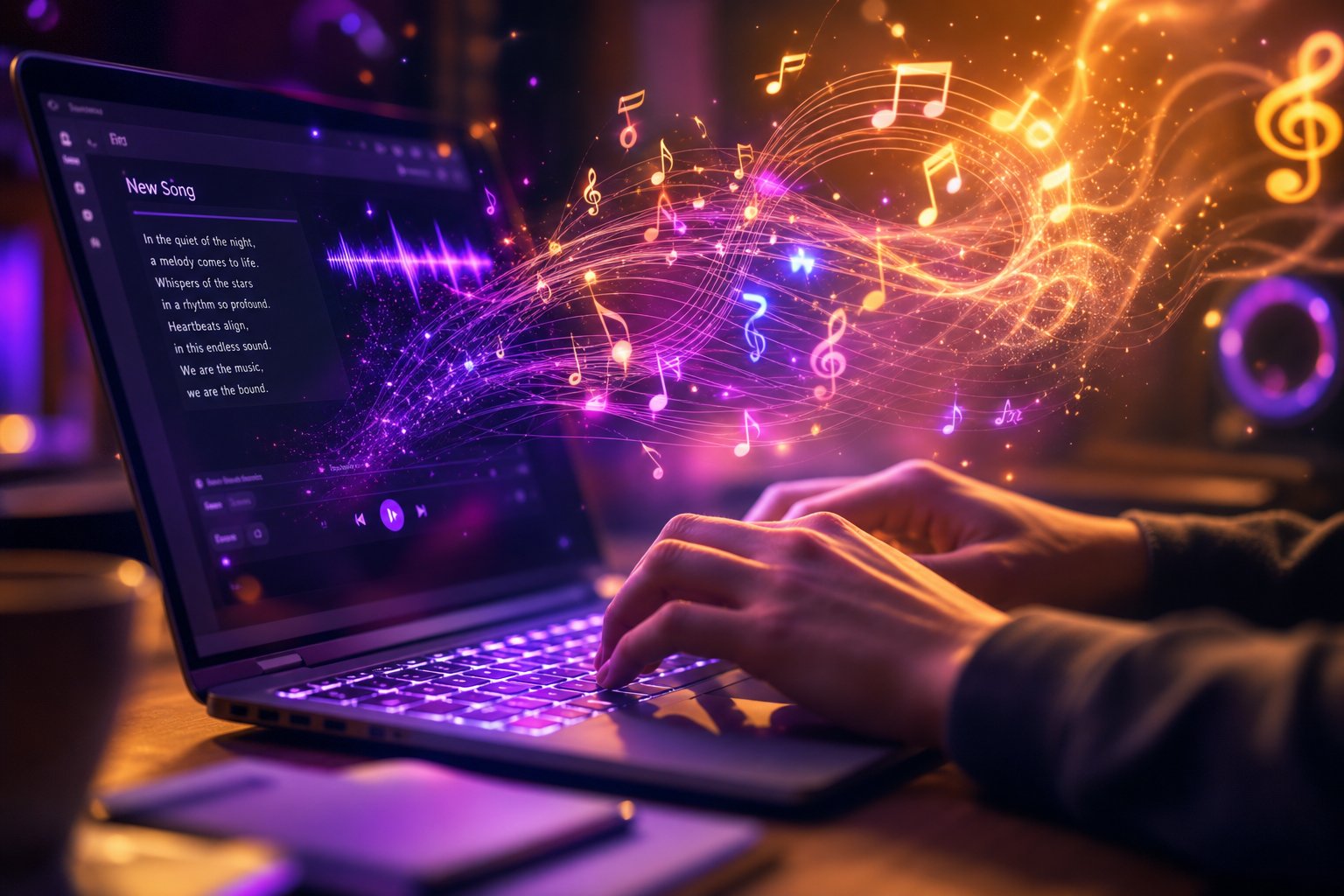
The workflow behind new ai songs is surprisingly straightforward. You provide a text input, whether that's a full set of lyrics, a rough style description, or a simple mood prompt, and the AI returns a complete track: vocals, instrumentation, arrangement, and mix. No studio time. No session musicians. No years of vocal training.
Here's what that looks like in practice. Jones writes a poem about heartbreak, pastes it into an AI platform, adds style cues like "soulful female vocal, slow R&B, acoustic guitar, heavy drums," and generates output. She repeats this dozens or hundreds of times, curating until a version matches her creative intent. The AI handles execution. She handles taste, emotion, and direction.
That same loop powers every ai artist music project covered in this article. Breaking Rust's creator likely inputs country-leaning prompts that consistently mirror Morgan Wallen's sonic profile. The Velvet Sundown's Tim Boucher described feeding psych-rock references until the output captured that warm 1970s warmth he wanted. The technical ceiling is low. The creative ceiling is as high as your ideas.
What separates the best ai songs from forgettable ones isn't the tool. It's the person behind the prompt. Specificity matters. "Sad song" produces generic output. "Slow-burning R&B ballad about losing someone who never said goodbye, female vocal with gospel inflections over fingerpicked guitar" produces something with emotional texture. The more precisely you can articulate what you hear in your head, the closer the AI gets to delivering it.
This is also why some creators have secured an ai record deal while others remain anonymous. Jones didn't just generate random tracks. She built an entire persona with consistent style, emotional throughput, and a recognizable sonic identity. That intentionality is what turned Xania Monet from an experiment into the first ai artist signed to label infrastructure with Hallwood Media. The technology is accessible to everyone. The vision that makes it commercially viable is not.
Tools for Turning Your Ideas Into AI Songs
Ready to try it yourself? You don't need to build a full artist persona on day one. Start with a single idea: a lyric you've been sitting on, a melody stuck in your head that you can't play, or just a genre you've always wanted to hear yourself in.
MakeBestMusic's AI Music Generator offers a practical entry point for anyone curious about the creation process behind top ai music. The platform lets you move from concept to finished track in minutes, turning text prompts, original lyrics, and style preferences into fully produced songs without requiring any musical training or production experience.
Here's what you can do with it:
- Generate complete songs from text prompts describing mood, genre, tempo, and vocal style
- Experiment across genres and styles, from R&B ballads to country anthems to electronic beats, without committing to one lane
- Input your own lyrics and hear them performed with AI-generated vocals, similar to how Jones turns her poetry into finished tracks
- Create full productions without instrumental skills, vocal training, or studio access
- Iterate quickly by generating multiple versions until one matches your creative vision
The process mirrors exactly what the creators profiled in this article do at scale. Jones generates hundreds of versions before selecting one. You can do the same, testing different vocal textures, tempos, and arrangements until something clicks. The difference between a casual experiment and a new ai singer project is simply repetition and curation over time.
Whether you're a songwriter who can't sing, a producer exploring new directions, or someone who's never made music but always wanted to, the tools that produced Billboard-charting top ai songs are now within reach. The question isn't whether the technology works. Xania Monet's chart positions already answered that. The question is what you'd make with it.
