

What Is Basso Profundo
Imagine a voice so deep it seems to rise from the earth itself, vibrating through stone walls and settling somewhere in your chest before your brain even registers the sound. Across cultures and centuries, extremely low voices have carried an almost primal weight. We associate depth with authority, wisdom, and solemnity. There is a reason the voice of a king, a god, or a narrator in a film trailer tends to sit in the basement of the human vocal range. At the very bottom of that basement lives a rare and fascinating bass voice type known as basso profundo.
Basso profundo is the deepest subcategory of the bass singing voice, characterized by a rich, resonant tone that extends well below the range of a typical bass.
The Meaning Behind Basso Profundo
The term itself is Italian, and the etymology tells you everything you need to know. "Basso" means low, and "profondo" means deep or profound. You may also see it spelled basso profondo, which is the standard Italian form. Both spellings refer to the same voice classification. Within the Fach system, the framework used in opera houses and conservatories worldwide to categorize singers by range, tessitura, and tonal color, this designation sits at the very lowest tier of the bass voice type. A standard bass singer range typically extends from around E2 to E4. A basso profundo, by contrast, lives comfortably at or below C2, reaching into territory most voices simply cannot access with any real power or resonance.
Why This Voice Type Captivates Listeners
What separates this classification from a general bass is not just the ability to hit a few extra low notes. It is about where the voice naturally sits and thrives. A singer in this category does not strain to reach the bottom of the bass vocal range. Instead, their instrument resonates most fully and freely in those deep, rumbling frequencies. That distinction matters. Among all voice classifications in Western music, the true basso profundo is considered one of the rarest. Longer, thicker vocal cords and a uniquely spacious vocal tract produce a sound that fewer than a small fraction of trained singers can replicate authentically. For opera directors, choral conductors, and audiences alike, encountering a genuine voice of this depth is something close to a sonic event, and understanding exactly how it works requires a closer look at the numbers behind the range itself.
Understanding the Basso Profundo Vocal Range
Numbers tell a story that descriptions alone cannot. When you hear someone call a voice "deep," that could mean almost anything. But in classical vocal classification, depth is measured precisely, and the profundo designation comes with a specific set of coordinates on the musical map. To really grasp what makes this deep singer voice so extraordinary, you need to understand where it lives on the pitch spectrum and, just as importantly, where it sounds best.
Basso Profundo Range in Scientific Pitch Notation
Musicians use a system called scientific pitch notation to pin every note to an exact location. Middle C on a piano is labeled C4. Each octave below that drops a number: C3 is one octave below middle C, C2 is two octaves below, and C1 sits a full three octaves beneath it. With that framework in mind, here is where the basso profundo sits.
A typical bass voice, according to The New Grove Dictionary of Opera, ranges from about E2 to E4. That means the standard bass bottoms out roughly a major third below C3, which is already quite low. The basso profundo pushes well past that floor. Its range generally extends from around C2, two full octaves below middle C, down to G1 or even F1, which lands about two and a half octaves below middle C. To put that in everyday terms, F1 sits in the same frequency neighborhood as the lowest open strings on a bass instrument in an orchestra. These are pitches you feel as much as hear.
Some exceptional singers reach even further into sub-bass territory. Oktavists in the Russian choral tradition have been documented singing down to C1, a staggering three octaves below middle C. At that depth, the human voice produces frequencies around 32 Hz, hovering near the lower threshold of what most people can perceive as a distinct pitch rather than a rumble. Composers like Pavel Chesnokov and Krzysztof Penderecki have written parts demanding notes as low as G1 and F1, pushing even trained profundo voices to their absolute limits.
Range vs Tessitura and Why It Matters
Here is where many descriptions of this voice type fall short. Knowing a singer can produce an F1 does not tell you much about how the voice actually functions in performance. That is where tessitura comes in, and it is arguably the more important concept.
Tessitura refers to the range where a voice sounds most comfortable, resonant, and sustainable over the course of a full piece or role. Think of it this way: you might be able to sprint at top speed for a few seconds, but your comfortable cruising pace is what defines your real capability as a runner. The same logic applies to singing. A basso profundo may touch F1 or G1 in a dramatic moment, but their tessitura, the zone where the voice carries its richest color and fullest projection, typically sits between E2 and D3. That is roughly one to two octaves below middle C.
This distinction matters enormously for repertoire. When a composer writes a role for this voice type, most of the vocal line will sit within that tessitura, not at the extreme bottom of the range. The lowest notes appear as dramatic punctuation, not as the default operating altitude. A singer who can hit a low G1 but sounds thin or strained anywhere below C2 is not a true profundo. The real hallmark is a voice that sounds full, warm, and effortlessly powerful in that E2 to D3 sweet spot, with the extreme lows available as a reserve of depth.
As Simple Opera notes, the mere ability to produce very low pitches matters far less than whether those notes carry enough volume and resonance to be heard over an orchestra. A good low note needs punch. Without it, even an impressively deep pitch becomes functionally useless in a live performance setting.
Bass Subtypes Comparison Table
The bass voice family contains several distinct subtypes, each with its own range, tessitura, and tonal character. Seeing them side by side makes the differences much clearer. The table below maps out the major categories, with plain-language pitch descriptions alongside the technical note names so you can orient yourself regardless of your musical background.
| Voice Subtype | Typical Range | Tessitura | Tone Quality |
|---|---|---|---|
| Basso Cantante (Singing Bass) | F2 to F4 (about 1.5 octaves below middle C up to the F above it) | A2 to E4 (comfortable in the mid-bass to lower tenor zone) | Lyrical, warm, smooth legato with a lighter color; suited to melodic, expressive roles |
| Lyric Bass | E2 to E4 (standard bass range, roughly 2 octaves below middle C to the E above it) | G2 to D4 (centered in the middle of the bass clef) | Rich and full but not overly heavy; flexible, with a pleasant roundness throughout the range |
| Dramatic Bass | E2 to F4 (similar floor to lyric bass, slightly higher ceiling) | F2 to D4 (sits a bit lower, with more weight in the bottom) | Dark, powerful, metallic ring; strong vocal projection with a steely edge suited to villains and authority figures |
| Basso Profundo (Deep Bass) | C2 to C4, some to G1 or F1 (two or more octaves below middle C at the bottom) | E2 to D3 (most resonant roughly 1 to 2 octaves below middle C) | Extremely dark, cavernous resonance; wall-like tonal solidity with immense depth and gravity |
| Contrabass / Oktavist | A1 to G3, some to F1 or even C1 (up to 3 octaves below middle C) | C2 to B2 (deepest comfortable zone of any human voice type) | Sub-bass rumble; organ-like foundation tone with slow, broad vibrato; often used as a harmonic pedal in choral music |
You will notice the ranges overlap in places. That is normal. Voice classification is not just about which notes a singer can technically produce. It is about where the voice naturally gravitates, the weight and color of the tone, and how the sound behaves under sustained use. Two singers might both hit a C2, but if one sounds like they are cruising and the other sounds like they are reaching, they belong in different categories.
These subtypes also do not exist in rigid isolation. A dramatic basso profundo, for instance, combines the low extension of the profundo with the powerful, steely projection of a dramatic bass. The labels describe tendencies and strengths, not hard walls. Still, the differences in tessitura and tone quality between, say, a basso cantante and a contrabass are dramatic enough that they rarely compete for the same roles, which raises an important question: how exactly do these subtypes interact and overlap in practice?

How Basso Profundo Differs from Other Bass Subtypes
In practice, the boundaries between bass subtypes cause more confusion than almost any other area of vocal classification. Singers, choral directors, and opera fans regularly mix up terms or assume that any deep voice qualifies as a profundo. The reality is more nuanced. Each subtype occupies its own sonic territory, and understanding where one ends and another begins makes a real difference in how you listen to, cast, or train these voices.
Basso Cantante vs Basso Profundo
The easiest way to hear the distinction is to think about what each voice is built to do. A basso cantante, which translates to "singing bass," is the higher, more lyrical member of the bass family. It uses a more Italianate vocal production with a faster vibrato, and its tessitura sits comfortably in the mid-bass to lower tenor zone. This is the voice you hear carrying sweeping melodic lines in bel canto opera, moving with agility and warmth through passages that demand legato phrasing and expressive nuance.
The basso profundo, by contrast, is not built for lyrical flight. Its strength lies in anchoring the lowest harmonic foundations of an ensemble or a dramatic scene. Where the cantante floats, the profundo grounds. The tonal quality is darker, heavier, and more cavernous, what J. B. Steane described as a "wall-like front" of tonal solidity. Picture the difference between a cello singing a melody and a double bass providing the harmonic floor beneath an entire orchestra. Both are string instruments, both are essential, but they serve fundamentally different roles. The same logic applies here.
In operatic casting, this distinction plays out clearly. A basso cantante might take on Don Basilio in Rossini's The Barber of Seville, a role demanding vocal agility and comic timing. A profundo, meanwhile, gravitates toward roles like Sarastro in Mozart's The Magic Flute, where the voice needs to project an almost supernatural depth and authority rather than melodic dexterity.
Where Bass Meets Baritone
Another common point of confusion sits at the upper boundary of the bass range vocal spectrum: where does bass end and baritone begin? The short answer is that bass is lower than baritone, and the basso profundo sits at the absolute bottom of the bass category, making it the furthest possible distance from baritone territory.
A baritone typically ranges from about A2 to A4, with a tessitura centered in the middle of the male voice. A standard bass overlaps with the baritone at the top but extends significantly lower, generally bottoming out around E2. The profundo pushes that floor down to C2 or below. So if you imagine the male voice as a building, the baritone lives on the middle floors, the standard bass occupies the ground level, and the profundo is the basement, sometimes the sub-basement.
In a standard SATB chorus, the bass section is the lowest vocal part, sitting below soprano, alto, and tenor. Within that section, voices are typically subdivided into bass 1 and bass 2, with no formal distinction made between bass and baritone singers. The bass 2 part carries the lowest notes in the choral texture, and this is where profundo capabilities become essential. When a composer writes a bass 2 line that dips to B-flat 1 or lower, as Rachmaninoff and Mahler both did, only a singer with genuine bass range singing depth can deliver those notes with the resonance the music demands. The bass section functions as the second lowest voice in choirs when you consider the full SATB ensemble, and the bass 2 part within it is the deepest assignment any choral singer will face.
The Contrabass and Oktavist Extensions
Even below the standard profundo, there exists an even rarer tier. The contrabass voice and the oktavist represent the extreme low extension of the human vocal instrument. These singers can produce pitches an octave below standard bass parts, reaching into sub-bass frequencies that blur the line between singing and pure vibration.
The oktavist designation comes specifically from the Russian Orthodox choral tradition, where these exceptionally deep voices sing an octave below the written bass line. Their range can extend down to A1, with the most extreme examples, singers like Mikhail Zlatopolsky and Alexander Ort, documented reaching C1, a full three octaves below middle C. At those depths, the voice produces frequencies around 32 Hz, approaching the lower limit of human pitch perception. Slavic choral composers have written specifically for these voices, with Chesnokov's "Ne otverzhi mene" calling for G1 and Penderecki's "Song of Cherubim" demanding F1.
In contemporary popular music, several a cappella performers have brought oktavist-range bass range singing to mainstream audiences. Tim Foust of Home Free, Geoff Castellucci of VoicePlay, and Avi Kaplan, formerly of Pentatonix, each possess the ability to reach G1 or lower, with some using techniques like subharmonic singing to push even further into sub-bass territory.
To keep these distinctions clear, here is a summary of the key traits that separate each subtype:
- Basso cantante: lyrical tone, faster vibrato, higher tessitura centered around A2 to E4, suited to melodic operatic roles requiring agility and expressive phrasing
- Basso profundo: dark and cavernous resonance, wall-like tonal solidity, low tessitura around E2 to D3, built for harmonic grounding and roles demanding vocal weight and gravity
- Contrabass / Oktavist: extreme low extension reaching A1 to C1 or below, organ-like sub-bass foundation, slow broad vibrato, primarily found in Russian Orthodox choral music and specialized ensemble contexts
These categories describe tendencies, not rigid boxes. A dramatic basso profundo might share some of the power and projection of a dramatic bass, while an oktavist with a well-developed upper range could handle standard profundo repertoire comfortably. The labels help singers, directors, and composers communicate about what a voice can do and where it sounds best. And for composers throughout history, knowing exactly what each subtype could deliver has shaped some of the most iconic roles ever written for the lowest human voice.
Famous Basso Profundo Singers Through History
Knowing the categories is one thing. Hearing them come alive through specific voices is something else entirely. The history of this voice type is best told through the singers who defined it, each bringing a distinct approach to the deepest reaches of the human bass vocal range. Some commanded opera stages, others anchored sacred choirs, and a few have turned the sheer novelty of their depth into a modern phenomenon.
Legendary Basso Profundo Voices in Opera
The operatic tradition has produced a handful of famous bass singers whose names are synonymous with the profundo sound. Kurt Moll, the German bass who dominated stages from the 1970s through the 1990s, was celebrated for his warm, velvety tone and seemingly bottomless resonance. His portrayal of Sarastro in Mozart's The Magic Flute became a benchmark, the voice radiating a calm, priestly authority that few could replicate. Moll's instrument was not just deep; it was remarkably even across its entire range of bass voice, never losing color or focus as it descended.
Finnish bass Martti Talvela brought a different energy. Standing well over six feet tall with a voice to match his physical presence, Talvela was a force of nature in Wagner and Mussorgsky. His Boris Godunov was towering and tragic, the voice carrying an almost geological weight that filled even the largest houses. His compatriot Matti Salminen continued that Nordic tradition of massive, dark-toned profundo singing, excelling as Hagen in Wagner's Gotterdammerung and as the Grand Inquisitor in Verdi's Don Carlo, roles that demand both vocal heft and dramatic menace.
Italian bass Cesare Siepi offered a contrasting model. His voice combined genuine profundo depth with an unusual smoothness and Italianate warmth, making him one of the few singers who could handle both the darkest bass roles and more lyrical assignments. His Don Giovanni at the Metropolitan Opera remains legendary, a reminder that depth and elegance are not mutually exclusive.
Modern Basso Profundo Performers
Outside the opera house, a new generation has brought this voice type to audiences who might never set foot in a concert hall. Tim Storms, an American bass singer, holds the Guinness World Record for the lowest vocal note produced by a human: a G-7 at 0.189 Hz, recorded in 2012 at Citywalk Studios in Branson, Missouri. That frequency sits far below the threshold of human hearing, measurable only with specialized acoustic equipment. Storms performs as the bass singer for the vocal group Pierce Arrow, and his ability to produce sub-bass frequencies has made him a fixture in discussions about the absolute limits of the human voice.
The a cappella world has its own basso profundo stars. Tim Foust of Home Free and Geoff Castellucci of VoicePlay have each built massive online followings by showcasing oktavist-range singing in popular music arrangements. Castellucci can reach B0 using subharmonic singing techniques, while Foust has hit G0 using growl-based vocal production. Their YouTube channels have introduced millions of viewers to the sound of extreme bass vocal depth in a context that feels accessible and entertaining rather than academic. Avi Kaplan, formerly of Pentatonix, similarly demonstrated that a deep, resonant bass voice could anchor a chart-topping pop vocal group, proving the sound translates well beyond classical settings.
What makes each of these performers distinctive is not just how low they can go, but how they use their depth. Moll's gift was tonal beauty and control. Talvela and Salminen wielded sheer power. Siepi blended depth with elegance. Storms pushes the physiological frontier. Foust and Castellucci make the profundo sound fun and shareable. Each approach reflects a different facet of what this rare instrument can do.
- Baroque and Classical period: early operatic basses whose names are largely lost to history, though roles like Sarastro (1791) established the template for profundo writing
- Romantic era: the rise of grand opera created demand for heavier, darker bass voices in works by Wagner, Verdi, and Mussorgsky, cementing the profundo as a distinct dramatic category
- 20th century opera: Kurt Moll, Martti Talvela, Matti Salminen, Cesare Siepi, and others defined the golden age of recorded profundo singing, leaving behind definitive interpretations of the core repertoire
- Contemporary performers: Tim Storms, Tim Foust, Geoff Castellucci, Avi Kaplan, and Broadway's Patrick Page have expanded the profundo sound into world records, a cappella, viral media, and musical theater
Why True Basso Profundo Singers Are So Rare
For all the fascination these voices generate, the simple reality is that very few singers possess one. The basso profundo requires an unusually long and thick set of vocal folds, combined with a large pharyngeal space that amplifies low-frequency resonance. These are anatomical traits, not skills you can develop through practice alone. A tenor cannot train his way into profundo territory any more than a sprinter can train into being seven feet tall.
This scarcity has real consequences in the professional world. Opera houses regularly struggle to cast profundo roles, sometimes compromising with dramatic basses who lack the true low extension the music demands. Choral ensembles prize a genuine profundo the way an orchestra prizes a great principal horn player: the part is exposed, the margin for error is slim, and the right voice transforms the entire ensemble's sound. When audition panels encounter a young singer with authentic profundo depth and resonance, the reaction is immediate. It is the vocal equivalent of finding a four-leaf clover in a field of three-leaf ones.
That rarity also explains why the voice type carries such cultural weight. A sound this uncommon becomes almost mythic, and composers across centuries have leaned into that quality, writing roles and choral parts that treat the deepest human voice as something close to sacred.
The Oktavist Legacy and Sacred Choral Traditions
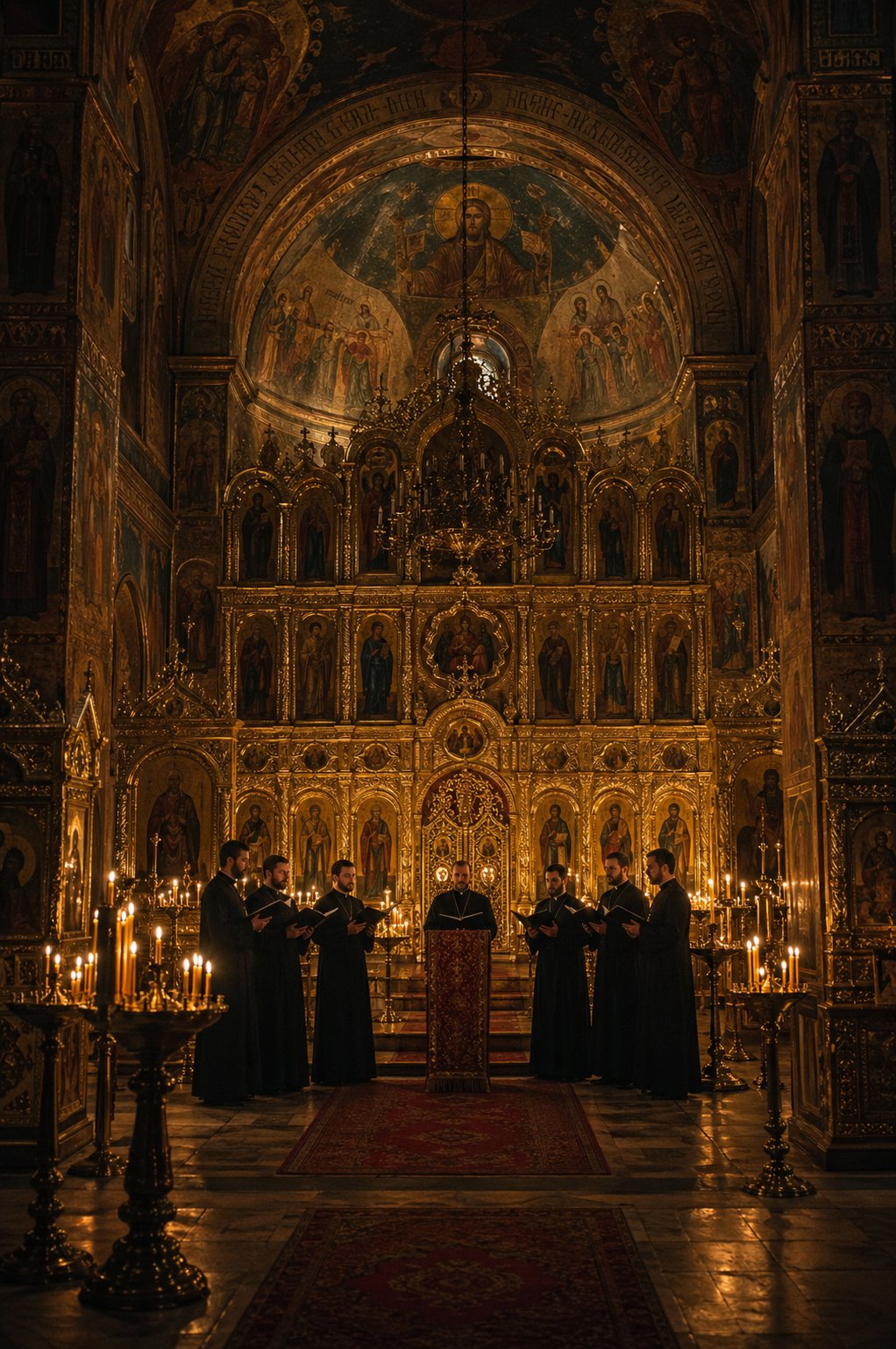
Nowhere has the deepest bass voice been treated with more reverence than inside the walls of Russian Orthodox churches. While opera gave the profundo dramatic roles and concert halls gave it spotlight moments, the Russian sacred choral tradition built an entire vocal practice around it, one that has survived for centuries and continues to shape how we hear the lowest reaches of the human voice today.
The Oktavist Tradition in Russian Orthodox Music
The Russian Orthodox liturgy is performed entirely a cappella. No organ, no orchestra, just voices filling the space. Within that tradition, a specialized role emerged for the deepest bass voice singers: the oktavist. As the name suggests, an oktavist sings an octave below the written bass line, typically at the end of a musical phrase or movement, producing sub-bass frequencies that create an almost organ-like pedal tone beneath the choir. The effect is unmistakable. Where a standard bass voice anchors the harmony, the oktavist seems to extend the sound downward into the architecture itself.
The bass range required is extraordinary. Oktavists typically sing down to A1, with the most exceptional voices, like Mikhail Zlatopolsky and Alexander Ort, reaching C1, a full three octaves below middle C. Slavic choral composers wrote directly for these capabilities. Rachmaninoff's All-Night Vigil calls for B-flat 1, Pavel Chesnokov's "Ne otverzhi mene" demands G1, and Krzysztof Penderecki's "Song of Cherubim" pushes all the way to F1. These are not theoretical extremes buried in footnotes. They are written into the score, expected to be performed with full resonance in a live liturgical setting.
The tradition remains very much alive. Alexander Mayang, one of the world's few working oktavists, has performed Rachmaninoff's All-Night Vigil with ensembles like the SLO Master Chorale, bringing his dark, resonant voice to audiences who may have never encountered the sound before. Known online as XanderTheOktavist, he has also amassed a following of over a million across TikTok and Instagram, proof that this centuries-old sacred tradition still captivates modern listeners.
In Russian Orthodox worship, the oktavist's voice is not merely musical decoration but a spiritual foundation, extending the choir's sound into frequencies that feel less like singing and more like the resonance of the cathedral itself.
Basso Profundo Across Choral Traditions
The sacred significance of the deepest bass voice is not limited to Eastern Orthodoxy. In the German Protestant tradition, Bach assigned the bass voice a specific theological function. Across his cantatas and Passions, the bass frequently serves as the Vox Christi, the Voice of Christ. Eight of the twelve surviving cantatas for the Easter season open with a bass solo delivering the words of Jesus, a practice rooted in medieval liturgical chant where the Gospel was sung dramatically using three vocal levels: the Evangelist in the tenor range, the crowd in a higher register, and Christ in the lowest bass range. Bach did not invent this convention, but he elevated it into an art form, writing arias that use emphatically low notes to accent themes of night, death, and divine authority.
Italian choral traditions leaned on the deep bass differently, often casting it as a voice of solemnity in sacred polyphony rather than assigning it a specific character role. Slavic folk ensembles, meanwhile, used the profundo as a drone or harmonic anchor beneath layered vocal textures, a practice that shares DNA with the oktavist tradition but exists in a secular, communal context.
The way the voice functions shifts depending on the setting. In a choir, a profundo provides harmonic grounding and depth. You might not consciously notice it, but remove it and the entire ensemble sounds thinner, less rooted. The voice acts as a sonic foundation the way a building's footings work beneath the visible structure. As a soloist, the dynamic flips entirely. A solo profundo commands attention through sheer vocal weight and resonance, the rarity and physical impact of the sound drawing the listener's focus rather than supporting other voices from below.
This dual identity, invisible anchor in one context and commanding soloist in another, is part of what makes the voice type so versatile. And it is precisely that versatility that led composers across every major era to write specific, demanding music tailored to what only the deepest human voice can deliver.
Basso Profundo Roles in Opera and Classical Repertoire
Composers do not write for a voice type in the abstract. They write for what it can do dramatically, and the deepest bass has always carried a very specific kind of dramatic gravity. Across four centuries of opera and concert music, the roles assigned to this voice reveal a consistent pattern: when a character needs to embody authority, the supernatural, or the weight of history itself, the score calls for a voice that can shake the floor.
Iconic Operatic Roles for Basso Profundo
Mozart understood this instinctively. Sarastro in The Magic Flute is the high priest of the Temple of Wisdom, and his two arias sit squarely in the profundo tessitura, demanding a voice of serene, almost otherworldly depth. In The Abduction from the Seraglio, Osmin is a different animal entirely: a raging, comic villain whose part dips to D2, the lowest note in the standard operatic bass repertoire. Same composer, same voice type, two completely different dramatic functions. Mozart also gave the Commendatore in Don Giovanni a dramatic basso profondo assignment, the stone statue's voice rising from beyond the grave with chilling low-register authority.
Wagner expanded the palette further. King Marke in Tristan und Isolde is a role of noble suffering, requiring sustained, weighty singing in the lowest register. Hagen in Gotterdammerung demands something darker and more menacing, a voice of treachery and brute power. Gurnemanz in Parsifal calls for a wise, elder presence, while Hunding in Die Walkure and Fafner in Das Rheingold each exploit the voice's capacity for threat and sheer physical scale.
Verdi's Grand Inquisitor in Don Carlo is one of the most chilling scenes in all of Italian opera: a blind, ancient priest whose voice carries more power than the king he confronts. Mussorgsky's Boris Godunov features Pimen, the old monk and chronicler, as a lyric basso profondo role whose quiet authority contrasts with the opera's political turmoil. And Benjamin Britten gave the voice a modern psychological edge with Claggart in Billy Budd, a villain defined by cold, calculating menace rather than bombast.
How Composers Write for the Deepest Voice
What is striking across these roles is how each national tradition uses the voice differently. Italian opera tends to cast the deepest bass as a villain, authority figure, or supernatural presence. Think of Verdi's Grand Inquisitor or Mozart's Commendatore: characters who wield power through intimidation or divine judgment. German opera leans toward noble kings and wise elders, figures like King Marke and Gurnemanz whose depth signals gravitas and moral weight rather than menace. Russian opera, shaped by the oktavist tradition in sacred music, assigns the voice to historical rulers and priests, characters rooted in the spiritual and political fabric of Slavic culture.
These are not rigid rules, but the tendencies are real. Composers wrote to the strengths of the famous bass voice singers available to them, and cultural expectations about what a deep voice "means" shaped the roles it was given.
The Voice Type Across Musical Eras
Zoom out, and you can trace a clear arc in how the deepest voice has been used. In the Baroque period, Handel wrote bass arias for oratorios and serenatas that explored the voice's low range, with Polifemo in Aci, Galatea e Polifemo reaching pitches comparable to the lowest note on a double bass. The Classical era, led by Mozart, formalized the profundo as a distinct operatic category with defined roles and vocal expectations. The Romantic period blew the doors open: Wagner, Verdi, and Mussorgsky wrote parts of unprecedented length, dramatic complexity, and vocal demand, requiring voices that could sustain heavy singing across entire evenings. Modern composers like Britten and Penderecki pushed the voice into new psychological and sonic territory, writing parts that exploit both its dramatic weight and its capacity for eerie, unsettling quietness.
Here is a snapshot of iconic roles organized by era and composer:
- Baroque: Polifemo in Handel's Aci, Galatea e Polifemo, early oratorio bass solos
- Classical: Sarastro and Osmin (Mozart), Il Commendatore (Mozart), Rocco in Fidelio (Beethoven)
- Romantic: King Marke, Hagen, Gurnemanz, Hunding, Fafner (Wagner); Grand Inquisitor in Don Carlo (Verdi); Pimen in Boris Godunov (Mussorgsky); Baron Ochs in Der Rosenkavalier (Strauss)
- Modern: Claggart in Billy Budd (Britten); the Varangian Guest in Sadko (Rimsky-Korsakov); choral works by Penderecki and Chesnokov demanding sub-bass vocal writing
Each era asked more of the voice than the last. Baroque composers tested its range. Classical composers gave it character. Romantic composers demanded endurance and dramatic power. Modern composers explored its psychological and sonic extremes. That trajectory has not stopped. The same qualities that made the profundo essential on the opera stage, its depth, rarity, and visceral impact, have given it an unexpected second life in contexts those earlier composers could never have imagined.
The Basso Profundo in Modern Music and Media
Opera stages and cathedral naves are not the only places where the deepest human voice makes an impact. Over the past several decades, the basso profundo has migrated into film soundtracks, recording studios, and viral internet content, reaching audiences that vastly outnumber any opera house's capacity. The qualities that made this voice type irreplaceable in classical settings, its visceral low-frequency power and almost supernatural resonance, turn out to translate remarkably well to modern media.
Deep Bass Voices in Film and Media
Think about the last time a film score gave you chills. Chances are, a deep choral bass line was doing some of the heavy lifting. Composers like Hans Zimmer, Howard Shore, and John Williams have all used massed low voice singer sections in their orchestral scores to create a sense of dread, grandeur, or ancient power. The choral writing in The Lord of the Rings, the Gregorian-inflected textures of The Omen, the rumbling vocal undercurrent in Christopher Nolan's Inception and Interstellar — these moments rely on the same sonic principle that Russian Orthodox composers understood centuries ago. A deep bass voice, placed beneath everything else, makes the entire sonic landscape feel heavier and more consequential.
Film and television have also leaned on the lowest operatic voice for character work. Animated villains, narrators, and godlike figures are routinely voiced by actors and singers with unusually deep instruments. The cultural shorthand is simple: depth equals power. When a character needs to sound like they could command an army or summon a storm, the casting call goes out for the lowest voice available.
How Recording Technology Transformed the Basso Profundo
Here is where the story gets interesting. For most of its history, the basso profundo faced a practical limitation that lighter, higher voices did not. In a large opera house or concert hall, sub-bass vocal frequencies are notoriously difficult to project. The lowest notes a profundo produces, those in the 60 to 130 Hz range and below, have long wavelengths that disperse quickly in open air. A tenor's ringing high C cuts through an orchestra like a blade. A profundo's low C2 can get swallowed by the room.
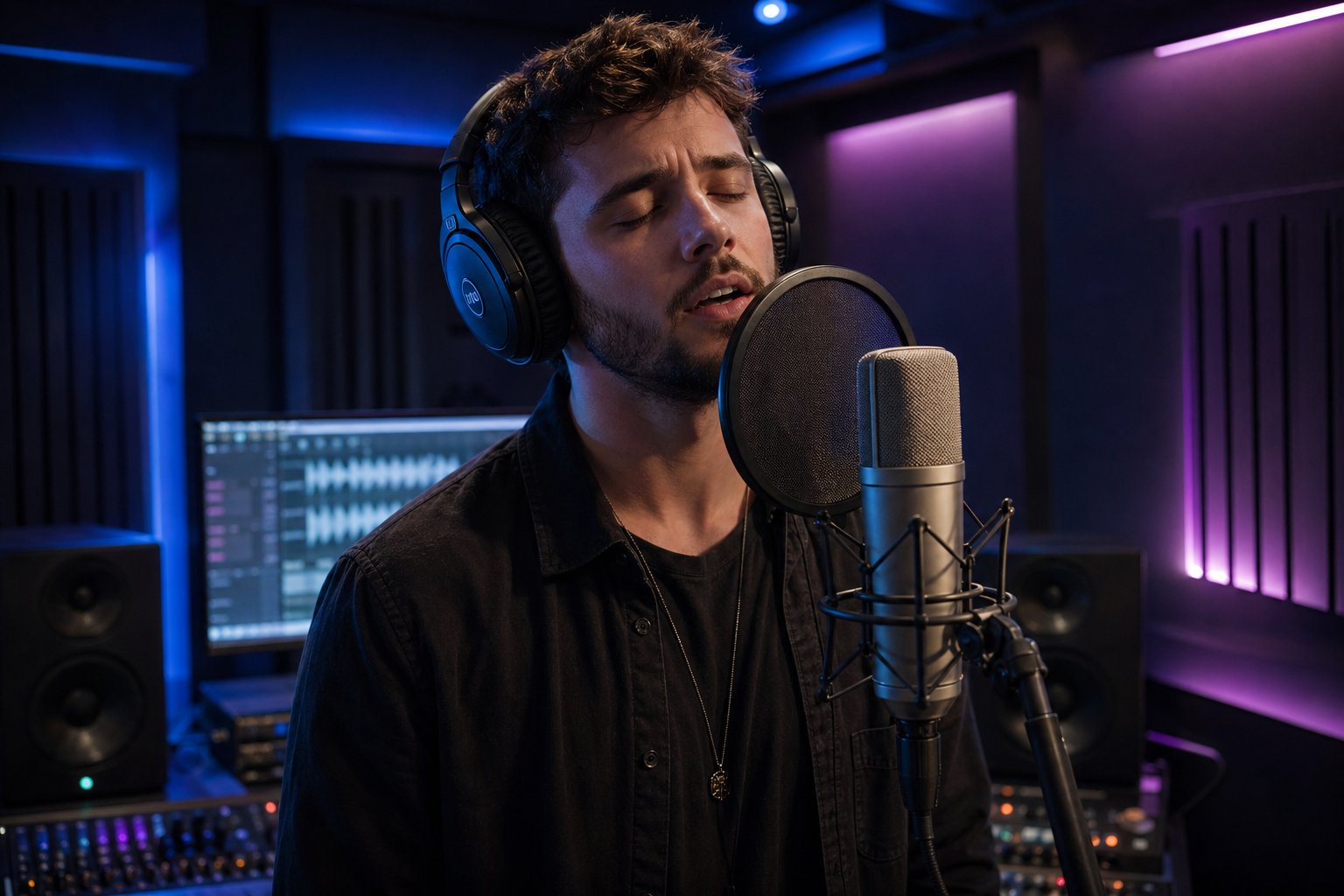
Modern recording technology erased that disadvantage almost entirely. Studio-grade condenser microphones capture sub-bass vocal frequencies with extraordinary fidelity, picking up the full harmonic richness of a deep voice that might not carry to the back row of a 2,000-seat theater. Close-miking techniques let engineers isolate the chest resonance and sub-harmonic overtones that give the voice its distinctive rumble. Post-production tools like equalization and compression can then shape and amplify those frequencies without distortion, placing the lowest opera voice front and center in a mix.
The result is a kind of liberation. A low voice singer no longer needs a cathedral's natural reverb or a perfectly silent hall to be heard at full depth. In a recording studio, the voice's quietest, deepest tones become its most powerful asset rather than its most fragile one. This shift has opened doors that were effectively closed in the purely acoustic era.
The Rise of Deep Voices in Popular Culture
That technological shift helps explain a phenomenon that would have baffled opera impresarios a century ago: basso profundo and contrabass singers becoming internet celebrities. YouTube channels dedicated to showcasing the lowest voices in the world routinely pull millions of views. Geoff Castellucci's solo arrangements, where he layers his own voice from oktavist lows to baritone highs, have turned him into one of the most-watched vocal performers online. Tim Foust's live performances with Home Free regularly go viral, with comment sections full of listeners stunned by notes they did not know the human voice could produce.
Digital audio production makes these performances possible in ways that a live stage cannot. A cappella arrangers use multitrack recording to stack deep bass vocals into rich, organ-like textures. Producers can isolate the sub-bass frequencies of a contrabass voice and blend them with higher vocal parts, creating a full-spectrum sound from a single singer or small group. The second lowest voice in choir, traditionally buried beneath the ensemble blend, suddenly becomes the star of the show when a microphone and a mixing board give it room to breathe.
Social media algorithms have amplified the effect. Short-form video platforms reward content that surprises, and few things surprise a casual listener more than hearing a human voice drop into frequencies they associate with a pipe organ or a subwoofer test tone. The basso profundo, once confined to opera houses and Orthodox cathedrals, now reaches millions of listeners through a smartphone speaker — a strange irony, given that those tiny speakers can barely reproduce the frequencies that make the voice so remarkable in the first place.
All of this raises a practical question. If the voice type is this rare and this captivating, how do voice teachers and opera professionals actually identify one when it walks through the door? The answer involves far more nuance than simply asking a singer to hit the lowest note they can.
Identifying a True Basso Profundo Voice
A singer walks into a voice lesson and announces they can hit a C2. Impressive? Maybe. But a skilled voice teacher will not hand out a basso profundo classification based on a single low note. Identifying this voice type is one of the most nuanced tasks in vocal pedagogy, and getting it wrong can steer a singer's entire career in the wrong direction — or worse, damage the instrument itself.
How Voice Teachers Classify a Basso Profundo
The process starts not with how low a singer can go, but with where the voice naturally lives. According to vocal pedagogy resources like SingWise, voices are classified by a combination of range, tessitura, weight, timbre, and the location of the passaggi — the two pivotal points where the voice shifts between registers. For a true basso profundo, the passaggi sit notably low: the primo passaggio around G3 and the secondo around C4, lower than any other male voice type. These transition points reflect the physical dimensions of the larynx and vocal tract, not the singer's ambition or training habits.
A voice teacher listening to a potential profundo is paying attention to several things at once. Does the vocal bass tone carry genuine weight and resonance below C3, or does it thin out and lose color? Is the timbre naturally dark and cavernous, or is the singer artificially darkening their sound to mimic what they think a deep voice should be? Does the voice feel at home in the E2 to D3 tessitura, sustaining phrases there with ease, or does it sound like it is reaching down from a higher natural center? These questions matter far more than whether the singer can grunt out a single low pitch on command.
Common Misconceptions About Singing Low
One of the most persistent myths in vocal training is that any bass in choir can become a profundo with enough practice. Young singers are especially prone to this mistake. They hear a recording of a famous bass vocalist like Kurt Moll or Tim Storms and start pushing their voices as low as they can go, often using excessive laryngeal depression — pressing the larynx down to artificially extend the bottom of their range. The result might sound deep in a practice room, but it comes at a cost: a strained, muffled tone, loss of projection, and real risk of vocal fatigue or injury over time.
As vocal technique instructor Karyn O'Connor emphasizes, voice type is determined primarily by the natural structure and size of the instrument, not by how a singer uses it or what they attempt to make it into. A baritone who forces his voice lower will never become a profundo. He will just become a baritone with bad habits. The imitation of mature, deep voices heard on recordings is, in her words, "potentially damaging," and young voices should never be encouraged to sound more mature by falsely darkening their tone.
There is also a timing issue. The male voice continues to mature well into adulthood. A singer who sounds like a standard lyric bass at twenty-two may develop genuine profundo weight and depth by his early thirties as the vocal folds thicken and the resonating spaces of the pharynx settle into their final dimensions. Rushing to classify a young voice — or letting a young singer self-classify based on the lowest note they can produce — short-circuits a process that needs time to unfold naturally.
The Fach System and Professional Classification
In the professional opera world, the German Fach system serves as the standard framework for matching singers to roles. The word "Fach" literally means "compartment," and the system assigns each voice to a category based on range, tessitura, vocal weight, and tonal color. Within the bass category, the Fach system distinguishes between basso buffo (comic bass), standard bass, and basso profondo — the deepest and rarest compartment.
Being assigned a Fach is not a casual label. It determines which roles a singer will be offered, which auditions they are invited to, and how their career trajectory unfolds. A singer classified as a profundo will be considered for Sarastro, the Grand Inquisitor, and King Marke. A lyric bass or bass-baritone will not, regardless of whether they can technically reach the lowest notes in those roles. The distinction is about sustained vocal comfort and tonal authenticity across an entire performance, not isolated moments of depth.
This is why experienced voice teachers and opera coaches resist premature classification. A voice that has not fully matured, or one that is being pushed outside its natural tendencies, will give misleading signals. The development of solid technical habits within a comfortable range must come first. Only after the basics are established does the true quality of the voice emerge, and the classification can be made with confidence.
So what separates a genuine basso profundo from a bass who is simply singing lower than he should? Here are the key indicators voice professionals look for:
- Low passaggi placement: the primo passaggio sits around G3 and the secondo around C4, noticeably lower than other bass subtypes
- Natural tonal darkness: the voice has an inherently dark, weighty timbre without the singer needing to artificially depress the larynx or manipulate vowel shapes
- Comfortable low tessitura: the singer can sustain musical phrases in the E2 to D3 range with full resonance, consistent vibrato, and dynamic control — not just touch those notes briefly
- Projection in the basement: low notes carry enough volume and harmonic richness to be heard in a performance setting, not just in a quiet room with a microphone
- Effortless descent: as pitch drops below C3, the voice gains warmth and solidity rather than becoming breathy, thin, or strained
- Vocal maturity: the classification typically solidifies in the singer's late twenties or thirties, after the voice has had time to fully develop its adult dimensions
Conversely, warning signs that a singer is forcing a profundo classification include a noticeably depressed larynx posture, loss of clarity or projection below a certain pitch, audible strain or breathiness in the low range, and a speaking voice that sits higher than what the singing voice suggests. If the low notes sound impressive in isolation but the singer cannot sustain a full aria in that tessitura without fatigue, the voice likely belongs in a higher bass category.
Getting this classification right is not just an academic exercise. It shapes repertoire choices, protects vocal health, and ultimately determines whether a singer builds a sustainable career or burns out chasing a sound their instrument was never designed to produce. And for those who are curious about what these different voice types actually sound like — whether they are aspiring singers, composers, or simply fascinated listeners — new technology is making it easier than ever to explore the full spectrum of vocal depth without needing to find one of the world's rarest voices in person.

Exploring Deep Bass Vocals with AI Technology
The basso profundo is among the rarest instruments on earth, and most people will never hear one live. But what if you did not need to track down the lowest bass singer in your city to experience that sound up close? AI vocal technology is changing the equation, giving musicians, producers, and curious listeners a way to generate, manipulate, and experiment with deep bass vocal textures on their own terms.
AI Technology and Deep Vocal Exploration
Modern AI singing generators use neural networks trained on extensive vocal datasets to synthesize realistic performances across a wide range of voice types and styles. The technology has matured rapidly. Where early text-to-speech tools sounded robotic and flat, current-generation systems handle pitch dynamics, vibrato, tonal weight, and even genre-specific phrasing with surprising fidelity. For deep bass tones specifically, this means you can hear what a low C2 or a rumbling B1 sounds like in a musical context without needing a singer whose voice naturally lives in that territory.
Imagine you are a choral composer sketching out a new piece and you want to prototype how a bass 2 line will sound against your upper voices. Or maybe you are a voice student trying to understand the tonal difference between a lyric bass and a true profundo before your own instrument has fully matured. Perhaps you simply watched a Geoff Castellucci video and want to hear what those lowest voice in choir frequencies sound like woven into your own music. AI vocal tools make all of that possible without a recording session or a rare audition find.
Practical Tools for Experimenting with Bass Vocals
One accessible option for this kind of exploration is MakeBestMusic's AI Singing Generator, which lets users experiment with AI-generated vocals across different voice types and singing styles, including deep bass tones. Tools like this serve a range of practical purposes that go well beyond novelty:
- Educational listening: hear the sonic differences between bass subtypes side by side, from basso cantante warmth to profundo depth, building ear training skills that text descriptions alone cannot provide
- Music production: layer AI-generated bass vocal textures into tracks, film scores, or ambient compositions where recruiting the lowest voice available would be impractical or cost-prohibitive
- Vocal prototyping: composers and arrangers can audition how a bass line will sound at profundo depth before committing it to a live performer, saving rehearsal time and reducing guesswork in the writing process
- Creative experimentation: producers working in electronic, cinematic, or a cappella styles can generate deep vocal tones and process them alongside other elements, exploring sounds that sit at the boundary between singing and pure sub-bass texture
These tools do not replace the real thing. No algorithm replicates the physical experience of standing in a cathedral while an oktavist's lowest voice resonates through the stone beneath your feet. What AI does offer is a practical bridge between curiosity and creation. A listener who discovered the basso profundo through a viral video can now explore that fascination hands-on. A producer who needs a deep vocal layer for a film cue can generate one in minutes rather than months of casting. A student can study the tonal characteristics of the lowest bass singer category without waiting years for their own voice to settle.
The basso profundo has survived for centuries because its sound taps into something fundamental about how humans respond to depth, resonance, and gravity. That response is not going anywhere. What is changing is access. The rarest voice type in classical music is becoming, for the first time, something anyone can hear, study, and work with, whether they possess the instrument themselves or simply cannot stop being fascinated by it.
