

What British Rap Actually Is and Why the World Is Listening
British rap is the collective term for rap music born in the United Kingdom, spanning subgenres like grime, UK drill, road rap, afroswing, and UK boom bap. It is distinct from American hip hop in accent, production DNA, slang, and cultural reference points. If you've heard the name but never dug deeper, think of it less as a single sound and more as an entire ecosystem of styles shaped by life across Britain.
Defining British Rap as a Genre and Movement
What ties this family of sounds together? British English delivery, for one. Whether an MC spits in a London accent, a Brummie drawl, or a Scouse snarl, the language is unmistakably rooted in the UK. The storytelling reflects council estates, postcode pride, and multicultural identity rather than American block culture. And the production pulls from a lineage of UK electronic music — garage, jungle, dubstep — that American rap simply doesn't share.
You'll notice that trying to reduce all of this to one genre is like calling chemistry experiments one single discipline. Grime runs at an aggressive 140 BPM with icy synth stabs. Afroswing grooves at a laid-back 100 BPM with Afrobeats percussion. UK drill slides dark 808 basslines under half-time flows. Each subgenre carries its own tempo, texture, and attitude, yet they all orbit the same cultural core.
Why British Rap Commands Global Attention
The momentum right now is hard to overstate. At London's Wireless Festival, Drake declared that "nobody can out-rap London rappers." Artists like Central Cee, Dave, and Little Simz top charts worldwide. Liverpool's EsDeeKid saw his debut album become Spotify's most-streamed hip-hop album globally. A new underground wave — Lancey Foux, Jim Legxacy, Fimiguerrero — is pulling fans from Birmingham to Brooklyn, with US rap in a rare lull that's opened the door even wider.
British rap is the most diverse and fastest-growing rap ecosystem outside the United States — and it's no longer waiting for permission to lead.
This guide isn't a shallow listicle or a dandys world of random name-drops. Consider it a full cultural walkthrough: you'll learn how the genre differs from American hip hop, explore every major subgenre side by side, map regional scenes beyond London, meet the female MCs reshaping the sound, decode essential slang, and follow a curated listening pathway from your first track to deep cuts. Whether you're a curious newcomer who just set a 5 minute timer to sample a playlist or a producer studying UK beats the way a painter studies how to paint a room — layer by layer — this is your starting point. By the end, you might even be ready to create your own track.
The real question isn't whether the genre deserves global attention. It's why it took the rest of the world so long to catch on — and what, exactly, makes the sound so different from what Americans have been doing for decades.
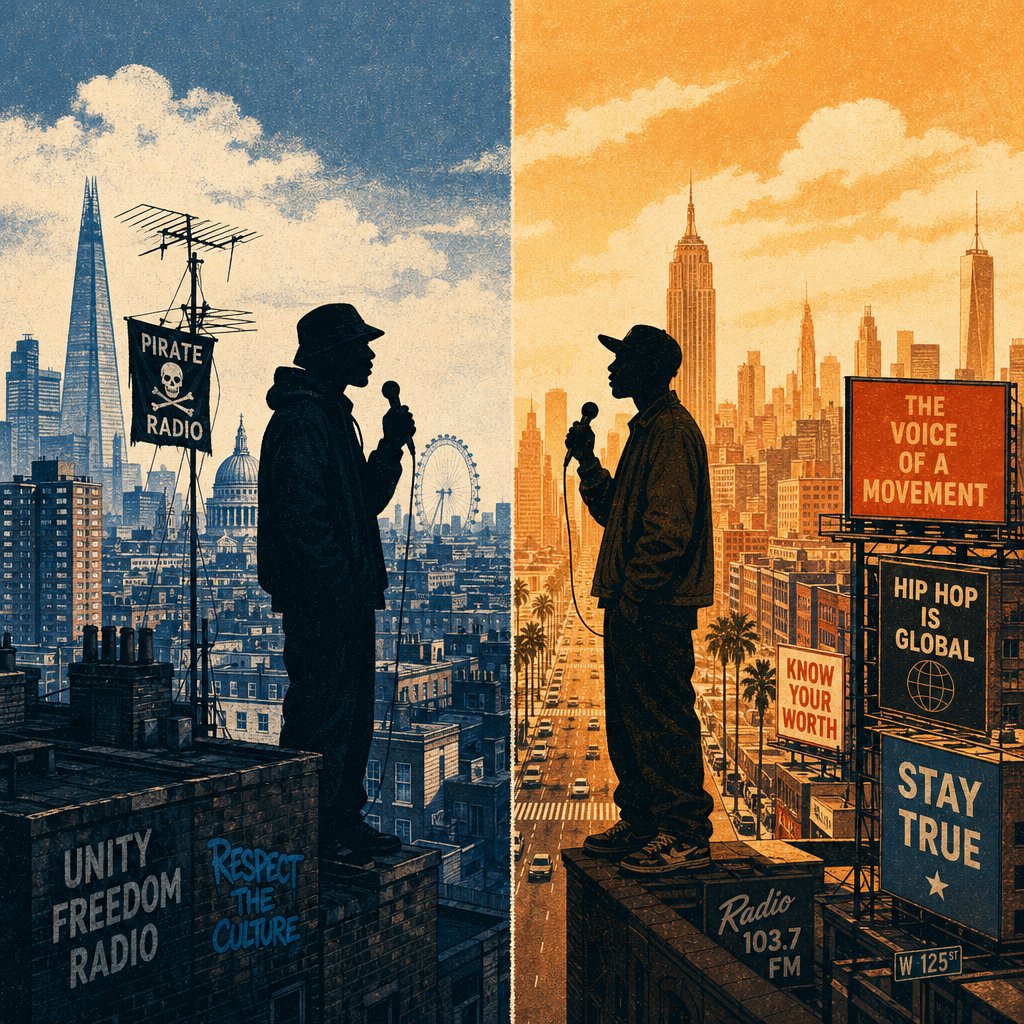
How British Rap Differs from American Hip Hop
Imagine two boxers trained in completely different gyms, fighting in completely different weight classes. That's roughly the dynamic between UK and US rap. They share a common ancestor — hip hop culture born in the South Bronx — but decades of divergent evolution have produced two scenes that sound, feel, and operate in fundamentally different ways. Understanding those differences is the fastest way to actually hear what makes the UK scene tick.
Delivery, Accent, and Flow Differences
The most immediate distinction hits your ears in the first bar. British MCs rap in their own regional accents — London, Birmingham, Manchester, Glasgow — rather than adopting American cadences. That choice isn't cosmetic. It reshapes rhythm, syllable stress, and the entire architecture of a verse. A grime MC like Skepta or Chip fires multisyllabic rhyme schemes at 140 BPM, packing more words per bar than most US trap verses even attempt. The tempo alone forces a different kind of dexterity.
Compare that to the drawled, melodic flows dominating American trap, where artists ride slower, bass-heavy instrumentals and stretch vowels across half-time patterns. UK drill MCs, meanwhile, rap over a similar BPM range to grime but use a half-time feel — the beat moves at 140 while the vocal delivery sits at 70, creating a tension between urgency and restraint that gives the style its menacing character. As NME noted, artists like Dave and Stormzy have set themselves apart from American counterparts precisely through their distinctive tones and London accents. The result is wordplay that rewards close listening — dense internal rhymes, slant rhymes pulled from Jamaican patois, and punchlines that land differently because the vowel sounds themselves are different.
Cultural and Thematic Contrasts
The stories change when the geography changes. American rap often orbits themes of block culture, the American Dream, major-label aspiration, and conspicuous wealth. British rap draws from a different well entirely: council estate life, postcode rivalries, class politics, the NHS, immigration, and the layered identity of growing up in multicultural Britain.
This isn't abstract. When Dave raps about systemic racism on "Black" or Stormzy addresses Grenfell Tower, they're speaking to UK-specific realities that have no direct American equivalent. Research into estate culture shows how council estate imagery and messages of survival and resistance form a backdrop across British hip hop and grime videos — from Plan B's "Ill Manors" to Skepta's "Shut Down," shot in the concrete courtyard of an inner-city estate. The roots of this aesthetic trace back to American hip hop's hood narrative, but the UK version reflects a distinctly British class system and housing crisis rather than American urban mythology.
Even the slang tells a different story. Where an American rapper might reference "the block" or "the trap," a UK MC talks about "ends," "yard," and "mandem." Multicultural London English — a dialect blending Jamaican patois, West African languages, and Cockney — gives the lyrics a linguistic texture that can feel like a foreign language to outsiders. That density is a feature, not a bug. Learning how to start a conversation about UK rap almost always begins with learning the vocabulary.
Industry and Infrastructure Differences
The pipeline to success looks nothing alike on either side of the Atlantic. American rap has long been driven by major-label infrastructure — A&R scouts, radio conglomerates, and massive marketing budgets. The UK scene grew up through pirate radio, YouTube freestyles, and independent labels. Channels like SBTV (founded by the late Jamal Edwards) and platforms like GRM Daily became the launchpads that major labels never provided.
This grassroots DNA still shapes the industry. As The Guardian highlighted, UK radio stations have historically underserved Black British artists in daytime programming, pushing homegrown music into late-night slots while recycling American hip hop hits from the early 2000s. Community stations like Reprezent Radio in Brixton have served as incubators for broadcasting and production talent, yet they struggle for funding even as demand for their services grows. The infrastructure exists, but it's fragile — built on passion and community rather than corporate investment.
That independence has a creative upside, though. Without gatekeepers dictating sound, UK artists have been free to experiment. Grime didn't need a major label's permission to exist. UK drill didn't wait for American co-signs. Afroswing fused Afrobeats with UK rap organically, not as a boardroom strategy. The result is a scene where craft ideas emerge from bedrooms and youth clubs rather than corporate studios — and where an MC's night routine might genuinely involve recording verses over a pirate radio set at 2 AM rather than polishing a label-approved single.
| Category | British Rap | American Hip Hop |
|---|---|---|
| Typical BPM Range | 95-140+ (varies by subgenre) | 60-90 (trap), 85-115 (boom bap) |
| Common Themes | Council estates, postcode rivalries, class politics, multicultural identity, NHS, immigration | Block culture, the American Dream, wealth, major-label mythology, gang affiliation |
| Industry Pathway | Pirate radio, YouTube freestyles, independent labels, community stations | Major-label A&R, commercial radio, streaming playlists, corporate co-signs |
| Key Platforms | GRM Daily, SBTV, Link Up TV, BBC 1Xtra, Reprezent Radio | WorldStarHipHop, Hot 97, Power 106, Shade 45, major DSP playlists |
| Slang Register | Multicultural London English, Jamaican patois, regional UK dialects ("mandem," "ends," "wagwan") | AAVE (African American Vernacular English), regional US slang ("cap," "opp," "the block") |
| Production DNA | UK garage, jungle, dubstep, grime electronics, Afrobeats fusion | Southern bounce, G-funk, trap 808s, East Coast sampling |
| Vocal Delivery | Regional British accents, rapid-fire multisyllabic rhyming, MC tradition | American regional accents, melodic autotune flows, ad-lib culture |
These aren't just surface-level differences. They reflect two entirely separate ecosystems shaped by different histories, class structures, and musical traditions. Think of it less like coloring books from the same brand and more like two distinct art forms that happen to share a name. The comparison matters because it frames everything that follows — once you understand why the UK scene sounds and operates the way it does, the subgenres, regional scenes, and production styles explored in the next sections snap into sharper focus.
Every British Rap Subgenre Explained Side by Side
Sharper focus starts with knowing what you're actually listening to. The UK scene isn't one sound — it's five distinct styles running in parallel, each with its own tempo, texture, origin story, and roster of defining voices. Think of the subgenres less like chapters in a single book and more like separate instruments in an orchestra. They occasionally overlap, but each one carries a role that the others can't fill.
Mapping these styles side by side is a bit like learning statistics fundamentals before diving into data analysis — once you grasp the underlying categories, everything you hear afterward makes more sense. Here's how each subgenre breaks down.
Grime and Its Electronic Roots
Grime is where the modern UK rap story truly ignites. Born in early-2000s East London — specifically in the tower blocks and pirate radio stations of Bow and Hackney — it fused the skeletal bass of UK garage with aggressive, MC-driven energy. The tempo locks at around 140 BPM, driven by skippy electronic rhythms, icy synth stabs, and square-wave basslines that hit like a cold slap.
What separates grime from everything else is the MC's centrality. This isn't music where the vocalist rides the beat passively. Grime MCs attack it. Dizzee Rascal's "Boy in da Corner" (2003) essentially wrote the genre's blueprint — raw, claustrophobic, and unlike anything coming out of the US at the time. Wiley, often called the "Godfather of Grime," laid the production groundwork with instrumentals like "Eskimo" and "Ice Rink" that defined the genre's frozen, metallic sonic palette. Skepta's "Shutdown" and Stormzy's "Shut Up" later carried grime into mainstream consciousness, proving the sound could fill arenas without softening its edges.
Pirate radio was the delivery system. Stations like Rinse FM, Deja Vu, and Heat FM gave MCs airtime that legal broadcasters wouldn't. Clashes and freestyle sets — where MCs battled live over instrumentals — became the genre's proving ground. If you couldn't hold a set for thirty minutes straight, you didn't belong.
UK Drill and the Sliding 808s Sound
UK drill arrived roughly a decade after grime, drawing initial inspiration from Chicago drill's dark, confrontational trap sound but quickly mutating into something the Americans didn't recognize. Originating in South London neighborhoods like Brixton and Kennington in the early 2010s, UK drill swapped Chicago's sparse, punchy 808 kicks for sliding basslines — long, pitch-bending low-end notes that give the music a sinister, almost cinematic quality.
The BPM sits around 140, but the vocal delivery operates in half-time at roughly 70 BPM, creating that signature push-pull tension between a fast-moving beat and a measured, menacing flow. Hi-hat rolls are relentless, reverb-heavy piano loops add a ghostly melodic layer, and the overall mood is darker and more atmospheric than its Chicago ancestor.
Artists like Headie One, Digga D, and Unknown T became the genre's early standard-bearers. Central Cee later pushed UK drill into global pop territory, blending its sonic DNA with more accessible melodies. The subgenre's relationship with UK authorities has been contentious — courts have issued Criminal Behaviour Orders restricting some artists from releasing music, and the Metropolitan Police have pressured platforms to remove drill videos. That tension between creative expression and institutional pushback is baked into the genre's identity.
Road Rap, Afroswing, and UK Boom Bap
Beyond grime and drill, three more styles round out the picture.
Road rap is narrative street music — slower, more cinematic, and story-driven than grime's frenetic energy. Imagine a film soundtrack scored with heavy bass and string samples, narrated by someone who lived the plot. Giggs is the genre's towering figure, with his deep baritone and vivid street storytelling on tracks like "Talkin' da Hardest." K Koke and Youngs Teflon also helped define the sound. If grime is a sprint, road rap is a slow, deliberate walk through the ends at midnight.
Afroswing flips the energy entirely. This fusion of Afrobeats rhythms, dancehall grooves, and UK rap swagger operates at a smoother 95-110 BPM, built around syncopated percussion, log drum patterns, and highlife guitar interpolations. J Hus broke the style wide open with "Did You See," and Not3s, Kojo Funds, and NSG pushed it further into mainstream playlists. Afroswing is the subgenre most likely to soundtrack your dinner ideas playlist — it's warm, rhythmic, and built for movement rather than confrontation.
UK boom bap is the quietest of the five but arguably the most lyrically demanding. Rooted in the same sample-heavy, breakbeat-driven tradition as golden-age New York hip hop, it prizes wordplay, storytelling, and technical skill above all else. Lowkey, Akala, and Klashnekoff represent the tradition's sharpest voices, delivering dense, politically charged bars over chopped soul loops and dusty drum breaks. It's the subgenre where geometry formulas of rhyme structure — internal patterns, multisyllabic chains, conceptual frameworks — matter more than melody or production flash. Think of it as the genre's lyrical conscience.
Laid out together, these five styles form a menu as varied as a yummly recipe collection — each entry distinct in flavor, technique, and origin, but all unmistakably British. The table below puts them side by side so you can compare at a glance.
| Subgenre | Origin City | Typical BPM | Production Characteristics | Key Artists | Defining Tracks |
|---|---|---|---|---|---|
| Grime | East London | ~140 | Skippy electronic rhythms, icy synth stabs, square-wave bass, minimal sampling | Dizzee Rascal, Wiley, Skepta, Stormzy, Chip | "Boy in da Corner," "Shutdown," "Shut Up," "Eskimo" |
| UK Drill | South London (Brixton, Kennington) | ~140 (half-time feel at ~70) | Sliding 808 basslines, reverb-heavy piano loops, rapid hi-hat rolls, dark atmosphere | Headie One, Central Cee, Digga D, Unknown T | "Edna," "Doja," "Loading," "Homerton B" |
| Road Rap | South & East London | ~75-90 | Cinematic strings, heavy bass, orchestral samples, slower tempo, narrative structure | Giggs, K Koke, Youngs Teflon, Blade Brown | "Talkin' da Hardest," "Fire in the Booth," "Bags & Boxes" |
| Afroswing | London (cross-borough) | ~95-110 | Syncopated Afrobeats percussion, log drums, highlife guitar, dancehall grooves | J Hus, Not3s, Kojo Funds, NSG, Yxng Bane | "Did You See," "Addison Lee," "Options," "OT Bop" |
| UK Boom Bap | London / nationwide | ~85-95 | Chopped soul samples, dusty breakbeats, minimal effects, lyric-first mixing | Lowkey, Akala, Klashnekoff, Jehst, Verb T | "Soundtrack to the Struggle," "Fire in the Booth (Akala)," "Shakespeare" |
Each of these subgenres carries a distinct sonic fingerprint — a specific combination of tempo, bass treatment, drum programming, and melodic texture that trained ears can identify within seconds. Understanding the delta math between them isn't just academic trivia. It's the key to hearing why a Central Cee track feels nothing like a Dizzee Rascal set, even though both fall under the same national umbrella. And for producers or beatmakers studying the craft, those production differences — the landscaping ideas that shape each subgenre's sonic terrain — deserve a much closer look.
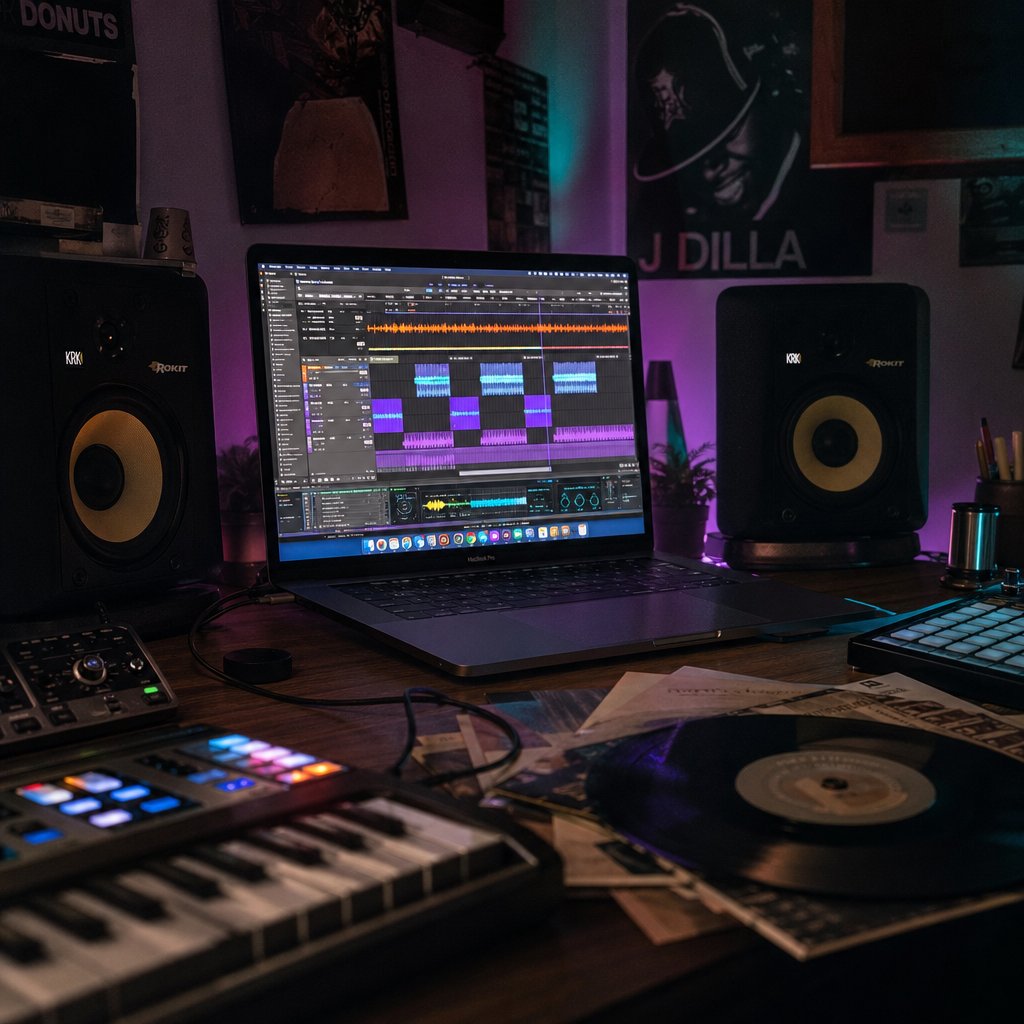
Production Styles That Define British Rap's Sonic Identity
Knowing the subgenres is one thing. Hearing why they sound different — at the level of kick patterns, bass design, and synth choices — is where casual listening turns into real understanding. UK rap production carries DNA from garage, jungle, and dubstep in ways that American beatmaking simply doesn't, and those roots show up in every element of the mix.
How BPM and Beat Structure Shape Each Style
Tempo alone tells you a lot. Grime locks at around 140 BPM with a skippy, forward-driving pattern inherited from UK garage — the drums push you ahead rather than letting you settle. UK drill shares that 140 BPM clock speed but flips the feel entirely: the kick and snare land in half-time at roughly 70 BPM while hi-hats skitter at double speed above, creating a slow-motion heaviness that grime never aims for. It's a block breaker of a contrast — same tempo on paper, completely different energy in practice.
Afroswing drops the pace to 95-110 BPM and swaps electronic aggression for syncopated, dancehall-influenced percussion. The groove borrows from Afrobeats' polyrhythmic bounce, with swing applied to hi-hats and shakers at around 55-60% to create that buoyant, head-nod feel. Road rap sits even lower, around 75-90 BPM, favoring cinematic weight over rhythmic complexity. UK boom bap occupies the 85-95 BPM range with chopped breakbeats that nod directly to golden-age New York sampling traditions.
What connects all of these is a shared electronic music heritage. UK producers grew up on jungle's breakbeat science, garage's shuffled two-step, and dubstep's sub-bass pressure. Those influences bleed into rap production in ways you won't find in Atlanta or Los Angeles — spend a 15 minute timer session A/B-ing a Wiley instrumental against a Metro Boomin beat and the lineage difference becomes unmistakable.
Signature Sounds and Production Techniques
Each subgenre carries a sonic fingerprint built from specific production choices. Here's what to listen for:
Grime production signatures:
- Icy, detuned synth stabs — sharp, metallic, and deliberately cold
- Square-wave bass that cuts through rather than rumbles beneath
- Sparse, syncopated drum patterns with heavy use of rimshots and claps
- Minimal melodic content — the MC is the melody
- Tempo-locked at ~140 BPM with a relentless forward momentum
UK drill production signatures:
- Sliding 808 basslines — long, pitch-bending notes that glide between frequencies
- Reverb-drenched piano loops, often minor-key and eerie
- Pitch-shifted vocal chops used as atmospheric texture
- Rapid-fire triplet hi-hat rolls with ghost notes and off-grid placement
- Choral stabs and dissonant string pads for cinematic tension
Afroswing production signatures:
- Log drum and mallet-like percussion patterns borrowed from Afrobeats and amapiano
- Highlife-style guitar interpolations — bright, plucked, and melodically simple
- Warm, rounded 808 sub-bass following syncopated kick patterns
- Dancehall-influenced off-beat shakers and rimshots
- Hook-first song structures with minimal harmonic density — usually two to four chords on loop
Road rap production signatures:
- Orchestral string samples and cinematic pads that create a film-score atmosphere
- Heavy, dry-hitting kicks and snares with minimal reverb
- Minor-key progressions that stay dark and moody throughout
- Sparse arrangements that leave space for narrative vocal delivery
UK boom bap production signatures:
- Chopped soul, jazz, and funk samples — vinyl crackle often left intentionally audible
- Dusty, punchy breakbeats programmed or sampled from classic drum breaks
- Minimal effects processing — the mix stays raw and vocal-forward
- Boom-bap kick-snare patterns with swing, prioritizing groove over complexity
These aren't just gardening tips for tidying up a mix — they're the foundational design choices that make each subgenre immediately recognizable. A producer like JAE5 (the architect behind much of J Hus's afroswing sound) operates in a completely different sonic world than a drill producer like AXL Beats, even though both work under the same national umbrella. Up-and-coming beatmakers like Ash Trevino have shown how studying these distinct palettes can inform fresh, hybrid approaches to UK production.
If you're curious how these elements actually feel when layered into a finished track, MakeBestMusic's AI Rap Generator lets you experiment with different beat styles and rap production elements — grime's aggression, drill's sliding bass, afroswing's bounce — without needing a full DAW setup. It's a practical way to hear how tempo, bass design, and drum programming interact, especially if you're still training your ear to distinguish one subgenre from another.
Production tells you where a track comes from. But geography tells you something production can't — the regional accents, local slang, and city-specific energy that make Manchester's scene sound nothing like Bristol's, even when the BPM is identical.
Regional Rap Scenes Reshaping British Hip Hop
Geography shapes sound in ways a drum machine never could. Every subgenre covered so far — grime, drill, road rap, afroswing, boom bap — originated in or around London. That's the default narrative, and it's incomplete. Some of the most exciting developments in UK rap are happening in cities where the accent alone changes the entire feel of a bar. As Manchester's Aitch put it bluntly in a Guardian feature: "People from outside of London represent UK music sometimes a bit better than people from London."
That's not shade — it's a statement about diversity. When every MC raps in the same London cadence over the same South London drill template, the palette narrows. Regional scenes blow it wide open.
Manchester, Birmingham, and the Midlands Wave
Manchester's rap ecosystem runs deep. Bugzy Malone was the city's first breakout grime ambassador, stacking four Top 10 albums from 2015 onward. Aitch followed with a looser, more melodic approach — his Mancunian drawl on tracks like "Taste (Make It Shake)" reached No. 2 on the UK charts and proved that a regional accent wasn't a barrier but a weapon. "I don't think I've got a funny accent, but everyone else does," he told The Guardian. "That just draws bare attention."
Beyond the chart names, Manchester's underground is thriving. OneDa, a rapper and poet blending rap with drum and bass, afro-trap, and Afrobeats, reflects the city's genre-fluid energy. She also runs hip-hop therapy workshops for Manchester youth — a reminder that regional scenes often carry community infrastructure that London's more commercialized pipeline doesn't prioritize. Artists like Meekz brought a bleak, trap-influenced meter to the 0161 area code, while IAMDDB carved out a jazz-rap-soul lane that feels distinctly Mancunian. Emerging names like PRIDO, LayFullstop, and Rahika are pushing the next wave, mixing grime, hip hop, and afro influences in ways that mirror the city's multicultural makeup.
Birmingham operates on a different frequency entirely. The Brummie accent — slower, rounder, with a melodic rise at the end of phrases — gives MCs a cadence that's impossible to fake. Jaykae became the city's most visible rapper, branching from grime into UK garage with tracks like "Chat" after underlining his local credentials with a Peaky Blinders-themed video. Mist scored a Top 10 hit with "So High" and a Top 5 album. Lady Leshurr's "Queen's Speech" freestyles — ferociously funny and technically sharp — put Birmingham's female rap talent on the national radar years before the mainstream caught on.
The wider Midlands adds even more texture. Coventry's Jay1 released two of the sharpest UK rap tracks in recent memory — "Mocking It" and "Your Mrs" — rapping in a Midlands dialect that uses "your missus" instead of London's "my gyal." Leicester's Trillary Banks built a following spanning trap, dancehall, and R&B, with fans reaching her from as far as China and Puerto Rico. As she explained, Leicester's multiculturalism — "we used to learn Gujarati even as black kids" — feeds directly into the music's range. Tiffany Calver, host of the 1Xtra Rap Show, framed the shift simply: "People want to hear people that sound like them."
Leeds, Glasgow, Bristol, and Nottingham
Venture further from the M25 and the sonic map gets even more interesting. Leeds has quietly produced MCs who prize lyrical density over commercial flash — Braintax and Graft are names that serious heads know, and the city's boom bap tradition runs parallel to London's without copying it. It's the kind of scene you'd stumble into the way you might stumble into how to snowboard — awkwardly at first, then completely hooked once you find your footing.
Glasgow's contribution is arguably the most linguistically distinct in all of UK rap. Scottish MCs rap in accents and dialects that sound like an entirely different language to southern English ears. Artists like Shogun and Loki bring a raw, politically charged energy shaped by Glasgow's working-class identity and its own history of sectarianism and poverty. The texture is so different that it almost functions as a separate tradition within the broader scene — imagine watching a lineup of Denzel Washington movies and then suddenly switching to a Scottish indie film. Same medium, completely different emotional register.
Bristol carries a unique legacy. The city's trip-hop heritage — Massive Attack, Tricky, Portishead — bleeds into its rap output, giving local MCs access to a moody, bass-heavy production palette that no other UK city shares. That sonic DNA means Bristol rap often sounds more atmospheric and experimental than what comes out of London or Birmingham.
Nottingham rounds out the picture with a growing underground presence. Young T & Bugsey broke through nationally with "Strike a Pose," which spent six weeks in the Top 10. Earlier names like Scorzayzee and Splinta laid groundwork that the current generation builds on. The city's scene is smaller but hungry — and in a streaming era where a viral freestyle can reach millions regardless of postcode, size matters less than it used to.
Here's a quick snapshot of each regional scene and what it brings to the table:
- Manchester — Grime, melodic rap, afro-trap, drum and bass crossovers. Key names: Aitch, Bugzy Malone, Meekz, IAMDDB, OneDa, Tunde.
- Birmingham — Grime, UK garage, road rap with a distinctive Brummie cadence. Key names: Jaykae, Mist, Lady Leshurr, Lotto Boyzz, Dapz on the Map.
- Coventry & Leicester — Midlands dialect rap, trap-dancehall fusions. Key names: Jay1, Trillary Banks, Pa Salieu.
- Leeds — Lyric-first boom bap, underground hip hop. Key names: Braintax, Graft, Dialect.
- Glasgow — Politically charged Scottish rap with distinct linguistic texture. Key names: Shogun, Loki, Ransom FA.
- Bristol — Trip-hop-influenced atmospheric rap, experimental bass music. Key names: Roni Size (crossover), Joker, Gardna.
- Nottingham — Energetic crossover rap, growing underground. Key names: Young T & Bugsey, Scorzayzee, Splinta.
- Sheffield — Grime and speed garage with a strong local accent. Key names: Coco, Deep Green.
The takeaway is straightforward: equating the UK scene with London rap is like equating American hip hop with New York. It misses most of the picture. Regional diversity isn't a footnote — it's the engine driving the genre's evolution, feeding new accents, slang, and perspectives into a national conversation that gets richer every year.
And yet, across every one of these cities, one gap persists in how the scene gets covered. Female MCs have been central to the genre's growth from the start — commanding stages in Manchester, dominating freestyles in Birmingham, reshaping drill and afroswing alike — but their contributions rarely get the editorial weight they deserve.
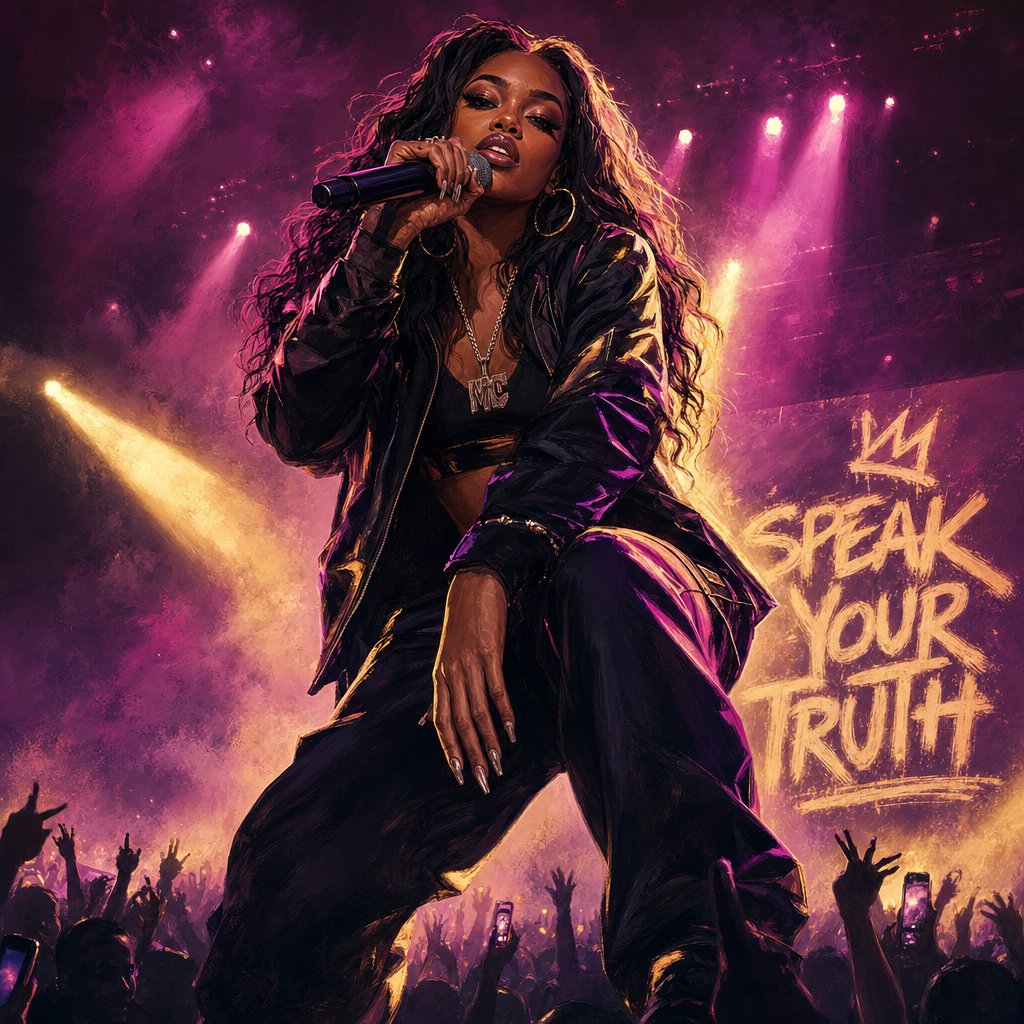
Female MCs Reshaping the Sound of British Rap
That editorial gap isn't just an oversight — it's a distortion. Any account of the UK scene that sidelines women produces a picture as incomplete as trying to learn how to build a campfire without mentioning the kindling. Female MCs haven't been standing on the sidelines waiting for a spotlight. They've been running point across every subgenre, era, and region since the mid-1980s.
Trailblazers Who Built the Foundation
The lineage starts with Cookie Crew, one of the first Black British female rap groups to gain recognition in the mid-1980s. Their bold presence proved women had a rightful place in the genre's earliest chapters — before grime even existed as a category. Ms. Dynamite pushed the door wider in 2002 with "Dy-Na-Mi-Tee," blending UK garage, reggae, and soul while addressing racism and violence head-on. Her album A Little Deeper won the Mercury Prize, making her the only female rapper on this list to appear as a musical guest on Saturday Night Live. No Lay entered the scene as part of the collective Unorthodox in the early 2000s and became the rare UK MC who could say she opened for Mobb Deep — a career spanning over two decades.
These weren't exceptions. They were proof of concept — as loyal and persistent as a great pyrenees guarding its territory, refusing to be moved from a space they'd earned.
The Current Generation Leading British Rap Forward
The wave that followed didn't just maintain ground. It expanded it in every direction. Little Simz is arguably the strongest case. Her albums Grey Area and Sometimes I Might Be Introvert earned widespread critical acclaim, with Revolt describing her as "easily a contender for best female rapper from the UK of all time." Her fifth studio album, No Thank You, cemented her in UK rap lore with concise, introspective bars about navigating the music industry as a Black woman. She doesn't do a barrel roll of gimmicks — just pristine lyricism and cinematic songwriting.
Lady Leshurr's viral "Queen's Speech" freestyle series brought wit and technical ferocity to grime, landing her on Nicki Minaj's radar and a subsequent tour together. Ms Banks built a loyal audience through street-certified mixtapes before blending grime, drill, and Nigerian Afrobeats textures — earning co-signs from both Cardi B and Nicki Minaj along the way. Stefflon Don crossed over internationally with the platinum-selling "Hurtin' Me," fusing her Jamaican background with Birmingham-influenced grime energy. ENNY's "Peng Black Girls" became an anthem of Black womanhood, earning a remix from Jorja Smith and positioning her as a voice for identity and empowerment.
The drill space has its own rising forces. Ivorian Doll brings a uniquely powerful delivery — bass-heavy, charismatic, and relentless. Cristale uses UK garage and Chicago-blended beats with a lyrical depth that outpaces many of her peers. Shaybo, born in Nigeria and raised in London, slides between African music and UK rap with a genre-bending fluidity that earned her the nickname "Queen of the South." Newer names like BXKS, Ceechynaa, and Lavida Loca are pushing boundaries further, each carving lanes that didn't exist five years ago.
Here's a snapshot of the artists shaping the scene right now:
- Little Simz — UK boom bap / cinematic rap — Sometimes I Might Be Introvert
- Ms. Dynamite — UK garage-rap fusion — A Little Deeper
- Lady Leshurr — Grime — "Queen's Speech" freestyle series
- Ms Banks — Grime / drill / afroswing — The Coldest Winter Ever
- Stefflon Don — Dancehall-grime fusion — "Hurtin' Me" (ft. French Montana)
- ENNY — Reggae-grime fusion — We Go Again EP
- Ivorian Doll — UK drill — "Rumors"
- Cristale — UK drill — What It's Like To Be Young
- Shaybo — Afroswing / drill — Queen of the South
- Nadia Rose — Grime / dancehall — Highly Flammable
- BXKS — Drill / electropop — Full Time Daydreamer
- Flohio — Experimental grime — No Panic No Pain
- Lex Amor — Boom bap / spoken word — Government Tropicana
This isn't a token sidebar. These artists are central to the genre's evolution — spanning every subgenre, commanding festival stages, winning Mercury Prizes, and building international audiences. Ignoring them would be like writing a guide to how to fix a running toilet but skipping the part about the flapper valve. You'd miss the mechanism that actually makes the whole thing work.
Their albums and projects also serve as some of the best entry points into the genre — which raises a practical question for anyone absorbing all of this for the first time: where do you actually start listening?
Essential British Rap Albums and a Beginner's Listening Pathway
Starting from scratch with an unfamiliar music scene can feel like trying to how to surf without ever having seen the ocean. You know the waves are out there, but you have no idea which one to paddle toward first. The UK rap catalog is deep — decades of albums spanning five subgenres, dozens of regional accents, and hundreds of artists. Without a map, most newcomers either bounce off the first track that doesn't click or get stuck replaying the same three Spotify recommendations forever.
This section fixes that. Below you'll find the landmark albums that defined each era of the genre, followed by a step-by-step listening pathway designed to take you from total newcomer to confident deep-diver.
Landmark Albums That Defined Each Era
Every genre has its load-bearing records — the albums that shifted the sound, expanded the audience, or captured a moment so precisely that everything after them sounds different. The UK scene is no exception. Rather than dumping a hundred titles on you like an aldi weekly ad flyer, this table distills the essentials into four eras, each representing a distinct phase of the genre's evolution.
| Era | Album | Artist | Subgenre | Why It Matters |
|---|---|---|---|---|
| Early Foundations (1990-2001) | Gangster Chronicle | London Posse | UK Hip Hop | One of the first cohesive UK rap albums — Cockney slang meets Jamaican patois over reggae-inflected boom bap. Defined the moment British rap stepped into its own voice. |
| Early Foundations | Brand New Second Hand | Roots Manuva | UK Boom Bap / Dub | Fused South London storytelling with bass-heavy minimalism and Jamaican dub influences. Introduced Roots Manuva's singular sound to the world. |
| Early Foundations | Run Come Save Me | Roots Manuva | UK Boom Bap / Dub | His masterpiece — a genre-blurring ride through hip hop, dub, dancehall, and garage that remains a timeless classic. "Witness (1 Hope)" became an anthem. |
| Grime Golden Age (2002-2006) | Boy in da Corner | Dizzee Rascal | Grime | The album that wrote grime's blueprint. Raw, claustrophobic, and futuristic — recorded when Dizzee was just 18. Won the Mercury Prize and changed everything. |
| Grime Golden Age | The Return of the Drifter | Jehst | UK Boom Bap | A cornerstone of British lyrical rap. Intricate rhyme schemes over warm, self-produced boom-bap beats from a Huddersfield MC who proved the scene extended far beyond London. |
| Grime Golden Age | Council Estate of Mind | Skinnyman | UK Hip Hop | The most potent portrayal of working-class Britain in rap form. Soul, jazz, and blues production backing unflinching narratives of estate life. |
| Grime Golden Age | A Grand Don't Come for Free | The Streets | UK Hip Hop / Spoken Word | A concept album about losing a thousand pounds and a girlfriend. Mike Skinner's conversational delivery made rap feel like overhearing a mate's worst week. |
| Mainstream Breakthrough (2011-2017) | Konnichiwa | Skepta | Grime | Grime's mainstream coronation. Stripped-back production, confrontational bars, and "Shutdown" — the track that proved the genre could fill arenas worldwide. |
| Mainstream Breakthrough | Soundtrack to the Struggle | Lowkey | UK Boom Bap | A 95-minute political masterpiece. Dense, thought-provoking lyricism tackling global power structures, Palestine, and societal unrest — one of the best albums to come out of Britain, period. |
| Mainstream Breakthrough | Yesterday's Gone | Loyle Carner | Jazz Rap | Warm, poetic, and deeply personal. Jazzy production and soft-spoken delivery that proved UK rap could be tender without losing substance. |
| Current Wave (2019-Present) | PSYCHODRAMA | Dave | UK Hip Hop | Framed as a therapy session, this debut dissects race, mental health, and family with surgical precision. "Lesley" — an 11-minute narrative — is a masterclass in storytelling. |
| Current Wave | Grey Area | Little Simz | UK Hip Hop | Ten tracks, zero filler. Razor-sharp lyricism over eclectic production from Inflo. Established Simz as one of the UK's most complete artists. |
| Current Wave | Sometimes I Might Be Introvert | Little Simz | Cinematic Rap | A sprawling, orchestral opus exploring identity, womanhood, and family. Compared to Lauryn Hill's Miseducation in ambition and scope — her magnum opus. |
| Current Wave | Nothing Great About Britain | slowthai | Punk Rap / Grime | A socio-political snapshot of fractured Britain. Punk attitude meets grime energy, delivered with a Northampton accent and zero filter. |
| Current Wave | Heavy Is the Head | Stormzy | Grime / Pop Rap | A genre-spanning second album blending grime bangers with R&B and dancehall. Proved Stormzy could balance vulnerability with arena-filling bravado. |
You'll notice these records span wildly different sounds — from Dizzee Rascal's jittery electronics to Loyle Carner's jazzy warmth to slowthai's punk snarl. That range is the point. No single album represents the whole scene, just as no single flag represents all world flags. Each record captures a specific moment, subgenre, and perspective within a much larger story.
A Beginner's Listening Pathway from First Track to Deep Cuts
Tables are useful for reference, but they don't tell you where to press play first. The pathway below is sequenced intentionally — it starts with the most accessible entry points and gradually moves toward records that demand more context and closer listening. Think of it less like a homework assignment and more like setting a 10 minute timer for each step: sample, absorb, then decide whether to go deeper.
- Start with crossover hits that bridge familiarity and discovery. Play Dave's "Sprinter" (with Central Cee), Stormzy's "Vossi Bop," and Little Simz's "Gorilla." These tracks chart globally and ease you into UK cadences without overwhelming you with dense slang or underground production.
- Move into full albums that reward front-to-back listening. Queue up Dave's PSYCHODRAMA and Little Simz's Grey Area — both are tight, cohesive, and emotionally direct. They're the UK rap equivalent of a well-structured profile page: clear, purposeful, and immediately engaging. Understanding how to use linkedin to build a professional network follows the same logic — start with the clearest, most polished presentation before branching out.
- Step into grime's defining records. Skepta's Konnichiwa and Dizzee Rascal's Boy in da Corner are essential but sonically intense. By this point your ear is calibrated enough to appreciate grime's electronic aggression without bouncing off it.
- Explore the lyrical tradition. Jehst's The Return of the Drifter, Lowkey's Soundtrack to the Struggle, and Loyle Carner's Yesterday's Gone showcase the genre's depth beyond chart hits. These are bar-heavy, content-rich records that reward close attention.
- Branch into subgenre-specific deep cuts. Try Giggs's Walk in da Park for road rap, J Hus's Common Sense for afroswing, and Kano's Hoodies All Summer for a veteran's genre-spanning vision. Each one opens a different corridor of the scene.
- Go regional and underground. Slowthai's Nothing Great About Britain (Northampton), The Four Owls' Nature's Greatest Mystery (London boom bap collective), and Skinnyman's Council Estate of Mind take you into territory that casual playlists never surface. This is where the genre's raw, unpolished heart lives.
- Discover the women-led canon. Little Simz's Sometimes I Might Be Introvert, Ms. Dynamite's A Little Deeper, and Flohio's No Panic No Pain fill gaps that most curated lists ignore entirely. These records aren't supplementary — they're central.
Spotify's editorial playlists — "Grime Shutdown," "UK Rap Central," and "This Is: UK Hip Hop" — work well as supplementary discovery tools between these steps. They surface newer releases and deep cuts that keep the pipeline fresh between album listens. Just don't rely on algorithms alone. Playlists optimize for engagement, not education — they'll feed you more of what you already like rather than pushing you into unfamiliar territory the way a structured pathway does.
One thing you'll notice quickly as you work through these records: the lyrics are dense. British MCs pack bars with local slang, Jamaican patois, and regional dialect that can feel impenetrable on first listen — especially if you're coming from outside the UK. Unlocking that language is its own skill, and it's the difference between hearing the music and actually understanding it. Searching for basketball zero codes online might leave you empty-handed, but decoding UK rap slang? That's a puzzle with real payoff — and the next section hands you the key.
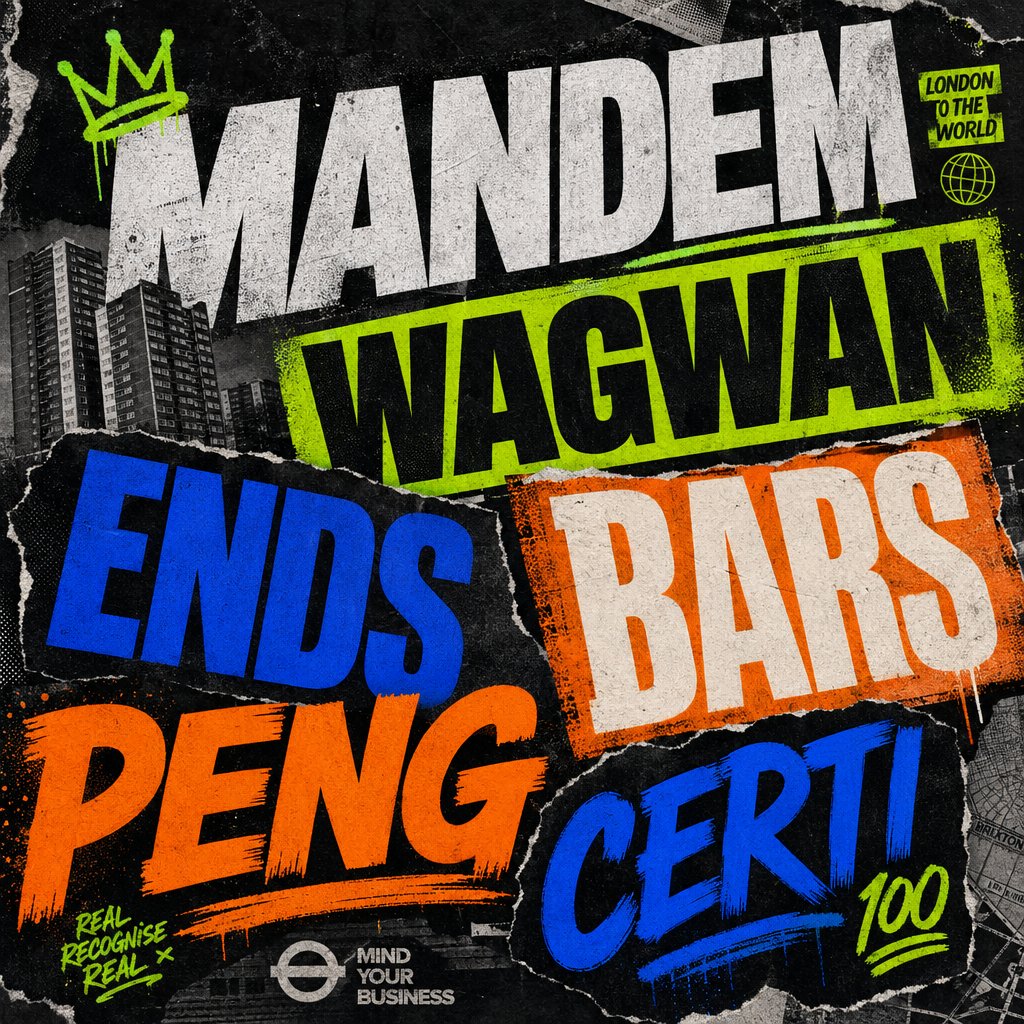
British Rap Slang and Terminology Every Listener Needs
That key starts with vocabulary. British rap lyrics are loaded with words that don't appear in any standard English dictionary — terms pulled from Jamaican patois, West African pidgin, Cockney rhyming slang, and the evolving dialect linguists call Multicultural London English (MLE). If you've ever pressed play on a UK drill track and felt like you needed subtitles, you're not alone. The slang is dense, layered, and constantly evolving — but once you crack the code, the music opens up in ways that surface-level listening never delivers.
Essential British Rap Slang Decoded
The table below covers the terms you'll encounter most frequently across grime, drill, road rap, and afroswing. Each one appears constantly in lyrics, freestyles, and the broader culture surrounding the scene. Think of it less like memorizing a textbook and more like learning how to ski — awkward at first, then instinctive once the muscle memory kicks in.
| Term | Definition | Example Usage |
|---|---|---|
| MC | Master of Ceremonies — a rapper or lyricist who commands the mic | "He's the best MC on the set tonight." |
| Bars | Rap lyrics, especially clever or technically impressive ones | "She spat 16 bars and bodied everyone." |
| Roadman | Someone embedded in street culture; also used loosely to describe a tough, streetwise persona | "Don't act like a roadman if you're not from the ends." |
| Mandem | A group of male friends or associates | "Rolling with the mandem tonight." |
| Peng | Attractive, good-looking, or high quality | "That tune is peng, play it again." |
| Wasteman | An insult — someone useless, unreliable, or worthless | "Don't link that wasteman, he's all talk." |
| Ends | One's neighborhood or local area | "I rep my ends, South London born and raised." |
| Yard | Home or house (from Jamaican patois) | "Come back to my yard after the show." |
| Link up | To meet with someone | "Let's link up at the studio later." |
| Peak | Unfortunate, harsh, or unfair | "They cancelled the set last minute — that's peak." |
| Bare | A lot of, very, or many | "There were bare man at the rave." |
| Wagwan | What's going on? (greeting, from Jamaican patois) | "Wagwan, bruv? You good?" |
| Ting | Thing — also used to refer to a person, often a woman | "She's a cold ting" or "What's the ting?" |
| Certi | Certified — meaning authentic, proven, or legitimate | "That album is certi, no debate." |
| Bait | Obvious, exposed, or too visible | "Don't be so bait about it, keep it low." |
| Fam | Family — used as a term of closeness between friends | "Trust me, fam, this track is fire." |
| Gassed | Overly excited, hyped up, or inflated with ego | "He got gassed after one viral freestyle." |
| Akh | Brother (from Arabic, adopted via the British Somali community) | Central Cee: "My brudda, my fam, my akh." |
| Dun know | I understand, I agree, or that's a fact | "Best MC in the city, dun know." |
| Allow it | Let it go, stop doing that, or forget about it | "Allow it, I'm not getting involved." |
You'll notice some of these terms — like "yard" and "wagwan" — trace directly back to Jamaican patois, while "akh" reflects Arabic influence that entered MLE through the British Somali community. As The Guardian documented, Central Cee captured this entire linguistic blend in a single 2022 freestyle: "I'm giving them UK slang / My brudda, my fam, my akh." That one bar nods to patois, Cockney, and Arabic in three words. The language isn't random — it's a living map of Britain's multicultural identity.
Understanding British Rap Lyrics as a Non-UK Listener
Here's the thing international listeners need to hear: the density of UK rap slang isn't a barrier. It's the entire point. MLE didn't develop in a vacuum — it grew out of London's African-Caribbean communities in the 1970s and 80s, absorbing Cockney, West African pidgin, and more recently Arabic and South Asian influences along the way. Tony Thorne, director of the Slang and New Language Archive at King's College London, traces the shift to the mid-1970s, when younger white Londoners got into reggae and dancehall and started picking up patois phrases like "yard" and "babylon." Grime and drill accelerated that spread nationally — and social media blew it global.
So when you hear a lyric you can't parse, you're not failing as a listener. You're encountering a dialect that carries decades of cultural history in every syllable. A line about "the woman in the yard" isn't just describing someone at home — "yard" carries Jamaican roots, domestic familiarity, and a sense of place that "house" simply doesn't convey. That layering is what makes the lyricism so rewarding once you tune in.
Practical tips for getting there faster:
- Read along with lyrics on Genius or AZLyrics while listening. Genius annotations often explain slang, cultural references, and wordplay line by line — it's like having a translator sitting next to you.
- Watch freestyle sessions on YouTube with subtitles enabled. Channels like GRM Daily and SBTV often include captions, and seeing the words while hearing the delivery accelerates comprehension dramatically.
- Start with artists who enunciate clearly. Dave, Little Simz, and Loyle Carner are easier entry points than, say, a rapid-fire grime clash where three MCs trade bars at 140 BPM.
- Don't try to learn everything at once. Pick up five or six terms per listening session and let context fill in the rest naturally. It's the same principle behind how to hang a picture — you don't need every tool in the shed, just the right ones for the job.
- Follow UK rap culture accounts on social media. Platforms like TikTok and Instagram surface slang explainers, reaction videos, and lyric breakdowns daily — the same way illinois basketball fans follow recruiting updates, UK rap fans track new slang in real time.
Christian Ilbury, a sociolinguistics lecturer at the University of Edinburgh, put it well: with social media, "you get representations of MLE that transcend geographical boundaries." The dialect isn't locked behind a postcode anymore. It's accessible to anyone willing to lean in — and the smiling friends you'll make in comment sections and fan communities along the way are part of what makes the culture so welcoming once you engage with it on its own terms.
Language unlocks meaning. Meaning deepens connection. And once you're connected — once the slang clicks, the subgenres make sense, and the albums hit differently — the natural question shifts from "what should I listen to?" to "what would it take to actually make something?"
How to Create Your Own British Rap Track
That shift from listener to creator isn't as big a leap as it sounds. The entire history of the UK scene proves it. Dizzee Rascal made Boy in da Corner in a bedroom. Skepta self-released Konnichiwa without a major label. Stormzy built an empire from YouTube freestyles and a self-funded debut. British rap has always been a grassroots, DIY culture — pirate radio sets, phone recordings, beats made on cracked software. The barrier to entry was never equipment or connections. It was always just the willingness to start.
From Listener to Creator in the British Rap Tradition
You don't need to know how to sing to make a rap track. You need something to say and a rhythm to say it over. That's the tradition. Every MC profiled in this guide — from Wiley broadcasting on pirate radio aerials to Little Simz uploading tracks as a teenager — started with nothing more than bars and a beat. The genre rewards authenticity over polish, personality over perfection. If you've absorbed the subgenres, studied the production styles, and decoded the slang, you already understand the landscape better than most people who never look past the playlist algorithm.
Making your first track is the logical next step. Think of it like learning how to drive a manual car — the mechanics feel awkward at first, but once the coordination clicks, it becomes instinct.
Tools and Approaches for Making Your First Track
Here's what the process actually looks like, stripped down to essentials. Set a 20 minute timer and you can realistically complete the first three steps in a single session.
- Pick your subgenre and tempo. Decide whether you're writing over a grime beat at 140 BPM, a drill instrumental with sliding 808s, or an afroswing groove at 100 BPM. The subgenre table from earlier in this article is your reference sheet.
- Write your bars. Start with a theme — something specific and honest. Structure a 16-bar verse using a simple AABB or ABAB rhyme scheme. Don't overthink it. First drafts are supposed to be rough.
- Select or create your beat. You can license instrumentals from platforms like BeatStars, produce your own in a DAW like FL Studio or GarageBand, or use MakeBestMusic's AI Rap Generator to create a complete rap track with customizable beats, lyrics, and vocals — a practical option if you want to experiment with different UK rap production styles without needing a full studio setup.
- Record your vocals. A USB microphone and a quiet room are enough. Record multiple takes, pick the best one, and layer a second pass underneath for thickness — the same doubling technique used on most commercial UK rap tracks.
- Mix and export. Apply a basic high-pass filter to clean up low-end rumble, add light compression to even out your delivery, and keep reverb minimal. Done is better than perfect at this stage.
The whole process mirrors how to do a pullup — the first rep is the hardest, and most of the difficulty is mental. Once you've finished one track, the second comes easier. The third easier still. Every MC you admire went through the same clumsy first attempt before finding their voice.
British rap's entire history is proof that you don't need a major label, a professional studio, or anyone's permission. You need bars, a beat, and something worth saying. The scene was built by people who had exactly that — and nothing more. Your track is next.
