

What Is Emo Music, Really
Emo music is a genre rooted in emotionally driven punk and post-hardcore, defined by confessional lyrics, dynamic song structures, and raw vocal delivery. Short for "emotional hardcore" — or "emocore" — the term emerged from the mid-1980s Washington D.C. hardcore punk scene. And almost immediately, the very artists it described wanted nothing to do with it. That tension between the label and the people it follows has defined the genre for four decades, making it unlike almost anything else in popular music.
Why Artists Hate the Emo Label
Here's the paradox: the most reliable way to identify an emo artist has always been to ask if they've ever denied being one. Ian MacKaye — the former Minor Threat frontman whose band Embrace helped birth the sound — set the tone around 1986 when cameras caught him addressing the term on stage.
"I must say, 'emocore' must be the stupidest fucking thing I've ever heard in my entire life. As if hardcore wasn't emotional to begin with." — Ian MacKaye
That rejection became a tradition. Gerard Way of My Chemical Romance called the genre "fucking garbage." Brendon Urie of Panic! at the Disco declared "Emo is bullshit!" Hayley Williams of Paramore later admitted she was "so concerned with not being whatever the scene deemed as poser." The pattern is almost comical — and yet it reveals something real about how the word "emo" became loaded with stereotypes that artists felt flattened their work.
Defining Emo by What It Feels Like
So if the musicians reject it, what does emo actually mean? This is where things get genuinely slippery. Unlike genres you can pin to a single sonic template, emo has no fixed sound. It spans spoken-word post-hardcore, twinkly Midwest guitar work, and arena-ready pop-rock anthems. You won't find a tidy instruction manual for it the way you'd find a guide on how to build a pc — there's no step-by-step blueprint, just a shared emotional frequency.
What connects all of it is feeling. Vulnerability delivered without a filter. Lyrics that read like pages torn from a journal you'd write during a sleepless night routine of overthinking and replaying conversations. The genre has always been less about specific chord progressions and more about a willingness to be uncomfortably honest — whether that honesty sounds like a whispered confession over clean guitar or a full-throated scream buried in distortion. In dandys world of carefully curated pop personas, that rawness is exactly what made emo resonate so deeply with fans, even as the artists themselves kept running from the name.
That definitional looseness is also what allowed the genre to keep evolving — from D.C. basements to Midwest living rooms to sold-out arenas — without ever settling into a single shape.
From D.C. Hardcore to Midwest Basements
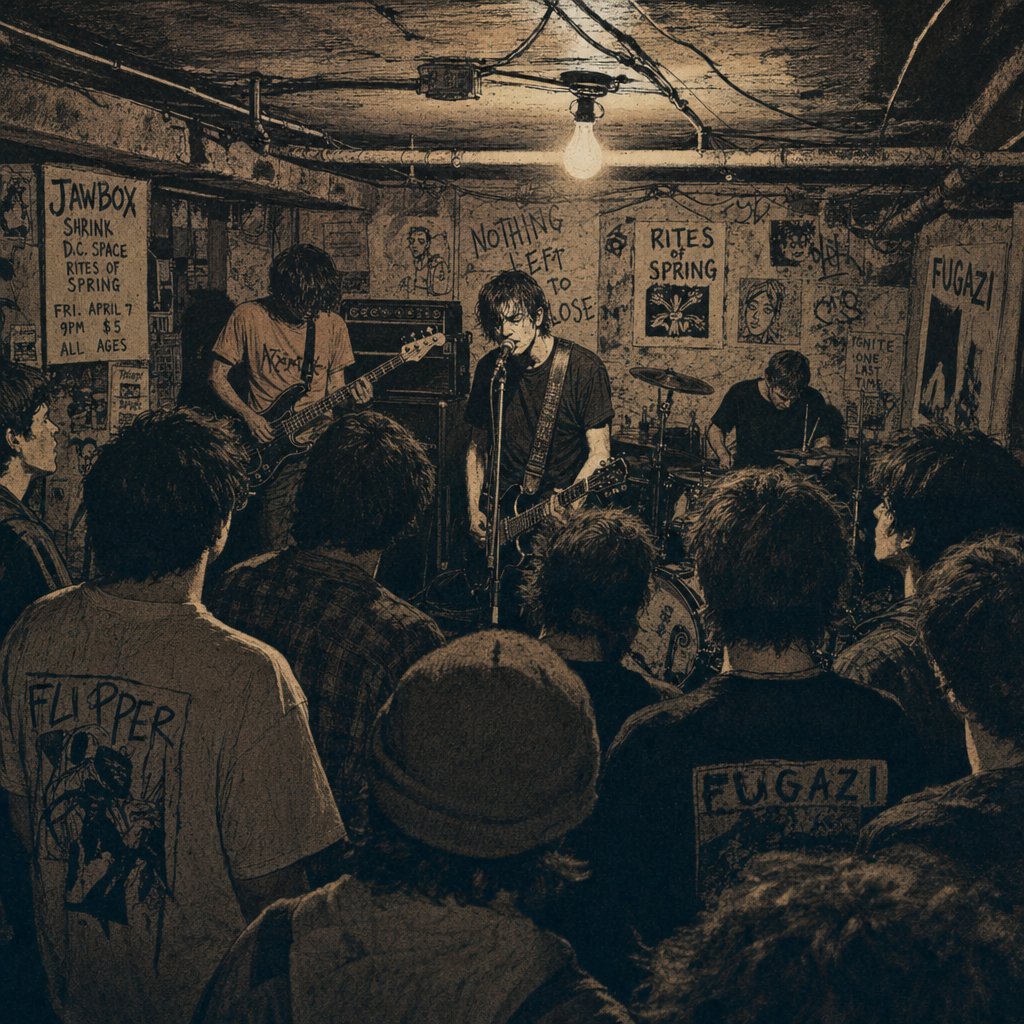
That looseness didn't appear out of nowhere. Emo has a specific origin story — and it starts in the most unlikely incubator for vulnerability: the Washington D.C. hardcore punk scene of the mid-1980s.
The D.C. Hardcore Scene That Started It All
Imagine a scene built on rigid aggression, where showing too much feeling on stage could get you dismissed. That was D.C. hardcore in the early '80s. Then, in 1984, a band called Rites of Spring did something radical — they turned inward. Instead of channeling outward political rage, frontman Guy Picciotto poured confessional, emotionally raw lyrics over punk instrumentation. It wasn't a gentle pivot. It was a full break from the unwritten rules of the scene, and it sparked what became known as "Revolution Summer" — a period of musical experimentation and anti-violence sentiment across D.C.'s underground.
Embrace, fronted by Ian MacKaye, followed a similar path before splitting in 1986. These bands didn't know how to start a conversation about feelings within hardcore — they just forced one open. The term "emotional hardcore" stuck to them whether they wanted it or not, and the first wave of emo was born. It was raw, short-lived, and fiercely underground, but its DNA would ripple outward for decades. MacKaye went on to co-found Fugazi, whose commitment to DIY ethics and independence from major labels became a blueprint for the next generation.
Midwest Emo and the Second Wave Sound
By the early '90s, the sound migrated out of D.C. basements and into Midwest living rooms — literally. The second wave traded hardcore's blunt force for something more intricate: twinkly, arpeggiated guitar lines, mathy time signatures, and vocals that sometimes drifted into spoken-word territory. If the first wave was a shout, the second was a long, winding confession whispered over complex geometry formulas of interlocking guitar parts.
Cap'n Jazz, formed in Chicago in 1989, is widely credited as one of the first bands to define this Midwest emo sound. Their chaotic, textured approach to songwriting — think individually picked chord notes layered into shimmering patterns — deeply impacted how emo bands wrote and performed music going forward. Sunny Day Real Estate brought the style to Seattle, blending indie rock and post-hardcore on their landmark 1994 debut Diary. The Promise Ring, whose 1997 album Nothing Feels Good became so emblematic of the era that journalist Andy Greenwald named his definitive book on emo after it, pushed the sound toward poppier, more melodic territory. And American Football turned a single self-titled album into one of the most quietly influential records in the genre's history.
Labels like Dischord Records and Jade Tree anchored the scene with a fiercely independent ethos — no major label deals, no radio play, no compromise. These weren't statistics fundamentals you could chart on a graph; the audiences were small, the venues were basements and VFW halls, and most of these bands broke up before anyone outside the scene noticed them.
- Rites of Spring — Rites of Spring (1985)
- Embrace — Embrace (1987)
- Jawbreaker — 24 Hour Revenge Therapy (1994)
- Cap'n Jazz — Shmap'n Shmazz (1995)
- Sunny Day Real Estate — Diary (1994)
- The Promise Ring — Nothing Feels Good (1997)
- American Football — American Football (1999)
- Mineral — The Power of Failing (1997)
- Jimmy Eat World — Clarity (1999)
These two waves shared a common thread: devoted fans, tiny audiences, and a stubborn refusal to play by the music industry's rules. They were coloring books nobody had discovered yet — intricate, deeply personal, waiting for a wider audience to pick them up. That audience was coming, and it would change everything about what the word "emo" meant.
When Emo Took Over the Mainstream
Those basement crowds didn't stay small for long. By the early 2000s, a handful of record labels figured out how to take emo's confessional intensity and package it for a generation raised on MTV and TRL countdowns. The result was the genre's third wave — and it turned everything the first two waves had built on its head.
The Labels That Built Mainstream Emo
Two labels, more than any others, defined this era. Drive-Thru Records scored a distribution deal with Universal/MCA that pushed its roster — New Found Glory, Something Corporate, Finch, The Starting Line — onto radio stations and network shows like The O.C. The label operated like a block breaker, smashing through the wall between underground credibility and mainstream visibility. Then came Fueled by Ramen, which would become the single most important launchpad for 2000s emo. Founded in 1996, the label hit its stride when it signed Fall Out Boy, Paramore, and Panic! at the Disco in rapid succession. As Rolling Stone noted, Fall Out Boy's From Under the Cork Tree alone "changed the course of emo-punk, pop-punk and pop itself" and led to a surge in popularity for the entire Fueled by Ramen roster.
Arena Anthems and Confessional Choruses
The sonic shift was dramatic. Where second-wave bands built intricate, mathy guitar patterns for rooms of fifty people, third-wave acts polished their production, wrote anthemic choruses designed for arenas, and blended pop-punk energy with emo's confessional lyrical DNA. Think of it this way: if Midwest emo was a slow-cooked recipe you'd never find on yummly, mainstream emo was engineered for mass appeal — immediate, catchy, and emotionally accessible on the first listen.
Jimmy Eat World's 2001 album Bleed American was the proof of concept. Tracks like "The Middle" and "Sweetness" took the rough-edged sound of their earlier work and made it radio-ready, earning platinum certification and a Top 10 single. Dashboard Confessional's Chris Carrabba stripped things even further — just an acoustic guitar and lyrics so nakedly vulnerable they turned sing-alongs into group therapy sessions. My Chemical Romance went the opposite direction, building theatrical, cinematic rock operas on albums like Three Cheers for Sweet Revenge, where Gerard Way's ruminations on life and death made the band MTV darlings. Fall Out Boy fused Pete Wentz's witty wordplay with Patrick Stump's soulful vocals, and Panic! at the Disco debuted with A Fever You Can't Sweat Out — a rush of electronics, orchestral flourishes, and vaudeville camp that proved the genre's boundaries were endlessly elastic.
Lyrically, the evolution was just as significant. Earlier waves dealt in political themes, post-hardcore abstraction, and poetic ambiguity. Third-wave lyrics zeroed in on relationships, heartbreak, and introspective narratives that hit like diary entries. Brand New's Jesse Lacey captured the shift perfectly on Deja Entendu, telling Spin that emo was "becoming like Eighties hair metal all over again" — even as his own album proved the genre could still produce genuinely complex, emotionally layered work.
| Band | Breakout Album | Year | Label |
|---|---|---|---|
| Jimmy Eat World | Bleed American | 2001 | DreamWorks |
| Dashboard Confessional | The Places You Have Come to Fear the Most | 2001 | Vagrant Records |
| Taking Back Sunday | Tell All Your Friends | 2002 | Victory Records |
| My Chemical Romance | Three Cheers for Sweet Revenge | 2004 | Reprise Records |
| Fall Out Boy | From Under the Cork Tree | 2005 | Fueled by Ramen |
| Panic! at the Disco | A Fever You Can't Sweat Out | 2005 | Decaydance / Fueled by Ramen |
| Paramore | Riot! | 2007 | Fueled by Ramen |
The Authenticity Debate
Predictably, the explosion triggered a cultural reckoning within the community. Fans of the first and second waves watched the genre they'd nurtured in basements and VFW halls get repackaged for Hot Topic shelves and network television. The question wasn't subtle: was this still emo, or had it become something else entirely? As cultural commentator David Buckingham observed, music journalists and older scene gatekeepers constantly redrew the line between "underground" and "mainstream," treating popularity itself as evidence of inauthenticity. Emo, they argued, had become "the domestication or suburbanization of punk."
Yet that framing ignored a basic reality: even the Sex Pistols signed to major labels. The DIY ethos of earlier waves was always partly mythologized. What the third wave actually did was prove that emotional vulnerability could resonate far beyond niche audiences — that millions of teenagers weren't just dinner ideas away from caring about confessional songwriting. They were already hungry for it. You didn't need a 15 minute timer to see how fast the genre spread once it hit mainstream airwaves; it was practically instantaneous.
The irony is that the authenticity debate itself became one of emo's most defining features — a genre perpetually arguing about what it is, even as it kept growing. And while the gatekeepers debated, a new generation of artists was already preparing to tear the whole conversation open again.
The Emo Revival and Modern Scene
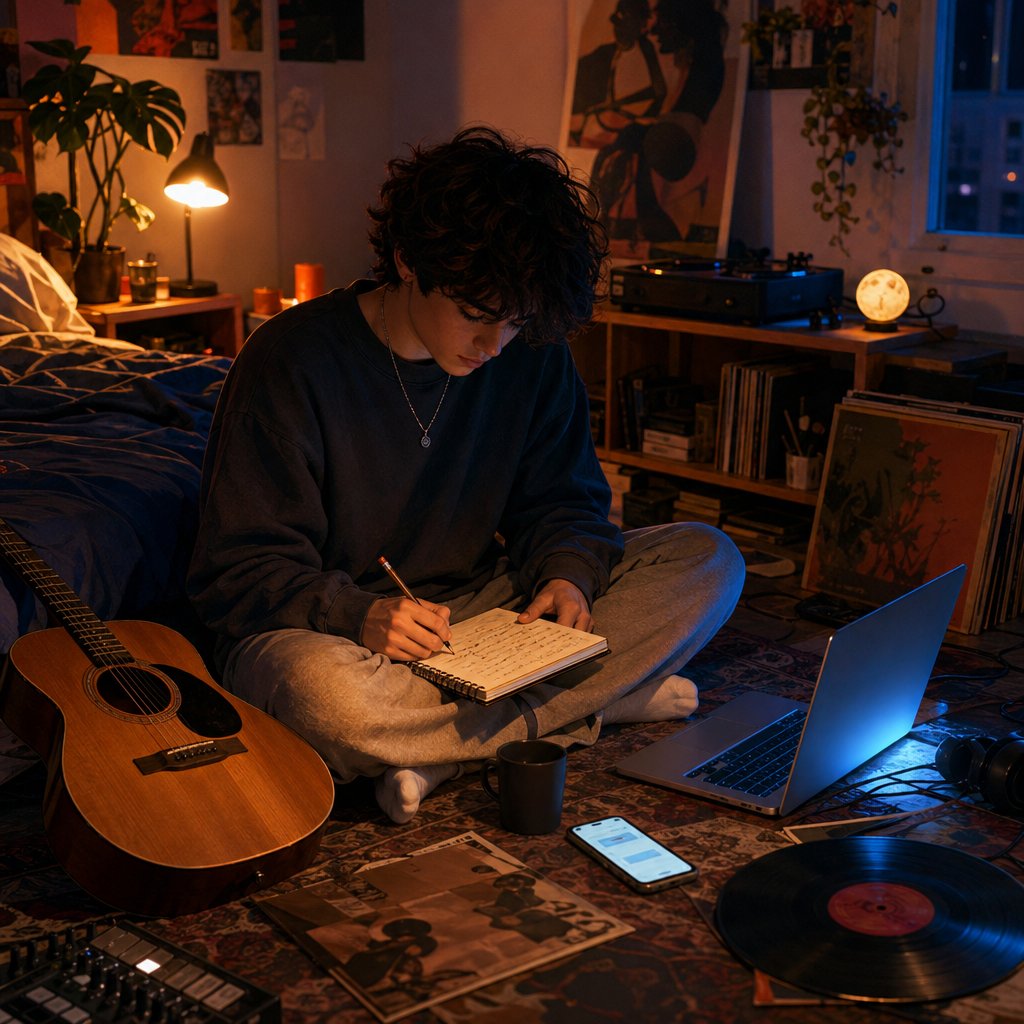
That new generation didn't just reopen the conversation — they rewrote the terms entirely. By the early 2010s, the mainstream third wave had largely burned out. Fall Out Boy was on hiatus. My Chemical Romance had broken up. The word "emo" carried more cultural baggage than ever. And yet, in basements and DIY venues across the country, a fourth wave was already taking shape — one that looked backward to the second wave's raw intimacy while filtering it through the self-aware, internet-soaked lens of a generation raised on memes and mental health discourse.
Fourth-Wave Bands Reviving the DIY Spirit
Philadelphia's Modern Baseball became the early standard-bearers. Their approach was casual, sometimes funny, and disarmingly honest — songs about being broke, anxious, and in your early twenties, delivered with the kind of vulnerability that felt like overhearing someone's group chat. As Melodic Magazine noted, the band "didn't take themselves too seriously, and by setting this example they invited listeners to adopt the same attitude." Albums like You're Gonna Miss It All (2014) spoke directly to a young audience navigating adulthood's running point between ambition and paralysis. Their indefinite hiatus in 2017 left a gap, but the template they set — confessional, low-stakes, deeply relatable — became the blueprint for dozens of bands that followed.
Mom Jeans., despite hailing from California, channeled Midwest emo's twinkly guitar DNA with an almost scholarly devotion to American Football's arpeggiated style. Their independently released debut Best Buds (2016) caught fire online, and the band became one of the first fourth-wave acts to build a massive following through social media rather than traditional label machinery. Hot Mulligan pushed the sound further, coining the term "post-emo" to describe their blend of intricate guitar work, pop-punk breakdowns, and dual vocal interplay between Tades Sanville and Chris Freeman. Their 2020 album you'll be fine launched them into headliner territory, and they've been on an upward trajectory since — loyal as a great pyrenees to the genre's emotional core while constantly expanding its sonic boundaries.
Tiny Moving Parts brought technical, math-rock-influenced guitar tapping into the mix. Origami Angel added a playful, genre-blending energy that pulled from ska, pop-punk, and indie rock without ever losing the confessional thread. What united all of them was a return to DIY ethics — self-booked tours, independent releases, direct fan relationships built through Bandcamp and social media rather than major label gatekeeping.
- Modern Baseball — You're Gonna Miss It All (2014)
- Mom Jeans. — Best Buds (2016)
- Tiny Moving Parts — Swell (2016)
- Hot Mulligan — you'll be fine (2020)
- Origami Angel — GAMI GANG (2021)
- Prince Daddy & The Hyena — Cosmic Thrill Seekers (2019)
- Charmer — Ivy (2018)
Emo Rap and the Genre's New Frontier
While fourth-wave bands were rebuilding the DIY circuit, something stranger and more commercially explosive was happening on SoundCloud. Young rappers who'd grown up listening to Fall Out Boy and Nirvana alongside hip-hop started uploading tracks that fused emo's confessional vulnerability with trap beats and Auto-Tuned melodies. The result was emo rap — a subgenre that created an entirely new audience pipeline into emotional music.
Lil Peep was the movement's most visible early figure, blending lo-fi guitar samples with lyrics about depression, substance abuse, and heartbreak. His 2017 death from an accidental overdose at age 21 cast a long shadow over the scene. Lil Uzi Vert's "XO TOUR Llif3" peaked at number seven on the Billboard Hot 100 that same year, its chorus — "Push me to the edge / All my friends are dead" — marking a shift in hip-hop's emotional vocabulary. Juice WRLD, who openly cited rock influences, told The Guardian in 2019: "Everybody's got pain. Depression, addiction, heartbreak: These are human characteristics." His own death from an overdose later that year underscored both the genre's emotional authenticity and its darker undercurrents.
Nothing,Nowhere. occupied the space between worlds most explicitly, layering screamed vocals over 808s and collaborating with artists from both the emo and hip-hop sides. By 2018, emo rap had become the fastest-growing genre on Spotify, proving that the confessional impulse at the heart of emo music could thrive in sonic contexts its founders never imagined.
- Lil Peep — Come Over When You're Sober, Pt. 1 (2017)
- Lil Uzi Vert — "XO TOUR Llif3" (2017)
- Juice WRLD — Goodbye & Good Riddance (2018)
- Nothing,Nowhere. — Reaper (2017)
- Trippie Redd — A Love Letter to You (2017)
TikTok Nostalgia and the Scene's Reckoning
TikTok became the unexpected engine that stitched these threads together. Starting around 2020, clips set to "Welcome to the Black Parade," "Sugar, We're Goin' Down," and other third-wave anthems went viral among Gen Z users who'd been too young to experience the original era. The algorithm didn't care about wave classifications — it just served emotional intensity to anyone who engaged with it. Suddenly, teenagers were discovering American Football and Dashboard Confessional alongside Denzel Washington movies and trending audio memes, all in the same scroll session. The platform collapsed decades of genre history into a single feed, creating new fans who moved fluidly between waves without the gatekeeping baggage that had defined earlier eras.
That openness, though, also forced the community to confront its own history more honestly. Abuse allegations against prominent scene figures — including members of bands like Brand New and The Front Bottoms' touring circle — sparked accountability conversations that reshaped community norms. The modern emo scene increasingly demanded that emotional vulnerability extend beyond lyrics and into how artists and industry figures actually treated the people around them. It was a painful but necessary reckoning, and it signaled that the genre's relationship with authenticity was evolving in ways that went far deeper than sound.
All of this — the fourth wave's DIY revival, emo rap's crossover explosion, TikTok's nostalgia machine, the accountability shift — left the genre in a position it had never occupied before: sprawling, self-aware, and more culturally embedded than any single wave could contain. The question was no longer whether emo was alive, but what it sounded like when you actually sat down and listened.
Essential Emo Songs Across Every Wave
Sitting down and listening is the easy part. Knowing where to start is the hard part. Emo's four-decade history can feel overwhelming — like trying to how to build a campfire without knowing which logs go on the bottom. A flat "Top 50" list won't help you understand why the genre sounds the way it does today. What you need is a chronological path through the defining tracks of each wave, so the sonic evolution tells its own story as you press play.
First and Second Wave Essentials
The earliest emo songs hit like raw nerve endings. Rites of Spring's "For Want Of" opens with a jagged guitar line before Guy Picciotto's voice cracks open with an urgency that D.C. hardcore had never allowed itself. It's the sound of vulnerability being invented in real time. Embrace's "Give Me Back" carries a similar desperation — Ian MacKaye channeling emotional confession over punk's blunt instrumentation, proving the two could coexist.
The second wave slowed things down and made them more intricate. American Football's "Never Meant" is the song most people think of when they hear "Midwest emo" — its twinkling, arpeggiated guitar intro has become so iconic that NPR called it an "emo mixtape staple" fifteen years after its release. Sunny Day Real Estate's "Seven" builds from a whispered verse into a soaring, cathartic chorus that practically invented the quiet-loud dynamic the genre would ride for decades. These tracks reward patience. They don't do a barrel roll into the hook — they unfold slowly, pulling you deeper with each listen.
The Songs That Defined Mainstream Emo
Third-wave tracks were built for immediate impact. Jimmy Eat World's "The Middle" became the genre's most universally recognized anthem — a three-minute burst of reassurance that told every misfit teenager "it just takes some time." Dashboard Confessional's "Screaming Infidelities" turned acoustic heartbreak into a communal experience, with crowds singing every word back louder than Chris Carrabba himself. My Chemical Romance's "Welcome to the Black Parade" was the genre's most ambitious statement: a rock opera compressed into five minutes, complete with a marching band intro that became one of the most recognizable openings in 2000s music. You didn't need to know how to use linkedin to network your way into this scene — you just needed a pair of headphones and a willingness to feel something.
Modern Emo Tracks Worth Discovering
Fourth-wave songs carry the emotional weight of their predecessors but filter it through self-awareness and internet-age humor. Modern Baseball's "Your Graduation" captures the specific ache of watching someone you love outgrow you, delivered in Brendan Lukens' conversational vocal style — no theatrics, just honesty. Mom Jeans.' "Edward 40hands" pairs a twinkly guitar line straight out of the American Football playbook with lyrics about messy nights and messier feelings. Hot Mulligan's "*equip sunglasses*" showcases the dual-vocal interplay that defines their sound, bouncing between melodic hooks and raw screams within the same verse. These aren't nostalgia acts — they're proof the genre keeps finding new ways to say what matters.
| Wave | Song Title | Artist | Why It Matters |
|---|---|---|---|
| First Wave | "For Want Of" | Rites of Spring | The song that cracked D.C. hardcore open with emotional confession |
| First Wave | "Give Me Back" | Embrace | Ian MacKaye proving vulnerability and punk could coexist |
| Second Wave | "Never Meant" | American Football | The defining Midwest emo track — twinkly guitars, bittersweet nostalgia |
| Second Wave | "Seven" | Sunny Day Real Estate | Pioneered the quiet-loud dynamic that shaped the genre's future |
| Second Wave | "Nothing Feels Good" | The Promise Ring | Pushed second-wave emo toward pop melody without losing its heart |
| Third Wave | "The Middle" | Jimmy Eat World | The genre's most universally recognized anthem of reassurance |
| Third Wave | "Screaming Infidelities" | Dashboard Confessional | Turned acoustic vulnerability into arena-sized sing-alongs |
| Third Wave | "Welcome to the Black Parade" | My Chemical Romance | A theatrical rock opera that became emo's grandest statement |
| Third Wave | "Sugar, We're Goin' Down" | Fall Out Boy | Fused pop-punk hooks with emo's confessional lyrical style |
| Fourth Wave | "Your Graduation" | Modern Baseball | Conversational heartbreak that defined the revival's emotional tone |
| Fourth Wave | "Edward 40hands" | Mom Jeans. | Midwest emo guitar worship meets messy, relatable storytelling |
| Fourth Wave | "*equip sunglasses*" | Hot Mulligan | Dual-vocal interplay showcasing the genre's evolving sonic range |
Listening through this table from top to bottom is like watching a time-lapse of emotional expression in punk-rooted music — from Picciotto's raw screams to Kinsella's whispered regret to Way's theatrical grandeur to Lukens' conversational confessions. Each wave didn't replace the last; it added a new layer. The genre never learned how to fix a running toilet of emotions — it just kept letting them flow, and that's exactly why these songs still hit. The real question isn't which wave produced the best tracks. It's what the culture surrounding all of them looked like — because emo was never just about the music.
Emo Culture, Fashion, and Online Identity
It was never just about the music because emo demanded you wear it, live it, and broadcast it to the world. From the very beginning, the genre's visual identity was inseparable from its sound — a full cultural movement where what you looked like said as much about your emotional allegiances as the lyrics you screamed along to. And the platforms where you performed that identity shaped the culture just as powerfully as the bands themselves.
The Evolution of Emo Fashion
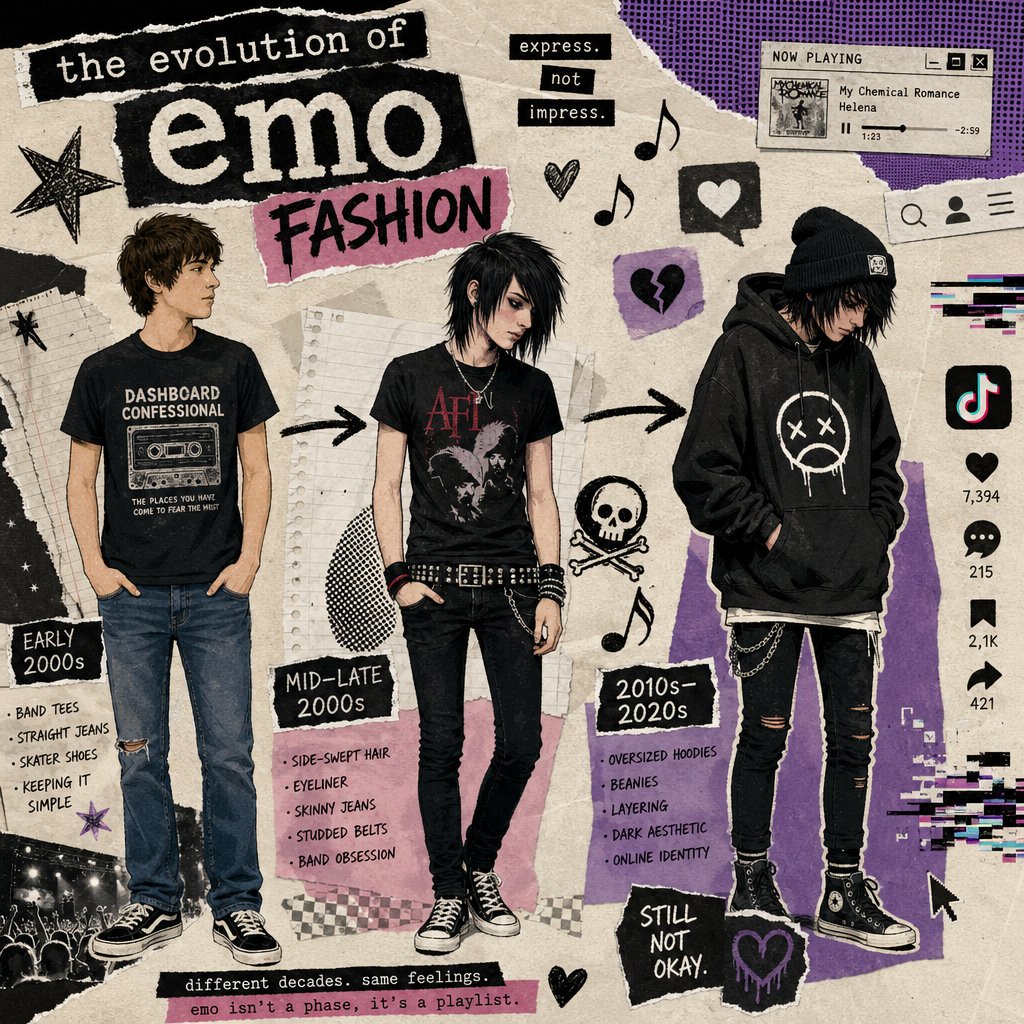
Each wave carried its own dress code, even if nobody wrote it down. First-wave fans in the D.C. hardcore scene kept things simple — band tees, jeans, and the same stripped-down look their punk predecessors wore. There was no costume. The music was the point.
The second wave didn't change much visually. Midwest emo kids dressed like college students because most of them were. Thrifted flannels, corduroys, and ringer tees dominated. The aesthetic was anti-aesthetic — a deliberate rejection of performance in favor of showing up as yourself.
Then the third wave turned everything into a uniform. The 2000s emo look became one of the most recognizable youth subculture aesthetics of the decade — and it was meticulously constructed, even when it was supposed to look effortless.
- Side-swept bangs, flat-ironed pin-straight and dyed jet black
- Heavy black eyeliner on both upper and lower lash lines — for all genders
- Ultra-tight black skinny jeans, the tighter the better
- Band tees from My Chemical Romance, Taking Back Sunday, or The Used, worn fitted
- Studded belts in white or black leather, slung low on the hips
- Converse All-Stars or Vans checkerboard slip-ons, often covered in Sharpie lyrics
- Striped arm warmers in black and pink or black and white
- Messenger bags plastered with band patches and buttons
- Snake bite piercings and rubber bracelets stamped with band names
Hot Topic became the commercial hub for all of it. The store was a paradox — a mall chain selling rebellion — but for millions of teenagers in suburban towns without a local scene, it was the only access point to the culture. You could walk in not knowing how to surf the genre's underground and walk out with a studded belt, a Hawthorne Heights tee, and a starter kit for belonging.
The revival era flipped the script again. Fourth-wave fans leaned into normcore and indie-adjacent style — oversized hoodies, beanies, and looser fits that rejected the skin-tight silhouette of the 2000s. The modern iteration, visible across TikTok's e-boy and e-girl aesthetic, borrows selectively from the 2000s — chains, black nail polish, band tees — while mixing in elements of goth, skate culture, and anime. It's self-aware in a way the original scene never was, playfully referencing its roots rather than treating them as gospel.
MySpace, Tumblr, and TikTok as Emo Platforms
Fashion was only half the equation. The other half was where you displayed it — and each era of emo was defined by the social platform that hosted its community.
MySpace was the original emo social network. Its customizable profile pages let users build entire visual identities around the genre — autoplay songs from unsigned bands, glittery HTML layouts, Top 8 friend rankings that doubled as social currency. For bands, it was revolutionary. Acts like Fall Out Boy and Paramore could interact with fans directly, promote tours, and upload tracks without a label's permission. MySpace "solidified scene culture," as Stereogum documented, turning the platform into both a discovery engine and a community hub where the stereotypical scene kid look — bright hair, eyeliner, sideswept bangs — became a shared visual language.
When MySpace collapsed around 2009, the community migrated to Tumblr. The vibe shifted. Tumblr's reblog culture favored lyric edits, moody photography, and a softer aesthetic — muted colors, string lights, wall flags. It was less about performing scene identity and more about curating emotional atmosphere. Bands like the Wonder Years and Real Friends built followings there, and even legacy acts like My Chemical Romance thrived — the band was the top band on Tumblr in 2020, years after their breakup.
TikTok completed the cycle. Starting around 2020, the platform's algorithm began surfacing classic emo tracks to Gen Z users who'd never experienced the original era. The "it was never a phase" trend saw millennials proudly displaying their old scene photos, while teenagers discovered "Welcome to the Black Parade" for the first time through viral audio clips. TikTok didn't just revive emo nostalgia — it collapsed the genre's entire timeline into a single feed, letting users move between waves without the gatekeeping that had defined earlier platforms. You could set a 10 minute timer and scroll through four decades of emo history without ever leaving the app.
Mental Health, Community, and Media Panic
Beneath the fashion and the platforms, something deeper was always at work. For millions of young listeners, emo provided genuine emotional validation during the most turbulent years of their lives. The genre said it was okay to feel too much — to be sad, angry, confused, and overwhelmed — at a time when mainstream culture often told teenagers to toughen up. You didn't need to know how to sing to scream along to "I'm Not Okay (I Promise)" in your bedroom. You just needed to feel it. That communal vulnerability created real bonds. Scene kids found each other at shows, on message boards, and through MySpace comments, building friendships rooted in shared emotional honesty.
The media, predictably, panicked. Throughout the mid-2000s, news outlets ran sensationalized segments linking emo to self-harm, depression, and dangerous behavior — treating the genre as a cause of emotional distress rather than a response to it. The UK's Daily Mail ran headlines calling emo a "cult" that encouraged self-injury. Parents were warned to monitor their children's listening habits the way you'd monitor a 20 minute timer on a homework session — with anxious vigilance. These moral panics were largely unfounded and deeply harmful, stigmatizing teenagers who were already struggling and making them feel even more alienated from the adults in their lives.
The reality was more nuanced. Research has consistently shown that music serves as an emotional regulation tool for adolescents, and emo's confessional lyrics gave young people a vocabulary for feelings they couldn't yet articulate on their own. The genre didn't create pain — it acknowledged it. And for many fans, that acknowledgment was the first step toward feeling less alone. The community wasn't perfect, and later accountability reckonings proved that, but its core function — providing a space where emotional vulnerability was celebrated rather than punished — remains one of emo's most lasting contributions to youth culture.
That cultural footprint — the fashion, the platforms, the emotional community — is exactly what makes emo so difficult to compare with other genres. It shares surface-level similarities with goth, pop punk, and scene culture, but the differences run deeper than most people realize. And those differences matter, because getting them wrong is the fastest way to start an argument in any comment section.
Goth vs Emo vs Pop Punk vs Scene
Those arguments usually start the same way: someone calls a band emo punk, someone else insists they're pop punk, and a third person shows up to explain why the whole thing is actually goth. The confusion is understandable. These subcultures share overlapping fashion, adjacent musical roots, and fans who move freely between them. But the differences are real — and once you see them, you can't unsee them.
Emo vs Goth — Sound, Style, and Philosophy
This is the comparison that gets mangled most often. On the surface, both subcultures lean into dark aesthetics and emotional intensity. Dig deeper, though, and they're pulling from entirely different wells. Emo bands draw from hardcore punk and post-hardcore, building songs around confessional vulnerability — lyrics about personal heartbreak, anxiety, and self-doubt delivered over dynamic, guitar-driven arrangements. The emotional register is inward-facing. It's diary-entry honesty set to power chords.
Goth, by contrast, roots itself in post-punk and darkwave, with atmospheric, often synth-heavy production and lyrical themes drawn from literature, horror, and the supernatural. Where emo says "I'm not okay," goth says "none of this is okay — and there's a dark beauty in that." Bands like Bauhaus and Siouxsie and the Banshees built sonic worlds that feel cinematic and detached, while emo's best moments feel uncomfortably close and personal. The fashion diverges just as sharply: goth pulls from Victorian and Edwardian influences — lace, corsets, silver jewelry — while emo style in its most recognizable 2000s form centered on skinny jeans, band tees, and side-swept bangs.
Where Pop Punk Ends and Emo Begins
This boundary is blurrier, and honestly, plenty of bands straddle it. Pop punk shares emo's punk DNA but channels it differently — upbeat tempos, major-key melodic hooks, and lyrics that skew toward adolescence, parties, and summer nostalgia rather than introspective anguish. Think Blink-182's irreverent humor versus Dashboard Confessional's acoustic heartbreak. The instrumentation can sound nearly identical on a surface listen, but the emotional posture is the giveaway. Pop punk wants you to sing along at a party. Emo wants you to feel something alone in your car at midnight. Many emo bands — Fall Out Boy, Paramore — blended both impulses so thoroughly that trying to categorize them is like trying to how to hang a picture on a wall with no studs: technically possible, but you'll never feel fully confident about it.
Scene Culture and Its Emo Overlap
Scene is the wildcard in this conversation because it isn't really a music genre at all — it's a visual and social subculture. Scene kids emerged in the early 2000s from the already-existing emo community, trading black for neon colors, adding raccoon-striped hair, stretched earlobes, and maximalist accessories influenced by rave culture, Harajuku street fashion, and glam metal. Musically, scenesters gravitated toward crunkcore, electronica-infused pop punk, and bands like Metro Station and Breathe Carolina — sounds that borrowed emo's emotional energy but wrapped it in synths and Auto-Tune. The emo community sometimes accused scene kids of ripping off their style, but scene carved out its own identity through sheer visual volume. If emo was a whispered confession, scene was that same confession shouted through a neon megaphone. The subculture grew rapidly through MySpace, declined by the mid-2010s, and has seen a revival through TikTok hashtags like #Rawring20s — proving that, like emo itself, it refuses to stay buried.
The reality is that these categories function less like world flags with clean borders and more like overlapping circles on a Venn diagram. Paramore gets claimed by emo, pop punk, and scene fans simultaneously. The Cure sits at the intersection of goth and post-punk. A band emo punk fans embrace one year might get reclassified the next. The "is this emo?" debate isn't a bug in the community — it's a feature, and it's been running since 1986.
| Category | Emo | Goth | Pop Punk | Scene |
|---|---|---|---|---|
| Musical Roots | Hardcore punk, post-hardcore | Post-punk, darkwave | Punk rock, power pop | Pop punk, electronic, crunkcore |
| Lyrical Themes | Confessional vulnerability, heartbreak, anxiety | Death, the supernatural, literary darkness | Adolescence, relationships, humor | Varies — borrowed from emo and pop punk |
| Fashion Hallmarks | Skinny jeans, band tees, eyeliner, side-swept bangs | Victorian/Edwardian influence, lace, corsets, all black | Skate shoes, cargo shorts, graphic tees, snapbacks | Neon colors, raccoon-striped hair, stretched earlobes, maximalist accessories |
| Emotional Posture | Inward, vulnerable, confessional | Atmospheric, detached, darkly romantic | Outward, energetic, irreverent | Performative, social, visually loud |
| Key Bands | American Football, My Chemical Romance, Modern Baseball | Bauhaus, The Cure, Siouxsie and the Banshees | Blink-182, Green Day, New Found Glory | Metro Station, Breathe Carolina, Millionaires |
Understanding these distinctions matters — not because rigid genre policing is useful, but because each subculture offered its fans something specific. Goth offered dark beauty. Pop punk offered catharsis through fun. Scene offered visual spectacle. And emo offered the rarest thing of all: permission to be emotionally honest without apology. That emotional honesty didn't just shape a subculture. It left fingerprints across the entire landscape of modern music — in places most listeners don't even realize they're hearing it.
How Emo Shaped the Sound of Modern Music
Those fingerprints are everywhere once you know what to look for. Emo didn't fade after its mainstream peak — it dissolved into the broader musical water supply. The confessional lyrics, the quiet-loud dynamics, the raw vocal delivery, the layered guitars that shimmer and then explode — these production signatures now show up across pop, indie, and hip-hop in ways that rarely get traced back to their source. The genre's influence isn't a museum exhibit. It's a living current running beneath some of the biggest emo songs of the past few years, even when the artists making them have never set foot in a basement show.
Emo's Fingerprints on Today's Pop and Indie
The most visible example is Olivia Rodrigo. Her 2021 debut SOUR didn't just borrow from emo — it drew so directly from Paramore's catalog that the band received a songwriting credit on "Good 4 U" due to its resemblance to "Misery Business." That wasn't a legal technicality. It was an acknowledgment that Rodrigo's plucky pop-rock sound — the distorted guitars, the vocal intensity, the lyrics dripping with betrayal and self-doubt — grew directly from the soil Hayley Williams tilled in the mid-2000s. Williams herself has become an object of what The New Yorker described as "idol worship" among today's young female indie-rock and anti-pop stars, including Billie Eilish and Soccer Mommy.
Machine Gun Kelly's pivot from rap to pop-punk on Tickets to My Downfall (2020) was another signal. Produced by Travis Barker, the album leaned hard into the sonic palette of early 2000s emo and pop punk — palm-muted power chords, sing-along choruses, lyrics about heartbreak and self-destruction. Whether you loved it or dismissed it as cosplay, the album debuted at number one on the Billboard 200, proving that the appetite for emo-adjacent sounds hadn't disappeared — it had just been waiting for a new delivery system. Meanwhile, indie artists like Phoebe Bridgers, Julien Baker, and Soccer Mommy channel Midwest emo's introspective guitar tones and confessional vulnerability without ever adopting the emo hair or visual signifiers of the 2000s scene. Their music lives in the emotional space emo carved out, even if the packaging looks completely different.
The emo-trap wave extended this reach even further. Artists like casalena and a growing wave of bedroom producers blend lo-fi emo guitar samples with hip-hop beats, creating hybrid sounds that would have been unthinkable in 1985 but feel completely natural to listeners who grew up streaming across genre lines. The confessional impulse at the heart of the genre — the willingness to say "I'm not okay" over a microphone — has become so normalized in popular music that it's easy to forget how radical it once was.
How Emo Changed Emotional Expression in Music
This is the deeper legacy, and it goes beyond production tricks. Emo's insistence on emotional vulnerability — particularly from male artists — helped shift broader cultural attitudes about masculinity and self-expression in music. Before emo went mainstream, the dominant modes of male emotional expression in rock were either stoic cool or performative rage. Emo offered a third option: unguarded honesty about fear, sadness, loneliness, and heartbreak, delivered without ironic distance.
"Emo music offered me the first taste of a collective subculture, a 'we' built not of chest-thumping aggression but of angst-laden melodrama. We swapped physical strength for hyperbolic introspection." — Derek Mong, Zocalo Public Square
That shift didn't stay inside the genre. As writer Derek Mong reflected, emo taught a generation of young men that vulnerability could be "cool" — that crying, confessing, and admitting weakness weren't signs of failure but forms of connection. You can hear that influence rippling through artists who'd never call themselves emo: Frank Ocean's raw emotional disclosure, Tyler the Creator's evolution from provocation to vulnerability on Igor, even the confessional strain running through Billie Eilish's whispered pop. Learning to be emotionally honest in music isn't like learning how to do a pullup — there's no single technique. But emo built the cultural permission structure that made it possible for mainstream artists to try.
The production aesthetics followed the same path. Quiet-loud dynamics — pioneered by second-wave bands like Sunny Day Real Estate and refined by third-wave acts like Brand New — now appear across indie rock, art pop, and even hip-hop production. Layered, shimmering guitars that owe a clear debt to Midwest emo's arpeggiated style show up in tracks by Japanese Breakfast, Big Thief, and Snail Mail. The raw, slightly imperfect vocal delivery that emo championed — voices that crack, strain, and break — has become a marker of authenticity across genres that once demanded polish above all else.
Emo isn't a relic. It's a root system. The genre's DNA runs through chart-topping pop, underground indie, and experimental hip-hop alike, shaping how artists write, perform, and relate to their audiences. And for listeners who've traced that influence through this article and feel the pull to explore it from the inside — not just as fans but as creators — tools like MakeBestMusic's AI Song Generator offer a way to experiment hands-on. You can select emo as a genre or mood, feed in musical ideas inspired by the styles and waves discussed here, and generate original royalty-free tracks that capture the genre's emotional intensity. It's a way to experience emo songwriting from the creator's side of the microphone, turning genre discovery into something you can actually feel your way through.
That creative impulse — the desire to move from listening to making — is exactly what the genre has always been about. And for anyone standing at that threshold, the next step isn't just knowing emo's history. It's knowing where to press play.
Your Gateway to Discovering and Creating Emo
Knowing where to press play depends entirely on who you are right now. Maybe you landed here after a TikTok rabbit hole and can't tell the goth vs emo difference yet. Maybe you haven't listened since the days of 2000s hairstyles and studded belts. Or maybe you're a musician itching to understand why emo's songwriting patterns keep showing up in everything you love. Each path in is different — and curating by wave rather than shuffling randomly lets the genre's evolution tell its own story as you go.
Where to Start Based on Your Listening Style
- The complete newcomer: Start with third-wave anthems — Jimmy Eat World's "The Middle," My Chemical Romance's "Welcome to the Black Parade," Fall Out Boy's "Sugar, We're Goin' Down." These are the most accessible entry points, built for immediate emotional impact. Once they click, work backward into second-wave records like American Football's self-titled album and Sunny Day Real Estate's Diary to hear where those sounds originated.
- The nostalgic returning fan: You grew up with scene kids and Fueled by Ramen releases, and you're wondering what happened after. Pick up where you left off with fourth-wave bands like Hot Mulligan, Modern Baseball, and Mom Jeans. — they carry the emotional DNA you remember but filter it through a self-aware, DIY sensibility that feels fresh. From there, explore newer acts like Origami Angel, Kerosene Heights, and Arm's Length to hear where the genre is headed right now.
- The curious deep-cut explorer: Once you've covered the major waves, branch into the edges — emo rap (Lil Peep, Nothing,Nowhere.), screamo (Orchid, Saetia), and the math-rock-influenced corners (Tiny Moving Parts, Algernon Cadwallader). Build separate playlists for each wave so you can hear the sonic shifts in sequence rather than flattening them into a single shuffle.
Think of it like learning how to make coffee — you start with the basics before experimenting with pour-over ratios and single-origin beans. The same principle applies here. A wave-by-wave playlist strategy gives you context that a random "Top 100 Emo Songs" list never will.
From Listener to Creator
The leap from fan to creator is shorter than most people think. Emo's songwriting patterns are surprisingly learnable once you know what to listen for: verse-chorus dynamics that build tension through restraint, confessional lyrics written in second person or direct address, and quiet-loud structures where whispered verses erupt into cathartic choruses. You don't need a 5 minute timer to spot these patterns — just pay attention to how your favorite tracks make you feel the shift between sections.
Study the contrast. Notice how American Football's verses hover at a murmur before the guitars swell. Notice how My Chemical Romance uses theatrical dynamics the way a painter would how to paint a room — layering color and intensity until the whole thing transforms. These aren't accidents. They're deliberate emotional architectures you can learn to build yourself.
For anyone ready to experiment hands-on, MakeBestMusic's AI Song Generator bridges the gap between genre appreciation and actual creation. Select emo as your genre or mood, input a musical idea drawn from the waves and styles you've explored throughout this article, and generate an original royalty-free track in seconds. It's a low-pressure way to test what you've absorbed — to hear whether the confessional intensity, the dynamic shifts, and the emotional rawness you've been studying can translate into something that feels like yours.
Emo has spent four decades being rejected by its own artists, debated by its fans, mourned by the media, and revived by every generation that discovers it. The genre survives because it was never really about a sound. It was about permission — permission to feel too much, say too much, and care too much in a world that keeps telling you to dial it back. Whether you're pressing play for the first time or picking up a guitar after years away, that permission still stands.
