

What Harmony and Dissonance Really Mean
Imagine holding down two piano keys at once. Some combinations feel warm and settled, like a deep breath out. Others make you wince, creating an almost physical pull toward something that needs to change. That contrast sits at the heart of virtually all music ever written, and it comes down to two forces: harmony and dissonance.
Defining Harmony and Dissonance in Music
In music theory, harmony describes the effect produced when notes sound together in combinations that feel stable and at rest. Dissonance is the opposite: it is the impression of tension, clash, or unease that certain note combinations create in a listener. These two forces are not enemies. They are partners. One gives the other meaning. A piece built entirely on consonant harmony would feel flat and lifeless, while nonstop dissonance would exhaust the ear. The magic happens in the push and pull between them.
Dissonance is the tension; harmony is the resolution. Together they form the emotional engine of all music.
That cycle of tension building and then releasing is what makes a melody feel like it is going somewhere. It is the reason a song can make you hold your breath and then let it go. Every genre relies on this relationship, from Bach's meticulously crafted counterpoint to the unresolved chords in a jazz ballad. The perception of what counts as consonant or dissonant has shifted dramatically across centuries and cultures, but the underlying principle remains constant: harmony dissonance is the engine that drives musical emotion forward.
Why This Term Means Two Very Different Things Online
Here is where things get interesting. If you searched for "harmony of dissonance," you might be a music student trying to understand interval relationships, or you might be a gamer looking for tips on Castlevania: Harmony of Dissonance, the beloved GBA title where Juste Belmont battles through a dual-castle nightmare. Both searches are valid, and both deserve a real answer.
This article covers the full picture. The first half digs into the music theory, the science, and the history behind consonance and dissonance, complete with practical techniques you can use in your own compositions. The second half explores the Castlevania game that borrowed this concept for its title, including its mechanics, its endings, and its place in the franchise. Whether you are here for Bach or Belmont, you are in the right place.
The Science Behind Musical Tension and Resolution
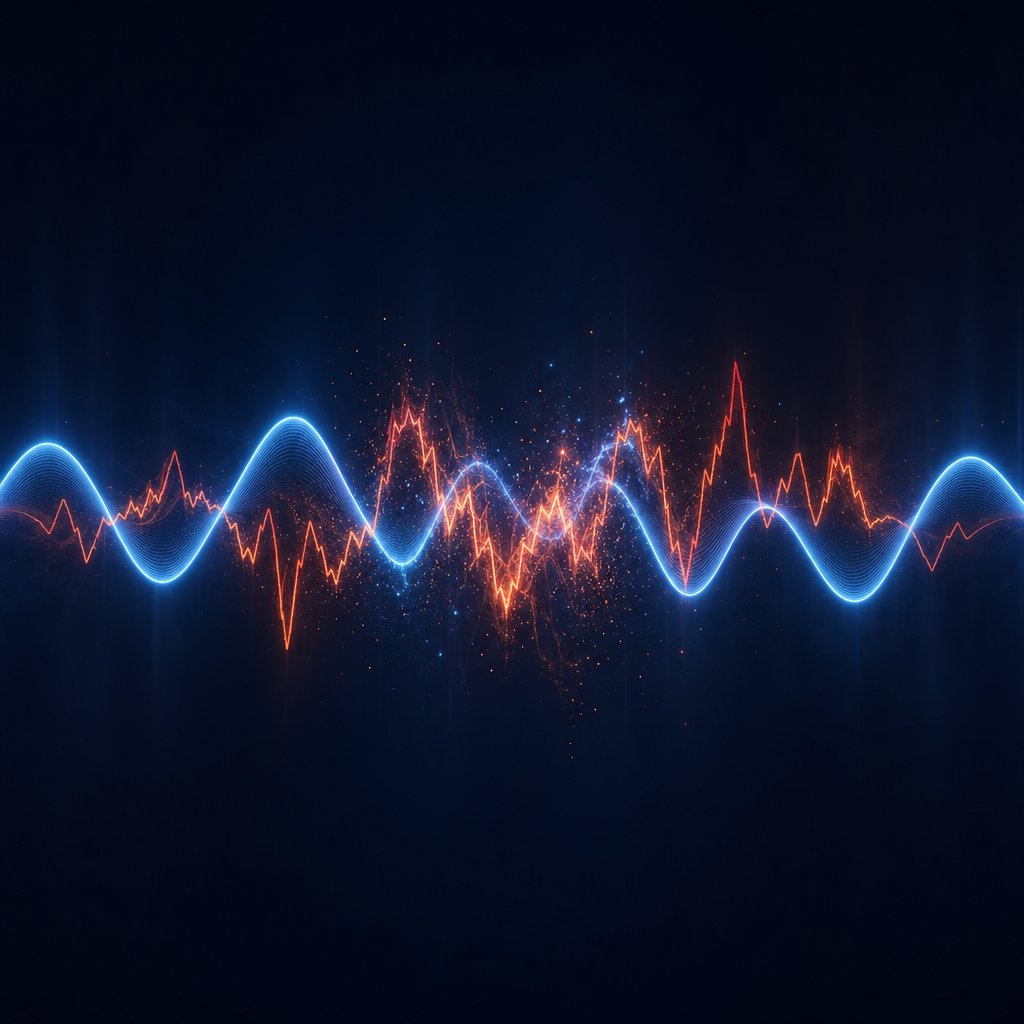
That emotional push and pull between stability and tension is not just a feeling. It is rooted in physics. When two notes sound simultaneously, their sound waves interact in measurable ways, and your brain interprets those interactions as either smooth or rough. Understanding why certain intervals feel restful while others make your skin prickle comes down to one thing: the mathematical relationship between their frequencies.
Frequency Ratios and Why Your Ears React
Every musical note is a vibration at a specific frequency. When you play two notes together, the ratio between their frequencies determines whether the combination sounds consonant or dissonant. Simple ratios produce consonance. An octave, for example, has a frequency ratio of 2:1. One note vibrates exactly twice as fast as the other, so their wave patterns align neatly and the brain perceives a stable, almost unified sound. A perfect fifth sits at 3:2, and a major third at 5:4. These clean ratios mean the overlapping waves reinforce each other in a predictable, repeating pattern.
Dissonant intervals tell a different story. A minor second (the distance between two adjacent piano keys) has a ratio of roughly 16:15. The tritone, sometimes called the "devil's interval," lands near 45:32. These complex ratios cause the two sound waves to clash in irregular patterns, producing a phenomenon called beating. You hear it as a wobbling, roughness, or buzzing quality. Your auditory system flags that roughness as tension, something unresolved that wants to move somewhere else. Research into perceived dissonance has also shown that timbre plays a role: the same interval can feel harsher on a piano than when sung by a human voice, because the overtone structures differ between sound sources.
Consonant vs. Dissonant Intervals at a Glance
The table below maps out the most common intervals, their frequency ratios, and how they tend to register in a listener's ear. Think of it as a quick reference for recognizing where tension lives and where stability rests.
| Interval Name | Example Notes | Frequency Ratio | Sound Quality |
|---|---|---|---|
| Unison | C - C | 1:1 | Perfectly stable, identical |
| Octave | C4 - C5 | 2:1 | Open and stable, feels like the same note |
| Perfect Fifth | C - G | 3:2 | Strong, resonant, and anchored |
| Major Third | C - E | 5:4 | Warm, bright, and settled |
| Minor Second | C - Db | 16:15 | Tense, grinding, wants to resolve |
| Major Seventh | C - B | 15:8 | Bittersweet tension, pulling toward the octave |
| Tritone | C - F# | 45:32 | Restless, unstable, strongly demands resolution |
Notice the pattern. As the frequency ratios grow more complex, the perceived tension increases. The consonant intervals at the top of the table use small, clean numbers. The dissonant intervals at the bottom use larger, messier ones. Your ear is essentially doing math in real time, even if you have never thought about ratios in your life.
The Tension-Resolution Cycle
Knowing which intervals are tense and which are stable is useful on its own, but the real power of harmony dissonance lies in how composers sequence them. Music rarely sits still. It moves through cycles of tension and release, and that movement is what gives a piece its sense of direction and emotional arc.
The most fundamental example of this cycle is the V7-to-I cadence. Imagine you are in the key of C major. The V7 chord is G7, built from the notes G, B, D, and F. Inside that chord, two dissonant forces are at work. The B natural wants to resolve upward to C (it is the leading tone, just a half step below home). The F wants to fall down to E. That pair of tensions creates a strong gravitational pull toward the C major chord, the I chord, where everything lands and feels resolved.
Try it yourself on any keyboard or guitar. Play a G7 chord, let it ring, and then move to C major. You will feel the release physically, almost like exhaling. That is the tension-resolution cycle in its purest form. Composers from the Baroque era to modern pop songwriters use this exact mechanism to create momentum, build anticipation, and deliver emotional payoff. The dissonance is not a problem to fix. It is the setup that makes the resolution satisfying.
This interplay between clashing intervals and their resolution did not appear overnight. It evolved across centuries, shaped by changing ears, shifting cultural values, and composers willing to push the boundaries of what listeners could tolerate.
How the Meaning of Dissonance Changed Across Musical Eras
The intervals you just saw neatly labeled as "consonant" or "dissonant" in that table? Those labels are not permanent. What counts as pleasant or harsh has been renegotiated by every generation of composers and listeners for over a thousand years. The story of harmony dissonance is really a story about shifting cultural ears.
Medieval and Renaissance Ears Heard Differently
Picture a medieval cathedral around the year 1100. The only intervals considered truly consonant were the octave, the perfect fifth, and the perfect fourth. Everything else, including the major third you hear as warm and bright today, was classified as dissonant. Composers writing sacred polyphony avoided thirds the way you might avoid a wrong note. Before about 1300, the interval of the third was heard as dissonant, and even after attitudes softened, it remained labeled an "imperfect" consonance well into later centuries.
Renaissance composers gradually changed the equation. As polyphonic writing grew more complex in the 1400s and 1500s, thirds and sixths proved too expressive to ignore. Voices weaving together in four or five parts naturally produced these intervals, and listeners began hearing them as rich rather than rough. The consonant palette expanded, and music gained a new emotional warmth that medieval ears had never been trained to accept.
From Baroque Tension to Romantic Excess
Bach did not just use dissonance. He systematized it. His counterpoint followed strict voice-leading rules that dictated exactly when a dissonant note could appear and how it had to resolve. Every suspension, every passing tone served a structural purpose. Dissonance became a controlled tool rather than an accident to avoid.
Mozart and Haydn refined that control further in the Classical era, codifying tension and resolution into the architecture of sonata form itself. Entire movements were built around the journey from a home key through harmonic conflict and back to stability. The audience knew the resolution was coming, and the pleasure lay in how the composer got there.
Then the Romantics pushed the boundaries. Wagner's Tristan chord is the most famous example: a dissonance introduced in the opera's opening bars that does not fully resolve until the final scene, hours later. That single harmonic gesture delayed gratification on a scale no composer had attempted before, stretching the tension-resolution cycle to its breaking point. Chromaticism intensified across the Romantic period, and the line between consonance and dissonance grew thinner with every decade.
Twentieth Century and the Embrace of Dissonance
What happens when you stop resolving dissonance altogether? The twentieth century answered that question head-on. Schoenberg developed his twelve-tone system, treating all twelve chromatic notes as equal and eliminating the gravitational pull of a home key. He believed that by removing the obligation to resolve, he was effectively eliminating the concept of dissonance itself.
Stravinsky took a different path to the same destination. The 1913 premiere of The Rite of Spring famously triggered a riot in Paris. Rather than Schoenberg's chromatic density, Stravinsky layered multiple tonal centers on top of each other, superimposing chords like E major and E-flat dominant seventh simultaneously. The result was a raw, visceral dissonance that felt ancient rather than futuristic. Audiences who loved Romantic-era music could still feel the rhythmic pulse underneath, even if the harmonies were unlike anything they had encountered.
Across these centuries, the evolution follows a clear arc:
- Medieval (500-1400) - Strict consonance; only octaves, fifths, and fourths are acceptable.
- Renaissance (1400-1600) - Expanding consonance; thirds and sixths gain acceptance.
- Baroque (1600-1750) - Systematic dissonance; tension is controlled through counterpoint rules.
- Classical (1750-1820) - Codified resolution; sonata form structures the tension-release journey.
- Romantic (1820-1900) - Chromatic tension; composers delay and obscure resolution for dramatic effect.
- Modern (1900-present) - Dissonance as equal partner; resolution becomes optional, not obligatory.
The takeaway is striking. The interval that made medieval monks uncomfortable is the same major third that sounds perfectly normal in a pop chorus today. What sounds "right" is not fixed by nature. It is shaped by exposure, culture, and the composers brave enough to retrain our ears. Even the Castlevania series recognized the dramatic power of this concept, naming one of its most atmospheric entries Harmony of Dissonance, a title that only makes sense if you appreciate how these two forces have been locked in a centuries-long dance.
All of this history, though, can feel abstract until you hear it in action. The real proof lives in specific pieces of music you probably already know, where dissonance does its work right under the surface.
Famous Examples of Dissonance You Already Know
You have heard dissonance work its magic hundreds of times, even if you never had a name for it. The technique hides in plain sight across classical masterpieces and everyday pop songs alike. Recognizing it in music you already love is the fastest way to make the concept click.
Dissonance in Classical Masterworks
Beethoven's Fifth Symphony is a masterclass in controlled tension. The famous opening motif, those four hammering notes (G-G-G-Eb), immediately establishes a mood of dread and suspense. Throughout the first movement, Beethoven deploys diminished seventh chords and dramatic key conflicts to keep the listener off balance. The tonic and dominant keys essentially battle each other during the development section, creating waves of harmonic tension that only fully resolve in the triumphant C major finale of the fourth movement. That delayed payoff across an entire symphony is harmony dissonance operating at its grandest scale.
Debussy took a completely different approach in Clair de Lune. Rather than using dissonance for drama, he layered parallel chords that technically clash but sound dreamlike and beautiful in context. Ninths and sevenths float over shifting bass notes, blurring the boundary between tension and rest. You feel suspended in midair rather than pulled forward. It is dissonance reframed as atmosphere instead of conflict.
Then there is Wagner's Tristan chord, possibly the most analyzed four notes in Western music. The chord that opens Tristan und Isolde contains an augmented sixth layered with a diminished fifth, and it refuses to resolve in any conventional way. Wagner lets that tension linger for the entire opera, only granting full harmonic resolution in the final bars. The effect is almost unbearable longing, and it pushed Romantic-era chromaticism to the edge of collapse.
Tension and Release in Popular Music
Classical examples are vivid, but dissonance is just as active in the music playing on your phone right now. When you hear a guitarist strum a Dsus4 and then let it fall to a clean D major, that tiny moment of suspension and release is the same tension-resolution principle at work. The fourth (G) clashes gently against the chord until it resolves down to the major third (F#), and your ear sighs with relief. Countless rock and pop tracks lean on this move.
Jazz takes things further. A jazz pianist voicing a dominant seventh chord might add a sharp ninth or a flat thirteenth, deliberately stacking "wrong" notes that create rich, biting tension. The ii-V-I progression, the most common building block in jazz harmony, is essentially a miniature tension-resolution machine. The ii chord sets up mild tension, the V7 chord intensifies it with a tritone between its third and seventh, and the I chord releases everything back to stability.
Blues relies on a different kind of clash entirely. A blues singer bends into minor thirds and flat sevenths over a major-key backing, and that friction between the melody and the harmony is what gives the genre its raw, aching quality. The "blue notes" are dissonances that never fully resolve, and that is exactly the point.
Here are some of the most recognizable chord progressions that put tension and resolution to work:
- ii-V-I (jazz standard) - The V7 chord's internal tritone creates strong pull toward the tonic. Found in classics like Autumn Leaves and All The Things You Are.
- IV-V-I (pop and rock) - The subdominant builds gentle momentum, the dominant adds urgency, and the tonic delivers the landing.
- I-IV-V7-I (blues and folk) - The dominant seventh at the turnaround introduces just enough grit to keep the cycle moving.
- V-vi (deceptive cadence) - The ear expects resolution to the I chord, but the music sidesteps to the vi minor instead, creating a bittersweet surprise.
- I-V-vi-IV (modern pop) - The shift from the major V to the minor vi chord introduces a subtle emotional dip that gives this progression its universally appealing pull.
Every one of these patterns depends on the same principle: set up tension, then decide how and when to resolve it. Dissonance is not a mistake or a flaw in the music. It is the emotional core that makes resolution feel satisfying. Without it, chord progressions would sound like a flat road with no curves, technically functional but completely forgettable.
Recognizing these patterns in songs you already love is one thing. Putting them to work in your own writing is where the real challenge begins, and where the concept truly becomes yours.
How to Create and Resolve Dissonance in Your Own Music
Spotting tension and release in other people's songs is a great ear-training exercise, but it only gets you halfway. The real shift happens when you sit down at your instrument and start building those moments yourself. The good news? You do not need advanced theory chops to get started. A few core techniques and some willingness to experiment will take you surprisingly far.
Identifying Dissonance by Ear and on Paper
Before you can write tension deliberately, you need to hear it reliably. The three intervals that carry the strongest dissonant charge are the minor second, the major seventh, and the tritone. You already saw them in the interval table earlier. The next step is making them physical.
Try this simple exercise. Sit at a piano or open a virtual keyboard and play a C major chord (C-E-G). Let it ring. It sounds stable, settled, complete. Then add a B natural on top, turning it into a Cmaj7 chord (C-E-G-B). That B sits a half step below the octave C, and you will feel the chord shift from restful to bittersweet. The tension is subtle but unmistakable. Move the B up to C, and the tension dissolves. That tiny half-step resolution is the same gravitational pull that drives entire symphonies.
Once you can hear that pull in a single chord, start listening for it everywhere: in the rub between a vocalist's melody note and the underlying harmony, in the moment a sus4 chord resolves back to its major form, in the way a tritone inside a dominant seventh chord demands forward motion. Training your ear to catch these moments is the foundation everything else builds on.
Three Techniques for Writing Tension and Resolution
With your ears tuned in, you are ready to apply dissonance on purpose. These three techniques cover the most common ways composers and songwriters introduce controlled tension into their writing:
- Suspension - Hold a note from the previous chord while the harmony changes underneath it. That held note temporarily clashes with the new chord, creating a moment of friction before it resolves stepwise. For example, play a G major chord (G-B-D), then move to C major but keep the D ringing. The D clashes against the C and E in the new chord. When it finally drops to C, the relief is immediate. Suspensions are named by the intervals they create, such as 4-3 or 9-8, and they always resolve downward by step. Try chaining several suspensions together in a row. When the resolution of one suspension becomes the preparation for the next, you get a suspension chain that creates a cascading wave of tension and release.
- Passing tones - Move through dissonant notes between two consonant ones to create smooth melodic flow. Imagine your melody needs to travel from C up to E. Instead of jumping directly, walk through the D in between. If D is not part of the underlying chord, it briefly clashes with the harmony, but because it is moving stepwise and does not linger, the ear accepts it as motion rather than a mistake. Passing tones can be accented or unaccented, diatonic or chromatic, and you can stack more than one in a row to fill larger gaps between chord tones. They are the simplest way to add melodic interest without disrupting the harmonic foundation.
- Pedal point - Sustain a single bass note while the chords above it shift and change. Some of those shifting harmonies will clash with the held bass note, building tension gradually. When the harmony finally returns to a chord that agrees with the bass, the resolution feels grounded and earned. A classic approach is to hold a C in the bass while the upper voices move through chords like Dm, G7, and Ab before landing back on C major. The technique gets its name from organ music, where the foot pedals sustained long bass notes while the hands played changing harmonies above. Tonic pedals work well for establishing a key at the start of a piece, while dominant pedals are powerful for building anticipation before a final cadence.
Each of these techniques gives you a different flavor of tension. Suspensions create sharp, focused moments of friction. Passing tones add fluid, almost invisible motion. Pedal points generate slow-building, atmospheric pressure. Mix and match them, and you will find your writing starts to breathe in ways that simple chord changes alone cannot achieve.
Turning Theory Into Melodies and Songs
Understanding these techniques on paper is only half the equation. The real learning happens when you start generating melodies and hearing how tension shapes a musical phrase in real time. You can know exactly what a suspension is and still struggle to use one expressively until you have experimented with it in the context of an actual melody.
This is where hands-on experimentation matters more than memorizing rules. Music theory is descriptive, not prescriptive, and the gap between knowing a concept and feeling it in your writing only closes through practice. Start small. Take a four-chord loop you already like, add a suspension to one chord, thread a passing tone through the melody, or drop a pedal point under the whole progression. Listen to what changes. Adjust. Repeat.
If you want to speed up that experimentation loop, tools like MakeBestMusic's Melody Maker can help bridge the gap between theory and output. You can generate melodic ideas, hear how different note choices interact with underlying harmony, and quickly test whether a dissonant moment lands the way you intended. It is a practical way to take the tension-resolution concepts from this article and turn them into actual songwriting material, especially when you are staring at a blank page and need a creative starting point.
Whatever your workflow looks like, the principle stays the same: dissonance is not something to fear or avoid. It is a tool. The more deliberately you use it, the more control you gain over the emotional arc of your music. And that emotional arc, that journey from tension to resolution, is exactly what separates a forgettable melody from one that stays in someone's head for years.
Interestingly, one game developer understood this principle so well that they built an entire title around it, naming a Castlevania entry after the very concept we have been exploring.
Why Konami Named a Game After a Music Theory Concept
Castlevania has never been shy about wearing its musical influences on its sleeve. From the gothic organ arrangements of the original NES trilogy to the orchestral sweep of Symphony of the Night, the franchise treats its soundtracks as characters in their own right. So when Konami released Castlevania: Harmony of Dissonance on the Game Boy Advance in 2002, the title was not just a cool-sounding phrase. It was a design philosophy baked into the game's structure.
The Musical Meaning Behind the Game's Title
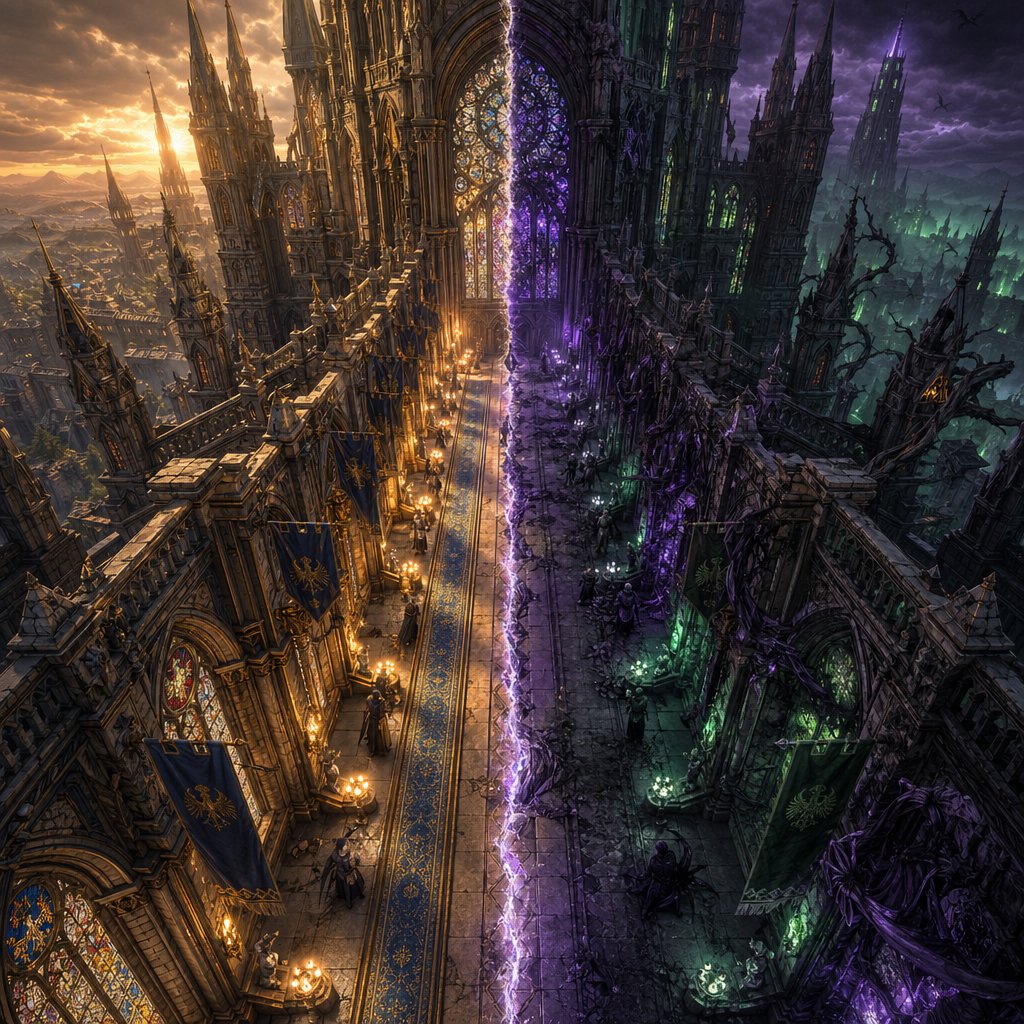
The core mechanic of Castlevania HoD splits Dracula's castle into two parallel versions: Castle A and Castle B. One is relatively bright and ornate, the other warped, decayed, and unsettling. Players move between them through warp points, and progression depends on understanding how the two maps overlap and diverge. If that sounds familiar, it should. It is the tension-resolution cycle translated into level design.
Castle A functions like consonance, the stable ground where the rules feel predictable and the environment makes visual sense. Castle B is the dissonance, a distorted mirror where familiar rooms twist into something hostile and wrong. The player's entire journey is about navigating that friction, collecting relics and key items across both versions until the two worlds can be reconciled. Resolving the game's conflict literally means resolving the dissonance between the castles, unifying what was split apart. It is a surprisingly thoughtful piece of value dissonance in video games, where the structural tension between two parallel spaces drives both narrative and exploration.
How the Soundtrack Reflects Its Name
Here is the irony no one planned. A game named after a musical concept became one of the most sonically divisive entries in the franchise. The GBA's limited audio hardware forced heavy compression on the soundtrack, and the result split fans sharply. Compared to the crisp chiptunes of earlier Castlevania titles, including the NES-era Castlevania 3 game, the audio in Harmony of Dissonance sounded muffled and thin to many players.
Composer Soshiro Hokkai aimed for atmospheric, ambient compositions that would complement the dual-castle mood rather than deliver the catchy melodic hooks fans expected. The intent was tension and unease, qualities that align perfectly with the game's title. But the gap between that artistic ambition and the GBA's playback capabilities created an unintentional layer of dissonance, not between notes, but between what the music wanted to be and what the hardware allowed it to become. Over time, that friction became part of the game's identity. Fans who revisit the soundtrack today, especially those who understand the musical concept behind the title, often hear the compositions with more generous ears.
The name was never arbitrary. It described exactly what the game was doing, splitting a world into clashing halves and asking the player to make them whole. That design choice also shaped the game's mechanics, endings, and exploration systems in ways worth examining closely.
Castlevania Harmony of Dissonance Walkthrough
The dual-castle concept is clever thematic design, but it also defines every practical decision you make as a player. If you have been searching for a Castlevania Harmony of Dissonance walkthrough that ties the game's systems together in one place, this section covers the essentials: who you play, how the map works, how combat evolves, and what determines which ending you see.
Juste Belmont and the Dual-Castle Structure
You play as Juste Belmont, grandson of Simon Belmont and heir to the Vampire Killer whip. The story kicks off when Juste's childhood friend Maxim returns from a training journey, wounded and partially possessed, with news that their mutual friend Lydie has been kidnapped. The trail leads to a mysterious castle that exists in two overlapping states.
Castle A and Castle B share the same general layout but differ in atmosphere, enemy placement, and item distribution. Warp rooms scattered throughout both versions let you jump between them, and many progression barriers in one castle can only be cleared by finding relics or abilities in the other. Completionists will want to fill out both maps entirely, since the full Castlevania Harmony of Dissonance map reveals hidden rooms and passages that are easy to miss on a casual run. Areas like the Skeleton Cave, the Luminous Cavern, and the Sky Walkway each contain items that only appear in one castle version, so toggling between both regularly is not optional. It is the game's core loop.
Spell Fusion and Combat Systems
Juste's primary weapon is the Vampire Killer whip, but his real combat depth comes from the Spell Fusion system. Throughout the game, you collect six sub-weapons (Dagger, Axe, Sacred Fist, Holy Water, Holy Book, and Cross) and five Spell Books (Fire, Ice, Bolt, Wind, and Summoning Tome). Combining any sub-weapon with an active Spell Book triggers a unique magical attack that consumes MP instead of hearts.
The system produces over 30 distinct fusion spells, each with different elemental attributes, attack patterns, and damage output. Some are situational, while others become go-to options for boss fights. Here are several standout combinations worth prioritizing:
| Sub-Weapon | Spell Book | Fusion Result | Effect |
|---|---|---|---|
| Axe | Fire Book | Soul of Hydra | Summons two fire dragons that pursue and attack enemies (70 MP, 170% ATK) |
| Cross | Bolt Book | Holy Cross | Large crosses revolve around Juste and rise upward with high hit count (60 MP, 200% ATK) |
| Holy Water | Wind Book | Hydro Typhoon | Rains holy water across the entire screen for continuous damage (50 MP, 75% ATK) |
| Sacred Fist | Wind Book | Spirit Fist | Sends massive energy forward with the highest damage-per-MP ratio in the game (20 MP, 400% ATK) |
| Holy Book | Summoning Tome | Summon Fairy | Summons a fairy that attacks enemies with a toy hammer at a staggering 750% ATK (60 MP) |
| Cross | Summoning Tome | Summon Warlock | Rains meteorites across the entire screen (100 MP, 200% ATK) |
Spirit Fist stands out for efficiency, costing just 20 MP while delivering 400% attack power. Summon Fairy hits the hardest single-target damage in the game at 750% ATK. For screen-clearing situations, Hydro Typhoon and Summon Warlock cover the widest area. Experimenting with different fusions is half the fun, and unlike the DSS card system in Circle of the Moon Castlevania, Spell Fusion combinations are straightforward to activate once you have the components.
Unlocking All Three Endings
The ending you receive depends on where and how you fight the final boss, and which key items you have collected. The game offers three distinct outcomes:
- Bad Ending - Defeat Maxim in Castle B without the two bracelets equipped. Juste is teleported out as the castle crumbles, but both Lydie and Maxim perish inside. Juste is left alone, questioning his purpose as a Vampire Hunter.
- Normal Ending - Defeat Maxim in Castle A. Lydie is saved, but Maxim dies in the process. He asks Juste to take care of Lydie before fading, and the two survivors head home carrying the weight of his sacrifice.
- Best Ending - Defeat Maxim in Castle B with both the MK Bracelet and JB Bracelet equipped. This triggers a second boss fight against a Dracula Wraith. Defeating it saves both Lydie and Maxim, and the three friends reunite outside the crumbling castle in a lighthearted scene.
Reaching the best ending requires thorough exploration of both castle maps. The bracelets are found in separate castles, and missing either one locks you out of the true conclusion. The Crushing Stone and Sky Walkway areas in particular contain items that are easy to walk past, so check every dead end and breakable wall in those zones. Furniture pieces scattered across both castles also contribute to completion percentage, though they are not strictly required for the best ending, just for bragging rights.
With the game's systems and endings mapped out, the natural question becomes: how does this entry stack up against the other GBA Castlevania titles, and is it the right starting point for someone new to the franchise?

Where This Game Stands Among the Best GBA Castlevania Titles
Every trilogy has a middle child, and the GBA Castlevania lineup is no exception. Circle of the Moon launched the handheld era with a darker, grittier tone. Aria of Sorrow closed it out with what many fans consider the peak of the entire Metroidvania formula. Harmony of Dissonance sits between them, borrowing heavily from Symphony of the Night's dual-castle blueprint while carving out its own identity through Spell Fusion and Ayami Kojima-influenced visuals.
Where Harmony of Dissonance Fits in the GBA Trilogy
Circle of the Moon shipped as a GBA launch title in 2001 with a notoriously dark color palette that was nearly unplayable on the original non-backlit hardware. Its DSS card system offered deep combat customization through random enemy drops, and its castle design and soundtrack remain fan favorites. Harmony of Dissonance responded by brightening everything up, outlining Juste Belmont in vivid blue and pushing the GBA's sprite work closer to the look of Castlevania: Symphony of the Night gameplay. The trade-off was that compressed, divisive soundtrack we covered earlier.
Aria of Sorrow, released in 2003, refined every lesson from both predecessors. Its Soul System gave enemies meaningful drops without the grind-heavy randomness of Circle's DSS cards, the Castlevania Aria map felt tighter and more purposeful, and the story introduced a fresh setting in a near-future Japan. Community consensus generally ranks the three like this:
- Aria of Sorrow - Widely regarded as the strongest of the three. Excellent soul collection system, polished controls, best art on the platform, and a story that surprised longtime fans. Often called the best Metroidvania on GBA, period.
- Circle of the Moon - The deepest combat system of the trio thanks to DSS card combinations, the most challenging difficulty, and by far the best soundtrack. Its darker aesthetic aged well once backlit screens became standard.
- Harmony of Dissonance - The most accessible entry with fair difficulty and a familiar dual-castle structure. Spell Fusion is fun but shallower than the other two games' systems. Weakest soundtrack, but strong level design and the most direct connection to the Simon Belmont Castlevania lineage through Juste's family tree.
That ranking reflects broad community sentiment, but "worst of three great games" is still a compliment. Each title brings something the others lack, and playing all three in sequence reveals how rapidly the formula evolved in just two years.
Is This the Right Castlevania to Start With
If you have never touched the franchise, Symphony of the Night is the entry most players point to first, and for good reason. Its PlayStation-era production values, Alucard's inverted castle twist, and Michiru Yamane's iconic score set the template everything else followed. But it is also a longer, denser commitment.
Harmony of Dissonance offers a more compact starting point, clocking in around seven to ten hours with a difficulty curve that rarely punishes newcomers. Its dual-castle mechanic teaches you the core Metroidvania loop of exploration, ability gating, and backtracking without overwhelming you with systems. For anyone who cut their teeth on classic linear entries or even a Castlevania 2 NES walkthrough back in the day, the shift to open-ended exploration feels natural here.
Access is no longer an issue either. The Castlevania Advance Collection bundles all three GBA titles (plus Dracula X) with save states, a rewind feature, display scaling options, and a built-in music player. It is available on Switch, PlayStation, Xbox, and PC, making it the easiest way to experience these games without hunting down original cartridges. The collection's quality-of-life additions, particularly the rewind function for navigating dead ends, smooth out the rougher edges of all three titles.
Visually, Harmony of Dissonance still holds up as a showcase for Ayami Kojima's design sensibility. Her elegant, almost baroque character illustrations defined the look of Iga-era Castlevania, and even translated into GBA sprite form, Juste's flowing coat and ornate whip animations carry that signature style. The environmental art across both castles leans into gothic detail that rewards close attention, even on a small screen.
Whether you rank it first or third in the trilogy, Harmony of Dissonance earns its place as a game that understood something fundamental about design: tension between two opposing forces, when handled with care, creates an experience that stays with you long after the resolution arrives.
Mastering the Balance Between Tension and Beauty
A medieval monk flinching at a major third and a GBA player toggling between two haunted castles have more in common than you might think. Both are navigating the space between what feels stable and what feels unresolved. That space is where all the interesting stuff happens.
Dissonance as a Creative Superpower
Across every era we covered, from Baroque counterpoint to Stravinsky's layered tonalities, the composers who left the deepest mark were the ones who leaned into tension rather than running from it. Beethoven did not avoid diminished sevenths. Wagner did not rush to resolve the Tristan chord. Konami did not build a single, comfortable castle when two clashing ones told a better story. The same principle holds whether you are scoring a film, writing a pop hook, chasing the best ending in a Castlevania title, grinding through a Harmony of Despair story mode session, or following an Order of Ecclesia walkthrough. Tension handled with intention is what separates forgettable work from something that resonates.
Game designers understood this instinctively. The dual-castle structure of Harmony of Dissonance, the atmospheric dread of Symphony of the Night on Castlevania PlayStation 2 rereleases, the escalating difficulty curves across the franchise, all of it mirrors the same tension-resolution arc that drives a V7 chord home to its tonic.
The silence after dissonance resolves is where the real beauty lives — in music and in games alike.
Your Next Step Toward Mastering Harmony and Dissonance
Theory stays abstract until you put your hands on it. If you are a musician, take one technique from this article, a suspension, a pedal point, a tritone that demands resolution, and work it into something you are writing today. Tools like MakeBestMusic's Melody Maker make that experimentation faster by letting you generate melodic ideas, hear how dissonant intervals interact with harmony in real time, and turn the concepts from these pages into actual songwriting output.
If you came here for the game, go back to that GBA soundtrack with fresh ears. You will hear the tension between artistic ambition and hardware limitation differently now that you understand the musical concept behind the title. Either way, the lesson is the same: do not avoid the clash. Master it, and the resolution will take care of itself.
