

What Is Hawaiian Reggae and Why Does It Sound So Different
Close your eyes at a beach park on O'ahu and you'll hear it drifting from a nearby boom box: a familiar offbeat guitar skank riding over a deep, melodic bass line, but layered with something unmistakably Pacific. Slack-key guitar fingerpicking weaves through the rhythm. A ukulele fills the spaces between beats. Vocal harmonies float with a warmth that Jamaican roots reggae rarely carries. This is hawaiian reggae music, and once you recognize it, you can't unhear the difference.
Defining the Hawaiian Reggae Sound
Hawaiian reggae is a genre born from the fusion of Jamaica's one-drop reggae rhythm with traditional Hawaiian instrumentation — slack-key guitar, ukulele, and steel guitar — wrapped in smooth vocal harmonics and lyrics that celebrate island life, love, and cultural identity. It carries reggae's heartbeat but speaks with a distinctly Pacific voice.
UC Davis ethnomusicologist Sunaina Keonaona Kale describes the sound through a Hawaiian concept: nahenahe, meaning "sweet sounding." Where Jamaican roots reggae often feels spare and open, with empty space between instruments, hawaiian island reggae fills that space. The texture is denser, smoother, with less percussion and more American R&B and pop influence woven into the mix. Imagine reggae's skeleton dressed in tropical warmth — that's the feel.
How It Differs from Jamaican Roots Reggae
You'll notice the contrast quickly when you listen to both styles side by side. Here's how they compare across the dimensions that matter most:
| Dimension | Hawaiian Reggae | Jamaican Roots Reggae |
|---|---|---|
| Primary Instruments | Slack-key guitar, ukulele, steel guitar, bass | Electric guitar skank, keyboard bubble, bass, drums |
| Rhythmic Feel | Fuller, denser, smoother grooves | Spare, open, percussive one-drop |
| Lyrical Themes | Island life, love, community, sovereignty | Rastafari, Black liberation, social justice, love |
| Vocal Style | Layered harmonics, falsetto influence | Call-and-response, toasting, chanting |
| Cultural Roots | Kanaka Maoli traditions, Polynesian values | Afro-Jamaican identity, Rastafari spirituality |
| Key Influences | Traditional Hawaiian music, R&B, pop | Ska, rocksteady, American R&B, mento |
Why Hawaiian Reggae Stands on Its Own
The connection between these two island traditions runs deeper than a shared love of offbeat rhythms. Jamaica and Hawai'i both carry histories shaped by colonization, plantation economies, language suppression, and cultural erasure. When reggae's message of resistance and unity reached Hawaiian shores, it didn't land as foreign music. It landed as something that felt familiar — a sound already carrying the weight of struggles Kanaka Maoli communities understood in their bones. Hawaiian island reggae music grew from that recognition, not as imitation, but as a parallel expression of identity through rhythm.
How exactly did those first reggae records cross the Pacific and spark an entirely new genre? That story starts in the 1970s, with military radio stations, surf culture, and a cultural renaissance already underway.
How Reggae Music Found Its Way to Hawaii
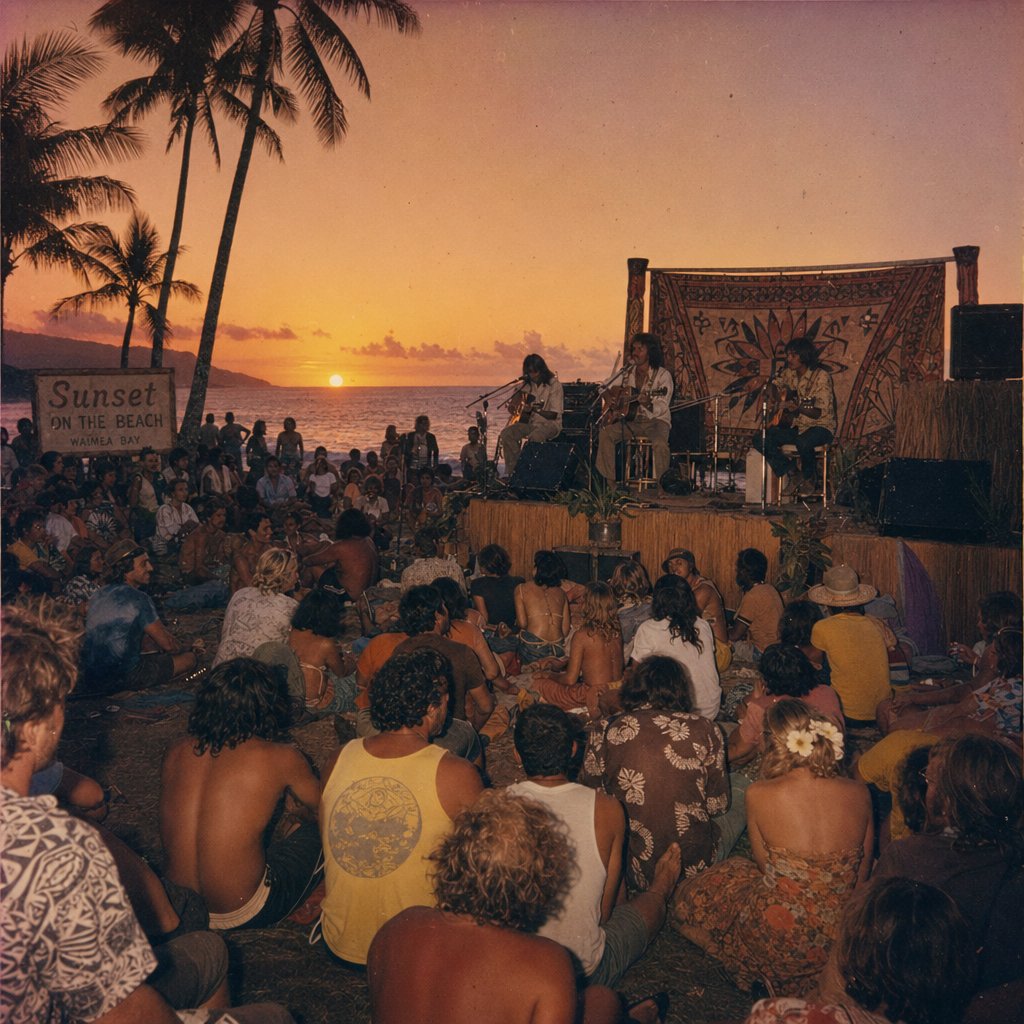
Reggae didn't arrive in Hawai'i through a single moment or a master plan. It drifted in through multiple channels during the 1970s — on vinyl records passed between friends, through radio frequencies bouncing off military base towers, and eventually through the electrifying presence of Bob Marley himself. The music found fertile ground because the islands were already in the middle of their own cultural reckoning.
Reggae Crosses the Pacific
Picture Hawai'i in the mid-1970s. American rock 'n' roll still dominated local radio, but a new sound was filtering in through unexpected doors. Military personnel stationed across O'ahu brought Jamaican records back from deployments and swapped them on base. Surf culture, always hungry for laid-back rhythms, picked up on reggae's groove. Counterculture communities passed around Bob Marley albums the way earlier generations had shared folk records on the mainland.
Then Marley came in person. As part of the 1979 Babylon by Bus tour, Bob Marley and the Wailers played shows on both Maui and O'ahu. Doug Bautista, lead singer of Humble Soul, recalled the impact: "When Bob came to play at the Waikiki Shell and on Maui, that's when everybody was like, oh my god." The timing wasn't accidental. Hawaii reggae music was arriving at exactly the moment people were ready to hear it — not just as entertainment, but as something that spoke to what was already happening on the ground.
Shared Histories of Jamaica and Hawaii
Why is reggae popular in Hawaii in a way that goes beyond casual listening? The answer lives in parallel histories that most people never think to connect. Both Jamaica and Hawai'i were shaped by plantation economies built on the exploitation of land and labor. Both experienced systematic suppression of native language and cultural practices. Both peoples carried generations of displacement and erasure under colonial rule.
The 1970s in Hawai'i marked the Second Hawaiian Renaissance — a powerful resurgence of Kanaka Maoli language, hula, wayfinding traditions, and sovereignty activism. The Protect Kaho'olawe movement was pushing back against military destruction of sacred land. Hawaiian-language education was being revived. Into this charged atmosphere, reggae's lyrics about liberation, resistance, and cultural pride didn't just resonate — they felt like a shared conversation between two reggae islands separated by thousands of miles of ocean. As Dr. Ethan Caldwell of the University of Hawai'i put it, people "started to see how they could use reggae music as a way to also speak out against the issues occurring here."
The First Local Reggae Wave
By the late 1970s, Hawaiian musicians weren't just listening anymore. They were picking up guitars and reshaping the sound. Billy Kaui, an original member of Country Comfort, recorded a track called "Mr. Reggae" as early as 1978 — one of the first local attempts to channel the reggae island vibe through a Hawaiian lens. Henry Kapono's 1981 record "Stand in the Light" pushed further, with instrumental arrangements that ethnomusicologist Sunaina Kale described as sounding "very similar to what would later become codified as Jawaiian music."
These early experiments were still scattered — a reggae rhythm here, an offbeat skank there, woven into otherwise familiar local rock and Hawaiian pop. Nobody had a name for what was forming yet. But the ingredients were all in the mix: Jamaican rhythm, Hawaiian soul, and a generation of musicians who refused to choose between honoring their roots and embracing something new. What emerged next would get its own name, its own identity, and its own era of dominance on the local airwaves.
The Jawaiian Sound That Changed Everything
That name arrived in the mid-1980s, and it stuck: Jawaiian. Part Jamaican, part Hawaiian, entirely its own thing. What had started as scattered experiments — local musicians layering reggae rhythms under Hawaiian melodies — crystallized into a fully formed genre that would dominate the islands for over a decade. If you've ever wondered what jawaiian music actually is and where it fits in the broader reggae family, this is the section you've been looking for.
What Jawaiian Actually Means
The word itself is a portmanteau of "Jamaican" and "Hawaiian" — a name that tells you exactly what's in the mix. Jawaiian takes reggae's signature elements — the one-drop rhythm, the offbeat skank guitar, melodic bass lines, and the "bubble" keyboard pattern — and fuses them with traditional Hawaiian instrumentation. Think ukulele textures, slack-key guitar voicings, and sometimes steel guitar, all wrapped in sing-along vocal harmonies delivered in English, Hawaiian Pidgin, or Hawaiian language.
The feel is distinct from its Jamaican parent. Where roots reggae leans heavy and spiritually charged, jawaiian music favors warmth. Mid-tempo grooves, sunny production, romantic and feel-good themes. As Doug Bautista of Humble Soul described it, "Jawaiian is a little bit more relaxed, lazy and feel-good. Reggae is militant." That's not a criticism — it's a description of two different emotional registers born from two different island experiences. Andrew Weintraub's research on the genre noted that by the early 1990s, Jawaiian — also called Hawaiian reggae or Island Hawaiian Music — had emerged as the most popular musical style in contemporary Hawai'i, dominating airplay, record sales, local music charts, and concert venues on O'ahu.
The Golden Era of Jawaiian Music
The late 1980s through the mid-1990s were the golden years. Kapena's 1986 album Satisfaction Guaranteed is widely considered one of the first commercially successful Jawaiian releases, arriving just seven years after Bob Marley played the Waikiki Shell. Around the same time, acts like Butch Helemano, Ho'aikane, and Bruddah Waltah were releasing their own takes on the sound, each incorporating the Jamaican skank while weaving in Hawaiian language, melody arrangements, and island instrumentation.
Imagine the soundtrack of everyday Hawai'i during this period. Jawaiian was everywhere — drifting from car stereos in Waimanalo, pumping through speakers at backyard lu'au, filling the air at beach parks and local festivals. Honolulu radio stations played a central role in amplifying the genre, giving it the constant rotation that turned regional experimentation into a cultural movement. Compilation albums and local labels further codified the sound, while covers of reggae standards sat comfortably alongside original island-themed songs.
This wasn't niche music. It was the island reggae music people lived their daily lives to — the thing playing when you cracked a beer after work, the rhythm your kids grew up hearing at every family gathering. Weintraub's fieldwork captured this reality: jawaiian music dominated "the majority of mass media musical avenues," from radio to recording industry to live venues. For a generation of local listeners, it simply was the sound of home.
Jawaiian vs. Island Reggae vs. Roots Reggae
Here's where things get confusing for newcomers. Jawaiian, island reggae, and roots reggae are related but not interchangeable. Not all reggae from Hawai'i qualifies as Jawaiian, and island music reggae as a broader category extends well beyond the Hawaiian Islands. This table breaks down where each style sits in the family tree:
| Category | Jawaiian | Island Reggae | Jamaican Roots Reggae |
|---|---|---|---|
| Era of Origin | Early-mid 1980s | 1990s-2000s (as a broader label) | Early-mid 1970s |
| Geographic Center | Hawai'i (primarily O'ahu) | Hawai'i, Samoa, Fiji, Aotearoa/NZ | Kingston, Jamaica |
| Primary Instruments | Ukulele, slack-key guitar, reggae skank, bubble keys | Guitar, bass, keys, ukulele, varied by region | Electric guitar skank, Hammond organ, heavy bass, drums |
| Lyrical Themes | Aloha, island life, love, local pride | Pacific identity, love, community, faith | Rastafari, Black liberation, social justice, spirituality |
| Rhythmic Feel | Mid-tempo, warm, laid-back (72-90 BPM) | Varies — mid-tempo to upbeat | Moderate, hypnotic, heavy one-drop |
| Cultural Influences | Hawaiian music traditions, R&B, pop | Polynesian traditions, church hymnody, pop | Ska, rocksteady, mento, Afro-Jamaican spirituality |
| Vocal Style | Smooth harmonies, English/Pidgin/Hawaiian | Group harmonies, regional languages | Soulful leads, call-and-response, toasting |
The key distinction? Jawaiian is specifically Hawaiian — rooted in Hawai'i's local culture, language, and musical traditions. Island reggae is the wider Pacific umbrella that Jawaiian helped create. As the genre evolved through the 2000s, the Jawaiian blueprint — mid-tempo grooves, sunny timbres, and island storytelling — inspired and connected scenes across Fiji, Samoa, and Aotearoa, contributing to what's now often labeled "Pacific reggae."
That ripple effect didn't happen in a vacuum. It was carried by specific artists and bands whose names became synonymous with the genre — musicians who built the foundation, expanded the audience, and continue shaping the sound today.
Essential Hawaiian Reggae Artists and Bands to Know
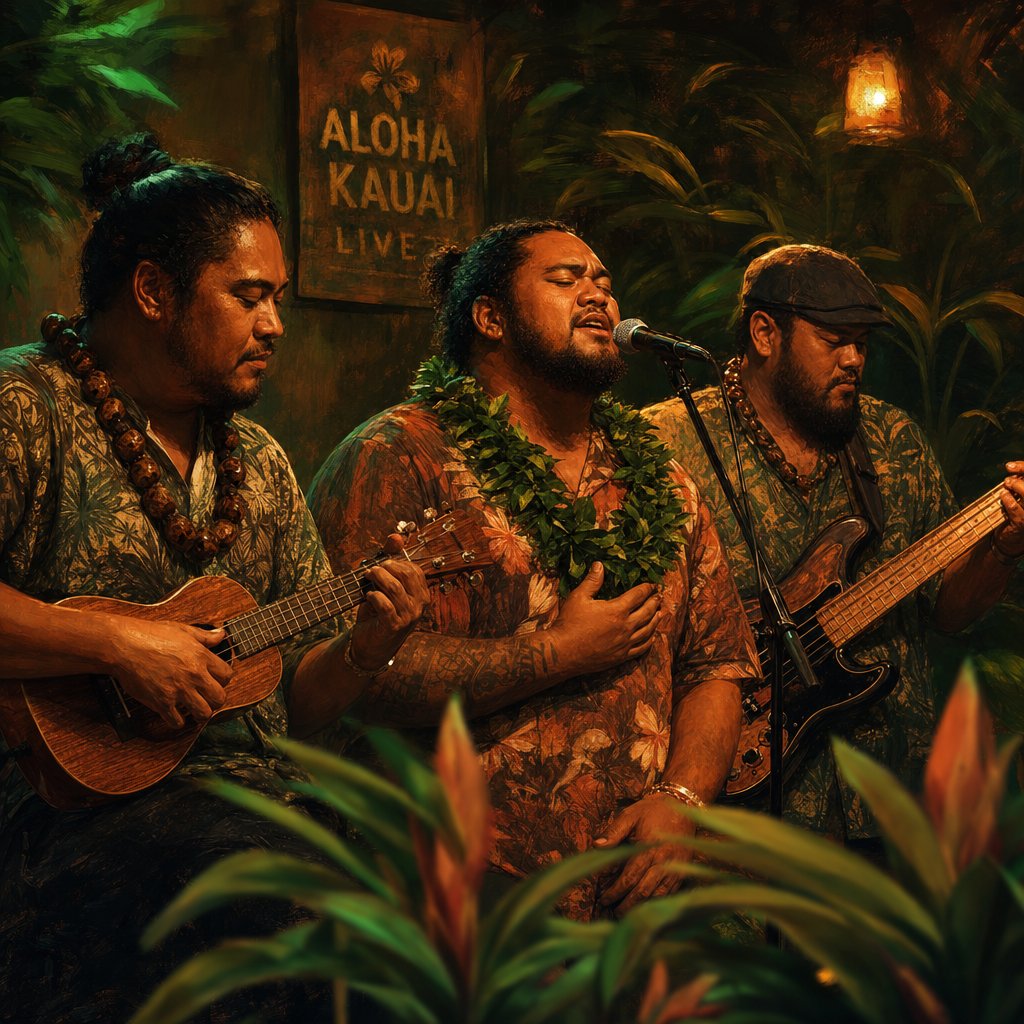
Every genre is ultimately shaped by the people who play it. The hawaiian reggae artists who built this sound weren't following a blueprint — they were writing one, album by album, backyard session by backyard session. From the pioneers who first married Jamaican rhythms to island soul, through the bands that carried it to mainland stages, to the modern voices streaming into millions of earbuds today, here's the roster you need to know.
Pioneers Who Built the Foundation
The first generation of hawaiian reggae bands didn't just record music — they defined what the genre could be. These are the acts that turned scattered experiments into a movement:
- Israel Kamakawiwo'ole (Iz) — The most internationally recognized voice in Hawaiian music, period. His medley of "Over the Rainbow/What a Wonderful World" became a global phenomenon, but his deeper catalog with the Makaha Sons of Ni'ihau and as a solo artist blended reggae grooves with Hawaiian sovereignty themes and tender falsetto. He remains the genre's spiritual center.
- Kapena — Their 1986 album Satisfaction Guaranteed is one of the earliest commercially successful Jawaiian releases. Kapena's smooth, radio-friendly sound helped prove that reggae bands hawaii audiences loved could also move records.
- Ho'aikane — Among the first hawaiian reggae groups to fuse the offbeat skank with traditional Hawaiian vocal harmonies, helping establish the template other acts would build on throughout the late 1980s.
- Fiji (George Veikoso) — A Polynesian artist who became a cornerstone of the local scene starting in the 1990s. Often called a founding father of the local reggae scene, Fiji's buttery vocals and heartfelt lyrics on tracks like "Sweet Darlin'" and "Lomalagi" made him a household name across the Pacific. His influence echoes through nearly every reggae hawaiian artist who followed.
- Bruddah Waltah — A key early voice who helped bridge traditional Hawaiian music sensibilities with the emerging Jawaiian sound, contributing to the genre's golden-era radio dominance.
The Next Generation of Hawaiian Reggae Bands
By the late 1990s and into the 2000s, a new wave of hawaii reggae artists pushed the sound outward. These bands incorporated rock, hip-hop, and R&B textures, broadening the appeal without abandoning the island identity at the genre's core.
Pepper, formed in Kailua on O'ahu in the late '90s, became one of the first reggae-rock crossover acts to build a serious mainland touring circuit. Their high-energy live shows introduced the Hawaiian reggae vibe to punk and rock audiences who'd never heard a Jawaiian record. Rebel Souljahz, out of Wai'anae, brought tighter R&B vocal arrangements and modern production into the mix, earning devoted followings both in the islands and across Pacific Islander diaspora communities on the mainland. The Green, an O'ahu collective formed in the mid-2000s, landed on the Billboard reggae charts and proved that hawaiian reggae music artists could compete nationally while singing about distinctly local experiences.
What connected these acts wasn't a single sound — it was a shared commitment to representing Hawai'i authentically, even as they experimented with genre boundaries. They expanded who was listening without changing who the music was for.
Modern Voices Carrying the Tradition Forward
Today's generation of reggae artists from hawaii blend digital production tools with the acoustic warmth their predecessors established. Many of them grew up on the very records listed above — and some are literally the children and students of earlier Jawaiian pioneers. The generational thread is real.
- Maoli — Led by frontman Glenn Awong, Maoli sits at the top of Hawai'i's current music scene. With 14.7 million YouTube views from in-state listeners over the past year alone, their reggae-pop fusion — tracks like "Jesse's Song" and "Rock Me Sober" — has become the soundtrack of modern island life.
- Kolohe Kai — Known for breezy, feel-good island reggae with pop hooks, Kolohe Kai built a massive local and mainland following through consistent releases and relatable love songs rooted in everyday Hawaiian life.
- Kimie Miner — A Na Hoku Hanohano Award winner whose fresh mix of pop, reggae, and Hawaiian music has made her a radio staple across the islands. Songs like "New Day" and "Bottom of a Rainbow" capture the genre's sunny, optimistic spirit.
- Common Kings — Blending island reggae with rock and soul influences, this O'ahu-rooted group has built a strong mainland presence through festival circuits and streaming platforms.
- Iam Tongi — While primarily known through his American Idol win, Tongi's Hawaiian and Polynesian musical roots have introduced island sounds to an entirely new national audience, creating a gateway for listeners discovering the broader genre.
What's striking about this current wave is how deeply connected it remains to what came before. Fiji's influence runs through Maoli, Rebel Souljahz, and The Green alike. Younger artists like Blayne Asing credit formative years spent learning from legends like Ernie Cruz Jr. The music evolves, the production modernizes, but the lineage holds. Each generation of hawaiian reggae artists inherits the sound and reshapes it — never replacing what came before, always building on top of it.
Knowing the artists is one thing. Understanding what they're actually singing about — the themes, the stories, the cultural weight carried inside these songs — reveals why this music means so much more than a good groove.
Themes and Lyrics That Define Hawaiian Reggae Songs
Strip away the rhythm for a moment and focus on the words. What are hawaiian reggae songs actually about? On the surface, you might assume it's all sunshine and beach vibes. Dig into the lyrics, though, and you'll find something far richer — a body of music that holds an entire culture's values, struggles, and identity inside its verses.
Aloha, Ocean, and Island Life
The most common lyrical thread running through reggae hawaiian songs is aloha — and not the tourist-brochure version. In Hawaiian culture, aloha carries deep meaning: love, compassion, connection to community, and a way of moving through the world with grace. When artists like Maoli sing about love, they're tapping into that broader concept. Romantic love, sure, but also love for family, for neighbors, for the land itself.
Ocean imagery shows up constantly. Waves, tides, shorelines, and trade winds aren't decorative details — they reflect the daily reality of island living where the sea shapes everything from mood to livelihood. Songs about backyard gatherings, talk-story sessions on the lanai, and cruising coastal roads capture a lifestyle that's genuinely lived, not performed for outsiders. When you hear a track celebrating a lazy Sunday at the beach park with ohana, that's not a tropical cliche. That's Tuesday.
Sovereignty, Resistance, and Cultural Pride
The genre's other lyrical pillar runs much deeper. Just as Jamaican reggae channeled Rastafari consciousness and Black liberation, Hawaiian reggae carries its own tradition of political expression — rooted in sovereignty, resistance to overdevelopment and militarization, and the preservation of language and traditions.
Israel Kamakawiwo'ole's "Hawai'i '78" is the clearest example. The song imagines Hawaiian kings and queens returning to see what's become of their land — the concrete, the military bases, the displacement of their people. As music educator Dagan Bernstein noted, the imagery of "the land that was taken away" and "the people in great great danger," paired with the repeated phrase "Ua mau ke ea o ka aina i ka pono," points toward deep dissatisfaction with the current state of Hawai'i and a longing for restoration. The open-ended question "how would he feel" forces listeners to confront where they stand on the most fundamental issues facing the islands.
Where Jamaican reggae calls for liberation through Rastafari and pan-African solidarity, Hawaiian reggae channels resistance through aloha 'aina — love of the land — turning sovereignty, language preservation, and cultural survival into music that feels less like protest and more like prayer.
"Kaulana Na Pua," one of the most significant Hawaiian songs ever composed, has been recorded across generations — from Peter Moon's upbeat 1979 slack-key arrangement to the Makaha Sons' slower, harmony-rich version, to modern collaborative renditions by ProjectKULEANA featuring artists singing from locations across the islands. Liko Martin's "All Hawaii Stands Together" carries a similar weight, calling listeners to "hold their banners high" and stand "as a nation," invoking Queen Lili'uokalani's rallying cry of "Onipa'a" — be steadfast, be resolute. Artists like Sudden Rush, Brother Noland, and Paula Fuga continue this tradition, blending oli (chants) with reggae and hip-hop to address land rights, homelessness, and environmental protection.
Songs That Capture the Spirit of the Genre
If you're building a listening guide to popular hawaiian reggae songs, organizing by theme gives you a much richer experience than any random playlist. Here are tracks that represent the genre's emotional range — a starting point for anyone exploring top hawaiian reggae songs for the first time:
- "Hawai'i '78" — Israel Kamakawiwo'ole — Sovereignty and cultural grief; imagines Hawaiian royalty witnessing modern Hawai'i
- "Kaulana Na Pua" — Makaha Sons / Peter Moon — Resistance anthem dating to the 1893 overthrow, reinterpreted across generations
- "All Hawaii Stands Together" — Liko Martin / Dennis Pavao — Unity and nationhood; a call to stand firm in Hawaiian identity
- "Sweet Darlin'" — Fiji — Romantic aloha; warm, soulful love song that became a Pacific-wide classic
- "One Dream" — Rebel Souljahz — Community and hope; captures the aspirational spirit of island life
- "Love I" — The Green — Celebration of love and connection, wrapped in modern island reggae production
- "Ku'e" — Sudden Rush — Direct political resistance; the title means "to resist, to oppose" in Hawaiian
- "Jesse's Song" — Maoli — Everyday island life and personal storytelling through a contemporary reggae lens
What this list reveals is range. Hawaiian reggae album songs move fluidly between tenderness and defiance, between a love song whispered on a lanai and a sovereignty anthem chanted at a rally. That emotional spectrum — the ability to hold both aloha and resistance in the same breath — is what gives the genre its depth and staying power.
These themes didn't emerge all at once, of course. They shifted and layered as the genre itself evolved — from intimate backyard jams to polished studio productions, from local radio staples to globally streamed tracks. That evolution tells its own story.
How Hawaiian Reggae Evolved Across Generations
That evolution didn't follow a straight line. It moved in waves — each generation of musicians inheriting the sound, reshaping it to fit their moment, and passing something new to the artists who came next. Tracing the arc from the earliest backyard sessions to today's streaming-era productions reveals a genre that has never stopped moving, even when outsiders treated it as static background music.
From Backyard Sessions to Radio Dominance
In the early 1980s, hawaiian reggae lived in driveways and garages. Musicians jammed at family gatherings, swapping reggae licks between slack-key runs, testing what worked over cold beers and plate lunches. There were no record deals, no genre labels — just local players feeling their way into a new sound.
That changed fast. By the mid-1980s, acts like Kapena and Ho'aikane had proven the sound could sell records. Local radio stations — particularly on O'ahu — started giving heavy rotation to what listeners were already blasting from their own speakers. Ethnomusicologist Sunaina Kale's research confirms the timeline: the genre reached its zenith by the early 1990s, when reggae hawaiian bands dominated the majority of mass media musical avenues in Hawai'i. Radio didn't create the demand. It amplified what was already the unofficial soundtrack of island life — from beach park cookouts to morning commutes along the H-1. Early festivals and compilation albums further cemented the scene, giving emerging artists a platform and giving fans a way to discover new voices alongside established names.
The Reggae-Rock Crossover Era
By the late 1990s, a younger generation of reggae bands from hawaii started pushing against the genre's boundaries. Bands like Pepper folded punk energy and rock guitar into their sets. Rebel Souljahz layered R&B vocal precision over island grooves. The Green blended hip-hop cadences with reggae rhythms and landed on Billboard charts. High watah music — the kind that hit harder, louder, and with more edge — started pulling mainland audiences into the orbit.
This crossover era produced some of the genre's biggest commercial moments, but it also sparked honest debate. Was this still hawaiian reggae, or something else entirely? Purists worried the soul was getting diluted. Younger fans argued the genre had always been about fusion — that absorbing new influences was baked into its DNA from day one. As UC Davis researcher Sunaina Kale frames it, reggae in Hawai'i is "just one recent addition to a much longer history of Hawaiian music that is constantly incorporating all kinds of global forms." The crossover wasn't a betrayal. It was the tradition working exactly as it always had.
Modern Island Reggae Production
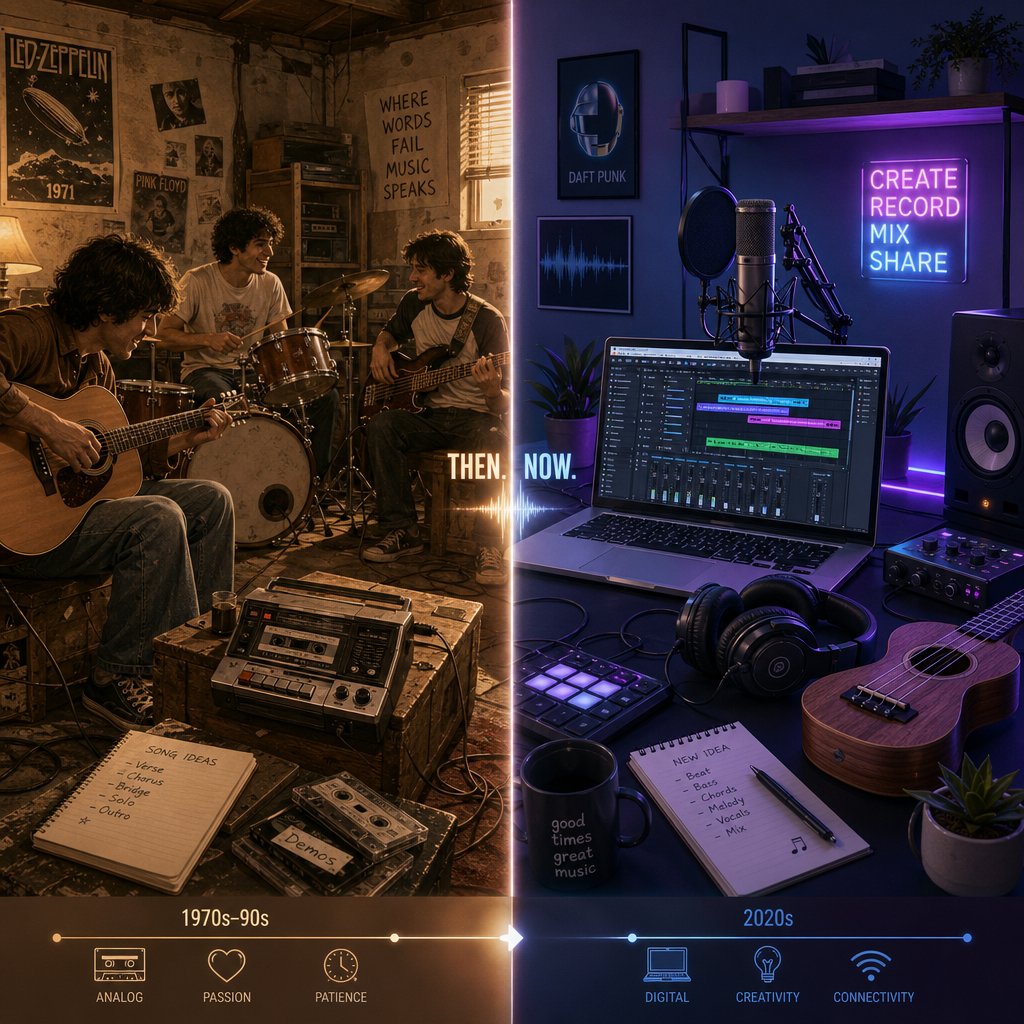
Today's scene looks nothing like those 1980s garage jams — and everything like them at the same time. Digital audio workstations have replaced four-track recorders. Artists release singles directly to Spotify and Apple Music instead of pressing vinyl for local shops. Social media lets a track recorded in a Waipahu bedroom reach listeners in Auckland, Los Angeles, and Tokyo within hours of upload.
Yet the core ingredients persist. You'll still hear ukulele textures and slack-key voicings layered into modern productions. Artists like Maoli and Kolohe Kai blend electronic polish with the acoustic warmth that defined the golden era, creating hawaiian reggae top songs that feel both contemporary and rooted. The production has evolved, but the nahenahe quality — that "sweet sounding" aesthetic Kale describes — remains the genre's emotional signature.
Here's how each era stacks up across the genre's four-decade arc:
| Era | Defining Sound | Key Developments | Cultural Context |
|---|---|---|---|
| 1980s Origins | Reggae rhythms fused with slack-key guitar, ukulele, and Hawaiian vocal harmonics; raw, lo-fi production | First Jawaiian recordings; local radio begins picking up the sound; backyard jam culture | Post-Hawaiian Renaissance energy; sovereignty movement gaining momentum; reggae as cultural bridge |
| 1990s Golden Age | Polished mid-tempo grooves; dense, smooth arrangements with R&B influence; nahenahe aesthetic fully formed | Genre dominates O'ahu radio and local charts; compilation albums and festivals proliferate; Jawaiian becomes Hawai'i's most popular style | Jawaiian as everyday island soundtrack; music tied to community identity and local pride |
| 2000s Crossover | Rock, hip-hop, and R&B elements blended into reggae foundation; higher energy, broader sonic palette | Billboard chart placements; mainland touring circuits established; reggae-rock festivals expand audience | Pacific Islander diaspora carries the sound to California and beyond; authenticity debates emerge |
| Current Modern Era | Digital production meets acoustic tradition; streaming-optimized singles; genre-fluid collaborations | Social media distribution; global streaming reach; home studio accessibility democratizes creation | Generational continuity — modern artists build directly on Jawaiian foundations while reaching worldwide audiences |
The through-line across all four eras is adaptation without erasure. Each generation absorbed new tools and influences while keeping the genre's emotional core intact. That resilience is part of why the sound didn't stay confined to the Hawaiian Islands — it traveled, took root in new communities, and built something larger than any single scene could contain.
Hawaiian Reggae Beyond the Islands
Resilient music doesn't stay put. The same cultural currents that carried reggae from Jamaica to Hawai'i eventually pushed the Hawaiian-born sound eastward — across the Pacific to the U.S. mainland, where it found audiences who weren't just listening casually. They were claiming it as their own.
The California Connection
The pipeline between Hawai'i and Southern California has always been wide open. Hawaiian families relocating for work or military service, college students heading to West Coast universities, touring musicians building circuits beyond the islands — all of these channels carried the sound to California's shores. Dan Sheehan, co-owner of Good Vibez Presents and the force behind the California Roots Music & Art Festival, embodies that connection. Growing up in Ewa Beach on O'ahu, he describes reggae as part of his DNA: "Anyone that knows Hawaii knows that reggae is one of the major heartbeats there." After moving to the Bay Area for college, he channeled that love into promoting — booking Natural Vibrations on a 15-date mainland tour, DJing island reggae on Guam's I94FM, and eventually building one of the most influential reggae festival brands in the country.
That personal story mirrors a much larger pattern. Southern California's reggae-rock scene — bands like Sublime, Slightly Stoopid, and Rebelution — drew directly from the island reggae artists who preceded them. The influence wasn't always obvious on the surface, but the rhythmic DNA was there. As Sheehan puts it, "Rebelution, Dirty Heads, Slightly Stoopid — all these bands kind of get their influence from roots reggae music." Hawaiian reggae served as a bridge, translating Jamaican roots into something the West Coast could absorb and reshape yet again.
Pacific Islander Diaspora and Island Reggae Identity
The genre's mainland reach extends far beyond surf-rock crossover. For Samoan, Tongan, Fijian, Maori, and other Pacific Islander communities scattered across the continental U.S., island reggae music became something deeper — a unifying cultural touchstone. A 2025 UC Riverside dissertation by Chun-Chia Tai examines exactly this phenomenon, documenting how diasporic Pacific Islanders in Southern California use islander reggae to articulate their Indigenous identities within a mainland context that often renders them invisible. Tai argues that performing and listening to island reggae songs enables these communities to sustain connections to their Oceanian heritage while navigating life on the continent.
Think about what that means in practice. A Samoan family in Carson, California, or a Tongan community in Salt Lake City hears reggae island songs rooted in Pacific rhythms and island storytelling — and it sounds like home, even thousands of miles from any shoreline. The broader "island reggae" category that emerged in the 2000s grew directly from the Jawaiian foundation laid in Hawai'i, expanding to encompass voices from across the Pacific. What started as a Hawaiian genre became a Pacific Islander genre, and that shift happened largely on the mainland, where diaspora communities needed a shared musical language.
Festivals and the Mainland Scene
Festivals became the engine that turned scattered listeners into a visible scene. The California Roots Music & Art Festival in Monterey grew into one of the premier reggae events in the country, deliberately mixing island reggae artists with roots and reggae-rock acts to build cross-genre discovery. The Holo Holo Music Festival, launched in Northern California in 2022, was "born from a love of island and reggae music — a genre deeply rooted in connection, culture, and movement." It has since expanded to San Diego, Las Vegas, Sacramento, Irvine, Oceanside, Utah, and Tacoma — a geographic footprint that maps almost perfectly onto Pacific Islander population centers.
These events do more than showcase music. They build community. Backstage at California Roots, Sheehan describes a family atmosphere where agents, managers, and artists from across the reggae spectrum share space and build relationships. "What separates our scene from others is the comradery and family vibe," he says. That spirit mirrors the aloha ethos the music carries from its Hawaiian origins.
Here are the key regions and communities where the genre has taken root beyond the islands:
- Southern California (Los Angeles, San Diego, Orange County, Inland Empire) — the largest concentration of Pacific Islander diaspora communities and the epicenter of mainland island reggae
- San Francisco Bay Area and Northern California — home to California Roots and a deep history of reggae promotion dating back to Reggae on the River
- Pacific Northwest (Tacoma, Seattle, Portland) — growing Polynesian communities and expanding festival presence
- Utah (Salt Lake City metro) — one of the largest Tongan and Samoan populations outside the Pacific, with a thriving local island music scene
- Las Vegas — a touring hub and festival destination connecting West Coast and inland audiences
The mainland scene isn't a diluted echo of what happens in Hawai'i. It's a living extension — shaped by diaspora, driven by community, and sustained by a festival circuit that keeps growing. For fans who want to tap into this world themselves, the question becomes practical: where do you actually go to discover the music, the playlists, the stations, and the events that keep the genre alive?
Where to Discover Hawaiian Reggae Music Today
Knowing the history and the artists is a great start, but at some point you just want to press play. Whether you're building your first hawaiian reggae playlist or looking for a live festival experience, the genre is more accessible than it's ever been. Here's how to plug in.
Building Your Hawaiian Reggae Playlist
Streaming platforms are the easiest entry point, but the trick is knowing what to search. Typing "hawaiian reggae" into Spotify or Apple Music will surface some results, but you'll unlock much deeper collections with more specific terms. When searching for spotify hawaiian music, try variations that match how curators actually title their playlists:
- "Island reggae" or "island reggae vibes" — the broadest net, pulling in Hawaiian, Samoan, and Pacific artists
- "Jawaiian" — targets the classic sound specifically; great for golden-era tracks
- "Hawaiian island music playlist" — surfaces curated mixes blending reggae with traditional and contemporary Hawaiian sounds
- "Reggae Hawaii" or "Hawaii reggae mix" — catches user-generated playlists often built by local listeners with deep knowledge of the scene
- "Pacific reggae" — expands your discovery into the broader Polynesian reggae world connected to the Hawaiian foundation
A solid hawaiian reggae music playlist will typically mix foundational artists like Fiji and Israel Kamakawiwo'ole with current acts like Maoli, Kolohe Kai, and The Green. Start with one curated list, then let the algorithm do its thing — the "related artists" and "fans also like" features on most platforms are surprisingly good at mapping the genre's web of connections.
Hawaiian Reggae Radio and YouTube Channels
Streaming algorithms are useful, but they can't replicate what a dedicated radio station does — curate with cultural context, break new local artists, and keep the community connected in real time. Island 98.5 (KDNN), Hawai'i's self-described "#1 Reggae Station," is the heartbeat of hawaiian reggae radio stations. Broadcasting from Honolulu and available worldwide through the iHeartRadio app, it runs shows like the Wake Up Crew and Big Koa's Backyard that mix music with local culture and artist interviews. If you want to hear what's actually in rotation on O'ahu right now, this is where you tune in.
For hawaiian reggae music youtube content, the platform serves as both archive and discovery engine. Channels dedicated to island reggae regularly upload full albums, live sessions, and curated mixes that run for hours — perfect for a workday soundtrack or a weekend cookout. Searching youtube hawaiian reggae surfaces everything from classic Jawaiian deep cuts to brand-new releases from emerging artists. Many Hawaiian musicians also use their own YouTube channels as primary release platforms, often dropping music videos filmed on-location across the islands that double as visual love letters to home.
Festivals Worth Experiencing
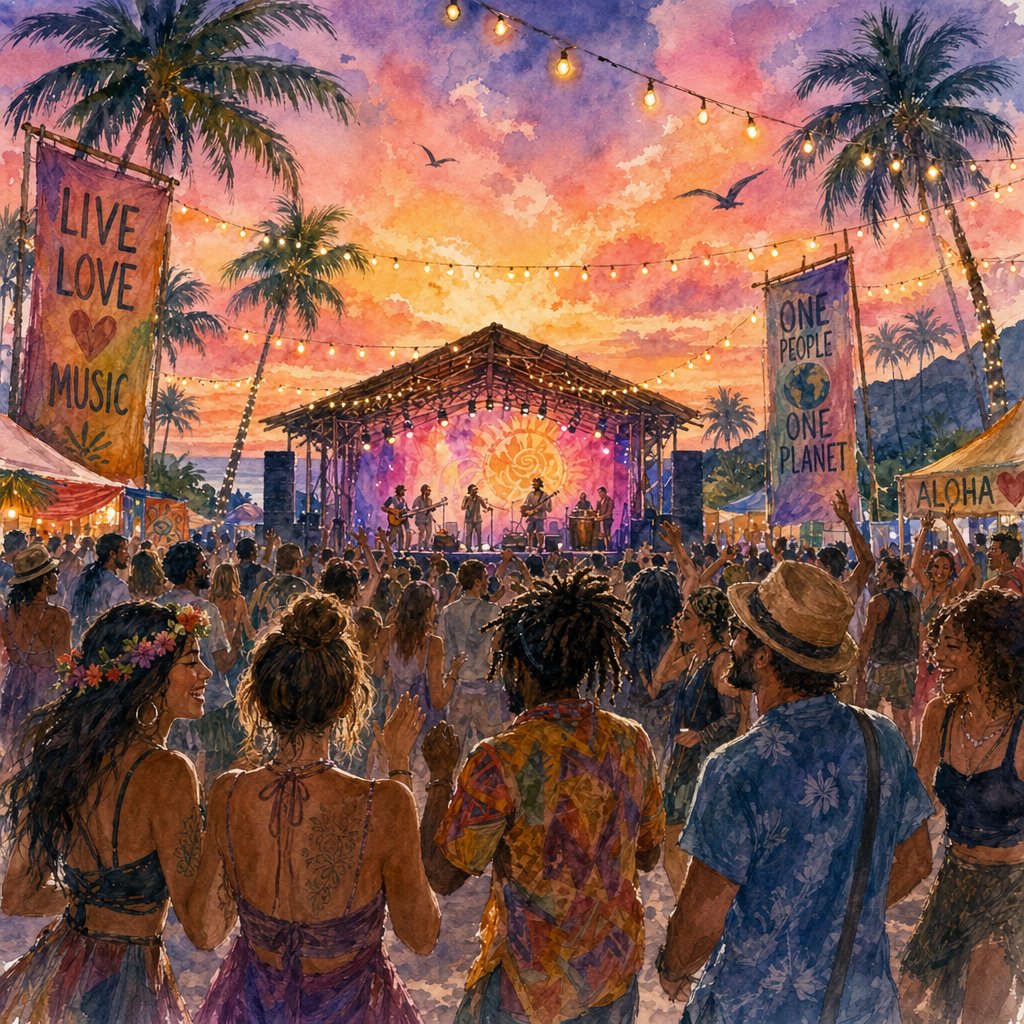
Nothing replaces hearing this music live, surrounded by a crowd that knows every word. The festival circuit — both in Hawai'i and on the mainland — offers the most immersive way to experience the genre's energy and community spirit.
- Holo Holo Music Festival — Born from island and reggae culture, this touring festival has expanded from California to O'ahu, Las Vegas, Utah, and the Pacific Northwest, featuring acts like The Green, J Boog, KatchaFire, and Josh Tatofi across multi-day lineups
- California Roots Music & Art Festival (Monterey, CA) — One of the premier reggae festivals in the U.S., blending island reggae with roots and reggae-rock in a family-oriented atmosphere
- Maku'u Music Festival (Big Island, Hawai'i) — A grassroots gathering celebrating local Hawaiian music and reggae in an intimate, community-driven setting
- Island Music Awards / Island 98.5 events — Annual celebrations of the local scene that spotlight both established and rising hawaiian island music playlist favorites
- Reggae Rise Up (various mainland locations) — A growing festival brand that regularly books island reggae artists alongside broader reggae and roots acts
These festivals aren't just concerts. They're gathering points for a community that spans oceans — places where the aloha spirit the music carries actually becomes something you can feel in the crowd around you. And for listeners who leave these events inspired to do more than just listen, the next step might be closer than they think.
The Future of Hawaiian Reggae and Creating Your Own Island Sound
The Living Legacy of Hawaiian Reggae
From backyard jams in Wai'anae to sold-out stages at every major hawaii reggae festival on the mainland, this genre's arc tells a story about what happens when music meets genuine cultural need. Hawaiian reggae didn't borrow from Jamaica — it answered Jamaica, in its own voice, with its own stories. Four decades later, every hawaii reggae artist carrying a ukulele into a studio or uploading reggae songs hawaii fans share across the Pacific is proof that the conversation is still going. The genre remains vibrant because it was never about freezing a sound in place. It was always about fusion, adaptation, and the freedom to make something new from something inherited.
Turning Island Inspiration into Original Music
That spirit of creative fusion doesn't have to stay on the listener's side of the speakers. If you've ever felt the pull of an island groove and wondered what it would sound like filtered through your own ideas, the barrier to experimenting has never been lower. Modern AI music tools have opened genre exploration to anyone with curiosity and a browser. MakeBestMusic's AI Song Generator, for example, lets you pick a genre like island reggae, set a mood, and generate an original royalty-free track in seconds — no studio gear or music theory required. It's a low-pressure way to play with the rhythms and textures that make this genre feel the way it does.
Hawaiian reggae was built on the idea that you can honor a tradition and make it your own at the same time. That spirit of cultural fusion and creative freedom isn't locked in the past — it's something anyone can tap into today.
Whether you're deep into the catalog or just pressing play on your first island reggae playlist, the door is open. The genre that started as a quiet conversation between two island cultures is still inviting new voices in.
