

What Funk Carioca Really Means
Imagine a narrow street deep inside a Rio de Janeiro favela. Stacked speaker towers rattle the concrete walls. An MC grips the mic, firing rapid-fire Portuguese over a pounding bassline while hundreds of bodies move as one in the humid night air. This is a baile, and the sound shaking the ground beneath it is funk carioca, a genre that carries an entire community's identity in its name.
Defining Funk Carioca in Plain English
Funk carioca is a bass-heavy electronic music genre born in the favelas of Rio de Janeiro during the late 1980s, built on syncopated percussion, heavy sub-bass, and rapid-fire MC vocals delivered in Portuguese.
At its core, brazilian funk grew out of a collision between imported Miami bass records, freestyle electro, and deeply rooted African-diasporic rhythm traditions. DJs and collectors brought American records back to Rio, played them at massive community parties, and local producers gradually reshaped those sounds into something entirely new. The result was a genre inseparable from the streets that created it.
Why the Name Confuses International Listeners
Here's where English-language listeners often stumble. When you search "funk meaning slang" or try to define carioca on its own, you get two very different worlds. American funk, the genre pioneered by James Brown and Parliament, is rooted in groovy guitar riffs and horn sections. Funk carioca shares almost none of those sonic traits. In Brazil, "funk" became an umbrella term for the Black dance music played at Rio's parties starting in the 1970s. The word stuck, even as the sound evolved far beyond its American origins. So when someone says funk means a James Brown groove, they're right in one context and completely off in another.
The Cultural Weight Behind the Word Carioca
To understand the meaning of carioca, you need to feel the pride packed into it. Merriam-Webster traces the word to Brazilian Portuguese, defining it as a native or resident of Rio de Janeiro. Tagging the genre as "carioca" was never just a geographic label. It was a declaration of ownership. This music belongs to Rio's favelas, to the Black and brown communities who built it from scratch as a vehicle for racial consciousness and resistance against social marginalization. The name itself tells you where the genre lives and who it speaks for.
That sense of place and purpose didn't appear overnight. It was built, party by party, through decades of sound system crews, DJs, and underground networks that gave the genre its physical and social foundation.
How Funk Brasileiro Evolved
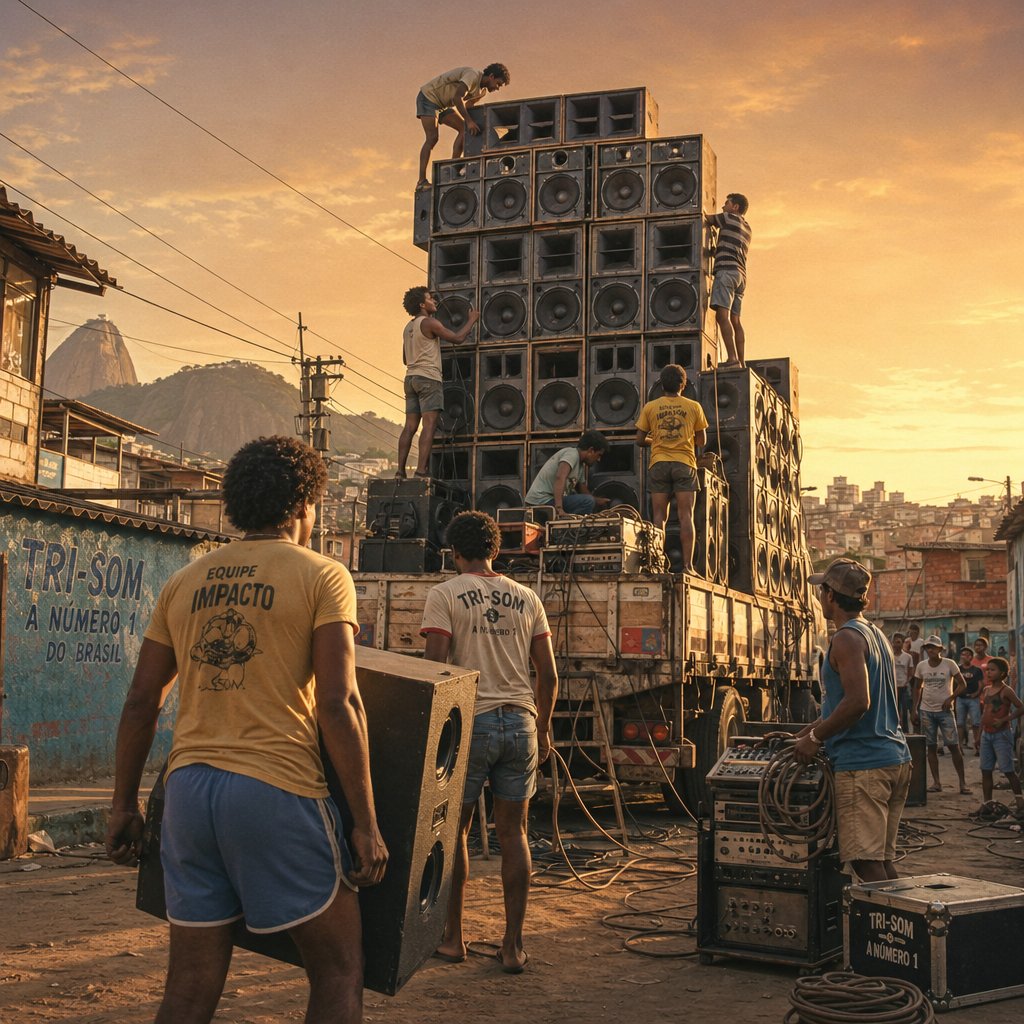
Every genre has infrastructure before it has a name. For funk in Brazil, that infrastructure was literal: towering walls of speakers, flatbed trucks loaded with amplifiers, and crews of young men who stayed up all night assembling and disassembling sound rigs for the next party. The genre's timeline isn't a series of disconnected moments. It's a chain reaction, where each era built the stage for the one that followed.
Equipes de Som and the Party Infrastructure
In the 1970s and early 80s, Rio's suburbs and favelas were home to the equipes de som, or sound system crews, that created the physical and social backbone of what would become funk carioca. Groups like Soul Grand Prix and Furacão 2000 organized massive outdoor parties where DJs spun American soul, R&B, and early funk music 80's imports for thousands of dancers. These weren't casual get-togethers. Furacão 2000 alone operated sound systems stacking between forty and one hundred speakers, turning open plazas into bass-saturated arenas. The equipes didn't just play records. They built a culture of communal listening and dancing that gave the genre its audience, its rituals, and its economic model long before anyone pressed "record."
DJ Marlboro and the Birth of a Recorded Scene
By the mid-1980s, Miami bass and freestyle electro had replaced soul and R&B on most equipe playlists. The crowds loved the heavier, more percussive sound. A music enthusiast named Fernando Luis Mattos de Matta, better known as DJ Marlboro, noticed that Brazilian listeners were responding to these imports with an intensity that demanded something homegrown. He recorded Portuguese-language versions of Miami bass and freestyle tracks, and the resulting 1989 compilation Funk Brasil became the genre's founding document. For the first time, rio music born in the bailes had a commercial product, a name, and a path beyond the party.
From Miami Bass Imports to Homegrown Beats
The 1990s brought the first nationally successful funk releases, including MC Batata's "Feira de Acari" and the Rap Brasil compilation series. Producers started replacing imported instrumentals with locally crafted beats, pulling rhythmic ideas from Afro-Brazilian religious traditions like Candomble drumming. By the early 2000s, this experimentation crystallized into the tamborzao, a syncopated percussion pattern rooted in atabaque rhythms that became the genre's rhythmic signature. Suddenly, funky Brazil had a sound that owed nothing to Miami or New York.
Here are the five turning points that trace this evolution from neighborhood parties to global playlists:
- 1970s-80s: Equipes de som like Soul Grand Prix and Furacão 2000 establish the party infrastructure across Rio's favelas and suburbs.
- 1989: DJ Marlboro releases Funk Brasil, giving the scene its first commercial recording and a Portuguese-language identity.
- 1990s: Local producers shift from imported Miami bass loops to original beats, and artists like Cidinho & Doca bring social commentary into the lyrics.
- Early 2000s: The tamborzao beat pattern emerges, giving funk brasileiro a rhythmic foundation entirely its own.
- 2010s-present: Streaming platforms and viral sharing launch the genre onto the global stage, turning musik brazil into an international search term.
Each phase fed directly into the next. The equipes built the crowds. The crowds demanded local music. Local music developed its own beat. And that beat eventually found its way to millions of ears worldwide. But none of this happened in studios or on stages alone. It happened inside the baile, the party format that shaped every element of the sound, from how tracks are structured to how MCs perform them.
Inside the Baile Funk Experience
The baile is where every element of this genre locks into place. Tracks aren't designed for headphones or playlists. They're built for a specific room, a specific crowd, and a specific moment when the MC's voice cuts through a wall of bass and a thousand people respond in unison. Understanding baile meaning is straightforward: it translates to "dance" or "dance party" in Portuguese. But the word barely captures what actually happens inside one.
Anatomy of a Baile Funk Party
Picture a concrete courtyard or a blocked-off street in a Rio favela. Speaker stacks, sometimes forty to a hundred units deep, line the perimeter and push sub-bass frequencies so heavy you feel them in your chest before you hear them in your ears. The DJ controls the energy, selecting tracks and looping beats while the MC works the crowd through call-and-response chants, shout-outs to neighborhoods, and improvised lyrics that react to the room in real time. The crowd packs shoulder to shoulder, moving together in synchronized waves. There's no stage barrier, no VIP section. The party is the performance, and everyone in it is part of the show. Ethnographic research describes these events as spaces that emotionally elevate young people above the harsh conditions of their daily lives, creating a collective feeling of abundance and belonging.
Community Bailes Versus Commercial Clubs
Not all bailes are the same. The funk rio scene splits into two distinct formats, and the differences shape everything from the music played to the crowd's behavior.
| Category | Community Baile | Commercial Club Baile |
|---|---|---|
| Venue | Open-air streets, courtyards, or plazas inside favelas | Enclosed nightclubs or rented event halls in urban centers |
| Crowd Size | Hundreds to several thousand (Vila Vintem's weekly party drew around 3,000) | Typically 200-800, controlled by venue capacity and ticket sales |
| Sound Setup | Massive stacked speaker walls operated by equipes de som crews | Professional club PA systems with managed volume levels |
| MC Style | Raw, improvised call-and-response; proibidao and local shout-outs common | Polished sets featuring charting hits; explicit content often toned down |
| Entry | Free or minimal cost; often sponsored by local figures | Paid tickets; age verification and security screening at the door |
Community bailes are where the genre's creative edge stays sharpest. The open format encourages improvisation, and the lack of commercial gatekeeping means MCs and DJs can test raw, unfinished ideas on a live crowd. Commercial clubs offer a more curated, safer experience, but the trade-off is a sanitized version of the sound. Think of it as the difference between a jazz jam session and a concert hall performance. Both have value, but the raw energy lives in the former.
Why Bailes Face Constant Controversy
Bailes have been raided, shut down, and publicly condemned for decades. Critics point to noise levels, drug trafficking associations, and sexually explicit content. During the COVID-19 pandemic, research in Rio's favelas documented how even local drug cartels suspended weekly bailes to curb infection risk, underscoring how central these events are to community life. But much of the opposition predates any public health concern. Class-based stigma drives a significant share of the backlash. When wealthier neighborhoods host loud parties, they rarely face the same police response. The favelas fusion of music, identity, and public gathering challenges social hierarchies in ways that make authorities uncomfortable. Roughly 400 funk parties across Rio still run about fifty events per week, drawing audiences of up to a thousand people each. The baile persists because it serves a purpose no policy can replace: it gives a community a space to be loud, visible, and together on its own terms.
The party format doesn't just shape the culture around the music. It shapes the music itself, down to the rhythmic skeleton of every track. That skeleton has a name, and understanding how it's built reveals why funk carioca sounds like nothing else on earth.
How Funk Brazil Music Is Built
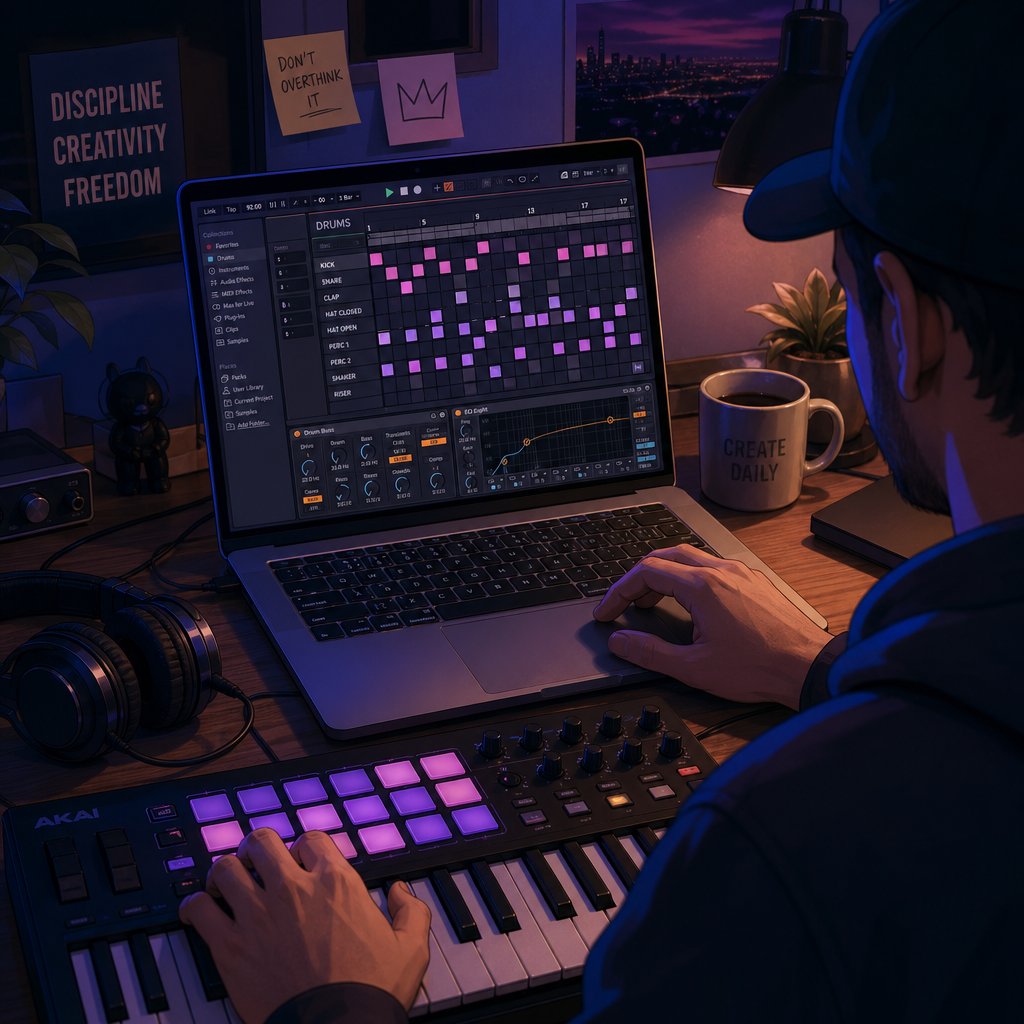
Everyone talks about the tamborzao. Few explain what it actually is. The word translates roughly to "big drum," and it refers to the syncopated percussion pattern that became the rhythmic DNA of the genre in the early 2000s. If you've ever heard a funk carioca track and felt your body lock into a groove you couldn't quite count, the tamborzao is why.
The Tamborzao Rhythm Decoded
At its foundation, the pattern is a conversation between a heavy, punchy kick and a sharp snare or clap, arranged in a syncopated loop that avoids landing where you expect it to. Imagine a standard four-on-the-floor house beat. The tamborzao does the opposite. Kicks fall on off-beats and between subdivisions, creating a lurching, hypnotic swing that pulls dancers forward rather than letting them settle. Layered on top are percussion elements inspired by the atabaque, a tall, hand-played drum central to Afro-Brazilian Candomble ceremonies. These layers add tom rolls, shaker patterns, and rapid-fire fills that give the groove its distinctive texture. The typical tempo sits in a sweet spot around 130 BPM, though faster variations push toward 150bpm, especially in the high-energy subgenres that emerged in the 2010s.
Here are the core sonic elements you'll find in a typical beat:
- A clipped, saturated 808 kick providing the low-end punch, often with a short sub-bass tail for weight
- Syncopated snare or clap hits on off-beats, creating the signature swing
- Atabaque-inspired tom rolls and percussive fills that drive momentum between phrases
- Sub-bass lines, usually simple and mono, relying on pressure rather than melodic complexity
- Chopped vocal samples, Portuguese shouts, or MC one-liners used as rhythmic hooks
- Minimal melodic elements, often a single synth stab or a two-chord loop to add texture without competing with the percussion
Layering Bass, Percussion, and Vocal Chops
Building a track around the tamborzao follows a specific logic. The kick and percussion pattern come first, establishing the groove that everything else orbits. Producers then drop in a sub-bass layer, usually a single sustained note or a simple pitch glide that fills the low end without cluttering the rhythm. Vocal chops land next, functioning less as lyrics and more as percussive punctuation. A short Portuguese phrase gets sliced, stuttered, and pitched to lock into the groove's syncopation. Songs brazilian producers create this way are designed for one purpose: to move a packed baile floor. Melody is an afterthought. The rhythm and the bass do the talking.
How Bedroom Producers Changed the Game
Early tamborzao tracks were built on hardware samplers and drum machines, tools that required real investment. The shift to DAWs, particularly FL Studio, changed everything. A teenager in a favela with a laptop and a cracked copy of production software could suddenly build freestyle beats that rivaled anything coming out of a professional studio. CD-R circulation and later SoundCloud uploads replaced traditional distribution, and the barrier between listener and creator nearly disappeared.
This democratization spawned wild experimentation. The most extreme example is the montagem, a subgenre whose name, montagem meaning in english, translates to "montage" or "assembly." Montagem producers build tracks almost entirely from rapid-fire sample collages: chopped vocal fragments, pitch-shifted shouts, DJ tags, and stuttered one-liners layered into dense, disorienting arrangements at 150 bpm or higher. It's the genre's production ethos taken to its logical extreme, where the edit itself becomes the instrument.
The tools got cheaper. The beats got wilder. But the voices riding those beats, the MCs who turned raw rhythm into storytelling, social commentary, and cultural identity, are the reason the genre resonated far beyond any bedroom studio.
The MCs Who Shaped Funk Carioca
Producers built the beats. The baile provided the stage. But the MCs gave the genre a face, a voice, and a point of view. Many of the brazilian rappers who defined this sound remain virtually unknown outside Brazil, even as their influence echoes through global bass music. Here are the pioneering figures every listener should know:
- Tati Quebra Barraco — one of the first female MCs to claim sexually explicit lyrical territory as a space of power, not shame
- Deize Tigrona — a conscious funk and putaria MC who toured internationally, bringing a feminist lens to the genre's rawest themes
- Cidinho & Doca — turned "Rap das Armas" into a global crossover hit, introducing millions to the sound of Rio's favelas
- Mr. Catra — a prolific, controversial figure who recorded thousands of funks and embodied the genre's maximalist, boundary-pushing spirit
- MC Carol — an Afro-Brazilian feminist whose tracks tackle violence against women, colonial history, and beauty standards
- Valesca Popozuda — rose from the group Gaiola das Popozudas to become one of the genre's most visible mainstream voices
- Ludmilla — carried the sound into pop crossover territory while maintaining roots in favela culture
Female MCs Who Owned the Mic First
Long before the genre reached international playlists, women were already commanding the mic on their own terms. Tati Quebra Barraco emerged from Cidade de Deus in the early 2000s with brazilian funk songs that were unapologetically sexual, flipping the script on a male-dominated scene by refusing to be anyone's backup vocalist. Deize Tigrona operated in similar territory, blending putaria with social awareness and touring globally as a representative of feminist funk. These women didn't wait for permission. They carved out space in a genre where explicit content had always been a male privilege, and they owned it completely.
Valesca Popozuda took that energy further into the mainstream. Starting with the group Gaiola das Popozudas, she built a career that complicated easy narratives about sexuality and empowerment. Was she being exploited or liberated? The answer, as with most things in this genre, depends on who's listening and who's profiting. What's undeniable is that she and her peers proved female MCs could headline bailes, sell records, and shape popular brazilian music on a national scale. LGBTQ+ artists and audiences have similarly found space within the scene, using the genre's openness to provocation as a vehicle for visibility and self-expression.
Mr. Catra, Cidinho and Doca, and Crossover Moments
If the female MCs broke social barriers, Mr. Catra broke volume limits. He recorded an almost incomprehensible number of funk songs across every subgenre the scene produced, from hardcore proibidão to romantic melody. In his own words: "We sung what the communities wanted to hear. Proibidão doesn't talk only about drug lords. It also addresses issues of corruption, the dissatisfaction of poor people — it's about reality." He was polarizing, prolific, and impossible to ignore.
Cidinho & Doca delivered the genre's most recognizable international moment. Their 2008 version of "Rap das Armas," with its melodic "parapapapá" refrain, crossed language barriers and landed on soundtracks worldwide. The original track dates back to MCs Júnior e Leonardo from Rocinha in 1995, making it one of the first funk songs officially labeled "proibido." Cidinho & Doca's version proved that music born in favela parties could resonate with audiences who'd never set foot in Rio. It was a crossover built not on compromise, but on the raw energy the genre had always carried.
Putaria, Proibidão, and the Lyrical Debates
You can't discuss the lyrical landscape honestly without addressing the two subgenres that generate the most heat. Putaria, the sexually explicit strain of funk, treats desire, bodies, and pleasure with a directness that shocks listeners accustomed to pop music's euphemisms. Proibidão, or prohibited funk, narrates life inside drug trafficking territories with a bluntness that has led to arrests, bans, and criminal indictments against MCs like Frank, Max, Tikão, and Dido e Smith.
The cultural debate around these subgenres mirrors arguments that have followed brazilian hip hop and every other genre born in marginalized communities. Critics call it glorification. Artists and advocates call it documentation. As Mano Teko, president of the funkeiro rights organization APAFUNK, put it: "The texts are not an ode to violence but simply a record of the daily reality in the favelas. Does a news reader not do the same?" MC Carol represents the sharpest evolution of this tension. Her track "Não Foi Cabral" challenged Brazil's colonial founding myths so effectively that university professors analyzed it as a serious work of counter-history. Her Tropkillaz-produced "100% Feminista" fused chest-rattling bass with an explicit rejection of patriarchy.
These lyrical battles aren't side stories. They're central to why the genre matters. The MCs who shaped this sound didn't just entertain packed dance floors — they forced conversations about class, race, gender, and power that Brazil's mainstream would rather avoid. And as those conversations traveled beyond Rio, the genre itself splintered into regional variations, each reflecting a different slice of Brazilian identity.
How Brazilian Funk Splintered
Rio's favelas gave the genre its name, its beat, and its attitude. But music this potent doesn't stay in one city. As the tamborzao spread through Brazil's sound systems and internet connections, different regions grabbed the rhythmic DNA and reshaped it to reflect their own realities. The result is a family of subgenres that share a common pulse but sound, look, and mean very different things depending on where you're standing.
Sao Paulo's Funk Ostentacao Movement
If Rio's sound was forged in resistance, Sao Paulo's was built on aspiration. Funk ostentacao, which translates roughly to "ostentatious funk," emerged in the peripheries of Brazil's largest city during the early 2010s with a lyrical focus that flipped the script entirely. Instead of narrating favela hardship or police violence, MCs like MC Guime, MC Daleste, and MC Lon rapped about luxury cars, designer brands, and the dream of upward mobility. MC Daleste's "Sao Paulo" captures the ethos perfectly: lines like "the mine is gold" and "capital of hundred-dollar bills" transform material consumption into a symbol of conquest for young people from the city's outskirts.
This wasn't shallow bragging. For communities locked out of Brazil's economic mainstream, rapping about wealth was an act of imagination and defiance. The production style matched the ambition: cleaner mixes, punchier kicks, and a slightly faster tempo than Rio's grittier output. Ostentacao turned brazil funky music into something aspirational, and its YouTube-driven distribution model helped it reach audiences across the country who connected with the dream even if they didn't share the zip code.
Funk Carioca Versus Phonk — Clearing Up the Confusion
Here's where things get tangled for international listeners. If you've scrolled TikTok workout compilations or drift car edits, you've probably heard tracks labeled "Brazilian phonk." Sounds familiar, right? It isn't the same thing. The phonk genre traces its roots not to Rio's bailes but to Memphis rap and the lo-fi, horrorcore aesthetic pioneered by Three 6 Mafia in the 1990s. Eastern European producers later reimagined that sound with blown-out 808s, pitched cowbell leads, and hard-clipped mixes, creating what most people now recognize as drift phonk.
"Brazilian phonk" sits at a messy crossroads. It borrows the tamborzao rhythm and occasional Portuguese vocal chops from funk carioca, then wraps them in phonk's maximalist, distorted production style. The result racks up streams, but it often strips away the cultural context that makes the original genre meaningful. As producer d.silvestre told Splice: "A whole layer of the art is being left out." Dancer and historian Renate Prado was blunter, calling it "a whitewashing of Brazilian funk that makes it easier to understand by the masses."
When people search for the best phonks or brazilian phonk songs, they're usually finding internet-native productions made largely outside Brazil. Phonk music lives on algorithms and playlists. Funk carioca lives in bailes, communities, and decades of cultural history. The sonic overlap is real, but the roots couldn't be more different.
Brega Funk, Mandelao, and Regional Mutations
Sao Paulo didn't stop at ostentacao. The city also birthed funk mandelao, a minimalist, bass-driven style built for powerful street-party sound systems. DJ GBR's "Ritmo dos Fluxos" popularized the template around 2016: repetitive hooks, raw energy, and stripped-back production designed to hit hard through car speakers and outdoor rigs. More recently, bruxaria ("witchcraft") emerged from Sao Paulo's south zone baile scene with dark, chaotic textures, distortion, and piercing sound effects that push the genre into near-industrial territory.
Meanwhile, in Brazil's northeast, brega funk fused the melodic sensibility of Recife's brega tradition with funk's percussive backbone. Artists like Dada Boladao and MC Loma e as Gemeas Lacracao built a high-energy hybrid marked by off-beat rhythms, cowbells, and passinho dance routines that spread through viral videos. Each of these mutations reflects a specific city's personality, class dynamics, and sonic preferences while keeping the tamborzao heartbeat alive underneath.
| Subgenre | Region of Origin | Typical BPM Range | Lyrical Themes | Key Artists |
|---|---|---|---|---|
| Funk Carioca (original) | Rio de Janeiro | 130-140 | Favela life, social commentary, party energy, putaria | MC Carol, Cidinho & Doca, Mr. Catra |
| Funk Ostentacao | Sao Paulo | 130-145 | Luxury brands, cars, aspirational wealth, celebration | MC Guime, MC Daleste, MC Lon |
| Funk Mandelao | Sao Paulo | 130-150 | Repetitive hooks, street-party energy, raw aggression | DJ GBR, MC Magal, MC Menor MR |
| Brega Funk | Recife (Northeast) | 135-150 | Dance routines, humor, romance, regional pride | Dada Boladao, MC Loma, Shevchenko & Elloco |
| Brazilian Phonk | Online (Eastern Europe / global) | 130-160 | Mostly instrumental; drift culture, workout energy | Slowboy, DJ FKU, Bibi Babydoll |
What connects all of these variations is a shared rhythmic skeleton and a DIY production ethos that prizes energy over polish. What separates them is everything else: who makes the music, who dances to it, and what story it tells. The subgenres aren't dilutions of the original. They're proof that the tamborzao is flexible enough to carry the weight of wildly different communities and aspirations. And wherever the beat travels, it brings a physical, embodied culture with it, one that's impossible to separate from the dance styles it inspires.
Passinho and the Dance Dimension of Brazilian Funk Music
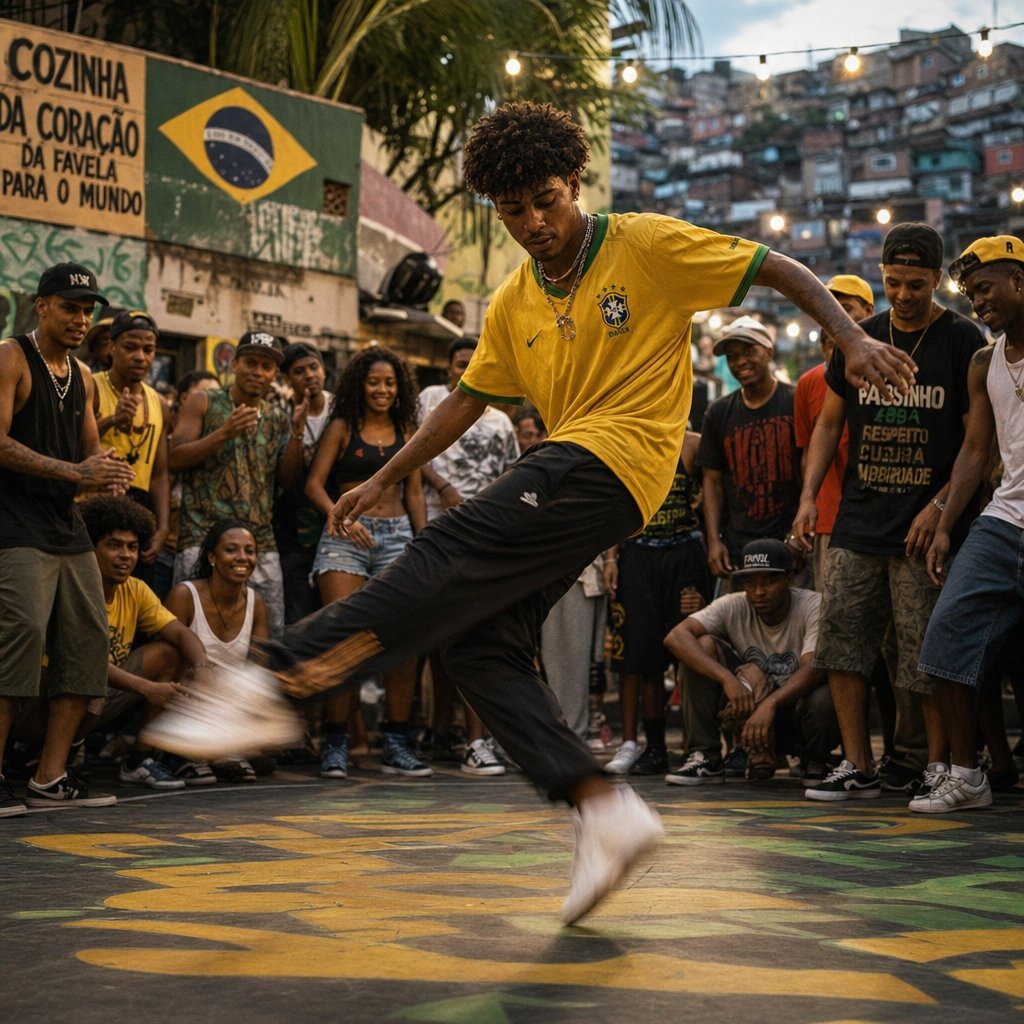
The beat demands a body. And in the early 2000s, inside the cramped, bass-saturated bailes of Rio's Complexo do Jacarezinho, teenagers answered that demand by inventing a dance so fast and intricate it looked like a glitch in gravity. They called it passinho, Portuguese for "little step," a name that wildly undersells what it actually involves.
Passinho — Favela Footwork That Went Viral
Passinho fuses staccato waist twists, rapid-fire footwork, and ballet-like moves performed high on the toes with elements borrowed from samba, capoeira, frevo, breaking, and Afro-Brazilian dance. The style was born barefoot on the dance floors of baile funk parties, where young dancers would improvise steps and "charingar" — copy, then improve — each other's moves in an endless game of one-upmanship. Over time, pure improvisation gave way to signature sequences and combos, thanks to pioneers like Cebolinha who helped transform raw creativity into a recognizable funky dance vocabulary.
Here are the key movement elements that define the style:
- Sabara — named after one of the first passinho MCs, a foundational step pattern that anchors most routines
- Rabiscada — a striking motion where the foot mimics a matchstick scraping the floor
- Cruzada — intricate criss-crossing footwork performed at speed
- Embolada — tangled, rapid leg movements that test balance and coordination
- Acrobatic drops, spins, and floor work layered over the syncopated tamborzao rhythm
How Dance Battles Build Community
Between 2008 and 2009, videos of passinho duels started flooding Orkut communities and early YouTube, racking up millions of views. Likes became a new currency of status. A dancer named Baianinhoo uploaded a two-minute clip while babysitting his sisters and pulled 60,000 views. Then a group of friends filmed a backyard session called Beiçola the Passinho Foda that crossed five million views and catapulted the style into national consciousness. In 2011, the first official Batalha do Passinho formalized the duels, drawing hundreds of competitors to spots like the Manguinhos Skate Plaza in Rio's North Zone. These battles did something remarkable: they bridged rival gang territories, giving dancers safe passage into neighborhoods that would have been dangerous to enter otherwise. Carioca funk's dance culture became, quite literally, a peace offering.
From Rio's Streets to Global Choreography
The global stage came fast. Passinho dancers performed at the closing ceremony of the London 2012 Paralympics, appeared in the BBC's official 2014 World Cup montage, and featured in the opening of the 2016 Rio Olympics. Beyonce showcased passinho moves at Rock in Rio in 2013. Snoop Dogg posted himself dancing to it. In 2024, the style earned official recognition as an Intangible Cultural Heritage of the State of Rio de Janeiro, a milestone that honored what favela youth had known all along: this was art, not noise.
Among brazilian dance styles, passinho stands out because it never left its roots behind. The baile remains the laboratory where new steps are tested, stolen, and perfected. TikTok may have carried fragments of the movement vocabulary worldwide, but as dancer Vitorinha warned: "You can't just watch TikTok videos or take a few classes and call yourself a Passinho Foda dancer." The authenticity lives in the community that created it. And that community is also rewriting the rules of how artists build careers, distribute music, and reach audiences far beyond the favela walls.
How Funk Carioca Artists Build Careers Now
Talent alone doesn't pay rent. For MCs and producers working in brazil funk, the path from a packed baile to a sustainable income has always been improvised, stitched together from whatever platforms and networks were available at the time. That resourcefulness hasn't changed. What's changed is the toolkit.
YouTube, WhatsApp, and Informal Distribution
YouTube isn't just a platform for brazilian music funk. It's the industry's backbone. The two largest funk labels in Brazil, GR6 and Kondzilla, have amassed over 100 million subscribers combined, making them among the most-followed music channels on the planet. For most artists, a YouTube upload is the release strategy. There's no label pitch, no distributor negotiation. You record a track, shoot a low-budget video, and upload it. Revenue comes from ad views, and a single viral hit can generate enough income to fund months of studio time.
But the funk carioca soundfield funk youtube ecosystem only tells half the story. Inside favela communities, distribution runs through WhatsApp groups and Bluetooth file sharing. Tracks circulate as audio files passed phone to phone, often before they ever hit a streaming platform. This informal network functions like an underground radio system: if a track catches fire in the right WhatsApp group, it can reach tens of thousands of listeners overnight without a single algorithm involved. For artists like MC GW, whose voice became one of the most sampled in the genre, streaming platforms eventually became the primary earnings channel. But the initial spark almost always starts offline, in the community.
TikTok Virality as a Career Launchpad
Then came TikTok, and the economics shifted again. A fifteen-second clip of a tiktok brazilian song synced to a dance trend can catapult an unknown MC into millions of streams practically overnight. MC Fioti's "Bum Bum Tam Tam" became the first Brazilian video to surpass one billion YouTube plays, and much of that momentum was fueled by social media sharing. Automotivo edits, those bass-heavy, sped-up remixes built for car audio and workout clips, have become their own viral category, pushing brazil funk music into feeds that would never encounter a baile otherwise.
The live circuit remains the financial anchor, though. Baile bookings, club appearances, and festival slots convert online followers into real income. As Ludmilla's A&R Daniel Mansur noted, "Brazilian music can burst the international bubble easier today," but the gap between viral streams and sustainable touring revenue is still wide. Artists who crack the code, like Ludmilla and Anitta, do it by leveraging social media followings into booking fees and brand deals that extend well beyond a single platform.
AI Tools and the Next Wave of Funk Production
The same DIY spirit that drove bedroom producers to build tamborzao beats on cracked copies of FL Studio is now meeting a new generation of creative tools. AI-powered music production has entered the landscape, and it fits the genre's ethos perfectly: lower the barrier, widen the door, let more people create. A recent survey of 1,200 music creators found that 87% of artists have already incorporated AI into at least one part of their process, from songwriting to production to promotion.
For producers and content creators curious about experimenting with the sound, tools like MakeBestMusic's AI Song Generator let you turn a genre idea or mood description into an original royalty-free track in seconds, no studio access required. Imagine typing "dark funk carioca beat, 140 BPM, heavy sub-bass" and getting a usable starting point you can refine, chop, or build on. It's one tool among many in a rapidly expanding ecosystem, but it captures the principle that has driven this genre from the beginning: if you can hear it in your head, you should be able to make it, regardless of your budget or zip code.
The economics of brazil funk music are messy, informal, and constantly evolving. But the throughline is clear: every generation finds new ways to get the music out and get paid for it. What hasn't changed is the need for a starting point, a curated path into the genre's deep catalog that tells you not just what to listen to, but why it matters.
Your Funk Carioca Listening Roadmap
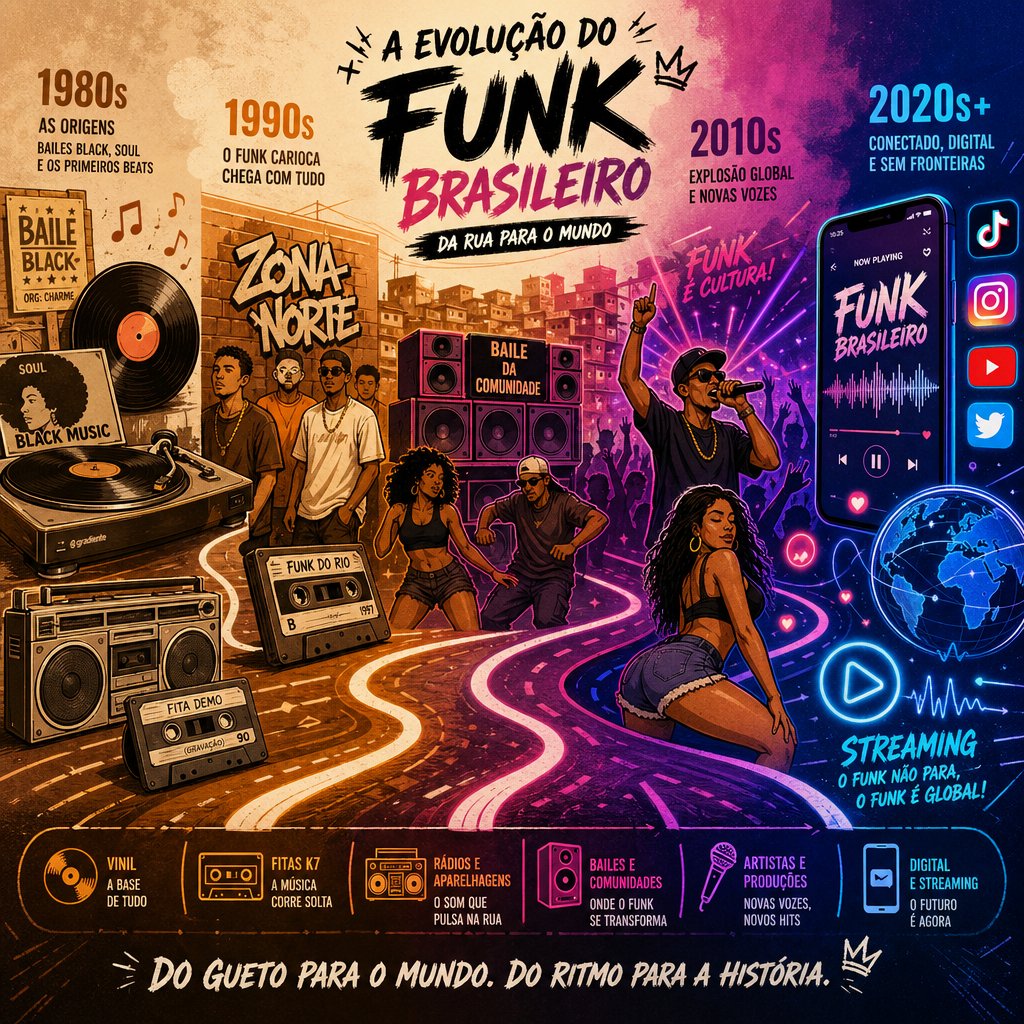
Reading about a genre only gets you so far. At some point, you need to press play. The problem is that decades of funk carioca songs span thousands of releases across shifting subgenres, regional scenes, and production styles, and most playlists dump everything into a single unsorted pile. This roadmap is different. It walks you through the genre era by era, so each funk song you hear makes sense in the context of what came before it and what it made possible next.
Early Foundations — Where It All Started
The late 1980s and 1990s established the genre's emotional vocabulary. These tracks carry the DNA of everything that followed.
- Late 1980s–1990s: The First Wave
The Tamborzao Revolution and MC Golden Age
The early 2000s brought the homegrown beat that changed everything, and the mid-2000s through 2010s unleashed the MCs who rode it to national fame.
- Early 2000s: The Tamborzao Arrives
- Mid-2000s–2010s: The MC Golden Age
The Global Streaming Era and What to Play First
From 2016 onward, viral mechanics and streaming platforms turned regional hits into global phenomena almost overnight. If you're searching for fekunk or Brazilian funk playlists, these are the tracks the algorithms will surface first, and for good reason.
- 2016–Present: The Streaming Explosion
Work through this roadmap in order and you won't just hear a collection of tracks. You'll hear a genre evolving in real time, each era answering a question the previous one raised. The early foundations asked whether favela music could be recorded. The tamborzao era answered by building a beat no one else owned. The MC golden age proved the voices riding that beat could fill stadiums. And the streaming era showed the whole world was ready to listen.
If that journey leaves you wanting to create rather than just consume, the gap between inspiration and production has never been smaller. MakeBestMusic's AI Song Generator lets you type a genre prompt like "dark funk carioca, 140 BPM, heavy percussion" and get a royalty-free starting point you can shape into something your own. It won't replace the decades of culture behind these tracks, but it captures the same principle that drove every era on this roadmap: hear it, feel it, make it.
