


What Makes a Bassline Heavy
A heavy bassline is a low-frequency musical pattern that dominates a mix through sub-bass power (20–80 Hz), sustained note duration, and high amplitude, creating a physical sensation often felt in the chest before it registers in the ears. It is the difference between hearing a song and being moved by one, literally.
When you press play on a song with a lot of bass, something shifts. The air thickens. Your ribcage hums. That reaction is not random. It is the direct result of specific frequencies, production decisions, and mix priorities working together. Understanding what creates that sensation turns casual listening into something far more intentional.
What Separates a Heavy Bassline from a Regular One
Every song has some form of low-end content, but not every bassline qualifies as heavy. The distinction comes down to three factors: low-frequency dominance, mix prominence, and sustained energy.
A regular bassline sits in the background, supporting chords and rhythm without drawing attention. A heavy one pushes to the front of the mix and stays there. It occupies the sub-bass range below 80 Hz, where sound waves are long enough to physically displace air and vibrate surfaces. That is the chest-rattling sensation you feel at a concert or in a car loaded with subwoofers. The lowest open E string on a bass guitar rings at roughly 41 Hz, already deep in sub-bass territory. Synths and 808 kick drums can push even lower.
Heaviness also depends on how long notes sustain. Short, clipped bass notes create punch. Long, sustained tones build pressure. The bass best songs tend to combine both, using drawn-out sub-bass tones with transient hits layered on top for impact.
The Frequency Spectrum of Bass in Music
Not all bass frequencies sound or feel the same. The low end of the audio spectrum breaks into distinct bands, each contributing a different quality to perceived heaviness. Here is how they stack up:
| Frequency Range | Classification | Sonic Character | Common Sources |
|---|---|---|---|
| 20–80 Hz | Sub-Bass | Felt more than heard; rumble, physical force | 808 kicks, deep synth patches, lowest bass guitar notes |
| 80–180 Hz | Mid-Bass | Tonal body; boom, slam, groove | Basslines, kick drum bodies, baritone instruments |
| 180–300 Hz | Upper Bass | Warmth and weight; can turn muddy if excessive | Rhythm guitars, toms, lower vocal fundamentals |
Sub-bass delivers raw energy. Mid-bass gives that energy a recognizable pitch and groove. Upper bass adds warmth but risks muddiness when overloaded. The top bassline songs and standout bassline tracks tend to nail the balance between the first two bands, keeping the sub-bass powerful while letting mid-bass frequencies define the melodic character.
Think about rap songs with amazing bass. The 808 pattern usually lives in the sub-bass zone for sheer physical impact, while a secondary layer or harmonic content fills the mid-bass to keep the tone audible on smaller speakers. That layered approach is what separates a song with lots of bass from one that simply sounds loud.
Why Some Songs Feel Heavier Than Others
Two tracks can share the same key, tempo, and bass note, yet one feels twice as heavy. The difference lives in production technique.
Compression is a big factor. Compressing a bassline reduces its dynamic range, keeping the level consistently high rather than peaking and dipping. The result is a sustained wall of low-end energy that feels relentless. Parallel compression, a technique where a heavily compressed copy is blended with the original signal, adds density without squashing the natural transients.
Saturation plays an equally important role. Adding harmonic distortion to a bass signal generates upper overtones that make the low end more audible on headphones and small speakers, while the fundamental frequency still rattles subwoofers. Producers working on bass enhanced tracks often saturate with tape emulation or dedicated plugins to thicken the signal without boosting raw volume.
Stereo width matters too, though not in the way you might expect. Keeping bass frequencies below 150 Hz in mono actually solidifies the low end, preventing phase cancellation that can hollow out the very frequencies meant to hit hardest. That mono foundation is why club systems and vinyl masters demand it.
These production choices explain why heaviness is not just about turning the bass up. It is about shaping how that bass occupies space, time, and frequency in a mix. And once you understand the mechanics, the real question becomes: why does heavy bass feel so good in the first place?

Why Heavy Bass Feels So Powerful
The answer starts not in your ears, but in your skeleton. Heavy bass does something no other musical element can: it turns your body into a resonating instrument. That physical pull is not a quirk of personal taste. It is hardwired biology meeting deliberate sound design.
How Your Body Responds to Low Frequencies
Bass frequencies below 150 Hz do not just travel through the air to your eardrums. They pass through skin, bone, and soft tissue, vibrating your chest cavity and activating sensory systems that have nothing to do with hearing. Research published in the Journal of the Association for Research in Otolaryngology found that the sacculus, a part of the vestibular system in the inner ear, retains ancestral acoustic sensitivity to low-frequency sound. In other words, the same organ that helps you sense gravity and balance also responds to deep bass, creating a feeling of physical immersion that higher frequencies simply cannot replicate.
A 2025 study published in Applied Acoustics confirmed that amplifying bass below 150 Hz significantly increases emotional arousal, even when listeners are not consciously aware the low end has been boosted. That finding explains why songs with a ton of bass feel more intense at the same volume level. The sensation is not imagined. Your vestibular and tactile systems are genuinely responding to pressure waves moving through your body.
The Groove Connection Between Bass and Rhythm
Feeling bass is one thing. Moving to it is another, and that response is equally involuntary. Groove, the quality that makes you nod your head or shift your weight without thinking, depends heavily on the interaction between bass timing, syncopation, and your internal rhythmic clock.
A study from the University of Oslo's RITMO Centre measured involuntary body motion in people instructed to stand perfectly still while listening to music. Electronic dance music with a clear pulse and strong low-frequency content produced the most involuntary movement, significantly more than classical or folk stimuli. Pulse clarity, the strength and regularity of the beat, had the strongest effect on vertical body motion, the kind of micro-sway that mirrors head-nodding and bouncing.
This is why bass-heavy music dominates clubs, car audio culture, and festival stages. In those environments, physical sensation matters as much as melody. The top songs for bass lock a deep, sustained low end into a rhythmic pocket that your body synchronizes with before your conscious mind even registers the pattern. Songs with a lot of bass do not just sound good in these settings. They recruit your entire body into the listening experience.
Bass and Emotional Impact in Songwriting
Beyond rhythm and physical sensation, bass weight carries emotional meaning. Film composers lean on sub-bass rumble to build dread and tension because those frequencies trigger a primal sense of something large and unseen. Hip-hop producers use tuned 808s to project dominance and authority, the low end acting as a sonic signature of power. Electronic producers design bass drops to deliver euphoria, releasing built-up tension in a single, chest-compressing moment.
These are not arbitrary choices. Each application exploits the same underlying mechanism: low frequencies engage the body in ways that bypass purely intellectual listening. When you feel a bassline in your sternum, the emotional response is immediate and visceral. It does not need lyrics or melody to communicate. Some of the greatest bass songs in any genre succeed precisely because the low end carries the emotional weight that words alone cannot.
Bass is the only element in music that bridges hearing and touch, making it the one frequency range that transforms a listener into a participant.
That dual nature, part sound, part physical force, is what makes heavy basslines so universally compelling. It also explains why the pursuit of heavier, deeper, more impactful low end has driven entire genres to evolve over the decades.
How Heavy Basslines Evolved Through the Decades
That drive toward deeper, more physical low end did not appear overnight. It grew out of specific musical communities, studio experiments, and technological breakthroughs spanning more than fifty years. Every era pushed bass further forward in the mix, and each generation of producers inherited a heavier starting point than the last. Tracing that lineage reveals why today's songs with bass sound the way they do and where the obsession with low-end weight actually began.
Funk, Dub Reggae, and the Birth of Bass Culture
Two parallel movements in the 1970s laid the foundation for everything that followed. In the United States, funk musicians turned the bass guitar into a lead instrument. Bootsy Collins, playing with James Brown and later Parliament-Funkadelic, pioneered a syncopated, melodic style that put the bassline at the center of the arrangement rather than buried beneath horns and vocals. Larry Graham, credited with inventing the slap bass technique, gave the instrument a percussive attack that made it impossible to ignore. These players proved that bass could carry a song's identity, not just its harmonic foundation.
Across the Atlantic in Jamaica, a completely different approach was taking shape. Dub reggae emerged in the late 1960s and early 1970s when producers like King Tubby and Lee Scratch Perry began stripping reggae recordings down to their rhythm sections and rebuilding them with heavy studio effects. Vocals were removed or reduced to ghostly fragments. Reverb and delay were applied generously. Most importantly, the bass and drums, known as the riddim, were pushed to the absolute front of the mix. As dub pioneer Scientist explained, the genre was built on "a recomposition of original music" using echo, delay, and effects to enhance the arrangement. The result was music where bass was not just prominent but dominant, a physical force designed to shake the massive sound systems at Jamaican dance parties.
Funk gave bass melody and rhythm. Dub gave bass authority over the entire mix. Together, they created the blueprint for every bass heavy genre that followed.
Hip-Hop 808s and the Rise of Electronic Bass
The 1980s brought a machine that would redefine low end forever: the Roland TR-808. Released in 1980 and discontinued just three years later, the 808's deep, booming kick drum was unlike anything acoustic drums could produce. It generated a sustained sub-bass tone that could be tuned and extended, turning a percussion hit into a melodic bass element.
The 808 found its first major hip-hop moment in 1982 when Afrika Bambaataa and the Soulsonic Force released "Planet Rock." Producer Arthur Baker hired a studio musician to replay percussion from Kraftwerk's "Numbers" on the machine, and the resulting track birthed the electro genre while influencing a generation of producers across multiple styles. Close to 400 songs have sampled "Planet Rock" since its release.
The 808's impact spread quickly beyond New York. In Miami, a famously chaotic 1985 recording session for Double Duce's "Commin' In Fresh" produced an accidental discovery. Engineer Amos Larkins II rushed the final mix without a proper level check, and the resulting 808 hum was so powerful it destroyed his friend's record shop speakers while catching the attention of passersby, sparking the entire Miami bass movement. Meanwhile, the Queens duo The Show Boys laid down their 808-laced "Drag Rap," whose infectious cowbell intro became the legendary "Triggerman" loop, a building block for crunk, trap, and New Orleans bounce.
Southern rap producers leaned into bass weight as a defining aesthetic. DJ Screw in Houston pioneered the chopped and screwed technique, slowing tracks to a crawl and letting 808 sub-bass stretch into long, syrupy tones that felt heavier than anything at normal tempo. Mannie Fresh, producing for Cash Money Records in New Orleans, built bouncing, bass-forward beats that made low end the centerpiece of Southern hip-hop's commercial breakthrough. By the late 1990s, the 808 kick was no longer just a drum sound. It was the bassline itself.
Simultaneously, electronic music was pushing synthesized bass into uncharted territory. Acid house, born in Chicago, used the Roland TB-303's squelchy resonant filter sweeps to create hypnotic bass patterns. Jungle and early drum and bass in the UK paired rapid breakbeats with crushing sub-bass, proving that speed and low-end weight could coexist. These genres expanded the vocabulary of what bass could sound like, moving far beyond the acoustic instrument that funk had elevated a decade earlier.
Modern Bass Production From Dubstep to Trap
The 2000s shattered every remaining boundary around bass production. Dubstep, emerging from South London's underground, introduced aggressive mid-bass growls and wobble bass created through heavy modulation of synthesized tones. Producers like Skream, Benga, and Digital Mystikz built tracks around sub-bass pressure that was almost unbearable on a proper sound system. When artists like Skrillex brought a more aggressive, distortion-heavy version to mainstream audiences around 2010, bass music became a global phenomenon.
Trap music, rooted in Atlanta hip-hop, refined the 808 into an art form. Producers developed tuned 808 slides, pitch-bending the kick drum across notes to create melodic bass patterns that were simultaneously rhythmic and harmonic. The bass was mixed louder and more distorted than ever, with saturation and clipping pushed to extremes that earlier engineers would have considered mistakes. These nice bass songs proved that controlled distortion could make low end feel even heavier than a clean signal.
Pop production absorbed these techniques rapidly. By the mid-2010s, songs with good bassline weight were charting worldwide, from Billie Eilish's sub-bass-driven minimalism to the 808-saturated production behind Drake and Travis Scott. The line between underground bass music and mainstream pop had effectively dissolved. Today, the best bass in a song might come from a trap 808, a dubstep-inspired synth growl, or a funk-influenced electric bass run processed through modern plugins. The tools and traditions of every preceding era are available simultaneously, and producers mix them freely.
Here is how that evolution maps across the decades:
| Era | Key Genre | Signature Bass Style | Landmark Tracks |
|---|---|---|---|
| 1970s | Funk / Dub Reggae | Syncopated bass guitar; bass-dominant dub mixes | Parliament — "Flash Light"; King Tubby — "Dub Fi Gwan" |
| 1980s | Electro / Miami Bass | TR-808 sub-bass kicks; machine-driven low end | Afrika Bambaataa — "Planet Rock"; 2 Live Crew — "We Want Some Pussy" |
| 1990s | Southern Rap / Jungle | Tuned 808 basslines; chopped and screwed sub-bass; breakbeat + sub-bass pairing | DJ Screw — "June 27th"; Roni Size — "Brown Paper Bag" |
| 2000s | Dubstep / Crunk | Wobble bass; mid-bass growls; sub-bass pressure | Skream — "Midnight Request Line"; Lil Jon — "Get Low" |
| 2010s | Trap / Bass Music | Tuned 808 slides; distorted sub-bass; bass drops | Future — "March Madness"; Skrillex — "Scary Monsters and Nice Sprites" |
| 2020s | Hyperpop / Phonk / Mainstream Pop | Layered sub + mid-bass; extreme saturation; genre-blended low end | Billie Eilish — "bad guy"; Playboi Carti — "Stop Breathing" |
Each decade handed the next a heavier foundation to build on. Funk gave bass a voice. Dub gave it dominance. The 808 gave it synthetic power. Electronic music gave it new textures. And modern production gave it no limits at all. That progression also produced distinct categories of bass heaviness, each with its own sonic fingerprint and physical impact, which is exactly what separates one chest-rattling track from another.

Five Types of Bass Heaviness Every Listener Should Know
Decades of evolution produced more than just louder low end. They created fundamentally different kinds of heaviness. Two tracks can both qualify as good bass tracks and still feel nothing alike, because the character of their bass operates on completely different principles. Genre labels only tell part of the story. What really matters is how the bass hits: where it sits in the frequency spectrum, how it behaves over time, and what physical sensation it produces.
Think of it as a taxonomy. Once you can identify the type of bass heaviness in a song, you know exactly what to search for, what speaker system will reproduce it best, and why certain tracks scratch an itch that others do not.
Deep Sub-Bass Rumble vs. Punchy 808 Hits
The first two types occupy similar frequency ranges but deliver completely different experiences. Deep sub-bass rumble is the sustained, pressure-building low end you feel in your chest during a dub reggae track or an ambient bass piece. It lives below 60 Hz, often closer to 30 or 40 Hz, where individual notes blur into a continuous physical vibration. You do not tap your foot to it. You sink into it. This type demands a subwoofer or high-quality closed-back headphones to appreciate fully, since most laptop and phone speakers cannot reproduce frequencies that low.
Punchy 808 hits are the opposite in behavior, even though they share the sub-bass zone. These are transient-heavy, tuned kick drums with a sharp attack and a resonant tail that decays over a beat or two. The 808 hit is percussive first and tonal second. It punches, then sustains. Modern trap and hip-hop production relies on this character almost exclusively, and it translates well across car audio systems, earbuds, and club PAs because the initial transient cuts through even on smaller drivers. When someone describes a song with alot of bass that "knocks," they are almost always talking about 808 hits.
Distorted Growl Bass and Funky Rhythmic Weight
Move up the frequency spectrum and the character shifts dramatically. Distorted growl bass lives in the mid-bass range, roughly 80 to 250 Hz, and gets its aggression from heavy saturation, FM synthesis, or wavetable modulation. This is the snarling, metallic tone that defines dubstep drops, industrial metal, and experimental bass music. Producers like Skrillex and Noisia built entire careers around sculpting these tones, using LFO-modulated filter cutoffs and FM oscillators to create sounds that feel like machinery tearing apart in slow motion. Growl bass does not need to go deep to feel heavy. Its density and harmonic complexity create perceived weight through sheer timbral aggression.
Funky rhythmic weight takes the opposite approach. Here, heaviness comes from groove rather than raw frequency content. Syncopated, melodic basslines in funk, disco, and R&B create a sense of low-end authority through timing, note choice, and performance dynamics. A Bootsy Collins bassline does not rumble beneath the mix. It struts through it, and the rhythmic pocket it carves feels heavy because your body locks into its pattern. The best music bass in this category often comes from electric bass guitar or Minimoog-style synth patches with snappy envelopes and expressive pitch bends. Many bass enhanced songs in modern R&B and neo-soul still draw directly from this tradition, layering live-feeling bass performances over programmed drums.
Wall-of-Sound Low End and Layered Bass Textures
The fifth type combines elements of all the others. Wall-of-sound low end stacks multiple bass layers, sub, mid, and harmonic, into a single overwhelming mass. A pure sine wave handles the sub-bass foundation below 60 Hz. A separate synth or distorted layer covers the mid-bass for tonal definition. A third element adds upper harmonics or grit so the bass remains audible on smaller speakers. This layering approach is standard in modern electronic production and cinematic scoring, where each layer is EQ-carved to occupy its own frequency slot without masking the others.
The technique demands careful phase alignment and sidechain management to avoid muddiness, but when executed well, it produces the most physically immersive bass experience available. Hans Zimmer's film scores, festival-stage EDM drops, and heavily produced trap anthems all rely on this stacked architecture to create low end that feels inescapable.
Here is how all five types break down, with representative tracks for each:
- Deep Sub-Bass Rumble — Sustained, felt-more-than-heard pressure below 60 Hz. Tracks: Burial — "Archangel"; King Tubby — "Dub Fi Gwan"
- Punchy 808 Hits — Transient-heavy tuned kicks that punch and decay. Tracks: Future — "March Madness"; Travis Scott — "SICKO MODE"
- Distorted Growl Bass — Aggressive mid-bass created through saturation and FM synthesis. Tracks: Skrillex — "Scary Monsters and Nice Sprites"; Noisia — "Stigma"
- Funky Rhythmic Weight — Groove-driven heaviness from syncopation and melodic bass playing. Tracks: Parliament — "Flash Light"; Thundercat — "Them Changes"
- Wall-of-Sound Low End — Layered sub, mid, and harmonic bass stacked for maximum density. Tracks: Billie Eilish — "bad guy"; Excision — "The Paradox"
Most iconic heavy bassline songs combine two or more of these character types. An 808 hit with saturation blends punchy transients and growl. A layered dubstep drop stacks sub-bass rumble beneath mid-bass distortion. Recognizing the blend is what separates a casual listener from someone who truly understands why a track hits so hard.
This framework does more than organize your listening. It gives you a vocabulary for finding exactly the kind of bass heaviness you are after, whether you are building a playlist, testing a speaker system, or hunting for good bass tracks across genres you have never explored. And the best place to start exploring is the genre most synonymous with low-end dominance: hip-hop.
Heavy Bassline Songs in Hip-Hop and Rap
Hip-hop did not just adopt heavy bass. It made low-end weight a non-negotiable part of the genre's identity. From the first 808 boom to today's distorted sub-bass anthems, rap production has consistently pushed bass louder, deeper, and more central than any other style of music. If you are searching for music with the best bass, this is the genre that delivers it most reliably and most aggressively.
The recommendations below span three decades and multiple regional styles. Each entry includes the producer responsible and a note on the specific bass technique that makes the track hit, because knowing what to listen for turns a good song on bass into a masterclass in low-end production.
Classic Rap Tracks with Legendary Bass
These foundational tracks from the 1990s and 2000s established the production templates that modern rap still builds on. The bass instruments vary, from live bass guitar to early 808 programming, but every entry here earned its place through sheer low-end authority.
- Dr. Dre ft. Snoop Dogg — "Still D.R.E." (1999) — Produced by Dr. Dre and Scott Storch. The minimal but punchy bassline rides beneath one of hip-hop's most iconic piano riffs, using a deep, sustained synth bass that rumbles without ever cluttering the mix.
- Luniz — "I Got 5 On It" (1995) — Produced by Tone Capone. The rolling, looped bassline borrows its melodic contour from Club Nouveau's "Why You Treat Me So Bad," and its deep, smooth low end has made it a go-to subwoofer test track for nearly three decades.
- Busta Rhymes — "Break Ya Neck" (2001) — Produced by Dr. Dre and Scott Storch. A fast-paced 808 pattern keeps pace with Busta's rapid-fire delivery, proving that heavy bass does not require slow tempos to rattle a trunk.
- Three 6 Mafia — "Stay Fly" (2005) — Produced by DJ Paul. A pitched-down Willie Hutch sample meets booming Memphis 808s, creating a low-end pocket so deep it practically defined the crunk-to-trap transition in Southern rap.
- UGK ft. OutKast — "Int'l Players Anthem (I Choose You)" (2007) — Produced by DJ Paul. Pimp C's live bass guitar sample sits over a trunk-rattling 808 kick, blending funky rhythmic weight with sub-bass punch in a way few tracks have matched since.
Modern Trap and 808 Bass Anthems
Contemporary rap production has turned the 808 into a melodic instrument. Tuned slides, aggressive saturation, and mixing that pushes sub-bass louder than ever define this era. These are songs with a lot bass that test the limits of any speaker system.
- Travis Scott — "SICKO MODE" (2018) — Produced by Hit-Boy, Tay Keith, and others. Three distinct beat switches, each with its own 808 character: deep rolling 808s in the first section, a punchy hard-hitting bassline in the second, and booming 808s paired with sharp hi-hats in the third. The bass drop around 0:55 after Drake's intro is the moment your subwoofer earns its keep.
- Kendrick Lamar — "HUMBLE." (2017) — Produced by Mike WiLL Made-It. A minimalist arrangement strips everything back to let the driving 808 pattern carry every bar, with the bass mixed so prominently that the simple piano riff feels like decoration over a foundation of pure low end.
- Future — "Mask Off" (2017) — Produced by Metro Boomin. The hypnotic flute melody gets all the attention, but the sustained sub-bass underneath is what gives the track its weight. Metro's 808 programming here is a textbook example of clean, immersive low-end production.
- Migos ft. Lil Uzi Vert — "Bad and Boujee" (2016) — Produced by Metro Boomin. Rolling 808 patterns lock into the triplet hi-hat groove that defined late-2010s trap, with the bass mixed hot enough to distort slightly on consumer speakers, a deliberate choice that adds grit.
- Kanye West — "Love Lockdown" (2008) — Produced by Kanye West. Built around the actual Roland TR-808 drum machine, the deep, distorted 808 bass hits contrast against sparse piano chords and Auto-Tuned vocals, creating a haunting atmosphere where the low end carries all the emotional weight.
Underground and Regional Rap with Massive Low End
Mainstream charts only tell part of the story. Some of the most extreme bass music in hip-hop comes from regional scenes where sub-bass weight is not a production choice but a cultural requirement. Southern rap, phonk, and drill all prioritize low-end impact in ways that push well beyond radio-friendly mixing standards. If you want more bass songs that genuinely challenge your system, start here.
- Sheck Wes — "Mo Bamba" (2017) — Produced by Take A Daytrip and 16yrold. The massive bass drop at 0:33 hits like a physical event, with raw, barely controlled 808s that prioritize energy and impact over polish.
- Playboi Carti — "Stop Breathing" (2020) — Produced by F1lthy. A distorted, clipping 808 pattern pushed past conventional mixing limits, representing the punk-rap approach where bass heaviness comes from deliberate overload rather than clean sub-bass extension.
- Pop Smoke ft. Travis Scott — "GATTI" (2019) — Produced by Rico Beats. Brooklyn drill meets deep 808s that define Pop Smoke's signature sound, with the bass particularly prominent in the bridge around 2:01 where the low end opens up beneath the sparse arrangement.
- DJ Screw — "June 27th" (1996) — Mixed by DJ Screw. The chopped and screwed technique slows the original tempo dramatically, stretching 808 tones into long, syrupy sub-bass sustains that feel heavier than anything at normal speed. This is the song on bass terms that Southern car audio culture was built around.
Fourteen tracks, three decades, and one constant: the bassline leads. Whether it is a clean 1990s synth bass, a melodic 808 slide, or a deliberately clipping sub-bass pattern, hip-hop treats low-end weight as the foundation everything else sits on. That same philosophy drives electronic music, but the tools, tempos, and textures shift dramatically once you cross into dubstep, drum and bass, and techno territory.

Electronic Music with the Heaviest Bass
Hip-hop may have turned the 808 into a cultural institution, but electronic music built entire genres around the pursuit of heavier, stranger, more physically overwhelming low end. Dubstep, drum and bass, jungle, and techno each developed their own approach to bass weight, and the best bass songs in these styles push frequencies and production techniques into territory that rap rarely touches. Yet most bass-focused playlists barely acknowledge these genres exist. That is a massive blind spot, because if you care about bass on music systems of any kind, electronic subgenres deliver some of the most extreme low-end experiences ever recorded.
Dubstep and Bass Music Essentials
Dubstep emerged from South London in the early 2000s as a direct descendant of dub reggae, UK garage, and grime. Its original form prioritized sub-bass pressure and space, with sparse arrangements designed to let the low end breathe on massive sound systems. As the genre evolved, producers introduced aggressive mid-bass growls, wobble bass driven by LFO-modulated filters, and drops engineered to feel like controlled demolition. The result is music bass music fans treat as the gold standard for sheer physical impact.
- Skream — "Midnight Request Line" (2005) — The track that introduced dubstep to a wider audience. A simple, haunting melody floats over a deep sub-bass pulse that builds tension for nearly a minute before the low end fully opens up around 1:05. The bass is a clean sine wave sub, felt more than heard, with minimal harmonic content. That restraint is what makes it so devastating on a proper system.
- Digital Mystikz — "Anti War Dub" (2006) — Mala's masterpiece of sub-bass minimalism. A single, sustained low-frequency tone anchors the entire track while sparse percussion and vocal samples drift above it. The bass sits around 35–40 Hz and barely moves in pitch, creating relentless chest pressure. Focus on the sustained sub-bass weight from 0:45 onward, where the kick and bass lock into a pattern that feels like standing next to a running engine.
- Skrillex — "Scary Monsters and Nice Sprites" (2010) — The track that dragged bass music into the mainstream. The drop at 0:47 unleashes aggressive FM-synthesized mid-bass growls layered over sub-bass, with rapid LFO modulation creating the genre's signature "wobble" effect. Love it or not, this song redefined what casual listeners expected from bass-heavy electronic production.
- Excision — "The Paradox" (2016) — A wall-of-sound approach to bass music. Multiple layers of distorted mid-bass sit on top of a sub-bass foundation so heavy it is essentially a test track for subwoofer systems. The heaviest moment lands at the first drop around 1:30, where stacked bass layers create the kind of density that makes bass boosted songs on streaming playlists sound polite by comparison.
Drum and Bass and Jungle Tracks That Rattle
Drum and bass and its predecessor jungle achieve heaviness through a mechanism that seems counterintuitive: speed. At 160–180 BPM, breakbeats cycle so rapidly that the space between hits compresses, and when a deep sub-bass tone drops beneath that rhythmic chaos, the contrast between frantic highs and immovable lows creates a physical tension unlike anything in slower genres. The bass does not need to be loud. It needs to be deep and constant, an anchor beneath the storm.
Jungle, the raw precursor to drum and bass, pioneered this formula in the early 1990s UK rave scene. Producers chopped breakbeats, particularly the iconic "Amen" break, into dizzying patterns and paired them with sub-bass lines heavy enough to rattle the walls of warehouses and pirate radio stations. Time Out and Rinse FM DJs have documented how tracks from this era combined "blisteringly brilliant drum edits and bassbin-blowing bass" into a sound that still holds up decades later.
- Roni Size / Reprazent — "Brown Paper Bag" (1997) — The track that brought drum and bass to mainstream attention. A live-sounding double bass sample provides melodic mid-bass groove while a sub-bass layer rumbles underneath at around 45 Hz. The interplay between the two creates a jazz-inflected heaviness that proved DnB could be sophisticated and chest-rattling at the same time.
- Dillinja — "The Angels Fell" (1995) — Described by jungle historians as "beautifully brutal and eerily cinematic," this Metalheadz release pairs chopped Amen breaks with one of the deepest, most menacing sub-bass tones in the genre's history. Dillinja's influence on the evolution of jungle and drum and bass throughout the 1990s is hard to overstate, and this track is the clearest example of why.
- Dead Dred — "Dread Bass" (1994) — The title says it all. This track was a "game-changer in terms of sub-bass manipulation," featuring a bassline deeper, darker, and more warped than anything before it. Military drums and a ravey vocal ride on top, but the low end is the entire point: a distorted, pitch-shifting sub-bass that pushed the boundaries of what 1990s sound systems could reproduce.
- Chase & Status — "Blind Faith" ft. Liam Bailey (2011) — A modern DnB anthem where a rolling sub-bass pattern sits beneath soulful vocals and driving breakbeats. The bass is clean and deep, mixed to translate well on everything from festival rigs to car systems, making it one of the most accessible entry points into bass-heavy drum and bass.
Techno, House, and Festival Bass Bangers
Techno and house approach bass weight differently than dubstep or DnB. Instead of dramatic drops or breakbeat contrast, these genres use repetition. A deep kick drum and a rolling bassline cycle over four, eight, sixteen bars, and the cumulative effect is hypnotic. Your body synchronizes with the pattern, and the bass stops being something you notice and becomes something you inhabit. Festival and peak-time techno push this further with harder kicks, heavier sidechain compression, and bass patterns designed to move thousands of bodies simultaneously.
- Amelie Lens — "Hypnotized" (2019) — A driving techno track where a distorted kick drum and acid-tinged bassline lock into a relentless 4/4 groove. The low end is not deep in the sub-bass sense but dense and aggressive in the mid-bass range, creating the kind of physical impact that defines peak-time techno sets.
- Fisher — "Losing It" (2018) — Tech-house built on a bouncing bassline that sits squarely in the 80–120 Hz range, giving it a punchy, room-filling quality. The bass pattern is simple and repetitive by design, because at festival volume, that repetition becomes a physical force that locks a crowd into a single groove.
- Bicep — "Glue" (2017) — A more melodic take on bass-heavy electronic music. The sub-bass underpinning this track is warm and sustained, providing a bed of low-end energy beneath shimmering synths and breakbeat-influenced drums. It proves that heaviness does not require aggression.
The table below maps how these electronic subgenres compare in terms of tempo, frequency focus, and the bass character types introduced earlier in this article:
| Subgenre | Typical Tempo (BPM) | Bass Frequency Focus | Primary Bass Character Type |
|---|---|---|---|
| Dubstep | 138–142 | Sub-bass (30–60 Hz) + Mid-bass growls (80–250 Hz) | Deep Sub-Bass Rumble + Distorted Growl Bass |
| Drum and Bass / Jungle | 160–180 | Sub-bass (35–60 Hz) | Deep Sub-Bass Rumble + Wall-of-Sound Low End |
| Techno | 125–145 | Mid-bass kick (60–120 Hz) + Sub-bass (30–50 Hz) | Funky Rhythmic Weight + Deep Sub-Bass Rumble |
| Tech-House | 122–130 | Mid-bass (80–150 Hz) | Funky Rhythmic Weight + Punchy 808 Hits |
| Festival EDM / Bass Music | 128–150 | Full spectrum layering (30–250 Hz) | Wall-of-Sound Low End + Distorted Growl Bass |
Eleven tracks across five subgenres, and every one of them treats bass as the defining element rather than a supporting player. These are not bass boosted songs with artificially inflated low end. They are productions where the bass is the composition, shaped by decades of sound system culture, studio innovation, and a shared obsession with making frequencies you can feel in your bones. Electronic music proves that heavy bass is not limited to one tempo, one texture, or one production philosophy. It is a spectrum as wide as the genres themselves. That same range extends even further when you look beyond electronic and hip-hop into rock, funk, and the mainstream pop tracks that carry more low-end weight than most listeners realize.
Rock, Funk, and Genre-Crossing Bass Anthems
Electronic producers and hip-hop beatmakers get most of the credit for pushing low-end boundaries, but some of the most physically impactful basslines ever recorded come from a distorted bass guitar tuned down to drop D, a Fender Jazz Bass running through a tube amp, or a synth patch buried inside a pop hit you have heard a thousand times without noticing the sub-bass. Rock, metal, funk, and even mainstream pop all have deep traditions of bass-forward production, and the songs good bass fans keep returning to in these genres rival anything an 808 can deliver.
Rock and Metal Songs with Crushing Low End
Rock and metal bassists face a unique challenge: competing with distorted guitars that occupy much of the same frequency range. The players who break through that wall do it with aggressive gear choices, alternate tunings, and a refusal to sit politely in the background. Bass heavy rock songs earn their weight through sheer tonal force and performance intensity.
- Metallica — "For Whom the Bell Tolls" (1984) — Bassist Cliff Burton wrote this track and played the famous intro using heavy distortion on his Rickenbacker 4001. What Hi-Fi? highlights it as a bass test track that delivers "weight and power but also punch and detail." Burton's use of a wah pedal and overdriven tone gave the bass guitar a lead-instrument presence that was almost unheard of in thrash metal at the time.
- Tool — "Forty Six & 2" (1996) — Justin Chancellor's bass work on this track starts with a singular, crawling bass hook that builds into a layered, dynamic epic over six minutes. Chancellor plays a Wal bass through a combination of clean and overdriven signal chains, giving the low end both clarity and grit. The dynamic peaks and instrumental interplay make it one of the best tests of how a system handles bass detail under pressure.
- Rage Against the Machine — "Bullet in the Head" (1992) — Tim Commerford's bass sits low and heavy through the verses before erupting into aggressive slap-and-shred passages in the finale. An insightful system will pick out the slap of the strings rather than collapsing it into a wall of noise, especially when layers of Tom Morello's guitar enter the mix. Commerford's tone comes from a Music Man StingRay bass pushed through Ampeg SVT heads, a rig built for low-end authority.
- Muse — "Hysteria" (2003) — Chris Wolstenholme's overdriven bassline drives the entire track with a relentless, galloping riff that never lets up. Muse favor fuzzy, overdriven bass parts where the roughness around the edges reveals how insightful your listening system really is. Beneath the wall-of-sound production, there is real detail to uncover if your speakers can separate the bass from the surrounding distortion.
These tracks prove that music with best bass is not confined to synthesizers and drum machines. A bass guitar in the right hands, through the right signal chain, produces low-end weight that is every bit as physical as an 808 hit.
Funk, Soul, and R&B Grooves with Deep Basslines
Where rock and metal achieve heaviness through volume and distortion, funk and soul do it through groove. The bassline does not overpower the mix. It commands it, locking into a rhythmic pocket so deep that everything else in the arrangement orbits around it. These are tracks where the bass carries the song's identity, and removing it would leave nothing but a skeleton.
- Chic — "Good Times" (1979) — Bernard Edwards played the bassline that, as What Hi-Fi? notes, "made history." The Wikipedia list of songs sampling this riff stretches to over 27 entries. Edwards used a BC Rich bass with a clean, punchy tone, and the variation in note length and attenuation across the pattern is more complex than a casual listen reveals. This is funky rhythmic weight at its most influential.
- Talking Heads — "Burning Down the House" (1983) — Tina Weymouth's bassline is a bubbling juggernaut inspired by a Parliament-Funkadelic concert. The bass notes are full and deep, and on a capable system they maintain separation without blurring into each other or dragging the tempo. Weymouth proved that new wave could hit just as hard as the funk it borrowed from.
- Thundercat — "Uh Uh" (2017) — Stephen Lee Bruner, known as Thundercat, delivers a frantic, genre-bending finger workout that fuses jazz, funk, and electronic production. The bassline runs up and down the scale at an erratic pace, testing timing and rhythmic insight on any system. His six-string bass tone blends electric warmth with modern clarity, bridging vintage funk and contemporary R&B in a way that makes rap songs with great bass sound almost restrained by comparison.
Funk and soul basslines remind you that heaviness is not just about frequency depth. A perfectly placed note at 100 Hz, played with rhythmic precision and dynamic feel, can hit your body harder than a sustained sub-bass drone. The rap songs best bass fans celebrate often sample exactly these kinds of grooves, which is why the lineage between 1970s funk and modern hip-hop production remains so direct.
Pop and Mainstream Hits with Surprising Bass Weight
You might not expect chart-topping pop songs to compete with dubstep drops or metal riffs in the low-end department. But modern pop production has quietly absorbed sub-bass techniques from hip-hop and electronic music, sneaking serious weight into radio-friendly formats. These tracks sound bright and polished on laptop speakers, yet reveal a hidden layer of chest-rattling low end the moment you play them through a decent subwoofer or quality headphones.
- Billie Eilish — "bad guy" (2019) — Produced by Finneas O'Connell in a bedroom studio, the sub-bass on this track sits around 40–50 Hz and carries the entire harmonic foundation. The sparse arrangement leaves enormous space for the low end to breathe, and the bass is mixed so prominently that it dominates the physical experience of the song despite the whispery vocal delivery. It is a masterclass in making songs good bass listeners will obsess over without sounding like a traditional bass track.
- Lorde — "Royals" (2013) — Produced by Joel Little. The beat is built on a minimal, booming kick pattern with a sub-bass layer that provides nearly all of the track's low-end content. Strip away the bass and you are left with finger snaps and vocals. That structural simplicity is what gives the low end so much room to hit, proving that pop minimalism and bass weight are natural partners.
- The Weeknd — "Wasted Times" (2018) — What Hi-Fi? praises this track for adding enough of a twist to the current fashion for ultra-deep R&B basslines, delivering "bass with weight, definition and texture." The sub-bass is smooth and sustained, sitting beneath airy synths and falsetto vocals in a way that rewards careful listening on quality systems.
These pop entries share a common production philosophy: give the bass room. By keeping arrangements sparse and midrange elements minimal, producers create space for sub-bass to dominate the physical experience without overwhelming the melodic content. It is the same principle dub reggae pioneered in the 1970s, just dressed in a pop format.
Ten tracks across rock, funk, and pop, and every one of them challenges the assumption that heavy bass belongs exclusively to hip-hop or electronic music. The low end does not care about genre boundaries. It cares about frequency, amplitude, and space in the mix. And once you have a collection of tracks spanning this many styles and bass character types, the natural next question is practical: how do you actually use them to evaluate whether your speakers, headphones, or car system can reproduce what the producers intended?
Best Songs to Test Your Bass Setup
A playlist full of bass songs is only as good as the system playing them. You can own every track mentioned in this article and still have no idea whether your subwoofer, car stereo, or headphones are actually reproducing what the producer intended. The missing piece is not more music. It is knowing what to listen for and how to judge what you hear.
Most test-track lists hand you a song title and leave you on your own. That approach tells you nothing about whether the rumble you are hearing is clean sub-bass extension or muddy resonance from a poorly tuned room. The recommendations and evaluation framework below turn your favorite nice songs with bass into diagnostic tools that reveal exactly what your system does well and where it falls short.
Best Songs to Test Subwoofers and Car Audio
Different bass character types stress different parts of your audio chain. A sustained sub-bass tone tests driver control and cabinet integrity. A punchy 808 hit tests transient response and amplifier headroom. A layered wall-of-sound track tests whether your system can separate multiple bass elements without collapsing them into mud. The table below pulls from tracks covered earlier in this article and maps each one to the listening system and specific sonic detail it is best suited to evaluate.
| Song | Bass Type | Ideal System | What to Listen For |
|---|---|---|---|
| Digital Mystikz — "Anti War Dub" | Deep Sub-Bass Rumble | Home subwoofer | Check if the sustained 35–40 Hz tone stays clean without cabinet rattle or port noise |
| Travis Scott — "SICKO MODE" | Punchy 808 Hits | Car audio | Focus on whether each 808 transient punches distinctly without distorting or smearing into the next hit |
| Excision — "The Paradox" | Wall-of-Sound Low End | Home subwoofer / PA | Listen for separation between the sub-bass layer and mid-bass distortion; they should feel stacked, not blurred |
| Billie Eilish — "bad guy" | Deep Sub-Bass Rumble | Headphones | The sub-bass around 40–50 Hz should feel present and warm, not thin or absent on your drivers |
| Kendrick Lamar — "HUMBLE." | Punchy 808 Hits | Car audio | The 808 should hit with a sharp attack and decay cleanly; if it booms and lingers, your system is resonating |
| Muse — "Hysteria" | Distorted Growl Bass | Home speakers | The overdriven bassline should retain note definition and texture, not collapse into a fuzzy wall |
| Chic — "Good Times" | Funky Rhythmic Weight | Any system | Each bass note should start and stop cleanly with audible variation in length and dynamics across the pattern |
| Skream — "Midnight Request Line" | Deep Sub-Bass Rumble | Home subwoofer | The sine wave sub-bass should feel smooth and pressurizing below 40 Hz without any audible distortion |
A practical tip before you start: begin at low volume and increase gradually. Sub-bass pulls significant power from your amplifier, and pushing too hard too fast can stress or damage speakers, especially ported subwoofer designs without subsonic filtering. Use lossless audio files when possible, since compression artifacts become far more noticeable in the low end.
How to Evaluate Bass Quality on Any System
Songs good for bass testing only work if you know what separates good reproduction from bad. The difference between a system that "has bass" and one that handles bass well comes down to a handful of measurable qualities. Use this checklist with any track on any setup:
- Clarity vs. muddiness — Can you distinguish individual bass notes, or does the low end blur into a single boomy mass? Play a track with a melodic bassline like "Good Times" and check whether each note has a clear start and stop.
- Transient response — Does the system reproduce the initial attack of a bass hit quickly and accurately? An 808 kick should punch, not slowly swell. "HUMBLE." is a reliable test here.
- Sub-bass extension — How low can your system actually go? Play "Anti War Dub" or "Midnight Request Line" and notice whether you feel physical pressure below 40 Hz or whether the bass simply disappears at the lowest frequencies.
- Bass-to-kick separation — In tracks where a kick drum and a bassline coexist, can you hear them as two distinct elements? If the kick and bass merge into one indistinct thump, your system lacks definition in the low end.
- Absence of rattles and resonance — At moderate-to-high volume, listen for buzzing panels, vibrating objects, or a single frequency that booms louder than everything around it. These are room or cabinet problems, not qualities of the music. Tight, controlled bass means kicks and drums have weight and definition, then stop when they should.
- Consistency across volume — Good bass reproduction holds its character from quiet to loud. If the low end sounds balanced at low volume but becomes boomy or distorted when you turn it up, your system is reaching its limits.
Run through this list with three or four tracks covering different bass character types, and you will have a clear picture of your system's strengths and weaknesses in minutes. The best rap and bass songs from earlier sections work especially well here because their production prioritizes low-end clarity and impact above everything else.
Headphone Listening Tips for Bass-Heavy Tracks
Not everyone listens through subwoofers or car systems. If headphones are your primary setup, the design of your pair fundamentally shapes how bass reaches you.
Closed-back headphones use sealed ear cups that contain and reinforce low-frequency energy, generally producing a stronger and more pronounced bass response, especially in the sub-bass region. The sealed enclosure builds up the air pressure needed for physical low-end impact, making closed-back designs well-suited for bass-heavy genres like hip-hop and EDM. If you want to feel the chest-rattle sensation that heavy basslines are designed to deliver, closed-back models are the more reliable choice.
Open-back headphones allow air and sound to pass through perforated ear cups, which creates a wider, more natural soundstage but tends to reduce bass emphasis, particularly in the sub-bass region. Since the cups cannot build up the same air pressure, the deepest frequencies lose some of their physical weight. Open-backs can still produce accurate and well-controlled bass, but the experience leans toward analytical clarity rather than visceral impact.
If your current headphones feel bass-light, a few EQ adjustments can help before you invest in new hardware:
- Apply a gentle boost of 2–4 dB in the 40–80 Hz range to add sub-bass presence without overwhelming the mix
- Avoid boosting above 150 Hz when chasing bass weight, as this adds muddiness rather than depth
- Use a narrow Q (bandwidth) on your EQ boost to target sub-bass specifically without bleeding into the mid-bass
- If your headphones have a companion app with a built-in equalizer, start with a bass-boost preset and fine-tune from there rather than building from scratch
Whichever system you use, the goal is the same: hear what the producer actually put into the track. The songs, the taxonomy, and the evaluation criteria in this article give you everything you need to test, diagnose, and optimize your listening setup. The only thing left is deciding whether you want to stop at listening or start making bass-heavy tracks of your own.
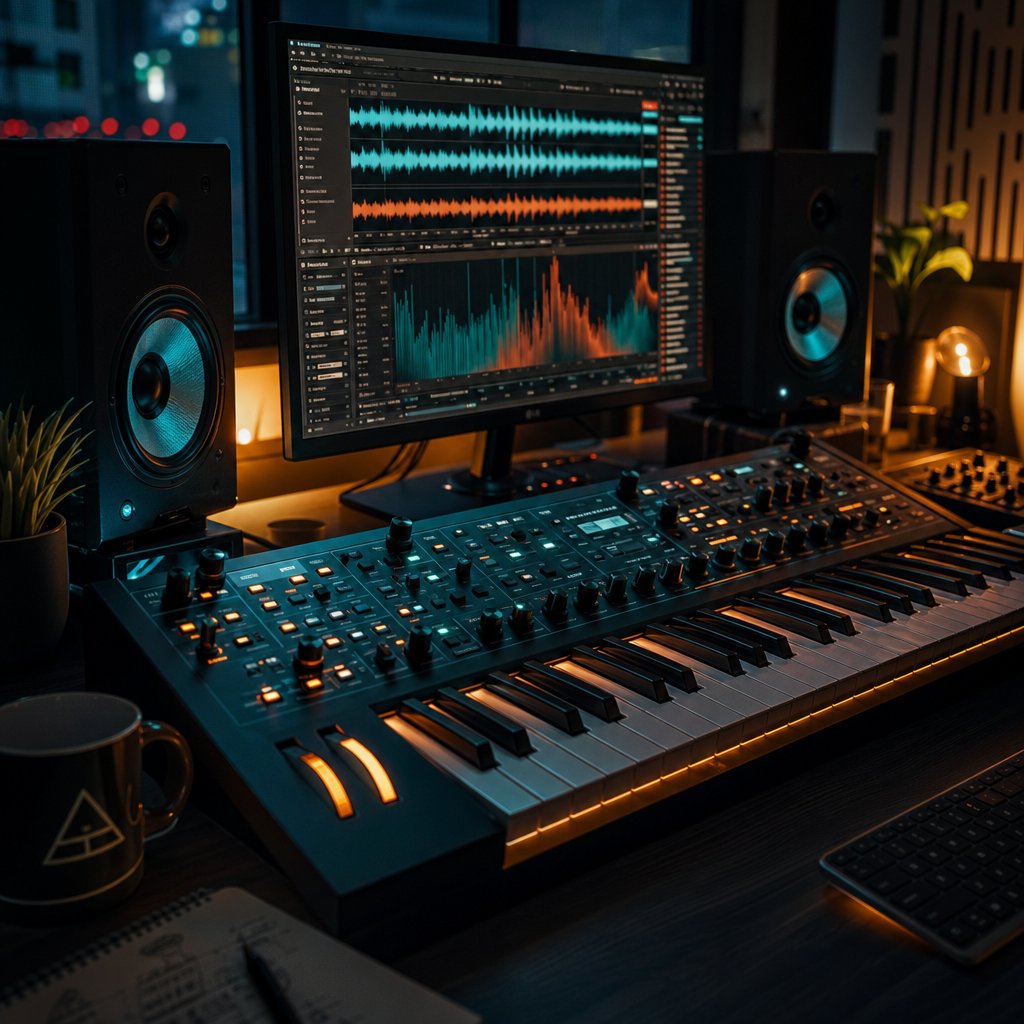
How to Create Your Own Heavy Bassline Tracks
Listening critically is one skill. Building a bassline that rattles someone else's chest is an entirely different one. The good news is that the core techniques behind every heavy bassline song covered in this article are not trade secrets. They are repeatable processes, and understanding even a few of them puts you closer to producing good bass songs than most beginners realize.
Essential Production Techniques for Heavy Bass
Four techniques show up again and again in the production notes behind songs with good bass, regardless of genre. Each one shapes how bass occupies space, frequency, and time in a mix.
Sidechain compression is the most fundamental. When a kick drum and a bassline share the same frequency range, they compete for the same physical space in the mix. Sidechain compression solves this by briefly ducking the bass volume every time the kick hits, then letting it swell back up between beats. The result is a punchier beat and a clearer mix where the kick and bass take turns rather than fighting. Without it, your low end sounds cluttered, especially on smaller speakers.
Layering sub-bass with mid-bass ensures your bassline translates across every playback system. A pure sine wave below 60 Hz delivers chest pressure on subwoofers but disappears entirely on phone speakers. Adding a second layer with harmonic content in the 80–200 Hz range gives the bass tonal definition that smaller drivers can actually reproduce. The tracks behind good rap songs with good bass almost always use this dual-layer approach, even when the final result sounds like a single instrument.
Saturation and distortion generate upper harmonics that make low frequencies more audible without raising the actual bass volume. Tape saturation, tube emulation, and waveshaping all add harmonic richness that helps the ear perceive bass weight even on systems with limited low-end extension. As the sound design fundamentals behind subtractive synthesis demonstrate, driving a signal into a wavefolder or distortion stage transforms a clean sine into something far more complex and present in the mix.
Octave drops create dramatic impact by shifting a bass pattern down a full octave at a key moment, usually a chorus or drop. The sudden doubling of wavelength produces an instant sensation of increased weight and depth, a trick used heavily in trap, dubstep, and cinematic scoring.
Layering, Sidechain Compression, and Saturation Explained
These three techniques deserve a closer look because they interact with each other. Layering creates fullness, sidechain compression carves out rhythmic space within that fullness, and saturation glues the layers together while adding presence. Here is how they work in sequence.
Imagine you are building a heavy bassline from scratch. Your signal chain might look like this:
- Layer 1 — Sub-bass foundation: Start with a sine wave oscillator tuned to your root note, playing in the 30–60 Hz range. Keep it mono and clean. This is the physical weight of your bass.
- Layer 2 — Mid-bass body: Add a second synth voice using a saw or square wave with a low-pass filter set around 200 Hz. This provides tonal character and note definition that cuts through on headphones and small speakers.
- Saturation stage: Apply light tape saturation or a waveshaper to Layer 2 only. This generates harmonics in the 200–500 Hz range that help the ear track the bass pitch without adding mud to the sub-bass layer beneath it.
- Sidechain compression: Route your kick drum as the sidechain trigger on both bass layers. Set a fast attack under 5 ms and a release around 50–100 ms so the bass ducks quickly when the kick hits and returns smoothly between beats.
- EQ cleanup: High-pass Layer 2 at around 80 Hz to prevent it from overlapping with Layer 1's sub-bass territory. Low-pass Layer 1 at around 100 Hz to keep it focused on pure low-end energy.
- Bus processing: Send both layers to a shared bus with gentle compression to glue them into a single cohesive sound. A ratio of 2:1 to 4:1 with slow attack and medium release preserves transients while evening out dynamics.
That six-step chain is the backbone of most heavy bassline songs in modern production. The specific synths, plugins, and settings vary, but the architecture stays remarkably consistent whether you are building a trap 808 pattern, a dubstep growl, or a deep house roller. Producers behind songs with the best bass rap, festival anthems, and cinematic scores all rely on variations of this same layered, sidechained, saturated framework.
Generate Your Own Heavy Bassline Tracks with AI
Learning production techniques takes time, and not everyone wants to spend months inside a DAW before hearing results. AI-powered music tools have changed that equation dramatically. The global AI in music market is projected to grow from USD 3.9 billion in 2023 to approximately USD 38.7 billion by 2033, and much of that growth is driven by platforms that let anyone create polished, genre-specific tracks without traditional production skills.
If the genres and bass styles explored throughout this article sparked something, you do not have to stop at listening. MakeBestMusic's AI Song Generator lets you turn that inspiration into original music by specifying genre, mood, and style preferences. Want a track with deep sub-bass rumble in the style of dub-influenced electronic music? Or punchy 808 hits over a trap beat? You describe the bass character you are after, and the tool generates a track tailored to that vision. For listeners who have spent this entire article identifying exactly what kind of bass heaviness they love, it is a direct path from good songs with bass rap, hip-hop, or electronic influences to creating something original that captures that same energy.
The gap between listening to heavy bassline songs and creating your own has never been smaller. Whether you learn production fundamentals or use AI-powered tools, turning bass inspiration into original music is now a realistic next step for anyone, not just trained engineers.
Traditional DAW workflows and AI generation are not mutually exclusive, either. Many producers use AI-generated tracks as starting points, then refine the bass layers, apply their own sidechain settings, and add saturation by hand. The techniques covered in this section apply whether you are building from a blank session or shaping an AI-generated draft into something that hits exactly the way you want it to.
