

AI and the Music Industry Explained
Artificial intelligence in music refers to the use of machine learning systems that can compose, produce, distribute, and personalize music at every stage of the value chain. These tools analyze vast datasets of existing recordings to generate new melodies, replicate vocal styles, automate mixing, and curate listener experiences, reshaping how songs are made and how audiences find them.
That two-sentence reality covers a lot of ground. AI in the music industry now touches everything from the songwriter sketching ideas at a keyboard to the algorithm deciding what plays next in your headphones. And that reach is exactly what makes this moment so polarizing.
What AI in Music Actually Means Today
When you hear "music and artificial intelligence" in the same sentence, it no longer means a novelty experiment. Platforms like Suno and AIVA generate full compositions from text prompts. Spotify's AI DJ curates personalized radio in real time. Major labels have signed licensing deals with AI companies to train models on their catalogs. The technology has moved from lab curiosity to mainstream force, with AI-generated tracks topping viral charts and even Billboard listings.
AI in music is simultaneously the most powerful creative tool and the most disruptive economic threat the industry has faced since digital piracy.
Why This Matters for Every Music Professional
The central tension is straightforward: democratization versus devaluation. On one side, AI lowers barriers so anyone can compose, produce, and release music without expensive studios or years of training. On the other, that same accessibility floods the market, compresses per-stream value, and threatens livelihoods for working musicians who already operate on thin margins.
This article maps both sides of that equation. You will find a full breakdown of where AI enters the music value chain, which roles face the most immediate displacement, what legal battles are unfolding, and what practical steps musicians can take to adapt. The goal is not hype or alarm. It is a clear-eyed, musician-first resource for understanding a shift that is already well underway.
The Complete AI Music Value Chain
A song travels through several stages before it reaches your ears. It starts as an idea, gets shaped in production, passes through distribution channels, lands on a streaming platform, and sometimes finds its way to a live stage. AI now has a foothold at every single one of these stages. Understanding exactly where it enters, and what it does there, is the clearest way to grasp the full ai impact on music industry workflows.
From Composition to Consumption
Imagine the life cycle of a track as a pipeline with five distinct phases. At each phase, different professionals do different work, and AI tools are either handling portions of that work outright or speeding up human decisions. The overlap between music and ai is no longer confined to one step. It spans the entire journey.
Here is a breakdown of each stage, the AI applications active within it, who feels the effects most directly, and whether the technology replaces human labor or augments it:
| Value Chain Stage | AI Application | Who It Affects | Replaces or Augments |
|---|---|---|---|
| Songwriting and Composition | Melody generation, chord progression suggestions, lyric drafting, full song creation from text prompts | Songwriters, composers, topliner writers | Augments (professional use); Replaces (stock/library music) |
| Production and Mixing | Stem separation, automated mastering, vocal tuning, arrangement suggestions, sound design | Producers, mix engineers, session musicians, mastering engineers | Augments (complex projects); Replaces (basic/budget productions) |
| Distribution and Marketing | Release timing optimization, audience targeting, metadata tagging, promotional copy generation, social content creation | Distributors, marketing teams, independent artists, PR professionals | Augments (strategy); Replaces (routine copywriting and ad targeting) |
| Streaming and Discovery | Recommendation algorithms, AI-curated playlists, personalized radio, listener behavior analysis, fraud detection | Playlist curators, A&R teams, listeners, DSP operators | Replaces (manual curation at scale); Augments (editorial playlisting) |
| Live Performance | Real-time audio processing, AI-generated visuals, virtual artist performances, setlist optimization, sound system calibration | Sound engineers, visual designers, touring musicians, venue operators | Augments (enhances shows); Limited replacement (virtual concerts) |
Notice the pattern. In early-stage creative work and high-end production, AI primarily augments. In repetitive, volume-driven tasks like bulk mastering, metadata tagging, and algorithmic curation, it increasingly replaces. The distinction matters because it tells you where human value remains strongest and where it is eroding fastest.
Where AI Enters the Production Pipeline
The production phase is where adoption is deepest. Industry data shows that 50% of music creators already use AI in songwriting and composition, 60% in arranging and recording, and 65% in editing, mixing, or mastering. These are not fringe experimenters. They are working professionals embedding AI into standard creative workflows.
Tools in this space range from stem separators that isolate vocals, drums, and bass from finished tracks to intelligent mastering platforms that analyze frequency balance and apply corrections in seconds. For producers under deadline pressure, this kind of AI in music industry workflows cuts turnaround time dramatically. MIDiA Research estimates that generative AI tools have reduced music production costs and turnaround times for media companies by up to 70%.
The creative implications cut both ways. A bedroom producer who once needed a full band and an engineer can now create polished tracks solo. A label that once hired session musicians for background parts can synthesize them. Speed and accessibility go up. Demand for certain human roles goes down.
AI in Distribution and Marketing
Distribution used to mean getting your record into stores. It now means navigating algorithmic gatekeepers. AI helps artists and labels optimize release windows based on listener activity patterns, auto-generate promotional assets, identify micro-audiences most likely to engage, and tag tracks with the metadata that streaming algorithms reward.
On the platform side, DSPs use AI to police catalog integrity. More than 30% of new uploads to Deezer in late 2025 were AI-generated, and up to 5% of total tracks across major DSPs are estimated to be synthetic. Despite that flood, AI-generated content still accounts for less than 1% of total streams. The content is piling up in the long tail, not displacing hits. DSPs are responding with detection tools, reduced algorithmic promotion for suspected AI content, and tighter monetization thresholds.
For independent artists, this creates an odd duality. AI makes marketing cheaper and distribution easier, but it also saturates the channels those same artists depend on. The pipeline is more accessible than ever and more crowded than ever, simultaneously.
Each stage of this value chain carries distinct implications for different roles. The professionals closest to volume-driven, repeatable tasks face the sharpest pressure, while those whose work depends on taste, judgment, and live presence retain more leverage. The tools themselves, though, are evolving rapidly, and knowing which ones exist and what they actually do is the next critical piece of the picture.
AI Music Tools Reshaping Production
Knowing where AI enters the value chain is one thing. Knowing which specific tools are doing the work, and how well they actually perform, is another. The ai in music production landscape has exploded over the past two years, with tools now covering every step from blank-page ideation to final master. Some generate entire songs from a single sentence. Others isolate individual instruments from finished recordings. A few handle mastering that used to require a dedicated engineer and a treated room.
The question most working musicians are asking right now: will ai get better at helping with making music, or are these tools plateauing? Based on the pace of development, the answer is clearly the former. Each generation of models shows measurable improvements in audio fidelity, lyric coherence, and user control. Here is a breakdown of what exists today, organized by category.
AI Song Generators and How They Work
Full song generators are the most visible category and the one drawing the most debate. These platforms take a text prompt, sometimes supplemented with custom lyrics or style tags, and output a complete track with vocals, instrumentation, and arrangement. You describe what you want. The AI builds it.
MakeBestMusic's AI Music Generator represents the fastest path from idea to finished song. You feed it a prompt, lyrics, or style direction, and it produces a complete AI-generated track in seconds. The appeal is pure accessibility: no DAW knowledge required, no plugin chains to configure, no learning curve that takes weeks to climb. For creators who want a prompt-to-song workflow without friction, it is one of the strongest options available.
Suno AI is arguably the most well-known name in this space. Its latest v5 model generates full songs with vocals, lyrics, and multi-instrument arrangements from simple prompts. Suno also launched Suno Studio, an in-browser editing environment that lets users remix sections and adjust track layers. One important detail: Suno settled a copyright lawsuit with Warner Music Group in late 2025 and now builds licensed models in partnership with major labels. Commercial rights only apply to songs created while actively subscribed.
Udio takes a more production-oriented approach. It offers timeline-style editing, an inpainting tool that lets you fix specific sections without regenerating the full track, and stem downloads for paid users. Instrumental quality and arrangement detail tend to be its strongest suits. Udio settled with Universal Music Group in October 2025, adding legitimacy but also new licensing terms.
Other generators worth noting include Boomy, which prioritizes zero-effort creation and lets users publish tracks directly to Spotify, and Riffusion, a completely free tool ideal for experimental prompt-based exploration without commercial ambitions.
Production and Mastering AI Tools
Beyond full song generation, a second category of artificial intelligence for music production focuses on specific production tasks: separating stems, mastering tracks, assisting with composition, and generating mood-based background music.
Stem Separators isolate individual elements (vocals, drums, bass, instrumentals) from finished mixes. According to extensive testing across 12 stem splitters and 13 songs, two tools dominate: Ultimate Vocal Remover (UVR), which is free and open-source with the highest sound quality score of 8.05 out of 10, and Moises, which balances quality (7.85) with the best ease-of-use score (8.3). DAW-native options in Ableton, Logic, and FL Studio offer convenient alternatives, though with noticeably lower separation quality. Important caveat: no stem splitter perfectly recreates original stems, especially for bass frequencies where upper harmonics consistently get lost.
AI Mastering platforms like LANDR analyze frequency balance, dynamics, and loudness, then apply processing that once required a trained ear and calibrated monitoring setup. LANDR alone has processed over 20 million tracks. These tools work well for budget-conscious releases but still lack the contextual judgment a skilled mastering engineer brings to genre-specific decisions.
Composition Assistants like AIVA target musicians who want AI to handle specific creative subtasks rather than entire songs. AIVA was trained on more than 30,000 scores and exports MIDI and sheet music, making it genuinely useful for composers who want to iterate on ideas inside their own DAW. Beatoven takes a mood-based approach, generating background music matched to emotional parameters. Mubert does something different entirely: it streams continuously generated music in real time, adapting to mood and tempo, making it uniquely suited for live streaming and audio-reactive applications.
Choosing the Right AI Music Tool for Your Workflow
With so many options, choosing the right tool depends on what you actually need. A content creator looking for quick background music has very different requirements than a producer trying to isolate a vocal for a remix. Here is a comparison across the major categories:
| Tool | Category | Primary Use Case | Target User | Key Limitations |
|---|---|---|---|---|
| MakeBestMusic AI Music Generator | Full Song Generator | Prompt-to-song creation with lyrics and style input | Creators wanting fast, accessible song generation | Less granular editing than DAW-based workflows |
| Suno AI | Full Song Generator | Complete songs with vocals and lyrics from prompts | Casual creators, songwriters exploring ideas | Credits expire monthly; commercial rights require active subscription |
| Udio | Full Song Generator | Production-oriented song generation with timeline editing | Producers wanting more control over output | Steeper learning curve; download availability has been inconsistent |
| UVR (Ultimate Vocal Remover) | Stem Separator | High-quality vocal and instrumental isolation | Producers, remix artists, power users | Requires local setup and model experimentation |
| Moises | Stem Separator | Fast, easy stem splitting with good quality | Musicians, DJs, content creators | Paid tiers needed for full features |
| LANDR | AI Mastering | Automated track mastering with style options | Independent artists, budget releases | Limited contextual judgment compared to human engineers |
| AIVA | Composition Assistant | Classical and cinematic score composition with MIDI export | Film composers, game audio designers | Instrumental only; more complex interface |
| Mubert | Real-Time Generator | Adaptive, continuous music for streaming and live contexts | Streamers, app developers, content creators | No vocals; limited compositional control |
A few principles help guide the choice. If you want speed and simplicity with no technical barrier, prompt-based generators like MakeBestMusic or Suno get you to a finished track fastest. If you need surgical control over existing audio, stem separators like UVR or Moises are the right category. If your goal is to enhance a production you are already building, composition assistants and mastering tools fit into existing DAW workflows without replacing them.
The broader trend is clear: these tools are getting better, faster, and more accessible with each update cycle. A study by Ditto found that nearly 60% of surveyed artists already use AI in their music projects. That adoption rate signals something important. This is no longer early-adopter territory. AI in music production is becoming standard practice, and the tools are only improving.
But capability alone does not settle the harder questions. These same technologies that help producers work faster also make it trivially easy to clone a voice, replicate a style, or generate content that blurs the line between homage and theft. The most controversial application of all, AI voice cloning, sits at the center of that debate.
Voice Cloning and Deepfakes in Music
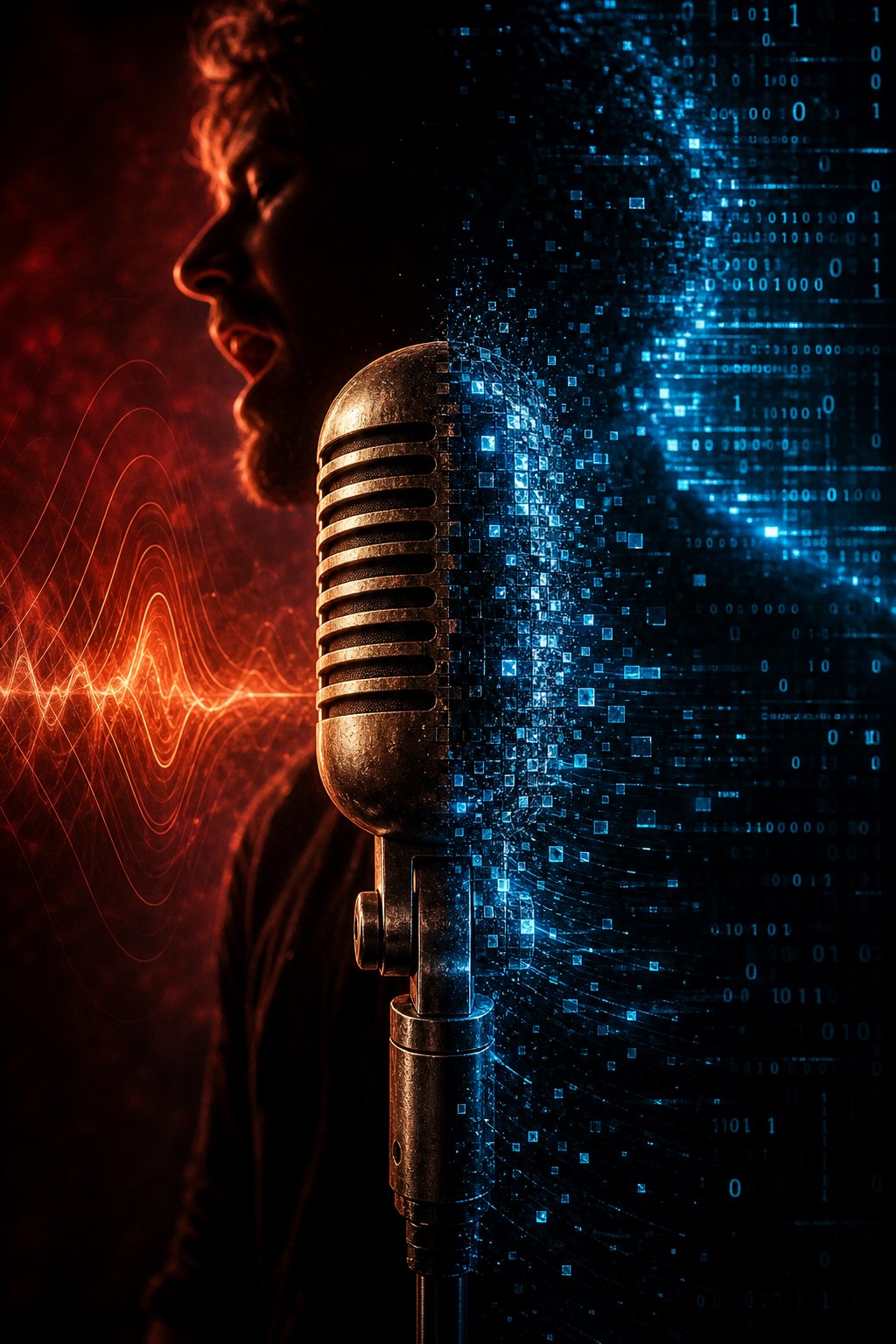
A producer generating a beat from a text prompt is one thing. Generating someone else's voice without their permission is something entirely different. AI voice cloning has become the single most polarizing application of generative AI in music, colliding with identity rights, consent law, and the fundamental question of who owns a sound.
How AI Voice Cloning Works
Voice cloning models are trained on recordings of a target singer, sometimes just a few minutes of audio, sometimes thousands of hours. The model learns the speaker's timbre, cadence, vibrato patterns, and emotional inflection. Once trained, it can generate entirely new vocal performances in that person's voice, singing lyrics they never wrote and melodies they never heard.
The technical challenges and ethical issues in ai music generation converge here sharply. These models produce increasingly convincing results, but they also strip vocal identity from the person who built it over a lifetime of practice. Unlike a melody or chord progression, a voice is biometric. It is the artist, not just something the artist made.
Unauthorized Vocal Replication and Artist Rights
The case that forced the industry to pay attention arrived in April 2023. A track titled "Heart on My Sleeve" featured AI-generated vocals mimicking Drake and The Weeknd, gaining millions of streams before being removed. Neither artist created or authorized the song. Yet it sounded convincingly like both of them.
That was not an isolated event. Bad Bunny publicly criticized a wave of viral TikTok songs featuring his AI-replicated voice at the end of 2023. Taylor Swift confronted unauthorized deepfake content using her likeness and voice. These incidents highlighted how accessible the technology had become, and how few guardrails existed to stop it.
The commercial risks go beyond embarrassment. Unauthorized deepfakes can dilute an artist's brand, confuse fans, and divert revenue. For emerging artists in an already difficult market, misuse of their voice could derail a career before it gains traction. The biggest struggle remains removing deepfake content from platforms that lack clear policies and reliable detection capabilities.
In a world where machines can sing like us, it is up to the law to ensure they don't steal the spotlight.
The Consent Framework Debate
The core ethical issues surrounding AI voice replication come down to a short but unresolved list:
- Consent: Was the artist's voice used with explicit, informed permission, or scraped from publicly available recordings without authorization?
- Identity rights: Does a person's voice constitute biometric property, and should it receive the same legal protection as their image or name?
- Cultural exploitation: Can AI models trained on the voices of deceased or marginalized artists reproduce their sound without community consent?
- Transparency: Should all AI-generated vocal content carry mandatory disclosure labels so listeners know what they are hearing?
- Compensation: When a cloned voice generates revenue, who gets paid?
Two camps have formed. Artist unions and advocacy groups, including SAG-AFTRA, ASCAP, and BMI, argue that voice must be treated as a protectable attribute under right of publicity laws, and that no AI model should train on vocal data without prior consent. They pushed for legislation like Tennessee's ELVIS Act, which became the first state law to explicitly add voice to the attributes protected against unauthorized AI replication.
The business side holds a more varied position. Some labels have signed licensing partnerships with AI companies, seeing voice licensing as a potential new revenue stream. Others view any regulatory friction as a threat to innovation. The emerging consensus, reflected in proposed federal legislation like the No AI FRAUD Act, frames voice and likeness as transferable property rights that persist after death and require explicit consent for any synthetic reproduction.
Courts have increasingly sided with the consent-first position. By mid-2025, courts in the U.S. and EU began classifying voice data as biometric property, not merely creative output. This distinction allows individuals to claim ownership of their vocal signatures and pursue infringement claims with more direct legal grounding.
The debate is far from settled, but the direction is clear: the era of training voice models on whoever's catalog happens to be available, with no consent and no compensation, is closing. What remains open is how fast the legal frameworks can keep pace with a technology that evolves quarterly. And the group feeling the pressure most acutely is not headline artists with legal teams. It is the working musicians whose livelihoods were already fragile before AI entered the picture.
Impact on Working Musicians and Their Livelihoods
Headline artists with legal teams and loyal fanbases have leverage. They can negotiate AI licensing deals, push for legislation, and absorb short-term revenue dips. The people who cannot absorb those dips are the ones most exposed right now: session musicians, background vocalists, jingle composers, and mid-tier producers who form the invisible backbone of the ai music industry. These are the professionals who lose first.
Session Musicians and Background Vocalists at Risk
Think about what a session musician actually does. They show up, sight-read a chart or learn a part quickly, deliver a clean performance in a few takes, and move on to the next gig. That reliability and speed is exactly what AI tools replicate most convincingly. When an AI vocal plugin can produce up to eight natural-sounding double tracks from a single recording, the economic case for booking a room full of background singers weakens considerably.
The roles facing the sharpest displacement share common traits: repeatable work, moderate complexity, and limited public visibility. Specifically:
- Background vocalists: AI harmony generators create layered backing vocals from one take, eliminating the need for multiple singers on pop and commercial sessions.
- Session instrumentalists for standard parts: Rhythm guitar, simple string pads, and keyboard layers can now be synthesized at production-ready quality for budget projects.
- Jingle and library music composers: Stock music catalogs are flooded with AI-generated content, undercutting composers who relied on sync licensing income.
- Assistant mix engineers: Automated mixing tools handle routine tasks like gain staging, basic EQ, and vocal leveling that once required a second pair of hands.
- Demo producers: Songwriters who once hired producers to cut demos now use AI generators to pitch ideas directly to labels.
Human session vocalists still deliver superior emotional expression, creative interpretation, and the spontaneity that comes from reacting to a song in real time. But for projects constrained by budget and timeline, "good enough" AI output often wins the gig. Professional session vocalists typically charge hundreds of dollars per song plus studio time, while AI processing costs a fraction of that across unlimited tracks.
How AI Hits Different Genres Differently
The negative effects of ai in the music industry do not land evenly across all styles. Genre determines how much of the creative process can be automated and how much depends on irreplaceable human nuance.
Electronic and pop production faces the highest displacement risk. These genres already rely heavily on programmed elements, quantized timing, and processed vocals. AI tools slot into existing workflows almost invisibly because the aesthetic already tolerates, even expects, machine precision. A producer building a synth-pop track can offload arrangement decisions, vocal stacking, and even mastering to AI without the listener noticing a difference.
Singer-songwriter and folk music retains stronger human defensibility. Audiences in these spaces prize imperfection, storytelling specificity, and vocal identity. An AI can generate a competent acoustic ballad, but it cannot replicate the biographical truth that gives a confessional song its weight. The craft here is inseparable from the person.
Orchestral and jazz composition occupies a middle ground. AI tools like AIVA can draft convincing orchestral scores, and the University of Rochester's TEAMuP initiative is actively researching how AI can support music education from youth orchestras to conservatory students. Yet the interpretive decisions of a live ensemble, the breath between phrases, the dynamic response to a conductor, remain beyond what any model replicates convincingly. Composition may be partially automated; performance resists it.
The Compounding Pressure of Streaming and AI
None of this happens in a vacuum. Working musicians were already squeezed before generative AI arrived. Streaming economics pay fractions of a cent per play, concentrating revenue at the top while the long tail earns almost nothing. The average non-superstar musician was already cobbling together income from sessions, sync placements, live gigs, and teaching.
AI compounds every one of those pressures simultaneously. A UNESCO global report covering more than 120 countries found that music creators could see their revenues fall by 24 percent by 2028 due to the expanding presence of AI-generated content in global markets. That projection reflects not just displacement of individual gigs but a structural repricing of creative labor across the entire industry.
The impact of ai on music industry economics is especially harsh in the Global South, where persistent digital divides compound the challenge. While 67 percent of people in developed countries possess essential digital skills, that figure drops to just 28 percent in developing nations. Musicians in these regions face a double disadvantage: competing against AI-generated content while lacking the tools and infrastructure to use AI themselves.
Streaming platforms are responding to the flood. Spotify raised its monetization threshold, Deezer deprioritizes suspected AI tracks in its algorithm, and Apple Music has signaled interest in human-first curation. But these measures address the supply glut without solving the income problem for musicians who already depended on thin per-stream margins.
The structural message is hard to miss. When the cheapest option for background vocals, library music, and basic production is AI, the market for human labor in those categories contracts. The musicians who survive are the ones who offer something a model cannot: identity, taste, physical presence, or legal ownership. Which brings the conversation directly to the question of who owns what, and what the law actually says about it.
Copyright and Legal Battles Over AI Music
Ownership in music has always been complicated. Publishing splits, master rights, mechanical royalties, the system was already dense before artificial intelligence entered it. Now add a new variable: a song composed by no human, trained on thousands of copyrighted recordings, and generated in seconds by a user who typed a sentence. Who holds the rights? The answer, as courts and regulators are discovering, depends on where you are, how the music was made, and how much human involvement shaped the final output.
Who Owns AI-Generated Music
The foundational legal principle in the United States is clear, and it has now been affirmed at the appellate level.
The Copyright Act requires all eligible work to be authored in the first instance by a human being.
That ruling came from the D.C. Circuit Court of Appeals in March 2025 in Thaler v. Perlmutter, which held that works created autonomously by AI cannot receive copyright protection. The court reasoned that multiple provisions of the Copyright Act, from ownership vesting to duration tied to an author's death, presuppose a human creator.
For musicians using AI tools, the practical implication is this: prompts alone do not make you an author. The U.S. Copyright Office's January 2025 copyrightability report concluded that "given current generally available technology, prompts alone do not provide sufficient human control to make users of an AI system the authors of the output." Prompts function as instructions conveying unprotectable ideas, not as acts of authorship.
That does not mean every AI-assisted work is unprotectable. The Copyright Office has registered hundreds of works that incorporate AI-generated material, provided the human author claims protection only for their own contributions and discloses the AI-generated portions. If you write original lyrics, arrange AI-generated stems into a novel structure, or substantially modify machine output, those human-authored elements can still be copyrighted. The AI-generated parts cannot.
Platform terms add another layer. Suno retains ownership of songs created on its free tier and grants commercial rights only to paying subscribers. Udio does not claim ownership but warns users that content must not contain copyrighted material they lack permission to use. In practice, this means creators using free tools may not own what they produce, even if the law would otherwise allow a claim.
Training Data and Copyright Claims
The second major legal front involves what goes into the AI before anything comes out. Generative music models are trained on vast datasets of existing recordings, often downloaded from the internet without explicit permission from rights holders. Copyright owners argue this training process infringes their exclusive right to make reproductions. AI companies counter that training constitutes fair use.
Two landmark rulings in June 2025 illustrate how unsettled this remains. In Bartz v. Anthropic, a federal court held that copying books to train an AI system was fair use because the process is "quintessentially transformative" and does not displace demand for the originals. However, the same court found it was not fair use for the company to download pirated copies and maintain them in a central library beyond what training required.
In Kadrey v. Meta, decided the same month by a different judge, the court also found AI training to be fair use but took a broader view: even downloading from pirated sources was permissible because Meta's ultimate purpose was transformative. Critically, this judge warned that market dilution from noninfringing AI outputs, songs that compete with human-created works without directly copying them, could weigh decisively against fair use in future cases.
The disagreement between these two courts reflects one of the deepest unresolved issues in the music industry today. The Copyright Office's May 2025 report on generative AI training acknowledged that "it is not possible to prejudge litigation outcomes" and that some uses will qualify as fair use while others will not. For musicians, the practical takeaway is that legal protection for training data remains case-specific and contested.
Regulatory Responses and What They Mean
While courts work through individual disputes, legislators have moved faster than many expected. Here is the chronological sequence of key regulatory milestones shaping ai and the music industry legal landscape:
- March 2023: The U.S. Copyright Office issues registration guidance requiring applicants to disclose AI-generated content in works submitted for copyright.
- March 2024: Tennessee enacts the ELVIS Act, the first U.S. state law explicitly protecting voice from unauthorized AI replication.
- July 2024: The Copyright Office publishes Part 1 of its AI report, recommending a federal digital replica law to protect voice and likeness.
- January 2025: Part 2 of the Copyright Office report confirms that prompts alone do not establish authorship for AI-generated works.
- March 2025: The D.C. Circuit affirms the human-authorship requirement in Thaler v. Perlmutter, denying copyright to purely AI-created works.
- May 2025: The Copyright Office releases its Part 3 report on generative AI training, recommending that voluntary licensing markets develop without government intervention for now.
- June 2025: Federal courts issue split rulings on fair use in AI training cases, creating uncertainty that will likely require appellate resolution.
The European Union has taken a different structural approach. The EU AI Act, which entered phased enforcement in 2024, requires transparency obligations for generative AI systems, including disclosure of training data summaries. This opt-out framework contrasts with the U.S. approach, which currently relies on case-by-case litigation rather than comprehensive regulation.
For musicians and labels seeking to protect original material right now, several concrete steps apply. Register your works with the Copyright Office to establish clear ownership records. Use metadata and content identification systems like Content ID to flag unauthorized reproductions. Review the terms of any AI platform before uploading vocals, stems, or reference tracks. And monitor proposed legislation, both the No AI FRAUD Act at the federal level and state-level bills modeled on Tennessee's ELVIS Act, since these will determine the strength of voice and likeness protections going forward.
Legal frameworks are catching up, but they remain incomplete. The law tells you what you can protect. It does not yet tell you what the listener experience looks like on the other side of all this disruption, where AI is not just creating music but fundamentally changing how audiences discover, interact with, and value it.
How AI Is Changing the Way We Listen
Creation and ownership get the headlines, but the listener side of this transformation is just as radical. The future of music is not only about who makes it. It is about how audiences find it, experience it, and form connections with artists who may not even be human.
AI-Powered Discovery and Personalization
For years, music recommendations relied on collaborative filtering, essentially matching your listening patterns with similar users and suggesting what they played. The problem? Echo chambers. You heard more of the same and rarely encountered something genuinely new.
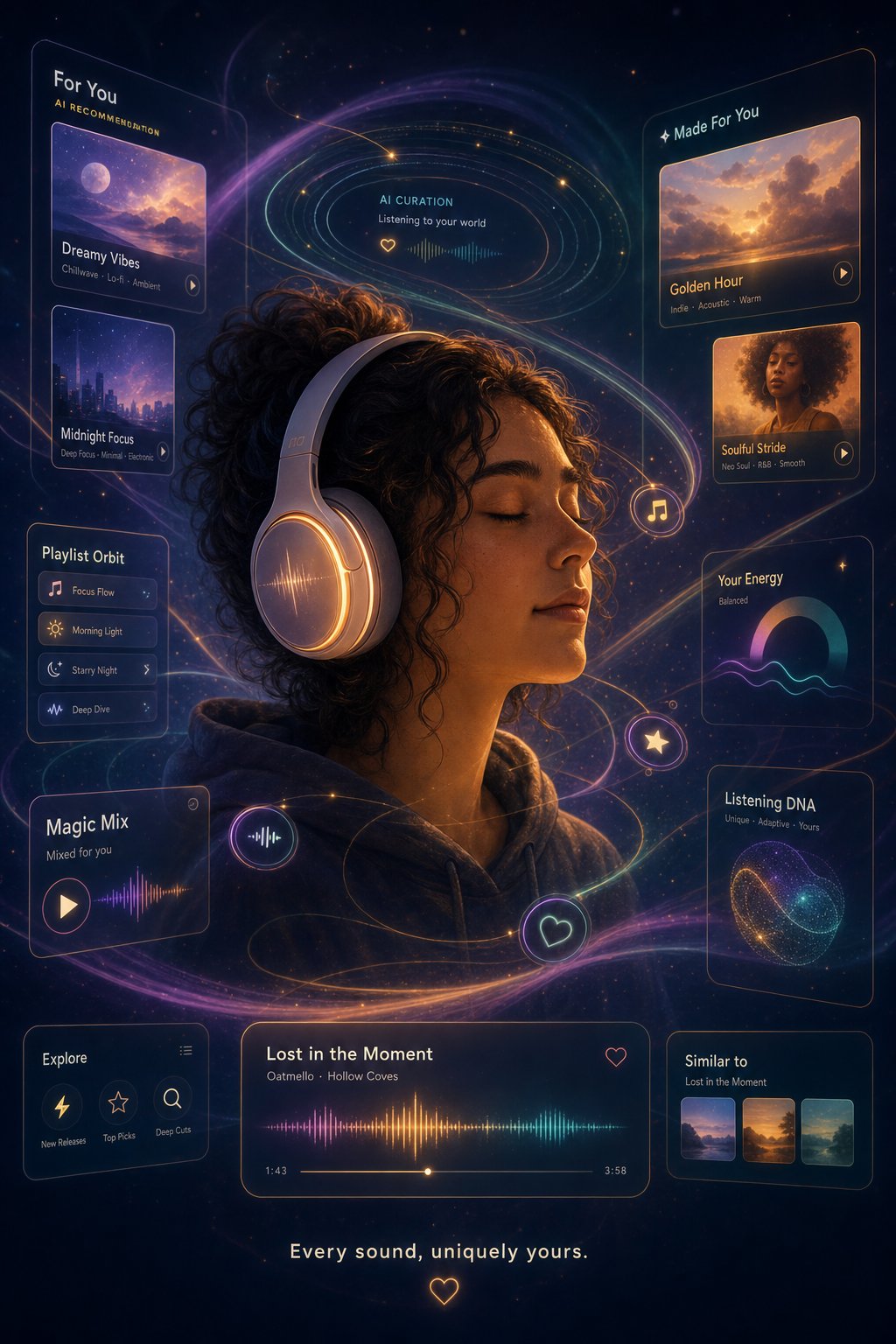
Modern AI-powered discovery goes further. These systems analyze the actual audio characteristics of songs, including tempo, key, timbre, energy, and mood, then connect tracks that share sonic qualities even across completely different genres and fanbases. The result is a recommendation engine that understands why you like something, not just what you liked before.
Context-aware systems push this even further. Imagine recommendations that factor in:
- Time of day and your current activity or mood
- Weather, location, and listening environment
- Your recent emotional patterns in music choices
- The device you are using and who you are with
Spotify's AI Playlists let users type a unique prompt, even emojis or colors, and receive a curated list tailored to that specific request. Real-time feedback loops mean the system learns from every skip and replay, building an increasingly nuanced map of your taste after just a handful of interactions. It is like having a DJ who knows you personally and can read the room.
For independent musicians, AI discovery is becoming a genuine equalizer. Instead of needing a major label's marketing budget, talented artists can surface purely on the strength of their sound. AI recommendation engines analyze early streaming data, social media patterns, and sonic trends to identify artists on the verge of breaking through, giving listeners access to a constantly refreshing pool of new talent matched to their specific preferences.
Virtual Artists and AI in Live Performance
Discovery is one dimension. But music in the future will also look different on stage. AI is not just generating recordings; it is reshaping what a live show can be.
Entirely AI-built acts are already winning real audiences. The Velvet Sundown, an AI country band, topped Spotify's charts in 2025 with over 1.4 million monthly listeners, despite being entirely machine-made. Sienna Rose, an AI artist drawing comparisons to Norah Jones and Alicia Keys, built a following among listeners who had no idea they were not hearing a real person. These virtual artists challenge the assumption that fandom requires a human connection.
On the live performance side, the EU-funded PREMIERE project demonstrated what AI-enhanced shows can look like. In September 2025, a dancer wearing motion sensors performed at Porto's Coliseum while AI responded to his movements with adaptive lights and sound. The performance was simultaneously transmitted via VR to 200 remote viewers who watched an avatar mirroring the choreography in a 3D reconstruction of the theatre. Researchers involved noted that these technologies "can enhance, rather than replace, the shared emotion that makes live performance so powerful."
How Fan Experience Is Evolving
Pull all of this together and the listener's relationship with music looks fundamentally different from five years ago. You are no longer a passive consumer selecting from a fixed catalog. You are interacting with systems that adapt to you in real time. Specific ways listeners now engage with AI-powered music features include:
- Typing natural-language prompts to generate custom playlists instantly
- Receiving recommendations that shift based on mood, time, and context without manual input
- Streaming music from virtual artists whose identities are entirely synthetic
- Attending live shows where audio and visuals respond dynamically to performer movement
- Viewing performances remotely through VR with avatar-based stage reconstructions
- Providing real-time feedback (thumbs up/down) that immediately reshapes what plays next
The best implementations combine algorithmic intelligence with human curation. Pure algorithms struggle to replicate the storytelling quality of an editorially curated playlist. The hybrid approach, AI handling personalization and pattern recognition while humans provide serendipity and thematic coherence, creates experiences that feel like more than a collection of similar-sounding tracks.
Yet this evolution carries a tension. When listeners cannot distinguish AI artists from human ones, when discovery is fully automated, and when playlists are generated on demand, the perceived value of any single song drops. The listening experience improves while the economic value per listen compresses. That paradox, more access paired with less per-unit worth, sits at the heart of the broader debate between who benefits from AI's expansion and who pays the cost.
Will AI Take Over the Music Industry?
More people making music sounds like a good thing. More music competing for the same finite pool of listener attention and streaming revenue sounds like a problem. Both statements are true simultaneously, and the collision between them defines the central economic and cultural question facing the industry right now. The benefits of ai in music are real. So are the costs. Sorting one from the other requires looking at both sides without defaulting to either techno-optimism or doomsday framing.
The Promise of Democratized Music Creation
For decades, making a professional-sounding recording required access to expensive gear, trained engineers, and physical studio space. That barrier locked out millions of people with musical ideas but no resources. AI tools have lowered that threshold to nearly zero. A teenager with a phone can generate a fully produced track from a sentence. A poet without instrumental training can hear her words set to music. A filmmaker on a micro-budget can score a short without licensing fees.
This is not a hypothetical. Boomy's director of creative success, Cassie Speer, described the pitch directly: "You don't need to purchase fancy gear. You don't have to have music lessons. Boomy's goal is just to allow anyone who wants to experiment with being creative to come on our site and easily try it out." She has traveled to underserved communities, bringing AI music tools to students who lack access to traditional instruments or instruction.
Working musicians have found value in this accessibility too. Regi Worles, a member of the Denver band Dog Tags, described using AI-generated ideas as starting points: "I really feel like nobody should feel stopped from following their dreams because they don't know how to use a software that costs, like, $400 or more to have in the first place." His bandmate Michael Merola uses AI outputs not as finished products but as creative sparks, hearing a melody and thinking, "I could do that better, watch." Then the real songwriting begins.
The democratization argument has genuine weight. When access was expensive, entire communities were excluded from music creation. AI does not just lower the barrier; it removes it entirely for certain types of production. That matters.
The Risk of Market Saturation and Devaluation
The flip side is brutal arithmetic. When everyone can make music, everyone does. And when the supply of content expands exponentially while listener hours remain fixed, the value of any individual track falls.
The numbers tell the story clearly. Deezer reported that approximately 44% of daily uploads to its platform are now AI-generated tracks. Yet those tracks account for less than 3% of total streams, and a majority of those streams are fraudulent, driven by bots rather than human listeners. The content piles up. Almost nobody listens to it. But it still dilutes the royalty pool that pays real musicians.
Artists' rights groups worldwide captured this dynamic in an open letter titled "Say No To Suno," arguing that AI content "dilutes the royalty pools of legitimate artists from whose music this slop is derived." Under the pro rata payment model used by Spotify and most other platforms, every stream of AI-generated filler slightly reduces what a human artist earns per play.
Listeners are noticing too. A Luminate study found that overall interest in AI-created music dropped from -13% to -20% between May and November 2025. The decline was sharpest among Gen Z and Gen Alpha listeners. As Luminate analyst Audrey Schomer put it: "Across the board, what we found is that consumers are net negative. People are more likely to feel uncomfortable than to feel comfortable with AI use."
So will ai take over music? The data suggests something more nuanced than a takeover. AI floods the supply side while simultaneously turning off the demand side. Listeners do not want it. But the economic damage from volume alone, the sheer weight of synthetic content pressing down on per-stream payouts, does not require listener enthusiasm to take effect.
AI makes it possible for anyone to create music. It does not make it possible for everyone to be heard.
AI and the Future of Music Education
The tension between access and value plays out with particular intensity in education. If AI can generate competent music from a prompt, what is the point of spending years learning theory, ear training, and instrumental technique?
One answer comes from the supply side itself. The Arts Education Data Project found that 8% of all U.S. public school students had no access to music education during the school day. In underfunded districts, the situation is worse. AI tools offer a partial bridge: students who cannot access a piano or a guitar can still experiment with composition, arrangement, and production concepts using generative platforms.
The University of Rochester's TEAMuP initiative, backed by a $1.8 million NSF grant, is actively researching how AI can support music education from youth orchestras to conservatory students. The project spans four schools and treats AI as a "creative co-worker" rather than a replacement for human instruction. Their framework positions AI as a way to fine-tune music education at every level, not eliminate the need for it.
But skeptics have a point too. Singer-songwriter Genevieve Libien, who attended an AI music workshop, voiced the concern plainly: "My biggest fear would be turning on the radio and having every song that plays be like ChatGPT." If students learn to prompt rather than to play, the pipeline of skilled musicians narrows. The craft itself erodes. AI can generate a chord progression, but it cannot teach a student why certain progressions work emotionally, or how the physical act of playing shapes musical intuition.
The most honest framing acknowledges both realities. AI expands who can participate in music. It does not automatically develop the deep skills that separate memorable art from competent output. Education systems that integrate AI as a scaffolding tool, using it to lower the entry point while still building toward mastery, will produce more capable musicians. Systems that treat AI generation as the endpoint will produce more content and fewer artists.
This distinction between using AI as a starting point versus treating it as a destination applies beyond education. It defines the practical question every musician faces right now: how do you actually adapt your workflow, protect your work, and position yourself in a landscape that is still shifting beneath your feet?
What Musicians Should Do Next
Understanding the landscape is useful. Knowing what to actually do with that understanding is what matters. Whether you are a songwriter watching AI generators produce melodies in seconds, a producer seeing clients ask for faster turnarounds, or a performer wondering how live music holds up against synthetic content, the same practical question applies: how do you adapt without abandoning the skills that made you valuable in the first place?
The answer is not to resist the shift or to surrender to it. It is to position yourself where human judgment, taste, and identity still carry weight, while using AI where it genuinely serves your creative goals. Here is how that looks in practice.
Strategies for Adapting Your Creative Workflow
The producers getting the most from ai and music production right now treat these tools the way earlier generations treated samplers or drum machines: as instruments that expand capability, not as replacements for creative decision-making. The key is knowing which parts of your process benefit from speed and which parts require your ear and instinct.
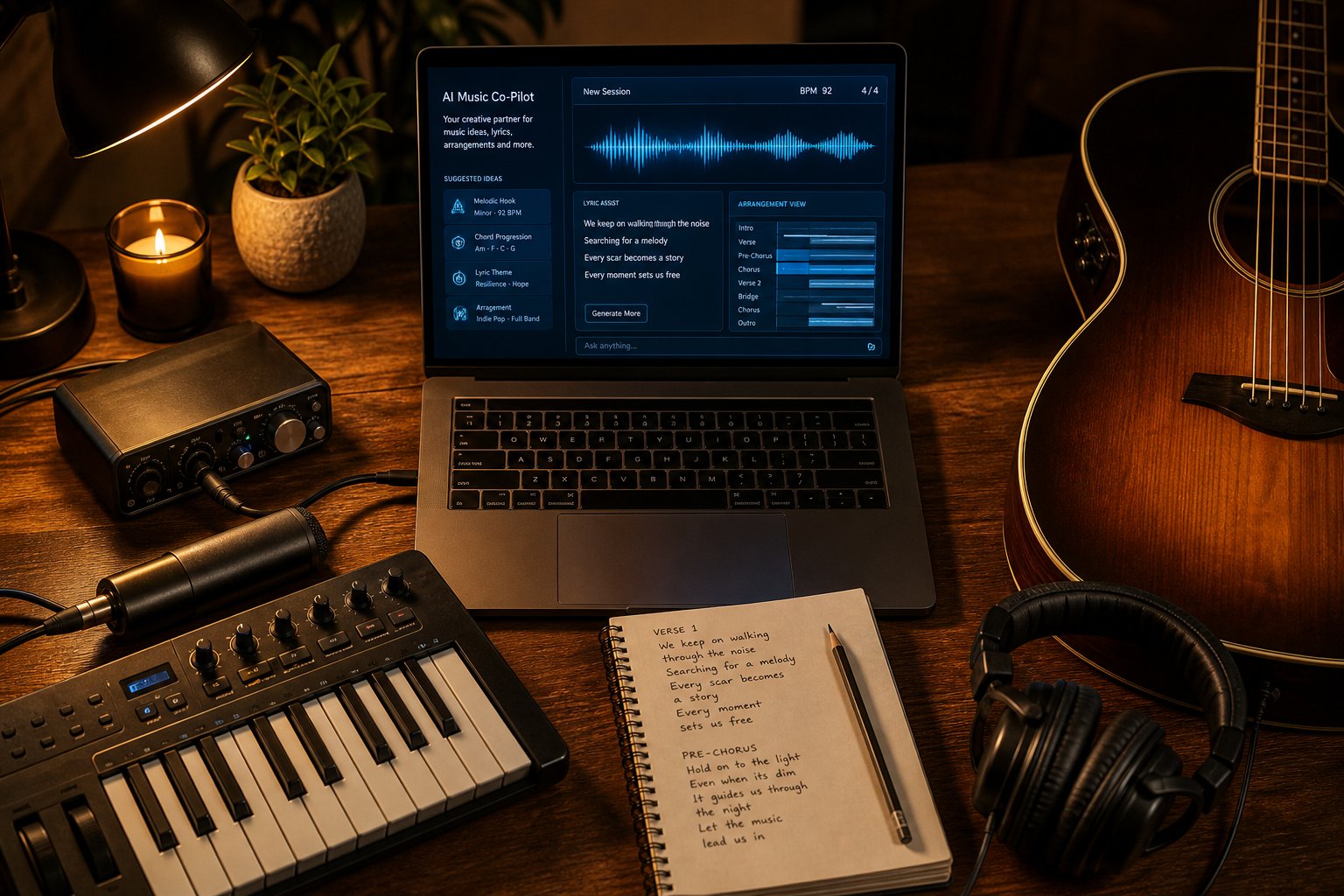
- Use AI for ideation, not final output. Generate rough demos, chord progressions, or arrangement sketches with AI, then reshape them with your own production skills. The hybrid workflow, AI for raw material and a DAW for refinement, consistently produces better results than either approach alone.
- Automate the repetitive, protect the creative. Let AI handle gain staging, basic stem separation, or metadata tagging. Keep your hands on the decisions that define the character of your work: vocal processing choices, dynamic arrangement, and mix personality.
- Build literacy across multiple AI tools. Artificial intelligence in music production is not a single platform. Understand which tools handle generation, which handle separation, which handle mastering, and choose based on the task rather than defaulting to one solution for everything.
- Develop your prompting skills. If you use generative tools, the quality of your input directly determines the quality of your output. Learn to write prompts that specify genre, mood, instrumentation, structure, and production style. Vague inputs produce generic results.
- Keep producing original recordings. AI-generated content cannot be copyrighted on its own. Your original performances, vocals, and compositions can. The more original human-created material you produce, the stronger your intellectual property position remains.
The mindset shift is straightforward. Think of AI as the fastest session musician you have ever worked with: tireless, versatile, and incapable of arguing about creative direction. But also incapable of knowing what makes your music yours. That part stays with you.
Protecting Your Work in an AI Era
Adaptation without protection is incomplete. AI companies need training data, and that data comes from existing music. Your music. Taking proactive steps now reduces the risk of your work being used without consent or compensation.
The ISM (Independent Society of Musicians) outlines several concrete measures every musician should implement:
- Attach detailed metadata to every release. Include artist name, producer credits, writer splits, song title, and release date. Clear metadata makes your work traceable across platforms and strengthens any future copyright claim. Add opt-out flags to your metadata where platforms support them.
- Implement technical protections on your website. If you host music on your own domain, use robots.txt files to block web crawlers and AI scrapers from accessing your audio files without authorization.
- Explicitly reserve your rights on every platform. Review the terms of service before uploading anywhere. Many platforms have quietly updated their terms to permit the use of uploaded content for AI training. Watch for language granting "worldwide licenses to use, reproduce, modify, and process your music for the purpose of training artificial intelligence."
- Add AI rights reservations to contracts. When negotiating with publishers, labels, or sync agencies, include specific clauses that prevent your music from being licensed for AI training without separate, explicit permission. Seek legal advice to ensure these clauses hold up.
- Register your works with your national copyright office. Formal registration establishes clear ownership records and strengthens enforcement if your material appears in AI-generated outputs without authorization.
- Monitor your catalog actively. Use content identification tools to flag unauthorized reproductions. Stay informed about opt-out mechanisms as platforms develop them.
Protection is not paranoia. It is professional practice in an environment where the default, for now, still favors those who scrape data over those who create it. The legal landscape is moving toward consent-first frameworks, but until legislation catches up fully, individual action fills the gap.
Getting Started with AI Music Creation
For songwriters, producers, performers, and hobbyists who want to explore how to use ai in music production firsthand, the best approach is low-risk experimentation. Try the tools. Understand what they do well. Identify where they fall short. Form your own opinion based on direct experience rather than secondhand debate.
- Start with a prompt-based generator to hear what is possible. MakeBestMusic's AI Music Generator lets you turn a text prompt, lyrics, or style idea into a complete song without any technical setup. It is one of the fastest ways to go from concept to finished audio and a practical first step for anyone curious about prompt-to-song creation.
- Experiment across genres and styles. Generate tracks in styles you would never normally attempt. Use the output as a learning tool. What did the AI get right about that genre's conventions? Where does it miss? This builds your understanding of both AI capabilities and musical structure simultaneously.
- Export stems and bring them into your DAW. The real power of AI in production emerges when you treat generated audio as raw material. Pull stems into Ableton, Logic, Cubase, or FL Studio and apply your own EQ, compression, spatial effects, and arrangement decisions.
- Use AI to break creative blocks. When a session stalls, generate a few variations of your concept using different prompts. You are not looking for a finished product. You are looking for the one idea that sparks something you would not have reached on your own.
- Evaluate honestly and iterate. Not every AI output will be useful. Most will not be. The skill is in recognizing the 10% that contains a genuine seed and knowing how to develop it with your own craft.
Different roles benefit from different entry points. Songwriters gain most from using AI as a melodic sketchpad, generating variations on a theme faster than they could play them out manually. Producers benefit from stem separation and rapid arrangement prototyping. Performers can use AI-generated backing tracks for rehearsal or live looping contexts. Hobbyists who have never recorded a track in their lives can hear their ideas realized for the first time.
The common thread across all of these use cases is the same principle that has defined every technological shift in music history: the tool does not replace the artist. It changes what the artist can reach. Musicians who engage with AI deliberately, using it to extend their creative range while maintaining the identity and craft that no algorithm replicates, will find more opportunity in this landscape than threat. The ones who ignore it entirely risk being outpaced not by the machines, but by the peers who learned to work alongside them.
