

What Every Songwriter Should Know Before Getting Started
You've poured hours into crafting on my own lyrics, a melody that won't leave your head, and a hook you're genuinely proud of. The next thought hits fast: how do I make sure nobody takes this? Learning how to copyright a song is the single most practical step you can take to protect that creative work, and the process is simpler than most people think.
Why Every Songwriter Needs to Understand Copyright
Here's the good news. Under U.S. law, copyright protection kicks in automatically the moment your original song is "fixed" in a tangible form. That means the instant you save a voice memo, bounce a track from your DAW, or scribble down lyrics and chords using standard music text symbols on a napkin, you own the copyright. No paperwork required for that initial protection to exist.
The catch? Automatic protection alone won't get you very far if someone rips your work. Without formal registration through the U.S. Copyright Office, you cannot file an infringement lawsuit in federal court. Registration also unlocks statutory damages of up to $150,000 per work and the ability to recover attorney's fees, benefits you lose access to without it. Whether you just finished writing going to california lyrics for a folk project or laid down photograph lyrics over a bedroom pop beat, registration is what turns your rights from theoretical to enforceable.
Copyright exists automatically the moment you fix a song in tangible form, but registration with the U.S. Copyright Office is what gives you enforceable legal power.
What This Guide Covers and Who It's For
This guide is built for independent songwriters, bedroom producers, and anyone who creates original music and wants a clear, step-by-step path to protecting it. You won't find dense legal theory here. Instead, we'll walk through the two types of copyright embedded in every recorded song (most guides miss one), the exact registration process, costs and money-saving strategies, how to handle co-writes, and the myths that trip songwriters up, including the persistent "poor man's copyright" mistake. Copyright law isn't children's card games; the stakes are real. By the end, you'll know exactly what to do before you release your next track.
Step 1 – Learn the Two Copyrights in Every Song
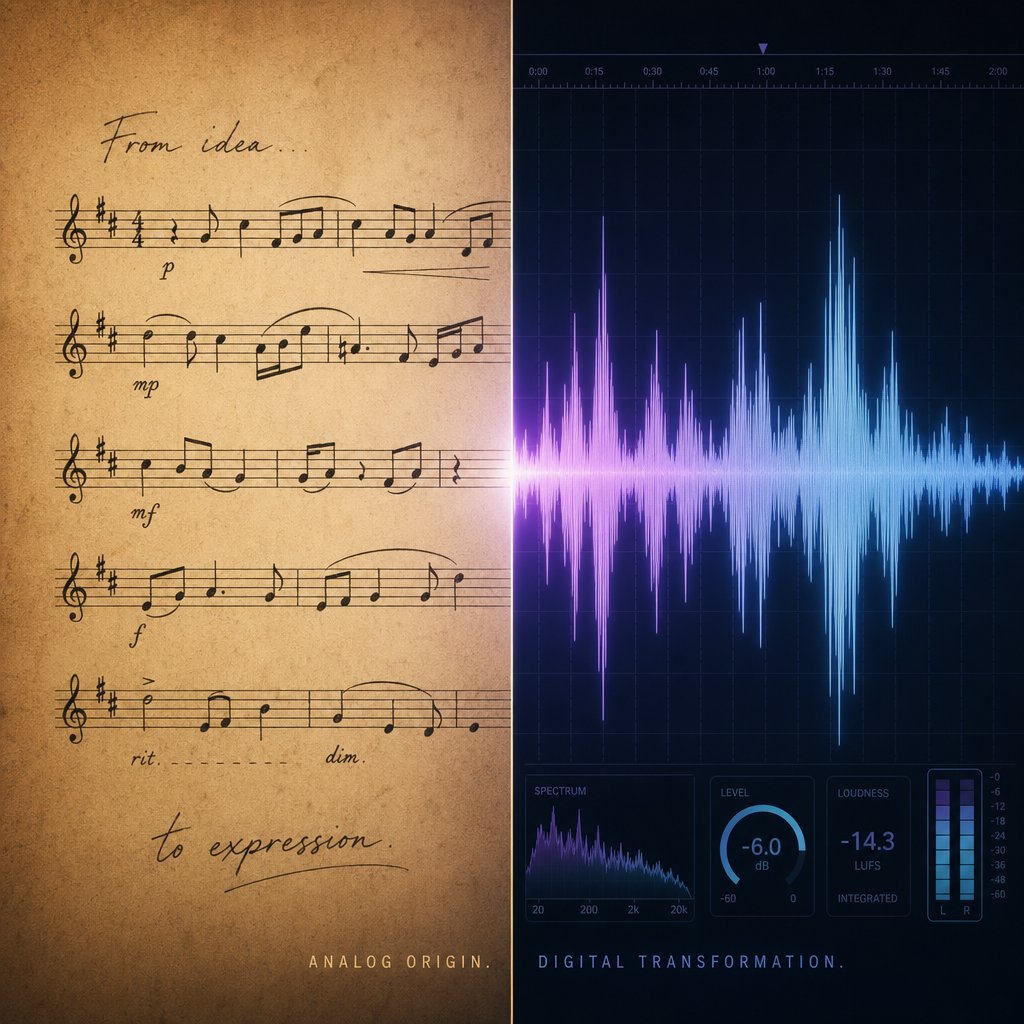
Most guides treat a song as a single piece of intellectual property. That's where they get it wrong. Every recorded song actually contains two separate copyrights, and if you only protect one, you're leaving half your work exposed. This dual-copyright concept is a cornerstone of musicology online curricula at schools like Berklee, yet it rarely shows up in beginner-friendly resources.
The Composition Copyright vs. the Sound Recording Copyright
The first copyright covers the musical composition: your melody, lyrics, and harmonic structure. Think of it as the blueprint of the song. It's represented by the familiar © music symbol and exists independently of any particular recording. Whether someone performs your ballad at an open mic or a major label artist cuts a cover version, the composition copyright protects the underlying work.
The second copyright covers the sound recording: the specific captured performance, including every production choice, vocal take, and mix decision. It's represented by the ℗ symbol. Imagine you write a song in your bedroom and record it through a USB mic. That recorded file is its own copyrightable work, separate from the song itself. If a different artist later records the same song, their version generates a brand-new sound recording copyright while your composition copyright still applies to both versions.
This distinction matters everywhere music is used. When a music supervisor wants to place a track in a film or pull video games lyrics into a commercial sync, they need to clear both copyrights, often from different owners. Just as different types of government manage separate branches of authority, the music industry splits creative ownership into these two lanes for a reason: each one generates its own revenue and requires its own protection.
Who Owns What and Why It Matters
Ownership typically breaks down along clear lines. The songwriter or their music publisher owns the composition. The performing artist, producer, or record label owns the sound recording. When you're an independent artist who writes, performs, and records everything yourself, you hold both copyrights. But the moment you collaborate, sign a deal, or let someone else record your song, those rights can split between different parties.
Each copyright is also registered differently with the U.S. Copyright Office. Compositions fall under Form PA (Performing Arts), while sound recordings use Form SR (Sound Recordings). You can file them separately, and in many cases you should, especially if different people own each right.
| Category | Composition Copyright (©) | Sound Recording Copyright (℗) |
|---|---|---|
| What It Covers | Melody, lyrics, harmony, arrangement | The specific recorded performance and production |
| Typical Owner | Songwriter or music publisher | Performing artist, producer, or record label |
| Registration Form | Form PA (Performing Arts) | Form SR (Sound Recordings) |
| Example Revenue | Mechanical royalties, performance royalties, print royalties | Master licensing fees, digital streaming royalties, sync master-use fees |
Understanding this split is the essential first step before you register anything. Without it, you might file for only one copyright and assume you're fully covered, or worse, accidentally sign away rights you didn't realize you had. With both copyrights clearly identified, you're ready to confirm your song meets the legal requirements for protection.
Step 2 – Make Sure Your Song Qualifies for Protection
Knowing the two copyrights exist is one thing. Making sure your song actually qualifies for either of them is another. U.S. copyright law sets two requirements every work must meet before protection applies: originality and fixation. Miss one, and your song sits outside the legal safety net no matter how brilliant it sounds.
The Originality Requirement Explained
Originality doesn't mean your song has to be groundbreaking. It means the work must originate from you and contain at least a minimal spark of creativity. If you wrote the pictures of you lyrics for a ballad and composed a melody to carry them, that combination is original enough. The bar is low by design, but it does exist.
What falls below that bar? Quite a bit, actually. According to copyright guidance from the U.S. Copyright Office, these elements are generally not protectable on their own:
- Song titles (you can't own the phrase "Welcome to the Night" or any short common phrase)
- Chord progressions like the classic I-V-vi-IV or 12-bar blues, since they're shared building blocks across every genre
- Basic rhythmic patterns and grooves, such as a standard rock backbeat
- Song structure conventions like verse-chorus-verse
- Individual words or short common expressions
Think of it this way: melody and lyrics are where your unique creative voice lives. Those are protectable. The scaffolding underneath them, chords, rhythms, and standard forms, belongs to everyone. Whether you're writing a state song for a civic project or free lyrics for a personal EP, the same rule applies. Your original expression gets protection. The generic musical vocabulary does not.
This distinction matters in fiction literary contexts too. Just as an author can't copyright a plot archetype but can copyright their specific novel, a songwriter can't lock down a chord progression but absolutely owns the melody and words layered on top of it.
Fixation – How to Make Your Song Legally Protectable
Originality alone isn't enough. Your song must also be "fixed" in a tangible medium. That's the legal term for capturing it in a form that can be perceived, reproduced, or communicated. An idea you hum in the shower? Not copyrightable. The same melody recorded into your phone thirty seconds later? Protected.
The U.S. Copyright Office confirms that fixation occurs when a song is recorded in an audio file or notated in sheet music or a digital file. The format doesn't need to be polished or professional. Any of these count as valid fixation:
- Studio recording (WAV, AIFF, or any lossless format)
- DAW project file (Logic, Ableton, FL Studio, Pro Tools)
- Voice memo on your phone
- Handwritten notation on manuscript paper
- Lead sheet with melody and chord symbols
- MIDI file exported from a sequencer
If you're wondering whether instrumentals and beats qualify, they do. An original instrumental composition meets the same copyright threshold as any song with lyrics, provided it satisfies both originality and fixation. So that lo-fi beat you built last weekend or the ambient piece inspired by the lyrics of what's up with your creative mood? Both protectable the moment they're saved.
Modern tools make fixation almost effortless. DAWs and online music makers let you go from a rough idea to a fully captured recording in minutes. MakeBestMusic's Music Maker is one option that streamlines this step, helping songwriters produce original compositions quickly and walk away with a finished file that satisfies the fixation requirement. The faster you move from idea to recorded form, the sooner legal protection kicks in.
With both boxes checked, originality and fixation, your song is officially copyrighted. The next question is practical: what exactly do you need to have ready before you sit down to register it?
Step 3 – Gather Your Registration Materials
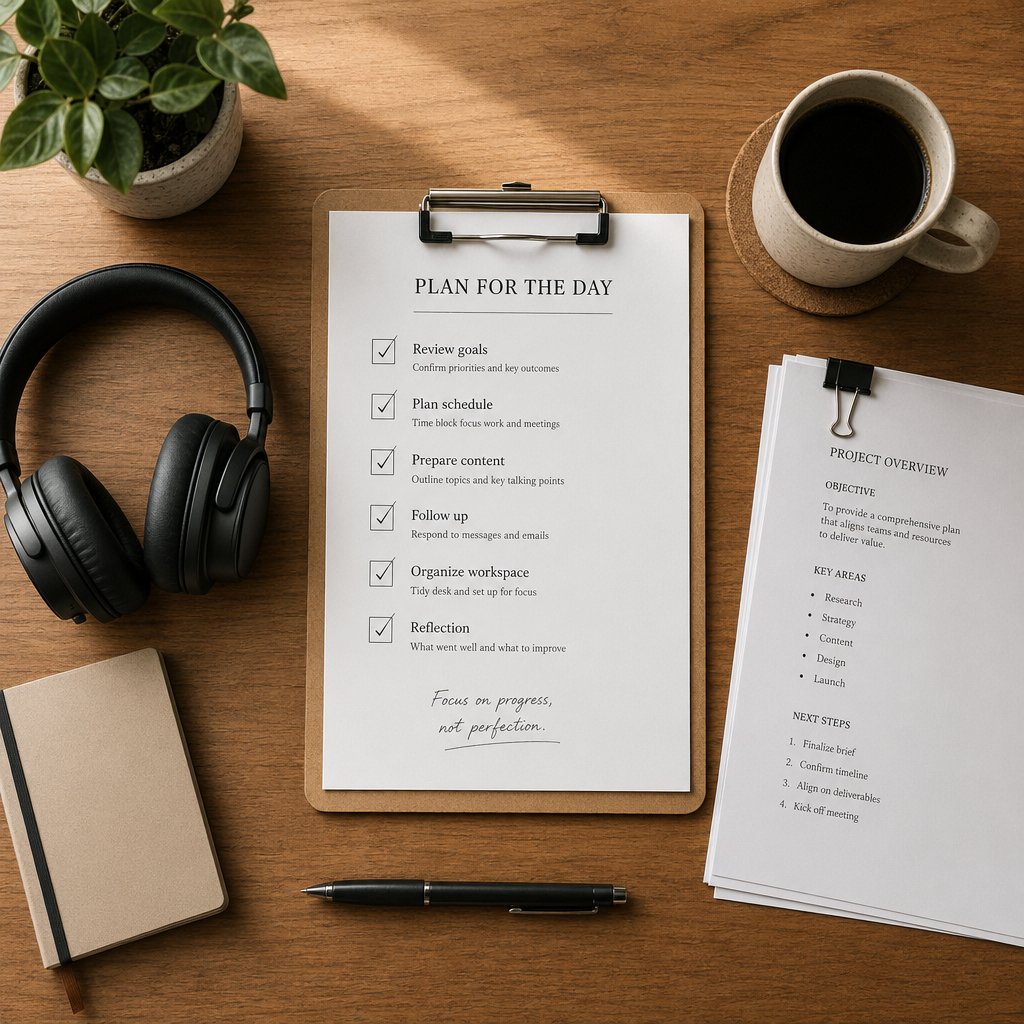
Sitting down at the Copyright Office portal without your information ready is like showing up to a recording session without your lyrics. You'll waste time, second-guess your entries, and risk mistakes that can delay the entire process. A small error in an application written hastily, like a misspelled author name or the wrong publication status, can create headaches that take months to fix. Preparation is everything here.
Information You Need to Collect First
Before you log into the Electronic Copyright Office (eCO) portal, gather every detail the system will ask for. Think of this as your pre-flight checklist. Having it complete means you can move through the application in one sitting instead of abandoning it halfway through to hunt down a co-writer's legal name.
Here's exactly what you need:
- Title of the work – Use the exact spelling as it appears (or will appear) on your release. If the song has an alternative title, note that too.
- Author name(s) and contribution type – List the full legal name of every creator. For each person, specify whether they contributed music, lyrics, or both. If you wrote all yourn lyrics and composed the melody solo, you're the sole author. If a collaborator helped, they need to be listed.
- Year of creation – The year the song was completed in its final form, not when you first started sketching short story ideas in a notebook.
- Publication status and date (if applicable) – Whether the song has been released to the public, and if so, the exact date. More on this distinction below.
- Claimant name and address – The claimant is the person or entity claiming ownership. This is usually the author, but it could be a publisher or label if rights were transferred through a written agreement or work-made-for-hire arrangement.
- Deposit copy in an accepted format – The actual copy of your work that the Copyright Office will keep on file. Format requirements depend on whether the song is published or unpublished.
Double-check every field against your original files. The Copyright Office doesn't have a place on the form for ownership percentages, as Berklee's copyright guide notes, because the Copyright Act presumes equal ownership among co-creators by default. Sorting out splits happens in your collaboration agreements, not on the registration form.
Published vs. Unpublished – Which One Is Your Song?
This question trips up more songwriters than almost anything else in the process. Under copyright law, a song is "published" when copies are distributed to the public. That includes physical distribution like CDs, but it also includes digital distribution through streaming platforms and download stores. The moment your track goes live on Spotify, Apple Music, or any distributor, it's legally published.
Why does this matter? Your publication status directly affects your registration options and deposit requirements. For unpublished works, the Copyright Office deposit guidelines are straightforward: one complete copy of the work, typically uploaded as an audio file (MP3 or WAV for a sound recording, or a PDF of sheet music for a composition). For published works, you generally need to submit one copy of the "best edition," and if the song was released on a physical format, that physical copy may need to be mailed in.
There's a strategic angle here too. If you have a batch of unreleased tracks, things that start with w-I-P status in your DAW, registering them as unpublished lets you bundle up to ten songs in a single group application. Once they're published, that option disappears for those specific recordings. So the timing of your registration relative to your release date isn't just a bureaucratic detail; it's a financial decision.
Picture it like planning episodes of a children's tv program: the order you release things in shapes the whole strategy. Get your materials organized, confirm your publication status, and you'll walk into the registration portal ready to file cleanly. The actual step-by-step filing process is where that preparation pays off.
Step 4 – Register Through the U.S. Copyright Office
Materials gathered, publication status confirmed. Time to actually file. The entire registration process happens online through the Electronic Copyright Office (eCO) system at copyright.gov, and for a single song, you can realistically finish in under thirty minutes.
Navigating the Electronic Registration System
Start by creating a free eCO account (all you need is an email address). Once logged in, you'll launch a new registration and immediately face the most important decision in the process: selecting the correct "Type of Work."
Remember the two copyrights from Step 1? This is where that knowledge pays off:
- Choose Performing Arts (PA) if you're registering the musical composition — the melody, lyrics, and harmony.
- Choose Sound Recordings (SR) if you're registering the specific recorded performance.
If you're an independent artist who wrote and recorded the song yourself, you can register both the composition and the sound recording together on a single SR application by indicating that the claim includes the underlying musical work. This saves you a second filing fee.
From there, the system walks you through a series of fields. You'll enter the title of your work, the author's full legal name and their contribution (music, lyrics, or both), and the claimant information. Keep your pre-flight checklist from Step 3 open — it makes this part feel almost automatic. After completing the application, you'll pay the filing fee through Pay.gov (credit card, debit card, or ACH transfer all work), and then upload your deposit copy. The eCO system accepts uploads up to 500 MB per file, so even a high-quality WAV file should go through without issues.
Choosing the Right Application Type
The eCO portal offers several application types, and picking the wrong one can slow things down. Here's the quick breakdown:
The Standard Application is the most common choice for songwriters. It covers a single work (or multiple authors of a single work) and handles both published and unpublished songs. If you wrote a track solo or with one co-writer, this is your form.
The Single Application is a streamlined version available only when one author created the work, that same author is the sole claimant, and the work isn't a work made for hire. It's faster to fill out and sometimes carries a lower fee.
Group registration options (like GRUW for unpublished works) apply when you're bundling multiple songs, which we'll cover in the cost-saving section. For a straightforward single-song filing, the Standard Application handles virtually every scenario.
A common question: do you need a lawyer for this? For a single original song where you're the sole writer and performer, the honest answer is no. The eCO interface is designed for individual filers, and the Copyright Office provides video tutorials that walk through each screen. If your situation involves complex ownership splits, samples, or work-for-hire arrangements, consulting an entertainment attorney is worth the investment. But most independent songwriters can handle a standard registration themselves.
What Happens After You Submit
Once you've submitted the application, paid the fee, and uploaded your deposit, the registration is effectively in motion. Processing times vary — the Copyright Office publishes updated processing time estimates each period, and waits of several months are common. Don't let that discourage you. The critical detail most people miss is this:
The effective date of your registration is the date the Copyright Office receives your complete submission — application, fee, and deposit — not the date your certificate arrives in the mail.
That ... meaning in text and legal filings is significant. Even if your certificate takes months to process, your registration "counts" from the day you submitted everything. This is why waiting until someone actually infringes your song to register is a risky gamble. If you file after infringement has already occurred, you lose eligibility for statutory damages and attorney's fees — the two most powerful tools in an infringement case, as intellectual property attorneys consistently emphasize. Plan ahead. Register your songs close to their creation or release date, not in reaction to a problem.
One more thing worth noting: copyright registration and trademark protection are entirely separate systems. You might see a tm symbol copy-pasted next to a band name or logo, but that's trademark territory, not copyright. Similarly, organizations like the Mechanical-Copyright Protection Society handle licensing and royalty collection, not registration itself. The U.S. Copyright Office is the only entity that grants you a federal registration, and that registration is what gives your ownership real teeth in court.
With your registration filed, the natural next question is what it costs — and whether there are smarter ways to spend that money if you have a catalog of songs waiting to be protected.

Step 5 – Understand the Costs and How to Save
Registration fees are one of those things that start with u-ncertainty for most independent songwriters. You know you should register, but how much will it actually cost? And is there a way to protect an entire batch of songs without paying per track? The answers are more songwriter-friendly than you might expect.
Current Registration Fees and How They Work
The U.S. Copyright Office fee schedule breaks electronic filing into a few tiers based on the complexity of your application:
- Single Application (one work, one author, same claimant, not work for hire) — $45
- Standard Application (the default for most registrations, including co-written works) — $65
- Paper filing (Forms PA, SR, TX, VA, SE) — $125
If you wrote and recorded a song entirely on your own and you're the sole claimant, the $45 Single Application is your most affordable path. The moment a co-writer is involved, or the work is a joint effort, you'll need the $65 Standard Application. Paper filing at $125 is rarely worth it unless you have no internet access — the electronic system is faster, cheaper, and easier to track.
These fees are updated periodically, so always confirm the current amounts on the Copyright Office website before you file. But the structure itself has stayed consistent: simpler claims cost less, and electronic filing is always cheaper than paper.
Group Registration to Save Money on Multiple Songs
Here's where the math gets interesting. Imagine you've been writing music for six months and have eight unreleased tracks sitting in your DAW. Registering each one individually at $45 to $65 per song would cost $360 to $520. Instead, the Copyright Office offers a Group Registration for Unpublished Works (GRUW) option that lets you register up to ten unpublished works in a single application for just $85.
That's potentially ten songs protected for less than the cost of two individual Standard Applications. The savings are substantial, especially for prolific creators who stockpile demos and finished tracks before releasing them.
A few eligibility rules to keep in mind:
- Every work in the group must be unpublished. The moment a song hits streaming platforms, it's legally published and no longer qualifies.
- All works must share the same author or co-authors. You can't bundle six songs you wrote solo with four songs your bandmate wrote alone.
- Every work must fall within the same administrative classification — so all performing arts (compositions) or all sound recordings, not a mix.
There's also the Group Registration of Works on an Album of Music (GRAM) option for published tracks. If you release an album, you can register up to twenty musical works or twenty sound recordings published on the same album for a $65 fee. This is ideal for artists dropping a full project on release day.
Strategic timing is the key. If you have a batch of finished songs, register them as a group through GRUW before you distribute. Think of it like a step it up movie montage — all the preparation happens behind the scenes so the performance lands perfectly. Once those tracks go live, your group-registration window for GRUW closes on those specific works.
| Registration Approach | Works Covered | Approximate Fee | Best Use Case |
|---|---|---|---|
| Single Application | 1 work | $45 | Solo songwriter registering one finished song (sole author and claimant) |
| Standard Application | 1 work | $65 | Co-written songs, joint works, or any registration that doesn't qualify for the Single Application |
| Group of Unpublished Works (GRUW) | Up to 10 works | $85 | Songwriters with multiple unreleased tracks ready to protect before distribution |
| Album of Music (GRAM) | Up to 20 works | $65 | Artists releasing a full album who want to register all compositions or all sound recordings together |
Is Free Copyright Registration Possible?
This question comes up constantly, and the honest answer has two parts. Copyright protection itself is completely free. The moment you fix an original song in tangible form — a voice memo, a DAW bounce, a handwritten lyric poem on notebook paper — you obtain copyright automatically. No fee, no form, no waiting period. To obtain definition-level clarity: you already own the rights to your work the instant it's captured.
What isn't free is formal registration. There's no way around the filing fee if you want your song listed in the Copyright Office's public records. And that registration is what unlocks the legal muscle: the ability to sue in federal court, eligibility for statutory damages up to $150,000 per infringed work, and recovery of attorney's fees.
So what does "is" mean in texting your songwriter friends about copyright? If someone says "my song is copyrighted," they're technically correct the moment it's fixed. But if they mean "my song is registered," that's a different and far more powerful status. The distinction between the two is like the meaning of nonfiction and fiction — they sound related, but they operate in completely different territories. One is automatic and passive. The other is deliberate and enforceable.
Is the investment worth it? Consider the alternative. Without registration, you can't take an infringer to federal court at all. With it, you gain access to statutory damages that can dwarf the actual cost of the infringement, plus you can recover the legal fees you spent fighting the case. A $45 to $85 filing fee is a small price for that kind of leverage, especially when writing music is how you make a living or plan to.
Costs handled, strategy mapped. The next layer of complexity shows up the moment another person contributes to your song — and the default ownership rules might not work in your favor.
Step 6 – Handle Co-Writes and Collaboration Agreements
Songwriting is rarely a solo act. You might sketch out your song lyrics in a notebook, then bring a co-writer in to reshape the chorus, or trade ideas with a producer over a beat until the track becomes something neither of you could have made alone. Collaboration fuels great music. It also creates ownership questions that can destroy friendships and careers if left unaddressed.
Joint Works and Default Ownership Rules
Under U.S. copyright law, when two or more people contribute copyrightable material to a song with the intention of creating a single, unified work, the result is classified as a "joint work." Every contributor automatically becomes a co-owner of the entire song — not just the part they wrote. And here's the part that catches people off guard: without a written agreement stating otherwise, each co-owner holds an equal share by default.
That means if three people collaborate on a track, each owns one-third, regardless of whether one person wrote the entire melody while another only contributed a single bridge lyric. It doesn't matter who spent more hours or who feels their contribution was bigger. The law doesn't weigh creative input — it splits ownership evenly unless the collaborators agree to different terms in writing.
The implications go further. Any co-owner of a joint work can grant non-exclusive licenses to third parties without needing permission from the other owners. They just have to account for and share the profits. Imagine you co-wrote a track and your collaborator licenses it for a commercial you never approved. Legally, they're within their rights. The only obligation is splitting the income. Across the different types of poems and creative writing forms, few ownership structures are this permissive — and few catch creators this unprepared.
Why Split Sheets Are Non-Negotiable
A split sheet is a simple written agreement that documents who owns what percentage of a song and what each person contributed. It's the single most important piece of paperwork in any co-writing session, and it should be completed before anyone leaves the room.
Think of it as setting new rules lyrics for your collaboration — clear terms everyone agrees to upfront so there's no confusion later. Without one, you're stuck with the default equal-split assumption, which may not reflect reality at all. A split sheet prevents that scenario by putting the agreed terms on paper while the session is still fresh in everyone's memory.
Every split sheet should include:
- Song title (even a working title is fine initially)
- Date of creation
- Full legal names of all contributors
- Each contributor's percentage ownership
- Description of each person's contribution (music, lyrics, melody, production)
- Signatures from every contributor
Some writers also include their Performing Rights Organization (PRO) affiliation, publisher information, and contact details. The more specific you are, the smoother things go when royalties start flowing or when a sync opportunity lands. As Romano Law notes, collaboration agreements can also address who has the right to exploit the work, how royalties are distributed, and how each co-author is credited — details that a basic split sheet may not fully cover but that become critical as your song gains traction.
One scenario that trips up a lot of artists: working with producers. If a producer contributes original musical elements — a melody, a harmonic progression, a distinctive riff — they may qualify as a co-author of the composition, not just the sound recording. Simply engineering or mixing a track doesn't create authorship. But the moment a producer shapes the creative DNA of your song, they have a legitimate claim. Even if you've paid them an upfront fee, that payment doesn't automatically buy out their share of the copyright unless a written agreement says so. Whether you're laying down work from home lyrics on a laptop or tracking in a professional studio, get the split sheet signed.
Registering a Co-Written Song
When it's time to file with the Copyright Office, the process for a joint work is straightforward but requires attention to detail. Every co-author must be listed in the "Authors" section of the application, with each person's contribution type specified — music, lyrics, or both. The Copyright Office's own guidance is clear: name the individual composers and lyricists, not a band name, unless the group is a legal entity that created the work as a work made for hire.
The claimant section should reflect your ownership arrangement. If all co-writers are retaining their shares, any one of them (or all of them) can be listed as the claimant. If rights have been transferred to a publisher, that publisher becomes the claimant instead. The registration form itself doesn't record percentage splits — that's what your split sheet and collaboration agreement handle behind the scenes.
For artists with a catalog of co-written material, group registration options like GRUW (unpublished works) or GRAM (album tracks) still apply, but every work in the group must share at least one common author. So if you and your regular collaborator co-wrote eight unreleased songs together, you can bundle them. If four of those songs involve a third writer who didn't contribute to the other four, you'll need to split them into separate filings.
Co-writing is where your song becomes a shared asset, and shared assets need clear documentation. With your splits defined and your registration filed correctly, the legal foundation is solid. What tends to undermine that foundation isn't missing paperwork — it's the myths and misconceptions songwriters carry into the process without realizing it.

Step 7 – Avoid These Common Copyright Myths and Mistakes
Misconceptions about copyright have been circulating in songwriting circles for decades, passed along in studio sessions, online forums, and even their book collections on the music business. Some of these myths are harmless. Others can cost you the ability to enforce your rights entirely. Here are the ones that trip up the most songwriters — and the reality behind each.
The Poor Man's Copyright Myth
You've probably heard this one: mail yourself a sealed copy of your song, keep the envelope unopened, and the postmark proves you wrote it first. It sounds clever. It's also legally worthless.
BMI addresses this directly, noting that many attorneys believe the poor man's copyright isn't worth the price of the stamp. The reason is simple — only registration with the U.S. Copyright Office creates a public record of your ownership claim and unlocks the legal benefits that actually matter in court: the ability to sue for infringement, eligibility for statutory damages, and recovery of attorney's fees. A sealed envelope provides none of that.
The confusion likely persists because people conflate proof of creation date with legal protection. They're not the same thing. A postmark might show when you mailed something, but it doesn't establish authorship in any way a federal court recognizes. If you're serious about protecting your work, skip the post office and head to copyright.gov.
Here's a myth vs. reality breakdown of the most common misunderstandings:
- Myth: Mailing yourself a copy of your song protects it legally.
Reality: "Poor man's copyright" has no legal standing. Only formal registration with the U.S. Copyright Office provides enforceable protection. - Myth: You need a lawyer or music publisher to copywrite a song.
Reality: Any songwriter can file directly through the Copyright Office's electronic system. For straightforward single-song registrations, legal help is optional. - Myth: You must register before sharing your music publicly.
Reality: Copyright protection begins at fixation, not registration. You can share, perform, and even distribute your song before registering — though registering early preserves your eligibility for statutory damages. - Myth: Posting your song on social media or YouTube counts as registration.
Reality: Uploading a track creates a public timestamp, but it does not register your copyright. The Copyright Office is the only path to federal registration. - Myth: If a song doesn't display a © notice, it's not copyrighted.
Reality: Copyright notices haven't been legally required since 1989. Virtually every original song fixed in tangible form is copyrighted, whether or not a notice appears.
That last point answers a question songwriters ask constantly: "How do I know if a song is copyrighted?" The short answer is that if someone wrote it and recorded it or wrote it down, it almost certainly is. You don't need to see a copyright symbol on a picture cartoon image of album art or in the liner notes for protection to exist. The absence of a notice means nothing about the legal status of the work.
What You Can and Cannot Copyright in a Song
Even after clearing up the registration myths, confusion lingers around what parts of a song are actually protectable. Songwriters sometimes assume that every element they create belongs exclusively to them. That's not how it works.
As EasySong's copyright breakdown explains, the protectable elements of a musical composition are melody and lyrics — the parts that represent your unique creative expression. These are what make your song yours, whether you're writing get you lyrics for an R&B ballad or crafting tv lyrics for a show's theme song.
Everything else falls into the "building blocks" category:
- Chord progressions — The I-V-vi-IV progression appears in thousands of songs. No one owns it.
- Rhythm and groove — A standard backbeat or trap hi-hat pattern can't be claimed by any individual.
- Song structure — Verse-chorus-bridge is a shared convention, not intellectual property.
- Titles and short phrases — You can't copyright a song title, no matter how distinctive it feels.
- Arrangement alone — Reordering existing musical elements without adding original melody or lyrics doesn't create a new copyrightable work.
Sound recordings, on the other hand, are protected in their entirety. If someone samples even a few seconds of your master without permission, that's a potential infringement — even if the underlying chord progression is generic. The distinction between composition and recording rights, covered back in Step 1, matters here more than anywhere else. Music drawings and notation capture the composition; the audio file captures the recording. Both are protectable, but through different legal lanes.
How Long Does Music Copyright Actually Last?
Copyright doesn't last forever, but it lasts far longer than most songwriters realize. The duration depends on when the work was created and who created it.
For songs created by individual authors after 1978, copyright protection lasts for the life of the author plus 70 years. If you write a song today, your heirs will still control the rights decades after you're gone.
Joint works follow a similar rule with one adjustment: protection extends for 70 years after the death of the last surviving co-author. So if you and a collaborator co-write a track, the copyright clock doesn't start ticking until the longer-lived writer passes.
A few other duration rules worth knowing:
- Works made for hire, anonymous works, and pseudonymous works — Protected for 95 years from publication or 120 years from creation, whichever expires first.
- Works created before 1978 — Subject to older rules under the Copyright Act, with terms that may extend through at least December 31, 2047 in some cases.
- Works published before January 1, 1923 — Now in the public domain in the United States, free for anyone to use.
Once a copyright expires, the work enters the public domain. At that point, anyone can record, perform, or adapt it without permission or payment. This is why you can find countless recordings of classical compositions or early folk songs — the underlying compositions are no longer owned by anyone. The specific recordings of those works, however, may still be under their own separate copyright protection if they were made recently enough.
Understanding duration also matters for sampling and interpolation. If you want to borrow a melody from a song written in the 1920s, the composition might be public domain, but a 1995 recording of that same song is absolutely still protected. Always check both layers — the portal 3 of copyright questions (what's protected, who owns it, and for how long) all connect back to the composition-versus-recording distinction.
With the myths cleared away and the legal realities in focus, the final piece of the puzzle is the one changing fastest: how AI tools, streaming platforms, and modern workflows are reshaping what it means to protect a song in the first place.
Step 8 – Protect Your Music in the AI and Streaming Era
AI songwriting tools, instant digital distribution, and the sheer speed of modern music production have rewritten the creative landscape. The copyright framework hasn't changed — but the questions songwriters need to ask have. If you're using AI to help generate melodies, produce beats, or draft song lyrics work, you need to know where the legal lines fall before you hit publish.
Can You Copyright AI-Generated Music
The U.S. Copyright Office has been clear on this point: works generated entirely by artificial intelligence, with no meaningful human creative input, are not eligible for copyright protection. If an AI writes a short poem or composes a full instrumental track without a human making substantive artistic decisions, that output has no author under the law — and no author means no copyright.
That doesn't mean AI is off-limits for songwriters. The key factor is sufficient human authorship. If you use an AI tool to generate raw ideas but then select, arrange, rewrite, and shape those ideas into a finished composition — choosing which melodies to keep, rewriting lyrics, adjusting harmonies — the resulting work can qualify for protection. You're the author. The AI is the instrument. Think of it the way a filmmaker might use CGI: the technology assists, but the creative vision belongs to the human behind it.
Where it gets tricky is the gray area in between. A track that's 90% AI-generated with a few minor human tweaks may not clear the bar. The Copyright Office evaluates these cases individually, and their guidance continues to evolve. The safest approach? Make sure your creative fingerprints are on every meaningful element of the song. The more you can define of work that's genuinely yours — melody choices, lyric revisions, structural decisions — the stronger your registration stands.
Digital Distribution and Your Registration Timeline
Dropping a song on Spotify, Apple Music, or any streaming platform isn't just a release — it's a legal event. The moment your track goes live and registers as available for public streaming or download, it's considered "published" under copyright law. That publication date triggers a critical deadline.
As Tucker Ellis LLP explains, a copyright owner posting work on a platform where downloads are enabled constitutes publication through implied notice — and that starts the clock. Under 17 U.S.C. § 412, you must register your song either before infringement begins or within three months of publication to remain eligible for statutory damages (up to $150,000 per work for willful infringement) and attorney's fees. Miss that window, and you're limited to proving actual damages in court — a far more difficult and often less rewarding path.
The takeaway is simple: don't treat registration as something you'll get around to eventually. Build it into your release schedule. If your distributor needs two weeks of lead time before your song goes live, use that window to file. Office logging into the eCO system and submitting your application before release day keeps every legal option on the table.
Building a Creation-to-Protection Workflow
The fastest way to close the gap between writing a song and protecting it is to streamline the creation step itself. The sooner you move from a rough idea to a polished, fixed recording, the sooner you have a registrable work and a deposit copy ready to upload. Whether you're experimenting with different poem types of lyrical structure or producing lyrics for video games and media projects, the workflow is the same: create, capture, register.
Tools that accelerate production make this loop tighter. MakeBestMusic's Music Maker is built for exactly this kind of workflow — helping songwriters produce original compositions quickly so you walk away with a finished file that doubles as your deposit copy. Instead of bouncing between apps and formats, you go from idea to copyright-ready recording in one streamlined process.
The best time to understand how to copyright a song isn't after someone copies your work. It's before you release your next track. Every step in this guide — learning the two copyrights, confirming your song qualifies, gathering materials, filing through the Copyright Office, managing costs, documenting co-writes, and sidestepping myths — builds toward one goal: making sure your creative work is legally yours, with the full power of federal registration behind it.
Copyright protection starts at creation, but registration is what gives you the power to enforce it — make both steps part of your songwriting process.
