

What Is J-Pop and Why the World Is Finally Paying Attention
You have almost certainly heard J-pop. Maybe it was an anime opening you replayed dozens of times before realizing it was a chart-topping single in Japan. Maybe a city pop track slid into your YouTube recommendations at 2 a.m. and you never quite recovered. Or maybe a TikTok trend introduced you to a Japanese song you could not stop humming, the way Fujii Kaze's viral moments or even artists like 9lana have pulled listeners across language barriers through sheer melody. The point is, the genre found you before you went looking for it.
So what exactly is it? Japanese pop music, commonly called J-pop, is a broad genre encompassing pop, rock, electronic, and idol music produced in Japan. It is distinct from enka, the traditional ballad style rooted in older Japanese musical sensibilities, and it operates under a completely different industry model than K-pop. Think of it less as a single sound and more as an umbrella covering everything from japanese idols performing synchronized choreography to solo singer-songwriters, Vocaloid producers, and rock bands scoring anime soundtracks.
Japan is the world's second-largest recorded music market, trailing only the United States. In 2025, the country's recorded music revenues grew 8.9% year over year, helping drive Asia to double-digit regional growth.
That market size, confirmed by the IFPI's Global Music Report, gives J-pop an outsized cultural reach that extends well beyond domestic charts. Its influence runs through anime soundtracks, gaming culture, internet music communities, and a growing wave of global touring.
What J-Pop Actually Means
The term itself has an origin story worth knowing. J-WAVE, a bilingual Tokyo radio station, coined "J-pop" in 1988 during Japan's economic boom to describe the Western-influenced dance and pop music it played, distinguishing it from traditional genres like kayokyoku. The label was part of a broader "J-branding" trend that included JR (Japan Rail) and the J-League soccer competition. By the mid-1990s, the term had expanded far beyond its original meaning to cover idol pop, rock acts, and eventually the Vocaloid producer scene. Today, searching for us and them lyrics from a favorite group or discovering a foorin performance can lead you into entirely different corners of the same genre. That range is exactly what makes it so easy to fall in and so hard to leave.
Why J-Pop Is Having a Global Moment
Several forces are converging to push J-pop into international consciousness. Anime remains the single most powerful discovery pipeline, turning theme songs into global hits almost overnight. Streaming platforms have unlocked decades of music that was previously trapped behind Japan's CD-dominated distribution system. The city pop revival introduced millions to Japan's deep back catalog through algorithm-driven nostalgia. And a new generation of artists, from Ado to YOASOBI, is crossing language barriers with a confidence previous generations rarely attempted. Producers like nommi and viral dance trends like the check in dance keep surfacing Japanese music in unexpected places online. Each of these threads deserves a closer look, and that is exactly where this guide is headed.
How Technology and Culture Shaped J-Pop's Sound
Every genre has a creation myth. For J-pop, the story is less about a single moment and more about a chain reaction of cultural collisions and technological leaps that kept reshaping what Japanese pop music could be.
Post-War Roots and Western Influence
When American jazz, rock 'n' roll, and pop flooded into Japan during the postwar occupation era, they collided with domestic musical traditions and produced something new: kayokyoku, a style of Japanese popular song that blended Western harmony with Japanese vocal sensibilities. This was the soil J-pop grew from. Artists like ayaka miyoshi and countless others built careers within this framework, but the genre's most remarkable early export came in 1963. Kyu Sakamoto's "Sukiyaki" spent three weeks at No. 1 on the Billboard Hot 100, making it the only Japanese-language song to ever top the American charts. MIT professor Ian Condry has noted that the song symbolized Japan's return to the world stage, arriving just a year before the 1964 Tokyo Olympics. It proved a Japanese pop song could transcend language through sheer emotional resonance, even if the world would not fully catch on for decades.
The Technology That Changed Everything
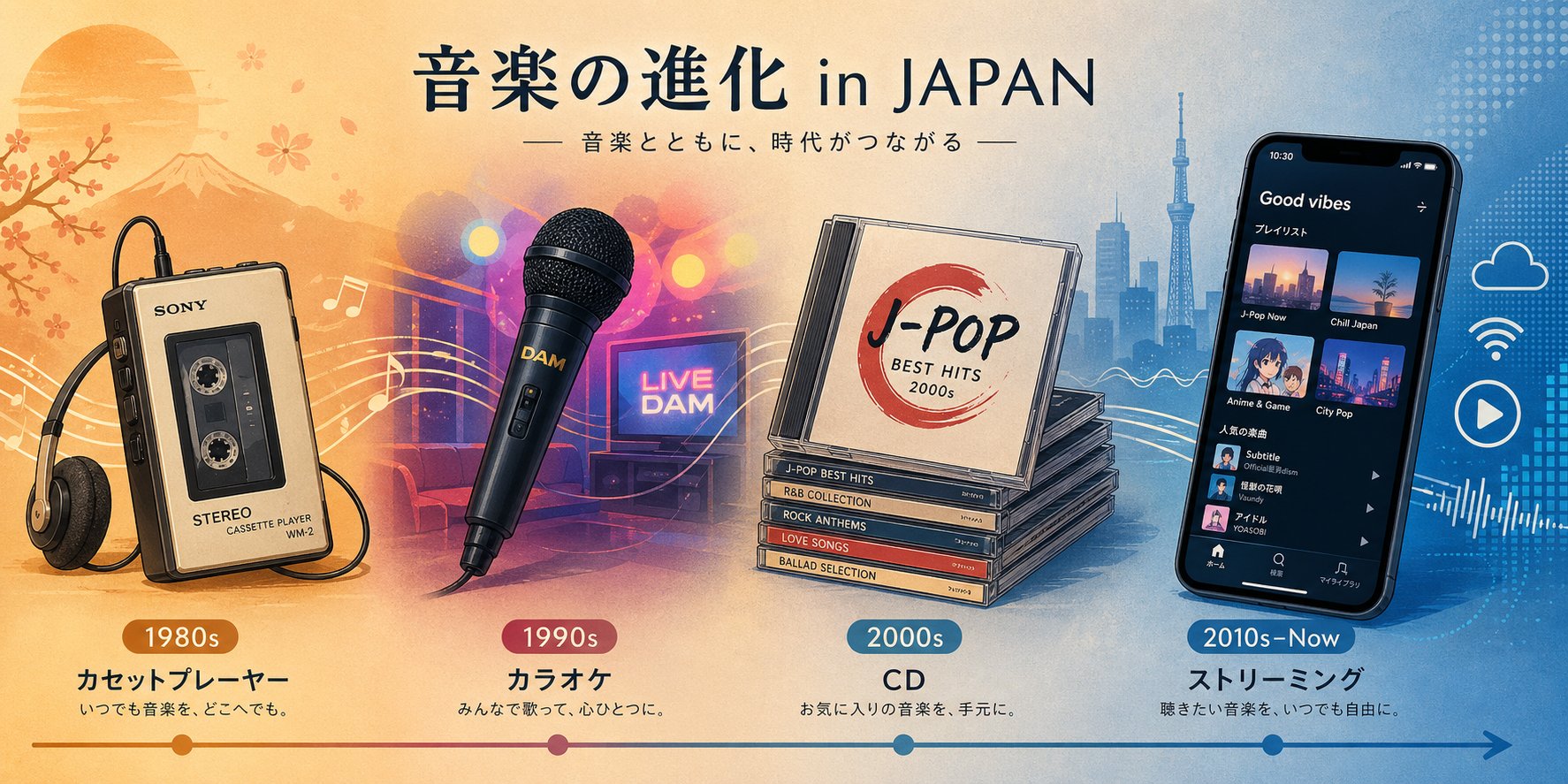
Imagine a country where nearly every technological shift in music consumption happened first or happened bigger. That was Japan from the late 1970s onward. The Sony Walkman, launched in 1979, turned music into a portable, personal experience and changed listening habits worldwide. Karaoke culture, which exploded in the 1980s, made singing pop songs a national pastime and created a feedback loop where hit songs needed to be singable. Then came the CD boom of the 1990s, when Japan became the world's largest physical music market. Artists sold millions of CD singles in a week. Fans searching for snowman lyrics or the latest malice mizer visual kei release would line up at Tower Records in Shibuya, a store so iconic it became a cultural landmark.
The next disruption came from the internet. In the late 2000s, NicoNico Douga, a Japanese video-sharing platform, became the birthplace of something entirely unprecedented. Amateur producers began using Yamaha's Vocaloid software to create original songs featuring virtual singers like Hatsune Miku. The platform's culture of remixing, commenting, and collaborating turned bedroom producers into underground stars. Acts like Teriyaki Boyz had already shown that Japanese artists could grab Western attention through film soundtracks, but the Vocaloid scene did something different entirely. It built a creative pipeline where anonymous producers could go viral, and many of today's biggest J-pop hitmakers, including YOASOBI's Ayase, emerged directly from this ecosystem.
From CD Kingdom to Streaming Era
Here is the part most people outside Japan do not realize: the country held on to CDs far longer than almost any other major market. As recently as the mid-2010s, physical sales still dominated Japanese music revenue. Research on Japan's streaming transition highlights how corporate hesitancy and deeply entrenched CD-buying habits, including the idol handshake-event model that tied CD purchases to fan experiences, slowed the shift to digital. Labels were cautious. Fans were loyal to physical formats. The result was that decades of Japanese music remained largely invisible to international listeners who had already moved to Spotify and Apple Music.
That wall has crumbled. As Japanese labels have gradually embraced streaming, an enormous back catalog has become globally accessible almost overnight. Songs that once required importing a physical disc from Japan are now one tap away. For international fans, this shift has been transformative. You can go from hearing an anxiety lyrics-laden ballad in an anime scene to streaming the artist's full discography in seconds, no import fees required.
- 1979 - Sony Walkman makes music personal and portable
- 1980s - Karaoke culture turns pop songs into participatory experiences
- 1990s - The CD singles boom makes Japan the world's largest physical music market
- 2006-2010 - NicoNico Douga and Vocaloid producers create a new grassroots creative pipeline
- 2015-present - Japan's gradual streaming adoption unlocks decades of music for global audiences
Each of these shifts did not just change how Japanese music was consumed. It changed what got made. And the artists who emerged from this evolving landscape, both the legacy icons and the new wave, tell a story that is just as compelling as the technology behind them.
Essential J-Pop Artists and Groups You Need to Know
The technology built the stage. The artists are the reason anyone stays to watch. What makes jpop so endlessly discoverable is the sheer range of personalities, sounds, and creative philosophies coexisting under one umbrella. A visual kei band in gothic couture and a holographic virtual singer can chart in the same week, and nobody blinks. To make sense of that range, you need to know the names that defined the genre and the ones rewriting its future right now.
Legacy Icons Who Defined the Genre
Any serious conversation about J-pop's identity starts with the artists who shaped it during the genre's commercial peak in the 1990s and early 2000s.
Namie Amuro, often called the "Queen of J-pop," redefined what a female solo artist could be in Japan. Before her, the dominant model for women in Japanese pop leaned toward cute, approachable idol personas. Amuro brought a harder edge, fusing R&B, hip-hop, and dance-pop with a fashion-forward image that launched the "Amura" trend, where millions of young women copied her style. Her influence on the industry lasted well beyond her 2018 retirement.
Utada Hikaru arrived like a comet. Her 1999 debut album First Love sold over 7.65 million copies domestically, making it one of the best-selling albums in Japanese history. Tracks from that record, including the title song that many fans still search for under its hatsukoi time association, became generational touchstones. Her contribution to the Kingdom Hearts franchise later gave her a direct line to Western gaming audiences years before streaming made cross-border discovery easy.
SMAP transcended the boy band label entirely. Active from 1991 to 2016, they became a cultural institution, hosting variety shows, acting in dramas, and functioning as something closer to national ambassadors than pop idols. Their breakup was front-page news across Japan, a reminder that the biggest J-pop acts occupy a space in public life that Western pop stars rarely touch.
On the aesthetic fringe, Malice Mizer pushed J-pop's visual boundaries through the visual kei movement, blending baroque theatricality with gothic rock in a way that influenced fashion and music simultaneously. And for listeners who love genre-bending playfulness, tommy february6, the synth-pop alter ego of Brilliant Green vocalist Tomoko Kawase, showed how a single artist could comit fully to a retro-futurist concept and turn it into a cult phenomenon.
The New Wave Dominating Global Streams
The current generation is doing something their predecessors could not: reaching global audiences at scale, in real time, without waiting for a lucky break.
Ado is the clearest example. A singer who initially rose to fame without ever showing her face, she became the most-streamed Japanese artist globally on Spotify in 2025, dethroning YOASOBI after four consecutive years. Nearly 80% of her streams come from outside Japan. Her voice, a raw, theatrical instrument that shifts from whisper to scream within a single phrase, translates across languages in a way that polished production alone never could. Her sold-out world tour confirmed what the numbers already showed: she is Japan's biggest active music export.
YOASOBI turned an unusual concept into a worldwide phenomenon. The duo, producer Ayase and vocalist ikura, creates songs based on short stories and novels. Their track "Idol," written for the anime Oshi no Ko, became one of the most-streamed Japanese songs in history. Even after ceding the top global spot to Ado, they remain the second most-streamed Japanese artist abroad, proof that their appeal is structural, not a fluke.
Kenshi Yonezu, a former Vocaloid producer who transitioned to performing under his own name, consistently ranks among Japan's top streaming artists both domestically and internationally. His anime tie-in "KICK BACK" for Chainsaw Man became a global hit, while tracks like "Lemon" and "IRIS OUT" chart across multiple countries. Fujii Kaze brings a different energy entirely, blending soul, funk, and jazz influences with Japanese lyrics in a way that feels effortlessly cosmopolitan. His viral hit "Shinunoga E-Wa" appeared in Spotify's top charts across four different countries in 2025.
Yorushika, the duo of guitarist n-buna and vocalist suis, occupies a more atmospheric lane. Their storytelling-driven rock, layered with literary references and cinematic arrangements, has earned them a spot in Japan's top 10 most-streamed artists. They represent a quieter kind of global breakthrough, one built on devoted listeners rather than viral moments.
Groups Reshaping the Landscape
The group side of J-pop is evolving just as fast. Number_i, formed by former King & Prince members, has quickly become one of Japan's most-streamed acts. Their single "p.p.p.p" showcased a willingness to experiment with hip-hop and electronic textures that set them apart from the traditional idol mold. BE:FIRST, created through a competitive audition process led by producer SKY-HI, brings a performance-driven approach that borrows from global pop trends while staying rooted in Japanese sensibility. Snow Man, meanwhile, has leveraged massive domestic popularity and energetic variety-show personalities into a streaming presence that keeps growing.
On the girl group side, NiziU bridges the J-pop and K-pop worlds. Formed through a collaboration between JYP Entertainment and Sony Music, the group trained under the K-pop system but performs primarily in Japanese and targets the Japanese market. Their continued EP releases keep them in steady rotation. XG takes a different approach entirely, a Japanese girl group that records primarily in English and targets global audiences from the start. They ranked among the top 10 most-streamed Japanese artists abroad in 2025, a signal that the old boundaries between domestic and international strategy are dissolving. Fans diving into ruby chan content or searching for bad bad bad lyrics from newer acts are discovering a group landscape that looks nothing like it did even five years ago.
| Category | Artist / Group | Notable Work | Why They Matter |
|---|---|---|---|
| Legacy Solo | Namie Amuro | "Can You Celebrate?" | Redefined the female solo artist model in 1990s Japan |
| Legacy Solo | Utada Hikaru | First Love (album) | Debut album remains one of the best-selling in Japanese history |
| Legacy Group | SMAP | "Sekai ni Hitotsu Dake no Hana" | Became a cultural institution beyond music through TV and variety |
| Legacy Solo | Tommy February6 | "Everyday at the Bus Stop" | Pioneered concept-driven alter-ego pop within J-pop |
| Current Solo | Ado | "Ushi," "Usseewa" | Most-streamed Japanese artist globally (Spotify 2025) |
| Current Duo | YOASOBI | "Idol," "Yoru ni Kakeru" | Novel-to-music concept became a worldwide streaming phenomenon |
| Current Solo | Kenshi Yonezu | "KICK BACK," "Lemon" | Vocaloid-to-mainstream pipeline; consistent global charting |
| Current Solo | Fujii Kaze | "Shinunoga E-Wa" | Soul-jazz fusion that charts across multiple continents |
| Current Duo | Yorushika | "Hitchcock," "Say It" | Literary atmospheric rock with a devoted global fanbase |
| Current Group | Number_i | "p.p.p.p" | Former idol members pushing genre boundaries post-agency split |
| Current Group | BE:FIRST | "Gifted." | Audition-born group blending global pop with Japanese identity |
| Current Group | Snow Man | "Stories" | Massive domestic popularity translating into growing streaming numbers |
| Current Group | NiziU | "Make You Happy" | JYP-Sony hybrid bridging K-pop training with J-pop market focus |
| Current Group | XG | "WOKE UP" | Japanese group recording in English, targeting global audiences first |
What connects all of these artists, across decades and styles, is the ecosystem that surrounds them. And the single most powerful force feeding new listeners into that ecosystem is not a label, a playlist, or a marketing campaign. It is anime.

The Anime and Vocaloid Pipeline That Fuels J-Pop Discovery
Think about the first Japanese song you ever loved. Chances are it played over an opening credits sequence while animated characters sprinted across a skyline. That is not a coincidence. It is a pipeline, and it is the single most effective mechanism turning casual viewers into dedicated J-pop listeners worldwide.
Anime Openings as the Gateway Drug
Every anime season delivers a fresh batch of opening and ending themes performed by major artists, and those 90-second slots function as one of the most powerful promotional engines in music. Luminate consumption data confirms that anime openings bring massive boosts in streams and often help Japan-based artists break through abroad for the first time.
The clearest proof is YOASOBI's "Idol," the opener for Oshi no Ko. The track became the first Japanese-language song to top the Billboard Global Excl. U.S. Chart and has generated 3.9 billion lifetime global on-demand streams. Ado followed a similar trajectory, with her music appearing in One Piece and Spy x Family sparking international spikes in listenership that she then converted into a sold-out world tour. Kenshi Yonezu's "IRIS OUT" for the Chainsaw Man film surpassed even YOASOBI's Billboard Global 200 peak. The pattern is consistent: anime placement, streaming surge, global fanbase.
These are not isolated cases. Artists like chico with honeyworks built entire international followings primarily through anime tie-ins, crafting emotionally charged tracks for shojo romance series that resonated far beyond Japan. Burnout Syndromes became synonymous with Haikyuu!! for a generation of sports anime fans. Even earlier examples like the hi puffy amiyumi show introduced Western audiences to Japanese pop personalities through animation long before streaming existed. For many listeners, the ballad of jane doe lyrics they searched for or the メンヘラ-themed track they stumbled across in a playlist all traced back to an anime scene that hooked them first.
- Oshi no Ko → YOASOBI ("Idol" became the most-streamed Japanese song globally)
- One Piece / Spy x Family → Ado (anime placements launched a worldwide touring career)
- Chainsaw Man → Kenshi Yonezu ("KICK BACK" and "IRIS OUT" charted across multiple countries)
- Demon Slayer → LiSA ("Gurenge" became a karaoke staple and global streaming hit)
- Haikyuu!! → Burnout Syndromes (sports anime fandom drove sustained international discovery)
- Your Name → RADWIMPS (film soundtrack introduced rock-driven J-pop to arthouse cinema audiences)
- Naruto / Bleach → Asian Kung-Fu Generation, FLOW (early 2000s gateway for an entire generation of Western fans)
Vocaloid and Virtual Singers as a Uniquely Japanese Phenomenon
Anime openings explain how listeners find J-pop. Vocaloid explains how some of its best creators were made.
Hatsune Miku, a turquoise-haired virtual singer powered by Yamaha's Vocaloid synthesis software, launched in 2007 and triggered a creative movement with no real parallel in Western or K-pop music. On NicoNico Douga, amateur producers began uploading original songs using Miku and other virtual voices, and the platform's culture of remixing and collaboration turned bedroom musicians into underground stars. The evolution was rapid: early tracks treated Miku as a novelty character, but by 2009 producers like Hachi and wowaka were using virtual singers as instruments to express deeply personal artistic visions. By 2011, songs like "Senbonzakura" had crossed into mainstream Japanese culture entirely.
What makes this matter for J-pop's bigger story is the pipeline it created. Many of today's top hitmakers emerged directly from the Vocaloid scene. YOASOBI's Ayase was a Vocaloid producer before forming the duo. Kenshi Yonezu posted songs under the name Hachi on NicoNico before transitioning to performing under his own voice. DECO*27 remains active in both worlds. The Vocaloid ecosystem functioned as a grassroots artist development system, one where a japanese idol trainee program was not required and creative risk was rewarded by an engaged online community rather than filtered through label gatekeepers.
Gaming Soundtracks and Internet Virality
Anime and Vocaloid are the two biggest funnels, but they are not the only ones. Gaming soundtracks have quietly introduced millions to Japanese musical sensibilities. Utada Hikaru's "Simple and Clean" for Kingdom Hearts remains one of the most recognized J-pop songs among Western gamers. Rhythm games like Project DIVA turned Vocaloid tracks into interactive experiences, while titles like Persona 5 made jazz-inflected J-pop part of the gameplay itself. Even niche discoveries, like fans searching for the hamb or stumbling across shojo tsubaki-adjacent aesthetics in indie game soundtracks, feed back into the broader ecosystem of Japanese music exploration.
TikTok accelerated all of this. Short clips of anime scenes set to J-pop tracks, dance challenges built around Japanese songs, and algorithm-driven recommendations have compressed what used to be a years-long discovery process into a single scroll session. The result is a discovery infrastructure that operates on multiple fronts simultaneously, and it keeps pulling new listeners deeper into a catalog that stretches back decades. That back catalog, especially one particular corner of it, has its own viral story to tell.
The City Pop Revival and How a Forgotten Genre Conquered the Internet
That back catalog has a star, and her name is Mariya Takeuchi. But before we get to her, you need to understand the genre she helped define and why it vanished before the internet brought it back from the dead.
What City Pop Actually Is
City pop emerged in the late 1970s and flourished through the 1980s as the soundtrack to Japan's economic bubble era. Picture a country experiencing unprecedented prosperity: upwardly mobile citizens indulging in luxury fashion, imported wine, and international travel. The music that accompanied this cosmopolitan lifestyle blended funk, boogie, AOR, and jazz fusion into something polished, aspirational, and distinctly Japanese. Rolling Stone described it as music fed by "both the anxieties and ecstasies of a rising technological powerhouse." Think yacht rock, but moored in Tokyo Bay.
The key names read like royalty. Tatsuro Yamashita, often called the "King of City Pop," crafted albums like For You and Ride on Time that remain genre-defining decades later. Mariya Takeuchi, his wife and the genre's queen, delivered the track that would eventually reshape everything. Taeko Ohnuki brought a jazzier, more introspective sensibility on records like Sunshower and Mignonne. Toshiki Kadomatsu pushed the funk and electronic edges further, while Miki Matsubara's "Mayonaka no Door / Stay With Me" would later become its own viral phenomenon on TikTok. Even artists adjacent to the scene, like the theatrical mizer malice acts of the visual kei world, drew from the same era of Japanese creative ambition, though their sound went in a far darker direction. City pop, by contrast, was all shimmer and groove.
Here is the twist: when Japan's economic bubble burst in the early 1990s, city pop fell out of fashion almost overnight. The aspirational lifestyle it soundtracked suddenly felt naive. The genre slipped into obscurity, its records gathering dust in Japanese secondhand shops. For roughly two decades, it stayed there.
How a Forgotten Genre Went Viral Decades Later
Then YouTube's recommendation algorithm did something nobody planned. In the mid-2010s, uploads of city pop tracks, often paired with anime-aesthetic thumbnails and dreamy lo-fi visuals, started appearing in the suggested videos of Western listeners who had been watching lo-fi hip-hop streams or ambient music. One upload in particular changed everything. An anonymous user named "Plastic Lover" posted an eight-minute version of Takeuchi's 1984 track "Plastic Love" in July 2017. The song had originally sold a modest 10,000 copies as a single. Within months of the upload, it was racking up millions of views.
"Plastic Love" went from a forgotten 1984 B-side to over 55 million views on a single YouTube upload, becoming the gateway track that introduced an entire generation of Western listeners to city pop and, by extension, to the depth of Japan's pop music catalog.
The revival was not just algorithmic luck. It was a feedback loop. Vaporwave and future funk producers had already been sampling city pop records, speeding them up or slowing them down and pairing them with retro anime visuals. When listeners traced those samples back to the originals, they discovered artists like Anri, Junko Ohashi, and Kaoru Akimoto. The lo-fi hip-hop community, with its Miyazaki-style study-girl streams, shared enough sonic DNA with city pop that YouTube's algorithm kept routing listeners from one to the other. As Pitchfork noted, the algorithm seemed almost biased toward vintage Japanese music, surfacing tracks whose YouTube view counts felt disproportionate to their original fame.
TikTok added another accelerant. Matsubara's "Mayonaka no Door / Stay With Me" shot to No. 1 on Spotify's viral charts in late 2020 after anime fans and creators of Japanese descent used it in trending videos. The pattern kept repeating: a forgotten track surfaces, an online community embraces it, and millions of new listeners pour in. Even fans who came to J-pop through completely different doors, say through arashi's idol pop or burnout syndromes' anime themes, found themselves pulled into city pop's orbit once the algorithm caught their listening habits.
What makes this revival so significant is what it proves about J-pop's global potential. The appeal is not limited to whatever is charting right now. Japan's deep musical back catalog, decades of meticulously produced records that were largely invisible outside the country, is a cultural goldmine being rediscovered one recommendation at a time. Listeners searching for yoshino yoshino deep cuts or stumbling across an ai scream remix on a niche playlist are participating in the same phenomenon that turned "Plastic Love" into a generational touchstone. Even communities as far removed as g59 records fans have encountered city pop samples woven into underground productions.
City pop's second life is proof that great music does not expire. It just waits for the right algorithm. And the question it raises, how J-pop's sprawling ecosystem compares to the other Asian pop juggernaut dominating global charts, is one worth answering directly.

J-Pop vs K-Pop and What Sets Them Apart
The comparison is inevitable. Both industries produce polished pop music, both rely on group idol systems, and both generate passionate global fanbases. But beneath the surface, J-pop and K-pop operate on fundamentally different philosophies. Understanding those differences is not about picking a winner. It is about recognizing why each genre sounds, looks, and feels the way it does.
Industry Structure and Artist Development
K-pop runs on a centralized pipeline. Aspiring artists audition for one of a handful of dominant agencies, enter a trainee system lasting anywhere from two to seven years, and emerge as fully formed performers with synchronized choreography, multilingual skills, and media training baked in. The Big 4 agencies (HYBE, SM, YG, JYP) function almost like vertically integrated studios, controlling everything from music production to content strategy.
J-pop's ecosystem is far more fragmented. The idol world alone contains multiple competing models: the 48-group system (AKB48 and its regional sister groups) built around the concept of "idols you can meet" at dedicated theaters, the Sakamichi series (Nogizaka46, Sakurazaka46) offering a more polished alternative, and agency-driven acts under STARTO Entertainment (formerly Johnny & Associates), which houses groups like Snow Man and Arashi. But idols are only one slice. Singer-songwriters, Vocaloid producers, rock bands, and anime-tied artists all coexist under the j pop umbrella with no single dominant pathway to success. A producer can go viral on NicoNico Douga and end up writing a chart-topping anime theme without ever entering a trainee program.
Global Strategy and Marketing Approaches
K-pop was engineered for export. The Korean government invested in entertainment infrastructure through agencies like the Korea Creative Content Agency, and labels built global thinking into every decision from day one: English subtitles as standard, multilingual social media content, Western collaborations, and aggressive international touring schedules.
J-pop historically had no reason to chase foreign markets. Japan is the world's second-largest recorded music market, and its domestic audience was wealthy and loyal enough to sustain massive careers without a single overseas fan. Global reach happened organically, usually through anime soundtracks or internet virality, rather than deliberate strategy. Fans abroad were more likely to discover a track through an ado show clip on TikTok or a city pop recommendation on YouTube than through a coordinated marketing campaign.
That calculus is shifting. Newer acts like XG record primarily in English. Number_i and BE:FIRST are touring internationally. Even legacy agencies are rethinking their domestic-first approach as streaming erases geographic barriers. But the default posture remains different: K-pop launches globally by design, while J-pop tends to arrive globally by accident and then leans in.
Musical Style and Creative Freedom
This is where the contrast gets most interesting for listeners. K-pop production tends toward polished, trend-driven sounds, drawing heavily from Western EDM, hip-hop, and R&B with meticulous attention to what is charting globally. The result is consistently high-quality, sonically cohesive music optimized for broad appeal.
J-pop leans the other way. The genre's fragmented industry structure means artists face less pressure to conform to a single commercial template. You will find jazz-influenced chord progressions, dramatic key changes mid-song, and arrangements that layer live instrumentation with electronic textures in ways that Western pop rarely attempts. An artist like Ado can scream through a theatrical vocal performance one track and deliver a delicate ballad the next, without anyone questioning the pivot. That creative latitude produces a wider sonic range, even if it sometimes means less immediate accessibility for new listeners. It is the difference between a curated playlist and a record store you could get lost in for hours, the kind of place where you walk in searching for something as random as song that's amore lyrics and walk out with an armful of genres you did not know existed.
Japanese fan culture also operates differently. Where K-pop fandoms organize around streaming goals and chart metrics, Japanese fans often value the growth journey itself. Japanese idol culture emphasizes watching performers develop over time. An idol who stumbles through early choreography but improves visibly earns deeper loyalty than one who debuts already flawless. Fans express this connection through everything from handshake events to kaomoji happy messages on fan forums, creating an intimacy that feels structurally different from the scale-driven engagement model K-pop optimizes for.
| Dimension | J-Pop | K-Pop |
|---|---|---|
| Industry Model | Decentralized; multiple agency systems, indie paths, Vocaloid pipeline | Centralized; Big 4 agencies dominate with trainee-to-debut pipeline |
| Global Strategy | Domestic-first; international reach often organic via anime and internet culture | Export-engineered; multilingual content, Western collabs, global tours from debut |
| Musical Style | Genre-diverse; jazz-influenced harmony, complex arrangements, wide sonic range | Trend-driven; polished EDM, hip-hop, and R&B fusion optimized for global charts |
| Fan Culture | Growth-oriented; handshake events, theater shows, emphasis on artist development | Metrics-driven; streaming goals, fan voting, large-scale coordinated support |
| Primary Discovery | Anime tie-ins, YouTube algorithm, Vocaloid scene, gaming soundtracks | Social media campaigns, music videos, variety content, global platform strategy |
Neither model is superior. They are answers to different questions. K-pop asks: how do we reach everyone? J-pop asks: how do we make exactly what we want? The listeners who fall deepest into the J-pop rabbit hole tend to be the ones who find that second question more compelling. And for those ready to stop comparing and start exploring, the next step is knowing exactly where to begin.
Your J-Pop Starter Guide for Every Type of Listener
Knowing the history and the names is one thing. Knowing where to actually press play is another. The genre's sheer breadth can feel paralyzing when you are staring at a search bar with no idea what to type. The trick is to start from whatever already interests you and let the music pull you sideways from there.
Entry Points by Interest
Everyone arrives at J-pop through a different door. Rather than handing you a single playlist and hoping for the best, here are five paths matched to the thing that probably caught your attention in the first place.
- Anime fans: Start with YOASOBI ("Idol"), Ado ("Usseewa," "Show"), LiSA ("Gurenge," happy birthday lisa tributes from fans are everywhere online), and Aimer ("残響散歌"). These artists dominate anime tie-ins and their catalogs reward deep listening beyond the opening themes.
- City pop and lo-fi fans: Go straight to Tatsuro Yamashita's For You, Mariya Takeuchi's "Plastic Love," and Taeko Ohnuki's Sunshower. For modern acts channeling that same warmth, try Vaundy and Fujii Kaze, both of whom weave retro grooves into contemporary production.
- Rock and band fans: ONE OK ROCK delivers arena-scale energy with English-language crossover appeal. RADWIMPS scored Your Name and Weathering with You. Asian Kung-Fu Generation remains essential for anyone who grew up on Naruto. Yorushika offers something moodier, with literary storytelling layered over guitar-driven arrangements that reward repeat listens.
- Idol culture curious: Explore the 48-group system (AKB48 and its regional branches) for the grassroots fan-engagement model, the Sakamichi series (Nogizaka46) for a more polished aesthetic, and newer groups like NiziU and FRUITS ZIPPER for the current wave. Older fans might also enjoy revisiting the puffy hi hi puffy amiyumi era, when Puffy AmiYumi's infectious pop-rock earned them a Cartoon Network show, the puffy amiyumi tv show that introduced a generation of Western kids to Japanese artists without them even realizing it.
- Vocaloid and electronic: Hatsune Miku compilation albums are a solid entry point. From there, trace the producers: Kenshi Yonezu's early work as Hachi on NicoNico, DECO*27's catalog of emotionally charged synth-pop, and Ayase's pre-YOASOBI Vocaloid tracks. The iris out album cycle from Yonezu also shows how Vocaloid roots translate into polished mainstream releases.
Streaming Platforms and Playlist Strategy
Where you listen matters more than you might expect. Each major platform has different strengths when it comes to Japanese music catalogs.
Spotify has expanded its J-pop coverage significantly, with curated playlists like J-POP 2025 - Selection of the Year offering a broad mix of current releases spanning pop, rock, and indie. Apple Music has particularly strong Japanese catalog coverage, including its own J-Pop Now: Best of 2025 playlist featuring artists from Kenshi Yonezu and Fujii Kaze to Ado and YOASOBI. YouTube Music benefits from Japan's massive music video culture, where artists routinely upload full MVs and live performance clips. Channels like "The First Take," which captures artists performing a single take in a studio, have become a discovery engine in their own right.
One caveat: some legacy catalog gaps still exist. Japan's long reliance on physical CD sales means certain older albums and deep cuts have not yet made it to streaming. If you fall hard for a particular artist and find missing records, that is not a glitch. It is a remnant of the CD-era distribution model still catching up.
If building a playlist from scratch feels like too much work, searching for curated lists is the lowest-effort way to start filling your rotation. Here are some search terms worth trying across any platform:
- "J-Pop hits 2025" for a snapshot of what is charting right now
- "City pop essentials" for the classic 1980s sound and its modern descendants
- "Anime openings playlist" for the gateway tracks that hook most new listeners
- "Vocaloid greatest hits" for the producer-driven side of the genre
- "Japanese indie rock" for bands like Yorushika, Hitsujibungaku, and kagoshima kagoshima-adjacent regional scenes
- "J-Pop ballads" for the emotional, vocal-driven side of the catalog
- "Japanese R&B and soul" for artists like Fujii Kaze, Sirup, and Awich
The beauty of starting with playlists is that the algorithm does the rest. One track leads to a related artist, which leads to a subgenre you did not know existed, which leads to three hours disappearing before you notice. That pull, that sense of always finding something new around the next corner, is exactly what makes J-pop's sonic palette so distinctive. And for anyone curious about what gives the genre that unmistakable sound, the production side of the equation is just as fascinating as the listening side.
How to Create Your Own J-Pop Inspired Tracks
Listening long enough and you start to hear it: something in the harmony, the way a chorus lifts into an unexpected key, the density of instruments layered into a three-minute pop song. J-pop does not just sound different from Western pop. It is built differently. And once you understand why, the urge to try making something yourself is hard to resist.
What Makes J-Pop Production Distinctive
The secret is rooted in harmony. Where American mainstream pop tends to draw from simplified blues traditions and gravitates toward simple four-chord loops, Japanese music across the board has its roots more in jazz. That single difference ripples through everything.
Two chord progressions show up constantly. The first, called "Royal Road" (王道進行), is so ubiquitous that producers joke it powers half the anime themes ever written. The second, "Marusa" (丸サ進行), is named after Sheena Ringo's "Marunouchi Sadistic" and shares its DNA with "Just The Two of Us." It is jazzy, slightly melancholic, and groovy all at once. Artists like Fujii Kaze lean on it heavily. If you have ever wondered why YOASOBI's 夜に駆ける feels emotionally complex in a way most Western pop singles do not, these progressions are a big part of the answer.
Then there are the chord extensions. J-pop producers routinely use 7th and 9th chords as seasoning, adding harmonic color that gives even upbeat tracks a bittersweet undertone. Legends like 滨崎步 built entire careers on productions that layered these extended harmonies with lush orchestration. Key changes are another signature move. Rather than staying in one tonal center, J-pop songs frequently modulate mid-track to create a "breakthrough" feeling, like the song itself just leveled up. Wowaka's "Rolling Girl" and Fujii Kaze's "Shinunoga E-Wa" both use this technique to devastating effect.
On top of all that, the arrangements are dense. A single track might blend live drums, synth pads, horn sections, acoustic guitar, and electronic textures into one mix. Even during the smap era of the late 1990s, when idol pop dominated the charts, the backing tracks were more harmonically adventurous than most Western equivalents. Emerging artists and producers like mizuki itagaki continue to push this layered approach forward, treating arrangement density as a feature rather than clutter. The result is music that rewards repeated listening because there is always something new buried in the mix.
Turning J-Pop Inspiration into Original Music
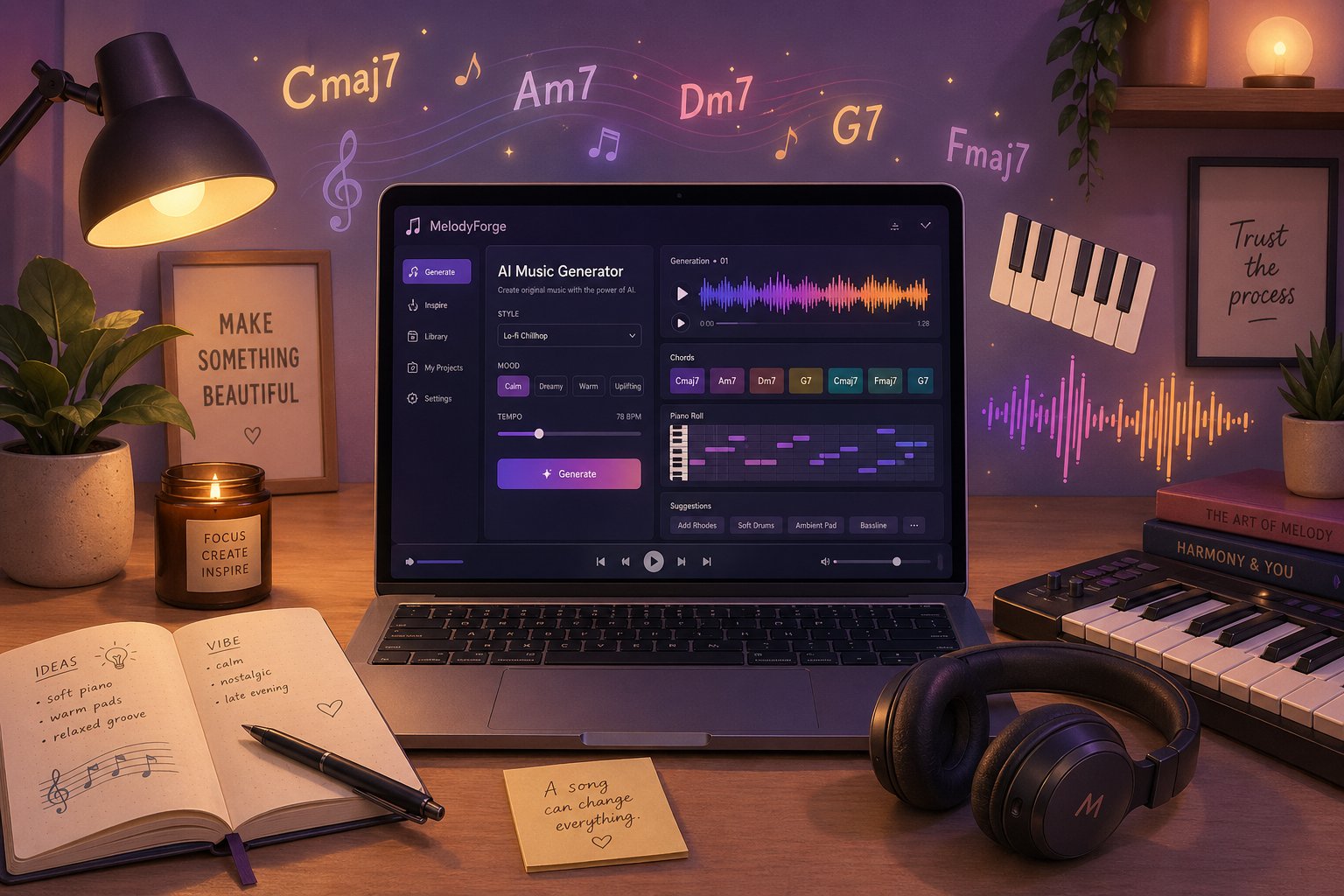
Here is the good news: you do not need years of music theory or a studio full of gear to start experimenting with these ideas. Modern AI music tools have made genre exploration accessible to anyone with a browser and a creative impulse.
MakeBestMusic's AI Song Generator is a practical starting point. You select a genre, define a mood or era, and the tool generates an original royalty-free track in seconds. Want to hear what a city pop groove sounds like with modern production? Type it in. Curious how a melancholic ballad would sound with J-pop's signature chord extensions? Try it. The tool is especially useful for content creators who need J-pop-style background music, aspiring producers exploring the genre's harmonic language before committing to a DAW, or anyone who wants to hear their own idea rendered in a style they are still learning to understand. Think of it less as a replacement for learning production and more as a sketchpad, a way to test ideas quickly and hear what the genre's building blocks sound like in action.
If you are not sure where to begin, try feeding it prompts that match the subgenres and moods you have been discovering throughout this guide:
- "Upbeat J-pop idol anthem with bright synths and a key change in the final chorus"
- "Melancholic city pop sunset with funk bass and warm electric piano"
- "90s J-rock energy with driving drums and distorted guitar, ruby chan hai vibes"
- "Atmospheric ballad inspired by anime ending themes, slow build with strings"
- "Vocaloid-style electronic pop with fast tempo and complex melody, sinking town mood"
- "Jazz-fusion groove with 7th chords and a lo-fi city pop feel"
Each prompt is a starting point, not a final destination. The real value is in hearing how J-pop's distinctive elements, those jazz-rooted chords, the layered arrangements, the emotional key shifts, come together in a track shaped by your own idea. From there, you can refine, learn, and eventually move into deeper production tools if the creative itch demands it. The genre's sonic vocabulary is rich enough that even seasoned producers, the kind who grew up studying ballroom dance shoes-era funk samples and city pop vinyl, keep finding new combinations worth exploring.
Where J-Pop Goes from Here and What to Explore Next
Why J-Pop Rewards the Curious Listener
J-pop is not a niche interest riding on the coattails of anime popularity. It is a vast, self-sustaining ecosystem that has quietly shaped global music culture for decades through soundtracks, gaming, internet virality, and relentless creative ambition. From porno graffitti songs scoring early 2000s anime to Ado selling out arenas worldwide, the through line is a genre that keeps producing sounds no other industry replicates.
That range is the point. The same umbrella covers idol groups performing a just dance song with synchronized choreography, Vocaloid producers crafting experimental electronic tracks from their bedrooms, shojo anime ballads that make you cry on a train, and city pop records that sound better today than when they were pressed in 1983. A listener exploring the shoujo jidai era of idol pop and another deep in Kenshi Yonezu's discography are both inside the same genre, just standing in different rooms of a very large house. Unlike industries that optimize for a single exportable sound, J-pop's fragmented structure is what keeps it endlessly discoverable. Every corner you turn reveals something you did not expect.
In an era where algorithms push music toward sameness, J-pop's creative diversity is its greatest strength. The genre does not converge on one sound. It sprawls, experiments, and trusts that curious listeners will find their way in.
Your Next Steps into the J-Pop World
You have the map now. Here is how to use it:
- Pick one artist or subgenre from this guide and listen to a full album, not just the singles. J-pop rewards depth.
- Search for a curated playlist on your preferred streaming platform. Try "J-Pop hits 2025" or "city pop essentials" and let the algorithm do the rest.
- If you are feeling creative, generate a J-pop-inspired track using MakeBestMusic's AI Song Generator to hear how the genre's harmonic signatures and arrangement styles come together around your own idea.
The otsukare summer playlists, the deep-cut shojo soundtracks, the producers you have never heard of who will become your favorites: they are all waiting. You are not at the bottom of the rabbit hole. You are just getting started.
