

What New Orleans Bounce Music Really Is
Imagine a packed block party in a New Orleans housing project, late 1980s. A DJ drops a stuttering drum loop, grabs the mic, and shouts a command. Hundreds of voices fire back in unison. Bodies move. The ground shakes. That raw, electric exchange is the heartbeat of New Orleans bounce music — a high-energy, call-and-response subgenre of hip-hop built on looped drum machine patterns, crowd-participation chants, and an unshakable connection to the neighborhoods that created it.
"Where y'all from?" the DJ calls. The crowd roars back — every ward, every project, every block claiming its name.
That participatory energy is what separates bounce from anything else in hip-hop. You don't just listen to it. You answer it.
Defining the Sound of the Streets
At its core, bounce is dance-party music driven by a rapid-fire sampled beat known as the Triggerman — a rhythm so foundational that, as Big Freedia puts it, "as long as it has the Triggerman beat, it's Bounce!" The genre emerged from New Orleans' public housing projects in the late 1980s and early 1990s, where DJs and MCs turned community centers and parking lots into proving grounds. Unlike mainstream hip-hop's focus on narrative verses, bounce leans on repetitive, chant-driven hooks — phrases tied together like nursery rhymes amped up on propulsive beats, designed to get crowds hollering and moving. The louisiana bounce music vocal style owes as much to playground call-and-response as it does to any recording studio.
Why Bounce Is More Than Just a Beat
What makes this sound so distinct is its deep roots in New Orleans' broader musical DNA. You'll hear echoes of second line brass band bass lines in the low end, Mardi Gras Indian tambourine-driven chants in the vocal cadence, and African American oral traditions in every crowd callback. As writer Garnette Cadogan observed, bounce is "stuffed with New Orleans sonic heritage" — a genre where brass bands and sampled beats blur into one another until you can't tell which came first. Even the nola bounce vocal samples that producers still chase today carry that layered cultural fingerprint.
DJ Jubilee, one of the genre's defining voices, called it "dance-party-type music that represents everybody." That spirit of communal representation — by us, for us — runs through every chapter of bounce's story: from the Triggerman beat's unlikely origins in a Queens, New York, rap track, through golden-era mixtapes and neighborhood rivalries, a post-Katrina diaspora that scattered the sound across the country, sissy bounce's fearless redefinition of the genre, and the moment the world learned to pyt twerk without knowing where the movement actually came from.
This is that story, from the very first drum loop to the dance floors it still commands.
The Triggerman Beat That Started Everything
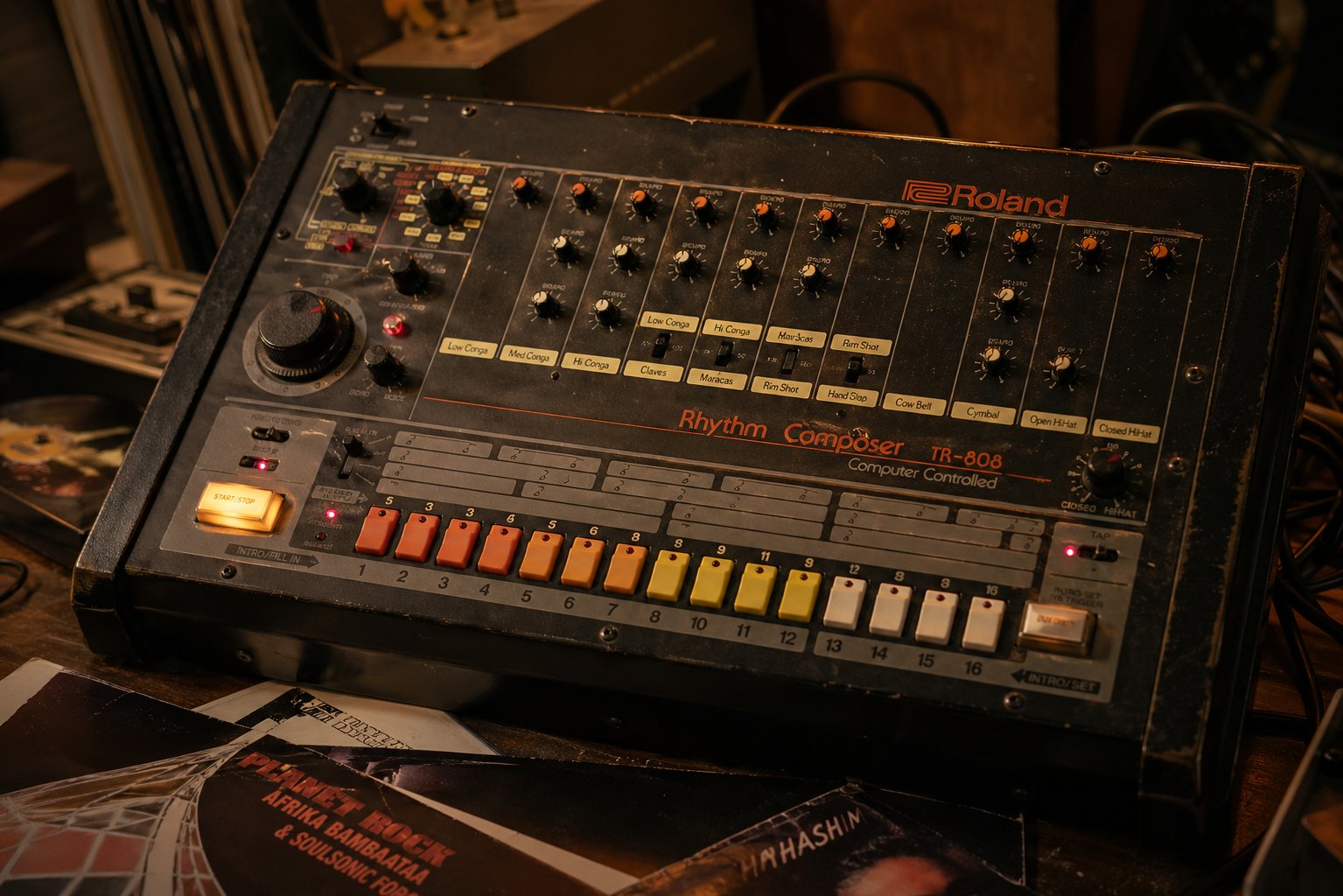
Every genre has its origin myth. For new orleans bounce music, that myth is also a fact — and it starts not in the Crescent City, but in the front seat of a Jeep parked on a side street in Hollis, Queens.
How a Queens Drum Pattern Became New Orleans' Heartbeat
In 1986, two teenage friends named Orville Hall and Phillip Price — performing as the Showboys — recorded a six-minute story rap called "Drag Rap" for Profile Records. The track was a narrative crime tale modeled after the TV show Dragnet, complete with a fake commercial break featuring the Wendy's "Where's the beef?" catchphrase and an Irish Spring soap whistle suggested by their friend Jam Master Jay. It rocked New York for maybe a month or two, then vanished. The Showboys went back to "wilding out in Hollis, smoking and drinking 40s," as Hall later recalled, assuming the record was dead.
It wasn't. Somewhere down South, "Drag Rap" had taken on a second life — and a new name: Triggerman. Memphis DJ Spanish Fly pulled the record from a local bin, drawn to the Profile Records label, and started sneaking its 808 patterns into his mixtapes. Those tapes traveled. By the time the beat drifted into New Orleans — possibly carried downriver during Mardi Gras — the city latched onto it and never let go.
The critical moment came in 1992. MC T. Tucker and DJ Irv lifted the syncopated 808 pattern from a specific 23-second window of "Drag Rap" — the stretch running from roughly 1:53 to 2:16 — and built their proto-bounce anthem "Where Dey At?" around it. DJ Jimi followed months later with a remixed version, "Where They At?," that hit the Billboard charts. Just like that, a Queens drum pattern became the backbone of an entirely new genre. The nola bounce sound as we know it was born.
The Anatomy of the Triggerman Loop
So what exactly makes this beat so magnetic? Picture it in layers. At the bottom sits a hard, driving kick drum — originally programmed on an Oberheim DMX drum machine. On top of that rides a syncopated 808 pattern: a stuttering, off-kilter rhythm that doesn't sit neatly in a standard 4/4 grid. Then come the accents — scattered vocal stabs ("Yes!" "Alright!"), a cowbell, hi-hats, and a signature xylophone flourish the Showboys called "the bones." That xylophone part was played live by their engineer Brian Perkins, by hand, for six straight minutes without a single mistake. As Hall explained, "When you hear a lot of people loop that, it doesn't loop right because there's a human feel to it."
That human imperfection is part of the magic. The bounce sound built on Triggerman isn't rigid or mechanical — it breathes. And crucially, the pattern leaves wide-open space between its rhythmic hits. That space is where the MCs live. It's where call-and-response chants slot in, where crowd commands land, where the participatory energy of new orleans bounce fills the gaps the drum machine left behind. The beat doesn't demand a traditional verse-chorus structure. It demands a conversation.
"If it has the Triggerman beat, it's Bounce!" — Big Freedia, God Save the Queen Diva!
Orville Hall himself described the beat as bounce music's "roux" — the secret blend of spices that pulls a gumbo together and gives it its distinct flavor. That metaphor is perfect. The Triggerman loop isn't a finished dish. It's a base ingredient, rich enough to carry anything a cook wants to build on top of it.
A Tradition of Musical Recycling
Here's the thing that makes this story feel inevitable rather than accidental: New Orleans has always worked this way. Brass bands have passed the same standards — "I'll Fly Away," "When the Saints Go Marching In" — from generation to generation, each ensemble adding its own syncopation, its own swing, its own personality to a shared foundation. Mardi Gras Indian tribes build new chants on melodic frameworks that stretch back decades. The city's musical culture doesn't prize originality from scratch. It prizes what you do with what you're given.
The Triggerman loop slid right into that tradition. According to WhoSampled, "Drag Rap" has been used in over 160 songs — and anyone close to the scene will tell you that's a dramatic undercount. Hundreds of producers across decades have chopped, pitched, and rebuilt the same rhythmic DNA, each one adding a new vocal hook, a new chant pattern, a new neighborhood's energy. From DJ Jubilee to Partners-N-Crime to Drake's 2018 hit "Nice For What," the Triggerman beat functions less like a sample and more like a communal instrument — something every artist in the new orleans bounce ecosystem can pick up and play.
That communal ownership is what gave the genre its staying power. A single beat didn't just launch a sound. It gave an entire city a shared musical language — one flexible enough to absorb every block party, every rivalry, and every generation that followed. And the neighborhoods where that language was first spoken? They shaped the genre just as powerfully as the beat itself.
Housing Projects and Neighborhoods That Built Bounce Music
Bounce didn't emerge from a single studio or a single zip code. It was incubated across a network of public housing projects, each one functioning as its own creative ecosystem — with its own DJs, its own MCs, its own dances, and its own fierce pride. As one account of the era put it, bounce was "a battle-of-the-hoods type of music that represented who was more thorough in dance, style, and fashion." That neighborhood-level competition didn't fracture the genre. It fueled it.
The Projects as Creative Incubators
Four housing developments stood at the center of the bounce universe. The Magnolia Projects — officially the C.J. Peete Housing Development, now rebuilt as Harmony Oaks — was the most storied of them all. Built in 1941 and expanded across six additional city blocks by 1955, Magnolia was home to Juvenile, Soulja Slim, Magnolia Shorty, and the Williams brothers who founded Cash Money Records. Writer Garnette Cadogan described the scene around Magnolia as "a cultural crossroads where various New Orleans traditions and a mixture of dancing, singing, laughing people bumped into each other in happy coexistence" — bounce blasting from loudspeakers while brass bands paraded and Mardi Gras Indians displayed hand-sewn suits in Shakespeare Park directly across the street.
The Melpomene Projects (now Guste Homes) and the Calliope Projects (now B.W. Cooper) carried their own reputations and their own rosters of talent. St. Thomas, since demolished and redeveloped, rounded out the holy trinity that bounce performers still invoke in song: "From the Magnolia to the Melpomene to the Calliope" — a roll call that functions as both geography lesson and loyalty oath. DJ Jubilee, one of bounce music's most beloved voices, never used the post-Katrina replacement names. He insisted on "giving props to the old names" that still resonated with the people who grew up there.
Before any of this reached a recording studio, bounce lived in the semi-enclosed courtyards of high-rise project buildings and at block parties where crowds of thousands gathered. Picture a St. Joseph's Day celebration at Magnolia — syncopated grooves pouring from stacked speakers, a DJ grabbing the mic and commanding, "Shake it for the Magnolia!" Everyone obliged. These weren't concerts with a stage and a ticket price. They were communal rituals where the line between performer and audience barely existed, and where the call-and-response energy that defines bounce in music was born out of sheer proximity and shared identity.
Venues, Labels, and the Business of Bounce
As the sound outgrew the courtyards, a handful of nightclubs became the proving grounds where bounce artists built citywide reputations. The Ghost Town Lounge in the 17th Ward neighborhood of Hollygrove is where MC T. Tucker and DJ Irv performed the live set that became "Where Dey At" — widely considered the first bounce release. DJ Jimi held court at Newton's on Dryades Street in Uptown. Club Rumours on St. Claude Avenue drew crowds from across the city. These weren't glamorous venues. They were loud, packed rooms where a DJ's ability to move a crowd determined everything.
The business infrastructure followed the energy. Take Fo' Records, founded in 1992, became the first label to specialize in bounce from day one, building a roster that included DJ Jubilee, Da' Sha Ra', and later Katey Red. Mobo Records gave Ricky B a home for his 1994 classics "Shake It Fo Ya Hood" and "Yall Holla." Meanwhile, Cash Money Records — launched the same year by Baby (Birdman) and Slim Williams out of the Magnolia Projects — released early bounce tracks by Ms. Tee, Magnolia Shorty, and the group U.N.L.V. before pivoting toward the national market. Even No Limit Records and Big Boy Records, the label that first housed Mystikal, put out select bounce music tracks in those early years.
| Neighborhood / Project | Notable Artists | Key Venues | Associated Labels |
|---|---|---|---|
| Magnolia Projects (Harmony Oaks) | Juvenile, Soulja Slim, Magnolia Shorty | Shakespeare Park block parties | Cash Money Records |
| Melpomene Projects (Guste Homes) | Various bounce MCs and crews | Community center parties | Local independents |
| Calliope Projects (B.W. Cooper) | Early bounce and "gangsta bounce" crews | Courtyard block parties | No Limit Records |
| St. Thomas Projects (demolished) | Neighborhood MCs | Block parties | Local independents |
| Hollygrove / 17th Ward | MC T. Tucker, DJ Irv | Ghost Town Lounge | Take Fo' Records |
| Uptown (Dryades St. area) | DJ Jimi | Newton's | Mobo Records |
| St. Claude Ave. corridor | Various bounce performers | Club Rumours | Take Fo' Records |
What's striking about this map is how tightly concentrated the geography was. You could drive across the entire bounce universe in twenty minutes. Yet each pocket produced its own stylistic fingerprint — its own chants, its own dance moves, its own allegiances. That hyperlocal intensity is exactly what gave the genre its authenticity and its staying power. It also meant that when bounce finally broke beyond the block party circuit and onto the radio, the explosion was citywide and almost instantaneous.
Q93, Mixtapes, and the Golden Era of the 1990s
That citywide explosion had a name: WQUE Q93. In the early-to-mid 1990s, this single radio station became the launchpad that carried bounce out of project courtyards and into every car stereo, kitchen radio, and boombox across New Orleans. Without Q93, bounce might have stayed a neighborhood phenomenon. With it, the genre owned the city.
Q93 and the DJs Who Broke Bounce Wide Open
Q93 was the dominant hip-hop and R&B station in New Orleans, and its on-air DJs understood something that program directors in bigger markets often missed: local music moved the needle. Wild Wayne, the station's most prominent personality, championed bounce tracks alongside national hits, giving artists like DJ Jubilee and Partners-N-Crime the same airtime real estate as major-label acts. DJ Jubilee himself became a dual force — a recording artist whose tracks like "Get Ready Ready" and "Do the Jubilee All" were anthems, and a radio presence who could break a new bounce record simply by spinning it during drive time. When Q93 played a bounce track, the whole city heard it. And in a pre-internet era, that kind of reach was everything.
The Mixtape Economy Before the Internet
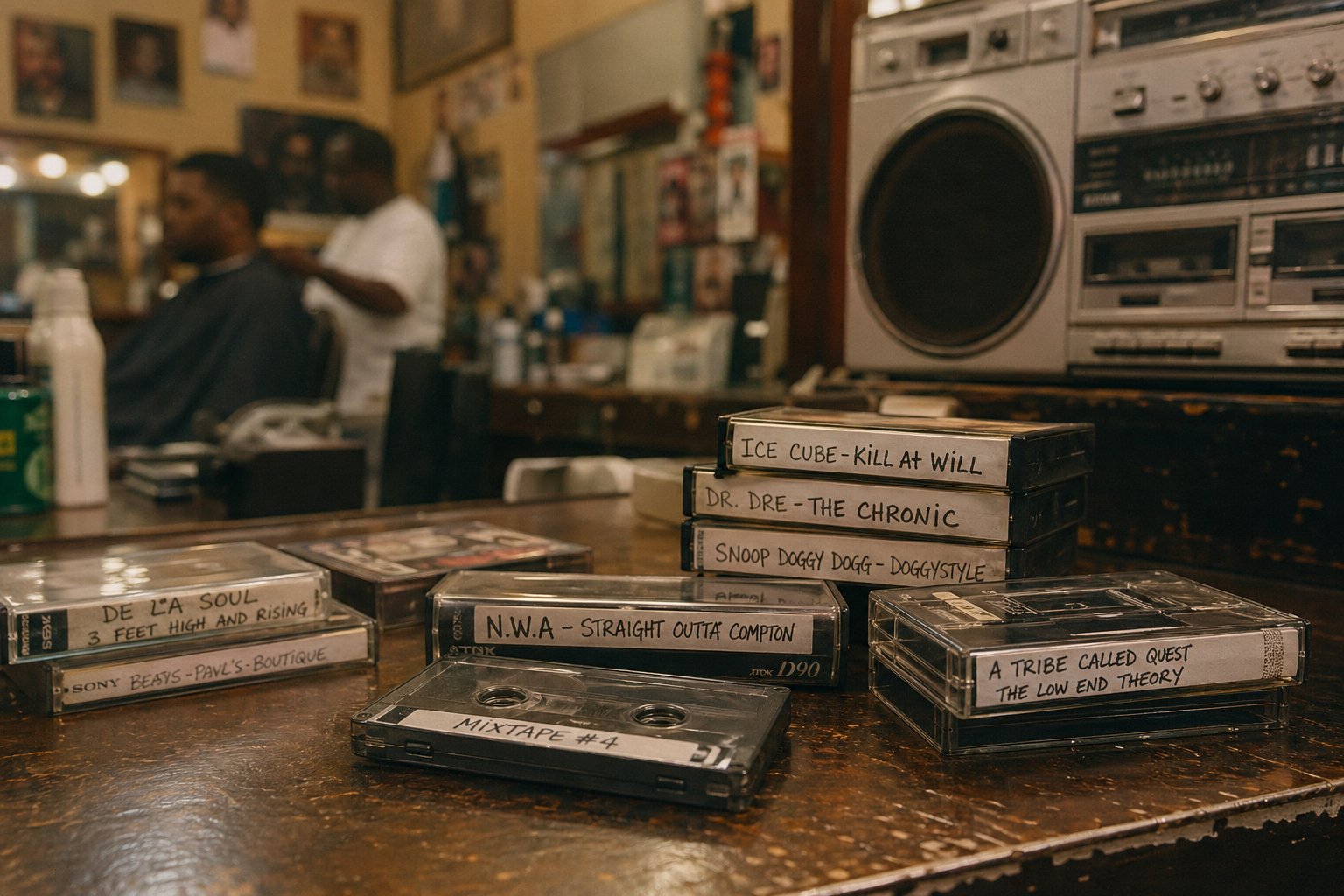
Radio was only half the distribution engine. The other half ran on hand-dubbed cassette tapes — a grassroots economy that spread the sound bounce by sound bounce, copy by copy, through channels no record label could replicate. Picture it: a DJ records a live set at a block party or club, duplicates it on a stack of blank tapes, and sells them for a few dollars each at barbershops, corner stores, car washes, and gas stations across the city. No distributor. No retail chain. Just word of mouth and a cardboard box on the counter.
This mixtape economy was how most fans first encountered bounce. MC T. Tucker and DJ Irv's "Where Dey At" — the track widely credited as the genre's founding release — was originally distributed this way, recorded live and spread through the city on cassettes before a polished studio version ever existed. The format shaped the music itself. Because these tapes captured live performances, they preserved the raw call-and-response energy, the crowd noise, the DJ's ad-libs commanding dancers to shake and bounce. Listening to a dubbed cassette in your car felt like being at the party. That intimacy built loyalty no marketing budget could buy.
Key Artists and the Crossover Moment
By the mid-1990s, the scene was stacked with talent. DJ Jubilee was the people's champion — a former high school band director whose commanding voice and crowd-moving instincts made him bounce royalty. Partners-N-Crime brought lyrical sharpness and humor. Cheeky Blakk pushed boundaries with sexually explicit, unapologetic tracks that made her one of the genre's most polarizing and popular female voices — her music essentially functioning as early music for twerk long before that term entered the mainstream vocabulary. Meanwhile, the early Cash Money roster still carried bounce DNA: Ms. Tee, Magnolia Shorty, and U.N.L.V. all recorded over Triggerman-driven beats before the label shifted its focus toward national markets.
That national shift arrived with force in 1998. Cash Money artist Juvenile, produced by Mannie Fresh, released "Ha" — a track built on bounce cadence and repetitive, chant-like hooks that climbed the Billboard charts and introduced the country to something it hadn't heard before. Then came the knockout punch. In 1999, "Back That Azz Up" — featuring Mannie Fresh and Lil Wayne — merged classical string arrangements with 808 percussion and a big booty bounce energy that was pure New Orleans. The single reached No. 19 on the Hot 100, and the album 400 Degreez went four-times platinum. As Mannie Fresh later reflected, "I get it that it's a lot ratchet, but it is a masterpiece."
"Back That Azz Up" didn't just chart. It introduced bounce rhythms to a national audience that had never set foot in a New Orleans block party. Suddenly, the repetitive hooks, the dance-floor commands, and the propulsive energy that had been circulating on dubbed cassettes for nearly a decade were blasting from speakers in every state. The southern turn in hip-hop — driven simultaneously by activity in Atlanta, Memphis, and Miami — was reshaping the genre's center of gravity, and New Orleans was right at the pivot point. That same rhythmic DNA would later echo in adjacent scenes like baltimore club music and jersey club, proving that the Triggerman's influence had no intention of staying local.
Here's a timeline of the milestones that defined this golden decade:
- 1991-1992: MC T. Tucker and DJ Irv release "Where Dey At" on cassette; DJ Jimi follows with a studio version that charts on Billboard. The Triggerman-based template is established.
- 1992-1993: Take Fo' Records launches as the first bounce-dedicated label. Q93 begins regular rotation of local bounce tracks, giving the genre citywide airplay.
- 1994: Ricky B releases "Shake It Fo Ya Hood" on Mobo Records. Cash Money Records puts out early bounce releases from Ms. Tee and U.N.L.V.
- 1995-1996: DJ Jubilee emerges as the genre's most recognizable voice with tracks like "Get Ready Ready." The mixtape economy peaks, with hand-dubbed cassettes circulating through barbershops and corner stores across the city.
- 1997: Cheeky Blakk and Partners-N-Crime solidify their reputations. Bounce tempos creep upward, and new rhythmic elements like eighth-note clap patterns gain prominence alongside the Triggerman loop.
- 1998: Juvenile's "Ha" breaks through to national audiences, introducing bounce-flavored cadence to mainstream hip-hop. Cash Money signs its landmark distribution deal with Universal Records.
- 1999: "Back That Azz Up" reaches No. 19 on the Billboard Hot 100. 400 Degreez is certified four-times platinum. Bounce rhythms officially enter the national conversation.
By the turn of the millennium, bounce had accomplished something rare: it had launched two of the most successful independent rap labels in history — Cash Money and No Limit — while the grassroots scene that birthed them kept thriving in the clubs and block parties back home. But the genre's relationship with gender and identity was about to shift in ways nobody predicted, driven by artists who refused to perform within hip-hop's conventional boundaries.
How Bounce Survived and Rebuilt After Katrina
Those identity shifts and that thriving grassroots scene? They were about to be tested by catastrophe. On August 29, 2005, Hurricane Katrina made landfall in Louisiana, overwhelming the levees that protected New Orleans and leaving 80 percent of the city underwater. The storm killed 1,833 people, caused $105 billion in property damage, and displaced over 400,000 residents. The communities hit hardest were the same poor, Black neighborhoods that had built bounce from the ground up — the wards, the projects, the block party circuits that gave the genre its soul. In a matter of days, the entire physical infrastructure of bounce was gone.
Diaspora and the Spread of Bounce Beyond New Orleans
Nearly the entire city scattered. Bounce artists and their audiences landed in Houston, Atlanta, Baton Rouge, Memphis, and dozens of smaller cities across the South. Families who had never left their ward were suddenly starting over in unfamiliar places. The mixtape economy, the club circuit, the radio ecosystem around Q93 — all of it collapsed overnight.
But here's the paradox: displacement spread the sound further than any distribution deal ever could. Bounce DJs who landed in Houston brought their playlists with them. Evacuees in Atlanta threw parties that ran on Triggerman loops and call-and-response chants, introducing the music to crowds who had never heard it. A song bouncing from city to city through displaced communities did something the golden era's cassette tapes never managed — it planted bounce in new soil across the entire Gulf South and beyond.
Rebuilding Identity Through Music
For those who returned to New Orleans, bounce became something deeper than party music. It became a way to grieve, to resist, and to insist that the culture would survive even when the buildings didn't. 5th Ward Weebie released "Fuck Katrina" — a raw, defiant track that refused to dress up the anger. As researcher Natalie Baker found in her analysis of 147 bounce songs recorded before and after the storm, the post-Katrina lyrics weren't primarily about violence or poverty. They were about community — name-checking demolished projects like the Calliope, the Melpomene, and the Iberville, mourning the loss of the support networks those places held. Mia X wrote "My FEMA People" as a love letter to a scattered city: "We were left for dead, for vultures, all through the city... New Orleans, I love you." Master P released an entire album with the 504 Boyz titled Hurricane Katrina: We Gon' Bounce Back, channeling what he called a "bounce street sound" into a declaration of survival.
"When we came back [to New Orleans], everything was all messed up. But over time, and everybody coming together — community efforts — we rebuilt New Orleans. The people have to keep the spirit and the culture alive." — Big Freedia
Big Freedia, like hundreds of thousands of others, was displaced by the storm. About a year later, she returned and began reviving the bounce scene — throwing parties, rallying crowds, and rebuilding the communal energy that Katrina had tried to drown. Weebie, too, kept grinding through hard times. As he later told Vice, the years after Katrina meant "doing everything under the sun just trying to make money" — block parties, barrooms, promotion, whatever it took. His back was against the wall, but he never left the scene.
The post-Katrina era also fundamentally rewired how bounce reached its audience. With physical venues destroyed and the mixtape pipeline broken, artists turned to YouTube and social media to distribute their music. A bounce track could now travel from a rebuilt Uptown studio to a laptop in Houston in minutes, no dubbed cassette required. This shift democratized access — anyone with an internet connection could discover the genre — but it also changed the intimate, hyperlocal dynamic that had defined bounce for fifteen years. The block party didn't disappear, but it now existed alongside a digital ecosystem where the audience was no longer just the neighborhood. It was the world.
That wider visibility set the stage for something the genre's founders might not have predicted. The artists who emerged strongest from the post-Katrina rebuilding weren't just bouncing bouncing back to where the scene had been before the storm. They were pushing it somewhere entirely new — and the voices leading that charge belonged to performers who were about to redefine what bounce could say, who could say it, and who it belonged to.
Sissy Bounce and the Artists Who Redefined the Genre
Those voices belonged to LGBTQ+ performers who grew up in the same projects, danced at the same block parties, and loved the same Triggerman-driven tracks as everyone else in the scene. They weren't outsiders arriving with a new agenda. They were neighborhood kids who grabbed the mic and refused to pretend to be something they weren't. In doing so, they cracked open one of hip-hop's most hypermasculine subgenres and reshaped nola bounce music from the inside out.
Katey Red and the Origins of Sissy Bounce
It started on October 21, 1998, at a birthday party behind the Melpomene Projects. Katey Red — who grew up listening to Cheeky Blakk, Partners-N-Crime, and DJ Jubilee on porch speakers throughout the project — was pushed toward the DJ booth by friends who had heard her freestyling in the hallways. As Red recalled, she grabbed the mic, shouted the opening line of what would become "Punk Under Pressure," and the whole room shouted back. Her legs were shaking. The next morning, she thought it was a dream.
It wasn't. By the following afternoon, someone at a block party offered her $50 to get on the mic again. "I said, 'Where the mic at?'" Red laughed. "And before you know it I've been on the microphone ever since." Her debut album, Melpomene Block Party, dropped in 1999 on Take Fo' Records — the same label that housed DJ Jubilee. Red was the first openly transgender and gay artist in bounce, and her tracks were unapologetically out, built on the same Triggerman loops and call-and-response hooks that defined the genre. The music wasn't a separate category. As Red herself put it: "It's not 'sissy bounce,' it's just sissies that are making bounce music."
That distinction matters. The media coined "sissy bounce" as a label in the late 2000s — journalist Alison Fensterstock wrote about the scene for Gambit in 2008 — but the artists themselves never saw it as a breakaway genre. Red, Big Freedia, Sissy Nobby, and Vockah Redu were all performing at the same shows, often billed together under headers like "Battle of the Sissies." The sonic foundation was identical: Triggerman beats, crowd commands, booty shaking music that packed dance floors. What changed was the lyrical perspective and the visible queerness of the performers, which challenged assumptions about who bounce belonged to.
Big Freedia's Mainstream Breakthrough
Big Freedia took that challenge global. After returning to New Orleans post-Katrina and rebuilding the local scene one sweaty club night at a time, Freedia became the genre's most visible ambassador — landing a reality TV series, Big Freedia: Queen of Bounce, on Fuse, and drawing national press that introduced audiences far beyond Louisiana to the energy of a bounce show.
Then came the collaborations that changed everything. Beyonce sampled Freedia's voice on "Formation" in 2016 — the unmistakable call "I did not come to play with you hoes!" anchoring one of the decade's most culturally charged music videos. Drake built his 2018 hit "Nice For What" around a Freedia vocal, layering it over a jersey club beat-influenced production that carried bounce cadence straight onto pop radio. These moments brought unprecedented visibility, but they also exposed an uncomfortable pattern. As cultural critic Myles E. Johnson observed, Freedia's voice animated these mainstream hits while her body remained absent from the visuals — heard but not seen, "treated like an apparition when mainstream artists want to collaborate with her." Freedia herself acknowledged the gap, telling The Fader that proper recognition and being included in the video were things "we're steady working towards."
The tension was real: mainstream pop wanted the energy and authenticity of a Black, queer New Orleans bounce artist, but wasn't always willing to put that artist front and center on screen.
Expanding the Genre's Identity
Within the bounce community itself, acceptance didn't arrive overnight either. Red recalled the fear of gay bashing at her earliest concerts — wondering if someone in the crowd would throw something at her on stage. But the Melpomene had her back then, and the broader scene gradually followed. "It's not only accepting LGBT people making bounce music," Red reflected. "Every time you look up, it's a new LGBT artist... I'm glad I could help that."
What sissy bounce ultimately proved is that the genre's core identity was never about who was on the mic. It was about the exchange between mic and crowd — the call, the response, the movement. LGBTQ+ artists didn't dilute that exchange. They supercharged it, bringing performance styles and lyrical honesty that expanded the audience and pushed nola bounce music onto stages and screens it had never reached before. The genre got bigger not in spite of these artists, but because of them.
And the dance floors they commanded? Those weren't just backdrops. Bounce's physical, participatory dance culture was its own tradition — one with roots deeper than most people realize, and a mainstream afterlife that would strip away almost all of that context.
Bounce Dance Culture and the Birth of Twerking
That tradition — the physical, sweating, floor-shaking side of bounce — wasn't an accessory to the music. It was the music's entire reason for existing. Every Triggerman loop, every call-and-response chant, every DJ command was engineered to produce one thing: movement. Bounce dance culture developed as a performance language inseparable from the sound itself, rooted in the same project courtyards and club floors where the genre was born. And one of its signature moves would eventually travel further than any bounce track ever did — though by the time the world learned its name, almost nobody remembered where it came from.
Twerking Before It Had a Name
The word "twerk" entered mainstream consciousness in 2013, when Miley Cyrus performed the move at the MTV Video Music Awards. But the dance had been a staple of New Orleans bounce parties for two full decades before that moment. The Oxford English Dictionary traces the current form of the word to the early 1990s bounce scene, noting that while the spelling "twirk" appeared as far back as 1820 to describe a twisting or jerking motion, the modern usage — describing a sexually provocative dance using thrusting movements of the hips and bottom in a low, squatting stance — grew directly out of NOLA's clubs and block parties. DJ Jubilee was shouting "twerk baby, twerk" on tracks years before anyone outside Louisiana had heard the term.
Bounce didn't invent hip movement, of course. West African dance traditions, second line parades, and Mardi Gras Indian performances all fed into the physical vocabulary. But bounce codified specific styles into a recognizable dance culture with its own names, its own rules, and its own hierarchy of skill. These weren't random gyrations. They were techniques — learned, practiced, and performed with precision at every bounce party in the city.
- The Bend-Over: Exactly what it sounds like. Dancers bend at the waist and isolate rapid hip movements, often responding directly to a DJ's vocal command. It's the foundational bounce dance posture.
- The Shake: A full-body vibration focused on the glutes and thighs, performed standing or in a squat. Speed and control are what separate a casual shake from a show-stopping one.
- The Wobble: A slower, rhythmic side-to-side hip roll that plays off the beat's syncopation rather than its tempo. It's the groove move — less explosive, more hypnotic.
- The Wall-Work: Dancers brace against a wall, a car, or any vertical surface and perform inverted shaking — sometimes fully upside down, supported by their hands. This is the move that draws crowds and camera phones. It requires serious core strength and spatial awareness.
The Dance Floor as Communal Space
What made bounce dance culture unique wasn't just the moves — it was the structure of participation. At a bounce party, there's no passive audience. The DJ doesn't just play records. The DJ directs traffic. "Shake it if you from Uptown!" "Bend over for the 7th Ward!" These aren't suggestions. They're commands that turn the entire room into a call-and-response engine where the music twerking through the speakers and the bodies responding to it become one continuous feedback loop. When the DJ calls your ward, your project, your block — you move. That's the deal.
This participatory dynamic meant the dance floor functioned as communal space, not spectator space. Everyone was bouncing out — performing for each other, competing with each other, egging each other on. Circles formed around the best dancers. Rivalries played out in movement rather than words. The energy was competitive but collective, closer to a second line parade than a nightclub. You showed up to be part of it, not to watch it.
When Mainstream Pop Borrowed Without Context
That deep communal context is exactly what evaporated when twerking crossed into mainstream pop culture. Cyrus's 2013 VMA performance turned the bounce dance into a viral spectacle, but it arrived stripped of everything that gave it meaning — no call-and-response, no neighborhood pride, no communal exchange. Critics noted that as an upper-class white woman, Cyrus could adopt the dance as a phase of "acting out" without facing the same scrutiny a Black woman would, turning a Black cultural practice into a prop for her own reinvention. The move went from being a skilled, community-rooted bounce dance tradition to a punchline on late-night television almost overnight.
None of this means twerking belongs exclusively to one group of people. Movement travels, and it should. But understanding that the dance grew from specific neighborhoods, specific parties, and a specific musical tradition matters — because without that context, you're just watching a body move. With it, you're seeing a culture speak. And that culture produced not just dances and performers, but a catalog of music deep enough to reward anyone willing to press play and listen from the beginning.
Essential Bounce Tracks Every Listener Needs to Hear
Pressing play from the beginning means knowing where to start — and with three decades of songs about bouncing stacked deep in the catalog, that's not as obvious as it sounds. What follows is a listening roadmap organized by era, designed to walk you from the genre's first cassette recordings through its modern mainstream echoes. These aren't just good tracks. They're turning points — moments where the sound shifted, the audience expanded, or a single record redefined what bouncing music could do.
Origins and the First Wave
Everything traces back to a dubbed cassette with no cover art. MC T. Tucker and DJ Irv's "Where Dey At" (1991) is ground zero — the first track to loop the Triggerman beat under original call-and-response chants and circulate it through New Orleans on what locals called "the red tape." DJ Jimi's studio-polished answer version, "Where They At" (1992), carried the sound beyond Louisiana's borders and onto the Billboard charts. Then came Mia X's "Da Payback" (1993), a gender-flipped, raunchy rebuttal to the male-dominated chant style that sold 77,000 copies independently — enough to catch Master P's attention and launch her career on No Limit Records. These early records established the template: Triggerman loop, crowd commands, neighborhood pride, and lyrics bounce between braggadocio and communal celebration.
The Golden Era Essentials
The mid-to-late 1990s is where the catalog gets deep. DJ Jubilee's "Jubilee All" (1993) is generally credited as the first record to feature the word "twerk" — a detail that makes it historically essential even before you account for how infectious the track still sounds. Cheeky Blakk's "Twerk Something" (1994) pushed the sexual frankness further, while Magnolia Shorty's "Monkey on Tha D$ck" (1996) showcased the tongue-twisting lyrical energy and Mannie Fresh production that would define Cash Money's early identity. And then there's the crossover moment: Juvenile's "Back That Azz Up" (1998), the track that carried bounce cadence to a national audience and proved the Triggerman's rhythmic DNA could live on pop radio. As Juvenile himself admitted, "I didn't think people in New York and L.A. — people that weren't from my area or are used to this kind of music — would like it. It just blew up."
Post-Katrina and Modern Bounce Picks
The post-storm era reshaped the sound and its delivery channels. Big Freedia's "Gin In My System" (2003) was one of her earliest hits — raw, commanding, and later interpolated by Lil Wayne. Sissy Nobby's "Spining Top" (2010) pushed bounce into glitchier, noisier territory, proving the genre could evolve sonically without abandoning its Triggerman roots. 5th Ward Weebie's "Let Me Find Out" (2014) became a viral sensation that mixed classic lyricism with modern production — and its producer, BlaqNmilD, went on to co-produce Drake's "Nice For What" and "In My Feelings," both of which sampled bounce voices and carried the genre's energy onto the global charts. That spirit of resilience — the same defiant energy Big Sean channeled when he rapped "last night took an L but tonight I bounce back" — runs through every post-Katrina track in the catalog. These artists didn't just survive. They expanded the genre's reach.
| Era | Track | Artist | Why It Matters |
|---|---|---|---|
| Origins (1991-1993) | "Where Dey At" (1991) | MC T. Tucker & DJ Irv | The founding bounce record — first to loop Triggerman under original chants, distributed on hand-dubbed cassette |
| Origins (1991-1993) | "Where They At" (1992) | DJ Jimi | Studio version that hit Billboard and carried bounce beyond Louisiana for the first time |
| Origins (1991-1993) | "Da Payback" (1993) | Mia X | Gender-flipped answer record that sold 77,000 copies independently and proved women could lead the genre |
| Golden Era (1993-1999) | "Jubilee All" (1993) | DJ Jubilee | First recorded use of the word "twerk" — a call-and-response classic that defined bounce party culture |
| Golden Era (1993-1999) | "Twerk Something" (1994) | Cheeky Blakk | First track to put "twerk" in a song title, pushing bounce's sexual frankness into new territory |
| Golden Era (1993-1999) | "Monkey on Tha D$ck" (1996) | Magnolia Shorty | Mannie Fresh production meets tongue-twisting lyrics — the sound that launched Cash Money's early identity |
| Golden Era (1993-1999) | "Back That Azz Up" (1998) | Juvenile ft. Mannie Fresh & Lil Wayne | The crossover moment — Top 20 pop hit that introduced bounce rhythms to a national audience |
| Post-Katrina Revival | "Gin In My System" (2003) | Big Freedia | Early hit from bounce's greatest ambassador, later interpolated by Lil Wayne |
| Post-Katrina Revival | "Spining Top" (2010) | Sissy Nobby | Pushed bounce into glitchier, noisier sonic territory while keeping the Triggerman foundation |
| Post-Katrina Revival | "Let Me Find Out" (2014) | 5th Ward Weebie | Viral hit whose producer BlaqNmilD later co-produced Drake's bounce-sampling chart-toppers |
| Modern Bounce | "Formation" (2016) | Beyonce ft. Big Freedia | Sampled Freedia's voice for one of the decade's most culturally significant pop records |
| Modern Bounce | "Nice For What" (2018) | Drake ft. Big Freedia | Carried bounce cadence and Freedia's vocals to No. 1 on the Billboard Hot 100 |
| Modern Bounce | "In My Feelings" (2018) | Drake (sampling Magnolia Shorty & 5th Ward Weebie) | Sampled two bounce legends and spent 10 weeks at No. 1, proving the Triggerman's reach is still growing |
One thing you'll notice scanning this roadmap: bounce never stayed in one lane. Each era fed the next, and each track on this list opened a door that the following generation walked through. That influence didn't stop at the New Orleans city limits, either. The Triggerman's rhythmic DNA echoes clearly in Baltimore club music — where looped vocal samples and breakbeat patterns built a parallel dance-floor culture — and in jersey club, where producers chopped those same ideas into faster, more fragmented rhythms. These aren't separate genres so much as cousins raised in different cities, all tracing part of their lineage back to the same 808 patterns and call-and-response instincts that bounce pioneered.
Listening through this catalog doesn't just teach you a genre. It teaches you how a single beat, passed from hand to hand across decades, can carry an entire culture's story. And for anyone who hears that story and feels the pull to create something of their own — the building blocks are more accessible than ever.
Making Your Own Bounce-Inspired Music
That pull to create is real — and you don't need a studio in the 7th Ward to act on it. The same production elements that have powered bounce music songs for three decades are now available to anyone with a laptop, a DAW, and an ear for rhythm. The genre's DNA is deceptively simple on the surface, which is exactly what makes it such a compelling starting point for producers at any level.
The Building Blocks of a Bounce Track
Every bounce track, from a choppa city juke-influenced banger to a classic Triggerman flip, shares a handful of core sonic ingredients. As producer BlaqNmilD explained, "It's not about lyrics too much. It's about the energy. It wasn't really about the song, it was about the song giving people a reason to dance." That energy comes from a specific recipe:
- The Triggerman-style drum loop: A syncopated kick-snare pattern built on 808 sounds — the stuttering, off-grid rhythm that leaves space for vocals and crowd interaction. This is the non-negotiable foundation.
- Heavy 808 bass: Deep, chest-rattling sub-bass that anchors the low end and gives the beat its physical weight. Bounce is felt as much as heard.
- Call-and-response vocal layering: Short, repetitive chant hooks — often just two or three words — chopped, looped, and stacked to build rhythmic momentum. Producers frequently structure the entire track around these vocal fragments.
- Repetitive chant hooks: Crowd commands like "shake it," "bounce it," or neighborhood shout-outs that function as the song's melodic and structural spine.
- Breakdowns and "melodies": Sampled passages from pop or R&B tracks dropped under the beat for eight or sixteen bars, adding contrast before the drums slam back in.
The demand for authentic NOLA bounce vocal samples remains high among producers worldwide — those raw, chopped vocal stabs carry a texture and energy that's hard to synthesize from scratch. Producers like Peacachoo built entire sample libraries by disintegrating classic tracks into individual bells, claps, and drum hits, then reassembling them into new configurations. That process of breaking down and rebuilding is the creative engine of the genre.
Modern Tools for Bounce-Inspired Creation
The barrier to entry has never been lower. DAWs like Ableton, FL Studio, and Logic give bedroom producers the same chopping and looping capabilities that BlaqNmilD pioneered on early software like Acid. Sample packs focused on bounce drum patterns are widely available, and tutorials on programming that signature syncopated kick pattern are a YouTube search away.
For those who want to explore the vibe without deep production experience, AI-powered tools offer another entry point. MakeBestMusic's AI Song Generator lets you describe a genre, mood, or concept — say, "high-energy New Orleans bounce with call-and-response chants" — and generates an original, royalty-free track in seconds. It's a useful way to sketch ideas, test what comes on bounce tonight in your creative headspace, or simply hear how bounce-style rhythms and energy translate into a finished arrangement before you commit to building one from scratch.
None of these tools replace the real thing. Authentic bounce production is a craft shaped by decades of communal knowledge — the kind of intuition that comes from growing up in the culture, learning in someone else's studio, and understanding that a two-word vocal chop can carry more energy than a sixteen-bar verse. But as a starting point for experimentation? The door is wide open. The Triggerman beat traveled from Queens to New Orleans on a vinyl record nobody expected to matter. There's no telling where the next bounce-inspired idea might come from — or who might make it.
