

What Exactly Is Rock Ballad Music
When you hear a song start with a lonely clean guitar, build through restrained verses, and then erupt into a full-band chorus that hits you right in the chest, you're listening to rock ballad music. It's a form that lives at the intersection of vulnerability and power, giving hard rock and metal musicians a space to show emotional range without abandoning the instruments and attitude that define them.
A rock ballad is a slow-to-mid-tempo song built on rock instrumentation — electric guitars, bass, and drums — that prioritizes emotional expression, melodic vocals, and a signature quiet-to-loud dynamic arc over raw aggression.
Defining Rock Ballad Music
Think of ballads as the moment a band puts down its armor. The distortion drops, the tempo eases, and the vocalist shifts from commanding a crowd to confiding in one. Yet the DNA is still unmistakably rock. Electric guitars carry the melody, a soaring solo replaces the verse's restraint, and the final chorus lands with arena-shaking force. This quiet-to-loud arc is what separates a rock ballad from any ordinary slow song. As research published in Arts journal notes, power ballads are defined by "a musical formula based on constant escalation" combined with "sentimental themes" — that blend of emotional weight and sonic uplift is the genre's fingerprint.
How Rock Ballads Differ From Pop Ballads
Pop ballads and rock ballads both deal in emotion, but they get there through very different means. Imagine a pop ballad: synth pads, polished vocal runs, a gentle fade at the end. A rock ballad trades all of that for distorted guitar solos, vocals laced with grit and rasp, and an explosive final chorus that builds rather than retreats. Where a pop ballad smooths every edge, the best ballads in rock lean into rawness. The singer's voice might crack. The guitar solo might wail longer than the verse. That tension between tenderness and power is exactly why some of the greatest rock love songs ever recorded came from bands known for playing loud and fast — and why the form still resonates decades later.
Understanding what a rock ballad is, though, only scratches the surface. The real magic lies in how these songs are built — the specific structural choices that turn a simple slow song into something unforgettable.

Anatomy of a Rock Ballad
Every rock ballad follows a kind of emotional blueprint. You might not consciously notice it while you're listening, but your body does. Your pulse slows during the verse, your breath catches in the pre-chorus, and something in your chest opens wide when the chorus finally lands. That response isn't accidental. It's engineered into the song's structure, and once you understand how, you'll hear ballad music differently forever.
The Quiet-to-Loud Dynamic Arc
Picture the opening: a single clean-electric guitar or a few soft acoustic chords, maybe a piano. The verse arrives with the vocalist singing in a restrained, almost conversational register — close to their speaking range, intimate and unhurried. As songwriter and educator Cushion Band explains, the verse is "the most intimate part of the song," where the singer holds back and tells the story at a low, comfortable pitch.
Then the pre-chorus tightens the string. The melody starts climbing, a bass line locks in, the drummer might shift from a side stick to the snare. Tension builds bar by bar until you're practically holding your breath. The pre-chorus typically ends on the dominant chord — the one chord that demands resolution — and hangs there just long enough to make the release feel inevitable.
When the chorus hits, everything opens up. Full band power, the vocal near the top of its range, cymbal crashes, layered guitars. It's the payoff for all that restraint. And the song isn't done building. The bridge pushes even further, often introducing a key change or a dramatic shift before the final chorus delivers maximum intensity — what one guide memorably describes as "confetti coming down from the ceiling, explosions, fists clenched, tears."
Here are the key structural components you'll find in nearly every rock ballad, laid out as a roadmap:
- Intro — sparse instrumentation, sets the emotional tone (clean guitar, piano, or a half-chorus hook)
- Verse — narrative storytelling, restrained vocals near speaking range, minimal arrangement
- Pre-chorus — rising tension, ascending melody, instrumentation builds toward the dominant chord
- Chorus — full band release, vocal peak, memorable melodic hook
- Bridge/Solo — emotional climax, often featuring a guitar solo or key change
- Final chorus — highest intensity, expanded arrangement, sometimes modulated up a half-step or whole step
The Role of the Guitar Solo
In uptempo rock, a guitar solo is often a showcase — fast, flashy, designed to impress. In a ballad, it serves a completely different purpose. It becomes an emotional voice, almost a second vocalist, carrying the song's feeling into territory where words fall short.
As music writer Peter Bolland puts it, "A great guitar solo burrows so deeply into the soul of the listener that the guitarist and the band disappear, leaving only a wide open expanse of beauty, space, light, and redemption." That's the difference. The ballad solo doesn't play over the song — it inhabits it. Think of David Gilmour's whammy-bar Stratocaster work on "Comfortably Numb" or Neal Schon anchoring the melody at the end of Journey's "Faithfully" before taking it skyward. These solos don't compete with the lyrics. They say what the lyrics to how to save a life couldn't — the part that's too raw, too complicated, too deeply felt for language.
This element became so central to the form that songs from REO Speedwagon, Poison, and Scorpions are almost unimaginable without their signature solo sections. The guitar solo is where a rock ballad earns its "rock" credentials, reminding you that underneath all that vulnerability, this is still a band that knows how to wield distortion.
Lyrical Themes and Vocal Delivery
Lyrically, rock ballads circle a handful of deeply human themes: lost love, longing, redemption, and the kind of vulnerability that's hard to express face to face. Every rose has its thorn, every heart carries a scar — these songs give voice to feelings that everyday conversation can't quite reach. The words tend to be direct rather than poetic, built for emotional impact rather than literary cleverness.
What really sells those lyrics is the vocal delivery. You'll notice that the best ballad vocalists don't just sing a song — they live inside it. They shift between whispered intimacy in the verse and full-throated power in the chorus, mirroring the instrumental dynamics note for note. Trinity Rock and Pop's guide to ballad style highlights this range as the vocalist's "tour de force" — the chance to show "the quiet intimate moments, the gut-wrenching emotion, the powerful sustained notes and the big push at the top of their range." That dynamic vocal arc is what transforms a good melody into a moment that stops you cold.
All of these elements — the arc, the solo, the lyrics, the delivery — work together as a single emotional machine. But understanding how a rock ballad is built raises a bigger question: why did the hardest, loudest bands in rock keep writing them?
Why Hard Rock Bands Wrote Their Biggest Hits as Ballads
Hard rock and heavy metal bands didn't stumble into writing tender songs by accident. Behind every lighter held aloft in an arena, there were powerful commercial incentives and genuine creative ambitions pushing these acts toward softer territory. The result? Some of the best ballads of all time came from bands you'd least expect.
Radio Play and Crossover Appeal
Imagine you're a heavy band in the mid-1980s. Your album tracks crush on rock radio, but Top 40 programmers won't touch anything with a distorted riff in the first ten seconds. A ballad changed that equation overnight. It gave aggressive acts a way into mainstream radio formats and MTV heavy rotation that their harder material simply couldn't reach. As Andy Brown's research on heavy metal's mainstreaming explains, "crossing over" through a ballad offered "access to a larger audience" — even if it risked alienating the core fanbase.
The numbers tell the story. Aerosmith never topped the Billboard Hot 100 until the Diane Warren-penned power ballad "I Don't Want to Miss a Thing" reached No. 1 in 1998. Poison's "Every Rose Has Its Thorn" hit No. 1 on the Hot 100 for a glam band whose calling card was "Talk Dirty to Me." Extreme's acoustic "More Than Words" did the same. For many of these acts, the ballad became their biggest-charting single — the song that introduced them to millions of listeners who'd never have sought out their heavier catalog.
Label Pressure and Commercial Strategy
Record labels in the 1980s and early 1990s weren't subtle about it. They actively pushed rock acts to include at least one ballad per album, specifically earmarked as a radio single. Nuno Bettencourt of Extreme recalled how the label initially resisted releasing "More Than Words" because they couldn't figure out where it fit: "Rock stations aren't going to play it, and it's too adult-contemporary. You guys aren't that," he told Rolling Stone. The label's hesitation reflected a broader industry logic — genre boundaries meant marketing boundaries, and a ballad that crossed over was both a risk and a potential goldmine.
This commercial pressure produced some of rock ballad music's most iconic songs, even when bands initially resisted the idea. Jeff Keith, the lead singer of Tesla, helped deliver "Love Song" — a track that became one of the band's defining moments despite their blues-heavy hard rock identity. The pattern repeated across the genre: labels wanted a single that could live on pop radio, and bands discovered that writing one didn't have to mean selling out.
Emotional Range as Artistic Credibility
Commercial strategy only tells half the story. Ballads also served a real artistic purpose — they proved a band could do more than play loud and fast. Writing a moving slow song demonstrated songwriting depth and emotional maturity that pure aggression couldn't convey. A prime example of ballad music as artistic statement is Metallica's "Nothing Else Matters," which became the band's most-played video on YouTube with over a billion views, far outpacing their thrash catalog in mainstream reach.
For many rock acts, the ballad they were most reluctant to write became the legacy-defining song — the track that outlived the albums, the tours, and the era itself.
Foreigner's "Waiting for a Girl Like You" held the No. 2 spot on the US chart for a record-setting 10 weeks. Justin Hawkins of The Darkness called it "the greatest rock ballad of all time." That kind of staying power earned bands critical respect alongside commercial success — proof that vulnerability and volume could coexist in the same catalog.
These commercial and creative forces didn't emerge in a vacuum, though. They were shaped by specific decades, technologies, and cultural shifts that turned the rock ballad from an occasional experiment into a dominant commercial force.
The Golden Era of Rock Ballads From the 1970s Through the 1980s
Every genre has a creation story, and rock ballad music's origin isn't a single moment — it's a slow burn across two decades that mirrors the quiet-to-loud arc of the songs themselves. The late 1960s planted the seeds. The 1970s shaped the template. And the 1980s turned it into one of the most commercially dominant forces in popular music.
Early Roots in the Late 1960s and 1970s
Before anyone used the term "power ballad," blues-rock artists were already experimenting with softer dynamics inside otherwise heavy albums. Bands rooted in the British blues explosion discovered that slowing down and stripping back could hit just as hard as cranking up. Led Zeppelin tucked "Thank You" and "The Rain Song" between crushing riffs. Aerosmith wove "Dream On" into a debut album full of raw swagger. Southern rock anthems from bands like Lynyrd Skynyrd carried their own brand of emotional weight, proving that vulnerability wasn't exclusive to any single corner of rock.
By the mid-1970s, the formula was crystallizing. Styx's "Lady" from their 1973 album Styx II is often regarded as the first true power ballad — written by Dennis DeYoung for his wife, it started slow, built dramatically, and gave a rock band a genuine hit single through emotional sincerity rather than volume. DeYoung would later be called the "father of the power ballad," and the song's delayed chart success after a Chicago radio station put it into rotation proved that audiences were hungry for this kind of rock vulnerability.
The 1980s Commercial Explosion
Then MTV arrived, and everything accelerated. The visual medium was tailor-made for ballads — moody lighting, rain-soaked streets, a vocalist staring into the camera with raw emotion. Combine that with power pop production techniques (layered keyboards, reverb-drenched guitars, anthemic choruses) and the hair metal movement's flair for drama, and you had a formula that dominated the charts. Any list of Journey songs, for instance, reveals that their ballads — "Open Arms," "Faithfully" — became far bigger hits than their uptempo rockers.
Motley Crue's "Home Sweet Home" in 1985 was a turning point. As Loudwire documents, once that track became a smash on radio and MTV, "every hair band wanted one of their own." Poison delivered "Every Rose Has Its Thorn." Cinderella answered with "Don't Know What You Got (Till It's Gone)." Whitesnake offered "Is This Love." Guns N' Roses raised the stakes with "November Rain." The floodgates were open, and famous ballads poured through from every corner of hard rock and metal.
| Era | Representative Song | Why It Mattered |
|---|---|---|
| Early 1970s | Styx — "Lady" (1973) | Widely considered the first true power ballad; proved a rock band could chart through emotional sincerity |
| Mid-1970s | Aerosmith — "Dream On" (1973) | Established the slow-build-to-explosive-climax structure that became the genre's blueprint |
| Late 1970s | REO Speedwagon — "Time for Me to Fly" (1978) | Bridged arena rock and heartfelt balladry; fans who searched for REO Speedwagon "Take It on the Run" lyrics found a band fluent in both power and tenderness |
| Early 1980s | Journey — "Open Arms" (1982) | Reached No. 2 on the Hot 100; became the template for 1980s arena-rock ballads |
| Mid-1980s | Motley Crue — "Home Sweet Home" (1985) | Triggered a wave of hair metal ballads after its MTV and radio success |
| Late 1980s | Poison — "Every Rose Has Its Thorn" (1988) | Hit No. 1 on the Hot 100; proved glam metal bands could own the pop charts with a ballad |
| Late 1980s | Scorpions — "Still Loving You" / "Wind of Change" | Carried the rock ballad to a global audience, with "Wind of Change" becoming a cultural anthem beyond music |
The Power Ballad Phenomenon
It was during this explosion that the term "power ballad" entered the vocabulary. Not every slow rock song qualified. A power ballad specifically meant a rock ballad with a dramatic dynamic build, full-band arrangement, and an arena-ready chorus designed to make thousands of people sing along simultaneously. The distinction mattered: an acoustic ballad like Queensryche's "Silent Lucidity" — a song whose lyrics for "Silent Lucidity" read almost like a lullaby — occupied different emotional territory than the towering, orchestrated crescendo of a Bon Jovi or Def Leppard anthem.
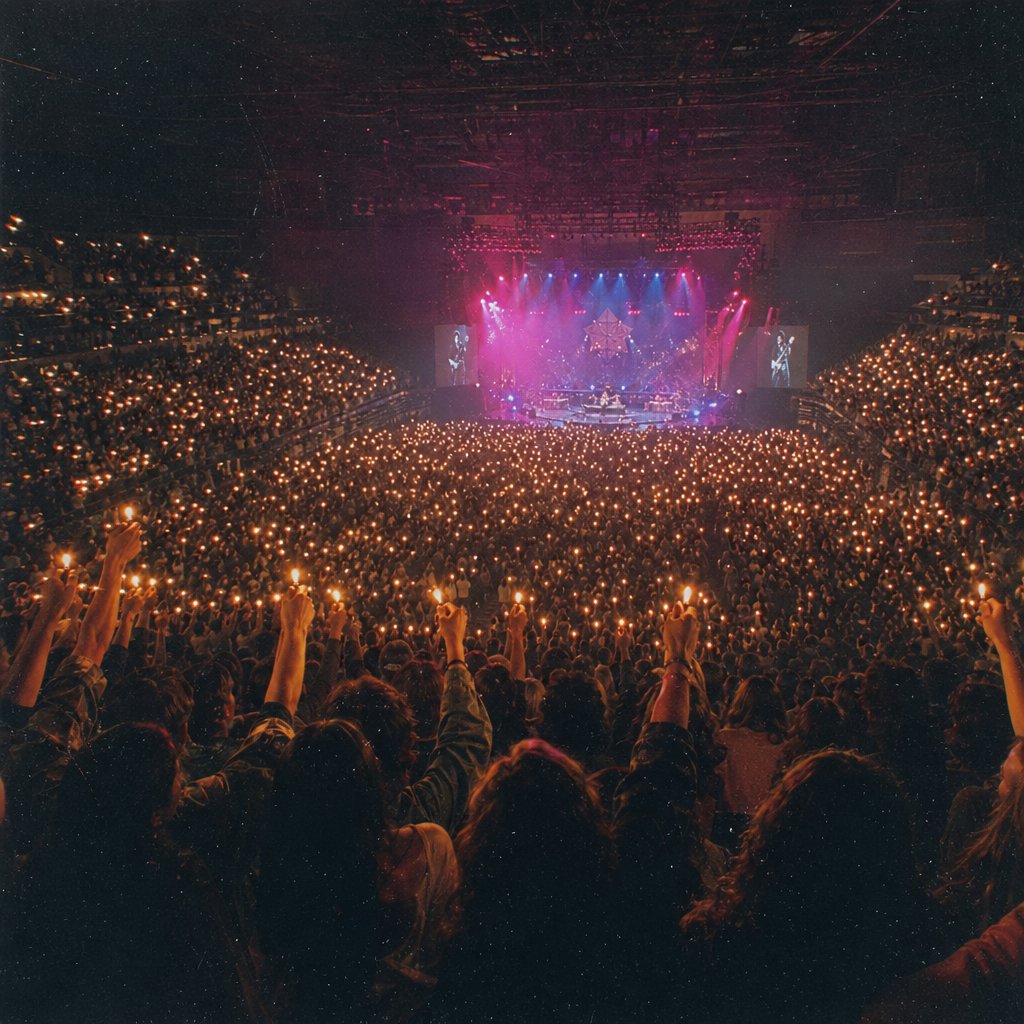
These popular ballads weren't just songs. They were events — the moment in a concert when the lights went down, the lighters came out, and an arena full of people who came for the riffs stayed for the feelings. By the end of the decade, the power ballad had become so commercially reliable that it was practically a required track on every hard rock album.
That dominance, though, carried a cost. By the early 1990s, a generation of musicians raised on punk ethics and underground credibility looked at the polished excess of the power ballad era and decided to tear the whole thing down — or at least rebuild it from scratch.
How the 1990s Reinvented Rock Ballad Songs
Grunge didn't kill the rock ballad. It just stripped it naked, washed off the hairspray, and handed it a flannel shirt. By the time Nirvana's Nevermind rewired mainstream rock in late 1991, the glossy power ballad formula — layered synths, reverb-soaked solos, triumphant key changes — suddenly sounded like a relic. But the emotional impulse behind those songs? That survived. It just found a rawer, more honest voice.
Grunge and Alternative Reinvent the Form
Bands in the early-to-mid 1990s approached vulnerability differently than their predecessors. Where Poison built "Every Rose Has Its Thorn" on a polished acoustic strum and a singalong chorus — lyrics every rose has its thorn fan can recite from memory — Alice in Chains delivered "Nutshell" with a hollow, almost skeletal acoustic arrangement and Layne Staley's voice cracking under the weight of genuine despair. The production philosophy shifted just as dramatically. As mix engineer Mike Nikou explains, 90s rock moved away from "the effects soaked, reverby-sound of the 80's in search of a more organic sound," with bands often cutting tracks live in the studio so that "subtle imperfections were often a part of the final mix."
That rawness became the point. Pearl Jam's "Black" didn't build to a triumphant chorus — it built to Eddie Vedder howling wordlessly over a restrained band, the emotion too big for language. Guns N' Roses had already hinted at this shift with "Patience," a song whose patience lyrics showed that even a Sunset Strip band could trade arena bombast for a whistled intro and acoustic intimacy. The ballad songs of this era traded soaring choruses for brooding introspection, and the vocalists stopped trying to sound perfect. Cracked notes, strained whispers, pained growls — these became features, not flaws.
Even the guitar tone changed. The bright, chorus-effected leads of the 1980s gave way to what Nikou describes as a focus on "punchy mids" and aggressive high-pass filtering, producing a darker, more visceral sound where vocals sat further back in the mix rather than floating pristinely on top. A ballad didn't have to sparkle anymore. It just had to feel real.
Post-Grunge and the Late 1990s Revival
By the late 1990s, a second wave of bands began pulling the rock ballad back toward mainstream accessibility — without fully reverting to 1980s polish. Post-grunge acts like Live, Fuel, and Creed kept the emotional honesty of the grunge era but reintroduced bigger melodic hooks and more radio-friendly structures. Live's "Lightning Crashes" combined tenderness with anthemic impulses in a way that felt genuinely new. Fuel's "Hemorrhage (In My Hands)," as Consequence notes, "truly transcended the genre and became a genuinely moving document" — a post-grunge ballad that carried real grief without hiding behind production tricks.
Staind's "It's Been Awhile" became a turn-of-the-century rock ballad hit built on regret and second chances, while Bush's "Glycerine" — described by critics as "one of the ultimate post-grunge ballads" — proved that a warm guitar, weepy strings, and a tarnished voice could be just as devastating as any love ballad lyrics draped in 1980s reverb. These songs bridged the gap between the polished power ballad and the stripped-down grunge aesthetic, creating a template that would carry the form into the next decade.
Here's what changed between the two eras, side by side:
- Production style — 1980s: lush, layered, reverb-heavy, studio-polished; 1990s: raw, dry, often recorded live with intentional imperfections
- Lyrical tone — 1980s: romantic longing, triumphant heartbreak; 1990s: introspective pain, self-doubt, unresolved grief
- Vocal approach — 1980s: soaring, controlled, aiming for power and clarity; 1990s: strained, cracked, prioritizing emotional authenticity over technical polish
- Guitar tone — 1980s: bright, chorus-effected, reverb-drenched leads; 1990s: darker, mid-focused, acoustic rawness or thick distortion with less effects processing
- Song structure — 1980s: dramatic builds to anthemic final choruses with key changes; 1990s: more restrained dynamics, sometimes refusing the big payoff entirely
The 1990s proved that the rock ballad wasn't a formula locked to one decade's production style — it was an emotional impulse flexible enough to survive a complete cultural reset. That adaptability would be tested again as the genre fragmented across new subgenres and scenes in the years that followed.
Modern Rock Ballads and the Genre's Ongoing Evolution
That fragmentation didn't slow down after the 1990s — it accelerated. As rock splintered into emo, pop-punk, indie, and post-hardcore camps in the 2000s, the classic power ballad format lost its grip on mainstream radio. But the emotional DNA at the heart of rock ballads didn't vanish. It mutated, found new hosts, and kept doing what it always did: making people feel something.
Rock Ballads in the 2000s and 2010s
The emo explosion of the mid-2000s was, in many ways, a rock ballad movement in disguise. When My Chemical Romance, Fall Out Boy, and Paramore broke into the mainstream around 2005, they brought a generation of songs built on the same vulnerability-meets-volume formula that powered every great rock ballad before them. My Chemical Romance's "I Don't Love You" followed the quiet-to-loud arc almost textbook-style. Fall Out Boy's "Thnks fr th Mmrs" wrapped heartbreak in pop-punk hooks. These were ballads that are songs your older sibling might have cried to in their bedroom — just with eyeliner and a different haircut.
As Gym Class Heroes co-founder Travie McCoy told Rolling Stone, the energy of that era came from a deeply emotional place: "We were just boys that didn't grow up pretty, that wanted to feel pretty, and the music made us feel pretty." That outcast vulnerability is the same fuel that powered every rock ballad song from "Every Rose Has Its Thorn" to "Black" — just channeled through a different scene.
Meanwhile, arena-rock revivalists like Evanescence and Nickelback kept the more traditional power ballad format alive on mainstream radio. "My Immortal" was essentially a piano-driven rock ballad stripped to its emotional skeleton, while bands like Three Days Grace and Breaking Benjamin carried the heavy-verse-to-soaring-chorus structure into the post-grunge 2010s. Indie rock contributed its own version too — acts like The National and Band of Horses wrote slow, emotionally devastating guitar songs that functioned as rock ballads in everything but name.
The Rock Ballad Tradition Today
So do rock ballads still exist? Absolutely — they've just stopped announcing themselves. Billboard noted that the definition of rock music "gets stickier every year," and the same applies to the ballad form within it. Soccer Mommy's "Circle the Drain" evokes the acoustic melancholy of late-90s alt-rock. Phoebe Bridgers builds songs on sparse, delicate production that erupts into walls of distorted guitar. Beabadoobee channels 90s grunge dynamics with a quiet-LOUD-quiet pattern that tips directly to the ballad tradition. These artists don't call their songs "rock ballad songs," but the structural and emotional blueprint is unmistakable.
The global picture matters here too. Rock ballads were never exclusively a Western, English-language phenomenon. Japanese rock acts, Latin American bands, and European metal groups have all carried the tradition forward with their own regional inflections. The form travels because its emotional core is universal — longing, loss, and the catharsis of a loud chorus don't require translation.
The rock ballad's emotional core — vulnerability amplified by volume — transcends any single era, scene, or language. The form doesn't die; it just finds the next generation willing to play softly before playing loud.
With so many variations scattered across decades and subgenres, though, it helps to have a clear framework for telling them apart. Not all rock ballads are built the same way, and the differences between a power ballad, an acoustic ballad, and a metal ballad run deeper than volume.
Rock Ballad Subgenres
The terms get thrown around loosely — "power ballad," "acoustic ballad," "rock ballad" — as if they all mean the same thing. They don't. Each subgenre carries its own sonic fingerprint, instrumentation choices, and emotional strategy. Understanding those differences is the key to hearing why a song like "Open Arms" by Journey (lyrics that read like a plea for reconciliation) feels fundamentally different from Skid Row's "Wasted Time" (lyrics steeped in regret and hard-road exhaustion), even though both qualify as rock ballads.
Power Ballads vs. Acoustic Ballads
A power ballad is built for scale. It starts soft — maybe a piano, maybe a clean guitar — but it's always heading somewhere big. Full-band arrangements, layered guitars, anthemic choruses designed to fill arenas. The dynamic build is the whole point: restrained verses give way to a chorus that lifts the roof. Think of the escalation David Metzer describes in his seminal study on power ballads — "a musical formula based on constant escalation" paired with "sentimental themes and ploys." That's the power ballad in a sentence.
Acoustic ballads take the opposite approach. They stay stripped-down throughout — voice and acoustic guitar, maybe a string arrangement, minimal production. The emotional weight comes from intimacy rather than volume. When Extreme released "More Than Words," the band literally turned off their amplifiers in the music video to signal the departure from their usual sound. As guitarist Nuno Bettencourt recalled, "there was no acoustic music" on rock radio at the time — the song's stripped-back approach was a genuine risk, not a formula. Acoustic ballads prove that sometimes the quietest song on an album hits the hardest.
Blues-Rock Ballads and Metal Ballads
Blues-rock ballads draw from a different well entirely. You'll hear pentatonic guitar phrasing, bent notes that ache, and a vocal style rooted in blues tradition — rawer, grittier, less concerned with hitting a perfect note than with making every note mean something. The tempo tends to sit in a slow shuffle or 12/8 feel rather than the straight-ahead 4/4 of a power ballad. Aerosmith's catalog lives in this space — their ballads never stray far from the blues DNA that shaped the band's sound from the beginning, which is partly why a song like "Dream On" still feels organic rather than calculated.
Metal ballads, on the other hand, thrive on contrast. The gap between the soft verse and the crushing chorus is wider and more dramatic than in any other subgenre. When Metallica drops from a whispered clean guitar into a wall of distortion, or when Scorpions shift from a delicate arpeggio into a full-band roar, the emotional impact comes from that sheer distance between quiet and loud. Metal ballads also tend toward darker lyrical territory — grief, existential struggle, mortality — rather than the romantic longing that dominates power ballads. The result is some of the most emotionally intense music in the genre, even if metal purists have historically been ambivalent about acknowledging it.
Soft Rock and Pop-Rock Crossovers
Here's where the line gets blurry. Soft rock, as MasterClass defines it, "emphasizes pop hooks, pristine studio production, and pleasing sonic aesthetics" — and some of those qualities overlap with rock ballads. A band like Chicago transitioned from horn-driven jazz-rock into soft rock love songs during the 1980s, producing tracks that sat right on the border. Good love rock songs from that era often straddled both camps.
So what keeps a song on the rock ballad side of the line? Three things: instrumentation that retains rock edge (distorted guitars, even briefly), vocal delivery with grit or dynamic range beyond polished smoothness, and a dynamic arc that includes at least one moment of genuine intensity. If a slow song stays smooth and even from start to finish — no build, no eruption, no moment where the band leans in — it's probably soft rock. If it makes you hold your breath before the chorus drops, it's a rock ballad. Any album REO Speedwagon released in the early 1980s illustrates this tension perfectly — tracks like "Keep On Loving You" carried enough guitar muscle and vocal urgency to stay firmly in rock ballad territory, even as the production leaned toward pop accessibility.
| Subgenre | Defining Characteristics | Typical Instrumentation | Representative Style |
|---|---|---|---|
| Power Ballad | Dramatic quiet-to-loud build, anthemic chorus, arena-scale dynamics | Electric guitar (clean to distorted), keyboards, full drum kit, layered production | Bon Jovi, Scorpions, Foreigner |
| Acoustic Ballad | Stripped-down throughout, intimacy over volume, minimal arrangement | Acoustic guitar, voice, occasional strings or light percussion | Extreme, Tesla, early Poison |
| Blues-Rock Ballad | Pentatonic guitar phrasing, shuffle or 12/8 feel, raw vocal delivery | Electric guitar (blues tone), bass, drums, sometimes organ or piano | Aerosmith, Whitesnake, Gary Moore |
| Metal Ballad | Extreme dynamic contrast, darker lyrical themes, heavy climax sections | Clean-to-distorted electric guitar, bass, drums, sometimes orchestral elements | Metallica, Scorpions, Evanescence |
| Soft Rock / Pop-Rock Crossover | Polished production, pop hooks, less dynamic contrast, smoother vocal delivery | Electric and acoustic guitar, keyboards, drum machine or light kit, synths | Chicago, REO Speedwagon, Bryan Adams |
With these distinctions in place, you can listen to any rock ballad and place it on the map — hearing not just what it is, but what tradition it's drawing from. That framework makes the genre's essential songs easier to appreciate, especially when you trace them across eras and hear how each subgenre shaped the tracks that defined rock's emotional side.
Essential Rock Ballads Every Fan Should Know
Knowing the subgenres is one thing. Hearing them in action is another. The songs below aren't ranked — they're organized by era, because a rock ballad from 1975 and one from 2003 are doing fundamentally different things, even when they share the same emotional DNA. Each entry earns its spot not just for popularity, but for what it contributed to the ballad rock tradition.
Essential Rock Ballads of the 1970s and 1980s
This is where the template was written and then perfected. These songs with ballads at their core shaped everything that followed.
- Aerosmith — "Dream On" (1973): The slow-build blueprint. Steven Tyler's vocal escalation from a whisper to a scream became Aerosmith's breakthrough track and proved that a ballad could be a rock band's calling card.
- Styx — "Lady" (1973): Dennis DeYoung wrote it for his wife, and it nearly ended up forgotten. A Chicago DJ rescued it from obscurity, and the lyrics to Styx's "Lady" became the foundation for what critics would later call the first true power ballad.
- Led Zeppelin — "Stairway to Heaven" (1971): It stretches the definition of a ballad to its breaking point — folk intro, hard rock climax, one of the greatest solos ever recorded. Collider ranks it the greatest classic rock ballad of all time, and it's hard to argue.
- Journey — "Faithfully" (1983): Jonathan Cain wrote it on a napkin on the tour bus. The opening piano line alone is enough to make eyes swell, and the song captures the emotional cost of life on the road better than anything before or since.
- Scorpions — "Wind of Change" (1991): More than a love song — it soundtracked the fall of the Berlin Wall. Klaus Meine's whistled intro became a symbol of political hope, carrying the rock ballad into territory no one expected.
- Heart — "Alone" (1987): Ann Wilson's vocal performance on this track is volcanic. Ultimate Classic Rock placed it second among all power ballads ever recorded, and the combination of Nancy Wilson's harmonies with that keyboard hook remains untouchable.
- Bon Jovi — "Bed of Roses" (1993): Where "Always" went for epic sweep, the Bon Jovi "Bed of Roses" lyrics offered something more intimate — a late-night confession written in a hotel room, soaked in loneliness and longing.
- Poison — "Every Rose Has Its Thorn" (1988): Bret Michaels wrote it on a yellow legal pad after a heartbreaking phone call from the road. It hit No. 1 and became the defining glam metal ballad — proof that even the flashiest bands could deliver genuine vulnerability.
- Saigon Kick — "Love Is on the Way" (1992): Often overlooked alongside flashier peers, the Saigon Kick "Love Is on the Way" lyrics delivered one of the era's most melodically pure ballads. The band became one of the memorable one hit wonders of all time, but what a hit it was.
Essential Rock Ballads of the 1990s to Today
The genre didn't freeze in the 1980s. These tracks show how the form evolved, fractured, and kept finding new ways to make a guitar cry.
- Pearl Jam — "Black" (1991): No official single release, no polished chorus — just Eddie Vedder's voice breaking apart over a restrained band. It redefined what a rock ballad could sound like by refusing every convention of the form.
- Guns N' Roses — "November Rain" (1991): Nine minutes of orchestral ambition, a Slash solo in the rain, and a music video that cost more than most indie films. It became the high water mark for hard rock, and nothing since has matched its scope.
- Metallica — "Nothing Else Matters" (1991): James Hetfield almost didn't show it to the band because he thought it was too personal. It became one of the most-streamed rock songs in history and proved that thrash metal and tenderness could coexist.
- Alice in Chains — "Nutshell" (1994): Skeletal acoustic arrangement, Layne Staley's haunted vocal, and lyrics that feel like staring into an abyss. This is the grunge ballad at its most devastating.
- Staind — "It's Been Awhile" (2001): Built on regret and second chances, it bridged the gap between post-grunge heaviness and mainstream radio accessibility, becoming one of the defining rock ballads of the early 2000s.
- Evanescence — "My Immortal" (2003): Amy Lee's piano-driven vocal showcase stripped the rock ballad to its emotional skeleton. The song crossed genre lines entirely, reaching listeners who'd never have picked up a rock album otherwise.
- My Chemical Romance — "I Don't Love You" (2006): The emo generation's answer to the classic power ballad — quiet verses, a building chorus, and a vocal delivery that balanced theatrical flair with genuine heartbreak.
- Nothing But Thieves — "Amsterdam" (2015): Proof that the tradition lives on. Conor Mason's falsetto and the song's slow-burn dynamics carry the same quiet-to-loud DNA that powered every entry above it on this list.
| Era | Song | Why It Matters |
|---|---|---|
| 1970s | Aerosmith — "Dream On" | Established the slow-build vocal escalation as a rock ballad signature |
| 1970s | Styx — "Lady" | Widely regarded as the first true power ballad |
| 1970s | Led Zeppelin — "Stairway to Heaven" | Stretched the ballad form into an eight-minute epic that defined a generation |
| 1980s | Journey — "Faithfully" | Captured the emotional toll of touring life with an iconic piano intro |
| 1980s | Scorpions — "Wind of Change" | Turned a rock ballad into a global political anthem |
| 1980s | Heart — "Alone" | Ann Wilson's vocal performance set the standard for power ballad singing |
| 1990s | Bon Jovi — "Bed of Roses" | Intimate hotel-room confession that balanced arena scale with personal vulnerability |
| 1980s | Poison — "Every Rose Has Its Thorn" | No. 1 hit that proved glam metal could deliver genuine emotional weight |
| 1990s | Saigon Kick — "Love Is on the Way" | Melodically pure ballad from an underrated act |
| 1990s | Pearl Jam — "Black" | Redefined the rock ballad by stripping away every commercial convention |
| 1990s | Guns N' Roses — "November Rain" | The most ambitious rock ballad ever produced — orchestral, cinematic, unrepeatable |
| 1990s | Metallica — "Nothing Else Matters" | Brought vulnerability to thrash metal and became one of rock's most-streamed songs |
| 1990s | Alice in Chains — "Nutshell" | The grunge ballad at its rawest and most emotionally devastating |
| 2000s | Staind — "It's Been Awhile" | Bridged post-grunge heaviness with mainstream radio balladry |
| 2000s | Evanescence — "My Immortal" | Piano-driven crossover hit that expanded the rock ballad's audience |
| 2000s | My Chemical Romance — "I Don't Love You" | Carried the power ballad structure into the emo era |
| 2010s | Nothing But Thieves — "Amsterdam" | Proof that the quiet-to-loud ballad tradition continues in contemporary rock |
Listening through this list, you'll notice something: every era produced its own version of the same emotional impulse — a slow song that builds, a voice that breaks, a guitar that says what words can't. If that impulse hits you and you want to try channeling it into something of your own, MakeBestMusic's AI Song Generator lets you select a rock ballad mood and style, then generates an original royalty-free track in seconds — no instruments or production skills required. It's a way to turn everything you've absorbed about the genre into a starting point for your own song.
Of course, knowing which songs matter is only half the picture. The real question is whether you can take the structural ingredients behind these tracks — the arc, the solo, the lyrical vulnerability — and use them to create something new.
How to Create Your Own Rock Ballad
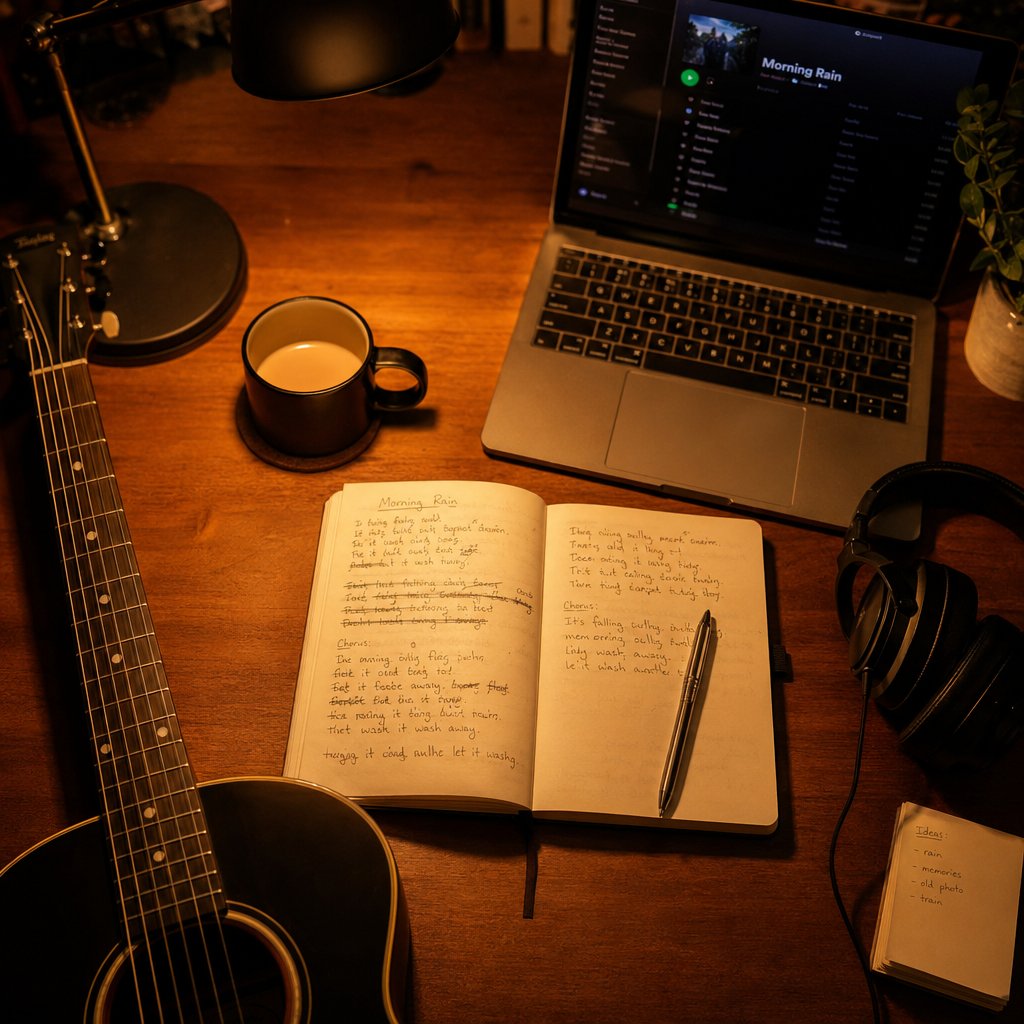
You've heard the greatest rock ballads. You understand the structure, the dynamics, the way a guitar solo can say what lyrics can't. That knowledge isn't just for listening — it's a songwriting toolkit. Whether you pick up an acoustic guitar or open a browser tab, every ingredient you need to write a rock ballad is already in your head.
Key Ingredients for Writing a Rock Ballad
Think of this as your creation checklist — the elements that separate a generic slow song from a real rock ballad:
- The quiet-to-loud dynamic arc — start sparse and intimate, build toward a full-band climax
- A memorable melodic hook in the chorus that listeners can sing back after one listen
- Vulnerable, direct lyrics — lost love, longing, redemption, or any emotion too big for casual conversation
- Dynamic vocal delivery that shifts between whispered restraint and full-throated power
- An emotionally expressive guitar solo that functions as a second voice, not a technical showcase
- A final chorus that delivers maximum intensity — modulate up a half-step, double the guitars, let everything open up
Every track on any list of top rock ballads nails most of these elements. KISS understood it when Peter Criss delivered the song "Beth" — a candlelit ballad from a band known for fire-breathing theatrics. That contrast between a band's identity and a ballad's tenderness is part of what makes the form so powerful.
Tools and Approaches for Creating Rock Ballads
There's no single right way to write one. If you want to experiment immediately without needing instruments or production experience, MakeBestMusic's AI Song Generator lets you select a rock ballad genre, set an emotional mood, and generate an original royalty-free track in seconds. It's the fastest path from inspiration to a finished demo — you bring the feeling, the tool handles the arrangement.
Traditional songwriting remains just as valid. Grab an acoustic guitar, find a simple chord progression (I-vi-IV-V works as a starting point, as Ultimate Guitar's songwriting guide suggests), and build from there. Hum a melody over the chords before writing a single word. Tools like Hookpad can help you sketch chord progressions and melodies even if you don't play an instrument, using database-driven suggestions to guide your choices.
Collaboration is another path — pairing a lyricist with a guitarist, or feeding an AI-generated demo into a live session where real musicians add the grit and imperfection that make a rock ballad breathe. The best results often come from combining approaches: use AI to prototype a structure, then reshape it with human instinct.
The rock ballad tradition lives on through every new song created in the genre — whether written with a guitar in a bedroom, shaped in a rehearsal room, or sparked by an AI tool at midnight. The form only asks for one thing: that you mean it.
