

Inside the Dance Hall Where Tejano Comes Alive
What It Feels Like When the Accordion Hits
Imagine walking into a South Texas dance hall on a Saturday night. The accordion squeezes out its first bright notes, the bajo sexto answers with a deep, rolling strum, and a polka beat kicks in so hard you feel it in your chest before your ears fully register it. Couples spin across a worn wooden floor. A cumbia rhythm shifts the room's gravity, pulling wallflowers out of their chairs and into the current. This is tejano music, and it doesn't wait for you to be ready.
It's not a museum piece. It's not a relic. It's a living, breathing force that has soundtracked quinceañeras, backyard cookouts, and packed arenas across Texas for over a century. As one writer for The Baylor Lariat put it, the music is a melting pot of Colombian cumbia, Cuban boleros, Texas country, and German accordion polka, and the dance hall is the table where it's served.
"There aren't enough of us preserving our history." — Veronique Medrano, Tejano and conjunto artist and music archivist
Why Tejano Music Deserves Your Attention
Jazz was born in New Orleans. Blues crawled out of the Mississippi Delta. Country took shape in Appalachian hollers, and zydeco found its groove in Louisiana's Creole communities. Tejano music belongs in that same conversation: a uniquely American art form forged from the collision of Mexican folk traditions and European immigrant sounds along the Texas-Mexico border. Yet it rarely gets that recognition outside the communities that created it.
This guide is here to change that. You'll find the full story ahead: the roots stretching back to the 1920s, the legendary artists who shaped the genre, the Texas cities that gave it distinct regional flavors, the real differences between Tejano, Norteno, and Tex-Mex, and where the sound is headed today. Whether you're a longtime listener, a curious newcomer, or someone who just felt something when that accordion hit, you're in the right place.
What Tejano Music Actually Means and Where It Comes From
So what is Tejano music, exactly? It's a genre rooted in the Mexican-American communities of South Texas that fuses traditional Mexican folk forms — corridos, rancheras, cumbias — with American pop, rock, country, R&B, and the polka and waltz traditions brought to Texas by German, Polish, and Czech immigrants in the mid-19th century. The result is something that sounds like no single tradition on its own: a popular music style that pulls from two countries and multiple continents, yet belongs entirely to the Texas-Mexico borderlands.
The Meaning Behind the Word Tejano
The word itself is simple. "Tejano" is Spanish for "Texan." But it carries more weight than a geographic label. Before it ever described a music genre, it described a people — the Mexican-Americans whose families have lived in Texas for generations, many since before the border even existed in its current form. Understanding that distinction matters. "Tejano" as a cultural identity speaks to a community shaped by two worlds. "Tejano music" is the sound that community created when those worlds collided on dance floors and in recording studios. You wouldn't learn how to paint a room by studying only one wall, and you can't understand this genre by looking at only one of its cultural halves.
The Musical DNA of Tejano
The genre's DNA is genuinely multicultural. On one strand, you'll find the melodic traditions of Mexican folk music — the storytelling corrido, the romantic ranchera, the danceable cumbia. On the other, there's the rhythmic influence of Central European immigrants who settled across Texas in the 1800s, bringing accordions, polka beats, and waltz time signatures with them. Layer in the sounds Mexican-American musicians absorbed from American radio — rock and roll, soul, country, blues — and you get a genre that's constantly absorbing and reinventing. Much like learning how to build a pc, every component matters, and the final product only works when all the pieces fit together.
Conjunto and Orquesta as Twin Pillars
Two foundational styles anchor the genre. Conjunto is the older, rawer form — accordion-driven, working-class, born in the dance halls and cantinas of the Rio Grande Valley. It emerged in the 1920s and '30s with pioneers like accordionist Narciso Martinez leading the way. The sound is lean and direct: an accordion carrying the melody, a bajo sexto providing rhythmic depth, bass holding the bottom, and drums driving the beat.
Orquesta, or banda, took shape in the 1930s as a more urban, upwardly mobile counterpart. Inspired by American swing and big band music, orquesta Tejana groups like La Orquesta de Beto Villa built their sound around brass and woodwinds, creating a more polished, horn-driven feel. Think of conjunto and orquesta as two sides of the same coin — one blue-collar, one dressed up, both unmistakably Tejano. A third form, grupo, later emerged in the 1960s, replacing the accordion with keyboards and synthesizers and resembling a modern rock band setup. It's the style that eventually launched Selena into the stratosphere.
Across all three forms, you'll encounter a core set of instruments that define the genre's palette:
- Accordion (button or keyboard style) — the signature melodic voice
- Bajo sexto — a 12-string bass guitar that anchors the rhythm
- Drums — from simple kits in early conjunto to full modern setups
- Electric bass — replacing the original acoustic upright
- Keyboards and synthesizers — central to grupo and modern Tejano
- Horns (trumpets, saxophones) — the backbone of orquesta arrangements
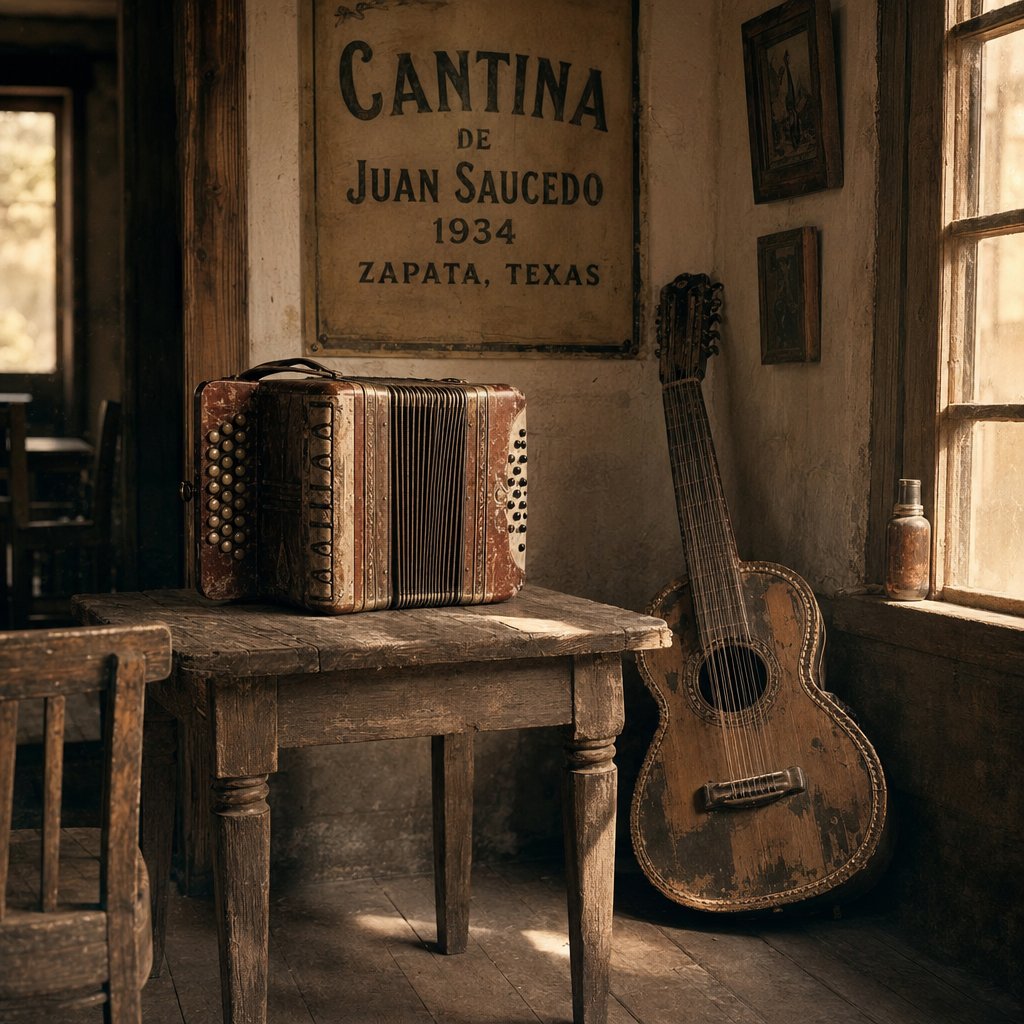
These instruments aren't just tools. They're cultural markers. The accordion tells you something about European immigration to Texas. The bajo sexto connects you to Mexican folk tradition. The synthesizer reflects a generation of Mexican-American kids who grew up on American pop radio and made it their own. Every layer of instrumentation maps onto a chapter of borderland history — and those chapters are worth reading in full.
A Decade-by-Decade Journey Through Tejano History
Every instrument in the Tejano toolkit arrived with a story attached — and those stories stretch back more than a century. Tracing the genre's arc from dusty South Texas dance halls to Grammy stages isn't just an exercise in music history. It's a window into how a community navigated immigration, class struggle, political awakening, and commercial ambition, all while keeping the dance floor packed.
The Roots — Narciso Martinez and the Birth of Conjunto
In the 1920s and '30s, cheap one-row accordions flooded the Texas-Mexico border region, and working-class Tejano musicians grabbed them. Rural social gatherings called fandangos — part dance, part feast, part celebration — became the proving ground for a new sound. Narciso Martinez, known as "El Huracan del Valle" for his virtuosity, paired the two-row accordion with the bajo sexto and essentially invented the modern conjunto. Around the same time, Lydia Mendoza — "La Alondra de la Frontera" — became one of the first Tejana artists to record commercially, proving the music could travel beyond the dance hall circuit. Santiago Jimenez Sr. added the tololoche (contrabass) in San Antonio, while Valerio Longoria later introduced drums and accordion-accompanied vocals, shaping the four-piece conjunto format that still defines the style.
These weren't polished studio acts. Many of these musicians worked as fieldworkers and laborers, composing songs in their free time and playing the "taco circuit" — public dances organized along the roads that Texas-Mexican cottonpickers followed to the harvests. The music was a night routine for communities with few other outlets for joy, and it carried the emotional weight of a people building identity in the margins.
The Chicano Movement and Tejano's Political Voice
By the 1950s and '60s, rock and roll was reshaping American music, and Tejano artists absorbed the energy. Orquesta Tejana groups added horns and big-band arrangements, appealing to a more urban, upwardly mobile audience. Innovators like Paulino Bernal augmented the conjunto with three-part vocals, while Esteban Jordan blended jazz into his accordion playing, challenging the genre's rigid polka framework.
Then the 1960s and '70s Chicano Movement changed the conversation entirely. Political consciousness seeped into the lyrics and the attitude. The music became a way to how to start a conversation about identity, civil rights, and cultural pride within Mexican-American communities. Artists like Little Joe Hernandez infused their orquesta sound with bilingual lyrics and social commentary, turning dance music into a vehicle for political expression. The genre wasn't just entertainment anymore — it was a statement.
The Golden Era of the 1980s and 1990s
The commercial explosion arrived in the 1980s and peaked in the '90s. Mazz, formed in 1978 in Brownsville by Joe Lopez and Jimmy Gonzalez, pioneered the use of synthesizers in Tejano, fusing traditional cumbias and polkas with rock and electronic elements that younger audiences craved. Their signing with Capitol/EMI Latin in 1989 signaled that major labels saw real money in the genre. La Mafia brought a slick, pop-influenced sound from Houston. Emilio Navaira bridged Tejano and country. And Selena Quintanilla — well, she changed everything, but that's a story that deserves its own spotlight.
The Tejano Music Awards, organized by the Texas Talent Musicians Association since 1981, became the genre's annual showcase, with acts like Mazz sweeping categories year after year. Labels like EMI Latin and Freddie Records invested heavily, and Tejano artists were filling arenas and drawing crowds of 50,000 in Monterrey, Mexico. For a genre born in cotton-field dance halls, the scale was staggering — like watching someone fill in coloring books with broad, confident strokes where there had only been faint outlines before.
| Era | Key Artists | Defining Sound | Cultural Context |
|---|---|---|---|
| 1920s-1940s | Narciso Martinez, Lydia Mendoza, Santiago Jimenez Sr. | Accordion-bajo sexto duets, rancheras, early polkas | Working-class fandangos, taco circuit, rural dance halls |
| 1940s-1950s | Valerio Longoria, Beto Villa | Drums and vocals added to conjunto; orquesta Tejana emerges | Post-WWII urbanization, growing musical sophistication |
| 1960s-1970s | Little Joe Hernandez, Paulino Bernal, Esteban Jordan | Jazz-influenced conjunto, bilingual orquesta, rock and roll fusion | Chicano Movement, civil rights activism, cultural pride |
| 1980s-1990s | Selena, Mazz, La Mafia, Emilio Navaira | Synthesizer-driven grupo, pop crossover, polished production | Major label investment, Tejano Music Awards, arena-scale concerts |
This golden era didn't last forever. The genre's commercial peak carried the seeds of a complicated aftermath — one shaped by tragedy, industry shifts, and the question of what comes next when a movement's brightest star is suddenly gone.
Legendary Tejano Artists Who Shaped the Genre
That golden era didn't build itself. Behind every decade of growth stood individual artists whose creative risks redefined what the genre could be, who it could reach, and how seriously the wider music industry would take it. These aren't just names on a timeline — they're the architects who laid the groundwork, knocked down walls, and drew up entirely new landscaping ideas for a genre that kept outgrowing its borders.
Selena Quintanilla and the Crossover That Changed Everything
No artist in the genre's history carried more weight on her shoulders — or wore it more lightly — than Selena Quintanilla. Born in Lake Jackson, Texas, and raised in Corpus Christi, she entered a male-dominated scene as a teenager fronting her family band, Los Dinos. By the early '90s, she wasn't just competing — she was rewriting the rules.
Her 1993 live album, Selena Live!, won the Grammy for Best Mexican-American Album — the first time a female Tejano artist took the category. Her 1994 album Amor Prohibido cracked the top 30 on the all-genre Billboard 200 while topping both the Top Latin Albums and Regional Mexican Albums charts, spawning four number-one Hot Latin Songs hits. Her posthumous Dreaming of You debuted at number one on the Billboard 200, becoming the first predominantly Spanish-language album to accomplish that feat.
But Selena's impact went deeper than chart positions. As Billboard's Leila Cobo put it, "for the first time, a new generation of U.S.-born Mexican-Americans and Latinas overall had a star that they could intimately relate to at all levels." She was a fashion designer, a businesswoman, and a cultural force whose influence on artists from Jennifer Lopez to Becky G to Kali Uchis is direct and well-documented. Set a 15 minute timer and try to list everything she accomplished before the age of 23 — you'll run out of time before you run out of milestones.
Little Joe, Flaco Jimenez, and the Architects of Modern Tejano
If Selena was the genre's supernova, Little Joe Hernandez was its slow-burning sun. Established in 1959 as Little Joe and the Latinaires, his band evolved into Little Joe y La Familia — a name change reflecting his deepening commitment to the Chicano movement and his community's cultural struggles. During the 1970s, the group became the leading band of La Onda Chicana, fusing ranchero traditions with jazz, blues, rock, and country into what he called a capirotada — a musical salad. Their 1972 album Para la gente became a landmark, with tracks like "Las nubes" pioneering Spanglish code-switching in Tejano lyrics. Three Grammy wins and a Smithsonian Lifetime Legend Award later, Little Joe's legacy as the genre's great sophisticator is secure.
Flaco Jimenez took a different path to the same destination: global respect. A third-generation accordionist from San Antonio, Flaco didn't reinvent conjunto so much as prove it could stand alongside any music on Earth. His collaborations with Ry Cooder, the Rolling Stones, and Buck Owens introduced the accordion-driven sound to audiences who'd never heard of a bajo sexto. Multiple Grammy wins across decades cemented his role as conjunto's international ambassador — the musician who made the world pay attention to what South Texas dance halls already knew.
The Texas Tornados and Emilio Navaira's Crossover Legacy
In 1989, Flaco joined forces with Doug Sahm, Augie Meyers, and Freddy Fender to form the Texas Tornados — a supergroup that blended Tejano, country, rock, and blues into something irresistibly fun. Their self-titled debut won a Grammy, and suddenly a genre that mainstream America had largely ignored was getting radio play and festival slots nationwide. The Tornados proved that Tejano's musical DNA was compatible with just about everything.
Emilio Navaira pushed that compatibility even further. A charismatic vocalist who could deliver a cumbia and a country ballad with equal conviction, Emilio recorded in both English and Spanish, earning a devoted following in Nashville circles while never abandoning his Tejano roots. His ability to move between worlds — yummly blending flavors that shouldn't have worked together but absolutely did — made him one of the genre's most versatile ambassadors.
None of these careers happened in a vacuum. The Johnny Canales Show, which aired from 1983 to 2005 and reached 23 countries at its peak, served as the launchpad for many of these artists. As Tejano singer Veronique Medrano recalled, Johnny "was our biggest champion... He gave us a platform and a space to be the best version of ourselves and to showcase that with the world." Whether you were Selena performing in a cow-print outfit with Los Dinos or an unknown act who'd mailed in a two-song demo tape, the show was your shot.
- Selena Quintanilla — shattered the genre's commercial ceiling and became a lasting cultural icon for Latinx identity worldwide
- Narciso Martinez — invented the modern conjunto sound and established the accordion-bajo sexto pairing as the genre's foundation
- Little Joe Hernandez — elevated orquesta Tejana into a sophisticated, politically conscious art form during the Chicano Movement
- Flaco Jimenez — carried conjunto to international audiences through cross-genre collaborations and multiple Grammy wins
- Lydia Mendoza — broke ground as the first commercially recorded Tejana artist, proving women belonged at the center of the music
- Emilio Navaira — bridged Tejano and country, expanding the genre's reach into mainstream American markets
- Mazz — pioneered synthesizer-driven grupo Tejano and dominated the Tejano Music Awards throughout the '80s and '90s
- La Mafia — brought a polished, pop-influenced Houston sound that modernized the genre's production standards
Each of these artists answered a question the genre was asking at a specific moment in time. Yet one thread runs through nearly every era on that list: the women who fought hardest for their place on it often received the least credit — until they made it impossible to ignore them.
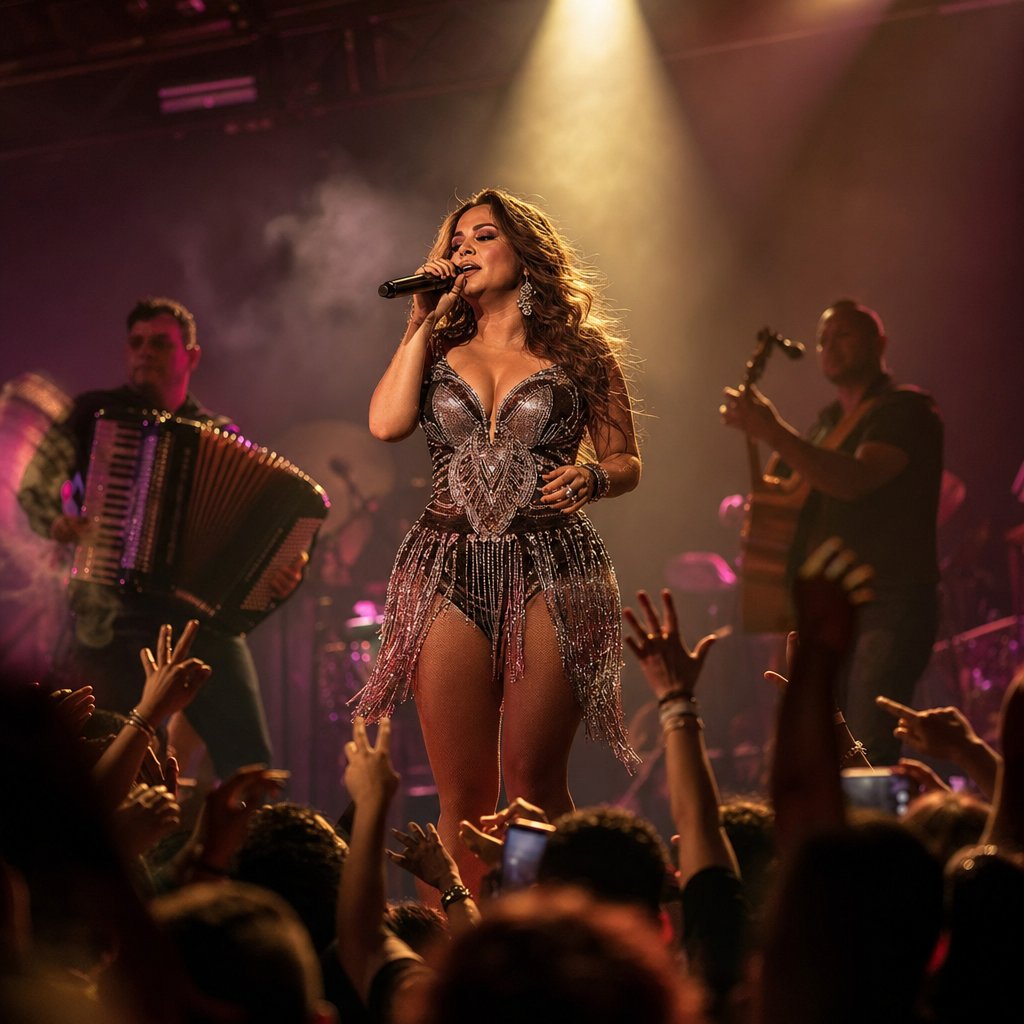
The Women Who Built and Transformed Tejano Music
Lydia Mendoza and Laura Canales — The First Queens of Tejano
Making it impossible to ignore them is exactly what they did — and it started long before Selena ever stepped on a stage. In the 1930s, when the genre was still finding its shape in South Texas cantinas and rural dance halls, Lydia Mendoza picked up a twelve-string guitar and carved a space where none existed for women. Known as "La Alondra de la Frontera" (The Lark of the Border), Mendoza is widely considered the mother of Tejano music. She recorded commercially at a time when the industry was almost entirely male, and her deep connection to the Mexican-American experience gave voice to a community that mainstream America wasn't listening to. Every tejana artist who followed walked a path she cleared.
Then came Laura Canales. During the 1970s and '80s, Canales broke barriers in a scene where women were still routinely relegated to backup vocals or dismissed altogether. She didn't just participate — she helped define the genre's sound during a pivotal era, earning the title "Queen of Tejano" years before anyone else wore that crown. As Tejano Nation put it, her presence created space where none existed, inspiring generations of women to step forward and claim their voice. Canales passed away in 2005, but her influence remains the gold standard that artists still measure themselves against.
How Selena Redefined What a Tejana Artist Could Be
Selena Quintanilla didn't just open a door for women in the genre — she kicked it off the hinges. Before her, female Tejano artists could be successful, but the industry still treated them as exceptions. Selena made the exception the rule. Her Grammy win, her record-breaking album sales, her fashion line, her business ventures — all of it proved that a tejana could be the biggest act in the room, period. Not the biggest female act. The biggest act.
What made her impact lasting wasn't just commercial dominance. It was visibility. Young Latinas across the country saw someone who looked like them, spoke like them, and moved between English and Spanish the way they did at home — and she was filling arenas. That representation mattered in ways that chart numbers can't fully capture. You could compare it to the cultural weight that certain Denzel Washington movies carry for Black audiences: the power of seeing yourself reflected at the highest level of an art form changes what feels possible.
Modern Tejana Artists Carrying the Torch
The generation that followed Selena didn't just inherit her spotlight — they expanded it. The 1980s and '90s produced a wave of powerful female voices who each brought something distinct to the genre:
- Elsa Garcia — earned four consecutive gold records and the title "The First Lady of Tejano"
- Shelly Lares — captivated audiences across the U.S. and northern Mexico with a distinctive, evolving style
- Patsy Torres — served as a mentor and guiding force for the next generation, particularly in San Antonio
- Elida Reyna — emerged in the '90s as an innovator who redefined what a tejana artist could sound like
- Stefani Montiel — remains active and unshaken, a symbol of perseverance in a genre where criticism and machismo have tested even the strongest
- Jennifer Pena — dubbed "The Princess of Tejano" by her fans, not by self-proclamation
Each of these women faced the same headwinds. The Tejano industry, like a loyal great pyrenees guarding old territory, could be fiercely protective of its established hierarchies — and those hierarchies were overwhelmingly male. Women fought to move from backup roles to headlining festivals, from novelty acts to award winners, from regional names to national ones. Every generation expanded the space for the next.
That expansion hasn't stopped. A new wave of rising female artists is now reshaping the genre's future. Destiny Navaira — niece of the late Emilio Navaira and a two-time Tejano Music Awards Female Vocalist of the Year — earned a Latin Grammy nomination for her album Dime Como Se Siente. Isabel Marie Sanchez, discovered by Abraham Quintanilla himself, has blended Tejano with pop influences since her teens. Gabriella Martinez, Monica Saldivar, and Savannah V are each pushing the genre's boundaries while staying rooted in its traditions. These aren't just talented singers. They're trailblazers proving that the future of this music is in very capable hands.
In Tejano, as one community voice noted, royalty is not declared — it is earned. And the women who earned it didn't just shape the genre's past. They built the foundation that every regional scene, every city, and every local dance hall still stands on.
Tejano vs. Norteno vs. Tex-Mex and How They Differ
That foundation — built by generations of artists across gender lines and regional scenes — is precisely what makes the genre its own thing. Yet one of the most common questions people ask is deceptively simple: what's the difference between Tejano, Norteno, and Tex-Mex? To an outsider, they can sound almost identical. Same accordion, same bajo sexto, same Spanish lyrics. But lumping them together is a bit like calling all campfire music the same just because you learned how to build a campfire and heard guitars at every one. The instruments overlap, but the soul behind them doesn't.
Tejano vs. Norteno — Same Accordion, Different Soul
Both styles were born in the Rio Grande borderlands around the turn of the 20th century. Both fused Czech and German polka traditions with Spanish-Mexican ranchero music. Both use the accordion, bajo sexto, electric bass, and drums as their core four-piece setup. So where's the split?
It comes down to rhythm, lyrics, and identity. As the Texas Observer documented, norteno tends to be faster with a more insistent beat, while conjunto — the traditional heart of Tejano — moves at a slower, polka-like pace. Norteno leans heavily on the corrido, an ancient ballad form that tells stories of real people and events, including the controversial narcocorridos about drug traffickers. Tejano conjunto, by contrast, is more likely to be instrumental, and when lyrics appear, they often center on love and heartbreak rather than narrative storytelling.
The biggest distinction, though, is cultural. Conjunto is Tejano — meaning it belongs to the Mexican-American communities who have lived in Texas for generations, many since before the border existed. Norteno is Mexican, rooted in the northern states of Mexico. As researcher Cristina Balli told the Observer, "Here we are making a big stink about the clear distinction between conjunto and norteno, and to an outsider it all sounds the same. The roots of the styles are so similar — and yet we are creating these rifts between them." For Tejanos, though, the distinction is running point on something deeper than musical preference. It's about preserving a regional identity that feels increasingly threatened.
Where Tex-Mex Fits in the Picture
If Tejano and norteno are specific genres, Tex-Mex is more of an umbrella. The Texas State Historical Association notes that "Tex-Mex" is a recently coined term related to, but not synonymous with, "Tejano." It can encompass conjunto, Tejano pop, and other border music styles without drawing hard lines between them. Think of it as a regional flavor label rather than a precise genre tag — useful shorthand, but too broad to capture the real differences underneath.
Where Tejano specifically absorbs American pop, rock, R&B, and country into its sound, and norteno stays closer to its Mexican folk roots, Tex-Mex simply describes music made in the cultural overlap zone of the Texas-Mexico border. It's the broadest circle in a Venn diagram where Tejano and norteno each occupy their own distinct space.
Why These Distinctions Matter for Listeners
You might wonder whether any of this matters if you're just looking for good music to dance to. It does — not because you need to pass a quiz, but because understanding context deepens the listening experience. Knowing that a conjunto track carries the weight of Tejano identity, or that a corrido follows a centuries-old Mexican storytelling tradition, changes how you hear it. These aren't interchangeable codes you can swap around like basketball zero codes in a game — each genre carries its own history, community, and emotional register.
| Category | Tejano | Norteno | Tex-Mex |
|---|---|---|---|
| Origin Region | South Texas (Mexican-American communities) | Northern Mexico (Nuevo Leon, Tamaulipas, Chihuahua) | Texas-Mexico border region (broad) |
| Core Instruments | Accordion, bajo sexto, bass, drums, keyboards, horns | Accordion, bajo sexto, bass, drums, tuba in some groups | Varies — encompasses instruments from both styles |
| Typical Rhythms | Polka, cumbia, waltz, bolero, pop and R&B grooves | Polka, corrido, ranchera, huapango with faster tempos | Mix of polka, cumbia, ranchera, and border folk rhythms |
| Lyrical Themes | Love, heartbreak, identity, bilingual themes | Corridos (narrative ballads), love, narcocorridos | Broad — love, storytelling, cultural life |
| Key Artists | Selena, Mazz, La Mafia, Little Joe, Flaco Jimenez | Ramon Ayala, Los Tigres del Norte, Intocable | Texas Tornados, Freddy Fender, Flaco Jimenez |
| Dance Styles | Cumbia, polka, waltz, quebradita | Polka, cumbia, zapateado | Cumbia, polka, and regional variations |
These distinctions aren't academic trivia. They reflect real tensions, real pride, and real communities fighting to keep their sound alive on airwaves increasingly dominated by homogenized programming. And nowhere are those fights more vivid than in the specific Texas cities and border towns where each flavor of the genre took root.
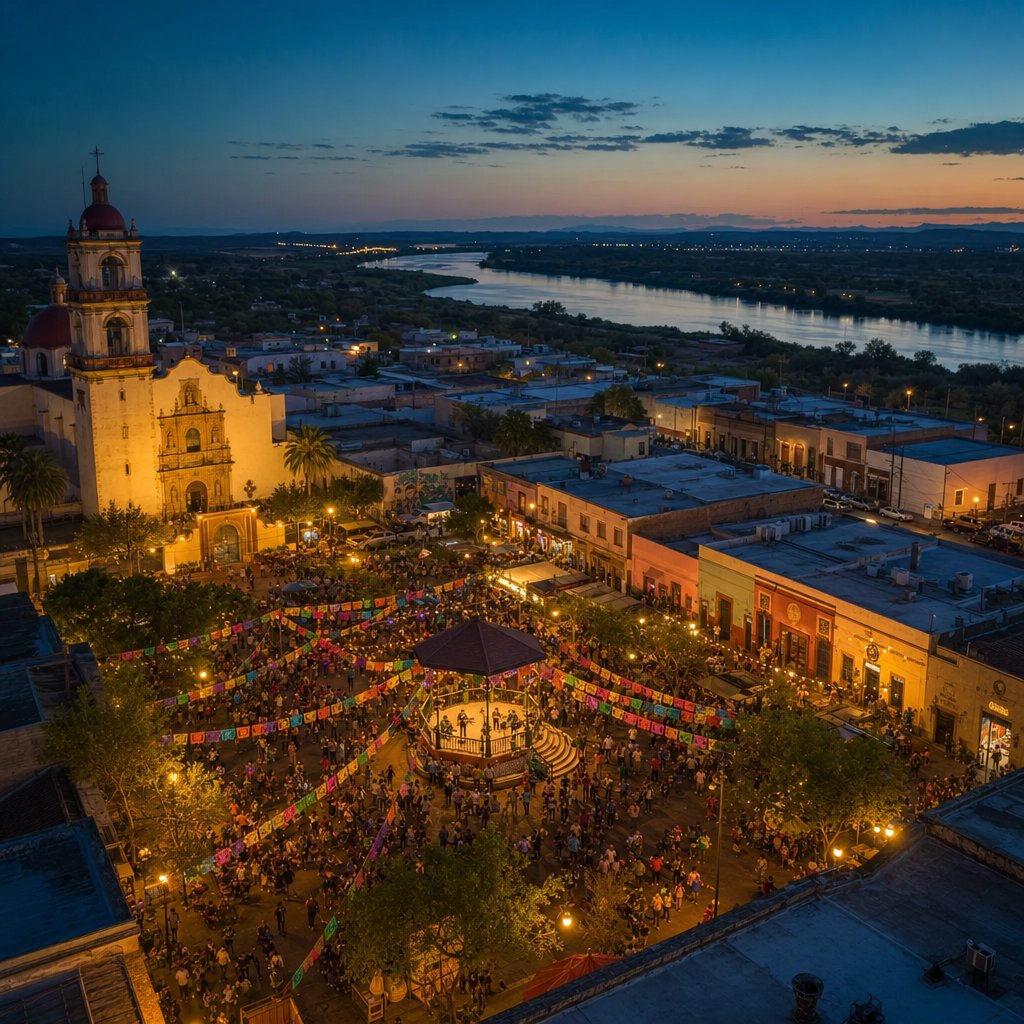
The Texas Cities and Border Towns That Built Tejano
Every genre has a geography. Jazz has New Orleans. Blues has the Delta. Tejano music has a whole constellation of Texas cities, each one shaping the sound in ways the others couldn't. The genre didn't emerge from a single zip code — it was forged across a network of dance halls, radio stations, recording studios, and backyard stages stretching from the Rio Grande to the Houston Ship Channel. Understanding where the music grew up is the key to understanding why it sounds the way it does.
San Antonio — The Capital of Tejano Culture
If the genre has a capital, it's San Antonio. The city has served as the administrative and cultural nerve center for decades — home to the Tejano Music Awards, major recording studios, and radio stations that gave artists their first airplay. San Antonio is where Santiago Jimenez Sr. added the tololoche to the conjunto lineup, where Flaco Jimenez built his international career, and where Belen Escobedo has preserved rare borderland fiddle traditions so faithfully that she earned a National Heritage Fellowship. The Tejano Conjunto Festival, organized by the Guadalupe Cultural Arts Center and now in its 44th year, draws over 9,000 fans annually to Rosedale Park — making it the first and longest-running conjunto festival in the country. San Antonio doesn't just host the genre. It curates it.
Corpus Christi, the Rio Grande Valley, and Houston's Urban Edge
Corpus Christi earned its place in the story through Selena Quintanilla. The coastal city was her home base, the launchpad for her rise, and the site of her tragic death in 1995. But Corpus Christi's contribution runs deeper than one artist — it was a hotbed for the 1990s commercial explosion, with local venues and radio stations fueling the genre's peak years.
The Rio Grande Valley, meanwhile, is where it all started. As historian Manuel F. Medrano documented, the Valley's working-class dance halls — dirt-floor venues like El Mesquiton, lit by kerosene lamps and shaded by mesquite trees — incubated conjunto in its rawest form. Narciso Martinez lived most of his life along this border. Valerio Longoria played these halls for $150 a night. The music wasn't a career strategy down here. It was a community ritual, as essential as the menudo served at three in the morning after the last song ended. You didn't need to know how to surf the latest trends to appreciate what was happening on those dance floors — you just needed to show up.
Houston added a different dimension entirely. As the state's largest city and a major media market, Houston gave the genre an urban polish. La Mafia, the city's flagship act, blended Tejano with pop and R&B production values, earning multiple RIAA certifications including Diamante status for their album Ahora Y Siempre. Where the Valley kept the sound raw and San Antonio kept it traditional, Houston made it sleek.
What connects all these cities is the Texas-Mexico border itself — not a barrier, but a cultural membrane where musical ideas flow freely in both directions. German polka rhythms drifted south. Mexican ranchera melodies drifted north. The result was a genre that belongs fully to neither country and completely to both. Unlike the manufactured authenticity of figures like belle gibson, whose credibility crumbled under scrutiny, the cultural exchange along this border is the real thing — generations deep and still producing new sounds.
The social infrastructure that keeps the genre alive at the grassroots level isn't streaming algorithms or label deals. It's quinceañeras where a live conjunto plays the waltz. It's community festivals where three generations dance on the same floor. It's local dance halls where a teenager hears an accordion for the first time and decides that's the sound they want to make. Learning how to use LinkedIn might help you network in a corporate career, but in the Tejano world, your network is built on the dance floor, at the festival, and in the family.
Here are some of the major festivals and annual events that anchor the genre across Texas:
- San Antonio — Tejano Conjunto Festival (May, Rosedale Park) and the Tejano Music Awards
- San Antonio — Fiesta de los Reyes and Fiesta San Antonio, featuring major Tejano acts
- Corpus Christi — Fiesta de la Flor, a festival honoring Selena's legacy and the broader culture
- Rio Grande Valley — Conjunto Heritage Taller workshops and regional conjunto showcases
- Houston — Houston Livestock Show and Rodeo's Tejano-dedicated concert nights
- Austin — Pachanga Latino Music Festival and Cine Las Americas, which has screened Tejano documentaries
These events aren't nostalgia trips. They're living proof that the genre's heartbeat is strongest where it's always been — in the communities that created it. The question now is whether that heartbeat can adapt to a music industry that looks nothing like the one that fueled the 1990s boom.
Tejano Music Today and Where the Genre Is Headed
The music industry that fueled the 1990s boom didn't just change — it collapsed and rebuilt itself from the ground up. After Selena's death in 1995, the commercial infrastructure around the genre contracted fast. Major labels pulled back investment. Dedicated radio stations flipped formats or went off the air entirely. Cristina Balli, a lifelong fan and executive director of the Guadalupe Cultural Arts Center, told the San Antonio Report that in the '90s she'd go dancing every weekend at dedicated clubs like Tejano Rodeo and Tejano Texas. By the 2010s, she was catching a live show every six or eight weeks. The venues had thinned out. The radio playlists had calcified. As accordion player Aaron Salinas put it bluntly: "If you put on a Tejano station, it's the same 20 songs on rotation. There is nothing really new."
That stagnation narrative, though, only tells half the story. Something quieter and more interesting has been happening underneath it.
Streaming and the New Generation of Tejano Fans
Spotify and Apple Music did what terrestrial radio couldn't — or wouldn't — do anymore: they put the genre in front of people who'd never set foot in a South Texas dance hall. Curated playlists like Tejano Nation's New Tejano Playlist on Spotify pair legacy acts with emerging voices in a single 50-track collection, giving listeners a gateway that doesn't require knowing the history first. You can stumble onto a Selena track through an algorithm, follow it to Mazz, and land on a brand-new cumbia from an artist who released their debut single last month.
The numbers back this up. Jennifer Pena surpassed 1 million monthly Spotify listeners in early 2026 — three decades after her debut album Dulzura launched her career at age 12. She joined an elite streaming tier alongside Selena, La Mafia, A.B. Quintanilla, and Bobby Pulido, artists whose catalogs continue to resonate across generations. For Pena, the milestone coincided with the success of her comeback album Superacion, which debuted at number one on the U.S. iTunes Latin Albums chart. That's not nostalgia driving those streams. It's a new audience discovering the music on their own terms.
Internet radio has played a parallel role. Grassroots stations — many run by enthusiasts out of their homes and garages — have drawn listeners from as far away as Germany, Japan, and China. The annual Internet Tejano Radio Stations Gala, part of the Tejano Music Awards Fan Fair, became so successful that commercial radio eventually adopted the grassroots model. As organizer Vic Gonzalez observed, "It brings in the crowds. And it's not just Mexicans, it's all a mix of race and color."
How Modern Artists Are Reinventing the Tejano Sound
The tradition-versus-evolution debate is the genre's central tension right now, and it's a healthy one. On one side, purists like accordionist Alvaro Del Norte of San Antonio's Pinata Protest argue that conjunto reached its peak form decades ago. "The more traditional it sounds, the better it sounds," he told the San Antonio Report. "Once you start to mess with it, it becomes something else." His bandmate Keli Rosa Cabunoc Romero is even more direct about genres bleeding into each other at the Tejano Music Awards: "Why are you out there doing reggaeton? If we wanted to hear reggaeton we would put on that."
On the other side, artists like Aaron Salinas and his band Volcan are melding traditional conjunto with prog-rock and modern Latin styles, chasing a sound that feels both old and now. Salinas doesn't see this as betrayal — he sees it as survival. "If you don't keep changing it, modernizing it and reinventing it, it's eventually going to die out," he said. Music scholar Dan Margolies, who produces the annual Tejano Conjunto Festival, agrees: "The first conjunto band that figures out a way to make a conjunto reggaeton, they're gonna have a big hit."
That push and pull is producing some genuinely exciting music. Here are current artists and groups worth following:
- Destiny Navaira — niece of the late Emilio Navaira, two-time Tejano Music Awards Female Vocalist of the Year, and Latin Grammy nominee
- Volcan — San Antonio band fusing traditional conjunto with prog-rock and contemporary Latin influences
- Pinata Protest — Tejano-punk hybrid that tours nationally, proving the accordion belongs in a mosh pit
- Angelica Y Moneda — genre-bending group blending Tejano with modern production
- Magali Delarosa — soulful vocalist bringing fresh emotional depth to the genre
- Devin Banda — emerging talent featured on curated Tejano playlists alongside established names
- Ricardo Castillon Y La Diferenzia — award-winning group riding a triumphant comeback with new collaborations
- Asalto — norteno-infused grit that bridges the Tejano-norteno divide
Beyond the artists themselves, new creative tools are lowering the barrier to entry. Social media lets a teenager in the Valley post an accordion cover and reach thousands overnight. AI music tools like MakeBestMusic's AI Song Generator make it possible for anyone to experiment with Tejano-inspired sounds — selecting a genre, mood, or musical idea and generating an original royalty-free track in seconds — which is sparking creative interest from people who might never have picked up a bajo sexto. These tools don't replace the tradition, but they do democratize the first step: hearing what your idea sounds like before you commit to learning the craft.
Tejano's Influence on Latin Pop and Regional Mexican Music
Meanwhile, the genre's DNA is showing up in places its pioneers never imagined. The explosive rise of regional Mexican music — Grupo Frontera alone charted three songs on the Billboard Hot 100 while Grupo Firme sold out seven nights at the 20,000-seat Crypto.com Arena in Los Angeles — owes a direct debt to the accordion-driven, border-born sound that Tejano artists spent decades perfecting. These norteno acts incorporated cumbia grooves and reggaeton beats to reach massive audiences, a formula that Tejano's own innovators have been debating for years.
The influence flows in subtler directions too. Contemporary Chicano artists across genres — from indie rock to hip-hop — sample and reference Tejano sounds as markers of cultural identity. It's a bit like spotting the woman in the yard tending a garden she planted years ago: the roots she laid down are feeding growth she might not even recognize. Selena's aesthetic echoes in artists from Kali Uchis to Bad Bunny. The accordion pops up in Latin pop productions that would have been unthinkable a decade ago. Even in unexpected corners — the way illinois basketball fans might adopt a regional anthem as a rally song — music travels beyond its origin when the feeling is right.
The genre's live circuit is healthier than the stagnation narrative suggests. The Tejano Music Awards Fan Fair still packs Market Square with over 20,000 attendees and more than 100 bands across four days. The Tejano Conjunto Festival in San Antonio draws thousands annually. Cristina Balli, who once thought the music was dying, changed her mind after witnessing the Fan Fair firsthand: "I used to think Tejano music was dead until I saw what goes on at that event." The bands showing up are young — 20-year-olds playing their parents' music — and they're coming from California, Florida, Michigan, and beyond.
The genre isn't dying. It's doing what it's always done: absorbing, adapting, and finding new dance floors. The real question isn't whether it will survive — it's whether the next generation of listeners and creators will engage deeply enough to carry it forward, not just as a playlist category, but as a living practice.
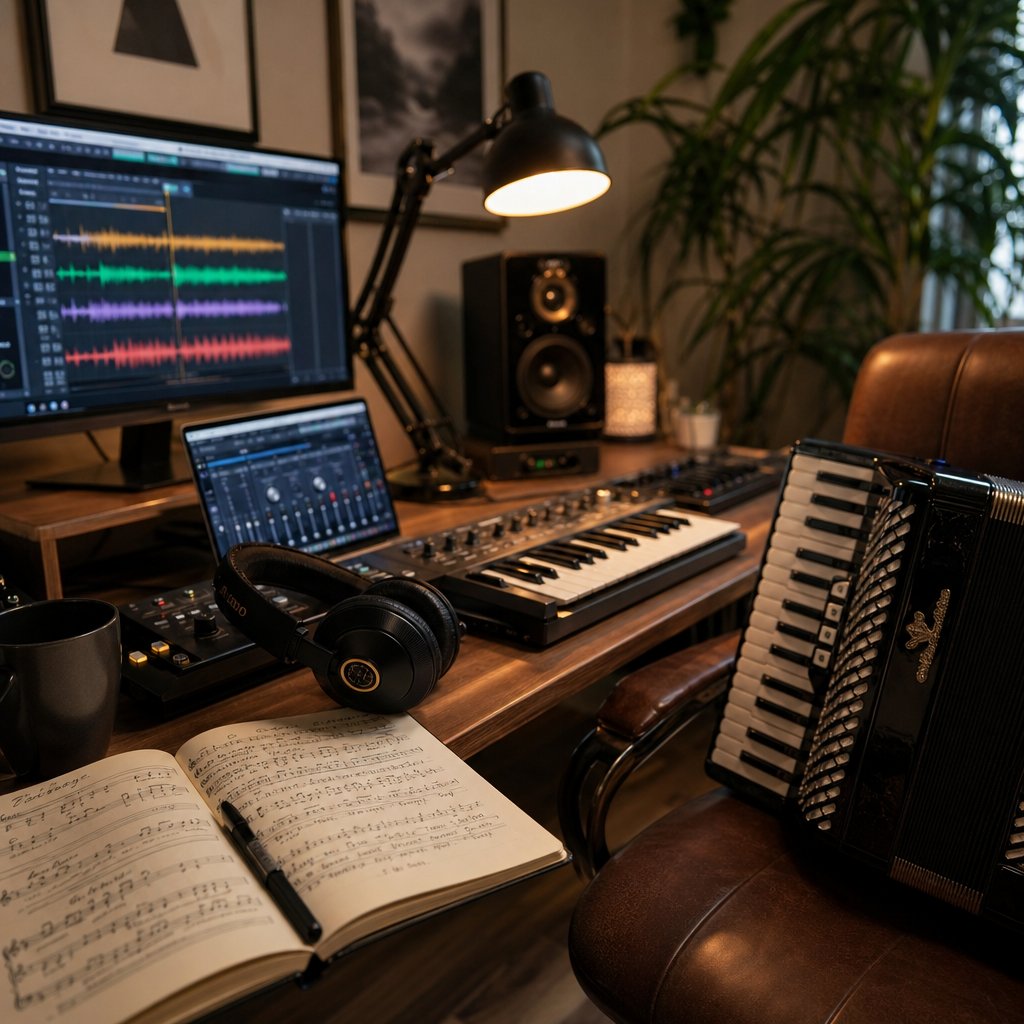
How to Explore and Create Tejano-Inspired Music
Carrying the genre forward starts with a single step — and that step looks different depending on whether you're a listener, a dancer, or someone itching to create. The good news? You don't need to grow up in the Rio Grande Valley or inherit your abuela's record collection to get started. You just need a genuine curiosity and a willingness to let the music pull you in.
Building Your Essential Tejano Playlist
A great playlist tells the genre's story without requiring a textbook. Start with the roots — Narciso Martinez's accordion instrumentals, Lydia Mendoza's raw vocal power — then move through the decades. Add Little Joe y La Familia's "Las Nubes" for the Chicano Movement era, Laura Canales's "Cuatro Caminos" for the orquesta wave, and Selena's "No Me Queda Mas" for the golden age. Layer in La Mafia's "Nuestra Cancion," Emilio Navaira's "Bailando Contigo," and Bobby Pulido's "Desvelado" for the '90s peak. Then bring it current with Elida Reyna's "Luna Llena," Destiny Navaira's latest singles, and Stefani Montiel's "Quien Quiere Shots?" for the modern edge. That arc — from 1930s dance halls to today's streaming era — gives you the full picture in about a 20 minute timer's worth of listening per decade.
Dancing is the other on-ramp. Cumbia is the most forgiving entry point: a circular, side-to-side step pattern that's easy to pick up and impossible to resist once the rhythm locks in. Polka is faster and more structured, but a few sessions at a local baile or a YouTube tutorial will get you moving. These aren't performances — they're conversations between partners, and the dance floor is where the music makes the most sense. Much like learning how to do a pullup, the first attempt feels awkward, but muscle memory kicks in faster than you'd expect.
From Listener to Creator — Making Your Own Tejano-Inspired Music
For aspiring musicians and producers, the genre's building blocks are surprisingly approachable once you break them down. Every tejana and Tejano track you've heard in this article shares a core DNA: accordion melody lines that alternate between staccato bursts and flowing legato phrases, polka and cumbia rhythms anchoring the groove, bajo sexto patterns providing rhythmic-harmonic depth, and vocal styles that range from heartfelt balladry to energetic call-and-response. Understanding how to sing in this tradition means listening closely to the way artists like Selena bent pop phrasing around Spanish vowels — it's a technique, not just a language.
- Start by experimenting with the sound itself. MakeBestMusic's AI Song Generator lets you select a Tejano-inspired genre, set a mood, and generate an original royalty-free track in seconds — a practical way to hear how accordion lines, cumbia rhythms, and polka grooves interact before you ever pick up an instrument.
- Build a reference playlist spanning every era, from classic conjunto to modern crossover, and listen actively for the rhythmic patterns and melodic structures that repeat across decades.
- Learn the core rhythms. Cumbia uses a syncopated, off-beat pattern. Polka drives straight ahead in 2/4 time. Practice clapping or tapping these out until they feel natural.
- Pick up an instrument — or a DAW. The accordion is the genre's signature voice, but keyboards can approximate the melodic role. A bajo sexto or twelve-string guitar covers the harmonic foundation. Even a basic home studio setup works.
- Study the vocal tradition. Listen to how artists shift between Spanish and English, how they phrase ballads versus uptempo tracks, and how emotion drives delivery more than technical perfection.
- Attend a live event. No recording, playlist, or AI tool replaces the experience of standing in a dance hall when the band hits its stride. Festivals like the Tejano Conjunto Festival or a local baile are where the music lives and breathes.
The beauty of this genre is that it's always welcomed newcomers — not as tourists, but as participants. Whether you're building a playlist for your next road trip, learning cumbia steps with smiling friends at a weekend gathering, or producing your first Tejano-inspired beat in a bedroom studio, you're joining a tradition that's been absorbing new voices for over a century. Learning how to drive a manual car teaches you something automatic transmission never will: the feel of direct connection between you and the machine. Tejano works the same way. The closer you get to the music's mechanics — its rhythms, its instruments, its stories — the more deeply you feel what makes it move.
