

What Vibrato Really Means in Music
You have probably heard it a thousand times without knowing its name. A singer holds a long note, and instead of sounding flat or lifeless, the tone shimmers with warmth and movement. That shimmer? That is vibrato. And if you have ever wondered what is vibrato in precise terms, you are far from alone — it is one of the most searched and most misunderstood concepts in music.
Vibrato in Plain English
At its simplest, vibrato is a slight, rapid fluctuation in pitch that gives a musical tone its warmth and richness. It can come from the human voice, a violin, a flute, or virtually any instrument capable of sustained notes. The word itself is Italian, derived from the past participle of vibrare — "to vibrate" — and its first known use in English dates to around 1876. Think of it as the difference between a photograph and a living face: straight tone is the still image, while vibrato is the subtle animation that makes a sound feel alive.
This is not the same as wobble singing, where the pitch swings too wide or too slow and sounds uncontrolled. Healthy vibrato is balanced, even, and almost effortless to the ear. When you analyze the sound wave my voice produces during vibrato, you see a smooth, periodic oscillation — not an erratic zigzag.
The Technical and Acoustic Definition
Zoom in a little closer and the picture gets more specific. Acoustically, vibrato is a periodic variation in fundamental frequency — the pitch of a note — that typically cycles at roughly 5 to 8 times per second (5-8 Hz) with a pitch excursion of about one semitone above and below the center note. Research published in the Journal of Voice found that listeners perceive vibrato as most appropriate at a modulation frequency around 6 Hz, with acceptability dropping when the rate moves significantly above or below that range.
Vibrato is a periodic modulation of pitch, typically oscillating at 5-8 Hz with an excursion of approximately one semitone, perceived by listeners as added warmth and expressiveness in vocal or instrumental tone.
Sounds complex? It does not have to be. Imagine gently rocking a sound wave my voice creates back and forth around a target pitch — fast enough to blend into a single, rich tone rather than sounding like two separate notes. That is the acoustic reality behind the warmth you hear in an opera aria or a blues guitar solo.
This article goes well beyond the dictionary entry. Ahead, we will unpack the physiology that produces vibrato, how it differs from tremolo and wobble, how it works across instruments and genres, why it sparks heated debate among musicians, and how modern digital tools are reshaping what vibrato can sound like. Whether you are a singer, an instrumentalist, or simply curious, there is something here for you.
The Science and Physiology Behind Vibrato
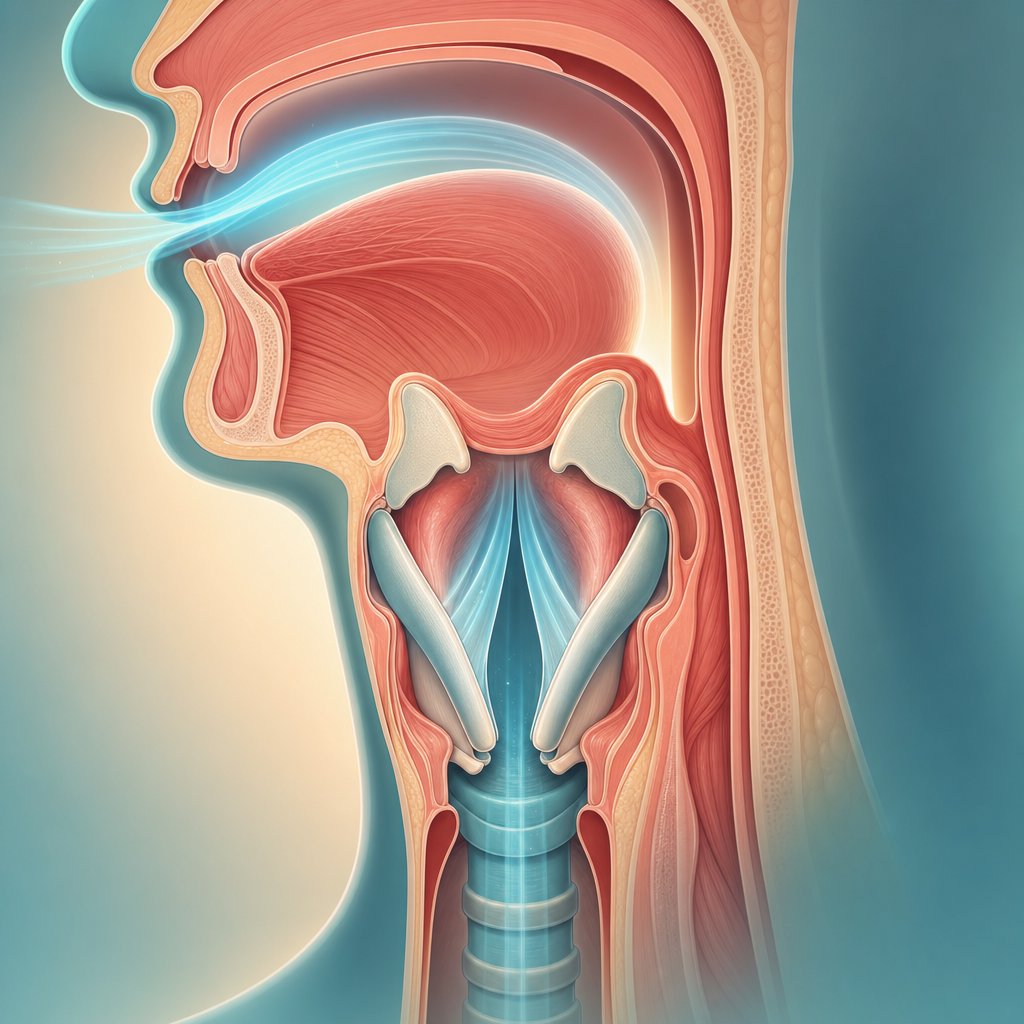
That 5-8 Hz oscillation we just described does not happen by accident, but it is not exactly a conscious decision either. Vibrato sits in a fascinating middle ground — a natural physiological response that emerges when the voice (or instrument) is produced freely and without excess tension. Understanding the mechanics behind it changes the way you approach the technique entirely.
How the Voice Produces Vibrato
Imagine two muscle groups in your larynx locked in a gentle tug-of-war. The cricothyroid (CT) muscle stretches and thins the vocal folds to raise pitch, while the thyroarytenoid (TA) muscle shortens and thickens them to lower it. When both activate simultaneously during sustained phonation, neither side fully "wins." The result is a rapid, rhythmic oscillation in pitch — the neuromuscular antagonism model that researchers point to as the primary engine of vocal vibrato.
But muscle interaction alone is not the whole story. Vocal pedagogues often describe a three-factor framework that allows this oscillation to flourish:
- An open, relaxed pharynx that gives the sound room to resonate
- Efficient vocal cord closure — firm enough for a clear tone, loose enough to avoid rigidity
- Steady, well-supported breath pressure from the diaphragm and lower ribs
When all three factors align, vibrato appears almost on its own. That is why so many voice teachers say the real secret of how to sing with vibrato is not adding something extra — it is removing the tension that blocks a natural process. A healthy vocal vibrato typically settles into that 5-8 Hz sweet spot without the singer consciously counting cycles. Force it by shaking your jaw or pumping your abdomen, and you are more likely to produce an uneven wobble than genuine vibrato.
How Vibrato Works Acoustically
Strip away the biology and look at what the listener actually hears. Vibrato is periodic frequency modulation — the fundamental pitch of a note gently rocking above and below its center at a regular rate. Picture dropping a pebble into still water: the ripples spread outward in smooth, evenly spaced rings. Vibrato's wave pattern behaves the same way, creating a shimmer the ear perceives as warmth and life rather than as two distinct pitches.
This is different from amplitude modulation, where the volume of a note pulses up and down while the pitch stays fixed — a phenomenon more accurately called tremolo. The distinction matters because the two effects feel very different to a listener, even though everyday conversation (and even some gear manufacturers) swaps the terms freely.
Here is the part that surprises many beginners: the same acoustic principle applies far beyond the voice. When a violinist learns how to vibrato on a violin, the rocking motion of the left hand on the fingerboard creates the same periodic pitch variation. A flutist pulsing airflow from the diaphragm, a guitarist bending a fretted note with subtle wrist motion — all of them are generating frequency modulation that falls under the same umbrella. The source of the oscillation changes from instrument to instrument, but the sound-wave behavior your ear responds to remains remarkably consistent.
Knowing how to sing with vibrato — or produce it on any instrument — starts with recognizing that the effect is rooted in relaxation and balance, not brute force. That distinction between healthy vibrato and its less desirable cousins is exactly where confusion tends to pile up.
Vibrato vs. Tremolo vs. Wobble vs. Straight Tone
Confusion between these four terms is probably the single biggest source of misunderstanding for anyone searching for a clear vibrato definition. Musicians, gear manufacturers, and even some teachers use them interchangeably — and the mix-ups have real consequences for how you practice, listen, and evaluate your own sound.
Vibrato and Tremolo Are Not the Same Thing
Here is the cleanest way to remember it: vibrato is a periodic change in pitch, while tremolo is a periodic change in volume. Your note wobbles up and down in frequency during vibrato; it pulses louder and softer during tremolo. Both happen at a regular rate, and both add movement to a sustained tone, which is exactly why they get confused so often.
Guitarists run into this mix-up constantly. The "tremolo bar" on a Stratocaster? It actually changes pitch, making it a vibrato device. Meanwhile, the amp effect labeled "vibrato" on some vintage Fender amps is really an amplitude pulse — technically tremolo. As EarthQuaker Devices puts it plainly: "Vibrato is a steady increase and decrease in pitch. Tremolo is a steady increase and decrease in volume." The naming conventions in the guitar world have been backwards for decades, and the confusion has bled into everyday musical vocabulary.
Wobble, Straight Tone, and Healthy Vibrato Compared
Wobble is what happens when vibrato goes wrong. The oscillation becomes too slow (typically below 4-5 Hz) or too wide (approaching a whole step instead of a quarter tone), and the ear starts picking up two separate pitches rather than fusing them into one warm tone. Vocal researcher Shirlee Emmons notes that wobble is often the result of poor muscle tone, fatigue, or insufficient breath support — not an excess of vibrato itself. Choral directors who blame vibrato for ruining blend are frequently hearing wobble and mislabeling it.
Straight tone sits at the opposite end of the spectrum. It is the deliberate minimization of vibrato, producing a clear, focused sound with little to no pitch oscillation. Contrary to popular belief, straight tone is not completely motionless. As singer and pedagogue Danya Katok explains in Choral Journal, healthy straight tone "is round and clear in quality" and "shimmers with energy and pulsation" — it simply reduces vibrato to the point where the ear perceives a steady pitch. Choral ensembles, early-music groups, and many contemporary pop vocalists use it as a stylistic choice.
If you are learning how to do a vibrato on violin, the same distinctions apply. A controlled rocking of the wrist on the fingerboard produces healthy vibrato; an exaggerated, sluggish arm motion creates wobble. Knowing where the line falls between them is essential whether you are figuring out how to make violin vibrato or refining your singing technique.
The table below puts all four terms side by side so you can spot the differences at a glance.
| Term | What Varies | Typical Speed | Typical Width | Common Context | Perceived Effect |
|---|---|---|---|---|---|
| Vibrato | Pitch (frequency) | 5-8 Hz | ~quarter tone above and below center pitch | Classical voice, strings, wind instruments, guitar solos | Warmth, richness, and expressive life |
| Tremolo | Amplitude (volume) | 4-8 Hz (varies by style) | Moderate volume fluctuation | Guitar amp effects, organ stops, orchestral string bowing | Pulsing, rhythmic intensity |
| Wobble | Pitch (excessively) | Below ~4-5 Hz | Approaching a whole step or wider | Fatigued or unsupported singing, poorly controlled string vibrato | Unsteady, out-of-tune, two audible pitches |
| Straight Tone | Minimal to no variation | N/A | Near zero | Choral blend, early music, contemporary pop, boy choirs | Pure, focused, still — can sound ethereal or restrained |
Notice how the perceived effect column shifts dramatically even though the underlying mechanics are closely related. A small change in speed or width is the difference between a tone that sounds gorgeous and one that sounds like a problem. That context-dependent quality is exactly what makes vibrato such a fascinating expressive tool — and why its role changes so much from one instrument or genre to the next.
How Vibrato Works Across Different Instruments
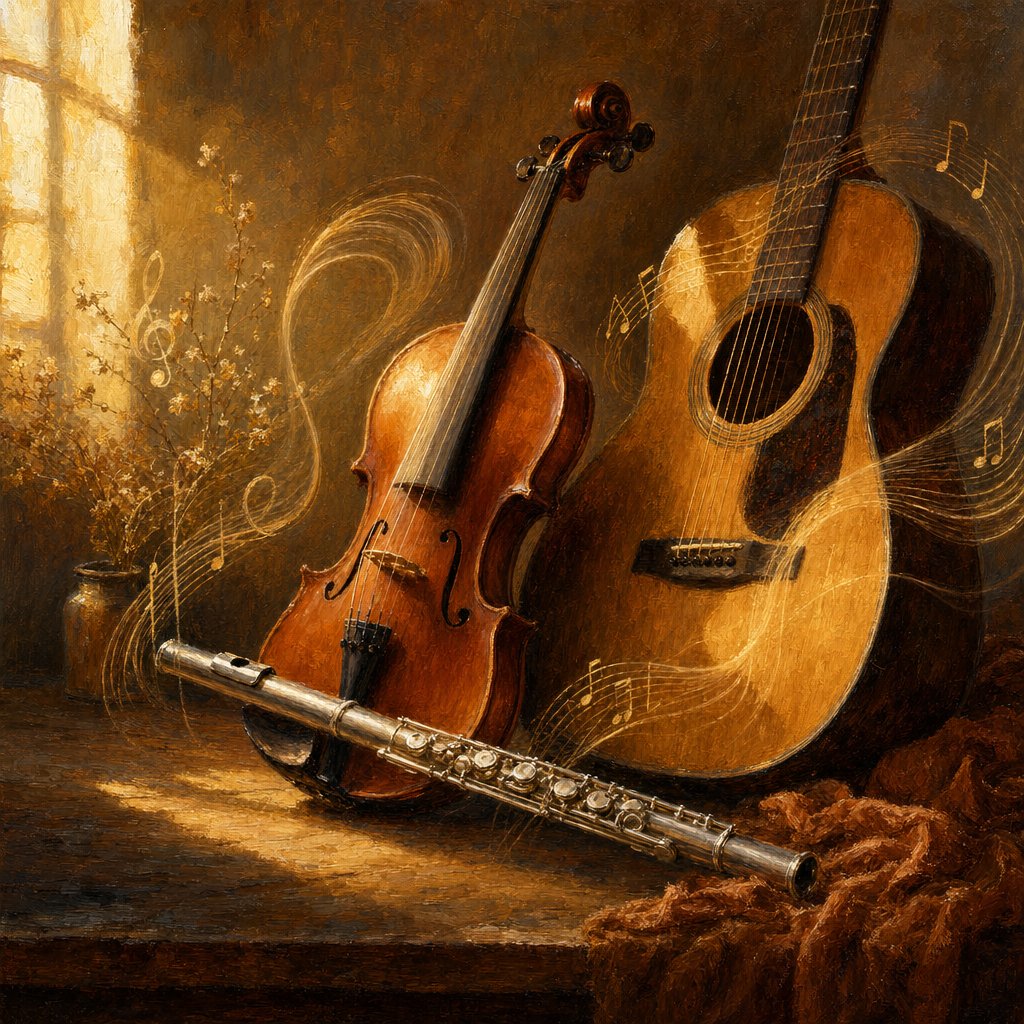
That context-dependent quality runs even deeper than terminology. The vibrato meaning a violinist carries in their muscle memory is physically nothing like what a flutist or a guitarist does — yet the listener hears the same family of warmth and expression in each case. What changes is the body part driving the oscillation, the speed it naturally settles into, and the musical tradition shaping how it is used. Pulling all of that into one place reveals just how universal — and how varied — this single technique really is.
Vibrato on Strings and Guitar
String players develop vibrato as one of their core expressive tools, often spending years refining it. On violin and viola, there are three discernible types named for the body part that initiates the motion: arm, wrist (also called hand), and finger vibrato. Legendary pedagogue Ivan Galamian noted that between these three categories lie roughly a hundred possible combinations, each varying in amplitude and frequency.
Here is how they differ in practice:
- Wrist vibrato starts with the hand rocking backward and forward from the wrist joint while the fingertip stays anchored on the string. It tends to produce a quicker, more focused oscillation and is often the first type students learn — typically in third position before moving to other positions.
- Arm vibrato draws its impulse from the forearm. The finger remains firm enough to hold its place on the string but flexible enough to follow the arm's motion. It naturally produces a broader, more singing quality and is favored for slower, lyrical passages.
- Finger vibrato is the most subtle of the three. As violinist Ruggiero Ricci described it, "the rolling motion generates from the lowest knuckle on the finger" — bending in and out with no arm movement. It offers fine-grained control in the upper positions where space on the fingerboard is tight.
Most professional string players blend all three types fluidly. As Ricci also observed, "the width and speed of the vibrato are extremely important: in the upper positions faster and narrower; in lower positions, wider and slower." That adaptability is what separates a mechanical oscillation from a truly musical one.
Guitar vibrato works on a different physical principle but chases the same expressive goal. The classic player's vibrato on electric and acoustic guitar involves rocking the fretting finger — or bending the string slightly up and back — to create periodic pitch variation. Some guitarists drive the motion from the wrist, others from the forearm, and blues players often use wide, dramatic bends that push the string perpendicular to the fretboard. The technique varies with genre, string gauge, and personal style, but the acoustic result is the same frequency modulation listeners associate with expressiveness.
Vibrato on Wind Instruments and Voice
Singers have the widest palette of vibrato sources because the instrument is the body itself. Diaphragm vibrato — subtle pulses of air pressure from the lower torso — is the most commonly taught and generally considered the healthiest approach. Jaw vibrato, where the lower jaw makes small oscillating movements, appears in some jazz and musical theatre styles. Lip vibrato, a slight trembling of the lips or embouchure, is less common in singing but plays a bigger role on brass instruments. How does language or accents affect music here? Quite directly — a singer's native language shapes habitual tongue and jaw tension, which in turn influences how naturally vibrato emerges and what it sounds like. Italian and Spanish speakers, for instance, tend toward more open pharyngeal postures that many voice teachers consider ideal for free vibrato production.
Wind instruments each have their own vibrato mechanics, and the differences are worth knowing if you play more than one — or if you direct an ensemble where consistency matters.
- Flute — vibrato is typically produced through controlled pulses of air from the diaphragm, often described as a "Ha Ha Ha" sensation from the throat area while the mouth stays relaxed. Speed ranges from about 5-7 Hz. Primary muscle group: diaphragm and abdominal muscles.
- Oboe — uses throat vibrato that feels, as many oboists describe it, like a small, controlled cough. The sensation is similar to flute vibrato but filtered through a double reed. Speed: approximately 5-6 Hz. Primary muscle group: throat and diaphragm.
- Saxophone — vibrato comes from small lower-jaw movements rocking the reed, making it more deliberate and less likely to appear accidentally than on flute or oboe. Speed: roughly 5-6 Hz in classical settings, often wider and slower in jazz. Primary muscle group: jaw and embouchure.
- Clarinet — vibrato is rarely used in traditional concert band literature, but jazz clarinetists employ it freely. It can be produced through embouchure movement (like saxophone) or air-stream manipulation via the throat and diaphragm. Speed: variable. Primary muscle group: embouchure or diaphragm, depending on method.
- Brass (trumpet, horn, trombone) — vibrato is most commonly achieved by manipulating the corners of the embouchure in a small "Oo-Ee" motion, though some players use a hand vibrato (horn) or slide vibrato (trombone). Speed: 5-7 Hz. Primary muscle group: embouchure muscles.
- Voice — diaphragm-driven vibrato emerges naturally from balanced airflow and relaxed laryngeal muscles, as discussed in the physiology section above. Speed: 5-8 Hz. Primary muscle group: cricothyroid and thyroarytenoid muscles in the larynx, supported by the diaphragm.
You will notice a pattern in that list: regardless of the instrument, healthy vibrato tends to land in the same 5-8 Hz neighborhood. The Russian term вибрато, borrowed directly from Italian just like the English word, carries the same meaning across conservatories worldwide — a testament to how universal this phenomenon is. Whether the oscillation starts in a fingertip, a jaw, or a column of air, the listener's ear responds to the same periodic warmth. In fact, the concept of вибрато transcends language barriers entirely; it is one of the few musical terms that needs almost no translation.
What does change dramatically is how much vibrato a performer is expected to use — and that depends far less on physics than on the genre they are playing in.
Vibrato Expectations Across Musical Genres
Genre is where the meaning of vibrato shifts from a physics lesson into a creative decision. Two singers can have equally healthy technique, equally balanced vibrato voices, and still sound completely wrong if they apply vibrato the way the other genre expects. The rules are unwritten, but they are real — and breaking them is one of the fastest ways to sound out of place on stage or in a session.
Vibrato in Classical and Opera
Classical singing treats continuous, even vibrato as a hallmark of trained technique and tonal beauty. When you hear an operatic soprano sustain a phrase that fills a 2,000-seat hall without a microphone, that shimmer is not decoration — it is the engine of projection. The London Singing Institute describes classical vibrato as adding "warmth, depth, and colour to the tone," and that richness is exactly what allows an unamplified voice to carry over a full orchestra.
Orchestral string sections rely on the same principle. When thirty violinists apply coordinated vibrato to a sustained chord, the slight differences in each player's rate and width create a lush, shimmering texture that straight tone simply cannot replicate. In this world, vibrato singing is not optional — it is the baseline expectation.
Vibrato in Pop, Jazz, R&B, and Folk
Step into a pop recording session and the aesthetic flips. Pop thrives on a casual, conversational, and human delivery, which means vibrato gets used selectively rather than continuously. Musical theatre singers transitioning to pop often discover this the hard way — vocal coach sessions at studios like Vox Tape frequently involve asking trained singers to reduce their vibrato and place it intentionally on just a few sustained notes for emotional emphasis. The verses stay relatively straight; the vibrato voice appears at the end of a held note like a punctuation mark, not a constant hum.
Jazz takes a different approach entirely. Vibrato here tends to be wider, more expressive, and deeply personal. Think of Billie Holiday's slow, deliberate oscillation versus Ella Fitzgerald's brighter, quicker shimmer — both unmistakably jazz, yet worlds apart in feel. Jazz singers bend notes, delay vibrato onset, and vary its speed within a single phrase as part of their improvisational toolkit.
R&B vibrato functions as a stylistic signature. Artists like Whitney Houston and Luther Vandross made their vibrato instantly recognizable — fast, controlled, and deployed at the peak of emotional intensity. It is not just what is a vibrato in R&B; it is who you are as a vocalist.
Folk and early-music traditions sit at the opposite end. Many folk singers prefer a clean, straight delivery that foregrounds lyrics and storytelling over vocal ornamentation. Early-music ensembles performing Baroque or Renaissance repertoire often minimize vibrato deliberately, aiming for a purer blend that reflects historical performance practice.
Here is a ranking from most continuous vibrato use to least, with a brief note on why each genre lands where it does:
- Opera and classical solo voice — continuous vibrato is expected as a sign of healthy, fully supported technique and is essential for unamplified projection.
- R&B and soul — vibrato is prominent and often fast, used as a personal vocal fingerprint and emotional intensifier.
- Jazz — vibrato is expressive and varied, applied freely but not always continuously; onset timing and width shift with the mood of the phrase.
- Musical theatre — vibrato is present but increasingly selective, especially in contemporary shows that lean toward a pop-influenced sound.
- Pop — vibrato is used sparingly and strategically, typically reserved for the ends of sustained notes or climactic moments.
- Indie and singer-songwriter — vibrato is minimal, favoring breathy, intimate delivery that mirrors natural speech.
- Folk and early music — straight tone dominates, with vibrato used rarely or not at all, prioritizing textual clarity and ensemble blend.
Notice how the list does not move from "good" to "bad." Every position reflects a deliberate aesthetic choice, not a skill gap. A folk singer using wall-to-wall vibrato would sound just as misplaced as an opera singer delivering an aria in straight tone. The technique stays the same; the taste changes entirely — and so do the debates about when vibrato helps and when it gets in the way.
Why Musicians Still Disagree
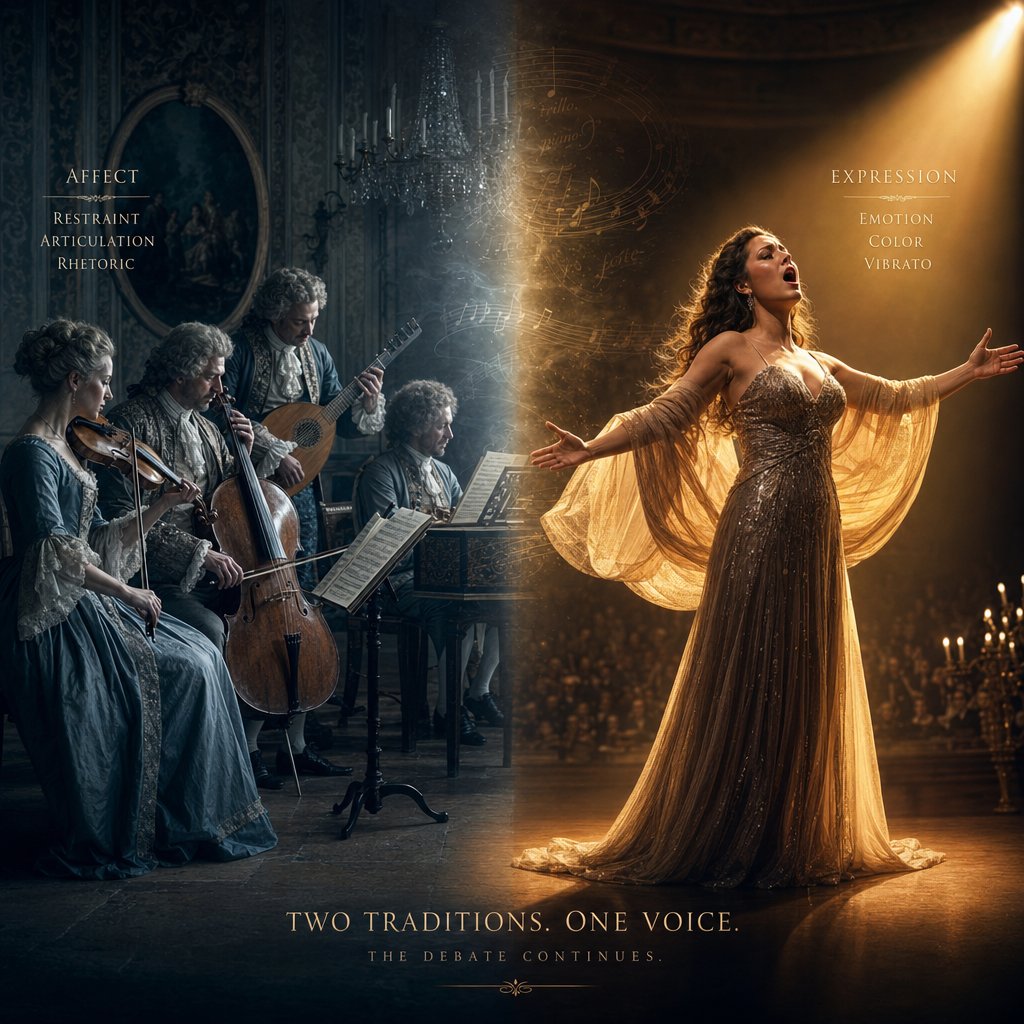
Those debates are not new — and they are far from settled. Few topics in music spark as much passionate disagreement as vocal vibrato and its proper role in performance. The arguments stretch back decades, cross genre lines, and touch on everything from historical authenticity to vocal health.
The Historical Debate Over Vibrato
If you try to define vibrato by looking at historical sources, you quickly discover that the goalposts have moved. The period-performance movement — sometimes called historically informed performance, or HIP — argues that continuous vibrato is a relatively modern convention, one that took hold only in the early twentieth century. In his influential book The End of Early Music, pioneering period oboist Bruce Haynes makes the case that continuous vibrato, where every note is evenly enriched with pitch oscillation, is a twentieth-century phenomenon — even though most listeners associate it with Romantic-era music. Haynes even drew a connection between continuous vibrato's restless energy and the compromises of equal temperament tuning.
Early recordings support this view. Baroque violinist Jude Ziliak has traced the rise of continuous vibrato alongside the decline of portamento by comparing recordings of Elgar's Violin Concerto from 1916 through 2004. And when researcher Ian Howell at New England Conservatory ran spectrographic analysis on recordings of Nellie Melba — who coached her role of Mimi with Puccini himself — he found she used less vibrato than many singers performing Bach and Handel with period groups today. Yet her spectrogram still revealed a regular oscillation around 6 Hz. The difference listeners perceive, Howell suggests, may have more to do with recording limitations and vocal timbre than with the actual rate or width of the vibrato.
Treatise writers from the seventeenth and eighteenth centuries only deepen the confusion. Terms like flattement, balancement, Bebung, and sweetening appear across sources with overlapping and sometimes contradictory meanings. Francesco Geminiani encouraged vibrato "as often as possible" in 1749, while other authors treated it strictly as an ornament for select long notes. Scholars still disagree about whether these historical techniques map neatly onto what we now call vibrato — or whether they describe something subtly different.
Modern Vibrato Controversies in Performance and Production
The historical debate feeds directly into present-day rehearsal rooms. In choral singing, the question of whether vibrato helps or hinders blend remains genuinely divisive. Some directors ask for a "simpler, purer sound" in the interest of tuning and chord balance, while others — like conductor Mark Bailey — caution against skirting the word entirely. Bailey found that avoiding the term with singers was "inadvertently patronizing them" and now tells both players and singers directly: "Please don't use vibrato to generate the tone, but only to warm or enhance it slightly after the fact."
The tension is especially acute for sopranos. Pedagogue David Jones has criticized what he calls "the choke-hold of the Baroque style trap" — a false sense of authenticity that leads singers to squeeze the throat for straight tone, producing a high-larynx, spread-embouchure sound that can actually damage the voice. On the other side, opera conductor Stephen Lord worries about young singers whose wide, slow vibratos go unaddressed in lessons: "The singer gets used to it, and it becomes part of them."
Pop production adds another layer. Contemporary producers increasingly favor breathy, vibrato-light vocals that feel intimate and conversational through a close microphone. Vibrato appears as a deliberate emotional accent — a shimmer at the end of a climactic phrase — rather than a constant presence. The trend has pushed many session vocalists to treat vibrato as a color they dial in and out, not a default setting.
Even among voice teachers, consensus is elusive. Some view healthy vocal vibrato as a reliable indicator that the voice is functioning freely — balanced airflow, relaxed larynx, proper support all working together. Others caution that encouraging vibrato too early, or in the wrong context, risks teaching students to force an oscillation that should emerge naturally. The same split exists for instrumentalists learning how to do vibrato in violin or on wind instruments: is it a technique you build deliberately, or a byproduct of correct fundamentals?
Vibrato is simultaneously a technical indicator and an aesthetic choice — a sign of healthy vocal or instrumental production in one context, and a stylistic decision to be applied, reduced, or withheld in another.
Candace Smith, director of Cappella Artemisia, captures the resolution many experienced musicians have landed on: "A singer should be able to sing with vibrato on any pitch, any vowel, any dynamic. That doesn't mean they should sing with it all the time. The first is a question of technique, the second of style and musicality." In other words, the real skill is not choosing a side in the vibrato wars — it is having enough control to move freely between both. And that kind of control starts with clearing up the myths and misconceptions that trip up so many beginners.
Common Vibrato Misconceptions Beginners Should Avoid
Myths about vibrato in singing circulate so widely that many beginners build their entire practice around ideas that are flat-out wrong. Some of these misconceptions are harmless — they just slow progress. Others can lead to tension, strain, and habits that take months to undo. Here are the ones worth clearing up before they take root.
Myths About Learning Vibrato
The biggest misunderstanding? That vibrato is a mechanical trick you bolt onto your voice like an accessory. In reality, vibrato is primarily a natural physiological response. It shows up on its own when the throat is open, the vocal cords close efficiently, and airflow stays steady. You do not "make" it — you create the conditions for it to emerge. Vocal coach Linor Oren puts it simply: "It's not something you chase — it's something that arrives when your voice is free."
The second myth is that what is vibrato singing should sound the same regardless of genre or voice type. As the genre section above made clear, a jazz singer's vibrato and an opera singer's vibrato serve completely different aesthetic purposes. Your vibrato will also reflect your unique vocal anatomy — and that is a feature, not a flaw.
Pitch Bending Is Not Vibrato
Another common mix-up: confusing vibrato with pitch bending or scooping. They might sound vaguely similar to an untrained ear, but the mechanics are fundamentally different. Vibrato oscillates symmetrically around a center pitch — equal distance above and below, at a regular rate. Pitch bending moves directionally, sliding from one note toward another without returning. One is a controlled oscillation; the other is a one-way trip.
Forcing vibrato by shaking the jaw or pulsing the abdomen artificially tends to produce an uneven wobble rather than healthy vibrato. As 30 Day Singer notes, artificial vibrato created through extraneous movement "will not give you the free, relaxed sound a natural vibrato will." If you have ever searched for "vibratto" hoping to find a shortcut, the honest answer is that there is none — only good fundamentals.
Here is a quick myth-busting reference to keep handy:
- Myth: Vibrato is a learned trick you add on top of your voice. Reality: It is a natural byproduct of balanced technique — relaxation, breath support, and efficient cord closure allow it to appear on its own.
- Myth: Everyone's vibrato should sound the same. Reality: Vibrato varies by voice type, genre, and individual anatomy. There is no single "correct" vibrato sound.
- Myth: Shaking your jaw or pumping your abdomen creates real vibrato. Reality: These shortcuts typically produce a wobble or tremolo, not the even, healthy oscillation of true vibrato.
- Myth: Pitch bending and vibrato are basically the same thing. Reality: Vibrato oscillates symmetrically around a fixed center pitch; pitch bending moves directionally from one note toward another.
- Myth: If you do not have vibrato yet, you never will. Reality: Nearly every singer can develop natural vibrato once their foundational technique — breath, cord closure, and pharyngeal space — is in place.
Strip away these misconceptions and the path forward gets much simpler: build solid fundamentals, stay relaxed, and let the oscillation arrive in its own time. Of course, not every musician wants to wait — and modern technology has opened up an entirely different route to exploring vibrato that does not require years of vocal training at all.

Electronic and Digital Vibrato in Modern Music Production
That different route runs straight through electronics. Every acoustic vibrato technique we have covered — the rocking wrist on a fingerboard, the balanced larynx, the pulsing diaphragm — produces the same underlying effect: periodic pitch modulation. And once you frame it that way, recreating vibrato with circuits and code becomes surprisingly straightforward.
Vibrato in Effects Pedals and Synthesizers
A guitar vibrato pedal works by routing the entire signal through a delay circuit whose delay time is modulated by a low-frequency oscillator (LFO). As the delay time shortens, the waveform compresses slightly and the pitch rises; as it lengthens, the pitch drops. Cycle that modulation at a few hertz and you get the same periodic pitch variation a vocalist or violinist produces organically — just generated electrically. Pedals like the Boss VB-2W Waza Craft give players two primary controls that map directly to the acoustic parameters we discussed earlier: a rate knob (how fast the oscillation cycles) and a depth knob (how far the pitch deviates from center).
Synthesizers take the same idea and make it endlessly tweakable. In a typical synth patch, an LFO is routed to the oscillator's pitch parameter. A small amount of LFO depth — often under 20% — with a sine or triangle waveform gives the most natural-sounding vibrata, while cranking the depth pushes the sound into woozy, lo-fi territory. Many synths also offer a vibrato delay or "intro" control that fades the effect in gradually, emulating how a singer or guitarist eases into singing vibrato on a sustained note rather than hitting it immediately.
If you have ever seen the vibrato symbol in sheet music — a wavy line above a note — think of it as a visual shorthand for exactly these two parameters. The tightness of the waves suggests rate; the height suggests depth. DAW plugins like MeldaProduction's MVibratoMB translate that notation into precise digital controls, letting producers add, adjust, or automate vibrato on any recorded track in post-production. Need a vocal take to shimmer a little more on the final chorus? Dial up the depth. Want the verse to stay clean and intimate? Pull it back to zero. The flexibility is enormous.
AI Vocals and Digital Vibrato Creation
Plugins can reshape existing recordings, but a newer generation of tools goes further — generating entire vocal performances from scratch, vibrato included. Modern AI vocal platforms let you adjust rate, depth, and onset timing on synthesized singing, which means you can hear how different vibrato styles sound without needing years of training to figure out how to do vibrato voice on your own. You type lyrics, choose a vocal style, and tweak the vibrato parameters until the result matches the emotional tone you are after.
If you want to experiment hands-on, MakeBestMusic's AI Singing Generator is one accessible option worth exploring. It lets you create AI-powered vocal performances across different singing styles — including cover-style renditions — and hear how vibrato behaves in each context. Want to compare a tight, fast R&B vibrato against a slow classical shimmer on the same melody? You can do that in minutes rather than spending months developing both techniques vocally. It is a practical way to internalize the vibrato differences across genres that we covered earlier, using your ears rather than just reading descriptions.
None of this replaces the depth of a trained human voice, of course. But for producers, songwriters, and curious learners, digital vibrato tools collapse the gap between understanding the concept and actually hearing it in action — which brings us to the deeper question of why vibrato moves listeners in the first place.
Why Vibrato Matters for Musical Expression
The answer lives in how your ear and brain respond to a sustained tone. A perfectly straight note delivers information — pitch, duration, vowel. Add vibrato, and something shifts. The tone suddenly feels alive, as though the sound itself is breathing. That is not just poetic language; it is a measurable perceptual effect.
Why Vibrato Moves Listeners Emotionally
A study published in the Journal of Voice examining internationally famous opera singers found that specific vibrato characteristics influenced listeners' preference for a singer and assisted the communication of emotion between performer and audience. In other words, vibrato is not just ornamental — it is a channel for emotional information.
Here is why that works. Vibrato adds micro-level unpredictability to a tone, and the human ear is wired to pay attention to change. A straight tone can fade into the background; a tone with gentle oscillation keeps pulling the listener's focus forward. That same oscillation helps a singers vibrato cut through a dense orchestral texture or a full band mix, giving the voice presence without needing to push volume. And when a performer withholds vibrato through a verse, then lets it bloom on a climactic phrase, the contrast creates a dynamic arc that heightens emotional impact — the musical equivalent of a storyteller lowering their voice before the pivotal moment.
This is why learning how to do vibrato singing is really about learning to tell stories with your voice. The oscillation itself is simple physics. The artistry is in knowing when to use it, when to hold it back, and how to shape it so the listener feels something specific.
Putting Your Vibrato Knowledge Into Practice
You now understand the mechanics, the genre expectations, the myths, and the technology. The best next step? Listen. Queue up an opera aria, a jazz standard, an R&B ballad, and a folk recording back to back. Pay attention to where vibrato appears, how fast it moves, and what it makes you feel. You will hear things you never noticed before.
If you want to go beyond listening and actually experiment with how different vibrato styles sound on a melody, MakeBestMusic's AI Singing Generator lets you test vibrato variations across vocal styles without needing to produce them yourself — a useful complement to traditional practice.
Whether shaped by a trained larynx, a rocking fingertip on a violin string, or an algorithm adjusting rate and depth in real time, vibrato remains what it has always been: the pulse that turns a note into music. The tools will keep evolving. That fundamental human response to a shimmering tone will not.
