

Defining the AI Music Video Portfolio Landscape
When you search for the best ai music videos online, you'll find plenty of one-off clips and tool demos. A single impressive generation is not a portfolio. It's a sample. The distinction matters because evaluating who has the best AI-generated music video portfolio requires the same lens you'd use to judge a filmmaker's body of work: depth, range, consistency, and creative identity across multiple pieces.
What an AI Music Video Portfolio Actually Means
Think of it this way. A photographer's portfolio isn't one lucky shot. It's a curated collection that reveals a point of view. The same standard applies here. An ai music video portfolio is a cohesive body of visual work produced using generative AI tools, spanning multiple tracks or projects, and demonstrating a recognizable artistic direction.
An AI-generated music video portfolio is a collection of multiple music videos created primarily through generative AI, unified by consistent stylistic choices, technical quality, and intentional creative vision across the body of work.
This definition immediately separates serious creators from the flood of ai video model news showcasing isolated experiments. A portfolio demands repetition, refinement, and a throughline that connects each piece to the next.
Why the Question of 'Who' Matters Now
The question of who actually holds the best ai music video collection isn't hypothetical anymore. Generative video technology has matured rapidly. Platforms like Runway Gen-4 and Sora can produce cinematic visuals directly from text prompts, and weekly use of generative tools has nearly doubled since 2024. The best video generation ai 2025 has made it possible for individuals, studios, and labels alike to build serious visual catalogs.
The answer to "who" can point in several directions. Independent artists self-producing their entire visual output. Dedicated AI video studios partnering with musicians. Platform showcase galleries curating the best ai videos from their user base. Or forward-thinking labels commissioning AI visuals at scale. Each category plays by different rules, and the best ai generated videos emerge from surprisingly different corners of this landscape.
Rather than deflecting into which tool is superior, this article names names, evaluates bodies of work, and applies real criteria. But first, you need to know what those criteria actually are.
How to Judge an AI Music Video Portfolio
Imagine watching five music videos from the same creator back-to-back. Do they feel like chapters of the same visual story, or disconnected experiments that happen to share an artist name? That gut reaction points to the core challenge of portfolio evaluation. You need a framework, not just taste.
Most ai video reviews focus on individual clips in isolation. But judging a portfolio means evaluating relationships between pieces. Here's a checklist you can apply to any creator or studio's body of work:
- Visual coherence across videos — Do color palettes, composition choices, and rendering styles hold together from one video to the next?
- Consistent character rendering — Can you recognize the same characters or visual motifs across multiple pieces without identity drift between shots?
- Stylistic identity — Could you identify the creator's work without seeing their name attached?
- Beat synchronization quality — Do scene transitions, camera movements, and visual intensity map to musical phrasing, or do visuals float disconnected from the audio?
- Narrative depth — Does the work tell stories or evoke emotional arcs, rather than simply showcasing pretty generation?
- Technical innovation — Is the creator pushing tool boundaries, or repeating safe formulas?
- Volume of work — Has enough been produced to demonstrate range and refinement over time?
Visual Coherence and Stylistic Identity
The best ai generated videos share something with great album artwork: you feel the same hand behind each piece. A creator working at a high level makes deliberate choices about lighting direction, color grading, and spatial logic that carry across their entire catalog. When those elements drift randomly, you'll notice a gradually lower fidelity video transition from polished opening scenes into visual noise, even if individual frames look sharp.
As BudgetPixel's research on AI video consistency explains, human perception forgives stylization but does not forgive contradiction. A stylized portfolio with perfect internal consistency feels more convincing than photorealistic work that drifts visually from video to video. Identity isn't about resolution. A video rendered at 480p video resolution but carrying unmistakable artistic intention outranks technically flawless work with no throughline.
Technical Benchmarks That Separate Good from Great
Beyond style, a beat key test reveals whether visuals actually respond to music or simply sit on top of it. Evaluation frameworks for AI music video tools weight beat sync accuracy at 25% of overall quality, the single highest criterion. Great portfolios demonstrate structure-aware synchronization: cuts landing on downbeats, energy rising with choruses, camera movement responding to instrumentation. Mediocre ones settle for volume-reactive visuals where everything just pulses louder.
Motion coherence matters equally. Even the most realistic ai video generator produces uncanny results when characters morph between shots or environments subtly rearrange. Toloka's human evaluation framework found that morphing body parts, incorrect anatomy, and sudden blurring are the most common issues trained evaluators flag. A portfolio that consistently avoids these artifacts signals real craft, not luck.
Why Consistency Matters More Than One Viral Hit
Here's where most conversations about AI music video quality go wrong. A single viral video proves a tool works. It proves nothing about the creator's ability to sustain quality, develop ideas, or grow a visual language over time. An animation video is low quality Adobe Animate output if it has no purpose beyond novelty, regardless of how many views it collects in one week.
The strongest portfolios show evolution. Early pieces establish a vocabulary. Later work refines and expands it. Volume without direction is just output. Direction without volume is just potential. The creators worth paying attention to deliver both, and that combination is exactly what the next section examines.
Creators and Studios With Standout AI Music Video Work
Consistency and artistic vision separate portfolios from random clips. But who actually demonstrates those qualities across a sustained body of AI music video work? Most articles dodge this question entirely, listing tools instead of naming the creators behind the output. That gap is worth closing.
The landscape splits into distinct categories, each with different strengths. Understanding where the strongest portfolios live helps you identify which company makes the best ai-generated music videos and which individual creators are quietly building something remarkable on their own.
Independent Artists Building Visual Catalogs with AI
Independent musicians and visual artists have the most to gain from AI video generation. No budget approvals. No label timelines. Just direct iteration between musical ideas and visual output. The creators standing out in this space share a few traits: they release frequently, they maintain a recognizable visual vocabulary across tracks, and they treat each video as a chapter rather than a standalone piece.
You'll find these artists across YouTube and social platforms, often self-producing entire visual catalogs that would have required a full production team just two years ago. Their portfolios prove that creative direction matters more than production budget. The best work in this category feels authored, not generated. You could identify the creator without seeing a name attached.
Studios and Agencies Specializing in AI Music Visuals
A growing number of studios now position themselves as the leading ai video creation company for musicians specifically. These agencies combine prompt engineering expertise with traditional creative direction skills like storyboarding, color theory, and editorial pacing. The Dor Brothers, for example, have produced work recognized in the AI music video space and represent the kind of studio blending technical AI fluency with cinematic storytelling sensibility.
The Berlin Music Video Awards inaugurated a dedicated "Best AI" category in 2024, responding to what they described as a significant surge in both quantity and quality of AI-generated submissions. Previously, these works were shoehorned into categories like "Best Experimental" or "Best Animation." The creation of a standalone category signals that AI music video production has matured past novelty and into a recognized creative discipline with its own evaluation standards.
Studios competing for recognition in these award circuits tend to build the most publicly visible portfolios. Their incentive structure rewards consistency: each new project adds to a reel that attracts the next client. The best ai video production company in this space isn't necessarily the one with the flashiest single piece. It's the one whose body of work holds together when viewed sequentially.
Labels and Directors Commissioning AI Video at Scale
Major labels and established directors represent the third category. These entities commission AI-generated visuals at scale, often pairing them with established artists who bring built-in audiences. The approach differs fundamentally from independent work. Labels treat AI video as a production efficiency tool, enabling visual content for every single or album track rather than reserving video budgets for lead singles only.
Directors working in this space often blend AI generation with traditional footage, creating hybrid portfolios that showcase creative curation as much as technical generation. Their advantage is narrative sophistication and access to high-profile musical material. Their limitation is that the resulting work sometimes feels more like a label asset than a personal artistic statement.
| Portfolio Type | Volume | Consistency | Artistic Vision | Industry Recognition |
|---|---|---|---|---|
| Individual Creator | High (self-directed output) | Strong when intentional | Deeply personal | Growing via social platforms |
| AI Studio/Agency | Moderate (client-driven) | Professional-grade | Collaborative with artists | Award circuits, Berlin MVA |
| Platform Gallery | High (curated from users) | Variable | Tool-centric, not artist-centric | Marketing-driven visibility |
| Label/Director | Moderate to high | Budget-dependent | Narrative-driven | Traditional music industry recognition |
Notice something in that comparison? Platform galleries rank high on volume but low on artistic vision. That tension between curated tool showcases and genuine creative portfolios is more revealing than it first appears, and it fundamentally changes how you evaluate the work you encounter online.
Platform Showcases vs Independent Creator Portfolios
Every major AI video tool maintains a gallery page. Runway highlights cinematic generations. Kaiber features music-synced animations. Pika showcases stylized transformations. These collections look stunning at first glance. But scroll through them with the portfolio evaluation criteria from earlier, and a pattern emerges: they lack a throughline. Each piece exists to demonstrate what the tool can do, not what any single creator intended to say.
Platform Galleries as Marketing vs. Art
Platform galleries serve a specific purpose. They convert visitors into users. That commercial function shapes everything about how the work is curated. Pieces get selected for technical impressiveness, visual diversity, and wow factor. A gallery wants to show range, so it pulls from dozens of different creators with wildly different styles, subjects, and intentions. The result is visually rich but artistically incoherent.
Think about what's missing. No narrative arc connects one featured video to the next. No evolving visual language develops across the collection. No creative risk builds on earlier experiments. You're looking at a highlight reel from many hands, not a body of work from one mind. If you've browsed threads asking for the best ai video generator reddit users recommend, you'll notice the same pattern in community compilations. People share their single best outputs. Those threads become collective showcases with the same structural weakness as official galleries: impressive parts, no whole.
This isn't a criticism of the platforms themselves. Their galleries accomplish exactly what they're designed to accomplish. But confusing a marketing asset with an artistic portfolio leads to the wrong answer when asking who truly owns the strongest body of AI music video work.
Independent Portfolios and the Advantage of Tool Agnosticism
Independent creators operate under completely different incentives. They aren't selling software. They're building a visual identity. And that difference in motivation produces fundamentally different results.
The most distinctive portfolios come from creators who refuse loyalty to a single platform. They pull Runway for its cinematic motion. They use Kaiber for rhythm-reactive sequences. They generate still frames in Midjourney and animate them elsewhere. Each tool gets selected for a specific strength, then bent toward the creator's existing visual language rather than the tool's default aesthetic.
The best AI music video portfolios transcend any single tool's default output. They use platforms as instruments in a larger creative orchestra, not as templates to fill in.
This tool-agnostic approach produces work you can't reverse-engineer to a single generator. When someone on an ai video reddit discussion asks "what tool made this?" and the answer is four different ones composited together, that's a signal of portfolio-level thinking. The creator isn't showcasing a tool. They're realizing a vision that no single tool could produce alone.
Discussions about the best ai generated video reddit communities celebrate often confirm this pattern. The posts that generate the most sustained interest aren't from users showing off one platform's capabilities. They're from creators sharing a series of connected works where the tool becomes invisible behind the artistic intent. When reddit best ai video generator debates surface, the savviest commenters point out that the generator matters less than the person directing it.
Browse the best ai video generators reddit threads carefully and you'll find a recurring insight buried in the comments: the people producing the most memorable AI music videos rarely mention their tools first. They talk about their concept, their color logic, their narrative structure. The technology is infrastructure, not identity. That mindset is exactly what separates a portfolio from a collection of demos.
The distinction carries a practical implication. If you're evaluating who has built the strongest body of AI music video work, looking at platform galleries will always mislead you. The real portfolios live on personal channels, independent websites, and creator profiles where one person's vision accumulates over dozens of pieces. And the tools enabling that vision are evolving fast enough to reshape what's possible with each new project.
How AI Tool Choice Shapes Portfolio Quality
The tools evolving that landscape aren't equal when it comes to portfolio building. Some platforms are optimized for generating a single jaw-dropping clip. Others are designed for the kind of iterative, music-aware workflows that let creators produce cohesive bodies of work over time. Choosing the best ai video generator for music videos depends less on raw visual quality and more on whether the tool supports the repetition and consistency a portfolio demands.
Features That Enable Portfolio Consistency
What makes a tool portfolio-friendly? It comes down to a handful of capabilities that general-purpose generators often lack:
- Consistent character rendering — Can you produce the same character across multiple videos without identity drift between sessions?
- Style transfer controls — Can you lock a visual language (color palette, texture, lighting direction) and apply it reliably to new generations?
- Audio-aware generation — Does the tool actually listen to your track, or does it generate silent video that you sync manually in post?
- Lyric visualization — Can the platform integrate text or vocal content into the visual output meaningfully?
- Project memory — Does the platform retain your creative decisions across sessions, or does each generation start from scratch?
General-purpose generators like Runway Gen-4.5 or Google Veo 3.1 excel at visual fidelity per clip but offer no native character persistence between generations. Each prompt is effectively a fresh start. Even using a sora 2 prompt generator to craft precise scene descriptions won't solve the fundamental problem: these tools forget who your characters are the moment a clip finishes rendering. Similarly, the grok ai video generator and luma ray2 successors produce impressive standalone footage, but building a ten-video catalog with visual continuity requires external compositing work that most musicians simply won't do.
Beat Sync and Lyric Visualization as Portfolio Differentiators
The best setup for ai video generation in a music context isn't about raw resolution or cinematic camera movement. It's about structural awareness. Does the tool know when your chorus drops? Does it recognize the difference between a verse and a bridge?
Hands-on testing of six AI video generators found that most platforms treat audio as background noise rather than a structural driver. Runway and Luma produce beautiful footage with zero awareness that a song is playing. Kaiber reads energy levels but has no concept of arrangement. Only music-specific tools analyze BPM, bars, and full arrangement before generating visuals, meaning scene changes land on downbeats and energy matches the musical arc automatically.
For portfolio building, this distinction compounds across every video you produce. A creator using a music-aware tool maintains structural consistency across their catalog without manually cutting dozens of clips to the beat each time. That efficiency is what makes the difference between releasing one video and releasing twenty.
Tools Built for Iterative Music Video Creation
The split between general-purpose and music-specific generators reveals which best video generation models actually serve portfolio development versus one-off viral content:
| Category | Tool | Audio Awareness | Character Consistency | Portfolio Suitability |
|---|---|---|---|---|
| Music-Specific Generators | ||||
| Music-to-video | MakeBestMusic | Song-driven generation | Visual style matching per track | High — designed for repeated music-to-visual workflows |
| Music-to-video | Freebeat | BPM, bars, arrangement analysis | Persistent characters with lip-sync | High — full song input with structure awareness |
| Music-to-video | Kaiber | Energy-level reactive | Limited (frame warping) | Medium — strong for loops, weak for full videos |
| General-Purpose Generators | ||||
| Text/image-to-video | Runway Gen-4.5 | None | None across sessions | Low — requires manual assembly and editing |
| Text-to-video | Google Veo 3.1 | None | Limited | Low — exceptional clips, no music workflow |
| Text-to-video | Luma Dream Machine | None | Basic | Low — great motion, deaf to the mix |
The best ai music video maker for portfolio development isn't necessarily the one producing the highest-fidelity individual frames. It's the one that reduces friction between finishing a track and publishing a video that belongs visually alongside your previous releases. MakeBestMusic occupies this space by focusing specifically on turning songs into visual content, a workflow designed for musicians and YouTubers who need to produce videos consistently rather than spending weeks assembling clips from general-purpose tools.
General-purpose generators remain valuable as creative components within a larger workflow. A creator might pull a hero shot from Veo 3.1 or generate atmospheric footage in Luma, then integrate those elements into a music-specific pipeline. But as standalone portfolio-building solutions, they demand too much manual intervention to sustain output at the pace a growing catalog requires.
Tool choice shapes portfolio quality in ways that compound over time. A single video hides the workflow behind it. Ten videos reveal whether that workflow supports consistency or fights against it. The creators building the most compelling AI music video portfolios have resolved this tension by choosing platforms purpose-built for music, then supplementing with general-purpose tools only where specific shots demand it. That hybrid approach bridges technical capability with creative sustainability, but it raises a deeper question about where human direction ends and AI generation begins.
Fully AI-Generated vs Hybrid Workflow Portfolios
Where exactly does human direction end and AI generation begin? That boundary defines two fundamentally different types of portfolios, and each proves something different about the creator behind it. Understanding this spectrum is essential for evaluating who actually owns the strongest body of AI music video work.
Fully AI-Generated Portfolios and What They Prove
A fully AI-generated portfolio means every visual element comes from generative tools. No filmed footage. No stock clips. No hand-animated overlays. Everything from character design to background environments to camera movement emerges from prompts, reference images, and ai image to video software.
What does this prove? Mastery of prompt engineering, tool control, and the discipline to coax consistency from systems that produce a different result every time you press generate. When every frame is probabilistic output, maintaining a coherent visual identity across ten or twenty videos requires deep technical fluency. Creators working in this mode often develop signature techniques: specific ways of handling ai slight image variation between shots to create intentional visual rhythm rather than accidental drift.
The limitation is equally clear. Fully generative work still struggles with precise lip-sync, realistic hand movement, and the kind of emotional performance that traditional footage captures effortlessly. Portfolios built entirely from generation excel at atmosphere and abstract storytelling, but they often sidestep intimate human moments that music demands.
Hybrid Workflows and the Role of Human Direction
Hybrid portfolios combine AI-generated visuals with filmed footage, manual compositing, or traditional post-production techniques. Leading production teams are increasingly combining both approaches, filming what matters most, then using AI to expand, elevate, and scale their content beyond what traditional pipelines allow.
The creative decisions in a hybrid workflow are what elevate output from technical demo to art. Shot selection determines which moments need authentic human performance and which benefit from generative surrealism. Color grading unifies AI-generated scenes with filmed footage into a single visual world. Knowing how to export After Effects with the highest quality ensures that composited layers preserve the fidelity of both sources. Narrative structure decides where the cut falls between real and generated, often using that boundary as an artistic device rather than hiding it.
Hybrid portfolios demonstrate something different from pure generation work. They reveal creative direction and curation skill. The best ai music video creator working in hybrid mode isn't just prompting well. They're making editorial decisions about what deserves to be filmed, what benefits from generation, and how those two worlds coexist within a single piece.
Why the Best Portfolios Blend Both Approaches
The strongest portfolios don't commit to one side of this spectrum dogmatically. They move fluidly between fully generated and hybrid depending on what each track demands. An atmospheric instrumental might be entirely AI-generated. A vocal-driven ballad might anchor on filmed performance with AI-generated environments extending the world beyond what was captured on set.
This strategic blending is also why questions like how to get consistent background scenes in Runway matter in practice. A creator might film a performer against a simple backdrop, then generate matching environments across multiple videos using locked reference images and style transfer. The human element stays consistent because it's real footage. The AI element stays consistent because the creator has developed repeatable generation workflows.
Professional AI video production workflows confirm this pattern: the most effective teams know when to film, when to generate, and when human creativity matters most. For the best generative ai for digital media editing, the answer isn't choosing AI or traditional production. It's knowing which tool serves which moment.
Portfolio evaluation should reflect this reality. Pure generation proves technical control. Hybrid proves creative judgment. The best ai for music video creation isn't a single tool or approach. It's the intentional combination that serves each song's emotional requirements while maintaining the visual continuity that defines a body of work. Recognizing creators who navigate this spectrum with purpose is how you identify portfolios worth watching as they develop.
Emerging AI Music Video Creators to Watch
Recognizing portfolios worth watching is one thing. Spotting them early, before they accumulate awards or viral milestones, is where real curatorial instinct comes in. The AI music video space is young enough that the creators who will define it over the next two years are building right now, often with modest followings and zero industry coverage. Knowing what signals to look for separates informed observers from people who only notice talent after everyone else already has.
Signals That an Emerging Portfolio Is Worth Following
Not every creator posting AI-generated visuals is building a portfolio. Most are experimenting. Some are showcasing tools. A few are constructing something with real staying power. Here's what distinguishes the latter group:
- Rapid iteration with visible evolution — They release frequently, but each new video refines something from the last. You can trace a learning curve in real time.
- Distinct visual language — Their work looks like theirs. Color choices, composition logic, motion style, and subject matter converge into something recognizable within three or four videos.
- Cross-platform presence — They aren't confined to a single channel. You'll find their work on YouTube, shorter edits on TikTok and Instagram, and discussion threads on Reddit. Creators who cross-post strategically build visibility faster because each platform rewards different aspects of their work.
- Growing audience engagement — Comments shift from "what tool is this?" to conversations about the creator's artistic choices. That transition signals the audience is following the person, not the technology.
- Narrative ambition — They move beyond abstract visuals toward actual storytelling. Characters recur. Worlds develop. Videos reference each other.
- Tool agnosticism in public discussion — When they talk about their process, the focus lands on creative intent rather than platform loyalty. They use whatever serves the vision.
Browse ai videos reddit communities carefully and you'll spot these patterns before mainstream coverage catches up. The creators generating sustained thread engagement aren't posting single viral clips. They're sharing series updates, visual development logs, and side-by-side comparisons of how their style has evolved over months. Reddit aivideo discussions increasingly surface these portfolio-minded creators in recommendation threads, especially when someone asks for alternatives to well-known tools. Even niche searches like motionmuse ai alternative reddit produce creator recommendations rather than just tool swaps, signaling that audiences are starting to follow artists rather than software.
How Social Platforms Amplify AI Music Video Creators
The platforms themselves are reshaping who gets visibility and how quickly. Adobe's research on AI video tool adoption found that 71% of video creators have already incorporated AI tools into their workflows, with 41% using them weekly. That saturation means the differentiator is no longer using AI. It's using it with distinctive creative intent.
Each platform amplifies different portfolio strengths:
- YouTube — Rewards longer-form work and catalog depth. Creators building full-length AI music videos gain subscribers who return for each new release. The best ai video generators for youtube produce content that holds attention beyond the first ten seconds, and the algorithm rewards completion rates. Creators can also monetize directly, though questions like whether you can monetize Sora video on YouTube Shorts remain platform-dependent and evolving.
- TikTok — Favors novelty, rapid posting, and visual surprise. An ai tiktok video generator workflow that produces thirty-second clips daily builds awareness fast, even if individual posts are fragments of larger work. The algorithm surfaces new creators aggressively, making it the fastest on-ramp for unknown portfolios.
- Instagram — Prioritizes aesthetic cohesion in grid layout and trending ig video storytelling through Reels. Creators who maintain a consistent visual identity across posts gain followers who treat their profile as a curated gallery. The grid becomes a portfolio in itself.
What's notable is the compounding effect. A creator posts full videos on YouTube, clips on TikTok, and polished stills on Instagram. Each platform feeds the others. A TikTok clip goes viral, driving traffic to the full YouTube video, which drives follows on Instagram where the visual identity is most clearly displayed. Creators who understand this cross-platform dynamic, using each channel as an ai video idea generator for content that fits the next platform's format, build recognition significantly faster than single-channel creators.
Emerging patterns in viral AI music content confirm that platforms reward creators who post frequently and experiment publicly. The ability to generate multiple visual versions of a single track, testing which resonates before committing to a final cut, gives AI-native creators an iteration advantage that traditional video producers simply cannot match.
The creators worth watching right now share one trait above all others: they treat every release as both a finished piece and a stepping stone. Their portfolios aren't static collections. They're living documents of creative development, growing in public, accumulating an audience that's invested in the trajectory as much as any single video. That forward momentum is exactly what transforms an emerging creator into someone who can credibly answer the question of who owns the best AI music video portfolio. And for anyone inspired to start building their own, the path from observer to creator is more accessible than it's ever been.
Building Your Own AI Music Video Portfolio
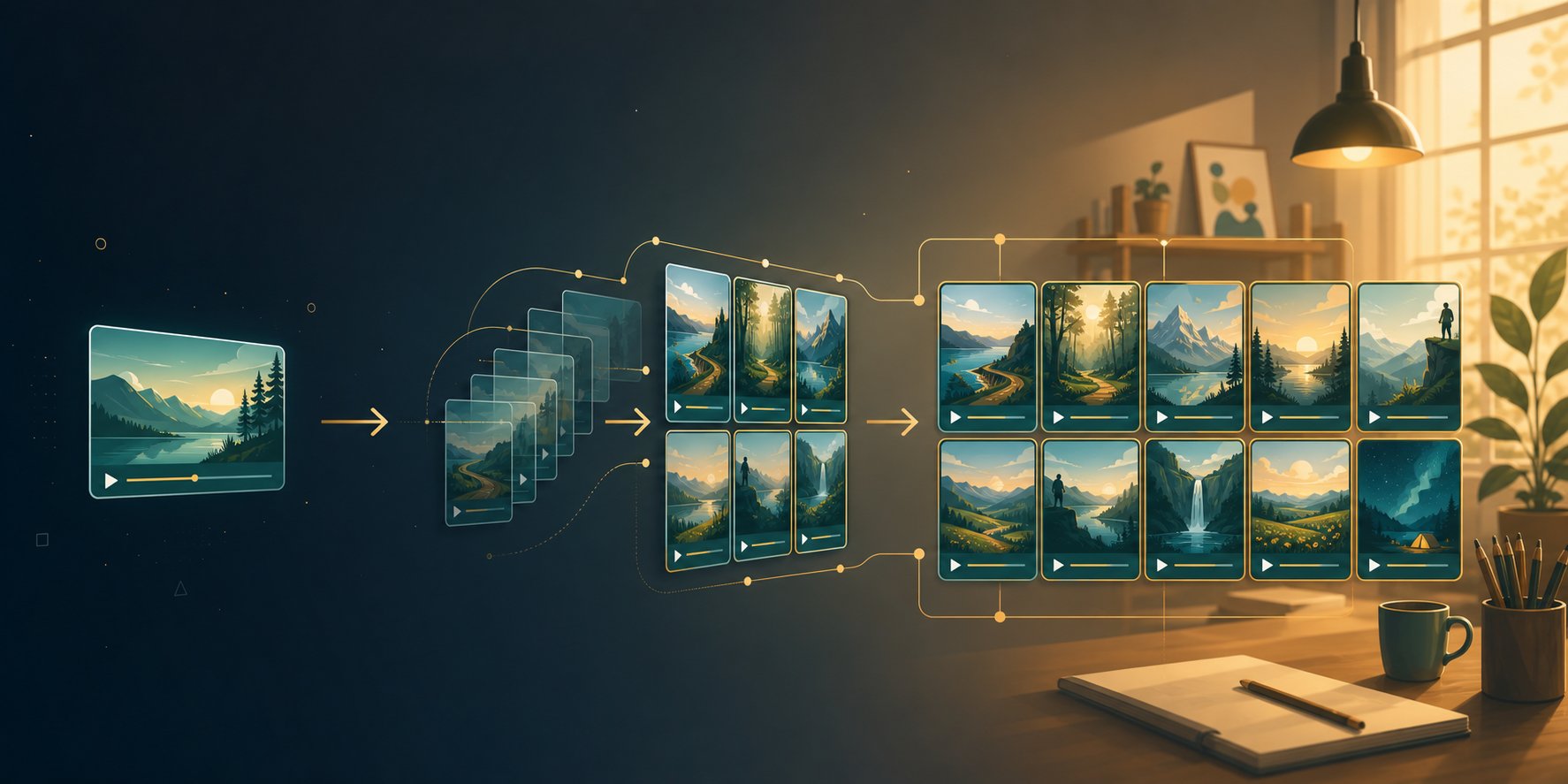
The path from observer to creator starts with a single decision: stop generating random clips and start building something cohesive. Everything discussed so far, the evaluation criteria, the tool comparisons, the distinction between showcases and real portfolios, applies directly to your own work the moment you commit to intentional output over isolated experiments.
Choosing Your Visual Identity and Sticking With It
Your first three videos define whether audiences perceive you as a portfolio creator or just another person testing tools. Before you generate a single frame, decide on constraints. Pick a color palette. Choose whether your work lives in photorealism, stylized illustration, or abstract motion. Define how you handle transitions, whether scenes cut hard or dissolve. These decisions feel limiting upfront, but they're the exact things that make a body of work recognizable.
Soundverse's research on visual consistency confirms that recurring color palettes, signature motion aesthetics, and predictive camera movement templates are what tie music and visuals into a unified identity. Without them, even technically impressive output feels fragmented. Lock your choices early. Refine them over time. But don't reinvent your visual language with every release.
From Single Videos to a Cohesive Body of Work
One video is a test. Three videos are a start. Ten videos are a statement. The gap between "I made something cool" and "I have a portfolio" is simply repetition with intention. Publish on a schedule, even if it's one video per month. Treat each piece as a chapter that references the visual logic of the one before it.
If you're comparing the best ai video generators 2025 comparison threads against newer options, you'll notice the landscape has shifted. The best free ai video generators 2026 prioritize workflow continuity over single-clip spectacle. Tools that remember your style preferences between sessions reduce the friction of maintaining identity across releases. When browsing ai video generator free reddit recommendations, focus on which platforms support iterative creation rather than which produce the prettiest isolated demo.
Tools and Workflows for Consistent Output
Ready to start? Here's a practical sequence that moves you from first generation to functioning portfolio:
- Start with a music-specific generator — MakeBestMusic's AI Music Video Generator lets you turn songs directly into visual content without assembling clips from multiple general-purpose tools. For musicians and YouTubers producing videos consistently, this single-input workflow eliminates the complexity that kills momentum early.
- Establish reference frames — Generate a free ai video generator from image workflow by creating key still frames in Midjourney or similar tools, then animating those reference images to maintain character and environment consistency. The best ai video generator from images approach gives you visual anchors that hold your style together across videos.
- Learn to add text intentionally — Knowing how to add words to a video, whether lyrics, titles, or narrative text, becomes a signature element when applied consistently. Choose one typography style and placement logic, then repeat it across every release.
- Supplement with general-purpose tools — Pull specific hero shots from Runway or Veo when a particular moment demands their cinematic strengths, but keep your music-specific pipeline as the foundation.
- Publish and iterate publicly — Post work in progress. Share evolution. Reddit free ai video generator communities and YouTube channels both reward creators who document their development rather than only showing polished finals.
The best ai video generators 2025 ai video generator tools that defined last year's landscape have matured into ecosystems where portfolio-building is a realistic workflow, not a fantasy. The barrier isn't budget or technical skill. It's commitment to consistency over novelty, iteration over perfection, and vision over virality.
You already know how to evaluate who has the strongest AI music video portfolio. Apply those same standards to your own output from day one. Define your identity, choose tools that support repetition, and publish with enough frequency that your visual language has room to develop. The creators who will answer this question definitively a year from now are the ones starting today.
