

What Is 808 Bass and Why Does It Dominate Modern Music
Ever felt a bass hit so deep it rattled your chest before you even registered the note? That is the 808 at work. It is one of the most referenced sounds in modern production, yet plenty of producers still wonder what it actually is and why it shows up in nearly every genre conversation.
The 808 Bass Definition Every Producer Should Know
808 bass is a deep, sub-heavy bass sound that originates from the bass drum circuit of the Roland TR-808 drum machine. Characterized by a boomy, sustained sine-wave tone typically sitting between 30 and 60 Hz, it serves as the low-end foundation in hip-hop, trap, R&B, and electronic music.
That definition covers the core idea, but the real-world picture is a bit more layered. In contemporary production, the term "808" refers to a percussion sound known for its booming, low-frequency bass, used as both a kick and a bass depending on context. By extending the decay and pitching the sound to match a song's key, a single 808 hit can carry an entire bass line while still delivering rhythmic punch.
Why the 808 Bass Drum Became Simply the 808
Here is where the confusion usually starts. The original sound comes from the TR-808's "bass drum" voice, so technically it is a kick drum. But when producers in the early 1980s started sampling that kick, stretching its decay, and tuning it across a keyboard, it stopped behaving like a drum and started functioning as a bass instrument. The label shortened naturally. Nobody says "TR-808 bass drum with extended decay tuned to E flat." They just say "the 808."
At first listen, the 808 blurs the distinction between a kick and a bass. In practice, it fills both roles simultaneously, reinforcing rhythm and anchoring the low end of a mix in a way no other single sound quite replicates.
How the Meaning of 808 Evolved in Modern Production
The term has stretched well beyond that original short, punchy kick. Today it encompasses tight percussive hits used in boom-bap, long sustained sub-bass tones driving trap beats, distorted and saturated variations built for aggression, and melodic bass lines that glide between pitched notes. The word "808" now refers to an entire sound category, not just a specific machine. Whether you are loading a one-shot sample into a sampler or synthesizing the tone from scratch, you are working within that same lineage.
Understanding what sits beneath the label matters because every production decision you make around the low end, from frequency choices to saturation to speaker translation, depends on knowing exactly what kind of 808 you are shaping. And that story starts with a drum machine Roland never expected anyone to care about.
The Roland TR-808 Origin Story Behind the Sound
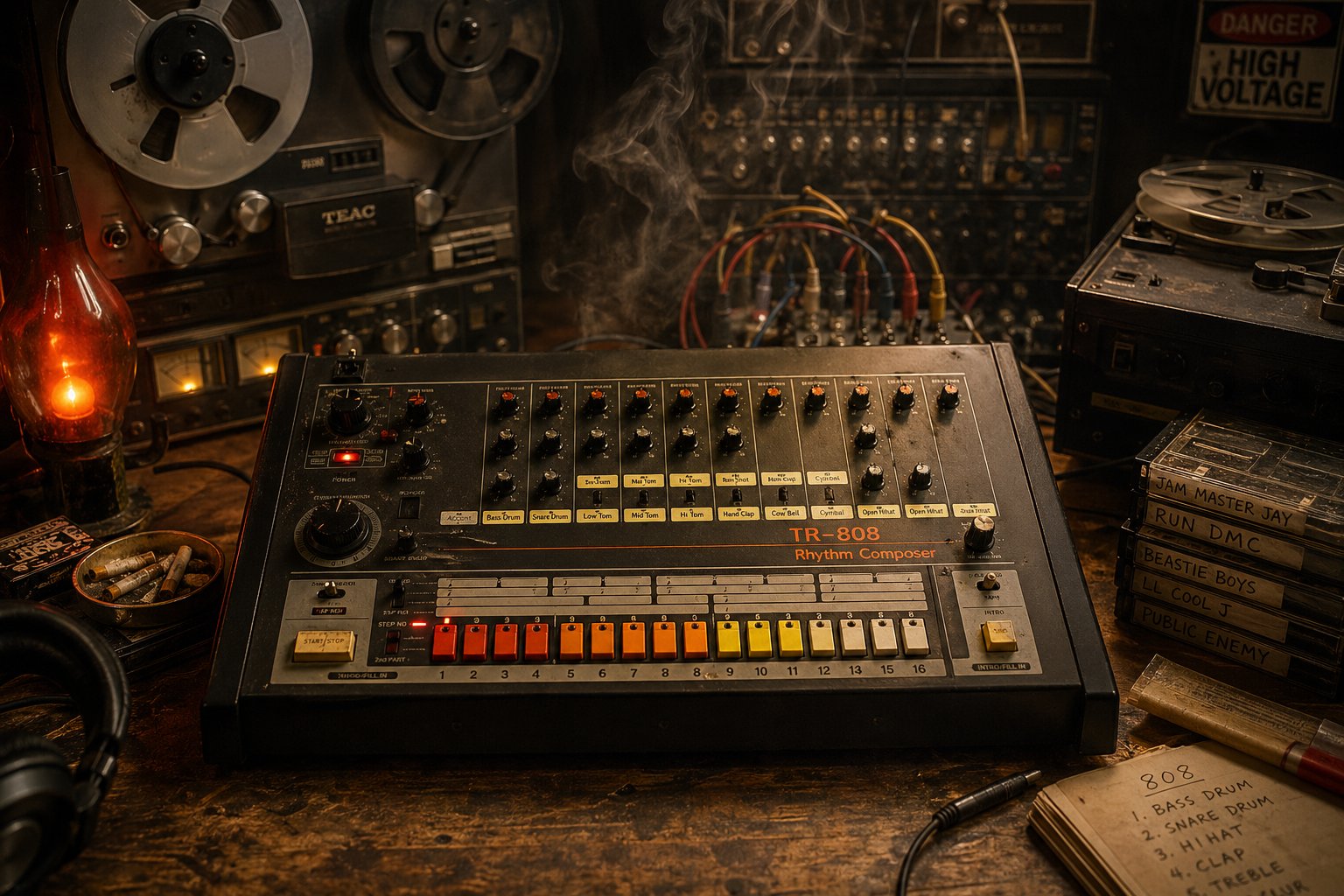
A drum machine built to help songwriters sketch out demos. That was the modest ambition behind the Roland TR-808. Its creator, Ikutaro Kakehashi, never imagined the device would outlive nearly every instrument of its era and become the rhythmic backbone of entire genres. But a combination of budget engineering, a happy accident in the circuitry, and a dramatic price collapse on the used market turned a commercial disappointment into one of the most influential instruments ever made.
The Faulty Transistor That Changed Music Forever
Kakehashi was a lifelong tinkerer. Born in Osaka in 1930 and orphaned at two, he grew up repairing clocks, radios, and organs before founding Roland Corporation in 1972. By the late 1970s, Roland had already released the CR-78 CompuRhythm, a programmable rhythm device famously used by Phil Collins on "In the Air Tonight." The next step was a more affordable, more flexible successor.
In 1980, that successor arrived as the TR-808 Rhythm Composer. To keep the price accessible, chief engineer Tadao Kikumoto chose analog synthesis over the expensive digital sampling approach used by competitors like the Linn LM-1. The result was a unit priced at $1,200, less than a quarter of the LM-1's $5,000 tag.
Here is where the accident happened. Part of the 808's design relied on transistors that were technically out of spec, components that would normally be discarded by manufacturers. Roland tested them and discovered they added a unique sonic character to the bass drum circuit, a deep, resonant boom unlike any acoustic drum. Rather than toss them, the engineers deliberately incorporated these "reject" transistors into the design. That quirk gave the machine its name: TR stood for Transistor Rhythm.
Ironically, the very thing that made the 808 sound special also sealed its production fate. As transistor manufacturing improved, the supply of out-of-spec components dried up. Roland discontinued the TR-808 in 1983 after producing roughly 12,000 units.
From Commercial Failure to Cultural Icon
The "failure" label deserves some context. Selling 12,000 units in two to three years was not catastrophic. The Linn LM-1 moved only about 525 units, and nobody calls that a failure either. The real issue was perception. Professional musicians and studios dismissed the 808 because it did not sound like real drums. In an era where guitars dominated and electronic producers preferred slicker gear, the machine's synthetic, almost cartoonish tones felt like a limitation.
That perception created an opportunity. As newer drum machines hit the market, used 808s flooded secondhand shops and their price plummeted from $1,200 to as low as $100. Suddenly, young musicians and producers in America's urban centers, people who could never afford high-end studio gear, had access to a fully programmable rhythm machine with a bass drum voice that could shake walls. The very qualities that turned off studio professionals became the reason underground artists embraced it. That deep, booming kick was not a flaw. It was a feature.
Key Moments in the 808's Rise Across Genres
The cultural timeline of the 808 reads like a map of modern popular music. Each milestone pushed the machine further from its demo-tool origins and deeper into the creative DNA of new genres.
- 1981 — Yellow Magic Orchestra uses the TR-808 on their album BGM, marking the first recorded use of the machine on an album.
- 1982 — Marvin Gaye records "Sexual Healing" in isolation in Belgium, building the track entirely around the 808's rhythm. The song becomes a massive global hit and introduces the machine's sound to mainstream pop audiences.
- 1982 — Afrika Bambaataa and the Soulsonic Force release "Planet Rock," fusing hip-hop with Kraftwerk-inspired electronic textures over an 808 foundation. The track is widely credited as one of the earliest electro records and a pivotal moment in defining modern music culture.
- Mid-1980s — The 808 becomes central to the development of Miami bass, Chicago house, and Detroit techno, with producers exploiting its extended bass drum decay for heavy low-end impact.
- Late 1980s–1990s — Southern rap and crunk producers, most notably Rick Rubin, push the bass drum's decay even further, turning the 808 into a sustained sub-bass weapon.
- 2008 — Kanye West releases 808s & Heartbreak, an album that puts the machine's name in its title and reintroduces the sound to a new generation of listeners and producers.
- 2010s–present — Trap and drill producers make the long-tail, pitched, sliding 808 the default low-end voice in hip-hop, cementing its dominance across streaming platforms worldwide.
As documentary filmmaker Alexander Dunn put it, these movements might have happened without the 808, but they would "sound completely different" without it. The machine provided an iconic, instantly identifiable group of sounds that left a lasting imprint on every genre it touched.
What makes this history relevant to your productions today is not nostalgia. It is the fact that the 808's sonic character, that clean, round, sub-heavy tone with a pitch sweep at the attack, was never an accident of taste. It was an accident of engineering. And understanding exactly how that circuit produces its sound is the key to recreating it, shaping it, and making it translate on any playback system.
Technical Anatomy of the 808 Bass Sound Explained
That engineering accident produced a very specific type of sound, and knowing what is happening under the hood changes how you approach every mix decision. You do not need an electrical engineering degree to grasp it. You just need to understand three things: what frequencies the 808 actually produces, how its pitch behaves in the first few milliseconds, and why its volume fades the way it does. Once those click, you will hear the sound differently and shape it with far more intention.
Frequency Content and the Sub-Bass Fundamental
The 808's power lives in a range most instruments barely touch. Its fundamental frequency typically sits between 30 and 60 Hz, placing it squarely in the sub-bass zone. For perspective, the lowest note on a standard bass guitar is around 41 Hz (open E string), and many synth bass patches start their useful energy well above 60 Hz. The 808 parks itself right at the floor of human hearing, in a region you feel through your chest and feet as much as you hear through your ears.
What makes this even more distinctive is the waveform itself. The TR-808's bass drum circuit uses what engineers call a bridged-T network oscillator. Sounds complex? It is actually straightforward in practice. When triggered, this circuit generates a sine wave, the simplest, purest waveform possible. There are no jagged edges, no stacked harmonics, no buzzy overtones. Just a smooth, round tone. That is why an 808 sounds so clean compared to a sawtooth or square-wave bass, which carry dense harmonic content across the frequency spectrum. The 808 delivers almost all of its energy in one focused band, and that singular concentration is what gives it such weight in a mix.
The trade-off is visibility. A pure sine wave at 45 Hz is nearly invisible on small speakers, but that is a mixing problem for a later discussion. From a sound-design perspective, this purity is the 808's defining trait.
The Pitch Envelope Sweep That Creates the Thump
If the sine wave is the body of the 808, the pitch envelope is its fist. This is the detail that separates a real 808 from a plain sub-bass tone, and it happens so fast you might never consciously notice it.
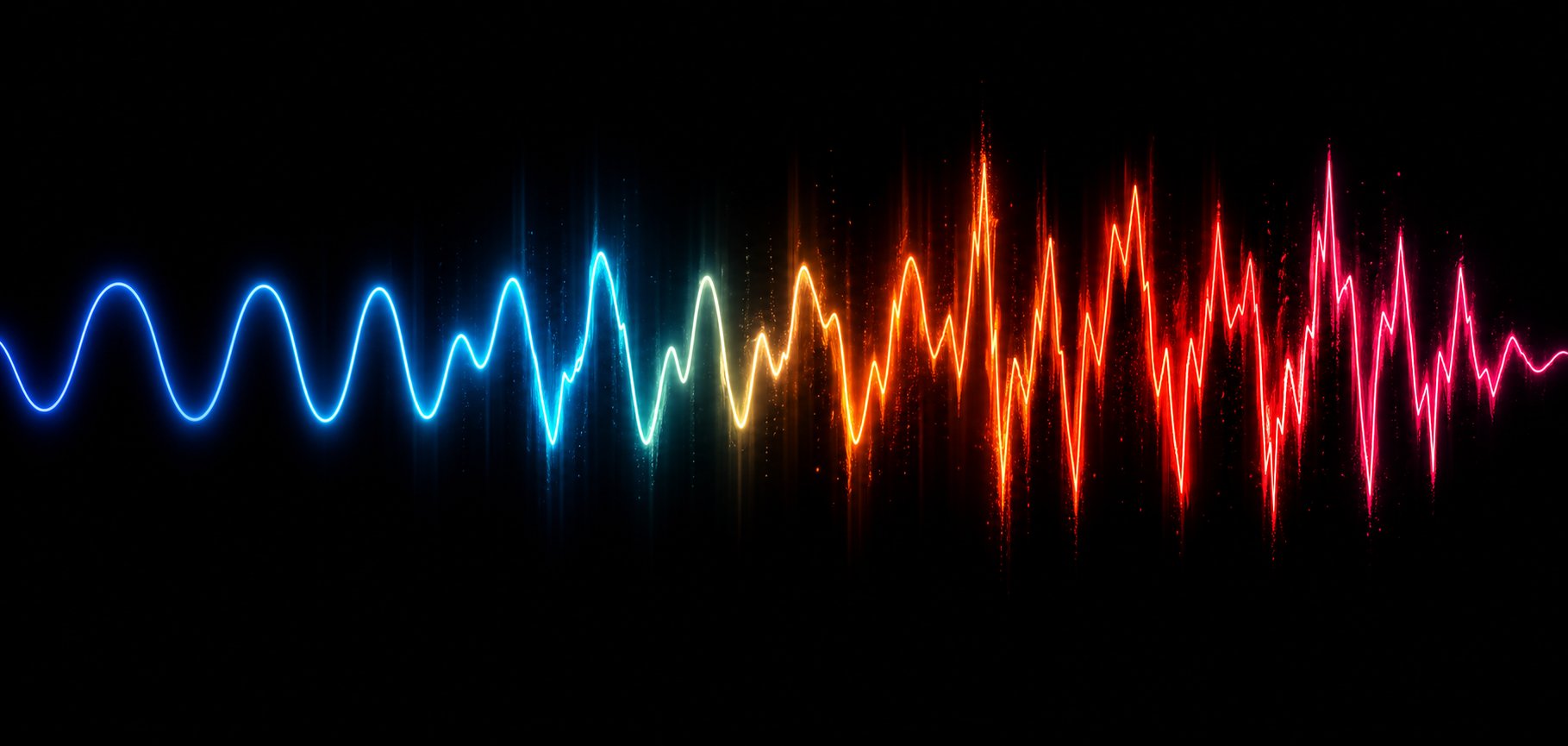
When the circuit fires, the oscillator does not start at the target fundamental. It begins at a higher frequency, roughly 400 to 500 Hz, and sweeps down to 50 to 60 Hz within milliseconds. That rapid downward pitch bend, often covering just a few semitones over 5 to 30 milliseconds, creates the percussive "thump" or "punch" you feel at the front of every hit. Your ear registers it as an attack transient, even though no noise burst or click is involved. It is pure pitch movement doing all the work.
The secret to the 808's punch is not volume or compression. It is a rapid downward pitch sweep at the very start of the sound, a brief drop from a higher frequency to the sustained fundamental that tricks the ear into hearing a hard transient from nothing more than a sine wave.
This is why cranking up the "tone" or "pitch envelope" knob on an 808 emulation makes the hit sound snappier and more aggressive. You are widening that initial sweep, giving the attack more distance to travel. Dial it back and the sound softens into something closer to a pure sub-bass pad. The original TR-808 offered this as the Tone control, and higher settings produced a more pronounced initial punch while lower settings created a softer attack.
Amplitude Decay and Why It Feels Different from a Sub-Bass
Imagine holding a piano key and listening to the note slowly fade to silence. That gradual, natural fade is an exponential decay, and it is exactly how the 808's volume behaves. After the initial pitch sweep, the sine wave settles at its fundamental frequency and then loses energy smoothly over time. Depending on the decay setting, this tail can last anywhere from 100 milliseconds for a tight, punchy kick to several seconds for a sustained bass note.
This is the critical difference between an 808 and a standard sine sub-bass. A typical sub-bass synth patch uses a sustain stage, meaning the volume holds steady at a fixed level for as long as you hold the key, then drops when you release it. The result is a flat, static tone. The 808 has no sustain stage in the traditional sense. Its volume is always falling, always moving toward silence. That constant decay gives the sound a sense of life and motion, a natural arc that breathes inside a beat rather than sitting on top of it like a block of low-end energy.
The analog components in the original hardware added another layer of character. Temperature shifts in the transistors and capacitors caused subtle frequency variations with each trigger, so no two hits were perfectly identical. Even a single unit's output drifted slightly with environmental conditions. Modern digital emulations can replicate the waveform and envelope precisely, but that organic micro-variation is part of what made the original hardware feel alive.
Together, these three elements, a focused sub-frequency fundamental, a rapid pitch sweep at the attack, and a smooth exponential decay, form the complete anatomy of the sound. Every variation producers use today, from short punchy hits to long sliding bass lines, is built by manipulating these same three parameters in different proportions.
Types and Variations of 808 Bass Every Producer Needs
Those three parameters, fundamental frequency, pitch sweep, and decay shape, are the building blocks. But the way you balance them produces wildly different results. Treating the 808 as a single sound is like calling every guitar tone "guitar." In practice, producers choose from a handful of distinct variations, each suited to a specific role in a track. Knowing which one to reach for, and when, is what separates a muddy low end from one that hits with purpose.
Short-Tail vs Long-Tail 808 Bass
The simplest distinction comes down to how long the sound rings out. A short-tail 808 keeps its decay tight, usually under 300 milliseconds. The result is a punchy, percussive hit that stays close to the original TR-808 kick character. You will hear this approach in boom-bap and lo-fi production, where the 808 acts more like a drum than a bass instrument. It punches, then gets out of the way, leaving room for a separate bass line or sample chop to carry the harmonic weight.
Stretch that decay past one second and you are in long-tail territory. This is the trap and drill standard, where the 808 is the bass. The sustained sub presence fills the space between hits, and the tail often overlaps with the next note, creating a continuous low-end bed. Long-tail variations demand more careful gain staging and tuning because that extended ring exposes pitch inconsistencies and frequency buildup far more than a quick hit ever would.
Clean Sub vs Distorted and Saturated 808s
A clean sub 808 keeps the waveform close to a pure sine, with minimal harmonic content above the fundamental. It delivers raw low-end weight, the kind you feel in your ribcage on a proper sound system. R&B tracks and mellow hip-hop instrumentals lean on this variation because it sits underneath melodic content without competing for attention in the midrange.
Add distortion or saturation and the character shifts dramatically. These processes generate upper harmonics, new frequency content at 80 Hz, 120 Hz, 160 Hz, and beyond, that give the sound aggression and grit. The practical benefit goes further than tone, though. Those added harmonics make the 808 audible on speakers that physically cannot reproduce deep sub frequencies. If your tracks need to translate on phones and laptops, some degree of saturation is not optional. It is a survival strategy.
Melodic 808s and the Signature Slide Technique
Pitched melodic 808s take the sound fully into bass-instrument territory. Instead of repeating a single note, the 808 is tuned to play across the scale, following chord progressions and creating melodic movement in the low end. This approach dominates modern trap and has become so standard that many producers write their 808 patterns before anything else in the arrangement.
The slide, or glide, adds another layer of expression. Using portamento, the pitch bends smoothly from one note to the next rather than jumping discretely. That smooth transition is the signature trap glide effect you hear in countless records. The portamento timing matters: too fast and the slide sounds like a pitch artifact, too slow and it feels sluggish against the beat. Most producers dial it somewhere between 50 and 200 milliseconds depending on tempo and feel.
Each of these variations is a deliberate production choice, not a default. The table below maps them side by side so you can match the right type to your next session.
| Type | Character | Typical Decay Length | Best Genre Fit | When to Use |
|---|---|---|---|---|
| Short-Tail | Tight, punchy, percussive | 100-300 ms | Boom-bap, lo-fi, classic hip-hop | When the 808 serves as a kick and a separate bass handles the harmonic role |
| Long-Tail | Sustained, heavy, floor-shaking | 800 ms - 2+ seconds | Trap, drill, modern hip-hop | When the 808 is the primary bass voice carrying the low end between hits |
| Clean Sub | Pure, round, minimal harmonics | Varies | R&B, mellow hip-hop, pop | When you need low-end weight without midrange competition |
| Distorted / Saturated | Aggressive, gritty, harmonically rich | Varies | Trap, drill, phonk, EDM | When the mix needs aggression or must translate on small speakers |
| Pitched Melodic | Tuned across notes, bass-line function | Medium to long | Trap, modern R&B, pop | When the 808 follows a chord progression or carries melodic movement |
| Slide / Glide | Smooth pitch bends between notes | Medium to long | Trap, drill, experimental bass | When you want expressive pitch transitions and rhythmic fluidity |
Picking the right variation is only half the equation. The real challenge starts when you need to build one of these from scratch or shape a sample to match your vision, which is exactly where synthesis and sound design come into play.
How to Make an 808 Bass from Scratch in Any DAW
The good news is you do not need a vintage drum machine or an expensive plugin to get there. Every DAW ships with at least one synthesizer capable of producing the sound, and the parameter list is surprisingly short. If you understand the three-part anatomy covered earlier, the fundamental sine wave, the pitch sweep, and the exponential decay, you already know what you are building. The synth just gives you the knobs to do it.
Step-by-Step 808 Synthesis from a Sine Wave
Open any soft synth in your DAW and follow these steps. The parameter names may differ slightly between plugins, but the concepts are universal.
- Select a sine wave oscillator. This is your only sound source. Disable any additional oscillators, noise generators, or unison voices. The 808 gets its character from purity, not complexity. As Avid's production guide notes, sine and triangle waves produce the clean, pure tone ideal for establishing the foundation of an 808.
- Shape the amplitude envelope. Set the attack to zero (or as close to zero as the synth allows) so the sound hits instantly. Drop the sustain to zero as well. Then set the decay somewhere between 800 ms and 2 seconds depending on how long you want the tail. Finally, bring the release down to a short value so the note cuts cleanly when you lift the key. This creates that smooth exponential fade rather than a static, held tone.
- Apply a pitch envelope for the thump. Route a modulation envelope to the oscillator's pitch. Set the envelope's attack to zero and its decay between 5 and 30 ms. The modulation amount should drop the pitch by 2 to 12 semitones. This rapid downward sweep is what gives the hit its percussive punch. Start around 5 semitones and a 15 ms decay, then adjust by ear until the attack feels right for your track.
- Add a low-pass filter (optional). If your synth introduces any unwanted upper harmonics or digital artifacts, place a low-pass filter around 200 to 400 Hz. This cleans up the top end while preserving the sub-bass body. Many producers skip this step entirely if the sine wave is already clean enough.
- Apply subtle saturation or drive. A small amount of warmth goes a long way. Use your synth's built-in drive or drop a saturation plugin on the channel. This adds faint harmonics that give the sound presence without destroying the clean low-end character. Keep it subtle here; heavier distortion is a mixing decision you can make later.
Once you are happy with the result, save the patch as a preset. You will want to recall it across projects without rebuilding from scratch every time.
Shaping the Pitch Envelope for Authentic Punch
The pitch envelope step deserves extra attention because it is the single parameter that makes or breaks the feel. Too much modulation depth and the hit sounds like a cartoon laser. Too little and you lose the transient entirely, leaving a flat sub-bass tone with no impact. The sweet spot depends on context. For a tight boom-bap hit, try a shorter decay (5 to 10 ms) with a moderate pitch drop (3 to 5 semitones). For an aggressive trap 808, push the decay closer to 20 to 30 ms and widen the drop to 8 to 12 semitones. You will notice the character shift dramatically with even small adjustments, so tweak in real time while your beat plays.
Samples vs Synthesis and Choosing Your Workflow
Synthesis gives you total control, but it is not the only path. The sample-based approach is equally valid and often faster. Load an 808 one-shot into your DAW's sampler, set it to follow MIDI pitch, and write a bass line by matching root notes to your chord progression. Adjust the sampler's amplitude envelope to control the tail length, and you are producing in minutes instead of sound-designing for an hour.
The trade-off is flexibility. Samples come with baked-in character, a specific saturation curve, a fixed pitch sweep depth, a particular decay shape. That is a strength when you want a proven sound quickly, but a limitation when you need to sculpt something that fits a very specific pocket in your mix. Synthesis lets you adjust every parameter independently. Samples give you speed and a tone that someone already refined.
Most working producers use both. They keep a folder of trusted one-shots for fast sessions and pull up a synth when a track demands something custom. There is no wrong answer, only the one that gets the sound in your head into the speakers.
Of course, building the 808 is only the first half of the low-end puzzle. The moment you drop it into a full arrangement, it has to share space with the kick drum, and that relationship is where most mixes either lock in or fall apart.
How to Make 808 and Bass Not Clash with Your Kick
The kick and the 808 occupy almost identical frequency territory. They both live below 100 Hz, they both demand attention at the front of a beat, and they both want to be the loudest thing in the low end. When you let them fight for that space unchecked, the result is a muddy, distorted mess where neither sound hits with any clarity. Getting them to cooperate is arguably the most common mixing challenge in bass-driven production, and there are really only three ways to solve it.
Replace, Layer, or Sidechain Your Kick and 808
Think of these as three philosophies, not rigid rules. Each one works, but the right choice depends on the genre, the arrangement, and how much transient punch you need at the top of each hit.
The first approach is the simplest: ditch the kick entirely and let the 808 do both jobs. This is common in trap and drill, where the pitch envelope sweep at the start of the 808 already provides a percussive transient. If you shaped that sweep correctly during synthesis, the initial thump acts as the kick while the sustained tail carries the bass. No layering, no frequency conflicts, no phase issues. The trade-off is that you lose the sharp, clicky attack that a dedicated kick sample provides, so this works best when the beat calls for a rounder, more sub-focused punch.
The second approach flips the equation. You layer a short kick on top of the 808 to add the transient definition the sine wave lacks. The key word here is "short." You want just the initial click and body of the kick, with the decay trimmed tight so it does not overlap with the 808's tail. As iZotope's mixing guide puts it, too much decay in the kick will overlap with the 808 and cause the two to mask each other. Shorten the kick's volume envelope so it delivers its punch in the first 30 to 50 milliseconds, then let the 808 take over from there.
The third approach keeps both sounds intact and uses sidechain compression to carve out momentary space. You place a compressor on the 808 channel and feed the kick's signal into its sidechain input. Every time the kick fires, the compressor briefly ducks the 808's volume, letting the kick punch through cleanly before the 808 swells back. This is the most flexible method because it preserves the full character of both sounds while preventing them from colliding at the point of impact.
Frequency Separation Techniques for Clean Low End
Sidechain compression handles the timing conflict, but frequency overlap is a separate problem. Even when the two sounds are not hitting at the exact same moment, their sustained energy can pile up in the same frequency band and eat your headroom alive.
The most reliable fix is a high-pass filter on the kick. Set it somewhere around 80 to 100 Hz to roll off the kick's sub content, and let the 808 own everything below that threshold. The kick keeps its body and click in the 100 to 200 Hz range and above, while the 808 handles the deep sub weight. This division gives each sound a clear lane without either one feeling thin.
You can also approach it from the other direction, high-passing the 808 slightly and letting the kick carry the sub, but this is far less common in modern production. Most genres that rely on 808s want that sustained sub presence, so giving the sub range to the kick usually defeats the purpose.
For sidechain compression settings, start with a fast attack (0.1 to 1 ms) so the compressor clamps down immediately when the kick hits. Set a medium release (50 to 150 ms) that lets the 808 recover smoothly without an audible pumping artifact. A moderate ratio around 4:1 provides enough ducking to create separation without completely silencing the bass. Adjust the threshold until you hear the kick pop through clearly on each hit, then fine-tune the release so the 808's tail flows back naturally. Some producers also use sidechain EQ instead of broadband compression, creating dynamic cuts only at the kick's fundamental frequency (often around 60 to 65 Hz) and its transient punch area (around 3.5 kHz) on the 808 channel. This is more surgical and preserves more of the 808's harmonic content during the duck.
Tuning Your 808 to the Song Key
Frequency separation and sidechain tricks will not save a mix if the 808 is out of tune. When the bass note clashes with the harmonic content of your chords, pads, and melodies, the low end sounds dissonant and weak no matter how clean your gain staging is. A well-tuned 808 locks into the key of your track, providing solid musical support while hitting harder and cleaner.
To identify the root note of an 808 sample, load it into your DAW and run it through a tuner plugin or spectrum analyzer. Watch where the fundamental frequency peaks. A spike at around 55 Hz, for example, tells you the sample is tuned to A1. If your track is in the key of C minor, you will need to transpose the sample so its root aligns with notes in that scale. Most DAWs let you adjust pitch in semitones and cents directly in the sampler or clip view.
Matching pitch becomes even more critical when you layer the 808 with a kick. If both share the same fundamental, they reinforce each other powerfully, but they also demand tighter sidechain control because the overlap is total. If they sit on different fundamentals, the frequency conflict is less severe but the tonal relationship can sound disjointed. There is no single correct answer, but you should always make the choice deliberately rather than leaving it to chance.
Here is a checklist you can run through every time you are fitting an 808 into a mix alongside a kick:
- Identify the root note of your 808 sample using a tuner or spectrum analyzer and transpose it to match the song's key.
- Decide your approach: replace the kick with the 808, layer a short kick on top, or use sidechain compression to create space for both.
- If layering, shorten the kick's decay so it delivers only the initial transient and body without overlapping the 808's tail.
- High-pass the kick around 80 to 100 Hz to give the 808 exclusive ownership of the sub-bass range.
- If using sidechain compression, set a fast attack (under 1 ms), medium release (50 to 150 ms), and a ratio around 4:1.
- Check for phase issues by soloing both sounds together and listening for any thinning or cancellation in the low end.
- Test the kick-and-808 relationship on headphones and at least one additional playback system before committing to your settings.
- Use reference tracks in a similar style to compare your low-end balance against a professionally mixed benchmark.
A locked-in kick-and-808 relationship gives your low end clarity and punch on a proper monitoring setup. But here is the uncomfortable truth: even a perfectly balanced sub-bass mix can completely vanish the moment someone plays it on a phone speaker or a laptop. The physics of small drivers simply will not reproduce those frequencies, and that problem demands a different set of solutions entirely.
Making Your 808 Bass Hit Hard on Every Speaker
You have spent hours tuning your 808, carving out space for the kick, and dialing in the perfect decay. The low end sounds massive on your studio monitors. Then you bounce the track, pull it up on your phone, and the bass is just... gone. Not quiet. Not thin. Gone. If that scenario sounds painfully familiar, you are not alone. It is one of the most common frustrations in bass-heavy production, and the cause is pure physics, not a mixing mistake.
Why 808 Bass Disappears on Phones and Laptops
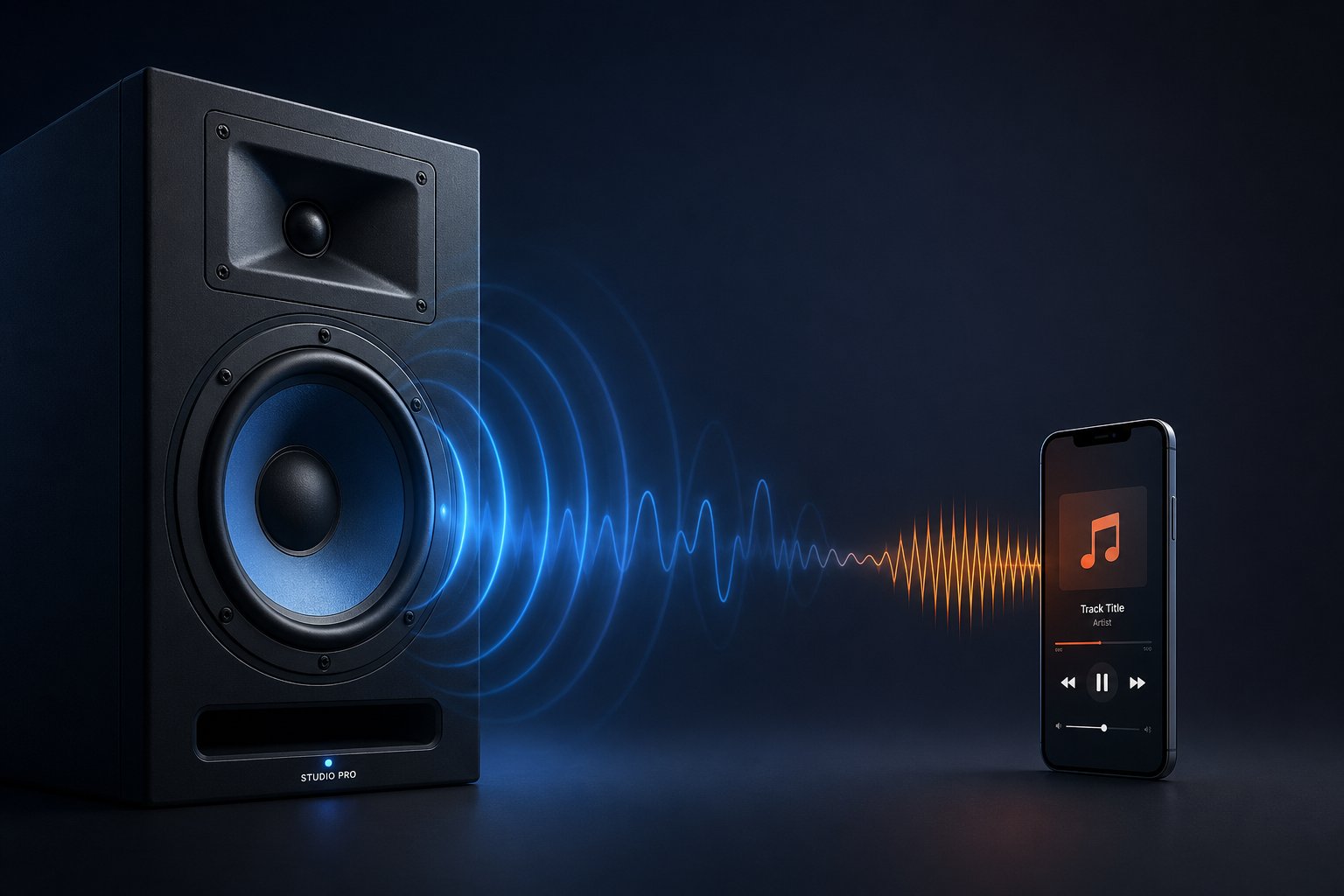
Small speakers have small drivers. A phone speaker or laptop driver typically measures between 10 and 30 millimeters across, and that physical size determines the lowest frequency it can reproduce. Most of these devices roll off sharply below 80 to 100 Hz. Some cut out even higher. A clean sine-wave 808 sitting at 40 Hz is producing energy that these speakers literally cannot move enough air to recreate. The frequency is there in the file, but the hardware ignores it.
The instinct is to turn the bass up. As mastering engineer insights from Mastrng point out, many producers respond to this problem by boosting the 808's level, and the result is an unbalanced mix where the kick loses clarity and the low end becomes cloudy. The issue was never volume. It was the lack of harmonic content above the range where small speakers stop working. Your bass does not need to be louder. It needs to be visible to devices that cannot see sub frequencies.
Harmonic Saturation and the Missing Fundamental Trick
This is where psychoacoustics does the heavy lifting. When you apply saturation or distortion to a sine wave, the plugin generates new harmonic content at integer multiples of the fundamental. An 808 tuned to 40 Hz produces harmonics at 80 Hz, 120 Hz, 160 Hz, 200 Hz, and so on. Those upper harmonics fall well within the range that phone speakers and earbuds can reproduce. And here is the remarkable part: your brain fills in the rest.
The missing fundamental is a psychoacoustic phenomenon where the brain detects the pattern among upper harmonics and perceives the fundamental frequency even when it is not physically present in the sound. By adding harmonics to your 808, you let small speakers deliver the overtones while the listener's auditory system reconstructs the low-end pitch internally.
This is not a studio trick or a workaround. It is how human hearing actually functions. Research into the missing fundamental confirms that the brain processes information in the overtones to calculate the fundamental frequency, even when that frequency is completely absent from the signal. Standard telephones, for example, cannot reproduce anything below 300 Hz, yet you still perceive the deep pitch of a male voice on a phone call. The same principle applies to your 808.
In practice, this means inserting a saturation or distortion plugin directly on your 808 channel and driving it until you see harmonic content appearing in the 100 to 300 Hz range on a spectrum analyzer. Tape-style saturation adds warmth and gentle harmonics. Harder distortion or clipping generates stronger upper-frequency presence. The key is finding the point where the bass becomes audible on small speakers without losing its clean sub-bass weight on larger systems.
Parallel Distortion and Mid-Bass Layering Techniques
Applying distortion directly to the 808 works, but it changes the character of the sound across every playback system, not just the small ones. Parallel distortion gives you more control. The concept is straightforward: keep your original clean 808 on its own channel, then send a copy to a separate auxiliary track where you apply heavy saturation or distortion.
The critical step most producers miss comes next. Place a high-pass filter after the saturation on the aux track, set around 70 to 100 Hz with a steep slope of 18 or 24 dB per octave. This strips the distorted sub-bass from the parallel channel and leaves only the useful upper harmonics, the ones small speakers can actually reproduce. Your clean channel still owns the pure sub energy. The parallel channel adds only the midrange harmonic information that makes the bass translate.
Blend the aux fader up gradually. The moment the bass becomes audible on a phone speaker or laptop, stop. If the midrange starts pulling attention away from the kick or cluttering the mix, you have gone too far. Always check phase between the two channels by collapsing to mono. If the bass thins out, try flipping polarity on the aux track or switching your high-pass filter type between minimum-phase and linear-phase until the two signals reinforce each other cleanly.
A third option is layering a dedicated mid-bass tone underneath the 808. Create a simple sine or triangle wave pitched an octave above the 808's fundamental, sitting in the 100 to 200 Hz range. Keep it quiet, just enough to add body on systems that lose the sub. This layer acts as a safety net, ensuring that even if the harmonics from saturation are not enough, there is real tonal content in a range every speaker can handle.
Whichever method you choose, the final step is non-negotiable: test your mix on multiple playback systems. Studio monitors, headphones, a phone speaker, a car stereo, and cheap earbuds. If the bass holds up across all of them, your translation work is done. If it vanishes on any one of them, you need more harmonic content, not more volume.
With the translation problem solved, the next question is how to apply all of these techniques within the specific genre you are producing for, because a trap 808 and an R&B 808 demand very different treatment even when the underlying physics stays the same.
Genre-Specific 808 Programming Techniques That Work
A trap producer and an R&B producer can start with the exact same 808 sample and end up with two sounds that share almost nothing in common. The difference is not the source material. It is the decisions made around decay length, saturation amount, pitch behavior, and rhythmic placement. Each genre has its own unwritten rulebook for how the low end should feel, and programming your 808 against those expectations is the fastest way to make a beat sound like it belongs.
Trap and Drill 808 Programming Essentials
Trap lives on long-tail, distorted 808s pitched melodically across the scale. The decay typically stretches past one second, sometimes well beyond two, creating a sustained sub-bass bed that carries the entire harmonic foundation of the beat. Saturation is moderate to heavy, enough to generate upper harmonics that cut through dense hi-hat rolls and layered melodies. The tempo usually sits between 140 and 160 BPM in a half-time feel, which gives the 808 room to breathe between hits despite the fast hi-hat patterns above it.
Slides are essential here. Overlapping MIDI notes with portamento set between 80 and 120 ms create those smooth pitch glides that define the genre. The 808 pattern often mirrors a bass line more than a drum part, moving through root notes, fifths, and octaves in sync with the chord progression. Think of it less as programming a kick and more as writing a bass guitar part with a very specific tone.
Drill borrows heavily from trap's playbook but pushes the aggression further. Decay times tend to be shorter, around 500 to 800 ms, keeping the hits tighter and more percussive against the genre's sliding melodic patterns. Saturation levels run higher, sometimes bordering on outright distortion, and key choices lean darker, with minor keys and flat intervals dominating. The slide patterns are still present but often faster and more rhythmically syncopated, giving drill its restless, urgent energy.
Boom-Bap and R&B 808 Approaches
Boom-bap pulls the 808 back toward its original TR-808 character. Short, punchy hits with minimal pitch manipulation sit alongside vinyl-textured kicks and chopped samples. The decay rarely exceeds 300 ms, and saturation is kept low or absent entirely. The 808 functions as a drum here, not a bass instrument, so it shares the low end with a separate bass line, whether that is a sampled upright, a Moog patch, or a filtered loop. Pitch envelopes stay subtle, just enough sweep to give the hit a natural thump without drawing attention to itself.
R&B takes the opposite approach to distortion but shares boom-bap's restraint in other areas. Clean sub 808s with smooth, extended sustain sit deep underneath vocal melodies and lush chord pads. The goal is weight without presence, low-end support that you feel rather than consciously hear. Subtle pitch bends replace hard slides, and the decay is shaped to complement the vocal phrasing rather than the drum pattern. Any saturation applied is minimal, just enough to ensure the bass registers on earbuds without competing with the midrange warmth of the vocals and keys.
Using 808 Bass in Electronic and EDM Production
In electronic and EDM contexts, the 808 rarely serves as the primary bass voice. Instead, it functions as a sub-reinforcement layer underneath synthesized basses, adding low-end weight below 60 Hz while the main bass patch handles everything above. The decay is usually matched to the tempo so the sub tail fills exactly one beat or half a beat without overlapping. Saturation is minimal because the synth bass above it already provides harmonic content. Slides are uncommon; the 808 stays locked to the root note or follows a simple pattern that anchors the drop without melodic movement.
The table below maps these approaches side by side for quick reference during a session.
| Genre | 808 Type | Typical Decay | Saturation Level | Slide Usage | Key Production Tip |
|---|---|---|---|---|---|
| Trap | Long-tail, pitched melodic | 1 - 2+ seconds | Moderate to heavy | Frequent, 80-120 ms glide | Write the 808 pattern as a bass line first, then build drums around it |
| Drill | Medium-tail, aggressive | 500 - 800 ms | Heavy | Fast, syncopated slides | Use darker minor keys and tighter decay to keep the energy urgent |
| Boom-Bap | Short-tail, percussive | 100 - 300 ms | None to low | Rare | Let a separate bass instrument carry the harmonic weight below the 808 |
| R&B | Clean sub, smooth sustain | 600 ms - 1.5 seconds | Minimal | Subtle pitch bends only | Shape the decay to follow vocal phrasing, not the drum grid |
| EDM / Electronic | Sub-layer reinforcement | Tempo-synced (1 beat or less) | None to minimal | Uncommon | Match the 808 tail length precisely to the tempo to avoid overlap between hits |
For producers who want to test how different 808 approaches sit inside a full arrangement before committing to detailed sound design, MakeBestMusic's AI Song Generator can turn bass references and production textures into original song drafts quickly. It is a useful way to audition whether a clean R&B sub or an aggressive drill 808 actually works in context, without building an entire beat from scratch just to find out.
Knowing which genre conventions to follow, and when to break them, gives your programming direction. But even the best-programmed pattern needs the right raw material to start from, and that raises a practical question: where do you actually find quality 808 samples, and how do you tell the good ones from the forgettable?
Best 808 Samples, Packs, and Production Tools
The right raw material saves hours. You can synthesize an 808 from scratch using the sine-wave method covered earlier in this article, and that approach gives you total control over every parameter. But when a session demands speed, or when you want a tone that someone else has already refined through analog gear and careful processing, a well-chosen sample pack gets you there faster. The trick is knowing where to look and how to separate genuinely useful packs from the noise.
Where to Find Free 808 Samples and Packs
Free does not have to mean low quality. Several reputable platforms offer 808 one-shots and loops at no cost, and some of them rival paid alternatives. Slooply hosts a library of free drum kits like The 808 Lounge, which includes loops labeled by key and tempo for quick integration. Sample Focus provides a community-curated collection where every uploaded sample undergoes manual verification for quality and tagging accuracy. Splice, one of the largest sample marketplaces, also offers free trial credits that let you pull individual 808 hits without committing to a subscription.
The critical step most beginners skip is checking licensing terms. A sample labeled "free" on a forum or social media post may carry restrictions on commercial use, require attribution, or lack legal clearance entirely. Platforms with clear licensing information and verified royalty-free status protect you from takedown notices and disputes down the line. Always confirm the license before dropping a sample into a release-bound project.
What Makes a Quality 808 Sample Pack Worth It
Not every pack deserves space on your hard drive. Whether free or paid, evaluate each one against the same criteria before committing.
- Clean recording with no background noise, clicks, or digital artifacts in the tail.
- Proper tuning, with the root note clearly labeled so you can pitch it to your song's key without guesswork.
- Sufficient tail length. A sample that cuts off too early limits your options. You can always shorten a long tail, but you cannot extend one that was truncated at the source.
- Variety of tonal character, including clean, saturated, and distorted versions so you are not locked into a single flavor.
- High bit depth and sample rate (24-bit, 44.1 kHz minimum) to preserve detail when you pitch-shift or process further.
- Royalty-free licensing with clear commercial-use terms documented in the pack.
Premium packs justify their price when they deliver what free collections typically lack: wider variation across tonal styles, consistent quality across every sample in the set, and unique processing that gives the sounds a character you will not find in generic kits. Packs like 808 Filth and 808 Savage use blends of analog and digital distortion plus guitar amp processing to create tones that would take significant effort to replicate from scratch. If a $15 pack saves you two hours of sound design on every project, it pays for itself after one session.
From 808 Sound Design to Full Song Production
Here is where many producers hit a wall. You have the perfect 808 sample or a custom patch you built from a sine wave. You have programmed a pattern that fits your genre. But hearing how that bass line actually works inside a full arrangement, with vocals, chords, drums, and structure, still requires building out an entire beat. That gap between "I have a great 808 tone" and "I have a finished song" is where momentum stalls.
MakeBestMusic's AI Song Generator bridges that gap by letting you turn production ideas and tonal references into complete song drafts quickly. Instead of building a full arrangement from scratch just to test whether your 808 approach works in context, you can prototype the musical framework first, then bring the draft into your DAW for detailed sound design and mixing. It is a practical way to audition how a bass line sits against vocals and harmony before investing hours in a session that might not pan out.
Whether you pull from free libraries, invest in premium packs, or synthesize every sound from scratch, the real value comes from understanding what you are working with. A producer who knows the anatomy of the 808, how to tune it, how to make it translate on every speaker, and how to program it for a specific genre will get more out of a single well-chosen sample than someone with a terabyte of unorganized one-shots ever will. The tools matter less than the ear using them.
