

Why 80s Rock Songs Still Hit Harder Than Ever
Kate Bush recorded "Running Up That Hill" in 1985. Nearly four decades later, Stranger Things dropped it into a pivotal Season 4 scene and the track rocketed back onto global charts, introducing an entirely new generation to its synth-laced intensity. That single moment captures something bigger: 80s rock songs aren't relics. They're a living, breathing part of how we consume music right now.
Why 80s Rock Never Left the Playlist
Scroll through any streaming platform and the proof is everywhere. Mediabase data shows that 25 of the 40 most-played songs on classic rock radio in 2025 were released in the 1980s, with Bon Jovi's "Livin' on a Prayer" claiming the top spot. Guns N' Roses' "Welcome to the Jungle" and "Sweet Child O' Mine" locked down the second and third positions, both pulled from the same 1987 album. These aren't deep cuts surfacing on a nostalgia wave. They're dominant tracks outperforming decades of competition.
Beyond radio, the cultural footprint keeps expanding. Shows like Stranger Things and GLOW built entire sonic identities around the decade. TikTok creators loop riffs from Def Leppard and Twisted Sister into viral clips that rack up millions of views. Film soundtracks lean on these tracks the way a weekend DIY project leans on knowing how to paint a room — they're foundational, and everything else builds on top. Set a 5 minute timer and try scrolling any rock playlist without landing on something from this era. You won't make it.
The 80s didn't just produce great rock songs. They produced the rock songs that every generation after them keeps choosing as their own.
What Makes This Guide Different
Most lists hand you a numbered ranking and call it a day. This guide takes a different approach. Instead of a flat countdown, you'll find a curated walkthrough organized by subgenre, mood, and occasion — with historical context woven through every section. The decade's sonic arc was massive, stretching from the angular post-punk energy of the early 80s through the stadium-filling anthems of the mid-decade and into the hairspray-soaked excess of its final years. Each phase had its own sound, its own icons, and its own cultural moment worth understanding.
Whether you're building the perfect playlist, prepping for karaoke, or just curious why these tracks refuse to fade, this is the guide that connects the dots between the music, the era, and the reason it all still matters.
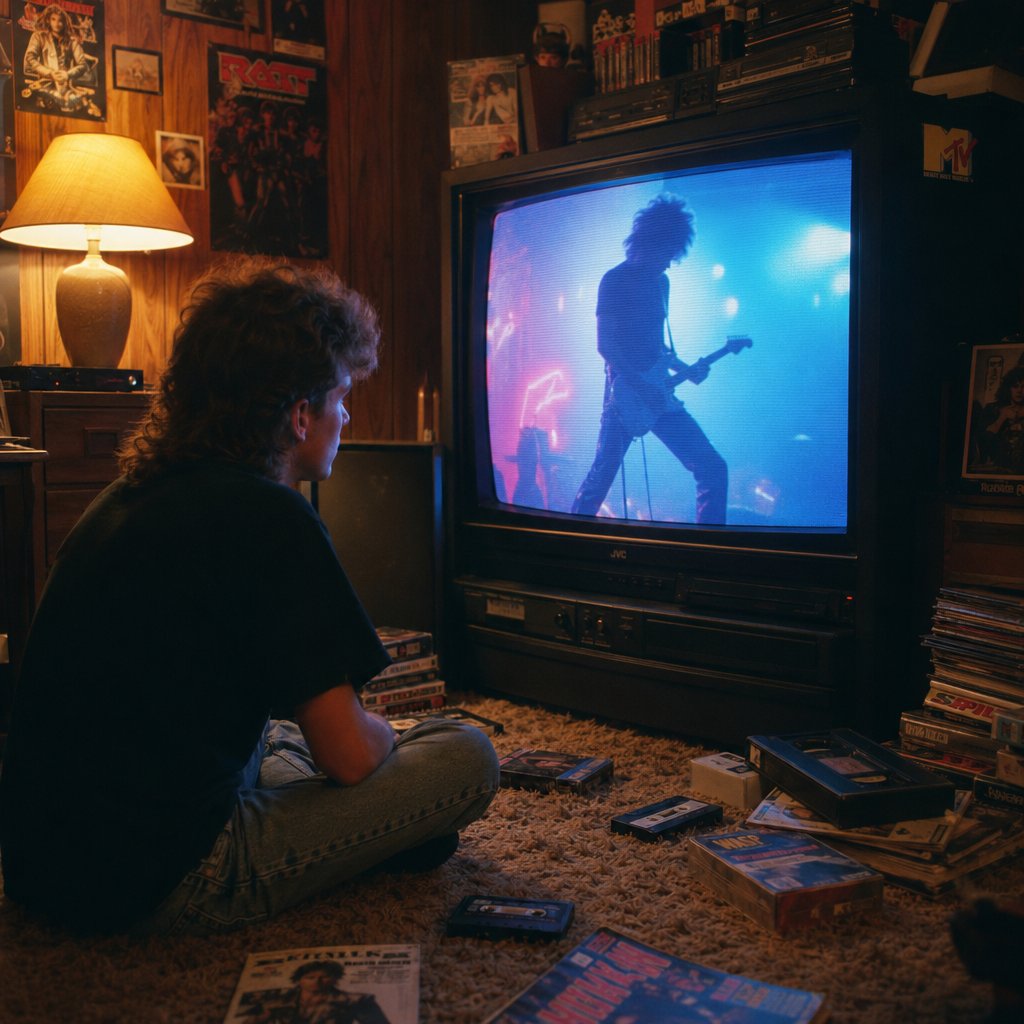
How MTV and Technology Transformed 80s Rock Forever
That cultural staying power didn't happen by accident. The reason these tracks still sound so immediate — so engineered for impact — traces back to a handful of seismic shifts in how rock was made, seen, and experienced during the 1980s. Two forces, one visual and one technological, rewired the genre from the inside out.
How MTV Turned Rock Stars Into Visual Icons
At 12:01 AM on August 1, 1981, Warner Cable executive John Lack spoke five words that changed everything: "Ladies and gentlemen, rock 'n' roll." MTV went live, and The Buggles' "Video Killed the Radio Star" became the first music video to air on the channel. The symbolism was almost too perfect.
Overnight, image became as important as the riff. Rock bands that once relied purely on sonic power now needed a visual identity — a look, a narrative, a performance that translated through a television screen. The rallying cry of "I want my MTV" swept through a generation of fans, and a new class of VJs like Martha Quinn and Nina Blackwood became the gatekeepers of cool. Specialty shows such as Headbangers Ball and MTV Unplugged launched entire careers. Bands didn't just need great songs anymore. They needed craft ideas that worked on camera — choreography, set design, storylines. In dandy's world of teased hair and leather jackets, looking the part was half the battle won.
Synthesizers and Studio Tech That Shaped the Sound
While MTV reshaped how rock looked, a parallel revolution was transforming how it sounded. The raw, analog grit of 70s rock gave way to something shinier, bigger, and more precisely layered. The delta math between a 1975 rock mix and a 1985 one is staggering, and the difference came down to a few key machines.
- Fairlight CMI — The first commercially available digital synthesizer with a sampling function, released in 1979. It could digitally reproduce acoustic instruments and sample any sound in the world. Kate Bush used it on Never for Ever (1980) to weave in sounds of breaking glass and buzzing insects. Peter Gabriel owned the first unit in the UK. Def Leppard leaned on it heavily for both Pyromania and Hysteria, sampling every drum hit through the Fairlight to build their signature layered production.
- Linn LM-1 Drum Machine — One of the first drum machines to use digitally recorded samples of real drums, it gave producers a tight, punchy rhythmic foundation that defined the polished 80s sound. Prince used it across multiple albums, and its crisp snap became a sonic fingerprint of the decade.
- SSL Mixing Consoles — Solid State Logic desks became the industry standard in top-tier studios. Their built-in dynamics processing and total recall capability let engineers achieve a level of precision and consistency that earlier analog boards couldn't match — think of it like learning how to build a PC where every component is optimized for a specific task.
These tools didn't just polish the sound. They expanded what was possible. Producers could stack vocal harmonies, sculpt drum tones, and blend synthesized textures with live instruments in ways that followed almost mathematical precision — geometry formulas applied to frequency and space. The result was a sonic signature that still sounds unmistakably "80s" the moment you hear it.
The Stadium Rock Revolution
All that visual spectacle and studio polish fed directly into the biggest shift in live music: the rise of stadium rock. By the mid-80s, rock bands had outgrown clubs and theaters entirely. Acts like Bon Jovi, Def Leppard, and U2 were filling arenas that held tens of thousands, and the concerts themselves became about the show as much as the music — pyrotechnics, massive lighting rigs, and sound systems designed to make every power chord hit the back row like a wall.
The power ballad emerged as a key commercial strategy within this landscape. Tracks like Scorpions' "Still Loving You" and Foreigner's "I Want to Know What Love Is" gave arena rock acts a way to reach listeners who might never buy a hard rock album. Lighters went up, tempos came down, and rock's audience expanded dramatically. It was a calculated move, but it worked — these ballads became some of the decade's biggest-selling singles and opened the door for rock to dominate mainstream pop charts.
Together, MTV's visual revolution, studio technology's sonic leap, and the stadium experience's sheer scale created the conditions for a decade of rock music that wasn't just heard — it was seen, felt, and engineered to be unforgettable. That combination of forces is exactly what shaped the distinct phases of the decade's sound, each one building on the last.
How 80s Rock Evolved From Post-Punk to Hair Metal
Those distinct phases didn't blur together. Each one had its own gravitational center — a dominant sound, a defining attitude, and a roster of tracks that still anchor playlists decades later. Think of the decade less as a single movement and more as three chapters of the same story, each rewriting the rules the previous one established.
Early 80s — Post-Punk Meets Hard Rock (1980–1983)
The decade opened with a tug-of-war. On one side, post-punk and new wave acts were bleeding art-school experimentation into mainstream rock. New Wave bands like The Police, Blondie, and Talking Heads had refined punk's raw energy into something catchier and more radio-friendly, borrowing from reggae, funk, and ska while keeping an edge that felt genuinely dangerous. The Police landed "Every Breath You Take" in 1983, a track that became the number one song on Billboard's all-time Mainstream Rock rankings. Meanwhile, The Clash gave us "Rock the Casbah," and Joan Jett's "I Love Rock and Roll" became a defiant anthem that hit number five on that same list.
On the harder side, AC/DC's Back in Black (1980) drew a line in the sand for what hard rock could sound like in a new decade — lean, mean, and impossibly tight. Journey charted "Don't Stop Believin'" in 1981, a song that would become one of the most enduring rock tracks ever recorded. If you wanted to know how to start a conversation about 80s rock with anyone, anywhere, that song was your opening line. The early 80s were a genre-blending playground, and the diversity of sounds made it one of the richest creative periods in rock history.
Mid 80s — Arena Rock Takes Over (1984–1986)
By 1984, the experimentation gave way to something bigger and louder. Arena rock took the steering wheel. Van Halen's "Jump" hit number one on the Hot 100 in February 1984, powered by that unmistakable synth riff — a hard rock band embracing keyboards without apology. It ranked among the top 20 Mainstream Rock songs of all time. Def Leppard's Pyromania had already gone diamond, and the band was deep into recording Hysteria, a process so meticulous it would take three years and $4.5 million to complete.
Bon Jovi arrived like a freight train. "You Give Love a Bad Name" and "Livin' on a Prayer" both dropped in 1986 from Slippery When Wet, and the latter became a night routine closer at arenas across the world — the song every band saved for the encore because nothing could follow it. Foreigner's "I Want to Know What Love Is" (1984) and Tears for Fears' "Everybody Wants to Rule the World" (1985) proved that polished production and massive hooks could coexist with genuine emotional weight. Power ballads weren't filler. They were strategic weapons that expanded rock's reach far beyond its traditional audience, the way gardening tips in a home magazine pull in readers who'd never pick up a landscaping manual on their own.
Late 80s — Hair Metal, GnR, and the Seeds of Grunge (1987–1989)
The final stretch of the decade split in two directions simultaneously. Hair metal hit its flamboyant peak — Poison, Warrant, Cinderella, and Ratt filled MTV's rotation with teased hair, spandex, and party anthems that colored the era like neon coloring books splashed across a black canvas. Whitesnake's "Here I Go Again" climbed to number one in 1987, and the genre's visual excess became as defining as its sound.
Then Guns N' Roses kicked the door down. Appetite for Destruction dropped in July 1987, and tracks like "Sweet Child O' Mine" and "Welcome to the Jungle" offered something the hair metal scene desperately needed: raw, unvarnished danger. "Sweet Child O' Mine" ranks as the fourth greatest Mainstream Rock song of all time on Dave's Music Database. U2 also hit a creative peak with The Joshua Tree (1987), delivering "With or Without You" and "I Still Haven't Found What I'm Looking For" — both top-30 all-time Mainstream Rock entries. Beneath all of it, underground scenes in Seattle and the Pacific Northwest were quietly planting the seeds that would detonate into grunge by the early 90s, making the late 80s both a climax and a turning point.
| Era | Key Song | Artist | Album | Subgenre |
|---|---|---|---|---|
| Early 80s (1980–1983) | Every Breath You Take | The Police | Synchronicity (1983) | New Wave-Rock |
| Early 80s (1980–1983) | Back in Black | AC/DC | Back in Black (1980) | Hard Rock |
| Early 80s (1980–1983) | Don't Stop Believin' | Journey | Escape (1981) | Arena Rock |
| Mid 80s (1984–1986) | Jump | Van Halen | 1984 (1984) | Hard Rock / Synth-Rock |
| Mid 80s (1984–1986) | Livin' on a Prayer | Bon Jovi | Slippery When Wet (1986) | Arena Rock |
| Mid 80s (1984–1986) | Everybody Wants to Rule the World | Tears for Fears | Songs from the Big Chair (1985) | New Wave / Pop-Rock |
| Late 80s (1987–1989) | Sweet Child O' Mine | Guns N' Roses | Appetite for Destruction (1987) | Hard Rock |
| Late 80s (1987–1989) | With or Without You | U2 | The Joshua Tree (1987) | Post-Punk / Anthemic Rock |
| Late 80s (1987–1989) | Here I Go Again | Whitesnake | Whitesnake (1987) | Hair Metal / Blues-Rock |
Each phase fed the next — post-punk's sophistication gave arena rock its melodic ambition, and arena rock's excess gave hair metal permission to push everything further. That evolutionary chain also produced a remarkably diverse roster of artists, each one leaving a distinct mark on the decade's identity.
The Bands and Rock Stars Who Owned the 80s
That diverse roster wasn't just a collection of names sharing a decade. Each act carved out a lane so distinct you could identify the subgenre from the opening riff alone. Understanding who did what — and why it mattered — is like learning the statistics fundamentals of a sport before watching the game. The numbers and context make every play land harder. Here's a closer look at the artists who defined the era, grouped by the sonic territory they claimed.
Arena Rock and Pop-Metal Titans
- Bon Jovi (Arena Rock) — Jon Bon Jovi turned blue-collar storytelling into stadium-sized singalongs. Slippery When Wet (1986) sold over 28 million copies worldwide, powered by "Livin' on a Prayer" and "You Give Love a Bad Name" — two tracks that became the blueprint for every fist-pumping arena rock chorus that followed.
- Def Leppard (Pop-Metal) — No band blurred the line between hard rock and pop perfection quite like Def Leppard. Hysteria (1987) took three painstaking years to produce and moved over 20 million copies, with every track polished to a mirror shine. Their layered vocal harmonies and meticulously crafted guitar tones made them the gold standard for pop-metal production.
Hard Rock and Blues-Rock Heavyweights
- AC/DC (Hard Rock) — Consistency was AC/DC's superpower. Back in Black (1980) sold over 50 million copies worldwide, making it one of the best-selling albums in history. Brian Johnson stepped in after Bon Scott's death and delivered a vocal performance so ferocious it cemented the band's legacy for another generation.
- Van Halen (Hard Rock / Synth-Rock) — Eddie Van Halen didn't just play guitar — he reinvented it. His two-handed tapping technique rewrote the rulebook for rock guitar, and "Jump" (1984) proved the band could dominate pop charts without sacrificing an ounce of swagger. David Lee Roth's showmanship made their live shows feel like a party that never wanted to end.
- Guns N' Roses (Hard Rock / Glam Metal) — Where most late-80s rock acts leaned into glamour, GnR leaned into chaos. Appetite for Destruction (1987) sold over 30 million copies, and tracks like "Welcome to the Jungle" carried a raw, street-level danger that felt like a direct challenge to everything polished and safe about the era.
- Whitesnake (Blues-Rock / Hair Metal) — David Coverdale brought a bluesy growl and undeniable charisma to the hair metal scene. The self-titled 1987 album went multi-Platinum on the strength of "Here I Go Again" and "Is This Love," blending classic blues-rock swagger with the decade's glossy production values. Whitesnake proved you didn't need to abandon roots to thrive in the MTV age — sometimes the best landscaping ideas involve working with what's already growing.
New Wave-Rock Innovators
- The Police (New Wave-Rock) — Sting, Andy Summers, and Stewart Copeland fused rock with reggae rhythms, jazz complexity, and punk urgency into something no other band could replicate. Synchronicity (1983) produced "Every Breath You Take," which topped charts worldwide, and the trio's combined sales exceeded 75 million albums. Their tight, genre-defying arrangements made them one of the most musically sophisticated acts of the decade.
- U2 (Anthemic Rock / Post-Punk) — Bono's passionate vocals and The Edge's shimmering, delay-drenched guitar created a sound that felt both intimate and enormous. The Joshua Tree (1987) sold over 25 million copies and transformed U2 from a politically charged Irish band into a global phenomenon. Their ability to reinvent themselves across albums — from the raw intensity of War to the atmospheric sweep of The Unforgettable Fire — kept them relevant long after peers had faded, like a recipe on yummly that keeps getting saved because it works every single time.
These artists didn't just share a decade — they split it into distinct sonic territories, each one pulling listeners in a different direction. That range is exactly what makes curating the best tracks by subgenre so much more useful than dumping everything into a single ranked list.
The Best 80s Rock Songs Organized by Subgenre
Splitting the decade's output by artist only tells half the story. The real way to navigate this era is by sound — by the specific flavor of rock that makes you turn the volume up. Instead of forcing you through a monolithic ranked list, the selections below are grouped by subgenre so you can zero in on exactly what you're craving. Set a 15 minute timer per category, dig in, and you'll walk away with a playlist that actually reflects your taste rather than someone else's arbitrary numbering.
Arena Rock Anthems That Filled Stadiums
Arena rock was built for one purpose: making 20,000 people sing the same chorus at the same time. These tracks delivered on that promise every single night.
- "Livin' on a Prayer" — Bon Jovi | Slippery When Wet (1986) | Arena Rock
The talk box intro is one of the most recognizable openings in rock history. Built around the working-class love story of Tommy and Gina, this track topped the Billboard Hot 100 and became the most-played song on classic rock radio. That key change in the final chorus still sends arenas into orbit. - "Don't Stop Believin'" — Journey | Escape (1981) | Arena Rock
Steve Perry's vocal performance turned a song about strangers on a midnight train into a universal anthem of persistence. It became the most downloaded pre-digital-era track on iTunes and ranks among the top five Mainstream Rock songs of all time. If you've ever been to a wedding, a bar at closing time, or a karaoke night, you've heard this song. - "Juke Box Hero" — Foreigner | 4 (1981) | Arena Rock
A song about a kid standing outside a concert who becomes a rock star — the origin story every fan secretly imagines for themselves. Mick Jones' grinding riff and Lou Gramm's powerhouse vocal made it a staple of rock radio throughout the decade. - "Pour Some Sugar on Me" — Def Leppard | Hysteria (1988) | Pop-Metal / Arena Rock
Written in ten minutes during a studio jam session, this track rescued Hysteria from underperforming and pushed the album past 20 million copies sold. Its stomping beat and chanted chorus made it one of the defining pop-metal anthems of the late 80s.
Hair Metal and Power Ballad Essentials
Hair metal brought the spectacle — the pyrotechnics, the spandex, the guitar solos that went on for days. Power ballads brought the emotional counterweight. Together, they dominated MTV and radio from roughly 1984 to 1989.
- "Kickstart My Heart" — Motley Crue | Dr. Feelgood (1989) | Hair Metal
Inspired by Nikki Sixx's near-fatal heroin overdose and the adrenaline shot that revived him, this track is pure velocity. The opening revving engine and relentless riff make it one of the most high-octane songs the decade produced — learning how to snowboard down a black diamond run feels about as calm by comparison. - "Nothin' But a Good Time" — Poison | Open Up and Say...Ahh! (1988) | Hair Metal
Poison distilled the entire hair metal ethos into three and a half minutes: work hard, play harder, and don't apologize for the party. It peaked at No. 6 on the Hot 100 and remains the band's most enduring track. - "Round and Round" — Ratt | Out of the Cellar (1984) | Hair Metal
One of the cornerstones of early MTV, this track helped make Los Angeles the commercial capital of hard rock in the mid-80s. Warren DeMartini's guitar tone gave hair metal some of its most cutting-edge riffs, and the song's deceptive simplicity is exactly what made it stick. - "Still Loving You" — Scorpions | Love at First Sting (1984) | Power Ballad
The Scorpions proved that a band known for "Rock You Like a Hurricane" could deliver devastating emotional depth. Rudolf Schenker's slow-building arrangement and Klaus Meine's aching vocal made this one of the decade's most powerful ballads — a track that sold over two million copies in France alone. - "Is This Love" — Whitesnake | Whitesnake (1987) | Power Ballad / Blues-Rock
David Coverdale's bluesy growl softened just enough to deliver a love song that hit No. 2 on the Hot 100. Paired with a quintessentially 80s music video, it showed that Whitesnake could balance swagger with sincerity. Content creators like ash trevino have helped introduce tracks like this to younger audiences through social media covers and reaction videos.
Heartland Rock and Pop-Rock Crossovers
Not every great 80s rock song came wrapped in leather and hairspray. Heartland rock channeled the American experience through character-driven storytelling, while pop-rock crossovers proved that sharp hooks and rock energy could coexist on the same track.
- "Born in the U.S.A." — Bruce Springsteen | Born in the U.S.A. (1984) | Heartland Rock
Widely misread as a patriotic anthem, Springsteen's track is actually about the rocky return home of a Vietnam veteran — a man born into a dead man's town with nowhere left to go. The tension between the triumphant synth-driven arrangement and the bleak lyrics is what gives it lasting power. - "Jack & Diane" — John Mellencamp | American Fool (1982) | Heartland Rock
Mellencamp's sole chart-topper started as a story inspired by a Tennessee Williams film but was reworked into a vignette about two midwestern teenagers holding on to youth. That hand-clap breakdown is one of the most distinctive production choices of the early 80s, and the song's theme of fleeting innocence resonates with anyone who's ever looked back on simpler days. - "Summer of '69" — Bryan Adams | Reckless (1984) | Heartland Rock / Pop-Rock
A coded reference to summertime romance wrapped in nostalgia for first guitars and garage bands, this track scored an international hit and remains one of Adams' most beloved songs. Its opening line — "I got my first real six-string, bought it at the five and dime" — is one of rock's great scene-setters. - "Hit Me with Your Best Shot" — Pat Benatar | Crimes of Passion (1980) | Pop-Rock
Written by Eddie Schwartz, this was Benatar's first Top-10 hit and the song that put her on the map. Despite the title, it's about challenging the power dynamics in a relationship — not physical confrontation. Benatar's vocal delivery turned it into a defiant pop-rock anthem that still lands with the same punch. - "You Might Think" — The Cars | Heartbeat City (1984) | Pop-Rock / New Wave
The Cars blended quirky new wave energy with irresistible pop hooks, and this track won the first-ever MTV Video Music Award for Video of the Year. Ric Ocasek's deadpan vocal style and the band's synth-guitar interplay made them one of the decade's most distinctive crossover acts — the kind of sound you could coomeet with on any radio dial, whether you were tuned to rock, pop, or college stations.
| Subgenre | Song Title | Artist | Album | Year | Significance |
|---|---|---|---|---|---|
| Arena Rock | Livin' on a Prayer | Bon Jovi | Slippery When Wet | 1986 | No. 1 Hot 100; most-played classic rock radio song |
| Arena Rock | Don't Stop Believin' | Journey | Escape | 1981 | Top 5 all-time Mainstream Rock; most downloaded pre-digital track on iTunes |
| Arena Rock | Juke Box Hero | Foreigner | 4 | 1981 | Iconic rock radio staple; rock origin-story anthem |
| Pop-Metal | Pour Some Sugar on Me | Def Leppard | Hysteria | 1988 | Rescued Hysteria's sales; pushed album past 20M copies |
| Hair Metal | Kickstart My Heart | Motley Crue | Dr. Feelgood | 1989 | Inspired by Nikki Sixx's real-life revival; peak adrenaline rock |
| Hair Metal | Nothin' But a Good Time | Poison | Open Up and Say...Ahh! | 1988 | No. 6 Hot 100; distilled the hair metal party ethos |
| Hair Metal | Round and Round | Ratt | Out of the Cellar | 1984 | Early MTV cornerstone; helped establish LA as hard rock capital |
| Power Ballad | Still Loving You | Scorpions | Love at First Sting | 1984 | 2M+ copies sold in France alone; slow-burn emotional depth |
| Power Ballad | Is This Love | Whitesnake | Whitesnake | 1987 | No. 2 Hot 100; balanced blues-rock swagger with sincerity |
| Heartland Rock | Born in the U.S.A. | Bruce Springsteen | Born in the U.S.A. | 1984 | Misread anthem; actually a Vietnam veteran's protest song |
| Heartland Rock | Jack & Diane | John Mellencamp | American Fool | 1982 | Mellencamp's only No. 1; iconic hand-clap breakdown |
| Heartland Rock | Summer of '69 | Bryan Adams | Reckless | 1984 | International hit; one of rock's great nostalgia anthems |
| Pop-Rock | Hit Me with Your Best Shot | Pat Benatar | Crimes of Passion | 1980 | Benatar's first Top-10 hit; defiant pop-rock crossover |
| Pop-Rock | You Might Think | The Cars | Heartbeat City | 1984 | Won first-ever MTV VMA for Video of the Year |
Every subgenre on this list pulled from the same decade but aimed at a completely different emotional target. That's the beauty of the era — there was a version of rock for every mood, every moment, and every listener. The obvious picks, though, only scratch the surface. Beneath the chart-toppers and MTV staples sits a layer of tracks that never got the recognition they deserved — songs that are only now finding the audience they should have had all along.
Underrated 80s Rock Deep Cuts You Need to Hear
You know the headliners. You've sung along to the chart-toppers a thousand times. But the decade produced far more than its greatest hits would suggest. Some of the most rewarding 80s rock songs never cracked a best-of list, never got heavy MTV rotation, and never became the track everyone queues at karaoke. They just quietly delivered — great riffs, great writing, great performances — and waited for the right ears to find them.
Overlooked Guitar-Driven Gems
These five tracks deserve a permanent spot in your rotation. Think of them as the deep cuts that reward the listener who already knows the obvious picks and wants to dig further — like scrolling past the first page of search results to find something genuinely useful, whether you're researching denzel washington movies or hunting for the perfect overlooked guitar solo.
- "Love Song" — Tesla | The Great Radio Controversy (1989) | Blues-Rock / Acoustic Rock
While their peers piled on the hairspray, Tesla leaned into bluesy hard rock with genuine chops and ambition. "Love Song" stripped everything back to acoustic guitars and raw emotion, proving that vulnerability could hit harder than any distortion pedal. It peaked at No. 10 on the Hot 100 — a quiet triumph for a band that never fit the glam mold. - "Don't Know What You Got (Till It's Gone)" — Cinderella | Long Cold Winter (1988) | Power Ballad / Blues-Rock
Tom Keifer's raspy, whiskey-soaked vocal on this piano-driven ballad is one of the decade's most underappreciated performances. Cinderella refused to be written off as a second-rate glam act, and Long Cold Winter proved it — this track channels Aerosmith and Led Zeppelin more than anything on the Sunset Strip. It's the kind of song that stops you mid-scroll the way a great pyrenees stops you mid-walk: impossible to ignore once it's in front of you. - "Round and Round" — Ratt | Out of the Cellar (1984) | Hair Metal
Yes, it charted. Yes, it got MTV play. But "Round and Round" still gets left off most serious rock retrospectives despite being an early cornerstone of the glam-metal movement. Warren DeMartini and Robbin Crosby formed one of the era's most dynamic guitar duos, and their serpentine riffs on this track helped establish the template that dozens of bands would follow. It deserves a seat at the table alongside the Bon Jovi and Def Leppard hits it helped make possible. - "In My Dreams" — Dokken | Under Lock and Key (1985) | Pop-Metal
George Lynch's guitar work on this track is reason enough to press play — melodic, precise, and loaded with feel. Dokken gravitated toward more radio-friendly hard rock on Under Lock and Key without abandoning their metallic roots, and "In My Dreams" captures that balance perfectly. Don Dokken's vocal melody is deceptively catchy, the kind of hook that lodges in your brain like a song you can't stop humming while figuring out how to fix a running toilet on a Saturday afternoon. - "Fight the Good Fight" — Triumph | Allied Forces (1981) | Arena Rock / Hard Rock
This Canadian power trio delivered one of the decade's most stirring anthems, and almost nobody outside devoted rock circles talks about it. Guitarist Rik Emmett wrote the lyrics inspired by his aunt's battle with cancer, channeling themes of resilience and persistence into a track that hits with genuine emotional weight. The biblical reference in the title — drawn from 2 Timothy 4:7 — gives it a gravity that most arena rock songs never attempted. Triumph didn't adapt well to the MTV era and faded by the mid-80s, but this song burns as bright as anything from 1981.
Deep Cuts Getting a Second Life on Streaming
Here's the thing about these overlooked tracks: they're no longer buried. Algorithmic playlists on Spotify, Apple Music, and YouTube Music have become surprisingly effective at surfacing songs that radio programmers passed over decades ago. A listener who streams "Pour Some Sugar on Me" gets served Tesla and Dokken in the "You Might Also Like" queue. A fan who do a barrel roll through an 80s rock playlist lands on Cinderella and Triumph tracks they've never encountered. The discovery engine that once required flipping through used record bins now runs on data — and it's giving these songs the audience they always deserved.
Streaming algorithms are doing what 80s radio never could: giving every deep cut an equal shot at finding the listener who needs to hear it.
Bon Jovi's Slippery When Wet surpassed 1 billion Spotify streams, and that kind of catalog engagement creates a halo effect — listeners drawn in by the hits stay for the deep cuts, and the algorithm rewards the exploration. It's a cycle that keeps building, and it means tracks like "Fight the Good Fight" and "Love Song" are reaching more new ears now than they did during their original release windows.
These hidden gems prove the decade's depth ran far beyond its radio singles. That same depth is what makes the era so versatile when you start sorting tracks by mood and occasion — which is exactly where the real playlist-building begins.
80s Rock Songs Sorted by Mood and Occasion
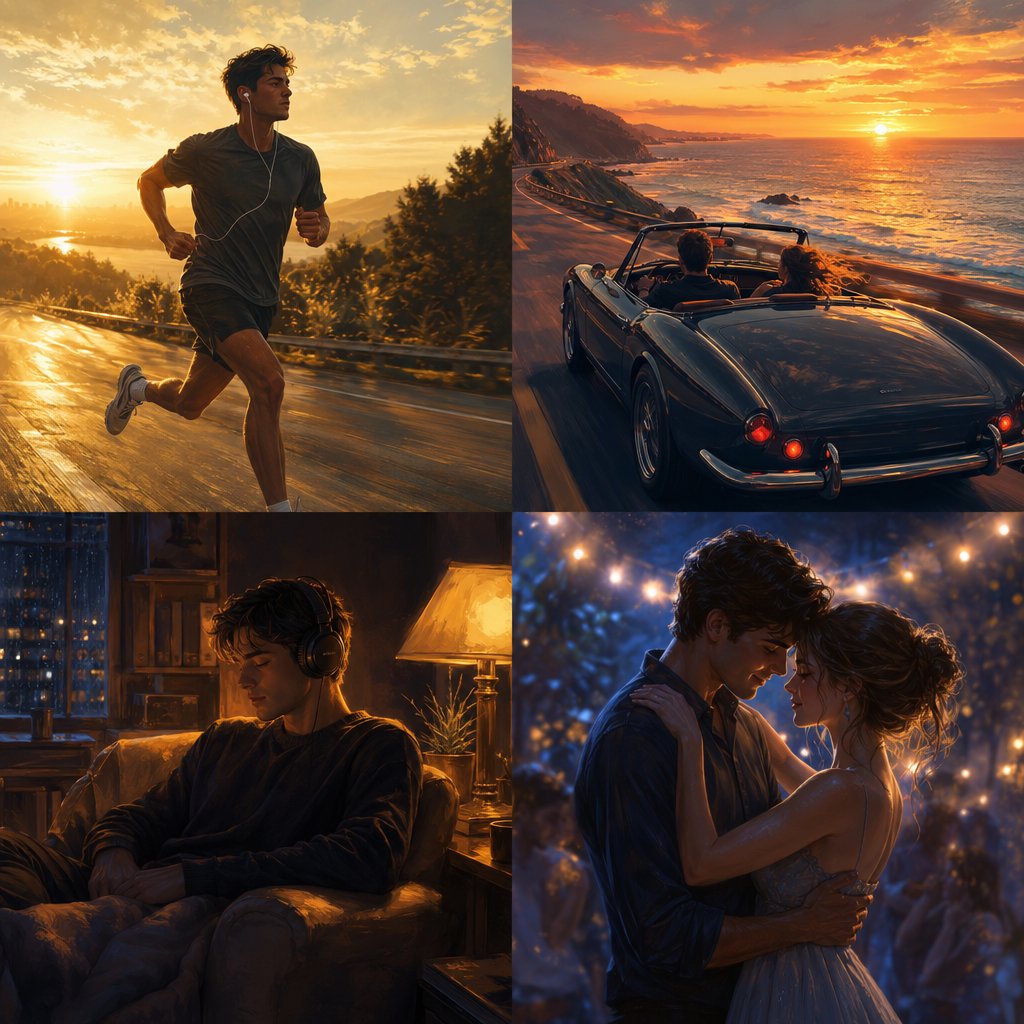
Knowing the subgenres is one thing. Knowing which track to queue when you're lacing up for a run versus winding down after a long week — that's where a playlist actually becomes useful. The decade's catalog is deep enough to soundtrack every scenario you can think of, so instead of dumping everything into one shuffle, here's how to match the right 80s rock songs to the right moment.
High-Energy Anthems for Workouts and Parties
Some tracks exist purely to raise your heart rate. Twisted Sister's "We're Not Gonna Take It" is the running point of any gym playlist — the song that kicks in when you need one more set and your body is saying no. Quiet Riot's "Cum On Feel the Noize" delivers the same relentless energy, all stomping drums and crowd-chant vocals designed to keep you moving. For parties, Van Halen's "Jump" and Def Leppard's "Pour Some Sugar on Me" are non-negotiable. Both tracks have that rare ability to pull people off couches and onto dance floors within seconds, like scanning an aldi weekly ad and spotting exactly what you came for — no hesitation, just action.
- "We're Not Gonna Take It" — Twisted Sister | Stay Hungry (1984) | Rebellion anthem with a singalong chorus built for maximum volume.
- "Cum On Feel the Noize" — Quiet Riot | Metal Health (1983) | The Slade cover that became a metal anthem and pushed the album to No. 1.
- "Jump" — Van Halen | 1984 (1984) | Synth riff meets hard rock swagger — Van Halen's only No. 1 single.
- "Pour Some Sugar on Me" — Def Leppard | Hysteria (1988) | A stomping pop-metal party starter written in ten minutes during a jam session.
Road Trip and Chill Vibes
Long drives need a different kind of energy — something that rolls forward without demanding your full attention. Tom Petty's "Runnin' Down a Dream" is practically engineered for open highways, its driving rhythm and Mike Campbell's guitar solo stretching out like an endless lane of asphalt. ZZ Top's "Sharp Dressed Man" brings a cool, swaggering groove that fits any road trip playlist the way a great pair of sunglasses fits a sunny afternoon. Set a 10 minute timer and you'll burn through both tracks with miles to spare.
When the mood shifts toward something more reflective, Pink Floyd's "Comfortably Numb" delivers one of rock's most transcendent guitar solos — David Gilmour's sustained bends feel like learning how to surf a wave that never breaks. Dire Straits' "Brothers in Arms" carries a quiet, haunting weight that rewards close listening, especially on late-night drives when the road gets empty and your thoughts get louder.
- "Runnin' Down a Dream" — Tom Petty | Full Moon Fever (1989) | Pure forward momentum; one of rock's definitive driving songs.
- "Sharp Dressed Man" — ZZ Top | Eliminator (1983) | Bluesy swagger meets synth-era production — effortlessly cool.
- "Comfortably Numb" — Pink Floyd | The Wall (1979) | Two iconic guitar solos bookending a meditation on emotional detachment.
- "Brothers in Arms" — Dire Straits | Brothers in Arms (1985) | Mark Knopfler's fingerpicked elegy — haunting, spare, and deeply personal.
Romantic Power Ballads for the Right Moment
Power ballads weren't just a commercial strategy — they were the decade's emotional core. REO Speedwagon's "Can't Fight This Feeling" builds from a whispered confession into a full-blown orchestral declaration, and Kevin Cronin's vocal sells every word. Foreigner's "I Want to Know What Love Is" took things even further by bringing in the New Jersey Mass Choir, turning a rock ballad into something that felt almost spiritual. Mick Jones wrote it during a period of personal upheaval — a divorce, a new relationship, a band in flux — and that raw vulnerability is what gives the song its lasting gravity.
These aren't background tracks. They demand a moment — a slow dance, a quiet drive, a late-night listen with headphones on. Unlike the fleeting wellness advice of figures like belle gibson, whose credibility collapsed under scrutiny, these ballads have only grown more trusted with time. Every year, new listeners discover them and feel the same gut-punch the original audiences did. You don't need basketball zero codes or cheat sheets to unlock their appeal. You just need to press play at the right moment.
- "Can't Fight This Feeling" — REO Speedwagon | Wheels Are Turnin' (1984) | Slow-burn confession that climbs to an anthemic chorus; No. 1 on the Hot 100.
- "I Want to Know What Love Is" — Foreigner | Agent Provocateur (1984) | Gospel choir-backed ballad; Foreigner's biggest career hit.
- "Every Rose Has Its Thorn" — Poison | Open Up and Say...Ahh! (1988) | Bret Michaels' heartbreak anthem, written on a yellow legal pad after a late-night phone call went wrong.
| Mood / Occasion | Song | Artist | Energy Level |
|---|---|---|---|
| Workout / Party | We're Not Gonna Take It | Twisted Sister | High |
| Workout / Party | Cum On Feel the Noize | Quiet Riot | High |
| Party Starter | Jump | Van Halen | High |
| Party Starter | Pour Some Sugar on Me | Def Leppard | High |
| Road Trip | Runnin' Down a Dream | Tom Petty | Medium-High |
| Road Trip | Sharp Dressed Man | ZZ Top | Medium |
| Chill / Reflective | Comfortably Numb | Pink Floyd | Low-Medium |
| Chill / Reflective | Brothers in Arms | Dire Straits | Low |
| Romantic | Can't Fight This Feeling | REO Speedwagon | Medium |
| Romantic | I Want to Know What Love Is | Foreigner | Medium |
| Romantic | Every Rose Has Its Thorn | Poison | Low-Medium |
Sorting by mood turns a sprawling decade of music into something you can actually use — a toolkit rather than a museum exhibit. And once you've built the perfect playlist for the drive, the workout, or the quiet evening in, there's one more scenario where 80s rock absolutely dominates: the karaoke stage.

Best 80s Rock Songs for an Epic Karaoke Night
Karaoke isn't about singing well. It's about reliving what it feels like to be a fan of that song, as composer and YouTube musicologist Howard Ho puts it. You're not auditioning — you're channeling. And no decade gives you better material to channel than the 80s, where every chorus was built to be screamed by a room full of strangers. The trick is matching the right song to your confidence level.
Crowd-Pleaser Karaoke Picks Everyone Knows
These are the songs where the entire bar becomes your backup band. You don't need a four-octave range — you need enthusiasm and a room that already knows every word.
- "Livin' on a Prayer" — Bon Jovi | The key change in the final chorus is the karaoke equivalent of a victory lap. Even if your voice cracks on the high notes, point the mic at the crowd and let them carry it. Energy level: volcanic. Vocal difficulty: moderate, but forgiveness from the audience is unlimited.
- "Don't Stop Believin'" — Journey | The slow build gives you time to settle in before the chorus hits, and by then, nobody's judging — they're singing with you. It works at every karaoke night the way knowing how to hang a picture works in every apartment: it's a basic skill that always delivers results.
- "Eye of the Tiger" — Survivor | A punchy, rhythmic vocal line that sits in a comfortable mid-range for most singers. The verses are almost spoken, and the chorus is pure crowd-chant energy. Perfect for first-timers who want to look confident without needing to belt.
Show-Off Songs for Confident Singers
Ready to leave it all on the stage? These picks reward vocalists who can handle dramatic range and sustain.
- "Here I Go Again" — Whitesnake | David Coverdale's vocal demands real power in the chorus, but if you can hit those sustained notes, the payoff is enormous. This is the karaoke equivalent of nailing a black diamond run after learning how to ski on the bunny slopes — thrilling when you pull it off, memorable either way.
- "Nothing's Gonna Stop Us Now" — Starship | A duet-friendly anthem that lets two singers trade verses and merge on the chorus. Grace Slick and Mickey Thomas built this track for maximum drama, and it translates perfectly to a karaoke stage where two friends want to share the spotlight.
- "Love Is a Battlefield" — Pat Benatar | The spoken-word intro gives you a theatrical opening, and the chorus is instantly recognizable. It works as a solo power move or a group performance where everyone joins on the "we are young" chant. Benatar's original sits in a mezzo-soprano range, making it accessible for a wide variety of voices.
Most karaoke machines let you adjust the key up or down — don't be afraid to use it. A song pitched two steps lower can turn an impossible reach into a comfortable belt, and nobody in the audience will notice the shift.
Karaoke pros consistently recommend picking songs you genuinely love over songs you think will impress. The passion comes through, and 80s rock gives you no shortage of tracks worth being passionate about. Whether you're the person who commands the stage like a smiling friends character stealing every scene or the one nervously gripping the mic for the first time, this decade has a song that fits your moment — and a crowd that already knows the words.
From 80s Rock Fan to Creator of Your Own Anthem
Belting out "Livin' on a Prayer" at karaoke is a rush. But what happens when the mic goes back on the stand and that creative energy is still buzzing? The same sonic DNA that makes these tracks unforgettable — the elements you've been feeling throughout this entire guide — is also a blueprint you can actually use.
The Sonic Blueprint Behind Every Great 80s Rock Song
Strip any classic 80s rock song down to its skeleton and you'll find the same core ingredients: driving power chords that anchor the verse, an anthemic chorus designed to be shouted by thousands, a soaring guitar solo that gives the track its emotional peak, and punchy drum patterns that keep everything locked in forward motion. As production analysis of the era reveals, songwriting in the 80s followed an almost recipe-like formula — riffs built from the minor pentatonic scale, chord progressions in a handful of reliable keys, and vocals layered with reverb and delay for dramatic effect. That formula wasn't a limitation. It was a launchpad. Understanding it is like learning how to drive a manual car: once you feel the mechanics, you can go anywhere.
Modern creators are already reinterpreting this blueprint. Producers sample 80s drum tones for synthwave tracks. Indie bands borrow the verse-chorus-solo structure for songs that sound nothing like Def Leppard but owe everything to the architecture Def Leppard perfected. The era's influence shows up in places you wouldn't expect — from film scores to lo-fi bedroom recordings — the way the woman in the yard in a thriller novel turns out to be the character who connects every subplot. The 80s rock formula is quietly holding things together beneath the surface of a lot of music being made right now.
Turn Your 80s Rock Inspiration Into an Original Track
The gap between loving a genre and creating something in that genre used to require years of practice, expensive gear, and studio access. AI music tools have collapsed that barrier. You can now select a style, describe a mood, and generate an original track in seconds — no instruments or production skills required. It's as straightforward as learning how to use linkedin for the first time: pick your parameters, hit go, and refine from there.
If you want to take your 80s rock inspiration beyond the playlist, MakeBestMusic's AI Song Generator lets you choose a genre and era — including 80s rock — and turn that into a royalty-free original song in seconds. It's a practical starting point for fans who want to experiment with the sounds they love without needing a full studio setup.
Here are a few ways to channel what this decade gave us into something new:
- Generate an 80s-style rock instrumental as intro music for a podcast, YouTube channel, or live stream — no licensing headaches, no copyright flags.
- Use an AI-generated track as a creative demo to sketch out a song idea before bringing it to a band or producer, the same way you'd how to do a pullup with assisted bands before going unassisted.
- Build a playlist of original 80s-inspired tracks for content projects — workout videos, travel vlogs, or short films that need era-specific energy without the cost of sync licensing.
- Experiment with blending 80s rock elements into other genres — what does an 80s power ballad sound like crossed with lo-fi beats or electronic textures? AI tools let you find out in minutes.
The 80s gave us songs that refuse to leave our playlists, our stages, and our karaoke nights. The best way to honor that legacy isn't just to keep listening — it's to take what made those tracks immortal and make something of your own.
