

What Is Acapella Music and Why Does It Captivate Listeners
Acapella music is vocal music performed entirely without instrumental accompaniment. Every note, rhythm, and harmony comes from the human voice alone. The term originates from the Italian phrase a cappella, which Merriam-Webster traces to the meaning "in chapel or choir style," rooted in the Medieval Latin capella for "chapel." Its first known use in English dates back to 1785, and the style reached its early peak in the late 16th century through composers like Giovanni Pierluigi da Palestrina, who wrote for the Sistine Chapel of the Vatican.
What Acapella Actually Means
You'll see it spelled a few different ways: acapella, a cappella, or even accapella. The two-word, two-p spelling "a cappella" is the standard in most dictionaries, but "acapella" has become widely accepted in casual usage. Regardless of how you spell it, the meaning stays the same: voices only, no instruments. What started as a sacred tradition in chapel worship has evolved far beyond church walls. Today the term applies to everything from barbershop quartets and doo-wop harmonies to viral pop covers and beatbox-driven arrangements. Much like how you might search for how to paint a room and discover an entire world of creative technique, looking into acapella songs opens a surprisingly deep rabbit hole of vocal artistry.
Why Voices Alone Create Such Powerful Music
So what makes unaccompanied singing hit so differently? Part of it is psychological. When instruments are stripped away, there is nowhere to hide. Every breath, every subtle vibrato, every crack of emotion is exposed. That rawness creates an intimacy that produced tracks rarely match. Research published in Frontiers in Psychology found that the presence of the human voice significantly enhances emotional arousal in listeners, independent of song familiarity. The effect held even for non-verbal vocal passages, suggesting it is the voice itself, not just lyrics, that stirs us.
The human voice is the oldest musical instrument there is. It is both a string and a wind instrument, and no two voices are identical. There are seven billion humans, seven billion different voices.
That uniqueness is exactly why acapella songs resonate across cultures and centuries. You do not need expensive gear or years of instrumental training to participate. Unlike chemistry experiments that demand a lab or video editing tips that require software, singing is something every person carries within them. Even parenting tips often highlight singing as one of the earliest ways caregivers bond with children, proof that the voice connects us before we even understand words. In a dandys world of heavily produced, auto-tuned tracks, and in an era where people learn how to build a pc to create elaborate home studios, the simplicity of voices alone still manages to outshine it all.
The story of how that simplicity became a global phenomenon stretches from ancient chapels to modern competition stages, and the journey is anything but quiet.
A Brief History of Acapella From Sacred Chants to Pop Culture
That journey from chapel walls to concert halls did not happen overnight. Acapella music has been evolving for well over a thousand years, shaped by faith, community, cultural movements, and a persistent human desire to make something beautiful with nothing but the voice. Understanding where these vocal traditions come from makes the modern acapella songs you hear today feel even more remarkable.
Sacred Roots and Renaissance Polyphony
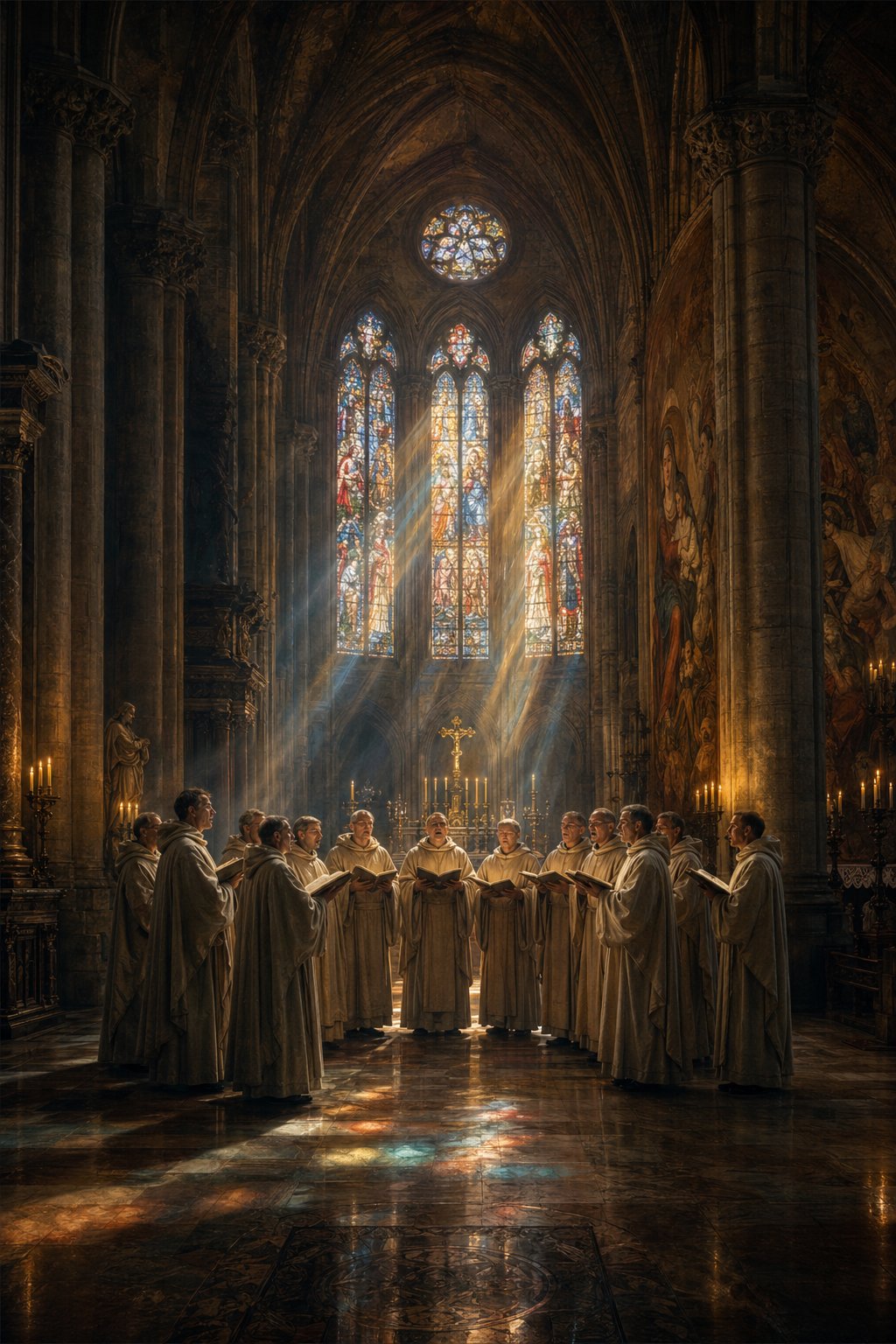
Imagine a stone cathedral, candlelit, with a single melodic line rising from a group of monks. That is Gregorian chant, and for centuries it was the dominant form of Western music. Early Christian worship relied entirely on unaccompanied voices, and the church saw instruments as a distraction from devotion. This sacred context is literally baked into the name: a cappella means "in the chapel style."
As the Renaissance took hold, composers pushed those single-line chants into something far more complex. Josquin des Prez (1450-1521), often hailed as a founder of the a cappella tradition, composed masterpieces of Christian polyphony where multiple independent melodies intertwined in harmony. His "Ave Maria, Virgo Serena" remains a touchstone of the form. Composers like Orlando di Lasso and Giovanni Pierluigi da Palestrina further elevated vocal writing into a high art. Meanwhile, secular vocal music called madrigals emerged, essentially the pop songs of their day, sung by small groups without instruments. Claudio Monteverdi perfected the madrigal before eventually adding instrumental accompaniment, a shift that gradually diminished a cappella's dominance as the Baroque era arrived.
Barbershop Quartets and Doo-Wop Street Corners
Fast forward a few centuries to America, and unaccompanied singing found entirely new life. Barbershop harmony, rooted in the late 19th century, grew out of informal singing in Black communities and social gatherings. By the 1930s, it had crystallized into a distinct style: four voices (tenor, lead, baritone, and bass) locked into close harmonies that produced a signature "ringing" resonance. Organizations like the Barbershop Harmony Society and Sweet Adelines International formed to preserve and promote the tradition, hosting annual competitions that still draw passionate audiences.
Then came doo-wop. In the 1940s through the 1960s, groups like The Five Satins and The Drifters brought tight vocal harmonies to street corners and radio stations across the country. Doo-wop singers mimicked instrumental sounds with their voices, bass vocalists recreating basslines while upper harmonies replicated the texture of guitar chords or brass. It was inventive, accessible, and wildly popular. If you have ever wondered how to start a conversation about vocal music with someone who thinks acapella is niche, play them a classic doo-wop record. The recognition is instant.
From Gospel Choirs to the Global Stage
While barbershop and doo-wop captured mainstream attention, gospel choirs quietly kept the unaccompanied vocal flame burning in churches across America. Gospel's call-and-response patterns, soaring harmonies, and raw emotional delivery became a wellspring that fed into soul, R&B, and eventually modern acapella arrangements.
The real explosion, though, came through screens. The founding of the Contemporary A Cappella Society (CASA) in 1991 helped organize a growing movement, and collegiate groups like the Tufts Beelzebubs and SoCal Vocals built vibrant competitive scenes. Then the 21st century turned acapella into genuine pop culture. NBC's The Sing-Off launched Pentatonix into stardom, and the Pitch Perfect franchise introduced millions of moviegoers to the thrill of voices-only performance. Viral YouTube covers did the rest. Much like coloring books experienced an unexpected adult renaissance in the 2010s, acapella songs surged from a niche craft idea into a mainstream night routine soundtrack for millions of listeners worldwide.
| Era | Approximate Dates | Defining Characteristics | Notable Examples |
|---|---|---|---|
| Sacred Origins | 500 - 1600 AD | Gregorian chant, polyphony, madrigals, chapel-based worship music | Josquin des Prez, Palestrina, Orlando di Lasso |
| Barbershop Era | Late 1800s - 1940s | Close four-part harmonies, "ringing" chords, community-rooted singing | Barbershop Harmony Society, Sweet Adelines |
| Doo-Wop Era | 1940s - 1960s | Street-corner harmonies, vocal mimicry of instruments, pop crossover | The Five Satins, The Drifters, The Persuasions |
| Collegiate Revival | 1980s - 2000s | University groups, competitive circuits (ICCA), beatboxing innovations | Tufts Beelzebubs, SoCal Vocals, CASA founding (1991) |
| Modern Mainstream | 2000s - Present | TV competitions, film franchises, viral videos, genre-blending arrangements | Pentatonix, Pitch Perfect, Roomful of Teeth |
Each of these eras layered new techniques, new audiences, and new possibilities onto the art form. But knowing the history only tells part of the story. The real magic lies in how all those voices actually fit together inside a single arrangement.
Anatomy of an Acapella Arrangement Explained Simply
Think of an acapella arrangement like a building. Every voice is a structural element, and if one is missing or misplaced, the whole thing wobbles. Whether you are listening to a polished Pentatonix cover or a college group performing in a stairwell, the same core architecture holds everything together. You do not need to read sheet music to understand it. The statistics fundamentals of how voices stack are surprisingly intuitive once you see the roles laid out.
The Voice Parts That Build the Sound
Every acapella song divides the vocal workload across distinct parts, each responsible for a different layer of the overall sound. Imagine a dinner ideas brainstorm where everyone brings one dish to complete the meal. One voice carries the melody, another adds warmth underneath, a third locks in the harmonic foundation, and someone keeps the rhythm alive with nothing but their mouth. Here is how each part contributes:
| Voice Part | Typical Range | Role in the Arrangement | Notable Example |
|---|---|---|---|
| Soprano | C4 - G5 | Carries the melody or high harmonies that float above the group | Kirstin Maldonado (Pentatonix) |
| Alto | A3 - C5 | Fills inner harmonies, adding warmth and emotional texture | The King's Singers (countertenor/alto blend) |
| Tenor | D3 - E4 | Provides mid-range support, counter-melodies, and harmonic glue | Mitch Grassi (Pentatonix) |
| Bass | G2 - A3 | Anchors the harmonic foundation with root notes and low-end depth | Tim Foust (Home Free) |
| Vocal Percussion | N/A | Drives rhythm through beatboxing, mimicking drums and electronic sounds | Kevin Olusola (Pentatonix) |
As arranging guides from experienced collegiate musicians point out, complex chords in low registers tend to sound muddy, which is why basses usually stick to root notes rather than splitting into multiple parts. Meanwhile, sopranos can push into higher territory for dramatic effect, but those notes will not blend quietly. Every range has trade-offs, and skilled arrangers work within those limits rather than fighting them.
How Arrangers Transform Instrumental Songs for Voices
Turning a fully produced track into a voices-only arrangement is part puzzle, part creative leap. The arranger has to figure out which elements are essential and which can be dropped, then translate guitar riffs, drum patterns, and synth pads into syllables a human can actually sing. It is a process that blends ear training with something close to statistics fundamentals: analyzing patterns, identifying what carries the most weight, and distributing parts efficiently. Much like solving geometry formulas, you are working within fixed constraints (vocal ranges, breath capacity, group size) to reach an elegant solution.
Here are the key steps most arrangers follow when deconstructing a song for acapella performance:
- Listen to the original track repeatedly, isolating each instrument mentally to understand its melodic and rhythmic contribution.
- Identify the essential elements: the main melody, the bass line, the chord progression, and any signature riffs or hooks that define the song's identity.
- Assign instrumental lines to voice parts based on range and timbre. A guitar riff might become a tenor line; a synth pad might translate into sustained alto harmonies.
- Create syllable patterns that mimic the texture of the original instruments. Open vowels like "ah" project volume, while closed sounds like "oo" or "dm" replicate softer, sustained tones.
- Build dynamic contrast by varying volume, density, and rhythmic complexity across sections. A quiet verse with two voices should feel distinctly different from a full-group chorus.
- Test every part for singability. If a line works on a keyboard but feels unnatural to sing, reshape it. The best arrangements sound effortless even when they are technically demanding.
The beauty of this process, as one arranging study resource notes, is that technology like notation software with instant playback has made it accessible even to people without formal training. You can experiment with delta math-level precision, adjusting individual notes and hearing the result immediately, which is why platforms like Noteflight and MuseScore have become staples in the arranging community.
Understanding the mechanics is one thing. Hearing them executed by groups who have mastered the craft is something else entirely, and certain ensembles have spent decades proving just how far voices alone can go.
Famous Acapella Groups That Shaped the Genre
Some groups do not just perform within a genre. They reshape it so completely that everything after sounds different. The history of acapella songs is really the history of specific ensembles who pushed the boundaries of what voices alone could achieve, decade after decade. Here are the ones who mattered most and why.
Legendary Groups That Pioneered the Sound
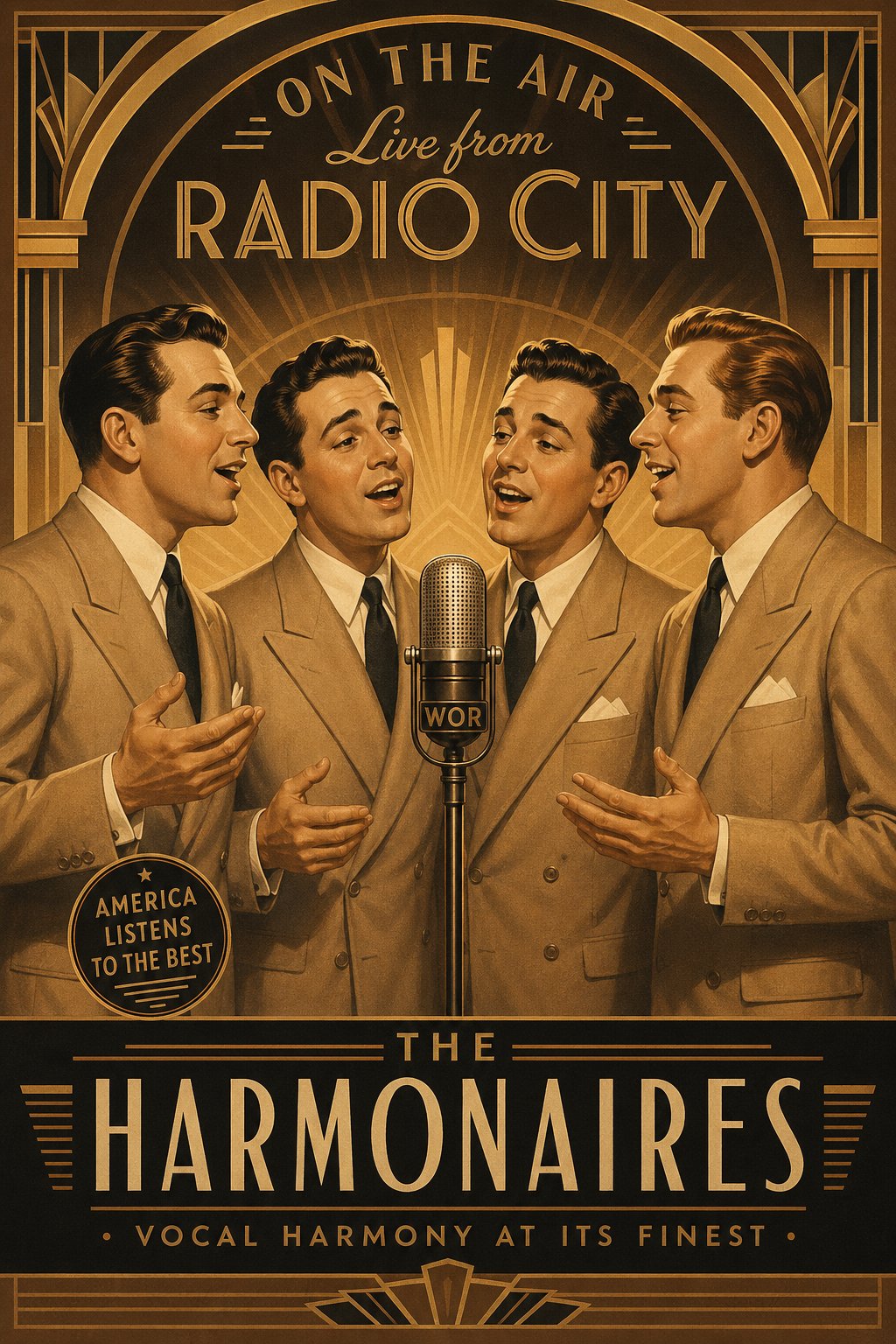
Any serious conversation about vocal group innovation starts with The Mills Brothers. Four brothers from Piqua, Ohio, Herbert, Donald, Harry, and John Jr., began singing in their father's barbershop and stumbled onto something revolutionary. During a 1920s performance, the teenagers forgot their kazoos and started imitating instruments with their voices, cupping their hands over their mouths to mimic trumpets, saxophones, and tubas. That improvisation became their signature. Brunswick Records even printed a note on their labels: "No musical instruments or mechanical devices used on this recording other than one guitar." They went on to chart 71 singles across four decades, including "Paper Doll," which sold over six million copies and spent 12 weeks at number one in 1943. Their influence was so pervasive that later doo-wop and R&B groups routinely covered Mills Brothers recordings, often without realizing they were drawing from the same well.
The Persuasions picked up that thread in the late 1960s with a grittier, street-corner soul approach. Where The Mills Brothers were polished and pop-friendly, The Persuasions sang raw, unvarnished harmonies rooted in gospel and R&B. They recorded entirely without instruments at a time when that was considered commercially risky, earning them the unofficial title of "Kings of A Cappella." Their influence runs deep through every modern group that treats the voice as a vehicle for emotional honesty rather than technical showmanship.
Then there is Ladysmith Black Mambazo. Founded by Joseph Shabalala in South Africa during the early 1960s, the group performs isicathamiya, a Zulu vocal tradition built on soft, stepping harmonies originally developed by migrant workers in mining hostels. Their collaboration with Paul Simon on the 1986 album Graceland introduced their sound to a global audience virtually overnight. What makes them essential is not just the beauty of their singing but the cultural weight it carries. Their music is a living connection to a tradition that predates Western harmony systems entirely, proof that acapella is not a single genre but a global family of vocal traditions.
Modern Groups Dominating the Scene
The contemporary landscape is stacked with talent, but a handful of groups have genuinely moved the needle. Think of it like landscaping ideas for a garden: each group planted something different, and together they transformed the terrain.
- Pentatonix: Five voices, three Grammys, and billions of YouTube views. Their secret is treating beatboxer Kevin Olusola as a full rhythm section while blending pop arrangements with jaw-dropping vocal precision. They made acapella cool for a generation raised on electronic production.
- Naturally 7: Their "vocal play" technique goes beyond typical arrangements. Each member mimics a specific instrument so convincingly that audiences regularly assume they are hearing a full band. Guitar, drums, trumpet, bass, all voices.
- Straight No Chaser: Formed at Indiana University in 1996, they went viral in 2007 with a comedic rendition of "The 12 Days of Christmas" and parlayed that into a major-label deal with Atlantic Records. They proved that collegiate acapella could translate directly into a professional career.
- Rockapella: Best known as the house band on the PBS game show Where in the World Is Carmen Sandiego?, they brought acapella into living rooms across America during the early 1990s. Their pop-forward arrangements and stage energy showed that vocal groups could entertain far beyond music purist circles.
- Voces8: A British octet that operates at the intersection of classical precision and crossover accessibility. Their repertoire spans Renaissance polyphony to contemporary film scores, and their intonation is so clean it almost sounds engineered. If Pentatonix is the pop block breaker, Voces8 is the classical architect.
Each of these groups found a distinct lane. You will not confuse a Naturally 7 performance with a Voces8 concert any more than you would mistake a yummly comfort food recipe for a Michelin-starred tasting menu. The variety is the point.
Genre-Spanning Voices Worth Knowing
Beyond the headline names, several groups deserve attention for the way they bridge genres. Take 6, formed in 1980 at Oakwood College in Huntsville, Alabama, fuses gospel conviction with jazz sophistication in a way no other group has matched. They have won ten Grammy Awards across gospel, jazz, and R&B categories, collaborated with artists from Ray Charles to Stevie Wonder, and their self-titled 1988 debut earned Platinum certification. Their harmonic complexity is staggering, yet every arrangement serves the song's emotional message first. If you set a 15 minute timer and listened to their catalog, you would barely scratch the surface.
In the barbershop world, the Ringmasters, a Swedish quartet, won the Barbershop Harmony Society's international championship in 2012 and brought a youthful energy that challenged the genre's older-skewing reputation. On the beatbox-driven side, groups like Accent and the House Jacks have pushed vocal percussion from a novelty element into a sophisticated rhythmic art form, incorporating electronic-style sound design created entirely by the human mouth.
What connects all of these ensembles, from the Mills Brothers in the 1930s to Pentatonix today, is a shared conviction that voices are enough. More than enough. The real test of that belief, though, is not in the groups themselves but in the individual songs that have become touchstones of the art form.
Best Acapella Songs Across Every Genre You Should Hear
Touchstone songs earn that status because they do something no other recording quite replicates. The tracks below span sacred hymns, pop radio staples, street-corner doo-wop, and jazz vocal standards, each chosen not just for popularity but for the specific vocal technique or emotional moment it showcases. Consider this your essential listening guide, the kind of curated list you can queue up whether you are winding down after a long day or looking for arrangement inspiration of your own.
Gospel and Sacred Acapella Essentials
Gospel acapella strips music down to its most spiritually direct form. Take 6's "Spread Love" layers jazz-inflected harmonies over a message so warm it transcends its religious context entirely. The vocal interplay is dense, almost orchestral, yet every word lands with clarity. For something older and more austere, the Benedictine Monks of Santo Domingo de Silos turned 11th-century Gregorian chant into a number five hit on the Billboard pop album chart in 1994, proving that unaccompanied sacred music could captivate mainstream audiences. And if you want raw, communal power, seek out any recording of "Amazing Grace" performed by a full gospel choir without instruments. The staggered breathing, the call-and-response dynamics, the way dozens of voices converge into a single emotional wave: it is acapella at its most primal.
Pop and R&B Acapella Standouts
Bobby McFerrin's "Don't Worry Be Happy" remains the only acapella track to ever reach number one on the Billboard Hot 100, and every sound on it is McFerrin's voice, layered and multitracked into a full arrangement. It knocked Guns N' Roses' "Sweet Child of Mine" out of the top spot in 1988, which tells you everything about its crossover appeal.
Boyz II Men built their legacy on vocal prowess. As Nathan Morris told Billboard, "Vocals were what was supposed to carry a song years ago." Their acapella rendition of "It's So Hard to Say Goodbye to Yesterday" is a masterclass in R&B harmony, one the group famously fought their label to release because nobody believed radio would play it. Pentatonix's "Daft Punk Medley," meanwhile, won the first-ever Grammy for Best Arrangement, Instrumental or A Cappella and has surpassed 200 million YouTube views. It reimagines electronic music through five voices and a beatbox, flipping the assumption that acapella cannot handle modern production aesthetics.
Barbershop, Doo-Wop, and Jazz Vocal Classics
Doo-wop gave us some of the most emotionally direct vocal recordings ever pressed to vinyl. The Flamingos' "I Only Have Eyes for You" features a vocal performance so hypnotic that Paste Magazine ranked it among the greatest doo-wop songs of all time, praising it as a genuine masterpiece. The Five Satins' "In the Still of the Night" is another essential, written by lead singer Fred Parris himself, a rarity in a genre where outside songwriting teams dominated. It sold over a million copies and still sounds timeless.
On the jazz side, The Manhattan Transfer and Lambert, Hendricks & Ross pioneered vocal jazz arrangements that treated the voice like a horn section, scatting and improvising over complex chord changes. Their influence echoes in every modern jazz vocal ensemble. You do not need to know how to snowboard or follow iran news to feel the pull of a perfectly executed scat solo. It grabs you on instinct.
Below is a ranked essential listening compilation that spans every genre covered above. Each entry includes a brief note on why it earned its spot:
- "Don't Worry Be Happy" by Bobby McFerrin: the only acapella number one in Hot 100 history, built entirely from one man's multitracked voice.
- "I Only Have Eyes for You" by The Flamingos: a doo-wop ballad so perfectly arranged it redefined what vocal harmony could communicate.
- "Daft Punk Medley" by Pentatonix: Grammy-winning proof that five voices can replicate and reimagine electronic music.
- "Mbube" ("The Lion Sleeps Tonight") by Solomon Linda and The Evening Birds: the 1939 Zulu recording that sparked an entire style of music in South Africa and eventually became a global standard.
- "Homeless" by Paul Simon & Ladysmith Black Mambazo: isicathamiya singing brought to 16 million Graceland album buyers worldwide.
- "In the Still of the Night" by The Five Satins: a singer-written doo-wop standard that has never needed another rendition to stay relevant.
- "Spread Love" by Take 6: gospel-jazz fusion with harmonic complexity that rewards every repeated listen.
- "It's So Hard to Say Goodbye to Yesterday" by Boyz II Men: R&B vocal harmony at its most emotionally exposed, the track a label did not want to release.
- "Chant" by Benedictine Monks of Santo Domingo de Silos: 11th-century sacred music that climbed the pop charts in 1994.
- "There's a Moon Out Tonight" by The Capris: Paste Magazine's number one doo-wop song, featuring a falsetto-to-bass collision that still sounds extraordinary.
These tracks work as a playlist or as individual deep dives. Some listeners, much like fans who discover a new creator such as ash trevino through a single viral clip, will hear one of these recordings and fall into an hours-long exploration of the genre. Others might stumble onto vocal music the way people randomly land on a platform like coomeet: unexpectedly, but with genuine curiosity that keeps them engaged. Either way, the songs speak for themselves.
What happens, though, when a song you already know and love gets completely rebuilt for voices alone? That transformation is where acapella often makes its most dramatic impression.
Iconic Pop Songs Reimagined Through Acapella Arrangements
That dramatic impression often starts with a song you have heard a thousand times. A familiar melody, stripped of its studio production and rebuilt entirely by voices, can feel like meeting an old friend in a completely new context. It is the same song, but the emotional texture shifts. Hidden harmonies surface. Melodic lines you never noticed suddenly carry the whole arrangement. For many listeners, this moment of recognition and surprise is the gateway into acapella songs.
Pop Hits That Sound Even Better Without Instruments
Journey's "Don't Stop Believin'" is one of the most covered songs in any format, but the SoCal VoCals' acapella version predated even the famous Glee rendition by three years, released on their 2006 album Get In. ROCK. Get Out. Without the arena-rock guitars, the vocal arrangement exposes the song's underlying chord progression and lyrical optimism in a way the original never quite does.
Cyndi Lauper's "True Colors" got a similar treatment from Groove for Thought, whose cover weaves references to actual colors throughout the arrangement, adding layers of wordplay and harmonic nuance that critics have called better at evoking the song's emotional story than the original. Pentatonix's take on Imogen Heap's "Aha!" pushed even further, adding rhythmic aggression and dynamic range that made the already lush original feel tighter and brighter. And when Ladysmith Black Mambazo joined forces with the Mint Juleps for "The Lion Sleeps Tonight" in Spike Lee's 1991 film Do It A Cappella, two groups from opposite corners of the world proved that a traditional song could unite entirely different vocal traditions into something transcendent.
What connects these covers is a shared principle: stripping away production does not diminish a great song. It reveals what made the song great in the first place. Much like learning how to build a campfire teaches you which elements actually sustain the flame, hearing a pop hit rebuilt for voices alone shows you which melodic and harmonic elements carry the real weight.
Musical Theater and Film Acapella Moments
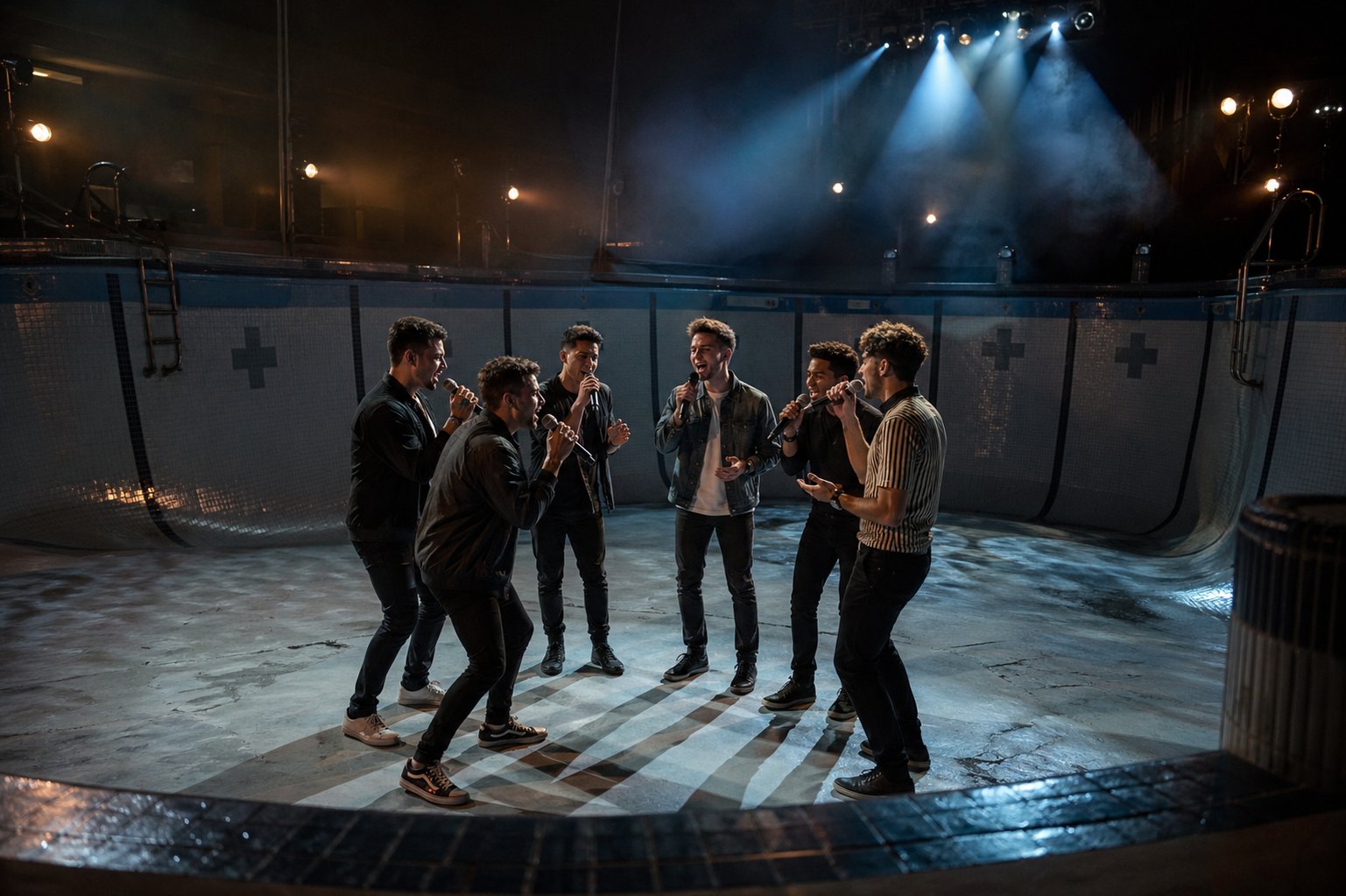
No single event did more for mainstream acapella awareness than the Pitch Perfect franchise. Released in 2012 on a modest budget, the film more than tripled its budget at the domestic box office, eventually earning $112 million worldwide. The riff-off scene, where competing groups trade bars of pop songs in an emptied swimming pool, became the film's signature moment. Nine songs crammed into five minutes of compositional and vocal agility, all performed without a single instrument. Anna Kendrick's "Cups" sequence, improvised during her audition with a plastic cup and a folk melody she had seen on YouTube, topped the Billboard adult contemporary chart nearly a year after the film's release.
The cultural ripple was enormous. ICCA participation jumped from roughly 250 groups in 2012 to nearly 400, and Varsity Vocals launched an entire high school tournament to meet surging demand. Two sequels and a Peacock spinoff series, Bumper in Berlin, followed. But Pitch Perfect was not operating in a vacuum. Glee had already introduced the Dalton Academy Warblers, originally voiced by the Tufts University Beelzebubs, covering everything from Katy Perry to The Beatles. The Office gave us Ed Helms' Andy Bernard and his fictional Cornell group Here Comes Treble. Even Anchorman turned Will Ferrell's Channel 4 News Team into an impromptu barbershop quartet covering "Afternoon Delight." You could do a barrel roll through two decades of film and TV and find acapella moments tucked into comedies, dramas, and reality shows alike, much like how denzel washington movies consistently surface across every genre from thriller to biography.
Musical theater, meanwhile, offers a rich catalog of songs that translate beautifully to voices-only performance. Here are standout picks worth exploring:
- "Seasons of Love" from Rent: Already minimal in its original orchestration, this ensemble number adapts naturally for acapella groups of any size. Moderate arrangement difficulty with a powerful solo spotlight.
- "One Day More" from Les Miserables: A complex multi-character finale that challenges arrangers to balance six or more independent vocal lines. High difficulty, high reward.
- "For Good" from Wicked: A duet that gains intimacy when performed without piano accompaniment. Popular at collegiate showcases and graduation concerts.
- "Alexander Hamilton" from Hamilton: The rhythmic density and rapid-fire lyrics make it a natural fit for beatbox-driven arrangements. Frequently performed at ICCA competitions.
- "Sit Down, You're Rockin' the Boat" from Guys and Dolls: A classic showstopper with call-and-response structure that practically begs for acapella treatment. Accessible for newer groups.
What film, TV, and theater collectively accomplished was something no single viral video could: they made acapella feel normal. Not niche, not nerdy, just another way great music gets made. As executive producer Max Handelman put it about Pitch Perfect, "It's not rock stars on stage. It's not a musical biopic. These are real, relatable characters." That relatability is exactly what turned millions of casual viewers into active fans, many of whom went looking for how to surf the genre deeper. And nowhere is that fan energy more concentrated than on college campuses, where acapella is not just a hobby but a full-blown competitive ecosystem.
The Collegiate Acapella Scene and Why It Matters
That competitive ecosystem is not a figure of speech. On college campuses across the United States, Canada, Mexico, and the United Kingdom, acapella groups operate with the intensity and loyalty of varsity sports teams. Auditions are cutthroat. Rehearsal schedules rival those of student orchestras. And the stakes, at least emotionally, feel just as real as any championship bracket. If you think acapella songs are a casual hobby for a few music majors singing in dorm hallways, the numbers tell a very different story.
How Universities Became Acapella Powerhouses
The International Championship of Collegiate A Cappella (ICCA), now in its 29th season, is the largest organized competition of its kind. The 2025 tournament alone featured over 7,200 performers in more than 445 groups spread across nine regions. Those are not small campus clubs. Groups from Carnegie Mellon, University of Michigan, Berklee College of Music, Stanford, and dozens of other schools pour months of preparation into ten-minute competition sets that blend original arrangements, choreography, and vocal percussion into tightly rehearsed performances.
The pipeline runs both directions. Straight No Chaser formed at Indiana University before landing a deal with Atlantic Records. Pentatonix members honed their skills in collegiate and youth vocal scenes before dominating YouTube and the Grammys. The SoCal VoCals from the University of Southern California have won multiple ICCA titles and become a proving ground for arrangers and performers who go on to professional careers. Groups from Yale, Tufts, Northeastern, and the University of Chicago regularly rack up millions of views on YouTube, turning campus rehearsal rooms into launchpads for viral fame.
What makes the collegiate scene so vibrant is its sheer accessibility. You do not need to be a music major. You do not need years of formal training. Many groups hold open auditions where the only requirement is a decent ear and a willingness to commit. It is a bit like how world flags represent vastly different nations yet share a common visual language: collegiate acapella groups span every musical taste and skill level, but they all share the same fundamental commitment to making voices do everything.
The Competition Circuit and Its Impact
The ICCA tournament follows a bracket-style structure that would feel familiar to anyone who has watched March Madness. Nine regions, Central, Great Lakes, Midwest, Mid-Atlantic, Northeast, South, Southwest, West, and United Kingdom, each run five quarterfinals. The top two groups from each quarterfinal advance to a regional semifinal, and each semifinal winner earns a spot at the ICCA Finals at The Town Hall in New York City. A wildcard round gives second and third-place semifinal finishers one more shot. The whole season runs from mid-January through late April, and many events sell out in advance.
So what separates the winners from the rest? Varsity Vocals' judging framework evaluates three core categories: vocal performance, visual performance, and subjective rank. Three to five certified adjudicators, all vocal music professionals, score each group independently without deliberating among themselves. Special awards for outstanding soloist, outstanding arrangement, outstanding vocal percussion, and outstanding choreography are deliberated separately, and only current group members are eligible. Groups get ten minutes on stage. Exceed that limit, and you risk a one-place penalty.
The result is a format that rewards the full package. A group with flawless intonation but zero stage presence will lose to a slightly less polished ensemble that commands the room. Arrangement complexity matters, but so does originality. As Grammy-winning producer and ICCA Finals judge Bill Hare put it: "The feedback that groups get from some of the top ears and voices in a cappella today is something you just can't get anywhere else." That feedback loop, competition after competition, season after season, has steadily raised the technical floor of the entire art form. Arrangements that would have won a decade ago now barely clear quarterfinals.
Collegiate acapella democratized the genre by proving you do not need a record deal, a studio, or even a music degree to create something extraordinary. All you need is a group of people willing to show up, listen to each other, and sing.
The competitive circuit also created a community that extends well beyond the stage. NPR's coverage of the ICCA highlighted how the bonds formed through grueling rehearsal schedules and shared performance pressure often outlast college itself. Families travel across the country to attend finals. Alumni return year after year. The dedication rivals that of great pyrenees owners who will tell you their dog is not just a pet but a lifestyle, except here the lifestyle is harmony, and the loyalty runs just as deep.
That passion is not limited to spectators. Thousands of students who compete in the ICCAs go on to sing in community groups, arrange music professionally, or simply carry a lifelong appreciation for what voices can accomplish. Some set a 10 minute timer before bed and listen to their old competition recordings. Others channel that energy into creating their own acapella tracks from scratch. And for anyone inspired enough to try, the path from listener to performer is more accessible than ever.
How to Choose and Create Your Own Acapella Performances
The gap between admiring acapella songs and actually performing them is smaller than most people assume. You do not need a music degree or a full ensemble to get started. You need a good song choice, a basic understanding of recording workflow, and the willingness to experiment. Think of it like learning how to drive a manual car: the mechanics feel intimidating at first, but once the coordination clicks, it becomes second nature.
Choosing the Right Songs to Sing Acapella
Not every song translates well to voices alone. A track that sounds incredible with a full band behind it can fall flat when the instruments disappear. The key is identifying songs where the vocal melody and harmonic structure do the heavy lifting on their own. As freelance writer Erin Steiner notes on A Cappella Blog, a good acapella song is one where vocalists can comfortably form chords and where parts outside the melody line are interesting enough to stand on their own. If the supporting "instrumentation" is boring, find a better song.
Here are the characteristics that make a song ideal for acapella adaptation:
- A strong, singable melody that holds attention without any backing production.
- Harmonic progressions that voices can naturally form into chords, avoiding overly chromatic or synth-dependent textures.
- Manageable vocal ranges that fit your group's register rather than forcing singers into uncomfortable territory. As Steiner puts it, choose songs tuned to your existing voices instead of trying to "soprano-ize" a baritone line.
- Rhythmic patterns that vocal percussion or beatboxing can realistically support, without extended instrumental breaks that turn into awkward filler.
- Varied beats and time signatures that keep both singers and listeners engaged. A song that stays in the same repeated progression is easier to perform but will not wow an audience.
- A melody that lends itself to harmonizing, allowing vocally layered lyrics alongside supporting parts for a richer, more textured sound.
- Emotional resonance for the performers. If you love singing it, the audience will feel that energy. It really is that simple.
Balance matters too. A song with a two-minute guitar solo in the middle creates a problem you will have to solve creatively or cut entirely. The best picks are tracks where vocals were already the running point of the original recording, songs where the voice led and everything else followed.
Recording and Producing Acapella Tracks
Once you have your song, the next challenge is capturing it. Home recording for acapella has become remarkably accessible, but a few fundamentals make the difference between a polished track and a muddy mess.
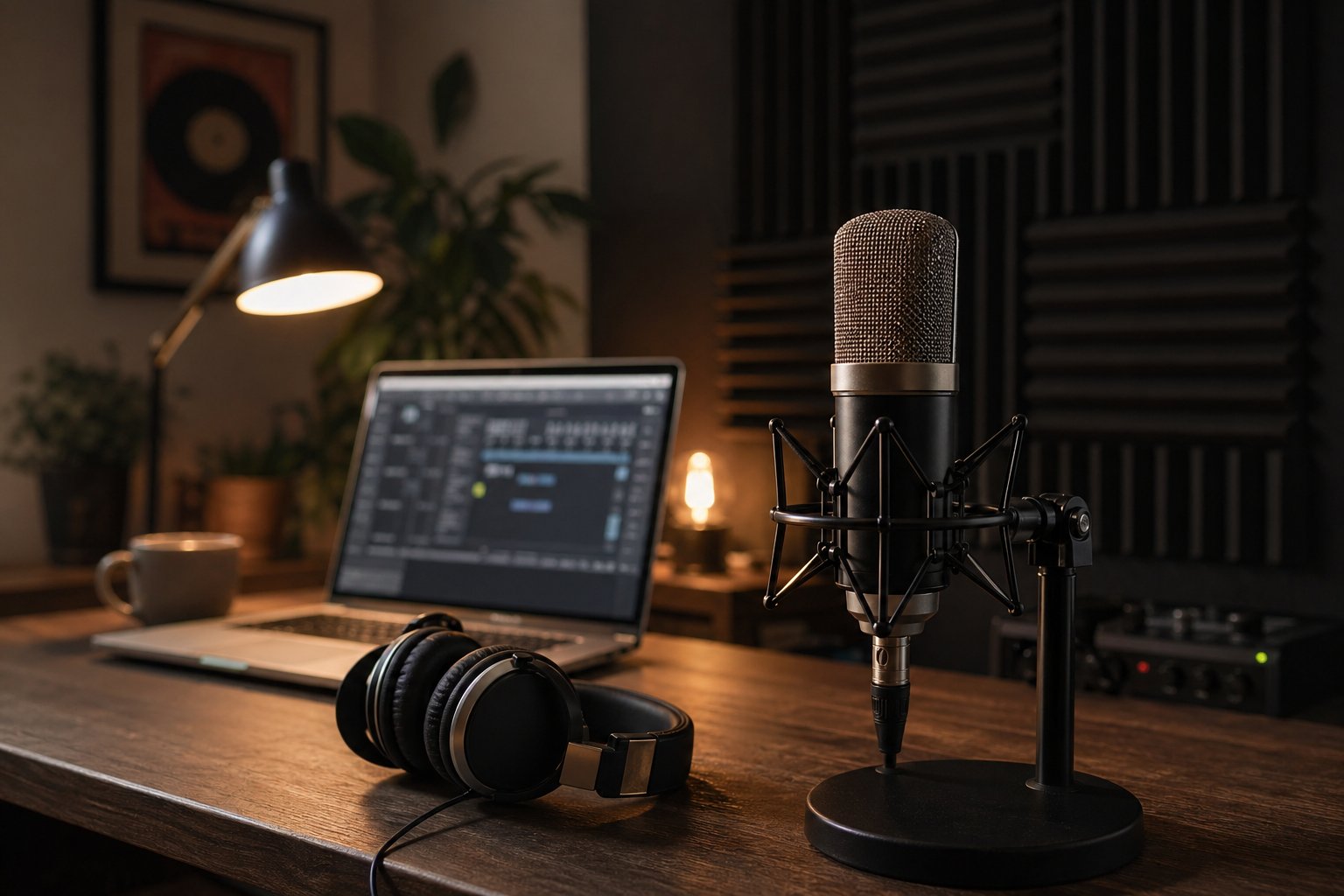
Microphone technique is everything. Recording engineer Linda Taylor, documenting a living-room choir session, found that an XY coincident microphone setup using two cardioid condensers placed nearly touching produced highly accurate imaging with virtually no phase problems. For solo creators layering their own voice, a single quality condenser mic in a treated room works well. The goal is a clean, dry signal. Sonarworks' production guide emphasizes recording without reverb or heavy processing, since AI models and mixing plugins need clear monophonic input to analyze pitch and timbre accurately.
Layering is where solo acapella creators face their biggest hurdle. Singing every part yourself means recording multiple takes with natural timing and pitch variation between them, not just copying and pasting the same track. Each layer should feel like a different singer. Apply a high-pass filter around 100-200Hz to remove low-end buildup, compress gently for dynamic balance, and use a unified room reverb across all voices to place them in the same acoustic space.
Modern AI tools have opened genuinely useful creative doors here. Solo creators who need arrangement inspiration or reference material can use resources like MakeBestMusic's AI Song Generator to quickly generate melodic foundations in specific keys and tempos, say G minor at 120 BPM, and use those royalty-free tracks as starting points for building vocal arrangements. It is not a replacement for the human voice, but it solves a real problem: when you are one person staring at a blank arrangement, having a reference track to sing against is like having how to hang a picture instructions when you are facing a bare wall. It gives you a framework to build on. You can experiment with chord progressions, test harmonic ideas against a generated backing, and iterate faster than working purely from imagination.
The recording workflow itself does not need to be complicated. A decent USB condenser, a DAW like GarageBand or Audacity, some basic acoustic treatment, and patience with your own voice will get you surprisingly far. Even smiling friends who have never recorded before can produce something worth sharing if the song choice is right and the takes are clean. It is a bit like searching for basketball zero codes online: the tools and shortcuts are out there, you just need to know where to look and how to apply them.
The real barrier was never equipment or talent. It was the assumption that acapella required a full group, a professional studio, and years of training. None of that is true anymore, and the growing community of creators proving it every day suggests the art form is only accelerating from here.
Why Acapella Music Thrives and Where to Go From Here
That acceleration is not slowing down. If anything, the conditions fueling acapella's growth are stronger now than at any point in the genre's history, and the reasons go beyond nostalgia or novelty.
Why Acapella Music Keeps Growing in Popularity
Social media has become the single biggest amplifier. INTERKULTUR's 2025 trends report confirms that short-form video still dominates every major platform, and vocal performances are tailor-made for the format. A fifteen-second harmony clip grabs attention faster than most produced tracks. YouTube Shorts recently extended its cap to three minutes, giving vocal groups enough room to showcase a full arrangement arc without losing viewers. Meanwhile, platforms have shifted from hashtag-driven discovery to AI-powered search, meaning a college group posting a cover can surface organically for anyone searching "acapella songs" the same way they would search for how to do a pullup or how to make coffee. The content finds the audience now, not the other way around.
Accessibility is the other engine. You do not need to buy a guitar, rent studio time, or learn notation software. You just need your voice. That zero-barrier entry point is why acapella thrives in schools, churches, living rooms, and subway platforms worldwide. In an era of heavily processed music, the emotional authenticity of raw vocal performance cuts through. Five-time Grammy winner Jacob Collier proved the point spectacularly when he secretly assembled a 100,000-person a cappella choir by asking concert audiences across America to each record a single word. The stitched-together result, a full rendition of "Can't Help Falling in Love," demonstrated that the desire to sing together is practically universal. As Collier put it, "The wild thing to me is that it sounds like the same group of people singing the whole song, one big choir."
Competition circuits continue expanding too. The ICCA now spans nine regions and hundreds of groups. High school tournaments launched in the wake of Pitch Perfect are still growing. And unlike trends that flare and fade, like the brief media fascination with figures such as belle gibson, acapella's momentum is built on something durable: a community of creators who keep raising the bar for each other, season after season.
Resources for Discovering and Creating More Acapella Music
Whether you are a casual listener who just wants a great playlist or an aspiring arranger ready to build your first chart, there is a clear path forward. Competition archives from Varsity Vocals offer hours of high-level performances. YouTube channels like Pentatonix, Voces8, and Accent showcase different ends of the genre spectrum. Community hubs like the Contemporary A Cappella Society (CASA) connect singers, arrangers, and fans. For creators, tools like MakeBestMusic's AI Song Generator let you generate original melodic ideas and backing tracks in seconds, giving solo artists and small groups a fast way to sketch arrangement concepts before committing to full vocal production.
Here are recommended next steps based on where you are right now:
- Casual listener: Queue up the essential listening list from this article, explore ICCA Finals recordings on YouTube, and follow at least two acapella groups on social media to let the algorithm surface more vocal content for you.
- Aspiring performer: Audition for a local or collegiate group, or start layering your own voice at home using a basic USB mic and free software like Audacity. Set a 5 minute timer each day to practice harmonizing over a reference track. Consistency beats perfection.
- Arranger or creator: Study published arrangements through resources like the CASA library, experiment with generating melodic foundations using AI tools for rapid prototyping, and submit your work to online acapella communities for feedback. The learning curve is real, but the community is generous.
Acapella songs have outlasted every technological shift in music history, from the printing press to the synthesizer to the streaming algorithm. They will outlast the next one too. The human voice was here before any instrument, and it will be here long after the last amp burns out. The only question is whether you will keep listening or start singing.
