

What Bedroom Pop Actually Means
Imagine someone sitting cross-legged on a bed, laptop open, a cheap microphone taped to a lamp, and GarageBand glowing on the screen. That's not just a vibe. That's a whole genre. So what is bedroom pop, really? It's DIY music written, recorded, produced, and mixed in intimate, non-professional spaces — bedrooms, dorms, closets, wherever life happens — using affordable gear and software. The sound leans into lo-fi warmth, emotional vulnerability, and a deliberate rejection of studio polish.
Bedroom pop is lo-fi, independently produced music created in personal spaces rather than professional studios, defined as much by its DIY production philosophy as by its soft, intimate sound.
Defining Bedroom Pop as a Sound and a Philosophy
The bedroom pop meaning goes deeper than a Spotify tag. It describes a method as much as a mood. Traditional pop relies on expensive studio sessions, teams of engineers, and layers of post-production sheen. This genre flips that model entirely. A single person handles everything — songwriting, recording, mixing — often with nothing more than a laptop and a USB microphone. As WERS put it, these are "DIY artists who don't need all the flashy recording and production equipment — just a laptop and some creativity." Conan Gray's own artist bio captures the spirit perfectly: "Armed with nothing more than GarageBand and a cheap microphone taped to a lamp" — and he pulls nearly 9 million monthly listeners.
Where a major-label pop track might pass through a dozen hands before release, a bedroom pop song carries the fingerprints of one person's creative vision. That directness is the point. The slightly imperfect vocals, the room noise bleeding into the mix, the unpolished edges — they aren't flaws. They're features.
Why the Label Matters More Than You Think
Here's where it gets interesting. Not every artist tagged as bedroom pop loves the label. Some see it as reductive, collapsing wildly different sounds under one umbrella just because the music was made at home. And they have a point — artists within this space span rock, R&B, folk, and indie pop in countless combinations. Music News Blitz notes that the genre "operated as an umbrella term to unify such artists," giving listeners a way to discover independent creators who might otherwise get lost in the noise.
So does the term describe a sound or a production context? Honestly, both. The lo-fi aesthetic and the home-studio workflow feed each other. You'll notice that the artists who reject the label still benefit from the community it built — and the playlist culture that made it discoverable. That tension between identity and category is part of what makes this movement so fascinating, and understanding it means tracing how a handful of DIY demos quietly grew into a global genre.
How Bedroom Pop Evolved from DIY Demos to a Global Genre
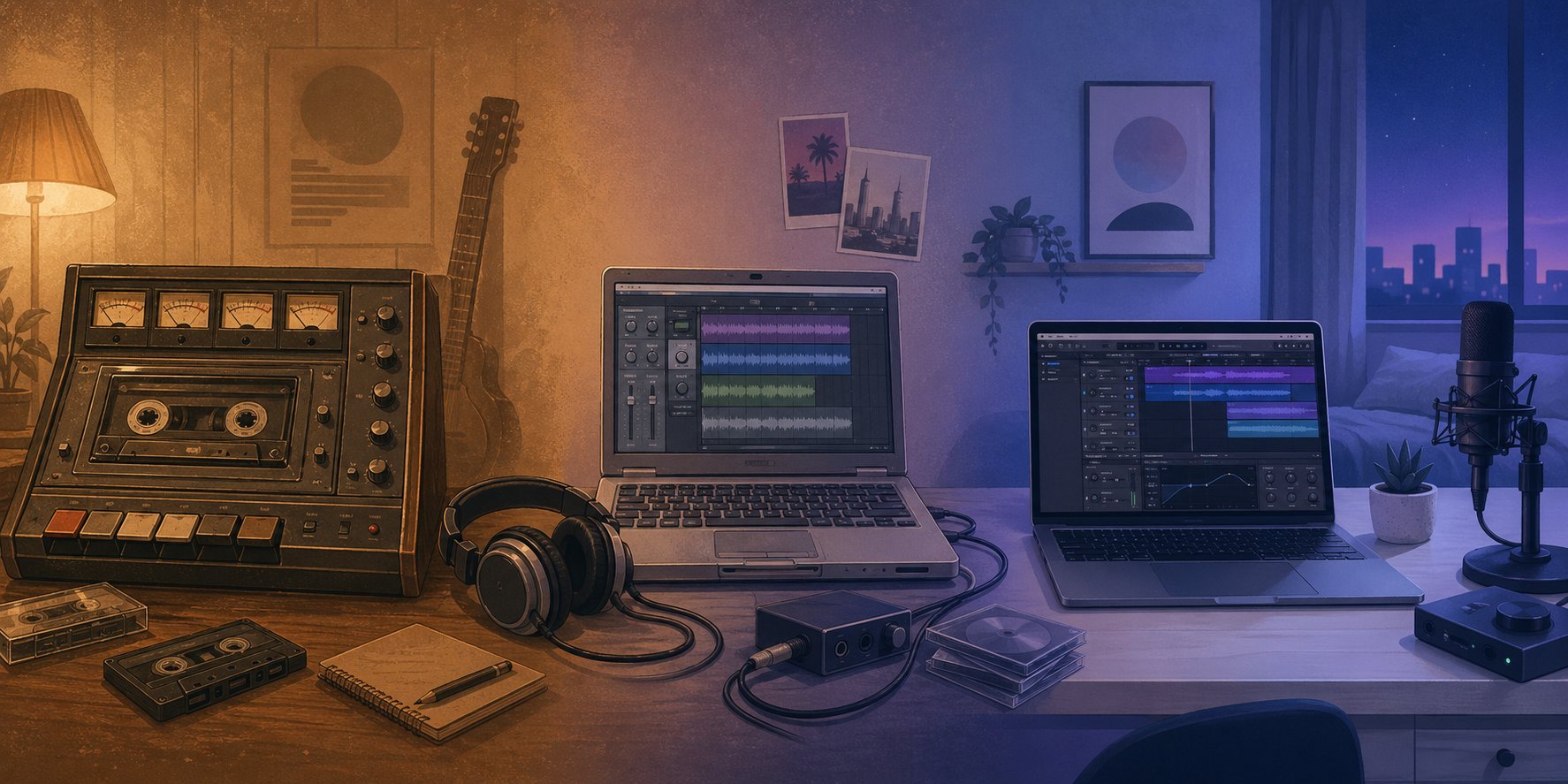
That tension between sound and context didn't appear overnight. The bedroom pop genre has roots stretching back decades — long before anyone thought to give it a name. What changed over time wasn't the impulse to record at home. It was the technology that made it possible for those recordings to actually reach people.
From Four-Track Tapes to Laptop Studios
In 1982, Bruce Springsteen sat down in a spare bedroom with a Teac Tascam 4-track and two Shure SM 57 mics to demo songs for a new E Street Band album. The demos sounded better than the studio versions. He released them as Nebraska, and it sold over a million copies. That moment proved something radical: great songs didn't need great studios.
Throughout the late '80s and '90s, artists like Daniel Johnston and Guided by Voices ran with that idea. Guided by Voices' Bee Thousand and Elliott Smith's Roman Candle were both 4-track recordings that earned critical acclaim. The lo-fi aesthetic wasn't a limitation — it was the identity. But distribution still depended on physical media, indie labels, and word of mouth. The audience ceiling was real.
Then the digital shift blew that ceiling wide open. Apple launched GarageBand in 2004, putting a free recording studio inside every Mac. SoundCloud arrived a few years later, giving anyone with an internet connection a place to upload and share tracks without a label, a distributor, or a budget. Bedroom pop music finally had both the tools and the pipeline it needed to scale.
The Moment Bedroom Pop Got Its Name
By the mid-2010s, a wave of intimate, home-produced indie pop was flooding streaming platforms — and journalists needed a word for it. The term "bedroom pop" emerged around 2015-2016 as shorthand for artists gaining small but devoted followings online with lo-fi tracks that still sounded surprisingly polished, thanks to increasingly powerful free software. Spotify formalized the category by launching an official bedroom pop playlist in early 2018, and suddenly the genre had an algorithmic home.
Here's how the key milestones stack up:
- Early 1980s — Affordable 4-track cassette recorders (Tascam, Fostex) let artists like Springsteen release commercially successful home recordings.
- Late 1980s-1990s — Daniel Johnston, Guided by Voices, and Elliott Smith prove that lo-fi home recordings can earn serious critical respect.
- 2004 — Apple bundles GarageBand with every new Mac, democratizing music production for a generation of bedroom creators.
- 2007-2010 — SoundCloud and Bandcamp launch, giving independent artists free, direct-to-listener distribution for the first time.
- 2015-2017 — The term "bedroom pop" crystallizes as Clairo, Boy Pablo, and girl in red go viral through YouTube algorithms and online reposting channels.
- 2018-2020 — Spotify's official bedroom pop playlist cements the genre's identity, and Billie Eilish's bedroom-recorded Bad Guy wins Song of the Year at the Grammys.
Each of these moments lowered a barrier — cost, distribution, discovery — until the distance between a bedroom and a global audience shrank to almost nothing. But reaching listeners is only half the story. What actually makes a bedroom pop track sound the way it does? That's a question of craft, not just circumstance.
Anatomy of a Bedroom Pop Track
Craft is exactly the right word — because the lo-fi warmth you hear in bedroom pop songs isn't accidental. It's engineered, just not in the way a major-label pop track is. Every sonic choice, from the hazy reverb to the slightly off-grid drums, serves a purpose: making the listener feel like they're sitting in the room with the artist. Understanding these choices is what separates casual listening from truly hearing the genre.
Production Signatures That Define the Sound
Press play on any well-known bedroom pop track and you'll notice a texture that feels warm, slightly fuzzy, and close. That's not a byproduct of cheap gear — it's a deliberate aesthetic. Tape saturation, for instance, mimics the effect of recording to analog tape, introducing a soft compression and harmonic richness that digital recordings naturally lack. Producers apply saturation plugins to vocals, guitars, and even full mixes to get that nostalgic, slightly rounded tone.
Then there's reverb — but not the crystalline, cathedral-sized reverb you'd hear on a mainstream pop ballad. Bedroom pop leans on natural room reverb, the kind that comes from recording in a small, untreated space. It sounds intimate rather than grand. When artificial reverb is added, it tends to be short and roomy, reinforcing the feeling that the music exists in a real, lived-in place.
Vocals sit at the center of everything. They're typically soft, breathy, and recorded close to the microphone, which creates an almost whispered quality — like a conversation had in a bedroom, as Disc Makers describes it. Subtle chorus or delay effects often layer underneath, giving the voice a dreamy shimmer without pushing it into overproduced territory. The mix itself stays loose: instruments bleed into each other slightly, and the overall arrangement prioritizes mood over complexity.
Song Structure and Instrumentation Patterns
If you're coming from mainstream pop or bedroom rock, the instrumentation here might feel stripped back. Think clean electric guitar or soft acoustic strumming, synth pads that hover in the background, programmed drum beats at moderate tempos, and the occasional lo-fi piano or ukulele. Yamaha's genre breakdown highlights "warbly Beatle-esque keyboards and guitars, chill drums, and the sound of analog synths" as recurring textures across the style.
Song structures tend to be compact. Runtimes often land under three and a half minutes. Bridges are rare or minimal. The emphasis falls on verse-chorus intimacy — repeating a melodic idea just enough to make it stick, then letting the track fade or end abruptly. By the indie pop music definition most listeners carry, this approach feels familiar yet looser, less bound by formula. Bedroom pop borrows indie pop's melodic sensibility but strips away the structural rigidity.
The Role of Intentional Imperfection
Here's what really sets the genre apart from its polished cousins: the flaws are the point. Background noise, slight pitch drift in vocals, rhythms that aren't snapped to a grid — these aren't mistakes to fix. They're choices that make the music feel human. Lo-fi production philosophy values texture and mood over technical flawlessness, and bedroom pop takes that idea to heart.
When a drum pattern isn't perfectly quantized, it breathes. When a vocal take has a tiny crack in it, it connects. Mainstream pop spends thousands of dollars eliminating those moments. This genre builds its emotional authenticity on them.
To make it concrete, here are the defining sonic traits you'll hear across most bedroom pop songs:
- Tape-like saturation and analog warmth applied to vocals and instruments
- Natural room reverb instead of polished, studio-grade spatial effects
- Soft, breathy vocals recorded close-mic for an intimate, whispered quality
- Unquantized or loosely programmed drum patterns that feel organic rather than mechanical
- Sparse arrangements where fewer instruments carry more emotional weight
- Subtle background noise — room tone, hiss, ambient sounds — left intentionally in the mix
- Short runtimes and minimal song structures that avoid overcomplication
- Slight pitch imperfections in vocals and instruments, embraced rather than corrected
Every one of these traits reinforces the same idea: closeness over perfection, feeling over polish. But knowing what the genre sounds like is only part of the picture. The real question for many listeners is where it sits among the constellation of related styles — dream pop, indie pop, lo-fi, bedroom rock — and where the boundaries between them blur.

Bedroom Pop Compared to Related Genres
Those blurred boundaries are exactly where confusion lives. If you've ever scrolled through a playlist labeled "indie pop" and wondered why half the tracks sound like they were recorded in a closet while the other half gleam with studio sheen, you're not alone. Bedroom pop, dream pop, indie pop, lo-fi hip-hop, and bedroom rock all orbit the same musical neighborhood — but they occupy different rooms in the house. Knowing what separates them makes you a sharper listener and, if you're a creator, a more intentional one.
Bedroom Pop vs Dream Pop vs Indie Pop vs Lo-Fi
The easiest way to untangle these genres is to line them up side by side. Each one carries distinct production habits, vocal approaches, and cultural contexts — even when they share a playlist. Here's how they compare across the dimensions that matter most:
| Dimension | Bedroom Pop | Dream Pop | Indie Pop | Lo-Fi Hip-Hop | Bedroom Rock |
|---|---|---|---|---|---|
| Typical Production Environment | Bedrooms, dorms, home studios | Professional or home studios | Professional studios or well-equipped home setups | Home studios, laptops | Bedrooms, garages, home studios |
| Core Instrumentation | Acoustic/clean electric guitar, synth pads, drum machines, ukulele | Layered guitars with heavy reverb, ethereal synths, ambient textures | Full band arrangements — guitars, bass, drums, keyboards | Sampled beats, vinyl crackle, jazz piano loops, ambient pads | Distorted or overdriven guitar, bass, lo-fi drums |
| Vocal Style | Soft, breathy, close-mic intimacy | Hazy, reverb-drenched, often buried in the mix | Clear, melodic, polished | Minimal or absent; occasional spoken-word samples | Raw, unpolished, sometimes shouted |
| Lyrical Themes | Personal confession, heartbreak, anxiety, everyday moments | Abstract imagery, nostalgia, emotional landscapes | Broad narratives, social commentary, relationships | Instrumental focus; lyrics are secondary | Frustration, restlessness, DIY identity |
| Tempo Range | Slow to moderate (70-110 BPM) | Slow to mid-tempo (60-100 BPM) | Moderate to upbeat (100-140 BPM) | Slow and steady (60-90 BPM) | Moderate to fast (100-150 BPM) |
| Primary Distribution | SoundCloud, Bandcamp, Spotify playlists | Labels (indie and major), streaming | Indie labels, streaming, radio | YouTube, Spotify study/chill playlists | Bandcamp, SoundCloud, DIY tape labels |
You'll notice that bedroom pop and lo-fi hip-hop share the home-production ethos but diverge sharply in instrumentation and vocal presence. Meanwhile, the dream pop genre can overlap sonically — both love reverb and atmosphere — but dream pop doesn't require a bedroom origin story, and its production often carries a more deliberate, layered polish.
Where the Boundaries Blur
Here's the honest truth: a single track can wear multiple labels at once. A song might be simultaneously bedroom pop and dream pop if it was home-recorded with heavy reverb and ethereal textures. Another might qualify as both bedroom pop and indie pop if it pairs intimate production with bright, hook-driven melodies. These aren't contradictions — they're proof that genre labels describe tendencies, not walls.
So what is indie pop in relation to all of this? Think of the indie pop genre as the broader umbrella. It covers any independently spirited pop music with melodic sensibility and an alternative edge — from bands with full studio budgets to solo artists recording on a laptop. Bedroom pop sits comfortably inside that umbrella, but it adds a specific qualifier: the music was made at home, and it sounds like it. Hotel Ugly's breakdown of the two genres highlights that indie pop bands "often operate in more traditional setups with professional production, full instrument arrangements, and curated marketing strategies," while bedroom creators lean into raw, unfiltered intimacy. The distinction is less about melody and more about method.
Bedroom rock follows a similar DIY logic but swaps the soft textures for grittier guitar tones and more aggressive energy. Imagine the same closet-sized recording space, the same lo-fi ethos, but with distortion pedals and louder drums. It shares the production context while occupying a completely different emotional register.
The takeaway? Labels are useful starting points, not finish lines. The most interesting music in this space tends to live in the overlaps — and the artists who shaped those overlaps are worth knowing by name.
Famous Bedroom Pop Artists Who Shaped the Sound
Knowing them by name is exactly where the genre clicks into focus. Bedroom pop isn't an abstraction — it's a collection of real people who turned personal spaces into launchpads. The most famous bedroom pop artists didn't wait for permission from labels or gatekeepers. They uploaded raw, home-recorded tracks to platforms like SoundCloud, Bandcamp, and YouTube, and let the internet decide.
Pioneers Who Built the Bedroom Pop Blueprint
A handful of bedroom pop artists defined the template that thousands of creators now follow. Clairo recorded the webcam video for "Pretty Girl" in about 30 minutes using Photo Booth and GarageBand, and it racked up millions of views. Beabadoobee gained traction through a viral YouTube clip of her singing "Coffee" in a friend's bedroom. Neither had label support. Neither needed it.
Mac DeMarco helped lay the sonic groundwork earlier in the decade with his slacker-rock warmth and lo-fi production ethos, influencing a generation of bedroom artists who followed. Rex Orange County blended jazz-inflected pop with home-studio intimacy. Girl in red turned confessional songwriting about queerness and mental health into a global following built almost entirely online. Gus Dapperton, working out of a home studio he built in a Philadelphia warehouse, used analog synths and self-engineering skills to craft a sound entirely his own. Mxmtoon proved that a ukulele, GarageBand, and a Blue Yeti microphone were enough to build a devoted audience.
What connects all of them isn't a shared sound — as WERS notes, these artists "span countless styles of music, transcending the sounds from different genres and decades." The common thread is the method: write it yourself, record it at home, share it directly with listeners.
A New Wave of Bedroom Artists Going Global
Most genre retrospectives stop at the Western canon. That's a mistake. Bedroom pop is a genuinely global movement, and some of its most exciting voices are coming from Asia, Latin America, and the diaspora communities in between. The low barrier to entry — a room, a laptop, a story to tell — is precisely what makes the genre so internationally diverse.
In the Philippines, Eyedress started producing solo tracks in his Manila bedroom on an old laptop handed down by his father, fusing punk energy with shoegaze textures. Ruru emerged from the Manila underground with jazz-inflected, self-produced pop before relocating to Canada. In Singapore, Shye evolved from a teen-prodigy bedroom producer into a formidable alt-pop voice, earning Best New Act from Asia at the 2022 NME Awards. Hong Kong's cehryl returned home after studying at Berklee to build an intimate blend of neo-soul and lo-fi indie. And Cuco, a Mexican-American artist from Los Angeles, brought bilingual lyricism and Latin influences into the bedroom pop framework, reaching millions of listeners.
Here's a discovery-oriented list of notable bedroom pop artists worth exploring, organized by region:
- North America — Clairo, Mac DeMarco, Gus Dapperton, Rex Orange County, mxmtoon, Conan Gray, girl in red (Norway-based, broke through via US platforms), Cuco
- Southeast Asia — Eyedress (Philippines/USA), Ruru (Philippines/Canada), Shye (Singapore), fatbear (Singapore), Denisa (Indonesia)
- East Asia and Diaspora — cehryl (Hong Kong), PIAO (China/Canada), Harry Teardrop (USA, Chinese-Vietnamese heritage), spill tab (Thailand/USA)
- South Asia and Oceania — ASHWARYA (India/Australia)
- Latin America and Latinx Artists — Cuco (Mexican-American), Boy Pablo (Norwegian-Chilean)
Every name on that list started the same way: alone in a room, figuring it out. The bedroom pop art form doesn't require a passport, a budget, or a connection — just creative honesty and an internet connection. That radical accessibility is what turned a handful of DIY demos into a worldwide cultural shift, one driven by forces far bigger than any single artist.

Why Bedroom Pop Became a Cultural Movement
Those forces deserve a closer look — because bedroom pop didn't become a global phenomenon through talent alone. A specific set of cultural and economic conditions had to align first. Falling technology costs, new distribution channels, and a broader shift toward independent creative work all converged at the same moment. Without any one of them, the indie bedroom movement stays underground. With all three? It rewrites the rules.
Affordable Tech and the Democratization of Recording
For most of the 20th century, making a professional-sounding record required access to a professional studio — and that access cost serious money. As Roots Music Canada documented, the early Tascam multi-track recorders promised a way around that gatekeeping, but the real revolution came later. Hardware companies realized they could sell 100,000 units at accessible prices instead of a handful at $200,000 each. Alesis, Mackie, Rode, Fostex — they all raced to put recording gear into the hands of everyday musicians.
Then software caught up. GarageBand shipped free on every Mac. Ableton Live Lite came bundled with affordable audio interfaces. Suddenly, a USB condenser microphone, a laptop, and a pair of headphones gave you more production power than a mid-tier studio from the 1990s. The financial barrier that once separated aspiring artists from finished recordings essentially collapsed. And it wasn't purely an aesthetic choice — rising studio costs pushed independent musicians toward home recording out of necessity. The bedroom indie ethos grew from both creative preference and economic reality.
Streaming Platforms as the Great Equalizer
Affordable gear solved the creation problem. Streaming solved the distribution one. Before platforms like Spotify and Apple Music, a home-recorded track had almost no path to a mass audience without label support. SoundCloud and Bandcamp opened the first doors, but algorithmic playlist culture blew them off the hinges.
Spotify's editorial and algorithmic playlists began surfacing bedroom-recorded tracks alongside major-label releases — no distinction, no asterisk. Curated collections dedicated to lo-fi, indie, and bedroom aesthetics created dedicated listener communities almost overnight. Hybrid recommendation systems combining collaborative filtering with content-based audio analysis meant that a well-crafted home recording could reach the same Discover Weekly feeds as a track with a six-figure production budget. For the indie pop music genre at large, this was a seismic shift: distribution stopped being a privilege and became a utility.
Bedroom Pop as Part of the Creator Economy
Zoom out further and the pattern becomes unmistakable. The same forces that enabled independent YouTubers, podcasters, newsletter writers, and Twitch streamers also enabled bedroom musicians. Cheap tools, direct-to-audience platforms, and subscription-based income models created an entire ecosystem where creative independence became viable — not just as a stepping stone to a label deal, but as a sustainable career path.
Research from Edinburgh Napier University found that independent artists generated over US$1.2 billion in 2020, accounting for 5.1% of the global recorded music market. The DIY music market grew by 7.6% between 2021 and 2024. Platforms like Patreon, Bandcamp, and YouTube enabled direct-to-fan monetization — exclusive content, early access, subscription support — giving artists income streams that didn't depend on label advances or touring revenue. The COVID pandemic accelerated this further, as artists who lost access to live venues leaned harder into digital platforms for both visibility and income.
This is the bigger story bedroom pop tells. It's not just a genre — it's proof of concept for a new model of creative work. And for anyone inspired by that model, the practical question becomes obvious: how do you actually start making it?
How to Start Making Your Own Bedroom Pop Music
The answer is simpler than you'd expect — and cheaper. If you understand what is bedroom pop music at its core, you already know the genre rewards intimacy over investment. You don't need a wall of gear. You need a room, a few affordable tools, and the willingness to hit record before everything sounds perfect.
Essential Gear for Your First Bedroom Pop Recording
The beauty of the bedroompop ethos is that a minimal setup isn't a compromise — it's the aesthetic. Billie Eilish and her brother Finneas recorded "Ocean Eyes" on an Audio-Technica AT2020, a condenser mic that costs around $100. Clairo used GarageBand and a webcam. Mxmtoon started with a Blue Yeti. The pattern is clear: start with what you have, then upgrade only when you hit a genuine creative wall.
Here's what a practical starter kit looks like:
- A laptop with a free or low-cost DAW — GarageBand (free on Mac), Ableton Live Lite (often bundled with audio interfaces), or BandLab (free, browser-based)
- A USB condenser microphone — the Audio-Technica AT2020 or a Rode NT-USB Mini both deliver clean recordings without needing a separate interface
- Closed-back headphones for monitoring — the Audio-Technica M20x is a solid budget option that keeps sound from bleeding into your mic
- An affordable audio interface (optional but recommended) — the Focusrite Scarlett 2i2 gives you cleaner preamps and lower latency than a USB mic alone
- Free plugins for saturation, reverb, and compression — most DAWs include stock effects that are more than enough to get started
That's it. Seriously. You can play bedroom recordings that compete sonically with tracks pulling millions of streams using gear that costs less than a single day of professional studio time.
Recording and Mixing Techniques for That Lo-Fi Warmth
Gear gets you to the starting line. Technique is what gives your tracks that signature warmth. And here's the counterintuitive part: most of these techniques involve doing less, not more.
Start with vocals. Record close to the microphone — six to eight inches away — to capture that breathy, intimate quality the genre is known for. Don't stress about eliminating room tone. As The Pro Audio Files puts it, lo-fi production is "more an attitude than it is a genre" — it's about using the technology you have at hand without overthinking the process. Your untreated bedroom adds natural character that a polished studio would strip away.
When mixing, apply subtle tape saturation to your vocal bus and instrument tracks. Most DAWs include stock saturation or distortion plugins that can approximate analog warmth. Keep reverb short and roomy rather than cavernous — you want the listener to feel like they're in the space with you, not in a concert hall. Layer soft vocal harmonies underneath your lead, slightly detuned or panned wide, to create that dreamy shimmer without cluttering the mix.
Resist the urge to quantize everything. If your programmed drums feel a little loose, leave them. If a guitar take has a slight timing wobble, keep it. Musical imprecision is not just acceptable in this genre — it's preferred. Focus on capturing the feeling of a performance rather than its technical accuracy. The imperfection is the style.
One more thing: commit to your sounds early. Don't record a clean DI guitar signal "just in case" you want to re-amp later. Part of the lo-fi philosophy is lovingly accepting the flaws of the moment and moving forward. That decisiveness keeps your creative momentum alive and prevents the endless tweaking that kills bedroom projects.
Turning Ideas into Finished Tracks with AI Tools
Here's where most beginners stall out. You've got the gear, you understand the techniques, but you're staring at an empty DAW session with no idea where to start. The gap between a vague musical idea and an actual song feels enormous — and it's the single biggest reason bedroom projects die before they begin.
AI-powered music tools have quietly become one of the most practical ways to bridge that gap. Rather than replacing the creative process, they give you a starting point to react to. MakeBestMusic's AI Song Generator lets you input a genre, mood, or musical idea and generates an original royalty-free track in seconds. For aspiring bedroom pop creators, that means you can describe something like "dreamy lo-fi pop, melancholic, slow tempo" and get back a usable musical sketch — a creative springboard you can build on, a reference track to guide your own production, or a backing track for vocal experimentation.
Think of it as the musical equivalent of a writing prompt. You're not handing off the creative work — you're giving yourself something concrete to respond to instead of a blank screen. Pair it with your DAW, chop it up, layer your own vocals and instruments over it, or just use it to understand how chord progressions and arrangements work in the style you're chasing. It's one more tool in the bedroom producer's toolkit, sitting alongside free plugins and stock instruments.
The real secret to making bedroom pop isn't having the right gear or the perfect technique. It's starting. Record something today — messy, imperfect, unfinished — and you're already closer to a finished track than most people who spend months researching microphones. The genre was built by people who pressed record before they felt ready, and that spirit of just-do-it creation is exactly what makes discovering the right playlist so rewarding.
Discovering and Curating Bedroom Pop Playlists
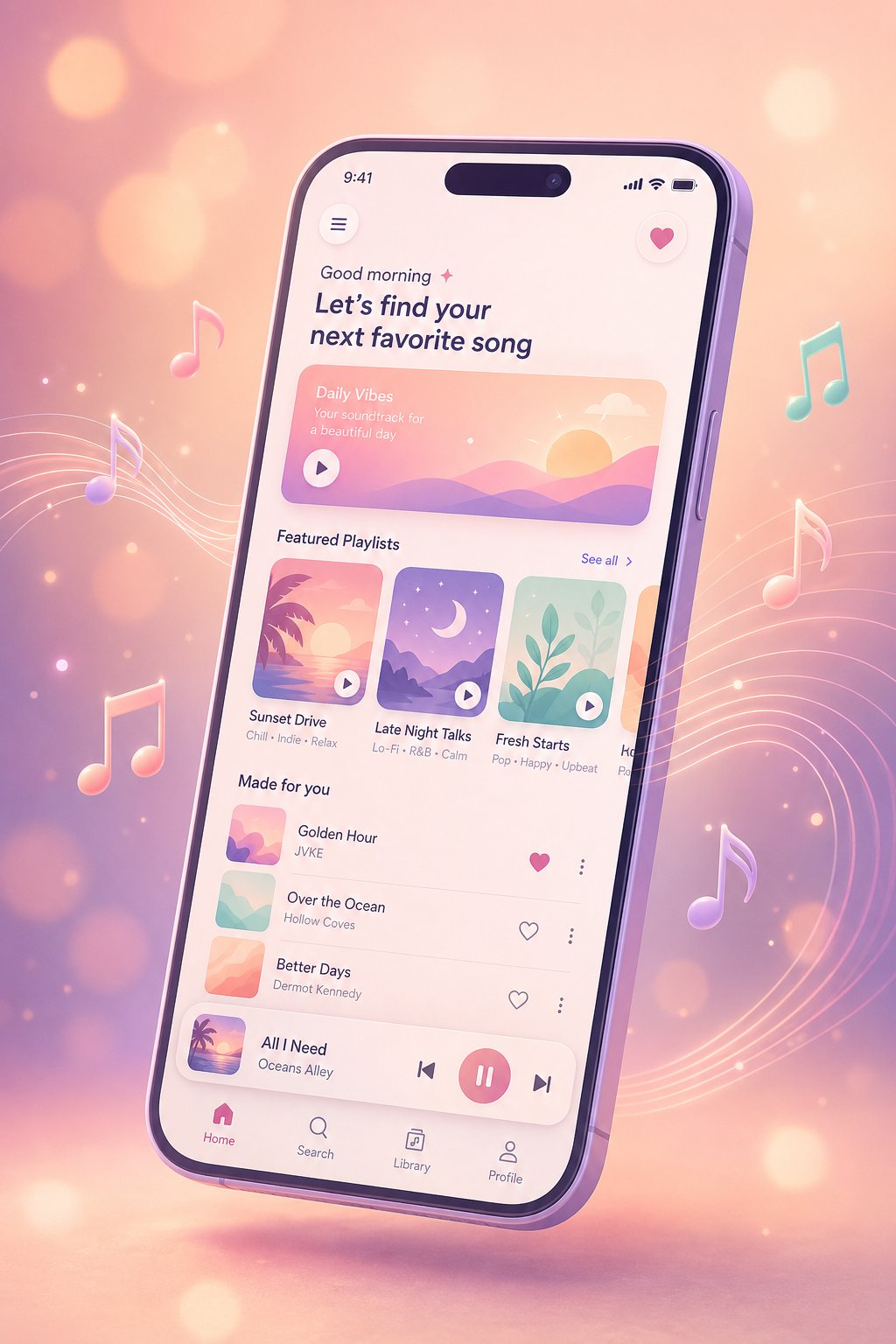
Rewarding is the right word — because the genre's streaming ecosystem is massive, and knowing how to navigate it turns casual listening into genuine discovery. Whether you're a first-time explorer or someone looking to go deeper, Spotify and similar platforms have made finding bedroom pop easier than ever. The trick is knowing where to look and how to listen with intention.
Finding Bedroom Pop on Spotify and Streaming Platforms
Type "bedroom pop" or "indie bedroom" into Spotify's search bar and you'll immediately surface a mix of official editorial playlists and user-generated collections. Spotify's editorial team curates genre-specific playlists using data insights, cultural trend awareness, and sharp ears to place tracks where they're most likely to resonate. These playlists sit alongside thousands of community-curated ones — collections like Unity Records' "Indie & Alternative" playlist with over 400,000 followers, or Purple Crunch Records' dreamy sleep-focused collection with 216,000+ followers.
Beyond search, Spotify's algorithmic features do heavy lifting. Your taste profile — built from every search, save, skip, and listen — feeds personalized playlists like Discover Weekly and Release Radar. The more you engage with lo-fi indie tracks, the more the algorithm surfaces similar pop songs on Spotify that match your listening patterns. Genre Mixes and Mood Mixes offer another entry point, letting you steer recommendations toward specific sonic territories without building anything from scratch.
Don't overlook the "Discovered On" feature on artist profiles, either. It reveals which playlists first championed a given artist — and those same playlists often contain other emerging names you haven't heard yet. It's one of the most underused discovery tools on the platform.
Building Your Own Bedroom Pop Playlist
Curating your own bedroom playlist on Spotify is where passive listening becomes active exploration. A well-built collection isn't just a queue of songs — it's a listening experience with flow, contrast, and room for surprise. Here's a step-by-step approach:
- Start with 5-8 anchor tracks from artists you already know — Clairo, girl in red, beabadoobee — to establish the playlist's sonic center of gravity.
- Apply a discovery ratio. Experienced curators recommend a 70/30 balance: 70% emerging or unknown artists and 30% recognizable names. The familiar tracks build trust and make you more willing to sit with the unfamiliar ones.
- Balance moods intentionally. Alternate between upbeat, sun-drenched tracks and slower, melancholic ones so the playlist breathes rather than flatlining at one emotional register.
- Blend in adjacent genres — dream pop, lo-fi hip-hop, indie folk — to add texture and keep the listening experience from feeling one-dimensional.
- Use artist radio stations and "Fans Also Like" sections to find names that don't appear on the big editorial playlists yet. This is where the real gems hide.
- Update regularly. Swap in new releases every week or two. A living playlist keeps you engaged and trains Spotify's algorithm to keep feeding you fresh recommendations.
The beauty of this process is that it compounds. Every new artist you save or playlist you follow refines your taste profile, which sharpens future recommendations, which leads to more discoveries. It's a feedback loop that rewards curiosity — and it mirrors the same spirit of exploration that drives the genre itself. That loop points somewhere bigger, too: toward a future where the distance between listener and creator keeps shrinking.
The Future of Bedroom Pop and Independent Music
That shrinking distance isn't slowing down — it's accelerating. The forces that built bedroom pop into a global movement are still gaining momentum, and the next chapter of independent music looks less like a trend cycle and more like a permanent restructuring of how songs get made, shared, and heard.
The Bedroom as the New Studio
Consider where things stand. AI-driven mastering and stem separation tools have become so affordable that home recordings in 2026 can sound indistinguishable from high-budget studio records. A Sonarworks survey of over 1,100 working producers found that 57.9% see AI functioning as a creative tool rather than a replacement — handling routine tasks like audio cleanup and mix balancing while humans retain artistic direction. Meanwhile, academic research from Cambridge University Press confirms that the DIY studio is "emerging as a new paradigm in the recording field," with artists reporting greater creative freedom, fewer economic burdens, and more room to experiment outside traditional studio walls.
This isn't a phase. The bedroom studio is becoming the default creative space for a generation of musicians who never needed a label's permission to begin with. As recording technology keeps getting cheaper and smarter, the gap between a spare room and a professional facility narrows to almost nothing. Artists from Lagos to Manila to Mexico City are debuting directly into global charts and touring circuits without Western label incubation — proof that the bedroom pop model scales across borders, languages, and musical traditions.
For listeners exploring spotify pop music playlists and pop music playlist spotify collections, this means the pipeline of fresh, authentic voices will only grow wider. The same algorithmic discovery systems that surfaced early bedroom creators are now pulling in artists from emerging markets worldwide, making every spotify pop music playlist a potential gateway to sounds you've never encountered.
Your Bedroom Pop Journey Starts Now
If you came here as a listener, you now understand what makes this genre tick — the intentional imperfection, the lo-fi warmth, the radical accessibility that turned bedrooms into studios and uploads into careers. You have the vocabulary to hear it differently and the playlists to go deeper.
If you came here as a creator, you have a practical roadmap. The gear is affordable. The techniques reward simplicity. And tools like MakeBestMusic's AI Song Generator can turn a mood or genre description into an original royalty-free track in seconds — bridging the gap between the idea in your head and an actual song you can build on, remix, or use as a creative launchpad. It's the fastest way to move from inspiration to creation without waiting for the "perfect" moment that never comes.
You no longer need a studio, a label, or a budget to make music that reaches the world. You just need a room, an idea, and the courage to press record.
That's the real legacy of bedroom pop. Not a sound, not a playlist category — a proof of concept that great music can come from anywhere, made by anyone. The only barrier left is the one between thinking about it and doing it.
