

What Is Consonance and Why It Matters
When you hear the phrase "pitter-patter" or read "He struck the clock with a quick flick," something clicks. Those repeated consonant sounds bouncing through each word? That's consonance at work.
Before diving deeper, though, there's a common mix-up worth clearing. The word "consonance" carries two meanings. In everyday conversation, it means agreement or harmony, as in "her actions were in consonance with her beliefs." In writing and literature, it means something far more specific and far more useful.
What Does Consonance Mean in Writing
To define consonance in a literary context, you only need one core idea: it's the repetition of consonant sounds within nearby words. Those sounds can appear at the beginning, middle, or end of a word. This is a key distinction. If the repeated sound only shows up at the start of words, that's alliteration, which is actually just one specific type of consonance.
Consonance is the repetition of consonant sounds, in any position within closely placed words, to create rhythm, texture, or mood in writing.
Notice that the consonance definition focuses on sounds, not letters. "Chris's backpack was packed with books" repeats the "k" sound through the letters ch, ck, and k. Spelling varies, but the sound stays consistent.
Why Consonance Matters for Writers and Readers
So why should you care? Because consonance shapes how language feels. It controls rhythm, sets mood, and makes phrases stick in memory. Think of your favorite song lyric or a slogan you can't forget. Chances are, repeated consonant sounds are doing some of the heavy lifting.
Consonance examples show up everywhere, from classic poetry and modern prose to political speeches, rap lyrics, and brand taglines. This article covers all of it: the phonetics behind the sounds, the different types of consonance, how it compares to related devices like assonance and alliteration, and how to use it deliberately in your own writing. The goal is simple: understand this one device, and you'll start hearing it everywhere you read.
The Phonetics Behind Consonant Sounds
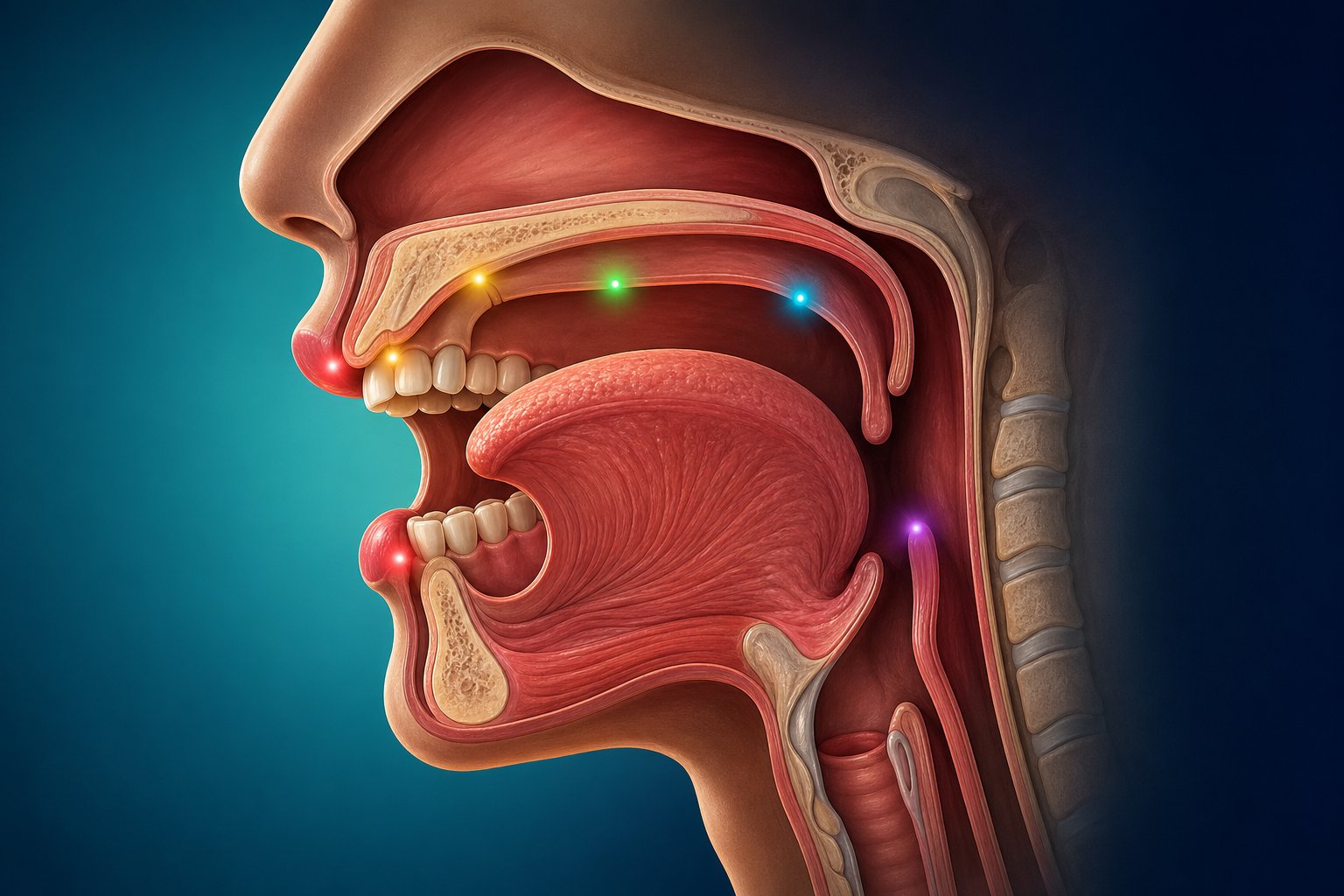
Recognizing consonance on the page is one thing. Understanding why it hits your ear the way it does is another. The secret lives in your mouth, in the physical mechanics of how consonant sounds are made.
How Consonant Sounds Are Produced
Every time you define consonant sounds, you're really describing tiny acts of obstruction. Your tongue, teeth, lips, and palate work together to partially or fully block the airflow passing through your vocal tract. Say the word "tap" slowly. Feel your tongue strike the ridge behind your upper teeth for the "t," then your lips press together for the "p." Those physical contact points are what make consonants consonants.
Vowels work the opposite way. When you say "ah" or "oo," your mouth stays open and air flows freely without obstruction. No collision, no friction, no snap. That contrast matters because it's exactly what gives consonance its punch.
Phoneticians classify consonants by how and where the obstruction happens. Here's a simplified breakdown:
| Category | Sounds | How They're Made |
|---|---|---|
| Plosives (Stops) | p, b, t, d, k, g | Airflow is completely blocked, then released in a small burst |
| Fricatives | f, v, s, z, sh, th | Air is forced through a narrow gap, creating friction |
| Nasals | m, n, ng | Airflow is redirected and released through the nose |
| Liquids | l, r | Tongue causes partial closure, allowing smooth airflow around it |
Why Repetition of These Sounds Creates Effects
Here's where the definition of consonance connects to something you can physically feel. Because every consonant involves a specific contact point in your mouth, repeating the same consonant sound triggers the same micro-sensation over and over. Even when you read silently, your brain simulates those movements, a process called subvocalization.
That's why poems using consonance feel textured rather than flat. A line loaded with "t" and "k" sounds feels percussive and sharp, almost like drumbeats. A passage threaded with "m" and "n" hums quietly, like a low vibration. The sounds carry physical weight because they originate from physical actions.
This is what makes consonance such a precise instrument for controlling pace and mood. It's not abstract. It's biomechanical. And once you understand what is consonance at this sensory level, you start noticing that different consonant sounds don't just repeat, they perform. Each category in the table above produces a distinct texture, and writers who know the difference can choose their sounds as deliberately as a drummer chooses between a snare and a cymbal.
Types of Consonance Every Writer Should Know
Different consonants in poetry don't just repeat — they behave differently. A hissing "s" and a punchy "t" create completely different textures, even though both qualify as consonance. That difference is worth naming.
Sibilance and Plosive Consonance
Sibilance is the repetition of s, sh, ch, and z sounds — the hissing family. These sounds slip through a narrow gap between your tongue and the roof of your mouth, producing a whispery, almost serpentine quality. Writers reach for sibilance when they want something to feel secretive, soothing, or sinister. Imagine the line: "She sells seashells by the seashore." The layered "s" and "sh" sounds practically whisper themselves off the page.
Plosive consonance works the opposite way. Sounds like p, b, t, d, k, and g are produced by abrupt bursts of blocked air, giving them a hard, percussive, staccato quality. Think of "the dead leaves cracked and crunched beneath her boots." Those sharp "d," "c," and "b" sounds hit like small detonations, amplifying the physical force of the scene. Plosive consonance is a go-to for conveying tension, anger, or urgency.
Nasal and Liquid Consonance
Nasal consonance — the repetition of m, n, and ng — sends air through the nose instead of the mouth, producing a calming, humming resonance. Tennyson leaned into this beautifully: "The moan of doves in immemorial elms / And the murmuring of innumerable bees." All those m's and n's create a drowsy warmth you can almost feel vibrating in your chest.
Liquid consonance uses l and r sounds, which flow around the tongue with partial obstruction. The result is smooth, rolling, and melodic — perfect for passages that need grace or gentleness. A phrase like "the rolling river lulled the lonely traveler" lets those l's and r's carry the reader forward without friction.
Here's how each subtype maps out:
| Subtype | Consonant Sounds | Typical Emotional Effect | Example Phrase |
|---|---|---|---|
| Sibilance | s, sh, ch, z | Whispered, sinister, soothing | "the soft shimmer of silk sheets" |
| Plosive | p, b, t, d, k, g | Tense, percussive, urgent | "beat back the bitter dark" |
| Nasal | m, n, ng | Humming, meditative, calm | "moaning winds at morning" |
| Liquid | l, r | Flowing, smooth, melodic | "the rippling river lingered" |
Matching Sound to Mood
This taxonomy gives you a practical framework. Hard consonants — k, t, p, d, g, b — build sharpness and tension. Soft consonants — l, m, n, s — create calm and fluidity. Understanding consonance meaning in poetry (and in prose) comes down to this: the sounds you repeat aren't neutral. Each one carries an emotional charge.
You'll notice that the best examples for consonance in published writing rarely feel accidental. Skilled writers choose their consonant sounds the way a painter chooses pigments — deliberately, with a specific mood in mind. The subtype table above is your palette. Hard sounds on one side, soft on the other, and every shade of texture in between. The question isn't whether consonance is present in a piece of writing. It almost always is. The real question is whether the writer put it there on purpose.

Consonance Examples Across Poetry, Prose, and Rhetoric
Knowing the palette is useful. Seeing how master writers actually mix those colors is where things get interesting. The best way to internalize any consonance example is to slow down, read aloud, and trace exactly which sounds repeat and where they land. That's what we'll do here — across poetry, prose, and persuasive speech.
Consonance in Classic and Modern Poetry
Poetry is where consonance does its most visible work, and the consonance literary definition comes alive the moment you start listening to the lines. Consider this famous passage from Edgar Allan Poe's "The Raven":
"'Tis some visitor," I muttered, "tapping at my chamber door—"
Read it aloud and you'll feel the repeated t sound hammering through: "tis," "visitor," "muttered," "tapping," "at." That plosive t appears at the beginning, middle, and end of words — not just at the start. The effect is a nervous, insistent tapping that mirrors the literal knocking in the poem. Sound and meaning fuse together.
Dylan Thomas uses the same consonant to very different emotional effect:
"Do not go gentle into that good night"
The t sounds in "not," "gentle," "into," "that," and "night" create a defiant, percussive rhythm — each one a small act of resistance against death. Same consonant, completely different mood, because context and pacing shape how the sound lands.
In contemporary verse, poet Amit Majmudar's "The Miscarriage" layers hard c/k, p, and t sounds with sibilant s sounds: "Some species can crack pavement with their shoots." The plosives snap with indignation while the sibilants slowly vent grief — two emotional currents running through the same line.
Consonance in Prose and Nonfiction
Poem consonance gets the most attention, but prose writers lean on the same device. In Moby Dick, Herman Melville writes:
"Nearly all joined in singing this hymn, which swelled high about the howling of the storm..."
The aspirate h sounds — "hymn," "high," "howling" — blend with the nasal n sounds in "singing," "hymn," and the sibilant s in "swelled" and "storm." The result feels like waves: the h sounds push outward like wind, while the n sounds anchor the passage with a low hum. Melville isn't just describing a storm — he's making you hear it.
In David Anthony Durham's Gabriel's Story, a character says: "This earth is tough stuff, I tell you. Break a man's back, break a plow, break an ox's back for that matter." That bouncing b sound — a voiced plosive — gives the dialogue a stubborn, rhythmic insistence. You can almost hear the speaker pounding a table. These examples consonance in prose demonstrate that the device isn't reserved for verse; it works anywhere language needs texture.
Consonance in Speeches and Rhetoric
Consonance also thrives in persuasion. When a phrase needs to lodge in someone's memory, repeated consonant sounds act like acoustic glue. Political speeches, advertising slogans, and brand names all exploit this. The difference between consonance vs assonance matters here: vowel repetition creates smoothness, but consonant repetition creates punch and stickiness — exactly what rhetoric demands.
You'll recognize the technique in phrases you already know by heart:
- "Have a break, have a Kit Kat" — the repeated k and t sounds make this slogan snap like the candy bar itself
- "I have a dream that one day" — Martin Luther King Jr.'s repeated d sound grounds the phrase with weight and determination
- "Coca-Cola" — the triple k sound is percussive, crisp, and impossible to forget
- "Veni, vidi, vici" — Julius Caesar's repeated v and i-ending consonance gives the phrase its legendary cadence
- "Best Buy" and "Dunkin' Donuts" — brand names built on consonant repetition that sticks after a single hearing
In each case, the repeated consonant sounds create a rhythmic hook that makes the phrase easier to recall and more satisfying to say. That's consonance working not as decoration, but as engineering — shaping how language performs in the real world.
Of course, spotting consonance in famous lines is one skill. Knowing how it stacks up against its close relatives — assonance, alliteration, near rhyme — is another. The boundaries between these sound devices blur more often than textbooks admit.
Consonance vs Assonance, Alliteration, and Other Sound Devices
Those blurry boundaries are exactly where confusion breeds. Assonance and consonance get swapped constantly. Alliteration gets treated as a completely separate device when it's really a close cousin. And devices like near rhyme, sibilance, and onomatopoeia overlap with consonance in ways most guides never bother to untangle. Let's sort them out.
Consonance vs Assonance and Alliteration
The cleanest way to separate these three is by asking two questions: what type of sound repeats, and where does it appear in the word?
Consonance repeats consonant sounds in any position — beginning, middle, or end. Assonance repeats vowel sounds in any position. Alliteration repeats sounds only at the start of words. Here's the part most people miss: when alliteration involves consonant sounds (which it usually does), it's technically a form of consonance. "Peter Piper picked a peck" is both alliteration and consonance. The repeated p just happens to land at the front of each word.
| Device | Sound Type | Position in Word | Example |
|---|---|---|---|
| Consonance | Consonant sounds | Anywhere (beginning, middle, end) | "He struck a lucky trick" |
| Assonance | Vowel sounds | Anywhere (beginning, middle, end) | "The rain in Spain stays mainly" |
| Alliteration | Any sound (usually consonant) | Beginning of stressed syllables only | "She sells seashells" |
Think of it this way: alliteration is a subset of consonance with a location restriction. Assonance is consonance's mirror image, doing the same job with vowels instead of consonants. In practice, all three often show up in the same line of poetry — a skilled writer layers them rather than choosing just one.
Consonance vs Near Rhyme, Sibilance, and Onomatopoeia
The consonance definition literature typically stops at the assonance comparison. But several other devices share DNA with consonance, and knowing the family tree helps you identify each one in the wild.
Near rhyme (also called slant rhyme or half rhyme) is what happens when two words almost rhyme but don't quite match. Words like "worm" and "swarm" or "tall" and "toll" share consonant sounds while their vowels differ. That mismatch? It's consonance doing the structural work. Most near rhymes rely on repeated consonant sounds to create the feeling of rhyme without the full sonic match. So when you spot a consonance sample at the end of two poetry lines that feels rhyme-adjacent, you're likely looking at slant rhyme powered by consonance.
Sibilance — the repetition of s, sh, z, and similar hissing sounds — is a specific subtype of consonance, not a separate device. Every instance of sibilance is consonance, but not every instance of consonance is sibilance. It earns its own name because those hissing sounds produce such a distinctive texture that writers and readers benefit from having a dedicated label for it.
Onomatopoeia sits in a different category entirely. Words like "buzz," "crack," and "hiss" imitate real-world sounds. They can contain consonance — "crack" and "click" repeating the k sound, for instance — but the device itself is about sound imitation, not sound repetition. Consonance in poems often works alongside onomatopoeia, amplifying the mimetic effect, but the two serve different purposes.
Where Consonance Fits in the Sound Device Toolkit
Zoom out a little further and you'll find two umbrella concepts that house all of these devices: euphony and cacophony. Euphony describes language that sounds pleasant, melodic, and smooth. Cacophony describes language that sounds harsh, jarring, and discordant. Consonance can serve either one.
Repeat liquid l and nasal m sounds and you drift toward euphony — think of Keats writing "Season of mists and mellow fruitfulness." Repeat plosive k and t sounds and you land in cacophony — like Coleridge's "With throats unslaked, with black lips baked." The consonance itself is neutral. The specific consonant sounds you choose determine whether the result soothes or stings.
That flexibility is what makes consonance the most versatile member of the sound device family. It can whisper through sibilance, punch through plosives, hum through nasals, or flow through liquids. It can build rhyme, break rhyme, create euphony, or fuel cacophony. Every other device on this list either overlaps with consonance or depends on it. Understanding where it sits in the toolkit isn't just academic — it's the difference between using sound accidentally and shaping it with intention.
Consonance in Music and Songwriting
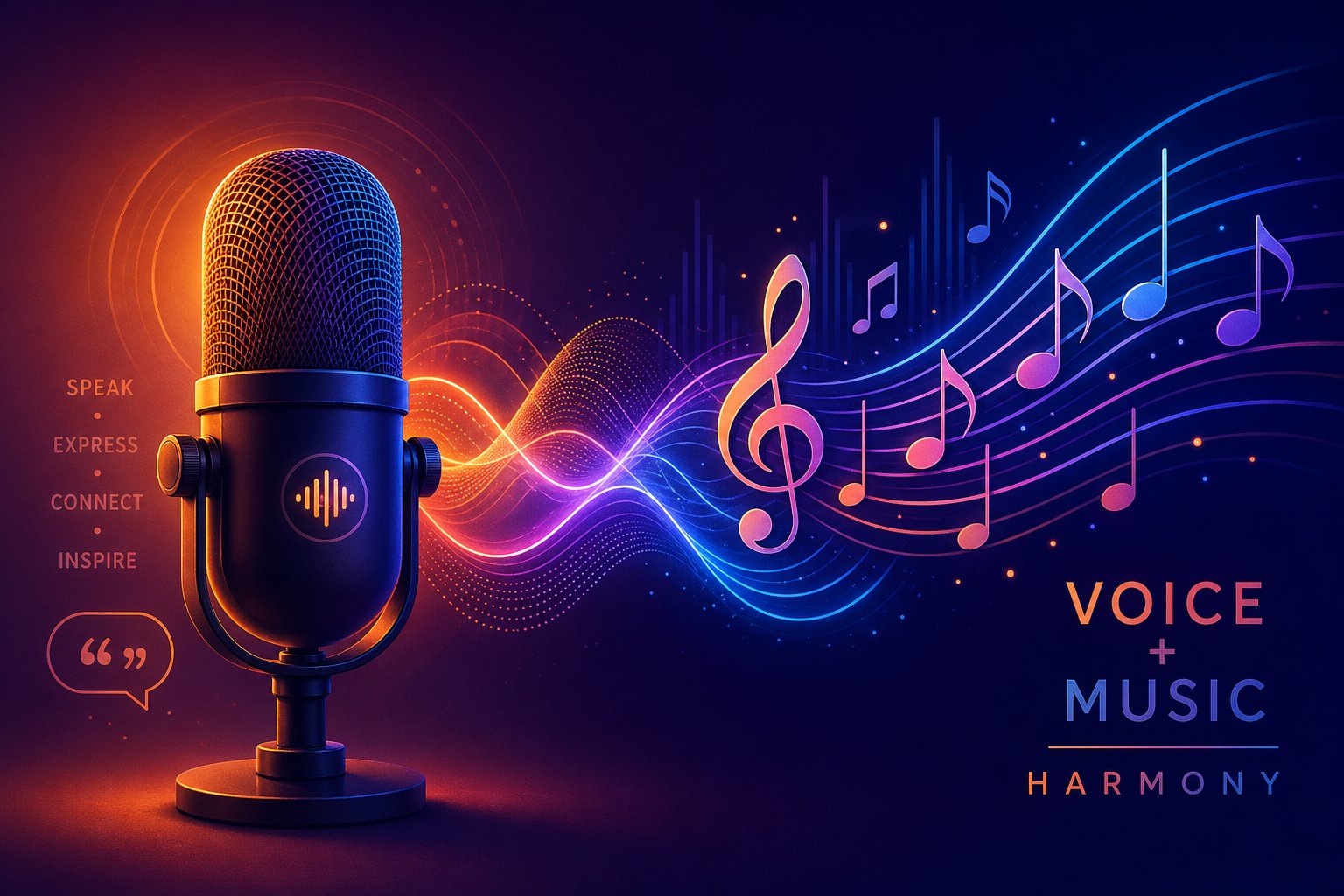
That intentional shaping of sound doesn't stop at the page. Step into music, and the word "consonance" takes on a second life — one rooted not in repeated letters but in the relationship between notes.
What Is Consonance in Music
In music theory, the consonance def shifts from language to harmony. Musical consonance describes combinations of notes that sound stable, pleasant, and resolved when played together. An octave (the ratio 1:2) is the most consonant interval you can play. Perfect fifths and major thirds also fall on the consonant end of the spectrum — they feel settled, complete, like a sentence that ends with a period.
Dissonance is the opposite force. Intervals like the minor second or the tritone create tension, an unresolved itch that demands movement toward something more stable. As MasterClass explains, composers from Mozart to John Williams have used the push and pull between consonance and dissonance to give music its emotional shape — building suspense, then releasing it.
The literary and musical definitions share a root idea: harmony and pleasing combination. In writing, consonance creates sonic harmony through repeated sounds. In music, it creates harmonic harmony through complementary frequencies. Different mechanics, same underlying principle — certain combinations just feel right together.
Consonance in Songwriting and Rap
Songwriting is where these two worlds collide. A songwriter deals with musical consonance in chord progressions and literary consonance in lyrics — often simultaneously. When you study examples of poems with consonance, you're building the same ear that helps you hear repeated sounds in a verse by Bob Dylan or a Kendrick Lamar bar.
Consider how Paul Simon uses consonance in "The Sound of Silence": "Silence like a cancer grows." The repeated s sound threads through the line, reinforcing the creeping quiet the song describes. John Lennon does something similar in "Imagine" — "living life in peace" layers l and p sounds to create a flowing, gentle rhythm that matches the song's utopian tone. Rap artists push this even further, stacking consonant repetition to build internal rhyme schemes and rhythmic flow that drive entire verses forward.
The key is recognizing that consonance operates on two separate tracks in music. Here's how they differ:
- In lyrics, consonance is a literary device — repeated consonant sounds create rhythm, texture, and memorability within the words themselves
- In instrumental music, consonance is a harmonic property — specific note intervals and chord combinations produce feelings of stability and resolution
- Lyrical consonance is identified by listening for repeated sounds across words in a line or verse
- Musical consonance is identified by analyzing frequency ratios between notes — simpler ratios (like 1:2 for an octave) sound more consonant
- A song can have dissonant chords under consonant lyrics, or vice versa — the two layers are independent and can contrast for dramatic effect
That layered quality is what makes songwriting such rich territory for examples of consonance. A rapper might repeat hard k and t sounds to give a verse percussive aggression, while the beat underneath resolves into consonant major chords — tension in the words, stability in the music. The interplay between those layers is part of what makes a song feel alive.
If you want to experience this interplay firsthand, MakeBestMusic's Melody Maker lets you generate melodies and experiment with how different note combinations create consonant or dissonant feelings — a hands-on way to turn the theory from this article into actual songwriting exploration.
Whether you're analyzing examples of poems with consonance or dissecting your favorite hip-hop verse, the listening skill is the same: isolate the repeated sounds, trace where they land, and notice how they shape the mood. The difference is just the medium. And for writers ready to move from analysis to creation, the real craft begins with a deliberate process — choosing your sounds before you choose your words.
How to Write with Consonance Step by Step
Choosing sounds before words might feel backward. Most of us write by reaching for meaning first and hoping the music follows. But the meaning consonance carries in skilled writing rarely happens by accident. It's built through a repeatable process — one you can start using today.
Choose a Mood and Select Your Consonant Sounds
Every passage you write has an emotional target. Tense? Peaceful? Eerie? That target determines which consonant sounds will do the most work for you. Think back to the subtype-to-mood mapping: hard plosives like k, t, p, and d build sharpness and urgency. Soft consonants like l, m, and n create calm and warmth. Sibilants — s, sh, z — conjure mystery, secrecy, or unease.
Imagine you're writing a scene where a character walks through a quiet forest at dusk. You want stillness, not tension. That points you toward liquid l and nasal m and n sounds rather than percussive t and k. The mood comes first. The consonant family follows.
Draft and Revise for Sonic Effect
You don't need to nail the sound pattern on the first draft. What is consonance in poetry and prose if not a revision tool? The best writers layer it in during editing, not during the initial burst of getting ideas down. Here's a concrete workflow:
- Write the sentence naturally, focusing only on meaning.
- Read it aloud and identify which consonant sounds already repeat.
- Decide whether those sounds match your intended mood — do the hard t sounds fit a scene meant to feel gentle?
- Swap words to introduce or strengthen the target consonant pattern. Replace "walked" with "wandered," "big" with "vast," or "happy" with "mellow" — whatever shifts the dominant sound toward your goal.
- Read aloud again to test the result. If the rhythm feels forced, pull back. Consonance in a poem or a paragraph should feel inevitable, not strained.
That read-aloud step is non-negotiable. Consonance lives in the ear, not on the screen. You'll catch patterns — and problems — the moment you hear them that you'd never spot silently.
Consonance in Everyday Writing and Brand Language
This technique isn't reserved for the consonance definition in poetry textbooks. It works anywhere language needs to stick. Brand names and taglines are built on the same principle: repeated consonant sounds make phrases more memorable and more satisfying to say.
Think about it. Coca-Cola, Best Buy, Dunkin' Donuts, Mickey Mouse — each name repeats a consonant sound that gives it a rhythmic hook. Slogans do the same. "Melts in your mouth, not in your hands" threads m and n sounds through every clause, creating a smooth, almost tactile quality that mirrors the product experience. These aren't coincidences. They're consonance, engineered for recall.
Whether you're crafting a tagline, polishing an email subject line, or revising a short story, the process is identical: pick your mood, pick your sounds, draft freely, then sculpt the consonants in revision. The more you practice, the less it feels like a technique and the more it feels like instinct. Of course, even instinct benefits from knowing where the common traps are — and consonance has a few that trip up writers at every level.
Common Consonance Mistakes and Misconceptions
The biggest trap? Thinking you already know what consonance is when you've actually been confusing it with something else. Search for any ex of consonance online and you'll find definitions that blur the lines between consonance, alliteration, and rhyme — sometimes in the same paragraph. That confusion isn't your fault. It's baked into how these terms get taught.
Let's clear the air on the errors that come up most often.
Consonance Is Not Just Alliteration
This is the single most common mistake. Many readers assume consonance only happens when words start with the same consonant sound — "peter picked a peck." That's alliteration, which is one specific type of consonance limited to initial sounds. Consonance itself is far broader. It covers repeated consonant sounds in any position within nearby words: beginning, middle, or end.
So when you read "He struck a lucky trick," that's consonance with the k sound appearing at the end and middle of words — no alliteration involved at all. If someone asks you what is a consonance in a poem, the answer always includes that "anywhere in the word" qualifier. Drop it, and you've accidentally redefined the term as alliteration.
Consonance Is Not Limited to End Sounds or Poetry
Another persistent myth: consonance only applies to the ends of words, or it only exists in verse. Neither is true. Consonance with examples from prose, speeches, song lyrics, and everyday brand names proves the device operates everywhere language does. The Beatles' "whisper words of wisdom" is consonance in a pop song. "Coca-Cola" is consonance in a brand name. A news headline that reads "tough times test the nation" is consonance in journalism.
The confusion with end-sounds likely comes from consonance's close relationship with near rhyme. Because slant rhymes like "worm" and "swarm" share ending consonant sounds, people assume that's all consonance does. It's not. The repeated sound can sit at the front, the middle, or the back of a word — and the writing doesn't need to be a poem for it to count.
There's also a stubborn mix-up between consonance and rhyme. Rhyme requires matching vowel sounds and ending sounds — "cat" and "hat" share both. Consonance only requires matching consonant sounds, regardless of what the vowels are doing. "Cat" and "kit" share the final t sound but use different vowels, so they're an ex of consonance, not rhyme. That vowel independence is exactly what makes consonance so flexible — and what separates it from true rhyme every time.
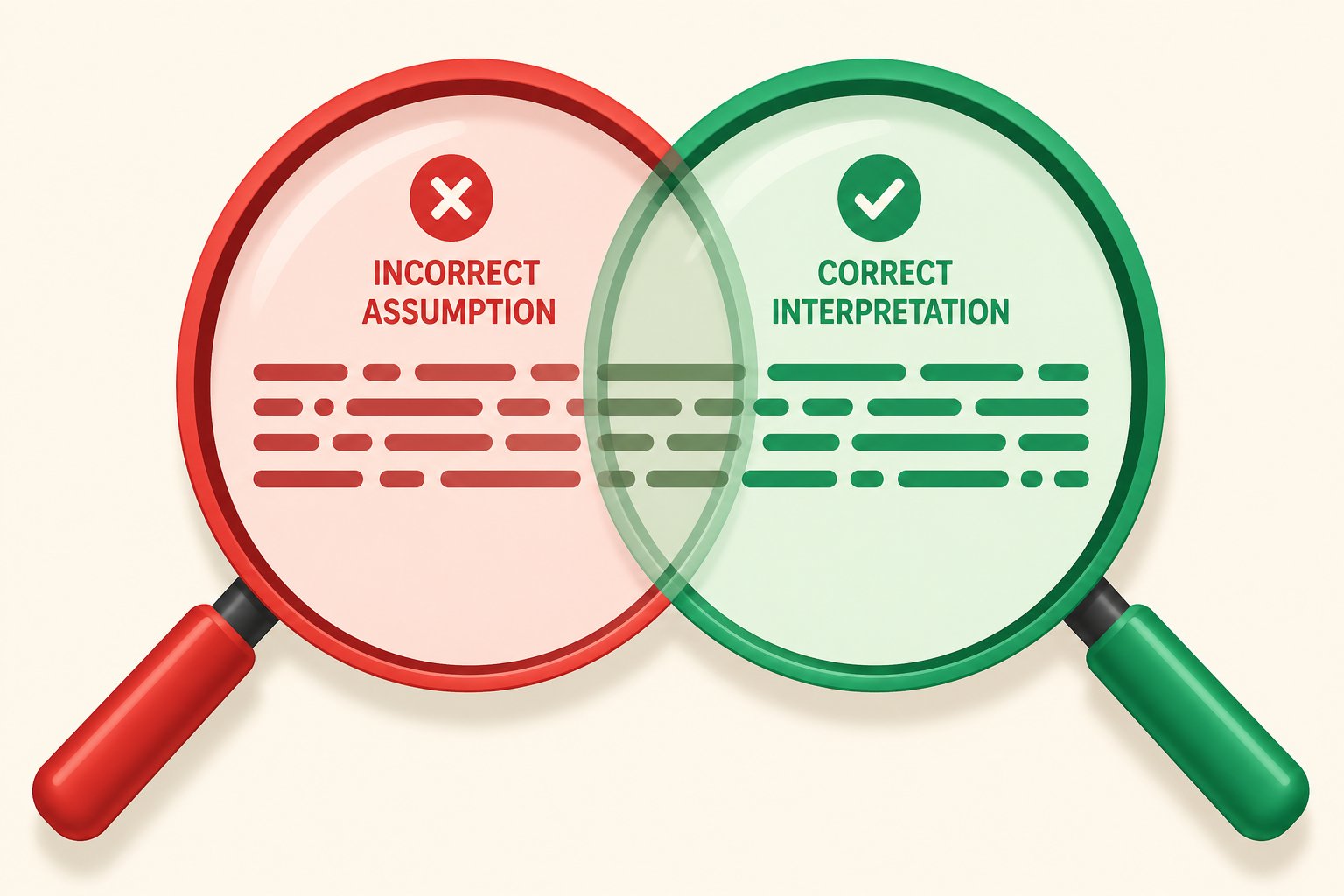
Here's a quick-reference guide to the most common errors, side by side with what's actually true:
| Misconception | Reality |
|---|---|
| Consonance is the same as alliteration | Alliteration is one subtype of consonance, limited to sounds at the beginning of words. Consonance covers any position. |
| Consonance only happens at word endings | Repeated consonant sounds can appear at the beginning, middle, or end of words. Position doesn't matter — repetition does. |
| Consonance is the same as rhyme | Rhyme requires matching vowel and ending sounds. Consonance only requires matching consonant sounds, with vowels free to differ. |
| Consonance only exists in poetry | Consonance appears in prose, speeches, song lyrics, advertising, brand names, and everyday language. |
You'll notice that most of these misconceptions share a common thread: they shrink consonance into something smaller than it actually is. In reality, consonance examples in poetry are just the most visible instances of a device that runs through nearly every form of writing and speech. Once you stop limiting it to poems and word-initial sounds, you start hearing it in places you never expected — which is exactly the shift that turns a definition into a skill.
Turning Consonance Theory into Creative Practice
A definition only matters if it changes how you listen. And that's the real payoff here. Whether you came looking for a consonance poetry definition or just wanted to settle the difference between consonance and alliteration, you now have something more useful than a textbook answer — you have an ear for it.
Consonance as a Bridge Between Reading and Writing
Every section of this article has pointed toward the same truth: consonance isn't a label you slap onto a line after the fact. It's a living force that shapes how language feels in your mouth, your ear, and your memory. You've seen examples of consonance in a poem by Poe, in Melville's prose, in Jay-Z's bars, and in the slogans you repeat without thinking. The device doesn't care about genre boundaries. It works wherever sound meets meaning.
That cross-domain reach is what makes consonance poetry, prose, rhetoric, and songwriting share more common ground than most people realize. Once you hear the repeated k in a Kit Kat slogan and the repeated t in Dylan Thomas, you're using the same skill — just pointed at different material. So what's a consonance, really? It's the thread that connects a nursery rhyme to a rap verse to a presidential speech. The sounds change. The principle doesn't.
Put Consonance to Work in Your Own Creative Projects
Here's your starting point: pick one consonant sound — maybe a soft l or a sharp k. Write three sentences that weave it through naturally. Read them aloud. Notice how the repeated sound pulls the sentences together, giving them a texture they didn't have before. That ten-minute exercise will teach you more about consonance than any definition ever could.
And if you want to push beyond the page, music is the natural next step. MakeBestMusic's Melody Maker lets you explore how consonance works in a musical context — generating melodies, experimenting with harmonic intervals, and turning the sound theory you've just learned into real songwriting ideas. It's a practical bridge from understanding consonance to actively creating with it.
You came here to define one literary device. You're leaving with a toolkit that works across every form of creative expression. Now go make some noise with it.
