

Can You Actually Copyright AI Generated Music
If you type a prompt into an AI music tool and it hands you a finished track, do you own that song? The short answer: probably not. Under current US law, AI-generated music is generally not copyrightable when it lacks meaningful human authorship. But the full picture is more layered than a simple yes or no, because the real question isn't whether AI was involved. It's how much creative control a human exercised over the final result.
The Short Answer to AI Music Copyright
The US Copyright Office has made its position clear. Copyright protection extends only to works that originate from a human mind. A composition produced entirely by an algorithm, no matter how impressive it sounds, falls into the public domain. No exclusive rights. No registration. No legal claim to ownership.
The Copyright Office will not register works "produced by a machine or mere mechanical process that operates randomly or automatically without any creative input or intervention from a human author."
This principle was reinforced in March 2025 when the DC Circuit Court of Appeals affirmed in Thaler v. Perlmutter that the Copyright Act "requires all eligible work to be authored in the first instance by a human being." The court found that multiple provisions of the law, from ownership rules to duration limits tied to an author's death, only make sense when applied to human creators.
So can AI music be copyrighted at all? Yes, but only when a human contributes enough creative decision-making to qualify as the author. Think of it this way: if you write original lyrics, compose a melody, make deliberate arrangement choices, and use AI strictly as a production tool, your work likely qualifies. If you type "make me a chill lo-fi track" and press generate, it likely does not.
Why This Question Matters for Every Creator
This isn't just an academic debate. Thousands of musicians, content creators, and producers now use AI tools daily. Whether you're building a beat with Suno, generating background music for a YouTube channel, or blending AI-assisted elements into a full album, the ai music copyright question directly affects your ability to monetize, license, and protect your work.
Two distinct groups face this uncertainty:
- Musicians and composers who want to copyright AI-assisted compositions and need to understand what level of human involvement secures legal protection.
- Content creators and businesses who need usable music for projects and want to know whether AI-generated tracks carry legal risk when used commercially.
This guide maps the full landscape for both audiences. You'll find the legal framework behind the human authorship requirement, a practical taxonomy of AI involvement levels, platform-by-platform ownership comparisons, global jurisdiction differences, and step-by-step registration guidance. Each section is designed to help you answer one underlying question: where does your specific workflow fall on the spectrum between "fully AI-generated" and "human-authored with AI assistance"?
That spectrum, it turns out, is exactly where the copyright line gets drawn.
How US Copyright Law Treats AI Created Works
Traditional copyright works differently than most people assume. When you write a song or record an original track, you don't need to file paperwork for protection to kick in. Copyright attaches automatically the moment you fix an original work in a tangible medium. Pen hits paper, finger hits record, and you own it. So do you own an auto copyright on things you make with AI the same way? Not necessarily. That automatic protection hinges on one foundational requirement: human authorship.
The US Copyright Office Position on AI Authorship
The Copyright Office has spent years building a clear framework around this principle. In its January 2025 report on copyright and artificial intelligence, the Office affirmed that existing copyright principles remain flexible enough to apply to generative AI, just as they've adapted to past technological shifts like photography and digital recording. But it drew a firm boundary.
The outputs of generative AI can be protected by copyright only where a human author has determined sufficient expressive elements.
In practice, this means the Office evaluates what matters most: creative control. Did a human determine the expressive choices in the work, or did the machine? If an AI system selected the melody, harmonic structure, rhythm, and arrangement based on a text prompt, the resulting track lacks a human author, and copyright simply does not exist for that output.
The Copyright Office's registration guidance from March 2023 spells out the operational rules. Applicants must disclose AI involvement in their works. They must identify which portions were AI-generated and disclaim those sections. Only the human-authored elements receive protection. A work that combines human composition with AI-generated elements can be registered, but the registration covers only what the human actually created.
Register of Copyrights Shira Perlmutter put it plainly: "Extending protection to material whose expressive elements are determined by a machine would undermine rather than further the constitutional goals of copyright." The Office has since registered hundreds of works incorporating AI-generated material, with protection limited strictly to the human contributions.
Key Rulings That Shape the Current Landscape
The legal backbone supporting this framework solidified through the courts. The most significant case, Thaler v. Perlmutter, reached the D.C. Circuit Court of Appeals in March 2025. Dr. Stephen Thaler had submitted a copyright application listing his AI system, the "Creativity Machine," as sole author of a visual artwork. The Copyright Office denied it. The district court upheld that denial. And the appellate court affirmed, holding that the Copyright Act "requires all eligible work to be authored in the first instance by a human being."
The court's reasoning was thorough. It pointed to multiple provisions of the Copyright Act that only make sense when applied to humans:
- Copyright ownership vests "initially in the author," requiring legal capacity to hold property, which machines lack.
- Copyright duration is tied to "the author's death," a concept inapplicable to software.
- Inheritance provisions reference a widow, widower, or surviving children, attributes no AI possesses.
- Copyright transfers require a signature, and machines cannot provide legally valid authentication.
The court also dismissed the argument that denying copyright to AI outputs would stifle creativity. Human creators still have every incentive to produce original works, including works made with AI assistance. Machines, the court noted, do not respond to economic incentives. The human authorship requirement doesn't reduce the total amount of creative output. It simply ensures that copyright serves its constitutional purpose: rewarding human creativity.
On May 12, 2025, the court denied Thaler's petition for rehearing, effectively closing that legal avenue. The principle stands as settled law in copyright 2025: an AI system cannot be an author, and purely AI-generated content enters the public domain with no exclusive rights attached.
What the Thaler ruling deliberately left open, however, is the harder question. How much human involvement transforms an AI-assisted work into something copyrightable? The court acknowledged that "line-drawing issues" exist around permissible levels of AI contribution, but those questions weren't before it. That gray zone between fully autonomous AI output and clearly human-authored work is where most music creators actually operate, and where the real complexity lives.
Can You Publish a Song Written by AI?
That gray zone between "fully AI-generated" and "clearly human-authored" isn't one undifferentiated blur. In practice, creators interact with AI music tools at distinct levels of involvement, and each level carries different copyright implications. The problem is that most discussions treat this as a binary: either the AI made it or you did. Reality is more granular.
Imagine four producers sitting in four different studios. One types a sentence and downloads a finished track. Another writes an entire song and lets AI polish the final mix. Between those extremes sit two more workflows, each with a meaningfully different relationship to the human authorship standard. Understanding which level you operate at is the first step toward knowing whether your work qualifies for protection.
Four Levels of AI Involvement in Music Creation
Every AI music workflow falls somewhere on this spectrum. The parts of music that a human controls, from lyrics and melody to arrangement, production choices, and final mixing, determine how strong a copyright claim can be. Here's how the four levels break down:
Level 1: Prompt-Only Generation
You type a text prompt like "upbeat indie pop song with female vocals about summer road trips" into a platform like Suno or Udio. The AI generates an entire track: melody, lyrics, instrumentation, arrangement, and master audio. Your contribution is limited to the idea expressed in the prompt. Under current Copyright Office guidance, ideas themselves are not protectable. The expressive choices, the specific melody, chord progression, rhythmic pattern, and lyrical phrasing, were all determined by the machine. This output almost certainly falls into the public domain.
Level 2: AI-Assisted Composition
You write original lyrics or compose a melodic theme, then use AI to harmonize, arrange, or extend your work. Maybe you have a verse melody and ask the AI to suggest chord voicings. Perhaps you've written all the lyrics and let an AI tool generate instrumental backing. Here, the human contribution is more substantial but shared with the AI's creative output. Copyright protection likely applies to your original elements (the lyrics you wrote, the melody you composed), while the AI-generated arrangement or harmonization would need to be disclaimed. The more you shape, select, and revise the AI's suggestions, the stronger your overall claim becomes.
Level 3: AI as Production Tool
You compose the melody, write the lyrics, decide on the arrangement, choose instrumentation, and build the song structure. AI handles technical production tasks: mixing levels, mastering the final audio, applying EQ adjustments, or suggesting compression settings. This mirrors how producers have used auto-tune, quantization, and algorithmic reverb for decades. PRS for Music's AI policy explicitly states that where a composer writes the melody, lyrics, and arrangement, and then uses AI tools to mix or master the track, the work is "highly likely to satisfy the originality test." The human authored every expressive element. AI functioned as a technical assistant, not a creative author.
Level 4: AI for Isolated Elements
You compose and produce 90% of the track yourself, but you use AI to generate a single isolated element: a drum pattern, a synth texture, a background pad, or a transitional sound effect. The rest of the song, including the melody, harmony, lyrics, song structure, and arrangement, is entirely human-created. This level represents the lowest AI contribution to the overall work. The human-authored portions carry clear copyright protection, and the AI-generated element would be disclaimed on registration. As a practical matter, this is similar to using a royalty-free sample in an otherwise original composition.
Where the Copyright Line Likely Falls
Mapping these four levels to their likely legal outcomes gives you a practical framework for evaluating your own workflow. The table below summarizes what each level means for ownership and registration prospects:
| Level | Description | Human Contribution | Likely Copyright Status | Registration Prospects |
|---|---|---|---|---|
| 1. Prompt-Only Generation | User types a text prompt; AI generates the full track including melody, lyrics, arrangement, and production | Minimal (idea/prompt only) | Not copyrightable; enters public domain | Registration will be refused; no protectable human authorship exists |
| 2. AI-Assisted Composition | Human writes melody or lyrics; AI arranges, harmonizes, or extends the composition | Moderate (core creative elements are human-authored) | Partially copyrightable; human-authored elements protected, AI portions disclaimed | Registrable with proper disclosure; must identify and disclaim AI-generated portions |
| 3. AI as Production Tool | Human composes all musical elements; AI handles mixing, mastering, or technical processing | High (all expressive decisions made by human) | Copyrightable; AI performs technical, non-creative functions | Strong registration prospects; AI use in production likely needs no disclaimer |
| 4. AI for Isolated Elements | Human composes and produces the full track; AI generates a single element like a drum loop or texture | High (vast majority of work is human-created) | Copyrightable for the human-authored portions; isolated AI element disclaimed | Registrable with disclosure of the specific AI-generated element |
Notice the pattern. Copyright status doesn't depend on whether you used AI at all. It depends on who made the expressive decisions. Did a human determine the melody? Choose the words? Shape the arrangement? Select which musical ideas to keep and which to discard? Those choices are what copyright protects.
This is why asking "can I publish a song written by AI" doesn't have a single answer. You can publish anything, but legal protection depends on your level of creative involvement. A Level 1 track can be released on streaming platforms (no law prevents that), but you can't stop anyone else from copying or remixing it. A Level 3 track, by contrast, carries the same protection as any traditionally produced song.
The Copyright Office's Part 2 report on copyrightability reinforces this framework by emphasizing that "distinguishing between using AI as a tool to assist in the creation of works and using AI to stand in for human creativity is what is important." The line falls not at the presence of AI, but at the point where AI replaces rather than supports human creative judgment.
For creators using top AI platforms for lyrics and writing, this taxonomy offers a self-assessment tool. Identify your level honestly. If you're operating at Level 1 or the lower end of Level 2, you'll want to either increase your human involvement or accept that your output may not carry exclusive rights. If you're at Level 3 or 4, your workflow already aligns with what the Copyright Office expects to see in registrable works.
The taxonomy clarifies where the line probably sits, but knowing the line exists and knowing how to prove you're on the right side of it are different challenges. What counts as "meaningful human authorship" in practical terms, and what specific creative actions strengthen your claim?
Understanding the Meaningful Human Authorship Standard
Knowing the taxonomy of AI involvement is one thing. Proving your work passes the Copyright Office's threshold is another. The "meaningful human authorship" standard sounds intuitive on the surface, but when you're in the middle of a session, layering AI-generated elements with your own ideas, the line between your creative input and the machine's output can blur fast. So what exactly does the Copyright Office look for?
What Meaningful Human Authorship Looks Like in Practice
The core test isn't about effort or time spent. It's about creative control over expressive elements. The Copyright Office evaluates whether a human determined the specific way ideas are expressed in the final work, not just whether a human was involved somewhere in the process. As the USCO's Part 2 report states, outputs of generative AI qualify for protection "only where a human author has determined sufficient expressive elements."
Think of it as a question of authorial distance. When you commission a painter and describe exactly what you want, down to the color palette and composition, you're still not the author of that painting. The painter made the expressive choices that turned your instructions into a finished work. The same logic applies to AI. Your prompt may reflect your mental conception, your idea of what the song should sound like, but the AI system translates that conception into specific musical expression. The Office treats prompts as instructions, not authorship.
This distinction cuts to the heart of how rules on work being framed as input affect copyright claims. Feeding a detailed description into an AI tool and receiving a finished composition back is fundamentally different from composing a melody yourself and using AI to refine the production. In the first case, the machine authored the expression. In the second, you did.
So where does creative control actually register? The USCO's framework recognizes four categories of human contribution that carry weight: using AI to facilitate your own creative process, supplying expressive inputs that remain perceptible in the output, modifying or arranging AI-generated content in sufficiently creative ways, and using AI purely as a tool while you determine the expressive outcome. The common thread across all four: the human shapes what the audience ultimately hears.
Scenarios That Likely Qualify vs Those That Do Not
Abstract standards only become useful when mapped to real workflows. Imagine these scenarios and where each probably lands:
Scenario A: You type "make a lo-fi beat with vinyl crackle and jazzy piano chords" into Suno. The AI generates a two-minute instrumental. You download it unchanged. This almost certainly fails. Your prompt described a desired outcome but didn't control the melodic choices, harmonic voicings, rhythmic patterns, or arrangement. The AI made every expressive decision. Even a highly detailed prompt, say one specifying tempo, key, mood, instrumentation, and structure, doesn't cross the line. The USCO has explicitly rejected the idea that iterative prompt refinement constitutes authorship, calling it a "sweat of the brow" argument that doesn't bear on originality.
Scenario B: You compose a chord progression and vocal melody, record yourself singing it, then feed that recording into an AI tool that generates a full arrangement around it. Your melody and vocal performance remain perceptible in the final output. This likely qualifies for partial protection. You authored the melody and the performance. The AI-generated arrangement would be disclaimed, but your expressive inputs carry copyright because they're identifiable in the result. This aligns with the USCO's "expressive inputs" category.
Scenario C: You generate ten different AI instrumental tracks, listen to all of them, select the three strongest, cut sections from each, reorder them, layer in your own bass line, and write original lyrics over the composite. This scenario is genuinely complex. The lyrics and bass line are clearly yours. The selection and arrangement of AI-generated elements may also qualify if your editorial choices are sufficiently creative, similar to how a compilation author earns copyright through creative selection and coordination. The underlying AI-generated musical material itself remains unprotected.
Scenario D: You write a complete song (lyrics, melody, harmony, structure) and use AI only to master the final mix, adjusting EQ, compression, and stereo width. This is the clearest case. Every expressive element came from you. AI performed a technical function comparable to a tool. AI artists working at this level have strong claims because who owns the creative decisions is never in doubt.
Notice how these scenarios map to a sliding scale. The further you move from passive prompting toward active composition, performance, and editorial curation, the stronger your position becomes. The Copyright Office isn't trying to penalize anyone for using AI for work. It's asking one straightforward question: did the human or the machine determine the expressive content?
Based on the USCO's guidance and case outcomes, here are specific creative actions that strengthen a copyright claim:
- Writing original lyrics from scratch, even if the instrumental backing is AI-generated
- Composing melodic themes or harmonic progressions that remain audible in the final work
- Recording a vocal or instrumental performance that you feed into the AI as an expressive input
- Making arrangement decisions: choosing song structure, determining which sections repeat, where transitions occur, and how dynamics shift
- Selecting and curating AI outputs with editorial judgment, combining, reordering, and rejecting material based on creative criteria rather than accepting the first result
- Substantially modifying AI-generated elements: re-recording melodies the AI suggested, rewriting AI-drafted lyrics line by line, or manually editing MIDI data the AI produced
- Determining instrumentation, orchestration, and timbral choices when those decisions shape the character of the work rather than merely labeling a preset
Each of these actions puts the human in the driver's seat of expression. They move the work away from "AI output accepted as-is" and toward "human-authored composition that happened to involve AI tools."
One nuance worth noting: the USCO has acknowledged that AI technology may evolve in ways that give users more granular control over outputs, potentially changing the copyrightability calculus in the future. But under current tools and current law, the standard is clear. Prompts communicate instructions. They do not constitute authorship.
Understanding what qualifies is only half the picture. The platforms where most AI music gets created impose their own rules through terms of service, and those contractual terms can affect your rights in ways that exist entirely outside copyright law.
AI Music Platform Terms of Service Compared
Platform terms of service operate in a different legal universe than copyright law. Even if you understand the human authorship standard perfectly, the platform where you generate your music imposes its own rules about what you can do with the output. These rules are contractual. They exist regardless of whether copyright protection applies to your track. And they vary dramatically from one service to the next.
Here's the critical distinction most creators miss: a platform granting you "ownership" of an output does not mean copyright law recognizes you as the author. Conversely, a platform restricting your commercial use doesn't mean the track is copyrighted by someone else. These are two separate frameworks, one contractual and one statutory, operating in parallel. Understanding both is essential before you distribute, license, or monetize anything.
How Major AI Music Platforms Handle Ownership
Each AI music generator structures its ownership clauses differently, and the specifics matter more than marketing claims. Let's walk through what the major platforms actually say in their terms.
Suno draws a clear line between its free and paid tiers. According to Suno's Terms of Service, Pro and Premier subscribers receive an assignment of "all of its right, title and interest" in outputs generated during their paid subscription. Free and Basic tier users, by contrast, may only use their outputs for "lawful, internal, personal and non-commercial purposes" with attribution to Suno. There's an important caveat buried in the legal language: Suno explicitly states it "makes no representation or warranty to you that any copyright will vest in any Output." In other words, Suno gives you what rights it can contractually assign, while acknowledging that actual copyright protection may not exist.
Boomy takes a unique approach by building distribution directly into the platform. Rather than simply handing you a file, Boomy offers built-in distribution to Spotify, Apple Music, and TikTok, with royalty collection handled automatically. Paid plans start at $9.99/month and grant commercial rights. Boomy has explored royalty distribution models that split revenue between creators and the platform, functioning almost like a label relationship rather than a pure tool-and-output arrangement. For beginners, this lowers the barrier to entry significantly, though it comes with less creative control over the final product compared to competitors.
AIVA structures its tiers around copyright ownership specifically. The free plan restricts outputs to non-commercial use, and AIVA retains ownership. The Standard plan grants some commercial rights with potential revenue limitations. The Pro plan offers what AIVA describes as full copyright ownership and complete commercial freedom. This tiered approach makes AIVA one of the few platforms that explicitly addresses the copyright question in its pricing structure, though the same legal reality applies: a platform's contractual grant cannot override the statutory requirement for human authorship.
Soundraw positions itself as a royalty-free music solution for content creators. Its Creator Plan provides unlimited generation and commercial use rights for YouTube, ads, and podcasts. The platform uses parameter-based customization rather than text prompts, giving users more granular control over mood, tempo, instrumentation, and structure. This design choice may incidentally help users build a stronger copyright claim, since adjusting parameters involves more creative decision-making than typing a sentence.
Udio presents a cautionary tale about platform stability. Following its October 2025 settlement with Universal Music Group, Udio suspended downloads entirely. Users cannot currently export audio from the platform. Content created before the settlement may retain commercial rights under the original terms, but new content cannot be distributed. Udio is transitioning toward a "walled garden" model, with a licensed platform expected in 2026. For creators who built catalogs on the platform, this illustrates a harsh truth: contractual rights only matter as long as the platform honoring them remains operational and unchanged.
Platform License vs Legal Copyright
The table below compares these platforms across the dimensions that matter most for creators deciding where to generate music:
| Platform | Ownership Clause Summary | Commercial Use Allowed | Exclusivity | Revenue Sharing |
|---|---|---|---|---|
| Suno | Full rights assigned to Pro/Premier subscribers; free tier is non-commercial only | Yes (paid tiers) | No. Identical outputs may be generated for other users | None. Creator keeps all revenue from distributed tracks |
| Boomy | Commercial rights granted on paid plans; built-in distribution with revenue split | Yes (paid tier) | No exclusivity guarantee | Revenue split between creator and platform |
| AIVA | Pro tier grants full copyright ownership; Standard has limitations; Free is non-commercial | Yes (Standard and Pro) | Pro tier offers exclusive ownership claim | None on Pro tier. Creator retains all earnings |
| Soundraw | Royalty-free commercial license for subscribers; no ownership transfer language | Yes (paid plan) | Non-exclusive. Same compositions available to other users | None. Flat subscription fee covers usage |
| Udio | Downloads currently suspended; pre-settlement content may retain original terms | No (currently) | N/A | N/A (platform in transition) |
A few patterns stand out. First, no platform guarantees exclusivity in a meaningful sense. Suno's terms explicitly acknowledge that "Output may not be unique across users and the Service may generate the same or similar output for a third party." You might receive a track identical to what another user generated with a similar prompt. Without copyright protection, you have no legal mechanism to prevent that overlap.
Second, free tiers almost universally restrict commercial use. If you're generating music on Suno Basic, AIVA Free, or similar no-cost plans, you're limited to personal and non-commercial purposes regardless of how much human creativity you contributed.
Third, and most importantly, every platform's ownership language operates within a contractual bubble. When Suno assigns you "right, title and interest" in an output, it's transferring whatever rights it holds. If copyright never vested in the first place because the output lacks human authorship, there may be nothing to transfer beyond a contractual permission to use the file. You get a license, not necessarily a legal monopoly. The practical difference: you can monetize the track, but you likely cannot sue a third party who independently creates or copies something similar.
Services adjacent to the generation platforms, like distribution companies such as Rightsify and metadata tools like Sonoteller, add another layer. These services help creators get AI music onto streaming platforms and properly tagged, but they don't resolve the underlying copyright question. They facilitate commercial use within the rights your generation platform grants, nothing more.
For creators evaluating platforms, the practical takeaway is this: read the terms carefully, verify which tier grants commercial rights, and download your content promptly. Udio's sudden policy shift proves that platform capabilities can change overnight. And remember that "commercial use allowed" and "copyright protected" are not synonyms. You'll want to understand both what your platform permits and what the law actually protects, especially when your music crosses into territories with different legal frameworks.
Global Comparison of AI Music Copyright Rules
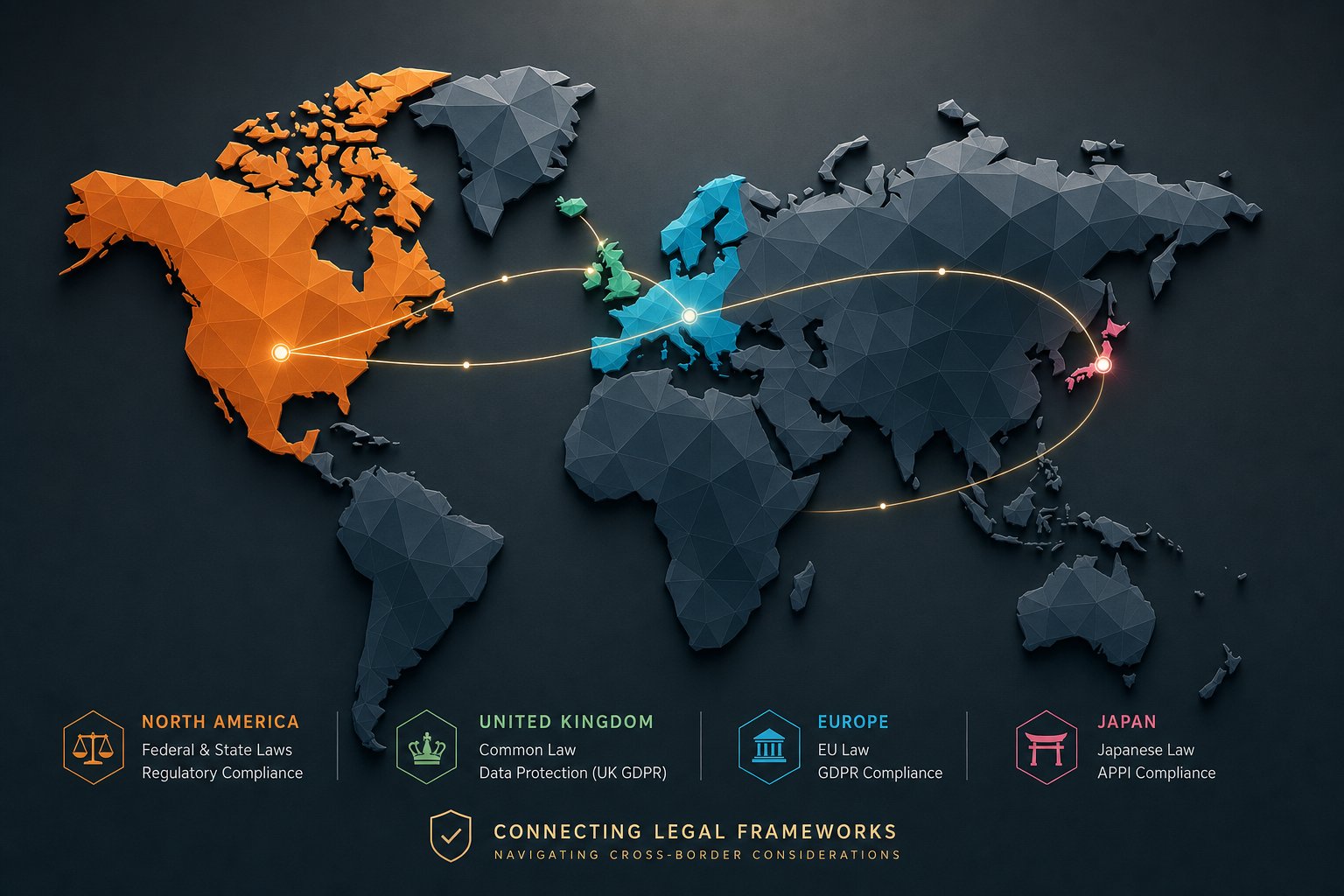
What the law protects shifts dramatically depending on where you are. A track that sits in the public domain in the United States might qualify for limited copyright protection in the United Kingdom, face transparency obligations in Europe, or exist in legal limbo in Canada. If you distribute music internationally, or even upload it to a global streaming platform, you're operating under multiple legal frameworks simultaneously. Here's how the major jurisdictions compare in the latest ai copyright updates.
US Copyright Office Guidance and Federal Rules
The US position is the most clearly articulated. As covered earlier in this article, the Copyright Office requires human authorship as a non-negotiable threshold. Purely AI-generated works cannot be registered and enter the public domain immediately. Works combining human and AI contributions can be registered, but applicants must disclose AI involvement and disclaim non-human-authored portions. The DC Circuit's 2025 affirmation in Thaler v. Perlmutter cemented this as settled federal law. No separate AI-specific legislation governs the question. The existing Copyright Act, interpreted through Office guidance and judicial rulings, handles it entirely within the traditional authorship framework.
How the EU and UK Approach AI Music Rights
The European Union takes a fundamentally different angle. Rather than directly addressing whether AI outputs receive copyright protection, the EU AI Act focuses on transparency obligations. Article 50 requires providers of generative AI systems to ensure outputs are marked in a machine-readable format and detectable as artificially generated. Deployers must disclose when content constitutes a deep fake or AI-generated text published on matters of public interest. A code of practice currently being drafted by independent experts appointed by the AI Office will clarify compliance standards before the transparency obligations take effect in August 2026. The EU hasn't explicitly ruled on whether AI-generated music can receive copyright. Member states retain their own copyright frameworks, most of which require human intellectual creation under the Infopaq standard established by the CJEU.
The United Kingdom stands apart from every other major jurisdiction. Section 9(3) of the Copyright, Designs and Patents Act 1988 (CDPA) specifically addresses "computer-generated works" with no human author. Under this provision, authorship is attributed to "the person by whom the arrangements necessary for the creation of the work are undertaken." This means that in the UK, a person who uses an AI tool to generate a complete piece of music could potentially be recognized as the legal author, even without contributing traditional creative expression.
However, this provision faces serious tension with the UK's own originality test, which follows EU case law in requiring works to be an "intellectual creation" bearing the author's personal touch and free creative choices. The UK Intellectual Property Office's 2024 consultation openly questioned whether Section 9(3) should be repealed, noting that there's "little evidence that CGW protection stimulates AI innovation" and that the provision creates an apparent contradiction with the originality requirement. A decision on its future is expected soon. For now, it remains on the books, making the UK one of very few countries where purely AI-generated music might carry some form of copyright protection.
Japan offers another flexible approach. Its copyright law has been interpreted to allow broad text and data mining exceptions, and the country has not issued definitive rulings against AI authorship in the way the US has. Japan's Copyright Act focuses on creative expression but leaves room for interpretation regarding the threshold of human involvement needed. Canada, meanwhile, is actively consulting on its position. The Canadian government's consultation paper on copyright in the age of generative AI presents three possible approaches: clarifying that only human-created works receive protection, adopting a UK-style model attributing authorship to whoever arranged for the work's creation, or creating an entirely new sui generis right for AI-generated works. Canadian copyright jurisprudence currently suggests authorship requires a natural person exercising skill and judgment, but no court has definitively ruled on generative AI outputs. The Canadian Intellectual Property Office (CIPO) does not examine substantive claims during registration, meaning AI-generated works may already be registered without scrutiny.
The table below maps these jurisdictions against the key factors that affect your rights as a creator:
| Country/Region | Governing Framework | AI Authorship Recognized | Registration Requirements | Commercial Implications |
|---|---|---|---|---|
| United States | Copyright Act + USCO guidance + Thaler v. Perlmutter (2025) | No. Human authorship required. | Must disclose AI use; disclaim AI-generated portions; only human elements registered | Purely AI outputs are public domain; no exclusive rights; anyone can copy or reuse |
| European Union | AI Act (Article 50 transparency) + member state copyright laws + Infopaq originality standard | Not explicitly addressed at EU level; member states generally require human intellectual creation | AI-generated content must be machine-readably marked; no unified registration system | Transparency labeling required by August 2026; commercial use permitted but must be disclosed |
| United Kingdom | CDPA 1988 Section 9(3) for computer-generated works; originality test per Infopaq/THJ Systems | Potentially yes. Author is "the person who made arrangements necessary" for creation | No registration required (copyright arises automatically); no mandatory AI disclosure yet | May grant exclusive rights even to purely AI outputs, but provision faces possible repeal |
| Japan | Copyright Act with broad TDM exception; no specific AI authorship ruling | Unclear. Flexible interpretation; no definitive exclusion of AI-involved works | No registration required for copyright to exist; voluntary registration available | Relatively permissive environment for AI-generated content; TDM for training broadly allowed |
| Canada | Copyright Act + ongoing government consultation; no court ruling on generative AI | Undetermined. Jurisprudence suggests human skill and judgment needed, but no AI-specific precedent | CIPO does not examine claims; AI-generated works may be registered without scrutiny | Legal uncertainty; three policy approaches under active consideration |
A few patterns emerge from this generative ai updates landscape. The US offers the most certainty but the least protection for AI-only outputs. The UK offers the most protection but the least stability, given the active consultation on repealing Section 9(3). The EU prioritizes transparency over ownership questions. And both Japan and Canada occupy a wait-and-see position, which creates opportunity but also risk for creators relying on unclear rules.
For anyone distributing music globally, the practical takeaway is sobering. Copyright protection is territorial. A track you generate with AI might be unprotectable in the US, arguably protected in the UK, and subject to mandatory labeling in Europe. You cannot assume that rights recognized in one country will be honored in another. If enforcement matters to you, consider where your audience lives and where potential infringers operate. Your copyright is only as strong as the jurisdiction where you'd need to defend it.
This jurisdictional patchwork also raises a more immediate question. If copyright protection is uncertain or nonexistent for your AI music in the countries where you actually want to use it commercially, what does that mean for licensing, sync deals, and revenue? The answer depends less on copyright law and more on the contractual structures and practical alternatives available to you.
Commercial Use of AI Music and Licensing Realities
You've built a video ad for a client, scored a podcast intro, or dropped background music into a mobile game. The track came from an AI generator. Can you actually use it commercially? The short answer is yes, nothing in US law prohibits commercial use of public domain material. But the longer answer involves a set of practical risks that have nothing to do with whether you're "allowed" to use the music and everything to do with what happens when someone else does too.
The gap between "legally usable" and "legally protectable" is where most commercial headaches live. A track without copyright protection can be used by anyone, including your competitor, a random TikTok creator, or a company running the same style of ad campaign. You can't send a cease-and-desist letter. You can't file a DMCA takedown. You have no exclusive claim. For some projects, this is perfectly fine. For others, particularly branded content, sync placements, or flagship campaigns, it's a dealbreaker.
Using AI Music in Commercial Projects Safely
Imagine you produce a YouTube series and use an AI-generated track as your signature theme. Six months in, another channel starts using an identical or near-identical piece (generated from a similar prompt on the same platform). You have no copyright to enforce. Worse, if that other creator registers the track with a content identification service like YouTube's Content ID, you could receive a claim on your own videos, even though you generated the music first. As Silverman Sound Studios documents, creators are already receiving copyright claims on videos using AI-generated music, with limited recourse when disputes are rejected.
For commercial projects where AI music still makes practical sense, here are the contractual protections you should consider:
- Indemnification clauses: If you're delivering content to a client that includes AI-generated music, your agreement should specify who bears liability if a copyright claim arises. Without this, you may absorb legal costs for a track you can't even prove you own.
- Representations about originality: When licensing or sublicensing AI music to third parties, avoid representing that the track is "original" or "exclusively owned." These warranties can create liability if challenged. Instead, represent that you have the contractual right to use the music commercially per the generating platform's terms.
- Sync licensing considerations: Traditional sync deals (placing music in film, TV, or advertising) require both master rights and publishing rights. With AI-generated music, neither right may exist in the copyright sense. A sync supervisor evaluating your track needs to understand this distinction. What you're offering isn't a traditional license backed by registered copyright. It's a permission backed by platform terms and, potentially, public domain status. Many music supervisors remain cautious about this gap.
- Documentation of generation: Save your prompts, export timestamps, and screenshots of your platform account showing the track's creation. If your right to use the music ever comes into question, this paper trail establishes at minimum that you generated it through legitimate means on a platform that granted commercial rights.
The cost for music copyrights on a full album using traditional registration is modest (around $65 per work through the US Copyright Office), but that cost assumes the work qualifies for registration in the first place. If your AI-generated tracks can't be registered, spending money on legal protection for surrounding elements like human-written lyrics or original arrangements becomes the more strategic investment.
How Performing Rights Organizations Handle AI Tracks
Performing rights organizations have started clarifying their stance. In October 2025, ASCAP, BMI, and SOCAN jointly announced they will accept registrations of partially AI-generated musical works, defined as compositions combining AI-generated content with elements of human authorship. The key word is "partially." Compositions that are entirely created using AI tools remain ineligible for registration with any of the three major North American PROs.
ASCAP CEO Elizabeth Matthews framed the policy shift clearly: "We are clarifying our registration policy to now welcome partially AI-generated musical works because we believe AI can be a powerful tool for our members, as long as the law puts humans first." BMI and SOCAN echoed the same principle. If your track includes identifiable human-authored components, melody you wrote, lyrics you penned, or arrangement decisions you made, the PROs will register it and collect performance royalties on your behalf. If the AI did everything, you're out of luck.
This means copyright music ai news is trending in a consistent direction: human contribution is the gateway to the entire commercial infrastructure, from registration to royalty collection to enforcement. Without it, you can still use the music, but you can't plug into the system that monetizes and protects it at scale.
Royalty-Free AI Music as a Practical Alternative
For many creators, the goal was never ownership or copyright registration in the first place. You need a track for your video, your podcast episode, or your indie game trailer. You need it to sound good, you need it fast, and you need clarity that you won't face a takedown or a licensing dispute six months from now. The copyright question, while intellectually important, is secondary to the practical one: can I use this without legal risk?
This is where royalty-free AI music generators offer a genuinely useful shortcut. Rather than navigating the authorship threshold, platform terms, and PRO registration requirements, you get a simple exchange: the tool generates music, and you receive clear commercial usage rights under the platform's license. No registration needed. No exclusivity claimed. No ambiguity about whether you pass the human authorship test, because you're not trying to own the copyright. You're licensing the right to use it.
Tools like MakeBestMusic's Free Music Generator are built around this model. You generate a track, you receive royalty-free usage rights for videos, social content, podcasts, and games, and the licensing question is resolved at the point of creation. There's no downstream risk of someone else registering your track with Content ID, because the platform's terms establish your right to use it commercially without needing to prove authorship. For content creators who want music without copyright restrictions, this approach sidesteps the legal complexity entirely.
The distinction matters: if you're a musician building a catalog you want to protect, license, and monetize long-term, you need human authorship and copyright registration. But if you're a creator who needs production music for a specific project and values speed, cost, and legal clarity over ownership, royalty-free generators deliver exactly that. Different goals, different tools, different legal paths.
Either way, the commercial landscape rewards preparation. Whether you're claiming copyright on AI-assisted compositions or simply using AI music under a clear license, documentation and intentional process are what separate creators who face problems from those who don't. And for anyone pursuing the copyright route, the next question is mechanical: how do you actually register an AI-assisted work with the Copyright Office, and what does the application process look like step by step?
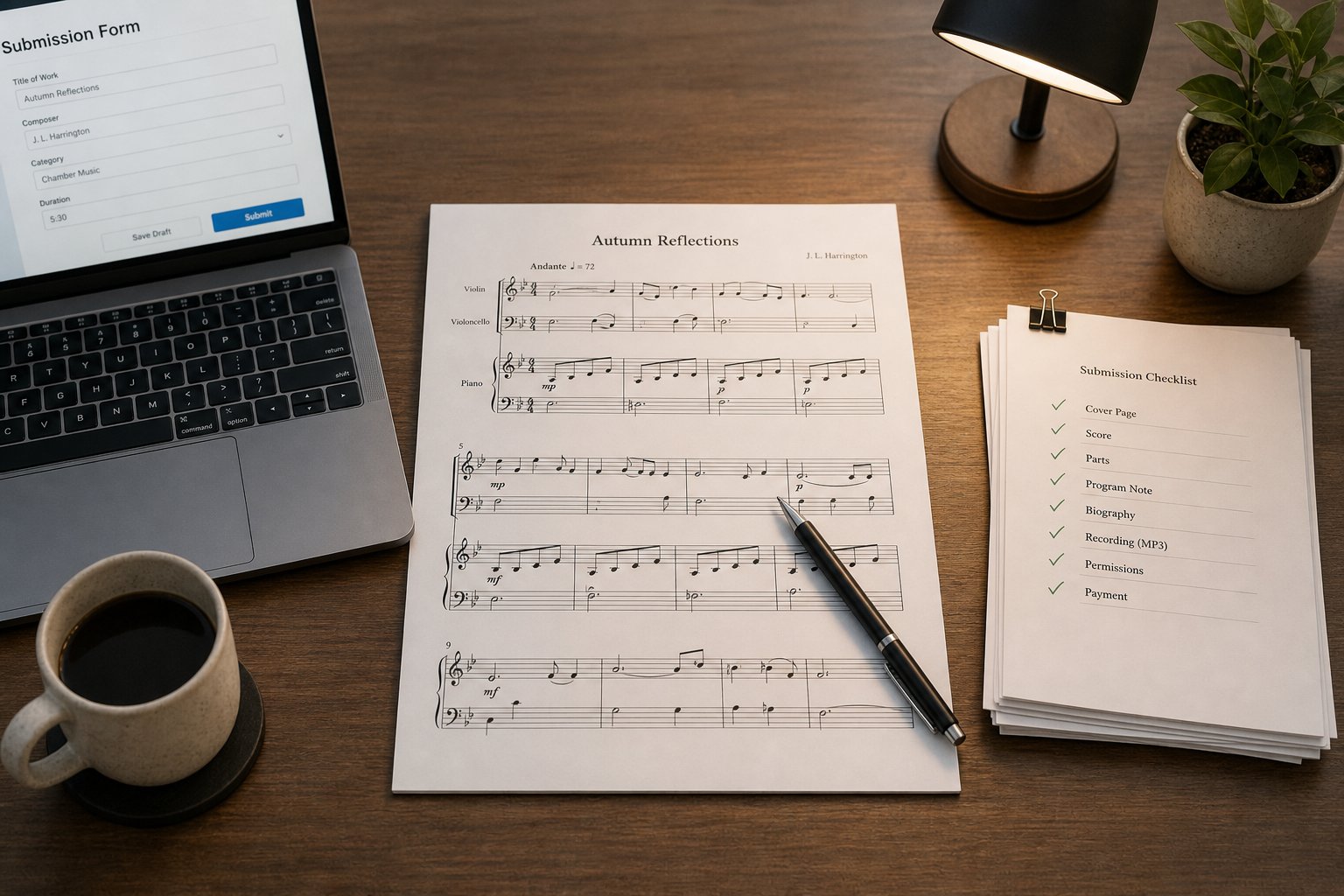
How to Copyright AI Music Through the Registration Process
Knowing you qualify for protection and actually securing it are two different tasks. The registration process for AI-assisted music isn't radically different from registering any other musical work, but it does require additional disclosure steps that trip up creators who aren't prepared for them. If you skip or mishandle these steps, you risk a prolonged back-and-forth with the Copyright Office, or worse, a refused application.
Here's the good news: the Office has already registered hundreds of works containing AI-generated material. It's not hostile to AI involvement. It simply insists on knowing what a human authored versus what a machine produced. Your job as the applicant is to make that distinction crystal clear from the start.
Step by Step Registration for AI-Assisted Music
The Copyright Office requires applicants filing AI-assisted works to use the Standard Application through the eCO (Electronic Copyright Office) system. Other application types, like the Single Application or group registration options, don't currently include fields for disclaiming unprotectable material. This is a detail that catches many first-time filers off guard.
Before you open the application, you need to answer a fundamental question: are you registering the musical composition (melody, harmony, lyrics, structure), the sound recording (the specific recorded performance and production), or both? The human authorship story can differ across each layer. You might have written all the lyrics and melody yourself (composition) but used AI to generate the instrumental backing track (sound recording). In that case, you'd register the composition with full protection and either disclaim the AI-generated recording elements or file separately with appropriate limitations.
Once you've determined the scope of your claim, follow these steps:
- Identify which elements are human-authored. Before touching the application, make a clear inventory. List every component you personally created: lyrics, vocal melody, harmonic progression, arrangement decisions, instrumental performances, production choices you made manually. Then list what the AI generated: instrumental tracks, drum patterns, harmonizations, mastering processing, or any other output you accepted from the tool. This separation is the foundation of everything that follows.
- Disclaim AI-generated portions on the application. In the eCO workflow, you'll encounter a section for excluding material from your claim. The Copyright Office calls this a "Limitation of Claim." Here, you describe the AI-generated content that is more than de minimis (meaning more than a trivially small contribution). Use plain, specific language: "AI-generated instrumental arrangement," "AI-generated drum pattern," or "AI-generated backing vocals." Avoid vague descriptions like "some AI elements" that force the examiner to guess.
- Describe your creative process in the "Author Created" field. This is where you make your case. The Office wants to see what expressive choices you made. Instead of writing something generic like "music," describe your actual contribution: "original lyrics, vocal melody, chord progression, and arrangement of song structure" or "vocal performance, melodic composition, and creative selection and arrangement of AI-generated elements." The more precise you are, the less likely the examiner is to flag your application for follow-up questions.
- Submit supporting materials showing human involvement. Your deposit copy (the actual audio or sheet music you upload) should reflect the human-authored elements you claimed. If you registered original lyrics and melody over an AI-generated instrumental, the deposit should make your vocal melody and lyrics clearly audible or readable. The Office will compare what you claimed against what the deposit actually contains.
- Be prepared for correspondence from the Office requesting clarification. Even well-prepared applications sometimes trigger examiner questions, especially since AI-assisted works are still relatively new territory. The Office may ask you to clarify the extent of AI involvement, provide more detail about your creative process, or narrow your claim. Respond promptly and specifically. A delayed or vague response can stall your registration for months.
The Copyright Alliance notes that applicants can also provide a general statement that the work contains AI-generated material and let the examiner follow up, but this approach inevitably lengthens processing time. Taking the time upfront to clearly separate human authorship from AI output streamlines the entire process.
Documenting Your Human Creative Contribution
The registration application captures a snapshot of your claim, but the real protection comes from the documentation you maintain throughout creation. Think of it as building an evidence trail that supports everything you assert on the application. If your registration is ever challenged, or if you need to defend your copyright in court, this documentation becomes your primary weapon.
What should a creation log include? Anything that demonstrates human creative decision-making:
- Dated drafts of lyrics showing revisions and development over time
- MIDI files or voice memos of melodies you composed before involving AI tools
- Screenshots of your DAW session showing manual edits to AI-generated material
- Notes on which AI outputs you rejected and why, demonstrating editorial judgment
- Recordings of your arrangement decisions: where you placed sections, how you structured dynamics, what you cut or reordered
- Timestamps from your AI platform showing when you generated material and what prompts you used
- Before-and-after comparisons showing the AI's raw output versus your modified final version
This isn't bureaucratic busywork. The RightsDocket registration guide emphasizes preserving contributor data, tool disclosures, and timestamps "so the story you tell in the application is consistent with your project record." Consistency is key. If your application says you wrote the melody but your creation files show you accepted an AI-generated melody unchanged, that discrepancy could invalidate your claim.
One practical tip: capture this documentation during your creative process, not after. Reconstructing a timeline weeks or months later is unreliable and looks less credible if questioned. Many DAWs automatically save version histories. AI platforms log your generation history. Use these built-in records to your advantage.
What Gets Accepted vs What Gets Rejected
The Copyright Office has published several registration decisions that reveal its reasoning. These cases weren't music-specific, but the principles translate directly.
In the Zarya of the Dawn decision, the Office granted registration for the human-authored text and the creative selection and arrangement of a graphic novel, while denying protection for the AI-generated images themselves. The takeaway for musicians: if you wrote original lyrics and creatively arranged AI-generated instrumental elements into a cohesive composition, your lyrics and arrangement choices are protectable even though the underlying AI audio is not.
In the Theatre D'Opera Spatial Review Board decision, the Office rejected the argument that extensive prompt iteration constituted authorship. The applicant had refined prompts over hundreds of iterations to achieve a desired visual result. The Board held that this process, however time-consuming, did not give the human control over the specific expressive elements of the output. For music creators, this means that spending hours tweaking prompts in Suno or similar tools does not establish authorship over the generated audio, no matter how detailed or iterative your prompting process.
The pattern across all published decisions points in one direction: the Office protects what you demonstrably created, not what you directed a machine to create. The distinction between "I composed this melody and AI arranged it" versus "I prompted AI to compose a melody" is the difference between acceptance and rejection.
A US copyright search through the Office's public records reveals that successful registrations of AI-assisted works consistently share common traits. They identify specific human-authored elements with precision. They disclaim AI-generated material explicitly. And they describe a creative process where the human made perceptible expressive choices rather than simply curating or selecting from AI outputs.
With copyright ai training lawsuit news today continuing to reshape how courts view the relationship between AI systems and creative works, the registration landscape may evolve further. Courts are currently adjudicating whether AI companies can use copyrighted music to train their models, and the outcomes of those ai copyright lawsuit news today 2025 cases could eventually influence how the Office evaluates the outputs of those same systems. For now, the registration framework is stable: disclose honestly, claim only what you authored, and document everything.
Registration secures your legal position, but it's only one piece of a broader strategy. The real question most creators face isn't procedural. It's practical: given all this complexity, what should you actually do right now to protect your work or get usable music into your projects without legal risk?
What Creators Should Do Right Now
Legal uncertainty doesn't mean paralysis. Whether you're chasing copyright protection for AI-assisted compositions or you simply need a clean track for your next project, the steps you take today determine how well you're positioned regardless of how music copyright ai news evolves over the coming months.
Actionable Steps for Creators Seeking Copyright Protection
If you're a musician or composer building a catalog you intend to license, enforce, and monetize long-term, your strategy comes down to one goal: maximizing provable human authorship at every stage. The law may shift, but human creative control will remain the foundation of protection under any foreseeable framework. Here's your checklist:
- Increase your human involvement deliberately. Write your own lyrics. Compose melodic themes before touching an AI tool. Make arrangement and structural decisions yourself. The more expressive choices you can attribute to your own creative judgment, the stronger your claim.
- Document everything in real time. Keep dated drafts, voice memos of original melodies, screenshots of DAW edits, and notes explaining which AI outputs you rejected. Build the evidence trail while you're creating, not after.
- Disclose AI use proactively on registration applications. Trying to hide AI involvement is riskier than transparency. The Copyright Office rewards honest disclosure and penalizes misrepresentation. Clearly disclaim AI-generated elements and describe your human contributions with precision.
- Use AI at Level 3 or 4 whenever possible. Refer back to the taxonomy: compose and arrange the music yourself, then let AI handle technical tasks like mixing, mastering, or generating a single isolated element. This keeps you squarely within protectable territory.
- Register promptly. Don't wait for the law to "settle." Registration creates a public record of your claim with a specific effective date. If disputes arise later, that timestamp matters.
- Monitor copyright ai music news and PRO policy updates. ASCAP, BMI, and SOCAN now accept partially AI-generated works. Stay current on their evolving registration requirements so you don't miss opportunities to collect performance royalties.
These steps don't guarantee bulletproof protection. The meaningful human authorship standard still involves judgment calls, and examiners evaluate each application individually. But creators who follow this process are building the strongest possible case under the rules as they exist today.
The Simpler Path for Content Creators Who Need Music
Not everyone needs to own a copyright. If you're a YouTuber, podcaster, game developer, or social media creator, your goal is different. You need a track that sounds good, fits your content, and won't trigger a takedown or a licensing dispute. The authorship question is irrelevant to your workflow because you're not trying to register or enforce exclusive rights. You're trying to ship a project.
For this audience, royalty-free AI music generators eliminate the legal ambiguity entirely. You're not navigating the human authorship threshold, worrying about platform terms shifting overnight, or wondering whether a PRO will accept your registration. You're receiving a clear commercial license at the point of creation.
MakeBestMusic's Free Music Generator is purpose-built for this use case. You generate a track, you get royalty-free usage rights for videos, podcasts, games, and social content, and the licensing question is settled before you ever hit publish. No registration required. No ownership ambiguity. No risk of someone else claiming the same track through Content ID. The ai music copyright news today consistently confirms that this approach, clear license terms without reliance on copyright ownership, is the most practical path for creators whose priority is usable music rather than catalog building.
Two audiences, two strategies. If you want protection, put humans first and document the proof. If you want production music without complexity, use tools that grant clear rights upfront. Either way, the worst position is the passive one: generating AI music without understanding the legal status of what you've made. The landscape is still forming, but the creators who act intentionally now, whether toward copyright or toward licensed simplicity, won't be caught off guard when the next ruling drops.
