

What Does It Actually Mean for AI to Take Over Music
AI-generated tracks topping Spotify's viral charts. A wholly artificial "artist" signing a record deal. An AI song slipping onto BBC Introducing, a platform built for real, unsigned musicians trying to break through. These aren't hypotheticals from a futurist's slide deck. They happened. And they've turned a casual thought experiment into an urgent question for everyone who makes, sells, or simply listens to music: is AI music going to take over?
The problem is that "take over" can mean wildly different things depending on who's asking. A bedroom producer worried about competition hears something different than a sync licensing executive watching costs plummet. Online debates spiral because people argue past each other, each using the same phrase to describe entirely separate outcomes. Before you can answer whether AI will take over the music industry, you need to pin down what that phrase actually means.
Defining What a Music Takeover Actually Means
When people ask will AI take over music, they're usually conflating several distinct scenarios into one vague fear. Breaking it apart reveals that some versions of a "takeover" are already underway, while others remain far off. Here are the four definitions worth separating:
- Market share dominance — AI-generated tracks make up the majority of new music uploaded to streaming platforms. Deezer's data shows pure AI tracks submitted daily surged from 10,000 at the start of 2025 to 50,000 by November, roughly a third of its daily intake. At that pace, AI-generated submissions could outnumber human-created ones by mid-2026.
- Quality parity — AI music becomes indistinguishable from human-made tracks to the average listener. Radio stations and DJs are already nervous about AI-powered music slipping through their quality filters undetected.
- Cultural acceptance — Audiences knowingly choose AI music over human artists, not just as background filler but as something they emotionally connect with.
- Economic displacement — Artificial intelligence in music eliminates enough roles and revenue streams that human musicians can no longer sustain careers in segments AI dominates.
Why the Answer Depends on Which Metric You Choose
Each of these definitions sits on a different timeline. Market share dominance in raw upload volume? That's arguably months away on some platforms. Quality parity for generic background tracks? Already here. But cultural acceptance of AI as a replacement for artists people love and follow? That's a much harder threshold to cross, because fandom is built on human story, identity, and connection that no algorithm replicates.
Economic displacement, meanwhile, won't hit evenly. As legal expert Gregor Pryor of Reed Smith has noted, background music for advertising, film, and games is where "the real damage will be done" first. The pop charts, live touring, and deeply personal songwriting operate under entirely different pressures.
So will AI take over the music industry? The honest answer: it depends on which industry you mean, which segment you're watching, and which definition of "takeover" you're measuring against. The rest of this article breaks down each one with evidence rather than opinion.
That framing matters because the underlying technology shapes which scenarios are realistic and which remain science fiction. Understanding how these systems actually generate music reveals both their remarkable capabilities and their fundamental limitations.
How AI Music Generation Technology Actually Works
You type a sentence like "upbeat pop song about chasing dreams," and thirty seconds later a full track plays back with vocals, drums, bass, and a polished mix. It feels like magic. But the machinery underneath follows a logic you can actually trace, and understanding it clarifies both the power and the boundaries of artificial intelligence in music production.
How AI Learns to Compose and Produce Music
Every AI music generator starts with training data — massive libraries of existing songs, instrumentals, and audio recordings. The model doesn't memorize these tracks note for note. Instead, it identifies statistical patterns: which chord progressions tend to follow others, how a verse transitions into a chorus, what frequency balance makes a mix sound "professional." Think of it as learning the grammar of music without understanding the meaning of the sentences.
Most modern platforms rely on a technique called latent diffusion. The process works in compressed stages. First, audio gets encoded into a simplified mathematical space (the latent space). Then a diffusion model learns to generate new content within that space by starting with pure noise and gradually refining it into coherent patterns — guided by a text prompt that's been translated into numerical embeddings by a large language model. A final decoder reconstructs the latent output back into high-fidelity stereo audio.
Platforms like Suno and Udio layer additional steps on top of this core process. Udio, for instance, runs a multi-stage pipeline: it interprets the text prompt for emotional tone and genre cues, generates a melodic structure, arranges instruments around it, renders synthesized vocals that match the rhythm and lyrics, then applies automated mixing for loudness and spatial balance. The result lands in your browser in under a minute.
AI doesn't understand music emotionally. It replicates statistical patterns — learning what sounds tend to follow other sounds — without grasping why a minor chord shift makes a listener feel sadness or why silence before a drop builds tension.
This distinction matters. The technology will keep getting better at mimicking musical conventions because pattern recognition scales with data and compute. But the question of whether AI will get better at helping with making music that moves people on a deeper level runs into a harder ceiling: these models optimize for plausibility, not intention.
The Spectrum from AI-Assisted to Fully Autonomous Creation
Not all AI and music production workflows look the same. There's a meaningful spectrum between a tool that suggests a chord progression you can accept or reject, and a system that generates a finished track from a single sentence with no human steering along the way.
AI-assisted music keeps the human firmly in control. A producer might use AI to generate drum loops, master a mix, or analyze which melodies resonate with listeners — but every creative decision still passes through a person. The Beatles' Grammy-winning track "Now and Then" used AI-powered audio restoration to isolate John Lennon's vocals from degraded demos. The technology served the artist's vision rather than replacing it.
AI-generated music sits at the opposite end. You feed a prompt or style cue and the system delivers everything: structure, melody, arrangement, vocals, and final mix. No human wrote or performed any part of the output. This is the category fueling most of the anxiety around whether AI will take over the music industry, because it removes the artist from the creation loop entirely.
Most real-world usage falls somewhere between these poles. And that gray zone is exactly where the industry's biggest disruptions are already playing out — not in a single dramatic moment, but across specific market segments at very different speeds.
A Timeline of AI Music Milestones and Market Signals
Pattern recognition and diffusion models explain what AI music can do in theory. But the real story of whether generative AI music is taking hold plays out in specific incidents — viral moments, platform controversies, and data points that collectively map a trajectory. These events didn't happen in isolation. Each one triggered industry responses that reshaped the rules of engagement.
Key Moments That Brought AI Music Into the Spotlight
The generative AI music news today traces back to a handful of flashpoints that forced the industry to pay attention. In April 2023, a user called Ghostwriter977 posted "Heart on My Sleeve" — a track using AI-cloned vocals of Drake and The Weeknd — to TikTok and streaming platforms. Before Universal Music Group had it removed, the song had racked up 600,000 Spotify streams, 15 million TikTok views, and 275,000 YouTube views. It proved that AI-generated music could go viral without listeners knowing — or caring — about its origins.
That incident opened the floodgates. By 2024 and into 2025, suspected AI acts began accumulating millions of streams on Spotify through algorithmic playlists and Discover Weekly recommendations. Projects like The Velvet Sundown — a "synthetic music project" producing generic psych-rock — landed on users' feeds and third-party playlists with hundreds of thousands of followers. Names like Sienna Rose, Breaking Rust, and songs by World Hive surfaced alongside dozens of similar profiles, many sharing telltale signs: unusually high release volumes, AI-style cover art, and near-zero live presence.
Meanwhile, AI-generated submissions slipped onto platforms designed exclusively for human artists. BBC Introducing, a showcase for unsigned UK musicians, faced scrutiny when AI tracks appeared among genuine submissions. The pattern repeated across the ecosystem — anywhere gatekeeping relied on trust rather than detection.
| Event | Platform Impact | Industry Response |
|---|---|---|
| Ghostwriter's "Heart on My Sleeve" (April 2023) | 600K Spotify streams before removal; 15M TikTok views | UMG issued takedowns; urged platforms to block AI training on catalog |
| The Velvet Sundown reaches Discover Weekly (2025) | Millions of streams via algorithmic playlists | Spotify declined to remove; profile acknowledged AI usage in bio |
| Suspected AI acts (World Hive, Sienna Rose, Breaking Rust) accumulate streams | Tracks appeared across mood and background playlists | Community tracking efforts cataloged 4,700+ suspected AI artists |
| AI tracks surface on BBC Introducing | Undermined trust in platform designed for unsigned human artists | Renewed calls for AI disclosure requirements |
| Deezer launches AI detection system (June 2025) | First major streamer to tag and filter AI content | AI tracks excluded from editorial playlists and recommendations |
What Streaming Platform Data Reveals About AI Music Growth
Measuring AI music's true market footprint is harder than it sounds. Most platforms don't require disclosure, and detection tools only catch content generated by specific known tools. Still, the data that does exist paints a striking picture.
Deezer's research team found that approximately 20% of songs uploaded daily to their platform are AI-generated — roughly 30,000 tracks per day. Of those streams, about 70% turned out to be fraudulent, driven by bots gaming the royalty system. Legitimate human consumption of AI music? Less than 1% of revenue according to Deezer's estimates.
Spotify's numbers are murkier. The platform has 696 million users but no public detection or labeling system in place. A community-built Spotify AI Blocker tool now filters over 4,700 suspected AI artists — a number compiled through crowdsourced tracking rather than official platform data. In a Deezer-Ipsos controlled test, 97% of listeners failed to correctly distinguish AI-generated tracks from human-made ones, suggesting that undisclosed AI content could be far more prevalent than anyone realizes.
The honest gap in our knowledge: because Spotify, YouTube Music, and Amazon Music neither detect nor require disclosure of AI usage, there's no reliable way to measure how much AI music listeners are consuming without knowing it. The true footprint remains invisible by design — which raises a different question entirely. If AI music is already embedded across these platforms, who benefits, who loses, and which segments of the industry face the sharpest disruption?

Where AI Music Gains Ground and Where It Stalls
The ai music industry isn't a single battlefield. It's a collection of distinct segments, each with its own economics, audience expectations, and vulnerability to automation. Treating them as one monolithic entity leads to either panic or complacency — neither of which reflects reality. A lo-fi playlist filler and a stadium headliner exist in the same ecosystem, but AI threatens them in completely different ways and on entirely different timelines.
| Segment | AI Displacement Risk | Key Reason | Timeline Estimate |
|---|---|---|---|
| Background/sync licensing | High | Functional music prioritizes mood fit over artistic identity; AI generates it at near-zero marginal cost | Near-term (happening now) |
| Pop charts and hit-making | Moderate | Hits depend on promotion, fandom, and cultural momentum — not production quality alone | Mid-term (3-5 years) |
| Live performance and touring | Low | Physical presence, crowd energy, and human connection cannot be replicated by generation tools | Long-term (if ever) |
| Production tools and workflows | Collaboration, not displacement | AI augments human producers rather than replacing them; adoption mirrors DAW evolution | Near-term (already integrated) |
Background Music and Sync Licensing Face the Fastest Disruption
Imagine you need 30 seconds of upbeat acoustic guitar for a YouTube ad. Previously, you'd license a track from a stock library for $50-$200, paying a composer who created it on spec. AI collapses that entire transaction. A prompt generates the same functional output in seconds, with no licensing fee and no royalty obligation.
This is where ai in music industry disruption hits hardest and fastest. Sync licensing for ads, podcasts, corporate videos, and mobile games values music as a commodity — something that fits a brief rather than expresses an identity. When the buyer's only question is "does this sound right for the mood?" rather than "who made this?", AI wins on speed and cost every time.
Spotify's economics amplify this. The platform's streamshare model means payouts are based on proportion of total streams, not a fixed per-stream rate. For playlists like "Chill Beats" or "Focus Flow" — categories where listeners care about vibe, not artist — flooding the supply with AI tracks costs nothing but dilutes the pool for everyone. AI-generated content thrives in this long tail because volume is cheap to produce and algorithmic placement doesn't require a fanbase.
Live Performance and Touring Remain Distinctly Human
Contrast that with live music. A concert isn't a consumption of audio — it's a shared physical experience built on presence, spontaneity, and the electricity between performer and crowd. AI can't replicate the feeling of watching someone pour genuine emotion into a performance three feet in front of you.
The touring sector is integrating AI, but as infrastructure rather than replacement. Billboard's analysis of AI in live music reveals that promoters and agents use the technology to fight ticket bots, optimize routing logistics, and personalize fan discovery. As Tash Singh of Fusible.ai told Billboard, "The shift won't erase human roles, but it will fundamentally change them." Venues like Atlanta's State Farm Arena deploy AI-powered crowd analytics and predictive staffing — making shows run smoother without touching what happens onstage.
Even hybrid experiments like ABBA Voyage, which grossed over $150 million in its first year using AI-powered avatars, rely on the original artists' decades of human-built cultural capital. The technology enhances legacy rather than generating it from scratch.
The Pop Charts Are a Different Battle Entirely
The future of music on the charts sits in a more complex middle ground. Could an AI-generated track go viral and chart? Technically, yes — Ghostwriter proved that. But sustaining chart presence requires something AI currently lacks: promotional machinery and authentic fandom.
As OC&C Strategy Consultants note, hit-making depends on label marketing, DSP playlisting, live performance exposure, and social media engagement working in concert. Top human artists generate hundreds of millions of streams per quarter, while AI-native acts like Breaking Rust remain orders of magnitude smaller despite rapid growth in content output. AI content is flooding the long tail, not displacing the hits.
Spotify's own policies reinforce this barrier. Tracks need at least 1,000 streams in a 12-month period to enter the royalty pool at all — a threshold designed partly to prevent gaming through high volumes of micro-streamed content. Combined with active bot detection and reduced algorithmic promotion for suspicious uploads, the platform structurally favors established, promoted artists over anonymous AI floods.
So the disruption picture looks less like a tidal wave and more like selective erosion — eating away at functional, commodity-driven segments while barely touching the parts of music built on human identity and connection. The sharper question becomes: which specific careers sit in that erosion zone, and which ones stand on higher ground?
Which Music Careers Are Most and Least at Risk
Selective erosion doesn't hit everyone equally. A sync composer losing work to AI prompts faces a fundamentally different reality than a touring singer-songwriter with a devoted fanbase. The ai impact on music industry jobs depends almost entirely on what that job actually requires — and whether those requirements involve skills AI can replicate cheaply or human qualities it cannot simulate at all.
You'll notice a pattern here: the more a role depends on generic execution, the higher the risk. The more it leans on relationships, physical presence, taste, and identity, the safer it remains. Let's rank the specific positions.
Industry Roles Ranked by AI Displacement Vulnerability
From highest risk to lowest, here's where different music careers stand based on how much of their core work AI can already perform or will likely perform within the next few years:
- Stock/library music composers — The most exposed role in the industry right now. Creating functional background tracks for ads, podcasts, and video content is precisely what AI generators do fastest and cheapest. When buyers care only about mood and tempo rather than artistic identity, the human advantage evaporates. Many library music platforms already accept AI submissions alongside human work, compressing rates industry-wide.
- Session musicians (generic parts) — Drummers recording standard four-on-the-floor patterns, bass players laying down simple root-note lines, keyboard players adding pad textures. If the part could be described in a sentence, AI can generate it. Sonarworks' research shows AI-enabled workflows already reduce session costs from $200-$500 per hire to near zero for routine parts.
- Basic audio editors and mastering engineers — AI mastering tools handle loudness optimization, frequency balancing, and format delivery in minutes. Traditional mastering can cost $100-$500 per project, while AI services deliver comparable results for a fraction of that. Dialogue editing, once a 3-5 hour manual task per hour of audio, now takes under an hour with AI cleanup tools.
- Mixing engineers (mid-tier) — Moderate risk. AI-assisted mixing reduces an 8-10 hour session to 1-2 hours, which means fewer engineers can handle more projects. High-end mix engineers with signature sounds and long-standing client relationships remain in demand, but the middle tier faces real compression.
- Songwriters — A complex middle ground. AI can generate lyrics, melodies, and chord progressions that sound competent. But hit songwriting depends on cultural timing, emotional specificity, and collaborative chemistry with artists — things that remain deeply human. The threat isn't replacement so much as devaluation: when anyone can generate a "decent" song, the bar for what earns professional pay rises sharply.
- Producers and creative directors — Lower risk than you might expect. Production is increasingly about taste, vision, and decision-making rather than pure technical execution. As Music Jobs UK's analysis puts it, building an artist's identity requires "original vision and storytelling, not just content generation." AI becomes a tool in the producer's kit, not a replacement for their ear.
- Live performers and touring artists — Minimal risk. Audiences connect with human identity and authenticity. A concert is a shared physical experience that no generative model replicates. Industry research consistently ranks live performance roles among the most AI-resistant because they depend on presence, spontaneity, and real-time human connection.
- Artist managers, A&R, and music lawyers — The safest category. These roles rely on relationships, negotiation, cultural instinct, and strategic decision-making under uncertainty. AI can support with analytics and drafting, but it cannot replace the trust, taste, and judgement calls these positions demand daily.
The negative effects of ai in the music industry concentrate where music is treated as a commodity. Where it's treated as art, culture, or experience, human value holds firm.
Independent Artists vs Major Label Artists in the AI Era
Here's where things get genuinely nuanced, because AI doesn't just threaten — it also democratizes. The impact of ai on music industry careers splits differently depending on where an artist sits in the ecosystem.
Independent artists face a double-edged reality. On one side, their competitive advantage on production quality disappears. A bedroom producer who spent years learning to mix and master at a near-professional level now competes against anyone who can type a prompt. The skill gap that once separated polished indie releases from rough demos collapses when AI handles the technical lift. Among self-releasing artists, 48% have already tried AI tools — from mastering and vocal cleanup to lyric generation and album art.
On the other side, those same tools hand independents capabilities that previously required label budgets. Need a full string arrangement? A polished vocal double? A mastered track ready for release? Tools that cost hundreds or thousands per project now run for a monthly subscription fee — or nothing at all. The playing field flattens in both directions simultaneously.
Major label artists operate under different pressures entirely. Labels see AI as a cost reduction opportunity — fewer session players, faster production cycles, cheaper content for playlist filling. But their flagship artists remain insulated because stardom is built on brand, narrative, and cultural presence that AI cannot manufacture from scratch. The real risk for label ecosystems isn't at the top. It's in the middle tier: signed artists who lack massive fanbases and rely on label infrastructure for production quality. If a label can generate comparable content without those artists, the economic argument for keeping them on the roster weakens.
The divide comes down to this: artists who build identity, community, and live presence gain from AI tools without being replaceable by them. Artists whose primary value was technical execution or generic content creation — regardless of whether they're independent or signed — face the sharpest displacement. Position in the ecosystem matters more than label status.
That tension — AI as both threat and empowerment — suggests the smartest response isn't resistance or surrender. It's integration. And a growing number of musicians are already figuring out what that looks like in practice.
AI as a Creative Collaborator Not a Replacement
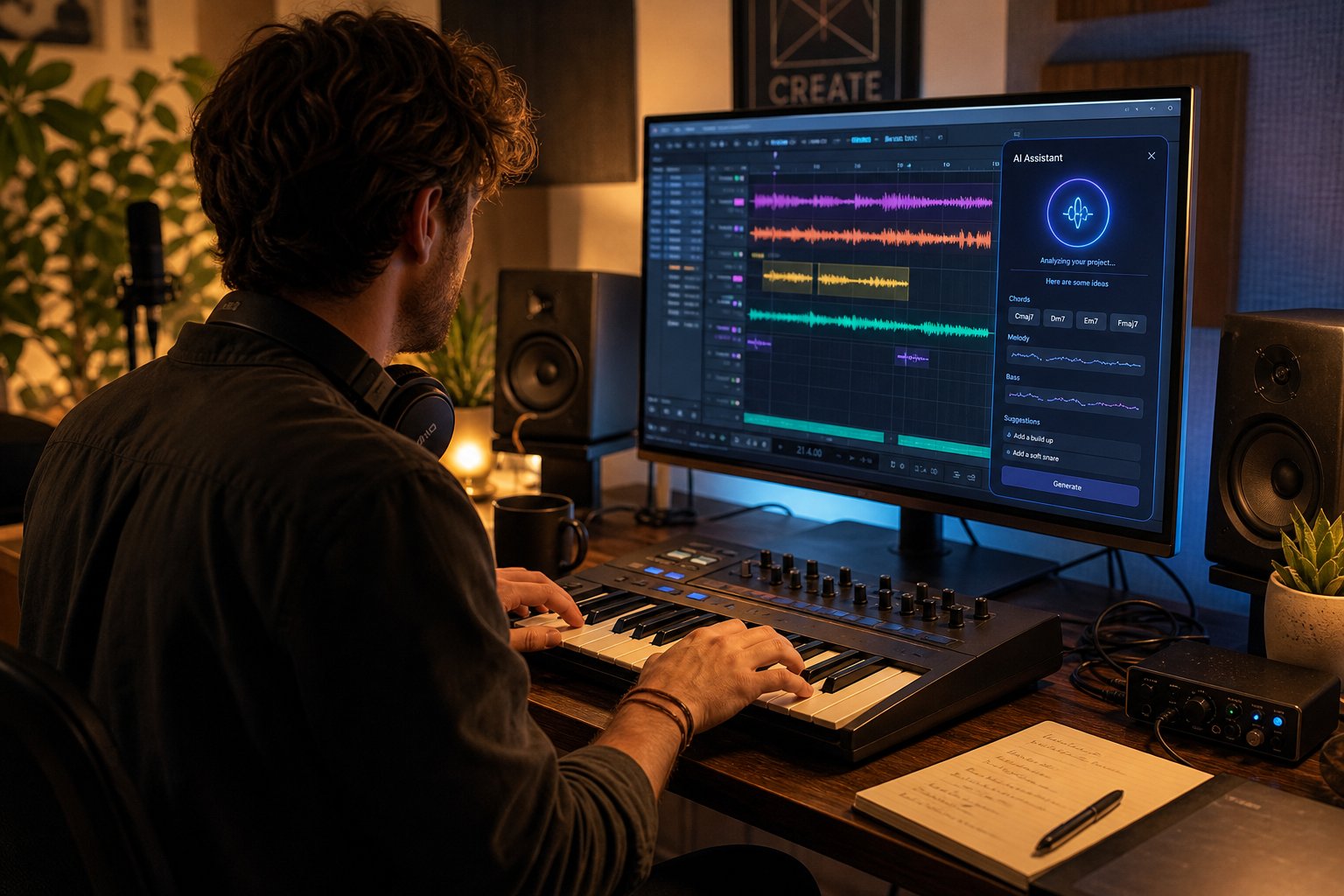
Integration doesn't mean handing over the creative wheel. For a growing number of musicians, the relationship between music and ai looks less like human-versus-machine and more like a producer bouncing ideas off a tireless collaborator who never runs out of suggestions. Stability AI's analysis of 337 professional musical works found that artists overwhelmingly prioritize creative control when using AI — adopting modular approaches where AI handles specific elements while the musician arranges, edits, and shapes the final result.
The distinction is critical. In one world, you type a prompt and get a finished song you had no hand in crafting. In the other, you use AI as a thinking partner that offers options when you're stuck, generates raw material you can sculpt, and accelerates the parts of production that used to eat hours without adding creative value. The second world is where ai music collaboration is already thriving.
Real Ways Musicians Are Using AI in Their Workflow
Forget the dystopian framing for a moment. Here's what practical AI integration actually looks like in working musicians' daily routines:
- Breaking through creative blocks — When a songwriter has been staring at the same four bars for an hour, asking AI for three alternative chord progressions or lyric directions can restart the flow. You don't use the output verbatim. You see what you don't want, and that clarifies what you do.
- Rapid prototyping of vocal arrangements — AI voice tools now let you transform a hummed melody into a polished vocal demo in minutes. Test male versus female vocals, try harmony stacks, or preview how a chorus sounds with backing vocals — all without booking studio time or coordinating singers.
- Generating demo ideas for collaborators — A singer-songwriter with a strong melody but no band can produce a full backing track as a reference for session players. The AI output isn't the final product — it's a communication tool that shows collaborators exactly what you're hearing in your head.
- Producing backing tracks for live solo performers — Solo artists who can't afford a full band for gigs use AI-generated instrumentals as performance backing, customized to their exact arrangements and tempos.
- Exploring genres outside your comfort zone — Curious how your folk song sounds with electronic production? Generate a quick arrangement in that style. The AI version won't be perfect, but it tells you whether the direction is worth pursuing before you invest hours learning new production techniques.
- Creating variations for A/B testing — Generate twenty melody variations of a hook, compare them rapidly, and develop the strongest one further. This kind of iteration used to require days of writing. Now it takes minutes.
What's notable across all these workflows is the pattern Stability AI's research identified: artists use AI for specific modular steps, not end-to-end generation. They might feed AI a chord progression and get drum patterns back, then manually layer those with traditional instruments and their own vocals. The creative choice — what stays, what gets cut, what gets twisted into something unexpected — remains entirely human.
Turning AI Tools Into a Creative Advantage
The musicians gaining the most from ai tools for musicians treat them the way previous generations treated drum machines, samplers, or DAWs — as instruments that expand possibility rather than shortcuts that replace skill. The key difference between "AI wrote my song" and "I wrote my song using AI" comes down to where the creative decisions live.
Platforms like MakeBestMusic's AI Music Generator illustrate this collaborative model well. You input your own lyrics, choose a style direction, and set the parameters — then use the generated output as a starting point rather than a finished product. It's the difference between ordering a painting and using a sketchpad that suggests compositions you can develop in your own voice. Your creative inputs drive the generation; the AI handles the production labor that used to require studio budgets.
This approach works because it solves the right problem. Most musicians don't lack ideas — they lack time, resources, or technical access to hear those ideas realized. When a singer-songwriter can go from a lyric concept to a fully arranged reference track in minutes, they make better creative decisions faster. The song still comes from them. The AI just shortened the distance between imagination and execution.
AI is an extraordinary tool when used to amplify your creativity. It becomes a liability when used to replace it.
Of course, not everyone sees this optimistically. The tools enabling creative collaboration also raise thorny questions about ownership, compensation, and legal boundaries — questions that courts and legislatures are only beginning to address.
The Legal Landscape That Could Decide Everything
Creative possibility is one thing. Legal permission is another. The courts, regulators, and copyright offices now grappling with AI music will likely shape its trajectory more than any technological breakthrough. Every question about whether AI will dominate the music industry ultimately runs through a legal filter — and right now, that filter is unresolved, contentious, and moving fast.
Two linked battles define the landscape for ai and the music industry. The first is whether AI companies had the right to train on copyrighted music in the first place. The second is whether the outputs of that training deserve copyright protection at all. The answers could either turbocharge AI music's growth or slam the brakes on it entirely.
Lawsuits and Legal Battles Shaping the Future
In June 2024, the three major labels — Universal Music Group, Sony Music Entertainment, and Warner Records — filed coordinated lawsuits against Suno and Udio through the Recording Industry Association of America. The RIAA accused both platforms of "mass infringement of copyrighted sound recordings on an almost unimaginable scale," seeking up to $150,000 in damages per infringed work.
Suno's response was telling. The company admitted to training on copyrighted music but argued the practice falls under fair use — a legal defense that remains untested in this specific context. Suno CEO Mikey Shulman maintained that the technology "is designed to generate completely new outputs, not to memorise and regurgitate pre-existing content." The labels disagree, claiming the software steals songs to "spit out" similar work.
By late 2025, cracks appeared in the unified front of AI companies. Warner Music settled its lawsuit with Udio and signed a licensing deal with the platform — signaling that some AI companies are choosing collaboration over courtroom risk. Universal Music Group escalated further, filing a $3 billion lawsuit against Anthropic over alleged infringement of more than 20,000 songs used in AI training data. That case may become the single largest non-class action copyright case in US history.
The pattern emerging in ai music updates tells a clear story: the music industry isn't fighting AI itself — it's fighting unlicensed AI. Labels are simultaneously suing companies that trained without permission and signing deals with those willing to pay. The question isn't whether AI music will exist, but under what financial and legal terms.
Copyright Questions That Remain Unanswered
Even if the training lawsuits settle, a deeper issue remains unresolved. Can you actually own what AI creates?
The U.S. Copyright Office has been issuing its multi-part report on AI and copyright since 2024. Part 2, released in January 2025, addressed copyrightability directly: AI-generated outputs can only receive copyright protection where a human author has determined "sufficient expressive elements." Writing a text prompt — no matter how detailed — does not meet that threshold.
The practical implication is stark. If you generate a track entirely through AI, you cannot copyright it. It enters the public domain. Anyone can copy it, redistribute it, or claim it without legal consequence. Suno's own terms of service acknowledge this reality, stating: "Due to the nature of machine learning, Suno makes no representation or warranty to you that any copyright will vest in any Output."
AI outputs trained on copyrighted music may not qualify for copyright protection themselves — creating a legal paradox where the inputs are protected but the outputs are not, and the training process connecting them remains contested ground.
This paradox sits at the heart of ai in the music industry's legal uncertainty. Labels argue their copyrighted works were used without consent. AI companies argue the outputs are transformative. And the creators using these tools discover that what they generated may belong to no one — or to everyone.
Regulatory momentum is building outside the courtroom as well. Tennessee became the first US state to pass legislation protecting artists against unauthorized AI voice replication. Over 200 artists — including Billie Eilish, Nicki Minaj, Stevie Wonder, and Katy Perry — signed an open letter calling on AI companies to stop infringing on human creativity. In March 2026, the UK government scrapped plans that would have allowed AI companies to train on copyrighted material without explicit permission, after 95% of over 10,000 consultation submissions opposed the opt-out approach.
The direction is becoming clearer: governments are starting to side with creators. But "starting" is the operative word. No definitive ruling on fair use in AI music training has been issued in the US. The Copyright Office's Part 3 report on generative AI training was released in pre-publication form in May 2025, but final legislative action remains pending. Until courts or Congress draw firm lines, the entire AI music ecosystem operates in legal ambiguity.
That ambiguity is the single largest wildcard in predicting whether AI music takes over any segment of the industry. A definitive ruling that training on copyrighted music constitutes infringement could force AI companies to license enormous catalogs — raising costs dramatically and slowing the flood of generated content. A ruling in favor of fair use could unleash it further. Right now, billions of dollars in lawsuits hang on legal arguments that could go either way.
Legal outcomes will reshape the economics. But they won't resolve a separate question that matters just as much: how do the people who actually make, distribute, and listen to music feel about all of this? The answer depends entirely on which stakeholder you ask.
How Every Stakeholder Sees the AI Music Question Differently
Legal frameworks will shape what's allowed. But attitudes shape what actually gets adopted. Ask five different people in the music ecosystem whether AI-generated music is a good thing, and you'll get five fundamentally different answers — each rooted in legitimate self-interest, genuine values, or both. The question of whether AI takes over music isn't just a technical or legal problem. It's a human one, driven by competing incentives that don't easily resolve.
What Listeners Actually Think About AI Music
You might assume listeners don't care where their music comes from as long as it sounds good. The data tells a more complicated story.
A Luminate report published in 2026 found that music fans are becoming increasingly uncomfortable with AI songs. Overall interest dropped from -13% to -20% between May and November 2025, meaning people are significantly more likely to feel uncomfortable than comfortable with AI use in music. The decline is especially notable among Gen Z and Gen Alpha listeners — the very demographics streaming platforms rely on for growth.
Dig into the ai music reddit communities and you'll find this polarization playing out in real time. Threads on r/WeAreTheMusicMakers and r/Music swing between enthusiastic early adopters sharing their AI-generated tracks and musicians expressing anger at what they see as creative theft. One common reddit ai music sentiment: "I don't mind AI tools that help me make music. I mind AI replacing the need for me to exist as a musician at all."
The Luminate study found something else that matters: about a third of people surveyed feel indifferent toward AI music altogether. They're not angry, not excited — just neutral. That silent middle may end up mattering most. If indifferent listeners consume AI-generated content without knowing or caring about its origin, the market shifts regardless of how vocal the opposition is.
Deezer's data adds a critical nuance. Although approximately 44% of daily uploads to its platform are now AI-generated tracks, those tracks account for less than 3% of total streams — and a majority of those streams are fraudulent, driven by bots rather than real people listening. Humans, when left to choose freely, still overwhelmingly reach for music made by other humans.
As Luminate analyst Audrey Schomer noted, artists speaking out against AI could be moving the needle: "If people have any sort of affinities towards specific artists who have been active in some of those artist rights campaigns, then perhaps that rising awareness would lead people — particularly young people — to be more anti AI."
The Platform and Label Incentives Driving Adoption
Listener sentiment leans skeptical. But platforms and labels face incentive structures that push in the opposite direction — and that tension is where the real friction lives.
Spotify benefits from an infinite content supply. More tracks mean more listening hours, more playlist variety, and more data to feed recommendation algorithms. The platform has no inherent financial motive to limit AI content, so long as it doesn't visibly degrade user experience or trigger regulatory backlash. Spotify's AI Credits feature — currently in beta — shows AI tags in song credits, but only when artists voluntarily disclose through their label or distributor. As the company itself acknowledged: "The absence of AI credits doesn't mean AI wasn't used on a song."
Labels hold the most paradoxical position. Universal Music Group, Sony, and Warner are simultaneously suing AI companies for unauthorized training while signing licensing deals with those same platforms. They want to control and profit from AI, not eliminate it. The British Phonographic Industry's stance captures this duality: "We believe that AI should be used to serve human creativity, not supplant it" — while member labels invest heavily in AI-powered production pipelines.
Independent artists occupy the most conflicted space. The ai generated music reddit discussions among indie creators reveal a community split down the middle. Tools that once required label budgets now run for free. But the same accessibility means everyone else has those tools too, and the flood of AI content dilutes the royalty pools indie artists depend on. As multiple artists' rights groups stated in their open letter "Say No To Suno," AI content "dilutes the royalty pools of legitimate artists from whose music this slop is derived."
Producers face partial commoditization of their technical skills — but not their taste. Where once a producer's value lay partly in knowing how to make things sound good, AI handles that increasingly well. The remaining value concentrates in knowing what should sound like what, and why — creative vision rather than execution.
| Stakeholder | Primary Concern | Potential Benefit | Likely Stance |
|---|---|---|---|
| Listeners | Authenticity and emotional connection; discomfort with being deceived | More music, more variety, lower costs for content | Increasingly skeptical — net negative sentiment growing |
| Independent artists | Royalty dilution from AI floods; loss of competitive advantage on production quality | Access to professional-grade tools at minimal cost; faster production cycles | Deeply divided — tool adopters vs. vocal opponents |
| Producers | Technical skills becoming partially commoditized; mid-tier work disappearing | Faster iteration, expanded creative palette, ability to serve more clients | Cautiously adopting while protecting creative direction roles |
| Major labels | Unauthorized training on catalogs; loss of control over how music is used | Reduced production costs; new revenue streams through licensing deals | Litigate the unauthorized, license the willing — profit either way |
| Streaming platforms | User experience degradation; regulatory pressure; fraud detection costs | Infinite content supply; longer engagement times; new interactive features | Quietly permissive — voluntary disclosure, minimal enforcement |
R&B singer SZA articulated the emotional core of the opposition in a March 2026 interview with i-D: "It's happening disproportionately with Black music. Why am I hearing AI covers of Olivia Dean, when Olivia Dean just came the f*** out? She can't even collect the streams." That frustration — watching AI replicate and redistribute what artists created, without consent or compensation — drives the most visceral resistance from creators at every level.
Luminate's Schomer raised another factor many overlook: AI fatigue. As AI saturates daily life, particularly for younger people navigating a workforce reshaped by automation, the backlash may not be specifically about music at all. It's about control — the feeling that something human is being extracted and commodified without permission.
These stakeholder conflicts don't resolve neatly. Platforms want more content. Labels want more control. Artists want fair compensation. Listeners want authenticity but also convenience. No single policy satisfies all four simultaneously. The practical question for anyone making music right now isn't which side wins — it's how to navigate the gap between where things stand today and wherever the dust eventually settles.
What Musicians Should Do to Stay Ahead
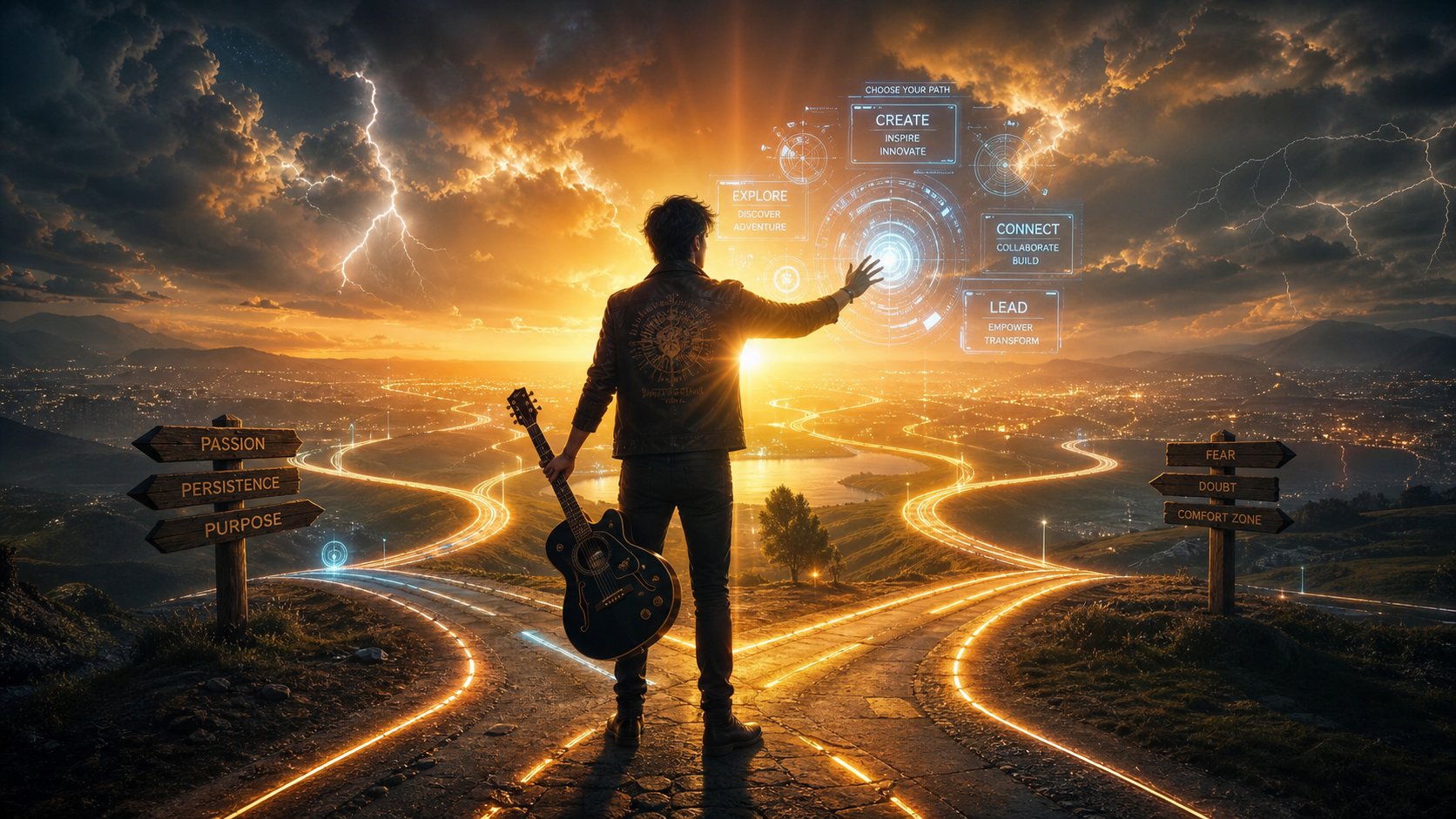
Navigating that gap between uncertainty and opportunity requires something more concrete than "wait and see." The stakeholder conflicts above won't resolve quickly — courts move slowly, platforms evolve gradually, and listener attitudes shift over years, not months. Musicians who sit idle while those forces play out risk losing ground to peers who moved earlier. The good news: the strategies that build resilience against AI displacement are the same ones that make for a stronger career regardless of what happens next.
Think of it this way. Every previous technological disruption in music — from drum machines to Auto-Tune to streaming itself — rewarded artists who learned the new tools fast and doubled down on the human qualities machines couldn't replicate. This shift is no different in principle. It's just faster and broader in scope.
Actionable Steps for Musicians Right Now
Here's a practical roadmap for how to compete with ai music — not by rejecting the technology, but by positioning yourself where it can't follow:
- Invest heavily in live performance skills — AI generates audio. It doesn't perform. Stage presence, crowd interaction, improvisation, and the raw energy of a live show remain entirely human territory. The global live music market is projected to exceed $60 billion in the coming decade precisely because physical experiences become more valuable as digital content becomes infinite. Prioritize gigs, even small ones. Build your reputation as someone worth seeing in person.
- Build direct audience relationships that AI cannot replicate — A generated track has no story, no personality, no DMs, no behind-the-scenes struggles. Your audience connects with you — not just your output. Cultivate email lists, community spaces, and genuine interactions that create loyalty beyond any single release. As Fast Company's analysis put it: "AI can write a song. It can't build a career." Fandom is built on human narrative and trust, not sonic quality alone.
- Learn AI tools as a creative advantage, not a surrender — Ignoring these tools doesn't make them disappear. It just means your competitors use them while you don't. Start by experimenting with a low-barrier platform like MakeBestMusic's AI Music Generator, where you can input your own lyrics, set style preferences, and generate starting points built from your creative inputs. Use the outputs as sketches — raw material you refine, not finished products you accept. The goal is understanding what AI does well (rapid iteration, arrangement ideas, demo generation) so you can integrate it where it saves you time without replacing your creative voice.
- Focus on creative direction over pure execution — If AI handles execution cheaply, the premium shifts to taste, vision, and curation. Develop your ear for what works and why. Practice making creative decisions — which arrangement serves the emotion, which production style fits the story, which elements to cut. These judgment calls are where human value concentrates as technical execution becomes automated. Think of yourself as a director, not just a performer.
- Diversify your income streams beyond recorded music — Streaming royalties were already thin before AI flooded the supply. Build revenue from live shows, merchandise, sync licensing for bespoke work, teaching, Patreon or membership communities, and brand partnerships. Industry data shows independent artist revenue growing 67% between 2022 and 2026 — but that growth concentrates among artists with multiple income channels, not those dependent on per-stream payouts alone.
- Develop a distinctive style that resists replication — AI excels at producing music that sounds like everything else. It struggles with genuine idiosyncrasy — the unexpected production choices, vocal imperfections, genre-bending decisions, and personal specificity that make an artist unmistakable. The more your music sounds like only you, the harder it is for AI to commoditize your lane. Lean into what makes you weird.
- Stay informed on legal and platform developments — The rules are still being written. Copyright rulings, platform disclosure policies, and licensing frameworks will reshape what's possible quarter by quarter. Following these developments lets you adapt early rather than scrambling after the fact. Join artist advocacy groups, read industry updates, and understand your rights regarding how your work intersects with AI training and generation.
Building an AI-Resilient Music Career
Notice what all seven steps share: none of them require you to reject AI entirely, and none ask you to surrender your artistry to it. The strongest position is informed engagement — using generative tools where they genuinely serve your creative process while building the human foundations (live presence, authentic connection, distinctive voice) that no algorithm replicates.
Successful artists in the AI era share a common trait identified across multiple industry analyses: they treat AI as a production accelerant while doubling down on the irreplaceable. They prototype faster, iterate cheaper, and reach audiences sooner — then deliver something personal and human that justifies the attention. The combination outperforms either approach alone.
For ai music career advice that actually holds up, the framework is simple: automate the commodity work, protect the creative core, and invest relentlessly in the things that make people care about you specifically. Music in the future will still reward artists who make listeners feel something real. That hasn't changed in a thousand years of music history, and it won't change because the production tools got faster.
AI will likely dominate segments where music functions as utility — background tracks, stock libraries, generic content fills. But wherever music serves as art, identity, and human connection, the artists who show up with something genuine will remain irreplaceable.
So is AI music going to take over? The honest verdict: it already has in certain corners — and it won't in others. The background music market is transforming irreversibly. The pop charts remain human-driven. Live performance grows stronger as digital content becomes disposable. And the creative middle ground — where most working musicians actually live — belongs to whoever learns to wield both human instinct and machine capability without losing themselves in either one.
The musicians who thrive won't be the ones who fought hardest against the tide or rode it most passively. They'll be the ones who understood which parts of their craft are uniquely theirs, protected those fiercely, and let everything else get easier.
