

AI Music Is Everywhere and Nobody Agrees What That Means
AI-generated tracks are landing on Billboard charts, flooding streaming platforms with 44% of daily uploads on Deezer, and sparking heated debate among artists, labels, and listeners alike. Yet those same tracks account for less than 3% of actual streams. So is AI music becoming popular, or is it just loud?
That tension sits at the heart of every ai music news headline you read. The numbers point in contradictory directions. Generative ai music news cycles celebrate chart breakthroughs one week and artist backlash the next. This article cuts through the noise with data, survey findings, and real-world case studies to answer whether artificial intelligence in music has crossed into genuine mainstream popularity or still lingers at the edges.
From Niche Experiment to Mainstream Conversation
Rewind to early 2023. Music and artificial intelligence intersected mostly in research papers and hobbyist Discord servers. Then Ghostwriter's "Heart On My Sleeve" went viral, deepfaking Drake and The Weeknd vocals into a track that forced the entire industry to pay attention. Within months, platforms like Suno launched publicly, major labels filed landmark lawsuits, and AI artists began signing multimillion-dollar record deals. The conversation shifted from "could this happen?" to "how do we handle it?"
What We Mean by AI Music Popularity
Popularity is not a single metric. A viral TikTok moment is different from sustained monthly listeners, which is different from broad cultural acceptance. When evaluating ai music updates and breakthroughs, you need to consider all three dimensions separately.
AI music is no longer a question of technology. It is a question of culture, asking whether millions of listeners will embrace songs born from algorithms the same way they embrace songs born from studios.
The evidence that follows examines chart performance, listener demographics, platform growth, and industry response to build a complete picture of where things actually stand in ai music news today.
Chart Performance and Viral Breakthroughs That Prove the Trend
Broad cultural shifts need receipts. For AI music, the receipts are chart positions, streaming numbers, and record deals that would have seemed absurd two years ago. The ai music charts tell a story of rapid acceleration, with AI-generated and AI-assisted tracks appearing across genres from gospel to country to rock.
AI Tracks That Reached the Charts
2025 marked the first year that ai music artists landed on Billboard rankings with any regularity. At least six AI or AI-assisted artists debuted on Billboard charts in recent months alone, spanning multiple genres and chart types.
The most prominent example is Xania Monet, an AI-powered R&B and gospel artist created by Mississippi poet Telisha "Nikki" Jones. Monet became the first known AI artist to earn enough radio airplay to debut on a Billboard radio chart. Her track "How Was I Supposed to Know?" peaked at No. 20 on Hot R&B Songs, while "Let Go, Let God" reached No. 3 on Hot Gospel Songs. Her catalog generated over $52,000 and 44.4 million U.S. streams in just a few months, leading to a multimillion-dollar deal with Hallwood Media.
Then there is Breaking Rust, an AI-powered act that debuted at No. 9 on the Billboard Emerging Artists chart and scored an ai number one song on the Country Digital Song Sales chart with "Walk My Walk." HAVEN.'s "I Run" cracked the Spotify U.S. and Global Top 50, while Splaxema's meme-driven "We Are Charlie Kirk" hit No. 1 on the Spotify Viral 50 U.S. ranking. These are not isolated flukes. They represent top ai songs reaching measurable audiences through legitimate streaming activity.
Viral Moments That Changed the Conversation
Chart placements only tell part of the story. Viral moments on social media and streaming platforms shifted public perception from dismissal to genuine curiosity. Consider the trajectory:
- 2023: "Heart On My Sleeve" by Ghostwriter goes viral using AI-generated Drake and Weeknd vocals, forcing platforms and labels to respond publicly.
- 2023: Trump The Don reaches No. 5 on Rap Digital Song Sales and BOI WHAT hits No. 14 on Hot Hard Rock Songs, marking early ai song tops charts moments.
- Early 2025: The Velvet Sundown, a seemingly AI-generated band, gains 400,000 monthly Spotify listeners in under a month before being revealed as a media hoax, exposing how easily AI music can reach audiences through algorithmic playlists.
- Mid-2025: Xania Monet becomes the first AI artist on a Billboard radio chart. Multiple AI acts chart across gospel, rock, country, and R&B simultaneously.
- Late 2025: Breaking Rust's ai number one song on Country Digital Song Sales demonstrates that AI music can compete in traditionally human-dominated genres.
Billboard has responded to this influx by using detection tools like Deezer's identification system to verify AI-generated content, while still allowing qualifying tracks to chart based on standard metrics. The message is clear: chart authorities are not blocking AI music, they are tracking it.
Still, chart success does not automatically equal widespread listener acceptance. The question of who is actually choosing to listen, and where they find these tracks, reveals a more nuanced picture than raw numbers suggest.
Who Is Listening and Where They Find AI Music
Chart positions confirm supply. But popularity depends on demand. Who is actually pressing play on AI-generated tracks, and are they doing it on purpose?
Who Is Actually Listening to AI Music
The generational divide is stark. A Morgan Stanley survey on American audio habits found that 60% of listeners aged 18-29 already consume AI music, averaging roughly 3 hours per week. Among 30-to-44-year-olds, that figure drops slightly to 55% listening about 2.5 hours weekly. Compare that to just 4% of adults over 65, who average a mere 6 minutes per week.
Attitudes track closely with behavior. A nationally representative THR/Frost School of Music poll of 2,244 Americans found that Gen Z respondents are the age group most likely to accept AI-created music without any human contributions. Baby Boomers sit at the opposite end, most likely to insist original creators be compensated when AI mimics their work. Politically, the gap is narrower than you might expect: 22% of Republican respondents accept fully AI-made music versus 18% of Democrats.
Yet here is the uncomfortable detail: over 66% of all respondents said they have never listened to AI music. Given that 97% of listeners cannot distinguish a fully AI-generated track from a human one, many people are likely consuming it without realizing. The real question is not just how many ai musicians are there on platforms, but how many listeners are encountering their work unknowingly through algorithmic playlists.
| Age Group | % Listening to AI Music | Avg. Weekly Hours | Acceptance Level | Primary Platforms |
|---|---|---|---|---|
| 18-29 (Gen Z) | 60% | 3.0 | Highest acceptance | Spotify, YouTube, TikTok, SoundCloud |
| 30-44 (Millennials) | 55% | 2.5 | Moderate-high acceptance | YouTube Music, Spotify, Pandora |
| 45-64 (Gen X) | 25% | 1.1 | Mixed, leaning cautious | Amazon Music, Spotify, FM radio |
| 65+ (Boomers) | 4% | 0.1 | Low acceptance | SiriusXM, Amazon Music, FM radio |
Where AI Music Lives on Streaming Platforms
Imagine scrolling through a Spotify playlist and never noticing that three of the last ten songs were generated by AI. That scenario is already playing out. Deezer reports that AI-generated tracks make up around 28% of daily uploads to major services, yet account for only 0.5% of total streams. The gap reveals something important: most AI tracks are not finding sustained audiences. The popular ai music artists who do break through, like Xania Monet or Breaking Rust, remain exceptions rather than the norm.
Platform policies shape this discoverability problem directly. Spotify removed 75 million tracks flagged as spam or AI slop, but has not banned AI music outright. It still allows qualifying tracks to chart and earn royalties. Deezer takes a harder line, excluding detected AI tracks from recommendation algorithms entirely and withholding royalty payments. These contrasting approaches mean that where you listen determines how likely you are to encounter AI music organically.
Meanwhile, YouTube and TikTok have emerged as the primary homes for AI music listening, according to the Morgan Stanley data. That makes sense. Both platforms reward novelty and virality over catalog depth, creating fertile ground for AI-generated content. Communities on platforms like Reddit actively share discoveries, debate quality, and track how many ai artists now populate services like Spotify. Top ai artists on Spotify still measure monthly listeners in the hundreds of thousands rather than millions, placing even the most popular ai music artists well below the mainstream threshold occupied by human stars.
The takeaway is a split audience. Younger listeners are already integrating AI music into their habits, often without labeling it as different. Older demographics either avoid it or consume it unknowingly. This generational fault line hints at where acceptance is heading, but it also raises a deeper question: does it matter whether the music was made by a human if the listener enjoys it either way? That distinction between AI-assisted and fully AI-generated content turns out to carry enormous weight in how audiences, platforms, and artists each answer.

AI-Assisted Music Versus Fully AI-Generated Tracks
Not all AI music is created equal, and lumping every use case together distorts the popularity question entirely. A Grammy-winning Beatles track restored with machine learning and a fully synthetic gospel singer built from text prompts occupy the same "AI music" label but represent radically different creative processes, legal realities, and audience reactions. Understanding this distinction is essential to answering whether ai musicians are genuinely gaining fans or whether human artists using AI tools are the ones audiences actually embrace.
Famous Musicians Embracing AI as a Tool
When you hear that famous musicians using ai is now commonplace, the reality is often more mundane than the headlines suggest. AI in music production typically means a human artist retains creative control while leaning on machine learning for specific tasks: cleaning up a vocal take, generating chord progression ideas when stuck, or mastering a final mix faster than traditional workflows allow.
The most celebrated example remains The Beatles' "Now and Then," which won a Grammy after AI-powered audio restoration software isolated John Lennon's vocals from a decades-old demo tape. Nobody called it an "AI song." The technology served a specific function within a deeply human creative vision.
That pattern is accelerating across the industry. Recording Academy CEO Harvey Mason Jr. recently told Billboard that "every" songwriter and producer he knows has now used generative AI tools in some capacity. The usage spectrum is wide. On one end, artists text raw lyrics or feelings into Suno and generate entire reference tracks to spark ideas. On the other, a producer with a nearly finished song uses AI to crack a single stubborn bridge melody or fill one missing lyrical line.
The critical detail? These AI-generated elements do not always survive into the final recording. Mason describes them as a "launch point" that gets tossed once a human musician riffs on or replaces the generated material. Suno's "generative audio workstation," Suno Studio, was specifically designed for this collaborative approach, tested at songwriter camps with professional musicians who treat the tool as a creative partner rather than a replacement.
This category of ai in music production faces minimal backlash because the human remains the author. The audience hears a human artist's record. The AI never takes the stage.
Fully AI-Generated Music and Its Growing Audience
Fully AI-generated music flips that dynamic entirely. Here, a user provides a text prompt, selects a style, and the model produces a complete song: lyrics, melody, instrumentation, vocals, and structure. The human's role shrinks to curator or prompter rather than performer or composer.
This is the category generating both excitement and controversy. Artists like Xania Monet, Breaking Rust, and the roster at Hallwood Media represent a new class of ai musicians whose output is built primarily through generative models. Hallwood's label now signs what it calls "AI music designers" rather than traditional recording artists, a framing that acknowledges the creative input is real even when the performance is synthetic.
The audience for fully AI-generated music is growing, but from a small base. Suno alone generates 7 million songs daily, producing an entire Spotify catalog's worth of music every two weeks. Deezer reports receiving 50,000 fully AI-generated tracks per day. Yet most of this output disappears into obscurity, never finding sustained listeners. The few acts that break through do so by combining AI generation with strong branding, narrative, and promotional effort, suggesting that can ai make better music than humans is less relevant than whether AI music can build emotional connection with an audience.
The question is not really about quality. It is about identity. Listeners who knowingly choose a fully AI-generated artist are making a different cultural statement than those who enjoy a human artist's record that happened to use AI mixing tools.
Why This Distinction Shapes the Popularity Debate
These two categories face entirely different treatment across every dimension that matters:
- Public perception: AI-assisted music is broadly accepted as a natural evolution of production technology, similar to Auto-Tune or digital sampling. Fully AI-generated music triggers debates about authenticity, artistry, and whether machines can create meaningful art.
- Legal status: AI-assisted works retain clear human authorship and qualify for copyright protection. Fully AI-generated content exists in a legal gray zone, with most jurisdictions currently denying copyright to works made entirely by AI without substantial human creative input.
- Streaming platform treatment: AI-assisted tracks from human artists face no restrictions on any major platform. Fully AI-generated tracks face exclusion from Deezer's recommendation algorithms, potential flagging on Spotify, and disclosure requirements on YouTube.
- Monetization: Human artists using AI tools earn royalties without question. Fully AI-generated content faces payment withholding on some platforms and uncertain revenue-sharing frameworks on others.
- Industry response: iHeartRadio's "Guaranteed Human" program specifically targets synthetic vocalists pretending to be human, not artists who used AI during production. The backlash is aimed squarely at fully generated content.
When someone asks whether AI music is becoming popular, the honest answer depends on which category you mean. AI-assisted music has already won. It is mainstream, normalized, and used by virtually every professional songwriter working. Fully AI-generated music is the contested frontier, where chart breakthroughs coexist with platform bans, legal uncertainty, and cultural resistance.
Both categories are growing, but they are growing at different speeds, facing different obstacles, and attracting different audiences. The platforms powering each side of this divide, from professional DAW plugins to prompt-based song generators, reveal just how broad the AI music ecosystem has become.
The Platforms Driving AI Music Into the Mainstream
The ecosystem powering both AI-assisted and fully AI-generated music has exploded into a crowded marketplace of ai music companies competing for creators at every skill level. These platforms are not just tools. They are the infrastructure behind the popularity surge itself, turning millions of non-musicians into active music creators and flooding streaming services with new content daily. The sheer scale of user adoption on these platforms may be the strongest single indicator that AI music is crossing into the mainstream.
Major Platforms Powering the AI Music Boom
Each major platform takes a different approach to artificial intelligence in music production, targeting distinct audiences and use cases. Here is how they compare:
| Platform | Specialty | Ease of Use | Output Quality | Starting Price | Best For |
|---|---|---|---|---|---|
| MakeBestMusic | Prompt-to-song creation | Very High | High | Free tier available | Beginners wanting complete songs from lyrics and style prompts |
| Suno | Vocal songs, all genres | Very High | Very High | Free / $10/mo Pro | Complete song generation with vocals for all creators |
| Udio | High-fidelity audio | High | Very High (48kHz) | Free / $10/mo Standard | Creators needing professional audio quality and editing control |
| AIVA | Classical and orchestral | Moderate | Very High | Free / $15/mo Standard | Film scores, video games, cinematic compositions |
| Boomy | Speed and simplicity | Very High | Moderate | Free / $14.99/mo Creator | Beginners who want to publish directly to streaming platforms |
MakeBestMusic's AI Music Generator stands out for readers who want the fastest path from idea to finished song. You type in lyrics, describe a style or mood, and the platform delivers a complete track. No production knowledge required. That prompt-based workflow makes it an ideal starting point if you are curious about ai and music production but have never touched a DAW or written sheet music.
Suno leads the market by volume, with over 2.5 million active users generating 7 million songs daily. Its latest v5 model produces vocals and instrumentation that consistently rank highest in blind listening tests. Udio, built by former Google DeepMind researchers, outputs at 48kHz and attracts creators who prioritize audio fidelity and post-generation editing. AIVA occupies a professional niche, trained on over 20,000 classical scores and recognized as an official composer by France's SACEM. Boomy focuses on extreme simplicity, generating a complete track in under 30 seconds and offering built-in distribution to Spotify, Apple Music, and Deezer.
How Platform Growth Signals Mainstream Adoption
Will ai get better at helping with making music? The investment numbers suggest the industry is betting heavily on yes. Suno alone has an annualized revenue run rate of $150 million and a $2.4 billion valuation. It has been downloaded nearly 30 million times since launch. Boomy reports that its users have created tens of millions of songs. Across the broader AI app ecosystem, over 1.1 billion users engaged with AI applications by mid-2025.
These figures represent something charts alone cannot capture. When millions of people actively create music through AI tools every day, popularity is no longer just about passive listening. It is about participation. The barrier between music consumer and music creator has effectively dissolved for anyone with an internet connection and a text prompt.
This democratization is the engine behind AI music's growing footprint on streaming platforms. More creators means more content means more chances for breakout tracks to find audiences. But growth of this magnitude does not happen without friction. The same acceleration that excites new creators terrifies established artists, creating a paradox where popularity and backlash feed each other in an escalating cycle.
The Popularity Paradox of Growing Fans and Growing Fears
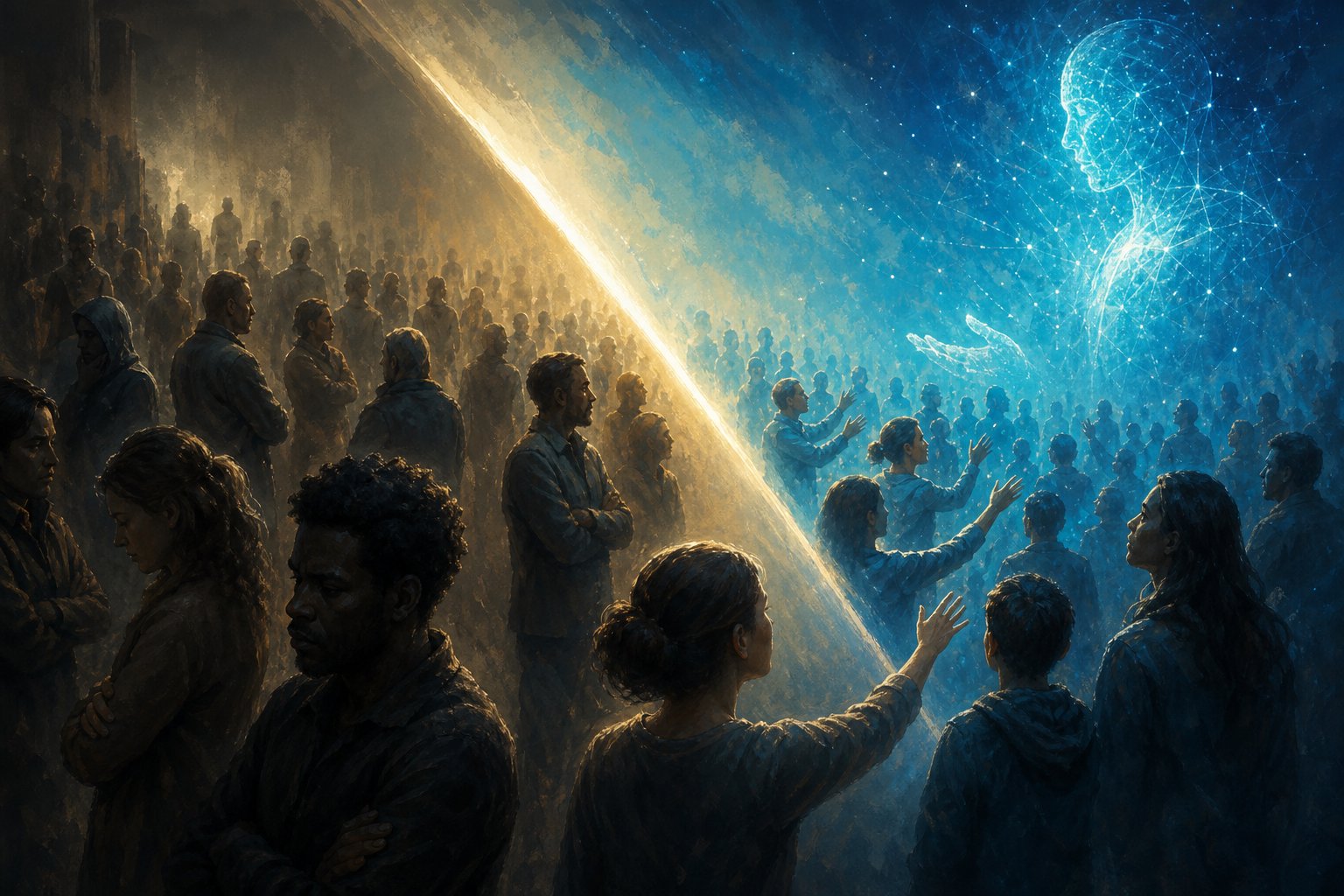
Millions of new creators, chart-topping AI acts, and record deals worth tens of millions. At the same time, artist coalitions demanding legal protection, declining listener sentiment, and open letters signed by over 200 musicians calling out predatory AI practices. Both of these realities exist simultaneously. The ai music debate is not a simple story of progress versus resistance. It is a paradox baked into the technology itself.
Why Popularity and Backlash Coexist
How can the same technology be celebrated and feared at the same time? The answer lies in who benefits and who loses. For aspiring creators without formal training, AI platforms feel like liberation. For professional musicians who spent decades mastering their craft, the question will ai replace musicians is not hypothetical. It is existential.
The Luminate report published in early 2026 quantified this tension directly. Consumer comfort with AI music dropped from -13% to -20% between May and November 2025, meaning more people feel uncomfortable than comfortable with AI-created songs. The decline was sharpest among Gen Z and Gen Alpha listeners, the very demographics most likely to actually consume AI music. As Luminate analyst Audrey Schomer noted, people are "more likely to feel uncomfortable than to feel comfortable with AI use" in music creation.
Yet that discomfort has not translated into less AI content. Deezer reports that 44% of daily uploads are now AI-generated. The supply keeps growing regardless of sentiment because the creation tools keep getting easier and cheaper. Popularity among creators and popularity among listeners are diverging, and that gap fuels the paradox.
Artists speaking out appear to be shifting the needle. R&B singer SZA told i-D magazine she feels "at war" with AI, specifically calling out how it disproportionately replicates Black music in stereotypical ways. Multiple artist rights groups published a joint open letter called "Say No To Suno," arguing that AI content dilutes royalty pools for legitimate musicians. These voices carry weight with younger fans who have affinities toward specific artists active in rights campaigns.
The Debate Over AI Music's Place in Culture
Every major publication frames AI music through a controversy lens. That editorial instinct is not wrong, but it obscures an important pattern: actual listening behavior continues to grow even as stated attitudes sour. People say they are uncomfortable, then keep streaming. This disconnect is itself evidence of a technology crossing into mainstream relevance. Nobody debates things that remain niche.
The benefits of ai in music are real and concrete:
- Democratized creation: People without keyboard skills, guitar training, or $400 software can now translate a song idea into a finished track. As Denver musician Regi Worles told NBC News, "nobody should feel stopped from following their dreams because they don't know how to use a software."
- Access for underserved communities: With 8% of U.S. public school students lacking any access to music education, AI tools offer an entry point where institutional resources have failed.
- New sonic possibilities: AI can generate combinations of genres, styles, and structures that human composers might never attempt, expanding the palette of available sound.
- Accelerated professional workflows: Established artists use AI to break creative blocks, generate reference demos, and handle tedious production tasks faster.
- Lower financial barriers: Free tiers on platforms like Boomy and Suno mean economic status no longer determines who gets to make music.
The negative effects of ai in the music industry are equally tangible:
- Royalty pool dilution: Under pro-rata payment models, every AI-generated stream reduces the per-stream value for human artists. More content competing for a fixed royalty pool means less money per play for everyone.
- Job displacement: Session musicians, background vocalists, jingle composers, and music library creators face direct competition from AI tools that produce equivalent output at near-zero marginal cost.
- Artistic devaluation: When anyone can generate a "good enough" song in seconds, the cultural weight of musical craftsmanship erodes. As singer-songwriter Genevieve Libien put it, music feels "inextricable" from humanity, and artificial creation feels like "an affront to that sacredness."
- Fraudulent streaming: Deezer found that a majority of AI music streams are driven by bots rather than human listeners, inflating numbers and gaming royalty payouts.
- Consent violations: AI models trained on copyrighted music without permission effectively monetize artists' work without compensation. The ongoing lawsuits against Suno and Udio, with potential damages topping $9 billion, reflect the scale of this concern.
- Cultural homogenization: SZA's critique highlights a risk that AI reproduces existing biases and stereotypes rather than generating genuinely new artistic perspectives.
So will ai take over music? The honest answer is that it already has in some corners of the industry, while barely touching others. Background music, stock libraries, and podcast intros have largely shifted to AI generation. Live performance, deeply personal songwriting, and artist-driven albums remain firmly human. The contested middle ground, where AI-generated pop, R&B, and country tracks compete for the same playlists and charts as human artists, is where the real battle plays out.
This coexistence of enthusiasm and resistance is not a temporary phase. It is the permanent condition of a technology powerful enough to matter. The question is no longer whether AI music will grow. It is who gets to set the rules for that growth, and whether the legal frameworks being built right now will protect artists or simply entrench new gatekeepers.
How Copyright and Regulation Shape AI Music Growth
Rules determine reach. The legal and regulatory landscape surrounding AI music is not a sideshow to the popularity question. It is the infrastructure that either enables or blocks growth. Every streaming platform policy, every court ruling on training data, and every government disclosure requirement directly shapes whether AI-generated tracks can find audiences at scale or get buried beneath compliance barriers.
The previous section laid out who wants to set those rules. This section examines what those rules actually look like right now and where the unresolved gaps create uncertainty for creators, platforms, and listeners alike.
Streaming Platform Policies and Discoverability
Streaming platforms are currently the most powerful regulators of AI music, more influential in practice than any government body. Their internal policies determine what gets distributed, monetized, recommended, or removed. And those policies vary wildly.
Spotify has taken a middle path. It removed tens of millions of tracks flagged as spam or low-quality AI content but has not banned AI music outright. Qualifying AI-generated tracks can still chart, earn royalties, and appear in algorithmic playlists. The platform cares less about whether a song was made with AI and more about whether it meets quality thresholds and metadata standards.
Deezer takes a harder stance. It excludes detected AI tracks from recommendation algorithms entirely and withholds royalty payments for fully synthetic content. This effectively walls off AI music from organic discovery on their platform, regardless of quality.
A clear pattern is emerging across platforms: content that mimics real artists without consent, particularly using voice cloning, gets flagged or removed quickly. Fully synthetic tracks that do not infringe on existing rights are generally allowed, provided they meet disclosure and metadata requirements. This platform-first governance model creates a de facto rulebook. Because distribution is centralized through a handful of major services, compliance with their specific definitions of originality and ownership is effectively mandatory for any AI music to reach commercial audiences.
For anyone following ai music regulation news, the practical takeaway is straightforward. Platform policies are shaping discoverability more than any law currently on the books. If Spotify's algorithm promotes your AI track, you have a shot at listeners. If Deezer's system flags it, you are invisible on that service. The popularity of AI music is, in part, a function of which platforms choose to surface it.
Copyright Battles That Will Shape the Future
The courtroom is where AI music's long-term trajectory will be decided. And 2025 marked a genuine turning point. U.S. courts issued the first substantive rulings addressing whether using copyrighted works to train generative AI constitutes fair use, establishing early guideposts that will shape every music copyright ai news story for years to come.
Two landmark decisions set the tone. In Bartz v. Anthropic, a federal judge held that training AI on lawfully acquired data constitutes fair use, calling the technology "among the most transformative many of us will see in our lifetime." Shortly after, in Kadrey v. Meta, the court reached a similar conclusion but sharply criticized Meta's reliance on pirated "shadow library" sources. The emerging principle: how you acquired your training data matters as much as what you do with it.
The music industry cases carry even higher stakes. The RIAA filed landmark suits against both Suno and Udio, alleging mass copyright infringement of sound recordings used to train their models. The labels argued that these services copied "decades worth of the world's most popular sound recordings" to generate outputs that "imitate the qualities of genuine human sound recordings."
The outcomes have been mixed. UMG and Udio reached a settlement in October 2025 that includes licensing agreements for UMG's catalogs and plans to launch a new AI music platform trained on fully authorized music. Warner Music Group settled with both Udio and Suno on similar terms shortly after. Sony has not settled, and its litigation against Suno continues. These settlements directly address what many creators have been asking: are Suno artists going to have to pay for the copyrighted material their tools were trained on? The answer appears to be yes, at least partially, through licensing frameworks baked into platform economics.
This is major ai music licensing news because it establishes a precedent. Rather than shutting down AI music generation entirely, the industry is moving toward a licensed model where platforms pay for training data access. That approach legitimizes the technology while creating revenue streams for rights holders, a compromise that could accelerate mainstream adoption by removing legal uncertainty.
Still, enormous questions remain unresolved. The ai music rights news landscape is far from settled:
- Can fully AI-generated music receive copyright protection? Most jurisdictions currently deny copyright to works without substantial human creative input, leaving AI-generated tracks in legal limbo regarding ownership and enforcement.
- Who owns the output? If a user prompts an AI model to create a song, does ownership belong to the user, the platform, or nobody? Platform terms of service vary, and no court has definitively ruled.
- How should royalties be distributed? If AI models are trained on thousands of artists' work, should each contributing artist receive micro-royalties from every generated track? No workable framework exists yet.
- Do AI outputs constitute derivative works? Courts have not settled whether a song generated by a model trained on copyrighted recordings is legally a derivative work of those recordings.
- What disclosure requirements should apply? The EU's AI Act mandates transparency for AI-generated content, but U.S. federal law has no equivalent requirement. This geographic fragmentation creates compliance headaches for global platforms.
- Does training on copyrighted music always require a license? The fair use rulings from 2025 suggest lawfully acquired data may be used freely, but music-specific cases involving "sound-alikes" and vocal replication push into uncharted territory.
The connection between policy clarity and industry investment is direct. As licensing frameworks formalize through settlements like the UMG-Udio deal, companies can invest in AI music tools with less legal risk. That investment accelerates platform development, which drives more creators onto those platforms, which produces more content for streaming services. Clear rules do not slow growth. They channel it.
Conversely, ongoing uncertainty chills specific use cases. Voice cloning remains legally radioactive. Using identifiable artist styles without permission carries escalating risk. The copyright music ai news cycle will continue to produce headlines as Sony's case against Suno moves toward trial and as the broader question of AI-generated copyright eligibility reaches higher courts.
For the popularity question, the regulatory picture points in one direction: AI music that operates within licensed, transparent frameworks will grow. AI music that relies on unauthorized training data or deceptive practices will face increasing legal and platform barriers. The industry is not choosing between AI and human music. It is choosing between licensed AI music and pirated AI music. That distinction will determine which platforms thrive, which artists benefit, and whether AI music's current momentum becomes a sustained cultural shift or gets bottlenecked by legal friction.

Where AI Music Popularity Goes From Here
Licensed frameworks are taking shape. Platform policies are solidifying. Court rulings are establishing precedent. All of this legal scaffolding exists because AI music has already crossed the threshold from curiosity to cultural force. The question is no longer whether it is gaining popularity. The evidence answers that definitively. The real question is what kind of popularity it will become.
What the Evidence Tells Us About AI Music Popularity
Consider what the data points from this article reveal when stacked together. AI tools like Suno grew from 12 million to over 100 million users in under a year. AI acts have charted on Billboard across country, gospel, R&B, and rock simultaneously. Sixty percent of listeners aged 18-29 already consume AI music regularly. The generative AI music market is projected to reach $2.6 billion by 2032, growing at a compound annual rate of 28.6%. Major labels have shifted from suing AI companies to partnering with them. Over a million AI-generated tracks are uploaded to streaming services every month.
Each of these data points tells part of the story. Together, they describe a technology that has moved past the early-adopter phase and into mainstream infrastructure. Music and ai are no longer separate conversations. They are the same conversation, happening in studios, boardrooms, courtrooms, and living rooms at the same time.
Yet the picture is not uniformly rosy. Consumer comfort with AI music declined measurably throughout 2025. Seventy-seven percent of musicians fear replacement. Most AI-generated tracks still vanish into obscurity, never finding sustained audiences. The future of music will not be decided by technology alone. It will be decided by whether listeners develop genuine emotional connections with AI-created work, and whether the industry builds fair compensation structures for everyone involved.
The trajectory indicators point toward continued acceleration with growing friction. Generative ai music news today consistently features both breakthroughs and backlash in the same headlines because that duality is the permanent condition of this technology. AI music is popular in the way that streaming was popular in 2014: undeniably growing, already reshaping the industry, but still years away from full cultural normalization.
AI music is not replacing human music. It is expanding what counts as music, who gets to make it, and how listeners discover it. That expansion is irreversible, even as its boundaries remain fiercely contested.
The ai in the music industry is following a pattern familiar from every previous technological disruption. Early chaos gives way to licensing deals. Licensing deals create stable economics. Stable economics attract mainstream creators. Mainstream creators bring mainstream audiences. We are currently between stages two and three, with the legal settlements of 2025 clearing the path for what comes next.
Experiencing AI Music Creation Firsthand
Reading about AI music and actually making it are fundamentally different experiences. You can study every chart position, survey result, and market projection in this article and still not understand why millions of people are generating songs every day. The gap between analysis and experience is where opinions actually form.
If you have followed the generative ai music news today cycle and found yourself curious rather than alarmed, the most useful thing you can do is try it yourself. Not to become a professional AI musician. Just to understand what the fuss is about firsthand.
MakeBestMusic's AI Music Generator offers one of the most accessible entry points for that experiment. You type lyrics, describe the mood or genre you want, and the platform produces a complete song. No music theory background required. No expensive software to install. The entire process takes minutes, which is precisely why it resonates with the millions of casual creators driving this trend forward.
Imagine writing a few lines about something you care about, choosing a style that fits, and hearing a finished track within moments. That experience, more than any statistic, explains why AI music creation platforms have attracted tens of millions of users. It also reveals firsthand the gap between what AI does well (structure, production polish, genre adherence) and what it struggles with (genuine emotional surprise, lyrical depth, the indefinable quality that makes a song feel alive). Forming your own opinion through direct experience is more valuable than accepting anyone else's conclusion.
The music in the future will be shaped by people who engage with these tools critically rather than dismissing or blindly celebrating them. Whether you end up fascinated, underwhelmed, or somewhere in between, that reaction belongs to you. And it is worth more than any headline.
