

What Is Midwestern Emo and Why Does It Sound Like That
Defining Midwestern Emo as a Genre
So, what is midwestern emo music exactly? It's a subgenre of emo and indie rock that emerged from the college towns and DIY scenes of the American Midwest during the 1990s. The sound is characterized by intricate, "twinkly" guitar work in unconventional tunings, dynamic song structures that shift between whisper-quiet verses and explosive climaxes, and introspective lyrics steeped in Midwestern imagery. Bands like American Football, Cap'n Jazz, and The Promise Ring shaped the genre's DNA by fusing the emotional intensity of hardcore punk with math rock complexity and softer indie sensibilities. The result was something less aggressive yet deeply emotive, rooted in a specific sense of place that you can practically hear in every arpeggiated note.
How Midwest Emo Differs From Mainstream Emo
Here's where the confusion usually starts. When most people hear "emo," they picture eyeliner, skinny jeans, and pop-punk anthems from the mid-2000s. That's a completely different world. The scene vs emo difference matters because midwest emo predates and diverges from that mainstream wave entirely. While Blink-182 and their descendants leaned into catchy melodic hooks, whiny vocals, and teenage malaise, the Midwest variant drew from jazz, math rock, and post-rock to build something more textured and unpredictable.
Midwest emo vs mainstream emo isn't just a difference in sound. It's a difference in intent. Where mainstream emo performed emotion for the stage, midwest emo whispered it into a four-track recorder in someone's living room.
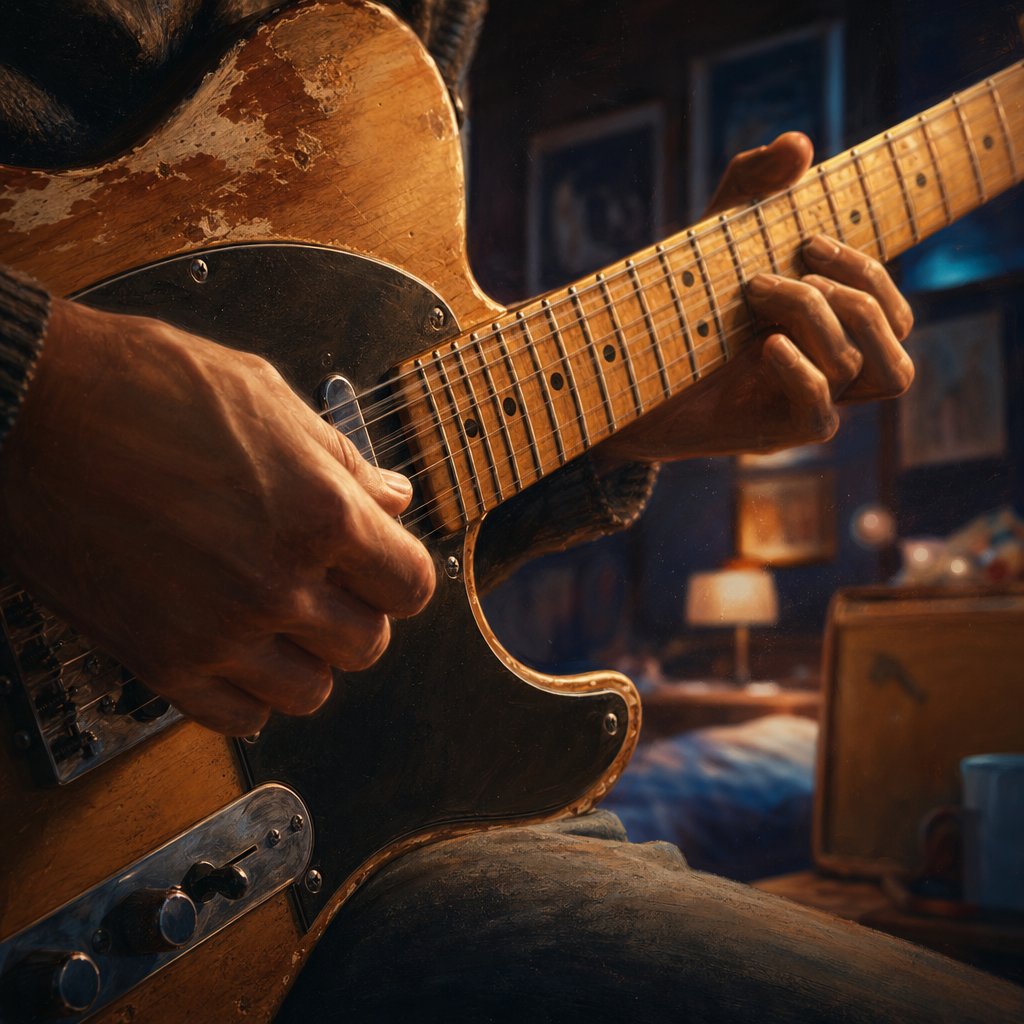
The aesthetic gap is just as wide. Forget the theatrical look. Think flannel, glasses, and a beat-up Fender Telecaster in an open tuning nobody can name.
Why This Genre Still Matters
You might wonder why a genre born in 1990s basements still commands attention. The short answer: its influence never really stopped. Modern indie rock is saturated with the genre's fingerprints, from twinkling guitar tones to emotionally raw lyricism. A thriving revival scene that kicked off in the early 2010s brought a new generation of bands and listeners into the fold, and viral TikTok trends introduced millions more to the sound. For many, it serves as a gateway into deeper corners of emo, punk, and indie. Whether you're here for a midwestern emo genre definition or looking to fall down the rabbit hole entirely, the genre rewards curiosity. And the rabbit hole goes deep, starting with the very geography that gave it a name.
Why the Midwest Became Emo's Heartland
College Towns, Cheap Rent, and Creative Freedom
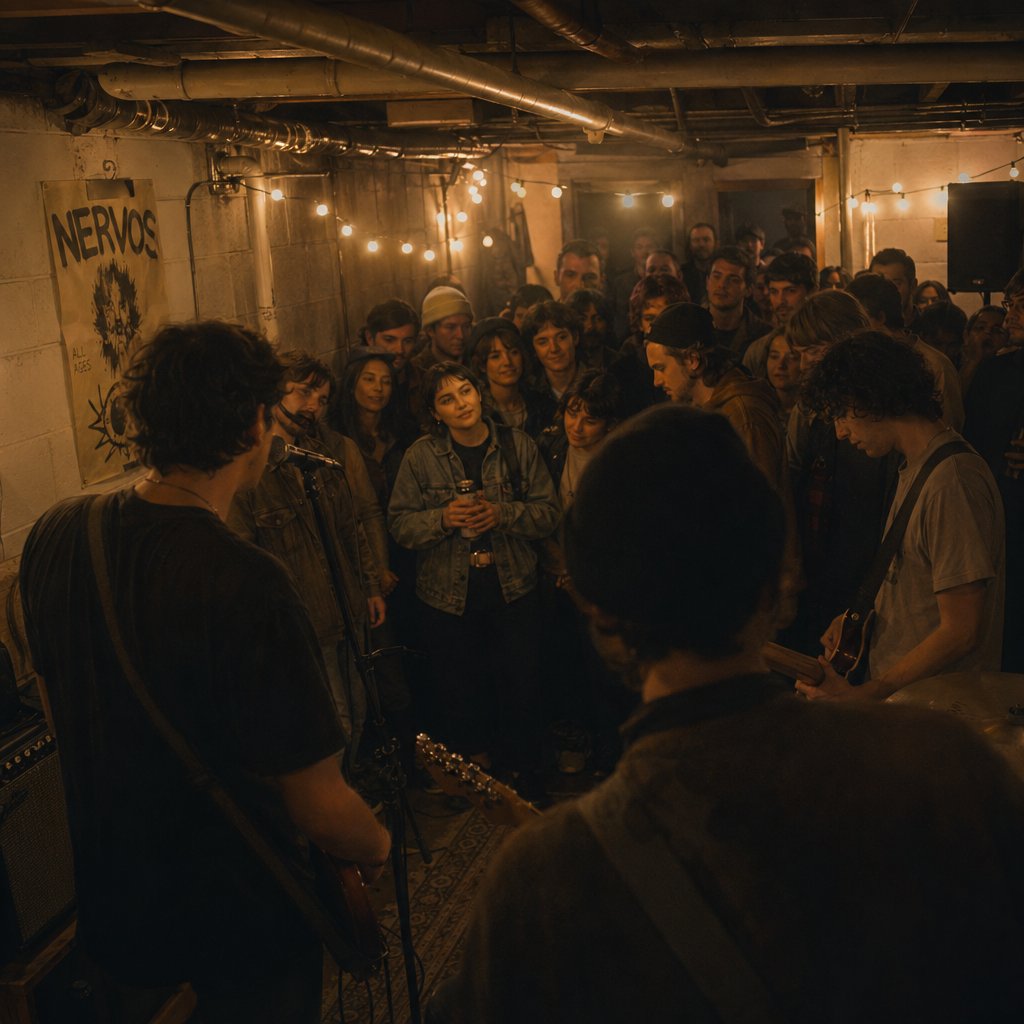
Geography shaped this genre as much as any guitar tuning. The midwest emo college town origins trace back to a simple economic reality: places like Champaign-Urbana, Chicago, Milwaukee, Kalamazoo, and Columbus offered cheap rent near large universities, which meant young musicians could afford to live, experiment, and fail without financial ruin. A two-bedroom house near campus cost next to nothing, and that house could double as a practice space, a recording studio, and a venue on any given Friday night.
Universities pulled in a rotating cast of creative people from across the region, and the close-knit size of these cities made it easy to find each other. As one University of Illinois graduate described the Champaign-Urbana scene, it was "accessible" because of the micropolitan scale: "it's very easy to find out about concerts and share information." Musicians shared members across multiple bands, labels grew out of bedrooms and high schools, and the line between audience and performer barely existed. Polyvinyl Records, for instance, started out of a high school in Champaign before becoming one of indie rock's most respected imprints. Jade Tree Records, based in Wilmington, Delaware, served a similar role on the East Coast by releasing foundational records from Cap'n Jazz, The Promise Ring, and Joan of Arc, connecting Midwestern bands to a wider punk audience.
The DIY Infrastructure That Built a Scene
Why did emo start in the midwest and not somewhere with a bigger music industry? Partly because there was no industry to gatekeep it. The midwest emo DIY scene history is a story of self-sufficiency born from necessity. Without major-label scouts or big-city media attention, bands built their own ecosystem from scratch.
Imagine the infrastructure that sustained this music before the internet era:
- Champaign-Urbana, IL: Home to American Football, Braid, and Polyvinyl Records. The scene thrived in rentable student houses and neighborhood bars.
- Chicago, IL: A hub for Cap'n Jazz, Joan of Arc, and the broader Kinsella family tree. Venues and all-ages spaces kept the circuit alive.
- Milwaukee, WI: The Promise Ring and their peers built a tight scene around house shows and small clubs.
- Kalamazoo, MI: A college-town hotbed for DIY punk and emo crossover acts.
- Columbus, OH: A connective node in the Midwest touring circuit, linking regional scenes together.
Basement shows, VFW halls, photocopied zines, and self-dubbed cassette tapes were the distribution network. Bands toured in borrowed vans along interstate corridors that connected these cities, playing living rooms one night and all-ages community spaces the next. The midwest emo house show culture wasn't a charming footnote. It was the entire engine. Without it, most of these bands would never have been heard beyond their own zip codes.
Midwestern Identity in the Music
The geography didn't just provide the infrastructure. It seeped into the music itself. There's a reason the most iconic album cover in the genre is a photograph of a modest white house at 704 W. High Street in Urbana, Illinois, not a skyline or a stage. That unassuming two-story home, occupied year after year by transient university students, became a de facto pilgrimage site for fans. It captures something essential about the genre's emotional register: the beauty and melancholy hiding in ordinary, overlooked places.
Wide-open spaces, flat highways stretching toward nothing, the slow turn of Midwestern seasons, suburban ennui on a Tuesday afternoon. These aren't just backdrops. They're the emotional vocabulary of the music. The working-class sensibility of the region, its cultural tendency toward understatement rather than spectacle, shaped a sound that favored quiet devastation over theatrical outbursts. You'll notice the songs don't scream about heartbreak from a stadium. They murmur about it from a porch while watching the leaves change.
That rootedness in place is exactly what gave the genre its staying power. And it's also what makes tracing its evolution so compelling, because the sound didn't emerge in a vacuum. It arrived through specific waves, each one building on the last.
A Genre in Waves
The Roots in D.C. Hardcore and Early Emocore
The history of midwest emo genre doesn't actually begin in the Midwest. It begins in the basements and punk clubs of Washington, D.C., around 1985. The city's hardcore scene, driven by bands like Minor Threat and Bad Brains, had spent the early '80s channeling raw aggression into short, furious bursts of sound. But by mid-decade, something shifted. The anger turned inward. Musicians started writing about personal vulnerability instead of political rage, and the "emocore" label emerged to describe this new emotional intensity within hardcore punk.
Two bands sat at the center of that shift: Rites of Spring and Embrace. Rites of Spring's 1985 self-titled album is widely considered the first true emo record, taking the sonic conventions of hardcore and turning the subject of its fury inward with lyrics like, "I woke up this morning with a piece of past caught in my throat, and then I choked." Embrace, fronted by Ian MacKaye of Minor Threat fame, pushed in a similar direction, though MacKaye himself famously despised the emocore tag, once calling it "the stupidest fucking thing I've ever heard."
When both bands dissolved by the late '80s, their members didn't disappear. MacKaye and Rites of Spring's Guy Picciotto formed Fugazi, a band that bridged hardcore ethics with more melodic, emotionally expressive songwriting. Fugazi wasn't emo in the way the genre would later be defined, but their fierce commitment to DIY principles and their refusal to commercialize became a blueprint. Midwestern musicians absorbed all of it: the emotional honesty, the punk infrastructure, the anti-industry ethos. Then they made it their own.
First Wave Midwest Emo in the 1990s
The transformation happened fast. By the early '90s, a new generation of bands across the Midwest took the emotional core of D.C. emocore and fused it with math rock complexity, indie rock melody, and post-rock dynamics. The result was a sound that felt entirely new.
Cap'n Jazz, formed in Chicago in 1989, is widely considered the first band to fully realize the midwest emo sound. Their use of arpeggio melodies, where chord notes are picked individually rather than strummed, created a textured, "twinkly" guitar approach that became the genre's signature. From Cap'n Jazz's orbit alone came American Football, The Promise Ring, Joan of Arc, and Owen, an interconnected family tree that would define the scene for years.
The first wave midwest emo 1990s bands weren't confined to a single city, either. Braid emerged from Champaign, Illinois. The Promise Ring built their following in Milwaukee. Mineral brought emotional grandeur from Houston. Sunny Day Real Estate blended indie rock and post-hardcore from Seattle. The midwest emo waves timeline below captures the key releases that shaped each era:
| Wave | Era | Key Album | Year |
|---|---|---|---|
| Pre-History (D.C. Emocore) | 1985-1990 | Rites of Spring - Rites of Spring | 1985 |
| Pre-History (D.C. Emocore) | 1985-1990 | Embrace - Embrace | 1987 |
| First Wave Midwest Emo | 1993-1999 | Sunny Day Real Estate - Diary | 1994 |
| First Wave Midwest Emo | 1993-1999 | Cap'n Jazz - Shmap'n Shmazz | 1995 |
| First Wave Midwest Emo | 1993-1999 | The Promise Ring - Nothing Feels Good | 1997 |
| First Wave Midwest Emo | 1993-1999 | Mineral - The Power of Failing | 1997 |
| First Wave Midwest Emo | 1993-1999 | Braid - Frame & Canvas | 1998 |
| First Wave Midwest Emo | 1993-1999 | American Football - American Football (LP1) | 1999 |
| First Wave Midwest Emo | 1993-1999 | Jimmy Eat World - Clarity | 1999 |
What connected these records wasn't geography alone. It was a shared sensibility: technical ambition in service of emotional honesty, complexity that never felt like showing off, and a DIY release strategy that kept the music close to the communities that made it.
The Quiet Period and Underground Persistence
Then the 2000s arrived, and the word "emo" got hijacked. Mainstream culture latched onto a louder, more commercially viable version of the genre, one rooted in pop-punk hooks, post-hardcore screaming, and a theatrical visual identity. Bands like My Chemical Romance and Fall Out Boy brought emo into the mainstream spotlight, but the sound they popularized had little in common with what was happening in Champaign basements a few years earlier.
The original midwest emo ethos didn't die during this period. It just went quiet. Smaller scenes kept the flame alive in college towns and house show circuits, and the foundational albums continued circulating through word of mouth and file-sharing networks. Musicians who grew up on Cap'n Jazz and American Football were absorbing those influences, writing songs in open tunings, and playing to small rooms. They didn't know it yet, but they were building the foundation for a full-blown revival. The bands that would carry the torch forward were already forming, and the internet was about to change everything about how they'd be discovered.
The Bands That Defined Midwest Emo
Any essential midwest emo bands list starts with the same handful of names. But listing them isn't enough. What makes these bands matter is how each one pulled the genre in a slightly different direction, creating a sound that was never monolithic despite sharing a common emotional core.
The Foundational Acts Everyone Should Know
Start with Cap'n Jazz, and you start with everything. Formed in Chicago in 1989 by brothers Tim and Mike Kinsella alongside bassist Sam Zurick and guitarist Victor Villarreal, the band managed just one proper album before splitting in 1995. But that record, the impossibly titled Burritos, Inspiration Point, Fork Balloon Sports, Cards in the Spokes, Automatic Biographies, Kites, Kung Fu, Trophies, Banana Peels We've Slipped On and Egg Shells We've Tippy Toed Over, became the chaotic, joyful prototype for everything that followed. The energy was frenetic, the guitar work was inventive, and the emotional delivery was raw in a way that felt genuinely unfiltered. As Tim Kinsella later reflected, the band never cared about technical labels: "People would ask us what time signature a track was in and I'd be like 'I dunno!' Not only did we not care, we didn't know, that wasn't the point."
American Football took the opposite approach. Where Cap'n Jazz was explosive and messy, American Football's 1999 self-titled debut was meticulous and restrained. Built around interlocking fingerpicked guitars in open tunings, jazz-inflected drumming, and Mike Kinsella's hushed vocals, LP1 became the genre's defining statement. It's the record people mean when they say midwest emo bands like American Football, because it crystallized the sound into something unmistakable: beautiful, melancholic, and architecturally precise.
The Promise Ring bridged the gap between the underground and something approaching pop accessibility. Guitarist Davey von Bohlen had joined Cap'n Jazz in 1994 as a fifth member, and when that band dissolved, he channeled its energy into catchier, more melodic territory. Nothing Feels Good (1997) proved that emotional complexity and singalong hooks weren't mutually exclusive. Braid, out of Champaign, brought a more aggressive post-hardcore edge with Frame & Canvas (1998), layering intricate guitar interplay over driving rhythms. And Mineral, operating from the Texas wing of the movement, added emotional grandeur and dynamic sweep with The Power of Failing (1997), proving the sensibility wasn't strictly geographic.
The Deeper Roster and Regional Variations
The Cap'n Jazz and midwest emo family tree alone could fill a chart. When the band split, its members didn't stop. Tim Kinsella formed Joan of Arc, a project that has spent decades making "noisy, messy, awkward music" with rotating lineups that frequently included all four original Cap'n Jazz members. Mike Kinsella launched Owen as a solo vehicle for quieter, more confessional songwriting. In 2000, the original quartet reconvened as Owls, releasing a math-rock-adjacent debut before life circumstances pulled them apart again. This interconnected web meant that following one band inevitably led you to five more.
Beyond the Kinsella orbit, a deeper roster expanded the genre's reach across eras and regions:
- 1990s Foundational Era: Sunny Day Real Estate (Seattle), Christie Front Drive (Denver), The Get Up Kids (Kansas City), Jimmy Eat World (Mesa, AZ)
- 2000s Underground Persistence: Owen (Chicago), Joan of Arc (Chicago), Owls (Chicago), Ghosts and Vodka (Champaign, IL)
- Late 2000s/Early 2010s Revival: Algernon Cadwallader (Philadelphia), Snowing (Philadelphia), Empire! Empire! (I Was a Lonely Estate) (Michigan), Glocca Morra (Philadelphia)
Notice how the revival wave shifted the geographic center eastward, particularly to Philadelphia, while keeping the sonic and emotional DNA intact. Algernon Cadwallader's frenetic tapping riffs and Snowing's raw urgency carried the first wave's spirit into new territory, while Empire! Empire! distilled the genre's quiet devastation into something almost unbearably intimate.
Midwest Emo Singers and Songwriters Who Shaped the Voice
Among the best midwest emo bands of all time, you'll notice a common thread in how the vocals sound: earnest, sometimes nasally, often untrained. This wasn't a limitation. It was the point. The vocal style prioritized emotional authenticity over technical polish, and that choice became a genre signature as recognizable as any guitar tuning.
Tim Kinsella's yelping, off-kilter delivery in Cap'n Jazz set the template for vocal vulnerability as a feature rather than a flaw. Mike Kinsella took a different path entirely, his near-whisper in American Football and Owen conveying sadness through restraint rather than volume. Davey von Bohlen sang with a warmth and slight rasp in The Promise Ring that made even the most complex arrangements feel approachable. Chris Simpson of Mineral delivered lyrics with a trembling intensity that could make a room go silent.
None of these singers would win a vocal competition. That's precisely why they resonated. In a genre built on the idea that imperfection is more honest than polish, the voice became the most direct expression of that philosophy. And the philosophy extended well beyond vocals, deep into the technical choices that gave the genre its unmistakable sonic identity.
Twinkle Tunings and Technique Behind the Sound
Twinkly Guitar and Open Tunings
Ever wonder how to play midwest emo twinkly guitar? It starts with retuning. Standard tuning won't get you there. The genre's most recognizable sonic element, that shimmering, cascading "twinkle" tone, comes from fingerpicking arpeggiated patterns across open and alternate tunings that let notes ring into each other in ways standard EADGBE simply can't produce.
Think of this as a midwest emo guitar tunings guide in miniature. The two most common starting points are FACGCE and DAEAC#E. These midwest emo open tunings like FACGCE work because they turn the guitar into a naturally resonant instrument where open strings already form lush, melancholic chords. You don't need to fret complex shapes. You just need to pick individual notes and let the tuning do the harmonic work. That's why two guitarists playing interlocking fingerpicked lines in complementary tunings can create something that sounds far bigger and more intricate than a wall of power chords ever could.
Math rock's influence runs deep here, too. The rhythmic complexity, the odd subdivisions, the way a riff might land on an unexpected beat, all of that filtered into the genre through bands like Cap'n Jazz and American Football, who treated time signatures as suggestions rather than rules.
Sad Chord Progressions and Dynamic Song Structures
The tunings create the palette. The song structures create the emotional arc. When people ask for midwest emo song structure explained, the short version is this: quiet, intricate verses that build tension through repetition and layering, then release it in explosive, cathartic climaxes. It's the quiet-loud dynamic inherited from post-rock and post-hardcore, but applied with a specificity that feels less like formula and more like breathing.
Unusual time signatures, abrupt tempo shifts, and extended instrumental passages are common. A song might drift through a delicate 6/8 fingerpicked section for two minutes before erupting into a driving 4/4 wall of distortion, only to pull back again into something barely audible. The structures aren't linear. They breathe, collapse, and rebuild.
The technical complexity in midwest emo never exists for its own sake. Every odd time signature, every unexpected chord change, every layered arpeggio serves a single purpose: making you feel something that straightforward songwriting can't reach.
That's the distinction that separates this from pure math rock. The complexity is a vehicle, not a destination.
The Aesthetic Beyond the Sound
The visual identity of the genre is just as deliberate as the tunings. Album covers don't feature band photos or graphic design spectacles. They feature houses, landscapes, and quiet domestic scenes, images that mirror the music's emotional register. American Football's iconic house. The muted photography of Mineral's EndSerenading. These covers communicate something before you press play: this music lives in ordinary spaces.
Lo-fi recording quality reinforces that intimacy. Many foundational records were tracked in basements or home studios, and the tape hiss and room noise became part of the aesthetic rather than something to fix. The fashion follows the same logic. Where mainstream emo leaned into theatrical self-presentation with heavy eyeliner and styled hair, the midwest variant rejected spectacle entirely. Flannels, thrifted t-shirts, unkempt hair, glasses. The look says: the music matters more than the image.
That understated visual language extends into the lyrics themselves, where the same commitment to quiet honesty over performance shapes every word.
Nostalgia and Vulnerability in Midwest Emo Lyrics
Domestic Nostalgia and Midwestern Imagery
Picture a porch light left on for someone who isn't coming home. A highway stretching flat toward a horizon that never gets closer. The smell of a basement after rain. Midwest emo lyric themes and imagery live in these kinds of details, grounded and specific in a way that most rock music never bothers to be. The songs don't reach for grand metaphors. They reach for the screen door, the parking lot, the changing leaves on a street you used to walk every day.
This is midwest emo lyrics about nostalgia at their most potent: not nostalgia for anything dramatic, but for the texture of ordinary life in ordinary places. References to houses, porches, seasonal shifts, and small-town landscapes show up constantly because they're the emotional furniture of the Midwest itself. That specificity is what makes the lyrics feel so intimate. You don't need to have grown up in Champaign-Urbana to feel the ache of a song about watching summer end from a friend's front steps. The regional detail becomes a universal language precisely because it's so honest about where it comes from.
Vulnerability Without Melodrama
So why are midwest emo lyrics so sad without ever feeling overwrought? The answer has as much to do with cultural temperament as musical choice. Where mainstream emo often leaned into theatrical despair, complete with dramatic declarations and stadium-sized heartbreak, the Midwest variant favors quiet devastation. The sadness is real, but it arrives without performance. Self-deprecating humor sits next to genuine grief. A devastating line gets delivered in a near-whisper, not a scream.
Midwestern culture rewards understatement. You don't broadcast your pain; you carry it quietly and hope someone notices. That sensibility is baked into every lyric the genre has ever produced, and it's why the emotional honesty in midwest emo songwriting hits harder than any anthem ever could.
This is the difference between confessing something to a room of thousands and confessing it to one person sitting next to you on a couch at 2 a.m. The genre chose the couch every time. As one writer at The Oarsman put it, the genre is "one of the only genres that is so painfully honest with itself, a pain of being disappointed by dreams that were disappointing to begin with." That kind of emotional register doesn't need volume. It needs precision.
Why These Lyrics Still Resonate
Growing up. Growing apart. The weight of days that feel the same. The ache of remembering someone you no longer talk to. These aren't experiences confined to a decade or a zip code. They're permanent features of being alive, and that's exactly why the genre keeps finding new listeners long after its foundational albums were released. A teenager discovering American Football's LP1 today connects with the same quiet longing that a college student in Urbana felt in 1999, because the lyrics aren't tied to a moment. They're tied to a feeling.
The music has the unusual skill of making your misery into something you're not alone in. That communal quality, the sense that someone else has already felt exactly what you're feeling and wrote it down in a song about a house they used to live in, is what keeps the genre alive. And it's also what made the genre impossible to contain within a single region. The emotions were too universal, and the internet was about to prove it.
Where Midwest Emo Meets Math Rock, Indie, and Beyond
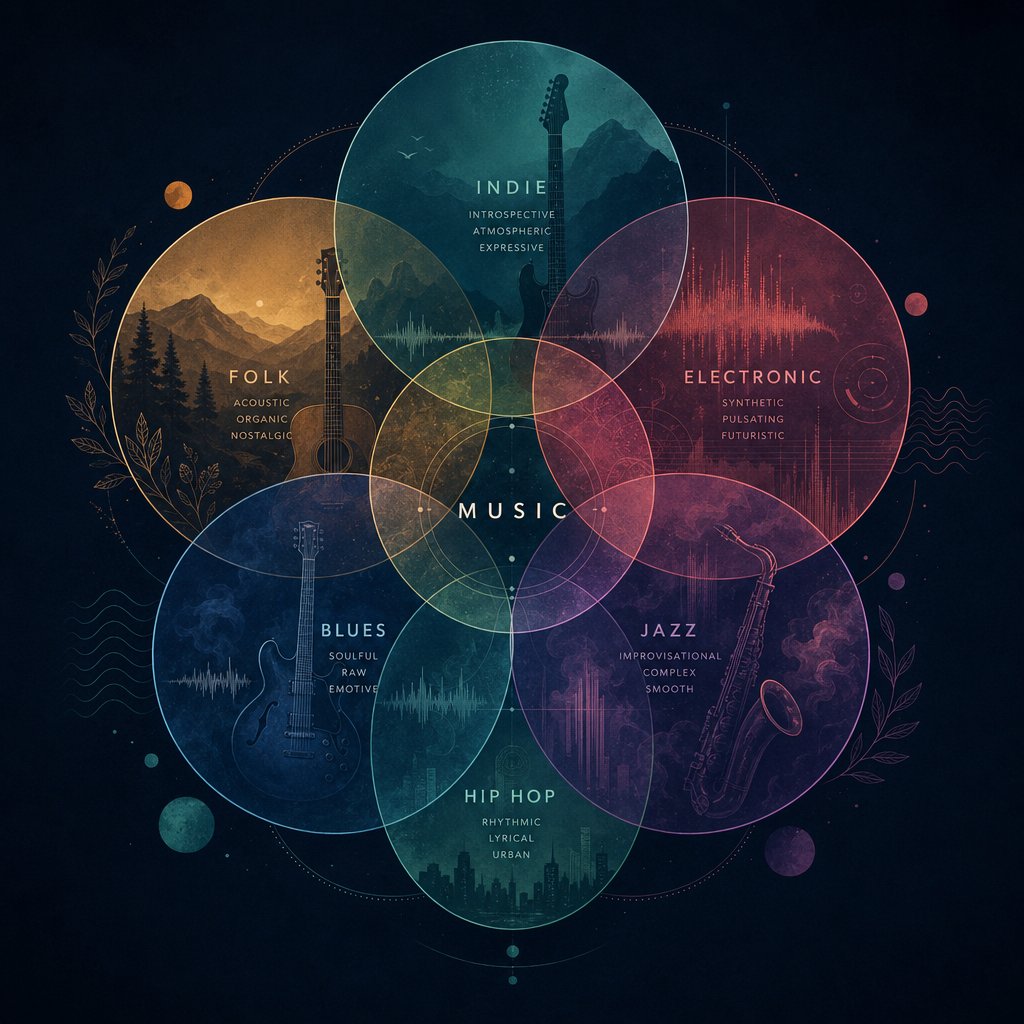
Part of what made the genre's emotional vocabulary so portable is that it was never purely one thing. Midwestern emo has always been a crossroads, borrowing freely from adjacent genres and feeding its innovations right back into them. Understanding where those borders blur helps explain why the sound traveled so far beyond the basements that built it.
Math Rock and Post-Rock Crossover
The overlap between midwest emo and math rock is so deep that some bands exist comfortably in both camps. Shared tunings, interlocking fingerpicked guitar parts, and rhythmic complexity are common ground. American Football merged emo with elements of jazz and math rock to create what became the subgenre's defining sound, while Cap'n Jazz treated time signatures like loose suggestions, channeling math rock's structural adventurousness through raw emotional energy rather than clinical precision.
The midwest emo and post-rock connection runs just as deep, though it shows up differently. Post-rock gave the genre its dynamic architecture: those long, patient builds from near-silence to overwhelming crescendo. Bands like Joan of Arc and Karate pushed into post-rock and noise rock territory during the late '90s, while revival-era acts like The World Is a Beautiful Place & I Am No Longer Afraid to Die mixed the Midwestern sound with post-rock and orchestral music. The result was something expansive and cinematic without losing the genre's intimate emotional core.
Punk Roots and Indie Rock Branches
Strip away the twinkly guitars and you still find punk DNA running through every midwest emo record. The genre inherited its DIY ethics, its distrust of the mainstream music industry, and its raw vocal delivery directly from the D.C. hardcore scene. Post-hardcore bands like Fugazi and Jawbox were cited as direct influences by foundational acts including Braid, Elliott, the Jazz June, and Boys Life. That punk backbone is what kept the music grounded even as it grew more technically ambitious.
The indie rock branch grew in the other direction. As the genre matured, its influence bled into bands that would never call themselves emo. The Promise Ring's pop-leaning melodies, Sunny Day Real Estate's atmospheric textures, and the Kinsella family's restless experimentation all opened doors into broader indie territory. The midwest emo influence on indie rock became a quiet current running beneath much of the 2000s and 2010s alternative landscape.
Here's how the genre's characteristics compare with its closest neighbors:
| Dimension | Midwest Emo | Math Rock | Post-Rock | Indie Rock | Pop-Punk | Screamo |
|---|---|---|---|---|---|---|
| Guitar Style | Twinkly fingerpicked arpeggios in open tunings | Angular tapping, complex riffs | Layered textures, delay-heavy | Jangly strumming, varied | Power chords, palm muting | Dissonant, chaotic |
| Vocal Approach | Earnest, untrained, often hushed | Minimal or absent | Sparse or instrumental | Conversational, melodic | Nasally, singalong hooks | Screamed, visceral |
| Lyrical Themes | Domestic nostalgia, quiet heartbreak | Often instrumental | Abstract or none | Observational, literary | Teenage angst, relationships | Existential anguish |
| Song Structure | Quiet-loud dynamics, odd meters | Complex time signatures, precision | Long builds, crescendos | Verse-chorus, flexible | Verse-chorus-verse, fast | Explosive, fragmented |
What stands out is how midwest emo borrows a defining trait from nearly every column while remaining distinct. It takes math rock's complexity without the clinical detachment, post-rock's dynamics without the ten-minute runtime, indie rock's melodic sensibility without abandoning punk's emotional urgency.
The Ripple Effect on Modern Alternative Music
The genres related to midwest emo aren't just historical neighbors. They're active collaborators in an ongoing conversation. Contemporary indie and alternative artists routinely absorb the genre's emotional honesty and technical ambition without ever identifying with the emo label. You can hear it in the intricate guitar work of bands that get filed under "indie" on streaming platforms, in the confessional lyricism of singer-songwriters who grew up on American Football, and in the quiet-loud dynamics that have become standard vocabulary across alternative music.
Emo subgenres continue to cross-pollinate and evolve. Twee pop elements filtered into the sound through bands like Everyone Asked About You and Dowsing. Emo rap borrowed the genre's emotional directness and applied it to entirely different sonic frameworks. Even the "twinkle" guitar tone has become a production shorthand that shows up in pop, folk, and electronic contexts far removed from any basement show. The genre didn't just influence its neighbors. It gave them a shared emotional language, one that proved remarkably adaptable once the internet dissolved the geographic boundaries that had defined the scene from the start.
How the Internet Revived a Regional Underground
From Basement Tapes to Bandcamp and Beyond
Those dissolved geographic boundaries didn't just let the sound travel. They rewired how the entire scene functioned. The midwest emo revival bands 2010s story is fundamentally an internet story. Foundational albums that had circulated through dubbed cassettes and word of mouth in the '90s suddenly became accessible to anyone with a Bandcamp account or a Tumblr feed. A kid in Manila or Manchester could stumble onto American Football's LP1 the same way a kid in Champaign once did: by accident, through a friend's recommendation. The friend just happened to be an algorithm now.
Platforms stacked on top of each other to accelerate the process. Bandcamp gave emerging bands a storefront that cost nothing to open. Tumblr became a visual mood board for the genre's aesthetic, circulating album art, lyric fragments, and grainy live photos to an audience that skewed young and emotionally receptive. Reddit's r/emo community turned into a discovery engine and debate forum rolled into one. And then TikTok arrived, turning midwest emo on bandcamp and tiktok into a full-blown cultural moment. Users recorded twinkly, mathy arpeggiated guitar parts and paired them with clips of people crying or yelling, creating emo duets that introduced the sound to millions who'd never heard of Cap'n Jazz.
Labels adapted, too. Count Your Lucky Stars and Topshelf Records operated with the same DIY ethics as Polyvinyl in the '90s but used digital distribution to reach global audiences from bedroom operations. As Tom Mullen of the Washed Up Emo podcast put it, when he started the project in 2007, "in the grand scheme of mass media, no one was remembering" the foundational bands. "There was always a kid in the basement playing a record, there was always a kid talking about these bands." The internet just made those kids visible to each other.
The Revival Bands Carrying the Torch
Visibility created momentum. By the early 2010s, a new generation of bands had absorbed the first wave's DNA and started pushing it forward, building what many call the fourth wave of emo. These weren't tribute acts. They took the emotional core and the sonic vocabulary and filtered it through their own experiences, their own cities, their own anxieties.
If you're looking for a 4th wave emo bands list to start exploring, here are the modern midwest emo bands to listen to that shaped the revival:
- Modern Baseball (Philadelphia) — Conversational, self-aware lyricism over jangly guitars. Their 2014 album You're Gonna Miss It All became a generational touchstone despite the band never consciously referencing '90s emo forebears.
- The Hotelier (Worcester, MA) — Emotionally devastating post-hardcore that expanded the genre's dynamic range. Home, Like Noplace Is There (2014) is widely considered one of the revival's finest records.
- Mom Jeans. (Berkeley, CA) — Self-described "party emo" that balanced dark lyrical content with an infectious, communal energy. As frontperson Eric Butler explained, the appeal was "music that at its core is probably a little troubling and a little dark, but you still have to get through your day and have a little fun."
- Marietta (Philadelphia) — Sprawling, emotionally raw dual-vocal arrangements that felt like overhearing two people process the same heartbreak simultaneously.
- Tiny Moving Parts (Benson, MN) — Noodly, technically dazzling guitar work married to anthemic emo hooks. One of the few revival bands rooted in the actual Midwest.
- Origami Angel (Washington, D.C.) — A two-piece that fused emo with pop-punk energy and video game references, carrying the torch from the same city that produced emo four decades earlier.
- Empire! Empire! (I Was a Lonely Estate) (Michigan) — Quiet, devastating, and deeply indebted to Mineral's emotional grandeur. A bridge between the first wave and the revival.
- Charmer (Detroit) — Warm, melodic emo-pop that proved the genre could be inviting without sacrificing emotional depth.
What's striking about this list is the geographic scatter. The revival wasn't a Midwest phenomenon anymore. It was a sensibility that had detached from its region and attached itself to an ethos. The 4th wave emo conversation expanded the genre's boundaries while keeping its emotional honesty intact, and as Chicago critic Miranda Reinert observed, TikTok's version of the genre sometimes flattened that nuance, presenting the style as "mostly the kind of bands getting posted about on Tumblr in 2014." The reality was more interesting. Fourth-wave bands innovated and incorporated new sounds, and a fifth wave, guided by a more openly queer and experimental class of musicians, has been building since roughly 2019.
Midwest Emo as a Global Language
The most remarkable proof that the genre transcended its origins isn't in Philadelphia or Brooklyn. It's in Wuhan, Shenzhen, Singapore, and Tokyo. Bands across Asia, Latin America, and Europe now make music explicitly in the midwest emo tradition, proving the emotional and sonic vocabulary has become universal.
Chinese Football, from Wuhan, is perhaps the clearest example. Their sound channels American Football's controlled rhythm section and subtle, singing guitars into something that feels both deeply referential and distinctly their own. "We don't describe ourselves as an emo band, but as an emo-influenced indie rock band," singer Xubo has said. "We listen to many kinds of music: punk, indie pop, shoegaze, J-pop, folk. It all became the influence to our music." In Singapore, Forests blend math rock intricacy with chant-worthy yelps. In Tokyo, falls takes the meticulous guitar work of Japanese post-hardcore pioneers like toe and adds major-key emo melodies.
Hong Kong's Sweaty & Cramped, a DIY label, co-released the Emotion, No compilation to showcase the breadth of Asian emo. As the label's owner Lok put it: "What's most fascinating about 'Eastern emo' is the fact that it exists — that a niche genre traveled all the way from the States to these cities in Asia. Other than that, we pretty much whine about the same things."
That last line captures something essential. The genre's power was never really about the Midwest. It was about a way of being honest, a set of sonic tools for expressing feelings that don't fit neatly into words. Those tools turned out to be remarkably portable. And for listeners discovering this global ecosystem for the first time, the question quickly shifts from "what is this?" to "where do I start?"
Essential Listening and Making Your Own Midwest Emo
A Starter Discography for New Listeners
Figuring out how to get into midwest emo music is easier than it looks, as long as you have a roadmap. The genre spans decades, and diving in without direction can feel overwhelming. This essential midwest emo discography guide organizes the key records by era so you can trace the sound's evolution from its origins to the present.
- Cap'n Jazz - Shmap'n Shmazz (1995) — The chaotic, joyful starting point. Twinkling guitars, post-hardcore energy, and Tim Kinsella's unhinged vocal delivery established the template that every band on this list responded to in some way.
- The Promise Ring - Nothing Feels Good (1997) — Davey von Bohlen's earnest vocals paired with power pop melodies proved the genre could be emotionally complex and accessible at the same time.
- Braid - Frame & Canvas (1998) — Dueling vocals, complex time signatures, and slow-building intensity that helped set the stage for emo's more aggressive side.
- American Football - American Football (LP1) (1999) — The genre's defining statement. Interlocking fingerpicked guitars, hushed vocals, and that iconic house on the cover. Start here if you only pick one record.
- The Get Up Kids - Something to Write Home About (1999) — A more mature, dynamic take that expanded the genre's emotional range with wider dynamics and moments of genuine pop warmth.
- Empire! Empire! (I Was a Lonely Estate) - What It Takes to Move Forward (2009) — A bridge between the first wave and the revival, distilling quiet devastation into something almost unbearably beautiful.
- The Hotelier - Home, Like Noplace Is There (2014) — The revival era's emotional peak. Devastating, cathartic, and proof the genre still had new things to say.
- Origami Angel - GAMI GANG (2021) — A two-piece fusing emo with pop-punk energy and playful experimentation, representing the genre's ongoing evolution.
These are the best midwest emo albums for beginners because each one represents a distinct moment in the genre's arc. Listen chronologically and you'll hear the sound grow, fracture, go quiet, and come roaring back.
Exploring the Midwest Emo Sound Yourself
The genre's DIY ethos has always meant one thing: you don't need permission to participate. If you're curious about how to make midwest emo music at home, the barrier to entry is genuinely low. Grab a guitar, retune it to FACGCE or DAEAC#E, and start fingerpicking. Embrace the imperfections. Write about what you actually feel, not what sounds poetic. Record in your bedroom, your basement, your kitchen. The lo-fi quality isn't a compromise. It's part of the sound.
If you want to explore the genre's sonic palette before picking up an instrument, tools like MakeBestMusic's AI Song Generator let you input a genre and mood to hear how those moody, intricate qualities translate into original compositions. It's a useful way to experiment with the emotional texture of the style, get a feel for how different elements interact, and spark ideas you can develop further on your own. Think of it as a sketchpad rather than a finished product.
Either way, the spirit is the same one that drove every band on the list above: start with honesty, figure out the rest as you go.
Joining the Community
The genre lives in its community as much as its records. Reddit's r/emo remains one of the most active discovery hubs, where recommendations flow freely and debates about what counts as "real emo" never end. Bandcamp's emo tag surfaces new releases weekly from bands you've never heard of in cities you've never visited. And the house show tradition persists. Local venues, DIY spaces, and living room concerts still form the backbone of the scene in college towns across the country and increasingly around the world.
Follow the music, show up to the shows, and talk to the people standing next to you. That's how every scene in this article started, and it's how the next one will, too.
