

What Songwriting Prompts Are and Why They Actually Work
You're sitting with your guitar or hovering over a keyboard, notebook open, pen ready. And nothing comes. The cursor blinks. The page stays blank. You keep circling the same question: what should I write a song about? That silence isn't a lack of talent. It's a lack of a starting point.
That's exactly where songwriting prompts come in. They aren't a gimmick or a crutch. They're a legitimate creative tool used by visual artists, fiction writers, and musicians alike to break through the inertia of an empty page. A songwriting prompt is simply a creative trigger — a scenario, constraint, image, or phrase designed to give your brain something concrete to respond to instead of staring into the void.
What Exactly Is a Songwriting Prompt
A songwriting prompt is a specific creative starting point — a phrase, scenario, constraint, or image — that gives a songwriter a focused entry into writing, replacing the open-ended pressure of a blank page with a defined creative direction.
In Nashville, pro songwriters often use a version of this concept called a "hook" — a line of lyric, a melody fragment, or a conversational phrase jotted down for later use as song inspiration. Whether you call them song prompts, music prompts, or just ideas in a notebook, the function is the same: they get you writing.
Why Constraints Spark Creativity
Here's the creative paradox most people get wrong. Total freedom doesn't unlock your best work — it paralyzes it. A study published in Psychology of Aesthetics, Creativity and the Arts found that participants given specific constraints produced more creative results than those allowed to write freely. The reason? Constraints cut down overwhelming choices into manageable subsets, pushing the brain to "explore less familiar paths" and "diverge in previously unknown directions."
Generic advice like "write what you feel" sounds nice, but it doesn't give you anywhere to start. A well-crafted songwriting prompt does. It replaces infinite possibility with a tangible entry point — and that focused limitation is exactly what gets words flowing.
This article won't hand you a numbered list of 100 song writing prompts and wish you luck. Instead, you'll learn how to evaluate, choose, and actually work through a prompt until it becomes a real song draft.
What Separates a Great Prompt From a Weak One
Knowing that prompts work is one thing. Picking the right one is another. Not all songwriting ideas are created equal. Some spark an entire verse in minutes; others leave you just as stuck as the blank page did. The difference comes down to how the prompt itself is built.
A vague prompt like "write about love" gives you everything and nothing at the same time. A hyper-specific instruction like "write a four-line verse in G major about a red bicycle on a Tuesday" boxes you in so tightly there's no room to make it yours. The sweet spot lives between those extremes, and you can learn to spot it.
Three Traits of a Prompt That Actually Works
- Specificity. A strong prompt narrows the field enough to give you a foothold. Compare "write about missing someone" (weak) with "write from the perspective of someone scrolling through old texts they can't delete" (strong). The second version hands you a scene, a character, and a tension — instant lyric ideas you can run with.
- Emotional charge. The best prompts carry a built-in feeling that pulls you in. "Write about a house" is flat. "Write about the last room you'll ever see in your childhood home" hits differently. As writing instructor Laura Davis notes, a well-worded prompt should feel "almost like a burr in your side" — something that provokes a response you didn't plan. That emotional friction is where compelling song lyric ideas live.
- Interpretive openness. Even with specificity and emotion, a prompt needs breathing room. It should point you toward a door, not shove you through it. Two writers responding to the same prompt should be able to produce completely different songs. If the prompt dictates the outcome, it's an assignment, not a creative trigger.
When to Abandon a Prompt and Move On
Not every prompt will click, and that's completely fine. Here's a practical rule of thumb: if you've spent ten focused minutes with a prompt and haven't generated even a single phrase, image, or melodic fragment, set it aside. Move to the next one. Forcing a dead prompt won't produce ideas for lyrics for a song — it'll just produce frustration.
One common pitfall worth flagging: being too literal. A prompt about "a letter you'll never send" doesn't mean you have to write an actual letter. Maybe it becomes a chorus hook about silence, or a verse about someone rehearsing words in the shower. The strongest lyrics ideas come from treating prompts as springboards, not rigid assignments. As writing coach Jacquelin Cangro points out, generic prompts that aren't connected to anything you care about tend to lose steam fast — the initial burst fades and you're left more frustrated than before.
Think of lyric suggestions from prompts the way a jazz musician thinks about chord changes: they're a framework to improvise within, not a script to follow note for note. The goal is always to find your own way in.
Recognizing quality matters, but it helps even more when you understand the different types of prompts available and what each one is designed to unlock.

A Prompt Taxonomy for Every Creative Need
Most prompt lists throw a hundred ideas at you with no organizing logic. That's like walking into a pharmacy and seeing every medication dumped into one bin. You need to know what each type does so you can reach for the right one when you're stuck in a specific way. The five categories below are organized by creative mechanism — the underlying reason each prompt type unlocks something different in your writing.
Constraint-Based Prompts
These prompts impose a deliberate limitation that forces your brain off autopilot. Write a verse using only one-syllable words. Compose a chorus with no rhyme at all. Build a melody using just three notes. The magic here is restriction. When your usual habits are blocked, you're forced to problem-solve in unfamiliar territory, and that's where fresh song ideas live. Orphiq's songwriting exercises highlight this principle well — drills like the "one-syllable song" and "three notes, one song" isolate specific skills by removing the options you normally lean on.
Scenario and Character Prompts
These place you inside a specific situation or persona. Write from the perspective of a lighthouse keeper on their last night before the light goes automatic. Write a letter you'll never send, then turn it into a song. Scenario prompts generate narrative and emotional depth because they hand you a character with a built-in conflict — and conflict is the engine of every memorable lyric. If you're hunting for song topic ideas, this category is a goldmine because each scenario naturally suggests its own song themes and story arc.
Emotion and Mood Prompts
These are anchored to a feeling or atmosphere rather than a story. Capture the feeling of 3 AM restlessness. Write the sound of relief. Translate the tension of an unanswered phone call into a melody. Emotion prompts are ideal if you tend to lead with melody or texture over words — they give you a tonal direction that shapes chord choices and vocal delivery before a single lyric is written.
Object and Image Prompts
These build outward from a concrete visual or physical detail. Write a song inspired by an old photograph you find in a thrift store. Build a track around the sound of rain on a tin roof. Describe a cracked phone screen as if it were a metaphor for a relationship. Object prompts ground abstract feelings in tangible details, which is exactly what strong imagery does in finished songs. Pat Pattison's popular object writing exercise at Berklee uses this same principle — pick a physical object and describe it through all five senses to generate raw sensory material for lyrics.
Title-First and First-Line Prompts
These give you the destination or the opening line and ask you to build from there. Start with a title like "The Last Good Morning" and write the song it belongs to. Take the first line "I almost called you back" and see where the verse goes. This approach works because a strong title or opener creates immediate momentum — you already have a song name idea and a direction, so the blank page problem disappears. If you keep a running song title ideas list in your notebook, you're essentially building a personal bank of these prompts for future sessions.
The table below maps each category to its best use case so you can quickly match your current creative state to the right type of prompt. Bookmark this as a reference for your next writing session.
| Prompt Type | What It Does | Best For | Example Prompt |
|---|---|---|---|
| Constraint-Based | Imposes a creative limitation | Breaking habits and autopilot patterns | Write a complete verse using only five unique words |
| Scenario & Character | Places you inside a situation or persona | Generating narrative depth and song theme ideas | Write from the perspective of someone who just sent a risky text |
| Emotion & Mood | Anchors writing to a feeling or atmosphere | Melody-first and texture-driven writers | Capture the feeling of driving home after quitting your job |
| Object & Image | Builds outward from a concrete visual detail | Grounding abstract emotions in tangible imagery | Write a song inspired by a pair of shoes left by the front door |
| Title-First / First-Line | Gives you a destination or opening line | Writers who need immediate momentum and song title suggestions | Start with the title "Everything After Midnight" and write the song |
Having a taxonomy is useful, but prompts don't exist in a vacuum. A country songwriter and a hip-hop producer will reach for very different entries on this grid — and the creative triggers that work for one genre can fall completely flat in another.
Genre-Specific Prompts Worth Trying
Genre isn't just a label slapped on after the song is finished. It shapes how you tell a story, where the hook lives, and what kind of imagery resonates with listeners. The songwriting topics that fuel a folk ballad are worlds apart from the ones driving an R&B single, and the prompts you reach for should reflect that. Treating every prompt as genre-neutral ignores the conventions that make each style tick.
Prompts for Country and Folk Songwriters
Country and folk writing lives and dies on narrative specificity — concrete names, places, and objects that make a listener feel like they're inside the story. The best prompts for this space lean into place-based imagery and conversational language, the kind of details that give a verse its sense of lived experience. If you're looking for ideas for songwriting lyrics in these genres, think small and specific rather than big and abstract.
- Write a song set entirely on a two-lane highway where the narrator passes something that makes them turn the car around.
- Tell the story of a kitchen table — who sat there, what was said, and why the chair at the end is empty now.
- Write from the perspective of a bartender who knows the whole town's secrets but never tells.
- Build a verse around a piece of clothing someone left behind — a jacket, a hat, a pair of boots by the door.
Prompts for Pop and R&B Writers
Pop and R&B reward emotional directness and hook-driven phrasing. The chorus needs to land fast and stick — pop's verse-pre-chorus-chorus architecture is built for exactly that kind of payoff. Prompts here should push you toward memorable, repeatable lines and universal songwriting themes that a wide audience can feel immediately.
- Write a chorus built around a phrase you'd text someone at 2 AM but delete before sending.
- Take the feeling of wanting someone to ask you to stay — and make the hook the thing you wish they'd say.
- Write a pre-chorus that builds tension using only questions, then let the chorus answer with one declarative line.
Prompts for Rock, Indie, and Alternative
Rock thrives on atmosphere, tension, and subversion. Where country tells a clean story and pop delivers an emotional thesis, rock often lives in contradiction — saying one thing and meaning another, or building a song around an image that doesn't resolve neatly. These prompts challenge you to twist familiar sentiments into something unexpected.
- Write a love song where every line sounds like a threat.
- Build a song around a single contradictory image: a fire that makes the room colder, a silence that's deafening.
- Take the most cliched song idea you can think of and rewrite it from the villain's perspective.
Prompts for Hip-Hop and Rap
Hip-hop demands lyrical density, rhythmic precision, and storytelling that hits hard. Rhyme scheme complexity in hip-hop — internal rhymes, multisyllabic chains, assonance running across full bars — exceeds any other mainstream genre. The topics to write songs about here range from personal narrative to social commentary, and the best prompts encourage both wordplay and substance.
- Write a 16-bar verse where every line contains a double meaning — one literal, one metaphorical.
- Tell the story of a single city block from sunrise to midnight, switching flow patterns at noon.
- Pick a common object (a key, a mirror, a clock) and build an extended metaphor across an entire verse without ever naming the object directly.
- Write a verse responding to advice your younger self needed but never got.
Genre gives you a lens, but your experience level determines how much of that lens you can actually use. A first-time songwriter and a ten-year veteran will get very different things out of the same prompt — and the next step is matching the right creative challenge to where you actually are in your writing.

Matching Prompts to Your Skill Level
Imagine handing a brand-new swimmer a set of scuba gear and pointing at the deep end. That's essentially what happens when a beginner songwriter grabs a prompt designed for a seasoned writer. Education research calls this the zone of proximal development — the sweet spot between what you can do independently and what's just beyond your current reach. Set the challenge too far past readiness and you hit frustration. Set it too low and you get boredom. The same principle applies to song writing ideas: the right prompt meets you where you are and stretches you just enough to grow.
Prompts for Beginners Who Are Just Starting Out
When you're new, the biggest enemy isn't bad writing — it's the pressure of writing a "complete song." That pressure freezes people. The fix? Prompts that isolate a single element and keep the stakes low. You're not trying to write a masterpiece. You're trying to fill four lines on a page and feel good about it. These song starters focus on small wins that build confidence over time.
- Write a four-line verse about your morning routine — what you see, hear, and smell before the day starts.
- List five potential song titles based on things you overheard in conversation today.
- Pick one object in the room and describe it using three senses. That's your first verse draft.
- Finish this line and write three more after it: "I almost forgot the way you..."
- Record a 30-second voice memo humming any melody, then write words that fit the rhythm.
Notice how none of these ask you to produce a finished song. Each one gives you something to write a song about without the weight of a full structure. For song writing ideas for beginners, that distinction matters — a four-line fragment you actually finish beats an ambitious draft you abandon halfway through.
Prompts for Intermediate Writers Ready to Push Further
You've written a handful of songs. You know your way around a verse-chorus structure. And you've probably noticed that your writing is starting to sound... familiar. Same chord progressions, same emotional territory, same phrasing patterns. That's the plateau, and it's where intermediate writers get stuck.
The prompts that work here challenge structure, perspective, and comfort zones. Try writing a song where the verse and chorus are from two different characters who disagree. Take a song you've already written and rewrite the second verse from the opposite emotional angle — Orphiq's "verse swap" exercise targets exactly this skill. Blend two genres you'd never normally combine: a folk melody with a hip-hop lyric structure, or an indie atmosphere over an R&B groove. These are good song ideas not because they'll all become hits, but because they force you off the paths you've worn smooth.
Prompts for Experienced Songwriters Breaking Through Plateaus
Veteran writers face a different problem. You have strong instincts, reliable craft, and a process that works — which is precisely what can trap you. Your habits are so efficient that they bypass the creative friction where unexpected stuff to write a song about actually lives. The prompts that serve you best are the ones that feel uncomfortable.
Write a complete song in a genre you actively dislike. Take your strongest song and rewrite it from the opposite emotional perspective — if it's hopeful, make it bitter; if it's angry, make it tender. Co-write a session where the only communication between writers is trading prompts back and forth, no verbal discussion. As pro songwriter Clay Mills notes, even Hall-of-Fame writers keep taking songwriting classes because the moment you stop challenging yourself is the moment your writing calcifies.
Experienced writers also benefit from generating their own song subject ideas rather than pulling from external lists. Flip the taxonomy from earlier on its head: instead of responding to a prompt, create one that targets the specific weakness you've been avoiding. If you always write melody-first, force a lyrics-first session. If your songs are always personal, write from a fictional character's perspective. The discomfort is the point.
Knowing which prompts fit your level is half the equation. The other half is knowing what to actually do once you've picked one — how to move from a prompt on a page to a working song draft with structure, lyrics, and momentum.
How to Turn a Single Prompt Into a Working Song Draft
A prompt sitting in your notebook is just a sentence. It doesn't become a song until you do something with it. The gap between "here's an interesting idea" and "here's a written song" is where most writers stall — not because they lack talent, but because nobody ever showed them the steps in between. This is the part where knowing how to song write shifts from theory to practice.
The process below works regardless of genre, instrument, or experience level. It's four steps, and none of them require perfection.
- Sit With the Prompt and FreewriteSet a timer for 10 to 15 minutes. Write down anything the prompt triggers — phrases, single words, images, emotions, scraps of melody described in plain language, half-formed metaphors, even questions. The only rule is that you don't stop and you don't edit. Nashville staff writer Andrea Stolpe describes this stage as pressing "feelings and thoughts and descriptive language" onto the page "according to whatever floats past our minds." Your freewrite will look messy. That's exactly right. You're generating raw material, not writing the song yet.
- Extract Your Raw MaterialsRead back through the freewrite with a highlighter or a pen. Circle the phrases that surprise you — the ones with a vivid image, an unexpected word pairing, or a natural rhythmic pulse. These are your building blocks for verses, hooks, and titles. Stolpe's process mirrors this exactly: she lifts lines from freewriting and looks for ready-made rhyme pairs by matching vowel sounds already present in the raw text. You're not inventing from scratch here. You're mining what your subconscious already handed you. Look for natural imagery, lines that carry emotional weight, and anything that sounds like it belongs in a chorus. If you started with a prompt about things to write a song about and ended up with a phrase about "headlights pulling into an empty driveway," that's gold — grab it.
- Map Ideas to Song StructureTake your extracted materials and start placing them into a basic framework. You don't need anything elaborate. A simple verse-chorus-verse-chorus-bridge-chorus form (ABABCB) works for most genres and gives you clear slots to fill. Your most narrative, scene-setting lines belong in the verses. Your most emotionally direct, repeatable line becomes the chorus hook. Anything that shifts perspective or introduces a new angle fits the bridge.Different structures serve different emotional arcs. A verse-chorus form builds through repetition and payoff. An AABA form lets a strong melody carry the weight with a single contrasting section. Loop-based structures common in hip-hop and electronic music rely on evolving layers rather than traditional sections. Pick the form that matches the energy of your extracted material — don't force a ballad into a drop-based arrangement or vice versa.
- Draft and IterateFill in the gaps. Connect your highlighted phrases with transitional lines. Adjust syllable counts so the rhythm feels singable. Try different rhyme schemes. This first pass is a rough draft, not a finished product — songwriter Demi Schwartz emphasizes that polishing comes after the full structure exists, not during. Give yourself permission to write badly on the first round. You can always revise a rough draft; you can't revise a blank page.If you want to accelerate this stage — hearing how your ideas to write a song actually sound as a complete track — AI-powered tools like MakeBestMusic's AI Song Generator let you take a prompt-generated theme, mood, or set of lyrics and quickly explore them as fully realized songs. It's a useful way to test whether your draft has legs before spending hours on arrangement and production. Think of it as one option in your toolkit alongside voice memos, demo recordings, and co-writing sessions — song writing help that meets you wherever you are in the process.
These four steps turn what to write a song about from an abstract question into a concrete workflow. But reading about a process and seeing it in action are two different things — and a single worked example can make the whole method click in a way that instructions alone never quite do.
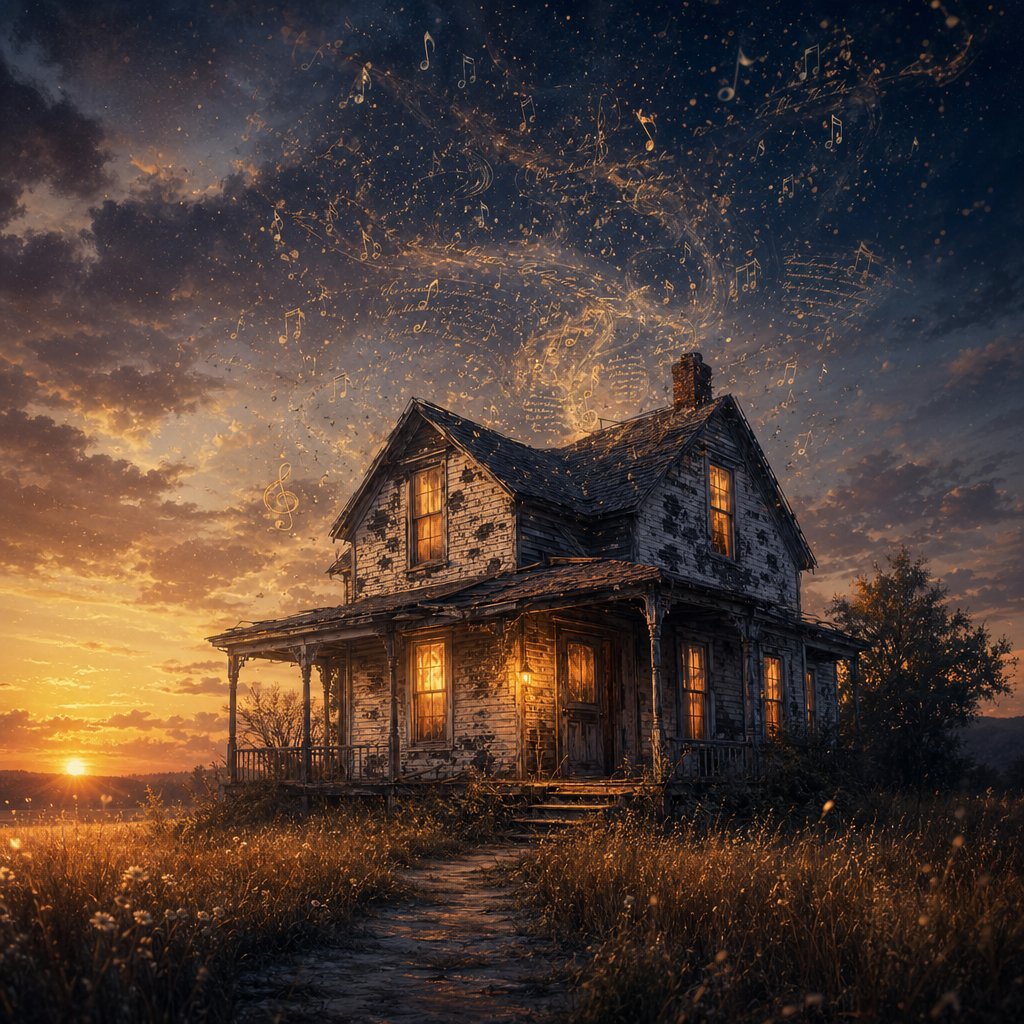
Worked Example
Process steps are useful, but watching them play out on an actual prompt is what makes them stick. So let's walk through one from scratch — messy freewrite, raw extraction, shaped lyrics, and structural mapping — so you can see exactly how ideas for a song emerge from a single creative trigger.
The Prompt and the Freewrite
Here's the prompt: Write a song from the perspective of a house that's about to be demolished.
This is a scenario and character prompt from the taxonomy. It has specificity (a house, not just "a building"), emotional charge (demolition implies loss, endings, memory), and interpretive openness (you could write it angry, nostalgic, relieved, or resigned). It's the kind of prompt that works like a song idea generator — one vivid scenario branching into dozens of possible directions.
Timer set for twelve minutes. Here's what the freewrite actually looked like — unpolished, associative, exactly as it came out:
Walls remember handprints, small ones near the bottom. Kitchen smells — garlic, burnt toast, something sweet on Sundays. The front door sticks in August, swells with humidity like it's holding its breath. Cracks in the ceiling mapped like rivers nobody named. They're going to fold me into dust. I held every argument, every slow dance in the living room, every 2 AM feeding. Foundation settling — is that what giving up sounds like? Yellow paint in the bedroom, three coats deep, each one a different year, a different version of her. The porch light stayed on longer than anyone asked it to.
Extracting a Rough Verse and Chorus Hook
Reading back through that freewrite, a few phrases jump out. "The front door sticks in August" has sensory texture and natural rhythm. "Three coats deep, each one a different year" carries layered meaning — literally paint, figuratively time passing. "I held every argument, every slow dance" gives the house a voice and an emotional claim. And "the porch light stayed on longer than anyone asked it to" feels like a closing image with real weight.
These are the raw materials. Shaping them into a rough verse means tightening rhythm, introducing a rhyme where it feels natural, and letting the house speak directly. Songwriter Demi Schwartz describes the first verse as the place for sensory imagery — "painting a picture" that draws the listener in from the opening line. That's exactly the job here.
The freewrite phrase "the front door sticks in August" becomes the opening line because it's concrete and immediate. "Three coats deep" gets woven into a detail about the bedroom. A near-rhyme between "years" and "here" gives the verse a subtle sonic thread without forcing a rigid scheme. Here's the shaped result:
The front door sticks in August, swells like holding breath / Yellow paint three coats deep, each one somebody's year / I kept the cracks from showing, kept the cold from creeping left / They're bringing machines tomorrow, but I'm still here
For the chorus, the emotional thesis needs to land in a repeatable, direct line. The freewrite phrase "I held every argument, every slow dance" already has the structure of a hook — parallel phrasing with escalating emotional stakes. Pairing it with the demolition context gives us:
I held every slow dance, every slammed door / You can bring me down, but I'm not empty anymore
That second line flips the expected sentiment. Instead of grief, the house claims fullness — a twist that gives the chorus its edge. Great song ideas often live in that kind of reversal, where the emotion zigs when the listener expects a zag.
Mapping It to Structure
With a verse and chorus hook drafted, the next move is placing them into a simple form. A verse-chorus-verse-chorus-bridge-chorus structure fits this song naturally because the narrative has a clear emotional arc to travel. Andrea Stolpe's approach to lyric structure reinforces this: verses show the listener what "is" through imagery, while the chorus tells them what it means in more direct language.
Here's how the arc maps out. Verse one sets the scene — the house describing its physical details and the life it absorbed. The chorus delivers the emotional thesis: I'm full, not empty, even if you tear me down. Verse two deepens the story — maybe shifting to a specific memory, a family moment the walls witnessed. The bridge shifts perspective entirely. Perhaps the house addresses the demolition crew directly, or imagines what will stand in its place. Then the final chorus lands with accumulated weight, the same words meaning more because of everything the listener now knows.
This is exactly the structural logic Schwartz describes in her own process — the chorus captures the heart of the message, the first verse makes a strong first impression through imagery, and the bridge offers "one more piece of the story" that lets the song "shine even brighter." You don't need a songwriting ideas generator or a song topic generator to hand you a finished framework. You need one vivid prompt, fifteen minutes of freewriting, and the willingness to shape what surfaces.
What this example demonstrates is that the distance between a prompt and a real song draft is shorter than most writers assume. The raw material is already in your head — the prompt just gives it permission to come out. And the way you move through that process will look different depending on whether you start with words, melody, or a beat — which is exactly where workflow starts to matter.
Using Prompts Across Different Songwriting Workflows
Every songwriter has a default entry point. Some reach for a pen first. Others reach for a guitar, a piano, or a drum machine. The workflow you favor changes how a song writing prompt functions in your process — not whether it's useful, but where it plugs in and what it generates. Understanding that distinction means you'll stop forcing prompts to work one way and start letting them serve the way you actually write.
Lyrics-First Writers
If words are your starting point, prompts function most directly. A scenario prompt like "write from the perspective of someone sitting in a parked car, engine off, not ready to go inside" hands you a character, a tension, and a setting. You're generating language, imagery, and narrative immediately. This is the workflow Stevie Nicks and Leonard Cohen famously used — words first, music built to serve them. Scenario, title-first, and emotion prompts from the taxonomy are your best picks here because they produce the raw verbal material you need before melody ever enters the picture. When you're wondering what can I write a song about, these prompt types answer that question with a scene instead of a blank stare.
Melody-First and Chord-Progression-First Writers
You sit down, play a chord, hum something, and chase the feeling. Paul McCartney's "Yesterday" melody arrived in a dream — he used placeholder lyrics ("Scrambled eggs") for over a year before the real words came. If this sounds like your process, prompts don't generate lyrics for you. They generate mood.
A prompt like "capture the feeling of driving alone at night" gives you a tonal direction that shapes chord voicings, tempo, and melodic contour before a single word is written. Emotion and mood prompts work best here because they translate directly into sonic decisions — minor key, sparse arrangement, slow build. You're not writing words yet. You're writing atmosphere, and the prompt keeps that atmosphere focused instead of drifting into aimless noodling. Think of music writing prompts in this context as tonal anchors rather than lyric generators.
Production-First and Beat-First Writers
Producers and beat-makers who build the track before anything else occupy what the reference material calls the "Weaver" path — production, melody, and lyrics evolving together in a feedback loop. Billie Eilish and FINNEAS work this way, with the instrumental texture sparking vocal and lyrical ideas in real time.
Constraint-based prompts are your power tool here. Build a track using only three sounds. Produce a beat that shifts tempo halfway through. Sample a sound from your kitchen and make it the rhythmic backbone. Producer Brett works describes this as cultivating constraints in the moment — letting limitations emerge from the music itself rather than imposing arbitrary rules from the outside. The constraint doesn't box you in; it gives the track a personality before a single note of melody exists. For production-first writers hunting for music ideas, these prompts shape sonic texture and arrangement decisions the same way scenario prompts shape narrative for a lyricist.
Co-Writing With Prompts
Here's an angle almost nobody talks about: writing prompts for music sessions with a collaborator. Every co-write starts with the same slightly awkward moment — two people in a room asking, "So... what should we write about?" A shared prompt eliminates that dead air entirely. It gives both writers a neutral starting point that neither person owns, which removes the vulnerability of pitching your own idea before you've even warmed up.
Try this exercise: both writers respond to the same prompt independently for ten minutes — no talking, just writing. Then share what you've got and build from the strongest combined material. You'll often find that two people interpreting the same prompt produce complementary angles you'd never reach alone. One writer might latch onto an image while the other finds a melodic hook, and suddenly you have a verse and a chorus seed from a single writing prompts music session. As co-writing coach Ramita Arora emphasizes, bringing a few song ideas to a session — a lyric idea, a riff, a chord progression — serves as an icebreaker that gets you to what you really want to write about. A prompt does the same job, just faster and with less pressure on either person.
The table below maps each workflow type to the prompt categories that serve it best, so you can match your process to the right creative trigger without guessing.
| Workflow Type | How Prompts Function | Best Prompt Categories | Example |
|---|---|---|---|
| Lyrics-First | Generate language, imagery, and narrative directly | Scenario & Character, Title-First, Emotion & Mood | "Write a letter you'll never send, then turn it into a verse" |
| Melody-First / Chords-First | Set a tonal direction that shapes harmonic and melodic choices | Emotion & Mood, Object & Image | "Capture the sound of an empty house at dusk" |
| Production-First / Beat-First | Guide sonic texture, arrangement, and structural decisions | Constraint-Based, Object & Image | "Build a track using only three sounds sampled from your environment" |
| Co-Writing | Provide a neutral shared starting point that removes the "what should we write" phase | Any category — chosen together or assigned randomly | "Both writers respond to the same prompt for 10 minutes, then combine the strongest material" |
Your workflow isn't fixed, either. Taylor Swift uses all three approaches depending on the song — sometimes a lyric from her journal, sometimes a chord progression, sometimes a fragment where words and melody arrive fused together. The point isn't to pick one lane. It's to know which prompt type fits the lane you're in today.
That adaptability matters even more when you zoom out from a single session and think about the long game — building a prompt practice that keeps producing songs week after week, not just on the days inspiration happens to show up.
Building a Personal Prompt Practice That Lasts
A single great prompt session can produce a song draft. A sustained prompt practice can produce a catalog. The difference between writers who use prompts once and those who build a real body of work around them comes down to systems — small, repeatable habits that keep the raw material flowing even when motivation doesn't.
Creating Your Own Custom Prompts
You've seen the taxonomy. You've worked through genre-specific and skill-level variations. The next step is generating prompts tailored to your own creative goals instead of relying on someone else's list. Start paying attention to the stuff to write songs about that's already passing through your day — overheard phrases at a coffee shop, a visual snapshot from your commute, an emotional moment that caught you off guard. These are prompts waiting to be written down.
Keep a running repository. It can be a notebook, a voice memo folder, or a simple digital doc — pro songwriter Marty Dodson uses a searchable Airtable database tagged by mood, genre, and target artist so he can pull up relevant ideas in seconds during a co-write. That level of organization turned a tagged "reggae" idea into a number-one Kenny Chesney hit. You don't need anything that elaborate to start, but you do need a place where prompt-session outputs are captured so nothing is lost. A phrase you scribbled after a conversation might become the seed for your best chorus six months from now — but only if you can find it again.
Use the five prompt categories from earlier as a framework. When you notice a striking image, file it under Object and Image. When you overhear a line that sounds like a song title, drop it into Title-First. Over time, you'll build a personal bank of things to write about songs that reflects your life, your ear, and your creative instincts — far more useful than any generic list.
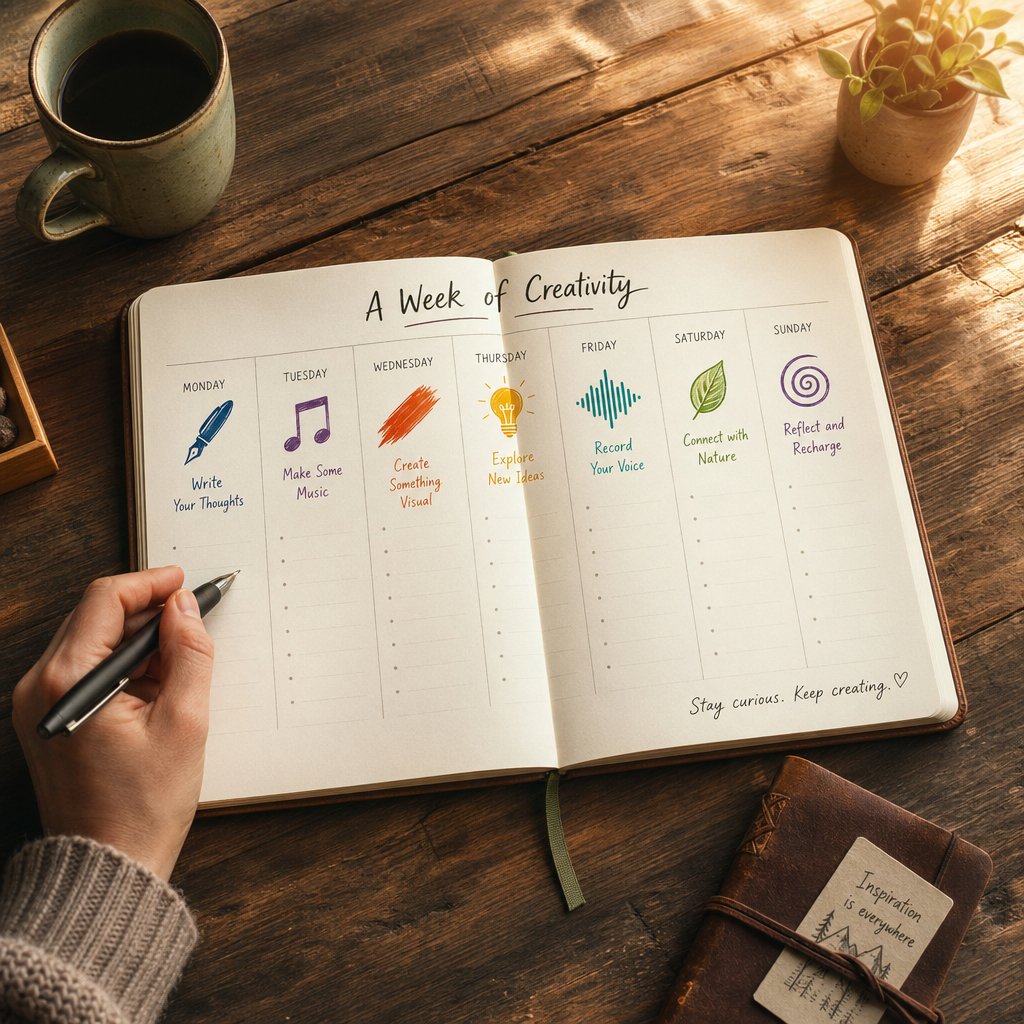
A Seven-Day Prompt Challenge to Build Momentum
Wondering what to right a song about tomorrow? Don't leave it to chance. This seven-day challenge assigns one prompt per day, each from a different category, so you cycle through multiple creative muscles in a single week. The goal is volume and momentum, not perfection — even a rough four-line fragment counts as a win.
- Day 1 — Title-First: Pick a phrase from your idea repository (or invent one on the spot) and write the song it belongs to. Start with just a verse and chorus.
- Day 2 — Constraint-Based: Write a complete verse using only one-syllable words. Notice how the limitation forces unexpected word choices.
- Day 3 — Genre Challenge: Pick a genre you never write in and use a genre-specific prompt from earlier. A pop writer tries a country narrative prompt; a rapper tries an indie atmosphere prompt.
- Day 4 — Scenario and Character: Write from the perspective of someone in a situation you've never been in. Give them a voice that isn't yours.
- Day 5 — Emotion and Mood: Capture a single feeling — the tension before a phone rings, the relief after a hard conversation ends — without naming the feeling directly.
- Day 6 — Object and Image: Find a physical object in your environment and build a verse around it using sensory detail. Smell, texture, sound — not just sight.
- Day 7 — Freewrite and Harvest: Set a 15-minute timer with no prompt at all. Freewrite, then extract the strongest line and use it as tomorrow's prompt. The cycle feeds itself.
Research from How to Write Songs confirms that even five to ten minutes of daily practice — sense writing, metaphor collisions, rhyme ladders — trains your brain to make creative connections faster over time. Pair that with habit stacking (attaching your prompt session to an existing daily routine, like right after your morning coffee) and you dramatically increase the odds of actually showing up. You don't need two hours. You need ten minutes and a system.
Tools That Help You Go From Prompt to Finished Song
The real value of a prompt practice compounds when you have a fast path from idea to execution. A notebook full of song ideas to write about is valuable. A notebook full of ideas that actually become finished songs is transformative.
Build your toolkit around closing that gap. Record voice memos the moment a melodic idea surfaces — and label them immediately with searchable tags so you're not scrolling through hundreds of unnamed clips later. Schedule a recurring 30-minute writing block that doesn't move, even if some sessions only produce fragments. Dodson recommends keeping that time pressure-free: do anything songwriting-related, whether it's critical listening, revising a verse, or running a prompt exercise.
When you want to hear how a prompt-generated idea actually sounds as a complete track — testing whether a theme, a set of lyrics, or a mood has real potential — MakeBestMusic's AI Song Generator lets you move from concept to fully realized song with minimal friction. Feed it the themes to write songs about that emerged from your freewrite, a rough lyric draft, or even just a mood direction, and hear it back as a produced track. It closes the loop between inspiration and output, making prompt sessions immediately productive rather than leaving fragments scattered across notebooks. Think of it as one piece of a complete creative toolkit — alongside your idea repository, your voice memos, your scheduled writing time, and the prompt taxonomy you now have in your back pocket.
The writers who produce consistently aren't waiting for lightning to strike. They're showing up with a prompt, a timer, and a system — and they're turning ideas for song themes into actual songs, one ten-minute session at a time. You have the framework. The only step left is picking a prompt and starting the clock.
