

Nu Wave or New Wave
You searched for "nu wave music" and now you're wondering: is this a genre, a revival movement, or just a creative respelling? The short answer is all three, depending on who's using it and when.
Nu Wave vs New Wave and Why the Spelling Matters
In most casual conversations, "nu wave" is simply an alternate spelling of "new wave," the genre responsible for some of the most popular 80s songs ever recorded. But the spelling shift isn't random. Contemporary producers and online communities have adopted "nu wave" as a deliberate tag, a way to signal something fresh: synth-driven, retro-flavored music that draws on the original movement's DNA while filtering it through modern production. Think of it as a waving sound from the past reaching forward into the present.
So if you've ever wondered how do new music genres come to be, this is a textbook case. A classic sound gets reinterpreted, a community forms around it, and a slightly different name helps distinguish the new thing from the old. "Nu wave" carries the spirit of the original while carving out its own lane. It's worth noting that this genre has nothing to do with new age music, the ambient, meditative style it sometimes gets confused with. The two couldn't be more different in energy and intent.
A Working Definition for New Listeners
Whether you call it nu wave or new wave, the core genre is the same. Here's a clean definition to anchor everything that follows:
New wave is a broad post-punk genre that emerged in the late 1970s, blending punk's rebellious energy with electronic experimentation, catchy pop melodies, and art-school sensibility. It encompasses everything from synth-pop and new romantic to dance-punk and beyond.
That breadth is exactly what makes the genre so fascinating and so hard to pin down. The same umbrella covers Talking Heads' art-funk grooves and the icy android synth-pop you hear when you look up gary numan cars lyrics. It spans great 80s songs that topped charts worldwide and obscure underground experiments that never left the basement.
This guide is built for anyone landing on the term for the first time or looking to go deeper, covering the genre's origins, its signature sound, the essential artists, and the top tracks of the 80s that defined it. The story starts in the grimy punk clubs of New York and London, where a handful of restless musicians decided three chords weren't enough.
How New Wave Emerged from Punk's Ashes
Those grimy clubs weren't just loud. They were laboratories. By the mid-1970s, the punk scenes in New York and London had torn rock music down to its studs, but a growing number of artists inside those scenes were already rebuilding with stranger, more ambitious materials.
From Punk Basements to the New Wave Label
Picture CBGB on a weeknight in 1977. Talking Heads are onstage, threading nervous art-funk through punk's raw framework. Down the bill, Blondie is folding disco and girl-group pop into something no one has a name for yet. Across the Atlantic, acts like Elvis Costello, the Jam, and Devo are pulling from power pop, ska, and conceptual art, stretching punk's boundaries until the seams show. These bands shared punk's anti-establishment attitude, but they rejected the idea that musicianship definition had to mean "keep it simple and sloppy." They wanted hooks, texture, and room to experiment.
The problem was branding. By the late 70/80 crossover years, radio programmers and club bookers were allergic to the word "punk." Enter Seymour Stein, head of Sire Records, who needed a friendlier label for the artists on his roster. Inspired by the French New Wave film movement, Stein started pitching his signings as "new wave" instead. The term stuck almost overnight. It gave radio stations permission to spin records by bands that still carried punk's edge but wrapped it in polished production and pop melody. What had been underground suddenly had a path to the mainstream.
Genre, Movement, or Marketing Term
Here's where things get genuinely debatable. Was new wave ever a coherent genre, or was it always a convenient marketing umbrella? Critics and musicians have argued both sides for decades. The sonic range alone makes a tight definition almost impossible. The same tag covered Talking Heads' polyrhythmic art-funk, Gary Numan's glacial synth-pop, the Go-Go's infectious power pop, and the reggae-inflected grooves of the Police. That's not one sound. That's a whole spectrum.
The most honest answer is that new wave was intentionally blurry. It functioned as a movement united by attitude, a shared willingness to borrow from funk, disco, reggae, ska, and electronic music without apology. The 80s new wave bands that followed inherited that openness, which is exactly why the genre's catalog feels so vast. For fans exploring 80's music today, or diving into musica de los 80 from across the globe, that blurriness is a feature, not a bug. It means there's always another corner of the sound to discover.
Still, attitude and marketing only explain so much. What truly set new wave apart was what happened in the studio: a specific set of production choices and sonic textures that made these records sound like nothing before them.
The Sonic Signature That Made New Wave Unmistakable
Plenty of 80 bands shared a stage and a record bin, but new wave acts sounded different from everything around them. That difference wasn't accidental. It was engineered through deliberate choices in instruments, effects, and studio philosophy that turned punk's raw garage energy into something sleek, electronic, and irresistibly catchy.
Synths, Drum Machines, and the Electronic Backbone
The synthesizer was the engine of the whole movement. Early polyphonic models like the Polymoog and the Sequential Circuits Prophet-5 gave artists access to lush pads, eerie string textures, and alien-sounding leads that no guitar could replicate. Gary Numan built his entire sonic identity around this approach. On The Pleasure Principle, he paired a Moog Minimoog Model D for bass and lead lines with the Polymoog's famous "Vox Humana" preset, a patch so tied to his sound that it became shorthand for his early work. Running those parts through an MXR Phase 100 added the filter-swept movement that made tracks like "Cars" feel both robotic and alive.
Underneath those synths, drum machines replaced the live drummer on many records. The Roland TR-808, released in 1980, offered kicks and snares that sounded unmistakably electronic, which was exactly the point. Its competitor, the LinnDrum (and its predecessor the LM-1), took the opposite approach, using digitally sampled real drum sounds for a cleaner, more polished feel that pop producers loved. Many of the best songs of the 80s blended both aesthetics, layering machine-precise rhythms with layered snare combinations from units like the Linn LM-1 and Boss DR-550 to get the right balance of punch and character. Producers often shaped these sounds with careful EQ cuts and lo-fi compression to achieve a punchy, vintage feel at tempos typically ranging from 110 to 125 BPM.
Guitar Effects and Production Philosophy
Guitars didn't disappear from new wave, but they transformed. Chorus and flanger pedals replaced punk's heavy distortion, producing shimmering, liquid tones that sat politely in the mix instead of dominating it. Think of Andy Summers' crystalline arpeggios in the Police or the jangly brightness of the Psychedelic Furs. The guitar became a texture instrument, adding color rather than aggression.
The broader production philosophy followed the same logic: clean, bright, and controlled. Where punk records embraced lo-fi grit as a badge of authenticity, new wave producers chased clarity. Vocals were upfront and dry or drenched in gated reverb. Mixes were sculpted with precision EQ, cutting muddy low-mids and letting synths and vocals breathe in the upper frequencies. The result was a sound that felt futuristic and pop-accessible at the same time.
Meanwhile, bands like Devo proved that sonic innovation wasn't limited to gear. Their quirky, deconstructed arrangements and conceptual art elements, most iconically the red energy dome headpiece, turned the wave nouveau aesthetic into a full sensory experience. The music was strange, the visuals were stranger, and the whole package challenged what a pop act could be. These production signatures became so recognizable that they've echoed forward for decades, providing the sonic vaporwave background for retro-electronic movements and inspiring countless 80 music hits compilations that keep the sound alive for new listeners.
| Instrument / Technique | Characteristic Sound | Notable Example |
|---|---|---|
| Polyphonic Synthesizer (Polymoog, Prophet-5) | Lush pads, ethereal string textures, "Vox Humana" vocal tones | Gary Numan – "Cars" |
| Minimoog Model D | Thick analog bass, cutting lead melodies | Gary Numan – "Are 'Friends' Electric?" |
| Roland TR-808 | Punchy electronic kicks, crisp hi-hats, synthetic claps | Afrika Bambaataa – "Planet Rock" |
| LinnDrum / LM-1 | Sampled real-drum sounds with clean, polished feel | The Human League – "Don't You Want Me" |
| Chorus / Flanger Guitar Pedals | Shimmering, liquid guitar tones replacing raw distortion | The Police – "Every Breath You Take" |
| Gated Reverb on Drums | Big, explosive snare with abrupt cutoff | Phil Collins / Peter Gabriel era production |
| MXR Phase 100 | Filter-swept, swirling synth movement | Gary Numan – The Pleasure Principle |
These weren't just technical choices. They were aesthetic declarations. Every chorus-drenched guitar chord and every programmed drum pattern said the same thing: the future is here, and it has a hook. That combination of innovation and accessibility is what drew such a wide range of artists into the genre's orbit, from art-school experimentalists to arena-filling pop stars.
Essential New Wave Bands and Artists You Need to Know
Innovation means nothing without the people who push it forward. The production techniques covered above were powerful tools, but they only mattered because a remarkably diverse cast of artists picked them up and made something personal. What follows is a guided tour through the new wave bands that defined the genre, organized by the role each group played in shaping the sound from the late 70 80 crossover years through the movement's commercial peak.
The Foundational Acts Who Built the Sound
Every genre has its architects, and new wave's were a gloriously mismatched bunch. Talking Heads sit at the top of most critical lists for good reason. David Byrne's twitchy vocals, the band's fusion of punk, funk, art rock, and world music, and landmark albums like Remain in Light made them the genre's most artistically celebrated act. They proved that new wave could be intellectually ambitious without sacrificing danceability.
Blondie took a different route to the same destination. Debbie Harry and company fused CBGB punk attitude with girl-group pop, disco, and even early rap on "Rapture," wrapping it all in a radio-friendly package. Hits like "Heart of Glass," "Call Me," and "One Way or Another" made them superstars, but their real contribution was showing how many genres could coexist under one roof.
Then there was Devo, rock's favorite conceptual provocateurs from Akron, Ohio. Their deconstructed arrangements and satirical worldview, skewering consumerism on "Freedom of Choice" and American optimism on "Whip It," gave new wave its sharpest intellectual edge. And the Cars brought power-pop hooks to the equation with a wry sense of humor, delivering polished gems like "Just What I Needed" and "My Best Friend's Girl" that balanced quirky wordplay with shimmering production.
- Talking Heads – art-funk pioneers, genre-blending visionaries
- Blondie – punk-to-pop crossover, multi-genre trailblazers
- Devo – conceptual art-rock satirists, sonic deconstructionists
- The Cars – power-pop perfectionists, masters of the polished hook
- Elvis Costello – literate punk-pop songwriter, early new wave catalyst
- The Police – reggae-rock-new wave fusion, global arena act
Synth-Pop Pioneers and New Romantic Icons
As synthesizer technology became more accessible in the early 80s, a wave of UK artists built entire identities around electronic instrumentation. Depeche Mode explored the dark, seedy underbelly of synth-pop, wrapping taboo subjects like sadomasochism and drug-fueled euphoria in hooks catchy enough for mainstream radio. Their sophistication as songwriters set them apart from nearly every other 1980s musician working in the electronic space.
Gary Numan had already blazed that trail a few years earlier. "Cars" sat comfortably on playlists next to Queen and Boston, a synth-driven track that even rock purists couldn't resist. Orchestral Manoeuvres in the Dark (OMD) offered a more melodic, bittersweet take on synth-pop, with "Enola Gay" becoming an underground classic before the duo broke through to the US Top Ten. And Soft Cell turned Gloria Jones' 1964 soul track "Tainted Love" into an electronic anthem that spent 43 weeks on the Billboard Hot 100.
The new romantic wing pushed the visual side even further. Duran Duran fused the Sex Pistols' energy with Chic's groove, delivering an unrivaled run of hits: "Rio," "Hungry Like the Wolf," "Girls on Film." Their MTV-ready glamour made them global icons, but the musicianship underneath the tailored suits was real. Spandau Ballet brought a soulful sophistication with "True," while Adam Ant introduced the Burundi-beat-meets-rockabilly rhythm that gave new romanticism its most distinctive percussive signature. If you've ever stumbled across cubism lyrics while exploring the era's art-influenced songwriting, you'll recognize the same impulse: borrow from high culture, remix it, make it dance.
- Depeche Mode – dark electronic pop, lyrical depth beneath the hooks
- Gary Numan – android synth-pop pioneer, commercial breakthrough artist
- OMD – melodic, emotionally rich synth-pop
- Soft Cell – electronic soul, masters of the dramatic cover
- Duran Duran – new romantic glamour, MTV-era hitmakers
- Spandau Ballet – soulful synth-pop sophistication
- Adam Ant – visual showmanship, genre-crossing rhythms
Crossover Stars and Beloved One-Hit Wonders
New wave's commercial peak produced artists who carried the sound far beyond the underground. The Go-Go's made history in 1981 as the first all-female band to write, play, and top the Billboard chart with their debut Beauty and the Beat. Cyndi Lauper's She's So Unusual fused new wave energy with pure pop joy, and Eurythmics paired Annie Lennox's powerhouse vocals with Dave Stewart's innovative production for a sound that transcended easy categorization.
Equally important to the genre's character were the one-hit wonders, acts that delivered a single unforgettable moment and then faded. A Flock of Seagulls gave us "I Ran (So Far Away)" and Mike Score's iconic hair, both of which became visual shorthand for the entire era. Re-Flex scored with "The Politics of Dancing." Modern English delivered "I Melt With You," a track that outlived the band's chart presence by decades. Missing Persons, with Dale Bozzio's sci-fi fashion and the band's angular energy, personified the genre's look and feel. These acts remind you that new wave wasn't just a sound. It was a moment, and sometimes one perfect song was enough to claim a permanent spot in it.
For listeners exploring musica de los 80 en espanol, it's worth noting that the crossover energy wasn't limited to English-speaking markets. The genre's infectious hooks and visual flair translated globally, inspiring parallel scenes that we'll explore shortly.
If you're looking for a starting point, here are ten top 80's tracks that capture the full range of what these artists achieved, from art-punk tension to pure synth-pop bliss:
- Talking Heads – "Once in a Lifetime" (existential art-funk at its peak)
- The Cure – "Just Like Heaven" (rapturous pop from new wave's darker edge)
- Duran Duran – "Rio" (new romantic glamour in full effect)
- Tears for Fears – "Everybody Wants to Rule the World" (thinking person's pop perfection)
- Depeche Mode – "Personal Jesus" (dark electronic hooks meet mainstream appeal)
- Blondie – "Heart of Glass" (punk meets disco in a genre-defining collision)
- Gary Numan – "Cars" (the synth-pop blueprint, accessible and strange)
- Eurythmics – "Sweet Dreams (Are Made of This)" (Annie Lennox's voice over a relentless synth riff)
- A Flock of Seagulls – "I Ran (So Far Away)" (pure new wave atmosphere and melody)
- Soft Cell – "Tainted Love" (electronic soul that never gets old)
That list barely scratches the surface. The genre's catalog runs deep enough that you could build entirely separate playlists for each tier and still have tracks left over. Which raises a natural question: with so many sounds living under one label, where exactly do the subgenres begin and end?
Inside the Subgenres from Synth-Pop to Coldwave
The answer to that question depends on who you ask and when you ask them. New wave music was never a single sound. It was a loose federation of subgenres, each with its own sonic personality, fashion code, and emotional temperature. Understanding those internal divisions is the difference between scratching the surface and actually navigating the genre with confidence.
Synth-Pop, New Romantic, and Coldwave Explained
Synth-pop is the subgenre most people picture first: melody-forward electronic pop built on sequenced synthesizers, drum machines, and danceable rhythms. Acts like Depeche Mode, the Human League, and Pet Shop Boys defined this lane. It was polished, catchy, and commercially dominant. If you grew up hearing 80's rock radio bleed into electronic territory, synth-pop was usually the bridge.
The new romantic movement overlapped heavily with synth-pop in sound but added a visual dimension that was just as important as the music. Born in London's Blitz nightclub scene around 1979, new romanticism was fashion-driven, theatrical, and deliberately glamorous. Duran Duran, Spandau Ballet, and Visage were its flagship acts. As a 1981 BBC Newsnight broadcast put it, "If punk was all about rebellion, the New Romantics are all about style." The music leaned on synth-based electro-pop, but the real statement was made on the body: androgynous makeup, Regency-era ruffles, pirate chic, and futuristic silhouettes all coexisted on the same dance floor.
Coldwave took the emotional temperature in the opposite direction. First coined by British writer Vivien Goldman in a review of Siouxsie and the Banshees' The Scream, the term described music that felt frigid, desolate, and tinged with hopelessness. Joy Division's entire catalog fits here, as does early Cure material like Seventeen Seconds. The style gained particular traction in France and Belgium during the early 80s, with acts like Ruth, Charles de Goal, and Memorial Voice adapting the template to continental European sensibilities.
Minimal wave stripped things down even further. These were lo-fi underground synth experiments, often recorded on cheap equipment in bedrooms and released on cassette. The subgenre wasn't even formally recognized until 2005, when New York's Minimal Wave Records began archiving and reissuing these obscure recordings. If you're a teen who exclusively listens to 70s music and you're curious about what happened next, minimal wave is a fascinating entry point because it shares that era's DIY spirit while pointing toward the electronic future.
Where New Wave Ends and Post-Punk Begins
Two more subgenres round out the family tree. Dance-punk fused post-punk's angular guitar work with funk and disco rhythms, producing a sound that was cerebral and physical at the same time. Gang of Four and Liquid Liquid were early architects; LCD Soundsystem would later carry the torch into the 2000s. No wave, by contrast, rejected accessibility entirely. This short-lived late-1970s NYC movement, documented on the 1978 compilation No New York, produced discordant, quirky sounds that drew on jazz, punk, experimental noise, and blues. Acts like Bush Tetras, Lounge Lizards, and Klaus Nomi defied popular appeal on purpose.
Gothic rock occupied the darkest edge of the spectrum, sharing DNA with both coldwave and post-punk. The Sisters of Mercy, Bauhaus, and the Danse Society traded in slower tempos, deeper vocals, and intense lyrical content. Some of these acts could just as easily appear on a punk music of the 80s playlist as a goth one, which illustrates the core truth about these categories: the boundaries were always contested and fluid. Even the line between new wave and post-punk is genuinely blurry. Bands like Wire and Public Image Ltd. get filed under both labels depending on which album you're discussing. Trying to draw hard borders here is like trying to separate the wham strain of pop energy from the darker undercurrents running through the same era. The sounds bled into each other because the artists themselves refused to stay in one lane.
The table below maps these subgenres into a quick-reference taxonomy. Use it as a starting point, not a rulebook.
| Subgenre | Sonic Characteristics | Key Artists | Mood / Aesthetic |
|---|---|---|---|
| Synth-Pop | Sequenced synths, drum machines, catchy melodies, danceable rhythms | Depeche Mode, Human League, Pet Shop Boys, OMD | Bright, polished, futuristic pop |
| New Romantic | Synth-based electro-pop, lush production, emphasis on visual presentation | Duran Duran, Spandau Ballet, Visage, Adam Ant | Glamorous, theatrical, fashion-forward |
| Coldwave | Minimal synths, sparse arrangements, deep vocals, bleak atmospheres | Joy Division, early Cure, Ruth, Charles de Goal | Frigid, desolate, introspective |
| Minimal Wave | Lo-fi synths, cassette-quality recording, stripped-down structures | Trisomie 21, Oppenheimer Analysis, Deux | Underground, raw, experimental |
| Dance-Punk | Angular guitars, funk bass, disco rhythms, post-punk tension | Gang of Four, Liquid Liquid, Delta 5 | Cerebral, rhythmic, politically charged |
| No Wave | Dissonant, atonal, jazz-punk-noise collisions, anti-commercial | Bush Tetras, Lounge Lizards, DNA, Klaus Nomi | Abrasive, avant-garde, confrontational |
| Gothic Rock | Slower tempos, heavy reverb, deep baritone vocals, dark guitar textures | Bauhaus, Sisters of Mercy, Siouxsie and the Banshees | Dark, dramatic, romantically macabre |
What's striking about this taxonomy is how much geographic variation it conceals. Coldwave sounded different in Lyon than it did in Leeds. Synth-pop took on entirely different flavors in Dusseldorf, Tokyo, and Melbourne. Some of the most interesting chapters in the genre's story played out far from the US-UK axis, and many of those 1970s one hit wonders who first sparked the post-punk flame inspired regional movements that reshaped the sound in ways London and New York never anticipated.
Global Scenes and the Genre's Rise and Fall
Those regional movements didn't just echo what was happening in London and New York. They talked back to it, filtered it through local languages and traditions, and sometimes outpaced the originals in sheer inventiveness. From Melbourne to Tokyo to Dusseldorf, 80s new wave became a genuinely global language spoken in dozens of local dialects.
New Wave Beyond the US and UK
Australia's contribution was massive and commercially potent. INXS fused funk, new wave, and rock into a stadium-ready sound that made Michael Hutchence one of the era's most magnetic frontmen. Men at Work scored a worldwide smash with "Down Under," a waving song of national identity wrapped in reggae-tinged new wave. Midnight Oil channeled post-punk urgency into politically charged anthems, while Icehouse delivered sleek synth-pop that rivaled anything coming out of Britain. These acts didn't just participate in the movement. They dominated international charts and proved that new wave music artists didn't need a London or New York postcode to matter.
- INXS – funk-rock-new wave fusion, global arena act
- Men at Work – quirky pop-new wave, chart-topping crossover
- Midnight Oil – politically charged post-punk energy
- Icehouse – polished synth-pop with cinematic scope
- The Church – jangly, atmospheric guitar-driven new wave
Germany's Neue Deutsche Welle (New German Wave) was arguably the most radical regional adaptation. Young bands in Berlin, Hamburg, and Dusseldorf picked up on both Anglo-American post-punk and homegrown krautrock pioneers like Neu! and Kraftwerk, then insisted on singing in German at a time when nearly every German act was courting Anglo acceptance. The result was an edgy, politically charged scene that couldn't have existed anywhere else, shaped by the sociopolitical tension of a country still living in the shadow of the Berlin Wall. Deutsch Amerikanische Freundschaft (D.A.F.) pioneered a fiercely rhythmic electronic body music. Einsturzende Neubauten literally made music with power tools and construction materials. And when Nena's "99 Luftballons" broke through internationally in 1983, it became one of the defining hit 80s music moments of the decade, even for listeners who didn't understand a word of German.
- Nena – pop-friendly NDW, international breakthrough
- D.A.F. – electronic body music, stripped-down intensity
- Einsturzende Neubauten – industrial noise, radical experimentation
- Der Plan – subversive synth-pop, art-damaged weirdness
- Palais Schaumburg – post-punk funk, guitar-less electronic attack
- Grauzone – dark minimal synth, unlikely chart success with "Eisbar"
Japan's scene took a different path entirely. Yellow Magic Orchestra debuted in 1978 and their synthesizer-based music captured the imagination of an entire nation, with tracks like "Firecracker" and "Rydeen" becoming so ubiquitous they soundtracked elementary school sports festivals. YMO's success triggered what became known as "techno kayo," a fusion of electronic production with Japanese pop songwriting. Each YMO member became an in-demand producer, and their influence accelerated the adoption of synths and drum machines across the Japanese music industry. P-Model brought a more angular, punk-influenced approach, while the Plastics blended new wave with playful pop-art aesthetics that earned them a following in New York's downtown scene. Japanese instrument manufacturers like Roland, Korg, and Yamaha responded to the boom by releasing affordable synthesizers and drum machines, a development that would democratize electronic music production worldwide.
- Yellow Magic Orchestra – technopop pioneers, cultural phenomenon
- P-Model – angular, experimental synth-punk
- The Plastics – pop-art new wave, international crossover
- Hikashu – avant-garde technopop, theatrical performance
France, Spain, and Latin America each developed their own variations. French coldwave acts like Kas Product and Martin Dupont pushed the genre's darker edges, while Spain's Movida Madrilena produced bands like Mecano and Alaska y Dinarama who blended synth-pop with post-Franco cultural liberation. In Latin America, acts like Soda Stereo in Argentina and Fobia in Mexico adapted the template to Spanish-language rock traditions, creating songs from the 80s that remain beloved across the continent. These weren't imitations. They were genuine reinterpretations, proof that the genre's core impulse, merging punk attitude with electronic experimentation, was universal enough to thrive in any cultural soil.
- Kas Product – French coldwave, confrontational electronics
- Mecano – Spanish synth-pop, Movida Madrilena icons
- Soda Stereo – Argentine new wave rock, continental influence
- Los Prisioneros – Chilean synth-punk, politically charged
The Fall from Grace and Critical Reappraisal
By the mid-1980s, the very openness that made new wave so vibrant started working against it. Major labels, smelling money, flooded the market with increasingly formulaic synth-pop acts. The sound that once felt daring became wallpaper. As NDW pioneer Alfred Hilsberg told Vice, "The people weren't buying anything innovative or difficult anymore." The same pattern played out globally: what began as a punk rave of creative energy curdled into safe, overproduced pop. Critics dismissed the genre as superficial and overly commercial. By 1987, guitar-driven alternative rock and the emerging grunge movement were pulling attention in the opposite direction.
The reassessment came slowly, then all at once. Through the 1990s, artists like Elastica and No Doubt openly cited new wave influences, and compilations of top songs of the 80s introduced the sound to a generation that had missed it the first time. By the early 2000s, bands like Interpol, Franz Ferdinand, and the Killers were building entire careers on post-punk and new wave revival. The genre that critics had buried was suddenly everywhere again, not as nostalgia but as a living influence shaping the sound of contemporary music.
That influence didn't stop at revival bands playing retro riffs. It seeped into genres that, on the surface, sound nothing like an 80s new wave record, rewiring pop, indie, and electronic music in ways the original artists could never have predicted.
How New Wave Shaped the Music You Hear Today
That rewiring runs deeper than most listeners realize. You might not think of LCD Soundsystem, The Weeknd, or CHVRCHES as new wave acts, and technically they aren't. But strip away the modern production gloss and you'll find the same DNA: synth-driven melodies, post-punk rhythmic tension, and a willingness to treat the studio as an instrument. The original movement didn't just influence what came after. It provided the genetic code that new new wave bands and contemporary pop producers keep recombining in fresh configurations.
From Indie Pop to Hyperpop and the New Wave Thread
The most direct line runs through indie pop and indie electronic. LCD Soundsystem built an entire career on the blueprint New Order laid down by fusing post-punk with dance music, then layered in Talking Heads' nervous energy and a self-aware lyrical wit that felt distinctly 21st century. James Murphy didn't hide the influence. He celebrated it, turning "All My Friends" into a seven-minute synth-and-piano build that could sit comfortably on any 80s songs list yet sounds unmistakably modern.
MGMT followed a parallel path with "Kids" and "Electric Feel," wrapping psychedelic textures around synth-pop hooks that owed as much to OMD as to the Flaming Lips. Passion Pit pushed the formula further into euphoric territory, layering falsetto vocals over dense electronic arrangements that recalled the bright, clean production philosophy of the original movement. These acts proved that new wave's sonic toolkit wasn't a museum piece. It was a living resource.
Dream pop and shoegaze carry the thread in a subtler way. Cocteau Twins emerged directly from the post-punk and new wave ecosystem of the early 80s, and Elizabeth Fraser's ethereal vocals over Robin Guthrie's effects-drenched guitar became the template for an entire genre. Beach House picked up that baton decades later, building hazy, reverb-soaked soundscapes that echo new wave's love of atmosphere and texture without ever sounding like a retro act. The connection is tonal rather than structural, a shared belief that mood matters as much as melody.
Modern synth-pop makes the lineage even more explicit. CHVRCHES arrived in 2013 with "The Bones of What You Believe," an album that channeled Depeche Mode's dark hooks and the Human League's pop precision through crisp digital production. Grimes built an entire aesthetic universe from lo-fi synth experiments that recalled minimal wave's DIY spirit. And The 1975, whose visually rich music videos and 80s production references have made them one of the decade's most successful acts, treat the new wave bands of the 80's catalog like a creative buffet, borrowing freely from synth-pop, new romantic, and post-punk depending on the album cycle.
Hyperpop and experimental electronic music represent the most radical recombination. Artists like 100 gecs and A.G. Cook take the same impulse that drove Devo's deconstructed pop, the desire to make something that sounds simultaneously catchy and deeply strange, and accelerate it through Auto-Tune, glitch production, and internet-age irony. The result is music that can feel creepy and upbeat rock music at the same time, a disorienting blend of sugar and static that owes more to new wave's experimental wing than most critics acknowledge.
Mainstream pop has absorbed the influence just as thoroughly. The Weeknd's "Blinding Lights" is the most obvious example, a retro-synth anthem that channels the gated reverb and pulsing arpeggios of peak-era new wave into a global number-one hit. Dua Lipa's Future Nostalgia fused nu-disco with new wave themes, creating what Vantage Magazine described as a new wave of music filtered through modern pop sensibility. Even Bruno Mars has drawn from the Minneapolis sound, the synth-pop microgenre Prince pioneered in the late 70s. The throughline is clear: the production signatures and songwriting instincts that defined new wave didn't disappear when the genre fell out of fashion. They went underground, cross-pollinated, and resurfaced everywhere.
Synthwave, Vaporwave, and Aesthetic Nostalgia
If indie and pop artists absorbed new wave's DNA unconsciously, the synthwave and vaporwave movements did it on purpose. Synthwave, sometimes stylized as s y n t h w a v e in online communities, is an entire genre built on explicit reverence for the original sound. Artists like Kavinsky, Perturbator, and The Midnight reconstruct the gated drums, analog synth pads, and cinematic atmospheres of 80s film scores and new wave records with painstaking fidelity. The music is often paired with neon-drenched, retro-futuristic visuals that reference the same era, creating a complete aesthetic package that functions as both tribute and reinvention.
Vaporwave takes a more subversive approach. Where synthwave celebrates the 80s with genuine affection, vaporwave remixes the era's cultural artifacts through a lens of irony and critique, slowing down smooth jazz and elevator music, layering in glitchy digital textures, and wrapping everything in pastel gradients and Greek statuary. It's nostalgia turned inside out. The visual identity, neon pinks, VHS scan lines, pixelated palm trees, borrows directly from the same retro-futuristic palette that new wave pioneered, but reframes it as commentary on consumer culture and digital decay.
Both movements illustrate something fundamental about how new genres come to be. New wave itself was born from recombining punk's energy with electronic experimentation and pop melody. Synthwave and vaporwave repeat that process one generation later, recombining new wave's sonic and visual vocabulary with modern production tools and internet-era distribution. The raw materials change, but the creative mechanism stays the same: take what came before, break it apart, and reassemble it into something that feels like it belongs to right now.
That mechanism is more accessible than ever. The same affordable synthesizers and digital tools that power synthwave producers in their bedrooms have opened the door to an entirely new generation of creators who want to make music that channels the spirit of the original movement, often under a name the original artists never used: nu wave.
The Nu Wave Revival and Making the Sound Your Own
That new generation isn't waiting in the wings. It's already here, scattered across SoundCloud pages, Bandcamp catalogs, and TikTok feeds, tagging tracks with "nu wave" to signal something specific: music that channels the synth-driven spirit of the original movement but runs it through modern production sensibilities and internet-native distribution. The spelling isn't an accident. It's a flag planted by artists who love the source material but have no interest in being mistaken for a tribute act.
The Modern Nu Wave Movement Online
Scroll through nu wave playlists on streaming platforms and you'll find a community that treats 70s and 80s music not as nostalgia but as raw material. These artists grew up hearing their parents play 80s music in the car, absorbing the gated reverb and arpeggiated synth lines before they knew what any of it was called. They pull equally from the angular tension of 80s punk and the polished sheen of synth-pop, blending those influences with modern genres like lo-fi, hyperpop, and bedroom R&B. The result is music that feels familiar and foreign at the same time, recognizably rooted in the 1980's rock style yet shaped by tools and platforms the original artists never had access to.
Online communities on Reddit, Discord, and genre-specific forums have accelerated this revival by curating deep cuts, sharing production tutorials, and debating what counts as "authentic" nu wave versus simple retro pastiche. It's the same kind of grassroots energy that fueled punk music in the 80s, just relocated from zine culture to group chats. The democratization isn't only about taste-making, though. It's about creation.
Bedroom Producers and AI-Powered Creation
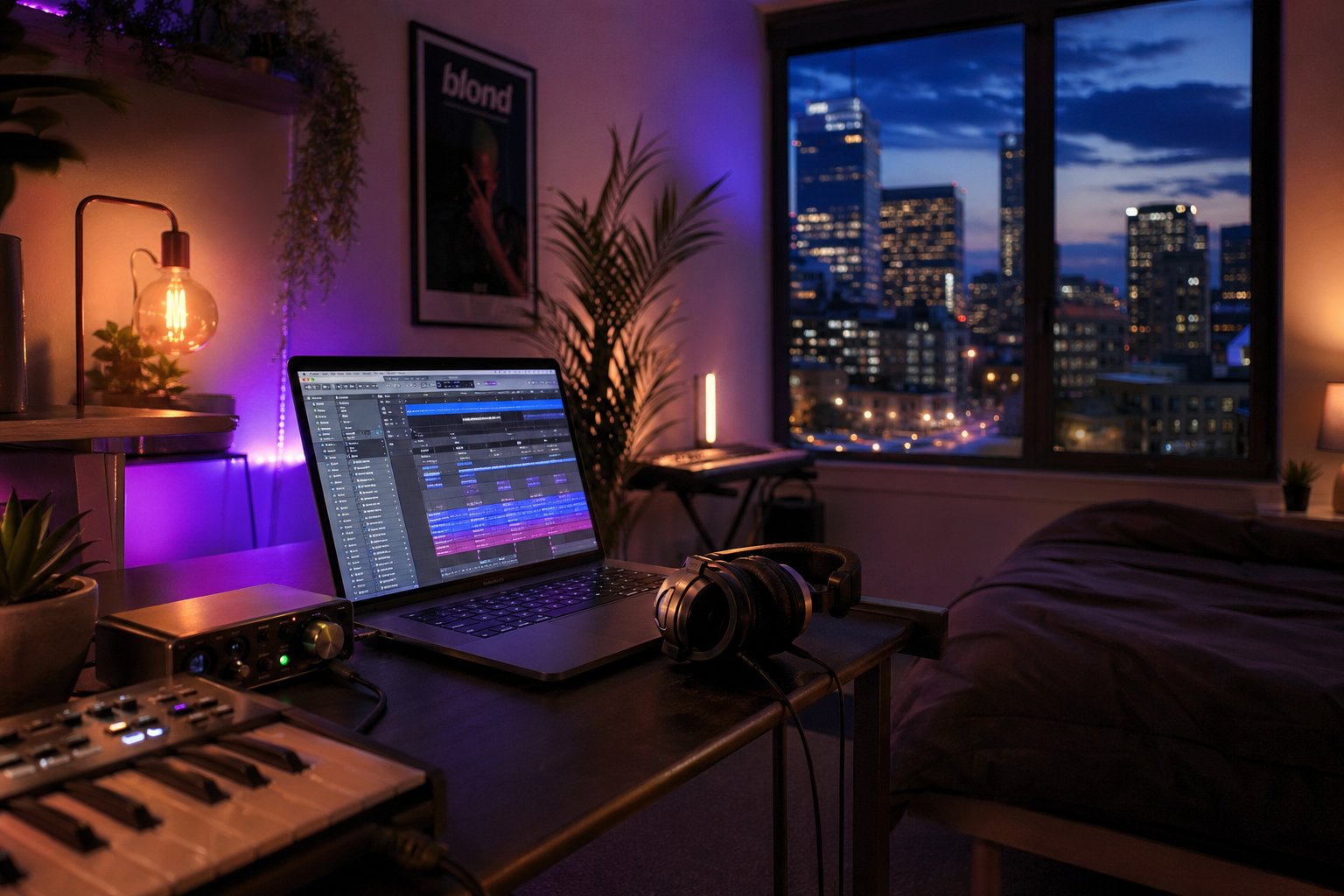
The original new wave movement was partly defined by its DIY ethos. Bands like Devo and early Depeche Mode proved you didn't need a symphony orchestra to make compelling music. You needed a synth, an idea, and the nerve to try something weird. That same spirit drives today's bedroom producers, except the barrier to entry has dropped dramatically. A laptop running a DAW like Ableton or FL Studio, a MIDI controller, and a handful of software synths is enough to build a track that rivals what required a full studio in 1982.
AI-powered music tools have pushed that accessibility even further. As Output's editorial team notes, the best AI tools in music production handle tedious tasks like sample discovery and variation generation while leaving creative decisions to the human behind the screen. For someone exploring the nu wave sound, this means faster experimentation: you can audition synth textures, test drum patterns, and iterate on arrangements without getting bogged down in technical friction. Tools like MakeBestMusic's AI Song Generator take the concept a step further, letting you turn a genre idea or mood description into an original royalty-free track in seconds. Imagine typing "dark synth-pop, 80s rock style, melancholic" and getting a starting point you can build on, remix, or use as inspiration for your own production. It's not a replacement for craft. It's a sketchpad that removes the blank-page problem.
This convergence of accessible hardware, powerful software, and AI-assisted workflows means the nu wave revival isn't limited to listeners or curators. Anyone who connects with the sound can become a creator. The bedroom studio revolution that's reshaping electronic music broadly has found a natural home in the nu wave space, where the whole point has always been merging punk-era independence with electronic experimentation. The tools have changed. The impulse hasn't.
With the creative barriers lower than ever, the real question shifts from "how do I make this sound?" to "where do I start listening?" Whether you're deep into the revival or just discovering the genre, a well-curated entry point makes all the difference.
Where to Start Your Nu Wave Discovery
A curated starting point beats a random deep dive every time. The tracks below span the full emotional range of new wave music 80's fans celebrate, from icy synth minimalism to euphoric dance-floor anthems. Think of this as a listening path, not a ranking. Each song opens a door to a different corner of the genre.
Ten Classic Tracks to Start Your Journey
- The Cure – "Just Like Heaven" (rapturous guitar-pop, the genre's romantic peak)
- Talking Heads – "Once in a Lifetime" (art-funk existentialism meets world-music grooves)
- Gary Numan – "Cars" (the android synth-pop blueprint)
- Tears for Fears – "Everybody Wants to Rule the World" (one of pop music best moments, deceptively deep beneath the melody)
- Joy Division – "Isolation" (coldwave tension, electronic drums, raw emotion)
- Blondie – "Heart of Glass" (punk-to-disco crossover, dance music of the eighties before the eighties even started)
- Soft Cell – "Tainted Love" (electronic soul that defined a generation)
- Duran Duran – "Rio" (new romantic glamour at full sail)
- Devo – "Whip It" (quirky conceptual pop from the band behind the iconic devo hats)
- A-ha – "Take on Me" (synth-pop perfection fused with a groundbreaking video)
Once those ten tracks are under your skin, branch out by mood. If the darker cuts pulled you in, follow the coldwave thread through Siouxsie and the Banshees and early Depeche Mode. If the danceable energy hooked you, chase the groove through New Order's "Blue Monday" and the Tom Tom Club's "Genius of Love." New wave artists covered so much ground that your personal taste will naturally guide you toward the subgenre that fits.
Modern Nu Wave Artists and Playlists Worth Following
The revival side of the genre is just as rich. These contemporary acts and curators carry the sound forward without simply photocopying it:
- The Midnight – cinematic synthwave with vocal hooks that recall peak-era new wave
- CHVRCHES – sharp, dark synth-pop with modern production clarity
- Boy Harsher – minimal wave revivalists with a coldwave edge
- Molchat Doma – Belarusian post-punk channeling Soviet-era tension through synth-driven arrangements
- The Safety Word – dreamy Australian synthwave blending emotional depth with retro sonics
- Spotify playlists: search "nu wave," "new wave revival," or "synthwave essentials" for algorithmically updated collections
Don't stop at the music. Half the genre's magic lives in its visual identity. The bold album art by designers like Peter Saville and Malcolm Garrett, the fashion choices from hang loose bands who mixed surf-culture ease with angular post-punk style, the loose permanent wave hairstyles and asymmetric cuts that became the era's visual shorthand: all of it shaped how the music was experienced. Explore Andrew Krivine's Reversing Into the Future for a deep dive into the graphic design side, and browse vintage music video compilations on YouTube to see the aesthetic in motion.
After absorbing the sound and the look, the natural next step is making something of your own. The whole genre was built on the idea that you didn't need permission or a massive budget to create. That ethos is more alive than ever. Fire up a DAW, experiment with a software synth, or try MakeBestMusic's AI Song Generator to turn a mood or genre idea into a starting point you can shape into something personal. The best way to understand nu wave music isn't just to listen. It's to play.
