

What Is Regueton and Why the Spelling Matters
Reggaeton is a Latin urban music genre born from the fusion of Jamaican dancehall, hip-hop, and Caribbean rhythms. Built on a syncopated beat called the dembow, it blends rapid-fire vocal delivery with electronically produced percussion, and it has grown from underground cassette tapes in San Juan to the most-streamed sound on the planet. Whether you searched for regueton, regaetón, reguiton, or even rigaton, you landed in the right place. They all describe the same genre.
Reguetón vs Reggaeton and Why Both Spellings Exist
Here is where it gets interesting. The word "reggaeton" entered English as a phonetic adaptation of the Spanish original, and Merriam-Webster defines it as "popular music of Puerto Rican origin that combines rap with Caribbean rhythms." In Spanish, though, the Real Academia Española (RAE) officially recognizes the spelling reguetón, tracing the term back to Panamanian DJ Michael Ellis, who coined it in the 1980s by fusing "reggae" with the Spanish augmentative suffix "-ón."
The RAE defines reguetón as "música de origen caribeño e influencia afroamericana, que se caracteriza por un estilo recitativo y un ritmo sincopado producido electrónicamente" -- Caribbean-origin music with Afro-American influence, characterized by a recitative style and an electronically produced syncopated rhythm.
So "reggaeton" dominates English-language searches and media, while "reguetón" is the standard in formal Spanish. Alternate spellings like reguerom or rigaton are simply common misspellings that point to the same genre. No matter how you type it, the beat hits the same way.
A Quick Definition for New Listeners
Imagine a kick drum punching through your chest on every downbeat while a snare snaps on the offbeat, all looped at roughly 90 BPM. Layer in Auto-Tuned vocals, bilingual hooks, and ad-libs like "dale" or "prra," and you have the skeleton of reggaeton music. It is a sound shaped equally by the housing projects of Puerto Rico and the dancehall clubs of Panama, carrying decades of Afro-Latino identity in every bar. During the time of Puerto Rico's underground cassette era in the early 1990s, this rhythm was already rewriting the rules of Latin pop from the margins.
What This Guide Covers
This guide traces the full arc of the genre, from its Panamanian and Puerto Rican roots through the dembow beat's anatomy, its expanding family of subgenres, the artists and producers who built it, essential tracks every listener should know, the dance culture inseparable from the music, and the way it conquered global pop. Consider it your complete entry point into a sound that refuses to stay underground.
Where Reggaeton Really Came From
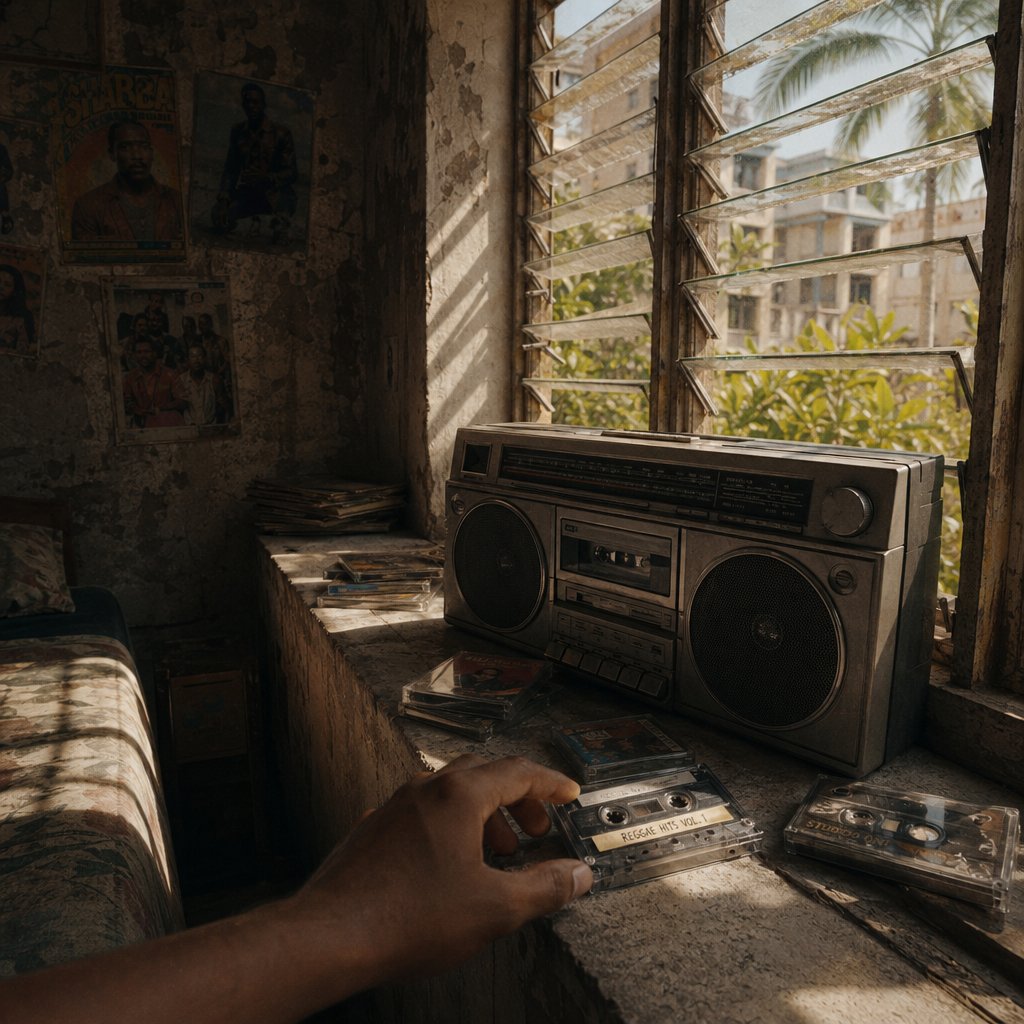
That syncopated rhythm did not appear out of thin air. It traveled across oceans, through canal construction camps, over neighborhood sound systems, and inside hand-dubbed cassette tapes before it ever reached a recording studio. Reggaeton's origin story has two chapters, and they unfold in two different countries.
Jamaican Dancehall Meets Panama
Throughout the 19th century, waves of Afro-Caribbean immigrants arrived in Panama from Jamaica, Barbados, and the Antilles, drawn by the promise of work on the trans-Isthmus railroad and later the Panama Canal. They brought English, Jamaican Patois, and the sounds of mento, ska, and dancehall with them. Inside the Canal Zone, the U.S. enforced a segregation system that split workers into "gold roll" (white) and "silver roll" (Black), reserving the most dangerous jobs and the worst living conditions for Afro-Panamanian and West Indian laborers.
That shared experience of racial oppression pushed two distinct Black communities -- Spanish-speaking Afro-Panamanians and English-speaking West Indians -- into close proximity, even when cultural tensions kept them apart. By the 1960s and 1970s, Jamaican reggae subgenres were circulating through Panama's neighborhoods. It did not take long for local artists to start rapping over those riddims in Spanish, creating what became known as reggae en español. The Panamanian artist Renato is widely credited with releasing the first track in this new style, "El D.E.N.I.," in 1985 -- a protest anthem denouncing police brutality under Panama's military dictatorship. Meanwhile, El General was linking up with Jamaican and American producers in Brooklyn, bridging the Panamanian sound with New York's booming dancehall and hip-hop en español scenes.
This was not party music born in a vacuum. It grew directly out of the lived experience of marginalized Afro-Latino communities -- people who faced segregation, police violence, and economic exploitation, and who turned those realities into rhythm. Even the search term "rigaton" carries an echo of how organically the genre spread: through word of mouth, misspelled flyers, and hand-to-hand tape trades long before anyone tried to standardize the name.
Puerto Rico's Underground Cassette Era
The sound crossed the Caribbean and landed in Puerto Rico's housing projects, where a different but equally raw scene was taking shape. In the early 1990s, DJs in San Juan began fusing the Panamanian dancehall influence with New York hip-hop, freestyle, and electronic production. DJ Playero and DJ Negro (whose club night The Noise became legendary) were the architects. Playero would recruit unsigned MCs from the neighborhood -- teenagers like Daddy Yankee, Nicky Jam, and Tempo -- and record them over beats that blended dembow drums with boom-bap grit and electronic bass. These tracks were pressed onto cassettes and sold hand-to-hand across the island.
DJ Playero's underground mixtape series -- literally cassettes sold and traded on the streets of Puerto Rico -- made him a go-to producer for the early sound of reggaeton. He was there when perreo was stigmatized by authorities and had his releases raided by police.
Vico C, often called the father of Spanish-language rap in Puerto Rico, had already proven that you could rhyme in Spanish with the same intensity as any New York MC. His work opened the door for a generation of boricua artists who saw hip-hop not as an import to imitate but as a language to make their own. The cassette mixtapes that circulated through caseríos (public housing projects) were more than entertainment -- they were an underground network, a way for kids from marginalized neighborhoods to hear themselves reflected in music that mainstream Latin media refused to play.
From the Streets of San Juan to the Mainstream
Authorities did not welcome the movement. Puerto Rico's "Mano Dura" anti-crime policy in the early 1990s sent the National Guard into housing projects, and underground music got swept up in the crackdown. Police raided record shops and confiscated tapes, and a telenovela star-turned-senator even launched a public campaign to regulate perreo and its associated culture. The effort to suppress the genre only amplified its appeal. Attempts to silence the sound made it louder, and the kids trading cassettes in San Juan's streets were building something no policy could contain.
Race and class sat at the center of this tension. Reggaeton emerged from Black and brown communities that mainstream Puerto Rican media largely ignored or looked down on. Tego Calderón, a Black Puerto Rican artist, was famously told he was too ugly for a music career -- a remark rooted in the anti-Blackness that persists across Latin America. Yet the genre's Afro-Caribbean DNA was undeniable, from the dancehall riddims in its bones to the protest spirit inherited from Panama's earliest tracks. The music carried that identity forward, even as the industry tried to sand it down.
By the time the genre broke out of the underground, its DNA was already locked in: Panamanian protest roots, Puerto Rican street energy, Afro-Caribbean rhythm, and a do-it-yourself ethos forged in cassette culture. The question was no longer whether the world would hear it -- but what the beat actually sounded like under the hood.
Anatomy of the Dembow Beat
Under the hood, every regueton track runs on the same engine: a syncopated drum loop so infectious that once you learn to hear it, you will never unhear it. The pattern is called the dembow riddim, and it is the single most important rhythmic idea in Latin urban music. You do not need a music degree to understand how it works -- just a pair of ears and about sixty seconds.
The Dembow Riddim Explained Step by Step
The rhythm traces back to a Jamaican dancehall riddim originally crafted by the production duo Steely & Clevie in the late 1980s. It first appeared on Gregory Peck's "Poco Man Jam," but the version that changed everything was Shabba Ranks' 1990 track "Dem Bow," produced by Bobby Digital. That recording traveled from Kingston to Panama to Puerto Rico, and the drum pattern embedded itself into the DNA of an entire genre.
So what does the pattern actually sound like? Picture a simple loop across four beats:
| Beat Position | Element | What It Does |
|---|---|---|
| 1 | Kick | Strong downbeat -- the chest-punch that anchors the groove |
| 1-and | Snare / rimshot | The offbeat snap that creates the signature bounce |
| 2 | Rest or light percussion | Breathing room -- the space is part of the rhythm |
| 2-and | Kick | Off-beat kick that pushes the groove forward |
| 3 | Snare / rimshot | Anchors the second half of the phrase |
| 3-and | Rest or hi-hat | Subtle texture, varies by producer |
| 4 | Rest or light kick | Shifts depending on subgenre |
| 4-and | Hi-hat fill | Sets up the loop to restart |
That lopsided, bouncing feel -- KICK, snap, space, KICK, snap -- is what makes your body move before your brain catches up. It is syncopation at its most addictive. Unlike a standard four-on-the-floor dance beat, the dembow pattern places kicks and snares on unexpected offbeats, creating a rhythmic tension that never fully resolves. It just loops, and you keep moving.
Producers layer additional percussion on top of this skeleton. Hi-hat rolls -- rapid 16th-note or 32nd-note patterns -- add urgency and shimmer. Tuned 808 kick drums provide the low-end weight that rattles car speakers and club systems. Congas, bongos, or sampled timbales sometimes appear to reinforce the Caribbean flavor, though the core kick-snare relationship stays untouched. Think of the dembow pattern as the foundation of a house: everything else is furniture, but the structure holds it all up.
Classic Production vs the Modern Sound
The way producers dress that foundation has changed dramatically over two decades. In the early 2000s golden era, the production duo Luny Tunes -- Luny and Tainy's older brother Noty -- essentially wrote the sonic rulebook. Their work on tracks like Daddy Yankee's "Gasolina" and Don Omar's "Dile" featured bright synth stabs, clean piano loops, and punchy drum machines running between 85 and 95 BPM. The mix was polished but warm, designed for radio and the club in equal measure. Vocals sat upfront, often doubled or harmonized, with ad-libs like Yankee's iconic "dale" punctuating every hook. If you ever burned a bachata mixtape in the mid-2000s, chances are a Luny Tunes-produced reggaeton track snuck onto the tracklist right beside it.
The modern sound flipped the formula. Producers like Tainy and Sky Rompiendo brought trap-influenced 808 bass -- deeper, more distorted, and tuned to melodic pitches -- into the genre's low end. Tempos stretched wider, sometimes dipping to 80 BPM or climbing past 100. Atmospheric synth pads and reverb-drenched textures replaced the bright stabs of the classic era, giving tracks a moodier, more cinematic feel. Auto-Tune shifted from a subtle polish to a deliberate creative effect, bending vocals into melodic instruments. Signature ad-libs evolved too: alongside the classic "dale" and "yeh," you will hear the guttural "prra" and layered vocal chops that have become calling cards for today's biggest reggaeton artists.
| Production Element | Classic Era (Early 2000s) | Modern Era (Mid-2010s Onward) |
|---|---|---|
| Tempo Range | 85-95 BPM | 80-105 BPM (wider range) |
| Drum Pattern | Clean dembow loop, punchy drum machines | Dembow fused with trap hi-hats and rolling 808s |
| Bass | Clean, tight sub-bass following kick pattern | Tuned 808s, melodic bass lines, heavier distortion |
| Synths and Melody | Bright stabs, piano loops, sampled horns | Atmospheric pads, reverb-heavy textures, minor-key moods |
| Vocal Effects | Light Auto-Tune, doubled vocals, clear delivery | Heavy Auto-Tune as creative tool, vocal chops, pitch bending |
| Ad-Libs | "Dale," "yeh," producer tags | "Prra," layered ad-lib stacks, guttural effects |
| Overall Mix | Radio-polished, balanced, warm | Bass-heavy, cinematic, spacious |
Key Producers Who Shaped the Beat
Regueton's story cannot be told through vocalists alone. The producers are co-architects of the sound, and a handful of names shaped the genre as decisively as any MC behind the microphone.
Luny Tunes dominated the golden era so thoroughly that their tag -- a pitched-up vocal sample announcing their name -- became synonymous with the genre itself. They produced the bulk of the tracks that broke reggaeton into the mainstream, giving the sound its first globally recognizable sonic identity. DJ Nelson and DJ Playero, already mentioned as underground pioneers, laid the groundwork by building the raw production templates that Luny Tunes later refined for radio.
Tainy represents the bridge between eras. He started as a protégé in the classic scene and evolved into the most in-demand Latin producer of the streaming age, shaping Bad Bunny's "Dakiti," J Balvin's "Agua," and dozens of other global hits. His production leans into negative space -- letting silence and atmosphere do as much work as the drums. Sky Rompiendo, Bad Bunny's longtime collaborator, pushed the sound even further into experimental territory, layering indie-electronic textures and unconventional samples into tracks that still ride the dembow pulse underneath. And Nely "El Arma Secreta" quietly engineered and co-produced many of the genre's biggest records, earning his nickname -- "The Secret Weapon" -- by shaping the final mix that listeners actually hear.
Together, these producers prove something essential: the beat is not just a backdrop. It is the architecture. Every melodic hook, every vocal performance, every dance move exists because the dembow pattern underneath makes it feel inevitable. And that rhythmic foundation has proven flexible enough to spawn an entire family of subgenres, each bending the original pattern in a different direction.
Reggaeton Subgenres and Regional Styles
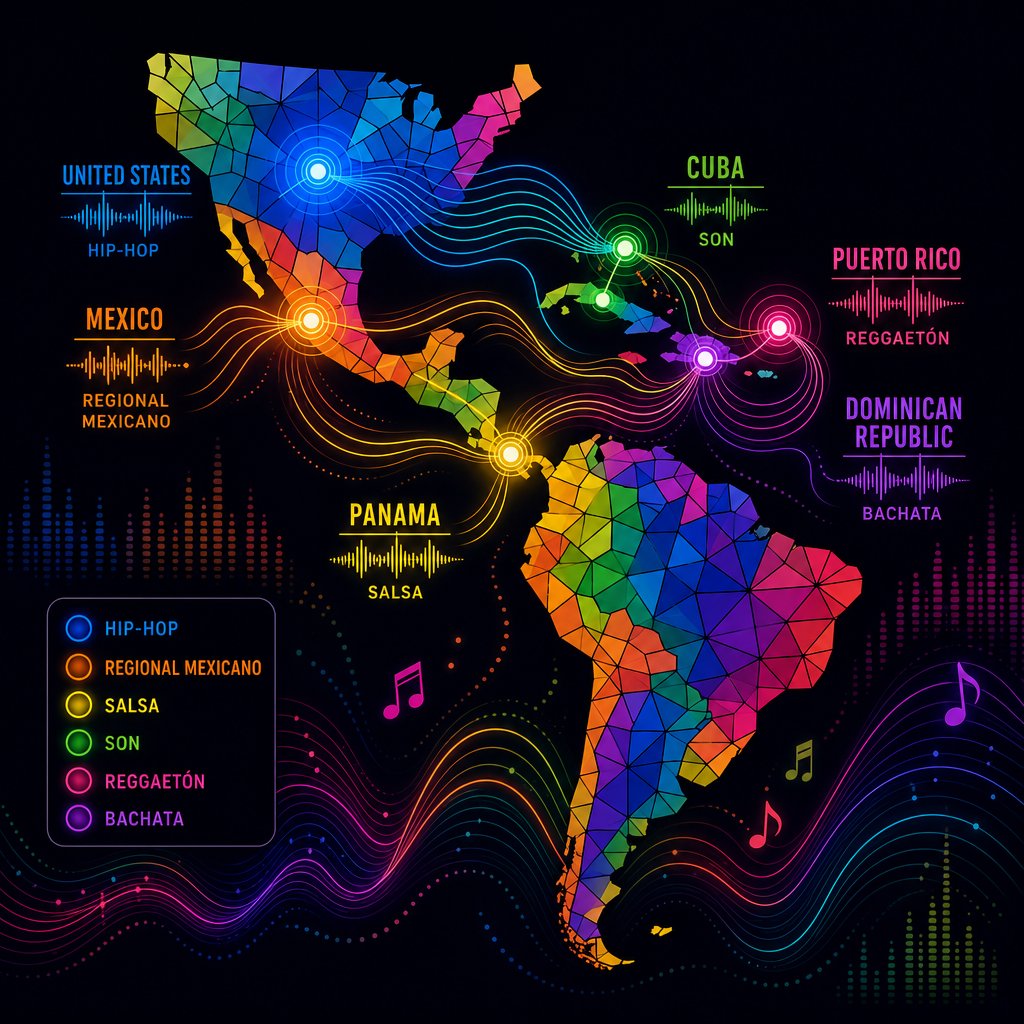
That flexible dembow architecture did not stay in one lane for long. As the rhythm traveled across borders and through different production cultures, local scenes bent it into shapes the original Panamanian and Puerto Rican pioneers never imagined. The result is a sprawling family tree of subgenres, each with its own tempo, texture, and attitude. Think of it less as a single genre and more as a rhythmic language spoken with dozens of regional accents.
Here is how the major branches break down:
| Subgenre | Origin | Typical Tempo (BPM) | Key Artists | Sonic Characteristics |
|---|---|---|---|---|
| Cubatón | Cuba | 85-100 | Gente de Zona, Osmani Garcia, El Chacal | Dembow fused with Cuban son, timba horn lines, and salsa-inflected piano montunos; warmer, more melodic feel |
| Trapetón | Puerto Rico / US | 75-90 | Bad Bunny, Anuel AA, Ozuna | Darker 808 bass, half-time trap hi-hats layered over dembow, moody minor-key melodies, introspective or street-oriented lyrics |
| Neoperreo | Latin America / Spain | 90-110 | Tomasa del Real, Ms Nina, Tokischa, Isabella Lovestory | Distorted bass, stripped-down dembow, lo-fi and electronic club textures, gender-fluid and LGBTQ+-forward lyrics |
| Dominican Dembow | Dominican Republic | 115-130 | El Alfa, Rochy RD, Kiko El Crazy | Faster, percussion-dominant mix; rapid-fire chanted vocals; heavy, often distorted bass; minimal melodic content |
| Moombahton | United States | 100-108 | Dave Nada, Dillon Francis, Major Lazer | Reggaeton tempo meets Dutch house synths and electro drops; designed for festival-sized sound systems |
| Malianteo | Puerto Rico | 85-95 | Tempo, Almighty, early Anuel AA | Raw, street-oriented lyrics over classic dembow; aggressive delivery; minimal melodic polish; gritty, lo-fi production |
| Reggaetón Mexa | Mexico | 85-100 | Bellakath, El Malilla, EMJAY | Classic dembow patterns blended with Mexican slang, TikTok-viral hooks, and occasional corridos tumbados crossover elements |
Cubatón, Trapetón, and Neoperreo at a Glance
Cubatón is what happens when the dembow collides with Cuba's deep well of live instrumentation. Timba horn sections, son-style guitar, and salsa piano montunos sit on top of the same kick-snare skeleton, giving the music a warmth and rhythmic complexity that sets it apart from the more electronic mainland sound. Artists like Gente de Zona brought cubatón to global attention through collaborations with Enrique Iglesias, though the style had been thriving in Havana's clubs for years before that crossover moment.
Trapetón, meanwhile, emerged when Puerto Rican and US-based artists started merging the dembow with Latin trap's darker sonic palette. Imagine the classic rhythm slowed down slightly, with heavier 808 bass, half-time hi-hat rolls, and lyrics that lean introspective or street-hard rather than party-ready. Bad Bunny's early mixtape work and Anuel AA's prison-era recordings helped define the sound, and it quickly became the dominant flavor of mainstream Latin urban music through the late 2010s.
Neoperreo is the wildcard. Emerging in the late 2010s through SoundCloud and YouTube, it strips the dembow down to its bones, distorts the bass, and wraps the whole thing in DIY electronic club aesthetics. What really sets it apart is its politics: neoperreo prioritizes inclusivity, amplifying LGBTQ+ and feminist voices in a genre historically dominated by heteronormative machismo. LA-based artists like Argentina's Ms Nina and Chile's Tomasa del Real pioneered the movement, and by the early 2020s its influence had seeped into the work of mainstream stars. Rosalia's album MOTOMAMI leans heavily on neoperreo's deconstructed sound, and artists like Tokischa -- a Dominican singer known for her unapologetic, genre-blending style -- have become some of the most influential voices in Latin urban music without ever releasing a full album. Honduran artist Isabella Lovestory and Venezuelan trans artist Arca have pushed the boundaries even further, blending neoperreo's sensuality with experimental electronic and industrial sounds.
Dominican Dembow and Moombahton Explained
Dominican dembow shares the same rhythmic DNA as reggaeton but cranks the tempo to 115-130 BPM and strips the production down to its most percussive essentials. The drums sit louder in the mix, the bass hits heavier and more distorted, and the vocals shift from singing to rapid-fire chanting and call-and-response patterns. Melodic content is minimal -- sometimes just a looped vocal phrase or a simple synth line. The energy is relentless, built for movement rather than contemplation. El Alfa's collaborations with Cardi B and Bad Bunny brought the Dominican sound to mainstream attention, but the genre has its own deep star system, with artists like Rochy RD and Kiko El Crazy commanding massive followings across Latin America.
Moombahton took a different path entirely. Coined and created by DJ Dave Nada in Washington, D.C., it slowed Dutch house tracks down to reggaeton tempo (around 100-108 BPM) and layered in Latin percussion and dembow-adjacent rhythms. The result is a festival-ready hybrid that lives more in the EDM world than in Latin urban clubs, though producers like Dillon Francis and Major Lazer helped bridge the gap. You will hear moombahton drops at electronic festivals worldwide, often without audiences realizing the rhythmic debt it owes to the Caribbean.
The Rise of Reggaetón Mexa
Mexico has become one of the most exciting frontiers for the genre. The reggaetón mexa movement blends classic dembow patterns with Mexican slang, regional musical references, and a TikTok-native approach to virality that has turned artists into overnight sensations. Coachella's recent lineup featured Mexican artists like El Malilla alongside corridos tumbados acts, signaling that the movement has outgrown its niche origins.
Bellakath leads the charge with over 7.5 million monthly Spotify listeners and tracks like "Reggaeton Champagne" -- a song whose lyrics have become a staple of TikTok dance trends. Her style leans on late-90s and early-2000s dembow beats paired with viral hooks designed for social media choreography. El Malilla, who won the MTV Miaw "Artist of the Year" award, has collaborated with J Balvin and Bellakath alike, bridging the reggaetón mexa scene with international Latin urban circles. EMJAY pushes the sound further with an ambitious hyperpop-influenced approach that merges neoperreo experimentation with Mexican urban identity.
The corridos tumbados crossover adds another layer. Artists from Mexico's regional scene -- think Junior H, Natanael Cano, and Peso Pluma -- have started weaving dembow rhythms and trap-influenced 808s into corrido structures, creating a hybrid that would have been unthinkable a decade ago. The same fans searching for a gasolina lyrics english version are now discovering Mexican artists who ride the same rhythmic foundation with completely different lyrical traditions. It is a reminder that the dembow pattern is less a genre boundary and more a shared musical language, one flexible enough to absorb everything from Cuban timba to Sinaloan storytelling.
Each of these subgenres carries its own cultural weight and audience, but they all orbit the same rhythmic core. The artists who built them, though -- from underground pioneers to global superstars -- deserve their own spotlight.
Iconic Reggaeton Artists and the Producers Behind Them
Every subgenre on that family tree exists because specific people -- vocalists, MCs, and the producers who built the beats underneath them -- pushed the sound somewhere new. Regueton is not an algorithm. It is a lineage, and the names in that lineage tell you exactly how a cassette-tape movement from San Juan's caseríos became the most dominant force in global pop.
The Pioneers and Underground Legends
Before reggaeton had a name, it had voices. Vico C, often called the godfather of Spanish-language rap in Puerto Rico, proved in the late 1980s that you could rhyme in Spanish with the same lyrical density as any New York MC. His work gave permission to an entire generation of boricua artists. In Panama, El General was doing something equally radical -- rapping over dancehall riddims in Spanish and recording with producers in Brooklyn, bridging Caribbean rhythm with hip-hop en español before anyone had a label for it. Behind the boards, DJ Playero and DJ Nelson were the underground's architects, pressing mixtapes that gave teenagers like Daddy Yankee and Nicky Jam their first recordings. Without these figures, there is no genre to discuss.
Golden-Era Icons Who Took Reggaeton Mainstream
The early 2000s turned underground heat into a global explosion, and a handful of artists lit the fuse. Daddy Yankee's "Gasolina" did not just chart -- it rewired what the world thought Latin music could sound like. If you have ever wondered what does despacito meaning, the answer starts here: Yankee's later collaboration with Luis Fonsi on that track became the most-streamed song in history at the time, proving the commercial ceiling for reggaeton songs was essentially nonexistent. Don Omar matched that energy with a different weapon -- a baritone voice and cinematic storytelling that produced era-defining anthems like "Dale Don Dale" and "Danza Kuduro." Tego Calderon brought Afro-Latino pride and boom-bap lyricism into the genre, earning remix features from Terror Squad and Lil Kim while refusing to let mainstream media whitewash the music's Black roots.
Wisin & Yandel became the most iconic duo in the genre's history, pairing Yandel's melodic vocals with Wisin's aggressive delivery across 16 Billboard Latin Airplay number-one hits. And Ivy Queen -- La Caballota -- carved out space for women in a male-dominated scene through sheer force of talent and refusal to compromise, becoming the godmother every reggaetonera who followed owes a debt to.
Producers Behind the Biggest Hits
Here is the part most histories skip. The vocalists get the fame, but the producers are co-architects of the sound. Luny Tunes did not just produce hits -- their 2003 compilation Mas Flow essentially codified the genre's sonic identity, enlisting Tego Calderon, Hector & Tito, and a roster of future legends. Their tag became as recognizable as any vocalist's voice. Tainy, groomed by Luny and Nely as a teenager, evolved into the most in-demand Latin producer of the streaming age -- his co-production on Cardi B's number-one Hot 100 hit "I Like It" and his shaping of Bad Bunny's X100pre represent the bridge between classic and modern eras. Sky Rompiendo built J Balvin's sonic world from the ground up, producing "Mi Gente" and the OASIS joint album with Bad Bunny. And Nely "El Arma Secreta" quietly engineered many of the genre's biggest records, earning his nickname by mentoring Tainy and shaping the final mixes that listeners actually hear.
When you line up the full roster chronologically, the through-line becomes clear -- each generation handed the next something to build on:
- Daddy Yankee -- turned underground cassette culture into a global commercial force; "Gasolina" remains the genre's big-bang moment
- Bad Bunny -- the most-streamed artist on the planet from 2020 to 2022, who never stopped crediting the pioneers who came before him
- Ivy Queen -- broke open the door for every woman in reggaeton by refusing to be sidelined in a machista industry
- Don Omar -- gave the genre its cinematic ambition and one of its most recognizable voices
- Tego Calderon -- fused boom-bap lyricism with Afro-Latino identity, forcing the genre to confront its own racial politics
- Wisin & Yandel -- set the commercial and artistic standard for every reggaeton duo that followed
- J Balvin -- put Colombia on the reggaeton map and revitalized the genre after its mid-2000s plateau
- Karol G -- made Mañana Sera Bonito the first all-Spanish album by a woman to debut at number one on the Billboard 200
- Ozuna -- redefined the genre's melodic possibilities and became a YouTube streaming behemoth
- Rosalia -- brought flamenco, neoperreo, and experimental production into the mainstream conversation
Notice what that list reveals: the genre's evolution is not just about who sings the hook. It is about who programs the drums, who mixes the bass, and who decides what risks are worth taking. The biggest reggaeton songs in history -- the ones that crossed every border and broke every streaming record -- were built by vocalist-producer partnerships where both sides pushed each other forward. And those songs, stacked end to end, tell the story of the genre better than any biography ever could.
Essential Reggaeton Tracks Every Listener Should Know
Stacking those artist names end to end is one thing. Hearing the actual music is another. Reggaeton is a genre best understood through its songs -- the tracks that defined each era, shifted the culture, and gave millions of people a reason to move. What follows is a chronological listening guide built to take you from the cassette underground all the way to the streaming charts, with a one-line reason why each track matters.
Underground Classics That Started It All
The earliest regueton recordings were not polished studio releases. They were raw, lo-fi, and distributed hand-to-hand on dubbed cassettes across Panama and Puerto Rico. These tracks laid the rhythmic and lyrical DNA that everything else grew from -- the first generation of Spanish language rap fused with dancehall riddims, recorded in bedrooms and housing-project studios.
- El General -- "Tu Pum Pum": One of the first reggae en español tracks to cross borders, proving that dancehall rhythms could carry Spanish lyrics to a massive audience.
- Vico C -- "La Recta Final": The track that established Spanish-language rap as a serious art form in Puerto Rico, blending hip-hop cadence with Caribbean identity.
- Wiso G -- "El Domingo Por La Tarde": A hilarious, off-the-dome account of a day in the life, showcasing the irresistible freestyle delivery that defined the underground cassette era.
- DJ Playero 37 (mixtape) -- Various Artists: The mixtape series that gave Daddy Yankee, Nicky Jam, and other future stars their first recordings, pressed onto cassettes and sold on the streets of San Juan.
- Baby Rasta y Gringo -- "La Competencia": A raw, bellicose anthem from the Noise collective that predicted reggaeton's potential for genre fusion, blending dembow riddims with hip-hop beats.
The Tracks That Broke Reggaeton Worldwide
The breakthrough era turned underground energy into radio-ready hits. Production got cleaner, hooks got catchier, and a handful of songs crossed every border the genre had ever known. If you are building a playlist to understand how reggaeton went global, start here.
- Daddy Yankee -- "Gasolina": The big bang. Produced by Luny Tunes and inspired by a shout Yankee overheard in a Puerto Rican housing project, it became the Latin song with the most mainstream appeal since "Macarena" and opened the door for the genre's worldwide expansion.
- Don Omar -- "Dile" / "Dale Don Dale": Cinematic, baritone-driven anthems that gave the genre its dramatic ambition and proved reggaeton could carry emotional weight beyond the party.
- Tego Calderon -- "Pa' Que Retozen": Boom-bap lyricism meets Afro-Latino pride, forcing the genre to confront its own racial politics while making your head nod involuntarily.
- Wisin & Yandel -- "Sexy Movimiento": The moment reggaeton went techno -- distorted voices, wild synths, and intergalactic flourishes announced that rave perreo was in full effect.
- Ivy Queen -- "Quiero Bailar": La Caballota's defining anthem, where she declared that dancing does not equal consent -- a feminist statement wrapped in an irresistible dembow groove years before the conversation went mainstream.
- Hector & Tito feat. Don Omar -- "Baila Morena": An aggressive dembow banger that lit up airwaves and showed how powerful the genre's collaborative energy could be.
Modern Anthems Defining the Genre Now
The global crossover and streaming eras dissolved every remaining boundary. Reggaeton songs started topping charts in countries where nobody spoke Spanish, collaborations with non-Latin superstars became routine, and a new generation of artists proved the genre could absorb pop, trap, EDM, and flamenco without losing its rhythmic core.
- Luis Fonsi feat. Daddy Yankee -- "Despacito": The track that shattered YouTube's all-time view record and introduced the dembow rhythm to audiences who had never heard the term. Its remix with Justin Bieber spent 16 weeks at number one on the Hot 100.
- J Balvin & Willy William -- "Mi Gente": A minimalist, percussion-driven anthem that proved reggaeton could dominate globally without a single English word, later remixed by Beyonce.
- Bad Bunny -- X100pre / Un Verano Sin Ti: Two albums that redefined what a Latin artist could achieve on streaming platforms. Un Verano Sin Ti became the most-streamed album on Spotify in 2022, and Bad Bunny held the title of most-streamed artist globally for multiple consecutive years.
- Karol G -- Mañana Sera Bonito: The album that debuted at number one on the Billboard 200 with 94,000 equivalent album units, making it the first all-Spanish-language album by a woman ever to reach the chart's apex.
- Rosalia & J Balvin feat. El Guincho -- "Con Altura": A flamencotón fusion that bridged Playero-era samples with flamenco traditions, earning a Latin Grammy and propelling Rosalia to new audiences worldwide.
- Enrique Iglesias feat. Descemer Bueno & Gente de Zona -- "Bailando": A flamenco-guitar-accented fusion that won Song of the Year at the Latin Grammys -- and if you have ever searched for the bailando meaning, it is simply "dancing," which is exactly what millions of people could not stop doing when this track dropped.
- Tainy feat. Bad Bunny & Julieta Venegas -- "Lo Siento BB:/": A dreamy, experimental track that opened with indie darling Julieta Venegas over an otherworldly piano before Bad Bunny's heartsore verses kicked in -- proof that the genre's producers keep pushing boundaries.
Laid out chronologically, these tracks reveal something the streaming algorithm cannot: each era handed the next one a creative problem to solve. The underground proved the rhythm worked. The breakthrough era proved it could sell. The crossover generation proved it could dominate charts in any language. And the current wave is proving it can absorb virtually any genre on earth without losing the dembow pulse at its center.
| Era | Track / Album | Artist | Why It Matters |
|---|---|---|---|
| Underground | "Tu Pum Pum" | El General | Pioneered reggae en español and carried Panamanian dancehall across borders |
| Underground | "La Recta Final" | Vico C | Established Spanish language rap as a legitimate art form in Puerto Rico |
| Underground | Playero 37 (mixtape) | Various Artists | The cassette series that launched Daddy Yankee, Nicky Jam, and the San Juan underground |
| Breakthrough | "Gasolina" | Daddy Yankee | The genre's big-bang moment; first reggaeton track to achieve massive mainstream crossover |
| Breakthrough | "Quiero Bailar" | Ivy Queen | Feminist anthem that redefined women's role in the genre |
| Breakthrough | Mas Flow | Luny Tunes (compilation) | Codified the genre's sonic identity and launched multiple careers from a single tracklist |
| Global Crossover | "Despacito" | Luis Fonsi ft. Daddy Yankee | Shattered YouTube records and introduced the dembow to billions of new listeners |
| Global Crossover | "Mi Gente" | J Balvin & Willy William | Proved reggaeton could top global charts without a word of English |
| Global Crossover | "Bailando" | Enrique Iglesias ft. Gente de Zona | Latin Grammy Song of the Year that fused flamenco guitar with cubatón energy |
| Streaming Dominance | Un Verano Sin Ti | Bad Bunny | Most-streamed album on Spotify globally; cemented Latin music at the center of pop |
| Streaming Dominance | Mañana Sera Bonito | Karol G | First all-Spanish album by a woman to debut at No. 1 on the Billboard 200 |
| Streaming Dominance | "Lo Siento BB:/" | Tainy ft. Bad Bunny & Julieta Venegas | Showcased the genre's experimental edge and producer-driven creative ambition |
What this timeline does not capture, though, is the physical experience of the music -- the way these tracks move through a room, a street, a protest march. Reggaeton has always been inseparable from the body, and the dance culture built around it carries its own history of celebration, controversy, and reclamation.
Perreo, Dance Culture, and the Voices Reshaping Reggaeton
Reggaeton has never been a genre you just listen to. It is a genre you feel in your hips, your knees, your lower back. The music and the movement are inseparable -- one does not fully exist without the other. And the dance at the center of it all, perreo, carries a history just as layered and contested as the beat itself.
Perreo and Its Cultural Roots
Perreo -- also called sandungueo -- is a close-contact partner dance rooted in African-derived movement traditions that arrived in the Caribbean through the transatlantic slave trade. Picture two bodies locked in rhythm: one partner anchors their weight against the other, hips rolling in sync with the dembow's kick-snare pulse. The dance traces back to the early 1990s in Puerto Rico, specifically to a small nightclub in La Perla called The Noise, where DJ Negro spun underground tracks and the crowd moved to what was still an unnamed rhythm. When the dembow riddim entered the mix and the beats turned more sensual, las mamis and los papis started grinding to what became perreo -- and they did not want anything else.
The dance shares DNA with other African-rooted movement traditions -- Brazilian funk carioca, New Orleans bounce, the Ivory Coast's mapouka -- but it is uniquely Caribbean. Its ancestral lineage connects to the communal dances of enslaved Africans in Puerto Rico, which European colonization gradually reshaped into heterosexual pairings. That boricua morena energy, that deep connection between body and beat, is not performance. It is inheritance.
By the late 1990s and early 2000s, though, the commercial side of the genre leaned hard into oversexualization. Music videos featured increasingly raunchy imagery designed to sell records, and a subgenre called bellaqueo -- from the Puerto Rican slang bellaco, roughly meaning "very horny" -- pushed the dance floor toward explicit territory. Songs like DJ Joe's "Que melones" treated women's bodies as props. The Puerto Rican government responded with a censorship campaign: police raided homes to confiscate tapes, Senator Velda Gonzalez launched a public crusade against the music, and headlines calling the genre a "plague" only made it more popular. In a full-circle twist, the ex-senator was later spotted swinging her hips to reggaeton in San Juan.
Feminist Reclamation of Reggaeton Dance
The tension between objectification and liberation was always there, and women were the first to name it. Ivy Queen's 2003 anthem "Yo Quiero Bailar" drew the line with surgical precision: "Yo quiero bailar / tu quieres sudar / y pegarte a mi / el cuerpo rozar / yo te digo: si, tu me puedes provocar / eso no quiere decir que pa' la cama voy." Translation: I want to dance, you want to grind -- but that does not mean I am going to bed with you. It was a feminist statement wrapped in a dembow groove, years before the mainstream conversation caught up. If you have ever searched for bailando lyrics hoping to understand the emotional pull of Latin dance music, Ivy Queen's verse is the real starting point.
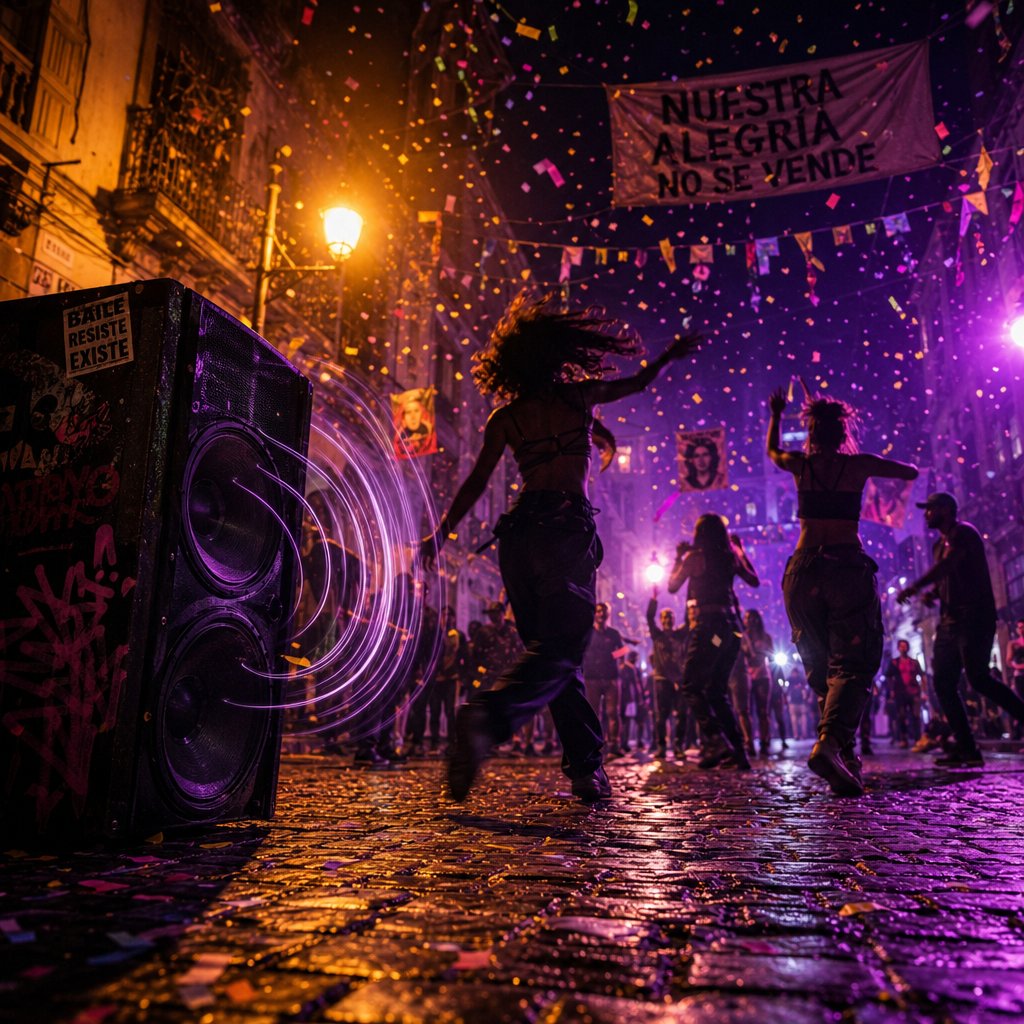
That spirit of reclamation exploded into the political sphere during Puerto Rico's Verano del 19. After 889 pages of leaked Telegram messages revealed Governor Ricardo Rossello mocking Hurricane Maria victims, using misogynistic slurs, and ridiculing Ricky Martin's sexuality, the island erupted in mass protests. What started with plena marches evolved into something unprecedented: nightly perreos in front of the governor's mansion, organized under the banner "Perreo En La Fortaleza."
Perreo combativo was dubbed by queer, trans, and nonbinary youth to create a sensuous and liberated communal space that generated political power -- turning reggaeton's signature dance into a form of collective resistance on the cobblestone streets of Old San Juan.
The slogan said it all: "Sin perreo no hay revolucion." Without perreo, there is no revolution. Women, trans, gay, and nonbinary Puerto Ricans ground their bodies against the cobblestones of Old San Juan while reggaeton blasted from speakers, demanding the governor's resignation. On the night Rossello finally stepped down, a twerkathon erupted on the steps of the San Juan Cathedral, followed by a massive perreo combativo celebration. The irony was poetic: in the 1990s, Rossello's own father, Pedro Rossello, had launched the "Mano Dura" campaign that criminalized the underground scene. Eighteen years later, the music he tried to silence helped bring down his son.
The movement did not stop at the island's shores. Solidarity perreo parties spread across the diaspora -- "Perreo 2 The People" in New York, "Grind For the Rights" in Los Angeles, dance workshops in south Florida. Fundraisers supported groups like Colectiva Feminista En Construccion, an anti-imperialist, anti-patriarchal organization that initiated yearly protests titled "Si no puedo perrear, no hay revolucion." Perreo combativo even entered academia as a panel discussion at the University of Florida, co-sponsored by the Center for Latin American Studies.
How Social Media Reinvented Reggaeton Choreography
Beyond the protest movements, reggaeton dance has splintered into a global ecosystem of styles, each shaped by regional identity and -- increasingly -- by social media virality. Here are the key dance forms orbiting the genre:
- Perreo / Sandungueo -- The original close-contact partner dance; hip-driven grinding synced to the dembow pulse, rooted in Afro-Caribbean communal movement traditions.
- Bellaqueo -- A more sexually explicit extension of perreo that emerged in the early 2000s, involving kissing and touching on the dance floor beyond standard partner dancing.
- Perreo Combativo -- The politicized reclamation of perreo by queer, feminist, and nonbinary communities, used as a tool of protest and collective liberation.
- Dominican Dembow Dance -- Faster, more percussive footwork and body isolations matched to the 115-130 BPM tempo of Dominican dembow; emphasizes rapid hip movement and call-and-response energy.
- Neoperreo Movement -- Experimental, gender-fluid dance expression tied to the neoperreo music scene; less codified, more improvisational, often performed in queer club spaces and art collectives.
- TikTok Choreography -- Short, repeatable dance sequences designed for viral replication; tracks like Bellakath's "Reggaeton Champagne" and El Alfa's collaborations generate millions of user-created videos that spread reggaeton movement globally.
TikTok and Instagram Reels have fundamentally changed how reggaeton choreography travels. A dance created in Santo Domingo can reach Seoul within hours, stripped of its original cultural context but carrying the dembow rhythm into new bodies and new spaces. Dominican dembow dance, with its rapid-fire footwork and explosive energy, has become especially viral -- the faster tempo lends itself to the short, punchy clips that social media algorithms reward. Meanwhile, the boricua underground drum kits that producers share online have made it easier than ever for bedroom creators to build tracks specifically designed around danceable hooks, closing the loop between music production and movement.
The queer and feminist collectives reshaping the dance floor have also gone global. Mexico City's Mami Slut parties, started by DJ Travieza and La Mendoza, treat perreo as a decolonizing practice -- reclaiming the dance floor for drag, self-expression, and bodies that mainstream clubs often exclude. Ecuador's SinVerguenza collective in Quito and Colombia's Motivando A La Gyal in Medellin built similar safe spaces for trans and nonbinary communities, using reggaeton and perreo as tools of resistance against conservative social norms. In Madrid, a new generation of women and queer DJs have turned perreo into the centerpiece of a cultural movement that echoes La Movida Madrilena of the post-Franco 1980s.
Artists like Tokischa, the Dominican singer whose unapologetic sexuality and genre-blending style have made her one of Latin music's most provocative voices, and Villano Antillano, a Puerto Rican trans rapper who brings lyrical precision and queer identity into the heart of the dembow, are not operating on the margins anymore. They are reshaping what the center looks like. Chilean artist Tomasa del Real, who coined the term neoperreo, described the movement as "a synthesis of all these new sounds, of the new consumers who include people from the majority as well as the minority, where we all come together through el gusto de bailar."
From a taboo dance in a La Perla nightclub to a tool that helped topple a governor, perreo's arc mirrors the genre itself: born in marginalized communities, attacked by those in power, and ultimately impossible to contain. The bodies moving to the dembow have always been making a statement, whether the world was ready to hear it or not. And the scale of that statement -- measured not just in dance floors but in streaming numbers, chart positions, and cross-genre collaborations -- is where the story turns next.
How Reggaeton Conquered Global Pop
Those streaming numbers and chart positions are not abstract statistics. They represent a seismic shift in who gets to define mainstream pop music -- and the answer, increasingly, is a genre that mainstream gatekeepers once dismissed as too raw, too niche, and too Spanish to matter. Reggaeton did not politely ask for a seat at the global table. It kicked the door open, and the numbers prove it.
From Niche Genre to Global Streaming Giant
Consider the trajectory. For most of the 2000s, anyone asking "reggaeton what is" would have received a shrug from the average American or European listener. Latin urbano music existed in its own ecosystem -- popular across Latin America and the Caribbean, but largely invisible to the English-speaking mainstream. Streaming changed everything. When playlists replaced radio programmers as the primary gatekeepers of discovery, the dembow's infectious rhythm no longer needed a DJ's permission to reach ears in Tokyo, Lagos, or Stockholm.
Bad Bunny became the living proof. Spotify's 2025 Wrapped crowned him the most-streamed artist on the platform globally for the fourth time, with 19.8 billion streams in a single year. Not the most-streamed Latin artist. The most-streamed artist, period -- ahead of every pop, hip-hop, and rock act on earth. He first claimed the top spot in 2020 and repeated in 2021 and 2022 before Taylor Swift took the crown in 2023 and 2024. His album DeBi TiRAR MaS FOTos also earned the title of Global Top Album, a project rooted deeply in Puerto Rican culture and sound. No artist in Spotify's history has held the number-one position four times.
Spanish-language music is reaching fans everywhere. Regional genres are moving onto the global stage. The borders are gone.
The fuse for this explosion was lit years earlier. Luis Fonsi and Daddy Yankee's "Despacito" became the first Spanish-language song to reach number one on the Billboard Hot 100 in over two decades when its Justin Bieber remix dropped in 2017. It shattered YouTube's all-time view record and, as Fonsi told Variety, triggered a "snowball effect that was never really in sight" -- suddenly he was performing in Russia, China, and the Middle East, places where Latin artists had never toured. The track did not just chart. It introduced the dembow rhythm to billions of listeners who had never heard the term, and it proved that a song sung almost entirely in Spanish could dominate the English-speaking world.
Cross-Genre Collaborations That Changed Pop Music
"Despacito" opened a floodgate. What Emilio Estefan called the "reverse crossover" flipped the old formula on its head: instead of Latin artists recording in English to break into the US market, Anglo superstars started singing in Spanish to tap into the Latin audience. Drake jumped on "MIA" with Bad Bunny. Beyonce added a verse to J Balvin's "Mi Gente." Cardi B's bilingual smash "I Like It" -- produced by Tainy over a boogaloo sample -- hit number one on the Hot 100 and became one of the decade's defining pop moments. Sean Paul, Katy Perry, and dozens of others followed, each collaboration further dissolving the idea that language was a barrier to global pop success.
Karol G captured the emotional weight of that shift. "All countries and languages now accept our music," she told Variety. "There are people who don't even speak Spanish, singing and dancing to the songs." For an artist who grew up in Medellin knowing only Shakira and Juanes as internationally recognized Colombian musicians, the change was not incremental. It was a complete rewriting of what was possible.
The economic impact rippled through the entire Latin music industry. Streaming revenue revitalized independent Latin labels and created new business models built around playlist placement, viral moments, and direct-to-fan distribution. Artists no longer needed a major English-language label deal to reach a global audience -- they needed a dembow beat, a hook, and a Spotify algorithm that rewarded engagement over geography.
The Regional Mexican Crossover and What Comes Next
The genre's latest evolution might be its most surprising. Reggaeton and regional Mexican music -- two styles that seem to share almost nothing sonically -- have found surprising common ground. The catalyst was Bad Bunny posting a video of himself singing along to Natanael Cano's "Soy el Diablo" in 2019. Within weeks, a remix featuring both artists hit No. 16 on Billboard's Hot Latin Songs chart. The pairing seemed counterintuitive -- reggaeton is built on electronic beats and loops, while regional Mexican music relies on live instrumentation -- but the attitude and lifestyle energy matched perfectly.
That collaboration set off a wave. Karol G and Peso Pluma's "Qlona" shot to No. 1 on Hot Latin Songs. Maluma recorded a ranchera with Grupo Firme that became his first No. 1 on the Regional Mexican Airplay chart. Colombian artists like Karol G released full ranchera ballads, drawing on the deep love for mariachi music that runs through Medellin's culture. As Luis R Conriquez told Billboard, "I always thought reggaeton was global. But now, regional Mexican is global too."
Jimmy Humilde, founder of indie label Rancho Humilde and a key figure behind the corridos tumbados movement, sees the connection as natural. Raised in Los Angeles on both old-school hip-hop and bad-boy Mexican corridos, he encouraged his artists to dress like rappers rather than traditional ranchera singers -- boots and cowboy hats replaced by streetwear. The aesthetic crossover preceded the musical one, and the result is a generation of Mexican artists like Fuerza Regida, Junior H, and Peso Pluma who move fluidly between corrido structures and dembow-adjacent rhythms.
This is the pattern reggaeton has followed since its earliest days in Panama: absorb, adapt, expand. The genre that started on hand-dubbed cassettes in San Juan's housing projects now shapes what gets played in Mexico City clubs, Seoul karaoke rooms, and Berlin warehouse parties. It has not just conquered global pop -- it has rewritten the rules of who gets to participate in it. And for listeners inspired by that arc, the distance between hearing the dembow and creating something with it has never been shorter.
Making Your Own Reggaeton Sound
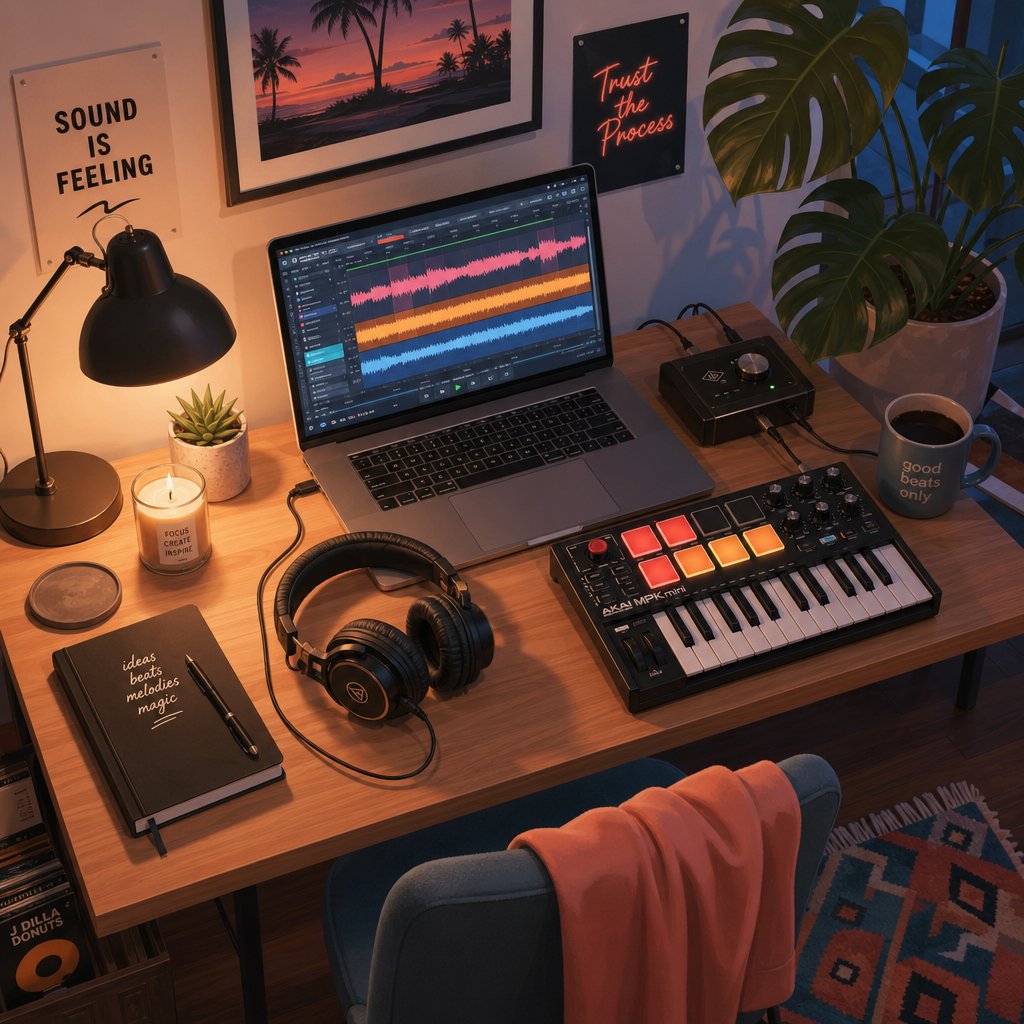
That shrinking distance between listener and creator is not a metaphor. A decade ago, producing dembow music required a DAW, a library of drum samples, and enough production knowledge to program syncopated kick-snare patterns from scratch. Today, the tools have caught up with the ambition. Whether you want to build a full track or just experiment with the rhythm that powers the genre, the barrier to entry has never been lower.
Understanding What Makes a Reggaeton Track Work
Before you touch any tool, it helps to internalize the formula. Every reggaeton track shares a few non-negotiable elements: the dembow kick-snare pattern (kick on the downbeat, snare on the offbeat, looped), a tempo between roughly 85 and 100 BPM, a heavy low-end driven by 808-style bass, and a melodic hook designed to stick after one listen. Vocals sit on top -- often Auto-Tuned, layered with ad-libs, and delivered in a rhythmic flow that rides the groove rather than fighting it. If you have ever looked up a despacito translation and found yourself humming the melody hours later, you have already experienced how effective that hook-first architecture can be. The structure is deceptively simple, which is exactly why it works: a tight rhythmic foundation gives vocalists and producers room to get creative on top.
Tools and Resources for Creating Reggaeton Music
You do not need a professional studio to start. Free platforms like BandLab's Mix Editor walk you through building a reggaeton beat step by step -- laying down a four-four kick, adding syncopated snares, and layering minimal hi-hats over the top. For producers working in a DAW, Native Instruments' Caribbean Current expansion offers drum kits and synth presets built specifically for the genre. And if you want to skip the manual programming entirely and hear what a reggaeton-flavored idea sounds like in seconds, AI-powered tools like MakeBestMusic's AI Song Generator let you describe a mood, subgenre, or era -- say, a trapeton heartbreak track or a cubaton summer vibe -- and generate a royalty-free song you can use as a starting point or content backdrop.
From Listener to Creator
The best way to understand any genre is to get your hands dirty with it. Here are practical ways to go from passive listener to active participant:
- Program the dembow pattern by hand -- even a basic kick-snare loop at 90 BPM will teach you more about the rhythm than reading about it ever could.
- Build an era-based playlist using the listening guide above, then pay attention to how the production evolves from raegae song roots through modern streaming anthems.
- Experiment with subgenre vibes using an AI song generator -- try prompts like "Dominican dembow at 120 BPM" or "neoperreo with lo-fi textures" to hear how the same rhythmic DNA bends across styles.
- Study the producers, not just the vocalists -- pull up a Tainy or Luny Tunes production credit list and listen for the sonic signatures that connect their tracks.
- Record yourself over a dembow loop -- even a rough vocal take or freestyle will reveal how the rhythm shapes delivery and flow.
Reggaeton started with teenagers recording over borrowed riddims on cassette tapes in San Juan housing projects. The tools have changed. The impulse has not. If the dembow makes you move, it can also make you create -- and the genre's entire history proves that the next chapter always comes from someone who decided to stop listening and start building.
