


Can AI Actually Compose Classical Music
When you hear a sweeping orchestral phrase that stirs something deep in your chest, does it matter whether a human or a machine wrote it? That question sits at the heart of one of the most fascinating debates in modern music. Can AI compose classical music, or is it simply rearranging notes it learned from the masters who came before?
The short answer is complicated. AI can produce classical-style music that sounds convincing, sometimes strikingly so. But whether that output counts as genuine composition depends entirely on how you define the word. And that definition, it turns out, is where things get interesting.
What Does Composing Actually Mean
Composing, in the traditional sense, involves more than assembling pleasant sequences of notes. It requires intention, emotional narrative, structural vision, and the ability to surprise within a coherent framework. Think of Beethoven shaping his Fifth Symphony around a single four-note motif, developing it across movements into something that feels inevitable yet wholly original.
AI does something different. It generates output based on statistical patterns extracted from training data. It can learn harmonic progressions, mimic counterpoint, and replicate orchestration styles. But is that creating, or is it recombining? The difference between AI generation and composition hinges on whether you believe creativity requires consciousness, intent, and lived experience, or whether the end result is all that matters.
Researchers at UC San Diego are actively wrestling with this distinction. Professor Shlomo Dubnov and his team are working to push AI beyond simple replication toward something more genuinely creative. As Dubnov describes it, the goal is exploring ways to make GenAI creative, going beyond text-to-music prompts to push the boundaries of how AI engages with non-traditional scores. The framing here is telling: even those building these systems distinguish between replication and creation.
The Current State of AI Classical Composition
So where do AI classical music composition capabilities actually stand? You can think of it along a spectrum:
- Style imitation: AI reliably produces music that sounds like a given composer or era. It handles harmonic language, rhythmic patterns, and basic formal structures well.
- Short-form generation: For brief passages, themes, or single movements, AI output can be genuinely impressive and occasionally indistinguishable from human work.
- Large-scale composition: Extended works with thematic development across movements, emotional arcs, and structural innovation remain beyond current capabilities.
- Genuine novelty: Creating something that sounds like no composer before it, something that redefines what classical music can be, sits firmly in human territory for now.
Generation asks "what note comes next?" Composition asks "why does this piece need to exist?" AI has mastered the first question but hasn't yet learned to ask the second.
Can artificial intelligence write classical music? Technically, yes. It can produce scores, assign instrumentation, and output audio that listeners recognize as classical. Whether that constitutes composition in the way we mean it when we talk about Mozart's Requiem or Beethoven's late quartets is a question that touches on technology, philosophy, and what we believe music is for. As one perspective from the classical music world puts it, AI's true potential is not in making crappy simulacra of what's already out there but in allowing human composers to make something definitively new.
The pages ahead dig into how these systems actually work, where the technology came from, what it does well, and where the boundaries of machine creativity truly lie.
How AI Learns to Write Classical Music
Understanding what AI produces is one thing. Understanding how it gets there is another. The mechanics behind neural network music generation reveal both why the results can sound so convincing and why the technology still falls short of true compositional mastery.
How Neural Networks Learn Musical Structure
Imagine reading a novel one word at a time and trying to predict what comes next. That's essentially what a transformer architecture for music composition does, except with musical events instead of words.
The transformer is the same deep learning architecture powering large language models, and it turns out to be remarkably effective for music. The key innovation is the attention mechanism. Older sequential models like RNNs and LSTMs process data one step at a time and tend to forget earlier context as sequences grow longer. Transformers process data in parallel and use attention to let each step "look back" at relevant earlier parts of the sequence. In music, this means the model can relate a chord progression in measure four to a melodic idea in measure thirty-two, capturing the kind of long-term dependencies that give classical music its structural coherence.
The first step is converting music into a sequence of tokens. Each token represents a distinct musical event: a note onset, a pitch value, a duration, a rest. The relationship between these tokens in music is similar to the relationship between words in a paragraph. During training, the model learns a probability distribution over these tokens, essentially building a statistical map of which musical events tend to follow which other events. During inference, it samples from that learned distribution to generate new sequences.
Here are the key technical components involved in AI music generation:
- Tokenization: Converting musical data (MIDI events, audio frames, or score notation) into discrete tokens the model can process
- Attention mechanisms: Allowing the model to weigh relationships between distant musical events, capturing long-range structure
- Sequence prediction: Generating new tokens one at a time based on learned probability distributions
- Conditioning vectors: Encoding style parameters, composer identity, or text prompts to guide the generation toward a desired output
- Decoding: Converting generated token sequences back into playable music, whether as MIDI scores or audio waveforms
Systems like TransformerXL, used in AWS DeepComposer, extend this further by capturing long-term dependencies up to 4.5 times longer than a standard transformer. That extra reach matters in classical music, where a theme introduced in an exposition might not return until a recapitulation dozens of measures later.
Training Data and Its Influence on Output
Every AI model is shaped by what it studies. Feed a neural network thousands of hours of Bach chorales, and it will produce Bach-like counterpoint. Train it on a broad corpus spanning Romantic symphonies, Baroque fugues, and Impressionist tone poems, and you'll get more eclectic, less stylistically focused results.
The datasets AI models are trained on classical music come in different forms. The Maestro dataset from Google Magenta, for example, contains thousands of classical piano performances captured as MIDI data. Larger systems like MusicLM have trained on up to 280,000 hours of music, while Meta's MusicGen used 20,000 hours of licensed tracks spanning multiple genres.
This creates an important constraint. Models can only generate music within the distribution of their training data. If a dataset skews heavily toward Western tonal harmony from the 18th and 19th centuries, the AI will struggle with 20th-century atonality or extended techniques. Training data doesn't just influence style; it defines the boundaries of what the model considers "music."
Symbolic Generation vs Audio Synthesis
How does AI compose classical music at the output level? Two fundamentally different approaches exist, and understanding the distinction matters for evaluating quality.
Symbolic music generation produces note-level representations: MIDI sequences, piano rolls, or notation data. Think of it as the AI writing a score. The output specifies which notes to play, when, and for how long, but it doesn't produce sound directly. You still need a synthesizer or virtual instrument to render it as audio. Models like MuseNet and Music Transformer pioneered this approach. The advantage is editorial control. You can adjust individual notes, change instrumentation, or rework passages after generation.
There's a subtlety here worth noting. MIDI data itself comes in two flavors: scores and performances. MIDI scores have notes quantized to a rhythmic grid, like sheet music translated into data. MIDI performances capture the micro-timing variations of a real player, with no two note onsets falling at exactly the same moment. This distinction shapes what models learn: train on scores and you get clean, grid-aligned output; train on performances and the model picks up subtle expressive timing.
Audio synthesis generates actual sound waves. Diffusion models like Stable Audio start from noise and iteratively refine it into coherent music. Text-to-music systems like MusicGen produce compressed audio tokens that a decoder expands into full waveforms. The result sounds more like a finished recording, but you lose the ability to easily edit individual notes or reorchestrate passages.
For classical music specifically, symbolic generation remains more practical. Composers and arrangers want to see a score, adjust voicings, and make interpretive decisions. Audio generation is better suited to producing background music or quick demos where granular editing isn't needed.
The technical architecture is impressive, but architecture alone doesn't explain how we got here. The path from the first computer-generated music to modern transformer models spans nearly seven decades of experimentation, failure, and incremental breakthroughs.
The Evolution of AI in Classical Composition
Seven decades is a long time in technology but a blink in music history. The history of AI music composition stretches back to the 1950s, and each generation of tools solved problems the previous one couldn't touch. Understanding this algorithmic composition experiments timeline helps explain why the current moment feels so different from everything that came before.
Early Algorithmic Experiments
The idea of formalizing music creation is older than computers. Mozart's Musikalisches Wurfelspiel ("Musical Dice Game") from 1787 let players assemble compositions by rolling dice to select pre-composed phrases. Serialist composers after World War II took formalization further, using predetermined matrices to control pitch, rhythm, and dynamics. These weren't AI systems, but they established the conceptual foundation: music could be generated through rules rather than pure intuition.
The real breakthrough came in 1957, when Lejaren Hiller and Leonard Isaacson used the ILLIAC computer at the University of Illinois to create the Illiac Suite for string quartet. It's widely recognized as the first computer-aided composition. Their approach followed a generator/modifier/selector paradigm: raw musical materials were generated, modified by various functions, then filtered through rules that selected the best results. Hiller and Isaacson also employed Markov Chains in random-walk pitch-generation algorithms, introducing probability into the compositional process.
Around the same time, Iannis Xenakis applied stochastic methods, using probability theory and gas-particle distribution models to determine note placement. His Stochastic Music Programme produced radically new pieces like Pithoprakta (1956), treating individual notes as analogues of gas particles in a cloud of sound.
These two pioneers established a fundamental split in approach: Hiller's rule-based systems attempted to simulate the compositional process itself, while Xenakis used the computer as a calculation tool whose output the composer could still shape by hand.
Here's how the evolution of AI in classical music unfolded across key milestones:
- 1787: Mozart's Musical Dice Game introduces chance-based composition using pre-written fragments
- 1949: Messiaen's Mode de valeurs et d'intensites pushes total serialist control of all musical parameters
- 1957: Hiller and Isaacson produce the Illiac Suite, the first computer-generated composition, using Markov Chains and rule-based filtering
- 1960s: Xenakis develops stochastic composition using probability theory; Hiller creates MUSICOMP, an early reusable composition system
- 1980s: David Cope's Experiments in Musical Intelligence (EMI) uses AI to analyze and recreate the styles of Bach, Mozart, and others
- 1990s: Expert systems like Ebcioglu's CHORAL generate Bach-style chorales using 350+ encoded rules
- 2010s: Deep learning and recurrent neural networks begin producing music without hand-coded rules
- 2019: OpenAI's MuseNet generates multi-instrument compositions using transformer architectures trained on MIDI data
- 2020s: Diffusion models and large-scale transformers produce increasingly coherent classical-style works
The Deep Learning Revolution in Music
Every approach before deep learning shared a common limitation: humans had to define the rules. Whether those rules came from counterpoint textbooks, probability tables, or style analyses, the system could only operate within boundaries someone explicitly programmed. David Cope's EMI could deduce its own grammar from input scores, which was remarkable for the 1980s, but it still relied on pattern matching against a curated database.
Deep learning classical music generation changed this equation entirely. Neural networks learn musical structure directly from data, with no hand-coded rules about voice leading, harmonic progression, or formal design. Feed the system thousands of scores and it extracts its own statistical model of how music works. The shift from recurrent architectures to transformers in the late 2010s was the pivotal moment. Transformers could attend to long-range musical relationships that earlier models simply forgot, enabling output with structural coherence over extended passages.
The result is a fundamentally different kind of system. Earlier algorithmic methods excelled at local correctness, writing music that followed rules measure by measure. Modern deep learning models capture something closer to stylistic understanding, producing passages that feel idiomatic rather than merely rule-compliant. Whether that understanding constitutes genuine musical knowledge or remains sophisticated statistical mimicry is exactly where the quality debate begins.
What AI Gets Right and Where It Falls Short
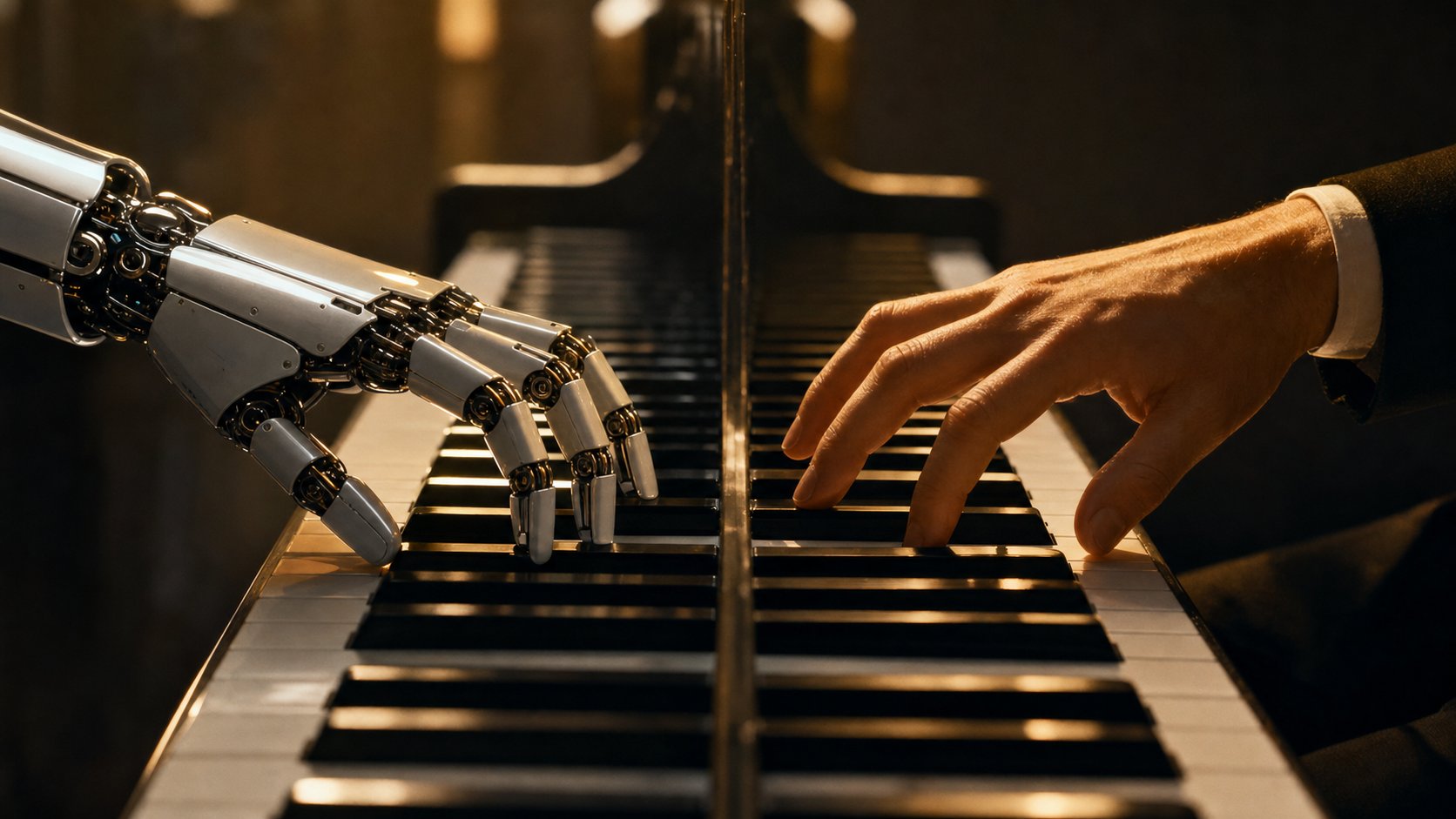
Sophisticated statistical mimicry or genuine musical knowledge? The answer depends on which dimension of composition you're evaluating. AI doesn't uniformly succeed or fail across all aspects of classical writing. It excels in some areas while stumbling in others, and understanding those distinctions is essential for any honest ai classical music quality assessment.
Where AI Excels in Classical Composition
When you listen to AI-generated classical piano music, the first thing you'll notice is that the harmonic language usually sounds correct. Chord progressions resolve where you'd expect them to. Voice leading follows sensible patterns. Short passages of counterpoint can sound genuinely Bach-like. This isn't accidental. Models trained on the MAESTRO dataset of classical piano performances learn pitch distributions and harmonic transitions with remarkable precision. GAN-based models in particular showed superior pitch class similarity to human compositions in formal testing, meaning the raw harmonic vocabulary closely matches what trained composers produce.
Speed is another clear advantage. A system can generate dozens of compositional ideas in minutes, sketches that might take a human composer hours to draft. For brainstorming, exploring harmonic possibilities, or producing variations on a theme, AI operates at a pace no human can match.
Stylistic imitation is where the technology truly shines. Ask a well-trained model for something in the style of Chopin or Debussy, and the output captures surface-level idioms convincingly: the arpeggiated textures, the chromatic inner voices, the characteristic rhythmic profiles. A viral AI-generated violin piece circulated online and fooled a portion of casual listeners into believing it was a genuine classical performance, demonstrating that at short durations and within familiar styles, the gap between AI and human output can narrow considerably.
Current Limitations and the Quality Ceiling
The limitations of AI composed classical music become apparent the moment you zoom out from local passages to larger structures. Research comparing AI models against human compositions consistently reveals a gap in phrase coherence and long-term development. In one study evaluating LSTM, Transformer, and GAN architectures, even the best-performing Transformer models scored below human compositions on metrics like harmonic consistency and expressive phrasing. The models produce music that sounds structured, yet lacks the narrative evolution human artists bring to extended works.
Here's where ai music strengths and weaknesses become clearest:
| Dimension | AI Capability Level | Human Composition Benchmark | Gap Assessment |
|---|---|---|---|
| Harmonic Writing | Strong. Correct progressions, functional harmony, appropriate resolutions | Nuanced modulations, unexpected reharmonizations, structural harmonic planning | Narrow at surface level, wider in strategic depth |
| Melodic Invention | Moderate. Produces singable lines within learned idioms | Memorable themes, motivic development, intervallic personality | Moderate. AI melodies often feel generic |
| Structural Coherence | Weak over extended durations. Tends toward repetition or drift | Organic development, recapitulation, thematic transformation | Wide. The biggest current limitation |
| Emotional Depth | Limited. Replicates emotional surface cues without intentional narrative | Deliberate tension/release, psychological pacing, expressive risk-taking | Wide. Often cited by listeners as the key differentiator |
| Orchestration | Basic. Assigns instruments plausibly but lacks subtlety | Timbral imagination, dynamic layering, idiomatic part writing | Moderate to wide depending on complexity |
The quality ceiling sits in an awkward middle ground. AI produces competent short-form pieces that satisfy casual listening. Extended compositions with genuine thematic development, the kind that sustains a twenty-minute sonata or a forty-minute symphony, remain out of reach. The technology generates moments of music rather than complete musical experiences.
Can Listeners Tell the Difference
This is where things get nuanced. Can you tell AI music from human composed works? It depends on who's listening, what they're told, and how long the excerpt runs.
A 2025 study exploring listener perceptions of AI-generated versus human-composed music found that participants rated human compositions as more effective at eliciting target emotional states, even when the music was mislabeled. Quantitative emotional response measurements, however, showed no significant differences. In other words, people felt the human music was more emotionally effective while their actual physiological responses told a different story.
The same study revealed something unexpected: participants were significantly more likely to indicate preference for AI-generated music in some conditions, yet still associated humanness with qualities like imperfection, flow, and "soul." This suggests listeners evaluate ai vs human classical composition quality on two separate tracks: sonic polish on one hand, and perceived authenticity on the other.
For trained musicians, the tells are more obvious. Predictable phrase lengths, lack of rubato variation, mechanical dynamic curves, and aimless harmonic wandering after the first minute or two all signal machine origin. Casual listeners, especially those hearing short excerpts without context, are much easier to fool.
The perception gap matters because it reveals where the real quality deficit lives. It isn't in wrong notes or bad harmony. It's in the absence of something harder to quantify: the sense that a piece is going somewhere, that each phrase exists for a reason, that the music carries intent. That gap between technical competence and artistic meaning is precisely what fuels the deeper philosophical questions about creativity itself.
The Creativity Debate Behind AI Music
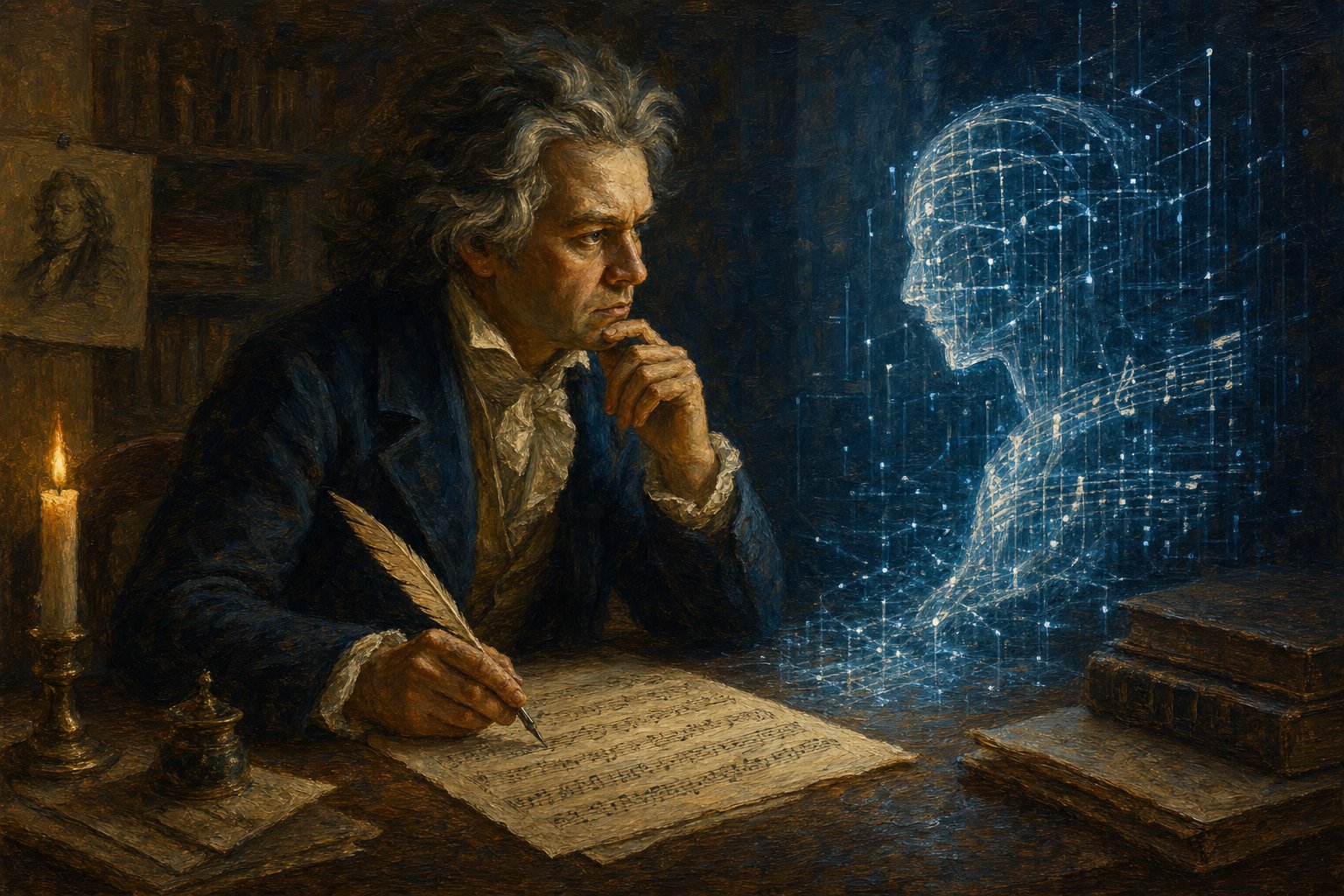
Technical competence without artistic intent. That tension doesn't just define AI's current quality ceiling. It opens a much deeper question that musicians, philosophers, and technologists have been arguing about since the first computer generated a chord progression: is AI music really creative, or does it only look that way from the outside?
Does Pattern Recognition Equal Creativity
Here's the core of the philosophical debate around AI composed music. Every AI system that generates classical works operates through pattern recognition and recombination. It identifies statistical regularities in training data, then produces output that conforms to those patterns. Humans also learn from existing music. Bach studied Vivaldi. Brahms internalized Beethoven. So what's the difference?
The difference, according to a compelling framework from creativity research, lies in what AI cannot do. As Robert Root-Bernstein argues in a recent analysis of AI creativity, current systems lack the ability to generate novel problems, identify biases in their own training data, or perform what he calls "untagging and retagging" — the process of stripping familiar information from its existing context and reconceiving it entirely. Kandinsky didn't paint non-representational art by recombining existing paintings. He saw his own work from a completely new angle and asked a question nobody had thought to ask.
Can AI be creative in music composition the way a human composer can? Pattern recognition finds what already exists in data. Creativity, in its strongest sense, finds what doesn't exist yet and asks why it should. No AI system currently generates novel musical problems. It doesn't wonder what a symphony would sound like if structured around silence rather than sound. It doesn't feel the urge to break a rule because the rule feels limiting. It optimizes within boundaries that humans define.
AI systems excel at reaching optimal solutions within given parameters. Human creativity often begins by rejecting those parameters entirely and asking whether the problem itself needs redefining.
That said, the ai music creativity vs pattern recognition debate isn't settled by pointing to what machines lack. A pragmatic counterargument exists: if the output moves a listener, does the process behind it matter? Music isn't consumed by reading source code. It's experienced as sound, emotion, and time.
Multiple Perspectives on AI Composition
The answer you get depends on who you ask and what they stand to gain or lose.
Composers tend to feel the sharpest unease. Catherine Anne Davies, who records as the Anchoress and sits on the board of the Featured Artists Coalition, speaks for many when she says generative AI for creative output is "a big no-no" in its current form. The concern isn't only economic. It's existential. If audiences can't distinguish machine output from human work, what happens to the cultural value placed on compositional craft? As Davies warns, "We should be so much more concerned than we are."
Performers often hold a more pragmatic view. New repertoire is new repertoire. If AI can generate technically playable, musically interesting pieces, performers gain material to explore, rehearse, and interpret. The creative act shifts from composition to performance, which is where many musicians locate artistry anyway.
Audiences present the most surprising data point. Research from Friedrichsen, Schwarz, and Clement found that listeners actually perceived AI-generated songs as superior to human-made ones in blind tests. But once told the music was AI-generated, their willingness to pay and desire to relisten dropped. People enjoy the sound but resist the idea. Something about knowing a machine produced the music diminishes its felt value, even when the sonic experience is identical.
Technologists pushing the boundaries tend to frame the question differently altogether. For them, creativity isn't a binary trait you either possess or lack. It's a spectrum of problem-solving capability, and AI is moving along it. The fact that current systems can't ask novel questions doesn't mean future architectures never will.
Where does this leave the debate? Unresolved, but productively so. The philosophical tensions around whether machines can truly create aren't just abstract exercises. They shape real decisions about copyright, compensation, and cultural value, questions that are already landing in courtrooms and boardrooms.
Legal and Copyright Questions for AI Music
Courtrooms and boardrooms aren't debating this in the abstract. Real money, real careers, and real creative work hang in the balance. If you're considering using AI to generate classical music professionally, the legal landscape deserves your attention before you publish a single note.
Who Owns AI-Generated Classical Music
Imagine you use an AI tool to generate a string quartet in the style of Dvorak. You tweak the tempo, adjust a few voicings, and release it. Who owns that piece? You? The company that built the AI? The composers whose works trained the model? Or nobody at all?
In the United States, the answer is increasingly clear. The U.S. Copyright Office released Part 2 of its AI report in January 2025, stating that AI-generated outputs can only receive copyright protection where a human author has determined sufficient expressive elements. Purely AI-generated music, the kind produced by typing a prompt and accepting the result, cannot be copyrighted and effectively falls into the public domain.
The Thaler v. Perlmutter case reinforced this position through the courts, affirming that copyright protection is reserved for works of human creation. If you generated a classical piece with minimal personal creative input, you likely have no legal mechanism to stop someone else from copying, distributing, or claiming it.
The UK takes a slightly different approach. Section 9(3) of the Copyright, Designs and Patents Act 1988 provides some protection for "computer-generated works," assigning copyright to whoever arranged for the work's creation. However, the UK government announced in March 2026 that copyright material cannot be used for AI training without permission, signaling a tightening regulatory stance. The broader question of AI output ownership remains under active review.
For AI-assisted works, where a human composer uses AI as one tool among many, the human-authored elements can still receive protection. The more creative control you exercise over the final result, selecting, arranging, modifying, and making genuine artistic decisions, the stronger your copyright position. The key factor is demonstrable human authorship over the expressive choices in the finished piece.
Implications for Performers and Publishers
The copyright uncertainty doesn't stop at the composer's desk. Performers recording AI-generated classical music face a strange new reality: you can copyright your performance of a piece, but the underlying composition itself might be unprotectable. Publishers evaluating AI-composed works for their catalogs must weigh whether pieces without clear copyright status hold commercial value in a market built entirely on intellectual property rights.
Meanwhile, major labels have launched coordinated lawsuits against AI music companies. The RIAA filed landmark cases against Suno and Udio in 2024 over the use of copyrighted recordings as training data. Settlements are emerging, with Warner Music reaching a deal with Udio by late 2025, but the broader legal framework remains unsettled.
If you're planning to use AI-composed classical music commercially, here are the key legal considerations to keep in mind:
- Copyright registration: Disclose AI-generated elements when registering works with the Copyright Office. Transparency protects you; concealment creates liability.
- Documentation: Keep records of your creative process, including prompts, modifications, and artistic decisions. This evidence supports a copyright claim if challenged.
- Terms of service: Read the AI platform's terms carefully. Some tools claim broad licenses over output or disclaim copyright warranties entirely.
- Training data provenance: Be aware that AI tools trained on copyrighted music without licenses could expose downstream users to infringement risk.
- Jurisdictional differences: Copyright rules for AI output vary across the US, UK, and EU. If you distribute internationally, the weakest protection in any jurisdiction defines your actual exposure.
The legal ground is shifting fast. What's permissible today may face new restrictions tomorrow, and what seems uncertain now may crystallize into established precedent. For anyone serious about integrating AI into classical composition, staying informed isn't optional. It's a practical necessity that shapes which tools you choose and how you use them.
AI Classical Music Tools You Can Try Now
Knowing which tools you can use and how they differ matters more than any abstract legal debate when you're ready to experiment. The landscape of AI tools for composing classical music has expanded rapidly, but not every platform handles orchestral and classical-style generation equally well. Some are built for it. Others treat classical as one genre checkbox among dozens.
Here's a practical breakdown of what's available, who each tool serves best, and what you can realistically expect from each one.
AI Classical Composition Tools Worth Exploring
MakeBestMusic's AI Classical Generator is designed specifically for classical-style music ideation. Where many AI platforms spread themselves across pop, EDM, hip-hop, and everything else, this tool focuses on helping composers, students, and creators generate classical music ideas with AI. That specialization matters. You're not fighting against a system optimized for pop hooks when you want a Baroque-inspired fugue subject or a Romantic piano sketch. It's particularly useful as a starting point for brainstorming, sketching thematic material, or exploring harmonic directions before committing to a full composition.
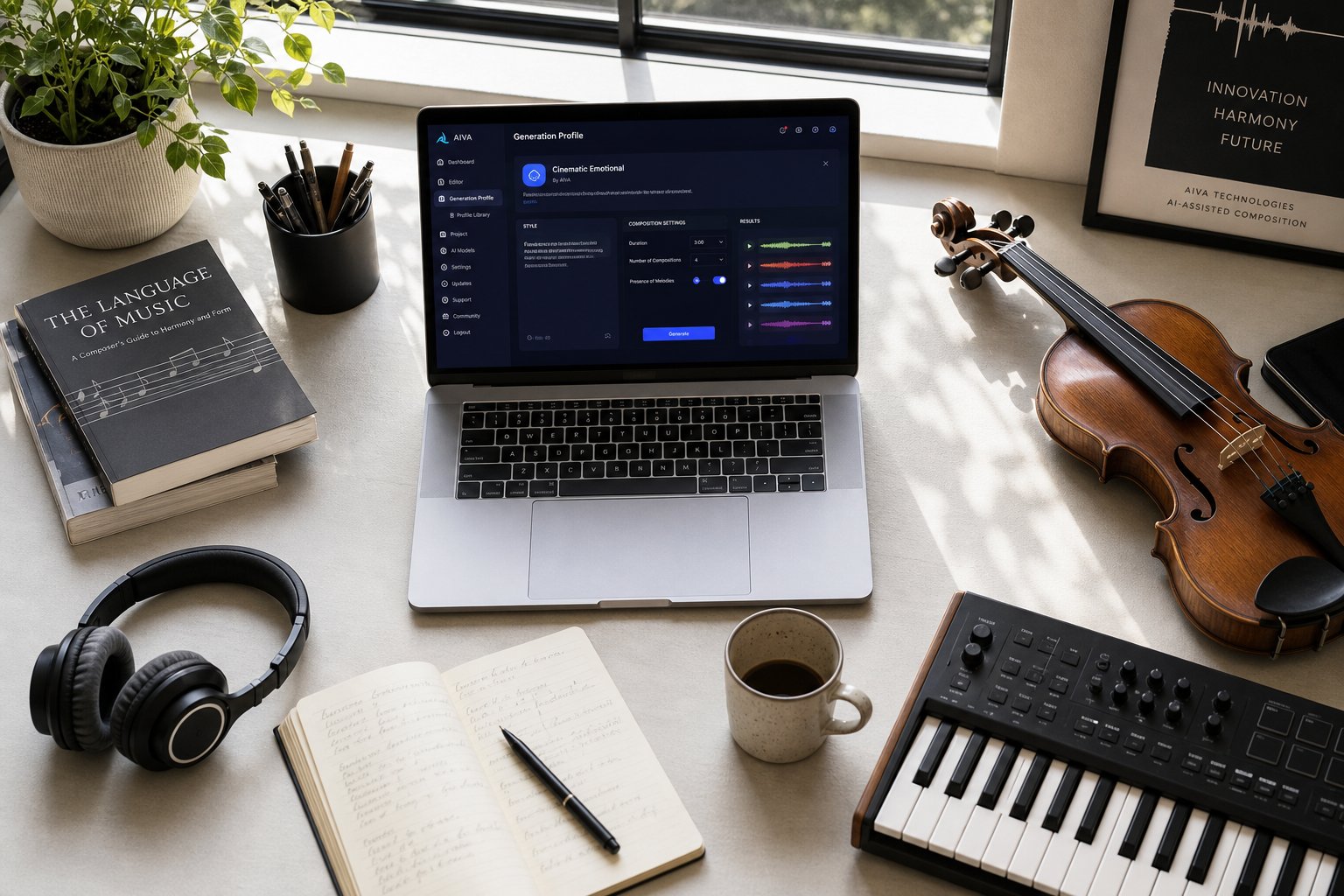
AIVA (Artificial Intelligence Virtual Artist) remains the most established name in AI classical and orchestral composition. Trained on over 20,000 classical music scores from Bach, Mozart, Beethoven, and Vivaldi, AIVA holds the distinction of being the first AI officially recognized as a composer by France's SACEM (Society of Authors, Composers, and Music Publishers). Its strength lies in cinematic and symphonic output. You can export MIDI and sheet music for further editing, making it genuinely useful for professional workflows. The tradeoff is complexity. AIVA demands more from its users than simpler prompt-based tools, and the free tier restricts commercial use.
MuseNet from OpenAI demonstrated what transformer architectures could achieve for multi-instrument classical generation. Built on a 72-layer network with 24 attention heads and full attention over a 4096-token context, MuseNet generates 4-minute compositions across 10 different instruments. It blends styles convincingly, like taking the first six notes of a Chopin Nocturne and generating a continuation in a completely different genre. The model trained on data from ClassicalArchives, BitMidi, and the MAESTRO dataset. However, MuseNet is primarily a research demonstration rather than a production tool, and its public availability has been limited.
Soundraw takes a hybrid approach, combining AI generation with manual editing. After the system produces a track, you can customize structure, extend or shorten sections, and reposition key moments. While not specifically built for classical music, its instrumental focus and editing flexibility make it workable for creators who need classical-style background pieces with precise structural control.
Beatoven.ai specializes in mood-based generation. You define the emotional arc, and the system builds music to match. For scoring projects that need classical-flavored underscore, it offers a quick path to usable results, though the output leans more toward functional background music than concert-ready composition.
Choosing the Right Tool for Your Needs
The best ai tools for classical music composition depend entirely on what you're trying to accomplish. A film composer prototyping a score has different needs than a music theory student exploring counterpoint, and both differ from a content creator who simply needs a two-minute orchestral bed for a video.
Here's how the options compare across the dimensions that matter most for classical-style work:
| Tool | Best For | Classical Specialization | Output Format | Accessibility | Target User |
|---|---|---|---|---|---|
| MakeBestMusic AI Classical Generator | Classical idea generation, thematic sketching, exploration | High — purpose-built for classical styles | Audio | Easy — minimal learning curve | Composers, students, creators |
| AIVA | Orchestral scores, film/game soundtracks, professional production | High — trained on 20,000+ classical scores | MIDI, sheet music, audio | Moderate — more complex interface | Professional composers, media producers |
| MuseNet | Multi-instrument generation, style blending, research exploration | High — deep classical training data | MIDI | Limited — research demo, not a production platform | Researchers, experimenters |
| Soundraw | Customizable background music, video scoring | Low to moderate — classical is one option among many | WAV, stems | Easy — slider-based interface | Video creators, podcasters |
| Beatoven.ai | Mood-based scoring, project background music | Low to moderate — mood-driven rather than style-driven | Audio | Easy — template-based workflow | Content creators, filmmakers |
A few practical considerations when choosing:
- If you want classical-specific output without wading through pop and EDM presets, tools with dedicated classical focus like MakeBestMusic's generator or AIVA will save you time and produce more idiomatically appropriate results.
- If you need editable scores, AIVA's MIDI and sheet music export gives you the most downstream flexibility for arranging and orchestrating.
- If you're exploring what AI can do with classical forms, MuseNet's style-blending capabilities remain fascinating, even if access is more limited than commercial platforms.
- If you need royalty-free classical-style background music quickly, Soundraw and Beatoven.ai prioritize speed and licensing clarity over compositional depth.
The ai classical music generator comparison ultimately comes down to how much creative control you want to retain. Tools that hand you a finished audio file work well for background music. Tools that give you notes, themes, and musical ideas to develop further serve composers who want AI as a collaborator rather than a replacement.
Having the right tool is only half the equation. Knowing how to use it effectively, how to prompt, iterate, and integrate AI output into a larger creative process, determines whether the results feel generic or genuinely useful.
How to Start Creating Classical Music with AI
Effective prompting separates forgettable output from results you can actually use. Whether you're a composer sketching thematic material, a student exploring harmonic structures, or a content creator who needs a two-minute orchestral piece for a video, the ai classical music generation workflow follows the same core logic: define what you want, generate options, then refine until the output serves your purpose.
Here's how to use ai to compose classical music in a structured, repeatable way.
A Practical Workflow for AI Classical Composition
Getting started with ai music composition doesn't require years of conservatory training. It does require clarity about what you're after. The following workflow applies across platforms, though specific interface details vary by tool.
- Start with a focused tool. Open MakeBestMusic's AI Classical Generator or another platform with strong classical capabilities. A tool built for classical idioms gives you better default output than a general-purpose generator where you're competing against pop and electronic presets for the system's attention.
- Define your musical parameters. Before you hit generate, decide on era or style (Baroque, Classical, Romantic, Impressionist), instrumentation (solo piano, string quartet, full orchestra), tempo range, and emotional character. The more specific you are, the more usable the output becomes.
- Write a detailed prompt. Vague inputs produce vague music. Instead of "classical piano piece," try "melancholic Romantic-era piano nocturne, rubato feel, minor key, moderate tempo with a lyrical melody over arpeggiated left hand." Name specific textures, dynamics, and structural features.
- Generate multiple variations. Treat the first output as a draft, not a finished product. Generate three to five versions with slight parameter adjustments. AI composition is an iterative process. As Berklee's Ben Camp describes his own workflow: generate options, identify what works, refine the direction, and iterate until the material hits.
- Evaluate critically. Listen for harmonic coherence, melodic interest, and whether the piece develops or simply repeats. Does the opening material lead somewhere? Does the phrasing feel natural or mechanical? Your taste is the filter that transforms raw AI output into something worth keeping.
- Extract and develop. You don't have to use the entire generated piece. Pull out a four-bar theme that catches your ear, a harmonic progression that surprises you, or a rhythmic motif worth building on. Many professional composers use AI this way, as an idea generator rather than a finished-product machine.
- Integrate into your creative process. Import MIDI into your DAW for orchestration. Use a generated sketch as a starting point for manual composition. Layer human performance over AI-generated harmonic beds. The goal is collaboration, not delegation.
Tips for Getting Better Results
Raw generation is just the beginning. These strategies will help you get tips for better ai classical music results regardless of which platform you use:
- Name specific composers as style anchors. "In the style of Debussy" produces more coherent output than "impressionist" alone, because the model has denser training data around well-known composers.
- Specify instrumentation explicitly. Don't leave instrument choice to the algorithm. "Cello melody over sustained string harmonies with pizzicato bass" gives the system concrete constraints to work within.
- Control duration expectations. AI handles 30-second to 2-minute passages far better than extended works. If you need a longer piece, generate sections individually and assemble them with intentional transitions.
- Change one variable at a time. When iterating, adjust only the tempo, or only the mood descriptor, or only the instrumentation. Changing everything at once makes it impossible to identify what improved the output.
- Learn basic music vocabulary. Terms like legato, staccato, pianissimo, crescendo, and rubato aren't just for performers. They function as precise controls in your prompts, giving the AI actionable detail about the character you want.
The workflow looks slightly different depending on your goals. Professional composers might generate twenty variations, discard nineteen, and develop one surviving motif into something entirely their own. Students can use generated examples to study how harmonic progressions function in context, essentially reverse-engineering the output as a learning exercise. Content creators often need the opposite approach: generate, select the best result, and export directly for use in a project.
Whatever your starting point, the principle stays the same. AI doesn't replace your musical judgment. It gives your judgment more raw material to work with. The composers, students, and creators getting the best results aren't the ones who accept the first output. They're the ones who know what they're listening for and aren't afraid to keep iterating until they find it.
