

What Is a Drake AI Song Generator
Imagine typing a few lines of lyrics into a tool and hearing them performed back to you in Drake's unmistakable voice — smooth, melodic, and dripping with that signature Toronto cadence. That is exactly what a Drake AI song generator promises to deliver, and it has become one of the most searched and debated topics in modern music technology.
What a Drake AI Song Generator Actually Does
At its core, this type of tool uses artificial intelligence to replicate Drake's vocal style, pitch patterns, and emotional delivery, producing audio that sounds like the artist performing brand-new material. The technology behind it typically blends several AI layers: voice synthesis engines that clone tonal characteristics, text-to-speech models that convert written lyrics into sung or rapped audio, and sometimes even lyric generators that mimic his writing style. Some platforms work the other way around, using speech-to-speech conversion to transform a user's recorded vocal performance into one that sounds like Drake in real time.
A Drake AI song generator is an artificial intelligence tool that analyzes Drake's recorded vocals to learn his tone, cadence, and delivery, then uses that data to produce new audio — either from typed lyrics or transformed vocal recordings — that closely imitates his voice and musical style.
The output quality varies widely depending on the platform. Some tools produce rough, obviously synthetic results, while more advanced systems powered by deep neural networks can generate audio realistic enough to fool casual listeners.
Why Drake Became the Face of AI Music
You might wonder why Drake, of all artists, became the poster child for AI-generated music. Several factors converge to make him the ideal candidate. His vocal tone is highly distinctive yet consistently recognizable across hundreds of tracks — a characteristic that gives neural networks rich, consistent training data to work with. AI voice cloning technology, as explained by AltexSoft, relies on deep learning models trained on large datasets of an artist's recordings to learn pitch, timbre, and pronunciation habits. Drake's prolific discography — spanning studio albums, mixtapes, features, and loosies — provides exactly that kind of extensive dataset.
His massive cultural footprint matters too. Drake consistently ranks among the most-streamed artists on the planet, which means the audience eager to hear "new Drake" content is enormous. That fan demand, combined with a voice that AI models can learn from effectively, created the perfect storm for experimentation.
This article digs into every dimension of that storm — the technology powering these tools, the platforms you can actually use, what Drake himself thinks about all of it, and the legal and ethical realities anyone considering this space needs to understand. The story begins with a single viral track that forced the entire music industry to pay attention.
The Viral Moment That Sparked a Global AI Music Debate
In April 2023, a two-minute and sixteen-second track appeared on streaming platforms under the name of an anonymous creator called Ghostwriter. The song, titled "Heart on My Sleeve," featured AI-cloned vocals of both Drake and The Weeknd performing what sounded like a polished, radio-ready collaboration. Within days, it had racked up hundreds of thousands of streams and views — and ignited a firestorm that the music industry is still grappling with.
Heart on My Sleeve and the Track That Shook the Industry
What made this AI-generated Drake song so alarming was not just the technology itself, but how convincing it sounded. The track featured two distinct verses and a chorus with voices closely resembling both superstars. It even included lyrics referencing Selena Gomez, who had been linked to The Weeknd, lending the song an eerie sense of authenticity. YouTube comments captured the mood perfectly — listeners wrote things like "if you told me this was just an unreleased song I'd believe it" and "this would literally go No. 1 on the charts if Drake released it."
The numbers reflected that enthusiasm. As Variety reported, the track accumulated roughly 253,900 listens from 161,100 users on Spotify and 197,000 views on YouTube within just two days. Ghostwriter had a verified Spotify account despite having posted only this single track, and on YouTube, the song's subtitle explicitly read "(Drake AI Song feat. The Weeknd)." The anonymous creator's account left a simple promise beneath the upload: "This is just the beginning."
Universal Music Group did not wait long to respond. The label moved swiftly to issue takedown requests, and the track began disappearing from streaming platforms throughout the day. Tidal and Apple Music removed it first, followed by Spotify greying it out in search results. YouTube was the last major platform to pull the song, displaying a clear message: "This video is no longer available due to a copyright claim by Universal Music Group." The speed of the response underscored just how seriously the industry's largest label viewed the threat.
How the Music Industry Responded
The fallout from "Heart on My Sleeve" extended far beyond a single takedown. It forced an industry-wide reckoning with a question no one had fully prepared for: what happens when AI can produce music indistinguishable from the real thing?
Universal Music Group released a pointed statement framing the stakes in stark terms. The company acknowledged embracing new technology but drew a hard line, asking "which side of history all stakeholders in the music ecosystem want to be on: the side of artists, fans and human creative expression, or on the side of deep fakes, fraud and denying artists their due compensation." That language set the tone for how major labels would approach AI-generated content going forward.
The ripple effects spread quickly. Streaming platforms began drafting new policies specifically addressing synthetic vocals and AI-generated tracks. Spotify introduced guidelines targeting impersonation, spam, and AI disclosures. Apple started requiring labels and distributors to disclose when AI had been used in recordings, compositions, or artwork. Bandcamp went further, banning music that is entirely or substantially generated by AI. Meanwhile, iHeartRadio launched its "Guaranteed Human" initiative, pledging not to play AI music featuring synthetic vocalists pretending to be human.
The broader creative community responded too. In 2024, the Artist Rights Alliance published an open letter signed by over 200 artists — including Billie Eilish, Katy Perry, Nicki Minaj, and Zayn Malik — calling on AI developers and music platforms to stop undermining creators' rights. A year later, more than 400 artists urged policymakers to strengthen copyright protections in the age of generative AI.
Here is a chronological timeline of the key milestones that transformed a single viral upload into a global policy conversation:
- Early April 2023: Drake posts about a separate AI track mimicking his voice rapping Ice Spice's "Munch," captioning it "This is the last straw AI" — an early public signal of his frustration with voice cloning technology.
- Mid-April 2023: "Heart on My Sleeve" by Ghostwriter surfaces on Spotify, Apple Music, YouTube, and Tidal, quickly going viral as the most convincing AI-generated Drake and Weeknd track to date.
- April 17-18, 2023: Universal Music Group issues takedown requests, and the track is removed from all major streaming platforms within roughly 24 hours, with YouTube confirming UMG's copyright claim.
- April-May 2023: UMG publicly calls on streaming platforms to block AI companies from scraping copyrighted music, accelerating industry-wide conversations about generative AI policy.
- 2024: Over 200 artists sign the Artist Rights Alliance open letter opposing unauthorized AI use of their voices and likenesses, while major platforms roll out new disclosure requirements and content policies for AI-generated music.
- 2025 and beyond: AI-generated tracks begin appearing on mainstream charts — AI-assisted artist Breaking Rust's "Walk My Walk" tops the Billboard Country Digital Song Sales chart — prompting calls for standardized labeling and transparent reporting across the streaming ecosystem.
The "Heart on My Sleeve" episode proved something the industry could no longer ignore: the technology behind AI voice cloning was already good enough to produce commercially viable music. The debate was no longer theoretical. But the track's viral success also raised a deeper technical question — how exactly does a neural network learn to sound like Drake in the first place?
How the Technology Behind Drake AI Voice Generation Works
The viral success of AI-cloned Drake vocals did not happen by accident. It is the product of several intersecting technologies, each operating at a different layer of the music creation process. Understanding how Drake AI voice cloning technology works requires looking under the hood at three distinct systems: voice synthesis, lyric generation, and beat production. Together, they form the engine behind every convincing AI-generated track.
Voice Cloning and Neural Speech Synthesis
At the foundation of any drake ai song generator sits a voice cloning model — a deep neural network trained on hours of an artist's recorded vocals. The process begins with data collection. Engineers feed the model large quantities of isolated vocal recordings: album tracks, features, freestyles, interviews, and anything else that captures the target voice in varied conditions. Drake's massive catalog makes this step particularly effective because the network has access to a wide range of emotional registers, tempos, and delivery styles.
During training, the neural network does not simply memorize recordings. It learns the underlying patterns that make a voice recognizable — pitch contours, timbre (the tonal "color" that distinguishes one voice from another), vibrato characteristics, consonant articulation habits, and even the subtle way Drake shifts between singing and rapping within a single bar. As Resemble AI explains, the model extracts key acoustic features from speech data, generating spectrograms that visualize frequency variations over time, then uses architectures like Tacotron 2 or Transformer-based systems to learn how the speaker modulates their voice across different phonemes and emotional states.
Once the model is trained, it needs a vocoder — a separate neural network — to convert those learned spectral representations into actual audio waveforms you can hear. Models like WaveNet, HiFi-GAN, and WaveGlow each handle this conversion differently, but the goal is identical: produce raw audio that sounds natural, not robotic.
Here is where two fundamentally different approaches diverge, and understanding the distinction matters if you are evaluating any tool in this space.
Text-to-speech (TTS) models accept typed lyrics as input and generate synthetic vocals from scratch. You write a verse, select a Drake voice model, and the system produces audio of that text being "performed" in his voice. The advantage is accessibility — anyone can type words. The limitation is phrasing control. The AI decides how to deliver each line, and that delivery often lacks the micro-timing, breath placement, and rhythmic intuition a human performer brings naturally.
Voice conversion (speech-to-speech) models take a completely different path. Instead of starting from text, they start from an actual vocal recording — yours, or anyone else's. You rap or sing into a microphone, and the model transforms your performance into one that sounds like Drake. Lalals highlights the key trade-off: voice conversion preserves the original human phrasing, breath control, and emotional nuance of the source performance, resulting in far more realistic output. Every note, pause, and rhythmic choice you make in your recording carries through into the converted version. Text-to-speech generation, by contrast, synthesizes phrasing from scratch, which can sound impressive but rarely matches the authenticity of a real performance run through voice conversion.
This explains why the most convincing AI Drake tracks — including "Heart on My Sleeve" — almost certainly relied on voice conversion rather than pure text-to-speech. Someone performed the vocals with human feeling, and the AI handled only the timbral transformation.
Lyric Generation and Beat Production With AI
Voice cloning is only one piece of the puzzle. A convincing Drake-style track also requires lyrics that sound like something he would actually write and a beat that fits his sonic palette. Separate AI technologies handle each of these layers.
For lyrics, large language models — the same family of AI that powers conversational chatbots — can be prompted to generate verses mimicking Drake's writing style. These models have ingested enormous quantities of text, including published lyrics, interviews, and cultural commentary. When directed to write "in the style of Drake," they can reproduce his thematic preoccupations: introspective vulnerability, Toronto pride, relationship tension, and wealth-as-identity. They can also mimic structural patterns like his preference for short, punchy bars alternating with melodic hooks, his use of internal rhyme, and his habit of referencing specific luxury brands, neighborhoods, and emotional states within the same verse.
The output quality is uneven, though. AI-generated lyrics frequently nail surface-level stylistic markers while missing the deeper narrative coherence and personal specificity that make Drake's writing distinctive. A language model can produce something that reads like Drake on a first pass, but careful listeners will notice the difference — the bars feel assembled rather than lived.
Beat production represents the third technology layer. AI beat generators use neural networks trained on large libraries of instrumental music to produce original tracks in specified styles. You can prompt these tools to generate trap beats with 808 bass patterns, moody R&B instrumentals with ambient pads, or aggressive UK drill productions — all genres Drake has worked across extensively. The resulting instrumentals are often surprisingly polished, with coherent song structures, realistic drum programming, and appropriate melodic elements.
Imagine these three layers stacked together: an AI-generated beat in Drake's preferred sonic territory, lyrics written by a language model tuned to his style, and a voice synthesis engine that makes it all sound like it is coming from his mouth. That is the full technical stack behind the most ambitious AI song generators.
The table below breaks down each technology layer, how it functions, and what you can realistically expect from the output:
| Technology Layer | How It Works | Typical Output Quality |
|---|---|---|
| Voice Synthesis | Deep neural networks trained on an artist's vocal recordings learn pitch, timbre, vibrato, and pronunciation patterns. Text-to-speech models generate vocals from typed lyrics; voice conversion models transform a user's recorded performance into the target voice. | High for voice conversion (preserves human phrasing); moderate for text-to-speech (phrasing can sound synthetic). Advanced models approach near-human realism on short passages. |
| Lyric Generation | Large language models analyze vast text datasets to learn an artist's writing style, rhyme schemes, thematic patterns, and vocabulary. Users provide prompts specifying mood, topic, or stylistic direction. | Moderate. Captures surface-level style effectively but often lacks the narrative depth, personal specificity, and emotional authenticity of human-written lyrics. Best used as a starting point for refinement. |
| Beat Production | Neural networks trained on instrumental music libraries generate original beats in specified genres (trap, R&B, drill, boom bap). Users select style, tempo, mood, and instrumentation parameters. | Moderate to high. Produces coherent song structures and realistic drum patterns. Complex arrangements and truly original sonic ideas remain a challenge, but output is often usable for demos and content creation. |
Each layer has matured rapidly, but they are not equally advanced. Voice synthesis — particularly voice conversion — has progressed the furthest, which is precisely why it has attracted the most controversy. An AI beat or a set of generated lyrics raises few eyebrows on its own. Attach a cloned version of a real artist's voice, though, and the conversation shifts entirely from technology to ethics — and to the artist whose voice is being borrowed without permission.
What Drake Has Said About AI Versions of His Voice
That artist whose voice keeps getting cloned without permission? He has not stayed quiet about it. Drake's response to AI voice clones has been direct, public, and unambiguous — and anyone experimenting with these tools should understand exactly where he stands before hitting "generate."
Drake's Public Statements on AI Voice Clones
Drake's frustration surfaced publicly even before "Heart on My Sleeve" dominated the headlines. In April 2023, an AI-generated cover of Ice Spice's "Munch (Feelin' U)" appeared online with a synthetic version of his voice rapping the track. Drake took to his Instagram story with a blunt caption: "This is the final straw AI." The post was widely screenshotted and shared, becoming one of the most-cited examples of a major artist publicly pushing back against voice cloning technology.
Days later, "Heart on My Sleeve" went viral — and the machinery behind Drake kicked into high gear. Universal Music Group, which represents him through Republic Records, moved aggressively to pull the track from every major streaming platform. UMG framed the issue in sweeping terms, questioning whether industry stakeholders wanted to stand "on the side of artists, fans and human creative expression, or on the side of deep fakes, fraud and denying artists their due compensation." That was not just corporate boilerplate. It signaled that the label — and by extension Drake's entire team at OVO Sound — viewed unauthorized AI voice replication as a fundamental threat to artist identity and revenue.
Drake himself has not released a lengthy public statement dissecting the technology, but his actions speak clearly. The combination of his Instagram reactions and his label's aggressive takedown strategy leaves little room for interpretation. Does Drake approve of AI-generated songs using his voice? The answer, based on every available signal, is an emphatic no.
The Artist Rights Perspective
Drake's opposition is not an outlier — it reflects the stance of most major-label artists. But the landscape is not entirely one-sided, which is what makes this debate so fascinating.
On one end of the spectrum, Grimes publicly invited musicians to clone her voice, tweeting that she would "split 50% royalties on any successful AI-generated song that uses my voice" and adding, "Feel free to use my voice without penalty." She called herself a "guinea pig" for the technology and expressed enthusiasm about being "fused with a machine." Fans immediately began posting AI tracks featuring her vocals. Her position remains one of the most prominent examples of an artist embracing voice cloning as a collaborative opportunity rather than a threat.
On the other end, the overwhelming majority of commercially successful artists have aligned with Drake's position. The Artist Rights Alliance open letter — signed by over 200 musicians including Billie Eilish, Nicki Minaj, and Katy Perry — called on developers and platforms to stop devaluing human creativity through unauthorized AI replication. Media lawyer Edward Klaris, speaking to NBC News about the "Heart on My Sleeve" situation, pointed to the right of publicity — an individual's inherent right to control the commercial use of their likeness — as a key legal concept at play.
The core tension is stark: fans see AI voice cloning as creative tribute and a democratization of music, while artists like Drake see it as unauthorized exploitation of their most personal artistic asset — their voice.
This divide matters practically, not just philosophically. If you are using a drake ai song generator to create content featuring a cloned version of his voice, you are doing something the artist has explicitly objected to, something his label has aggressively pursued legal action against, and something most streaming platforms will remove on sight. The creative enthusiasm driving these tools is genuine. But so is the opposition from the people whose voices are being replicated.
Understanding this reality naturally raises the next question: with so many tools available, which ones actually exist, what do they offer, and how do their approaches differ in terms of legal risk and creative value?
Best Drake AI Song Generator Tools Compared
The technology is impressive. The legal risks are real. Drake himself has made his feelings crystal clear. So where does that leave you if you still want to create rap music inspired by his style? The answer depends entirely on which tool you pick — and more importantly, what you are actually trying to accomplish with it.
The Drake AI voice generator comparison below is the kind of structured breakdown you will not find in most guides on this topic. Some of these tools focus on direct voice cloning, which carries all the legal and ethical baggage covered earlier. Others take a fundamentally different approach, helping you create original rap content — lyrics, flows, hooks, and beats — that captures the energy of Drake's style without copying his actual voice. That distinction matters more than any feature list.
Comparing the Top Drake AI Voice Generator Platforms
Here is a side-by-side look at the best Drake AI song generator tools available, ranked by how well they serve creators who want usable, shareable output without stepping into legal trouble:
| Tool Name | Core Feature | Ease of Use | Output Quality | Free Tier Available |
|---|---|---|---|---|
| MakeBestMusic AI Rap Generator | Original rap lyrics, flows, hooks, and beat generation in Drake-inspired styles (no voice cloning) | Beginner-friendly; text-prompt-based workflow | High — produces polished, original rap content ready for use or refinement | Yes |
| MusicSeed | Full AI rap song generation from text or lyrics, including vocals, flow, and beat | Very easy; automated end-to-end workflow | High — delivers complete rap tracks with AI-performed vocals | Yes |
| Uberduck | AI voice cloning with a library of celebrity and character voices, including rap vocal synthesis | Moderate; requires some audio setup | Moderate — spoken word is solid, singing and rap delivery can be inconsistent | Yes (limited) |
| Supertone Play | Singing and vocal voice cloning with pitch and vibrato preservation | Moderate; geared toward users with some music production knowledge | High for singing applications; moderate for rap-specific use | Yes (limited) |
| Voicemod AI | Real-time voice modulation and effects; can apply pitch shifts and vocal styling to live or recorded audio | Easy; plug-and-play interface | Low to moderate — adds effects rather than generating full songs | Yes |
A few things stand out immediately. Tools that directly clone an artist's voice — like Uberduck's celebrity voice library — deliver the novelty factor people search for when they look up a free Drake AI voice generator online. You type lyrics, pick a voice, and hear something resembling Drake. The results can be entertaining for personal experiments, but they sit squarely in the legal danger zone described earlier. Universal Music Group has shown it will pursue takedowns aggressively, and streaming platforms will remove content flagged as unauthorized voice imitation.
MakeBestMusic's AI Rap Generator takes a deliberately different path. Instead of cloning Drake's voice, it helps you generate original rap lyrics, experiment with cadences and flows, build hooks, and produce beats in styles Drake fans will recognize — trap, melodic rap, drill, moody R&B-inflected hip-hop. The creative DNA is yours. You are not borrowing someone else's voice; you are using AI as a creative partner to develop something original. For rappers, lyricists, beatmakers, and social creators, that distinction is not just legally safer — it is creatively more sustainable. You walk away with content you actually own.
MusicSeed offers a comparable all-in-one approach, generating complete rap tracks from text prompts or pasted lyrics with AI-performed vocals, automatic flow matching, and beat production. It is a strong option for creators who want a finished track fast. Voicemod AI, by contrast, is not really a song generator at all — it is a real-time voice effects tool. It can stylize your existing vocal recordings with pitch shifts and filters, which is useful for streaming or content creation but will not produce a full Drake-style track on its own.
Choosing the Right Tool for Your Goals
The "best" tool depends entirely on what you are trying to do. Someone looking for a quick, fun Drake voice clip to share in a group chat has very different needs than someone who wants to build an original rap catalog with AI assistance. Matching the right tool to the right goal saves time, avoids legal headaches, and produces better creative results.
Think about your intent honestly, then weigh these decision factors:
- Legal safety: Does the tool clone a real artist's voice, or does it help you create original content? Voice cloning tools expose you to takedown requests, platform bans, and potential legal action. Original creation tools carry none of that risk.
- Output quality: Free tiers across nearly every platform produce lower-fidelity results. If polished output matters — for releases, content, or demos — expect to invest in a paid tier or spend time refining raw output.
- Customization depth: Some tools offer minimal control — you type text and get a result. Others let you adjust flow, tempo, rhyme density, mood, and instrumental style. The more creative control you want, the more you should lean toward AI rap generators for Drake-style music rather than simple voice cloning widgets.
- Creative ownership: This is the factor most people overlook. If you use a voice clone of Drake, you cannot legally distribute, monetize, or claim that content as your own. If you use an AI tool to generate original lyrics, beats, and flows, the output is yours to build on, release, and grow with.
For creators who are serious about making rap music — not just generating a viral gimmick — the choice increasingly points toward tools that treat AI as a creative collaborator rather than a celebrity impersonator. MakeBestMusic's AI Rap Generator exemplifies that approach, giving you Drake-inspired stylistic options without the legal and ethical weight of putting someone else's voice in your track.
Picking the right tool is only half the equation, though. The other half is knowing how to use it effectively — from crafting the right prompts to assembling a finished track that actually sounds like something worth listening to.
How to Create a Drake AI Song Step by Step
Knowing which tools exist is one thing. Getting a polished, convincing result out of them is something else entirely. The difference between a track that sounds like a bad text-to-speech experiment and one that actually captures Drake's energy usually comes down to how you approach the process — starting with the lyrics.
Generating Lyrics in Drake's Style
Every great Drake track starts with words that feel specific, emotional, and rooted in a recognizable worldview. If you want to generate lyrics like Drake with AI, vague prompts will give you vague results. The key is feeding your AI lyric generator the thematic DNA that makes his writing instantly identifiable.
Think about what a Drake verse actually sounds like when you strip away the voice. You will notice recurring ingredients: introspection about fame and its emotional cost, vulnerability about relationships that fell apart, pride in Toronto as both hometown and identity, flexing on luxury and success while simultaneously questioning whether any of it fills the void. Those are not random topics — they are the pillars his entire catalog rests on.
When prompting an AI lyric tool, specificity is everything. Instead of typing "write a rap song like Drake," try something closer to: "Write a 16-bar verse about missing someone you outgrew, with references to late-night drives through Toronto, a melancholic tone, and internal rhyme patterns." That level of detail gives the language model concrete stylistic and thematic guardrails to work within.
A few prompting strategies that consistently produce stronger output:
- Specify song structure explicitly. Ask for a verse, hook, second verse, and bridge separately rather than requesting an entire song at once. Drake's tracks typically follow a Verse-Hook-Verse-Hook-Bridge-Outro pattern, and generating each section individually lets you refine as you go.
- Name the mood and subgenre. "Melodic Drake" and "aggressive Drake" are practically two different artists. Clarifying whether you want the introspective tone of Take Care or the confident energy of If You're Reading This It's Too Late makes a measurable difference.
- Request specific rhyme schemes. Drake frequently uses multisyllabic internal rhymes and slant rhymes rather than simple end-of-line couplets. Prompting the AI to "use internal rhyme and near-rhyme patterns" pushes the output closer to his actual writing style.
- Edit ruthlessly. AI-generated lyrics are a starting point, not a finished product. The best results come from taking the raw output and injecting personal details, rewriting clunky lines, and replacing generic references with ones that feel lived-in. As one step-by-step guide on AI rap creation notes, not editing AI lyrics is one of the most common mistakes beginners make.
The goal is not to trick anyone into thinking Drake wrote your lyrics. It is to use AI as a creative accelerator — handling the heavy lifting of initial drafting so you can focus on shaping something that sounds authentic to your own vision while channeling his stylistic energy.
Creating and Combining Voice and Instrumental Tracks
Lyrics on a page are only the skeleton. Turning them into a finished Drake-style AI beat and vocal workflow requires assembling several layers — and the order you tackle them in matters more than most people realize.
Here is the step-by-step process from concept to completed track:
- Define your concept and subgenre. Before touching any tool, decide what kind of Drake track you are making. A moody, piano-driven R&B cut requires a completely different approach than an aggressive drill record. Pin down the tempo range (Drake's catalog spans roughly 70 BPM for slow jams to 145+ BPM for drill tracks), the mood, and the emotional arc of the song.
- Generate or write your lyrics. Use an AI lyric generator with the prompting techniques described above, or write your own bars and use AI only for refinement — suggesting rhyme alternatives, tightening syllable counts, or generating a hook to complement your verses. The hybrid approach, where you write the core ideas and let AI handle structural polish, often yields the most authentic results.
- Produce the instrumental. Feed a detailed prompt into an AI beat generator specifying genre, BPM, key instruments, and mood. For Drake-style production, effective prompts might look like: "dark trap beat, 135 BPM, heavy 808 bass, ambient pads, minor key, reverb-heavy melody" or "emotional R&B instrumental, 80 BPM, piano chords, soft hi-hats, warm strings." Be specific about instruments and atmosphere — naming instruments like "808 bass" or "jazz piano sample" and describing the mood as "melancholic" or "triumphant" consistently produces better beats than generic prompts.
- Record or generate the vocal performance. This is where your path splits based on the tool you chose. If you are using a voice conversion tool, record yourself performing the lyrics over the beat — focus on nailing the cadence, breath placement, and emotional delivery, because the AI will preserve all of that while transforming the timbre. If you are using a text-to-speech engine, paste your lyrics and select the voice model, then adjust pacing and emphasis settings where available. If you are working with an original AI rap generator rather than a voice clone, the platform handles vocal generation as part of its integrated workflow.
- Combine and mix the elements. Layer the vocal track over the instrumental. Most AI platforms export audio files that you can import into any digital audio workstation. Basic mixing involves balancing vocal volume against the beat, adding light reverb or delay to the vocals for depth, and ensuring the low end of the beat does not muddy the vocal clarity. Even simple adjustments here make a dramatic difference in how professional the final track sounds.
- Iterate and refine. Your first generation will rarely be perfect. Adjust the beat prompt if the instrumental feels off, re-record your vocal take with different phrasing, or regenerate specific sections while keeping the parts that work. The most convincing AI-generated tracks are never one-shot outputs — they are the result of several rounds of tweaking and recombining.
A practical reality check is important here. Output quality varies significantly across tools, and most free tiers produce noticeably lower-fidelity results — thinner vocals, less detailed instrumentals, and limited export options. If you are creating content for public sharing, demos, or portfolio pieces, upgrading to a paid tier or spending time on post-production mixing typically closes the quality gap.
One more distinction worth keeping front of mind: using these tools for personal experimentation and learning is a fundamentally different activity from distributing the output commercially. Creating a Drake-style track in your bedroom to study song structure, practice writing flows, or explore production ideas is low-risk creative education. Uploading that same track to Spotify with a cloned voice attached is an entirely different proposition — one with legal consequences covered in depth in the next section.
Legal Risks and Platform Rules for AI-Generated Drake Music
That line between personal experimentation and commercial distribution is not just a matter of etiquette — it is a legal boundary with real consequences. If you have made it this far, you understand the technology, you know which tools exist, and you have seen Drake's unambiguous opposition. The question hanging over all of it is simple: is it legal to make AI Drake songs? The honest answer is complicated, jurisdiction-dependent, and still evolving. But enough legal precedent and platform policy exists right now to give you a clear picture of the risks.
Copyright and Right of Publicity Issues
Two distinct legal frameworks collide when someone uses a drake ai song generator to produce and distribute content. Most people lump them together, but they operate independently — and understanding the difference matters because your exposure depends on which one applies to your situation.
The first is copyright infringement. Under U.S. copyright law (17 U.S.C. §106), the owners of a musical composition hold exclusive rights to reproduce, distribute, and create derivative works from that material. Lyrics are protected as literary works within the composition. If you feed copyrighted Drake lyrics into an AI tool and the output includes those lyrics — even set to a completely new melody — that likely constitutes infringement of the composition copyright. Courts apply a "substantial similarity" test, and verbatim or near-verbatim lyric reproduction clears that bar easily. The same legal analysis found in the Concord Music Group v. Anthropic litigation, where publishers alleged an AI system outputted their protected lyrics, underscores how seriously rights holders pursue these claims.
Here is where it gets counterintuitive, though. Copyright in sound recordings — meaning a specific fixed performance of a song — works differently. Section 114(b) of the Copyright Act explicitly states that sound recording protection does not extend to sounds that are "merely imitated." In other words, if an AI generates new audio that sounds like Drake's voice without actually sampling or copying waveforms from his recordings, federal copyright law may not cover it. The Seventh Circuit confirmed this principle in Richardson v. Kharbouch, ruling that similarity in timbre and cadence, without taking actual copyrighted audio samples, did not constitute infringement. Similarly, in Lehrman v. Lovo, Inc., a federal court dismissed sound recording claims against an AI company that cloned professional voices, finding that synthesized audio generated from learned voice models — rather than copied from specific recordings — fell outside Section 114's protections.
Does that mean voice cloning is legally safe? Not at all. That is where the second framework enters the picture.
The right of publicity is a state-level legal doctrine that gives individuals control over the commercial use of their name, image, likeness, and voice. It operates completely independently of copyright. As Harvard Law lecturer Louis Tompros explained, Drake's strongest legal argument against AI voice clones is probably not copyright at all — it is the right of publicity. He pointed to the landmark Midler v. Ford Motor Co. case, where the Ninth Circuit held that intentionally imitating a professional singer's distinctive voice to sell a product violated California's right of publicity. The parallel to AI-generated Drake songs is straightforward: an intentional imitation of a distinctive voice, used for commercial purposes, without the artist's consent.
The catch? Right of publicity laws vary dramatically by state. Tennessee's 2024 ELVIS Act explicitly targets AI voice cloning by prohibiting the use of an artist's voice via generative AI for commercial purposes without consent. California has enacted similar protections. Other states offer far less coverage, and there is currently no federal right of publicity statute — meaning legal protection depends heavily on where you live and where the claim is filed. Legal scholars have described this as a regulatory gap: federal law robustly protects lyrics and melody, but treats the sound of a voice as largely unprotected, leaving performers to navigate a fragmented patchwork of state laws.
The practical reality is this: copying lyrics risks federal copyright claims with statutory damages up to $150,000 per work, while cloning a voice risks state publicity claims that are harder to bring but increasingly supported by new legislation targeting AI specifically.
Streaming Platform Policies on AI-Generated Vocals
Even if you navigate the legal gray areas successfully, you still have to get past the platforms — and they have been drawing their own lines rapidly since the "Heart on My Sleeve" incident forced their hand.
Streaming services and content platforms have implemented or announced policies that make distributing AI Drake songs on commercial platforms a high-risk activity. These policies do not always align perfectly with copyright law; in many cases, they go further, giving platforms broad discretion to remove content and penalize uploaders. Here is where the major players currently stand:
- Spotify introduced a dedicated impersonation policy clarifying that vocal impersonation — whether AI-generated or otherwise — is only permitted when the impersonated artist has explicitly authorized the usage. The platform has removed over 75 million spammy tracks in a single twelve-month period, many flagged by AI detection systems. Spotify is also rolling out a music spam filter designed to identify uploaders engaging in mass AI-generated uploads, duplicate content, and SEO manipulation tactics, stopping those tracks from being recommended. Additionally, the platform is supporting an industry-wide AI disclosure standard developed through DDEX, requiring labels and distributors to indicate where AI played a role in a track's creation — covering vocals, lyrics, instrumentation, and post-production.
- Apple Music has required labels and distributors to disclose when AI has been used in recordings, compositions, or accompanying artwork. Content flagged as unauthorized AI impersonation is subject to removal, and Apple has cooperated with rights holders on takedown requests since the earliest AI voice cloning incidents in 2023.
- YouTube processes takedown requests under its existing Content ID and DMCA frameworks. It was the last major platform to remove "Heart on My Sleeve," displaying a clear notice attributing the removal to a Universal Music Group copyright claim. YouTube has since expanded its policies to address AI-generated content more broadly, including tools for rights holders to flag synthetic voice usage.
- Bandcamp has taken the most aggressive stance, banning music that is entirely or substantially generated by AI from its marketplace.
- TikTok removed the original Ghostwriter upload after UMG's takedown request and has since updated its community guidelines to address AI-generated content that impersonates real individuals without disclosure or consent.
The practical takeaway? Even if a court has not yet ruled definitively on your specific situation, streaming platforms do not need a court ruling to act. Their terms of service give them unilateral authority to remove content, suspend accounts, and withhold royalties. A track that survives a legal challenge could still be pulled by a platform's internal review team before a single listener ever hears it.
Documented cases reinforce this. "Heart on My Sleeve" was wiped from every major platform within roughly 24 hours of UMG's takedown requests. Subsequent AI-generated tracks mimicking major artists have faced similar fates. The copyright issues with AI-generated music are not hypothetical — they are actively being enforced through both legal channels and platform-level moderation, and the enforcement infrastructure is only getting stronger.
All of this legal and policy architecture addresses what happens after you create and distribute AI-cloned music. But there is a deeper, more personal question that no takedown notice or platform policy can fully answer — one that goes beyond legality and into the ethics of using someone's voice, someone's artistic identity, without ever asking them.
The Ethics of AI Voice Cloning in Hip-Hop
A takedown notice tells you what you cannot do. A platform policy tells you what will get removed. But neither one answers the question that sits beneath every AI-generated Drake track, every cloned vocal uploaded to social media, every fan-made collaboration that never received the artist's blessing: should you do it in the first place?
That question has no single answer — and pretending otherwise would be dishonest. The ethics of AI voice cloning in music sit at the intersection of creative freedom, personal identity, technological progress, and economic survival. Depending on who you ask, the same tool is either a revolutionary instrument of artistic expression or a machine for stealing someone's soul. Understanding the real perspectives on each side is essential before you decide where you stand.
The Ethics of Cloning an Artist's Voice Without Consent
Fan creators who use these tools rarely see themselves as thieves. For many, building a track with a cloned vocal is an act of tribute — no different, in their eyes, from painting a portrait of someone you admire or performing a cover at an open mic. They point out that hip-hop itself was built on sampling, remixing, and recontextualizing existing art. The argument goes something like this: if a DJ can chop up a James Brown break, and a rapper can interpolate a Biggie flow, why can't a bedroom producer use AI to channel Drake's voice over an original beat? The creative impulse, they say, is the same. The technology is just newer.
There is genuine sincerity in that position — and real creative energy behind it. Some of the most viral AI-generated tracks have demonstrated legitimate musical skill in their construction. The beats were thoughtfully produced. The lyrics were carefully written. The only element borrowed was the voice. Fans argue that restricting this kind of experimentation stifles the exact grassroots creativity that made hip-hop a global cultural force in the first place.
Artists and labels see it very differently. From their perspective, a voice is not a style or a genre — it is a person. Judge Noonan captured this distinction powerfully in the landmark Midler v. Ford Motor Co. ruling, writing that "a voice is as distinctive and personal as a face" and that to impersonate someone's voice "is to pirate her identity." As the Yale Law Journal analyzed in depth, the singer "manifests herself in the song," meaning the voice is not merely an instrument — it is the irreducible expression of who the artist is. When an AI clones that voice without consent, it strips the artist of control over their own identity in the most literal way possible.
The economic argument reinforces this. Every AI-generated track that satisfies a listener's appetite for "new Drake" is a track that competes — however informally — with Drake's actual releases. For artists whose livelihoods depend on the distinctiveness and scarcity of their voice, widespread cloning threatens to dilute the very thing that makes them valuable. The Yale Law Journal essay draws an analogy to trademark dilution by blurring: too many AI versions of an artist's voice erode the distinctiveness of the real thing, making it harder for listeners to identify — and emotionally connect with — the authentic artist.
Then there is a third perspective, often overlooked in heated debates. Technologists and AI researchers frequently argue that the tools themselves are neutral. A voice synthesis model does not have intent. It does not decide to exploit anyone. It learns patterns from data and reproduces them when prompted. The ethical weight, in this view, falls entirely on how humans choose to use the technology — and on the regulatory frameworks (or lack thereof) that govern that use. This is a defensible position, but it sidesteps a critical reality: when the most common use case for a tool is replicating a specific person's voice without their permission, the neutrality argument starts to feel more like an excuse than an analysis.
Before using any AI tool to replicate a real artist's voice, ask yourself this: if someone cloned your voice — the thing that makes you uniquely you — and used it to say or sing whatever they wanted without ever asking, would you call that tribute, or would you call it theft?
How AI Is Reshaping Hip-Hop Culture
The voice cloning controversy is only one thread in a much larger transformation. AI's impact on hip-hop culture and artists extends far beyond generating fake Drake tracks — it is quietly reshaping how music gets made, who gets to make it, and what "authenticity" even means in a genre that has always prized it above almost everything else.
For emerging artists without access to professional studios, session musicians, or industry connections, AI tools are lowering barriers that have existed for decades. A producer in Lagos can generate polished trap beats without a $10,000 equipment setup. A lyricist in rural Kentucky can experiment with song structures and flows without a writing partner. As NBC News reported, AI music companies champion this accessibility argument directly — Boomy's director of creative success, Cassie Speer, has described the technology's potential to reach marginalized communities and low-income students who lack traditional access to music education and production tools. Dog Tags band member Regi Worles put it bluntly: "I really feel like nobody should feel stopped from following their dreams because they don't know how to use a software that costs, like, $400 or more."
That democratization is real, and it matters. The Stanford CRAFT program frames the central ethical question in music AI as a tension between two legitimate goods: general access to music making versus protecting the artists who make music. Both values are worth defending. The challenge is that they pull in opposite directions when the technology used for access is the same technology used for imitation.
And that is where the cultural fault line emerges. Hip-hop has always celebrated originality — finding your own voice, developing your own style, telling your own story. Ghostface Killah does not sound like Nas. Kendrick Lamar does not sound like J. Cole. The genre's entire value system rewards distinctiveness. AI voice cloning, by its very nature, works in the opposite direction: it erases distinctiveness by making any voice reproducible by anyone.
Using AI for production assistance — generating beat ideas, brainstorming lyrics, experimenting with arrangements — sits comfortably within hip-hop's long tradition of technological adoption. The genre embraced drum machines, samplers, Auto-Tune, and digital audio workstations as they emerged. Each new tool was initially controversial, and each was eventually absorbed into the creative ecosystem. AI-assisted production follows that same trajectory. Producer Timbaland experimenting with Suno's tools, or a young beatmaker using AI to prototype instrumentals before refining them by hand — these uses extend creativity rather than replacing it.
Voice cloning occupies fundamentally different territory. It does not extend a creator's voice — it replaces it with someone else's. That distinction is not semantic. It is the difference between AI as a creative tool and AI as an imitation engine. The first empowers artists to do more with their own talent. The second borrows someone else's talent without asking. Should fans make AI songs of real rappers? The technology makes it trivially easy. The culture, the law, and the artists themselves increasingly say the answer is no — at least not without explicit permission.
Singer-songwriter Genevieve Libien, who attended a Boomy AI workshop covered by NBC News, captured the unease many musicians feel: "Music to me is so human and intrinsic to our humanity and, like, inextricable from it. So, like, any sort of artificial intelligence feels kind of, like, almost an affront a little bit to that sacredness." She is not alone in that sentiment. Over 200 artists have formally opposed unauthorized AI use of their voices. The cultural consensus within the creative community is forming — even as the technology races ahead of it.
All of this pushes toward an unavoidable conclusion. The headline-grabbing side of AI music — cloned celebrity voices, viral deepfake tracks, legal battles with major labels — is a dead end for anyone who wants to build something lasting. The real creative opportunity lies somewhere else entirely: using AI not to imitate an existing artist, but to develop your own original sound.
Moving Beyond Voice Clones to Original AI Rap Creation
The pattern is hard to miss. Every major AI-cloned Drake track follows the same arc: it goes viral, sparks a debate, gets pulled from platforms, and leaves its creator with nothing — no catalog, no revenue, no lasting creative identity. "Heart on My Sleeve" racked up hundreds of thousands of streams in 48 hours and then vanished. The technology that produced it was impressive. The outcome was a dead end.
That dead end is not just legal or ethical. It is creative. Building a body of work on someone else's voice means you never develop your own. You never learn what your sound is. You never build an audience that comes back for you. And in a genre that has always rewarded originality above almost everything else, that is the most significant cost of all.
Why Original AI-Assisted Rap Is the Safer Creative Path
The irony of the drake ai song generator phenomenon is that the underlying technology — lyric generation, beat production, flow experimentation — is genuinely powerful when decoupled from voice cloning. Strip away the part that gets you into legal trouble, and what remains is a creative toolkit that would have been unimaginable five years ago.
Think about what AI can actually do for a rapper or producer working on original material. It can generate dozens of lyric drafts in minutes, giving you raw material to shape and refine instead of staring at a blank page. It can produce polished instrumental tracks across every subgenre Drake has touched — trap, melodic rap, drill, R&B — without requiring a studio full of equipment. It can suggest rhyme schemes, hook structures, and cadence patterns that push you into creative territory you might never have explored on your own. A Suno analysis of the AI rap space found that 53% of urban and rap artists already incorporate AI tools into their workflows, a figure that underscores how mainstream this approach has become.
The critical difference? When you use AI to create original rap songs with AI tools rather than to clone a celebrity's voice, every output belongs to you. There is no takedown request waiting in your inbox. No platform policy violation flagging your upload. No artist's legal team building a case. You own what you make, and you can release it, monetize it, and build on it without looking over your shoulder.
This is not a lesser creative path — it is a smarter one. The artists who will benefit most from AI in music are not the ones imitating existing stars. They are the ones using these tools to accelerate their own artistic development, overcome creative blocks, and produce at a pace and quality level that was previously gated behind expensive studio time and industry access.
Tools That Help You Create Original Rap Content
If the goal is original creation rather than imitation, the tool you choose needs to support that vision end to end — from the first lyric idea to a finished, shareable track.
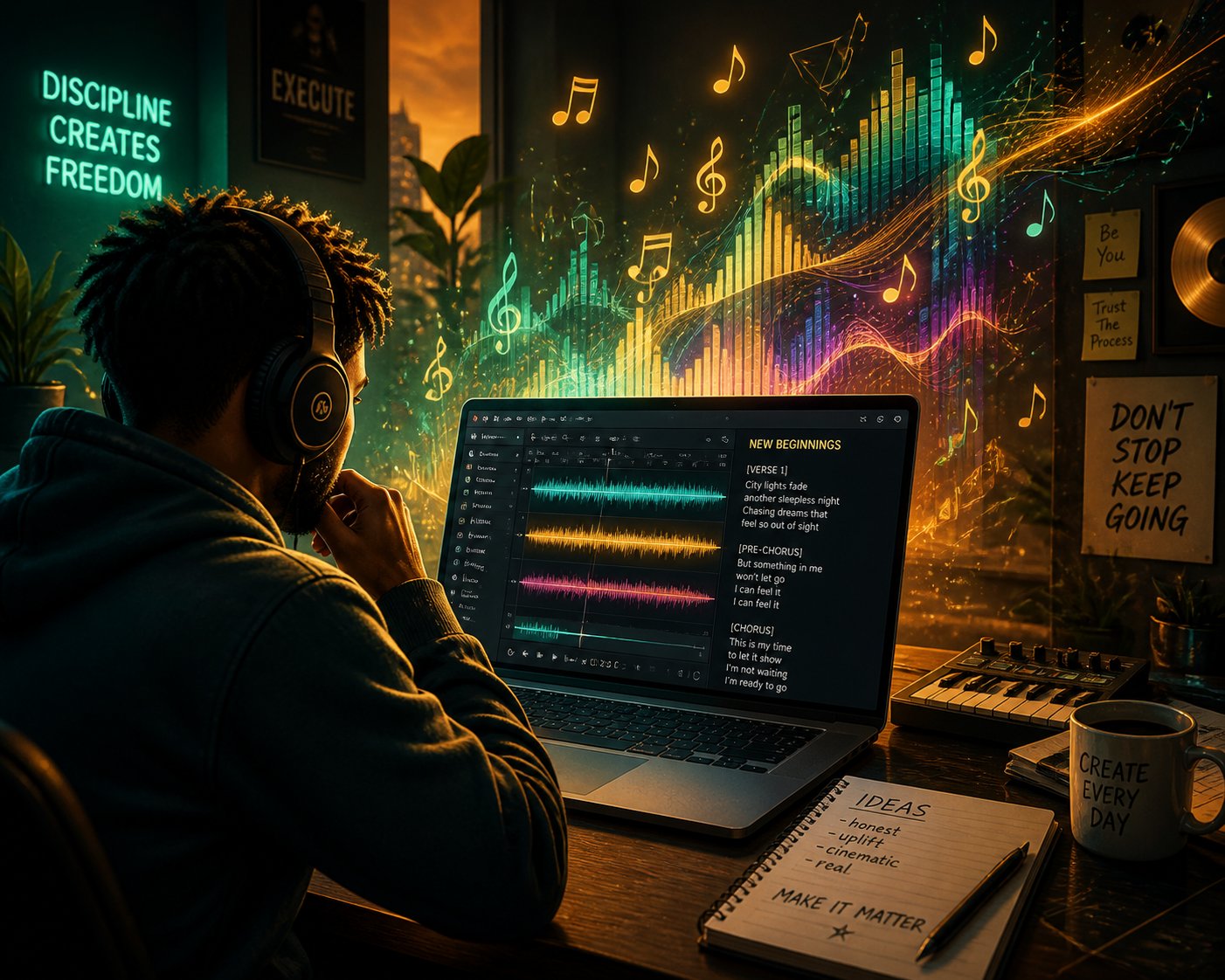
MakeBestMusic's AI Rap Generator is built specifically for this use case. It helps rappers, lyricists, beatmakers, and social creators generate rap lyrics, flows, hooks, and beats that are authentically their own. Instead of cloning Drake's voice, it gives you the building blocks to create music inspired by styles like his — melodic cadences, drill energy, introspective verse structures — while keeping the creative output entirely original. You are channeling influence, not copying identity. That is the same distinction that has always separated a great artist from a cover band.
Here is what makes this approach work for creators at every level:
- No legal risk from voice cloning. Because the tool generates original content rather than replicating a specific artist's voice, you avoid the copyright, right of publicity, and platform policy issues that make distributing AI voice clones so precarious. Your tracks stay up. Your accounts stay active.
- Full creative ownership. The lyrics, hooks, and beats you generate are yours to refine, release, and build a catalog around. Unlike a cloned vocal that you can never legally claim as your own work, original AI-assisted content becomes part of your artistic identity.
- Versatile style options. Want Drake-inspired melodic flows over moody R&B production? Aggressive drill bars with heavy 808 patterns? Introspective verse structures with Toronto-influenced cadences? The platform supports a range of hip-hop and rap styles without locking you into a single imitation.
- Accessibility for every skill level. Whether you are a seasoned lyricist looking to break through writer's block or a complete beginner exploring rap for the first time, the prompt-based workflow meets you where you are. You do not need production experience or expensive software to start creating.
The best AI tool for writing rap lyrics and beats is ultimately the one that helps you sound like yourself — not like someone else. AI-assisted rap music without legal risk is not a compromise. It is the foundation for a sustainable creative practice that grows with you rather than collapsing the moment a rights holder files a claim.
Consider where you started reading this article. You were curious about how a drake ai song generator works, what the technology does, and whether you should use one. You now understand the deep learning models behind voice synthesis, the legal frameworks that govern it, the platform policies that enforce it, and Drake's own unambiguous opposition to it. That is valuable knowledge — not because it should discourage you from exploring AI in music, but because it should redirect your energy toward the part of AI music creation that actually has a future.
The headlines will keep coming. Another viral AI clone will surface, spark outrage, and get pulled. Another legal battle will unfold. Another platform will tighten its policies. Meanwhile, the creators who chose to use AI as a creative partner — generating original lyrics, experimenting with beats, developing their own voice — will be the ones with a growing catalog, a real audience, and work they are genuinely proud of. The technology is extraordinary. The question was never whether AI could sound like Drake. It was always whether you would use it to find your own sound instead.
