

The Direct Answer to Whether AI Music Is Royalty Free
You typed a prompt into an AI music generator, downloaded the track, and now you want to use it in a YouTube video or a commercial project. Is that AI-generated music royalty free? The short answer: not automatically. Whether you can use it without paying ongoing fees depends on three things — the platform's terms of service, how much human creative input you contributed, and the copyright laws in your jurisdiction.
This is arguably the most misunderstood question in the creator economy right now. Thousands of creators assume that because AI made the music, nobody owns it, and therefore it must be free to use however they want. That logic sounds reasonable on the surface, but it falls apart the moment you look at how ai music copyright actually works in practice.
The Short Answer Every Creator Needs
Here is the core paradox. Under current U.S. copyright law, works generated entirely by AI without meaningful human authorship cannot be registered for copyright protection. If no one can copyright the output, then logically no one "owns" it and no one can charge royalties on it. Sounds like it should be free to use, right?
Not so fast. The platform you used to generate that track almost certainly has Terms of Service that create contractual restrictions on how you can use it. Those restrictions function like licensing agreements regardless of whether the music itself is copyrightable. You agreed to those terms when you signed up. They are legally binding even if the underlying audio has no copyright owner.
So can ai music be copyrighted? In most cases, purely AI-generated tracks cannot. But that does not make them "royalty-free" in the way creators typically understand the term. Platform contracts, training data liabilities, and Content ID systems all create real-world limitations on commercial use.
Why This Question Is More Complex Than Yes or No
The confusion stems from conflating two separate legal concepts. When people ask whether AI music is royalty free, they are really asking several layered questions at once:
- Can you copyright ai music and claim ownership over it?
- Can a platform restrict your use of output even if it is not copyrightable?
- Could the AI's training data expose you to infringement claims from other rights holders?
- Does your jurisdiction even recognize AI-generated works as protectable?
Each layer produces a different answer. A creator searching for a music ai creator without copyright restrictions on Reddit will find wildly conflicting advice because most responses only address one layer while ignoring the others.
"Not copyrightable" and "royalty-free" are not the same thing. A track can be uncopyrightable yet still restricted by contract, or fully copyrightable yet licensed royalty-free.
This distinction is the single most important concept in the entire AI music rights discussion. Throughout this article, you will get a clear breakdown of how copyright law, platform licensing, training data liability, and international jurisdiction each affect your ability to use AI-generated music commercially — and what practical steps protect you regardless of which legal gray areas remain unresolved.
Royalty-Free vs Copyright-Free vs Public Domain Explained
The confusion around AI music rights starts with terminology. Creators use "royalty-free," "copyright-free," "public domain," and "Creative Commons" interchangeably, as if they all mean the same thing. They do not. Each term describes a fundamentally different legal status, and mixing them up leads to costly mistakes — especially when AI-generated music introduces a scenario that does not fit neatly into any traditional category.
Imagine you license a track from a stock music library. You pay $30, download the file, and use it in every video you publish for the next five years. No additional fees. That is royalty-free licensing. The composer still owns the copyright. They still control who else can license it. You simply bought a license that eliminates per-use payments. The cost for music copyrights on an album produced with AI tools follows a similar principle — the licensing model and the copyright status are two separate questions.
Royalty-Free Does Not Mean Copyright-Free
This is where most creators trip up. "Royalty-free" sounds like it means free of all restrictions, but it is actually a licensing model, not a content type. Under a royalty-free license, someone still owns the work. You are simply paying once (or sometimes nothing at all) instead of paying every time you use it. The copyright remains intact, and the license defines exactly what you can and cannot do with the track.
"Copyright-free" is a much more extreme status. It means no copyright protection exists on the work at all. Nobody owns it. Nobody can restrict your use. Nobody can charge you anything. True copyright-free content is rare — it typically only applies to works in the public domain or those released under a CC0 waiver.
Here is why this distinction matters for AI music: when a fully AI-generated track cannot be copyrighted (because no human author exists), it does not become "royalty-free." It becomes something closer to copyright-free — a more radical legal status where no ownership exists at all. Yet platforms still wrap that uncopyrightable output in contractual terms that restrict your use. The legal issues in the music industry around masters and ownership have always been complex, but AI adds an entirely new layer of confusion.
Where AI Music Falls in This Legal Spectrum
Traditional music fits cleanly into these categories. A Beethoven symphony is public domain. A track from a stock library is royalty-free. A song on Spotify is fully copyrighted. AI-generated music breaks this framework because its copyright status depends on how it was created — and that status does not automatically determine how you can use it commercially.
Fully AI-generated music (where a user types a prompt and receives a finished track with no further creative input) likely falls into the copyright-free zone under current U.S. law. No human authored it, so no copyright attaches. That sounds like maximum freedom, but the latest ai copyright music news confirms that platform terms and training data risks still limit what creators can actually do with these tracks.
Here is a clear breakdown of how these four concepts compare:
| Concept | Definition | Who Owns It | Can Others Copy It | Commercial Use Rights |
|---|---|---|---|---|
| Royalty-Free | One-time payment (or free access) with no per-use fees; copyright still exists | The original creator or rights holder | No — license is required | Yes, within the license terms |
| Copyright-Free | No copyright protection applies to the work | Nobody | Yes — anyone can use or copy it | Yes, without restriction |
| Public Domain | Copyright has expired, was waived (CC0), or never existed | Nobody | Yes — freely available to all | Yes, without restriction |
| Creative Commons | A licensing framework where creators grant specific permissions (varies by license type) | The original creator | Depends on the license (CC BY, CC BY-SA, CC0, etc.) | Usually yes, often with attribution or share-alike conditions |
Notice the critical gap: AI-generated music that cannot be copyrighted technically belongs in the "copyright-free" row. No one owns it. Anyone can copy it. Commercial use should be unrestricted. Yet in practice, the platform's Terms of Service override this theoretical freedom with binding contractual obligations. You agreed to those terms when you created your account, and they apply regardless of the underlying copyright status.
This is why asking whether AI music is royalty free is actually the wrong question. The more precise question is: what contractual and legal restrictions apply to this specific output, from this specific platform, in this specific jurisdiction? The answer depends on layers that go far beyond traditional licensing categories — starting with what copyright law itself says about AI authorship.
What Copyright Law Actually Says About AI Music
Legal categories and licensing terms only matter if you understand the foundational rules that determine who can own what. When it comes to AI-generated music, those rules are being written in real time through agency guidance, court rulings, and industry policy decisions. The legal framework is not speculative — concrete positions already exist, and they directly affect whether your AI-created track carries any copyright protection at all.
U.S. Copyright Office Rulings on AI Authorship
The U.S. Copyright Office published formal registration guidance establishing that copyright can only protect material that is the product of human creativity. The Office's position is unambiguous: when an AI technology receives a prompt from a human and produces complex written, visual, or musical works in response, the "traditional elements of authorship" are determined and executed by the technology — not the human user.
What does this mean in practical terms? If you type "create a lo-fi hip-hop beat with piano and rain sounds" into an AI music generator, and it delivers a finished track, that output cannot be registered for copyright. The Office considers such prompts analogous to instructions given to a commissioned artist — you described what you wanted, but the machine decided how to execute it. The rhyming pattern, the chord progression, the arrangement, the timbre choices — all of those expressive elements were determined by the AI.
"When an AI technology determines the expressive elements of its output, the generated material is not the product of human authorship. As a result, that material is not protected by copyright and must be disclaimed in a registration application." — U.S. Copyright Office, Federal Register, March 2023
The guidance also addresses the flip side. Works containing AI-generated material can qualify for copyright registration when sufficient human authorship is present. A human who selects or arranges AI-generated material in a creative way, or who modifies AI output to a degree that meets the standard for copyright protection, may register the human-authored portions. The key threshold: did the human actually form the traditional elements of authorship, or did they simply direct a machine to do it?
This nuance is critical for ai music copyright news because it means the copyright status of any given track is not binary. It exists on a spectrum that depends entirely on the nature and extent of human involvement in the creative process.
Key Court Decisions Shaping AI Music Rights
The Copyright Office does not operate in a vacuum. Its positions have been tested in court, and so far, the judiciary agrees. The most significant case is Thaler v. Perlmutter, which moved through the U.S. District Court for the District of Columbia and was affirmed by the D.C. Circuit Court of Appeals.
The facts are straightforward. Computer scientist Dr. Stephen Thaler created an AI system called the "Creativity Machine," which autonomously generated an artwork titled "A Recent Entrance to Paradise." He submitted a copyright application listing the AI as sole author and himself as owner. The Copyright Office denied registration. The district court upheld that denial, holding that human authorship is a fundamental requirement under the Copyright Act. The D.C. Circuit affirmed: the Copyright Act requires all eligible works to be authored by a human being, and since a non-human entity was listed as the sole author, the application was correctly denied.
While Thaler involved visual art rather than music, the principle applies identically. Any copyright ai music lawsuit news you follow will reference this precedent because it established the clearest judicial statement to date: non-human authors cannot hold copyright in the United States. Period.
Beyond Thaler, ongoing litigation targets AI music generators themselves. Multiple lawsuits allege that companies training AI models on copyrighted songs without permission are infringing on existing rights. These cases do not directly address whether AI output is copyrightable, but they create a secondary layer of risk — if the model was trained on unauthorized material, the output could inadvertently reproduce protected elements, exposing users to infringement claims regardless of the output's own copyright status.
Industry organizations are also establishing clear positions. PRS for Music, the UK's performing rights organization, formally distinguishes between "AI Generated Works" and "AI Assisted Works" in its registration policy. Their stance mirrors the Copyright Office's logic: AI-generated lyrics and compositions with no human author or insufficient human contribution are not protected by copyright under UK law and cannot be registered with PRS. Members who knowingly register purely AI-generated works face penalties.
PRS's policy also offers practical guidance on where the line falls. Generating music using prompts alone does not qualify. Tweaks or minor edits to AI output are unlikely to make you the author. But using AI to add instrumentation to an original melody, or using AI tools to refine human-written lyrics, may satisfy the originality test — provided the work still reflects the creativity and effort of the human author.
The ai music legal news landscape is evolving quickly, but the direction is consistent across both U.S. and UK authorities: purely AI-generated music cannot receive copyright protection, AI-assisted music can (under the right conditions), and the burden falls on creators to demonstrate where the human authorship lies. That distinction between "generated" and "assisted" is not just academic — it determines whether your track can be owned, licensed, enforced, and monetized. And it raises the next critical question: exactly how much human involvement tips the scale from unprotectable output to copyrightable composition?
Fully AI-Generated vs AI-Assisted Music and Why It Matters
The spectrum between "no copyright protection" and "fully copyrightable" hinges on a single variable: what you actually did beyond typing a prompt. This is where the royalty-free question gets personal. Two creators can use the same AI music tool on the same day and end up with entirely different legal rights over their output — not because of what the AI produced, but because of how much creative work the human contributed to the final result.
Think of it this way. A photographer who presses a button on a camera still holds copyright over the resulting image because they chose the angle, the lighting, the composition, and the timing. A person who asks someone else to "take a nice photo of that sunset" and accepts whatever comes back has contributed no copyrightable authorship. AI music works on the same principle. The question is whether you functioned as the creative decision-maker or simply gave instructions and accepted the output.
Prompt-Only Generation and Its Legal Status
When you type a text prompt into an AI music generator — something like "upbeat electronic track with synth pads and a four-on-the-floor beat" — and download the resulting audio without modification, you have not authored anything under current copyright law. The U.S. Copyright Office's Part 2 Report on Copyrightability is explicit: prompts alone do not provide sufficient human control over expressive elements to qualify as authorship.
Why not? Because the prompt describes what you want, not how it should be expressed. You did not determine the chord progression, the rhythm pattern, the instrumentation voicing, the melodic contour, or the arrangement structure. The AI system translated your instruction into all of those expressive details using its own internal processes. You provided the idea. The machine provided the expression. Copyright protects expression, not ideas.
This applies regardless of how detailed your prompt is. Even highly specific, iteratively refined prompts fall below the authorship threshold under current technology. The Copyright Office compares repeated prompting to spinning a roulette wheel — each attempt generates new possibilities, but selecting an output you happen to like is not the same as creating it. Can ChatGPT make songs? Technically yes, it can generate lyrics and musical concepts. But the user who accepts that output as-is does not own it, because they did not author the expressive elements.
The same logic applies whether you are using a chatgpt song maker for lyrics, asking can Gemini make songs, or generating full compositions through dedicated music AI platforms. If the workflow is prompt-in, finished-track-out with nothing in between, the output sits in legal limbo: likely uncopyrightable, which means you cannot enforce exclusive rights over it, but also potentially restricted by the platform's contractual terms.
AI-Assisted Composition and the Human Authorship Threshold
The picture changes dramatically when humans step beyond prompting and into genuine creative work. An ai songwriter who uses AI to generate raw stems, then arranges those stems into a cohesive track, layers in original melodies, edits timing and dynamics, and makes deliberate choices about structure and progression is doing something fundamentally different from someone who clicks "generate" and downloads the result.
The Copyright Office's framework identifies specific categories of human contribution that can establish copyrightable authorship in AI-assisted works. Here is where the line falls based on current USCO guidance:
- Activities that DO qualify as sufficient human authorship:
- Activities that DO NOT qualify as sufficient human authorship:
That last point directly answers a question many creators ask: do you own lyrics from Claude or similar AI tools? Under the current legal framework, if you prompt an AI to write song lyrics and use them verbatim, you likely have no copyright claim over those lyrics. The AI determined the word choice, the rhyme scheme, the metaphors, and the emotional arc. You provided the topic — an idea, not an expression.
However, if you use AI-generated lyrics as a starting point and then substantially rewrite them — changing lines, restructuring verses, adding personal references, altering the emotional direction — your modifications may reach the authorship threshold. The key is whether your creative choices, not the AI's, ultimately shaped what the audience reads or hears. Many creators wonder why can't ChatGPT give me song lyrics that I fully own, and this is the reason: ownership requires authorship, and authorship requires human creative control over the expressive result.
The practical takeaway for anyone using ai to write song lyrics or compose music is straightforward. The more creative decisions you make after the AI generates its output, the stronger your copyright position becomes. Document those decisions. Keep drafts showing your edits. Save project files that demonstrate your arrangement choices. A registration that clearly identifies what the human authored — and honestly disclaims what the AI generated — stands on solid legal ground.
This spectrum from unprotectable to protectable output explains why the royalty-free question has no universal answer. A prompt-only track exists in a legal no-man's-land where neither you nor anyone else can claim ownership. A heavily human-edited composition may qualify for full copyright protection, giving you the exclusive right to license it however you choose. But even understanding this distinction does not resolve every practical concern — because the platform you used to generate that music has its own rules about what you can do with it, and those rules apply whether or not copyright law recognizes you as the author.
AI Music Platform Licensing Terms Compared
Copyright law tells you who can own a piece of music. Platform terms of service tell you what you can actually do with it. These are two entirely separate systems, and the second one often matters more in practice. Even when AI output sits in a legal gray zone where no copyright attaches, the platform that generated it still controls your usage rights through a binding contract you accepted at signup.
This creates a paradox most creators never think about. You might be holding a track that nobody can copyright — yet you still cannot use it in a commercial project without violating the agreement you signed. Platform licensing terms function as de facto copyright restrictions, regardless of whether the underlying audio is copyrightable. The practical result? Your rights depend less on copyright law and more on which platform you chose.
How Major Platforms License AI Music Output
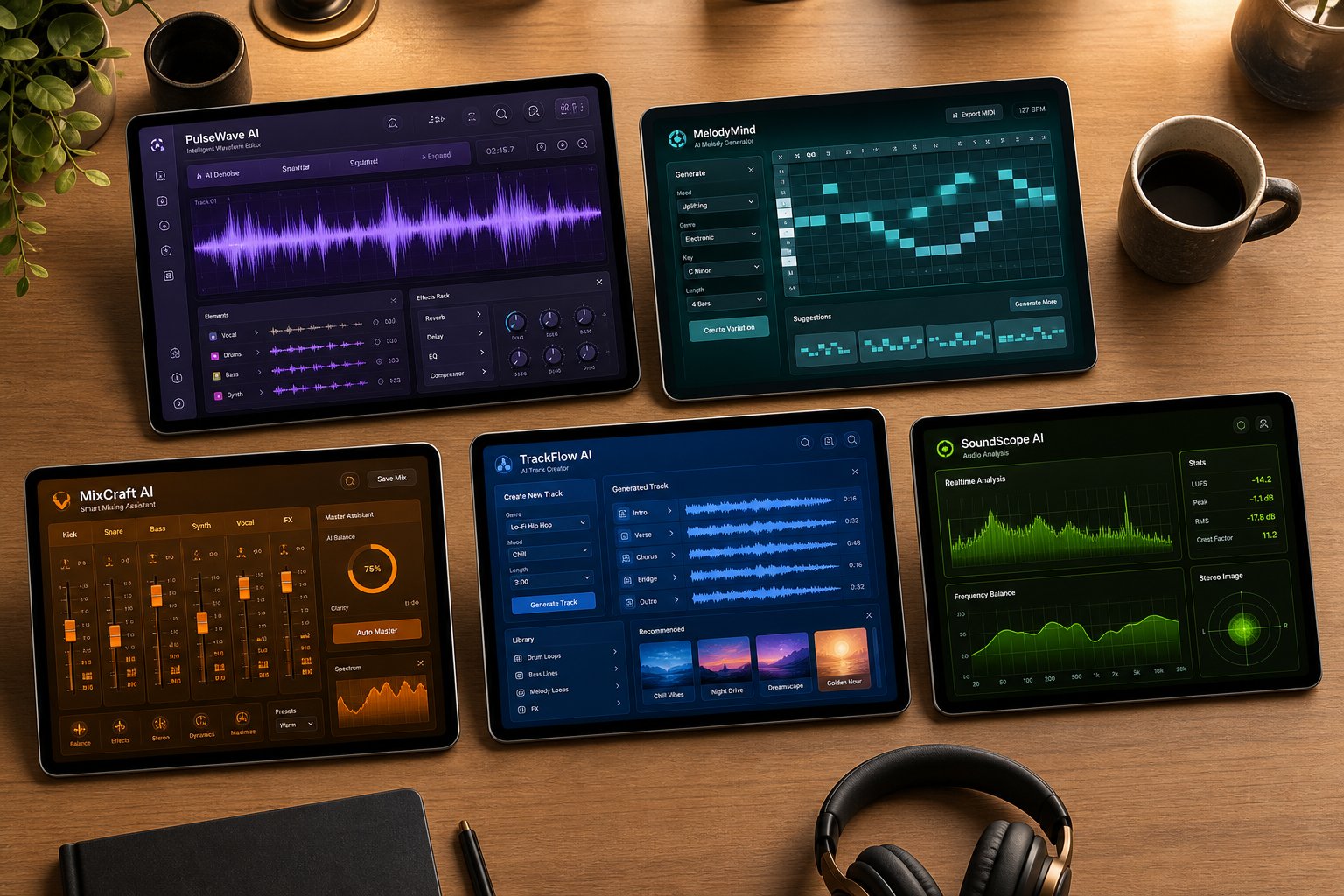
Each AI music generator handles commercial rights differently. Some grant full commercial use on free tiers. Others lock it behind paid subscriptions. A few retain ownership of everything you generate. The differences are significant enough that choosing the wrong platform can derail a commercial project — or expose you to Content ID claims on your own videos.
Here is a side-by-side comparison of how major platforms handle licensing:
| Platform | Free Tier Commercial Rights | Paid Tier Commercial Rights | Exclusivity Restrictions | Content ID Registration |
|---|---|---|---|---|
| MakeBestMusic | Yes — royalty-free commercial use included | N/A (free access model) | Non-exclusive; others may generate similar output | No Content ID registration by platform |
| Boomy | Limited (25 saves/month, restricted features) | Yes — from $9.99/month with built-in distribution | Non-exclusive | Platform handles royalty collection through distribution |
| Soundraw | No commercial use on free tier | Yes — $19.99/month for royalty-free commercial music | Non-exclusive; cannot resell on licensing platforms | Prohibited for all users; Soundraw retains copyright |
| Suno | No commercial rights on Basic tier | Yes — Pro at $10/month, Premier at $30/month | Non-exclusive; rights persist after cancellation | Not explicitly addressed |
| AIVA | No — non-commercial only | Full copyright ownership on Pro tier | Full ownership on Pro; limited on Standard | Allowed on Pro tier only |
| Stable Audio | No commercial use | Yes — Creator tier includes commercial and streaming rights | Non-exclusive | Not explicitly addressed |
| Mubert | No commercial use | Yes — paid tiers grant commercial licensing | Non-exclusive | Platform may register tracks |
A few things jump out from this comparison. MakeBestMusic stands out as one of the few platforms offering royalty-free commercial rights at no cost — you generate a track and use it in videos, podcasts, games, or social content without a subscription barrier. That simplicity appeals to creators who need quick background music without navigating complex tier structures. The tradeoff is non-exclusivity: since the platform does not lock output behind a paywall, other users could potentially generate similar-sounding content.
Boomy takes a different approach by bundling distribution directly into the platform. You can push AI-generated tracks to Spotify, Apple Music, and TikTok without leaving the interface. The platform collects royalties on your behalf, which is convenient but means Boomy remains in the chain — you are not operating independently. For creators who want the simplest path from generation to streaming revenue, this model works well despite the lower audio quality compared to some competitors.
The Soundraw AI music generator positions itself squarely in the content creator market with parameter-based customization rather than text prompts. Its $19.99/month Creator plan grants royalty-free use for YouTube, ads, and podcasts. But the fine print matters: Soundraw explicitly prohibits Content ID registration under all plans and retains copyright over the generated audio. You get a license to use the music, not ownership of it. You also cannot sell tracks on third-party licensing services or distribute unmodified audio to streaming platforms.
Reading the Fine Print on Commercial Use
The table above gives you a quick overview, but the real complexity lives in the details creators typically skip. Here are the most commonly missed restrictions across platforms:
- Retained ownership: Some platforms (like Soundraw) grant you a commercial license while keeping copyright themselves. You can use the music, but you do not own it. This means you cannot sue someone who copies your track — the platform theoretically could, but likely will not.
- Distribution channel limits: Certain licenses allow YouTube use but prohibit streaming distribution, or permit social media content but restrict broadcast/sync licensing. A track that is "royalty-free for videos" may still require a separate license for a podcast or mobile app.
- Modification requirements: Soundraw, for example, requires modifications (such as adding vocals or editing stems) before you can distribute tracks to streaming platforms. Downloading raw output and uploading it to Spotify violates their terms.
- Content ID conflicts: If a platform registers generated music in Content ID databases, your own video could get flagged when you use the track you legally licensed. This happens more than you would expect, and resolving disputes takes weeks.
- Tier-dependent rights: Suno's free tier generates music you cannot use commercially at all. Rights only attach when you are on a paid plan at the time of generation. Downgrading later does not retroactively remove rights from tracks created while subscribed, but it does mean new generations carry no commercial license.
Creators using tools like cyanite.ai for music tagging and analysis, or sonoteller for metadata and mood detection, should note that these discovery and classification platforms do not themselves grant or modify the licensing terms of the audio they analyze. If you find a track through an ai music remixer or tagging tool, the commercial rights still depend entirely on the original generating platform's terms.
The songer ai platform and the musichero ai music generator follow similar patterns to the major players listed above — always check whether commercial rights are included in your specific tier before using output in monetized projects.
The bottom line: platform terms create a contractual layer that sits on top of (and often contradicts) what copyright law alone would suggest. A track with no copyright owner is not automatically free to use if you agreed to restrictions when generating it. Reading those terms before you build a project around AI-generated music is not optional — it is the single most practical thing you can do to avoid takedowns, disputes, and lost revenue. But even with clean licensing terms in hand, two hidden risks remain that no contract can fully eliminate: the question of what the AI was trained on, and how automated detection systems will treat your content once it is live.
Hidden Risks of Using AI Music in Commercial Projects
Clean licensing terms from a platform give you contractual permission. They do not give you immunity from infringement claims rooted in what the AI learned before it ever generated your track. Two practical risks lurk beneath the surface of every AI-generated composition — and both can hit your channel or project regardless of whether you followed the platform's rules perfectly.
Training Data Liability and Infringement Risk
Every AI music model learns by ingesting enormous volumes of existing music. The patterns it absorbed — melodic contours, harmonic progressions, rhythmic feels, production textures — all came from somewhere. If that training data included copyrighted recordings used without permission, the model may reproduce fragments of protected material in its output. You would never know. The AI does not cite sources. It simply generates.
This is not a theoretical concern. In June 2024, all three major record labels — Universal, Sony, and Warner — filed coordinated lawsuits against AI music generators Suno and Udio through the RIAA, alleging "mass infringement of copyrighted sound recordings on an almost unimaginable scale." Suno admitted to using copyrighted music in its training process and argued the practice constitutes fair use — a defense that remains untested in this context.
The potential damages in these lawsuits against ai music generators reach $150,000 per infringed track. By late 2025, Warner Music settled with Udio under confidential terms, signaling that even the platforms themselves recognize the legal exposure. A separate case saw Universal Music Group, Concord, and ABKCO sue an AI company for over $3 billion over alleged infringement of more than 20,000 songs — potentially the single largest non-class action copyright case in U.S. history.
What does ai music copyright training liability mean for you as a creator? You inherit risk from the model's training process. If the output you downloaded coincidentally reproduces recognizable elements of a copyrighted song, the rights holder can come after your content — even if you had no idea, even if you paid for a premium license, and even if the platform promised the track was royalty-free. The platform's terms of service typically shift this liability squarely onto users. Suno's own documentation acknowledges it cannot guarantee copyright will vest in any output.
Consider the viral eminem ai songs that circulated across social media — tracks generated to mimic specific artists' vocal styles and production aesthetics. Those outputs drew immediate takedowns because they reproduced recognizable elements tied to protected works. The same risk applies at a subtler level when an AI model trained on licensed catalogs produces output that happens to echo specific melodies or arrangements in ways only a rights holder's algorithm would catch.
Content ID Flags and Platform Enforcement
Even when the legal picture is technically clear in your favor, automated enforcement systems create practical barriers that can cost you revenue or visibility for weeks while disputes resolve. YouTube's Content ID, TikTok's sound fingerprinting, and Twitch's Audible Magic all scan uploaded audio against databases of registered works. These systems do not understand copyright law. They detect acoustic similarity and act on it.
Creators have reported a growing pattern of Content ID issues with AI-generated music:
- A YouTube creator receives a copyright claim on a video using AI-generated background music because the track's melody closely matches a copyrighted song in the training data — the creator must dispute, wait weeks, and risk a strike if the claim is upheld.
- Third-party distributors upload AI-generated tracks to streaming platforms and register them with Content ID. Now anyone generating similar output from the same model — including you — gets flagged for "infringing" on content that was never human-authored in the first place.
- A creator's entire back catalog of videos gets bulk-claimed after a rights organization registers fingerprints that overlap with common AI-generated patterns.
- AI outputs trained on popular royalty-free libraries (think kevin macleod ai trained derivatives) trigger false matches against the original human-composed tracks already registered in Content ID databases, leaving the creator caught between two competing claims.
Organizations like Rightsify have positioned themselves as ethical alternatives by training AI models exclusively on properly licensed catalogs — their Hydra II model draws from over one million songs and 50,000 hours of music sourced with authorization. The approach specifically avoids vocal generation to minimize deepfake and infringement risk. Rightsify was among the first AI music companies certified by the Fairly Trained initiative, which verifies that training data was obtained with consent.
This ethical-training approach reduces but does not eliminate Content ID conflicts. Even when a model's training data is fully licensed, its output can still acoustically resemble tracks registered by other parties. The detection algorithms do not check provenance — they check waveform similarity. And because AI music models draw from patterns across thousands of songs, statistical overlap with existing registered works is almost inevitable at scale.
The dual risk here is worth stating plainly. On one side, someone else can copy your unprotected AI music (since it likely cannot be copyrighted) and register it in Content ID before you do — suddenly your original generation triggers claims against your videos. On the other side, your AI-generated track might accidentally reproduce elements of existing copyrighted works, leading rights holders to claim your content legitimately. You are exposed from both directions, and neither scenario requires you to have done anything wrong.
The silent album protest ai copyright controversy illustrated this tension vividly — when creators attempted to game streaming royalty systems with AI-generated silent or near-silent albums, platforms responded by tightening detection and removal policies across all AI-generated content, including legitimate uses. The enforcement infrastructure does not distinguish between bad-faith spam and good-faith creative output.
According to copyright ai music lawsuit news today, the legal landscape is only tightening. Deezer reports receiving over 30,000 fully AI-generated tracks daily. Spotify removed 75 million suspected spam tracks in a single twelve-month period. Platforms are investing heavily in detection technology precisely because the volume of AI content overwhelms manual review. When that detection flags your content incorrectly, the appeal process is slow, opaque, and stacked against individual creators who lack label-level support.
These hidden risks persist regardless of which platform generated your music and regardless of what their licensing terms promise. A royalty-free license protects you from the platform charging fees. It does not protect you from a major label's legal team, a Content ID bot, or a rogue distributor claiming your track as theirs. The safest path forward depends not just on understanding these risks, but on recognizing how different jurisdictions handle them — because the rules that govern your exposure vary dramatically depending on where you and your audience are located.
How AI Music Rights Differ Across US EU and UK
Your legal exposure depends heavily on geography. A track that exists in a copyright vacuum under U.S. law might face active litigation risk in the UK or fall under evolving mandatory rules in the EU. For creators distributing content globally, ai music regulation news from any single country only tells part of the story. The answer to whether AI-generated music is royalty free shifts depending on which jurisdiction's rules apply to your project and your audience.
United States and the Human Authorship Requirement
The U.S. position is the most clearly articulated. The Copyright Office denies registration for purely AI-generated works, and Thaler v. Perlmutter confirmed judicially that non-human authors cannot hold copyright. The practical effect: prompt-only AI music likely has no copyright owner in the U.S., meaning no one can charge royalties on the composition itself. But as covered earlier, platform contracts and training data liability still restrict what you can do.
The White House National AI Policy Framework, published in April 2026, reportedly recommends a market-preference approach — favoring voluntary licensing frameworks over prescriptive legislation. It advises Congress to defer fair use questions to the courts while pending AI training data cases work through the system. The framework also recommends enabling collective negotiation rights for publishers and content organizations, allowing them to bargain with AI labs as a group rather than individually.
EU AI Act Implications for Music Creators
The EU is moving in the opposite direction from the U.S. wait-and-see approach. The European Parliament passed a resolution in late April 2026 calling for mandatory AI copyright rules — specifically requiring AI developers to obtain rights or pay compensation for training data use. The European Commission has until summer 2026 to respond, and that response will determine whether the EU moves toward mandatory licensing obligations.
Currently, the operative standard is the Digital Single Market Directive's Article 4 opt-out mechanism, which allows rights holders to explicitly reserve their content from AI training. But the Parliament's resolution signals dissatisfaction with opt-out alone. For creators using artificial intelligence in music production, the EU trajectory suggests more restrictions are coming — not fewer. If mandatory licensing rules are adopted, AI music platforms operating in EU markets may need to pass those costs along to users, potentially ending free-tier commercial access for European creators.
UK and Evolving AI Copyright Policy
The UK's position is the most turbulent. The government originally proposed a copyright exception allowing AI companies to train on any lawfully accessed content, with an opt-out for rights holders. That plan drew fierce backlash from artists including Sir Elton John and Dua Lipa, alongside organizations like UK Music and PRS for Music.
In March 2026, Technology Secretary Liz Kendall announced the government had abandoned that approach, stating it "no longer has a preferred option" for what to do next. UK Music chief executive Tom Kiehl called it "a major victory for campaigners." The retreat leaves AI developers operating in legally contested territory — no training data safe harbor exists, and over 40 publishers have issued formal legal notices to AI companies regarding unauthorized use of their content.
For creators in the ai in music industry space, the UK situation means higher near-term risk. Without legislative clarity, the question of whether AI training on UK-published content constitutes infringement is live litigation risk, not hypothetical debate.
Here is how the three jurisdictions compare at a glance:
| Jurisdiction | AI Music Copyright Status | Commercial Use Impact | Key Legislation |
|---|---|---|---|
| United States | Purely AI-generated works cannot be registered; AI-assisted works may qualify with sufficient human authorship | No copyright owner means no royalty obligation on the composition itself, but platform terms and training data liability still apply | Copyright Act (human authorship requirement); White House AI Policy Framework (2026); pending fair use litigation |
| European Union | DSM Directive Article 4 opt-out currently operative; mandatory rules under active consideration by Commission | Potential mandatory licensing could increase costs for AI music platforms and end free commercial tiers in EU markets | Digital Single Market Directive (2019); EU AI Act transparency requirements; Parliament resolution calling for mandatory rules (April 2026) |
| United Kingdom | No safe harbor for AI training; proposed copyright exception withdrawn; no clear legislative path forward | Highest near-term litigation risk; publishers actively filing legal notices against AI companies | No enacted AI copyright reform; government retreat from training exemption (March 2026); existing CDPA framework applies |
The copyright music ai news takeaway is clear: none of these three jurisdictions has enacted final, binding AI copyright rules. But "no final rules" does not mean "no risk." The UK has active legal notices in circulation. The EU has a Commission deadline approaching. The U.S. has major litigation working through the courts. Creators distributing content across all three markets face a compliance challenge where no single standard applies — and the divergence between jurisdictions is widening, not narrowing.
This fragmented landscape makes one thing certain: creators cannot wait for legal clarity before building workflows that protect them. The practical question shifts from "what are my rights?" to "what steps can I take right now to minimize exposure regardless of how these rules eventually settle?"
How to Safely Use AI Music in Your Commercial Projects
Legal uncertainty does not mean you have to sit on the sidelines. Thousands of creators publish content with AI-generated music every day without facing takedowns, claims, or lawsuits. The difference between them and creators who run into problems usually comes down to process — a few deliberate steps taken before hitting "publish" that dramatically reduce exposure across every jurisdiction and platform.
Can you publish a song written by AI? Yes — but safely doing so requires more than just downloading a track and uploading it somewhere. You need a repeatable framework that accounts for the licensing gaps, copyright ambiguities, and automated enforcement risks covered throughout this article. Here is that framework.
A Practical Framework for Safe Commercial Use
Think of this as your pre-flight checklist. Before using any AI-generated music in a monetized project, run through these steps in order:
- Verify platform licensing terms for your specific tier. Do not assume commercial rights are included. Check whether your plan explicitly grants royalty-free commercial use. If you are on a free tier, confirm that commercial rights are not locked behind a paywall. Read the license at the time of generation — some platforms only grant rights to tracks created while you are on a paid plan.
- Check whether the platform registers output with Content ID. If the platform fingerprints generated tracks and registers them in YouTube's Content ID or similar detection systems, your own videos could get flagged for using music you legitimately generated. Platforms that do not register output with Content ID eliminate this entire category of risk.
- Add human creative elements to strengthen your copyright position. This is how to copyright ai music in practice: do not stop at the AI's raw output. Layer in original vocals, rearrange sections, add live instrumentation, or edit the composition substantially. Each human creative decision moves you further along the spectrum toward copyrightable authorship. Basic song production from a scratch track ai becomes protectable when your arrangement, editing, and production choices dominate the final result.
- Document your creative process. Save project files, screenshots of edits, revision history, and notes about your creative decisions. If you ever need to demonstrate human authorship for a copyright registration or dispute, this documentation is your evidence. Keep your DAW session files, version comparisons, and any ai mixing and mastering steps you applied manually.
- Choose platforms with clear indemnification or ethical training. Some platforms explicitly guarantee that their models were trained on licensed data and offer legal protection if a claim arises. Others shift all liability to the user. Prioritize platforms that are transparent about their training data provenance — this reduces (though never eliminates) the risk of inadvertent infringement.
- Understand your distribution path before generating. If you plan to distribute ai music to streaming platforms like Spotify or Apple Music, confirm that your platform's terms allow it. Some generators permit YouTube and social media use but prohibit streaming distribution. Others bundle distribution directly. Know your destination before you create.
Following this checklist does not guarantee zero risk — nothing can, given the evolving legal landscape. But it eliminates the most common failure points and positions you to respond effectively if a dispute arises.
Tools That Simplify Royalty-Free AI Music for Creators
Different creator types have different needs. A podcaster who needs 30 seconds of intro music operates under different constraints than a game developer scoring hours of dynamic audio. Here is how to match your workflow to the right approach:
Video creators and social media producers need fast generation, clear commercial rights, and zero Content ID risk. MakeBestMusic's Free Music Generator fits this workflow well — it provides royalty-free commercial use at no cost, does not register tracks with Content ID, and requires no subscription. You generate a track, download it, and use it in your content without navigating tier restrictions or worrying about automated claims on your videos. For creators producing high volumes of short-form content across YouTube, TikTok, and Instagram, that simplicity eliminates most of the legal uncertainty discussed throughout this article.
Podcasters typically need consistent, non-distracting background music and intro/outro themes. The stakes are lower because podcast platforms do not use Content ID-style fingerprinting, but commercial licensing still matters if you monetize through ads or sponsorships. Choose platforms with explicit podcast-use rights in their terms. An ai sampler that lets you preview and customize moods before committing to a track helps maintain a consistent sonic identity across episodes.
Game developers face unique requirements: looping, adaptive layering, and long-duration scores that respond to player actions. AI music tools that export stems separately give developers the flexibility to implement dynamic audio. If you are building ai records of generated stems for different game states, look for platforms that grant perpetual commercial rights — a subscription that expires mid-development could leave you without legal access to music already embedded in your build.
Musicians and producers working on basic song production from a scratch track ai have the strongest copyright position because their workflow inherently involves substantial human creative input. Using AI to generate initial ideas, chord progressions, or rhythmic patterns — then arranging, performing over, and producing those elements into a finished track — places you firmly in the "AI-assisted" category where copyright registration is possible. Top ai platforms for lyrics and writing can accelerate the brainstorming phase, but the creative labor you invest afterward is what converts unprotectable output into music you can own, license, and monetize.
The common thread across all these use cases: choosing platforms with explicit, commercial-use-friendly terms eliminates the majority of legal uncertainty. When the platform clearly states that output is royalty-free for commercial projects, does not register with Content ID, and does not retain ownership, you have removed the contractual ambiguity that causes most real-world problems. The remaining risks — training data liability and jurisdictional variation — still exist, but they become manageable background factors rather than active threats to your project.
None of this constitutes legal advice for your specific situation. But as a practical decision framework, it reflects the safest path available right now while regulations continue to evolve. And evolve they will — the current legal gray areas are attracting legislative attention across every major market, with proposals that could fundamentally change how AI music rights work within the next few years.
The Future of AI Music Rights and What to Expect
Every answer in this article comes with an expiration date. The legal frameworks governing AI-generated music are not settling into stability — they are accelerating toward regulation. Multiple jurisdictions have active proposals moving through legislative bodies, industry organizations are lobbying aggressively, and court rulings in pending cases could redraw the map overnight. The question of whether AI music is royalty free may have a very different answer twelve months from now.
Pending Legislation That Could Change Everything
In the United States, two bills currently before Congress directly target the transparency gap in AI music training data. The TRAIN Act (Transparency and Responsibility for Artificial Intelligence Networks) would give musicians a legal mechanism to subpoena AI developers and discover whether their work was used in training — similar to existing anti-piracy discovery tools. Reintroduced in the Senate in July 2025 and the House in January 2026, the bill has bipartisan backing and endorsements from both the RIAA and the Recording Academy.
The CLEAR Act (Copyright Labeling and Ethical AI Reporting) goes further, proposing mandatory public disclosures. AI companies would be required to submit reports to the U.S. Copyright Office detailing every copyrighted work used in their training data, with civil fines for non-compliance. If either bill passes, AI music platforms would face a choice: license their training data legitimately or face enforcement actions. Either outcome increases costs — costs that would likely flow downstream to users through reduced free tiers or new licensing fees.
The NO FAKES Act addresses a related but distinct problem: AI deepfakes of artists' voices and likenesses. Revamped in April 2025 with updated notice-and-takedown provisions, the bill would turn a person's digital likeness into intellectual property — meaning AI-generated tracks mimicking specific artists could trigger direct legal liability for the creator who published them. Major tech companies including YouTube now support this legislation, suggesting it has real momentum toward passage.
Across the Atlantic, the EU Parliament's April 2026 resolution calling for mandatory AI copyright rules gives the European Commission a deadline to respond. If mandatory licensing is adopted, AI music generators operating in European markets would need to secure rights for their training data — a cost that could make free commercial tiers economically unviable for EU users. The direction of ai music rights news from Brussels consistently favors creators over AI developers.
Industry advocacy is shaping these proposals directly. The Recording Academy has participated in U.S. Copyright Office listening sessions specifically focused on music and sound recordings, ensuring that music creators' concerns are represented in rulemaking. Their Senior Director of Advocacy, Michael Lewan, has emphasized that while AI makes music creation more accessible, "the rights of creators such as intellectual property and name, image, and likeness still need to be strongly protected." The Academy supports a copyright system that encourages human creativity rather than one that simply enables AI-generated output to flood the market unchecked.
PRS for Music in the UK has already implemented policy distinguishing AI-generated from AI-assisted works, penalizing members who register purely AI-generated compositions. These organizations are not waiting for legislation — they are building enforcement frameworks now that could become industry standards regardless of what governments ultimately mandate.
What Creators Should Prepare For
The settlement pattern in major AI copyright cases tells you where this is heading. Warner Music settled with Udio. Suno signed a licensing deal with Warner. Authors settled a $1.5 billion case against Anthropic. Universal filed a $3 billion suit over training data. The music industry is not losing these fights — it is winning them, either in court or at the negotiating table. Can AI make better music than humans? That question misses the point. The industry is not debating quality. It is enforcing ownership.
Every legislative proposal currently in motion favors more disclosure, more licensing obligations, and more restrictions on unlicensed AI training. Not a single bill before any major legislature proposes loosening protections for AI-generated content. The regulatory direction is unidirectional.
Do not assume today's legal gray areas will remain gray. Regulation is coming, and the direction favors more restrictions rather than fewer. Build your workflow to adapt, not to exploit temporary ambiguity.
What does this mean practically? Creators who built content strategies around the assumption that AI music is permanently free and unrestricted may find those assumptions invalidated by new rules. Platforms currently offering free commercial use may need to introduce fees once mandatory licensing obligations take effect. Tracks generated today under current terms might face new restrictions if platform policies update to comply with future legislation.
The safest approach treats AI music rights as a moving target. Choose platforms with clear, current licensing terms. Add human creative input to every track you plan to use commercially. Keep documentation of your process. Diversify your music sources so that no single regulatory change can disrupt your entire content library. And stay aware of music ai copyright news — not because you need to become a legal expert, but because a single ruling or new law could shift the answer to the title question overnight.
Some creators worry that ai cant write songs with the emotional depth of human composition. Others celebrate the democratization of music production. Both perspectives miss the more urgent point: the legal infrastructure around AI music is being constructed right now, in real time, by legislators, courts, and industry organizations with clear positions. Creators who pay attention and adapt their workflows will thrive regardless of how the rules settle. Those who assume the current ambiguity is permanent will eventually face an unpleasant surprise.
Here is the summary. AI-generated music exists in a unique legal space that is neither clearly royalty-free nor clearly restricted. The answer depends on your platform's terms, your jurisdiction, the AI model's training data provenance, and your own level of creative involvement. Copyright law says purely AI-generated output cannot be owned — but contracts, automated enforcement systems, and pending legislation all create real-world limitations that function like ownership restrictions. Evaluate each of those layers for your specific situation, build adaptable workflows, and treat every track as subject to rules that may change. That is the one key detail the title promises: the answer depends on context that is still being written.
