

AI Music Is Everywhere If You Know Where to Look
You have probably heard an AI-generated song without even realizing it. With nearly 75,000 AI tracks uploaded to platforms daily, the question is no longer whether AI music exists in the mainstream. It is where to find the best ai generated music worth your time.
The answer spans more territory than most listeners expect. Dedicated AI music platforms, mainstream streaming services like Spotify and Apple Music, video channels on YouTube, and community-driven hubs on SoundCloud and Reddit all host AI-created tracks. Some are easy to stumble upon. Others require knowing exactly where to look and what to search.
What Counts as AI Music
AI music sits on a spectrum. On one end, you have fully AI-generated tracks where a model like Suno or Udio creates the melody, lyrics, vocals, and instrumentation from a text prompt with zero human performance. On the other end, you will find AI-assisted compositions where a human artist uses AI tools for specific elements, maybe generating a drum loop or experimenting with vocal harmonies, while performing and arranging the rest themselves.
Both categories qualify as ai artist music, but they represent very different listening experiences. Songs about ai as a theme are something else entirely, those are human-written tracks exploring artificial intelligence as a subject. When people ask where they can listen to AI music, they typically mean tracks where AI handled the creative heavy lifting.
The AI Music Landscape Right Now
The space is evolving fast. Major streaming platforms now accept properly labeled AI content through their mandatory disclosure systems, while dedicated generators like Suno and Udio have built public libraries where anyone can browse and listen for free. Community spaces curate the standout tracks from the noise.
AI-generated music is available right now across free platforms, mainstream streaming services, and dedicated discovery hubs. You do not need a paid subscription or special access to start listening today.
Each platform category offers a different listening experience, different content volume, and different discovery tools. The real challenge is not access. It is knowing which platforms match how you want to listen.
Dedicated AI Music Platforms for Streaming and Discovery
Platforms built specifically around AI-generated music offer something traditional streaming services cannot: an endless feed of new ai songs created by the community in real time. These are not static libraries. They are living ecosystems where thousands of tracks appear daily, organized by genre, mood, and popularity. If you want the most direct answer to where you can listen to AI music, these dedicated platforms are your starting line.
The listening experience here feels different from what you are used to on Spotify or Apple Music. Instead of browsing albums from signed artists, you are scrolling through community-generated content. Think of it like a social feed for music, where every track was born from a text prompt and an AI model.
Suno and Udio Explore Pages
Suno and Udio are primarily known as AI music generators, but their public-facing explore pages double as full listening platforms. You do not need to create anything yourself to enjoy them.
On Suno's Explore page, you will find personalized playlists, trending music, and the ability to quickly browse by genre. Contest entries and curated playlists surface standout tracks, making it easy to discover popular ai songs without sifting through everything manually. The Explore tab sits directly beside the Create button, which tells you something about how Suno sees the relationship between listening and making music.
Udio takes a similar approach with its public library. Tracks are browsable by genre and trending status, and you can listen without generating anything yourself. Both platforms let you hear full songs, not just previews, and neither requires a paid subscription just to listen. A free account is enough to start exploring.
What makes these platforms uniquely engaging is volume and variety. Because the barrier to creation is so low, you will encounter genres and mashups that would never surface on traditional streaming. An orchestral hip-hop fusion, a country ballad sung in a synthetic baritone, a lo-fi track layered with jazz saxophone. The creative range is wide because the creative cost is nearly zero.
Dedicated AI Music Streaming Services
Beyond the generator platforms, a growing number of services are built specifically for streaming AI content. Some focus on functional music like focus or relaxation tracks, while others aim to replicate the full discovery experience of a traditional streaming app but exclusively with AI-created songs. Services offering soundful ai music for background listening have carved out a niche for productivity-focused listeners who want endless, non-repetitive tracks without licensing concerns.
Here are the key dedicated platforms worth exploring:
- Suno Explore — Free listening with account. Browse trending tracks, genre feeds, personalized playlists, and curated contest entries. Massive content volume updated constantly.
- Udio Public Library — Free listening with account. Genre-based browsing, community uploads, and trending charts. Strong variety across styles.
- Aiode — An emerging platform focused on aiode ai music streaming and discovery, offering curated feeds and social features for AI music fans.
- Mubert — AI-generated streams tailored to mood and activity. No individual songs, but continuous soundful ai music for focus, relaxation, or workouts. Free tier available.
- Loudly — Combines a generation tool with a public library of AI tracks. Browse by genre or mood, listen free with an account.
Most of these platforms operate on freemium models. Listening is free or nearly free, while creation tools and commercial licensing sit behind paywalls. For pure listeners, this means access to a massive catalog of AI-generated tracks without spending anything.
The trade-off compared to mainstream streaming? Curation is less polished, and quality varies widely since anyone can publish. But that is also the appeal. You are hearing music that did not go through label gatekeeping, and the sheer novelty of what surfaces can be surprising. The question then becomes whether the AI music you discover here also lives on the platforms you already use daily.
Finding AI Music on Spotify and Streaming Services
If you already have a Spotify account, you are sitting on one of the largest libraries of AI-generated music available anywhere. The challenge is that Spotify does not have an "AI music" tab or a dedicated section you can browse. AI tracks are mixed into the general catalog alongside human-made music, which means finding them requires knowing the right search strategies and understanding how the platform labels this content.
Spotify's approach to AI music has evolved rapidly. The platform accepts AI-generated tracks uploaded through distributors, and it has introduced a voluntary AI disclosure system where artists and labels can tag tracks that involve AI in their creation. When disclosed, this information appears in the song credits. However, because the system is voluntary, not every AI track carries a visible label. That creates an uneven landscape where some ai artists on spotify are transparent about their process while others blend in without any indicator.
How to Search for AI Artists on Spotify
There is no single search term that surfaces all AI-generated content, but several strategies work consistently. You will notice that the AI music community has settled on common naming conventions and tags that make discovery easier once you know what to look for.
Try these search terms and playlist names to find spotify ai artists and AI-generated content:
- "AI generated" — Returns playlists curated by listeners who collect AI-made tracks. Multiple community-built playlists use this exact phrase.
- "Suno" or "Udio" — Many creators name-drop their generation tool in track titles, descriptions, or playlist names. Searching these terms surfaces user-curated collections.
- "AI music" + genre — Combine with a genre tag like "AI music lo-fi" or "AI music pop" to narrow results to your preferred style.
- "AI playlist" — Surfaces dozens of community-built ai spotify playlist collections organized by mood, genre, or theme.
- "Made by AI" or "created by AI" — Common playlist naming conventions used by curators who specifically compile synthetic tracks.
Beyond search, Spotify's algorithmic recommendations can work in your favor. Once you listen to a few AI-generated tracks, the platform's discovery engine starts surfacing similar content in your Daily Mixes and Discover Weekly. The algorithm does not distinguish between AI and human music in its recommendations, so engagement signals do the filtering for you.
Notable AI Artists and Playlists on Spotify
Several AI-created projects have built genuine listener bases on the platform. Some have crossed into six-figure monthly listener counts, blending into algorithmic playlists alongside traditionally produced tracks. When looking for top ai artists on spotify, keep in mind that many operate without explicitly advertising their AI origins, especially in genres like ambient, lo-fi beats, and electronic where synthetic production is already the norm.
Spotify's Verified by Spotify badge offers an indirect way to identify which profiles represent human artists versus AI-generated personas. The platform has stated that profiles primarily representing AI-generated or AI-persona artists are not eligible for verification. So if an artist with significant streams lacks the verified badge, that absence can be a clue, though it is not definitive since many smaller human artists also lack verification.
There is also an important distinction to understand: AI-generated tracks uploaded by creators are different from AI-curated playlists. The first category means the music itself was made by AI. The second means Spotify's own AI tools organized human-made songs into a playlist based on your listening habits. Both show up in search results for "AI music," so pay attention to whether the playlist description mentions AI-created content or AI-powered curation.
For the most reliable ai spotify artists discovery, community-curated playlists remain your best bet. Listeners who actively follow the AI music scene maintain updated collections that filter for quality, saving you from scrolling through hundreds of mediocre outputs. Search for playlist creators who regularly update their collections and check the "added" dates to confirm the list is actively maintained.
Spotify is not the only mainstream streaming service hosting AI tracks, but its massive user base and playlist culture make it the easiest place to start if you are already embedded in that ecosystem. The discovery tools are familiar, and the content is growing fast. What Spotify lacks, though, is the visual dimension, and that is where another platform picks up the thread entirely.
YouTube and AI Music Channels Worth Following
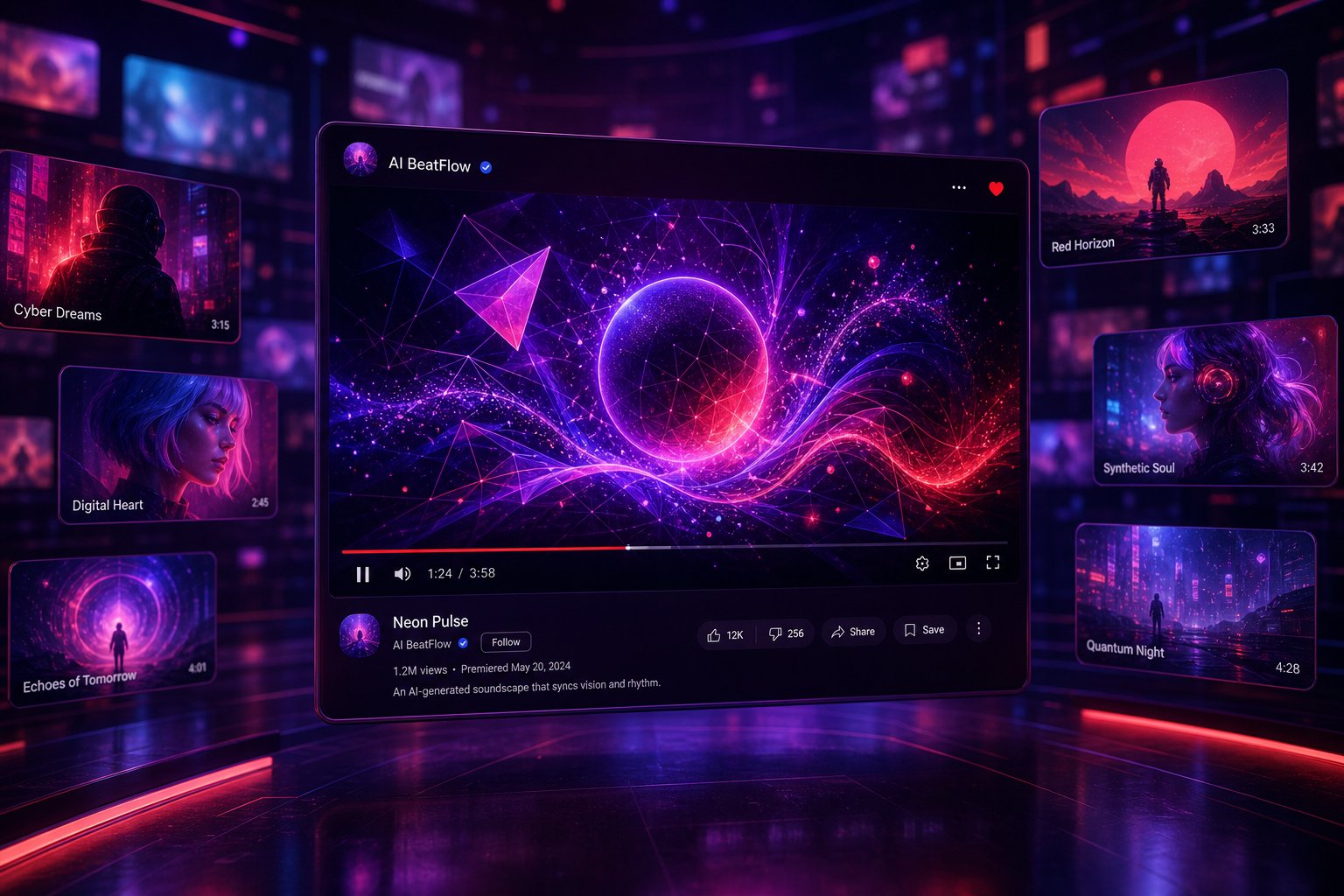
YouTube combines what no other platform can: audio, visuals, and a recommendation algorithm that surfaces niche content aggressively once you show interest. For ai music on youtube, this means a single click on one AI-generated track can send you down a rabbit hole of channels, compilations, and full-length albums you never knew existed. The platform hosts everything from audio-only uploads by Suno and Udio creators to fully produced artificial intelligence music video experiences where both the sound and visuals are machine-generated.
YouTube Music adds another layer. The youtube music ai playlist tool, available to Premium subscribers, lets you describe what you want to hear in natural language and generates a playlist to match. Combined with the experimental youtube music ai dj feature that adds voice commentary between songs, the platform is building a listening experience that blends AI-curated discovery with AI-generated content itself.
AI Music Channels and Playlists on YouTube
Finding reliable youtube ai music channels takes a bit of filtering. The platform is noisy, with thousands of low-effort uploads alongside genuinely impressive productions. These search strategies and channels consistently surface quality content:
- "AI generated music" + genre — Adding a genre like "jazz," "synthwave," or "orchestral" filters out clickbait and surfaces dedicated creators.
- "Suno AI" or "Udio AI" — Creators often tag their uploads with the tool used, making these reliable search terms for finding community-made tracks.
- AI music compilation channels — Several channels curate weekly or daily compilations of the best AI tracks, saving you from sifting through individual uploads. Look for channels with consistent upload schedules and engaged comment sections.
- "AI music playlist" or "AI songs 2025/2026" — Year-tagged searches help surface recent content rather than outdated early experiments.
- YouTube Music's AI playlist generator — Premium subscribers can tap "New" in the Library tab, select "AI Playlist," and describe their mood or preferences via text or voice to build a custom mix instantly.
Sorting results by upload date keeps your feed current, which matters in a space where quality improves month over month.
AI Music Videos and Visual Experiences
What sets YouTube apart is the visual dimension. A growing number of creators pair AI-generated audio with AI-generated video, producing complete artificial intelligence music video projects where no human performed, filmed, or edited anything. Tools like Runway, Pika, and Sora handle the visuals while Suno or Udio supply the soundtrack, resulting in fully synthetic audiovisual experiences.
Search for "AI music video" or "AI generated music video" to find these. The best ones treat the format seriously, using consistent visual themes, narrative arcs, and style-matched imagery rather than random AI clips stitched together. Some creators have built entire youtube music ai channels around this format, releasing weekly videos that function like a synthetic artist's discography.
YouTube's algorithm rewards watch time, so once you engage with a few of these tracks, your recommendations shift quickly. Within a session or two, your home feed starts reflecting the AI music ecosystem without any manual subscription work. The combination of free access, massive catalog depth, and visual storytelling makes YouTube one of the strongest platforms for discovering AI music, but it is far from the only community-driven space where listeners gather and share finds.
SoundCloud and Community-Driven AI Music Discovery
YouTube's algorithm can surface AI music passively, but what if you want to dig deeper on your own terms? SoundCloud, Bandcamp, and a constellation of community spaces offer a more grassroots listening experience, one driven by independent creators who upload directly and listeners who actively curate and share their finds. These platforms reward exploration, and the AI music living here often sounds different from what surfaces on mainstream services because it skips the distributor gatekeeping entirely.
AI Music on SoundCloud and Bandcamp
SoundCloud has become one of the most active hubs for soundcloud ai uploads. Independent creators post AI-generated tracks directly to the platform, often within hours of generating them. The result is a raw, fast-moving feed where you can hear the cutting edge of what AI models are producing right now rather than waiting for distribution pipelines to push content to Spotify or Apple Music.
Finding AI tracks on SoundCloud comes down to knowing the tagging conventions creators use. Search for tags like "AI generated," "Suno," "Udio," "AI music," or "generative music" to surface relevant content. Many creators also tag tracks with the specific model or tool used, so searching the name of a generator often returns dozens of recent uploads. SoundCloud's tag system is informal and creator-driven, which means you will find inconsistencies, but it also means the content is raw and unfiltered.
SoundCloud's AI policy requires transparency: creators must disclose AI usage when uploading tracks, and proper attribution tags are expected. This means many AI uploads are labeled honestly, making your search easier. The platform also supports monetization for AI-generated music, which incentivizes creators to upload consistently and maintain quality.
Bandcamp operates differently. It caters to a pay-what-you-want model where listeners can stream for free and purchase if they choose. AI music on Bandcamp tends to be more polished and intentional since creators treat it as a release platform rather than a casual upload feed. Search for tags like "AI," "artificial intelligence," or "generative" in the tag browser. You will find full albums and EPs rather than single-track experiments, making Bandcamp a stronger choice when you want a cohesive listening session rather than random scrolling.
Community Hubs for AI Music Discovery
Beyond upload platforms, some of the best ai playlists and track recommendations come from communities where listeners and creators gather to share, discuss, and curate. These spaces function like an artificial intelligence radio station programmed by enthusiasts rather than algorithms. If you want human-filtered quality rather than infinite scroll, community hubs are where the signal-to-noise ratio improves dramatically.
Here are the most active community sources for AI music discovery:
- r/SunoAI (80,000+ members) — The largest dedicated AI music subreddit. Daily track sharing with a one-post-per-24-hours rule, prompt engineering tips, and genre-tagged submissions make browsing efficient. Great for finding an ai song playlist organized by community votes.
- r/AI_Music (14,000+ members) — Cross-platform discussion covering tools beyond Suno and Udio. Music sharing happens in a pinned megathread, making it easy to scroll through recent recommendations in one place.
- r/udiomusic (12,000+ members) — Udio-specific community with troubleshooting, feature discussions, and track sharing. Useful if you prefer Udio's sound signature.
- r/MusicPromotion (68,000+ members) — Not AI-specific, but explicitly welcomes AI-generated tracks when creators use the required AI-Generated flair. A good place to discover creators actively building audiences around their AI output.
- Suno Discord (~400,000+ members) — The single largest AI music community on any platform. Real-time sharing, prompt tips, and instant feedback. If you join one community for AI music listening, this one offers the most volume and fastest updates.
- Udio Discord (~17,000+ members) — Smaller but active. Platform-specific discussions and community sharing for Udio users and listeners.
- TikTok and Instagram hashtags — Search #AImusic, #SunoAI, or #AIgenerated to find short-form clips and track previews. These platforms work well for discovering individual songs that creators promote with visual hooks.
A practical tip: the Reddit communities use megathreads and flair systems that make browsing efficient. You can sort by top posts in a given week to quickly surface the tracks that resonated most with listeners. Discord communities move faster but require more active scrolling since content is not voted on in the same way.
What makes these community spaces valuable is curation through consensus. When dozens of listeners upvote a track or react in a Discord channel, that social proof filters quality in a way that platform algorithms cannot replicate. You are hearing what real AI music enthusiasts consider worth sharing, not just what an algorithm thinks matches your listening history. The trade-off is that access requires a bit more effort than opening a streaming app. But for anyone who has built an ai song playlist from mainstream platforms and wants to go deeper, these communities represent the next layer of discovery.
With so many options spread across platforms, the natural question becomes which ones fit your budget and how much listening you can actually get for free versus what sits behind a paywall.
Free vs Paid AI Music Platforms Compared
You have seen the platforms. You know where they live. But here is the question that actually determines where you start: how much can you listen to without paying anything or even creating an account? The answer varies wildly. Some platforms hand you unlimited streaming the moment you land on the page. Others lock everything behind a sign-up wall, a credit system, or a monthly subscription.
This breakdown organizes every major option by access type so you can match a platform to your patience level and budget in seconds. Whether you want to browse the most popular ai songs without any commitment or you are ready to invest in a premium listening experience, there is a tier that fits.
Free Platforms with No Account Required
Imagine opening a browser tab and hearing AI music within five seconds. A few platforms actually deliver that experience with zero friction, no email address, no password, no credit card.
YouTube is the obvious winner here. AI music channels, compilations, and full albums are freely accessible without logging in. You can search, listen, and build a mental artificial intelligence playlist without ever creating a Google account. The only limitation is that background playback on mobile requires YouTube Premium.
Mubert also offers limited listening without an account through its web player. You can select a mood or activity and hear AI-generated streams immediately. The content is not individual tracks you can browse, but continuous generated audio tailored to your selection, making it ideal for background listening rather than active discovery.
SoundCloud allows partial listening without an account as well. You can play individual AI-tagged tracks and browse profiles, though the platform nudges you toward sign-up for full functionality like playlists and following creators.
For most other platforms, a free account is the minimum requirement. The good news is that creating one typically takes under a minute and unlocks substantial listening access at no cost.
Freemium and Subscription Options Compared
The freemium model dominates AI music platforms. You get generous listening access for free, while creation tools, commercial licensing, and premium audio quality sit behind paid tiers. For pure listeners asking where they can hear AI music, the free tiers are often more than enough. Paid plans primarily benefit creators who want to generate their own tracks or use AI music commercially.
Here is how the tiers break down across platforms:
- Free with account — Suno, Udio, ElevenLabs Music, Loudly, and Bandcamp all let you listen freely after signing up. Suno and Udio provide access to their entire community libraries. ElevenLabs Music offers up to 7 songs per day on its free tier, while Suno provides 50 daily credits primarily aimed at creation but with unlimited browse access.
- Freemium with limitations — Platforms like AIVA restrict downloads to 3 per month on the free plan, though you can preview compositions in the editor. Spotify hosts AI music within its existing free tier but inserts ads between tracks like any other content.
- Paid subscription — Spotify Premium, YouTube Music Premium, and Apple Music require monthly payments for ad-free, offline, and background listening. These are not AI-specific costs, you are paying for the full streaming experience that happens to include AI tracks alongside everything else.
A key distinction: platforms where you find the most popular ai generated songs for passive listening are almost always free. The paywalls kick in when you want to create, download, or use tracks commercially. If your goal is purely discovery, finding the top ai generated songs that the community is excited about, you can accomplish that without spending a dollar across Suno, Udio, YouTube, SoundCloud, and Reddit communities.
Here is a side-by-side comparison covering every platform discussed in this guide:
| Platform | Access Type | Account Required | Content Volume | Unique Features |
|---|---|---|---|---|
| YouTube | Free | No | Massive (millions of AI tracks and videos) | Visual AI music videos, AI playlist generator for Premium users, no listening limits |
| Suno Explore | Free with account | Yes | Very high (thousands added daily) | Trending charts, genre feeds, personalized recommendations, community contests |
| Udio Public Library | Free with account | Yes | High (active community uploads) | Genre browsing, trending tracks, high-fidelity audio playback |
| ElevenLabs Music | Free with account | Yes | Growing (14M+ tracks created on platform) | Studio-grade 44.1kHz audio, multi-language vocals, Music Marketplace |
| SoundCloud | Free with account | Partial (limited without) | High (active indie AI creator community) | Tag-based discovery, creator transparency requirements, direct artist interaction |
| Bandcamp | Free to stream | No (to listen) | Moderate (curated albums and EPs) | Pay-what-you-want model, full album streaming, artist-direct support |
| Mubert | Freemium | No (limited access) | Infinite (generative streams) | Mood-based continuous generation, activity-tailored audio, no individual tracks |
| Spotify | Freemium | Yes | Large (mixed with human catalog) | Algorithmic discovery, community playlists, AI disclosure in credits |
| AIVA | Freemium | Yes | Moderate (classical and cinematic focus) | In-editor preview, MIDI export on paid plans, full copyright on Pro tier |
| Reddit Communities | Free | Yes | Curated (community-voted selections) | Human-filtered quality, prompt breakdowns, cross-platform links |
| Discord (Suno/Udio) | Free | Yes | High (real-time sharing) | Instant feedback, prompt tips, fastest access to new releases |
A few patterns stand out from this comparison. Platforms designed primarily as generators (Suno, Udio, ElevenLabs) offer the most generous free listening because they want you engaged enough to eventually create something yourself. Traditional streaming services (Spotify, YouTube Music, Apple Music) treat AI music as just another content category within their existing pricing structure. Community platforms (Reddit, Discord, SoundCloud) are fully free but require more active effort to navigate.
For casual listeners who want the lowest barrier to entry, YouTube plus Suno Explore covers an enormous range of content without any payment. For listeners who want curated quality over raw volume, Reddit communities and Discord servers filter the noise effectively at zero cost. The paid tier only becomes relevant when listening turns into something more: creating, downloading, or using AI music in your own projects.
That shift from passive listening to active creation is where AI music gets genuinely interesting, and the line between the two is thinner than you might expect.
How AI Songs Are Made and How to Create Your Own
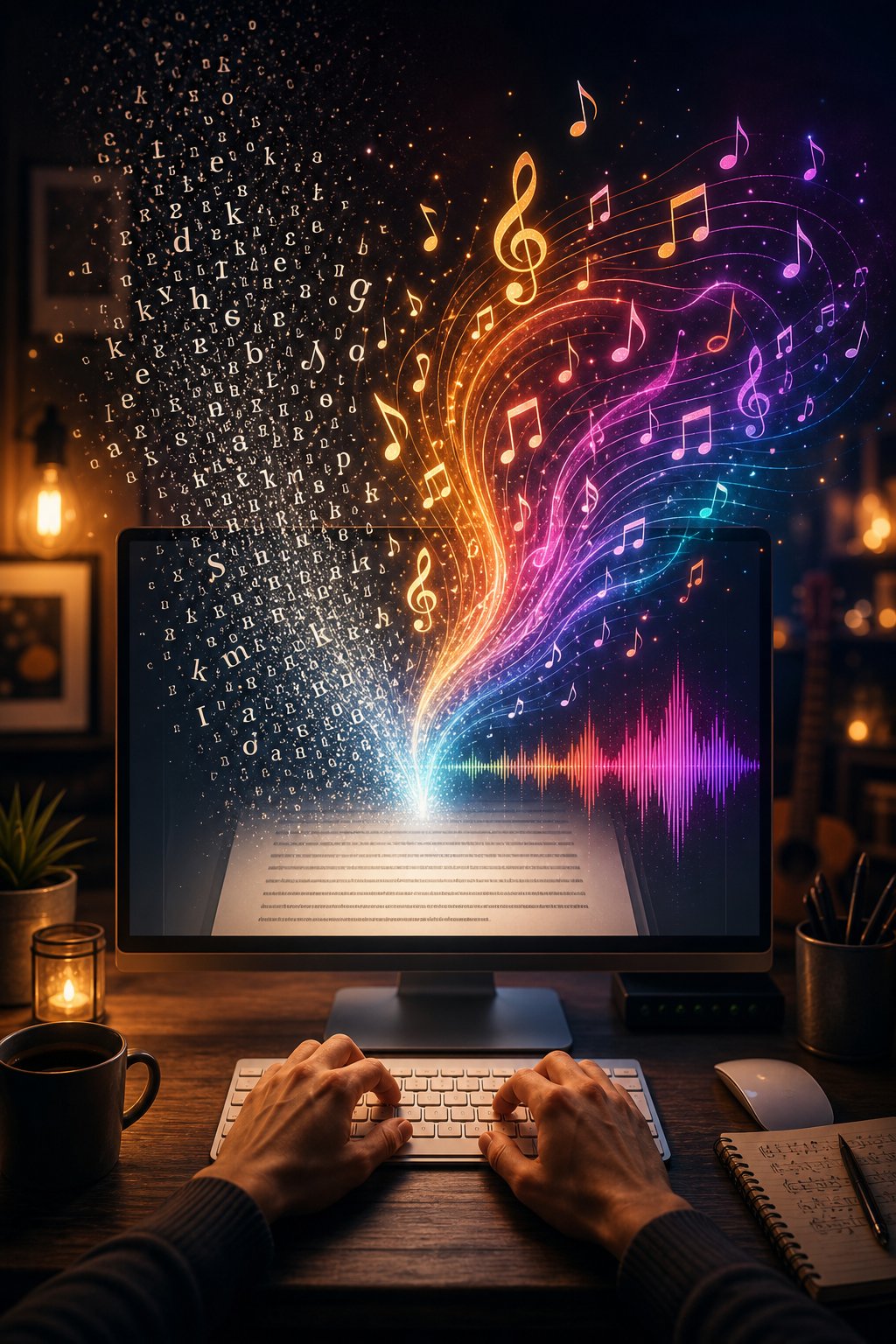
That thin line between listener and creator? It comes down to a single text box. The same platforms you have been browsing for discovery also put a generation tool one click away. Understanding how are ai songs made gives you a richer appreciation for what you are hearing and a surprisingly short path to making tracks yourself.
How AI Music Gets Created
Every AI-generated track starts with a prompt. You describe what you want in plain language, and a neural network trained on vast amounts of musical data produces a complete audio file. No instruments, no recording studio, no years of practice required.
The workflow typically involves three inputs working together:
- Text prompt — A natural language description covering genre, mood, tempo, and instrumentation. Something like "upbeat 90s pop with jangly guitars and female vocals" gives the model enough direction to generate a focused result.
- Style selection — Many platforms let you choose or refine genre tags, BPM, vocal type, and energy level. These style cues act as guardrails, keeping the output within your creative intent. A well-crafted ai pop song, for instance, might specify bright synths, 120 BPM, and a catchy chorus structure.
- Lyric input — You can let the AI auto-generate lyrics or write your own. Custom lyrics dramatically improve quality because the model structures verses, choruses, and delivery around your specific words rather than defaulting to generic metaphors about chasing dreams.
Behind the scenes, the model analyzes patterns it learned during training, things like rhythm, harmony, song structure, and genre conventions. It then predicts what audio should come next based on your prompt, generating something entirely new rather than stitching together existing samples. The result can range from a simple instrumental loop to a full ai pop song with vocals, backing harmonies, and a polished arrangement.
What separates great ai generated music examples from mediocre ones is prompt specificity. Vague inputs produce generic outputs. Detailed descriptions covering era, instrumentation, vocal delivery, and even song structure produce tracks that sound intentional and professional. The technology has reached a point where the bottleneck is your creative direction, not the AI's capability.
From Listener to Creator with AI Music Tools
Here is what makes AI music fundamentally different from every other genre you have listened to: the gap between appreciating a track and making one yourself is measured in minutes, not years. If you have been exploring the platforms covered in this guide and heard something that sparked an idea, you can act on that idea immediately.
Going from passive listener to active creator follows a simple progression:
- Open an AI music generator — MakeBestMusic's AI Music Generator App turns prompts, lyrics, and style ideas into complete songs quickly, making it the fastest way to test your first idea without a learning curve.
- Describe what you want — Write a prompt covering genre, mood, and any specifics. Think of the tracks you enjoyed while listening and describe what made them work. Use those same qualities in your prompt.
- Add your own lyrics (optional) — Paste in lyrics you have written or let the AI generate them. Custom lyrics make the track feel personal and original.
- Generate and iterate — Create 3 to 5 versions from the same prompt. Listen back, identify what works, tweak your description, and generate again. Two or three rounds typically produce something strong.
- Share or refine — Publish your track to a platform, share it in a community, or bring it into a DAW for further editing. The song is yours.
The entire process takes less than 20 minutes for your first finished track. No musical training, no expensive software, no equipment beyond a browser. MakeBestMusic handles the heavy lifting of turning your creative direction into a produced song, whether you want an ai artificial intelligence soundtrack for a video project or a personal track you have been hearing in your head.
Other tools like Suno and Udio follow similar prompt-to-song workflows, but the core experience is the same across the board: you describe, the AI creates, and you curate the result. The creative decisions, genre, mood, lyrics, arrangement choices, are yours. The AI is the instrument. What you make with it depends entirely on what you bring to the prompt.
With creation this accessible, the remaining question is practical: what should you do first based on how you actually want to engage with AI music?
Your Quick-Start Plan for AI Music Listening and Creation
You have the platforms, the search strategies, and the community sources. The only thing left is deciding how deep you want to go. Not every listener wants the same experience, so here is a clear starting path based on how you actually engage with music. Pick the persona that fits, follow the steps, and you will be hearing (or making) the best ai song for your taste within minutes.
Your Next Step Based on How You Listen
Three types of people search for AI music, and each one benefits from a different entry point. Find yourself below.
The Casual Listener: You want easy, free access without signing up for anything or learning a new platform. Background listening while working or a quick browse of what AI music sounds like is enough for you.
- Open YouTube and search "AI generated music" plus a genre you enjoy (lo-fi, pop, ambient, cinematic).
- Pick a compilation or channel with recent uploads and let it play. No account needed.
- If something catches your ear, search the same genre on Suno's Explore page for more variety.
- Save anything you like to a YouTube playlist or bookmark it for later. You now have a growing ai music playlist without spending a cent.
The Music Enthusiast: You want to explore AI as a genre, discover the top ai song contenders the community is excited about, and understand what makes certain tracks stand out. Curation and quality matter more than volume.
- Join r/SunoAI on Reddit and sort by top posts this week to hear what the community considers the best work.
- Create free accounts on both Suno and Udio. Browse their trending sections and genre feeds to compare what each model produces.
- Search Spotify for "AI generated" playlists and follow two or three that are actively maintained. Let Spotify's algorithm learn your preferences from there.
- Build your own ai music playlist across platforms by collecting standout tracks. The variety across Suno, Udio, SoundCloud, and YouTube will give you a comprehensive picture of where top ai music stands right now.
The Aspiring Creator: You have heard enough to know you want to try making your own. The spark is there. You just need the fastest path from idea to finished track.
- Go to MakeBestMusic's AI Music Generator App and write a prompt describing a song you wish existed. Include genre, mood, tempo, and any instrument preferences.
- Add your own lyrics if you have them, or let the AI generate a first draft you can edit later.
- Generate 3 to 5 versions. Listen back, tweak your prompt based on what worked, and generate again.
- Share your best track in a community like r/SunoAI or on SoundCloud. Feedback from other creators accelerates your learning faster than anything else.
Start Listening and Creating Today
AI music is not a future promise. It is a present reality spread across platforms you can access in the next 30 seconds. YouTube and Suno Explore cover the casual and enthusiast paths with zero cost and minimal friction. For creators ready to make something, MakeBestMusic turns a text prompt into a finished song faster than most people can finish a coffee.
The landscape will keep evolving. New platforms will launch, existing ones will improve, and the line between listener and creator will keep blurring. But you do not need to wait for the next update. The best ai song you have not heard yet might already be sitting in a community thread, a trending feed, or a prompt you have not written yet. Start wherever feels natural, and let curiosity carry you from there.
