

What Makes AI Music Sound So Convincing to Our Ears
The Moment AI Music Became Undeniable
Imagine hearing three songs back to back. Two were made entirely by artificial intelligence, one by a human artist. Could you pick out the real one? If you think the answer is obvious, you're probably wrong. A Deezer and Ipsos study surveyed 9,000 people across eight countries and put exactly this challenge to them.
97% of listeners could not distinguish between fully AI-generated music and human-made tracks in a blind listening test.
That number landed like a shockwave across the music industry. More than half of the participants felt genuinely uncomfortable when they learned the results. The gap between machine-made and human-made sound has narrowed so dramatically that our ears alone can no longer serve as reliable judges. And this isn't a fringe opinion on AI music from a small sample. The research spanned the US, Canada, Brazil, the UK, France, Germany, the Netherlands, and Japan, capturing a broad cross-section of listening habits and musical cultures.
What This Article Explores
So why is AI music so good that it fools nearly everyone? The answer isn't a single trick. It's a convergence of music theory, audio engineering, pattern recognition, and sheer training scale working together. This article takes a music-theory-first approach to that question, breaking down the harmonic, rhythmic, timbral, and production-level reasons AI-generated songs sound polished, familiar, and emotionally engaging.
You'll also find an honest ai music review of where the technology genuinely excels and where it still stumbles. The relationship between music and ai is evolving fast, with 60 million people using AI to create music in 2024 alone. Whether you're a curious listener, a producer evaluating new tools, or a skeptic looking for substance beyond the hype, the goal here is the same: a clear-eyed exploration grounded in how music actually works, not marketing sizzle.
The technical quality is undeniable. The deeper questions around meaning, creativity, and authenticity are more complex. Both sides deserve attention, and that's exactly where we're headed, starting with how these models learn to compose in the first place.
How AI Models Learn to Create Music From Scratch
Learning by Listening at Scale
How does AI make music? At its core, the process starts the same way it does for any musician: by listening. The difference is scale. Where a human guitarist might absorb a few thousand songs over a lifetime, an AI music model ingests millions of tracks during training. Audio waveforms, isolated stems, metadata tags for genre and mood, even lyrics and tempo markers all feed into the system as raw learning material.
This data collection phase is the foundation of how AI music generators work. Neural networks convert raw audio into numerical representations, breaking sound down into spectral and temporal patterns that algorithms can process. Think of it like translating music into a language a computer can read fluently. Once converted, the model begins identifying recurring elements: which notes cluster together in pop hooks, how bass frequencies interact with kick drums in electronic music, what makes a jazz chord voicing feel different from a country strum pattern.
The training pipeline typically follows a structured sequence:
- Gather audio from large catalogs spanning decades and genres
- Preprocess recordings into machine-readable formats like spectrograms
- Extract features such as pitch, rhythm, tone, and harmonic relationships
- Train deep neural networks to detect and reproduce learned patterns
- Evaluate outputs against target quality, then refine through iteration
Each pass through the data sharpens the model's understanding. After thousands of training cycles, the network builds an internal map of how music works across styles, eras, and production aesthetics.
How Pattern Recognition Replaces Music Theory Rules
Here's the surprising part: AI models never receive a single lesson in music theory. No one teaches them what a dominant seventh chord is or why a half-time feel creates tension. Instead, they arrive at these concepts statistically. When a neural network encounters the same chord resolution thousands of times across blues, soul, and rock tracks, it learns that this particular harmonic movement carries weight. It doesn't label it a V-I cadence. It simply knows, through sheer repetition, that this pattern sounds right.
Machine learning for music works through mathematical pattern recognition. Neural networks process sounds as numerical information, detecting recurring elements like chord progressions and rhythmic motifs across massive datasets. Over time, the model learns which notes typically cluster in pop versus jazz, how vocals express emotion, and how textures evolve across genres. It doesn't memorize entire songs. It constructs new ones based on statistical relationships encoded through millions of examples.
This is why can two Riffusion songs sound alike, or why outputs from different generators share certain qualities. They're all drawing from overlapping statistical truths about what makes music feel cohesive. The same harmonic tendencies, rhythmic grids, and timbral combinations that professional songwriters rely on are baked into the model's learned weights, just discovered through data rather than textbooks.
The Human Musician Parallel
The comparison to human learning isn't just a metaphor. It's structurally accurate. A young pianist learns by listening to recordings, imitating phrases, making mistakes, and gradually internalizing what sounds musical. Nobody hands a child a complete theory manual before their first lesson. They absorb patterns from experience, build intuition, and eventually create original work that reflects everything they've heard.
AI models follow the same arc at compressed speed. As BMAT's research explains, artificial neural networks are organized into layers of interconnected algorithms inspired by the human brain. Each layer refines the input, extracting increasingly abstract features from raw audio data. The early layers might detect basic frequency information. Deeper layers recognize harmonic relationships, genre conventions, and production styles.
The result? The AI essentially internalizes the collective knowledge of recorded music history. Every mixing decision, every chord substitution, every rhythmic pocket captured in its training data becomes part of its creative vocabulary. This is exactly why outputs often sound polished and familiar rather than experimental or alien. The model has absorbed decades of professional production standards, hit song structures, and genre conventions all at once, producing music that feels like it was made by someone who studied every genre simultaneously.
That breadth of absorbed knowledge explains the surface-level quality. But understanding what the model learned is only half the story. The deeper question is what specific musical principles it encodes most effectively, and why those principles make its output sound so satisfying to human ears.
The Music Theory Behind AI's Surprising Quality
When people ask how does AI music generation work at the compositional level, the answer lives in music theory, whether the AI knows it or not. These models never read a harmony textbook. They don't label chords or count beats consciously. Yet their outputs consistently follow the same structural principles that have made songs resonate with listeners for centuries. The reason is straightforward: those principles aren't arbitrary rules. They're patterns embedded in virtually every popular recording ever made, and AI absorbs them all.
Harmonic Progressions That Satisfy the Ear
You've heard the I-V-vi-IV progression thousands of times. It drives "Let It Be," "No Woman No Cry," "With or Without You," and countless pop hits spanning decades. When AI generates music, this progression and its close relatives appear constantly. Not because someone programmed it in, but because it dominates the training data so heavily that the model treats it as a default harmonic gravity.
The same applies to the ii-V-I movement common in jazz and R&B. These progressions work because they create tension and then resolve it. The dominant chord pulls toward the tonic like a question demanding an answer. AI models learn this pull statistically. They discover that certain chord transitions appear together far more often than random chance would predict, and they replicate that gravitational relationship in their outputs.
This is partly why some of the best AI created songs sound immediately satisfying. They lean on harmonic movement that human ears are already wired to find pleasing. The progressions feel inevitable, like the music is going exactly where it should.
Rhythmic Precision Beyond Human Timing
Here's where AI gains an almost unfair advantage. Most professionally recorded music has been quantized, meaning drum hits and notes are snapped to a precise timing grid during production. When AI trains on this data, it inherits that mechanical tightness as its baseline. Every kick drum lands exactly on the beat. Every hi-hat pattern is metronomically consistent.
Human drummers introduce micro-timing variations that give music feel and swing. That's a strength in genres like funk or jazz. But in pop, EDM, and lo-fi, listeners expect rhythmic precision. AI delivers it effortlessly because the training data already reflects that standard. The grooves sound professional from the first note because the model never learned to play slightly behind the beat unless the genre specifically calls for it.
This rhythmic consistency also extends to arrangement pacing. AI outputs tend to introduce elements at predictable intervals: a new percussion layer every four bars, a build before the chorus, a stripped-back bridge. These structural rhythms mirror what works in commercial music, keeping listeners engaged without surprising them uncomfortably.
Why AI Melodies Feel Familiar Yet Fresh
Melodic contour, the shape a melody traces as it rises and falls, follows predictable patterns in popular music. Most hit melodies move in stepwise motion with occasional leaps for emphasis. They tend to arc upward toward emotional peaks and settle downward at phrase endings. AI replicates these contours naturally because they dominate its training examples.
The question of can AI make better music than humans often hinges on melody. AI melodies rarely feel groundbreaking, but they consistently feel right. They sit comfortably within singable ranges, resolve phrases on strong beats, and avoid awkward interval jumps that would sound jarring. The model has internalized what makes a melody stick without ever being told the rules explicitly.
What gives AI melodies their slight freshness is recombination. The model draws melodic fragments from across genres and eras, stitching together contour patterns from soul, rhythmic phrasing from hip-hop, and interval choices from indie pop into combinations that feel new even though each individual element is deeply familiar.
Across all three dimensions, harmony, rhythm, and melody, AI encodes specific music theory principles with remarkable consistency:
- Resolution: dominant chords moving to tonic, creating satisfying harmonic closure
- Tension-release cycles: building dissonance before resolving it, mirroring emotional arcs
- Voice leading: smooth movement between chord tones, minimizing awkward leaps in inner voices
- Dynamic arc: gradual builds toward choruses, energy drops at bridges, intensity curves that mirror listener attention spans
- Repetition with variation: repeating core phrases while introducing subtle changes to maintain interest without disorienting the listener
These aren't obscure academic concepts. They're the structural bones of nearly every song that's ever charted. AI doesn't invent new theory. It enforces existing theory with statistical rigor, producing music that satisfies on a structural level before you even consciously register why it works.
Still, music theory only explains the compositional skeleton. The reason AI tracks sound truly convincing also depends on which genres align naturally with algorithmic strengths, and which ones expose its limitations the moment you listen closely.
A Genre-by-Genre Breakdown of AI Music Quality
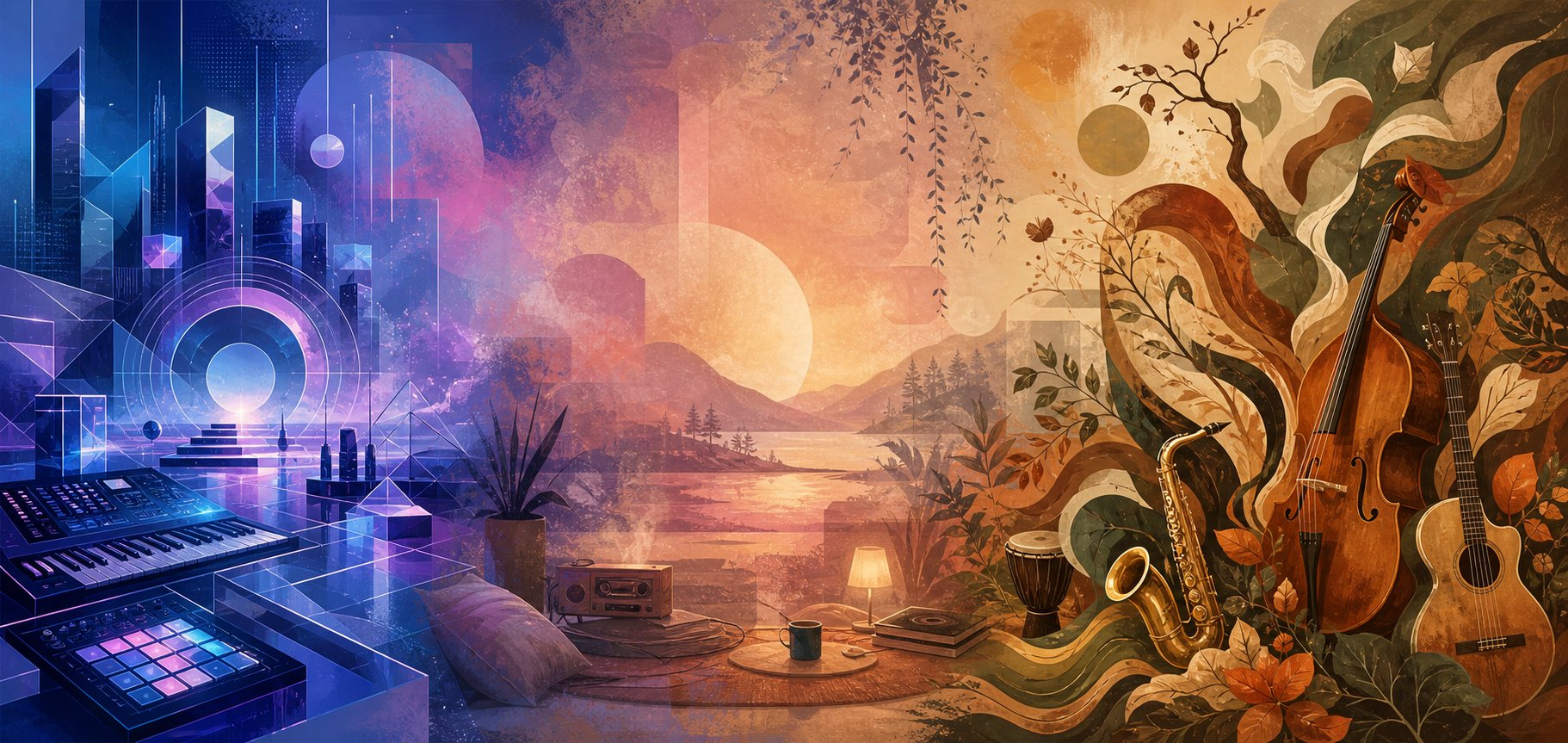
Not all genres are created equal in the eyes of a neural network. Some styles practically hand AI the blueprint. Others demand exactly the kind of spontaneous, human-centered expression that algorithms still can't convincingly replicate. If you want an honest picture of where AI-powered music discovery is headed, you need to look at performance genre by genre rather than making sweeping generalizations.
The pattern is clear: genres built on structure, repetition, and polished production play directly to AI's strengths. Genres that depend on improvisation, emotional rawness, or unpredictable deviation from form expose its weaknesses. Here's how that breaks down in practice.
Genres Where AI Sounds Indistinguishable From Humans
Pop. This is AI's home turf. Pop music relies on proven formulas: verse-chorus-verse structures, four-chord progressions, predictable melodic hooks, and clean production. When your training data contains millions of pop tracks that follow essentially the same template, the model learns to replicate that template with near-perfect accuracy. The result? AI pop songs that sound radio-ready because they follow the exact same structural rules as everything else on the radio.
Lo-fi and chillhop. These genres are texture-driven rather than complexity-driven. Vinyl crackle, tape hiss, mellow chord pads, and simple drum loops define the aesthetic. AI excels here because the genre intentionally embraces imperfection and repetition. As industry analysis confirms, lo-fi's simplicity and textural richness make it ideal for machine interpretation. The dusty, warm sonic character that defines the style can be reproduced algorithmically by simulating analog warmth and vintage textures. Many producers already use AI-generated lo-fi loops for study playlists, game soundtracks, and meditation content without listeners noticing the difference.
EDM and electronic music. Quantized rhythms, synthesized sounds, and structured repetition are the backbone of electronic genres. These characteristics align perfectly with algorithmic logic. According to genre-specific quality analysis, electronic styles are where AI music production shines brightest because the music itself is already machine-adjacent. Hard-hitting kicks landing on exact grid positions, layered synth pads building over eight-bar phrases, sidechain compression pumping in perfect time. AI delivers all of this without breaking a sweat because it mirrors the precision-driven production approach human EDM producers already use.
Ambient and drone. Pattern-based, repetitive by design, and focused on atmosphere over melodic complexity. Ambient music rewards slow evolution and textural layering, both of which AI handles well. There's no expectation of surprising harmonic turns or virtuosic performance. The genre's success criteria, immersive soundscapes that create mood, maps directly onto what generative models do naturally.
Hip-hop and trap beats. Rhythm-driven genres with heavy reliance on programmed drums and synthesized bass have seen strong improvements. AI systems create beats with dynamic compression matching professional studio levels. The repetitive loop-based structure and emphasis on production texture over live instrumentation give AI a clear advantage.
Where AI Still Falls Short
Jazz. This is the genre that humbles every AI model. Jazz improvisation requires real-time deviation from patterns, split-second responses to other musicians, and the kind of rule-breaking that only works when you deeply understand the rules you're breaking. Research into AI jazz limitations identifies three core barriers: lack of real-time responsiveness, absence of emotional depth, and creativity constrained by training data boundaries. AI can replicate bebop-style chord substitutions and swing phrasing accurately, but it rarely introduces fresh rhythmic or melodic ideas outside its training set. The solos sound technically correct yet uninspired, missing the conversational spontaneity that defines a great jazz performance.
Progressive rock and complex compositions. Genres that thrive on non-standard structures, odd time signatures, extended compositions, and deliberate subversion of listener expectations challenge AI fundamentally. A neural network optimizes for pattern consistency. Prog rock rewards pattern disruption. When a song shifts from 7/8 to 4/4 to 5/4 within a single passage, AI struggles to maintain coherence because its training data provides fewer examples of these unconventional transitions.
Folk and singer-songwriter. The best folk music carries emotional weight that comes from lived experience. It's not about production quality or harmonic sophistication. It's about authenticity, vulnerability, and personal storytelling. While AI can replicate the chord structures and acoustic timbres of folk accurately, the genre's soul lives in the imperfect vocal delivery, the subtle timing choices that reveal hesitation or passion, and the sense that someone real is sharing something true. AI generates competent folk instrumentals, but the emotional core remains surface-level.
Rock and metal. These genres rely heavily on organic distortion, live performance energy, and analog warmth. AI approximates guitar tone and percussive drive effectively for cinematic or commercial use, but it often misses the human expressiveness and dynamic interaction between live players that gives rock its visceral impact.
The pattern across all these cases comes down to one principle: the more a genre depends on human unpredictability and emotional authenticity, the more AI struggles. The more it depends on structure, production polish, and adherence to proven formulas, the better AI performs. Here's how that maps across the full spectrum:
| Genre | AI Quality Level | Why It Works or Doesn't | Key Characteristics |
|---|---|---|---|
| Pop | Excellent | Formulaic structures dominate training data; proven progressions and hooks replicate easily | Verse-chorus form, four-chord loops, clean production, predictable dynamics |
| Lo-fi / Chillhop | Excellent | Texture-driven with low complexity; imperfections are part of the aesthetic | Vinyl warmth, simple loops, mellow chords, atmospheric layering |
| EDM / Electronic | Excellent | Quantized rhythms and synthesized sounds align perfectly with algorithmic precision | Grid-locked beats, layered synths, repetitive builds, sidechain compression |
| Ambient / Drone | Excellent | Pattern-based, repetitive by design; rewards slow textural evolution over complexity | Sustained pads, minimal melody, atmospheric depth, gradual transitions |
| Hip-Hop / Trap | Good | Loop-based production and programmed drums suit AI well; vocal delivery remains harder | 808 bass, hi-hat rolls, repetitive patterns, heavy compression |
| Classical / Orchestral | Good | Rule-based harmony and structured orchestration translate well; emotional nuance varies | Instrument layering, harmonic logic, dynamic arcs, precise timbre balance |
| R&B / Soul | Good | Chord sophistication replicates well; vocal emotion and phrasing remain challenging | Extended chords, smooth grooves, melodic runs, dynamic vocal expression |
| Rock / Metal | Fair | Captures structural intensity but misses live performance feel and analog warmth | Distorted guitars, live drums, dynamic interaction, raw energy |
| Folk / Singer-Songwriter | Fair | Acoustic timbres replicate accurately; emotional authenticity and storytelling fall flat | Acoustic instruments, personal lyrics, subtle timing, vulnerability |
| Progressive Rock | Developing | Non-standard structures and deliberate pattern subversion conflict with AI's optimization tendencies | Odd meters, extended forms, abrupt transitions, genre fusion |
| Jazz (Improvisation) | Developing | Requires real-time spontaneity, ensemble interaction, and intentional rule-breaking | Swing timing, modal exploration, conversational soloing, expressive phrasing |
Notice that the best AI song cover performances tend to cluster in those top-tier genres. When someone shares an AI track that sounds souled out and genuinely convincing, it's almost always pop, electronic, or lo-fi. The genres at the bottom of the table are where trained listeners can still reliably identify AI output.
This genre map also reveals something important about the broader question of quality. AI doesn't produce universally good music. It produces music that's good in specific, predictable contexts, ones where structure and production matter more than spontaneity and soul. That distinction matters enormously when evaluating whether a particular AI output sounds convincing, because the answer depends heavily on what style it's attempting.
Genre alignment explains which musical contexts favor AI. But even within those favorable genres, there's another layer that makes AI output sound professional: the raw audio and production qualities baked into every generated track.
The Audio Qualities That Fool Even Trained Listeners
Genre and composition tell only part of the story. Strip away the notes and structure, and what remains is pure sound: the texture of a piano hammer striking a string, the spatial width of a reverb tail, the way a vocal sits in a mix. These sonic details are what separate a rough demo from a radio-ready track, and they're exactly where AI music quietly excels in ways most people never consciously notice.
Timbre and Instrument Realism
Timbre is what makes a trumpet sound like a trumpet and not a clarinet, even when both play the same note. It's the fingerprint of an instrument, shaped by harmonics, attack characteristics, and physical resonance. Reproducing it convincingly has always been one of the hardest challenges in digital music production.
AI models solve this differently than traditional synthesizers. Instead of building sounds from mathematical oscillators, they learn timbral qualities directly from recordings of real instruments. The result is output that captures subtle performance nuances: the breath noise before a flute phrase, the fret buzz on an acoustic guitar, the hammer resonance inside a grand piano. Quality benchmarks for leading platforms rate top AI systems as producing instrumentation that's indistinguishable from real instruments for most common timbres, with only unusual combinations or extended techniques exposing synthetic qualities.
This realism extends to how instruments interact within an arrangement. AI learns not just individual timbres but how they layer: how a bass guitar occupies a different frequency pocket than a kick drum, how strings blend with pads without competing for spectral space. These mixing relationships come built into the output because they were built into the training data.
Production Polish That Rivals Professional Studios
Here's the hidden advantage that explains so much about why AI tracks sound immediately polished: the models train on professionally mixed and mastered recordings. Every EQ curve, every compression ratio, every spatial positioning choice made by top engineers gets absorbed into the model's understanding of what music should sound like.
When AI generates a track, it doesn't produce raw, unprocessed audio that needs mixing. It produces audio that already inherits those professional production characteristics. The frequency balance is already clean. The stereo image is already wide where it should be and focused where it needs to be. The loudness sits near commercial standards, typically around -14 LUFS for streaming platforms, because that's what the training data reflected.
Modern AI platforms deliver audio at 44.1kHz/16-bit minimum, with professional tiers reaching 48kHz/24-bit. Dynamic range exceeds 60dB on average outputs, with top-tier generations pushing past 80dB. These aren't numbers that require post-processing to achieve. They come standard, whether the output format is WAV, MP3, or FLAC. Users exploring supported audio formats for direct use from platforms like Udio's AI music generator will find these technical specifications already meet broadcast and streaming requirements without additional mastering steps.
As Sonarworks' research notes, AI mixing tools analyze frequency content, dynamic range, and stereo positioning across all tracks, then apply appropriate adjustments based on patterns learned from professionally mixed music. The same principle applies to generative AI music itself. The model has already internalized what a professional mix sounds like, so its outputs arrive pre-polished.
Specific audio qualities that consistently fool listeners, including trained audio engineers in blind tests:
- Frequency balance: even spectral distribution without muddy low-mids or harsh high frequencies
- Dynamic range: natural-sounding volume variation between sections rather than flat, over-compressed output
- Stereo width: instruments placed deliberately across the stereo field with appropriate mono compatibility
- Reverb tails: natural-sounding spatial decay that matches the implied acoustic environment
- Transient response: crisp, defined attack on percussive elements without artificial ringing or smearing
- Harmonic richness: complex overtone content that gives instruments warmth and depth rather than thin, digital sterility
The Vocal Synthesis Breakthrough
Vocals have historically been the hardest element to synthesize convincingly. The human voice carries so much nuance, micro-pitch variations, breath dynamics, consonant articulation, emotional coloring, that even slight inaccuracies trigger immediate detection. Is autotune AI? Not exactly. Traditional pitch correction tools like Auto-Tune adjust existing vocal recordings. AI vocal synthesis generates entirely new vocal performances from scratch, a fundamentally different and far more complex task.
The leap in vocal realism over the past two years has been dramatic. Analysis of realistic AI voice technology identifies three critical factors that separate convincing synthesis from robotic output: natural timing with uneven pauses and clipped consonants, accurate prosody with correct stress and rhythm patterns, and consistency maintained across long passages without tonal drift.
Early AI vocals sounded smooth but lifeless. Current models introduce the controlled imperfections that make voices sound human: slight breathiness before phrases, micro-variations in vibrato speed, natural volume fluctuations between syllables. How is Riffusion singer chosen? Platforms like Riffusion select vocal characteristics based on the style, genre, and tonal qualities specified in the prompt, matching synthesized voice profiles to the musical context rather than randomly assigning a voice.
The best vocal synthesis models hold coherence across entire songs without drifting between tones mid-phrase. They handle multilingual output while preserving natural cadence for each language. They express emotion proportionally, sounding intense during choruses and restrained during verses, without overcorrecting into theatrical exaggeration.
Together, these audio qualities create a complete sonic picture that registers as professional to most listeners. The timbre sounds real. The mix sounds finished. The vocals sound human. Each layer reinforces the others, building cumulative believability that makes the artificial origin nearly impossible to detect on first listen.
But all of this technical sophistication still depends on one variable that most people overlook: what you actually ask the AI to create. The quality of the input shapes the quality of the output more dramatically than most users realize.
How Your Input Shapes the Quality of AI-Generated Songs
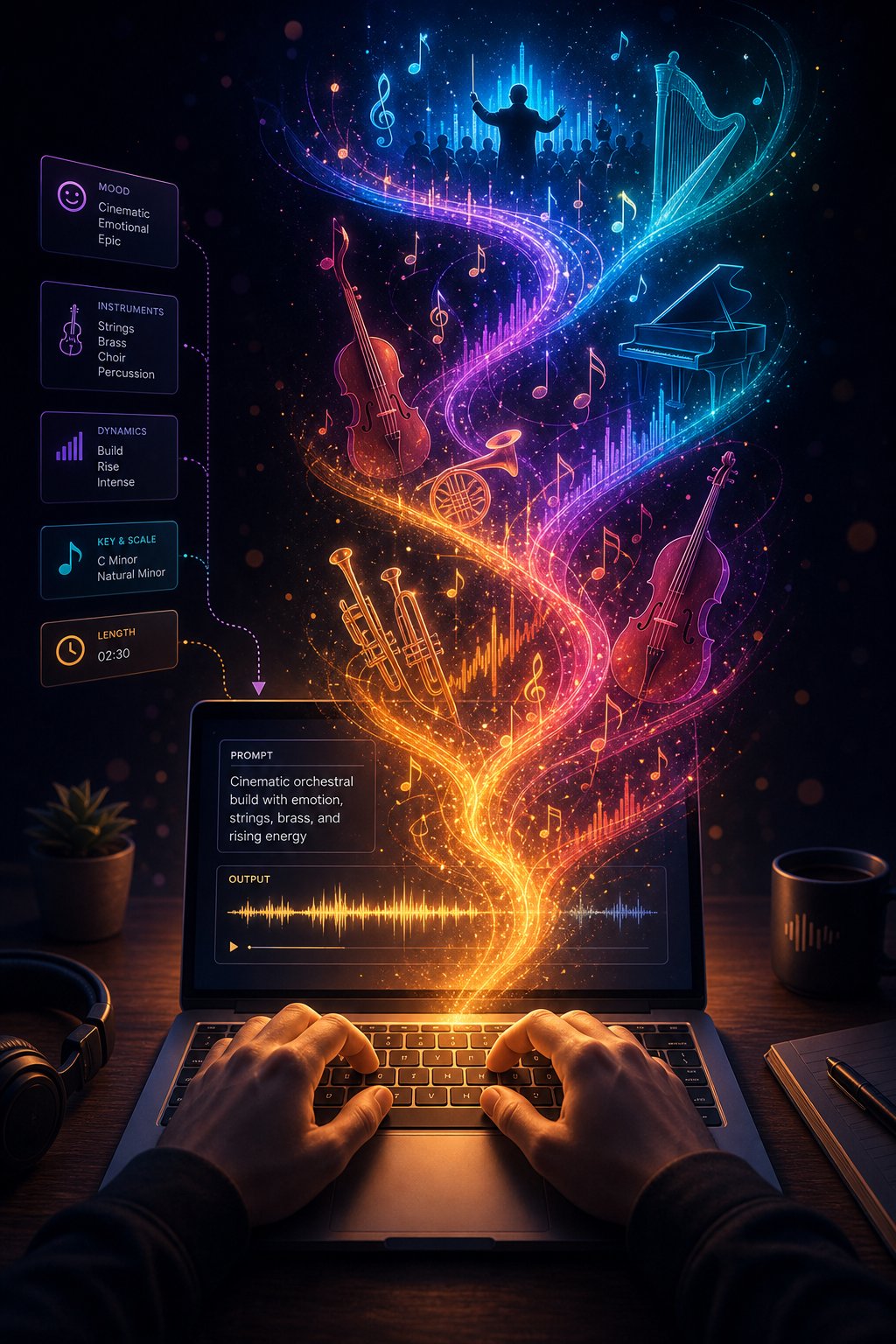
The same AI model can produce a forgettable loop or a genuinely compelling track. The difference? What you tell it to make. Prompt quality is the single most underestimated variable in AI music generation, and it's the one factor entirely within your control. Whether you're exploring platforms like remusic.ai, aimusic.so/app, or evaluating udio ai music generator pricing 2025, the underlying principle stays the same: better input yields dramatically better output.
Why Prompt Quality Determines Output Quality
Think of your prompt as a creative brief handed to a session musician who's studied every genre simultaneously. A vague instruction like "make something cool" gives the model no meaningful direction. It defaults to statistical averages, producing generic, middle-of-the-road results. Specificity changes everything.
When you describe genre, mood, tempo, instrumentation, and structure together, you narrow the model's creative space in productive ways. Instead of drawing from millions of possible patterns, it focuses on a defined subset that matches your vision. A prompt reading "melancholic indie folk at 92 BPM with fingerpicked acoustic guitar, soft brush drums, and a female vocal" gives the AI concrete anchors across multiple musical dimensions. Each descriptor eliminates thousands of irrelevant possibilities and steers the output toward coherence.
According to prompt engineering research, the best prompts balance specificity with creative flexibility. You want to guide the model toward your vision while leaving enough room for it to make surprising musical choices you might not have considered. Overloading a prompt with conflicting details confuses the model just as much as being too vague.
Turning Lyrics and Style Ideas Into Complete Songs
Lyrics don't just determine what gets sung. They shape rhythmic phrasing, melodic contour, and emotional arc. Short, punchy lines push the AI toward rhythmic, percussive vocal delivery. Longer, flowing phrases encourage legato melodies with sustained notes. The syllable count and stress patterns in your lyrics directly influence how the generated melody moves.
Style references add another layer of control. Combining unexpected influences, like requesting "90s trip-hop meets orchestral film score," produces outputs that feel genuinely unique because the model blends statistical patterns from both genres into something that exists in neither one alone. This recombination is where AI music generation moves beyond imitation into actual creative territory.
Platforms like MakeBestMusic's AI Music Generator let you experiment with this directly, turning prompts, lyrics, and style ideas into complete songs so you can hear how different inputs transform the output in real time. It's the fastest way to develop intuition for what works.
Tips for Getting the Best Results
After analyzing how leading AI music platforms interpret user input, here are prompt strategies ranked from most to least impactful:
- Specify genre and sub-genre clearly. "Dark synthwave" outperforms "electronic music" every time because it anchors tone, tempo, and instrumentation in a single phrase.
- Describe mood with emotional precision. "Bittersweet nostalgia" gives the model more to work with than "sad" because it implies both warmth and melancholy simultaneously.
- Name specific instruments. "Warm Rhodes piano, muted upright bass, and brushed snare" produces far more cohesive results than letting the model guess at orchestration.
- Set tempo and energy level. Even a rough BPM target ("around 120 BPM") eliminates ambiguity about pacing and groove density.
- Define song structure. Requesting "verse-chorus-bridge-chorus with an ambient intro" helps the model build dynamic contrast rather than looping a single section indefinitely.
- Use exclusion language. Stating "no heavy drums" or "no autotune" prevents unwanted elements from appearing in the mix.
- Reference era or cultural context. "Late-night Tokyo jazz bar" communicates atmosphere, instrumentation, and mood simultaneously without requiring technical vocabulary.
The iterative process matters too. Your first generation rarely nails it perfectly. Treat each output as feedback. Listen, identify what's missing or misaligned, adjust your prompt, and regenerate. Each cycle teaches you how the model interprets specific language, building a personal vocabulary that gets you closer to your vision with every attempt.
For creators searching for the best ai music video generator from audio, the same principle applies to visual pairing: clear musical intent produces tracks that sync more naturally with visual narratives because the emotional and structural arc is already defined in the audio itself.
Prompt skill explains why two people using identical AI tools produce wildly different results. But even with perfect prompts delivering technically polished output, a deeper question lingers beneath the surface: does sounding good actually mean the music is good?
What Good Really Means When a Machine Creates Music
A track can have flawless frequency balance, tight harmonic movement, and studio-grade vocal synthesis. It can follow every structural convention in the pop handbook. And it can still leave you feeling nothing. This tension sits at the center of every honest conversation about AI music quality. Technical excellence and emotional impact are not the same thing, and conflating them leads to conclusions that don't hold up under scrutiny.
So is AI music bad, or is it good? The answer depends entirely on what you mean by those words.
Technical Excellence vs Emotional Depth
"Good" in music operates on at least four distinct levels:
- Sonic quality: clarity, frequency balance, production polish, timbral realism
- Compositional craft: harmonic logic, melodic coherence, structural pacing, rhythmic consistency
- Emotional resonance: the ability to evoke genuine feeling, connect with personal experience, create catharsis
- Cultural significance: artistic intent, social commentary, identity expression, shared meaning within a community
AI currently dominates the first two layers. As the previous sections demonstrated, generative models produce audio with professional mixing characteristics and compositions that follow proven music theory principles with statistical precision. On these purely technical metrics, the output is genuinely impressive.
The third and fourth layers are where the conversation gets complicated. A 2025 biometric study found that emotional valence remained consistent across AI-generated and human-composed music when participants watched audiovisual content. Listeners reported similar emotional states regardless of whether the soundtrack was created by a human or a machine. On the surface, that suggests AI music evokes real emotion just fine.
But dig deeper into the same research and a more nuanced picture emerges. Human-created music was perceived as significantly more familiar than both AI conditions. Participants also showed wider pupil dilation when listening to AI-generated tracks, a physiological marker suggesting greater cognitive effort was required to process the unfamiliar material. The music worked emotionally, but something about it still registered differently at a subconscious level.
The Cultural Meaning Debate
Familiarity matters more than it might seem. In Western musical composition, particularly in music designed to support visual storytelling, there are established conventions that audiences internalize over a lifetime. The researchers suggested that human-composed music felt more familiar precisely because it drew from these deeply embedded cultural conventions in ways AI couldn't fully replicate.
When listeners know music was composed by AI, they consistently rate it lower, even when the same piece received positive ratings under human attribution. The bias isn't about sound quality. It's about perceived intent.
This finding from research published in the Journal of Experimental Psychology reveals something fundamental about how we assign value to art. Participants liked classical music less when told it was AI-composed, but showed no such bias for electronic music, a genre already perceived as machine-adjacent. The implication is stark: our judgment of musical quality is partly a judgment of the creator behind it.
Critics who argue why generative AI is bad for music often point to this gap. A song written from personal grief, political frustration, or cultural pride carries meaning that transcends its sonic properties. When Billie Holiday sang "Strange Fruit," the power wasn't in the chord progression. It was in who was singing, what she'd experienced, and what the song demanded of its audience. No prompt can replicate that context.
As cultural commentary on AI authenticity frames it, music has historically been connected to human experience: emotion, identity, struggle, memory, and celebration. Audiences form bonds with artists because they believe the music reflects lived reality. Imperfections, vocal strain, emotional vulnerability, and personal storytelling have traditionally defined artistic authenticity. AI-generated music complicates that relationship fundamentally, even when it sounds indistinguishable from human work.
Redefining What Good Means in the AI Era
None of this means AI music is inherently bad. It means "good" isn't a single dimension. A lo-fi beat that helps someone focus for three hours is good at its job. A pop track that fills a content creator's video with the right energy is good at its job. Neither needs to carry the weight of cultural significance to justify its existence.
The honest answer to why is ai music bad, when it is, usually comes down to a mismatch between what the listener expects and what the technology delivers. If you're looking for background music with professional production values, AI exceeds expectations. If you're looking for art that reflects a specific human perspective and carries cultural weight, the technology hasn't crossed that threshold, and it may not need to.
What's emerging is a spectrum rather than a binary. Some music exists to serve a function: setting mood, filling silence, supporting visuals. Other music exists to mean something beyond its sonic properties. AI excels at the functional end of that spectrum. The meaningful end still belongs to human artists who bring intention, vulnerability, and lived context to their work.
The question worth asking isn't whether AI music is good or bad. It's whether we're evaluating it against the right criteria for its intended purpose. And as the technology continues advancing, even that distinction may shift in ways we can't yet predict.
Why AI Music Keeps Getting Better and How to Try It
The Core Reasons AI Music Impresses
The question of why AI music sounds so convincing doesn't have a single answer. It's a stack of advantages, each reinforcing the others. Pattern mastery gives it compositional logic. Production inheritance gives it sonic polish. Genre formula optimization gives it structural familiarity. Together, these layers produce output that satisfies ears trained on decades of professionally recorded music.
Here's what it comes down to:
- Training on hundreds of millions of songs encodes harmonic, rhythmic, and melodic conventions that humans find naturally pleasing
- Learning from professionally mixed and mastered recordings means outputs inherit studio-grade frequency balance, dynamic range, and spatial imaging automatically
- Genre-specific pattern recognition allows the model to replicate proven formulas in pop, electronic, lo-fi, and ambient music with near-perfect accuracy
- Vocal synthesis breakthroughs now deliver breath dynamics, vibrato variation, and emotional inflection that pass casual listening tests
- Prompt-driven specificity lets users narrow creative output toward coherent, intentional results rather than generic averages
Each of these factors has improved substantially in the past year alone. AI music updates through 2026 show models scaling from roughly 1 billion parameters to over 12 billion, with artifact reduction improving by 80-95% across categories like metallic vocals, repetitive patterns, and phase issues. Generation speed has dropped from minutes to under 45 seconds at higher quality levels than what existed just two years prior.
The technology is also pushing into territory that was previously considered exclusively human. Emotional expression in vocals now spans joy, sadness, anger, and passion with subtle transitions between states. Structural understanding has matured to include bridge placement, dynamic build-ups, and genre-appropriate transitions rather than simple looping. These aren't incremental tweaks. They represent a fundamental shift in what generative music can achieve.
Remaining frontiers include true improvisational capability, long-form coherence beyond ten minutes, and the kind of cultural authenticity that comes from lived experience rather than statistical patterns. Research into interactive generation and real-time human-AI collaboration is actively addressing the improvisation gap, while few-shot learning techniques aim to capture niche styles from minimal examples. These are the areas to watch for anyone tracking ai music updates over the coming year.
Experience AI Music Creation Yourself
Reading about these capabilities is one thing. Hearing the results firsthand changes the conversation entirely. If the concepts explored throughout this article sparked curiosity, the fastest way to develop your own perspective is to generate something yourself.
MakeBestMusic's AI Music Generator offers a direct path from idea to finished track. Type a prompt describing genre, mood, and instrumentation. Add lyrics if you want vocals. Specify a style reference or tempo. Within seconds, you'll hear how all the principles discussed here, harmonic logic, production polish, genre optimization, and vocal synthesis, come together in a single output. It's the simplest way to test prompt strategies, experiment with genre combinations, and hear for yourself why the gap between AI-generated and human-made music has narrowed so dramatically.
Whether AI music is good enough for your specific needs depends on what you're making and what good means to you. The only way to find out is to listen.
