AI Music Generation Has Changed Everything for Creators
Imagine typing a sentence and hearing a fully produced song 30 seconds later. That scenario is no longer science fiction — it is the everyday reality for millions of people using the best ai music generation apps 2026 has brought to market. The scale of adoption is staggering. others, one of the leading platforms, surpassed 2 million subscribers and reached $300 million in annual recurring revenue by early 2026, fueled by a $400 million funding round that valued the company at $5.4 billion. Meanwhile, a SubmitHub study found that nearly 40 percent of all music released in July 2026 showed signs of AI involvement. These are not fringe experiments. AI music tools 2026 creators rely on are reshaping how content gets made across industries.
Why AI Music Generation Has Gone Mainstream
Text-to-music capabilities, prompt-based composition, and style-transfer features have matured rapidly. You no longer need to read sheet music, play an instrument, or understand mixing to produce a broadcast-quality track. Platforms like others and Udio accept plain-language prompts — "upbeat lo-fi hip-hop with soft piano and rain sounds" — and return polished audio in seconds. This accessibility has opened the door for YouTubers needing background music, marketers producing ad jingles, podcasters seeking intro themes, and hobbyists exploring creativity for the first time. The barrier between "having an idea" and "having a finished track" has essentially disappeared, making the best ai music generation tools 2026 offers relevant far beyond the recording studio.
What This Guide Covers That Others Do Not
Most roundups of the best ai music generators 2026 read like shallow feature lists — brief blurbs, no pricing details, zero guidance on licensing or DAW integration. Many are published by the very platforms they review, ranking their own products first. This guide takes a different approach.
This is an editorially independent resource with no vendor affiliation. No platform paid for placement, and no ranking was influenced by advertising relationships.
You will find detailed pricing tables with cost-per-track breakdowns, side-by-side licensing comparisons, practical DAW integration workflows for Ableton, Logic Pro, and FL Studio, genre-specific recommendations, and prompt engineering tips designed to improve your output quality on any platform. These are the areas systematically absent from competing articles — and the exact details you need to make a confident decision among ai music generation tools 2026 has made available.
The real question, though, is how to separate marketing claims from actual performance. That starts with a transparent evaluation process.
How We Evaluated Every AI Music Generator
Vague claims like "we tested for 100 hours" tell you nothing about what was actually measured or how conclusions were reached. A credible ai music generation tools comparison 2026 readers can trust requires a methodology you can scrutinize — not a marketing badge. Here is exactly how every platform in this guide was scored.
Evaluation Criteria and Scoring Dimensions
Each tool was assessed across seven dimensions chosen because they reflect what real users — from solo YouTubers to professional studios — actually care about when selecting top rated ai music generation tools 2026 has to offer:
- Output audio quality: Clarity, presence of digital artifacts, stereo imaging, and overall mastering level. Tracks were normalized to a consistent loudness target (approximately -16 LUFS, following the Artificial Analysis benchmarking standard) so volume differences would not skew perception.
- Prompt responsiveness: How accurately each platform interprets user intent — does a request for "melancholic jazz piano with brushed drums" actually produce that, or something loosely adjacent?
- Genre versatility: Range of styles a single platform handles convincingly, from hip-hop and electronic to cinematic scoring and classical.
- Pricing value: Cost relative to output volume and feature access, including credit systems, per-track economics, and free-tier limitations.
- Commercial licensing terms: Whether generated tracks can be legally monetized, and under what plan tier or conditions.
- Export options and DAW compatibility: Supported file formats (WAV, MP3, MIDI), bitrate and sample rate specs, and stem separation availability for professional production workflows.
- Learning curve: Time from account creation to a usable first output, factoring in interface clarity and documentation quality.
How Each Tool Was Tested
Rather than running a single prompt and calling it a review, every platform received identical prompt scenarios across five distinct genres: hip-hop, electronic, cinematic, lo-fi, and classical. This approach — similar to how Artificial Analysis runs blind pairwise comparisons using curated prompts tagged by genre — ensures that the best ai music generators features comparison reflects real-world versatility rather than cherry-picked highlights.
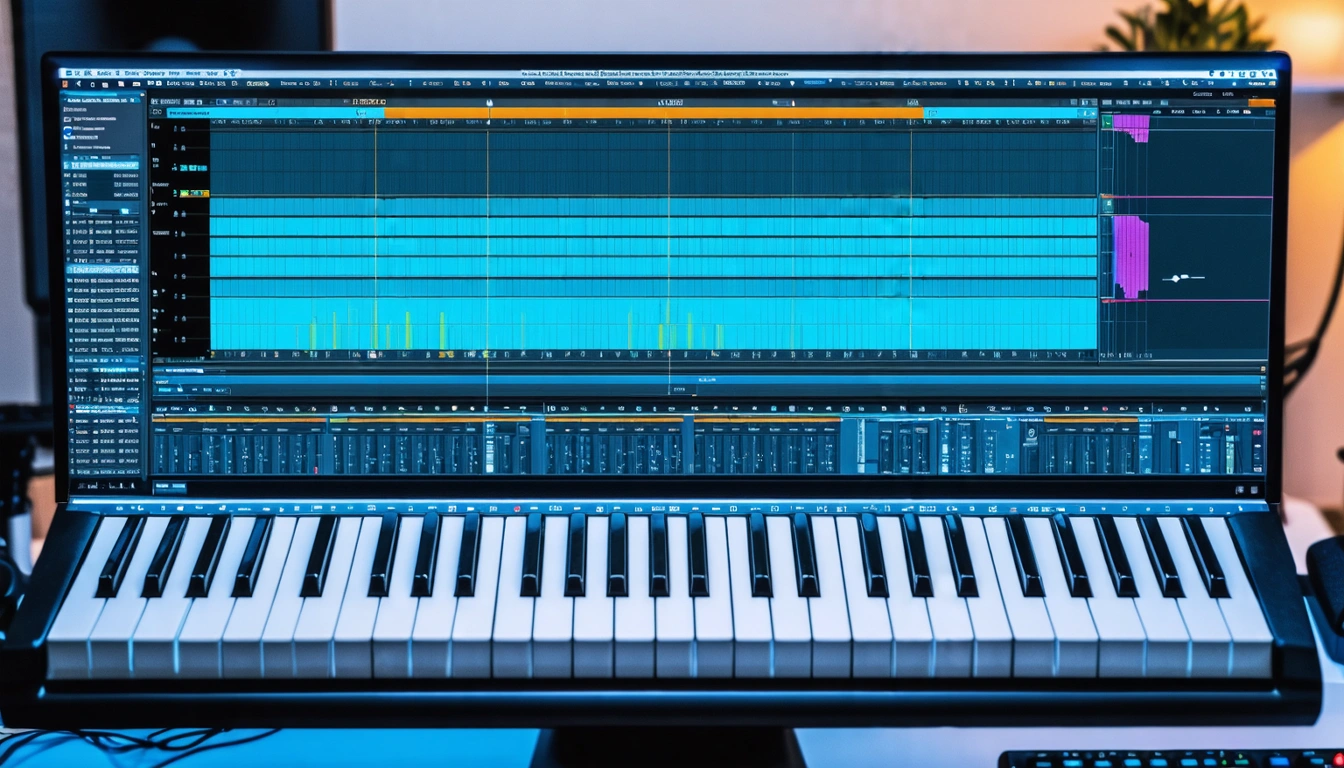
Both free tiers and paid plans were tested wherever available, because output quality and export options often differ between them. Workflow evaluations went a step further: generated tracks were exported and imported into Ableton Live, Logic Pro, and FL Studio to assess practical integration — format compatibility, tempo detection accuracy, and how well stems separated for professional mixing.
This structured, repeatable process is what makes a best ai music generators 2026 comparison features guide genuinely useful. With the scoring framework clear, the next step is seeing how each platform actually performed when put through it.

Top AI Music Generation Apps Ranked by Performance
Scores are finalized. Prompts have been run across every genre. So which top ai music generation tools 2026 actually deliver? The table below summarizes how each platform performed across the evaluation dimensions outlined above, followed by deeper analysis of the standout contenders.
| Platform | Output Quality | Commercial License | Stem Export | Best Use Case |
|---|---|---|---|---|
| MakeBestMusic | Strong | Yes (paid plans) | Yes | Prompt-to-song for creators, marketers, and producers |
| others | Excellent | Yes (paid only) | Yes (Premier) | Full production workflow with Studio DAW |
| Udio | Excellent | Yes (paid only) | Limited | Vocal realism and granular editing control |
| Riffusion | Good | Yes | No | Developer integration and API-first products |
| ElevenLabs Music | Good | Yes (paid) | No | Voice cloning combined with music generation |
| Soundraw | Decent | Yes | No | Royalty-free background music for content |
| Mubert | Decent | Yes (paid) | No | Ambient, lo-fi, and continuous generative audio |
A table only tells half the story. Here is what stood out when each top ai music creation platform was pushed through real-world testing.
MakeBestMusic — Prompt-to-Song Creation for Every Skill Level
MakeBestMusic earned its position among the top ai music generation products 2026 by focusing on something deceptively simple: turning a text prompt or a set of pasted lyrics into a complete, release-ready song with minimal friction. You type a description — genre, mood, instrumentation, vocal style — and the platform handles composition, arrangement, and production in a single pass.
What makes it particularly useful for creators, marketers, and content teams is the range of built-in tools beyond basic generation. The platform bundles an AI song generator, lyric generator, vocal remover, audio separator, and audio converter into one workspace. Stem separation lets you isolate drums, vocals, bass, and melody for remix work or DAW integration, while export support for WAV, FLAC, and MP3 keeps the output compatible with professional pipelines. Two composition modes — Quick Compose for fast turnarounds and Collaborative Compose for more detailed, iterative sessions — accommodate both beginners exploring ideas and producers refining arrangements. Genre coverage spans hip-hop, electronic, jazz fusion, folk, metal, ambient, and more. Commercial licensing is available on paid plans, including downloadable PDF licenses for platforms like YouTube and Spotify.
others — The Market Leader With Studio Ambitions
Is others the best AI music generator? By sheer scale and feature depth, it has the strongest case. With over two million users and $250 million in funding, others commands the largest user base in the category. The v5 release pushed audio quality into territory that genuinely passes casual listening tests — vocals sound natural, instrument separation is clean, and mastering polish rivals many professionally produced tracks.
The real differentiator is others Studio, a browser-based multitrack DAW exclusive to Premier subscribers ($30/month). It adds BPM control, stem generation, multitrack editing, and audio/MIDI export — blurring the line between AI generator and production environment. The Pro plan at $10/month delivers approximately 500 songs per month with full commercial rights, while the free tier offers roughly 10 songs per day without monetization permissions. For producers who want generation, editing, and export in a single ecosystem, others's workflow is currently unmatched.
Other Top Contenders Worth Testing
Udio, developed by former Google DeepMind researchers, competes head-to-head with others on output quality. Its inpainting feature — regenerating specific sections without touching the rest — and style-reference uploads give producers surgical control over results. Udio builds tracks in 30-second increments, offering more precise section-by-section development. At $10/month, the Standard plan yields approximately 1,200 songs, substantially more per credit than others's equivalent tier. Vocal expressiveness and instrumental fidelity are frequently cited as its strongest attributes.
Riffusion takes an entirely different approach as an API-first platform. If you are building AI music into an app, game, or product programmatically, Riffusion is the most developer-friendly option available. It excels at generating top Riffusion AI songs for integration scenarios rather than consumer-facing composition — think game soundtracks triggered by in-engine events or dynamic playlist generation inside fitness apps.
The Boomy AI music generator carved out a niche for users who want the fastest possible path from zero to a distributed track, though its output quality sits below the S-tier platforms. Soundraw targets content creators needing royalty-free background music with per-section energy customization, while Mubert specializes in continuous ambient streams — ideal for meditation apps, live streams, and focus playlists rather than structured song production.
Choosing among these top ai music generators march 2026 ultimately depends on what you are building, how much control you need, and how much you are willing to spend. The cost question deserves its own detailed breakdown.
Pricing Plans and Free Tiers Compared Side by Side
Feature lists are meaningless if you cannot afford the plan that unlocks them. Pricing is consistently the most requested detail in AI music tool reviews — and consistently the most poorly covered. Credit systems, token pools, daily versus monthly caps, and hidden commercial-rights gates make direct comparison surprisingly difficult. The table below cuts through that complexity with verified data from each platform's official pricing page.
Free Tiers and What You Actually Get
Every major platform offers some form of free access, but what "free" actually means varies wildly. Some give you 50 daily credits. Others give you three downloads per month and keep the copyright. A few let you generate all you want — then block the download button entirely. If you are researching the best free ai music generators 2026 has available, the distinction between generous quotas and usable rights is the detail that matters most.
| Platform | Free Tier Details | Entry Paid Plan | Top Plan | Credit System | Est. Cost Per Track (Paid) | Commercial Rights Included |
|---|---|---|---|---|---|---|
| MakeBestMusic | Limited daily generations, no commercial use | $19.9/mo | $89.9/mo | Credit-based | ~$0.10–$0.50 | Yes (paid plans) |
| others | 50 credits/day (no rollover), no commercial use | Pro $10/mo ($8/mo annual) | Premier $30/mo ($24/mo annual) | Monthly credits, no rollover | ~$0.02–$0.04 | Yes (Pro and Premier) |
| Udio | 10 credits/day, 100/month cap, no downloads | Standard $10/mo | Pro $30/mo | Monthly credits, no rollover | ~$0.005–$0.01 | Yes (paid), but downloads disabled |
| ElevenLabs Music | 10,000 credits/mo (~11 min of music), no commercial use | Starter $6/mo | Pro $99/mo | Shared credit pool (900 credits/min) | ~$0.50–$1.00 | Yes (Starter and above) |
| AIVA | 3 downloads/mo, MP3 and MIDI only, copyright held by AIVA | Standard €11/mo (annual) | Pro €33/mo (annual) | Download-count based | ~$0.11–$0.73 | Standard: social only. Pro: full ownership |
| Stable Audio | 10 generations/mo, up to 6 min, personal license only | Pro ~$11.99/mo | Enterprise (custom) | Generation-count based | Varies by tier | Yes (paid tiers) |
| Soundraw | No free plan | Creator €5.83/mo | Artist €10.75/mo | Unlimited generation, download limits | Flat monthly rate | Creator: no streaming. Artist: full distribution |
| Mubert | Ambassador: 25 gen/mo, 5 MP3 downloads, attribution required | Creator $14/mo ($11.69 annual) | Pro $39/mo | Generation-count based | ~$0.56–$1.56 | Pro only (no streaming releases on any plan) |
Pricing verified against official vendor pages. Rates change frequently — confirm current terms before subscribing.
Paid Plans and Cost-Per-Track Breakdown
The real cost of generating music at scale depends less on sticker price and more on how credits translate to finished tracks. Two pricing models dominate the landscape, and each favors a different type of user.
Credit-based systems — used by others, Udio, ElevenLabs, and MakeBestMusic — charge per generation. Every attempt, including failed ones and regenerations, costs credits. This structure rewards users who write precise prompts and need fewer iterations. others's Pro plan at $10/month delivers 2,500 credits with no rollover, translating to roughly 500 songs. That puts the per-track cost near $0.02 — remarkable value for the best ai music generators for creators 2026 has produced. ElevenLabs, by contrast, shares its credit pool across voice, sound effects, and music generation, which means heavy voiceover users may find their music budget smaller than expected.
Flat-rate or download-limited models — used by Soundraw, AIVA, and Stable Audio — cap how many tracks you can export rather than how many you generate. AIVA's Pro plan at €33/month allows 300 downloads and grants full copyright ownership, the only platform in this comparison that explicitly transfers copyright to you. Soundraw's Creator tier permits unlimited generation but restricts downloads and excludes streaming distribution — you need the Artist plan for that.
Which model works better? For occasional hobbyists producing a few tracks per week, flat-rate plans with generous download limits offer predictable budgeting. For daily content producers or marketing teams generating background music at volume, credit-based systems like others's Pro plan deliver the lowest per-track economics by a wide margin. Professional studios evaluating the best ai music generators for professionals 2025 2026 should also factor in export quality and stem access, since platforms like others Premier and MakeBestMusic include stem separation that eliminates the need for separate post-processing tools.
One important caveat for anyone exploring the best free ai music generation tools 2026 offers: free tiers universally block commercial use. others's pricing page states it explicitly. AIVA retains copyright on free-tier outputs. Udio's free plan generates audio you literally cannot download. If your goal involves monetized YouTube channels, client projects, or streaming distribution, the minimum honest investment sits between $6 and $12 per month — a detail that many guides listing the best free ai music generators 2025 conveniently omitted.
Pricing determines access, but it does not determine which tool fits your specific workflow. The more practical question is which platform excels at the exact task you need done.

Best AI Music Apps for Every Professional Use Case
A ranked list tells you which platform scored highest overall — but that is not the same as telling you which one solves your problem. A podcaster who needs ambient background tracks has entirely different requirements than a songwriter drafting full vocal arrangements or a game developer building loopable audio assets. Matching the right tool to the right workflow eliminates wasted credits, subscription regret, and hours spent forcing a platform to do something it was never designed for.
Background Music for YouTube, Podcasts, and Social Media
Content creators churning out weekly uploads need tracks that are royalty-clear, mood-consistent, and fast to produce. The priority here is not musical complexity — it is reliability and legal safety at volume.
Beatoven and Soundraw stand out for this workflow. Beatoven holds a Fairly Trained certification with over 100,000 ethically sourced samples and revenue sharing for contributing artists, making it one of the lowest-risk options for monetized channels. Soundraw trains its AI exclusively on in-house recordings — no scraped data — and lets you customize energy levels per section, so a 90-second YouTube intro can build from calm to energetic without editing multiple clips together.
Mubert fills a different niche: continuous generative streams. If you run a Twitch channel, lo-fi playlist, or meditation app that needs hours of non-repetitive ambient audio, Mubert's real-time generation model delivers exactly that. For creators searching for the best ai platform to make music videos for social media, pairing Mubert or Soundraw outputs with a best music video ai generator tool like Kapwing or Canva's video editor creates a streamlined content pipeline from audio to finished post.
Full Song Creation From Text Prompts or Lyrics
When you need a complete track — vocals, lyrics, verse-chorus structure, genre-accurate instrumentation — the field narrows quickly. This is where the best ai for songwriting workflows live, and only a handful of platforms handle end-to-end composition convincingly.
others remains the most feature-complete best song creator app for full vocal tracks. Its v5 model produces natural-sounding vocals across genres from R&B to metal, and prompts of up to 200 characters give enough room to specify mood, instrumentation, and structure. The Premier plan adds stem extraction and multitrack editing through others Studio, so you can refine outputs without leaving the platform.
Udio competes directly on vocal realism and offers a distinct advantage for iterative writing. Its inpainting feature lets you regenerate a single verse or bridge without affecting the rest of the track — invaluable for anyone treating AI as a co-writer rather than a one-shot generator. If you paste in finished lyrics and want granular control over how each section sounds, Udio's 30-second incremental build process gives you that precision.
MakeBestMusic bridges accessibility and depth here. Its Collaborative Compose mode lets you iterate on sections with style and lyric adjustments between passes, while the built-in lyric generator helps users who have a concept but not finished words. For marketers or content teams without songwriting experience, this combination makes it one of the best ai songwriting tools 2026 has introduced — you describe what you want, and the platform handles both the writing and the production.
ElevenLabs Music deserves mention for teams already using ElevenLabs for voiceover or dubbing. Managing voice cloning, sound effects, and music generation under one credit pool simplifies vendor management, even if its music-specific feature set is less mature than others's or Udio's.
Stems and Loops for Professional Music Production
Professional producers rarely use AI-generated tracks as-is. They want raw material — a drum pattern to build on, a melodic hook to develop, a bassline to reharmonize. The critical requirement is stem export: separated audio files for drums, bass, melody, and vocals that can be imported into a DAW and treated like any other session element.
MusicRadar's stem separation testing confirmed that even dedicated separation tools still produce artifacts, so platforms that generate stems natively — rather than separating them after the fact — deliver cleaner results. others's Premier plan and MakeBestMusic both offer native stem export, giving producers isolated tracks without the quality loss inherent in post-hoc separation.
AIVA takes a compositional-control approach that appeals to a different kind of producer. Rather than generating a finished track from a prompt, AIVA lets you specify chord progressions, tempo, arrangement layers, and instrumentation step by step. It also exports MIDI — a feature most competitors lack — so you can take a generated melody into your own virtual instruments and reshape it entirely. For producers who view AI as a best ai song maker for starting points rather than finished products, AIVA's granular workflow fits naturally.
BandLab combines AI generation with a full browser-based DAW, a royalty-free sample library, and distribution tools. If you want to generate a loop, layer it with manual recordings, mix the result, and distribute it to streaming platforms — all without leaving a single application — BandLab is the only platform offering that complete chain.
Advertising Jingles and Commercial Audio
Short-form commercial audio has its own constraints: tracks need to hit an emotional beat within 15 to 30 seconds, loop cleanly for variable-length ad placements, and carry clear commercial licensing. The best ai for making music videos and ad campaigns is not necessarily the same tool that excels at four-minute songs.
Soundraw's per-section energy customization makes it efficient for jingle production — you set the opening hook energy, the mid-section dip, and the closing crescendo independently. Beatoven's prompt-driven instrumental generation produces clean, artifact-free background audio that works well under voiceover without competing for sonic space. For game audio loops and branded sonic identities, Mubert's continuous generation and BPM locking create seamless assets that loop without audible seams.
Use the quick-reference list below to jump straight to the right tool for your workflow:
- YouTube / podcast background music: Beatoven, Soundraw, Mubert
- Full songs with vocals and lyrics: others, Udio, MakeBestMusic, ElevenLabs Music
- Stems, loops, and MIDI for DAW production: others Premier, MakeBestMusic, AIVA, BandLab
- Ad jingles and commercial short-form audio: Soundraw, Beatoven, Mubert
- Social media content with video pairing: Soundraw, MakeBestMusic, Mubert
Knowing which platform fits your use case is the first half of the equation. The second half — getting that AI-generated audio into your actual production environment — is where most guides go silent. Export formats, bitrate specs, and DAW compatibility deserve the same level of detail.
DAW Integration and Professional Production Workflows
You have picked a platform, generated a track, and downloaded the file. What happens next? For working producers, the answer is always the same: it goes into a DAW. Yet almost every guide covering the best ai music production tools stops at the download button, as if the creative process ends when the export finishes. It does not. The gap between a raw AI export and a production-ready session involves format compatibility, sample rate matching, stem routing, and tempo alignment — details that determine whether AI-generated audio becomes a usable building block or a frustrating headache.
Export Formats, Bitrate, and Audio Quality Specs
Not every platform exports at the same quality, and the differences matter more than you might expect. A 128 kbps MP3 is fine for a quick demo; it is not fine for layering into a multitrack session where lossy compression artifacts compound across dozens of tracks.
Here is what the top ai music production tools 2026 currently offer on the export side:
| Platform | Export Formats | Sample Rate | Bit Depth / Bitrate | Stem Export | MIDI Export |
|---|---|---|---|---|---|
| MakeBestMusic | WAV, FLAC, MP3 | 44.1 kHz | Up to 24-bit / 320 kbps | Yes (audio separator) | No |
| others | WAV, MP3 | 44.1 kHz | 32-bit WAV / MP3 | Yes (up to 12 stems, Premier) | Yes (Studio 2.0) |
| Udio | WAV, MP3 | 44.1 kHz | Up to 320 kbps MP3 | Limited | No |
| MiniMax Music 2.0 | MP3, PCM, FLAC | 8,000–44,100 Hz | 32,000–256,000 bps | No | No |
| CassetteAI | WAV | 44.1 kHz | Stereo WAV | No | No |
| Lyria 2 | WAV | 48 kHz | High-fidelity WAV | No | No |
| AIVA | WAV, MP3, MIDI | 44.1 kHz | Varies by plan | No | Yes |
| ElevenLabs Music | MP3, PCM | 22 kHz–48 kHz | Configurable codec | No | No |
The key takeaway: if you are producing professional audio, always export WAV when available. MP3 compression introduces artifacts in the high-frequency range that become audible once you start applying EQ, compression, and reverb in your DAW. Lyria 2 stands out with its native 48 kHz output — ideal for video post-production workflows where 48 kHz is the broadcast standard. For music production, 44.1 kHz at 16-bit or higher remains the norm, and most platforms meet that baseline.
Importing AI Music Into Ableton, Logic Pro, and FL Studio
Getting a downloaded file into your session is simple. Getting it to sit properly in your mix — tempo-locked, phase-aligned, and ready for layering — requires a few more steps. Here is what the workflow looks like in each major DAW, drawing from tested import procedures with AI-generated stems.
Ableton Live: Set your project BPM to match the generated track before importing. Drag WAV stems into Arrangement View, placing them all at position 1.1.1 so they align. Enable Warp on each clip — use Complex Pro mode for melodic content like vocals and synths, and Beats mode for drums and percussion. As detailed DAW workflow guides note, Ableton's Session View is particularly powerful for experimenting with AI stem combinations in real time — muting the AI drum track while recording live drums over the remaining stems, for instance.
Logic Pro: Verify your project sample rate is set to 44.1 kHz (File > Project Settings > Audio) to match most AI exports. Drag stems into the Tracks area with the playhead at bar 1, beat 1. Enable Flex Time on each track — choose Polyphonic mode for melodic stems and Rhythmic mode for drums. Logic's Smart Tempo feature can analyze imported audio and build a tempo map if the AI-generated track contains subtle BPM variations, which is useful for tracks with dynamic builds or genre shifts.
FL Studio: Import stems into the Playlist (F5), then manually route each audio clip to a unique Mixer track (F9) — unlike Ableton and Logic, FL Studio's Playlist tracks are not directly connected to mixer channels. FL's Edison audio editor is excellent for cleaning individual stems before mixing: its spectral view helps identify and remove AI artifacts that are invisible in a standard waveform display. The NewTime tool (Shift+T) lets you stretch audio clips directly in the Playlist without opening a separate editor.
Compatibility features vary significantly across platforms. Here is a quick reference for producers evaluating the best ai tools for music production 2026:
- others (Premier): Up to 12 native stems (vocals, drums, bass, guitars, synths, pads, strings, brass, keys, percussion, effects, ambience), MIDI export, Warp Markers for pre-export timing correction, Remove FX option for dry stems, 32-bit WAV and MP3 export, automation and built-in effects in Studio 2.0
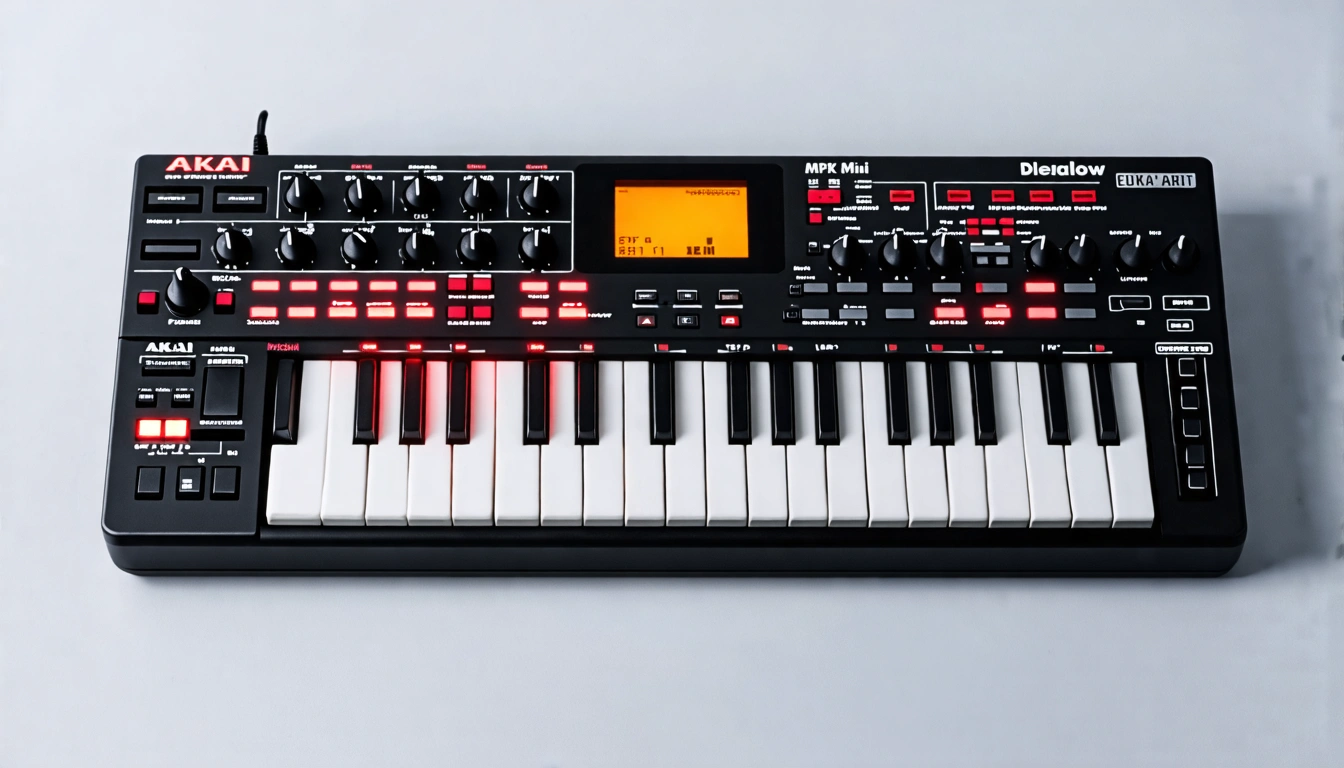
- MakeBestMusic: Audio separation into drums, vocals, bass, and melody stems; WAV, FLAC, and MP3 export; compatible with all major DAWs via standard file import
- AIVA: MIDI export for chord progressions, melodies, and drum patterns — trigger any virtual instrument in your DAW with AI-composed note data
- Udio: WAV and MP3 export; limited stem separation; inpainting allows section-level regeneration before export
- ElevenLabs Music: Configurable output format (MP3, PCM) with sample rates from 22 kHz to 48 kHz; no stem or MIDI export
- CassetteAI / Lyria 2 / Stable Audio: Single-file WAV export only; no stem separation or MIDI; best treated as finished renders or compositional starting points
One development worth highlighting: others Studio 2.0 has evolved from a basic stem editor into legitimate ai music production software. The latest version includes automation lanes, built-in effects (compressor, EQ, reverb, delay, distortion, gate), MIDI tracks with a wavetable synthesizer, a piano roll editor, and even a conversational chat bar that builds custom audio plugins from text descriptions. You can upload WAV, MP3, and MIDI files into Studio, design your own effects, and export full multitrack sessions in 32-bit WAV. It does not replace a desktop DAW — there is no VST or Audio Units support, and direct DAW sync is absent — but for producers who want to shape AI-generated material before ever opening Ableton or Logic, it is the most capable browser-based production environment available.
MIDI export deserves special attention as one of the most underutilized ai tools for music production. When you export MIDI from a platform like others or AIVA, you get raw note data — pitch, timing, velocity — without any audio. Load that MIDI into your DAW, assign it to a Serum patch or a Kontakt piano library, and the resulting audio is generated entirely by your own plugins. The musical composition is AI-assisted, but the sonic output is indistinguishable from manually produced music. This makes MIDI export the best ai for music production bridge between AI ideation speed and full creative ownership over your sound.
Technical integration is only half the professional equation, though. The other half — whether you can legally monetize what you produce — carries consequences that no amount of DAW skill can fix after the fact.

Licensing, Copyright, and Commercial Rights Explained
You have found the right platform, dialed in your prompts, exported stems into your DAW, and produced something you are genuinely proud of. Then comes the question that stops professionals cold: can you actually sell this? The legal landscape around AI-generated music has shifted faster than almost any other area of intellectual property law, and getting it wrong carries real financial risk — from demonetized YouTube channels to takedown notices on streaming platforms. Yet most guides covering ai music generation tools 2026 updates treat licensing as a one-line footnote. This section provides the detailed breakdown you need before a single AI-generated track enters a commercial pipeline.
Commercial Rights and Platform Terms of Service
Every platform handles commercial licensing differently, and the differences are not minor. Some grant full rights on paid plans. Others restrict monetization to specific distribution channels. A few retain copyright on free-tier outputs entirely. The table below maps the licensing terms you will actually encounter across the major ai music generation models available today.
| Platform | Free Tier: Commercial Use? | Paid Plan: Full Commercial Rights? | Copyright Ownership | Revenue Sharing / Attribution | Key Restrictions |
|---|---|---|---|---|---|
| MakeBestMusic | No | Yes (all paid tiers) | User retains rights on paid plans | None required | Free-tier outputs restricted to personal use; downloadable PDF license included |
| others | No | Yes (Pro and Premier) | User owns outputs on paid plans | None required on paid plans | Free-tier songs non-downloadable; licensed models replacing legacy ones through 2026 |
| Udio | No (downloads disabled) | Yes (Standard and Pro) | User retains rights on paid plans | Per-output royalties to opted-in rights holders | UMG walled-garden platform restricts export; standard Udio allows paid downloads |
| ElevenLabs Music | No | Yes (Starter and above) | User retains rights | 50/50 split between publishing and recorded music paid to training data contributors | Shared credit pool may limit music generation volume for heavy voiceover users |
| AIVA | No — AIVA retains copyright | Standard: social media only. Pro: full ownership | Pro plan transfers copyright to user | None on Pro | Standard plan restricts to social platforms; only Pro grants true copyright transfer |
| Soundraw | No free plan available | Creator: no streaming. Artist: full distribution | Perpetual license, not ownership transfer | None | Creator plan excludes streaming distribution entirely |
| Mubert | Attribution required; limited commercial use | Pro: commercial use allowed | License granted, not ownership | Attribution on Ambassador tier | No streaming releases permitted on any plan |
Two entries deserve closer attention. AIVA is the only platform that explicitly transfers copyright to the user — but only on its Pro plan at €33/month. Every other platform grants a commercial license, meaning you can monetize the output but the platform retains underlying rights to the generation model and, in some cases, to the output itself under certain conditions. This distinction matters if you are building a music catalog intended for long-term sync licensing or resale.
others's licensing terms are also evolving in real time. Following its November 2025 settlement and licensing partnership with Warner Music Group, others is actively replacing its legacy models with new ones trained on licensed music. Opted-in Warner artists receive compensation when their names, voices, or compositions are used, and free-tier downloads have been moved behind paid gates. If you generated tracks on older others models, the licensing status of those outputs may differ from tracks created on the newer licensed models rolling out through 2026.
Training Data Ethics and Legal Exposure
The commercial license on your account page is only half the legal equation. The other half — and the one most users overlook — involves how the platform trained the AI model that generated your track in the first place. If a model was trained on copyrighted music without authorization, your output may carry inherited legal risk regardless of what the platform's terms of service promise you.
The industry shifted dramatically between late 2025 and mid-2026. A comprehensive deal tracker maintained by Chartlex documents the full timeline: Universal Music Group settled with Udio in October 2025 and announced a joint licensed platform. Warner Music Group settled with both others and Udio in November 2025, establishing opt-in frameworks for artist name, voice, likeness, and composition usage. KLAY became the first AI company licensed by all three major labels — UMG, Sony Music, and Warner — with its "Large Music Model" trained entirely on licensed material. ElevenLabs launched Eleven Music with Merlin and Kobalt licenses as early as August 2025, setting a reported 50/50 royalty split between publishing and recorded music rights holders.
These deals transformed the landscape, but coverage gaps remain significant. Sony Music has licensed KLAY and joined Spotify's artist-first AI initiative, yet it continues active litigation against both others and Udio — with the others case in Massachusetts scheduled for dispositive motions in April 2027. On July 31, 2026, the Munich Regional Court ruled for GEMA against others, finding that training on GEMA's repertoire without a license infringed copyright and ordering damages. This ruling strengthens rights-holder negotiating positions across Europe and signals that collecting societies — not just major labels — will demand licensing agreements from AI music platforms.
For independent and DIY artists, the picture is even more nuanced. Every announced deal operates on an opt-in basis, meaning your catalog only enters a licensed AI platform if you, your label, your distributor, or your publisher affirmatively opts it in. Merlin's agreements with Udio and ElevenLabs cover roughly 30,000 independent labels and distributors. Kobalt's publishing deals extend to its songwriter clients. But if you self-release outside these networks, no current deal covers you — which means no AI licensing royalties, but also no authorized use of your catalog by licensed platforms. The risk you face is unlicensed scraping, not licensed training.
What does this mean practically for someone evaluating the best ai music generation apis 2026 offers for integration into apps or commercial products? It means the platform you choose carries different levels of legal exposure depending on its training data provenance. Here is a simplified framework:
- Lower risk: Platforms trained on licensed or opt-in catalogs (ElevenLabs Music with Merlin/Kobalt licenses, KLAY with all three majors, Soundraw trained on in-house recordings, AIVA trained on public domain classical compositions)
- Moderate risk: Platforms that have settled with major labels and are transitioning to licensed models (others post-Warner deal, Udio post-UMG and post-Warner deals) — legacy model outputs may carry different risk profiles than outputs from newer licensed models
- Higher risk: Platforms with undisclosed training data, no licensing agreements, and no public explanation of their data sourcing practices
If you plan to monetize AI-generated music commercially, verify three things before publishing: (1) your plan tier explicitly grants commercial rights, (2) the platform has disclosed its training data sources or holds licensing agreements with major rights holders, and (3) your intended distribution channel — streaming, sync, advertising, or API integration — is not excluded by the platform's terms of service.
Research from the WIPO Magazine highlights an emerging approach that could reshape how the best ai created songs handle attribution in the future. Associate Professor Dorien Herremans and the AMAAI Lab at Singapore University of Technology and Design are developing similarity-based audio embedding models that measure how much each training song contributes to a specific generated output. Imagine a system where prompting "create a song like Taylor Swift" triggers proportional royalty payments to the artists whose music most influenced the result. This dynamic attribution model — still in the research phase — could eventually replace the blunt opt-in/opt-out frameworks that dominate current deals, creating a fairer compensation mechanism for popular ai music artists whose styles are frequently referenced in user prompts.
The legal terrain is stabilizing, but it is far from settled. Litigation continues, European courts are setting new precedents, and the distinction between "licensed model" and "legacy model" outputs will remain a live issue through at least 2027. Professionals who take the time to understand these dynamics protect themselves from downstream liability — and position their catalogs of best ai generated music on solid commercial ground.
Legal clarity tells you what you can do with your output. The next challenge is creative: getting the AI to produce output worth monetizing in the first place. That is where prompt engineering separates forgettable generations from tracks that actually compete.
Prompt Engineering Tips for Better AI-Generated Music
The difference between a generic, forgettable AI track and something you would actually use in a project almost always comes down to the prompt. Most users type something like "cool background music" or "make a sad song" and wonder why every output sounds bland. The problem is not the platform — it is the brief. A well-structured prompt acts like session notes handed to a studio musician: the more specific and production-aware your instructions, the closer the result lands to what you hear in your head. Whether you are using the best text to music ai generator on the market or experimenting with a free tier, these principles apply universally.
Anatomy of an Effective AI Music Prompt
Think of an effective prompt as a stack of musical decisions, each one narrowing the creative space so the AI has less room to guess wrong. Research on prompt structure confirms that models benefit from internal planning — your prompt should help that planning step rather than fight it. Here are the key components, listed in a production-logical order that most platforms respond well to:
- Genre and subgenre: "Lo-fi hip-hop" beats "chill music." Specificity prevents the model from defaulting to generic pop arrangements.
- Tempo and BPM: A concrete number (e.g., "88 BPM") eliminates ambiguity. Avoid contradictions like "slow ballad, 140 BPM" — conflicting speed cues confuse the model.
- Instrumentation: Name specific instruments and their character. "Warm analog synth pad, finger-picked acoustic guitar, brushed snare" gives far more direction than "nice melody."
- Mood and energy descriptors: Use experiential language — "melancholic and introspective" or "warm and nostalgic" — rather than vague adjectives like "beautiful" or "cool," which AI models struggle to interpret musically.
- Vocal style: Specify gender, tone, and delivery. "Airy female vocal, restrained delivery, close-mic recording" outperforms "nice singing voice" every time.
- Song structure: Sections like
[Intro] [Verse] [Pre-Chorus] [Chorus] [Bridge] [Outro]give the model a temporal map. Without them, outputs often default to short, repetitive loops. - Reference era or production style: Describing a sonic era ("late-1990s trip-hop production") or texture ("tape saturation, wide stereo, analog warmth") anchors the output in a recognizable sound world without copying a specific artist.
Even if you have never studied composition, following this order turns you into a more effective prompter than most users — and understanding these building blocks is arguably the best ai for music theory application available right now: learning how songs are constructed by experimenting with each variable one at a time.
Example prompt template: "[Genre/subgenre], [BPM], [key instruments and their character], [mood descriptors], [vocal style or 'pure instrumental, no vocals'], [structure: intro, verse, chorus, bridge, outro], [production texture or era reference], clean studio production."
Common Prompting Mistakes and How to Fix Them
Even experienced users fall into patterns that undermine output quality. The most frequent errors — documented across community testing and platform guides — share a common thread: they give the model too much freedom or contradictory instructions.
Vague prompts like "make a moody song" provide almost zero musical information. The fix is specificity: replace mood-only descriptions with at least three concrete musical attributes (genre, tempo, instrumentation).
Conflicting style instructions happen when users stack incompatible keywords. Asking for "Afrobeat, cinematic orchestral, emotional piano" pulls the model in three directions — and the cinematic element usually wins because it is a stronger training signal. Somio's prompt guide recommends keeping fusion requests anchored: "Afrobeat with cinematic atmosphere, maintaining African rhythmic groove and percussion" preserves your primary genre.
Ignoring platform-specific behavior is another common trap. The same prompt produces different results across tools. others tends to reward short, signal-dense prompts for fast ideation, while Udio functions better as an iterative co-writing tool where you refine across multiple passes. Treating every platform identically wastes credits and produces inconsistent quality. The best ai for music generation workflows treat each platform's strengths as part of the creative process, not a limitation.
Failing to iterate is perhaps the biggest mistake of all. Expecting perfection from a single generation is like expecting a first demo take to be the master. Professionals treat AI output as raw material — generate, compare, refine, extend.
Follow this step-by-step refinement process to systematically improve your results with any best ai for generating music platform:
- Write your initial prompt using the template above, covering genre, BPM, instrumentation, mood, vocals, and structure.
- Generate two to three outputs and listen critically. Identify which elements the model interpreted correctly and which missed.
- Revise the prompt by strengthening the weakest element — if the drums were wrong, add more specific percussion language (e.g., "tight 808 kick, crisp clap on beats 2 and 4, closed hi-hats with triplet pattern").
- Remove any conflicting or overly broad keywords that may be diluting your primary genre or mood.
- Regenerate and compare against the previous batch. Repeat until the output matches your intent closely enough to use — or to import into a DAW for final shaping.
Mastering these techniques transforms any best ai for writing music platform from a lottery machine into a reliable creative tool. Still, even perfect prompts cannot overcome fundamental technology limitations — and knowing where those boundaries sit saves you from chasing results no current model can deliver.
Current Limitations and Final Recommendations for AI Music Tools 2026
Perfect prompts, professional DAW workflows, and airtight licensing still cannot fix what the technology itself has not solved yet. Pretending otherwise does readers a disservice — and it is exactly what most competitor guides do. This section addresses the failure modes you will encounter with even the best ai music generation software 2026 has produced, followed by a concise decision framework that matches real user profiles to specific platform recommendations.
What AI Music Generators Still Cannot Do Well
Every platform reviewed in this guide has improved dramatically over the past 18 months. others v5 produces vocals that pass casual listening tests. Udio's inpainting feature gives surgical editing control. MakeBestMusic bundles generation, separation, and export into a single workspace. Yet none of them have eliminated a core set of persistent weaknesses that professionals need to anticipate before committing to AI-generated audio in commercial workflows.
Audio artifacts remain common. Soundverse's 2026 analysis of AI music quality issues confirmed that phase distortion, digital noise, and spectral imbalances still appear regularly — especially in complex arrangements with dense instrumentation. These artifacts are often subtle enough to go unnoticed in isolation but compound across multiple tracks in a mix. Low sampling precision and under-trained spectral models are the primary culprits, and no current post-generation filter fully eliminates the problem. If you are layering AI stems into a professional session, plan for cleanup time in your DAW.
Complex musical structures break down. Key changes mid-song, time signature shifts (think 4/4 transitioning to 7/8), and polyrhythmic patterns remain difficult for every model tested. AI music generators excel at predictable pop structures — verse, chorus, bridge — but struggle when you ask for the kind of compositional complexity found in progressive rock, jazz fusion, or contemporary classical. The models learn from patterns in their training data, and these sophisticated structures appear far less frequently than standard song forms.
Track length hits a ceiling. Most platforms generate reliably up to about three to four minutes. Beyond that, coherence degrades — melodies start looping, transitions feel arbitrary, and the sense of intentional musical arc disappears. Udio's 30-second incremental build process partially addresses this by giving you control over each section, but the cognitive overhead of managing a six-minute track in 30-second blocks is significant. For long-form content like film scores or ambient soundscapes, you will likely need to generate shorter segments and stitch them together manually in your DAW.
Vocal clarity is inconsistent. While others and Udio both produce impressive vocal results on their best outputs, consistency varies across generations. Consonant clarity — especially on sibilants and plosives — can degrade unpredictably. Jotform's testing across multiple platforms echoed this finding: vocal quality is among the most variable elements in any AI music generation pipeline, and re-prompting or regenerating is often necessary to get a clean vocal take.
Some genres lag behind others. Electronic, pop, lo-fi, and cinematic styles consistently produce the strongest results because they dominate training datasets. Genres with nuanced performance dynamics — flamenco, bebop jazz, Hindustani classical, technical death metal — produce noticeably weaker outputs. As Born To Produce's 2026 comparison noted, AIVA handles classical and orchestral scoring better than others or Udio for contemporary music, precisely because it was trained on a different corpus. If your project requires genre-specific authenticity outside mainstream Western styles, test extensively before committing.
Emotional nuance remains elusive. Neural models struggle to interpret what "longing" or "bittersweet joy" should sound like at a production level. They approximate these moods through surface-level signaling — minor keys for sadness, major keys for happiness — but the subtle dynamic shifts, rubato timing, and timbral choices that human musicians use to convey deep emotion are still largely absent. This is the gap that separates the current best ai music creators from replacing professional composers for emotionally critical applications like film scoring or therapeutic music.
Final Recommendations Based on Your Needs
Knowing the limitations means you can work around them. Knowing which platform fits your specific role means you stop wasting time and credits on the wrong tool. The current best ai music generation tools march 2026 can be mapped cleanly to four distinct user profiles — each with different priorities around cost, quality, control, and workflow speed.
Use the quick-reference list below to find your starting point:
- Content creators and marketers: MakeBestMusic — the prompt-to-song workflow requires zero music production knowledge, the built-in lyric generator helps when you have a concept but not finished words, and the bundled audio separator means you can extract stems without a separate subscription. Downloadable PDF licenses simplify compliance for YouTube, TikTok, and Spotify distribution. For creators who need volume at the lowest possible per-track cost, others Pro at $10/month is the value leader. Soundraw remains the fastest path to royalty-free background tracks for podcasts and corporate video.
- Professional producers and musicians: others Premier ($30/month) offers the most complete AI-to-DAW pipeline — 12-stem separation, MIDI export, and the Studio 2.0 browser-based multitrack environment. Udio Standard or Pro is the strongest alternative when vocal realism and section-level editing control are your top priorities. AIVA fills the composition-assistance niche with MIDI output you can trigger through your own virtual instruments. For producers who want native stem export without the Premier price tag, MakeBestMusic's audio separator delivers usable drum, vocal, bass, and melody tracks at a lower entry point.
- Hobbyists and first-time experimenters: MakeBestMusic and others both offer free tiers that let you generate and listen before spending anything. Sonauto deserves mention here — Jotform's review identified it as the best free AI music generator because all creation and editing features are available without a credit card. Output quality sits below others and Udio, but for zero-cost exploration it is hard to beat.
- Developers and API integrators: Riffusion and Sonauto both offer API access for embedding AI music generation into apps, games, and products. ElevenLabs Music makes sense for teams already using its voice and sound effects APIs, since everything runs through a shared credit pool. If training data provenance is a legal priority — as discussed in the licensing section — KLAY's Large Music Model, licensed by all three majors, represents the lowest-risk API option for enterprise-grade commercial integration.
The best ai music generators march 2026 share a common trait: they are all rapidly improving. Features that were Premier-only six months ago are filtering down to Pro plans. Models trained on licensed catalogs are replacing legacy ones. Export options are expanding. What you choose today may not be what you need in six months, so the smartest move is to pick the platform that solves your current workflow problem, stay on a monthly plan rather than locking into an annual commitment, and revisit the landscape quarterly.
One final note on perspective. The top ai music tools january 2026 users were excited about — including early others v5 builds and Udio's inpainting beta — have already been surpassed by mid-year updates. The pace of improvement is not slowing down. What AI music generators still cannot do well today will shrink as a list with every major model update. The professionals who benefit most are the ones who learn the current limitations, build workflows that account for them, and treat AI-generated audio as raw material that gains its real value through human judgment, production skill, and creative intent.
AI generates. You produce. The best ai music creation software 2026 offers is a starting instrument, not a finished performance.
The tools are ready. Your next track is a prompt away.